Call or Text 727-513-9780
  • Shopping Cart Shopping Cart
    0Shopping Cart
Pure Tested Peptides | America's most trusted Peptides for sale online
  • Peptides for sale
    • Oral Peptides for sale
      • Peptide Capsules for sale
      • BPC 157 Capsules 1000mcg
      • SLU-PP-332 Capsules | 1000 mcg
      • 5-Amino-1MQ 50mg Capsules
      • Tesofensine 500mcg
    • All Peptides for sale
    • Peptide Sprays
      • BPC 157 Nasal Spray Kit
      • BPC-157 TB500 Nasal Spray Kit
      • Semax Nasal Spray 10mg
      • Selank – Nasal Spray Kit – 10mg
      • Epithalon 50MG Nasal Spray Kit
      • Ipamorelin 10mg Nasal Spray
      • Klow Nasal Spray (BPC-157 + TB-500 + GHK-Cu + KPV) | 80mg
      • Hulk Nasal Spray Tesa / Ipa Blend 6/3 MG
      • Klow Nasal Spray
      • NAD + 500 mg Nasal Spray
      • PT-141 Nasal Spray Kit
    • GHRH Peptides
      • Ipa Peptides
      • CJC-1295 Peptides
        • CJC-1295 with DAC 5 mg
        • CJC-1295 without DAC 5 mg
        • CJC-1295 Ipa 10mg
      • Tesa Peptides
        • Tesa Peptide
        • Tesa 20 mg
    • GHK-Cu Peptides
      • All GHK-Cu Peptides
      • GHK-Cu 100mg
      • KLOW Peptide Blend – Buy KLOW blend online
    • BPC Peptides
      • All BPC Peptides
      • BPC-157
      • BPC-157 TB-500
      • BPC 157 capsules 1000mcg
    • SLU-PP-332 Peptides
      • All SLU-PP-332 Peptides
      • SLU-PP-332 5mg
    • GLP3 Peptides
      • GLP3-R
      • GLP3-R CAG 10mg
      • GLP3-R 20mg
    • PT-141 Peptides
      • PT-141 Peptides for sale
      • PT-141 10mg
      • PT-141 Nasal Spray
    • CAG Peptides
      • Lipo-C Peptide Blend
      • CAG 5mg
      • CAG 10mg
    • MOTS-C Peptides
      • MOTS-C Peptides for sale
      • MOTS-c peptide
      • MOTS-c 10mg *6 pack*
    • 5 Amino 1MQ Peptides
      • 5 Amino 1MQ Peptides for sale
      • 5-Amino-1MQ 50mg Capsules
      • 5-Amino-1MQ 5mg
    • Epithalon Peptides
      • Epithalon Peptides for sale
      • Epithalon 10mg
      • Epithalon 50mg
  • Shop
    • GLPs
      • 5-Amino-1MQ 50mg Capsules
      • 5-Amino-1MQ 5mg
      • GLP3-Reta
      • L-Carnitine 500mg/ml
      • Tesofensine 500mcg
      • SLU-PP-332 5mg
      • MOTS-c 10mg *6 pack*
    • Epithalon & BPC Peptides
      • Epithalon 10mg
      • Epithalon 50mg
      • BPC-157
      • BPC 157 capsules 1000mcg
      • BPC-157 TB-500
      • BPC-157 TB500 Nasal Spray Kit
      • BPC 157 Nasal Spray Kit
    • BPC TB-500 & NAD+ Peptides
      • NAD+ 500 mg
      • KLOW Peptide Blend – Buy KLOW blend online
      • GLOW Peptide Blend
      • TB 500 5mg
      • BPC 157 capsules 1000mcg – Supplement
      • BPC 157 Nasal Spray Kit
      • BPC-157
      • BPC-157 TB500 Nasal Spray Kit
      • BPC-157 TB-500
      • BPC 157 capsules 1000mcg
    • LL-37 Peptide
      • LL-37 10 mg
    • MOTS-C & Selank
      • MOTS-c peptide
      • Selank 10mg
    • GHK Peptides
      • GHK-Cu 100mg
      • GLOW Peptide Blend
      • KLOW Peptide Blend – Buy KLOW blend online
  • COAs
  • Wholesale
    • Wholesale Peptides for sale
  • PTP FAQ
  • Affiliates
    • Selank Peptide: Advanced Pharmacological Mechanisms Underlying Its Anxiolytic and Nootropic Effects in Research
      • 5-Amino-1MQ Peptide: Detailed Mechanisms of NNMT Inhibition and Its Impact on Cellular Metabolism Research
        • MOTS-C Peptide: Unraveling Its Role in Mitochondrial Dynamics and Energy Metabolism Research
          • Epithalon Peptide and Telomerase Regulation: Investigating Its Impact on Cellular Senescence and Lifespan Research Models
            • GLP2-T vs GLP2 Tirz Peptide: Understanding the Naming, Mechanistic Nuances, and Research Implications for Gut Health
      • Peptides and Polypeptides in Modern Pharmacology: What Research on Metoprolol, Prednisone, and Amlodipine Reveals
        • Polypeptide Peptides vs NSAIDs: What Naproxen and Diclofenac Teach Tissue-Repair Researchers About BPC‑157 and TB‑500
          • Peptides and Polypeptides in Endocrine Pharmacology: How GLP-1, GLP-2, and GLP-3 Retatrutide Differ From Classic Drugs Like Prednisone and Amlodipine
          • 5‑Amino‑1MQ Peptide and NNMT Inhibition: How It Compares With Statins Like Atorvastatin in Adipose and Lipid Metabolism Research
      • Enclomiphene, Estrogen Receptor Signaling, and Luteinizing Phase Biology: What Hormone Researchers Should Measure
        • Mesenchymal Stem Cells, BPC‑157, and GHK‑Cu: How Tissue Repair Peptides Compare With Classic NSAIDs Like Naproxen in Injury Models
          • Peptide Calculator Use Cases Beyond Growth Hormone: Working Through GLP‑3 Retatrutide, MOTS‑c, and BPC‑157 Research Dosing
        • Polypeptide Peptides in Endocrine and Metabolic Pharmacology: Lessons From Amlodipine, Prednisone, and Metoprolol
        • Peptides Calculator for Advanced Blends: Worked Examples for Tesamorelin, CJC‑1295, and Ipamorelin Stacks
          • Peptides and Polypeptides in Human Physiology: How Molecular Size Shapes Research Applications
            • Selank Peptide: Advanced Pharmacological Mechanisms Underlying Its Anxiolytic and Nootropic Effects in Research
          • 5-Amino-1MQ Peptide: Detailed Mechanisms of NNMT Inhibition and Its Impact on Cellular Metabolism Research
            • MOTS-C Peptide: Unraveling Its Role in Mitochondrial Dynamics and Energy Metabolism Research
              • Epithalon Peptide and Telomerase Regulation: Investigating Its Impact on Cellular Senescence and Lifespan Research Models
                • GLP2-T vs GLP2 Tirz Peptide: Understanding the Naming, Mechanistic Nuances, and Research Implications for Gut Health
                  • Peptides and Polypeptides in Endocrine Pharmacology: How GLP-1, GLP-2, and GLP-3 Retatrutide Differ From Classic Drugs Like Prednisone and Amlodipine
                    • Polypeptide Peptides vs NSAIDs: What Naproxen and Diclofenac Teach Tissue-Repair Researchers About BPC‑157 and TB‑500
                      • Peptides and Polypeptides in Modern Pharmacology: What Research on Metoprolol, Prednisone, and Amlodipine Reveals
                        • 5‑Amino‑1MQ Peptide and NNMT Inhibition: How It Compares With Statins Like Atorvastatin in Adipose and Lipid Metabolism Research
                        • Enclomiphene, Estrogen Receptor Signaling, and Luteinizing Phase Biology: What Hormone Researchers Should Measure
                        • Mesenchymal Stem Cells, BPC‑157, and GHK‑Cu: How Tissue Repair Peptides Compare With Classic NSAIDs Like Naproxen in Injury Models
                        • Peptide Calculator Use Cases Beyond Growth Hormone: Working Through GLP‑3 Retatrutide, MOTS‑c, and BPC‑157 Research Dosing
                        • Polypeptide Peptides in Endocrine and Metabolic Pharmacology: Lessons From Amlodipine, Prednisone, and Metoprolol
                        • Peptides Calculator for Advanced Blends: Worked Examples for Tesamorelin, CJC‑1295, and Ipamorelin Stacks
                        • Peptides and Polypeptides in Human Physiology: How Molecular Size Shapes Research Applications
                        • Selank Peptide: Advanced Pharmacological Mechanisms Underlying Its Anxiolytic and Nootropic Effects in Research
                        • MOTS-C Peptide: Unraveling Its Role in Mitochondrial Dynamics and Energy Metabolism Research
                        • Peptides and Polypeptides in Modern Pharmacology: What Research on Metoprolol, Prednisone, and Amlodipine Reveals
                        • Peptides and Polypeptides in Endocrine Pharmacology: How GLP-1, GLP-2, and GLP-3 Retatrutide Differ From Classic Drugs Like Prednisone and Amlodipine
                        • 5-Amino-1MQ Peptide: Detailed Mechanisms of NNMT Inhibition and Its Impact on Cellular Metabolism Research
                        • Mesenchymal Stem Cells, BPC‑157, and GHK‑Cu: How Tissue Repair Peptides Compare With Classic NSAIDs Like Naproxen in Injury Models
                        • Peptide Calculator Use Cases Beyond Growth Hormone: Working Through GLP‑3 Retatrutide, MOTS‑c, and BPC‑157 Research Dosing
                        • GLP2-T vs GLP2 Tirz Peptide: Understanding the Naming, Mechanistic Nuances, and Research Implications for Gut Health
                        • Polypeptide Peptides in Endocrine and Metabolic Pharmacology: Lessons From Amlodipine, Prednisone, and Metoprolol
                        • Polypeptide Peptides vs NSAIDs: What Naproxen and Diclofenac Teach Tissue-Repair Researchers About BPC‑157 and TB‑500
                        • Peptides and Polypeptides in Human Physiology: How Molecular Size Shapes Research Applications
                        • Peptides Calculator for Advanced Blends: Worked Examples for Tesamorelin, CJC‑1295, and Ipamorelin Stacks
                        • 5‑Amino‑1MQ Peptide and NNMT Inhibition: How It Compares With Statins Like Atorvastatin in Adipose and Lipid Metabolism Research
                        • Enclomiphene, Estrogen Receptor Signaling, and Luteinizing Phase Biology: What Hormone Researchers Should Measure
                        • Epithalon Peptide and Telomerase Regulation: Investigating Its Impact on Cellular Senescence and Lifespan Research Models
                        • Best research protocol Klow blend
                        • best time to take BPC-157
                        • best time to take DSIP (Delta Sleep Inducing Peptide)
                        • best time to take CJC-1295
                        • best time to take AOD-9604
                        • best time to take Follistatin 344
                        • best time to take Ipamorelin
                        • best time to take MK-677 (Ibutamoren)
                        • best time to take Ligandrol (LGD-4033) — research compound
                        • best time to take Ostarine (MK-2866) — research compound
                        • best time to take GHK-CU
                        • best time to take TB-500
                        • best time to take MOTS-c
                        • best time to take Semax
                        • best time to take RAD-140 (Testolone) — research compound
                        • best time to take Thymosin Alpha-1
                        • best time to take PEG-MGF
                        • Biolife Plasma, Octapharma Plasma, and Research Peptides: How Plasma Donation Labs Differ From Peptide Suppliers
                        • best time to take YK-11 — research compound
                        • best time to take PT-141 (Bremelanotide)
                        • Best research protocol Klow blend
                        • 5-Amino-1MQ and MOTS-C Synergy: Metabolic Signaling, Mitochondria, and Research Design
                        • BPC-157 and TB-500: Investigating Their Combined Effects on Angiogenesis and Cellular Migration in Tissue Repair Models
                        • BPC-157 Peptide: Gut Barrier Function, Inflammation, and Tissue-Recovery Research
                        • 5‑Amino‑1MQ and MOTS‑c Synergy in Metabolic Research: Designing NNMT and Mitochondrial Biogenesis Stacks
                        • CJC-1295 with DAC vs. Without DAC: Half-Life, Release Kinetics, and Research Implications
                        • CJC‑1295 with DAC vs. Without DAC: Expanding on Half‑Life Differences Using Tesamorelin and Ipamorelin Blend Case Studies
                        • Collagen Biology and Copper‑Binding Peptides: How GHK‑Cu, Glow Blend, and Klow Blend Interact with Skin and Connective Tissue
                        • Collagen Biology and Regenerative Peptides: How GHK‑Cu, Glow Blend, and Klow Blend Affect Extracellular Matrix Research
                    • DNA, Telomeres, and Longevity Peptides: Positioning Epithalon and MOTS‑c in Genetic Aging Research
                      • Enclomiphene Citrate: serm Mechanism, Testosterone Research, and Stack Compatibility
                        • Enclomiphene vs Enclomiphene Citrate: Formulation, Bioavailability, and Research Distinctions
                        • Epithalon Peptide Research: Telomerase Activation, Aging, and Pineal Gland Function
                        • Estrogen Receptor Signaling and Enclomiphene: How Selective Modulators Compare with Classic Polypeptide Hormones
                        • GHK-Cu Peptide: Advanced Mechanisms in Extracellular Matrix Remodeling and Wound Healing Research
                        • GHK-Cu Peptide: Collagen Synthesis, Wound Repair, and Skin-Barrier Research Models
                        • GLP-1 vs GLP-3 vs GLP-2: Peptide Classification and Research Applications
                        • GLP-2 Peptide Research Guide: Gut Barrier Function, Nutrient Absorption, and Intestinal Recovery Models
                        • GLP-3 Retatrutide vs. GLP-1 Drugs: What Triple-Agonist Biology Changes in Research Models
                        • Ipamorelin and Tesamorelin Combination: Synergistic GH Secretagogue Research and Dosing Protocols
                        • GLP2 Tirz Peptide: What It Is, Why the Name Exists, and How Researchers Should Interpret It
                        • Klow Blend Peptide Nasal Spray: What the Formulation Is Trying to Do in Cognitive Research
                        • Mitochondria, NNMT Inhibition, and Peptide Modulators: Where MOTS‑c and 5‑Amino‑1MQ Fit in Cellular Energy Research
                        • MOTS-c Peptide: Mitochondrial Function, Energy Metabolism, and What Researchers Measure
                        • MOTS-c vs. 5-Amino-1MQ: Which Metabolic Research Questions Each Compound Actually Answers
                        • Nasal Spray Peptides: Bioavailability, Administration, and Semax/Selank Research Applications
                        • PT-141 Peptide Research: Mechanism of Action and Melanocortin Receptor Signaling
                        • Retatrutide for Research: Mechanism, Structure, and GLP-1/GLP-3 Dual Action
                        • Retatrutide for Obesity and Type 2 Diabetes: What the Latest Trial Data Suggest
                        • Tesofensine Peptide Research: Mechanism, Appetite Suppression, and Neuropeptide Y Pathways
  • Contact
    • Contact Customer Service
    • Text Customer Support
  • About US
  • Shop all peptides
  • Affiliate Program
    • Affiliate Signup
  • Login / Register Login / Register Page Link Login / Register Page Link
  • Click to open the search input field Click to open the search input field Search
  • Menu Menu

Tag Archive for: research peptide sourcing

Where to Buy Research-Grade MOTS‑c and 5‑Amino‑1MQ: Quality Criteria for Mitochondrial Peptide Studies

Where to Buy Research-Grade MOTS‑c and 5‑Amino‑1MQ: Quality Criteria for Mitochondrial Peptide Studies

July 30, 2026/0 Comments/in Uncategorized/by

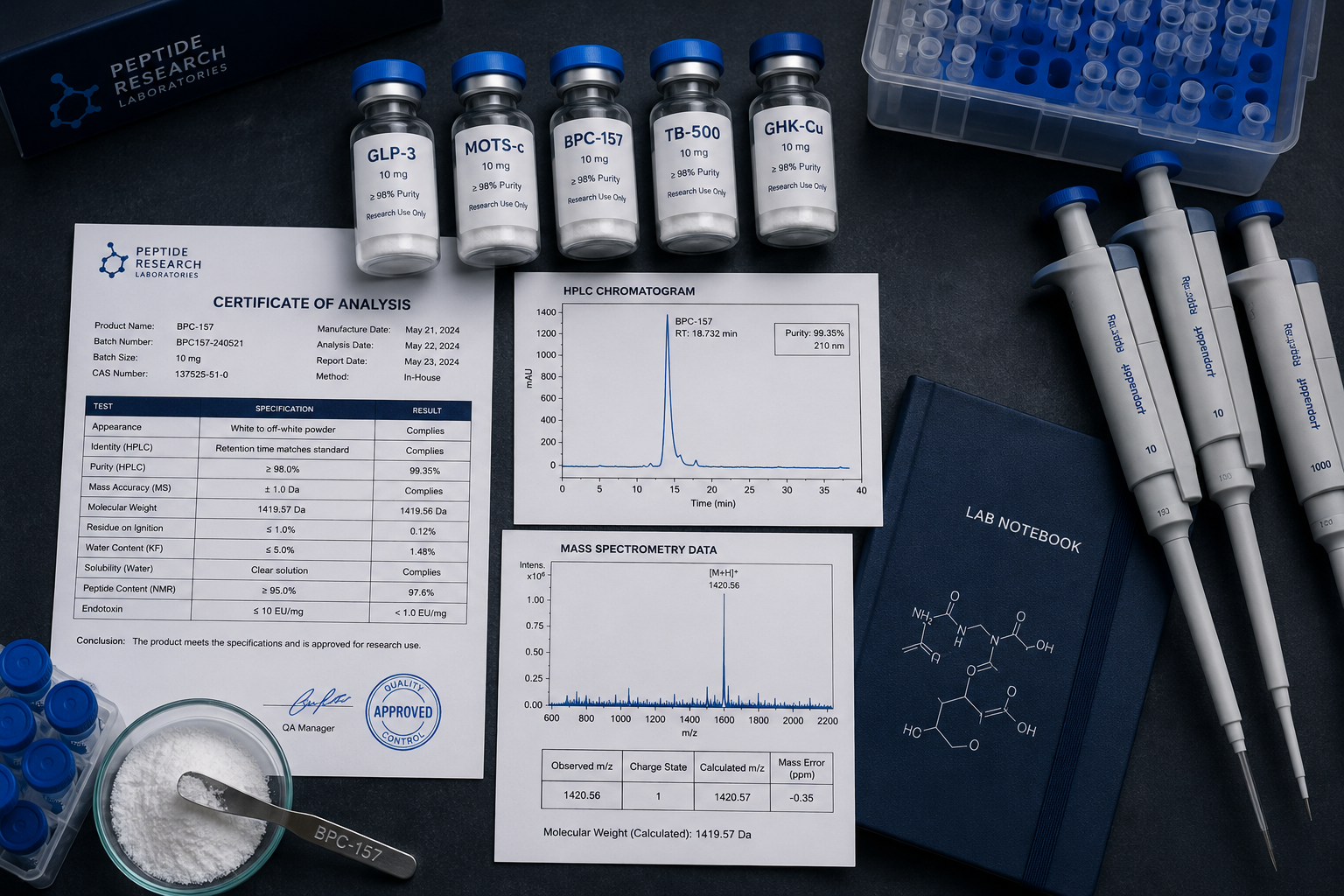
Fewer than 30% of peptide products sold online meet the purity thresholds required for reproducible preclinical research, a sobering figure for any investigator designing mitochondrial biogenesis experiments. Knowing where to buy research-grade MOTS-c and 5-Amino-1MQ, and understanding the quality criteria for mitochondrial peptide studies, is not a minor administrative detail. It is a foundational decision that determines whether experimental data will hold up to scrutiny.

Key Takeaways

  • Research-grade MOTS-c and 5-Amino-1MQ require a minimum purity of 98%, confirmed by HPLC and mass spectrometry.
  • A valid Certificate of Analysis (COA) from an independent third-party laboratory is the single most important vendor document to request.
  • Mitochondrial peptide studies are especially sensitive to impurities because contaminants can independently alter cellular energy metabolism.
  • Vendor transparency, including batch-specific testing, storage protocols, and synthesis documentation, is a reliable proxy for product quality.
  • Price alone is a poor quality indicator; the cheapest option often carries the highest experimental risk.
Key Takeaways

Understanding MOTS-c and 5-Amino-1MQ in Mitochondrial Research

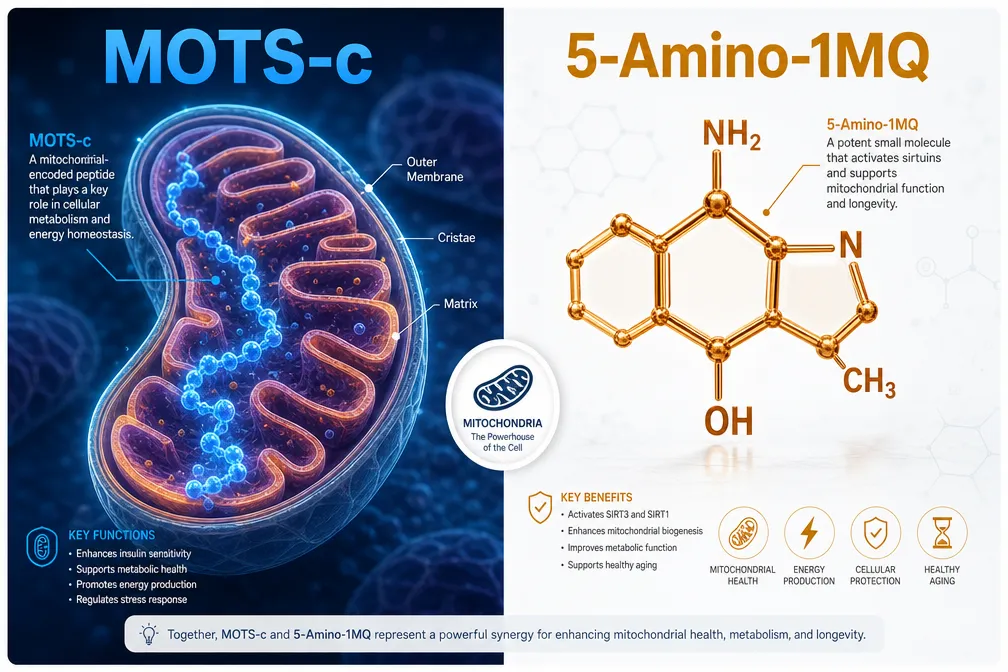
MOTS-c is a 16-amino-acid peptide encoded within the mitochondrial genome. Research published since its identification has linked it to insulin sensitivity, AMPK pathway activation, and cellular stress responses. It is one of a small class of mitochondria-derived peptides (MDPs) that operate as systemic metabolic regulators.

5-Amino-1MQ (5-amino-1-methylquinolinium) is a small-molecule NNMT inhibitor. By blocking nicotinamide N-methyltransferase, it influences the NAD+ salvage pathway, which is tightly coupled to mitochondrial function and energy homeostasis. Researchers investigating metabolic disease, adipogenesis, and mitochondrial biogenesis increasingly combine these two compounds to probe complementary mechanisms.

Both compounds are sold exclusively for in vitro and in vivo research purposes. Neither is approved for human therapeutic use. Investigators should review the research-only peptides guidelines before designing any protocol.

Because mitochondrial assays, including oxygen consumption rate (OCR) measurements, ATP quantification, and membrane potential assays, are highly sensitive to trace contaminants, the sourcing decision carries more weight here than in many other peptide research contexts. Even sub-percent impurities can independently modulate mitochondrial membrane potential, producing artifacts that mimic or mask the compound's true effect.

Core Quality Criteria for Mitochondrial Peptide Studies
Core Quality Criteria for Mitochondrial Peptide Studies

When evaluating where to buy research-grade MOTS-c and 5-Amino-1MQ, quality criteria for mitochondrial peptide studies come down to five verifiable standards.

Purity Threshold

Minimum acceptable purity: 98% by HPLC. For mitochondrial assays, many research groups set an internal standard of 99% or higher. Any vendor unable to provide batch-specific HPLC chromatograms should be disqualified immediately.

Mass Spectrometry Confirmation

HPLC alone confirms purity but not identity. Mass spectrometry (MS) verification confirms the molecular weight matches the target compound. For MOTS-c, the expected molecular weight is approximately 2174 Da. For 5-Amino-1MQ, it is approximately 174.2 Da. A COA that lacks MS data is incomplete.

Certificate of Analysis, What to Look For

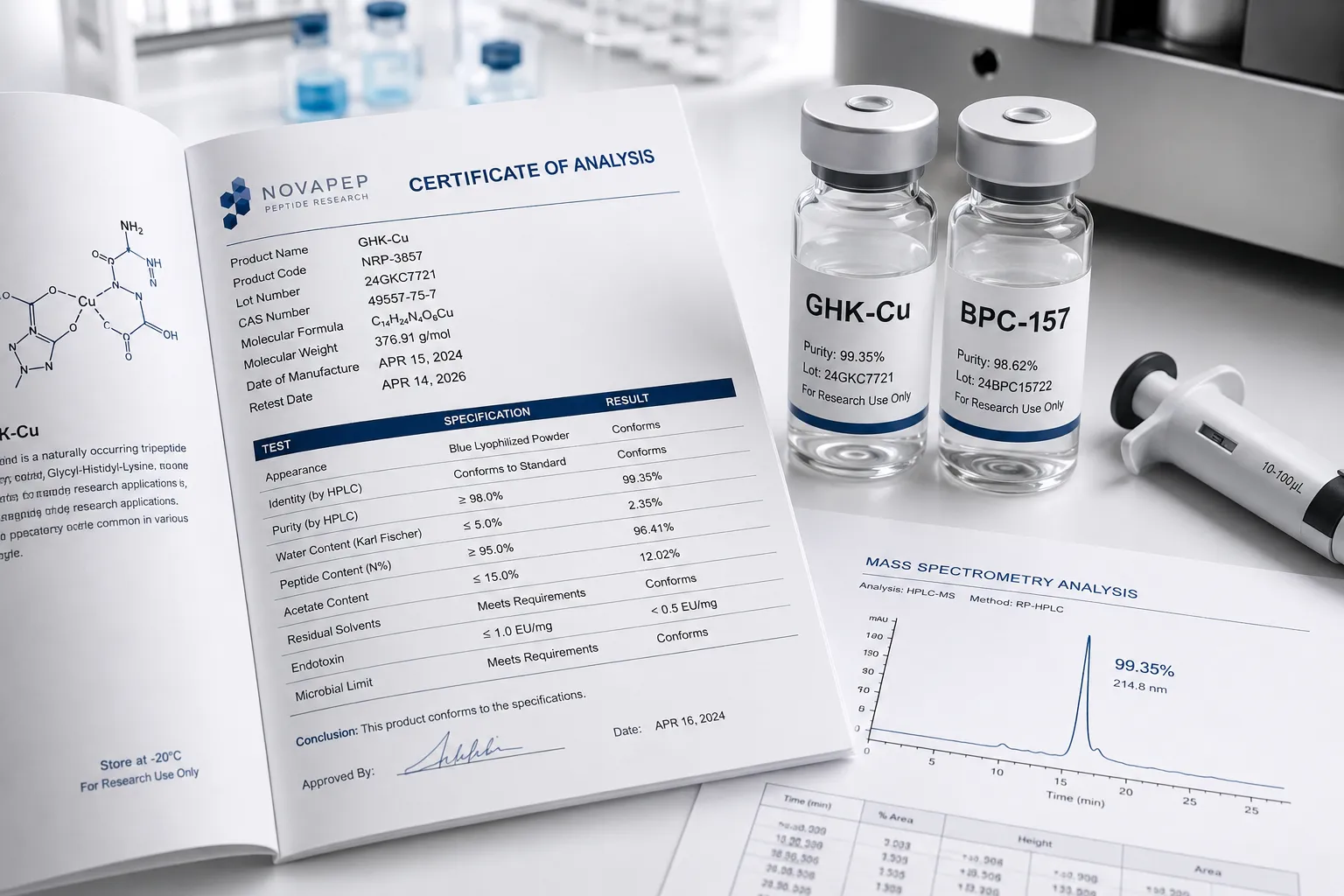
A valid COA should include:

  • Compound name and CAS number
  • Lot or batch number
  • Synthesis date and expiration date
  • HPLC purity percentage with a chromatogram
  • MS data confirming molecular weight
  • Residual solvent testing results
  • Sterility or endotoxin data (for in vivo studies)

The COA must be batch-specific, not a generic document reused across multiple lots. Vendors who provide only a single undated COA for all stock are a red flag. For a broader discussion of how reference standards underpin peptide benchmarking, see this resource on Bachem and reference standards for peptide benchmarks.

Third-Party vs. In-House Testing

Third-party laboratory testing carries significantly more credibility than in-house testing. Independent labs have no financial incentive to pass a failing batch. Reputable vendors will name the testing laboratory on the COA or provide a direct link to the lab's report.

Storage and Shipping Conditions

MOTS-c is a peptide and degrades under heat and moisture. 5-Amino-1MQ is more stable but still benefits from controlled storage. Vendors should ship with desiccant, cold packs where appropriate, and provide clear reconstitution and storage instructions. Lyophilized peptides stored at -20°C retain potency significantly longer than those stored at room temperature.

Evaluating Vendors: A Practical Framework
Evaluating Vendors: A Practical Framework

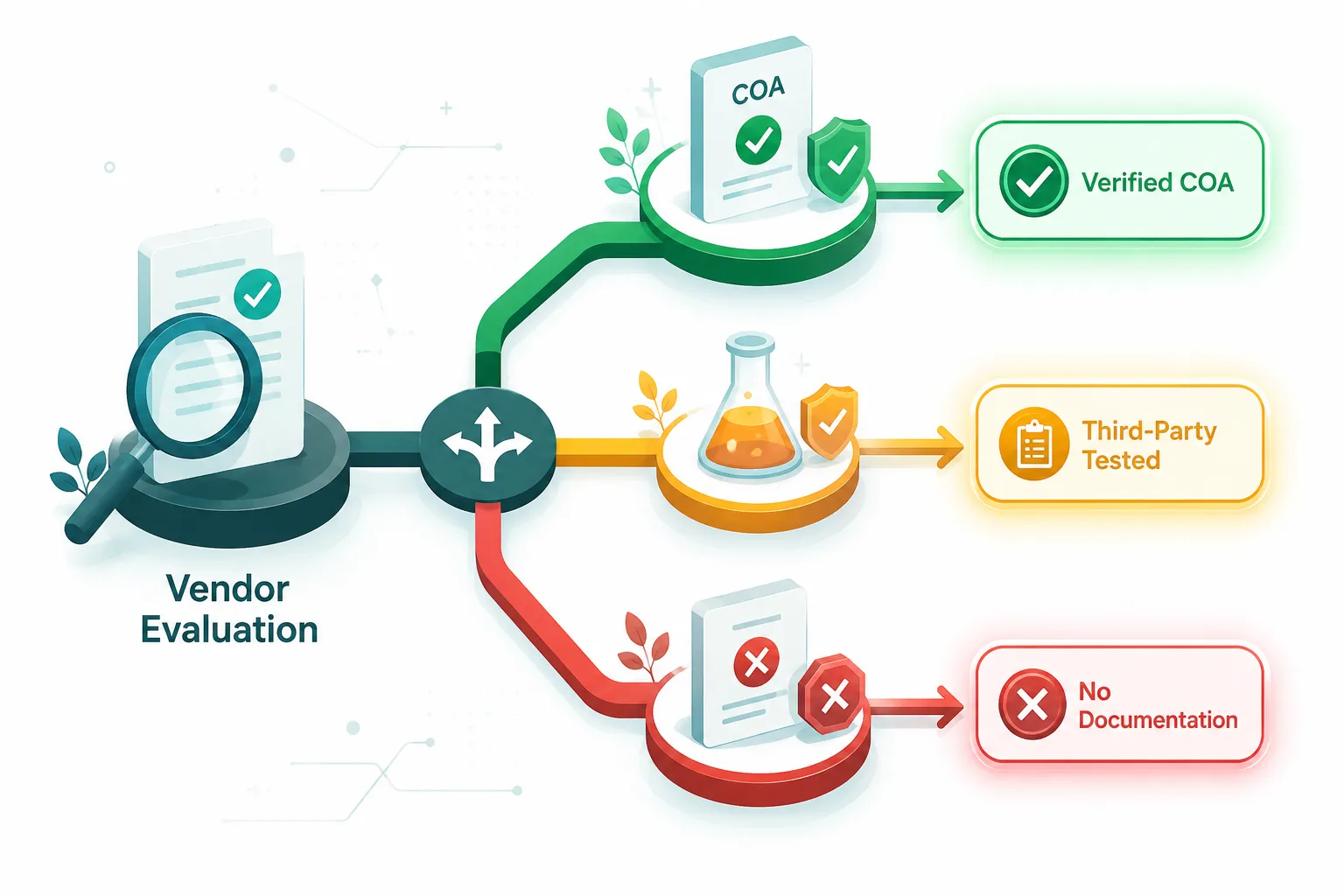
Knowing where to buy research-grade MOTS-c and 5-Amino-1MQ requires a structured vendor evaluation process. The following framework applies quality criteria for mitochondrial peptide studies in a practical, repeatable way.

Step 1, Request Documentation Before Purchase

Contact the vendor directly and request:

  1. A batch-specific COA for the current lot
  2. The name of the third-party testing laboratory
  3. Confirmation of synthesis method (solid-phase peptide synthesis is standard for MOTS-c)
  4. Storage and stability data

A vendor that responds promptly with complete documentation is demonstrating operational transparency. A vendor that deflects, provides generic documents, or cannot name their testing lab warrants immediate disqualification.

Step 2, Cross-Reference Molecular Data

Use publicly available databases (PubChem, UniProt) to verify that the molecular weight and sequence data on the COA match the known reference values for MOTS-c and 5-Amino-1MQ. This takes under five minutes and catches a surprising number of mislabeled products.

Step 3, Assess Vendor Transparency

Reputable suppliers of quality peptides publish their testing methodology, maintain updated product pages with current lot information, and respond to technical inquiries with substantive answers, not sales language.

Researchers sourcing MOTS-c specifically can review detailed product documentation at the MOTS-c peptide product page, which provides synthesis and purity information relevant to study design.

For comparative context on mitochondria-targeting peptides, the MOTS-c and elamipretide research overview is a useful reference when designing multi-compound protocols.

Step 4, Evaluate the Product Catalog Context

A vendor specializing in research peptides with a broad, documented catalog, including compounds like SS-31 (elamipretide), GHK-Cu, and other mitochondrial or metabolic peptides, is more likely to maintain consistent quality standards than a generalist supplement retailer adding peptides as an afterthought. The SS-31 elamipretide product category is a useful benchmark: vendors who carry it with proper documentation tend to apply the same rigor across their catalog.

For researchers working with copper peptides in parallel studies, the GHK-Cu peptide sourcing guide applies many of the same COA evaluation principles discussed here.

Common Sourcing Pitfalls

Pitfall Why It Matters
No batch-specific COA Cannot verify lot-to-lot consistency
HPLC purity below 98% Contaminants may alter mitochondrial assay results
No MS identity confirmation Product may be a structural analog, not the target compound
Ambient-temperature shipping Peptide degradation before arrival
Unusually low price Often correlates with reduced testing rigor

Researchers tempted by low-cost options should review the risks outlined in this analysis of cheapest peptides online before making a sourcing decision based primarily on price.

Conclusion

The integrity of mitochondrial peptide research depends directly on the quality of the compounds used. For investigators focused on MOTS-c and 5-Amino-1MQ, the sourcing decision is inseparable from the scientific decision. Applying rigorous quality criteria, batch-specific COAs, third-party HPLC and MS verification, proper cold-chain logistics, and vendor transparency, is not optional; it is the baseline for producing reproducible data.

Actionable next steps for researchers in 2026:

  1. Build a vendor evaluation checklist using the five quality criteria outlined above.
  2. Request COA documentation before placing any order, and verify molecular data against reference databases.
  3. Prioritize suppliers who name their third-party testing laboratory and provide batch-specific documentation.
  4. Store lyophilized MOTS-c at -20°C and follow vendor-specific reconstitution protocols to preserve activity.
  5. Cross-reference sourcing decisions with peer-reviewed protocols to ensure compound specifications meet the demands of the specific assay being used.

Reproducible science starts with verified compounds. The time invested in evaluating a vendor before purchase is always less than the time lost to ambiguous experimental results caused by substandard materials.

https://www.puretestedpeptides.com/wp-content/uploads/2026/07/where-to-buy-research-grade-mots-c-and-5-amino-1mq-quality-criteria-for-mitochon.webp 1024 1536 https://www.puretestedpeptides.com/wp-content/uploads/2026/01/buy-peptides-online.jpg 2026-07-30 13:04:592026-07-30 13:04:59Where to Buy Research-Grade MOTS‑c and 5‑Amino‑1MQ: Quality Criteria for Mitochondrial Peptide Studies

Tag Archive for: research peptide sourcing

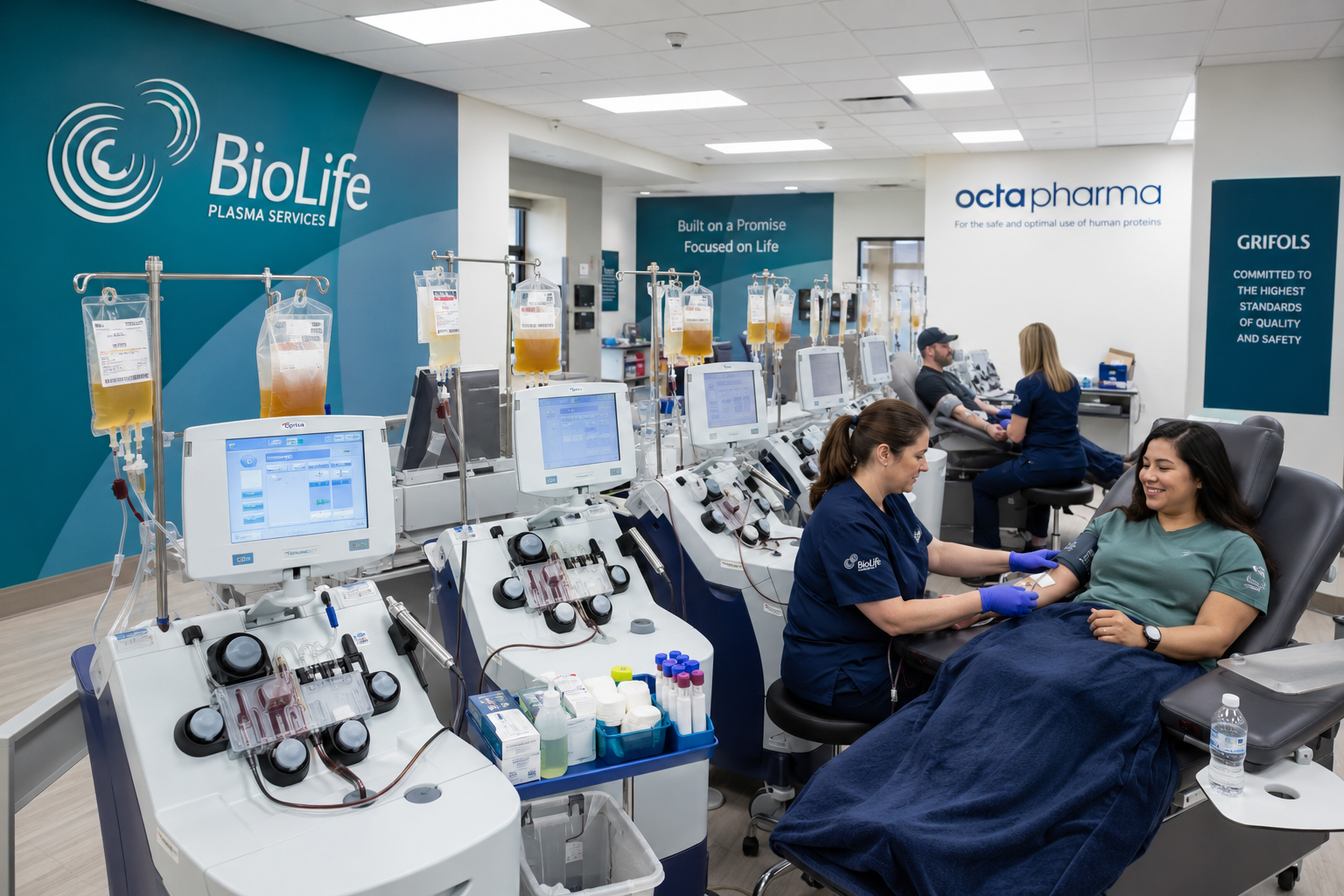
Biolife Plasma, Octapharma Plasma, and Research Peptides: How Plasma Donation Labs Differ From Peptide Suppliers

Biolife Plasma, Octapharma Plasma, and Research Peptides: How Plasma Donation Labs Differ From Peptide Suppliers

June 25, 2026/0 Comments/by Pure Tested

More than 50 million plasma donations are collected annually in the United States alone, making plasma centers among the most visited medical facilities in the country. That high public awareness has created an unexpected source of confusion: many researchers and consumers searching for compounds like BPC-157, MOTS-c, or GLP-3 analogs land on information about BioLife Plasma or Octapharma Plasma, assuming these organizations operate in the same space as research peptide suppliers. They do not. Understanding the distinction between Biolife Plasma, Octapharma Plasma, and Research Peptides — and how plasma donation labs differ from peptide suppliers — is essential for anyone navigating either field in 2026.

Key Takeaways

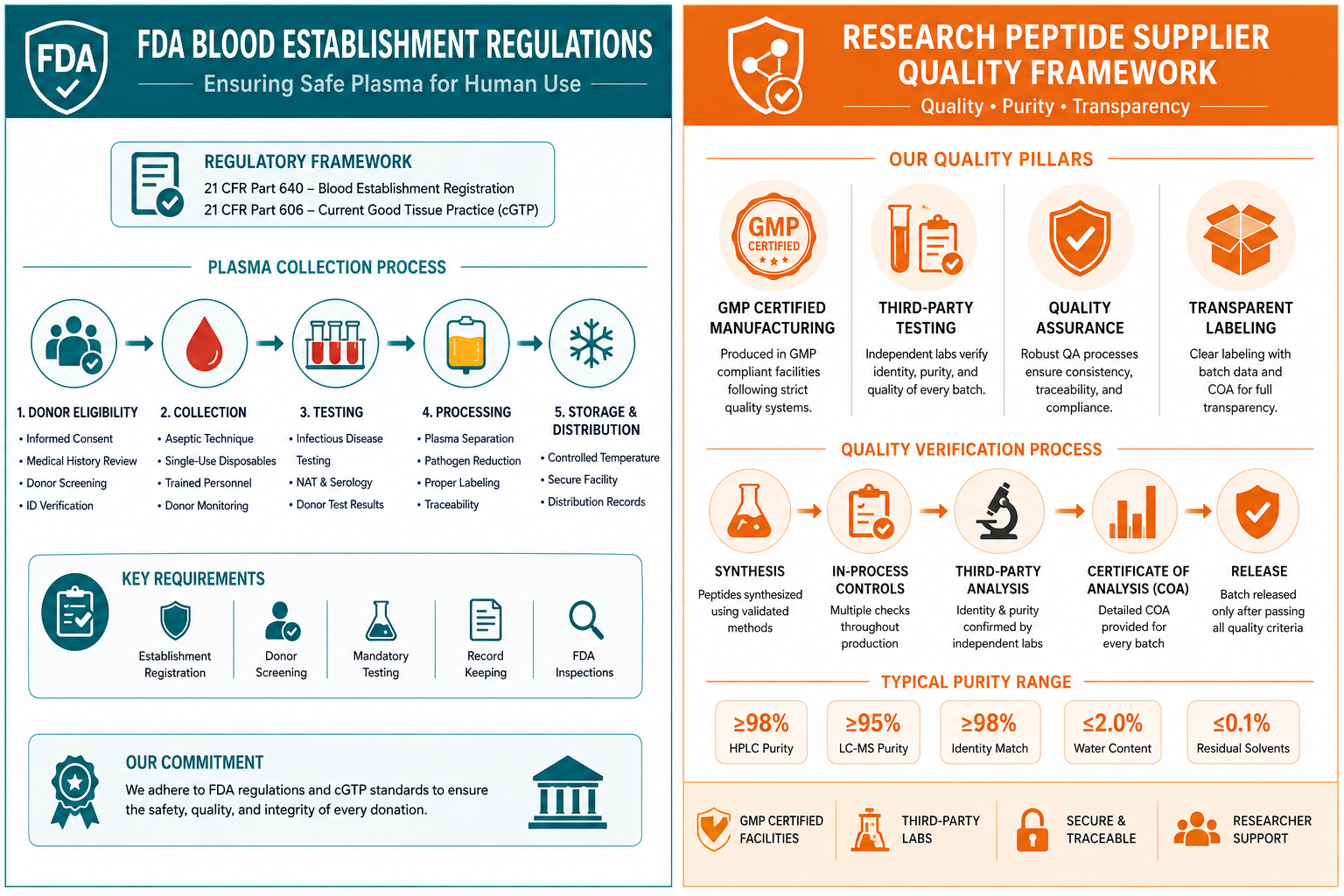
  • BioLife Plasma and Octapharma Plasma are FDA-regulated human plasma collection centers, not peptide manufacturers or suppliers.
  • Research peptide suppliers synthesize short-chain amino acid compounds in laboratory settings under entirely different regulatory and quality frameworks.
  • Plasma-derived therapies (PDTs) are processed from donated human blood; research peptides are synthetically produced compounds.
  • Quality benchmarks for peptide suppliers — including purity certificates and third-party testing — differ significantly from blood establishment regulations.
  • Researchers sourcing compounds such as GLP-3, MOTS-c, or BPC-157 should evaluate peptide suppliers on criteria that have no parallel in plasma donation.

Key Takeaways

What BioLife Plasma and Octapharma Plasma Actually Do

BioLife Plasma Services operates as the plasma-collection arm of Takeda Pharmaceutical, supporting Takeda's plasma-derived therapies (PDT) business. Donors visit BioLife centers to undergo plasmapheresis — a process that separates plasma from whole blood and returns red cells to the donor. The collected plasma feeds downstream manufacturing of immunoglobulins, albumin, clotting factors, and other protein-based therapies used in hospitals and clinics worldwide.

Octapharma follows a vertically integrated model. The company owns collection centers, fractionation plants, and the final manufacturing pipeline for protein therapeutics. Its plasma centers collect source plasma that is later fractionated into licensed medical products. Both organizations operate under FDA blood establishment regulations, which govern donor eligibility, testing protocols, storage, and traceability.

Key characteristics of plasma donation centers:

Feature Plasma Donation Centers
Raw material Human blood plasma from donors
Regulatory body FDA (21 CFR Part 606, Part 640)
End products Immunoglobulins, albumin, clotting factors
Donor compensation Yes, per session
Research peptide supply No

These organizations are not in the business of supplying synthetic peptides to researchers. The confusion arises largely because both sectors use the word "plasma" and both involve biological or biochemical science.


What BioLife Plasma and Octapharma Plasma Actually Do

How Research Peptide Suppliers Operate Under a Different Framework

Research peptide suppliers synthesize short-chain amino acid sequences in controlled laboratory environments using solid-phase peptide synthesis (SPPS) or similar chemical methods. There is no human donor involved. The compounds — ranging from metabolic peptides like MOTS-c for mitochondrial research to cardioprotective candidates like SS-31 (elamipretide) — are produced, purified, and tested before being sold strictly for laboratory and preclinical research purposes.

Quality benchmarks for reputable peptide suppliers include:

  • Purity verification via high-performance liquid chromatography (HPLC), typically targeting 98%+ purity
  • Mass confirmation through mass spectrometry to verify molecular identity
  • Certificate of Analysis (CoA) provided with each batch
  • Third-party testing from independent laboratories
  • Sterile filtration for injectable-format research compounds

Suppliers offering compounds such as GLP-3 triple agonist peptides, BPC-157 and TB-500 blends, or nasal spray peptide formats must maintain these standards independently, because no single federal agency currently governs research peptide synthesis the way the FDA governs plasma collection.

"The absence of a unified regulatory body for research peptides makes third-party testing and transparent documentation the most reliable proxies for quality assurance."

This is why researchers sourcing compounds like epithalon or PT-141 must evaluate suppliers on documentation standards rather than FDA licensure status.


How Research Peptide Suppliers Operate Under a Different Framework

Why the Distinction Matters for Labs Sourcing GLP-3, MOTS-c, or BPC-157

When a research team searches for MOTS-c or CJC-1295 with ipamorelin and encounters BioLife or Octapharma in search results, the mismatch can waste significant time. More importantly, the quality criteria that matter for each sector are fundamentally different.

For plasma donation, donor health screening and viral inactivation steps are paramount. For research peptides, the critical variables are synthetic purity, sequence fidelity, and batch-to-batch consistency. A researcher evaluating a supplier for GLP-1 and incretin-related peptides should ask for HPLC data and CoAs — documents that plasma centers simply do not produce because they are irrelevant to their operations.

Practical checklist for evaluating a research peptide supplier:

  1. Is a CoA available for every product batch?
  2. Does the supplier use third-party HPLC and mass spectrometry?
  3. Are storage and shipping conditions clearly specified?
  4. Is the compound labeled explicitly for research use only?
  5. Does the supplier maintain transparent contact and return policies?

Researchers can browse verified peptides for sale from suppliers that publish this documentation openly, which remains the clearest differentiator from unverified sources in 2026.


Conclusion

The overlap in public search behavior between plasma donation centers and research peptide suppliers reflects genuine curiosity about biological science — but the two sectors serve entirely different purposes under entirely different frameworks. BioLife Plasma and Octapharma Plasma collect human plasma to manufacture licensed protein therapies. Research peptide suppliers synthesize compounds like MOTS-c, GLP-3, and BPC-157 for preclinical investigation, governed by quality standards built around chemical purity rather than donor safety.

Actionable next steps:

  • If the goal is plasma donation, visit BioLife or Octapharma's official center locators.
  • If the goal is sourcing research peptides, prioritize suppliers that publish third-party CoAs, HPLC data, and clear research-use labeling.
  • Review the full catalog of research peptides from verified suppliers and request documentation before any purchase.
  • Bookmark regulatory guidance from the FDA's blood establishment resources separately from peptide supplier evaluation criteria.

Keeping these two worlds clearly separated protects research integrity and ensures the right questions are asked of the right organizations.

https://www.puretestedpeptides.com/wp-content/uploads/2026/06/Biolife-Plasma-Octapharma-Plasma-and-Research-Peptides-How-Plasma-Donation-Labs-Differ-From-Peptide-Suppliers.png 1024 1536 Pure Tested https://www.puretestedpeptides.com/wp-content/uploads/2026/01/buy-peptides-online.jpg Pure Tested2026-06-25 13:03:382026-07-20 15:02:17Biolife Plasma, Octapharma Plasma, and Research Peptides: How Plasma Donation Labs Differ From Peptide Suppliers
What Is GLP2 Tirz Peptide? Understanding the GLP-2 and Tirzepatide Naming Confusion in Research Content

What Is GLP2 Tirz Peptide? Understanding the GLP-2 and Tirzepatide Naming Confusion in Research Content

June 18, 2026/0 Comments/by Pure Tested

Researchers searching for tirzepatide compounds online frequently encounter a label that stops them cold: "GLP-2 Tirz." The term blends two distinct scientific concepts into one phrase, and the resulting confusion is widespread enough to affect sourcing decisions, literature reviews, and research planning. This article answers the question of what is GLP2 Tirz peptide, understanding the GLP-2 and tirzepatide naming confusion in research content, and provides a clear framework for navigating the terminology.

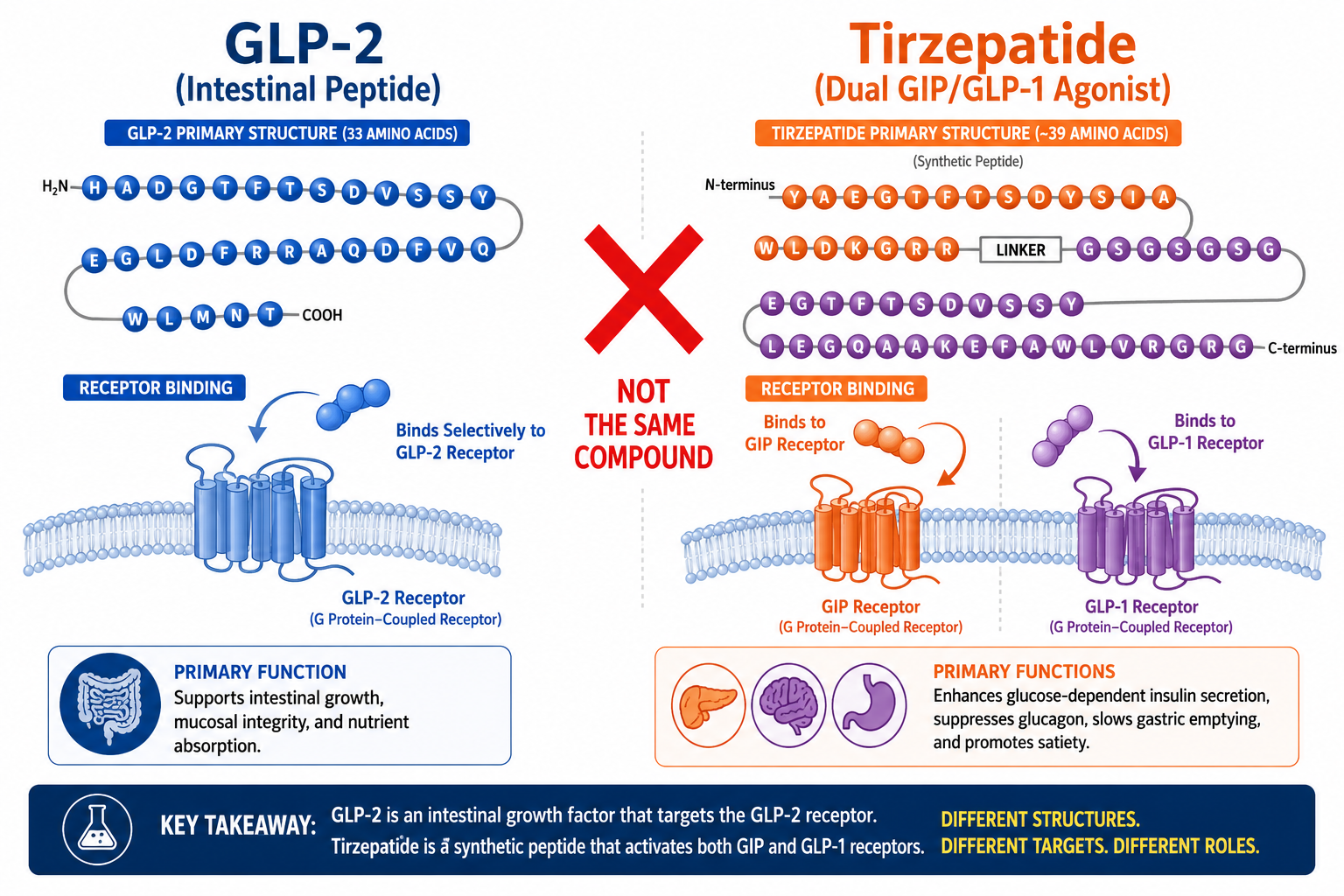
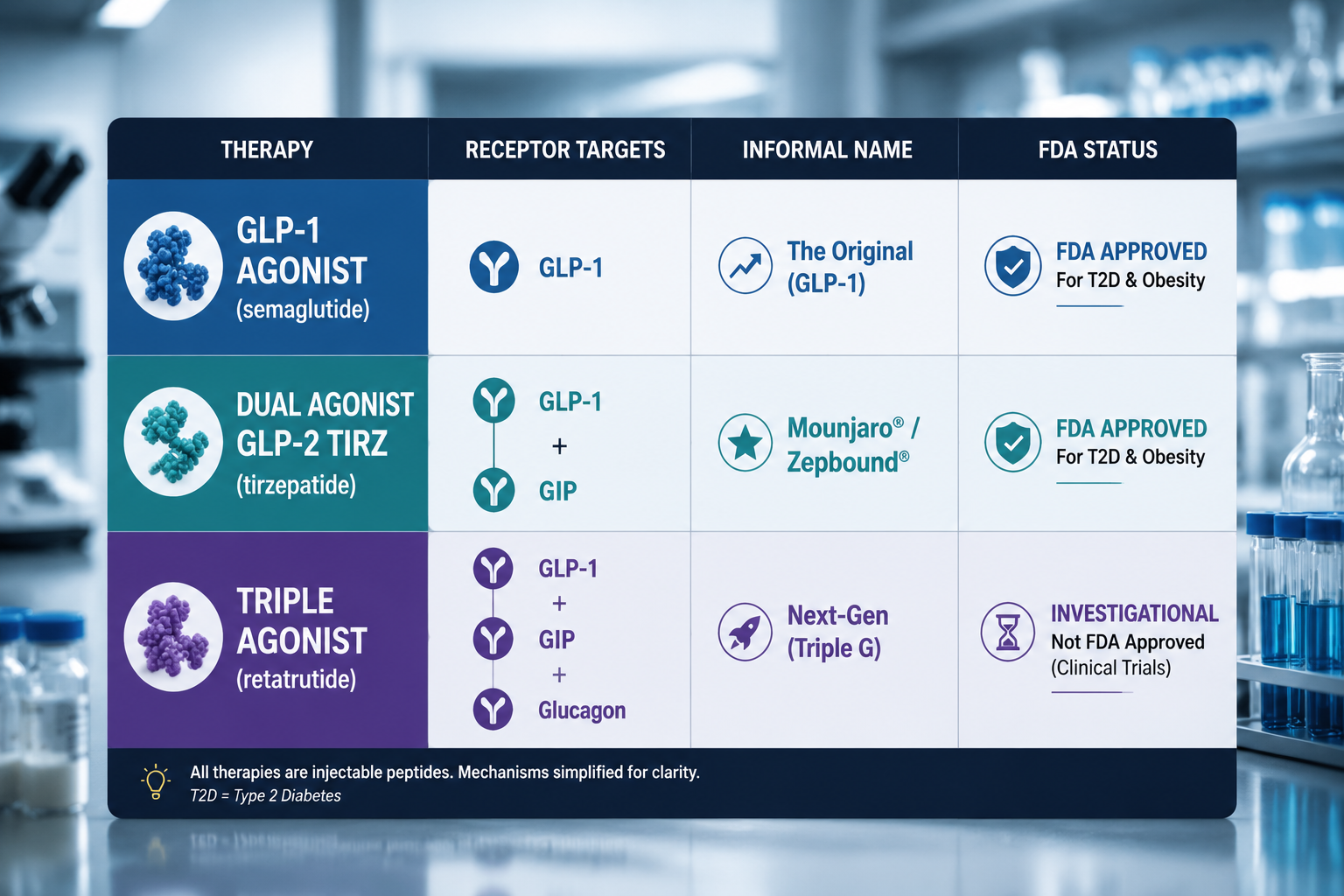
() educational infographic-style illustration showing two distinct peptide molecules side by side labeled 'GLP-2 (Intestinal

Key Takeaways

  • "GLP-2 Tirz" is an informal research catalog label for tirzepatide, not a reference to the biological peptide GLP-2.
  • Tirzepatide is a dual agonist that activates GIP and GLP-1 receptors — it does not activate the GLP-2 receptor.
  • The World Health Organization's official generic name for this compound is tirzepatide, with "tirz-" indicating dual incretin activity.
  • Informal numbering (GLP-2 for dual agonists, GLP-3 for triple agonists) is technically inaccurate and can mislead researchers.
  • Always verify receptor targets and INN nomenclature before sourcing or citing any peptide compound.

Two Different Compounds, One Confusing Label

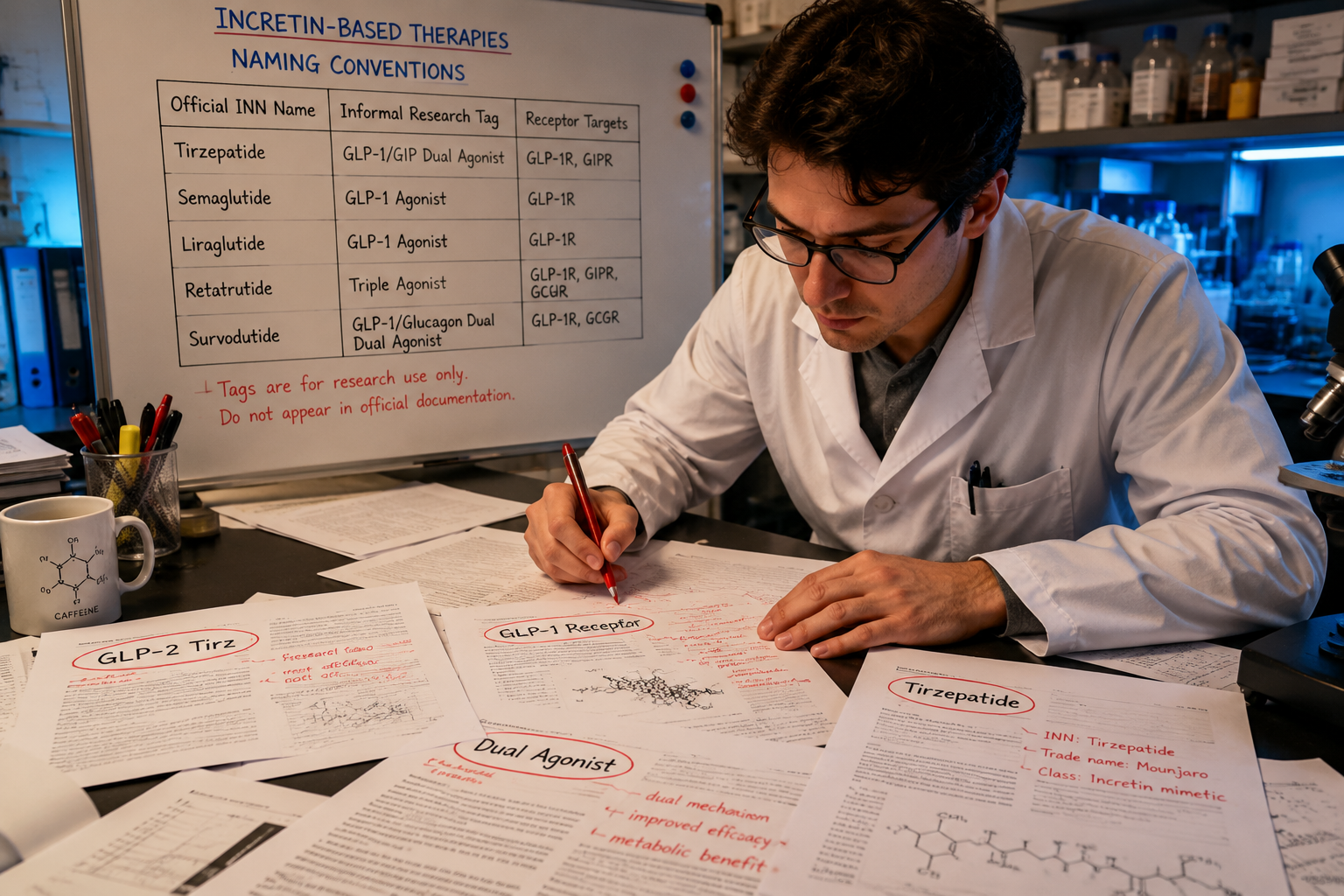
The confusion starts with a naming shortcut that spread through research vendor catalogs and online forums. In those spaces, some suppliers began labeling compounds by their "generation" of incretin activity rather than by their official name. Under this informal system, GLP-1 agonists like semaglutide became "first generation," dual agonists like tirzepatide were tagged "GLP-2," and triple agonists like retatrutide were called "GLP-3."

The problem is that GLP-2 already exists as a well-defined biological peptide. Glucagon-like peptide-2 is a 33-amino acid hormone secreted by intestinal L-cells. Its primary roles involve gut mucosal growth, intestinal barrier function, and nutrient absorption. It has nothing to do with the GIP or GLP-1 receptor pathways that tirzepatide targets.

When a vendor lists "GLP-2 Tirzepatide" or "GLP-2 Tirz," the "GLP-2" portion is not a receptor designation — it is a generational shorthand. This distinction matters enormously in research contexts where precision in nomenclature drives experimental design.

For a broader look at how incretin generations are being categorized, the breakdown of GLP-1 generations and their differences provides useful comparative context.


What Tirzepatide Actually Is

Tirzepatide is a synthetic peptide dual agonist. It activates two receptors simultaneously:

Receptor Hormone Mimicked Primary Effect
GLP-1R Glucagon-like peptide-1 Insulin secretion, appetite suppression
GIPR Glucose-dependent insulinotropic polypeptide Enhanced insulin release, fat metabolism

The World Health Organization's International Nonproprietary Names system assigned the generic name "tirzepatide." The stem "tirz-" was specifically chosen to signal its dual incretin mechanism, and "-tide" confirms its peptide structure. Eli Lilly markets the same molecule under two brand names: Mounjaro (approved for type 2 diabetes in May 2022) and Zepbound (approved for chronic weight management in November 2023).

Patent protection on tirzepatide extends to at least 2036, which is one reason compounded versions have appeared in research markets — though those formulations carry important purity and regulatory considerations that researchers must evaluate carefully.

For comparison, the GLP-1 T dual receptor agonism research breakdown explores the receptor-level science behind this class of compounds in greater detail.


Why the Informal Numbering System Creates Problems

Understanding what is GLP2 Tirz peptide — and why the naming confusion in research content matters — requires examining the downstream consequences of imprecise labeling.

Why the Informal Numbering System Creates Problems

Three specific problems arise from the informal numbering approach:

  1. Literature mismatch — Searching "GLP-2" in PubMed returns hundreds of studies on intestinal mucosal biology, not dual incretin agonists.
  2. Sourcing errors — A researcher unfamiliar with the shorthand may order the wrong compound entirely.
  3. Regulatory misclassification — Conflating tirzepatide with GLP-2 biology could lead to incorrect assumptions about mechanism, safety profile, and applicable research protocols.

The preferred scientific terms are "dual GIP/GLP-1 agonist" for tirzepatide and "triple agonist" for compounds like retatrutide. The retatrutide and triple agonist research planning guide covers how that next generation of compounds is being cataloged and sourced.

The designation "GLP-2 (T)" — where the "(T)" stands for tirzepatide — has emerged in some vendor documentation as an attempt to acknowledge the distinction while preserving the generational shorthand. It is a partial solution at best.


Navigating Research Catalogs Accurately

When encountering "GLP-2 Tirz" in a research catalog, the following verification steps reduce the risk of confusion:

  • Check the receptor targets listed — tirzepatide should specify GLP-1R and GIPR, not GLP-2R.
  • Confirm the INN name — the compound should be identified as tirzepatide in any compliant documentation.
  • Review available certificates of analysis — a certificate of analysis from the supplier confirms identity and purity independent of catalog naming.
  • Cross-reference with clinical nomenclature — Mounjaro and Zepbound are the only FDA-approved branded forms.

Researchers working across multiple peptide classes will find it useful to navigate the full peptide catalog by research theme to keep compound categories organized and clearly separated.

For those exploring adjacent metabolic research areas, cagrilintide synergy with GLP-1 compounds offers related context on how combination approaches are being studied.

Navigating Research Catalogs Accurately


Conclusion

The label "GLP-2 Tirz" is a catalog shorthand, not a scientific designation. Tirzepatide targets GLP-1 and GIP receptors — it has no functional relationship to the intestinal peptide GLP-2. The informal generational numbering system that produced this label is convenient for vendors but creates genuine confusion for researchers who rely on precise terminology.

Actionable next steps for researchers in 2026:

  • Default to the INN name "tirzepatide" in all documentation and literature searches.
  • Treat any "GLP-2" label in a research catalog as a generational shorthand requiring verification.
  • Request certificates of analysis that explicitly confirm receptor targets and compound identity.
  • Use the terms "dual agonist" and "triple agonist" in research writing to avoid cross-contaminating search results with unrelated GLP-2 intestinal biology.

Precise naming is not a minor administrative concern — it is the foundation of reproducible, credible research.

https://www.puretestedpeptides.com/wp-content/uploads/2026/06/What-Is-GLP2-Tirz-Peptide-Understanding-the-GLP-2-and-Tirzepatide-Naming-Confusion-in-Research-Content.png 1024 1536 Pure Tested https://www.puretestedpeptides.com/wp-content/uploads/2026/01/buy-peptides-online.jpg Pure Tested2026-06-18 13:03:432026-07-20 15:02:54What Is GLP2 Tirz Peptide? Understanding the GLP-2 and Tirzepatide Naming Confusion in Research Content
BPC-157 and TB-500 Research Models: When Combination Stacks Make Sense and When They Do Not

BPC-157 and TB-500 Research Models: When Combination Stacks Make Sense and When They Do Not

June 7, 2026/0 Comments/by Pure Tested

No published peer-reviewed study has ever tested BPC-157 and TB-500 together in any model — cell, animal, or human. That single fact should anchor every conversation about the so-called "Wolverine Stack." Yet researchers and procurement teams continue to evaluate this combination, often relying on mechanism-based reasoning rather than outcomes data. Understanding BPC-157 and TB-500 research models: when combination stacks make sense and when they do not requires separating what the preclinical literature actually shows from what is still untested extrapolation.

Key Takeaways

  • No controlled study has examined BPC-157 and TB-500 co-administration in any experimental model as of 2026.
  • Both peptides share overlapping repair pathways, which creates a plausible rationale but also a significant confounding risk in study design.
  • BPC-157 human data consists of only three small pilot studies; TB-500 has no FDA-approved indication and no controlled human trials.
  • Combination stacks may make sense when pathways are genuinely complementary and non-redundant; they rarely make sense when baseline single-agent data are still missing.
  • Rigorous study design — including single-agent controls — is essential before any combination result can be meaningfully interpreted.

What the Individual Preclinical Evidence Actually Shows

BPC-157

BPC-157 is a synthetic pentadecapeptide derived from a gastric protein. Dozens of animal studies document its effects across tendon, muscle, nerve, gut, and vascular tissue. Key mechanisms include nitric-oxide-mediated microvascular repair, fibroblast activation, and anti-inflammatory signaling. A 2025 narrative review in musculoskeletal medicine catalogued these findings and confirmed that the evidence base, while broad, remains almost entirely preclinical.

Human data are thin. Only three small pilot studies exist: one in intra-articular knee pain, one in interstitial cystitis, and one recent IV safety and pharmacokinetics protocol. In that IV pilot, BPC-157 was infused at doses up to 20 mg in two healthy adults with no adverse events or meaningful lab changes — but a sample size of two cannot define safety or efficacy. Reviewers consistently classify BPC-157 as investigational, pending properly powered clinical trials.

For researchers building a sourcing and documentation baseline, the BPC-157 core peptides documentation and first research guide provides a structured starting point before any combination design is considered.

TB-500

TB-500 is a synthetic fragment of thymosin-beta4 that regulates actin dynamics and cell migration. Animal models of musculoskeletal and cardiac injury show tissue repair, angiogenesis promotion, and reduced inflammatory markers. TB-500 is not FDA-approved for human use, has no standardized dosing protocol, and its human exposure data are limited to anecdotal reports and uncontrolled observations. Reported side effects — mild injection-site reactions, transient fatigue, occasional headache — come from these uncontrolled sources, not clinical trials.

Researchers evaluating procurement and quality control workflows should review the TB-500 controlled experimental models and QC workflow resource before designing any protocol.


BPC-157 and TB-500 Research Models: When Combination Stacks Make Sense

When do combination stacks have scientific merit? The answer depends on three design criteria.

Criterion Combination Makes Sense Combination Does Not Make Sense
Pathway overlap Complementary, non-redundant Largely redundant — adds noise
Single-agent baseline Established in same model Missing or from different species
Outcome measurability Distinct endpoints per agent Shared endpoints, no attribution

BPC-157 and TB-500 share angiogenesis and anti-inflammatory signaling. That overlap is precisely where combination research becomes methodologically difficult. If both agents promote vascular repair through partially overlapping mechanisms, a combination result cannot be cleanly attributed to either compound without rigorous factorial design — meaning four groups: vehicle control, BPC-157 alone, TB-500 alone, and the combination.

Without that structure, any observed effect is uninterpretable. This is not a minor limitation; it is a fundamental confound that invalidates the combination result entirely.

Researchers exploring other peptides with distinct, non-overlapping mechanisms — such as GHK-Cu copper peptide acting on extracellular matrix remodeling, or LL-37 innate research models targeting antimicrobial and epithelial pathways — may find cleaner combination rationales because the mechanisms diverge more clearly.


BPC-157 and TB-500 Research Models: When Combination Stacks Do Not Make Sense

BPC-157 and TB-500 Research Models: When Combination Stacks Do Not Make Sense

The combination stack does not make sense under several common research conditions.

When single-agent data are absent from your model. If a lab has not first characterized BPC-157 or TB-500 individually in its specific tissue or injury model, combining them produces uninterpretable data. The preclinical literature for each compound spans multiple species and injury types; results do not transfer across models without validation.

When the goal is mechanism attribution. A combination design cannot isolate which peptide drives an observed outcome. Researchers interested in understanding pathway-specific contributions must run single-agent arms first.

When pharmacodynamic interaction data do not exist. As of 2026, there is a complete absence of published data on how BPC-157 and TB-500 interact pharmacodynamically when co-administered. All synergy claims are mechanism-based extrapolation, not measured outcomes. Independent analyses of the combination stack confirm this gap explicitly, describing all combination rationales as "untested extrapolation" from separate experiments.

For researchers evaluating other combination or multi-target peptide frameworks, the GLP-1 peptide generational research concepts and CJC-1295 Ipamorelin assay planning and sourcing checklist resources illustrate how more mature combination frameworks are structured when underlying single-agent data already exist.


Conclusion

The core finding is straightforward: BPC-157 and TB-500 research models make sense as a combination only when single-agent baselines are already established, pathways are non-redundant, and study design includes proper factorial controls. In most current research contexts, none of those conditions are fully met.

Actionable next steps for researchers in 2026:

  • Establish single-agent dose-response data for each peptide in your specific model before any combination protocol.
  • Design combination studies with at least four groups to enable proper attribution.
  • Treat all published synergy claims as hypothesis-generating, not hypothesis-confirming.
  • Verify peptide purity and documentation through quality-controlled sources before procurement.
  • Consult the PT-141 peptide research context and QA controls framework as a model for how rigorous QA documentation should precede any experimental design.

The combination stack is not inherently invalid — it is currently unvalidated. That distinction matters for anyone designing experiments, interpreting results, or making sourcing decisions based on the existing literature.

https://www.puretestedpeptides.com/wp-content/uploads/2026/06/BPC-157-and-TB-500-Research-Models-When-Combination-Stacks-Make-Sense-and-When-They-Do-Not.png 1024 1024 Pure Tested https://www.puretestedpeptides.com/wp-content/uploads/2026/01/buy-peptides-online.jpg Pure Tested2026-06-07 13:04:272026-07-20 15:03:48BPC-157 and TB-500 Research Models: When Combination Stacks Make Sense and When They Do Not
×

Helpful Links

  • My account
  • Cart
  • Checkout
  • Refund and Returns Policy
  • Privacy Policy
  • SMS Privacy Policy
  • Login
  • My Account
  • Logout

USA Made Lab Tested Peptides

All products are sold for research, laboratory, or analytical purposes only, and are not for human consumption


Pure Tested Peptides is a chemical supplier. Pure Tested Peptides is not a compounding / chemical compounding facility as defined under 503A of the Federal Food, Drug, and Cosmetic act. Pure Tested Peptides is not an outsourcing facility as defined under 503B of the Federal Food, Drug, and Cosmetic act.

The statements made within this website have not been evaluated by the US Food and Drug Administration. The products we offer are not intended to diagnose, treat, cure or prevent any disease.

Human/Animal Consumption Prohibited. Laboratory/In-Vitro Experimental Use Only

Scroll to top Scroll to top Scroll to top