Where to Buy Research-Grade GLP Peptides: Comparing GLP-1, GLP-2-T, and GLP-3 Retatrutide Vendors, Pricing, and COA Standards
Blinded third-party HPLC testing conducted in 2026 found purity variances of more than 15 percentage points between the highest- and lowest-ranked vendors selling the same GLP-class peptide at similar price points. For researchers sourcing GLP-1 analogues, GLP-2-T, or GLP-3 Retatrutide, that gap is not a minor inconvenience, it is a fundamental threat to data integrity. This guide to where to buy research-grade GLP peptides covers vendor comparisons, pricing benchmarks, and the COA standards that separate credible suppliers from risky ones.
Key Takeaways
- Third-party HPLC plus mass spectrometry is the minimum acceptable analytical standard for research-grade GLP peptides in 2026.
- Retatrutide pricing below a credible market floor is a documented red flag for under-dosed or impure product.
- KOI Peptides and ROEHN Research have ranked highly in independent comparative analyses across multiple GLP classes.
- COA documents should include purity percentage, impurity profiling, and mass confirmation, not just a single-point purity claim.
- Regional procurement matters: USA, UK, EU-adjacent, and Australian researchers face different logistics and availability constraints.
Understanding the GLP Peptide Landscape Before You Buy
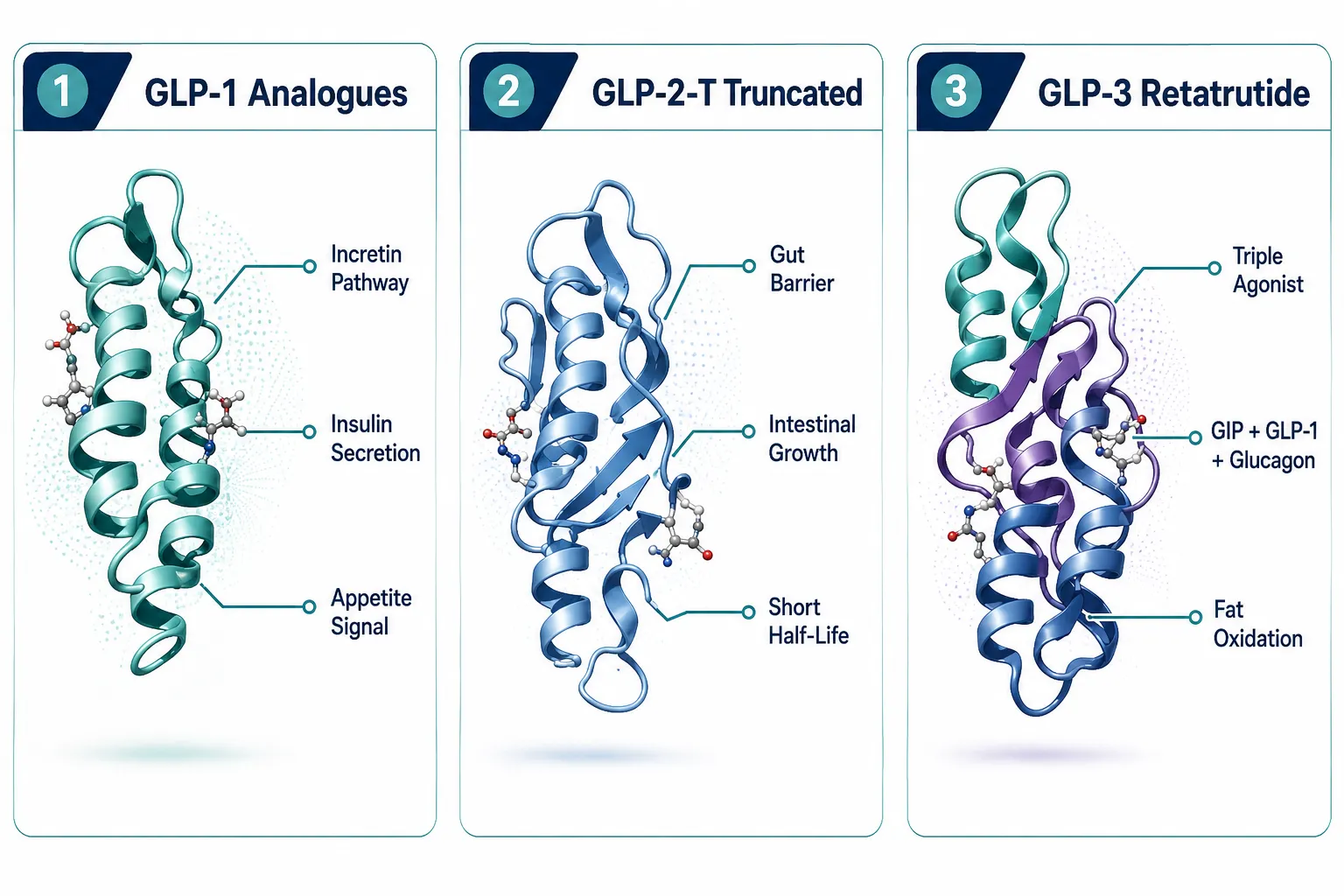
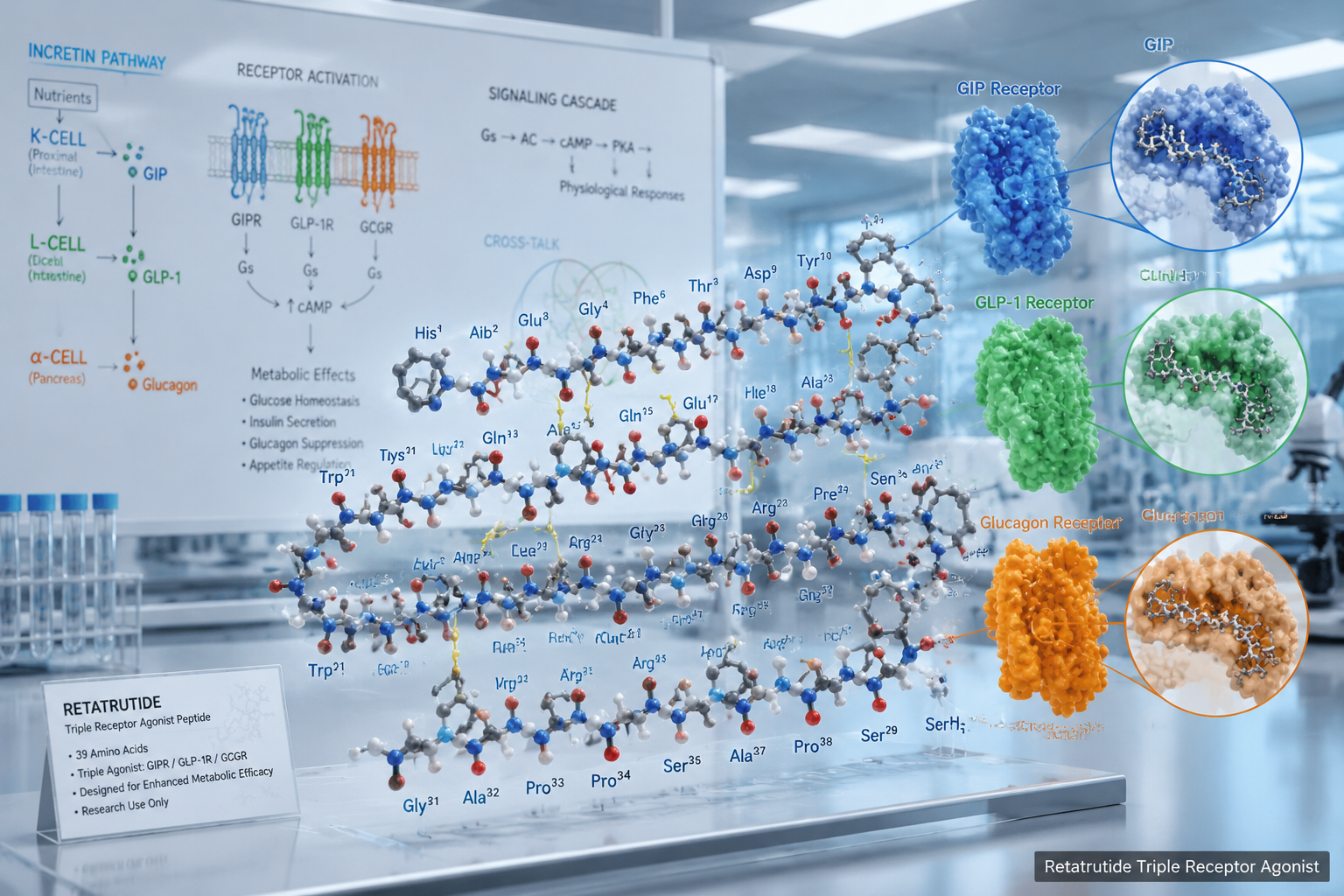
The term "GLP peptide" covers a broader family of compounds than many researchers initially realize. GLP-1 analogues act primarily on the incretin pathway, stimulating insulin secretion and modulating appetite signaling. GLP-2-T, the truncated form of glucagon-like peptide-2, is studied for its effects on intestinal barrier function and mucosal growth, with a shorter half-life than its full-length counterpart. GLP-3 Retatrutide is the most structurally complex of the three, a triple agonist Retatrutide compound that activates GIP, GLP-1, and glucagon receptors simultaneously.
Each compound demands different synthesis complexity, and that complexity directly affects what a legitimate COA should contain. Researchers exploring triple agonist research will find that vendors capable of producing verifiable Retatrutide at research grade are fewer than those offering simpler GLP-1 analogues. Understanding these distinctions is the first step in evaluating where to buy research-grade GLP peptides with confidence.
For context on how Retatrutide compares to earlier GLP-class compounds in the research literature, the Semaglutide vs Retatrutide comparison is a useful starting point.
Vendor Comparison: Who Leads on Purity and COA Standards
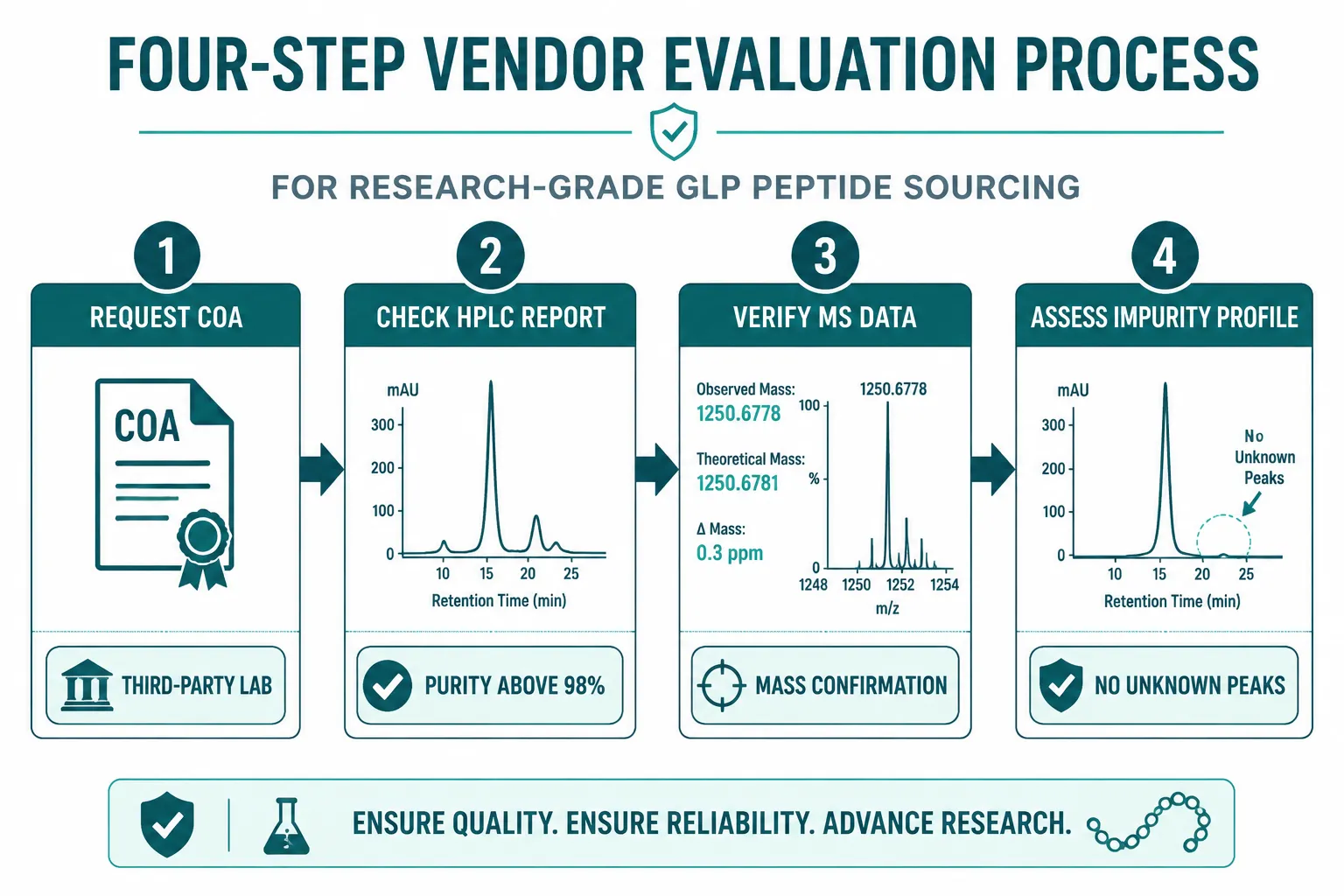
When comparing vendors for research-grade GLP peptides, three names consistently appear in independent analyses conducted in 2025 and 2026.
ROEHN Research earned the top ranking in blinded HPLC testing for Retatrutide specifically. Their analytical documentation includes third-party chromatography, mass spectrometry confirmation, and a detailed impurity profile, the full stack that serious researchers require.
KOI Peptides was ranked first across GLP-1, GLP-2, and GLP-3 categories in a comparative vendor analysis by MiraviGLP. Their consistency across multiple compound classes is notable, and their COA documentation meets the third-party verification standard.
GLP1 Research Lab provides concrete batch-level purity and pricing data for GLP-1 and GLP-2-T, making them a strong option for researchers focused on those two classes rather than Retatrutide.
Peptides Source occupies the budget tier. Lower pricing comes with trade-offs: COA documentation is less comprehensive, and independent verification is less consistent. For exploratory pilot work with modest purity requirements, this may be acceptable. For rigorous protocols, it is not.
| Vendor | GLP Classes Covered | COA Standard | Best For |
|---|---|---|---|
| ROEHN Research | GLP-3 Retatrutide | HPLC + MS + Impurity Profile | High-rigor Retatrutide studies |
| KOI Peptides | GLP-1, GLP-2, GLP-3 | Third-party HPLC + MS | Multi-class GLP research |
| GLP1 Research Lab | GLP-1, GLP-2-T | Batch-level purity data | GLP-1 / GLP-2-T focused work |
| Peptides Source | GLP-1 | Basic COA | Budget-constrained pilot work |
Researchers interested in related tirzepatide research should note that dual-agonist compounds carry similar COA complexity requirements to Retatrutide, and the same vendor quality standards apply.
Pricing, Red Flags, and Regional Procurement
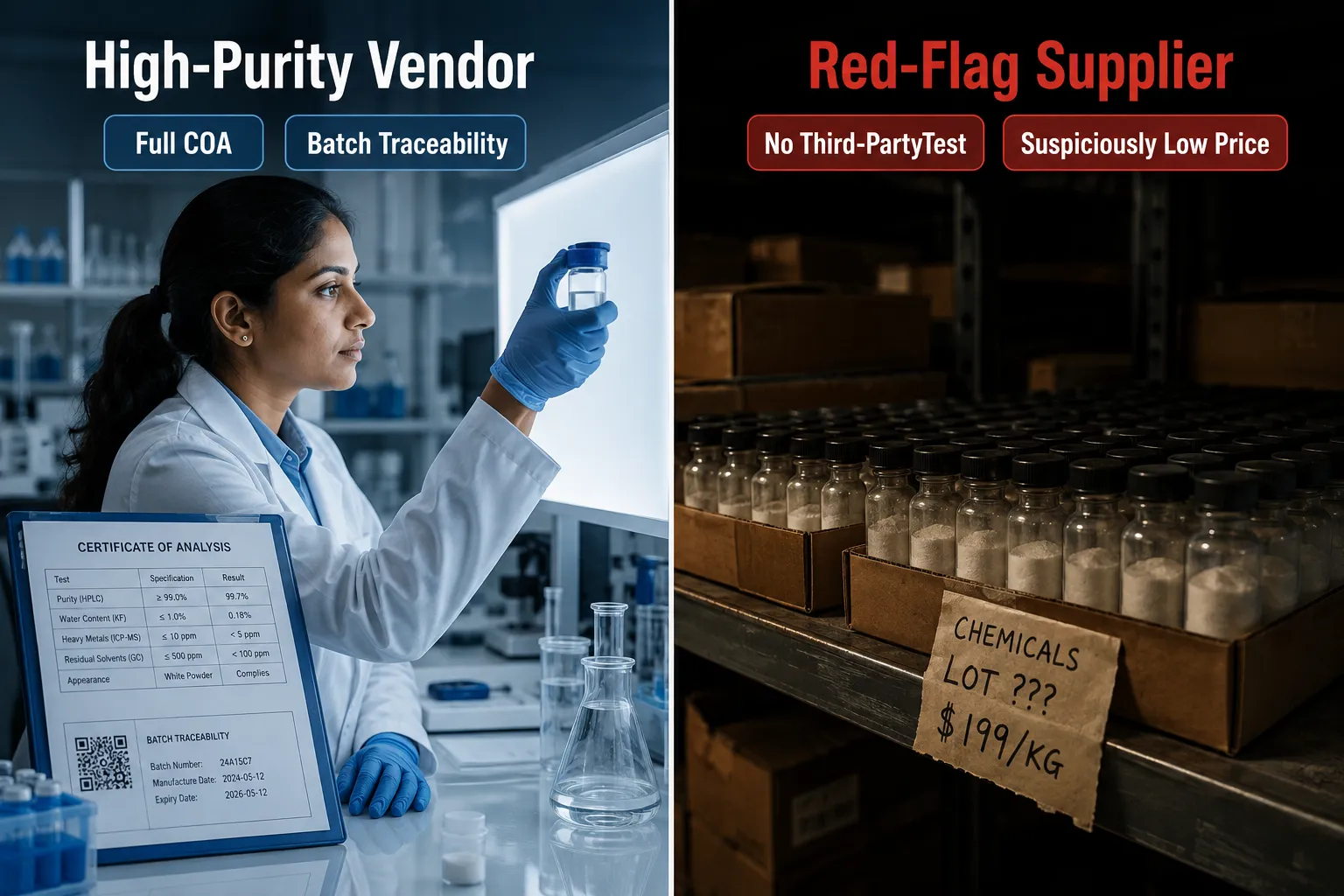
Pricing for research-grade Retatrutide in 2026 sits within a credible band that reflects the genuine synthesis complexity of a triple-agonist peptide. Analysts tracking the GLP peptide marketplace have consistently flagged product priced significantly below this band as a warning sign. Under-priced Retatrutide has been associated with under-dosing, impurity contamination, or outright mislabeling in independent testing.
Key pricing red flags to watch:
- Retatrutide offered at a steep discount versus all established vendors simultaneously
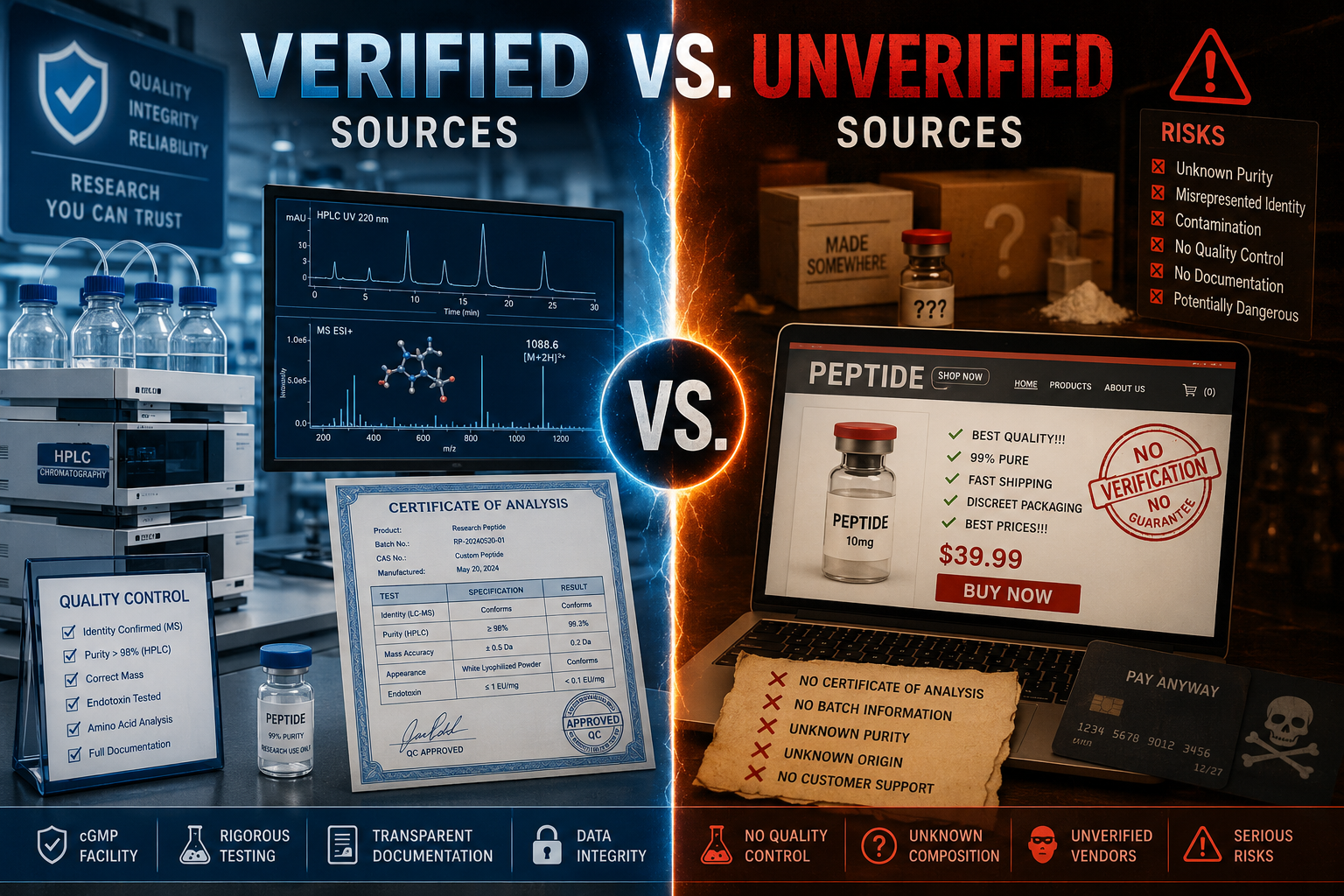
- No third-party lab name or accreditation number on the COA
- Purity stated as a single percentage with no chromatogram attached
- No mass spectrometry data confirming molecular identity
- Batch numbers that cannot be cross-referenced with a lab report
Regional procurement considerations are also relevant. US-based researchers have the widest vendor access. UK and EU-adjacent researchers face additional logistics considerations but can source from vendors with regional distribution. Australian researchers face the most constrained environment and should verify import compliance carefully before ordering.
Researchers working on small molecule obesity research alongside GLP peptide studies will find that the same COA rigor standards apply across both compound classes when designing comparative protocols.
For those building stacks or multi-compound protocols, resources on single peptide vs stack approaches can help frame sourcing decisions before committing to a vendor for multiple compounds.
COA Standards: What Research-Grade Actually Means
The phrase "research-grade" is used loosely across the peptide marketplace. In 2026, the industry's leading vendors have converged on a set of analytical standards that define what the term should mean in practice.
Minimum acceptable COA elements for GLP peptides:
- HPLC purity percentage, ideally above 98%, with the chromatogram attached
- Mass spectrometry confirmation, verifying the molecular weight matches the target compound
- Impurity profiling, identifying and quantifying any off-target peaks
- Batch number traceability, linking the COA to a specific production lot
- Third-party lab identity, name and accreditation of the independent testing facility
A vendor-issued, in-house COA with no third-party verification is not sufficient for rigorous research use. The distinction between research-grade suppliers and clinical peptide services is also worth noting: clinical services operate under regulatory frameworks that research suppliers do not, and researchers should not conflate the two categories when evaluating sourcing options.
Those exploring therapeutic peptides more broadly will find that COA standards vary significantly by compound class, and GLP peptides represent one of the more demanding categories given their structural complexity.
Conclusion
Sourcing research-grade GLP peptides in 2026 requires more than finding a vendor with a website and a price list. The gap between the best and worst suppliers, measured in actual purity, is wide enough to invalidate experimental results entirely.
Actionable next steps for researchers:
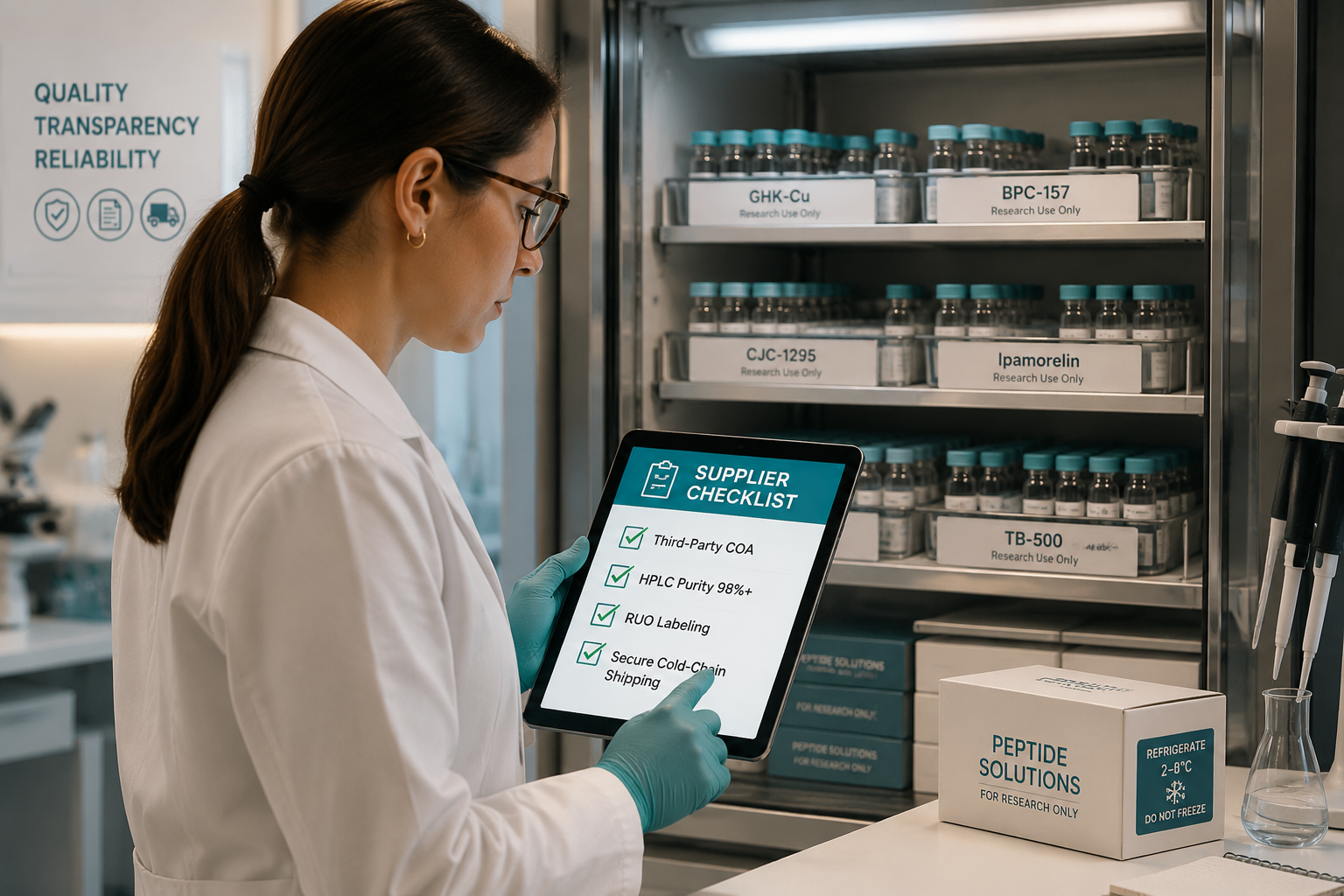
- Request the full COA, including the chromatogram and MS data, before placing any order
- Cross-reference the vendor's stated third-party lab against accreditation databases
- Treat any Retatrutide priced significantly below the established market band as a disqualifying red flag
- For multi-class GLP research, prioritize vendors like KOI Peptides that demonstrate consistency across GLP-1, GLP-2, and GLP-3 categories
- For Retatrutide specifically, ROEHN Research's blinded testing performance makes it a strong primary or verification benchmark
The GLP peptide marketplace is undergoing an industry shakeout, and the vendors investing in genuine third-party analytical infrastructure are separating from those who are not. Choosing where to buy research-grade GLP peptides based on COA quality rather than price alone is the single most effective way to protect research integrity.