Call or Text 727-513-9780
  • Shopping Cart Shopping Cart
    0Shopping Cart
Pure Tested Peptides | America's most trusted Peptides for sale online
  • Peptides for sale
    • Oral Peptides for sale
      • Peptide Capsules for sale
      • BPC 157 Capsules 1000mcg
      • SLU-PP-332 Capsules | 1000 mcg
      • 5-Amino-1MQ 50mg Capsules
      • Tesofensine 500mcg
    • All Peptides for sale
    • Peptide Sprays
      • BPC 157 Nasal Spray Kit
      • BPC-157 TB500 Nasal Spray Kit
      • Semax Nasal Spray 10mg
      • Selank – Nasal Spray Kit – 10mg
      • Epithalon 50MG Nasal Spray Kit
      • Ipamorelin 10mg Nasal Spray
      • Klow Nasal Spray (BPC-157 + TB-500 + GHK-Cu + KPV) | 80mg
      • Hulk Nasal Spray Tesa / Ipa Blend 6/3 MG
      • Klow Nasal Spray
      • NAD + 500 mg Nasal Spray
      • PT-141 Nasal Spray Kit
    • GHRH Peptides
      • Ipa Peptides
      • CJC-1295 Peptides
        • CJC-1295 with DAC 5 mg
        • CJC-1295 without DAC 5 mg
        • CJC-1295 Ipa 10mg
      • Tesa Peptides
        • Tesa Peptide
        • Tesa 20 mg
    • GHK-Cu Peptides
      • All GHK-Cu Peptides
      • GHK-Cu 100mg
      • KLOW Peptide Blend – Buy KLOW blend online
    • BPC Peptides
      • All BPC Peptides
      • BPC-157
      • BPC-157 TB-500
      • BPC 157 capsules 1000mcg
    • SLU-PP-332 Peptides
      • All SLU-PP-332 Peptides
      • SLU-PP-332 5mg
    • GLP3 Peptides
    • PT-141 Peptides
      • PT-141 Peptides for sale
      • PT-141 10mg
      • PT-141 Nasal Spray
    • CAG Peptides
      • Lipo-C Peptide Blend
      • CAG 5mg
      • CAG 10mg
    • MOTS-C Peptides
      • MOTS-C Peptides for sale
      • MOTS-c peptide
      • MOTS-c 10mg *6 pack*
    • 5 Amino 1MQ Peptides
      • 5 Amino 1MQ Peptides for sale
      • 5-Amino-1MQ 50mg Capsules
      • 5-Amino-1MQ 5mg
    • Epithalon Peptides
      • Epithalon Peptides for sale
      • Epithalon 10mg
      • Epithalon 50mg
  • Shop
    • GLPs
      • 5-Amino-1MQ 50mg Capsules
      • 5-Amino-1MQ 5mg
      • L-Carnitine 500mg/ml
      • Tesofensine 500mcg
      • SLU-PP-332 5mg
      • MOTS-c 10mg *6 pack*
    • Epithalon & BPC Peptides
      • Epithalon 10mg
      • Epithalon 50mg
      • BPC-157
      • BPC 157 capsules 1000mcg
      • BPC-157 TB-500
      • BPC-157 TB500 Nasal Spray Kit
      • BPC 157 Nasal Spray Kit
    • BPC TB-500 & NAD+ Peptides
      • NAD+ 500 mg
      • KLOW Peptide Blend – Buy KLOW blend online
      • GLOW Peptide Blend
      • TB 500 5mg
      • BPC 157 capsules 1000mcg – Supplement
      • BPC 157 Nasal Spray Kit
      • BPC-157
      • BPC-157 TB500 Nasal Spray Kit
      • BPC-157 TB-500
      • BPC 157 capsules 1000mcg
    • LL-37 Peptide
      • LL-37 10 mg
    • MOTS-C & Selank
      • MOTS-c peptide
      • Selank 10mg
    • GHK Peptides
      • GHK-Cu 100mg
      • GLOW Peptide Blend
      • KLOW Peptide Blend – Buy KLOW blend online
  • COAs
  • Wholesale
    • Wholesale Peptides for sale
  • PTP FAQ
  • Affiliates
    • Selank Peptide: Advanced Pharmacological Mechanisms Underlying Its Anxiolytic and Nootropic Effects in Research
      • 5-Amino-1MQ Peptide: Detailed Mechanisms of NNMT Inhibition and Its Impact on Cellular Metabolism Research
        • MOTS-C Peptide: Unraveling Its Role in Mitochondrial Dynamics and Energy Metabolism Research
          • Epithalon Peptide and Telomerase Regulation: Investigating Its Impact on Cellular Senescence and Lifespan Research Models
            • GLP2-T vs GLP2 Tirz Peptide: Understanding the Naming, Mechanistic Nuances, and Research Implications for Gut Health
      • Peptides and Polypeptides in Modern Pharmacology: What Research on Metoprolol, Prednisone, and Amlodipine Reveals
        • Polypeptide Peptides vs NSAIDs: What Naproxen and Diclofenac Teach Tissue-Repair Researchers About BPC‑157 and TB‑500
          • Peptides and Polypeptides in Endocrine Pharmacology: How GLP-1, GLP-2, and GLP-3 Retatrutide Differ From Classic Drugs Like Prednisone and Amlodipine
          • 5‑Amino‑1MQ Peptide and NNMT Inhibition: How It Compares With Statins Like Atorvastatin in Adipose and Lipid Metabolism Research
      • Enclomiphene, Estrogen Receptor Signaling, and Luteinizing Phase Biology: What Hormone Researchers Should Measure
        • Mesenchymal Stem Cells, BPC‑157, and GHK‑Cu: How Tissue Repair Peptides Compare With Classic NSAIDs Like Naproxen in Injury Models
          • Peptide Calculator Use Cases Beyond Growth Hormone: Working Through GLP‑3 Retatrutide, MOTS‑c, and BPC‑157 Research Dosing
        • Polypeptide Peptides in Endocrine and Metabolic Pharmacology: Lessons From Amlodipine, Prednisone, and Metoprolol
        • Peptides Calculator for Advanced Blends: Worked Examples for Tesamorelin, CJC‑1295, and Ipamorelin Stacks
          • Peptides and Polypeptides in Human Physiology: How Molecular Size Shapes Research Applications
            • Selank Peptide: Advanced Pharmacological Mechanisms Underlying Its Anxiolytic and Nootropic Effects in Research
          • 5-Amino-1MQ Peptide: Detailed Mechanisms of NNMT Inhibition and Its Impact on Cellular Metabolism Research
            • MOTS-C Peptide: Unraveling Its Role in Mitochondrial Dynamics and Energy Metabolism Research
              • Epithalon Peptide and Telomerase Regulation: Investigating Its Impact on Cellular Senescence and Lifespan Research Models
                • GLP2-T vs GLP2 Tirz Peptide: Understanding the Naming, Mechanistic Nuances, and Research Implications for Gut Health
                  • Peptides and Polypeptides in Endocrine Pharmacology: How GLP-1, GLP-2, and GLP-3 Retatrutide Differ From Classic Drugs Like Prednisone and Amlodipine
                    • Polypeptide Peptides vs NSAIDs: What Naproxen and Diclofenac Teach Tissue-Repair Researchers About BPC‑157 and TB‑500
                      • Peptides and Polypeptides in Modern Pharmacology: What Research on Metoprolol, Prednisone, and Amlodipine Reveals
                        • 5‑Amino‑1MQ Peptide and NNMT Inhibition: How It Compares With Statins Like Atorvastatin in Adipose and Lipid Metabolism Research
                        • Enclomiphene, Estrogen Receptor Signaling, and Luteinizing Phase Biology: What Hormone Researchers Should Measure
                        • Mesenchymal Stem Cells, BPC‑157, and GHK‑Cu: How Tissue Repair Peptides Compare With Classic NSAIDs Like Naproxen in Injury Models
                        • Peptide Calculator Use Cases Beyond Growth Hormone: Working Through GLP‑3 Retatrutide, MOTS‑c, and BPC‑157 Research Dosing
                        • Polypeptide Peptides in Endocrine and Metabolic Pharmacology: Lessons From Amlodipine, Prednisone, and Metoprolol
                        • Peptides Calculator for Advanced Blends: Worked Examples for Tesamorelin, CJC‑1295, and Ipamorelin Stacks
                        • Peptides and Polypeptides in Human Physiology: How Molecular Size Shapes Research Applications
                        • Selank Peptide: Advanced Pharmacological Mechanisms Underlying Its Anxiolytic and Nootropic Effects in Research
                        • MOTS-C Peptide: Unraveling Its Role in Mitochondrial Dynamics and Energy Metabolism Research
                        • Peptides and Polypeptides in Modern Pharmacology: What Research on Metoprolol, Prednisone, and Amlodipine Reveals
                        • Peptides and Polypeptides in Endocrine Pharmacology: How GLP-1, GLP-2, and GLP-3 Retatrutide Differ From Classic Drugs Like Prednisone and Amlodipine
                        • 5-Amino-1MQ Peptide: Detailed Mechanisms of NNMT Inhibition and Its Impact on Cellular Metabolism Research
                        • Mesenchymal Stem Cells, BPC‑157, and GHK‑Cu: How Tissue Repair Peptides Compare With Classic NSAIDs Like Naproxen in Injury Models
                        • Peptide Calculator Use Cases Beyond Growth Hormone: Working Through GLP‑3 Retatrutide, MOTS‑c, and BPC‑157 Research Dosing
                        • GLP2-T vs GLP2 Tirz Peptide: Understanding the Naming, Mechanistic Nuances, and Research Implications for Gut Health
                        • Polypeptide Peptides in Endocrine and Metabolic Pharmacology: Lessons From Amlodipine, Prednisone, and Metoprolol
                        • Polypeptide Peptides vs NSAIDs: What Naproxen and Diclofenac Teach Tissue-Repair Researchers About BPC‑157 and TB‑500
                        • Peptides and Polypeptides in Human Physiology: How Molecular Size Shapes Research Applications
                        • Peptides Calculator for Advanced Blends: Worked Examples for Tesamorelin, CJC‑1295, and Ipamorelin Stacks
                        • 5‑Amino‑1MQ Peptide and NNMT Inhibition: How It Compares With Statins Like Atorvastatin in Adipose and Lipid Metabolism Research
                        • Enclomiphene, Estrogen Receptor Signaling, and Luteinizing Phase Biology: What Hormone Researchers Should Measure
                        • Epithalon Peptide and Telomerase Regulation: Investigating Its Impact on Cellular Senescence and Lifespan Research Models
                        • Best research protocol Klow blend
                        • best time to take BPC-157
                        • best time to take DSIP (Delta Sleep Inducing Peptide)
                        • best time to take CJC-1295
                        • best time to take AOD-9604
                        • best time to take Follistatin 344
                        • best time to take Ipamorelin
                        • best time to take MK-677 (Ibutamoren)
                        • best time to take Ligandrol (LGD-4033) — research compound
                        • best time to take Ostarine (MK-2866) — research compound
                        • best time to take GHK-CU
                        • best time to take TB-500
                        • best time to take MOTS-c
                        • best time to take Semax
                        • best time to take RAD-140 (Testolone) — research compound
                        • best time to take Thymosin Alpha-1
                        • best time to take PEG-MGF
                        • Biolife Plasma, Octapharma Plasma, and Research Peptides: How Plasma Donation Labs Differ From Peptide Suppliers
                        • best time to take YK-11 — research compound
                        • best time to take PT-141 (Bremelanotide)
                        • Best research protocol Klow blend
                        • 5-Amino-1MQ and MOTS-C Synergy: Metabolic Signaling, Mitochondria, and Research Design
                        • BPC-157 and TB-500: Investigating Their Combined Effects on Angiogenesis and Cellular Migration in Tissue Repair Models
                        • BPC-157 Peptide: Gut Barrier Function, Inflammation, and Tissue-Recovery Research
                        • 5‑Amino‑1MQ and MOTS‑c Synergy in Metabolic Research: Designing NNMT and Mitochondrial Biogenesis Stacks
                        • CJC-1295 with DAC vs. Without DAC: Half-Life, Release Kinetics, and Research Implications
                        • CJC‑1295 with DAC vs. Without DAC: Expanding on Half‑Life Differences Using Tesamorelin and Ipamorelin Blend Case Studies
                        • Collagen Biology and Copper‑Binding Peptides: How GHK‑Cu, Glow Blend, and Klow Blend Interact with Skin and Connective Tissue
                        • Collagen Biology and Regenerative Peptides: How GHK‑Cu, Glow Blend, and Klow Blend Affect Extracellular Matrix Research
                    • DNA, Telomeres, and Longevity Peptides: Positioning Epithalon and MOTS‑c in Genetic Aging Research
                      • Enclomiphene Citrate: serm Mechanism, Testosterone Research, and Stack Compatibility
                        • Enclomiphene vs Enclomiphene Citrate: Formulation, Bioavailability, and Research Distinctions
                        • Epithalon Peptide Research: Telomerase Activation, Aging, and Pineal Gland Function
                        • Estrogen Receptor Signaling and Enclomiphene: How Selective Modulators Compare with Classic Polypeptide Hormones
                        • GHK-Cu Peptide: Advanced Mechanisms in Extracellular Matrix Remodeling and Wound Healing Research
                        • GHK-Cu Peptide: Collagen Synthesis, Wound Repair, and Skin-Barrier Research Models
                        • GLP-1 vs GLP-3 vs GLP-2: Peptide Classification and Research Applications
                        • GLP-2 Peptide Research Guide: Gut Barrier Function, Nutrient Absorption, and Intestinal Recovery Models
                        • GLP-3 Retatrutide vs. GLP-1 Drugs: What Triple-Agonist Biology Changes in Research Models
                        • Ipamorelin and Tesamorelin Combination: Synergistic GH Secretagogue Research and Dosing Protocols
                        • GLP2 Tirz Peptide: What It Is, Why the Name Exists, and How Researchers Should Interpret It
                        • Klow Blend Peptide Nasal Spray: What the Formulation Is Trying to Do in Cognitive Research
                        • Mitochondria, NNMT Inhibition, and Peptide Modulators: Where MOTS‑c and 5‑Amino‑1MQ Fit in Cellular Energy Research
                        • MOTS-c Peptide: Mitochondrial Function, Energy Metabolism, and What Researchers Measure
                        • MOTS-c vs. 5-Amino-1MQ: Which Metabolic Research Questions Each Compound Actually Answers
                        • Nasal Spray Peptides: Bioavailability, Administration, and Semax/Selank Research Applications
                        • PT-141 Peptide Research: Mechanism of Action and Melanocortin Receptor Signaling
                        • Retatrutide for Research: Mechanism, Structure, and GLP-1/GLP-3 Dual Action
                        • Retatrutide for Obesity and Type 2 Diabetes: What the Latest Trial Data Suggest
                        • Tesofensine Peptide Research: Mechanism, Appetite Suppression, and Neuropeptide Y Pathways
  • Contact
    • Contact Customer Service
    • Text Customer Support
  • About US
  • Shop all peptides
  • Affiliate Program
    • Affiliate Signup
  • Login / Register Login / Register Page Link Login / Register Page Link
  • Click to open the search input field Click to open the search input field Search
  • Menu Menu

Tag Archive for: serm research

Enclomiphene vs Enclomiphene Citrate: Differences, Research Applications, and Dosing Considerations

Enclomiphene vs Enclomiphene Citrate: Differences, Research Applications, and Dosing Considerations

August 7, 2026/0 Comments/in Uncategorized/by

Researchers sourcing selective estrogen receptor modulators (serms) for laboratory work frequently encounter two product listings that appear nearly identical: one labeled "enclomiphene" and another labeled "enclomiphene citrate." The distinction is not merely cosmetic. Understanding enclomiphene vs enclomiphene citrate: differences, research applications, and dosing considerations is essential for accurate protocol design, correct mass calculations, and reliable data interpretation in 2026.

Key Takeaways

  • Enclomiphene is the active free-base compound; enclomiphene citrate is its salt form, which includes additional molecular weight from the citrate ion.
  • The two names refer to the same pharmacologically active molecule, the trans-isomer of clomiphene, but require different dose calculations due to differing molecular weights.
  • Researchers must account for the salt conversion factor (~1.39) when comparing protocols that use one form versus the other.
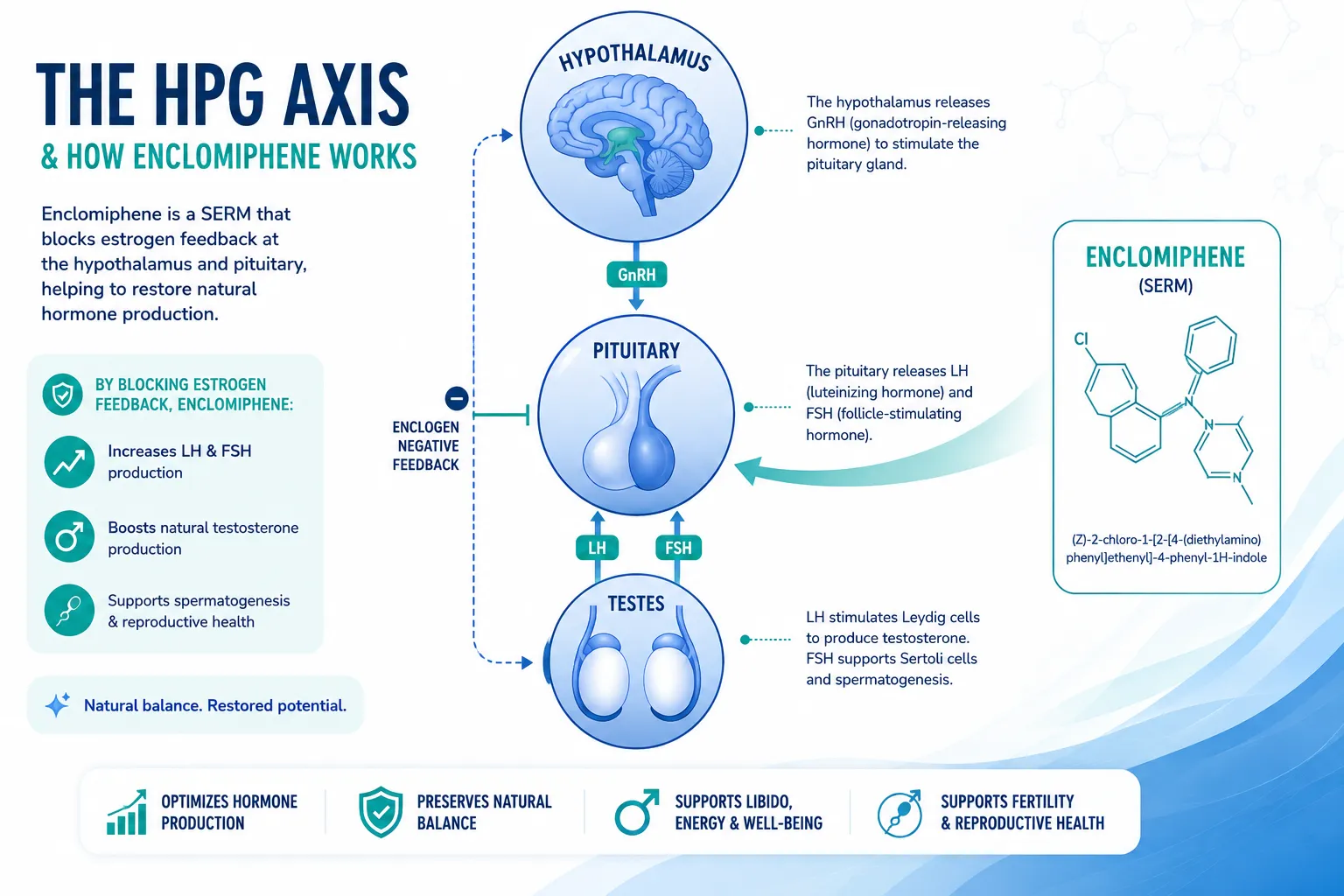
  • Enclomiphene acts as a serm by blocking estrogen receptors in the hypothalamus, stimulating endogenous LH and FSH release.
  • Purity certificates and supplier transparency are critical when selecting either form for in vitro or in vivo research.

What Is Enclomiphene and How Does It Differ from Its Citrate Salt

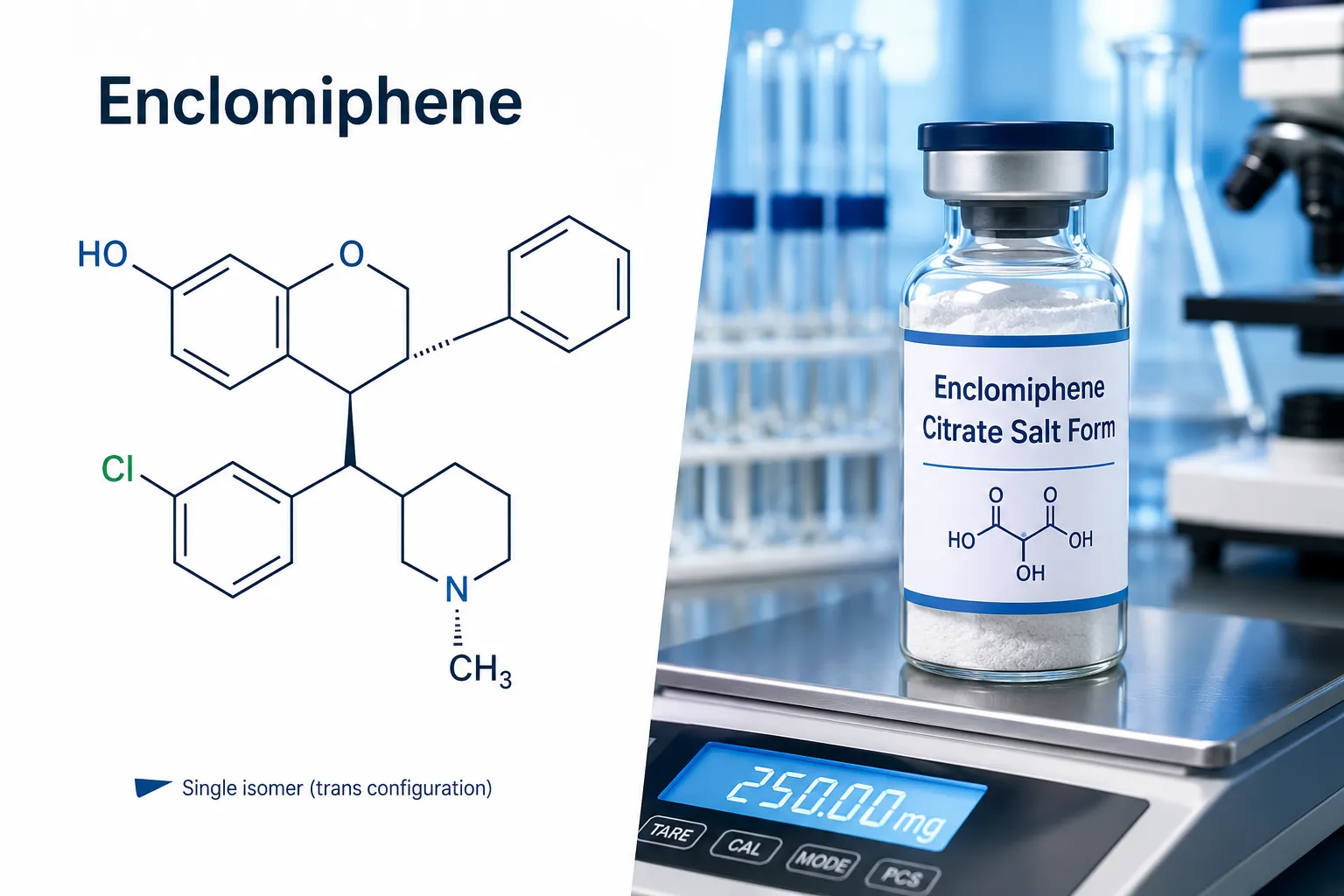
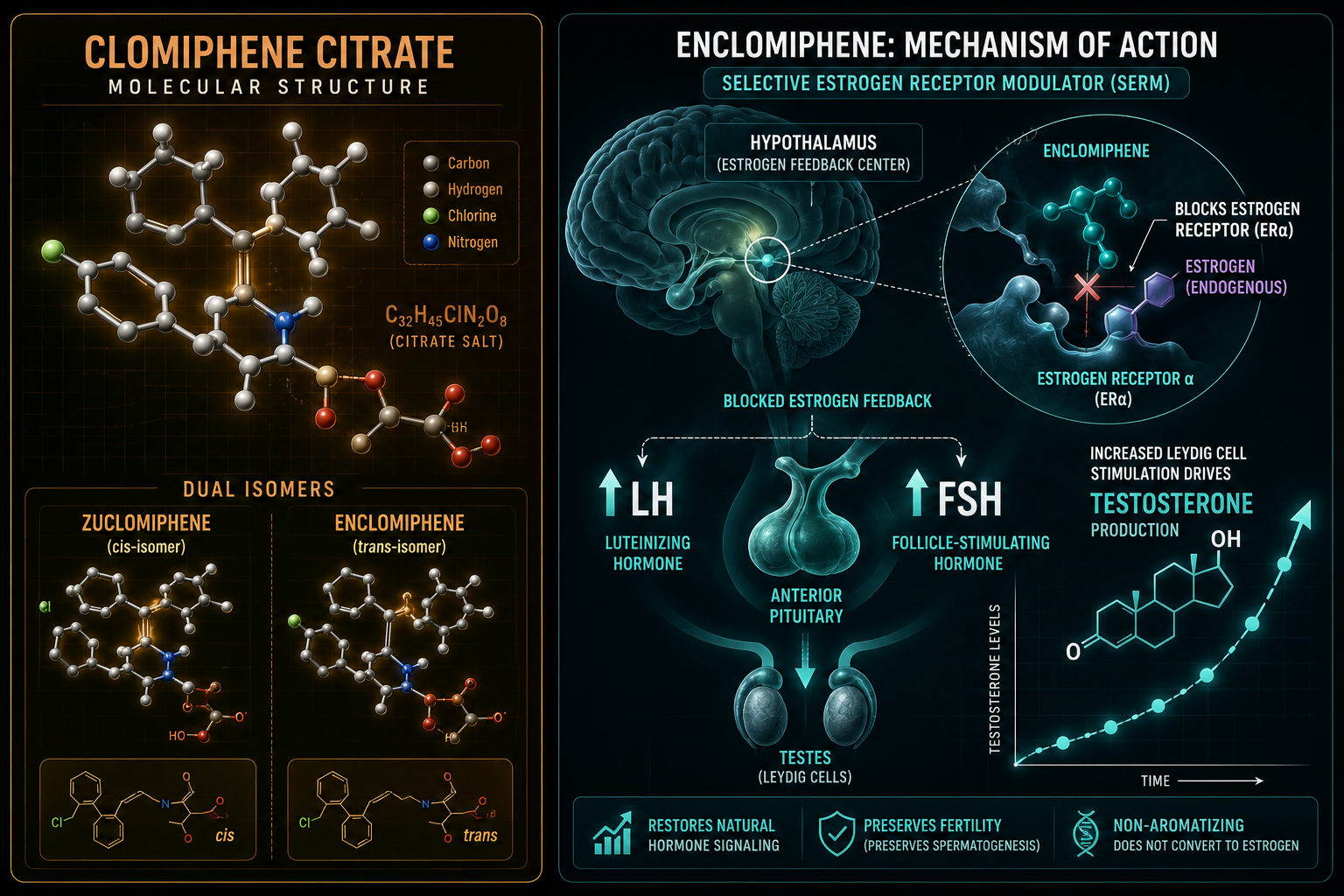
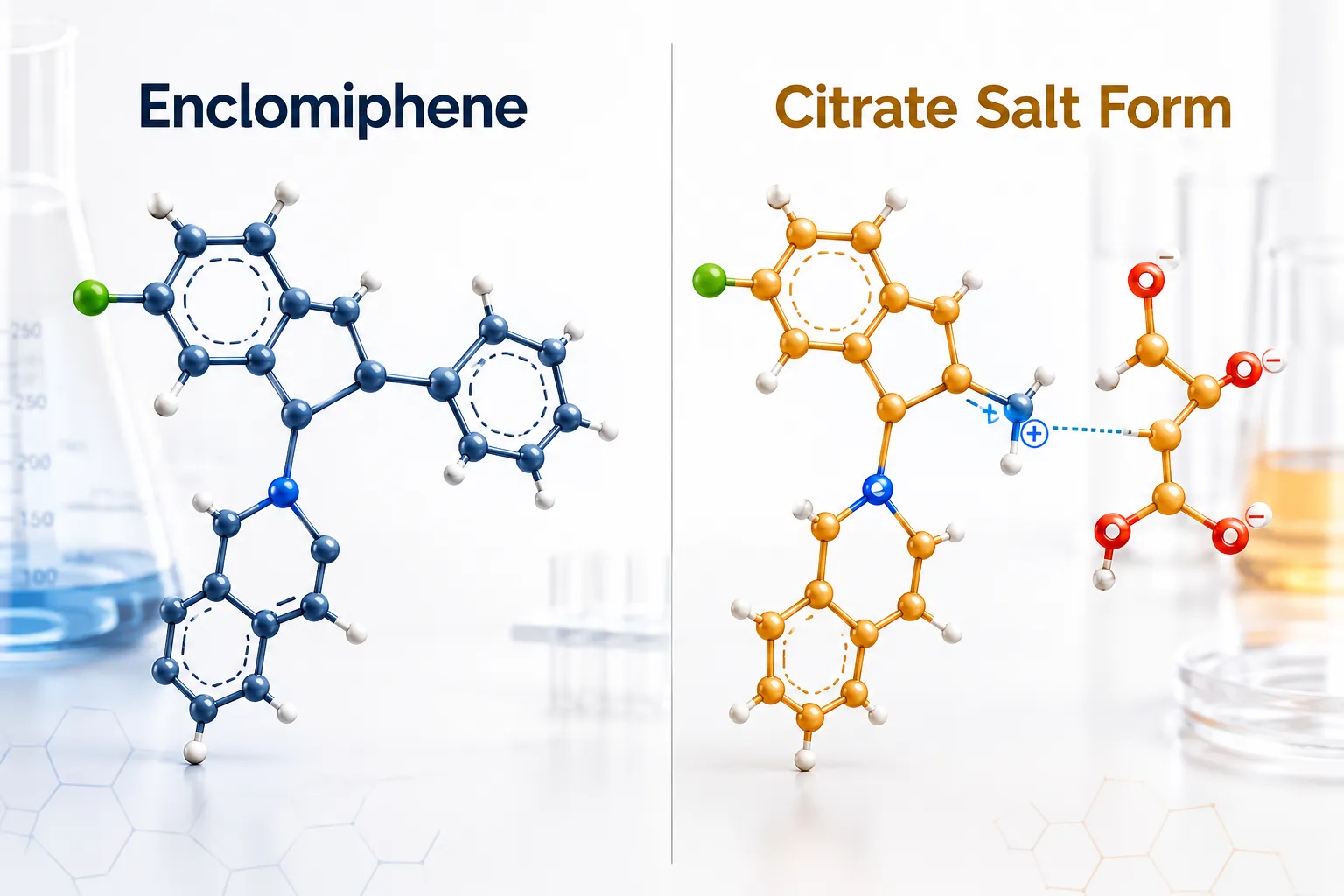
Clomiphene is a racemic mixture of two geometric isomers: zuclomiphene (cis) and enclomiphene (trans). Enclomiphene is the trans-isomer and is considered the pharmacologically dominant component responsible for stimulating gonadotropin release. When chemists convert enclomiphene into a stable, water-soluble form suitable for formulation and storage, they bind it to citric acid, producing enclomiphene citrate, a salt.

The core pharmacology does not change. Both forms deliver the same active molecule to estrogen receptors. What changes is the molecular weight:

Form Approximate Molecular Weight
Enclomiphene (free base) ~406 g/mol
Enclomiphene citrate (salt) ~566 g/mol

This difference has a direct impact on dosing. A 25 mg dose of enclomiphene citrate does not deliver 25 mg of active enclomiphene. The salt accounts for roughly 28% of the total mass. Researchers who ignore this conversion risk under-dosing or over-dosing their assays.

"The salt form adds molecular weight but not pharmacological activity, every milligram of citrate is inert mass that must be subtracted from the active fraction."

Research Applications: Why the Distinction Matters in Protocol Design
Research Applications: Why the Distinction Matters in Protocol Design

Understanding enclomiphene vs enclomiphene citrate: differences, research applications, and dosing considerations becomes especially important when designing endocrine studies. Enclomiphene's primary mechanism involves competitive antagonism at hypothalamic estrogen receptors. By blocking negative feedback, it prompts the pituitary to release more luteinizing hormone (LH) and follicle-stimulating hormone (FSH), which in turn stimulates testicular testosterone production.

Key research areas where enclomiphene is studied:

  • Male hypogonadism and testosterone restoration models
  • Fertility research focused on spermatogenesis
  • Hypothalamic-pituitary-gonadal (HPG) axis modulation
  • Comparative serm studies alongside agents like clomiphene citrate

For researchers also exploring growth hormone secretagogues, it is worth noting that serm-based protocols are sometimes combined with peptide-based approaches. Resources such as serm Ipamorelin CJC1295 dosage protocols and serm Ipamorelin CJC1295 combination research provide useful context for multi-compound assay planning.

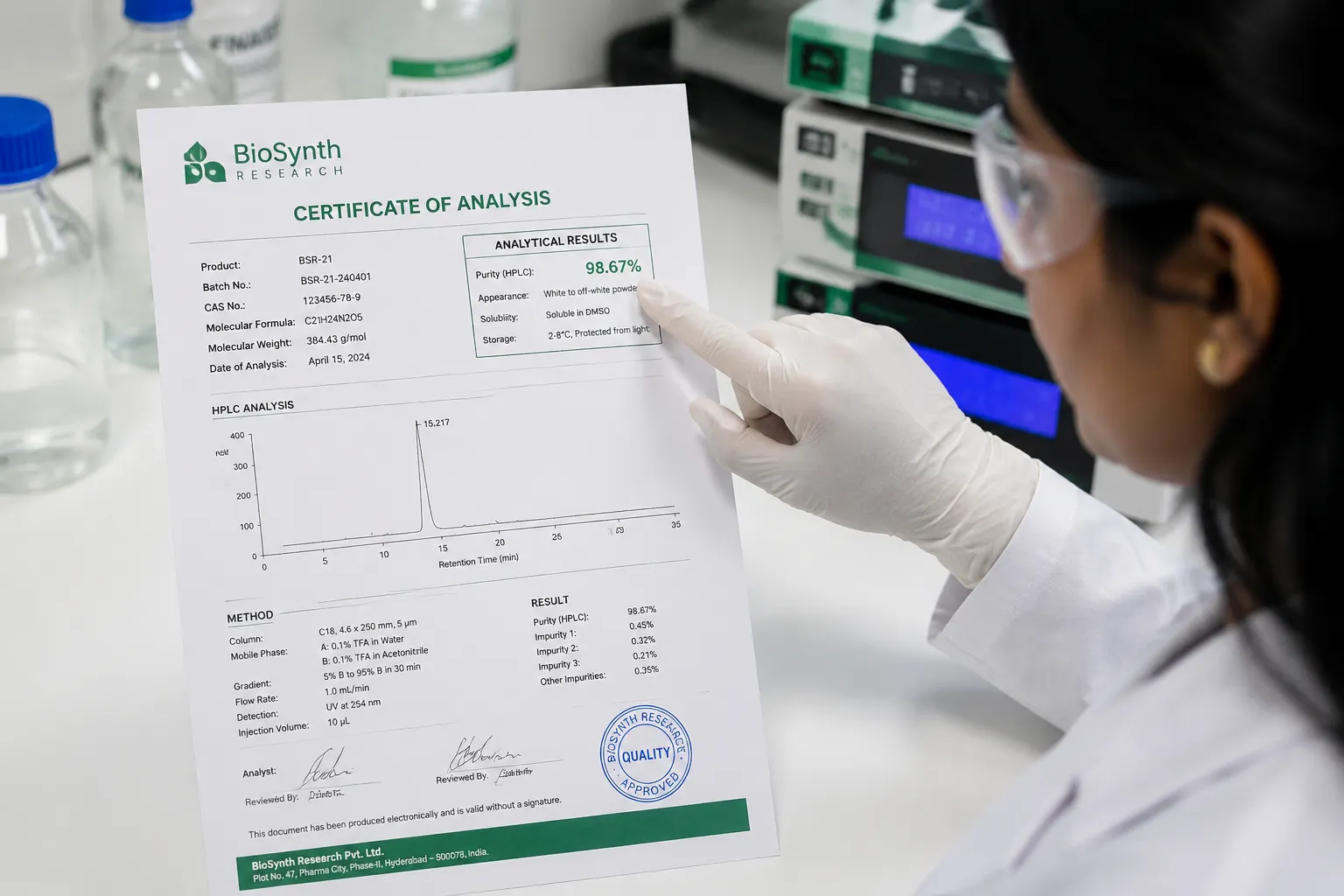
When comparing supplier listings, the product title alone is insufficient. Researchers should always request a Certificate of Analysis (CoA) that specifies:

  1. Whether the compound is free base or salt form
  2. Purity percentage (HPLC-verified, ideally >98%)
  3. Molecular weight confirmation
  4. Batch-specific testing data

For guidance on evaluating supplier documentation, the peptide supplier comparisons guide interpreting PeptideTech and PeptideSC listings offers a practical framework applicable to small-molecule serms as well.

Dosing Considerations: Converting Between Free Base and Citrate Salt
Dosing Considerations: Converting Between Free Base and Citrate Salt

Dosing Considerations: Converting Between Free Base and Citrate Salt

Accurate dosing is where the enclomiphene vs enclomiphene citrate: differences, research applications, and dosing considerations question becomes most practical. The conversion factor between the two forms is approximately 1.39. This means:

  • To deliver an equivalent dose of 25 mg enclomiphene (free base), a researcher using enclomiphene citrate would need approximately 34.75 mg of the salt form.
  • Conversely, a protocol calling for 50 mg of enclomiphene citrate delivers roughly 36 mg of active enclomiphene.

Practical conversion formula:

Enclomiphene citrate dose = Enclomiphene free base dose x 1.39

Researchers should apply this calculation consistently across all protocols and document which form was used in every experimental record. Mixing up forms across study arms introduces a systematic error that can invalidate comparative data.

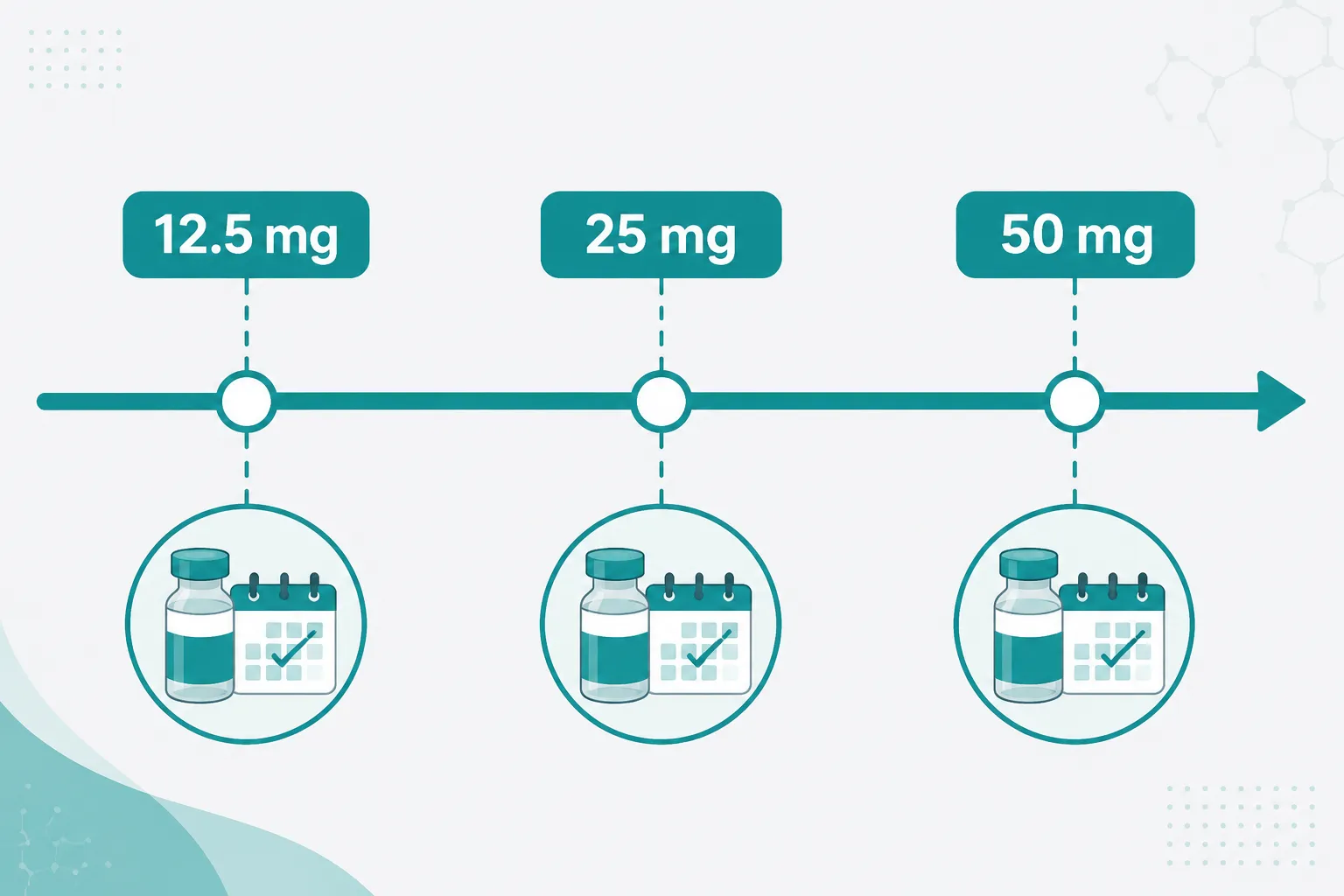
Common research dose ranges observed in published literature:

  • Low range: 12.5 mg enclomiphene equivalent per day
  • Mid range: 25 mg enclomiphene equivalent per day
  • Higher range: 50 mg enclomiphene equivalent per day (typically short-duration)

These ranges apply to the active enclomiphene content, not the total salt mass. Always recalculate when switching suppliers or forms.

For researchers also working with peptide-based hormonal modulators, understanding dosing precision is equally important in compounds such as those discussed in Tesamorelin dosage for fat loss and Tesamorelin vs Sermorelin comparisons, where small dose differences produce measurable outcome variations.

Purity also interacts with dosing accuracy. A compound listed at 95% purity versus 99% purity requires adjustment in weighed quantities to achieve the same effective dose. This is why sourcing from suppliers who provide third-party verified CoAs is non-negotiable for reproducible research. The CJC-1295 Ipamorelin assay planning and sourcing checklist outlines a sourcing verification process that translates well to serm procurement.

Conclusion

The distinction between enclomiphene and enclomiphene citrate is a matter of chemistry, not pharmacology, but that chemistry has direct consequences for every milligram weighed on a laboratory scale. Researchers comparing listings or adapting published protocols should take the following steps:

  1. Confirm the exact form (free base vs. citrate salt) on every CoA before ordering.
  2. Apply the 1.39 conversion factor whenever switching between forms within or across studies.
  3. Document the form used in all experimental records to ensure reproducibility and accurate cross-study comparisons.
  4. Request HPLC purity data and adjust weighed quantities accordingly.
  5. Cross-reference supplier documentation using established evaluation frameworks to verify compound identity.

Resolving this compound-name ambiguity upfront prevents systematic dosing errors and strengthens the integrity of any HPG-axis or serm-focused research program in 2026.

https://www.puretestedpeptides.com/wp-content/uploads/2026/08/enclomiphene-vs-enclomiphene-citrate-differences-research-applications-and-dosin.webp 1024 1536 https://www.puretestedpeptides.com/wp-content/uploads/2026/01/buy-peptides-online.jpg 2026-08-07 13:06:042026-08-07 13:06:04Enclomiphene vs Enclomiphene Citrate: Differences, Research Applications, and Dosing Considerations
Enclomiphene and the Luteinizing Phase: Modeling Male Reproductive Hormone Fluctuations in Endocrine Research

Enclomiphene and the Luteinizing Phase: Modeling Male Reproductive Hormone Fluctuations in Endocrine Research

August 6, 2026/0 Comments/in Uncategorized/by

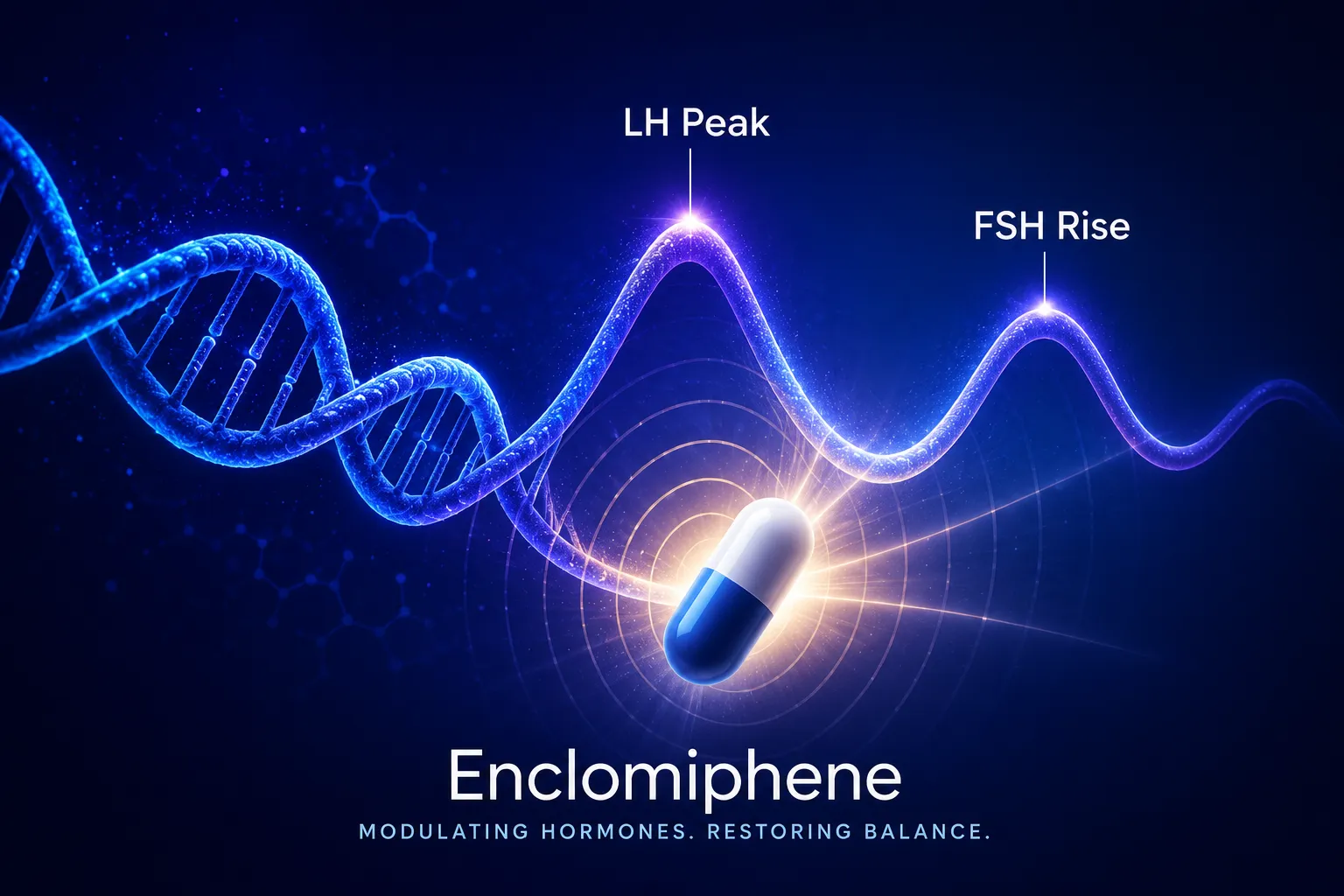
Male testosterone levels in the United States have declined by roughly 1% per year since the 1980s, a trend that has pushed endocrine researchers to develop more precise tools for studying the hypothalamic-pituitary-gonadal (HPG) axis. At the center of this effort is enclomiphene, a selective estrogen receptor modulator (serm) that has become a valuable compound for modeling LH and FSH dynamics. The study of Enclomiphene and the Luteinizing Phase: Modeling Male Reproductive Hormone Fluctuations in Endocrine Research offers a structured framework for understanding how the male reproductive axis responds to pharmacological stimulation, and why that matters for comparative endocrinology.

Key Takeaways

  • Enclomiphene blocks hypothalamic estrogen receptors, triggering measurable surges in LH and FSH that researchers use to map male gonadotropin dynamics.
  • Research protocols now borrow "luteinizing phase" nomenclature from female reproductive biology to standardize how male hormone fluctuation windows are defined and compared.
  • Study designs that track LH pulsatility before, during, and after enclomiphene administration generate reproducible hormone fluctuation models.
  • Accurate compound sourcing and storage are foundational to data integrity in HPG-axis research.
  • Comparative endocrinology benefits from cross-sex hormonal modeling, revealing shared regulatory mechanisms across reproductive systems.

Key Takeaways

The HPG Axis and Why the Luteinizing Phase Matters in Male Research

The HPG axis operates as a feedback loop. The hypothalamus releases gonadotropin-releasing hormone (GnRH) in pulses, which prompts the anterior pituitary to secrete luteinizing hormone (LH) and follicle-stimulating hormone (FSH). LH then signals the Leydig cells in the testes to produce testosterone. When testosterone rises, it feeds back to suppress GnRH and LH release, a classic negative feedback mechanism.

In female reproductive biology, the "luteinizing phase" refers to the window surrounding the LH surge that triggers ovulation. Endocrine researchers have adapted this terminology for male studies, defining a male luteinizing phase analog as the measurable period of elevated LH pulsatility following estrogen receptor blockade. This cross-sex nomenclature allows for direct comparison of gonadotropin kinetics across biological systems, strengthening the statistical power of comparative studies.

The practical value of this framework is significant. By defining a consistent hormonal window in male subjects, baseline, LH surge, and recovery, researchers can apply the same analytical tools used in female cycle research to male endocrine data. This standardization reduces variability between studies and makes meta-analyses more reliable.

How Enclomiphene Manipulates LH and FSH in Research Models

Enclomiphene is the trans-isomer of clomiphene citrate. Unlike its cis-isomer (zuclomiphene), enclomiphene has a shorter half-life and cleaner receptor binding profile, making it a more precise research tool for HPG-axis manipulation.

Mechanism of action in research contexts:

  • Enclomiphene binds competitively to estrogen receptors in the hypothalamus.
  • This blockade prevents estrogen from signaling its normal negative feedback.
  • The hypothalamus responds by increasing GnRH pulse frequency.
  • Elevated GnRH drives the pituitary to release more LH and FSH.
  • Downstream, testicular Leydig cells respond with increased testosterone synthesis.

This cascade is highly reproducible, which is why Enclomiphene and the Luteinizing Phase: Modeling Male Reproductive Hormone Fluctuations in Endocrine Research has become a productive area of study. Researchers can reliably induce a defined LH surge window, observe the hormonal response curve, and then model how quickly the axis returns to baseline, all within a single study design.

Research Phase Primary Hormone Observed Typical Duration
Baseline Testosterone, LH, FSH 7-14 days
LH Surge Window LH, FSH elevation 3-7 days
Recovery Testosterone normalization 7-21 days

Researchers studying related peptide pathways, such as those examining IPA peptides or the CJC IPA 5 5mg compound, often run parallel HPG-axis assessments to understand how growth hormone secretagogues interact with gonadotropin signaling.

"Defining a male luteinizing phase analog is not merely semantic, it creates a reproducible experimental window that transforms anecdotal hormone data into structured, comparable research."

How Enclomiphene Manipulates LH and FSH in Research Models

Study Design Frameworks for Modeling Male Hormone Fluctuations

Rigorous study design is what separates publishable enclomiphene research from inconclusive data. The most productive frameworks in 2026 share several structural features.

Core design elements include:

  • Washout periods before compound administration to establish clean baseline LH and testosterone measurements.
  • Serial blood sampling at defined intervals (often every 2-4 hours during the surge window) to capture LH pulsatility rather than single-point snapshots.
  • Dose-response arms that test multiple enclomiphene concentrations to establish a pharmacodynamic curve.
  • Recovery tracking that extends at least 21 days post-administration to document HPG axis normalization.

Researchers working on Enclomiphene and the Luteinizing Phase: Modeling Male Reproductive Hormone Fluctuations in Endocrine Research have also begun integrating metabolic co-variables. Given that GLP-1 receptor signaling influences hypothalamic function, some teams cross-reference HPG-axis data with metabolic markers. Resources covering GLP-1 peptide research concepts and sourcing and GLP-3 triple agonist research planning offer relevant context for researchers designing multi-axis endocrine studies.

Mitochondrial function is another emerging co-variable. Compounds studied under the SS-31 peptides category have shown relevance to Leydig cell energy metabolism, which directly affects testosterone synthesis capacity during the LH surge window.

Proper compound storage is equally critical. Degraded enclomiphene produces inconsistent receptor binding, which contaminates LH surge data. Researchers can reference protocols from resources like AOD 9604 storage and traceability notes to apply best-practice storage standards to their own compound management workflows.

Study Design Frameworks for Modeling Male Hormone Fluctuations

Conclusion

The intersection of enclomiphene pharmacology and luteinizing phase modeling has opened a structured, reproducible pathway for studying male reproductive hormone fluctuations. Researchers who adopt standardized phase nomenclature, rigorous serial sampling protocols, and validated compound sourcing practices will generate data with the consistency needed for meta-analysis and cross-study comparison.

Actionable next steps for endocrine researchers:

  1. Define a clear male luteinizing phase analog window in study protocols before data collection begins.
  2. Implement serial LH sampling during the surge window rather than relying on single-timepoint measurements.
  3. Audit compound storage conditions to ensure enclomiphene purity and receptor-binding integrity.
  4. Consider integrating metabolic co-variables, including GLP-1 and mitochondrial markers, to build a more complete picture of HPG-axis function.
  5. Apply cross-sex comparative frameworks to align male hormone fluctuation data with established female cycle research standards.

As endocrine research grows more sophisticated in 2026, the tools and frameworks built around enclomiphene will remain central to understanding how the male reproductive axis is regulated, disrupted, and restored.

https://www.puretestedpeptides.com/wp-content/uploads/2026/08/enclomiphene-and-the-luteinizing-phase-modeling-male-reproductive-hormone-fluctu.webp 1024 1536 https://www.puretestedpeptides.com/wp-content/uploads/2026/01/buy-peptides-online.jpg 2026-08-06 13:04:022026-08-06 13:04:02Enclomiphene and the Luteinizing Phase: Modeling Male Reproductive Hormone Fluctuations in Endocrine Research
Where to Buy Research-Grade Enclomiphene and Enclomiphene Citrate: Purity, Certificates of Analysis, and Lab-Use Considerations

Where to Buy Research-Grade Enclomiphene and Enclomiphene Citrate: Purity, Certificates of Analysis, and Lab-Use Considerations

August 2, 2026/0 Comments/in Uncategorized/by

Fewer than 40% of research chemical suppliers tested in independent audits between 2022 and 2024 delivered compounds at or above their advertised purity thresholds, a sobering figure for any serious hormone researcher. Knowing where to buy research-grade enclomiphene and enclomiphene citrate: purity, certificates of analysis, and lab-use considerations is not a minor detail. It is the foundation of reproducible, trustworthy research outcomes.

Key Takeaways

  • Enclomiphene and enclomiphene citrate are chemically related but not identical; the distinction matters for dosing accuracy and experimental design.
  • Research-grade purity should be 98% or higher, verified by HPLC or mass spectrometry, not just vendor claims.
  • A valid Certificate of Analysis (CoA) must come from an independent, third-party laboratory, not an in-house document.
  • Supplier red flags include missing CoAs, vague sourcing, no batch traceability, and no return or retest policies.
  • This compound is sold strictly for laboratory and in-vitro research use; regulatory compliance is the researcher's responsibility.

Key Takeaways

Enclomiphene vs. Enclomiphene Citrate: Understanding the Difference

Before deciding where to buy research-grade enclomiphene and enclomiphene citrate, researchers must understand what they are actually ordering.

Clomiphene is a racemic mixture of two geometric isomers: zuclomiphene (the cis-isomer) and enclomiphene (the trans-isomer). Enclomiphene is the pharmacologically active isomer responsible for selective estrogen receptor modulation at the hypothalamic-pituitary axis.

Enclomiphene citrate is simply the citrate salt form of enclomiphene. The citrate counterion improves aqueous solubility, which is relevant for certain in-vitro assay formats and reconstitution protocols.

Form Molecular Weight Solubility Common Research Use
Enclomiphene (free base) 405.96 g/mol Lipophilic; ethanol or DMSO Cell-based receptor binding assays
Enclomiphene Citrate 598.08 g/mol Higher aqueous solubility In-vitro hormonal pathway studies

Ordering the wrong form can skew molar calculations and invalidate results. Always confirm the exact chemical form before purchase.

Researchers sourcing other selective modulators and peptide compounds, such as those exploring where to buy peptides for adjacent hormonal pathway studies, face the same form-specificity challenge.

Enclomiphene vs. Enclomiphene Citrate: Understanding the Difference

Purity Benchmarks and Certificates of Analysis: What Serious Researchers Require

Minimum Acceptable Purity Standards

For any compound used in controlled research, purity below 98% introduces confounding variables that can compromise data integrity. The gold standard for research-grade enclomiphene and enclomiphene citrate is:

  • HPLC purity: 98% or greater
  • Residual solvent levels within ICH Q3C guidelines
  • Heavy metal screening (lead, arsenic, mercury, cadmium) below pharmacopeial limits
  • Endotoxin testing if the compound will be used in any cell culture or biological assay

What a Valid CoA Must Include

A Certificate of Analysis is only as credible as the laboratory that issued it. An in-house CoA from the vendor itself carries limited weight. Researchers should require:

  1. Third-party laboratory name and accreditation number (ISO 17025 preferred)
  2. Batch or lot number matching the product label
  3. Test date, CoAs older than 12 months for a current batch are a warning sign
  4. HPLC chromatogram with integration data, not just a summary percentage
  5. Identity confirmation via NMR or mass spectrometry

"A CoA without an independent lab signature is a marketing document, not an analytical report."

Researchers who have navigated similar documentation requirements for compounds like Sermorelin or Tesamorelin will recognize this standard as non-negotiable across the research peptide and small-molecule space.

What a Valid CoA Must Include

Where to Buy Research-Grade Enclomiphene and Enclomiphene Citrate: Evaluating Suppliers

Green Flags in a Reputable Supplier

When evaluating where to buy research-grade enclomiphene and enclomiphene citrate, the following supplier characteristics indicate reliability:

  • Publicly accessible, batch-specific CoAs linked directly to product pages
  • Independent third-party testing from named, verifiable laboratories
  • Clear chemical specifications listing exact form (free base vs. citrate salt), CAS number, and molecular weight
  • Transparent sourcing and synthesis information
  • Responsive technical support capable of answering purity and formulation questions
  • Retest or return policy for purity disputes

Suppliers who demonstrate this rigor across their catalog, including well-documented compounds like TB-500 and Ipamorelin/CJC-1295 blends, typically apply the same standards to their serm-category compounds.

Red Flags to Avoid

  • Generic CoAs with no batch number or lab name
  • Purity listed as "99%+" with no supporting chromatogram
  • No CAS number or conflicting molecular weight data
  • Pricing dramatically below market average (often signals diluted or mislabeled product)
  • No physical address or verifiable business registration

Researchers comparing multiple vendors should also consult peptide supplier comparison resources to benchmark documentation standards across the industry.

Lab-Use Considerations and Regulatory Compliance

Intended Use and Legal Status

Research-grade enclomiphene and enclomiphene citrate are sold strictly for in-vitro laboratory research and non-clinical investigational use. These compounds are not approved for human consumption or veterinary use in most jurisdictions without appropriate licensure.

Researchers must:

  • Verify local and institutional regulations before purchase
  • Store compounds according to supplier specifications (typically -20°C, desiccated, protected from light)
  • Maintain chain-of-custody records and batch documentation for audit purposes
  • Never use research-grade material in any clinical or human-subject context

Reconstitution and Handling Notes

Enclomiphene free base dissolves most effectively in ethanol or DMSO at concentrations up to 10 mg/mL. Enclomiphene citrate offers better aqueous solubility but may still require a small percentage of organic co-solvent for complete dissolution. Researchers working with related peptide compounds, such as those studying SS-31 for mitochondrial research, will be familiar with these reconstitution protocols.

Always filter-sterilize solutions intended for cell culture using a 0.22 micron membrane filter.

Conclusion

The decision of where to buy research-grade enclomiphene and enclomiphene citrate ultimately comes down to documentation, transparency, and third-party verification. No amount of competitive pricing justifies working with a compound whose purity cannot be independently confirmed.

Actionable next steps for researchers:

  1. Identify the exact chemical form needed (free base vs. citrate salt) before contacting any supplier.
  2. Request a batch-specific, third-party CoA before placing any order, not after.
  3. Cross-reference the supplier's CoA laboratory against publicly verifiable accreditation databases.
  4. Review the supplier's broader catalog and documentation standards as a proxy for overall quality control.
  5. Maintain complete batch records from purchase through experimental use for institutional compliance.

Rigorous sourcing is not bureaucratic overhead, it is the first experimental variable a researcher controls.

https://www.puretestedpeptides.com/wp-content/uploads/2026/08/where-to-buy-research-grade-enclomiphene-and-enclomiphene-citrate-purity-certifi.webp 672 1008 https://www.puretestedpeptides.com/wp-content/uploads/2026/01/buy-peptides-online.jpg 2026-08-02 13:04:242026-08-02 13:04:24Where to Buy Research-Grade Enclomiphene and Enclomiphene Citrate: Purity, Certificates of Analysis, and Lab-Use Considerations
Page 2 of 212

Tag Archive for: serm research

Enclomiphene in Male Endocrine Research: Mechanism vs Clomiphene and Overlaps With Luteinizing Phase Physiology

Enclomiphene in Male Endocrine Research: Mechanism vs Clomiphene and Overlaps With Luteinizing Phase Physiology

June 9, 2026/0 Comments/by Pure Tested

Only one isomer inside a decades-old fertility drug is responsible for raising testosterone in men — and isolating it may change how researchers approach male hypogonadism entirely. That single compound is enclomiphene, and its growing presence in male endocrine research is reshaping how scientists think about the hypothalamic-pituitary-gonadal (HPG) axis.

Research into enclomiphene in male endocrine research: mechanism vs clomiphene and overlaps with luteinizing phase physiology has accelerated in 2026, driven by demand for testosterone-raising strategies that do not suppress fertility. Understanding why enclomiphene works — and how it differs from its parent compound — requires a close look at receptor pharmacology and the fundamental biology of luteinizing hormone (LH) signaling.

Key Takeaways

  • Enclomiphene is the trans-isomer of clomiphene citrate and is solely responsible for its anti-estrogenic, testosterone-stimulating effects in men.
  • It blocks hypothalamic estrogen receptors, increasing GnRH pulsatility and driving LH and FSH release — mirroring the natural luteinizing phase feedback loop.
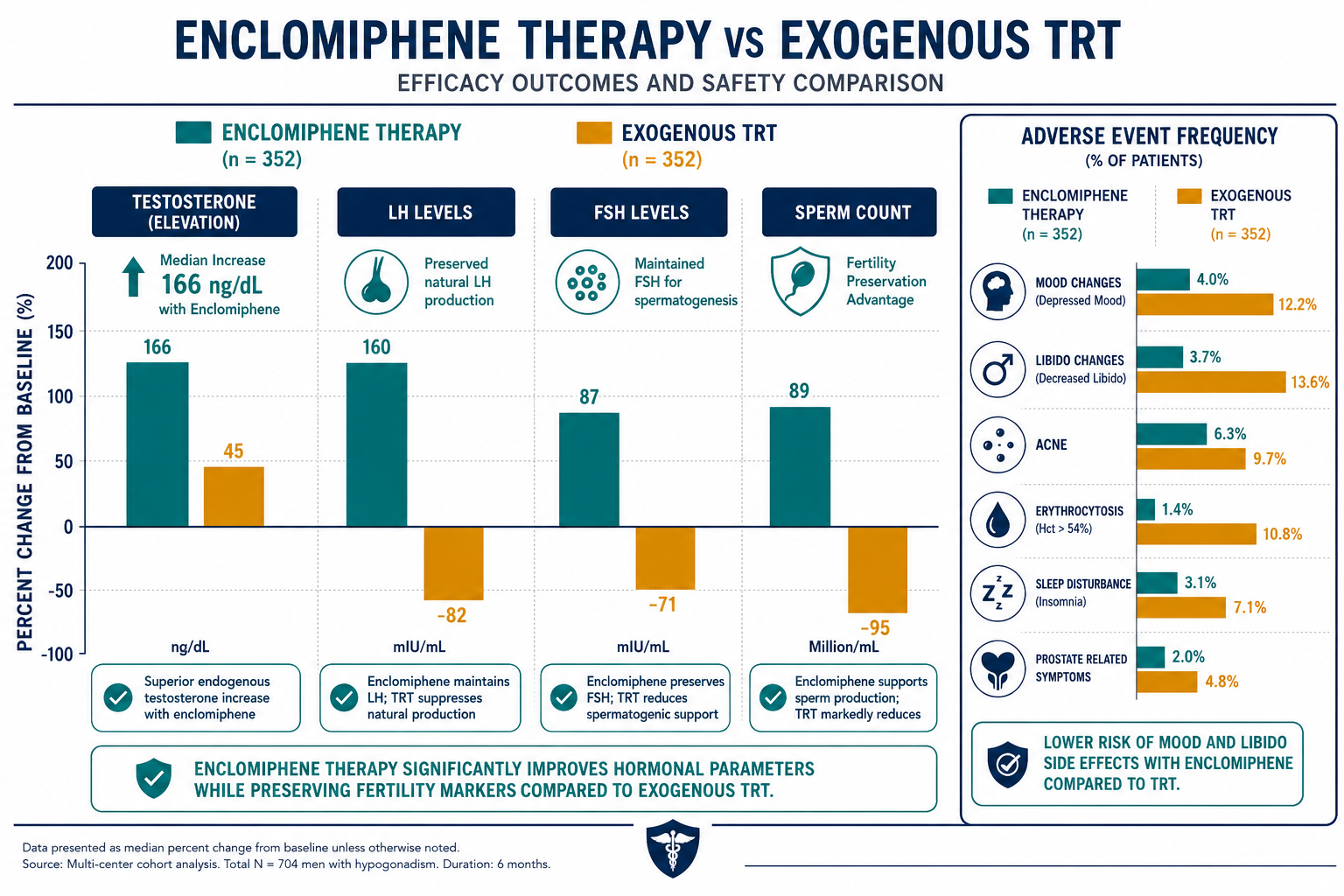
  • Unlike exogenous testosterone replacement therapy (TRT), enclomiphene preserves sperm production and endogenous hormone signaling.
  • Zuclomiphene, the other isomer in clomiphene, carries weak estrogenic activity and a longer half-life, contributing to mood and visual side effects.
  • Clinical data show enclomiphene produces meaningful testosterone increases with a lower adverse-event profile than mixed clomiphene.

Key Takeaways

How Enclomiphene Works: Selective Estrogen Receptor Modulation

Enclomiphene is classified as a selective estrogen receptor modulator (serm). Its primary action occurs at estrogen receptors in the hypothalamus and pituitary gland. Under normal physiology, circulating estradiol binds to these receptors and signals the hypothalamus to reduce gonadotropin-releasing hormone (GnRH) output — a classic negative feedback loop.

Enclomiphene competitively blocks those receptors. With estradiol unable to deliver its suppressive signal, GnRH pulsatility increases. The pituitary responds by secreting more LH and FSH. Elevated LH then stimulates Leydig cells in the testes to synthesize testosterone, while FSH supports spermatogenesis.

Key pharmacokinetic facts:

Parameter Value
Half-life ~10 hours
Time to peak serum concentration 2-3 hours post-ingestion
Steady-state dose 25 mg/day

This rapid clearance is clinically significant. Because enclomiphene leaves the body quickly, its receptor blockade is time-limited and controllable — a meaningful advantage in research settings.


Enclomiphene in Male Endocrine Research: Mechanism vs Clomiphene and Overlaps With Luteinizing Phase Physiology

Enclomiphene in Male Endocrine Research: Mechanism vs Clomiphene and Overlaps With Luteinizing Phase Physiology

The Isomer Problem With Clomiphene Citrate

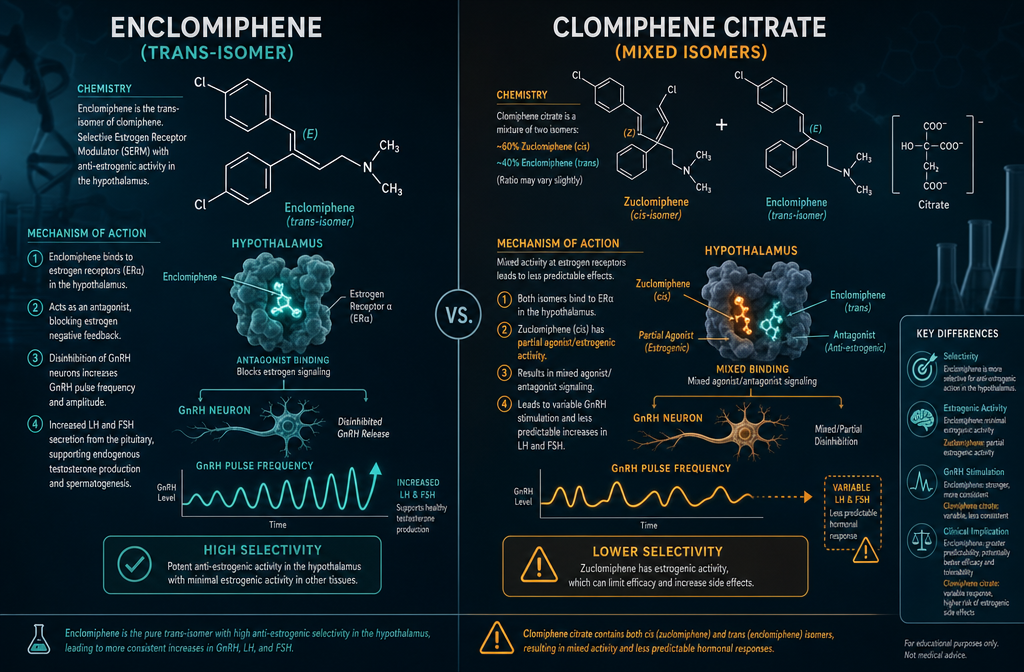
Clomiphene citrate is not a single compound. It is a 50:50 mixture of two geometric isomers:

  • Enclomiphene (trans-isomer): Blocks estrogen receptors, drives GnRH and LH release, raises testosterone.
  • Zuclomiphene (cis-isomer): Carries weak estrogenic activity, has a much longer half-life, and accumulates in tissue over time.

Zuclomiphene's estrogenic activity and slow elimination are linked to side effects reported with clomiphene use, including mood disturbances, reduced libido, and visual changes. By isolating enclomiphene, researchers remove this confounding variable entirely.

Connection to Luteinizing Phase Physiology

The luteinizing phase in reproductive biology refers to the period surrounding the LH surge — a sharp spike in LH that triggers ovulation in females and, in males, governs tonic testosterone production. In men, LH is released in pulses from the pituitary throughout the day, each pulse prompting Leydig cell testosterone output.

Enclomiphene essentially amplifies this pulsatile system. By lifting estradiol's brake on the hypothalamus, it restores or enhances the natural LH-driven testosterone cascade. This overlap with luteinizing phase physiology is why enclomiphene is particularly relevant for men with secondary hypogonadism — a condition where the testes are functional but the upstream HPG signaling is insufficient.

Researchers studying neuroendocrine and innate immunity interactions will recognize this HPG axis modulation as part of a broader hormonal communication network that extends well beyond reproductive function.


Clinical Evidence and Safety Profile

Clinical Evidence and Safety Profile

A retrospective study of 66 patients found that enclomiphene produced a median testosterone increase of 166 ng/dL with a statistically lower rise in estradiol compared to clomiphene. Adverse effects — including decreased libido, reduced energy, and mood changes — were significantly less frequent with enclomiphene.

Unlike exogenous TRT, which suppresses LH, FSH, and sperm production through negative feedback, enclomiphene maintains or improves sperm counts. This makes it a distinct research focus for hypogonadal men who may wish to preserve fertility.

Researchers exploring metabolic modulation research lines may find enclomiphene's downstream effects on body composition and energy metabolism worth examining alongside testosterone normalization data.

Compounds that modulate the HPG axis often intersect with broader metabolic pathways. For context on related peptide-based research tools, MOTS-c and metabolic flexibility research offers a parallel lens on mitochondrial and hormonal crosstalk.

Enclomiphene vs Clomiphene: Quick Comparison

Feature Enclomiphene Clomiphene Citrate
Isomer composition Trans only Trans + cis (50:50)
Estrogenic activity None Mild (via zuclomiphene)
Half-life ~10 hours Longer (zuclomiphene accumulates)
LH/FSH stimulation Strong Moderate
Fertility preservation Yes Partial
Mood/visual side effects Lower frequency Higher frequency

Researchers also studying neural and arousal pathways may find relevant context in PT-141 neural and metabolic research themes, as central neuroendocrine signaling connects testosterone regulation with broader behavioral physiology.

For those examining body composition outcomes alongside hormonal normalization, TESA body composition research themes and IPA muscle and fat research themes provide complementary data on how hormonal environments shape tissue-level outcomes.


Conclusion

The study of enclomiphene in male endocrine research: mechanism vs clomiphene and overlaps with luteinizing phase physiology clarifies a critical point: not all serms are equal, and isomer composition matters enormously. Enclomiphene's clean receptor blockade at the hypothalamus restores the natural LH-driven testosterone pathway without the estrogenic noise introduced by zuclomiphene.

Actionable next steps for researchers in 2026:

  • Prioritize enclomiphene over mixed clomiphene in male HPG axis models to reduce confounding estrogenic variables.
  • Examine LH pulsatility data alongside testosterone outcomes to map the full luteinizing phase overlap.
  • Investigate enclomiphene's role in secondary hypogonadism models where upstream signaling — not testicular function — is the limiting factor.
  • Cross-reference testosterone normalization data with metabolic and body composition endpoints for a more complete hormonal profile.

As regulatory and clinical interest in enclomiphene grows, its mechanistic clarity makes it a valuable tool for researchers who need precise, reproducible HPG axis modulation without the side-effect profile of its predecessor.

https://www.puretestedpeptides.com/wp-content/uploads/2026/06/Enclomiphene-in-Male-Endocrine-Research-Mechanism-vs-Clomiphene-and-Overlaps-With-Luteinizing-Phase-Physiology.png 672 1024 Pure Tested https://www.puretestedpeptides.com/wp-content/uploads/2026/01/buy-peptides-online.jpg Pure Tested2026-06-09 13:07:172026-07-20 15:03:34Enclomiphene in Male Endocrine Research: Mechanism vs Clomiphene and Overlaps With Luteinizing Phase Physiology
Estrogen Receptor Signaling and Enclomiphene: How ER and LH Pathways Inform Male Endocrine Research

Estrogen Receptor Signaling and Enclomiphene: How ER and LH Pathways Inform Male Endocrine Research

June 8, 2026/0 Comments/by Pure Tested

Male testosterone levels have declined measurably across populations over the past several decades, yet the molecular machinery governing male hormone regulation remains underappreciated outside specialist circles. At the center of this biology sits a counterintuitive truth: estrogen receptors are not just a female concern. Estrogen receptor signaling and enclomiphene — and how ER and LH pathways inform male endocrine research — represent one of the most productive intersections in modern reproductive endocrinology.

Key Takeaways

  • Estrogen receptors ERα and ERβ both play active roles in male hormonal regulation, particularly within the hypothalamic-pituitary-gonadal (HPG) axis.
  • Enclomiphene is the trans-isomer of clomiphene citrate and functions as a selective estrogen receptor modulator (serm) that blocks hypothalamic ERα to stimulate LH and FSH release.
  • Clinical data show enclomiphene raises testosterone comparably to clomiphene while producing significantly lower estradiol increases and fewer side effects.
  • Membrane-localized estrogen receptor 1 (mESR1) has a distinct, nongenomic role in male fertility that is separate from classical nuclear ER signaling.
  • Research on enclomiphene provides a practical model for studying selective ER modulation without suppressing the HPG axis.

Key Takeaways

ERα and ERβ: The Two Receptors Driving Male Hormonal Balance

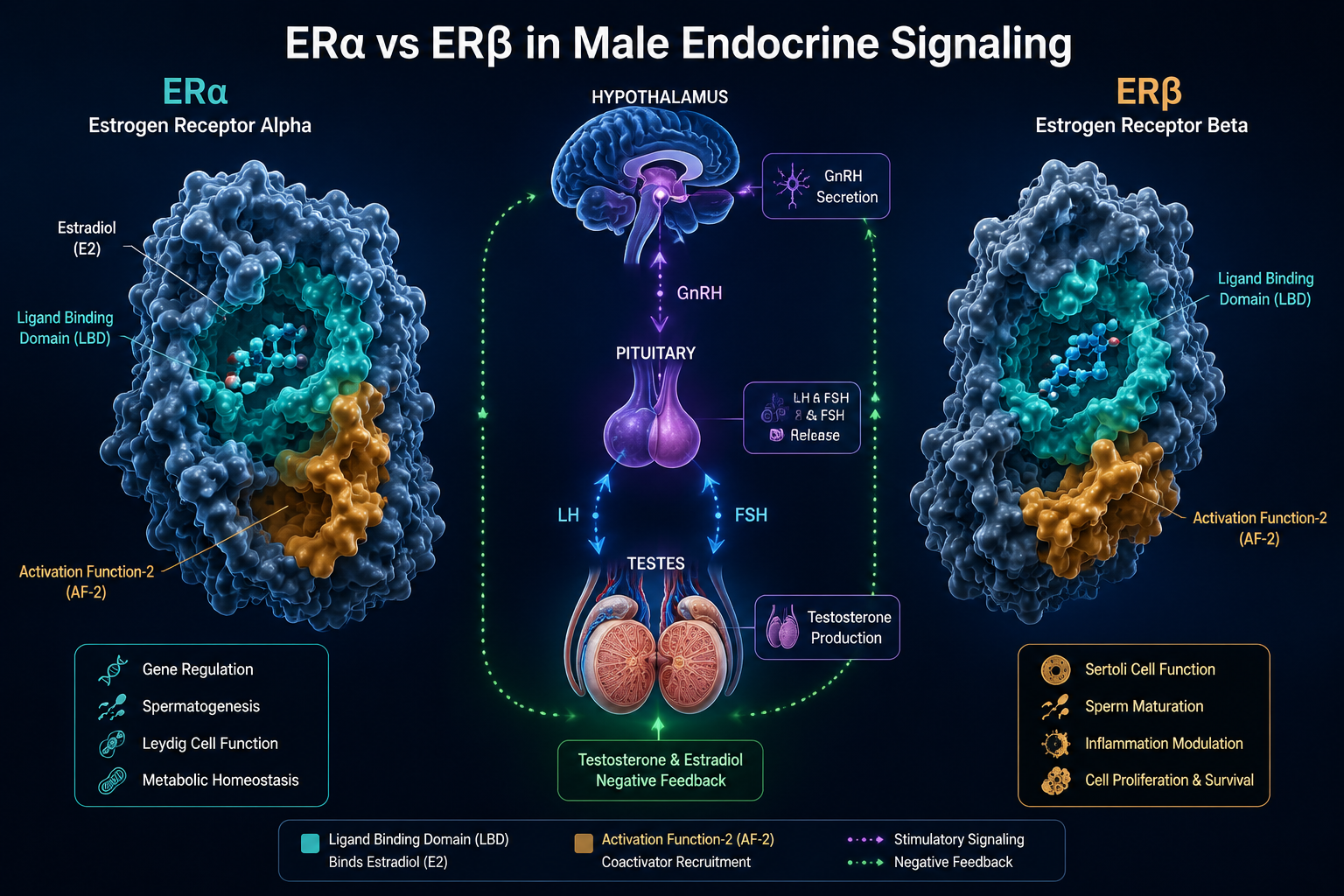
Estrogen actions in males are mediated by two primary receptor subtypes: ERα (encoded by the ESR1 gene) and ERβ (encoded by ESR2). These receptors differ in ligand binding affinity, tissue distribution, and transcriptional output.

Receptor Primary Male Tissue Sites Key Function
ERα Hypothalamus, bone, liver Negative feedback on GnRH/LH release
ERβ Testis, epididymis, prostate Local spermatogenesis support

In the hypothalamus, ERα is the dominant subtype mediating estradiol's negative feedback on gonadotropin-releasing hormone (GnRH) pulsatility. When circulating estradiol binds ERα, it suppresses GnRH release, which in turn reduces pituitary output of luteinizing hormone (LH) and follicle-stimulating hormone (FSH). Less LH means less Leydig cell stimulation and lower endogenous testosterone production.

Beyond classical nuclear signaling, research published in 2024 identified membrane-localized estrogen receptor 1 (mESR1) as a separate and critical player. Male mice lacking mESR1 developed progressive infertility due to testicular and reproductive tract abnormalities, even when nuclear ERα signaling remained intact. This finding points to a nongenomic signaling layer that standard receptor models do not fully capture.

Researchers exploring broader endocrine signaling networks — including those studying GLP-1 and dual receptor agonism — recognize that receptor subtype specificity has major implications for how compounds are designed and interpreted.

Enclomiphene Mechanism: Selective ER Blockade and the LH Pathway

Enclomiphene Mechanism: Selective ER Blockade and the LH Pathway

Enclomiphene is the trans-isomer of clomiphene citrate. Its counterpart, zuclomiphene (the cis-isomer), has estrogenic properties and a much longer half-life. By isolating the trans-isomer, researchers gain a cleaner pharmacological tool for studying selective ER modulation in male subjects.

How enclomiphene works:

  1. Binds competitively to ERα in the hypothalamus
  2. Blocks estradiol from suppressing GnRH pulsatility
  3. GnRH pulses increase, driving pituitary LH and FSH secretion
  4. Elevated LH stimulates Leydig cells to produce testosterone
  5. The HPG axis remains intact and functional throughout

This mechanism preserves the body's own hormonal feedback loop — a meaningful distinction from exogenous testosterone replacement, which suppresses the HPG axis and reduces endogenous production.

Enclomiphene has a half-life of approximately 10 to 15 hours and is typically studied at oral doses ranging from 12.5 to 25 mg per day. One study demonstrated measurable testosterone increases within just 14 days of administration, underscoring the speed of HPG axis responsiveness when hypothalamic ER blockade is applied.

This targeted approach to endocrine modulation parallels research on other selective compounds. For example, serm stack research explores how combining receptor-selective agents can produce synergistic hormonal outcomes. Similarly, researchers working with ipamorelin as a GHRH secretagogue are familiar with the principle of stimulating endogenous hormone release rather than replacing it directly.

Clinical Research Findings: What the Data Show in 2026

Clinical Research Findings: What the Data Show in 2026

The clinical picture for enclomiphene in male hypogonadism research has sharpened considerably. A retrospective cohort study found that both enclomiphene and clomiphene significantly increased testosterone, with a mean rise of approximately 210 ng/dL across groups. The two compounds showed no statistically significant difference in testosterone outcomes.

Where enclomiphene diverges from clomiphene:

  • Estradiol increase: Enclomiphene produced a significantly lower estradiol rise (approximately -5.92 pg/mL vs. +17.50 pg/mL for clomiphene, P=0.001)
  • Side effect profile: Fewer reports of decreased libido, reduced energy, and mood changes with enclomiphene
  • Median testosterone gain: Approximately 166 ng/dL in comparative studies

The lower estradiol elevation seen with enclomiphene is directly attributable to the absence of zuclomiphene, which carries estrogenic activity. This makes enclomiphene a more precise research instrument when the goal is to study LH-driven testosterone stimulation without confounding estrogenic effects.

A 2025 systematic review and meta-analysis further evaluated serms against testosterone gel, human chorionic gonadotropin (hCG), anastrozole, and placebo in men with baseline testosterone at or below 300 ng/dL. As of 2026, enclomiphene has accumulated over 190 indexed citations including clinical trials, randomized controlled trials, and meta-analyses — a growing evidence base for a compound that was once considered a secondary isomer.

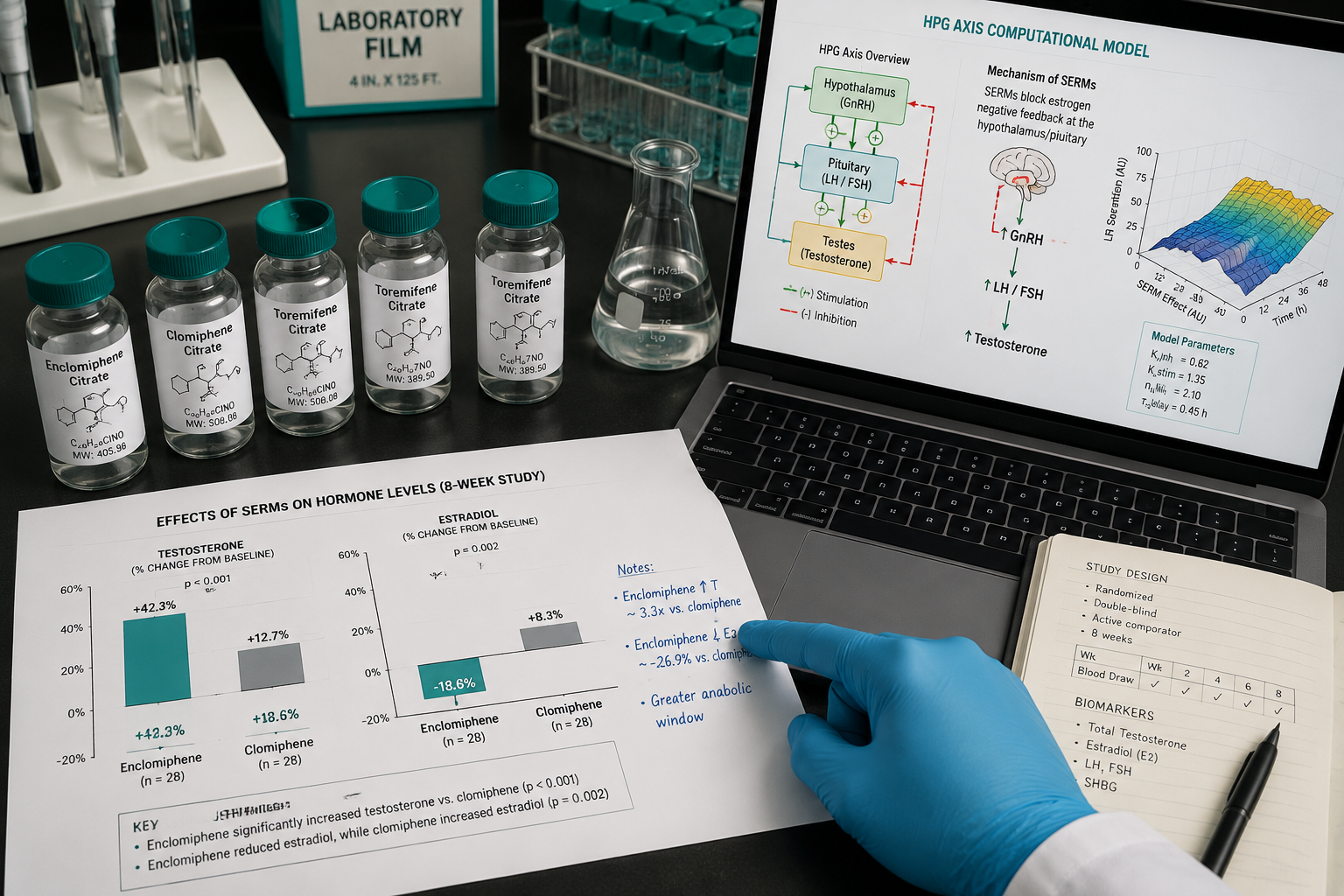
Researchers interested in how metabolic and hormonal pathways intersect may also find value in reviewing muscle and fat research themes related to ipamorelin and AOD9604 metabolic research, both of which touch on endocrine-metabolic crosstalk. Computational modeling advances have also improved understanding of pituitary gonadotropin signaling dynamics within the HPG axis, offering new tools for interpreting serm research data.

For those tracking broader developments in the field, the latest peptide research updates provide relevant context on how receptor-targeted compounds continue to evolve.

Conclusion

Estrogen receptor signaling and enclomiphene — and how ER and LH pathways inform male endocrine research — offer a precise window into the HPG axis that few other research tools match. The distinction between ERα and ERβ, the newly recognized role of mESR1 in nongenomic male fertility signaling, and enclomiphene's clean pharmacological profile collectively make this an area of high research value.

Actionable next steps for researchers:

  • Prioritize ERα-specific assays when studying hypothalamic feedback in male subjects
  • Use enclomiphene as a mechanistic comparator to isolate LH-driven testosterone responses from estrogenic confounders
  • Track estradiol alongside testosterone in any serm-related endocrine study to capture the full hormonal picture
  • Consult the growing meta-analytic literature to benchmark expected testosterone and estradiol response ranges
  • Consider how nongenomic ER signaling (mESR1) may require separate experimental models beyond standard nuclear receptor assays
https://www.puretestedpeptides.com/wp-content/uploads/2026/06/Estrogen-Receptor-Signaling-and-Enclomiphene-How-ER-and-LH-Pathways-Inform-Male-Endocrine-Research.png 1024 1536 Pure Tested https://www.puretestedpeptides.com/wp-content/uploads/2026/01/buy-peptides-online.jpg Pure Tested2026-06-08 13:03:182026-07-20 15:03:47Estrogen Receptor Signaling and Enclomiphene: How ER and LH Pathways Inform Male Endocrine Research
Page 2 of 212
×

Helpful Links

  • My account
  • Cart
  • Checkout
  • Refund and Returns Policy
  • Privacy Policy
  • SMS Privacy Policy
  • Login
  • My Account
  • Logout

USA Made Lab Tested Peptides

All products are sold for research, laboratory, or analytical purposes only, and are not for human consumption


Pure Tested Peptides is a chemical supplier. Pure Tested Peptides is not a compounding / chemical compounding facility as defined under 503A of the Federal Food, Drug, and Cosmetic act. Pure Tested Peptides is not an outsourcing facility as defined under 503B of the Federal Food, Drug, and Cosmetic act.

The statements made within this website have not been evaluated by the US Food and Drug Administration. The products we offer are not intended to diagnose, treat, cure or prevent any disease.

Human/Animal Consumption Prohibited. Laboratory/In-Vitro Experimental Use Only

Scroll to top Scroll to top Scroll to top