Call or Text 727-513-9780
  • Shopping Cart Shopping Cart
    0Shopping Cart
Pure Tested Peptides | America's most trusted Peptides for sale online
  • Peptides for sale
    • Oral Peptides for sale
      • Peptide Capsules for sale
      • BPC 157 Capsules 1000mcg
      • SLU-PP-332 Capsules | 1000 mcg
      • 5-Amino-1MQ 50mg Capsules
      • Tesofensine 500mcg
    • All Peptides for sale
    • Peptide Sprays
      • BPC 157 Nasal Spray Kit
      • BPC-157 TB500 Nasal Spray Kit
      • Semax Nasal Spray 10mg
      • Selank – Nasal Spray Kit – 10mg
      • Epithalon 50MG Nasal Spray Kit
      • Ipamorelin 10mg Nasal Spray
      • Klow Nasal Spray (BPC-157 + TB-500 + GHK-Cu + KPV) | 80mg
      • Hulk Nasal Spray Tesa / Ipa Blend 6/3 MG
      • Klow Nasal Spray
      • NAD + 500 mg Nasal Spray
      • PT-141 Nasal Spray Kit
    • GHRH Peptides
      • Ipa Peptides
      • CJC-1295 Peptides
        • CJC-1295 with DAC 5 mg
        • CJC-1295 without DAC 5 mg
        • CJC-1295 Ipa 10mg
      • Tesa Peptides
        • Tesa Peptide
        • Tesa 20 mg
    • GHK-Cu Peptides
      • All GHK-Cu Peptides
      • GHK-Cu 100mg
      • KLOW Peptide Blend – Buy KLOW blend online
    • BPC Peptides
      • All BPC Peptides
      • BPC-157
      • BPC-157 TB-500
      • BPC 157 capsules 1000mcg
    • SLU-PP-332 Peptides
      • All SLU-PP-332 Peptides
      • SLU-PP-332 5mg
    • GLP3 Peptides
    • PT-141 Peptides
      • PT-141 Peptides for sale
      • PT-141 10mg
      • PT-141 Nasal Spray
    • CAG Peptides
      • Lipo-C Peptide Blend
      • CAG 5mg
      • CAG 10mg
    • MOTS-C Peptides
      • MOTS-C Peptides for sale
      • MOTS-c peptide
      • MOTS-c 10mg *6 pack*
    • 5 Amino 1MQ Peptides
      • 5 Amino 1MQ Peptides for sale
      • 5-Amino-1MQ 50mg Capsules
      • 5-Amino-1MQ 5mg
    • Epithalon Peptides
      • Epithalon Peptides for sale
      • Epithalon 10mg
      • Epithalon 50mg
  • Shop
    • GLPs
      • 5-Amino-1MQ 50mg Capsules
      • 5-Amino-1MQ 5mg
      • L-Carnitine 500mg/ml
      • Tesofensine 500mcg
      • SLU-PP-332 5mg
      • MOTS-c 10mg *6 pack*
    • Epithalon & BPC Peptides
      • Epithalon 10mg
      • Epithalon 50mg
      • BPC-157
      • BPC 157 capsules 1000mcg
      • BPC-157 TB-500
      • BPC-157 TB500 Nasal Spray Kit
      • BPC 157 Nasal Spray Kit
    • BPC TB-500 & NAD+ Peptides
      • NAD+ 500 mg
      • KLOW Peptide Blend – Buy KLOW blend online
      • GLOW Peptide Blend
      • TB 500 5mg
      • BPC 157 capsules 1000mcg – Supplement
      • BPC 157 Nasal Spray Kit
      • BPC-157
      • BPC-157 TB500 Nasal Spray Kit
      • BPC-157 TB-500
      • BPC 157 capsules 1000mcg
    • LL-37 Peptide
      • LL-37 10 mg
    • MOTS-C & Selank
      • MOTS-c peptide
      • Selank 10mg
    • GHK Peptides
      • GHK-Cu 100mg
      • GLOW Peptide Blend
      • KLOW Peptide Blend – Buy KLOW blend online
  • COAs
  • Wholesale
    • Wholesale Peptides for sale
  • PTP FAQ
  • Affiliates
    • Selank Peptide: Advanced Pharmacological Mechanisms Underlying Its Anxiolytic and Nootropic Effects in Research
      • 5-Amino-1MQ Peptide: Detailed Mechanisms of NNMT Inhibition and Its Impact on Cellular Metabolism Research
        • MOTS-C Peptide: Unraveling Its Role in Mitochondrial Dynamics and Energy Metabolism Research
          • Epithalon Peptide and Telomerase Regulation: Investigating Its Impact on Cellular Senescence and Lifespan Research Models
            • GLP2-T vs GLP2 Tirz Peptide: Understanding the Naming, Mechanistic Nuances, and Research Implications for Gut Health
      • Peptides and Polypeptides in Modern Pharmacology: What Research on Metoprolol, Prednisone, and Amlodipine Reveals
        • Polypeptide Peptides vs NSAIDs: What Naproxen and Diclofenac Teach Tissue-Repair Researchers About BPC‑157 and TB‑500
          • Peptides and Polypeptides in Endocrine Pharmacology: How GLP-1, GLP-2, and GLP-3 Retatrutide Differ From Classic Drugs Like Prednisone and Amlodipine
          • 5‑Amino‑1MQ Peptide and NNMT Inhibition: How It Compares With Statins Like Atorvastatin in Adipose and Lipid Metabolism Research
      • Enclomiphene, Estrogen Receptor Signaling, and Luteinizing Phase Biology: What Hormone Researchers Should Measure
        • Mesenchymal Stem Cells, BPC‑157, and GHK‑Cu: How Tissue Repair Peptides Compare With Classic NSAIDs Like Naproxen in Injury Models
          • Peptide Calculator Use Cases Beyond Growth Hormone: Working Through GLP‑3 Retatrutide, MOTS‑c, and BPC‑157 Research Dosing
        • Polypeptide Peptides in Endocrine and Metabolic Pharmacology: Lessons From Amlodipine, Prednisone, and Metoprolol
        • Peptides Calculator for Advanced Blends: Worked Examples for Tesamorelin, CJC‑1295, and Ipamorelin Stacks
          • Peptides and Polypeptides in Human Physiology: How Molecular Size Shapes Research Applications
            • Selank Peptide: Advanced Pharmacological Mechanisms Underlying Its Anxiolytic and Nootropic Effects in Research
          • 5-Amino-1MQ Peptide: Detailed Mechanisms of NNMT Inhibition and Its Impact on Cellular Metabolism Research
            • MOTS-C Peptide: Unraveling Its Role in Mitochondrial Dynamics and Energy Metabolism Research
              • Epithalon Peptide and Telomerase Regulation: Investigating Its Impact on Cellular Senescence and Lifespan Research Models
                • GLP2-T vs GLP2 Tirz Peptide: Understanding the Naming, Mechanistic Nuances, and Research Implications for Gut Health
                  • Peptides and Polypeptides in Endocrine Pharmacology: How GLP-1, GLP-2, and GLP-3 Retatrutide Differ From Classic Drugs Like Prednisone and Amlodipine
                    • Polypeptide Peptides vs NSAIDs: What Naproxen and Diclofenac Teach Tissue-Repair Researchers About BPC‑157 and TB‑500
                      • Peptides and Polypeptides in Modern Pharmacology: What Research on Metoprolol, Prednisone, and Amlodipine Reveals
                        • 5‑Amino‑1MQ Peptide and NNMT Inhibition: How It Compares With Statins Like Atorvastatin in Adipose and Lipid Metabolism Research
                        • Enclomiphene, Estrogen Receptor Signaling, and Luteinizing Phase Biology: What Hormone Researchers Should Measure
                        • Mesenchymal Stem Cells, BPC‑157, and GHK‑Cu: How Tissue Repair Peptides Compare With Classic NSAIDs Like Naproxen in Injury Models
                        • Peptide Calculator Use Cases Beyond Growth Hormone: Working Through GLP‑3 Retatrutide, MOTS‑c, and BPC‑157 Research Dosing
                        • Polypeptide Peptides in Endocrine and Metabolic Pharmacology: Lessons From Amlodipine, Prednisone, and Metoprolol
                        • Peptides Calculator for Advanced Blends: Worked Examples for Tesamorelin, CJC‑1295, and Ipamorelin Stacks
                        • Peptides and Polypeptides in Human Physiology: How Molecular Size Shapes Research Applications
                        • Selank Peptide: Advanced Pharmacological Mechanisms Underlying Its Anxiolytic and Nootropic Effects in Research
                        • MOTS-C Peptide: Unraveling Its Role in Mitochondrial Dynamics and Energy Metabolism Research
                        • Peptides and Polypeptides in Modern Pharmacology: What Research on Metoprolol, Prednisone, and Amlodipine Reveals
                        • Peptides and Polypeptides in Endocrine Pharmacology: How GLP-1, GLP-2, and GLP-3 Retatrutide Differ From Classic Drugs Like Prednisone and Amlodipine
                        • 5-Amino-1MQ Peptide: Detailed Mechanisms of NNMT Inhibition and Its Impact on Cellular Metabolism Research
                        • Mesenchymal Stem Cells, BPC‑157, and GHK‑Cu: How Tissue Repair Peptides Compare With Classic NSAIDs Like Naproxen in Injury Models
                        • Peptide Calculator Use Cases Beyond Growth Hormone: Working Through GLP‑3 Retatrutide, MOTS‑c, and BPC‑157 Research Dosing
                        • GLP2-T vs GLP2 Tirz Peptide: Understanding the Naming, Mechanistic Nuances, and Research Implications for Gut Health
                        • Polypeptide Peptides in Endocrine and Metabolic Pharmacology: Lessons From Amlodipine, Prednisone, and Metoprolol
                        • Polypeptide Peptides vs NSAIDs: What Naproxen and Diclofenac Teach Tissue-Repair Researchers About BPC‑157 and TB‑500
                        • Peptides and Polypeptides in Human Physiology: How Molecular Size Shapes Research Applications
                        • Peptides Calculator for Advanced Blends: Worked Examples for Tesamorelin, CJC‑1295, and Ipamorelin Stacks
                        • 5‑Amino‑1MQ Peptide and NNMT Inhibition: How It Compares With Statins Like Atorvastatin in Adipose and Lipid Metabolism Research
                        • Enclomiphene, Estrogen Receptor Signaling, and Luteinizing Phase Biology: What Hormone Researchers Should Measure
                        • Epithalon Peptide and Telomerase Regulation: Investigating Its Impact on Cellular Senescence and Lifespan Research Models
                        • Best research protocol Klow blend
                        • best time to take BPC-157
                        • best time to take DSIP (Delta Sleep Inducing Peptide)
                        • best time to take CJC-1295
                        • best time to take AOD-9604
                        • best time to take Follistatin 344
                        • best time to take Ipamorelin
                        • best time to take MK-677 (Ibutamoren)
                        • best time to take Ligandrol (LGD-4033) — research compound
                        • best time to take Ostarine (MK-2866) — research compound
                        • best time to take GHK-CU
                        • best time to take TB-500
                        • best time to take MOTS-c
                        • best time to take Semax
                        • best time to take RAD-140 (Testolone) — research compound
                        • best time to take Thymosin Alpha-1
                        • best time to take PEG-MGF
                        • Biolife Plasma, Octapharma Plasma, and Research Peptides: How Plasma Donation Labs Differ From Peptide Suppliers
                        • best time to take YK-11 — research compound
                        • best time to take PT-141 (Bremelanotide)
                        • Best research protocol Klow blend
                        • 5-Amino-1MQ and MOTS-C Synergy: Metabolic Signaling, Mitochondria, and Research Design
                        • BPC-157 and TB-500: Investigating Their Combined Effects on Angiogenesis and Cellular Migration in Tissue Repair Models
                        • BPC-157 Peptide: Gut Barrier Function, Inflammation, and Tissue-Recovery Research
                        • 5‑Amino‑1MQ and MOTS‑c Synergy in Metabolic Research: Designing NNMT and Mitochondrial Biogenesis Stacks
                        • CJC-1295 with DAC vs. Without DAC: Half-Life, Release Kinetics, and Research Implications
                        • CJC‑1295 with DAC vs. Without DAC: Expanding on Half‑Life Differences Using Tesamorelin and Ipamorelin Blend Case Studies
                        • Collagen Biology and Copper‑Binding Peptides: How GHK‑Cu, Glow Blend, and Klow Blend Interact with Skin and Connective Tissue
                        • Collagen Biology and Regenerative Peptides: How GHK‑Cu, Glow Blend, and Klow Blend Affect Extracellular Matrix Research
                    • DNA, Telomeres, and Longevity Peptides: Positioning Epithalon and MOTS‑c in Genetic Aging Research
                      • Enclomiphene Citrate: serm Mechanism, Testosterone Research, and Stack Compatibility
                        • Enclomiphene vs Enclomiphene Citrate: Formulation, Bioavailability, and Research Distinctions
                        • Epithalon Peptide Research: Telomerase Activation, Aging, and Pineal Gland Function
                        • Estrogen Receptor Signaling and Enclomiphene: How Selective Modulators Compare with Classic Polypeptide Hormones
                        • GHK-Cu Peptide: Advanced Mechanisms in Extracellular Matrix Remodeling and Wound Healing Research
                        • GHK-Cu Peptide: Collagen Synthesis, Wound Repair, and Skin-Barrier Research Models
                        • GLP-1 vs GLP-3 vs GLP-2: Peptide Classification and Research Applications
                        • GLP-2 Peptide Research Guide: Gut Barrier Function, Nutrient Absorption, and Intestinal Recovery Models
                        • GLP-3 Retatrutide vs. GLP-1 Drugs: What Triple-Agonist Biology Changes in Research Models
                        • Ipamorelin and Tesamorelin Combination: Synergistic GH Secretagogue Research and Dosing Protocols
                        • GLP2 Tirz Peptide: What It Is, Why the Name Exists, and How Researchers Should Interpret It
                        • Klow Blend Peptide Nasal Spray: What the Formulation Is Trying to Do in Cognitive Research
                        • Mitochondria, NNMT Inhibition, and Peptide Modulators: Where MOTS‑c and 5‑Amino‑1MQ Fit in Cellular Energy Research
                        • MOTS-c Peptide: Mitochondrial Function, Energy Metabolism, and What Researchers Measure
                        • MOTS-c vs. 5-Amino-1MQ: Which Metabolic Research Questions Each Compound Actually Answers
                        • Nasal Spray Peptides: Bioavailability, Administration, and Semax/Selank Research Applications
                        • PT-141 Peptide Research: Mechanism of Action and Melanocortin Receptor Signaling
                        • Retatrutide for Research: Mechanism, Structure, and GLP-1/GLP-3 Dual Action
                        • Retatrutide for Obesity and Type 2 Diabetes: What the Latest Trial Data Suggest
                        • Tesofensine Peptide Research: Mechanism, Appetite Suppression, and Neuropeptide Y Pathways
  • Contact
    • Contact Customer Service
    • Text Customer Support
  • About US
  • Shop all peptides
  • Affiliate Program
    • Affiliate Signup
  • Login / Register Login / Register Page Link Login / Register Page Link
  • Click to open the search input field Click to open the search input field Search
  • Menu Menu

Tag Archive for: steroid controls peptide research

Prednisone, Methylprednisolone, and Dexamethasone: Steroid Controls for Metabolic and Tissue-Repair Peptide Models

Prednisone, Methylprednisolone, and Dexamethasone: Steroid Controls for Metabolic and Tissue-Repair Peptide Models

October 21, 2026/0 Comments/in Uncategorized/by

Roughly one in four hospitalized patients in 2026 receives a systemic glucocorticoid at some point during their stay, yet these same drugs are used deliberately as controlled stressors in peptide research to provoke metabolic and inflammatory states that mirror real disease. Understanding how prednisone, methylprednisolone, and dexamethasone function as steroid controls for metabolic and tissue-repair peptide models is not optional for rigorous experimental design; it is foundational to producing results that translate beyond the bench.

Key Takeaways

  • Prednisone, methylprednisolone, and dexamethasone differ in potency, half-life, and receptor kinetics, making steroid selection critical in peptide control arms.
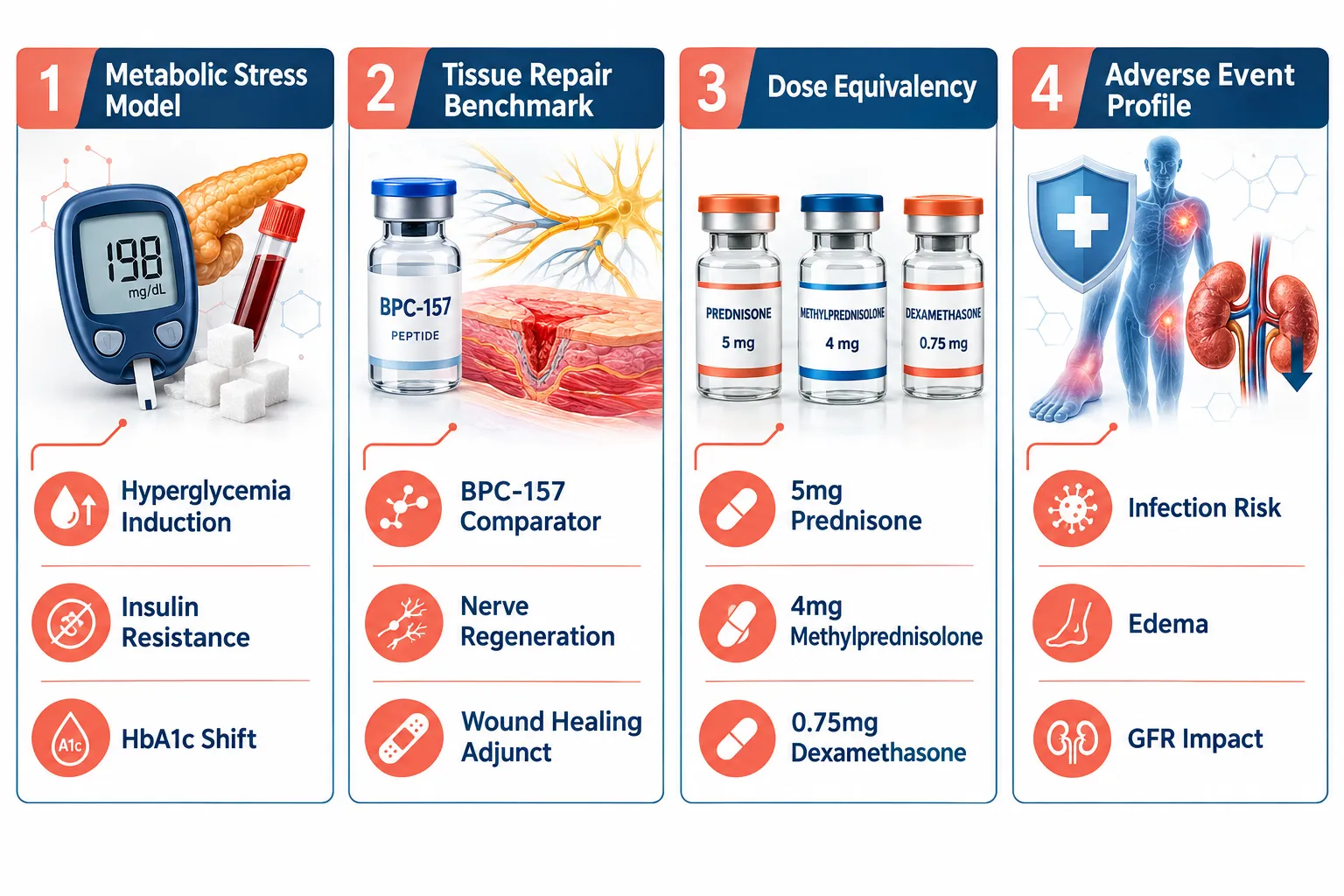
  • Their dose-equivalency relationship, roughly 5 mg prednisone equals 4 mg methylprednisolone equals 0.75 mg dexamethasone, must be matched carefully across experimental groups.
  • Glucocorticoids disturb glucose handling, insulin sensitivity, adipokine signaling, and HPA axis function, each of which can confound peptide readouts.
  • Dexamethasone is the most widely used positive control for anti-inflammatory peptide benchmarking in both in vivo and clinical settings.
  • Adverse-event profiles, including infection risk, edema, and impaired tissue repair, must be accounted for when interpreting peptide efficacy data against these controls.

How Glucocorticoids Function as Metabolic Messengers and Confounders

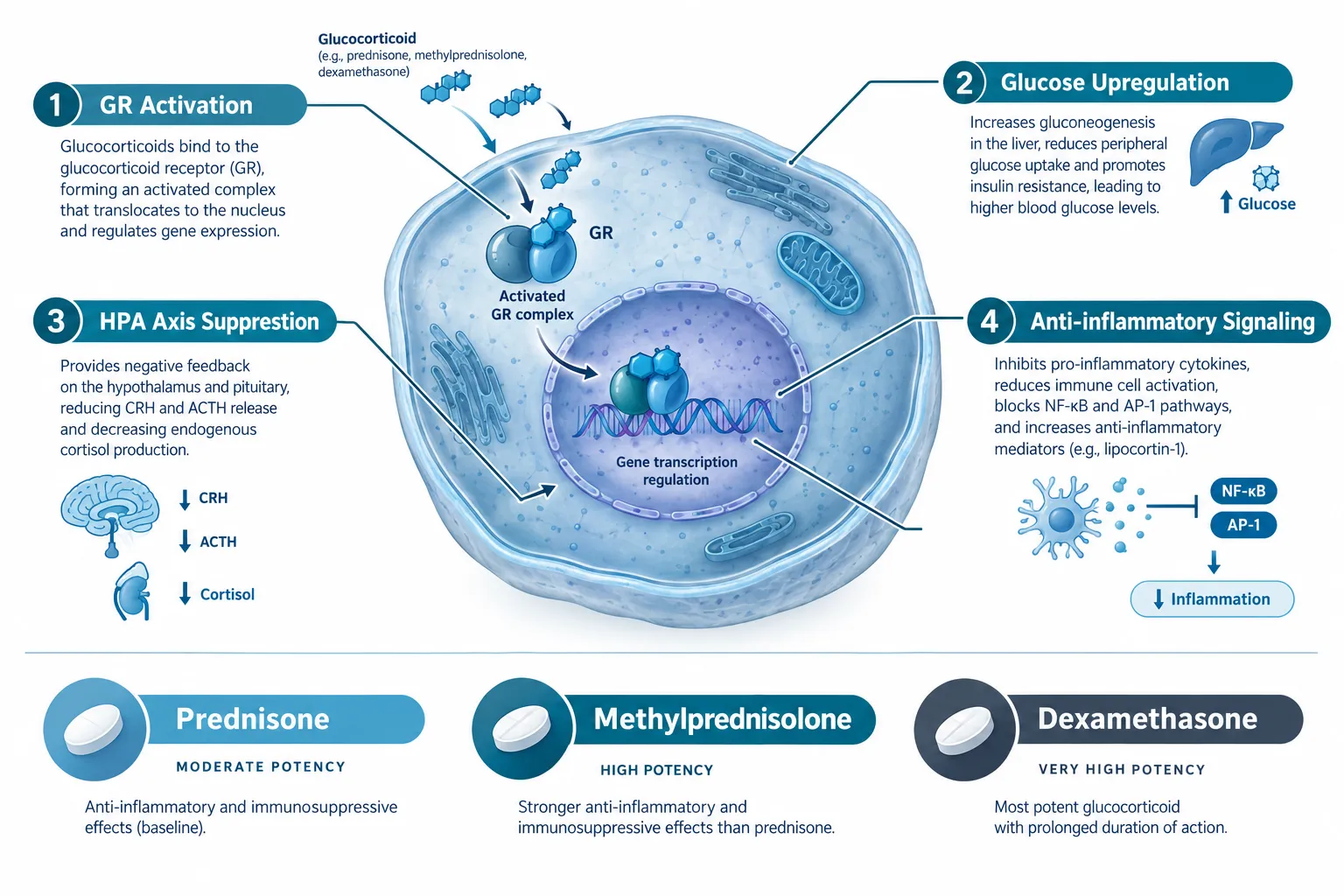
Glucocorticoids are described in current mechanistic literature as "pivotal metabolic messengers" that reshape transcriptional programs governing glucose and lipid metabolism. When researchers introduce prednisone, methylprednisolone, or dexamethasone into a peptide experiment, they are not adding a neutral background agent. Each drug activates the glucocorticoid receptor (GR), triggering cascades that drive hepatic gluconeogenesis, reduce peripheral glucose uptake, impair beta-cell function, and disturb hypothalamic signaling related to appetite and energy balance.
How Glucocorticoids Function as Metabolic Messengers and Confounders

These disruptions translate directly into confounders. A peptide targeting insulin sensitivity, appetite regulation, or fat oxidation, such as those explored in GLP-1 peptide research, will produce very different results in a glucocorticoid-treated animal versus a naive one. Unless the steroid control arm is precisely defined, dose-matched, and pharmacokinetically characterized, effect-size estimates become unreliable.

Key metabolic confounders introduced by glucocorticoid controls:

Variable Effect
Glucose handling Elevated fasting glucose, impaired insulin signaling
Adipokine profile Reduced adiponectin, altered leptin sensitivity
HPA axis Suppression of endogenous cortisol feedback
Immune tone Reduced cytokine production, altered macrophage polarization
Edema and fluid retention Altered sodium handling, tissue fluid balance

For metabolic peptide researchers exploring tools like tesa peptide benefits or MOTS-C peptide, these steroid-induced metabolic shifts represent the very conditions the peptide may be designed to counter, making glucocorticoids both indispensable tools and sources of potential bias.


Prednisone, Methylprednisolone, and Dexamethasone: Steroid Controls for Metabolic and Tissue-Repair Peptide Models, Dose Equivalency and Pharmacokinetic Design

Choosing the wrong steroid, or the wrong dose, can invalidate an entire peptide experiment. Systems pharmacology modeling work has developed detailed eight-parameter GR activation models for all three drugs, with full human pharmacokinetic curves for both intravenous and oral routes. These models confirm that while the three steroids share a common receptor target, their binding kinetics, half-lives, and exposure profiles diverge substantially.
Prednisone, Methylprednisolone, and Dexamethasone: Steroid Controls for Metabolic and Tissue-Repair Peptide Models, Dose Equi

Potency equivalency (anti-inflammatory basis):

  • 5 mg prednisone, moderate potency, short half-life, requires hepatic conversion to prednisolone
  • 4 mg methylprednisolone, slightly higher potency, minimal mineralocorticoid activity
  • 0.75 mg dexamethasone, highest relative potency, longest effective duration, no mineralocorticoid activity

These figures matter enormously when selecting a control arm. An experiment pairing a GLP-1 class peptide, such as those available as GLP-3 peptides, against a methylprednisolone-induced hyperglycemia model needs to document the exposure metric (AUC, Cmax) used for steroid dosing, not just the nominal dose.

Real-world clinical evidence reinforces how severe the metabolic challenge can be. High-dose methylprednisolone has precipitated severe hyperglycemia in patients, with baseline HbA1c values exceeding 12%, requiring multi-drug management and producing meaningful weight loss only after months of intervention. This type of acute metabolic disruption represents the stress-test condition that metabolic peptide models aim to rescue, making it one of the most clinically valid control paradigms available.

Research note: When using dexamethasone as a metabolic control, its longer receptor occupancy can mask early peptide-driven recovery signals. Timing of peptide administration relative to the steroid dosing window must be pre-specified in the protocol.


Applying Steroid Controls in Tissue-Repair Peptide Research

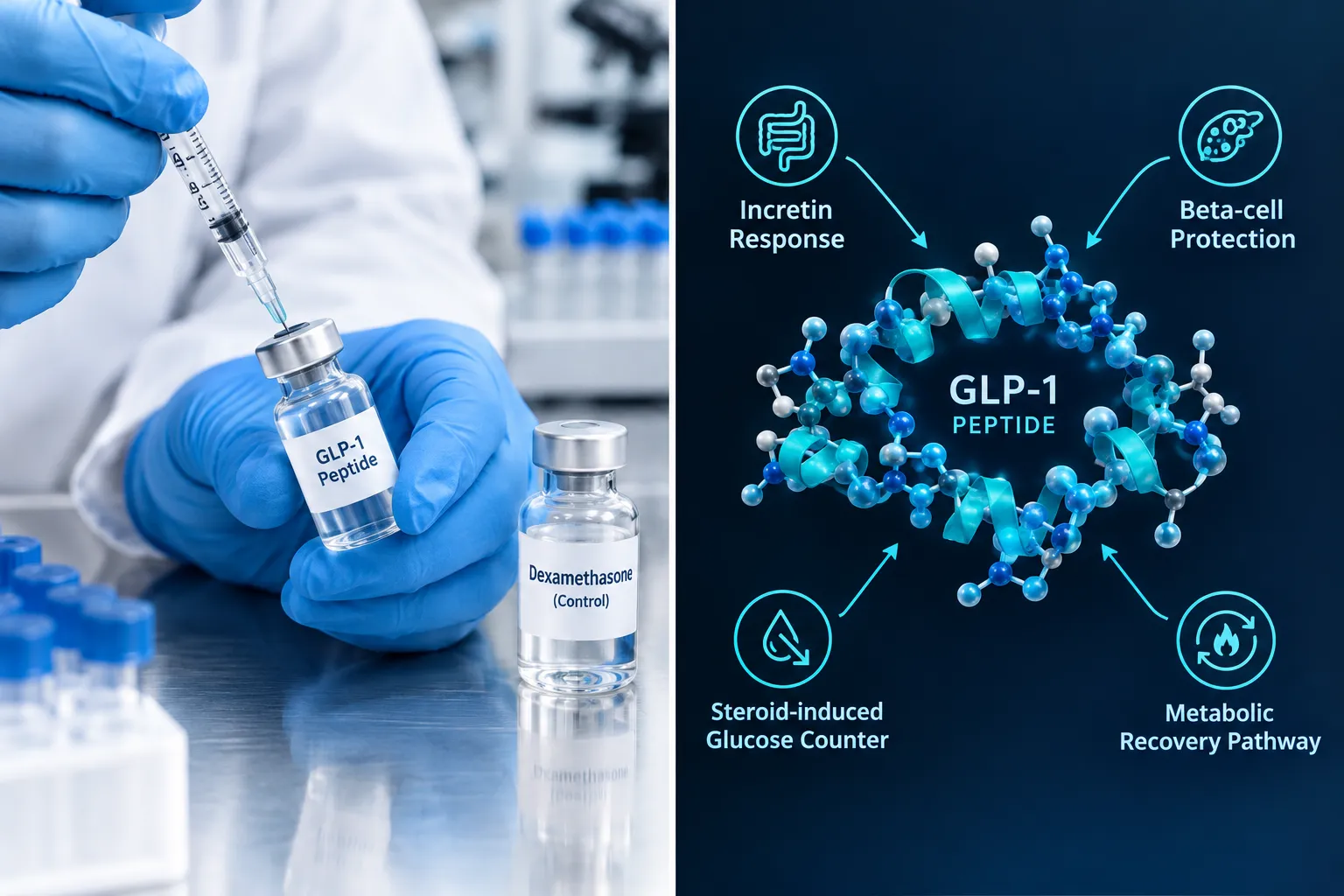
The role of prednisone, methylprednisolone, and dexamethasone as steroid controls for metabolic and tissue-repair peptide models extends well beyond glucose. In tissue-repair contexts, dexamethasone has been co-administered alongside regenerative peptides, including BPC-157, TB-500, and ARA-290, in nerve injury protocols, functioning simultaneously as an anti-inflammatory adjunct and a clinical anchor against which experimental peptide effects are contextualized.
Applying Steroid Controls in Tissue-Repair Peptide Research

This dual role is important to understand. In anti-inflammatory peptide benchmarking, novel short-chain compounds are routinely tested against dexamethasone-induced suppression of ear swelling in murine models, with efficacy described as "comparable to dexamethasone." That phrasing signals that dexamethasone is not just a co-treatment, it is the reference standard.

For researchers sourcing compounds for these protocols, reviewing peptide supplier comparisons and ensuring lab-tested peptides are used alongside characterized steroid controls is essential for reproducibility. The GHK-Cu peptide sourcing guide offers a practical example of how sourcing rigor connects to experimental credibility.

Tissue-repair confounders to account for in steroid-controlled models:

  • Wound healing impairment: Glucocorticoids suppress collagen synthesis and keratinocyte proliferation, which can artifactually depress peptide wound-healing readouts.
  • Vascularization suppression: Anti-angiogenic effects of dexamethasone may mask pro-vascular peptide actions.
  • Immune modulation: Steroid-driven cytokine suppression alters the inflammatory milieu in which tissue-repair peptides operate.
  • Edema reduction: Glucocorticoid-driven edema reduction can overlap with, or obscure, peptide-driven fluid normalization effects.

Evidence from IgA nephropathy real-world data is instructive: systemic glucocorticoid use was associated with higher infection rates, hospitalizations, and no clear glomerular filtration benefit compared with non-steroid cohorts. This adverse-event burden underscores why peptide-based or steroid-sparing strategies represent a meaningful research direction, and why the steroid control arm must be treated as an active, risk-carrying intervention, not a passive baseline.


Conclusion

Prednisone, methylprednisolone, and dexamethasone are not interchangeable background agents in peptide research. Each brings a distinct pharmacokinetic fingerprint, a specific metabolic disruption profile, and a well-documented adverse-event burden that can confound, amplify, or mask peptide-driven effects across glucose, appetite, inflammatory signaling, immune suppression, edema, and wound repair.

Actionable next steps for researchers:

  1. Pre-specify steroid selection and dose using validated equivalency ratios and exposure metrics (AUC, Cmax), not nominal dose alone.
  2. Document the timing gap between steroid administration and peptide intervention, GR occupancy duration varies significantly across the three drugs.
  3. Account for metabolic confounders (glucose, adipokines, HPA axis) as co-primary readouts, not secondary observations.
  4. Use dexamethasone as the positive control benchmark for anti-inflammatory peptide efficacy, and match dose to the specific inflammatory model used.
  5. Treat the steroid control arm as an active pharmacological condition with its own risk profile, design and interpret accordingly.

Researchers who build these considerations into their protocols from the outset will produce peptide-model data that is both scientifically defensible and clinically meaningful.

https://www.puretestedpeptides.com/wp-content/uploads/2026/10/prednisone-methylprednisolone-and-dexamethasone-steroid-controls-for-metabolic-a-1.webp 1024 1536 https://www.puretestedpeptides.com/wp-content/uploads/2026/01/buy-peptides-online.jpg 2026-10-21 13:05:402026-10-21 13:05:40Prednisone, Methylprednisolone, and Dexamethasone: Steroid Controls for Metabolic and Tissue-Repair Peptide Models
×

Helpful Links

  • My account
  • Cart
  • Checkout
  • Refund and Returns Policy
  • Privacy Policy
  • SMS Privacy Policy
  • Login
  • My Account
  • Logout

USA Made Lab Tested Peptides

All products are sold for research, laboratory, or analytical purposes only, and are not for human consumption


Pure Tested Peptides is a chemical supplier. Pure Tested Peptides is not a compounding / chemical compounding facility as defined under 503A of the Federal Food, Drug, and Cosmetic act. Pure Tested Peptides is not an outsourcing facility as defined under 503B of the Federal Food, Drug, and Cosmetic act.

The statements made within this website have not been evaluated by the US Food and Drug Administration. The products we offer are not intended to diagnose, treat, cure or prevent any disease.

Human/Animal Consumption Prohibited. Laboratory/In-Vitro Experimental Use Only

Scroll to top Scroll to top Scroll to top