

Tadalafil vs. PT-141 (Bremelanotide): Central Melanocortin Receptor Signaling vs. Peripheral Nitric Oxide Pathways
Nearly 322 million men worldwide are projected to experience erectile dysfunction by 2025, yet a growing body of research reveals that vascular insufficiency accounts for only part of the sexual dysfunction picture. Desire, motivation, and arousal originate in the brain, not the blood vessel, and that distinction is precisely what makes the comparison of Tadalafil vs. PT-141 (Bremelanotide): Central Melanocortin Receptor Signaling vs. Peripheral Nitric Oxide Pathways so valuable for researchers and clinicians designing targeted study protocols in 2026.
Key Takeaways
- Tadalafil works peripherally by inhibiting PDE5, increasing cGMP, and relaxing vascular smooth muscle to improve blood flow.
- PT-141 (bremelanotide) acts centrally via melanocortin-4 receptors in the hypothalamus to drive sexual desire and arousal.
- These two compounds address fundamentally different biological problems and are not interchangeable.
- PT-141 is FDA-approved only for premenopausal women with hypoactive sexual desire disorder; its use in men remains off-label.
- Combining both pathways is an active area of research for subjects who fail monotherapy approaches.
How Each Mechanism Works: A Pathway-Level Breakdown
Understanding the pharmacology behind Tadalafil vs. PT-141 (Bremelanotide): Central Melanocortin Receptor Signaling vs. Peripheral Nitric Oxide Pathways starts with recognizing that these molecules never compete for the same receptor.
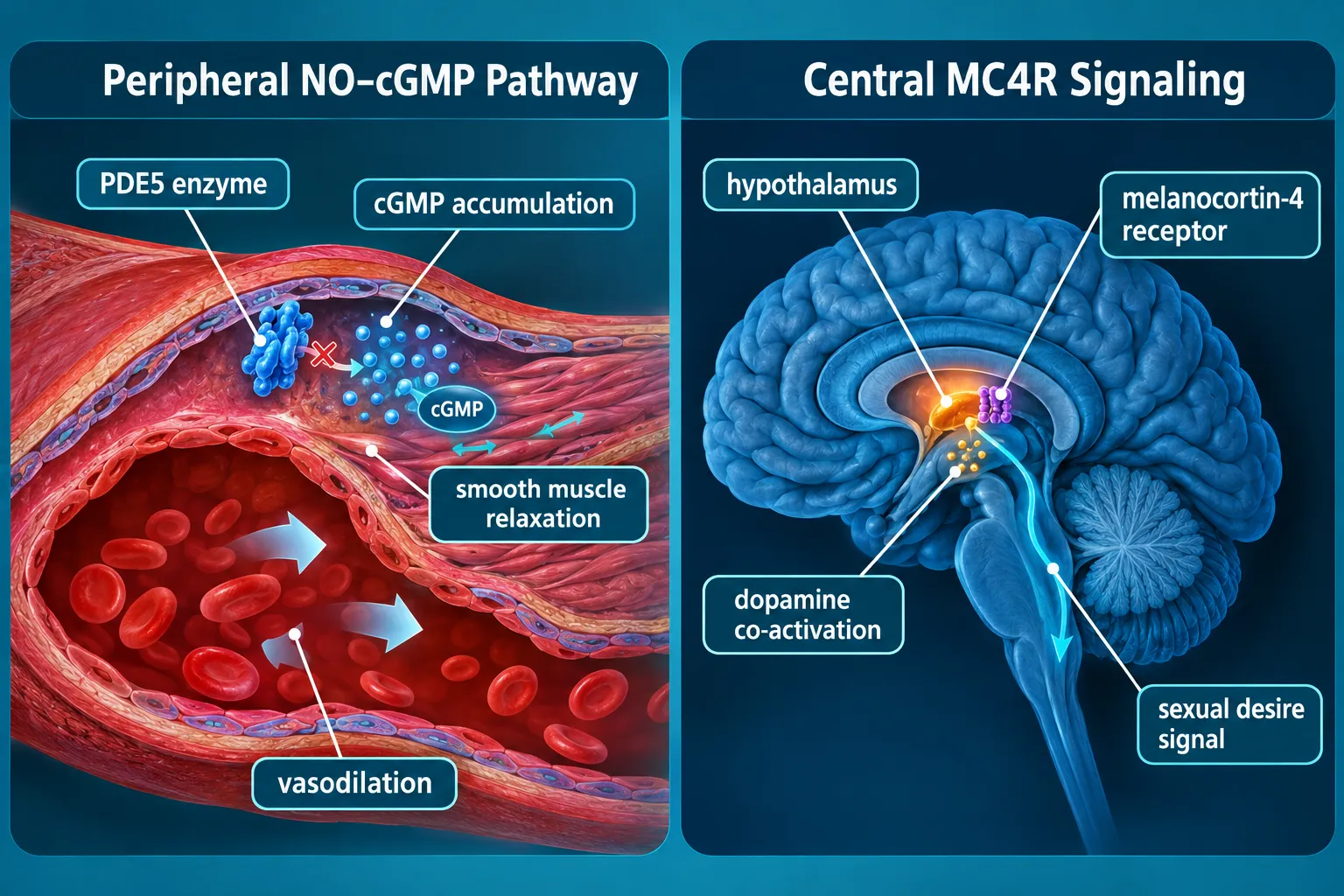
Tadalafil is a phosphodiesterase type 5 (PDE5) inhibitor. When sexual stimulation triggers nitric oxide (NO) release from endothelial cells, NO activates guanylate cyclase, which converts GTP into cyclic GMP (cGMP). Elevated cGMP relaxes smooth muscle in penile and clitoral vasculature, enabling engorgement. PDE5 normally degrades cGMP; tadalafil blocks this enzyme, prolonging the vasodilatory signal. This is an entirely peripheral, vascular mechanism, it requires prior sexual stimulation and depends on intact NO-producing endothelium.
PT-141 (bremelanotide), by contrast, is a synthetic melanocortin receptor agonist derived from the naturally occurring peptide alpha-melanocyte-stimulating hormone (alpha-MSH). It binds primarily to melanocortin-4 receptors (MC4R) concentrated in the hypothalamus and limbic system. This central nervous system activation increases dopaminergic signaling in reward and arousal circuits, generating spontaneous sexual motivation independent of peripheral vascular tone. For more on this peptide's research profile, see the detailed overview of PT-141 bremelanotide.
| Feature | Tadalafil | PT-141 (Bremelanotide) |
|---|---|---|
| Primary target | PDE5 enzyme | MC4R / MC3R (CNS) |
| Pathway | Peripheral NO, cGMP | Central melanocortin |
| Route | Oral | Subcutaneous injection |
| Onset | ~30 minutes | ~45-60 minutes |
| Duration | Up to 36 hours | 6-12 hours |
| Stimulation required | Yes | No |
Regulatory Status, Approved Indications, and Off-Label Use
The regulatory landscape for these two compounds diverges sharply, a fact that shapes every research and clinical protocol.
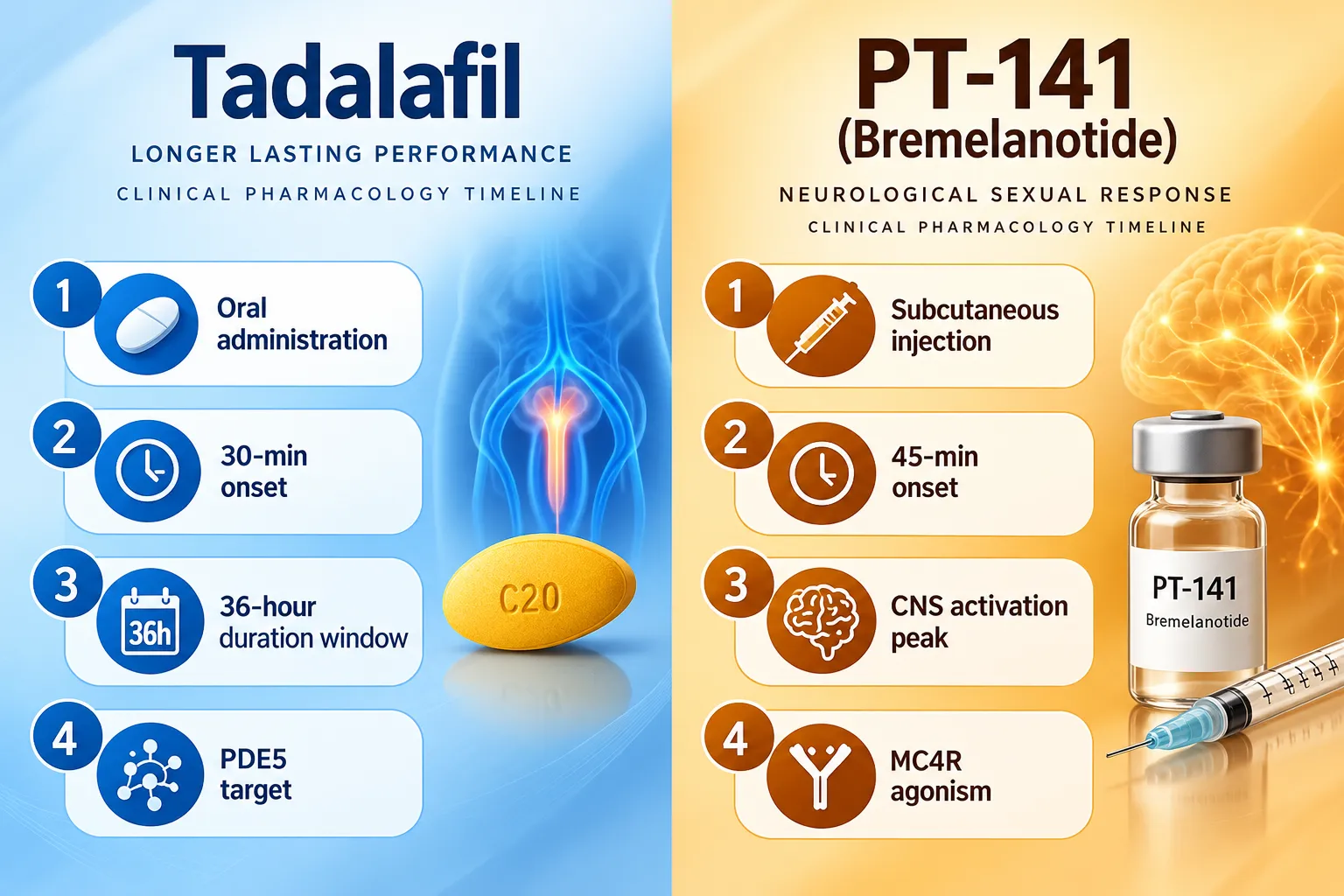
Tadalafil holds FDA approval for erectile dysfunction, benign prostatic hyperplasia (BPH), and pulmonary arterial hypertension. It is a first-line pharmacological option for male sexual dysfunction across most major clinical guidelines as of 2026. Its long half-life (~17.5 hours) and once-daily dosing option make it well-suited for both on-demand and chronic use study designs.
PT-141 received FDA approval in 2019 under the brand name Vyleesi, specifically for hypoactive sexual desire disorder (HSDD) in premenopausal women. Its use in men, including for erectile dysfunction or low libido, remains off-label as of 2026. This distinction is critical for research ethics review boards. Researchers exploring peptide-based CNS modulation may also find it useful to compare approaches such as Sermorelin, Ipamorelin, and CJC-1295 as reference points for CNS-active peptide protocols.
"PT-141 addresses the neurological origin of desire, while tadalafil addresses the vascular execution of arousal, treating these as equivalent is a fundamental category error."
Safety considerations differ meaningfully:
- Tadalafil carries a hard contraindication with nitrate medications due to additive hypotension risk.
- PT-141 is associated with transient nausea (reported in ~40% of subjects), flushing, and blood pressure fluctuations, including transient hypertension, requiring cardiovascular monitoring in study populations.
- Neither compound should be used without proper medical oversight.
Combining Central and Peripheral Pathways: Research Design Implications
The most clinically compelling question in 2026 is not which compound is superior, but whether combining central melanocortin agonism with peripheral PDE5 inhibition produces additive or synergistic effects in subjects who fail monotherapy.
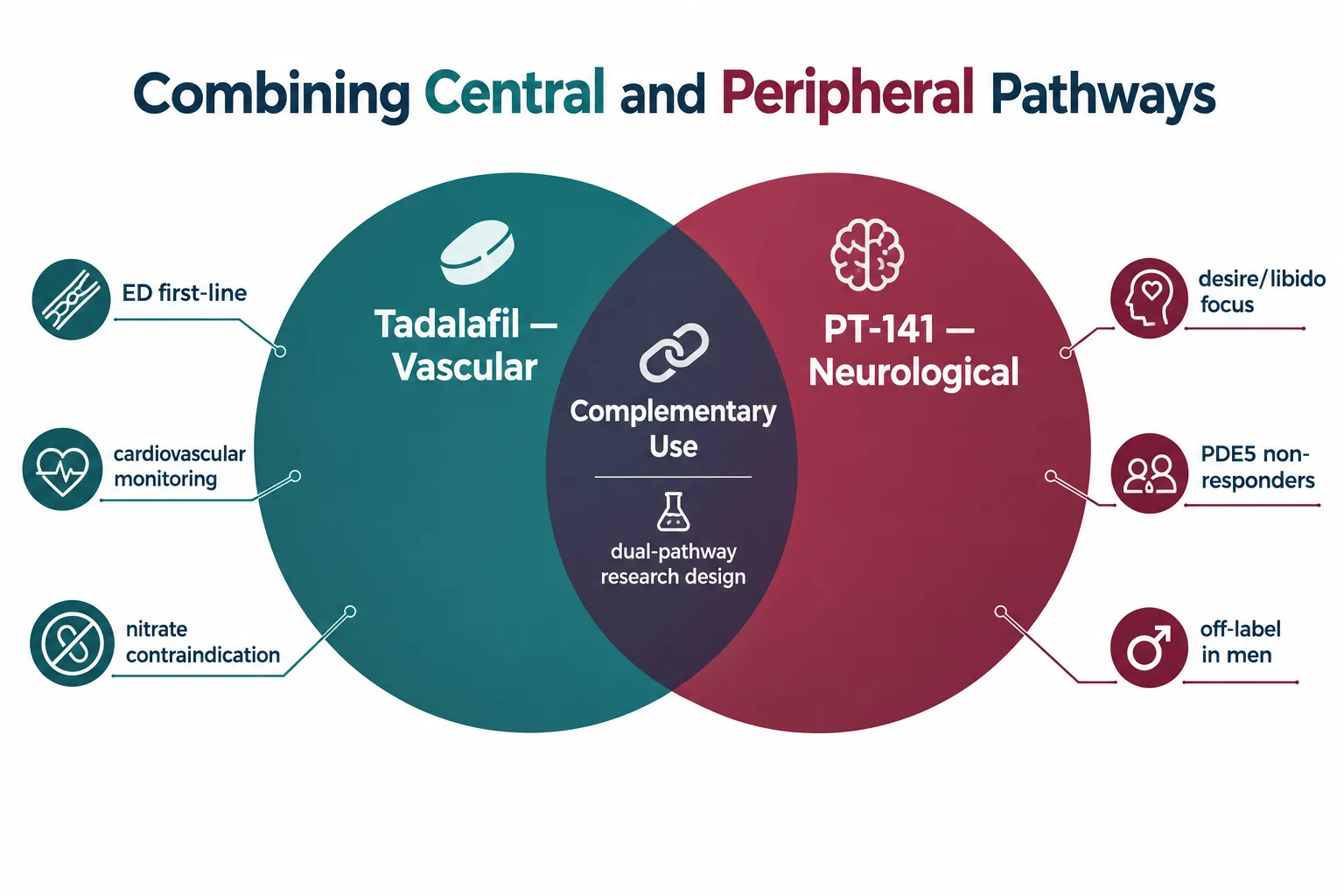
PDE5 non-responders, subjects with severe vascular damage, post-prostatectomy neuropathy, or diabetes-related endothelial dysfunction, often show limited response to tadalafil alone because the NO-generating machinery is compromised. In these populations, central MC4R activation via PT-141 may restore motivational drive and facilitate arousal through non-vascular neural pathways, potentially lowering the threshold for peripheral response.
Researchers designing dual-pathway studies should consider:
- Baseline cardiovascular profiling before combining agents with opposing hemodynamic effects
- Washout periods to isolate each compound's contribution to observed outcomes
- Validated desire and arousal scales (e.g., FSFI, IIEF) alongside objective vascular measures
- Dose-response titration given that PT-141's nausea profile is dose-dependent
For researchers interested in how other peptides modulate vascular and mitochondrial function alongside sexual health endpoints, the SS-31 mitochondrial research themes page offers relevant mechanistic context. Similarly, those studying growth hormone secretagogues in the same subject populations may benefit from reviewing Tesamorelin vs. Ipamorelin as a comparative peptide framework. Broader peptide stacking considerations are also discussed in the IPA Sermorelin stack research overview.
When each compound fits a research design:
- Use tadalafil when the primary endpoint is vascular, penile blood flow, intracavernosal pressure, or endothelial function markers.
- Use PT-141 when the primary endpoint is neurological, desire, motivation, CNS arousal circuitry, or MC4R-mediated behavioral outcomes.
- Use both when studying the interaction between desire and vascular response, or when modeling treatment-resistant sexual dysfunction.
Conclusion
The comparison of Tadalafil vs. PT-141 (Bremelanotide): Central Melanocortin Receptor Signaling vs. Peripheral Nitric Oxide Pathways is not a question of which drug wins, it is a question of which biological problem a given study or clinical protocol is designed to address. Tadalafil remains the gold standard for vascular erectile dysfunction, supported by decades of safety data and broad regulatory approval. PT-141 opens a distinct research avenue into CNS-driven desire disorders, particularly in populations where the vascular pathway is intact but motivation is absent, or where PDE5 inhibition has failed.
Actionable next steps for researchers and clinicians in 2026:
- Define the primary endpoint clearly, vascular or neurological, before selecting a compound.
- Review cardiovascular contraindications for both agents before designing combination protocols.
- Use validated psychometric and physiological outcome tools to separate desire from arousal in data collection.
- Consult current regulatory guidance on off-label use of PT-141 in male subjects before IRB submission.
- Explore the PT-141 bremelanotide research profile for sourcing and purity documentation relevant to study-grade material.
Understanding both pathways, and their interaction, is essential for building the next generation of sexual medicine research.