Enclomiphene Citrate: Understanding Its Selective Estrogen Receptor Modulation (serm) and Research Uses
Testosterone levels in men have declined measurably across successive generations, a trend that has pushed researchers toward compounds capable of restoring hormonal balance without suppressing the body's own endocrine signaling. Enclomiphene citrate has emerged as one of the most studied candidates in this space, drawing attention for its targeted receptor activity and its structural separation from older, less selective agents. This article examines enclomiphene citrate: understanding its selective estrogen receptor modulation (serm) and research uses in depth, covering mechanism, isomeric distinction, clinical evidence, and current investigational context as of 2026.
Key Takeaways
- Enclomiphene citrate is the trans-isomer of clomiphene, acting as a selective estrogen receptor modulator (serm) that blocks estrogen receptors in the hypothalamus and pituitary without the prolonged estrogenic activity of its cis counterpart.
- By blocking negative feedback on the hypothalamic-pituitary-gonadal (HPG) axis, enclomiphene stimulates endogenous LH and FSH release, raising testosterone while preserving fertility.
- Research distinguishes enclomiphene from clomiphene primarily through its cleaner receptor profile, shorter half-life, and reduced estrogenic side effects.
- Clinical studies have demonstrated meaningful testosterone restoration in men with secondary hypogonadism, with a favorable safety profile relative to exogenous testosterone therapy.
- As of 2026, enclomiphene remains investigational in most regulatory contexts, with active research into compounding, reimbursement, and expanded applications.
How Enclomiphene Citrate Works as a Selective Estrogen Receptor Modulator
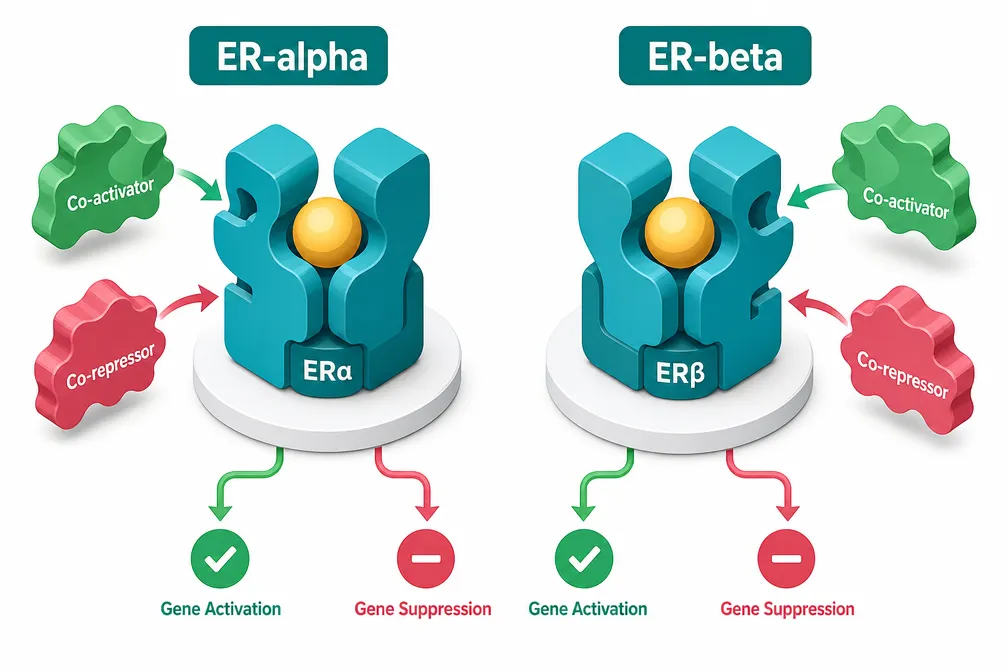
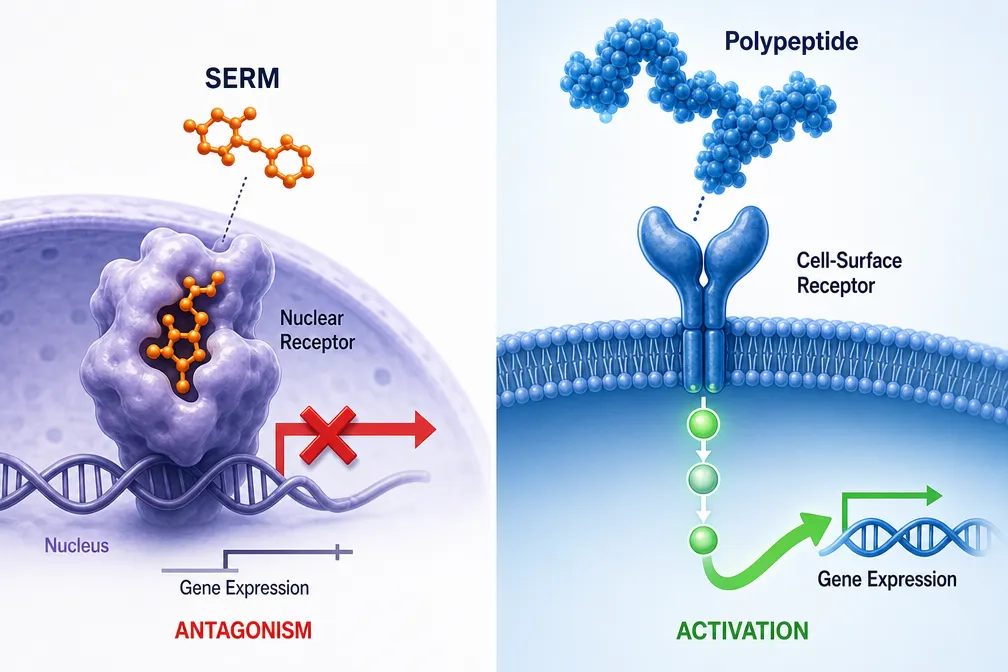
Enclomiphene citrate belongs to the broader serm class, compounds that bind estrogen receptors and produce tissue-specific agonist or antagonist effects. Understanding where to buy a serm for research purposes begins with understanding what differentiates one serm from another at the receptor level.
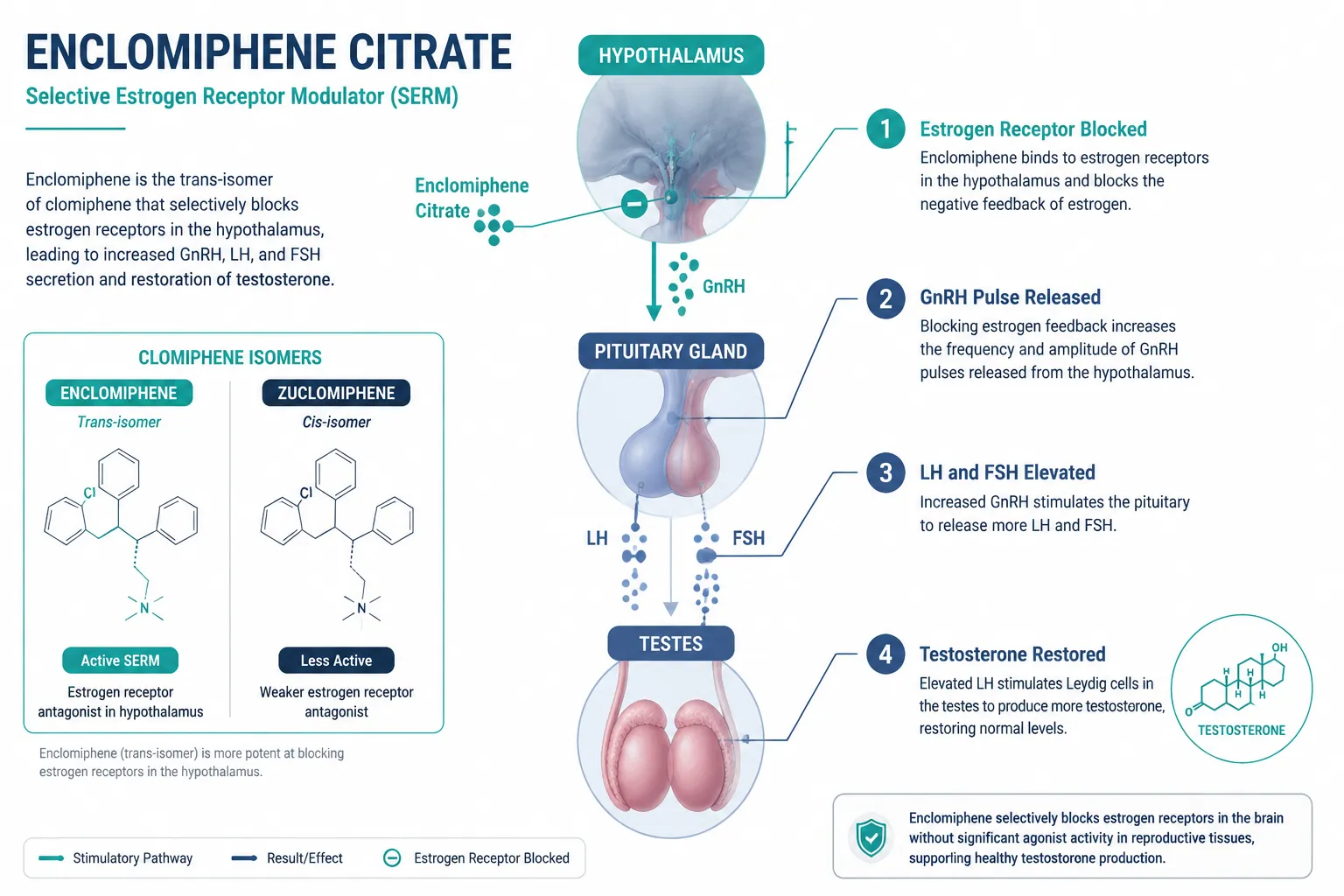
Enclomiphene acts primarily as an estrogen receptor antagonist at the hypothalamus and anterior pituitary. Estrogen normally exerts negative feedback on these structures, suppressing the release of gonadotropin-releasing hormone (GnRH), luteinizing hormone (LH), and follicle-stimulating hormone (FSH). When enclomiphene occupies estrogen receptors at these sites, it blocks that feedback loop. The result is increased GnRH pulsatility, elevated LH and FSH secretion, and downstream stimulation of testicular testosterone production.
This mechanism is described as central HPG axis stimulation, the compound works upstream, preserving the testes' own production capacity rather than replacing testosterone exogenously.
"Enclomiphene's antagonism at hypothalamic estrogen receptors effectively resets the HPG axis signal, making it a mechanistically distinct option from testosterone replacement therapy."
Key receptor-level distinctions include:
- Tissue selectivity: Antagonist at hypothalamus and pituitary; partial agonist activity is minimal compared to zuclomiphene
- Binding affinity: High affinity for estrogen receptor alpha (ERa), the dominant receptor subtype in the HPG feedback pathway
- Duration of action: Shorter half-life than zuclomiphene, reducing accumulation and prolonged estrogenic exposure
Enclomiphene vs. Clomiphene: The Isomeric Distinction That Matters in Research
Clomiphene citrate is a racemic mixture of two geometric isomers: enclomiphene (trans) and zuclomiphene (cis). These isomers share the same molecular formula but differ significantly in their pharmacological behavior.
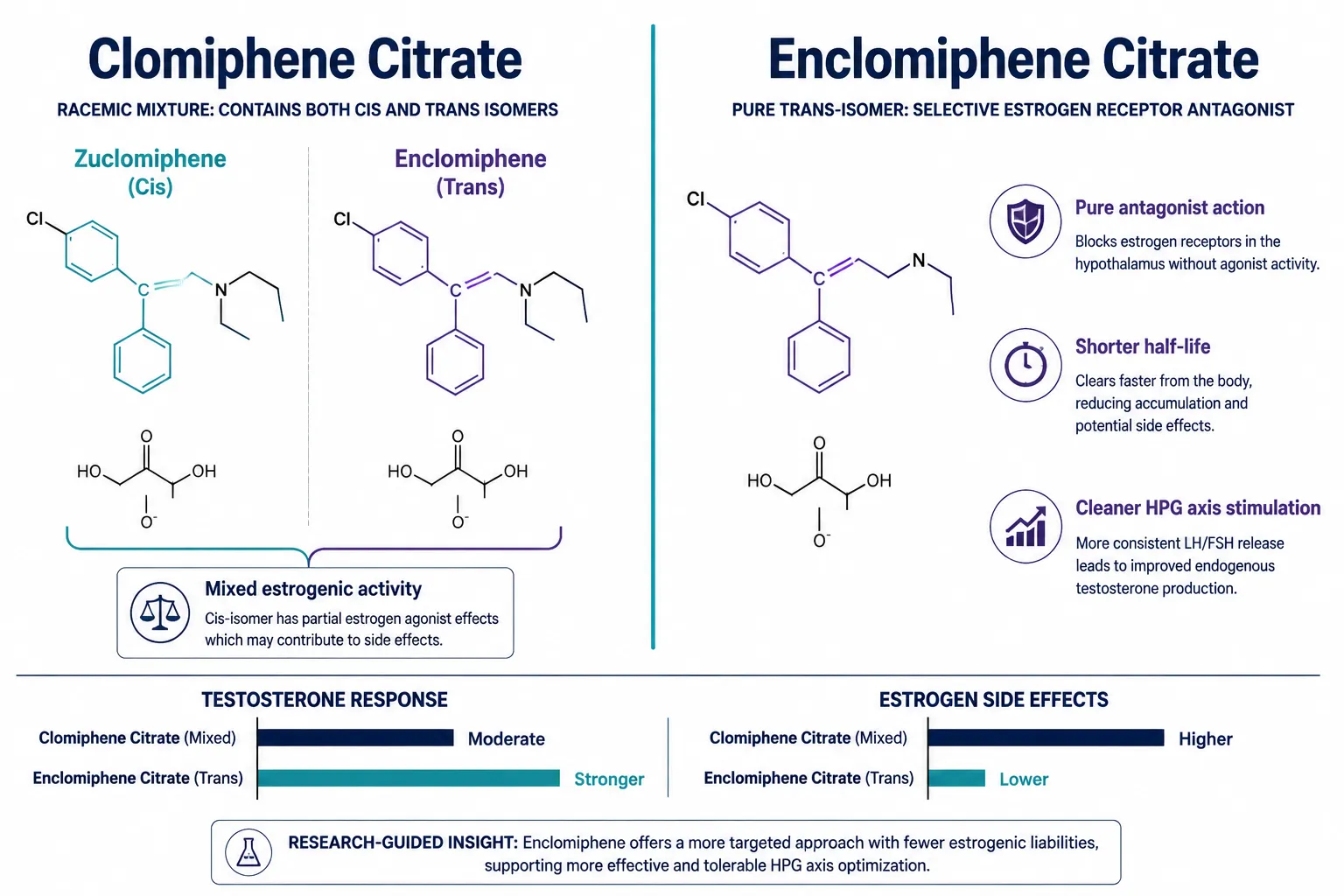
| Property | Zuclomiphene (Cis) | Enclomiphene (Trans) |
|---|---|---|
| Receptor activity | Partial estrogen agonist | Estrogen receptor antagonist |
| Half-life | Long (weeks) | Short (days) |
| HPG axis effect | Mixed | Clean stimulation |
| Estrogenic side effects | Higher risk | Lower risk |
Researchers investigating serm comparisons and alternatives consistently highlight this distinction. The prolonged estrogenic activity of zuclomiphene can counteract the very HPG stimulation that makes clomiphene useful, creating noise in study outcomes. Isolating the enclomiphene isomer removes this confound.
This isomeric purity is the central reason enclomiphene has attracted independent research interest. Studies using pure enclomiphene report more consistent testosterone elevation with fewer reports of mood disturbance, visual symptoms, and estrogenic effects that have been associated with mixed clomiphene preparations.
Research Applications of Enclomiphene Citrate: Understanding Its serm Mechanism in Clinical Contexts
The primary research application for enclomiphene citrate: understanding its selective estrogen receptor modulation (serm) and research uses translates most directly into the study of secondary (hypogonadotropic) hypogonadism in men. In this condition, low testosterone results not from testicular failure but from insufficient gonadotropin signaling, exactly the pathway enclomiphene addresses.
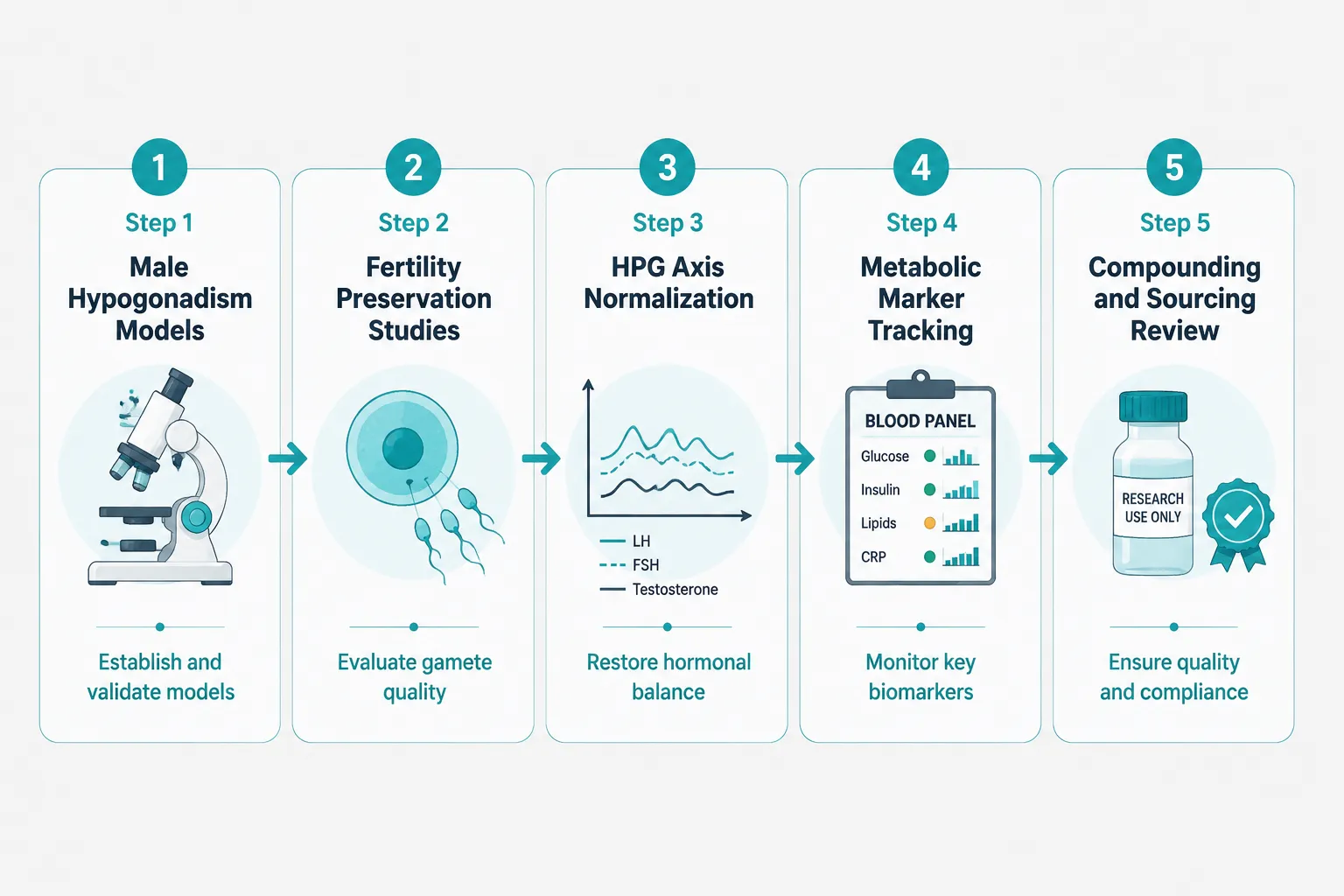
Key research findings and contexts as of 2026 include:
Male Hypogonadism Studies
Phase II and Phase III trials have demonstrated that enclomiphene raises total testosterone into the normal range (300-1000 ng/dL) in men with secondary hypogonadism, while maintaining or improving sperm parameters, a critical advantage over exogenous testosterone, which suppresses spermatogenesis.
Fertility Preservation
Because enclomiphene preserves FSH signaling to the Sertoli cells, it is studied as a fertility-sparing alternative to testosterone replacement. Men seeking to maintain reproductive capacity while addressing low testosterone represent a significant research population. Researchers exploring serm combinations with peptide protocols have noted complementary effects on the endocrine axis.
Metabolic and Body Composition Research
Testosterone restoration through HPG axis stimulation carries secondary metabolic implications. Studies have tracked improvements in insulin sensitivity, lean mass retention, and fat distribution, areas that intersect with sarcopenia research and age-related muscle loss.
Regulatory and Compounding Landscape
The FDA has not granted enclomiphene full approval as of 2026, though it has been the subject of New Drug Application (NDA) submissions. Compounding pharmacies have supplied enclomiphene under specific regulatory frameworks, though evolving Medicaid and compounding policies have introduced sourcing complexity for research teams. Investigators sourcing serm 10mg research preparations should verify current compliance requirements in their jurisdiction.
Safety Profile
Reported adverse effects in clinical studies have been generally mild. The most commonly noted include headache, nausea, and transient visual disturbances, the latter occurring at lower frequency than with racemic clomiphene. Cardiovascular and hepatic markers have remained stable across reviewed trial durations. Researchers combining enclomiphene with other investigational agents, such as those following serm, Ipamorelin, and CJC-1295 protocols, should account for additive endocrine effects when designing study parameters.
Conclusion
Enclomiphene citrate occupies a precise and well-defined position within the serm class. Its mechanism, estrogen receptor antagonism at the hypothalamus and pituitary, produces upstream HPG axis stimulation that restores endogenous testosterone without suppressing fertility or introducing prolonged estrogenic activity. The isomeric separation from zuclomiphene resolves a long-standing confound in clomiphene research and gives investigators a cleaner pharmacological tool.
Actionable next steps for researchers in 2026:
- Review current FDA compounding guidance before sourcing enclomiphene for study use.
- Design protocols that distinguish secondary from primary hypogonadism to ensure the HPG-stimulation mechanism is relevant to the study population.
- Track both testosterone and gonadotropin levels (LH, FSH) as co-primary endpoints to capture the full mechanistic picture.
- Consider fertility and spermatogenesis outcomes as secondary endpoints where applicable.
- Consult updated clinical trial registries for ongoing Phase III data that may reshape the regulatory outlook before year-end 2026.
The compound's research trajectory suggests continued relevance in endocrine and reproductive medicine. As regulatory clarity improves and compounding frameworks stabilize, enclomiphene citrate is positioned to move from investigational compound to a more formally recognized therapeutic option.