Call or Text 727-513-9780
  • Shopping Cart Shopping Cart
    0Shopping Cart
Pure Tested Peptides | America's most trusted Peptides for sale online
  • Peptides for sale
    • Oral Peptides for sale
      • Peptide Capsules for sale
      • BPC 157 Capsules 1000mcg
      • SLU-PP-332 Capsules | 1000 mcg
      • 5-Amino-1MQ 50mg Capsules
      • Tesofensine 500mcg
    • All Peptides for sale
    • Peptide Sprays
      • BPC 157 Nasal Spray Kit
      • BPC-157 TB500 Nasal Spray Kit
      • Semax Nasal Spray 10mg
      • Selank – Nasal Spray Kit – 10mg
      • Epithalon 50MG Nasal Spray Kit
      • Ipamorelin 10mg Nasal Spray
      • Klow Nasal Spray (BPC-157 + TB-500 + GHK-Cu + KPV) | 80mg
      • Hulk Nasal Spray Tesa / Ipa Blend 6/3 MG
      • Klow Nasal Spray
      • NAD + 500 mg Nasal Spray
      • PT-141 Nasal Spray Kit
    • GHRH Peptides
      • Ipa Peptides
      • CJC-1295 Peptides
        • CJC-1295 with DAC 5 mg
        • CJC-1295 without DAC 5 mg
        • CJC-1295 Ipa 10mg
      • Tesa Peptides
        • Tesa Peptide
        • Tesa 20 mg
    • GHK-Cu Peptides
      • All GHK-Cu Peptides
      • GHK-Cu 100mg
      • KLOW Peptide Blend – Buy KLOW blend online
    • BPC Peptides
      • All BPC Peptides
      • BPC-157
      • BPC-157 TB-500
      • BPC 157 capsules 1000mcg
    • SLU-PP-332 Peptides
      • All SLU-PP-332 Peptides
      • SLU-PP-332 5mg
    • GLP3 Peptides
      • GLP3-R
      • GLP3-R CAG 10mg
      • GLP3-R 20mg
    • PT-141 Peptides
      • PT-141 Peptides for sale
      • PT-141 10mg
      • PT-141 Nasal Spray
    • CAG Peptides
      • Lipo-C Peptide Blend
      • CAG 5mg
      • CAG 10mg
    • MOTS-C Peptides
      • MOTS-C Peptides for sale
      • MOTS-c peptide
      • MOTS-c 10mg *6 pack*
    • 5 Amino 1MQ Peptides
      • 5 Amino 1MQ Peptides for sale
      • 5-Amino-1MQ 50mg Capsules
      • 5-Amino-1MQ 5mg
    • Epithalon Peptides
      • Epithalon Peptides for sale
      • Epithalon 10mg
      • Epithalon 50mg
  • Shop
    • GLPs
      • 5-Amino-1MQ 50mg Capsules
      • 5-Amino-1MQ 5mg
      • GLP3-Reta
      • L-Carnitine 500mg/ml
      • Tesofensine 500mcg
      • SLU-PP-332 5mg
      • MOTS-c 10mg *6 pack*
    • Epithalon & BPC Peptides
      • Epithalon 10mg
      • Epithalon 50mg
      • BPC-157
      • BPC 157 capsules 1000mcg
      • BPC-157 TB-500
      • BPC-157 TB500 Nasal Spray Kit
      • BPC 157 Nasal Spray Kit
    • BPC TB-500 & NAD+ Peptides
      • NAD+ 500 mg
      • KLOW Peptide Blend – Buy KLOW blend online
      • GLOW Peptide Blend
      • TB 500 5mg
      • BPC 157 capsules 1000mcg – Supplement
      • BPC 157 Nasal Spray Kit
      • BPC-157
      • BPC-157 TB500 Nasal Spray Kit
      • BPC-157 TB-500
      • BPC 157 capsules 1000mcg
    • LL-37 Peptide
      • LL-37 10 mg
    • MOTS-C & Selank
      • MOTS-c peptide
      • Selank 10mg
    • GHK Peptides
      • GHK-Cu 100mg
      • GLOW Peptide Blend
      • KLOW Peptide Blend – Buy KLOW blend online
  • COAs
  • Wholesale
    • Wholesale Peptides for sale
  • PTP FAQ
  • Affiliates
    • Selank Peptide: Advanced Pharmacological Mechanisms Underlying Its Anxiolytic and Nootropic Effects in Research
      • 5-Amino-1MQ Peptide: Detailed Mechanisms of NNMT Inhibition and Its Impact on Cellular Metabolism Research
        • MOTS-C Peptide: Unraveling Its Role in Mitochondrial Dynamics and Energy Metabolism Research
          • Epithalon Peptide and Telomerase Regulation: Investigating Its Impact on Cellular Senescence and Lifespan Research Models
            • GLP2-T vs GLP2 Tirz Peptide: Understanding the Naming, Mechanistic Nuances, and Research Implications for Gut Health
      • Peptides and Polypeptides in Modern Pharmacology: What Research on Metoprolol, Prednisone, and Amlodipine Reveals
        • Polypeptide Peptides vs NSAIDs: What Naproxen and Diclofenac Teach Tissue-Repair Researchers About BPC‑157 and TB‑500
          • Peptides and Polypeptides in Endocrine Pharmacology: How GLP-1, GLP-2, and GLP-3 Retatrutide Differ From Classic Drugs Like Prednisone and Amlodipine
          • 5‑Amino‑1MQ Peptide and NNMT Inhibition: How It Compares With Statins Like Atorvastatin in Adipose and Lipid Metabolism Research
      • Enclomiphene, Estrogen Receptor Signaling, and Luteinizing Phase Biology: What Hormone Researchers Should Measure
        • Mesenchymal Stem Cells, BPC‑157, and GHK‑Cu: How Tissue Repair Peptides Compare With Classic NSAIDs Like Naproxen in Injury Models
          • Peptide Calculator Use Cases Beyond Growth Hormone: Working Through GLP‑3 Retatrutide, MOTS‑c, and BPC‑157 Research Dosing
        • Polypeptide Peptides in Endocrine and Metabolic Pharmacology: Lessons From Amlodipine, Prednisone, and Metoprolol
        • Peptides Calculator for Advanced Blends: Worked Examples for Tesamorelin, CJC‑1295, and Ipamorelin Stacks
          • Peptides and Polypeptides in Human Physiology: How Molecular Size Shapes Research Applications
            • Selank Peptide: Advanced Pharmacological Mechanisms Underlying Its Anxiolytic and Nootropic Effects in Research
          • 5-Amino-1MQ Peptide: Detailed Mechanisms of NNMT Inhibition and Its Impact on Cellular Metabolism Research
            • MOTS-C Peptide: Unraveling Its Role in Mitochondrial Dynamics and Energy Metabolism Research
              • Epithalon Peptide and Telomerase Regulation: Investigating Its Impact on Cellular Senescence and Lifespan Research Models
                • GLP2-T vs GLP2 Tirz Peptide: Understanding the Naming, Mechanistic Nuances, and Research Implications for Gut Health
                  • Peptides and Polypeptides in Endocrine Pharmacology: How GLP-1, GLP-2, and GLP-3 Retatrutide Differ From Classic Drugs Like Prednisone and Amlodipine
                    • Polypeptide Peptides vs NSAIDs: What Naproxen and Diclofenac Teach Tissue-Repair Researchers About BPC‑157 and TB‑500
                      • Peptides and Polypeptides in Modern Pharmacology: What Research on Metoprolol, Prednisone, and Amlodipine Reveals
                        • 5‑Amino‑1MQ Peptide and NNMT Inhibition: How It Compares With Statins Like Atorvastatin in Adipose and Lipid Metabolism Research
                        • Enclomiphene, Estrogen Receptor Signaling, and Luteinizing Phase Biology: What Hormone Researchers Should Measure
                        • Mesenchymal Stem Cells, BPC‑157, and GHK‑Cu: How Tissue Repair Peptides Compare With Classic NSAIDs Like Naproxen in Injury Models
                        • Peptide Calculator Use Cases Beyond Growth Hormone: Working Through GLP‑3 Retatrutide, MOTS‑c, and BPC‑157 Research Dosing
                        • Polypeptide Peptides in Endocrine and Metabolic Pharmacology: Lessons From Amlodipine, Prednisone, and Metoprolol
                        • Peptides Calculator for Advanced Blends: Worked Examples for Tesamorelin, CJC‑1295, and Ipamorelin Stacks
                        • Peptides and Polypeptides in Human Physiology: How Molecular Size Shapes Research Applications
                        • Selank Peptide: Advanced Pharmacological Mechanisms Underlying Its Anxiolytic and Nootropic Effects in Research
                        • MOTS-C Peptide: Unraveling Its Role in Mitochondrial Dynamics and Energy Metabolism Research
                        • Peptides and Polypeptides in Modern Pharmacology: What Research on Metoprolol, Prednisone, and Amlodipine Reveals
                        • Peptides and Polypeptides in Endocrine Pharmacology: How GLP-1, GLP-2, and GLP-3 Retatrutide Differ From Classic Drugs Like Prednisone and Amlodipine
                        • 5-Amino-1MQ Peptide: Detailed Mechanisms of NNMT Inhibition and Its Impact on Cellular Metabolism Research
                        • Mesenchymal Stem Cells, BPC‑157, and GHK‑Cu: How Tissue Repair Peptides Compare With Classic NSAIDs Like Naproxen in Injury Models
                        • Peptide Calculator Use Cases Beyond Growth Hormone: Working Through GLP‑3 Retatrutide, MOTS‑c, and BPC‑157 Research Dosing
                        • GLP2-T vs GLP2 Tirz Peptide: Understanding the Naming, Mechanistic Nuances, and Research Implications for Gut Health
                        • Polypeptide Peptides in Endocrine and Metabolic Pharmacology: Lessons From Amlodipine, Prednisone, and Metoprolol
                        • Polypeptide Peptides vs NSAIDs: What Naproxen and Diclofenac Teach Tissue-Repair Researchers About BPC‑157 and TB‑500
                        • Peptides and Polypeptides in Human Physiology: How Molecular Size Shapes Research Applications
                        • Peptides Calculator for Advanced Blends: Worked Examples for Tesamorelin, CJC‑1295, and Ipamorelin Stacks
                        • 5‑Amino‑1MQ Peptide and NNMT Inhibition: How It Compares With Statins Like Atorvastatin in Adipose and Lipid Metabolism Research
                        • Enclomiphene, Estrogen Receptor Signaling, and Luteinizing Phase Biology: What Hormone Researchers Should Measure
                        • Epithalon Peptide and Telomerase Regulation: Investigating Its Impact on Cellular Senescence and Lifespan Research Models
                        • Best research protocol Klow blend
                        • best time to take BPC-157
                        • best time to take DSIP (Delta Sleep Inducing Peptide)
                        • best time to take CJC-1295
                        • best time to take AOD-9604
                        • best time to take Follistatin 344
                        • best time to take Ipamorelin
                        • best time to take MK-677 (Ibutamoren)
                        • best time to take Ligandrol (LGD-4033) — research compound
                        • best time to take Ostarine (MK-2866) — research compound
                        • best time to take GHK-CU
                        • best time to take TB-500
                        • best time to take MOTS-c
                        • best time to take Semax
                        • best time to take RAD-140 (Testolone) — research compound
                        • best time to take Thymosin Alpha-1
                        • best time to take PEG-MGF
                        • Biolife Plasma, Octapharma Plasma, and Research Peptides: How Plasma Donation Labs Differ From Peptide Suppliers
                        • best time to take YK-11 — research compound
                        • best time to take PT-141 (Bremelanotide)
                        • Best research protocol Klow blend
                        • 5-Amino-1MQ and MOTS-C Synergy: Metabolic Signaling, Mitochondria, and Research Design
                        • BPC-157 and TB-500: Investigating Their Combined Effects on Angiogenesis and Cellular Migration in Tissue Repair Models
                        • BPC-157 Peptide: Gut Barrier Function, Inflammation, and Tissue-Recovery Research
                        • 5‑Amino‑1MQ and MOTS‑c Synergy in Metabolic Research: Designing NNMT and Mitochondrial Biogenesis Stacks
                        • CJC-1295 with DAC vs. Without DAC: Half-Life, Release Kinetics, and Research Implications
                        • CJC‑1295 with DAC vs. Without DAC: Expanding on Half‑Life Differences Using Tesamorelin and Ipamorelin Blend Case Studies
                        • Collagen Biology and Copper‑Binding Peptides: How GHK‑Cu, Glow Blend, and Klow Blend Interact with Skin and Connective Tissue
                        • Collagen Biology and Regenerative Peptides: How GHK‑Cu, Glow Blend, and Klow Blend Affect Extracellular Matrix Research
                    • DNA, Telomeres, and Longevity Peptides: Positioning Epithalon and MOTS‑c in Genetic Aging Research
                      • Enclomiphene Citrate: serm Mechanism, Testosterone Research, and Stack Compatibility
                        • Enclomiphene vs Enclomiphene Citrate: Formulation, Bioavailability, and Research Distinctions
                        • Epithalon Peptide Research: Telomerase Activation, Aging, and Pineal Gland Function
                        • Estrogen Receptor Signaling and Enclomiphene: How Selective Modulators Compare with Classic Polypeptide Hormones
                        • GHK-Cu Peptide: Advanced Mechanisms in Extracellular Matrix Remodeling and Wound Healing Research
                        • GHK-Cu Peptide: Collagen Synthesis, Wound Repair, and Skin-Barrier Research Models
                        • GLP-1 vs GLP-3 vs GLP-2: Peptide Classification and Research Applications
                        • GLP-2 Peptide Research Guide: Gut Barrier Function, Nutrient Absorption, and Intestinal Recovery Models
                        • GLP-3 Retatrutide vs. GLP-1 Drugs: What Triple-Agonist Biology Changes in Research Models
                        • Ipamorelin and Tesamorelin Combination: Synergistic GH Secretagogue Research and Dosing Protocols
                        • GLP2 Tirz Peptide: What It Is, Why the Name Exists, and How Researchers Should Interpret It
                        • Klow Blend Peptide Nasal Spray: What the Formulation Is Trying to Do in Cognitive Research
                        • Mitochondria, NNMT Inhibition, and Peptide Modulators: Where MOTS‑c and 5‑Amino‑1MQ Fit in Cellular Energy Research
                        • MOTS-c Peptide: Mitochondrial Function, Energy Metabolism, and What Researchers Measure
                        • MOTS-c vs. 5-Amino-1MQ: Which Metabolic Research Questions Each Compound Actually Answers
                        • Nasal Spray Peptides: Bioavailability, Administration, and Semax/Selank Research Applications
                        • PT-141 Peptide Research: Mechanism of Action and Melanocortin Receptor Signaling
                        • Retatrutide for Research: Mechanism, Structure, and GLP-1/GLP-3 Dual Action
                        • Retatrutide for Obesity and Type 2 Diabetes: What the Latest Trial Data Suggest
                        • Tesofensine Peptide Research: Mechanism, Appetite Suppression, and Neuropeptide Y Pathways
  • Contact
    • Contact Customer Service
    • Text Customer Support
  • About US
  • Shop all peptides
  • Affiliate Program
    • Affiliate Signup
  • Login / Register Login / Register Page Link Login / Register Page Link
  • Click to open the search input field Click to open the search input field Search
  • Menu Menu

Tag Archive for: weight loss peptides

Retatrutide Mechanism of Action: How Triple Agonism Changes Metabolic Signaling in Research Models

Retatrutide Mechanism of Action: How Triple Agonism Changes Metabolic Signaling in Research Models

June 24, 2026/0 Comments/by Pure Tested

Activating three distinct metabolic receptors with a single molecule is not a theoretical concept — retatrutide does exactly that, and the downstream signaling consequences are reshaping how researchers think about obesity, glycemic control, and liver health. Understanding the Retatrutide Mechanism of Action: How Triple Agonism Changes Metabolic Signaling in Research Models is essential for anyone tracking the frontier of incretin-based research in 2026.

Key Takeaways

  • Retatrutide simultaneously activates GLP-1, GIP, and glucagon receptors, producing broader metabolic effects than single or dual agonists
  • Its highest receptor potency is at the GIP receptor (EC50 = 0.0643 nM), followed by GLP-1 and glucagon
  • Phase 2 data showed a 24.2% reduction in total body weight over 48 weeks at the 12-mg dose
  • Hepatic fat was reduced by 82.4% relative, with 86% of subjects achieving liver fat normalization
  • Triple agonism integrates appetite suppression, insulin secretion, and energy expenditure into one coordinated signal

How Triple Receptor Activation Defines the Retatrutide Mechanism of Action

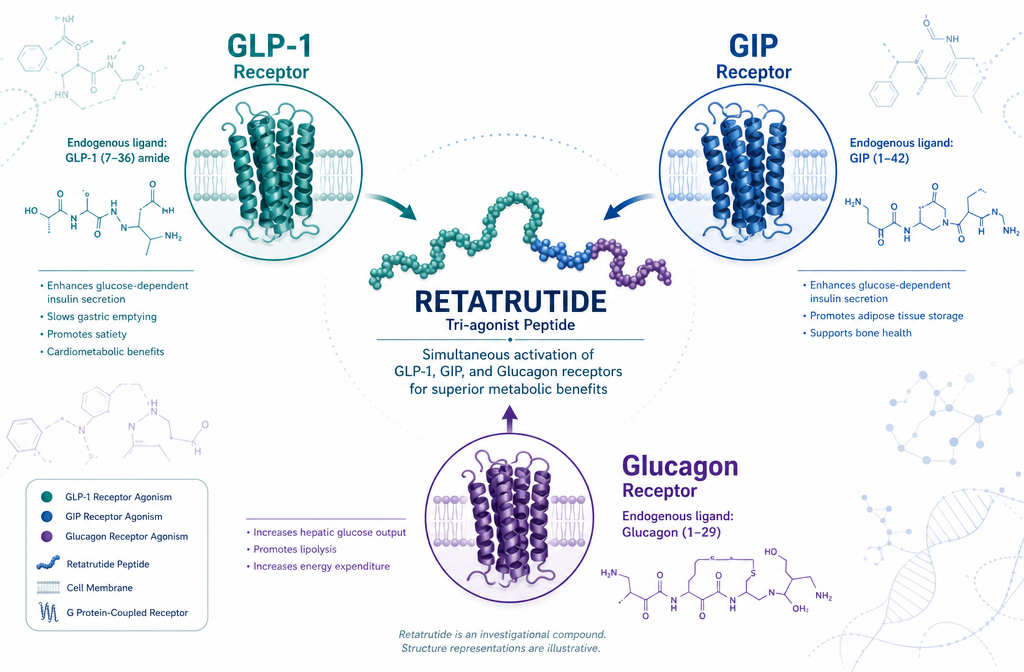
GLP-1 GIP glucagon receptor binding molecular diagram

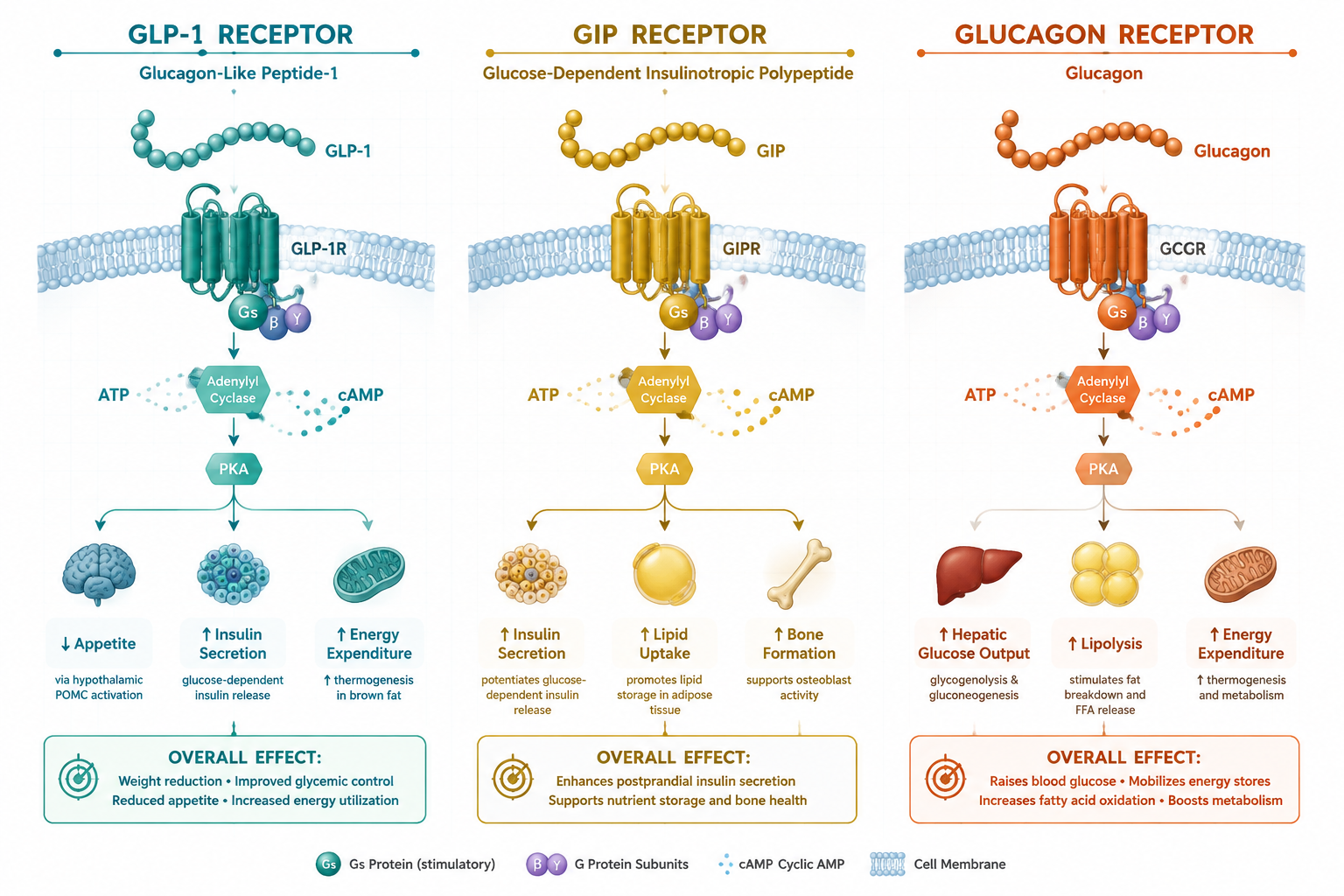
Retatrutide is a synthetic peptide engineered to bind three G-protein-coupled receptors: the glucagon-like peptide-1 (GLP-1) receptor, the glucose-dependent insulinotropic polypeptide (GIP) receptor, and the glucagon receptor (GCGR). Each receptor contributes a distinct layer of metabolic regulation.

Receptor Primary Metabolic Role EC50 (Potency)
GIP Insulin secretion, fat metabolism 0.0643 nM
GLP-1 Appetite suppression, insulin release 0.775 nM
Glucagon Energy expenditure, hepatic glucose output 5.79 nM

Retatrutide shows the strongest binding affinity at the GIP receptor, making GIP activity a dominant driver of its early metabolic effects. GLP-1 receptor activation adds appetite suppression and slows gastric emptying, which reduces caloric intake. Glucagon receptor co-activation increases thermogenesis and promotes hepatic fat oxidation — a mechanism largely absent from GLP-1-only therapies.

For context on how GIP receptor biology fits into the broader incretin landscape, the GIP receptor and its importance overview provides useful background on why this target matters.

This triple-pathway engagement is also explored in the GLP-3 triple agonist research overview, which compares receptor-targeting strategies across next-generation incretin compounds.


Metabolic Signaling Outcomes Observed in Research Models

Metabolic pathway downstream signaling liver fat weight loss data

The Retatrutide Mechanism of Action: How Triple Agonism Changes Metabolic Signaling in Research Models becomes most apparent when examining what happens downstream of receptor binding. Each activated receptor triggers intracellular cAMP elevation, which cascades into tissue-specific effects:

  • Pancreatic beta cells: Enhanced glucose-stimulated insulin secretion via GLP-1 and GIP pathways
  • Hypothalamus: Appetite-suppressing signals that reduce total caloric intake
  • Adipose tissue: Increased lipolysis and thermogenic activation via glucagon receptor
  • Liver: Reduced de novo lipogenesis and accelerated fatty acid oxidation

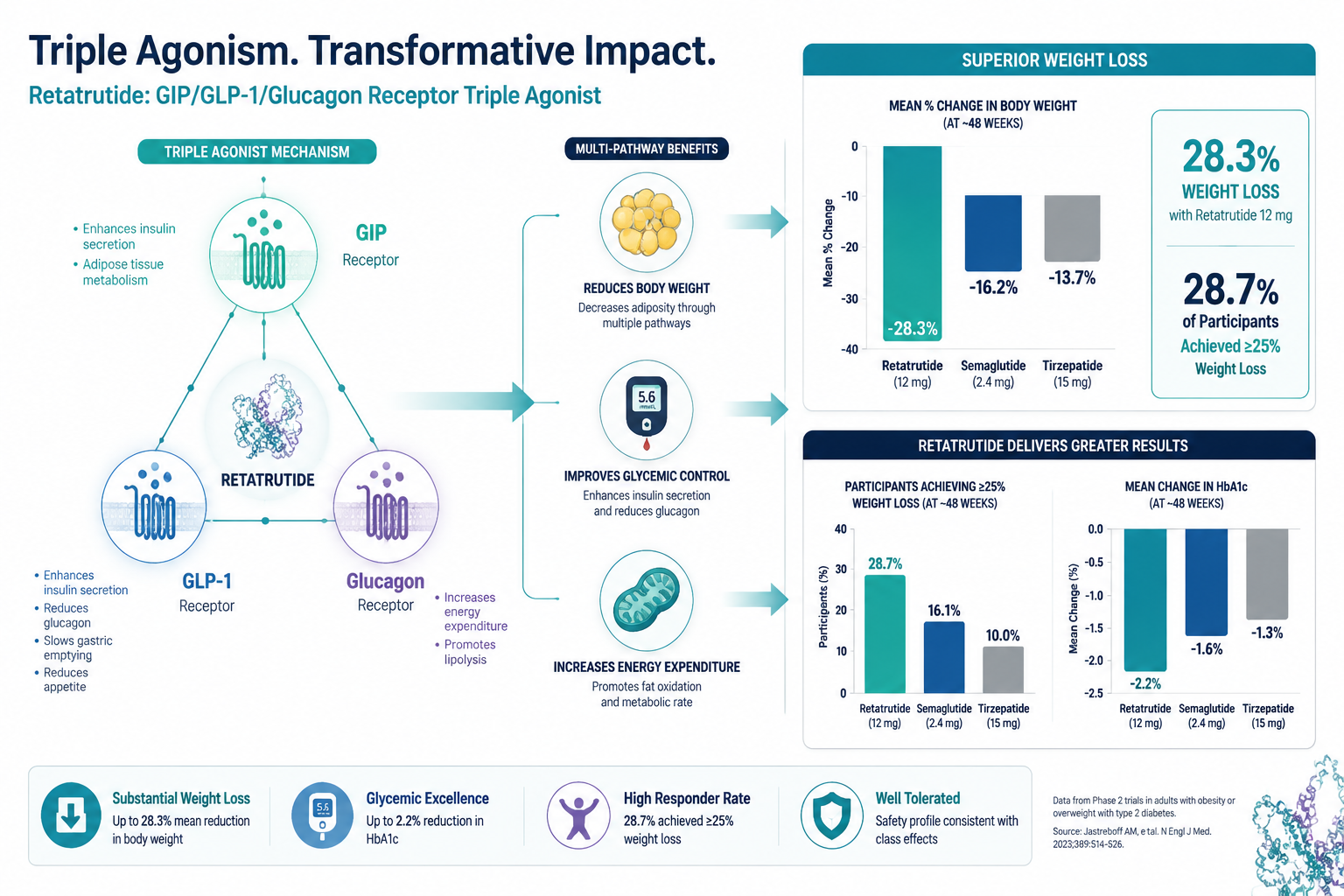
These coordinated signals produced striking outcomes in Phase 2 research. At the 12-mg weekly dose over 48 weeks, subjects achieved a mean 24.2% reduction in total body weight, with 63% reaching at least 20% weight loss. Glycemic improvements were equally notable — an absolute HbA1c reduction of 2.02%, with 27% of diabetic participants reaching normoglycemia (HbA1c below 5.7%).

Liver outcomes were particularly compelling. Retatrutide produced an 82.4% relative reduction in hepatic fat, normalizing liver fat levels in 86% of participants — a finding with direct implications for metabolic dysfunction-associated steatotic liver disease research.

Researchers studying complementary metabolic pathways may find value in reviewing MOTS-c and metabolic flexibility research, which examines mitochondrial-level energy regulation as a parallel axis of metabolic control.

For those tracking incretin-based approaches more broadly, the GLP-1 incretin research themes page contextualizes where retatrutide sits within the evolving GLP receptor pharmacology space.


Comparative Advantage and the Broader Research Context

Comparative bar chart triple agonist vs single dual agonist outcomes

The Retatrutide Mechanism of Action: How Triple Agonism Changes Metabolic Signaling in Research Models stands apart from earlier incretin therapies precisely because it does not rely on a single signaling axis. Single GLP-1 agonists suppress appetite effectively but offer limited thermogenic benefit. Dual GLP-1/GIP agonists add insulin sensitization but leave glucagon-driven energy expenditure largely untouched.

Retatrutide closes that gap. The glucagon receptor component raises resting energy expenditure without triggering hyperglycemia — a balance made possible because GLP-1 and GIP co-activation simultaneously stimulates insulin secretion to offset glucagon's glucose-raising effect.

"Triple agonism represents a significant advancement in addressing complex metabolic disorders," noted lead Phase 2 investigator Dr. Ania M. Jastreboff — a statement supported by the breadth of endpoints improved in the trial data.

The safety profile observed in research settings was consistent with other incretin-based therapies, with gastrointestinal adverse events being the most commonly reported and generally non-severe.

Researchers exploring adjacent peptide mechanisms may also find the cagrilintide and GLP-1 synergy research article relevant, as it examines how amylin-pathway co-targeting compares to incretin stacking strategies.

For those interested in the specific retatrutide compound used in research settings, the GLP-3 Retatrutide product page provides purity and specification details relevant to preclinical study design.

Additional context on the evolving peptide research landscape is available through the what is new in peptide research resource.


Conclusion

The Retatrutide Mechanism of Action: How Triple Agonism Changes Metabolic Signaling in Research Models represents a meaningful step forward in metabolic pharmacology. By engaging GLP-1, GIP, and glucagon receptors simultaneously, retatrutide produces coordinated effects on appetite, insulin secretion, thermogenesis, and hepatic fat that no single-axis therapy can replicate.

Actionable next steps for researchers:

  • Review Phase 2 endpoint data across weight, glycemic, and hepatic fat outcomes to identify which research models align with your study design
  • Compare retatrutide's receptor potency profile against dual agonists to define the incremental contribution of glucagon receptor activation
  • Assess preclinical model selection criteria based on the compound's dominant GIP receptor affinity
  • Explore complementary metabolic peptides such as MOTS-c or cagrilintide to understand synergistic or additive signaling possibilities

As triple agonism moves through later-stage research phases in 2026, its mechanistic profile offers a detailed map for designing studies that capture the full breadth of metabolic signaling it engages.

https://www.puretestedpeptides.com/wp-content/uploads/2026/06/Retatrutide-Mechanism-of-Action-How-Triple-Agonism-Changes-Metabolic-Signaling-in-Research-Models.png 1024 1536 Pure Tested https://www.puretestedpeptides.com/wp-content/uploads/2026/01/buy-peptides-online.jpg Pure Tested2026-06-24 13:20:112026-07-20 15:02:19Retatrutide Mechanism of Action: How Triple Agonism Changes Metabolic Signaling in Research Models
Retatrutide Phase 3 Results: What the New GLP-3 Data Mean for Obesity and Glycemic Research

Retatrutide Phase 3 Results: What the New GLP-3 Data Mean for Obesity and Glycemic Research

June 24, 2026/0 Comments/by Pure Tested

A single drug producing nearly 30% average body-weight loss in a randomized Phase 3 trial would have seemed implausible a decade ago. In 2026, that is exactly what the latest retatrutide Phase 3 results are showing — and the implications for obesity and glycemic research extend well beyond the scale.

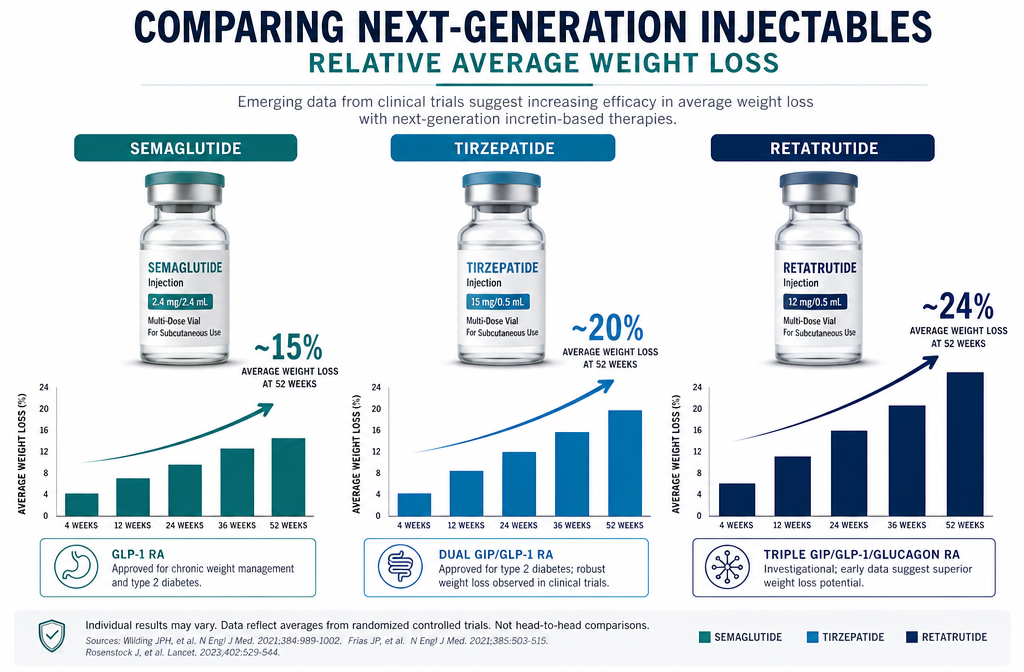
Wide-angle infographic-style illustration showing three interconnected receptor icons labeled GIP, GLP-1, and Glucagon

Key Takeaways

  • Retatrutide is a first-in-class GIP/GLP-1/glucagon triple agonist being developed by Eli Lilly for obesity and related metabolic conditions.
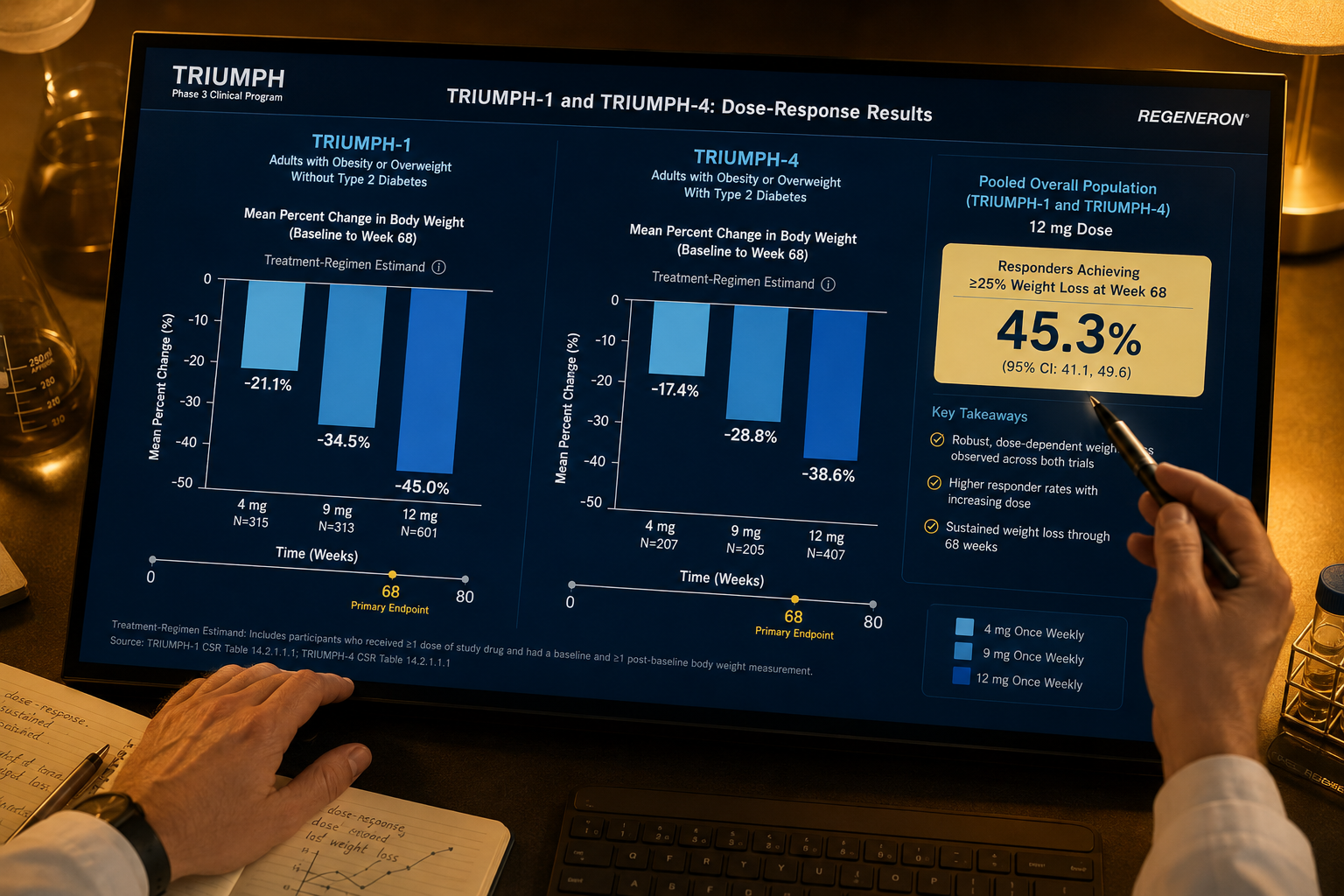
  • The TRIUMPH-1 Phase 3 trial showed mean weight loss of 28.3% at 80 weeks on the 12 mg dose, with 45.3% of participants losing 30% or more of body weight.
  • TRIUMPH-4 reported 28.7% mean weight loss at 68 weeks — the largest Phase 3 weight-loss signal ever recorded for a GLP-1-class compound.
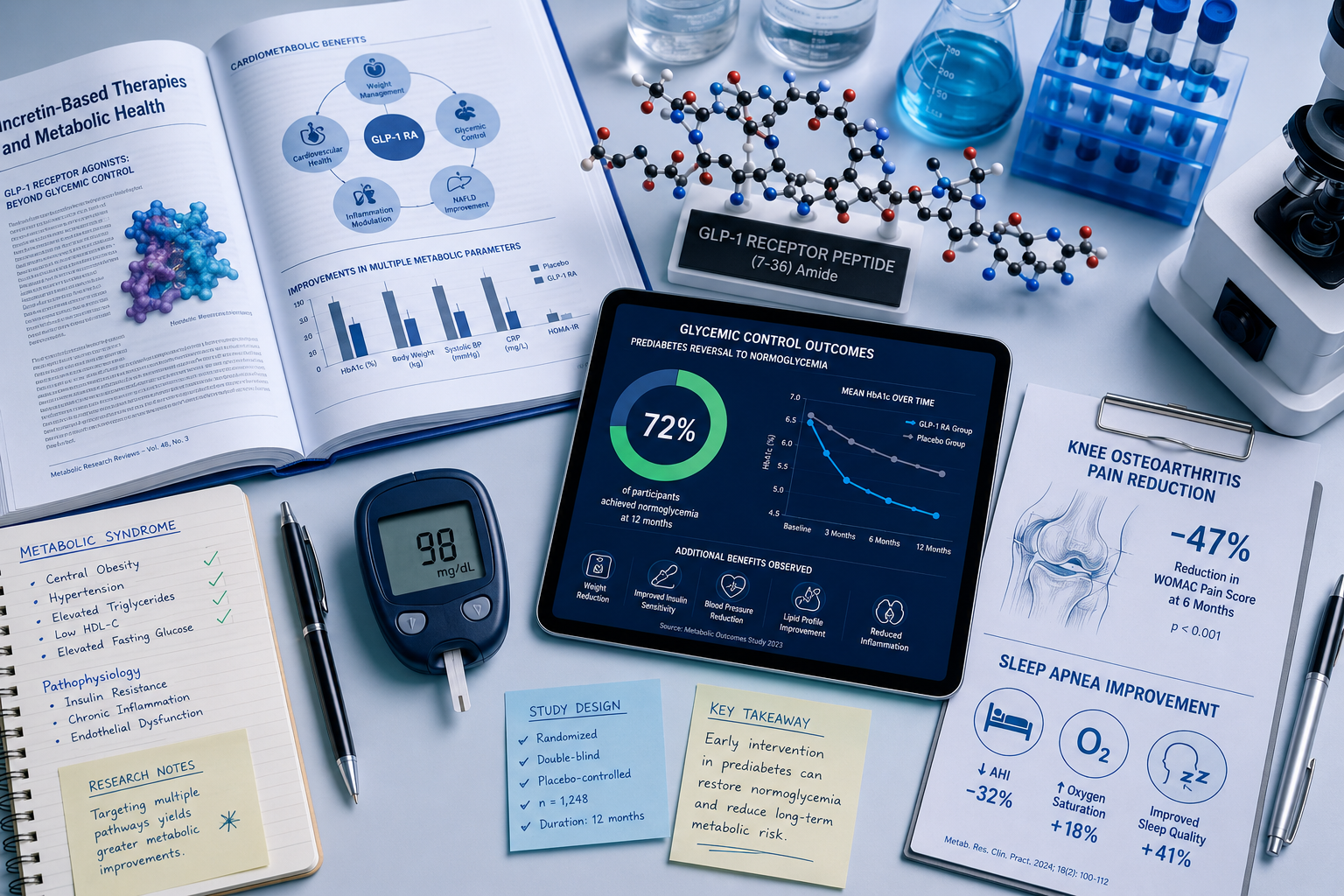
  • Secondary endpoints include a 72% reversion of prediabetes to normoglycemia and a 75.8% reduction in knee osteoarthritis pain.
  • June 2026 Lilly data confirm consistent benefits across multiple obesity-related conditions, including sleep apnea and type 2 diabetes.

What Makes Retatrutide Different From Earlier GLP-1 Agents

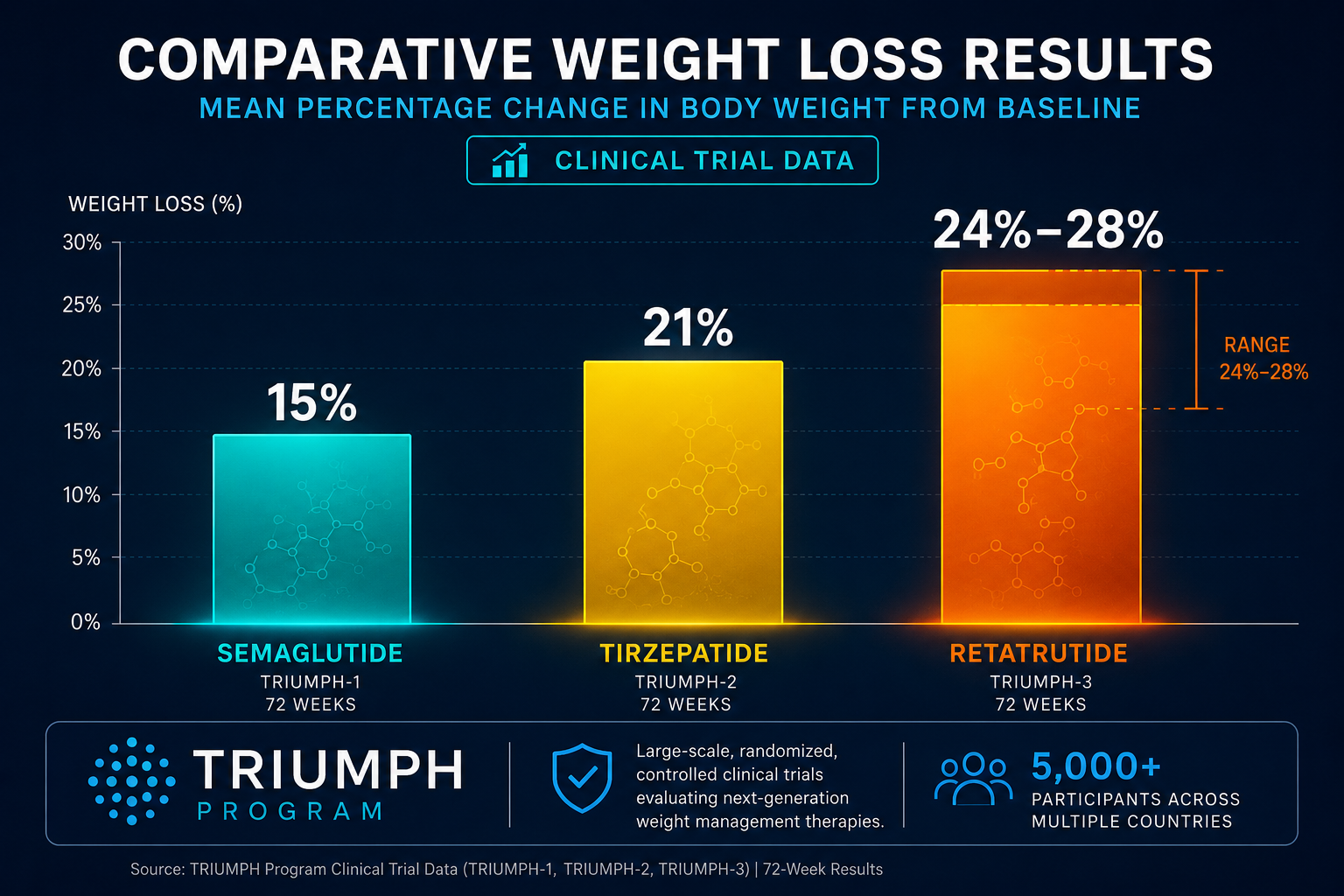
Most researchers familiar with GLP-1 peptide research and generational differences know that each successive agent in this class has pushed weight-loss benchmarks higher. Semaglutide averaged roughly 15% weight loss in Phase 3. Tirzepatide, a dual GIP/GLP-1 agonist, reached approximately 22%. Retatrutide adds a third target — the glucagon receptor — creating a triple-agonist profile that amplifies energy expenditure alongside appetite suppression and insulin sensitization.

This triple mechanism is central to understanding the retatrutide Phase 3 results. By activating glucagon receptors, retatrutide increases hepatic glucose output and thermogenesis, effects that single and dual agonists do not fully capture. Researchers studying GLP-3 and retatrutide compound data have noted that this added axis may explain why the efficacy ceiling appears higher than with prior agents.


TRIUMPH-1 and TRIUMPH-4: Breaking Down the Phase 3 Data

The TRIUMPH-1 trial enrolled 2,339 adults with obesity or overweight with at least one weight-related complication. At 80 weeks, mean weight loss was dose-dependent:

Dose Mean Weight Loss
4 mg 19.0%
9 mg 25.9%
12 mg 28.3% (~70 lb)
Placebo 2.2%

Notably, 45.3% of participants on 12 mg achieved 30% or greater weight loss — a threshold that previously required bariatric surgery. In a prespecified extension of participants with a baseline BMI of 35 or higher, continued 12 mg treatment to 104 weeks produced approximately 30.3% mean weight loss, equivalent to roughly 85 lb over two years.

"A 30% reduction in body weight through a once-weekly injectable represents a fundamental shift in what pharmacotherapy can achieve."

TRIUMPH-4, reported in December 2025 and now widely cited in 2026 analyses, reinforced these findings. Mean body-weight reduction reached 28.7% at 68 weeks on 12 mg once weekly, versus 2.1% on placebo. This figure is described as the largest weight-loss signal ever reported in a randomized Phase 3 trial of any GLP-1-class compound, exceeding the Phase 3 performance of both semaglutide and tirzepatide.

Secondary outcomes from TRIUMPH-4 are equally striking:

  • 75.8% reduction in knee osteoarthritis pain scores
  • ~20% reduction in LDL cholesterol
  • ~72% reversion of prediabetes to normoglycemia

For researchers already exploring metabolic peptides such as MOTS-c and its mitochondrial metabolic signaling, these multi-system effects align with a broader understanding that adiposity drives dysfunction across multiple organ systems simultaneously.

TRIUMPH-1 and TRIUMPH-4: Breaking Down the Phase 3 Data


Glycemic Research Implications and the June 2026 Lilly Update

On June 6, 2026, Eli Lilly released additional Phase 3 data confirming that retatrutide produced substantial weight loss alongside meaningful improvements in knee osteoarthritis pain, moderate-to-severe obstructive sleep apnea, and type 2 diabetes. The TRANSCEND-T2D-1 trial arm demonstrated strong glycemic control paired with double-digit weight loss in patients with established type 2 diabetes — a combination that positions retatrutide as a potential platform therapy rather than a single-indication drug.

This breadth of effect is relevant to researchers studying body composition and metabolic research themes or SLU-PP-332 metabolic modulation, because it highlights how upstream energy-balance interventions can cascade into downstream glycemic, inflammatory, and structural improvements.

The 72% prediabetes reversion rate is particularly significant. It suggests that weight loss of sufficient magnitude may normalize glucose regulation in a large proportion of at-risk individuals, reducing the pipeline burden on diabetes-specific interventions.

Researchers also tracking NAD+ energetics and longevity research may find the mitochondrial and thermogenic components of glucagon receptor activation worth examining in parallel, as both pathways converge on cellular energy efficiency.

Glycemic Research Implications and the June 2026 Lilly Update


Conclusion

The retatrutide Phase 3 results represent a meaningful advance in obesity and glycemic research. TRIUMPH-1 and TRIUMPH-4 together establish a new efficacy benchmark — approximately 28 to 30% body-weight reduction — that no prior pharmacological agent has achieved in randomized controlled trials. The secondary endpoints, particularly the 72% prediabetes reversion rate and the reductions in osteoarthritis pain and LDL cholesterol, indicate that the benefits extend well beyond the scale.

Actionable next steps for researchers and clinicians:

  • Review the full TRIUMPH-1 and TRIUMPH-4 datasets as they become available in peer-reviewed journals in 2026.
  • Monitor the TRANSCEND-T2D-1 readouts for glycemic-specific endpoints relevant to type 2 diabetes management protocols.
  • Consider how triple-agonist mechanisms intersect with other metabolic research areas, including GLP-1 peptide sourcing and research concepts and growth hormone axis compounds like tesa.
  • Track Eli Lilly's regulatory submission timeline, as approval decisions will shape clinical access and research availability throughout 2026 and beyond.

The retatrutide Phase 3 results confirm that the next generation of metabolic pharmacotherapy has arrived — and the data demand serious attention from anyone working at the intersection of obesity and glycemic research.

https://www.puretestedpeptides.com/wp-content/uploads/2026/06/Retatrutide-Phase-3-Results-What-the-New-GLP-3-Data-Mean-for-Obesity-and-Glycemic-Research.png 1024 1536 Pure Tested https://www.puretestedpeptides.com/wp-content/uploads/2026/01/buy-peptides-online.jpg Pure Tested2026-06-24 13:07:172026-07-20 15:02:20Retatrutide Phase 3 Results: What the New GLP-3 Data Mean for Obesity and Glycemic Research
Retatrutide and GLP-3 Biology: What Makes This Triple-Agonist Different From GLP-1 and GLP-2 Research Peptides

Retatrutide and GLP-3 Biology: What Makes This Triple-Agonist Different From GLP-1 and GLP-2 Research Peptides

June 17, 2026/0 Comments/by Pure Tested

A single drug achieving nearly 28% body weight reduction over 18 months — matching bariatric surgery outcomes — is not a minor incremental advance. That is the headline finding driving intense scientific interest in retatrutide in 2026. Yet most discussions skip past the foundational biology. Understanding Retatrutide and GLP-3 Biology: What Makes This Triple-Agonist Different From GLP-1 and GLP-2 Research Peptides requires a clear look at receptor targets, metabolic pathways, and why adding a third agonist arm changes the equation entirely.

Key Takeaways

  • Retatrutide simultaneously activates three receptors: GLP-1, GIP, and glucagon — a combination no approved drug currently achieves.
  • The glucagon receptor arm drives energy expenditure and fat oxidation, which is absent in both semaglutide and tirzepatide.
  • Phase 3 data show mean weight reductions of 22–28%, placing retatrutide above existing GLP-1 therapies.
  • GLP-2 is a structurally related incretin but targets gut mucosal biology, not metabolic weight pathways — making the GLP-1 vs. GLP-2 distinction critical for researchers.
  • Eli Lilly plans an NDA submission to the FDA in late 2026, with commercial approval anticipated in 2027.

Key Takeaways

Understanding the GLP Receptor Family Before Comparing Compounds

The glucagon-like peptide (GLP) family includes GLP-1 and GLP-2, both derived from the same precursor protein, proglucagon. Despite their shared origin, they act on entirely different tissues and serve different biological roles.

GLP-1 is an incretin hormone released from intestinal L-cells after eating. It binds GLP-1 receptors in the pancreas, brain, and gut to suppress appetite, slow gastric emptying, and stimulate insulin secretion. This is the pathway targeted by semaglutide and, in part, by tirzepatide.

GLP-2, by contrast, acts primarily on intestinal epithelial cells. It promotes gut mucosal growth, reduces intestinal permeability, and supports nutrient absorption. GLP-2 analogs like teduglutide are studied in short bowel syndrome — not obesity or metabolic disease. Researchers exploring GLP-1 incretin research themes will recognize that GLP-2 occupies a separate biological lane entirely.

The term "GLP-3" does not refer to a formally classified endogenous hormone. In current research shorthand, it is used informally to describe the triple-agonist concept — a molecule that hits GLP-1, GIP (glucose-dependent insulinotropic polypeptide), and glucagon receptors simultaneously. For a deeper look at this emerging terminology, see the overview of GLP-3 as the newest triple-agonist concept.


How Retatrutide and GLP-3 Biology Redefine the Triple-Agonist Mechanism

Retatrutide's design is built around three coordinated receptor interactions:

Receptor Primary Effect Metabolic Outcome
GLP-1 Appetite suppression, slowed gastric emptying Reduced caloric intake
GIP Enhanced insulin secretion and sensitivity Improved glucose control
Glucagon Increased energy expenditure, fat oxidation Greater caloric burn

The glucagon receptor arm is what separates retatrutide from every approved therapy. Semaglutide activates only GLP-1. Tirzepatide adds GIP to GLP-1. Retatrutide adds glucagon on top of both.

"The glucagon component is not redundant — it targets a fundamentally different metabolic lever by increasing thermogenesis and hepatic fat clearance."

This third pathway matters because appetite suppression alone has a ceiling. Raising energy expenditure through glucagon receptor activation addresses the metabolic adaptation that often limits long-term weight loss. Researchers interested in how GIP receptor biology contributes to metabolic outcomes will find that the dual GLP-1/GIP axis in tirzepatide already outperforms GLP-1 monotherapy — and retatrutide extends that logic further.

The tradeoff is tolerability. The glucagon component contributes to a higher incidence of nausea and gastrointestinal side effects, requiring a slower dose titration compared to dual agonists.


How Retatrutide and GLP-3 Biology Redefine the Triple-Agonist Mechanism

Phase 3 Data and What Retatrutide and GLP-3 Biology Mean for Research in 2026

Eli Lilly's TRIUMPH Phase 3 program is evaluating retatrutide across multiple populations:

  • TRIUMPH-3: Adults with obesity, no type 2 diabetes
  • TRIUMPH-4: Adults with obesity and type 2 diabetes

April 2026 readouts showed mean weight reductions of 22–24% at the 12 mg dose over 68 weeks. A separate 18-month trial reported approximately 28% average weight loss — a figure that overlaps with bariatric surgical outcomes. By comparison, tirzepatide at 15 mg achieved roughly 21% in the SURMOUNT-1 trial.

These numbers reflect a steeper dose-response curve, suggesting the glucagon receptor arm continues contributing at higher doses rather than plateauing. Researchers tracking what is new in peptide research will recognize this as a meaningful pharmacological distinction.

As of mid-2026, retatrutide remains unapproved and commercially unavailable. An NDA submission to the FDA is planned for late 2026, with potential approval in 2027. For researchers evaluating multi-pathway compounds in parallel, the GLP-3 and incretin research themes overview provides useful context on where this compound fits within the broader incretin landscape.

Those building structured research protocols may also benefit from reviewing peptide therapy benefits and research methodology to understand how multi-receptor compounds are evaluated systematically.


Phase 3 Data and What Retatrutide and GLP-3 Biology Mean for Research in 2026

Conclusion

The biology behind retatrutide is not complicated once the receptor targets are mapped clearly. GLP-1 reduces intake. GIP improves insulin dynamics. Glucagon raises energy output. Together, these three pathways explain why Phase 3 data consistently outperform single and dual agonist benchmarks.

Actionable next steps for researchers and informed readers in 2026:

  • Distinguish GLP-2 (gut mucosal biology) from the GLP-1/GIP/glucagon triple-agonist mechanism before comparing compounds.
  • Monitor the TRIUMPH program readouts and the anticipated FDA NDA submission timeline.
  • Review MOTS-c metabolic flexibility research as a complementary pathway for researchers studying energy regulation.
  • Use quality testing protocols as a benchmark when evaluating any research-grade peptide compound.

Retatrutide represents a genuine step-change in metabolic peptide science — not because it is newer, but because its receptor architecture addresses limitations that single and dual agonists cannot overcome.

https://www.puretestedpeptides.com/wp-content/uploads/2026/06/Retatrutide-and-GLP-3-Biology-What-Makes-This-Triple-Agonist-Different-From-GLP-1-and-GLP-2-Research-Peptides.png 1024 1536 Pure Tested https://www.puretestedpeptides.com/wp-content/uploads/2026/01/buy-peptides-online.jpg Pure Tested2026-06-17 13:04:042026-07-20 15:02:57Retatrutide and GLP-3 Biology: What Makes This Triple-Agonist Different From GLP-1 and GLP-2 Research Peptides
GLP3 Peptide vs Retatrutide: Why the Naming Confusion Matters in Obesity Research

GLP3 Peptide vs Retatrutide: Why the Naming Confusion Matters in Obesity Research

June 11, 2026/0 Comments/by Pure Tested

Over 1 billion adults worldwide live with obesity, and the race to find more effective treatments has never moved faster. Yet one of the biggest obstacles in 2026 is not a scientific one — it is a language problem. The debate around GLP3 Peptide vs Retatrutide: Why the Naming Confusion Matters in Obesity Research is more than a semantic argument. When researchers, clinicians, and consumers use the same term to mean different things, the consequences range from misread study data to misguided purchasing decisions.

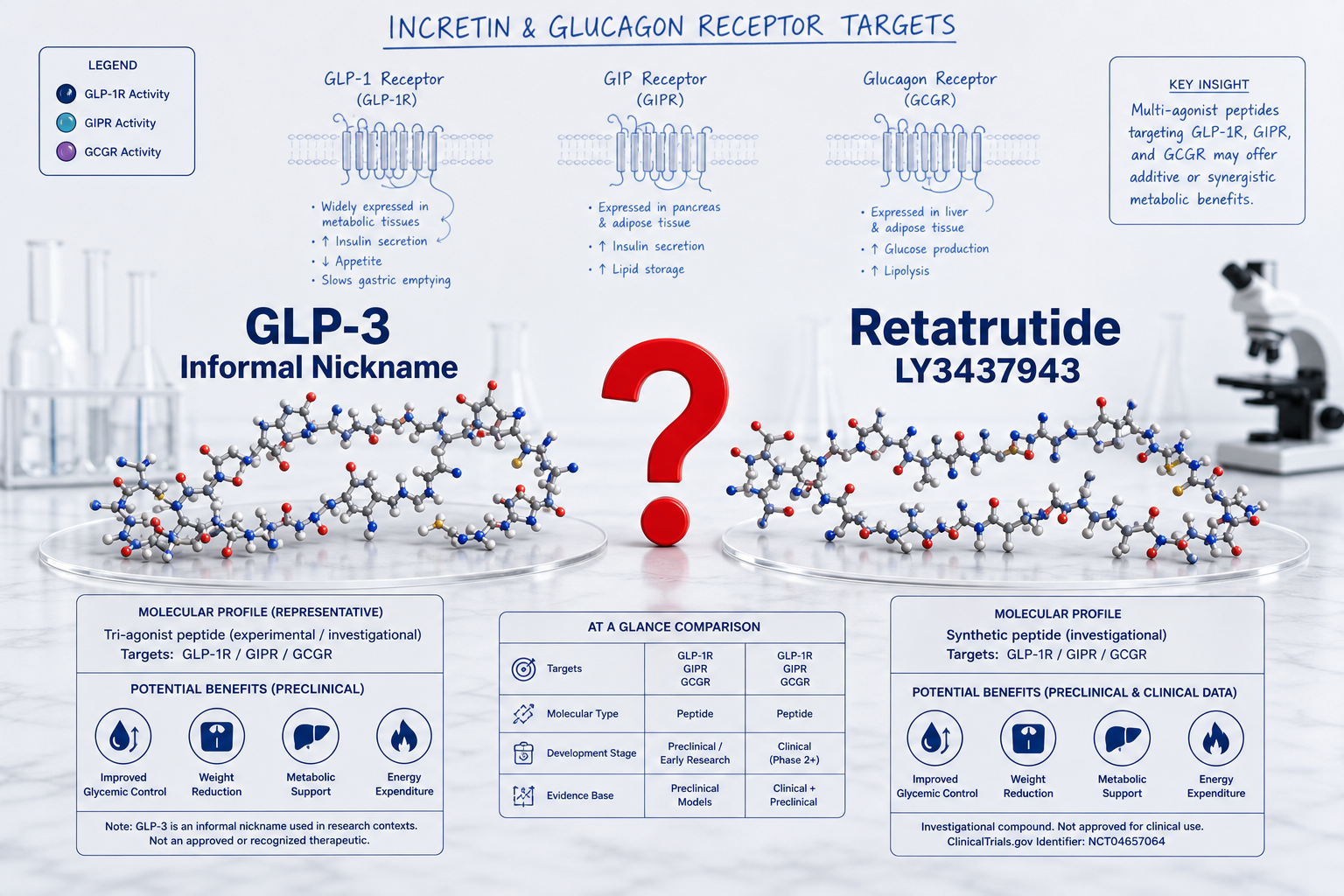
() scientific infographic-style illustration showing two labeled molecular structures side by side — one labeled 'GLP-3

Key Takeaways

  • "GLP-3" is an informal, consumer-driven nickname — not a recognized scientific classification for retatrutide.
  • Retatrutide (LY3437943) is a triple-receptor agonist targeting GLP-1, GIP, and glucagon receptors simultaneously.
  • Phase 3 trials have shown weight loss results as high as 28.7%, the highest ever recorded in an obesity drug trial.
  • Terminology confusion can distort research interpretation, marketplace trust, and regulatory understanding.
  • Researchers and buyers should verify compound identity by chemical name or CAS number, not informal labels.

What Is Retatrutide and Where Does "GLP-3" Come From

Retatrutide, developed by Eli Lilly under the code name LY3437943, is a first-in-class triple-receptor agonist. It activates three distinct hormone receptors at once:

Receptor Role in Metabolism
GLP-1 Appetite suppression, insulin secretion
GIP Fat metabolism, insulin sensitivity
Glucagon Energy expenditure, liver fat reduction

No approved drug before retatrutide has hit all three targets simultaneously. Semaglutide (Ozempic, Wegovy) targets only GLP-1. Tirzepatide (Mounjaro, Zepbound) targets GLP-1 and GIP. Retatrutide adds glucagon to the mix.

The nickname "GLP-3" emerged organically in consumer forums and social media. The logic was simple: GLP-1 targets one receptor, tirzepatide targets two, so this "third generation" drug must be GLP-3. The label stuck — but it is scientifically inaccurate.

"GLP-3" does not describe a receptor, a peptide family, or a drug class. It is marketing shorthand that has migrated into research discussions where precision is critical.

For a broader look at where peptide research is heading, the latest updates in peptide research provide useful context on how naming conventions evolve in this space.


Why the Naming Confusion Matters in Obesity Research and Clinical Trials

Why the Naming Confusion Matters in Obesity Research and Clinical Trials

The stakes of this terminology gap become clear when looking at the trial data. In the TRIUMPH-4 Phase 3 trial, retatrutide produced a mean weight loss of 28.7% at 68 weeks in adults with obesity and knee osteoarthritis — the highest figure ever recorded in any Phase 3 obesity drug trial. The TRIUMPH-3 trial, presented at the American College of Cardiology Annual Scientific Session in March 2026, reported 24.2% mean weight loss at 72 weeks in adults with elevated cardiovascular risk.

These are landmark numbers. But when a researcher searches for "GLP-3 trial results" and finds a mix of retatrutide data alongside unrelated GLP receptor biology, the confusion compounds.

Three specific risks created by the GLP-3 label:

  • Research misattribution: Studies on actual GLP receptor peptide biology get conflated with retatrutide clinical outcomes.
  • Regulatory misunderstanding: Eli Lilly plans to file a New Drug Application in late 2026 or early 2027. Informal naming can create confusion in public commentary on regulatory submissions.
  • Marketplace errors: Buyers searching for research-grade retatrutide may encounter mislabeled products. Reviewing a detailed GLP-3 and retatrutide compound overview helps clarify what is actually being sourced.

For those researching metabolic peptides more broadly, resources on AOD9604 metabolic research and tesa benefits show how naming precision matters across the entire category.


How Researchers and Buyers Can Navigate the GLP3 Peptide vs Retatrutide Naming Issue

How Researchers and Buyers Can Navigate the GLP3 Peptide vs Retatrutide Naming Issue

The clearest solution is to anchor every discussion to the compound's chemical identity, not its nickname.

Best practices for accurate identification:

  • Always reference retatrutide by its INN (International Nonproprietary Name) or Eli Lilly's code: LY3437943.
  • Cross-check any "GLP-3" product listing against verified chemical specifications.
  • Use peer-reviewed databases rather than consumer forums as primary sources.
  • When sourcing for research, prioritize suppliers with transparent quality testing protocols and third-party verification.

The GLP-3 retatrutide product page and the RETA GLP-3 research overview are examples of how suppliers can bridge the naming gap by providing both the informal label and the verified compound name together.

For researchers exploring related metabolic compounds, the 5-Amino-1MQ research overview offers a useful parallel on how novel compounds gain informal names before formal classification catches up.


Conclusion

The GLP3 Peptide vs Retatrutide naming confusion is not a trivial issue. It shapes how clinical trial data is interpreted, how regulatory conversations unfold, and how research-grade compounds are sourced. Retatrutide is a precisely defined triple-receptor agonist with Phase 3 data that sets a new benchmark for obesity pharmacology. "GLP-3" is a convenient shorthand that, when used carelessly, undermines that precision.

Actionable next steps:

  • Replace "GLP-3" with "retatrutide" or "LY3437943" in all research documentation.
  • Verify any compound labeled "GLP-3" against its full chemical specification before use.
  • Stay current with TRIUMPH trial publications and the anticipated NDA filing timeline.
  • Source research peptides only from suppliers who publish verified testing data alongside both the common and scientific names.

Precision in language is the foundation of precision in science. In obesity research, where the stakes are high and the compounds are complex, that foundation matters more than ever.

https://www.puretestedpeptides.com/wp-content/uploads/2026/06/GLP3-Peptide-vs-Retatrutide-Why-the-Naming-Confusion-Matters-in-Obesity-Research.png 1024 1536 Pure Tested https://www.puretestedpeptides.com/wp-content/uploads/2026/01/buy-peptides-online.jpg Pure Tested2026-06-11 13:06:552026-07-20 15:03:30GLP3 Peptide vs Retatrutide: Why the Naming Confusion Matters in Obesity Research
What Is the GLP3 Peptide? Research Distinctions, Naming Confusion, and How It Relates to Retatrutide

What Is the GLP3 Peptide? Research Distinctions, Naming Confusion, and How It Relates to Retatrutide

June 10, 2026/0 Comments/by Pure Tested

A single informal label is causing genuine confusion across research communities, patient forums, and peptide catalogs in 2026: "GLP-3." Researchers searching for this term are often looking for something very different from what the name implies. Understanding what the GLP-3 peptide actually refers to — and why that label is scientifically inaccurate — matters for anyone tracking the latest developments in metabolic research.

Key Takeaways

  • There is no hormone called "GLP-3." The term is an informal nickname, not a recognized scientific designation.
  • "GLP-3" almost always refers to retatrutide (LY3437943), a triple-agonist investigational compound developed by Eli Lilly.
  • Retatrutide simultaneously targets three receptors: GLP-1, GIP, and glucagon.
  • Phase 3 trial data shows approximately 28% average weight loss over 18 months — results comparable to bariatric surgery.
  • As of 2026, retatrutide is not FDA-approved and remains under active clinical investigation.

Key Takeaways

Understanding the Naming Confusion Around "GLP-3"

The phrase "GLP-3 peptide" does not correspond to any recognized hormone in human physiology. The glucagon-like peptide family includes GLP-1 and GLP-2, both derived from the proglucagon gene. GLP-1 is well-established for its role in insulin secretion and appetite regulation. GLP-2 supports intestinal growth. No GLP-3 exists in the official scientific literature.

So where does the term come from? It appears to have emerged organically from online communities and informal research discussions as shorthand for retatrutide — a compound that acts on three separate receptor pathways. The logic is loose: "triple action" became "GLP-3" in casual usage. The label stuck, even though it misrepresents the compound's actual mechanism.

This kind of naming drift is not unusual in peptide research. For a broader look at how terminology evolves in this field, the ultimate guide to peptide therapy provides useful context on how compounds are classified and discussed.


What Is the GLP3 Peptide? Research Distinctions, Naming Confusion, and How It Relates to Retatrutide — The Core Answer

Retatrutide (development code LY3437943) is the compound most commonly referenced when someone asks about the "GLP-3 peptide." It is an investigational drug developed by Eli Lilly that activates three distinct hormone receptors simultaneously:

Receptor Primary Research Function
GLP-1 Reduces appetite, slows gastric emptying
GIP Improves insulin sensitivity, supports fat distribution
Glucagon Increases energy expenditure, promotes fat breakdown via thermogenesis

This triple-agonist profile is what separates retatrutide from earlier-generation compounds. Semaglutide targets GLP-1 alone. Tirzepatide targets GLP-1 and GIP. Retatrutide adds glucagon receptor activation on top of both, creating a broader metabolic effect.

For researchers already familiar with the GLP-1 peptide research landscape, retatrutide represents a meaningful step forward in receptor-targeting strategy. Those planning research with this compound should also review GLP-3 triple agonist research planning resources before sourcing.


What Is the GLP3 Peptide? Research Distinctions, Naming Confusion, and How It Relates to Retatrutide — The Core Answer

Phase 3 Data and Regulatory Status in 2026

The clinical results for retatrutide are among the most discussed in metabolic medicine this year. In Phase 3 trials, participants achieved an average weight loss of approximately 28% over 18 months — a figure that rivals outcomes typically seen with bariatric surgery. No other injectable medication has produced comparable numbers in trial data to date.

"Retatrutide's Phase 3 results represent the highest weight loss figures recorded for any injectable medication in clinical trials."

Despite these results, retatrutide is not FDA-approved as of 2026. Eli Lilly anticipates filing for FDA approval in 2026–2027, with potential commercial availability projected for late 2027 or 2028, contingent on successful trial completion and regulatory review.

Beyond weight loss, researchers are examining retatrutide's potential influence on type 2 diabetes, cardiovascular risk factors, and metabolic liver disease. The GIP receptor and its importance in metabolic signaling provides additional background on one of the three pathways retatrutide engages.


What Is the GLP3 Peptide? Research Distinctions, Naming Confusion, and How It Relates to Retatrutide — Practical Implications for Researchers

For researchers navigating this space, the terminology distinction has real consequences. Searching for "GLP-3 peptide" may return inconsistent results across databases, catalogs, and literature because the label is not standardized. Using the correct terminology — triple agonist, GLP-1/GIP/glucagon receptor agonist, or retatrutide/LY3437943 — will yield more reliable and reproducible search results.

Retatrutide is administered as a once-weekly subcutaneous injection, a delivery format consistent with other compounds in the GLP-1 class. Researchers interested in innovative peptide delivery systems will find the subcutaneous format familiar, though the triple-receptor profile introduces unique considerations for study design.

Those tracking the broader metabolic peptide landscape may also find value in reviewing AOD-9604 metabolic research and SLU-PP-332 metabolic research themes for comparative context on fat metabolism pathways.


What Is the GLP3 Peptide? Research Distinctions, Naming Confusion, and How It Relates to Retatrutide — Practical Implications

Conclusion

The "GLP-3 peptide" is not a real hormone — it is a widely circulated misnomer for retatrutide, a triple-agonist compound targeting GLP-1, GIP, and glucagon receptors. Clarifying this distinction is essential for accurate research planning, catalog navigation, and literature review.

Actionable next steps for researchers:

  • Use "retatrutide," "LY3437943," or "triple agonist" in database and catalog searches instead of "GLP-3."
  • Review the GIP receptor pathway alongside GLP-1 mechanisms before designing studies.
  • Monitor FDA filing updates from Eli Lilly, expected in the 2026–2027 window.
  • Consult what is new in peptide research for ongoing developments in this fast-moving field.

Precise terminology is not a minor detail in peptide research — it directly affects sourcing accuracy, study reproducibility, and regulatory compliance awareness.

https://www.puretestedpeptides.com/wp-content/uploads/2026/06/What-Is-the-GLP3-Peptide-Research-Distinctions-Naming-Confusion-and-How-It-Relates-to-Retatrutide.png 672 1024 Pure Tested https://www.puretestedpeptides.com/wp-content/uploads/2026/01/buy-peptides-online.jpg Pure Tested2026-06-10 13:06:532026-07-20 15:03:32What Is the GLP3 Peptide? Research Distinctions, Naming Confusion, and How It Relates to Retatrutide
Page 2 of 212
×

Helpful Links

  • My account
  • Cart
  • Checkout
  • Refund and Returns Policy
  • Privacy Policy
  • SMS Privacy Policy
  • Login
  • My Account
  • Logout

USA Made Lab Tested Peptides

All products are sold for research, laboratory, or analytical purposes only, and are not for human consumption


Pure Tested Peptides is a chemical supplier. Pure Tested Peptides is not a compounding / chemical compounding facility as defined under 503A of the Federal Food, Drug, and Cosmetic act. Pure Tested Peptides is not an outsourcing facility as defined under 503B of the Federal Food, Drug, and Cosmetic act.

The statements made within this website have not been evaluated by the US Food and Drug Administration. The products we offer are not intended to diagnose, treat, cure or prevent any disease.

Human/Animal Consumption Prohibited. Laboratory/In-Vitro Experimental Use Only

Scroll to top Scroll to top Scroll to top