Call or Text 727-513-9780
  • Shopping Cart Shopping Cart
    0Shopping Cart
Pure Tested Peptides | America's most trusted Peptides for sale online
  • Peptides for sale
    • Oral Peptides for sale
      • Peptide Capsules for sale
      • BPC 157 Capsules 1000mcg
      • SLU-PP-332 Capsules | 1000 mcg
      • 5-Amino-1MQ 50mg Capsules
      • Tesofensine 500mcg
    • All Peptides for sale
    • Peptide Sprays
      • BPC 157 Nasal Spray Kit
      • BPC-157 TB500 Nasal Spray Kit
      • Semax Nasal Spray 10mg
      • Selank – Nasal Spray Kit – 10mg
      • Epithalon 50MG Nasal Spray Kit
      • Ipamorelin 10mg Nasal Spray
      • Klow Nasal Spray (BPC-157 + TB-500 + GHK-Cu + KPV) | 80mg
      • Hulk Nasal Spray Tesa / Ipa Blend 6/3 MG
      • Klow Nasal Spray
      • NAD + 500 mg Nasal Spray
      • PT-141 Nasal Spray Kit
    • GHRH Peptides
      • Ipa Peptides
      • CJC-1295 Peptides
        • CJC-1295 with DAC 5 mg
        • CJC-1295 without DAC 5 mg
        • CJC-1295 Ipa 10mg
      • Tesa Peptides
        • Tesa Peptide
        • Tesa 20 mg
    • GHK-Cu Peptides
      • All GHK-Cu Peptides
      • GHK-Cu 100mg
      • KLOW Peptide Blend – Buy KLOW blend online
    • BPC Peptides
      • All BPC Peptides
      • BPC-157
      • BPC-157 TB-500
      • BPC 157 capsules 1000mcg
    • SLU-PP-332 Peptides
      • All SLU-PP-332 Peptides
      • SLU-PP-332 5mg
    • GLP3 Peptides
    • PT-141 Peptides
      • PT-141 Peptides for sale
      • PT-141 10mg
      • PT-141 Nasal Spray
    • CAG Peptides
      • Lipo-C Peptide Blend
      • CAG 5mg
      • CAG 10mg
    • MOTS-C Peptides
      • MOTS-C Peptides for sale
      • MOTS-c peptide
      • MOTS-c 10mg *6 pack*
    • 5 Amino 1MQ Peptides
      • 5 Amino 1MQ Peptides for sale
      • 5-Amino-1MQ 50mg Capsules
      • 5-Amino-1MQ 5mg
    • Epithalon Peptides
      • Epithalon Peptides for sale
      • Epithalon 10mg
      • Epithalon 50mg
  • Shop
    • GLPs
      • 5-Amino-1MQ 50mg Capsules
      • 5-Amino-1MQ 5mg
      • L-Carnitine 500mg/ml
      • Tesofensine 500mcg
      • SLU-PP-332 5mg
      • MOTS-c 10mg *6 pack*
    • Epithalon & BPC Peptides
      • Epithalon 10mg
      • Epithalon 50mg
      • BPC-157
      • BPC 157 capsules 1000mcg
      • BPC-157 TB-500
      • BPC-157 TB500 Nasal Spray Kit
      • BPC 157 Nasal Spray Kit
    • BPC TB-500 & NAD+ Peptides
      • NAD+ 500 mg
      • KLOW Peptide Blend – Buy KLOW blend online
      • GLOW Peptide Blend
      • TB 500 5mg
      • BPC 157 capsules 1000mcg – Supplement
      • BPC 157 Nasal Spray Kit
      • BPC-157
      • BPC-157 TB500 Nasal Spray Kit
      • BPC-157 TB-500
      • BPC 157 capsules 1000mcg
    • LL-37 Peptide
      • LL-37 10 mg
    • MOTS-C & Selank
      • MOTS-c peptide
      • Selank 10mg
    • GHK Peptides
      • GHK-Cu 100mg
      • GLOW Peptide Blend
      • KLOW Peptide Blend – Buy KLOW blend online
  • COAs
  • Wholesale
    • Wholesale Peptides for sale
  • PTP FAQ
  • Affiliates
    • Selank Peptide: Advanced Pharmacological Mechanisms Underlying Its Anxiolytic and Nootropic Effects in Research
      • 5-Amino-1MQ Peptide: Detailed Mechanisms of NNMT Inhibition and Its Impact on Cellular Metabolism Research
        • MOTS-C Peptide: Unraveling Its Role in Mitochondrial Dynamics and Energy Metabolism Research
          • Epithalon Peptide and Telomerase Regulation: Investigating Its Impact on Cellular Senescence and Lifespan Research Models
            • GLP2-T vs GLP2 Tirz Peptide: Understanding the Naming, Mechanistic Nuances, and Research Implications for Gut Health
      • Peptides and Polypeptides in Modern Pharmacology: What Research on Metoprolol, Prednisone, and Amlodipine Reveals
        • Polypeptide Peptides vs NSAIDs: What Naproxen and Diclofenac Teach Tissue-Repair Researchers About BPC‑157 and TB‑500
          • Peptides and Polypeptides in Endocrine Pharmacology: How GLP-1, GLP-2, and GLP-3 Retatrutide Differ From Classic Drugs Like Prednisone and Amlodipine
          • 5‑Amino‑1MQ Peptide and NNMT Inhibition: How It Compares With Statins Like Atorvastatin in Adipose and Lipid Metabolism Research
      • Enclomiphene, Estrogen Receptor Signaling, and Luteinizing Phase Biology: What Hormone Researchers Should Measure
        • Mesenchymal Stem Cells, BPC‑157, and GHK‑Cu: How Tissue Repair Peptides Compare With Classic NSAIDs Like Naproxen in Injury Models
          • Peptide Calculator Use Cases Beyond Growth Hormone: Working Through GLP‑3 Retatrutide, MOTS‑c, and BPC‑157 Research Dosing
        • Polypeptide Peptides in Endocrine and Metabolic Pharmacology: Lessons From Amlodipine, Prednisone, and Metoprolol
        • Peptides Calculator for Advanced Blends: Worked Examples for Tesamorelin, CJC‑1295, and Ipamorelin Stacks
          • Peptides and Polypeptides in Human Physiology: How Molecular Size Shapes Research Applications
            • Selank Peptide: Advanced Pharmacological Mechanisms Underlying Its Anxiolytic and Nootropic Effects in Research
          • 5-Amino-1MQ Peptide: Detailed Mechanisms of NNMT Inhibition and Its Impact on Cellular Metabolism Research
            • MOTS-C Peptide: Unraveling Its Role in Mitochondrial Dynamics and Energy Metabolism Research
              • Epithalon Peptide and Telomerase Regulation: Investigating Its Impact on Cellular Senescence and Lifespan Research Models
                • GLP2-T vs GLP2 Tirz Peptide: Understanding the Naming, Mechanistic Nuances, and Research Implications for Gut Health
                  • Peptides and Polypeptides in Endocrine Pharmacology: How GLP-1, GLP-2, and GLP-3 Retatrutide Differ From Classic Drugs Like Prednisone and Amlodipine
                    • Polypeptide Peptides vs NSAIDs: What Naproxen and Diclofenac Teach Tissue-Repair Researchers About BPC‑157 and TB‑500
                      • Peptides and Polypeptides in Modern Pharmacology: What Research on Metoprolol, Prednisone, and Amlodipine Reveals
                        • 5‑Amino‑1MQ Peptide and NNMT Inhibition: How It Compares With Statins Like Atorvastatin in Adipose and Lipid Metabolism Research
                        • Enclomiphene, Estrogen Receptor Signaling, and Luteinizing Phase Biology: What Hormone Researchers Should Measure
                        • Mesenchymal Stem Cells, BPC‑157, and GHK‑Cu: How Tissue Repair Peptides Compare With Classic NSAIDs Like Naproxen in Injury Models
                        • Peptide Calculator Use Cases Beyond Growth Hormone: Working Through GLP‑3 Retatrutide, MOTS‑c, and BPC‑157 Research Dosing
                        • Polypeptide Peptides in Endocrine and Metabolic Pharmacology: Lessons From Amlodipine, Prednisone, and Metoprolol
                        • Peptides Calculator for Advanced Blends: Worked Examples for Tesamorelin, CJC‑1295, and Ipamorelin Stacks
                        • Peptides and Polypeptides in Human Physiology: How Molecular Size Shapes Research Applications
                        • Selank Peptide: Advanced Pharmacological Mechanisms Underlying Its Anxiolytic and Nootropic Effects in Research
                        • MOTS-C Peptide: Unraveling Its Role in Mitochondrial Dynamics and Energy Metabolism Research
                        • Peptides and Polypeptides in Modern Pharmacology: What Research on Metoprolol, Prednisone, and Amlodipine Reveals
                        • Peptides and Polypeptides in Endocrine Pharmacology: How GLP-1, GLP-2, and GLP-3 Retatrutide Differ From Classic Drugs Like Prednisone and Amlodipine
                        • 5-Amino-1MQ Peptide: Detailed Mechanisms of NNMT Inhibition and Its Impact on Cellular Metabolism Research
                        • Mesenchymal Stem Cells, BPC‑157, and GHK‑Cu: How Tissue Repair Peptides Compare With Classic NSAIDs Like Naproxen in Injury Models
                        • Peptide Calculator Use Cases Beyond Growth Hormone: Working Through GLP‑3 Retatrutide, MOTS‑c, and BPC‑157 Research Dosing
                        • GLP2-T vs GLP2 Tirz Peptide: Understanding the Naming, Mechanistic Nuances, and Research Implications for Gut Health
                        • Polypeptide Peptides in Endocrine and Metabolic Pharmacology: Lessons From Amlodipine, Prednisone, and Metoprolol
                        • Polypeptide Peptides vs NSAIDs: What Naproxen and Diclofenac Teach Tissue-Repair Researchers About BPC‑157 and TB‑500
                        • Peptides and Polypeptides in Human Physiology: How Molecular Size Shapes Research Applications
                        • Peptides Calculator for Advanced Blends: Worked Examples for Tesamorelin, CJC‑1295, and Ipamorelin Stacks
                        • 5‑Amino‑1MQ Peptide and NNMT Inhibition: How It Compares With Statins Like Atorvastatin in Adipose and Lipid Metabolism Research
                        • Enclomiphene, Estrogen Receptor Signaling, and Luteinizing Phase Biology: What Hormone Researchers Should Measure
                        • Epithalon Peptide and Telomerase Regulation: Investigating Its Impact on Cellular Senescence and Lifespan Research Models
                        • Best research protocol Klow blend
                        • best time to take BPC-157
                        • best time to take DSIP (Delta Sleep Inducing Peptide)
                        • best time to take CJC-1295
                        • best time to take AOD-9604
                        • best time to take Follistatin 344
                        • best time to take Ipamorelin
                        • best time to take MK-677 (Ibutamoren)
                        • best time to take Ligandrol (LGD-4033) — research compound
                        • best time to take Ostarine (MK-2866) — research compound
                        • best time to take GHK-CU
                        • best time to take TB-500
                        • best time to take MOTS-c
                        • best time to take Semax
                        • best time to take RAD-140 (Testolone) — research compound
                        • best time to take Thymosin Alpha-1
                        • best time to take PEG-MGF
                        • Biolife Plasma, Octapharma Plasma, and Research Peptides: How Plasma Donation Labs Differ From Peptide Suppliers
                        • best time to take YK-11 — research compound
                        • best time to take PT-141 (Bremelanotide)
                        • Best research protocol Klow blend
                        • 5-Amino-1MQ and MOTS-C Synergy: Metabolic Signaling, Mitochondria, and Research Design
                        • BPC-157 and TB-500: Investigating Their Combined Effects on Angiogenesis and Cellular Migration in Tissue Repair Models
                        • BPC-157 Peptide: Gut Barrier Function, Inflammation, and Tissue-Recovery Research
                        • 5‑Amino‑1MQ and MOTS‑c Synergy in Metabolic Research: Designing NNMT and Mitochondrial Biogenesis Stacks
                        • CJC-1295 with DAC vs. Without DAC: Half-Life, Release Kinetics, and Research Implications
                        • CJC‑1295 with DAC vs. Without DAC: Expanding on Half‑Life Differences Using Tesamorelin and Ipamorelin Blend Case Studies
                        • Collagen Biology and Copper‑Binding Peptides: How GHK‑Cu, Glow Blend, and Klow Blend Interact with Skin and Connective Tissue
                        • Collagen Biology and Regenerative Peptides: How GHK‑Cu, Glow Blend, and Klow Blend Affect Extracellular Matrix Research
                    • DNA, Telomeres, and Longevity Peptides: Positioning Epithalon and MOTS‑c in Genetic Aging Research
                      • Enclomiphene Citrate: serm Mechanism, Testosterone Research, and Stack Compatibility
                        • Enclomiphene vs Enclomiphene Citrate: Formulation, Bioavailability, and Research Distinctions
                        • Epithalon Peptide Research: Telomerase Activation, Aging, and Pineal Gland Function
                        • Estrogen Receptor Signaling and Enclomiphene: How Selective Modulators Compare with Classic Polypeptide Hormones
                        • GHK-Cu Peptide: Advanced Mechanisms in Extracellular Matrix Remodeling and Wound Healing Research
                        • GHK-Cu Peptide: Collagen Synthesis, Wound Repair, and Skin-Barrier Research Models
                        • GLP-1 vs GLP-3 vs GLP-2: Peptide Classification and Research Applications
                        • GLP-2 Peptide Research Guide: Gut Barrier Function, Nutrient Absorption, and Intestinal Recovery Models
                        • GLP-3 Retatrutide vs. GLP-1 Drugs: What Triple-Agonist Biology Changes in Research Models
                        • Ipamorelin and Tesamorelin Combination: Synergistic GH Secretagogue Research and Dosing Protocols
                        • GLP2 Tirz Peptide: What It Is, Why the Name Exists, and How Researchers Should Interpret It
                        • Klow Blend Peptide Nasal Spray: What the Formulation Is Trying to Do in Cognitive Research
                        • Mitochondria, NNMT Inhibition, and Peptide Modulators: Where MOTS‑c and 5‑Amino‑1MQ Fit in Cellular Energy Research
                        • MOTS-c Peptide: Mitochondrial Function, Energy Metabolism, and What Researchers Measure
                        • MOTS-c vs. 5-Amino-1MQ: Which Metabolic Research Questions Each Compound Actually Answers
                        • Nasal Spray Peptides: Bioavailability, Administration, and Semax/Selank Research Applications
                        • PT-141 Peptide Research: Mechanism of Action and Melanocortin Receptor Signaling
                        • Retatrutide for Research: Mechanism, Structure, and GLP-1/GLP-3 Dual Action
                        • Retatrutide for Obesity and Type 2 Diabetes: What the Latest Trial Data Suggest
                        • Tesofensine Peptide Research: Mechanism, Appetite Suppression, and Neuropeptide Y Pathways
  • Contact
    • Contact Customer Service
    • Text Customer Support
  • About US
  • Shop all peptides
  • Affiliate Program
    • Affiliate Signup
  • Login / Register Login / Register Page Link Login / Register Page Link
  • Click to open the search input field Click to open the search input field Search
  • Menu Menu
What Does Hemoglobin Mean in Peptide Research? Connecting Oxygen Delivery, Erythropoiesis, and Mitochondrial Readouts

What Does Hemoglobin Mean in Peptide Research? Connecting Oxygen Delivery, Erythropoiesis, and Mitochondrial Readouts

October 26, 2026/0 Comments/in Uncategorized/by

{"cover":"Professional landscape format (1536×1024) hero image with bold text overlay (≤42 chars): 'What Does Hemoglobin Mean in Peptide', crisp white sans-serif on a deep crimson semi-transparent overlay panel, centered with 8% safe margins from every edge. Background: macro editorial photograph of red blood cells flowing through a translucent vessel wall, warm crimson-to-deep-navy gradient lighting, with faint mitochondrial network wireframes overlaid in teal, magazine cover aesthetic, high contrast, editorial medical quality.","content":["Annotated mechanism diagram (1536×1024) illustrating erythropoiesis stages for peptide research: four sequential labeled panels left to right, 'Erythroid Progenitor', 'Mitochondrial Biogenesis', 'Heme Synthesis', 'Hemoglobin Accumulation'. Each panel shows a schematic cell illustration with thin callout lines pointing to labeled structures: mitochondria, heme molecules, iron transport channels, globin chains. Teal-and-crimson palette on a clean white background, numbered stage indicators 1-4, bold sans-serif labels 2-5 words each, editorial medical-guide polish, no pricing or checkmarks.","Split-screen landscape comparison (1536×1024): left panel labeled 'Mitochondrial Active Phase' shows an erythroblast cell diagram with labeled callouts, 'OXPHOS activity', 'ROS production', 'PGC-1β regulation', 'FAM210B node', illustrated in deep teal with glowing organelle detail. Right panel labeled 'Mature RBC Phase' shows a mature red blood cell with callouts, 'No mitochondria', 'High Hb concentration', 'Oxygen carrier ready', in warm crimson. Clean white dividing line, bold sans-serif panel headings, flat scientific illustration style, navy background, editorial quality.","Numbered step-by-step flow diagram (1536×1024) for hemoglobin-based oxygen carrier engineering in peptide research: five horizontal steps with connecting arrows, Step 1 'Hemoglobin Variant Design' (molecular structure icon), Step 2 'Reduced NO Scavenging' (vessel cross-section icon), Step 3 'Lipid Peroxidation Control' (cell membrane icon), Step 4 'Mitochondrial ROS Monitoring' (mitochondria icon), Step 5 'Tissue Oxygenation Readout' (tissue oxygen gradient icon). Each step box has a 3-word label and a small schematic icon. Muted gold-and-teal color scheme on a charcoal background, clean sans-serif typography, infographic editorial style, no pricing tables."]
Professional landscape hero image () with a reading "What Does Hemoglobin Mean in Peptide". CRITICAL TYPOGRAPHY RULES:

Hemoglobin concentration is one of the most frequently measured endpoints in metabolic and mitochondrial peptide experiments, yet it is also one of the most misread. Researchers who treat hemoglobin as a simple pass/fail marker miss the layered biology underneath: the protein is simultaneously a readout of erythroid differentiation, a gatekeeper of mitochondrial activity, and a potential confounding variable in tissue-respiration studies. Understanding what does hemoglobin mean in peptide research, connecting oxygen delivery, erythropoiesis, and mitochondrial readouts, is therefore not just academic. It shapes which controls are run, which co-endpoints are selected, and how results are interpreted across an entire experimental program.

Key Takeaways

  • Hemoglobin concentration reflects the success of erythroid differentiation and iron handling, not just oxygen-carrying capacity.
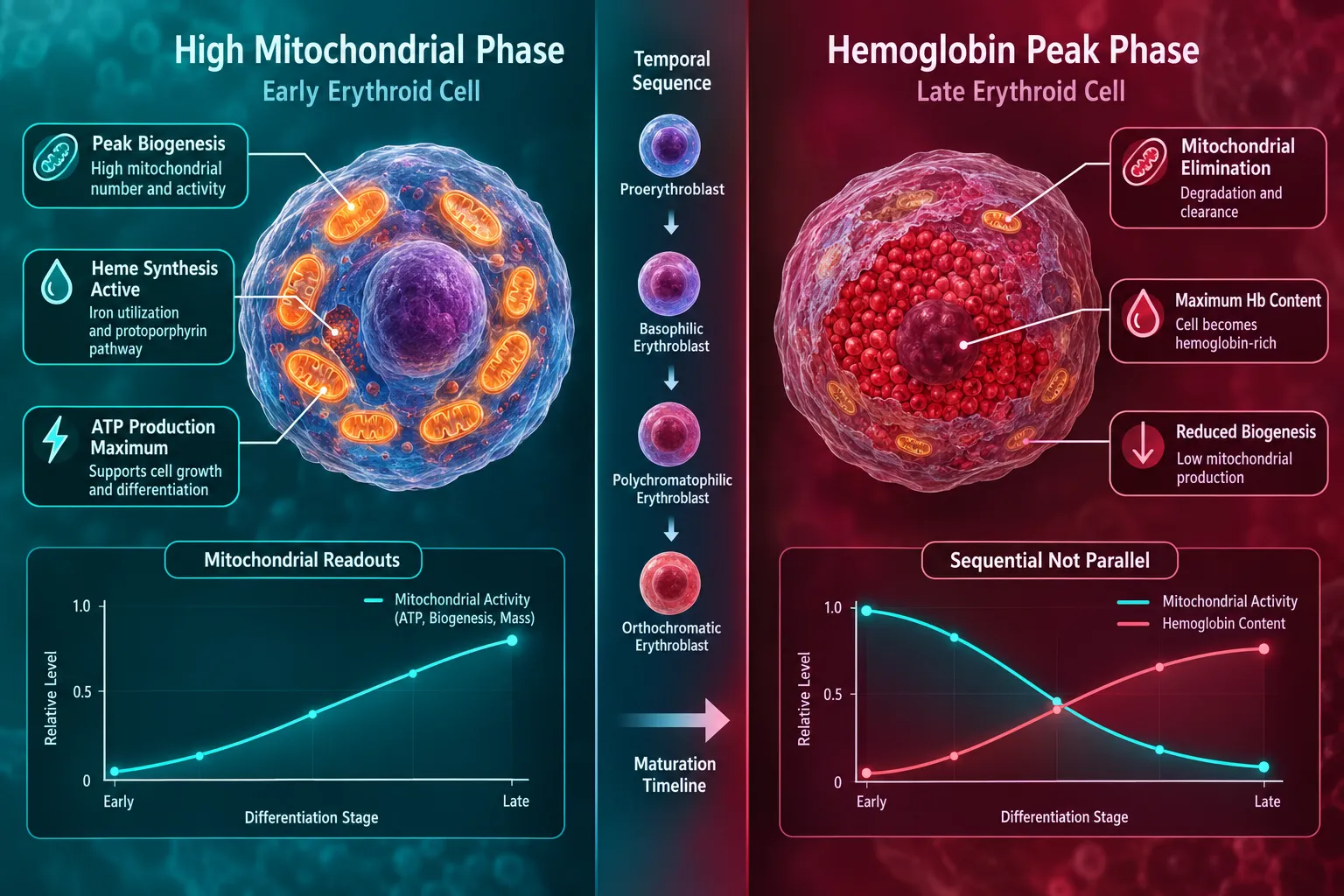
  • Mitochondrial biogenesis peaks early in erythropoiesis, then declines as hemoglobin accumulates, meaning Hb and mitochondrial activity are sequential, not parallel, readouts.
  • Peptides that influence EPO signaling, iron metabolism, or mitochondrial integrity will alter hemoglobin endpoints and must be controlled for anemia and hematocrit.
  • Engineered hemoglobin-based oxygen carriers introduce additional mitochondrial variables, including oxidative stress and nitric oxide scavenging, that require parallel ROS and OXPHOS monitoring.
  • Treating hemoglobin as a composite indicator, not a single number, strengthens experimental design in any peptide program targeting erythropoietic or metabolic pathways.

Hemoglobin as a Composite Biomarker in Erythropoiesis Research
Hemoglobin as a Composite Biomarker in Erythropoiesis Research

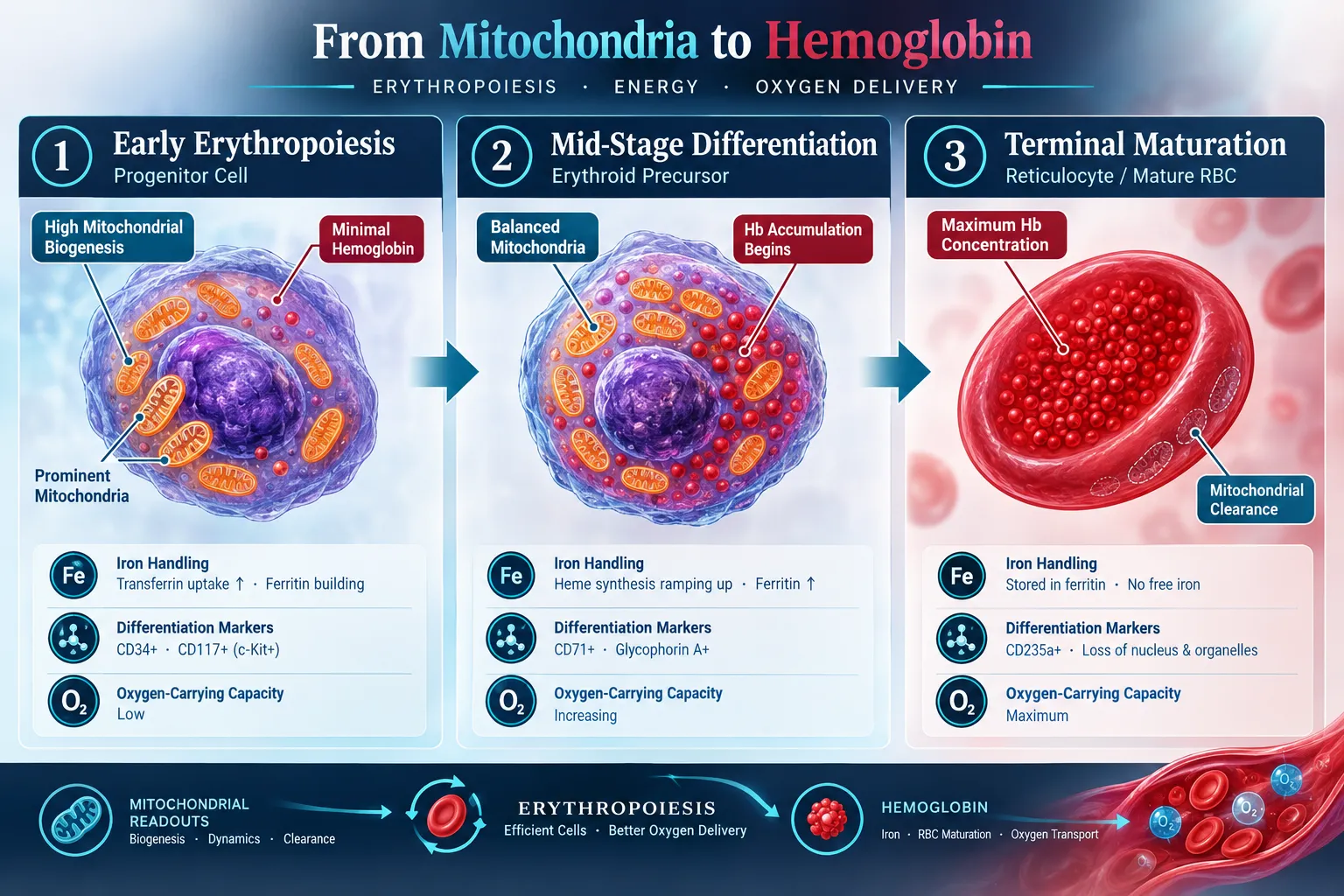
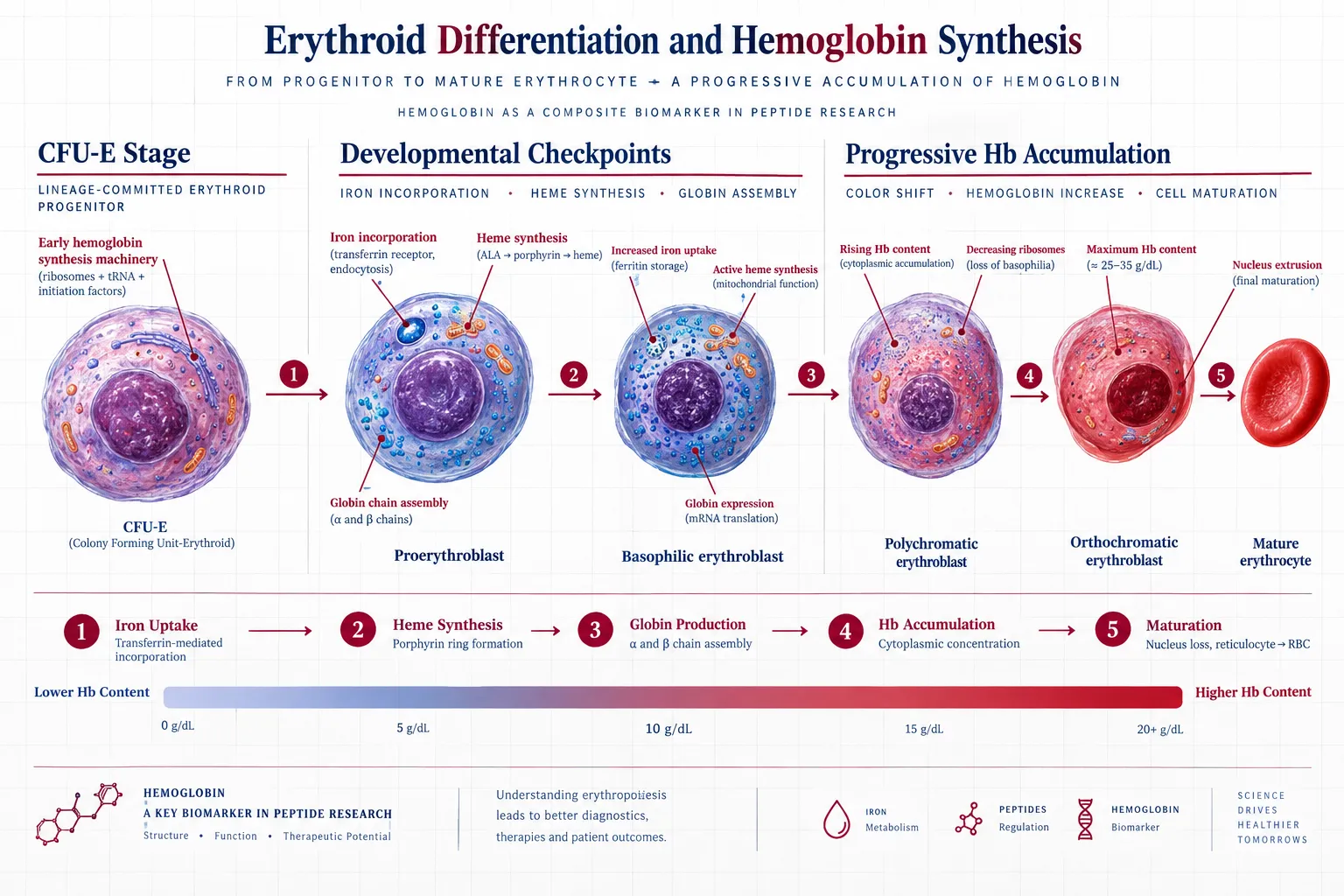
The standard clinical reading of hemoglobin, a number in g/dL that indicates anemia or health, is too narrow for research settings. In erythroid biology, hemoglobin content builds progressively as precursor cells pass through several developmental checkpoints. Lineage-committed erythroid progenitors first upregulate mitochondrial biogenesis and respiration. They synthesize heme at high rates. Only then does hemoglobin concentration rise sharply, eventually triggering enucleation and the loss of mitochondria as the cell matures into a circulating red blood cell.

This sequence has direct implications for peptide research. A peptide that modulates erythropoietin (EPO) signaling, alters iron transport, or targets mitochondrial regulators will leave a signature at multiple stages, not just in the final hemoglobin number. Researchers should therefore pair Hb concentration with upstream indicators: heme synthesis rates, iron saturation, and markers of mitochondrial biogenesis such as PGC-1 activity.

Iron status is a particularly important cofactor. Iron deficiency limits both heme and globin synthesis simultaneously. It also impairs mitochondrial function in erythroid precursors and blunts EPO responsiveness. When iron homeostasis is disturbed, DNA methylation patterns and broad gene expression programs shift, meaning that a low hemoglobin reading in a peptide experiment may reflect iron-mediated transcriptional changes rather than a direct effect of the compound under study. Running iron-deficiency controls and confirming serum ferritin alongside hemoglobin is not optional, it is foundational.

Key regulators linking mitochondria to hemoglobin production:

Regulator Role in Erythropoiesis Research Significance
PGC-1beta Coordinates mitophagy, iron transport, and Hb synthesis Connects mitochondrial dynamics to Hb output
FAM210B Drives mitochondrial metabolism during early erythroid stages Upstream of heme synthesis rates
Rb Stimulates mitochondrial biogenesis in erythroid cells Ties cell-cycle exit to mitochondrial activation
EPO/JAK2 Preserves mitochondrial integrity; counters apoptosis Determines whether precursors reach Hb-rich stage

For researchers exploring peptides that target these pathways, resources like the SS-31 10mg research peptide considerations page offer useful framing on mitochondrial-targeted compound design, and a broader look at SS31 mitochondrial dynamics explains how mitochondrial endpoints are structured in experimental settings.


Mitochondrial Readouts That Run Parallel to Hemoglobin Endpoints
Mitochondrial Readouts That Run Parallel to Hemoglobin Endpoints

The relationship between mitochondria and hemoglobin in erythroid cells is defined by sequence: mitochondrial activity is highest before hemoglobin peaks, then deliberately eliminated. This means that in any peptide experiment intersecting erythropoiesis, mitochondrial readouts and hemoglobin readouts measure different stages of the same process.

The core mitochondrial endpoints to track alongside hemoglobin include:

  • Oxidative phosphorylation (OXPHOS) activity, elevated during early erythroid differentiation; a surrogate for committed progenitor activity
  • Reactive oxygen species (ROS) levels, mitochondria generate ROS during heme metabolism; excess heme or free hemoglobin can feed back to damage the respiratory chain
  • Mitophagy markers, the clearance of mitochondria during late erythroid maturation is an active, regulated step, not passive decay
  • Mitochondrial outer membrane permeabilization (MOMP), EPO signaling counterbalances Fas/FasL-driven apoptosis partly by preventing MOMP; a disrupted peptide-EPO interaction will show here before hemoglobin drops

"Hemoglobin content and mitochondrial activity are sequential, not simultaneous, biomarkers, treating them as interchangeable is a common and costly experimental error."

Importantly, free hemoglobin and excess heme are themselves mitochondrial stressors in non-erythroid tissues. When hemoglobin leaks into plasma, as can occur with hemolysis or with hemoglobin-based oxygen carrier (HBOC) administration, it generates ROS that damage respiratory chain complexes. This means that tracking hemoglobin without parallel mitochondrial stress markers produces an incomplete and potentially misleading picture.

Researchers working with mitochondrial-targeted compounds can explore the SS31 peptide benefits literature or review the BPC-157 core peptides documentation and first research guide for examples of how mitochondrial and systemic endpoints are layered in peptide protocols.


Oxygen Delivery, HBOC Engineering, and Translational Hemoglobin Variables
Oxygen Delivery, HBOC Engineering, and Translational Hemoglobin Variables

The translational arm of hemoglobin research, hemoglobin-based oxygen carriers, brings additional complexity into what does hemoglobin mean in peptide research, connecting oxygen delivery, erythropoiesis, and mitochondrial readouts.

First-generation HBOCs showed clinical promise but introduced significant vasoconstriction and oxidative damage. The mechanisms are well characterized: free hemoglobin scavenges nitric oxide, causing vascular smooth muscle contraction, while heme iron catalyzes lipid peroxidation that feeds mitochondrial ROS. Newer HBOC variants incorporate multiple amino acid substitutions, including modifications at sites that reduce NO binding and lipid peroxidation, with measurable improvements in vitro. However, monitoring myocardial ischemia risk, plasma methemoglobin fraction, and tissue mitochondrial function remains essential for any HBOC-related peptide program.

Confounders that hemoglobin measurement alone will miss:

  • Methemoglobin formation (non-functional oxidized form)
  • Plasma heme-driven mitochondrial ROS in non-erythroid tissues
  • Nitric oxide depletion and secondary vascular effects
  • Hematocrit changes that alter blood viscosity and tissue perfusion independently of Hb

Nanomaterial-based approaches, encapsulating or bioconjugating hemoglobin to nanoparticles, seek to address stability and circulation time, particularly in ischemic stroke, hemorrhagic shock, and wound-healing models. In these systems, hemoglobin functions as a modular oxygen payload, and its impact must be evaluated through downstream tissue hypoxia markers, erythropoietic compensation responses, and mitochondrial function assays in target organs.

For context on peptides that interact with metabolic and vascular systems relevant to these endpoints, the GLP-1 peptide buy: generational research concepts and sourcing notes article and the overview on what is tesa illustrate how metabolic peptide programs integrate multiple systemic readouts. Similarly, researchers using peptides in anemia or hypoxia models may reference the GHRP-2 peptide vs sermorelin comparison for how hormone-axis peptides interact with hematopoietic signaling.


Conclusion

Hemoglobin is not one measurement, it is a composite indicator that encodes erythroid differentiation success, iron handling efficiency, mitochondrial biogenesis timing, and oxygen-delivery capacity. In any peptide research program that touches these pathways, treating hemoglobin as a standalone output will produce shallow, potentially misleading data.

Actionable next steps for research teams in 2026:

  1. Always pair hemoglobin endpoints with iron status markers (serum ferritin, transferrin saturation) and mitochondrial readouts (OXPHOS activity, ROS, mitophagy) to distinguish direct peptide effects from metabolic confounders.
  2. Stage your measurements, mitochondrial biogenesis peaks before hemoglobin; design sampling timepoints that capture both early and late erythropoietic windows.
  3. When working with HBOCs or hemolysis models, add methemoglobin fraction, plasma heme levels, and tissue nitric oxide measurements to the standard panel.
  4. Control for hematocrit separately, hematocrit affects oxygen delivery through blood viscosity, independently of hemoglobin concentration, and can mask or amplify peptide effects on tissue respiration.
  5. Use validated, lab-tested compounds and confirm that lab tested peptides meet purity standards before attributing any hemoglobin or mitochondrial shift to the peptide itself rather than to formulation impurities.

Hemoglobin, properly interpreted, is one of the most information-rich readouts in metabolic and erythropoietic peptide research. The researchers who extract that full information will build experiments that replicate, translate, and matter.

Tags: epo signaling, erythropoiesis, heme synthesis, hemoglobin peptide research, hemoglobin-based oxygen carriers, iron metabolism, mitochondrial readouts, oxygen delivery
https://www.puretestedpeptides.com/wp-content/uploads/2026/10/what-does-hemoglobin-mean-in-peptide-research-connecting-oxygen-delivery-erythro.webp 1024 1536 https://www.puretestedpeptides.com/wp-content/uploads/2026/01/buy-peptides-online.jpg 2026-10-26 13:04:332026-10-26 13:04:33What Does Hemoglobin Mean in Peptide Research? Connecting Oxygen Delivery, Erythropoiesis, and Mitochondrial Readouts
0 replies

Leave a Reply

Want to join the discussion?
Feel free to contribute!

Leave a Reply Cancel reply

Your email address will not be published. Required fields are marked *

×

Helpful Links

  • My account
  • Cart
  • Checkout
  • Refund and Returns Policy
  • Privacy Policy
  • SMS Privacy Policy
  • Login
  • My Account
  • Logout

USA Made Lab Tested Peptides

All products are sold for research, laboratory, or analytical purposes only, and are not for human consumption


Pure Tested Peptides is a chemical supplier. Pure Tested Peptides is not a compounding / chemical compounding facility as defined under 503A of the Federal Food, Drug, and Cosmetic act. Pure Tested Peptides is not an outsourcing facility as defined under 503B of the Federal Food, Drug, and Cosmetic act.

The statements made within this website have not been evaluated by the US Food and Drug Administration. The products we offer are not intended to diagnose, treat, cure or prevent any disease.

Human/Animal Consumption Prohibited. Laboratory/In-Vitro Experimental Use Only

Link to: Research-Use Nasal Spray Peptides: A Buyer’s Comparison of Excipient Disclosure, Pump Performance, and Stability Records Link to: Research-Use Nasal Spray Peptides: A Buyer’s Comparison of Excipient Disclosure, Pump Performance, and Stability Records Research-Use Nasal Spray Peptides: A Buyer’s Comparison of Excipient Disclosure,...Research-Use Nasal Spray Peptides: A Buyer's Comparison of Excipient Disclosure, Pump Performance, and Stability Records Link to: 5-Amino-1MQ and MOTS-c in Liver Organoids: Separating NNMT, Mitochondrial, and Lipid-Handling Effects Link to: 5-Amino-1MQ and MOTS-c in Liver Organoids: Separating NNMT, Mitochondrial, and Lipid-Handling Effects 5-Amino-1MQ and MOTS-c in Liver Organoids: Separating NNMT, Mitochondrial, and Lipid-Handling Effects5-Amino-1MQ and MOTS-c in Liver Organoids: Separating NNMT, Mitochondrial, and...
Scroll to top Scroll to top Scroll to top