

Nearly 890 million adults worldwide live with obesity, yet most approved medications have delivered only modest weight loss. Retatrutide for obesity and type 2 diabetes: what the latest trial data suggest is a question that is reshaping how clinicians and researchers think about metabolic disease treatment. Early and mid-stage trial results have pointed to weight reductions that rival bariatric surgery, triggering significant interest across the endocrinology and metabolic medicine communities.
Key Takeaways
- Retatrutide is a triple agonist targeting GLP-1, GIP, and glucagon receptors simultaneously, setting it apart from earlier single- or dual-receptor drugs.
- Phase 2 data showed average weight loss of approximately 17-24% over 24 weeks in adults with obesity.
- The pivotal Phase 3 TRIUMPH-1 trial reported weight reductions of up to approximately 28% over 80 weeks.
- Glycemic improvements in participants with type 2 diabetes were clinically meaningful alongside the weight effects.
- The safety profile observed so far is broadly consistent with the GLP-1 drug class, though larger confirmatory trials are ongoing.
What Makes Retatrutide Different From Earlier GLP-1 Drugs
Most weight-loss peptides approved before 2023 worked on a single receptor. Semaglutide, for example, targets only the glucagon-like peptide-1 (GLP-1) receptor. Tirzepatide added a second target, the glucose-dependent insulinotropic polypeptide (GIP) receptor, producing stronger results than single-agonist drugs.
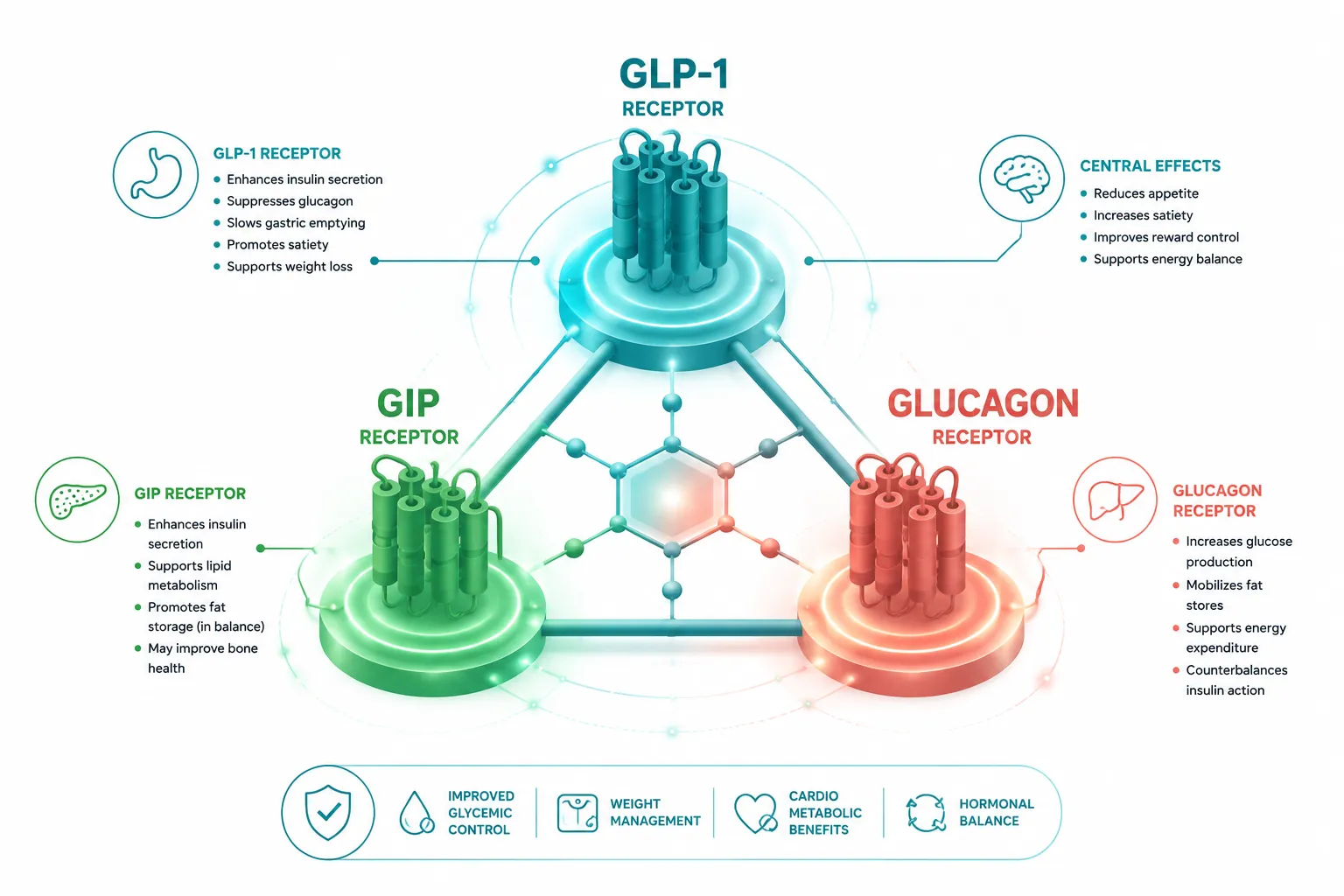
Retatrutide goes one step further. It is a triple agonist, activating three receptors at once:
- GLP-1 receptor – slows gastric emptying, reduces appetite, and improves insulin secretion
- GIP receptor – enhances insulin sensitivity and may improve fat metabolism
- Glucagon receptor – increases energy expenditure and promotes fat breakdown in the liver
This triple mechanism is why retatrutide is sometimes called a "triple G" compound. By engaging all three pathways, it applies pressure on body weight and blood glucose from multiple angles simultaneously. Researchers exploring the GLP-3 Reta peptide have noted that this multi-receptor strategy represents a meaningful evolution beyond earlier GLP-1 compounds.
For context on how GLP-1 receptor agonists work more broadly, the GLP-1 peptide research landscape offers useful background on how this drug class has developed over time.
What the Latest Trial Data Suggest About Weight Loss and Glycemic Control

Understanding retatrutide for obesity and type 2 diabetes: what the latest trial data suggest requires looking at both Phase 2 and Phase 3 results in sequence.
Phase 2 Findings
A Phase 2 randomized controlled trial published in a leading medical journal enrolled adults with obesity (BMI 30 or above) and those with overweight plus at least one related condition. Key findings included:
| Dose Group | Average Weight Reduction (24 weeks) |
|---|---|
| Low dose (1 mg/4 mg) | ~8-9% |
| Mid dose (8 mg) | ~17% |
| High dose (12 mg) | ~24% |
Fasting glucose and HbA1c also fell meaningfully in participants who had elevated baseline values, suggesting strong glycemic benefit independent of weight loss alone.
TRIUMPH-1 Phase 3 Trial
The pivotal TRIUMPH-1 trial extended the timeline to 80 weeks and enrolled a larger, more diverse population. Headline results showed:
- Up to approximately 28% mean body weight reduction in the highest-dose group
- A substantial proportion of participants achieved 20% or greater weight loss, a threshold previously associated mainly with surgical interventions
- HbA1c reductions in the type 2 diabetes subgroup were clinically significant, with many participants reaching near-normal glycemic targets
"A 28% reduction in body weight over 80 weeks would represent the largest pharmacologically driven weight loss ever recorded in a controlled trial of this scale."
These numbers place retatrutide ahead of tirzepatide's Phase 3 results and well above semaglutide's benchmarks. For readers curious about what new peptides for weight loss are emerging, retatrutide is currently among the most closely watched compounds in this space.
Those interested in how other metabolic peptides like tesa address fat reduction through different pathways may find it useful to compare mechanisms, since tesa targets visceral fat via growth hormone stimulation rather than receptor agonism.
Safety Profile and What Researchers Are Watching

Retatrutide for obesity and type 2 diabetes: what the latest trial data suggest on safety is broadly reassuring but warrants careful interpretation.
Most common adverse events reported:
- Nausea (most frequent, particularly during dose escalation)
- Vomiting
- Diarrhea
- Decreased appetite
- Constipation
These effects are consistent with the GLP-1 drug class and were generally mild to moderate. Most resolved without discontinuation. Serious adverse events were low and comparable to placebo in most categories.
Areas under continued monitoring:
- Heart rate increases – a glucagon receptor effect that requires longer cardiovascular outcome data
- Lean mass preservation – whether high-dose weight loss preserves muscle adequately
- Thyroid C-cell effects – a class-wide concern flagged in rodent studies, though not confirmed in humans
Anyone researching peptide combinations should also review guidance on what not to mix with peptides, since polypharmacy considerations are relevant for patients already on diabetes medications.
For those exploring where to source GLP-1 class peptides for research purposes, understanding where to buy GLP-1 peptides from verified suppliers is an important step in maintaining research integrity.
Conclusion
The clinical trajectory of retatrutide is compelling. Phase 2 data established proof of concept, and the TRIUMPH-1 Phase 3 trial has now delivered weight-loss figures that approach surgical outcomes through pharmacological means alone. Glycemic improvements in type 2 diabetes participants add further weight to retatrutide's potential as a dual-purpose metabolic therapy.
Actionable next steps for those following this space:
- Monitor upcoming cardiovascular outcomes trial data, which will be essential for full regulatory review.
- Review the lean mass and musculoskeletal data as it emerges from longer follow-up periods.
- Consult qualified medical professionals before drawing clinical conclusions from Phase 3 data alone.
- Stay updated on regulatory timelines, as FDA and EMA review processes will determine when and how retatrutide becomes available.
- Explore the GLP-1 peptide product landscape to understand where retatrutide fits within the broader class of incretin-based therapies.
Retatrutide does not yet have full regulatory approval as of 2026, but its trial data represent a meaningful step forward in treating two of the most prevalent chronic diseases globally.
Leave a Reply
Want to join the discussion?Feel free to contribute!