

Retatrutide produced average body weight reductions exceeding 24% in Phase 2 trials, a figure that rivals outcomes previously seen only in bariatric surgery. That single data point forces a direct question: what does retatrutide do differently from established GLP-1 drugs, and why does the distinction matter for researchers and scientists studying metabolic biology?
The answer lies in receptor biology. Understanding GLP-3 Retatrutide vs. GLP-1 Drugs: What Triple-Agonist Biology Changes in Research Models means examining how activating three separate receptor pathways simultaneously reshapes metabolic signaling in ways that single-agonist compounds simply cannot replicate.
Key Takeaways
- Retatrutide activates GLP-1, GIP, and glucagon receptors simultaneously, while classic GLP-1 drugs target only one receptor pathway.
- Triple-agonist biology produces additive and synergistic metabolic effects across the liver, adipose tissue, and central nervous system.
- Phase 2 data shows weight loss outcomes approaching bariatric surgery levels, far exceeding results from GLP-1 monotherapy.
- The TRIUMPH Phase 3 program, with mid-2026 topline data emerging, is the largest head-to-head test of this mechanism to date.
- Researchers studying metabolic peptides now consider multi-receptor engagement a defining variable when designing comparison models.
The Receptor Biology Behind GLP-3 Retatrutide vs. GLP-1 Drugs
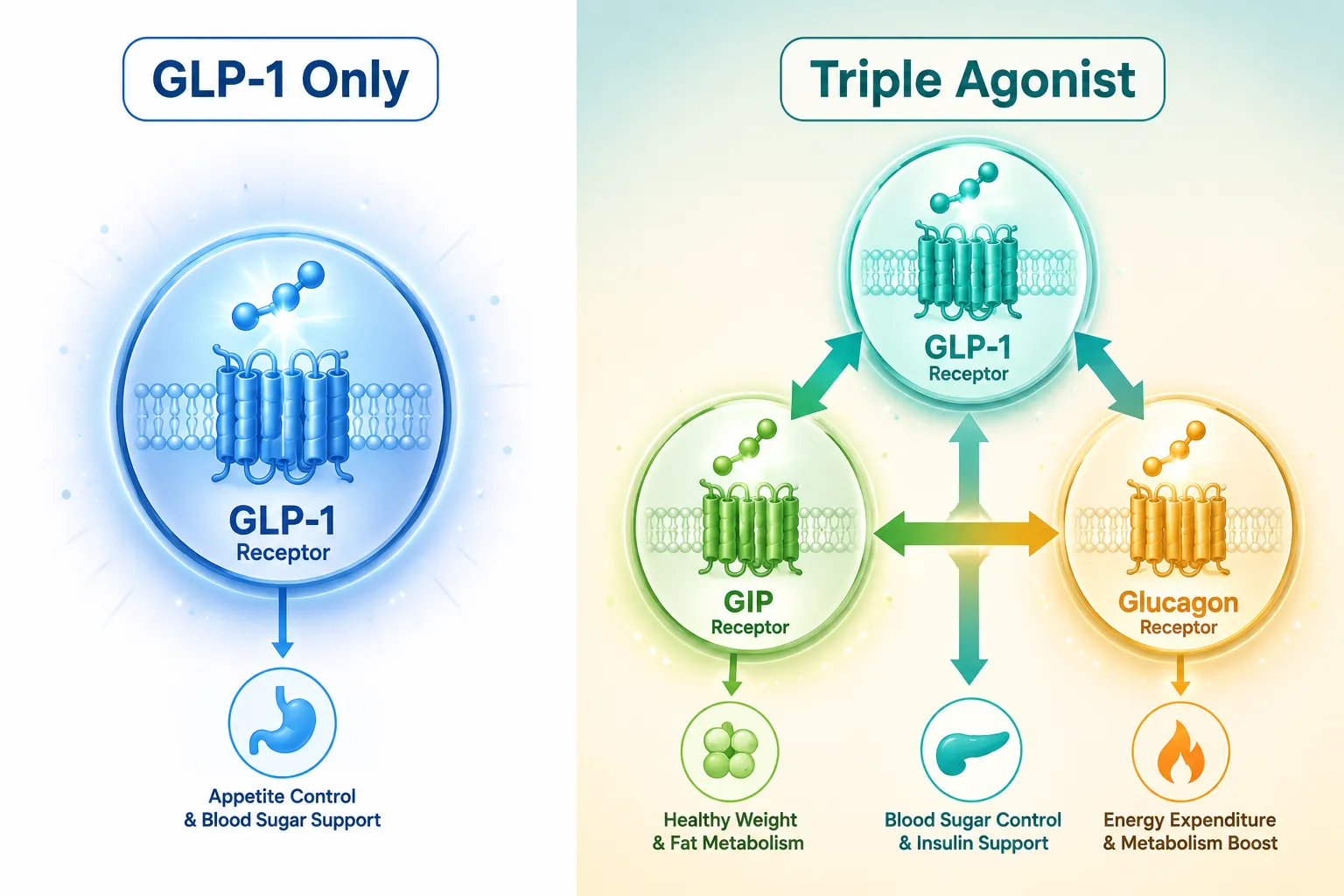
Classic GLP-1 receptor agonists, including semaglutide and liraglutide, work by binding to a single target: the glucagon-like peptide-1 receptor. This triggers insulin secretion, suppresses glucagon release, slows gastric emptying, and reduces appetite through central nervous system signaling. The results are clinically meaningful, but the mechanism is inherently narrow.
Retatrutide operates on an entirely different architectural principle. It is a triple agonist, simultaneously engaging:
- GLP-1 receptors, appetite suppression, insulin stimulation, gastric motility regulation
- GIP receptors (glucose-dependent insulinotropic polypeptide), enhanced insulin secretion, adipose tissue lipid metabolism, bone metabolism signaling
- Glucagon receptors, hepatic glucose output regulation, increased energy expenditure, direct fat oxidation in the liver
The addition of glucagon receptor activity is the most structurally significant difference. Glucagon is typically considered a counter-regulatory hormone that raises blood glucose. However, when glucagon receptor activation is carefully balanced alongside GLP-1 and GIP co-stimulation, the net effect shifts toward increased thermogenesis and accelerated lipolysis, without causing problematic hyperglycemia.
This is the core mechanistic argument for why GLP-3 Retatrutide vs. GLP-1 Drugs: What Triple-Agonist Biology Changes in Research Models is such a critical comparison. Single-receptor models cannot capture these cross-pathway interactions.
For researchers exploring the broader landscape of weight loss peptide mechanisms, this receptor-level distinction is foundational.
"Triple-agonist biology does not simply add three mechanisms, it creates synergistic interactions between pathways that no single-receptor compound can replicate."

Metabolic and Organ-Level Effects That Separate Retatrutide From GLP-1 Monotherapy
When research models compare retatrutide against GLP-1-only compounds, several organ-level differences become apparent beyond simple weight reduction numbers.
Hepatic Fat Reduction
GLP-1 agonists reduce liver fat modestly as a downstream effect of weight loss. Retatrutide's glucagon receptor component directly stimulates hepatic fatty acid oxidation and reduces de novo lipogenesis. In preclinical and Phase 2 models, this produced substantially greater reductions in liver fat content, relevant to researchers studying metabolic-associated steatotic liver disease (MASLD).
Adipose Tissue Dynamics
GIP receptor activation influences how adipose tissue handles lipid storage and release. In combination with GLP-1 and glucagon signaling, this creates a coordinated shift toward fat mobilization. Research models show that retatrutide preferentially reduces visceral adipose tissue, the metabolically active fat depot most strongly linked to cardiometabolic risk.
Energy Expenditure
A key limitation of GLP-1 monotherapy is that weight loss occurs primarily through caloric restriction rather than increased energy expenditure. Retatrutide's glucagon component adds a thermogenic dimension, meaning the body burns more energy at rest. This distinction is critical when designing research models that measure total energy balance rather than appetite suppression alone.
Glycemic Control
Despite glucagon's known glucose-raising properties, clinical data shows retatrutide maintains strong glycemic control. The GLP-1 and GIP components appear to offset glucagon's hyperglycemic potential, resulting in HbA1c reductions comparable to or exceeding those seen with GLP-1 monotherapy.
Researchers comparing these compounds alongside other metabolic peptides, such as those studying GLP-3 Reta peptide biology or reviewing GLP-3 side effect profiles, will find these organ-level distinctions essential for structuring valid comparisons.
Phase 2 and Phase 3 Evidence: What Research Models Reveal in GLP-3 Retatrutide vs. GLP-1 Drugs Comparisons
Phase 2 Findings
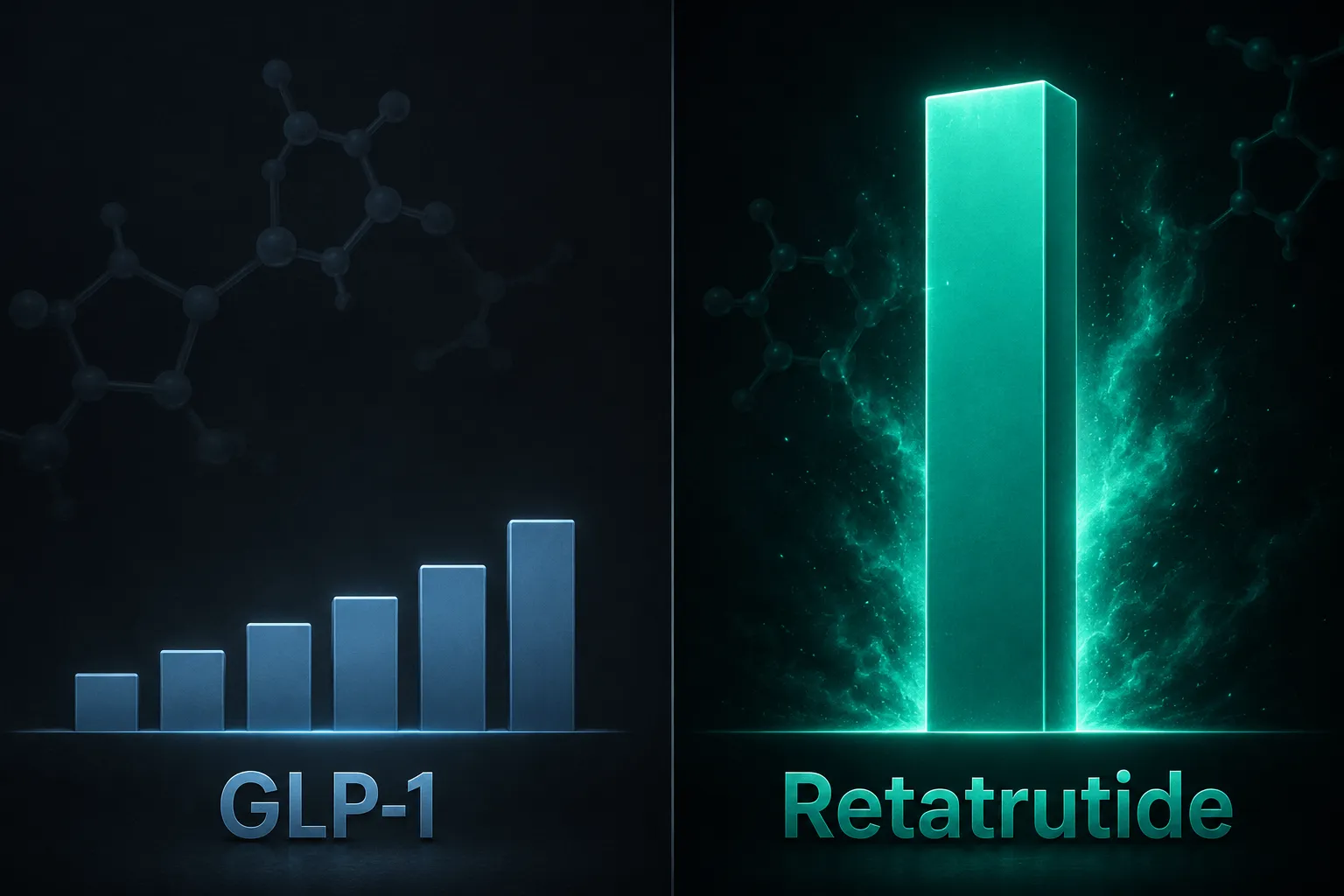
The Phase 2 data for retatrutide was striking by any standard. Participants receiving the highest dose achieved approximately 24% mean body weight reduction over 48 weeks. For context, GLP-1 monotherapy with semaglutide produces roughly 15-17% weight loss in comparable populations. The gap is not marginal, it represents a fundamentally different biological outcome.
Importantly, the dose-response curve for retatrutide showed a steeper trajectory than GLP-1-only compounds, suggesting the additional receptor pathways contribute incrementally rather than redundantly.
The TRIUMPH Phase 3 Program
The TRIUMPH program represents the most rigorous large-scale evaluation of retatrutide to date. As of mid-2026, topline Phase 3 data has begun emerging, with trials enrolling thousands of participants across obesity, type 2 diabetes, and cardiovascular risk populations.
Early Phase 3 signals reinforce the Phase 2 pattern: retatrutide consistently outperforms GLP-1 monotherapy benchmarks on weight loss magnitude, liver fat reduction, and cardiometabolic markers. The program also includes dedicated cardiovascular outcome trials, a critical step for regulatory consideration.
For researchers sourcing comparison-grade peptides for in vitro or preclinical work, understanding where to find GLP-3 retatrutide and how it differs from GLP-1 peptide sources is a practical next step. Additional context on whether GLP-3 works for weight loss in research settings is also available for those designing preclinical protocols.
Conclusion
The comparison of GLP-3 Retatrutide vs. GLP-1 Drugs: What Triple-Agonist Biology Changes in Research Models is not a minor pharmacological footnote, it represents a structural shift in how metabolic science approaches receptor-targeted therapy.
Retatrutide's simultaneous engagement of GLP-1, GIP, and glucagon receptors produces metabolic outcomes that exceed what single-agonist compounds can achieve, particularly in hepatic fat reduction, visceral adipose mobilization, and energy expenditure. Phase 2 data and emerging Phase 3 results from the TRIUMPH program consistently validate this mechanistic advantage.
Actionable next steps for researchers:
- Review the full receptor mechanism profile of retatrutide before designing head-to-head comparison models with GLP-1 monotherapy compounds.
- Prioritize organ-level endpoints, especially liver fat and visceral adipose tissue, not just body weight, when structuring metabolic research protocols.
- Monitor TRIUMPH Phase 3 topline data releases throughout 2026 for cardiovascular outcome signals that may redefine the clinical comparison landscape.
- Ensure peptide sourcing meets research-grade purity standards when conducting in vitro or preclinical work with either compound class.
The biology of triple agonism has changed the research model for metabolic peptides. Understanding that change precisely is the first requirement for any serious comparative study.
Leave a Reply
Want to join the discussion?Feel free to contribute!