

PT-141 in Receptor-Mechanism Studies: Separating Melanocortin Signaling From Vascular and Behavioral Readouts
Fewer than a dozen peptides in pharmacological research sit at the crossroads of central neuromodulation and peripheral physiology as precisely as PT-141 (bremelanotide). Yet most assay frameworks treat it as a single-purpose probe, blurring the very distinctions that make it useful. PT-141 in receptor-mechanism studies offers a rare opportunity to dissect melanocortin signaling from vascular and behavioral readouts, but only when researchers build experiments around a receptor-first framework rather than endpoint-first assumptions.
Key Takeaways
- PT-141 acts primarily through central MC3R and MC4R receptors via a GPCR-cAMP cascade, not through nitric oxide or vascular pathways.
- Behavioral outputs (desire, motivation) and vascular outputs (genital blood flow) must be measured as separate, non-interchangeable endpoints.
- cAMP accumulation and downstream neuromodulator release are the primary mechanistic markers for valid melanocortin assays.
- Comparator compounds and negative controls are essential for attributing signals to specific receptor subtypes.
- Regulatory bodies classify the mechanism as "not fully established," making rigorous receptor-level documentation especially important for research integrity.
The Melanocortin Receptor Cascade: What PT-141 Actually Activates
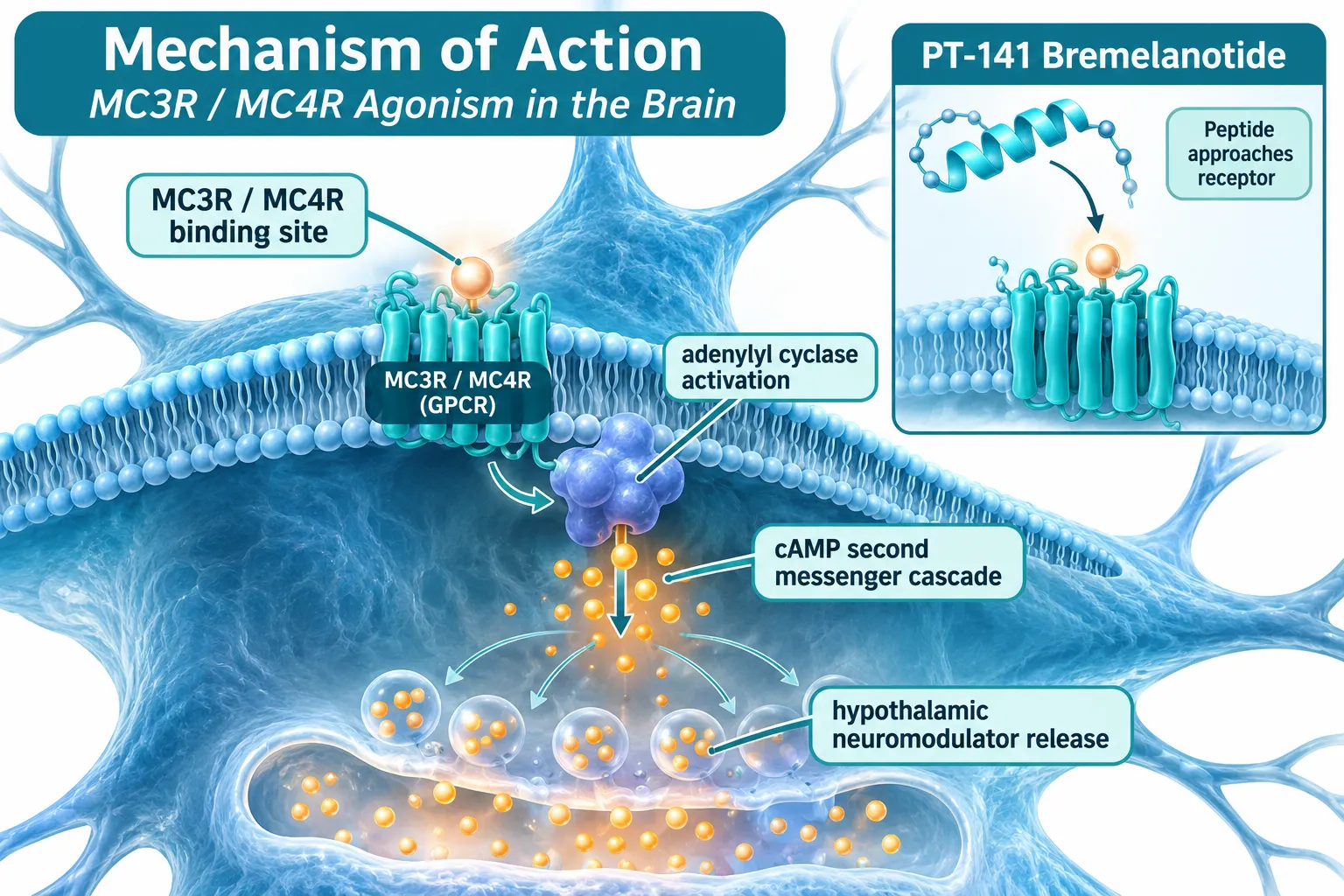
PT-141 is a synthetic analog of alpha-melanocyte-stimulating hormone (alpha-MSH). Its primary pharmacological targets are the melanocortin 3 receptor (MC3R) and melanocortin 4 receptor (MC4R), both G protein-coupled receptors (GPCRs) expressed heavily in hypothalamic nuclei. When PT-141 binds these receptors, it activates adenylyl cyclase, elevating intracellular cyclic AMP (cAMP). That second messenger cascade then triggers neuromodulator release within circuits governing arousal and motivational salience.
This is a critically different mechanism from that of phosphodiesterase-5 (PDE5) inhibitors such as sildenafil, which act peripherally on nitric oxide (NO) synthase pathways in vascular smooth muscle. Separating these two pathway families is not merely academic. In research settings, conflating them produces uninterpretable data.
Key receptor-level markers for assay design:
| Marker | Pathway | Measurement Method |
|---|---|---|
| cAMP accumulation | MC3R/MC4R → adenylyl cyclase | HTRF or ELISA-based cAMP assay |
| Downstream neuromodulator release | Hypothalamic nuclei | Microdialysis or CSF sampling |
| Nitric oxide synthase activity | NO/vascular pathway | Griess reagent or DAF-FM fluorescence |
| Genital blood flow | Vascular endpoint | Laser Doppler flowmetry |
Researchers designing clean melanocortin assays should track cAMP as the primary mechanistic readout. Nitric oxide synthase activity, when measured in parallel, consistently remains unaltered by PT-141 at pharmacologically relevant concentrations, a finding that underscores the NO-independent nature of the melanocortin cascade.
For teams sourcing purity-verified research peptides for multi-pathway assays, reviewing lab tested peptides ensures batch-to-batch consistency in receptor-binding studies.
Separating Melanocortin Signaling From Vascular Readouts in Assay Design
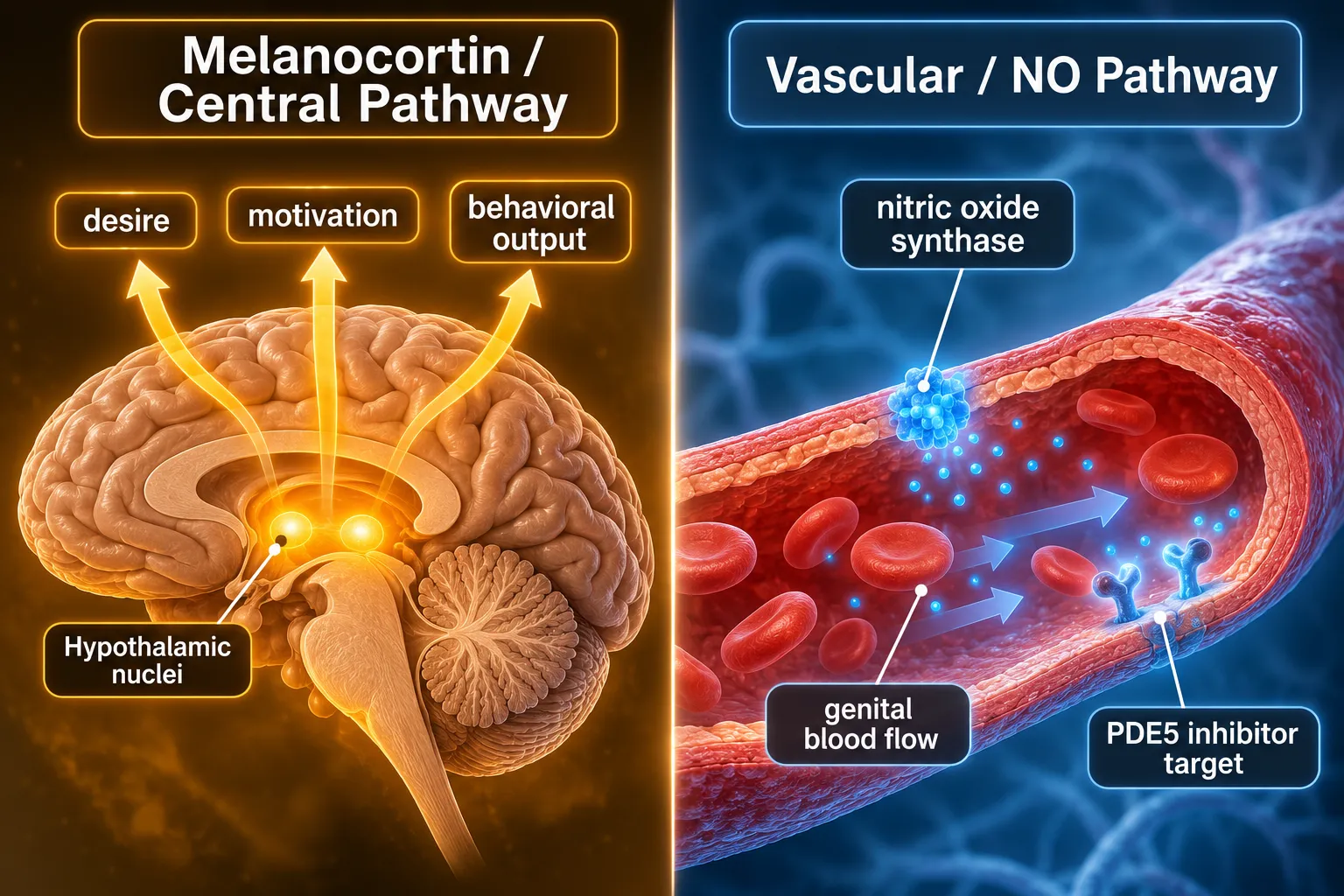
The most common methodological error in PT-141 receptor-mechanism studies is treating genital hemodynamic changes as a proxy for melanocortin receptor activation. These endpoints can co-occur behaviorally but arise from separate biological pathways.
Why vascular endpoints are inadequate melanocortin markers:
- Genital blood flow changes observed in some studies are modest and inconsistent across subjects.
- The NO pathway, not MC3R/MC4R signaling, is the primary driver of vascular engorgement responses.
- Male studies using PT-141 show that central arousal signals appear upstream and independent of erectile vascular pathways.
- Female studies on hypoactive sexual desire disorder (HSDD) show statistically significant desire improvements without proportional blood flow changes.
"Central motivation and peripheral vascular response are parallel outputs, not sequential ones, PT-141 research that treats them as the same readout will consistently misattribute effects."
A properly controlled receptor-mechanism assay should therefore include:
- A central behavioral endpoint, operationalized as desire or motivational salience scoring in animal models or validated HSDD scales in clinical contexts.
- A peripheral vascular endpoint, measured independently and compared, not averaged.
- A NO-pathway control arm, using a known NO donor or PDE5 inhibitor as a comparator to confirm pathway independence.
- Receptor antagonist controls, MC4R-selective antagonists (such as SHU9119 in rodent models) to confirm specificity of observed cAMP changes.
Teams running parallel peptide assays across multiple signaling pathways may find the CJC-1295 Ipamorelin assay planning and sourcing checklist a useful structural model for multi-endpoint experimental design. Similarly, work comparing overlapping GPCR mechanisms can reference how Ipamorelin vs Tesamorelin receptor selectivity data is handled to separate pathway-specific from shared downstream effects.
Building a Receptor-First Assay Framework for PT-141 Studies
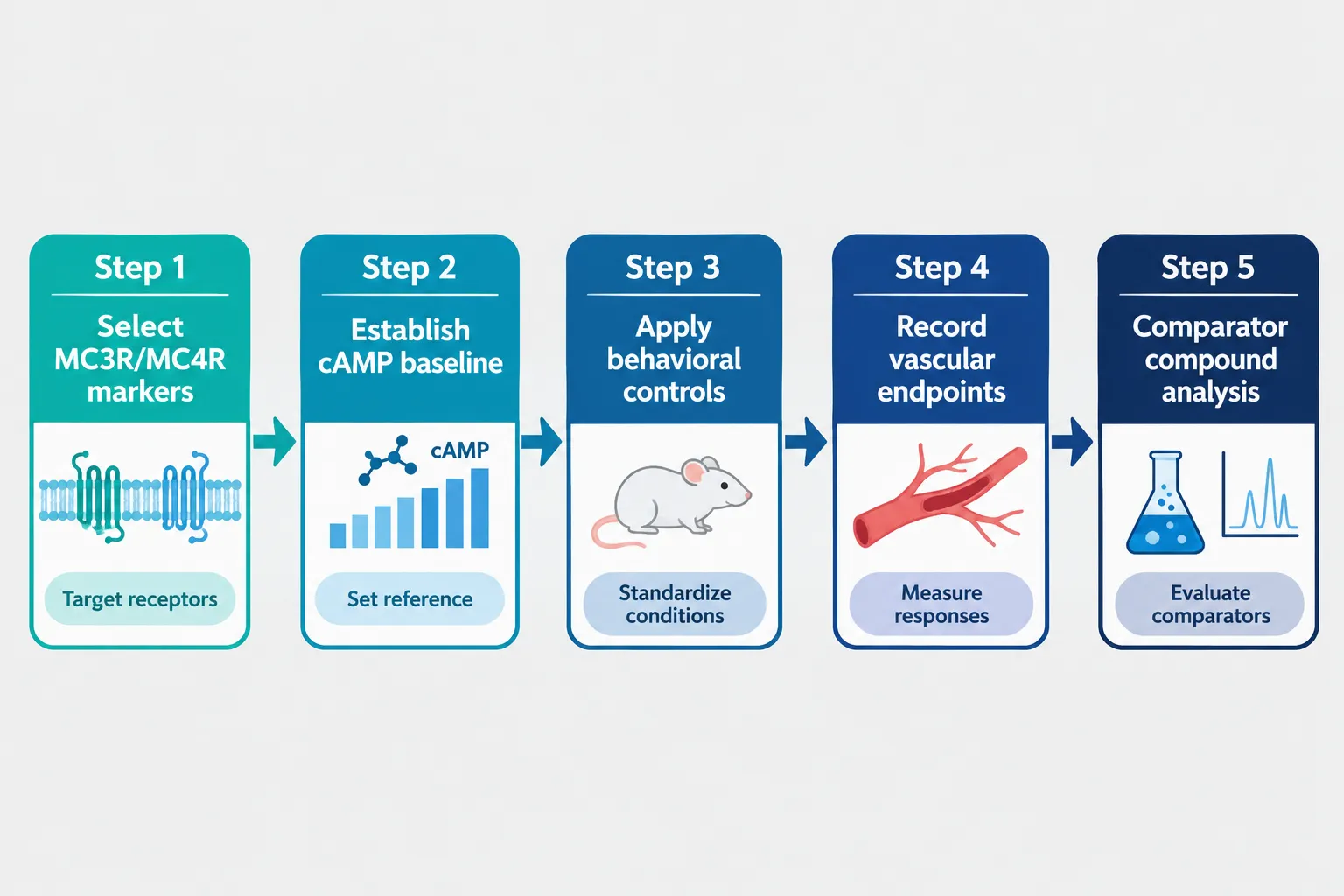
A receptor-first framework re-centers the entire experimental design on MC3R/MC4R occupancy and downstream cAMP signaling, treating behavioral and vascular changes as secondary outputs to be correlated, not as primary evidence of receptor activation.
Step-by-step framework for PT-141 receptor-mechanism assays:
- Define receptor targets explicitly. Pre-specify whether MC3R, MC4R, or both are the focus. These subtypes differ in tissue distribution and downstream coupling efficiency.
- Establish a cAMP baseline. Use vehicle-treated controls to define basal adenylyl cyclase activity in the target tissue or cell line before peptide application.
- Apply concentration-response titration. Run PT-141 across a minimum of six concentrations to generate a full dose-response curve, enabling EC50 calculation for each receptor subtype.
- Include selective antagonist arms. MC4R-selective and MC3R-selective antagonists allow attribution of cAMP changes to specific receptor populations.
- Record behavioral controls separately. Behavioral readouts (locomotor activity, approach behavior, operant responding) must be measured in blinded conditions with appropriate vehicle and positive-control arms.
- Record vascular endpoints independently. Genital hemodynamic or NO-related measures should run in separate cohorts or at minimum in separate measurement windows to avoid cross-contamination of readouts.
- Document off-target safety markers. Cardiovascular endpoints, including blood pressure and heart rate variability, must be monitored given known central and autonomic effects of melanocortin agonism.
Comparator compounds worth including:
- Melanotan II, a less selective melanocortin agonist, useful as a broad-spectrum positive control.
- Sildenafil, as a pure NO/vascular pathway reference, confirming pathway separation.
- SHU9119, MC3R/MC4R antagonist for blockade confirmation.
For researchers interested in how related neuroendocrine peptides are handled in parallel assay planning, the Tesamorelin dosage per day dosing documentation and what is Tesamorelin mechanistic overview provide useful context on GPCR-linked hypothalamic peptide research methodology. Purity sourcing considerations for multi-peptide assays are also addressed in the peptide supplier comparisons guide.
Knowledge Gaps and 2026 Research Priorities
As of 2026, the mechanistic picture around PT-141 in receptor-mechanism studies remains incomplete in several important areas. Regulatory agencies continue to classify the precise mechanism as "not fully established," reflecting genuine gaps in receptor-subtype resolution at the human in vivo level.
Active knowledge gaps:
- MC3R vs MC4R relative contribution in humans, rodent data supports MC4R dominance, but human receptor distribution data is limited.
- Downstream neuromodulator identity, the specific neuromodulators released following hypothalamic cAMP elevation are not fully characterized.
- Sex-based receptor expression differences, male and female receptor densities in relevant hypothalamic nuclei may explain divergent behavioral versus vascular response ratios.
- Off-target receptor binding, PT-141 shows affinity for MC1R and MC5R at higher concentrations, introducing confounds in assays that do not use selective antagonist controls.
Addressing these gaps requires precisely the receptor-first assay framework described above, with rigorous separation of melanocortin signaling from vascular and behavioral readouts as a non-negotiable methodological standard.
Conclusion
PT-141 in receptor-mechanism studies represents one of the most informative tools available for dissecting melanocortin pharmacology, but only when researchers resist the temptation to collapse central signaling, vascular physiology, and behavioral motivation into a single endpoint. The actionable steps are clear: anchor every assay to cAMP as the primary mechanistic marker, treat behavioral and vascular readouts as independent outputs, include selective antagonist and comparator compound controls, and monitor cardiovascular safety markers throughout.
For research teams building out multi-peptide assay frameworks, the same discipline applied here, pathway-specific markers, rigorous controls, and receptor-level documentation, scales directly to other GPCR-linked hypothalamic peptides. Reviewing resources on Sermorelin vs Tesamorelin receptor selectivity comparisons can help calibrate those frameworks across related compound classes.
The goal is not simply cleaner data. It is a mechanistic map precise enough to advance understanding of melanocortin biology beyond the limitations of endpoint-only research design.


Leave a Reply
Want to join the discussion?Feel free to contribute!