Call or Text 727-513-9780
  • Shopping Cart Shopping Cart
    0Shopping Cart
Pure Tested Peptides | America's most trusted Peptides for sale online
  • Peptides for sale
    • Oral Peptides for sale
      • Peptide Capsules for sale
      • BPC 157 Capsules 1000mcg
      • SLU-PP-332 Capsules | 1000 mcg
      • 5-Amino-1MQ 50mg Capsules
      • Tesofensine 500mcg
    • All Peptides for sale
    • Peptide Sprays
      • BPC 157 Nasal Spray Kit
      • BPC-157 TB500 Nasal Spray Kit
      • Semax Nasal Spray 10mg
      • Selank – Nasal Spray Kit – 10mg
      • Epithalon 50MG Nasal Spray Kit
      • Ipamorelin 10mg Nasal Spray
      • Klow Nasal Spray (BPC-157 + TB-500 + GHK-Cu + KPV) | 80mg
      • Hulk Nasal Spray Tesa / Ipa Blend 6/3 MG
      • Klow Nasal Spray
      • NAD + 500 mg Nasal Spray
      • PT-141 Nasal Spray Kit
    • GHRH Peptides
      • Ipa Peptides
      • CJC-1295 Peptides
        • CJC-1295 with DAC 5 mg
        • CJC-1295 without DAC 5 mg
        • CJC-1295 Ipa 10mg
      • Tesa Peptides
        • Tesa Peptide
        • Tesa 20 mg
    • GHK-Cu Peptides
      • All GHK-Cu Peptides
      • GHK-Cu 100mg
      • KLOW Peptide Blend – Buy KLOW blend online
    • BPC Peptides
      • All BPC Peptides
      • BPC-157
      • BPC-157 TB-500
      • BPC 157 capsules 1000mcg
    • SLU-PP-332 Peptides
      • All SLU-PP-332 Peptides
      • SLU-PP-332 5mg
    • GLP3 Peptides
    • PT-141 Peptides
      • PT-141 Peptides for sale
      • PT-141 10mg
      • PT-141 Nasal Spray
    • CAG Peptides
      • Lipo-C Peptide Blend
      • CAG 5mg
      • CAG 10mg
    • MOTS-C Peptides
      • MOTS-C Peptides for sale
      • MOTS-c peptide
      • MOTS-c 10mg *6 pack*
    • 5 Amino 1MQ Peptides
      • 5 Amino 1MQ Peptides for sale
      • 5-Amino-1MQ 50mg Capsules
      • 5-Amino-1MQ 5mg
    • Epithalon Peptides
      • Epithalon Peptides for sale
      • Epithalon 10mg
      • Epithalon 50mg
  • Shop
    • GLPs
      • 5-Amino-1MQ 50mg Capsules
      • 5-Amino-1MQ 5mg
      • L-Carnitine 500mg/ml
      • Tesofensine 500mcg
      • SLU-PP-332 5mg
      • MOTS-c 10mg *6 pack*
    • Epithalon & BPC Peptides
      • Epithalon 10mg
      • Epithalon 50mg
      • BPC-157
      • BPC 157 capsules 1000mcg
      • BPC-157 TB-500
      • BPC-157 TB500 Nasal Spray Kit
      • BPC 157 Nasal Spray Kit
    • BPC TB-500 & NAD+ Peptides
      • NAD+ 500 mg
      • KLOW Peptide Blend – Buy KLOW blend online
      • GLOW Peptide Blend
      • TB 500 5mg
      • BPC 157 capsules 1000mcg – Supplement
      • BPC 157 Nasal Spray Kit
      • BPC-157
      • BPC-157 TB500 Nasal Spray Kit
      • BPC-157 TB-500
      • BPC 157 capsules 1000mcg
    • LL-37 Peptide
      • LL-37 10 mg
    • MOTS-C & Selank
      • MOTS-c peptide
      • Selank 10mg
    • GHK Peptides
      • GHK-Cu 100mg
      • GLOW Peptide Blend
      • KLOW Peptide Blend – Buy KLOW blend online
  • COAs
  • Wholesale
    • Wholesale Peptides for sale
  • PTP FAQ
  • Affiliates
    • Selank Peptide: Advanced Pharmacological Mechanisms Underlying Its Anxiolytic and Nootropic Effects in Research
      • 5-Amino-1MQ Peptide: Detailed Mechanisms of NNMT Inhibition and Its Impact on Cellular Metabolism Research
        • MOTS-C Peptide: Unraveling Its Role in Mitochondrial Dynamics and Energy Metabolism Research
          • Epithalon Peptide and Telomerase Regulation: Investigating Its Impact on Cellular Senescence and Lifespan Research Models
            • GLP2-T vs GLP2 Tirz Peptide: Understanding the Naming, Mechanistic Nuances, and Research Implications for Gut Health
      • Peptides and Polypeptides in Modern Pharmacology: What Research on Metoprolol, Prednisone, and Amlodipine Reveals
        • Polypeptide Peptides vs NSAIDs: What Naproxen and Diclofenac Teach Tissue-Repair Researchers About BPC‑157 and TB‑500
          • Peptides and Polypeptides in Endocrine Pharmacology: How GLP-1, GLP-2, and GLP-3 Retatrutide Differ From Classic Drugs Like Prednisone and Amlodipine
          • 5‑Amino‑1MQ Peptide and NNMT Inhibition: How It Compares With Statins Like Atorvastatin in Adipose and Lipid Metabolism Research
      • Enclomiphene, Estrogen Receptor Signaling, and Luteinizing Phase Biology: What Hormone Researchers Should Measure
        • Mesenchymal Stem Cells, BPC‑157, and GHK‑Cu: How Tissue Repair Peptides Compare With Classic NSAIDs Like Naproxen in Injury Models
          • Peptide Calculator Use Cases Beyond Growth Hormone: Working Through GLP‑3 Retatrutide, MOTS‑c, and BPC‑157 Research Dosing
        • Polypeptide Peptides in Endocrine and Metabolic Pharmacology: Lessons From Amlodipine, Prednisone, and Metoprolol
        • Peptides Calculator for Advanced Blends: Worked Examples for Tesamorelin, CJC‑1295, and Ipamorelin Stacks
          • Peptides and Polypeptides in Human Physiology: How Molecular Size Shapes Research Applications
            • Selank Peptide: Advanced Pharmacological Mechanisms Underlying Its Anxiolytic and Nootropic Effects in Research
          • 5-Amino-1MQ Peptide: Detailed Mechanisms of NNMT Inhibition and Its Impact on Cellular Metabolism Research
            • MOTS-C Peptide: Unraveling Its Role in Mitochondrial Dynamics and Energy Metabolism Research
              • Epithalon Peptide and Telomerase Regulation: Investigating Its Impact on Cellular Senescence and Lifespan Research Models
                • GLP2-T vs GLP2 Tirz Peptide: Understanding the Naming, Mechanistic Nuances, and Research Implications for Gut Health
                  • Peptides and Polypeptides in Endocrine Pharmacology: How GLP-1, GLP-2, and GLP-3 Retatrutide Differ From Classic Drugs Like Prednisone and Amlodipine
                    • Polypeptide Peptides vs NSAIDs: What Naproxen and Diclofenac Teach Tissue-Repair Researchers About BPC‑157 and TB‑500
                      • Peptides and Polypeptides in Modern Pharmacology: What Research on Metoprolol, Prednisone, and Amlodipine Reveals
                        • 5‑Amino‑1MQ Peptide and NNMT Inhibition: How It Compares With Statins Like Atorvastatin in Adipose and Lipid Metabolism Research
                        • Enclomiphene, Estrogen Receptor Signaling, and Luteinizing Phase Biology: What Hormone Researchers Should Measure
                        • Mesenchymal Stem Cells, BPC‑157, and GHK‑Cu: How Tissue Repair Peptides Compare With Classic NSAIDs Like Naproxen in Injury Models
                        • Peptide Calculator Use Cases Beyond Growth Hormone: Working Through GLP‑3 Retatrutide, MOTS‑c, and BPC‑157 Research Dosing
                        • Polypeptide Peptides in Endocrine and Metabolic Pharmacology: Lessons From Amlodipine, Prednisone, and Metoprolol
                        • Peptides Calculator for Advanced Blends: Worked Examples for Tesamorelin, CJC‑1295, and Ipamorelin Stacks
                        • Peptides and Polypeptides in Human Physiology: How Molecular Size Shapes Research Applications
                        • Selank Peptide: Advanced Pharmacological Mechanisms Underlying Its Anxiolytic and Nootropic Effects in Research
                        • MOTS-C Peptide: Unraveling Its Role in Mitochondrial Dynamics and Energy Metabolism Research
                        • Peptides and Polypeptides in Modern Pharmacology: What Research on Metoprolol, Prednisone, and Amlodipine Reveals
                        • Peptides and Polypeptides in Endocrine Pharmacology: How GLP-1, GLP-2, and GLP-3 Retatrutide Differ From Classic Drugs Like Prednisone and Amlodipine
                        • 5-Amino-1MQ Peptide: Detailed Mechanisms of NNMT Inhibition and Its Impact on Cellular Metabolism Research
                        • Mesenchymal Stem Cells, BPC‑157, and GHK‑Cu: How Tissue Repair Peptides Compare With Classic NSAIDs Like Naproxen in Injury Models
                        • Peptide Calculator Use Cases Beyond Growth Hormone: Working Through GLP‑3 Retatrutide, MOTS‑c, and BPC‑157 Research Dosing
                        • GLP2-T vs GLP2 Tirz Peptide: Understanding the Naming, Mechanistic Nuances, and Research Implications for Gut Health
                        • Polypeptide Peptides in Endocrine and Metabolic Pharmacology: Lessons From Amlodipine, Prednisone, and Metoprolol
                        • Polypeptide Peptides vs NSAIDs: What Naproxen and Diclofenac Teach Tissue-Repair Researchers About BPC‑157 and TB‑500
                        • Peptides and Polypeptides in Human Physiology: How Molecular Size Shapes Research Applications
                        • Peptides Calculator for Advanced Blends: Worked Examples for Tesamorelin, CJC‑1295, and Ipamorelin Stacks
                        • 5‑Amino‑1MQ Peptide and NNMT Inhibition: How It Compares With Statins Like Atorvastatin in Adipose and Lipid Metabolism Research
                        • Enclomiphene, Estrogen Receptor Signaling, and Luteinizing Phase Biology: What Hormone Researchers Should Measure
                        • Epithalon Peptide and Telomerase Regulation: Investigating Its Impact on Cellular Senescence and Lifespan Research Models
                        • Best research protocol Klow blend
                        • best time to take BPC-157
                        • best time to take DSIP (Delta Sleep Inducing Peptide)
                        • best time to take CJC-1295
                        • best time to take AOD-9604
                        • best time to take Follistatin 344
                        • best time to take Ipamorelin
                        • best time to take MK-677 (Ibutamoren)
                        • best time to take Ligandrol (LGD-4033) — research compound
                        • best time to take Ostarine (MK-2866) — research compound
                        • best time to take GHK-CU
                        • best time to take TB-500
                        • best time to take MOTS-c
                        • best time to take Semax
                        • best time to take RAD-140 (Testolone) — research compound
                        • best time to take Thymosin Alpha-1
                        • best time to take PEG-MGF
                        • Biolife Plasma, Octapharma Plasma, and Research Peptides: How Plasma Donation Labs Differ From Peptide Suppliers
                        • best time to take YK-11 — research compound
                        • best time to take PT-141 (Bremelanotide)
                        • Best research protocol Klow blend
                        • 5-Amino-1MQ and MOTS-C Synergy: Metabolic Signaling, Mitochondria, and Research Design
                        • BPC-157 and TB-500: Investigating Their Combined Effects on Angiogenesis and Cellular Migration in Tissue Repair Models
                        • BPC-157 Peptide: Gut Barrier Function, Inflammation, and Tissue-Recovery Research
                        • 5‑Amino‑1MQ and MOTS‑c Synergy in Metabolic Research: Designing NNMT and Mitochondrial Biogenesis Stacks
                        • CJC-1295 with DAC vs. Without DAC: Half-Life, Release Kinetics, and Research Implications
                        • CJC‑1295 with DAC vs. Without DAC: Expanding on Half‑Life Differences Using Tesamorelin and Ipamorelin Blend Case Studies
                        • Collagen Biology and Copper‑Binding Peptides: How GHK‑Cu, Glow Blend, and Klow Blend Interact with Skin and Connective Tissue
                        • Collagen Biology and Regenerative Peptides: How GHK‑Cu, Glow Blend, and Klow Blend Affect Extracellular Matrix Research
                    • DNA, Telomeres, and Longevity Peptides: Positioning Epithalon and MOTS‑c in Genetic Aging Research
                      • Enclomiphene Citrate: serm Mechanism, Testosterone Research, and Stack Compatibility
                        • Enclomiphene vs Enclomiphene Citrate: Formulation, Bioavailability, and Research Distinctions
                        • Epithalon Peptide Research: Telomerase Activation, Aging, and Pineal Gland Function
                        • Estrogen Receptor Signaling and Enclomiphene: How Selective Modulators Compare with Classic Polypeptide Hormones
                        • GHK-Cu Peptide: Advanced Mechanisms in Extracellular Matrix Remodeling and Wound Healing Research
                        • GHK-Cu Peptide: Collagen Synthesis, Wound Repair, and Skin-Barrier Research Models
                        • GLP-1 vs GLP-3 vs GLP-2: Peptide Classification and Research Applications
                        • GLP-2 Peptide Research Guide: Gut Barrier Function, Nutrient Absorption, and Intestinal Recovery Models
                        • GLP-3 Retatrutide vs. GLP-1 Drugs: What Triple-Agonist Biology Changes in Research Models
                        • Ipamorelin and Tesamorelin Combination: Synergistic GH Secretagogue Research and Dosing Protocols
                        • GLP2 Tirz Peptide: What It Is, Why the Name Exists, and How Researchers Should Interpret It
                        • Klow Blend Peptide Nasal Spray: What the Formulation Is Trying to Do in Cognitive Research
                        • Mitochondria, NNMT Inhibition, and Peptide Modulators: Where MOTS‑c and 5‑Amino‑1MQ Fit in Cellular Energy Research
                        • MOTS-c Peptide: Mitochondrial Function, Energy Metabolism, and What Researchers Measure
                        • MOTS-c vs. 5-Amino-1MQ: Which Metabolic Research Questions Each Compound Actually Answers
                        • Nasal Spray Peptides: Bioavailability, Administration, and Semax/Selank Research Applications
                        • PT-141 Peptide Research: Mechanism of Action and Melanocortin Receptor Signaling
                        • Retatrutide for Research: Mechanism, Structure, and GLP-1/GLP-3 Dual Action
                        • Retatrutide for Obesity and Type 2 Diabetes: What the Latest Trial Data Suggest
                        • Tesofensine Peptide Research: Mechanism, Appetite Suppression, and Neuropeptide Y Pathways
  • Contact
    • Contact Customer Service
    • Text Customer Support
  • About US
  • Shop all peptides
  • Affiliate Program
    • Affiliate Signup
  • Login / Register Login / Register Page Link Login / Register Page Link
  • Click to open the search input field Click to open the search input field Search
  • Menu Menu

Tag Archive for: androgen signaling

Spironolactone in Peptide Research: Androgen Signaling, Potassium, and Fluid-Volume Confounders

Spironolactone in Peptide Research: Androgen Signaling, Potassium, and Fluid-Volume Confounders

November 7, 2026/0 Comments/in Uncategorized/by

Fewer than one in five peptide researchers formally account for background spironolactone use when designing endocrine studies, yet this single drug acts on at least three distinct receptor classes, shifts potassium handling, and alters fluid volume in ways that can silently distort body-composition, hormonal, and metabolic endpoints. Understanding Spironolactone in Peptide Research: Androgen Signaling, Potassium, and Fluid-Volume Confounders is no longer optional for anyone running growth-hormone, GLP-class, enclomiphene, or body-composition models in 2026.

Key Takeaways

  • Spironolactone is a nonselective receptor antagonist that blocks mineralocorticoid, androgen, and progesterone receptors, each pathway relevant to peptide endpoints.
  • Its androgen-receptor antagonism (IC50 approximately 77 nmol/L) can suppress testosterone-dependent biomarkers, confounding enclomiphene and growth-hormone study readouts.
  • At low doses and topical formulations, potassium and fluid-volume perturbations may be modest, but systemic oral dosing in cardiac or renal populations carries measurable electrolyte risk.
  • In metabolic populations such as PCOS, background spironolactone directly alters the hormonal environment in which incretin-class and GLP-class peptides operate.
  • Stratifying participants by spironolactone exposure, dose route, and baseline androgens is a practical first step toward cleaner peptide-research data.

How Spironolactone Works: Receptor Pharmacology That Matters

Spironolactone receptor mechanism four-panel diagram

Spironolactone began its clinical life as a diuretic, but its pharmacology extends well beyond the kidney. The molecule binds the mineralocorticoid receptor with high affinity, blocking aldosterone's signal to retain sodium and excrete potassium. At the same time, it occupies androgen receptors, displacing dihydrotestosterone and testosterone from binding sites in target tissues including the prostate, hair follicle, and sebaceous gland. It also binds the progesterone receptor and, at higher doses, may act as a mild estrogen-receptor agonist.

For peptide researchers, this multi-receptor profile is the core problem. Any investigational compound whose downstream signal passes through androgen-dependent gene expression, think IGF-1 regulation by gonadal steroids, PSA as a research biomarker, or androgen-sensitive body-composition markers, will be affected if a study participant is using spironolactone concurrently.

A 2026 FDA safety update reinforced the clinical stakes: spironolactone's androgen-receptor activity can elevate PSA levels in men also receiving abiraterone, an androgen-biosynthesis inhibitor. That regulatory action is a direct warning that peptide and protein biomarkers dependent on androgen signaling can be confounded at the receptor level, not merely at the level of circulating testosterone concentrations.

Key receptor interactions at a glance:

Receptor Action Research Impact
Mineralocorticoid Antagonist Alters K+, sodium, fluid volume
Androgen Antagonist (IC50 ~77 nmol/L) Suppresses androgen-dependent biomarkers
Progesterone Antagonist Cross-talk with steroid milieu
Estrogen Weak agonist (high dose) May shift sex-hormone balance

Potassium and Fluid-Volume Confounders in Peptide Studies

Oral vs topical spironolactone potassium and fluid effects split diagram

The mineralocorticoid blockade is the original mechanism of spironolactone, and it remains a live confounder in several peptide-research contexts.

Cardiac and renal populations are where the fluid-volume effect is most pronounced. Landmark heart-failure trial data show that spironolactone reduced all-cause mortality by approximately 30% versus placebo, but that benefit occurs alongside measurable shifts in fluid retention and potassium balance. For researchers testing natriuretic-peptide analogs, BNP-based biologics, or any compound with hemodynamic or renal endpoints, concurrent spironolactone muddies attribution. Did the peptide reduce filling pressure, or did spironolactone's diuretic effect do it?

In contrast, controlled data from patients on peritoneal dialysis receiving only 25 mg per day showed no statistically significant change in serum potassium, urine volume, or ultrafiltration versus placebo, with just one hyperkalemia event recorded. This tells researchers something useful: at low doses in monitored settings, the fluid-electrolyte effect can be small enough to manage, but it cannot be assumed to be zero.

Topical formulations offer a practical workaround. A 2025 comparative study of topical spironolactone versus topical minoxidil for female pattern hair loss confirmed that local antiandrogenic effects on the follicle occur without meaningful systemic potassium or fluid-volume changes. That separation of local versus systemic action is a research design tool: if the goal is to study androgen-receptor blockade at a tissue level, topical delivery limits the electrolyte confounder without eliminating the mechanistic signal.

"Topical spironolactone allows researchers to isolate androgen-receptor blockade at target tissue while largely preserving the systemic electrolyte environment that oral dosing disrupts."

A 2025 meta-analysis of 14 acne studies (1,086 patients) using 5% topical spironolactone found significant reductions in lesion count and acne severity with an excellent safety profile, reinforcing that the topical route offers a low-confounder model when acne or sebaceous biomarkers are co-endpoints alongside investigational peptides.


Spironolactone in Peptide Research: Androgen Signaling Across GLP, GH, and Enclomiphene Models

Peptide research confounder control step-by-step checklist flow

The most practically demanding domain for Spironolactone in Peptide Research: Androgen Signaling, Potassium, and Fluid-Volume Confounders is the intersection with modern metabolic and body-composition research.

GLP-class peptide models frequently enroll populations with obesity, PCOS, or metabolic syndrome, the same populations where spironolactone is used as background therapy for hyperandrogenism. A 2026 review on PCOS confirmed the tight link between androgen excess and insulin resistance, two variables that incretin-based agents directly target. If spironolactone is blunting androgen signaling in a GLP study participant, the apparent metabolic response to the peptide may be partly attributable to that androgen suppression, not the GLP mechanism alone. Researchers studying visceral fat outcomes or reviewing GLP-3 triple agonist research should flag spironolactone use in baseline demographics.

Growth-hormone and GHRP models face a parallel problem. Androgens are well-established co-regulators of GH secretion and IGF-1 response. When researchers compare GHRP-2 against sermorelin in a cohort where some subjects are on spironolactone, the antiandrogenic background quietly suppresses part of the anabolic signal that the GH secretagogue is trying to amplify. Body-composition readouts, lean mass gain, fat reduction, become difficult to attribute cleanly.

Enclomiphene models are arguably the most sensitive. Enclomiphene works by blocking estrogen receptors at the hypothalamus to elevate LH and FSH, which then drives endogenous testosterone production. If spironolactone is simultaneously blocking androgen receptors at peripheral tissues, the downstream effects of restored testosterone are blunted even when circulating levels look normal. PSA, libido measures, muscle protein synthesis markers, all may underperform relative to what the testosterone numbers predict.

Researchers building body-composition protocols alongside agents like MT-2 peptide or reviewing AOD-9604 storage and research methods should include a spironolactone use question in participant screening. Notably, a 2026 analysis found that spironolactone was associated with a lower risk of sexual dysfunction in premenopausal women, contrary to the assumption that antiandrogens universally harm libido. This nuance matters for any trial using sexual-function scores as secondary endpoints alongside neuromodulatory or hormonal peptides.

Practical confounder-control steps:

  1. Screen all participants for current spironolactone use and dose route (oral vs. topical).
  2. Stratify by dose tier, low (25 mg), moderate (50-100 mg), high (200-400 mg), because pharmacodynamic impact scales with dose.
  3. Record baseline androgens, potassium, and volume markers before peptide administration begins.
  4. For GLP or metabolic models, adjust for baseline HOMA-IR and androgen status as covariates.
  5. Where possible, separate topical-use participants from oral-use participants in sensitivity analyses.

For researchers exploring related cardiometabolic or mitochondrial peptides, such as the SS-31 peptide and its cytoprotective profile, the fluid-volume confounder is especially relevant in cardiac populations where spironolactone co-prescription is common.


Conclusion

Spironolactone is not a background noise compound in peptide research, it is a pharmacologically active participant that blocks androgen receptors, shifts potassium balance, and alters fluid volume in ways that can invisibly reshape study endpoints. The combined effect on Spironolactone in Peptide Research: Androgen Signaling, Potassium, and Fluid-Volume Confounders is greatest when study populations include individuals with PCOS, heart failure, androgenetic alopecia, or acne treated with systemic antiandrogens.

Actionable next steps for researchers:

  • Add spironolactone exposure to standard exclusion or stratification criteria in GH, GLP, and enclomiphene protocols.
  • Use topical-versus-oral route as a subgroup variable; topical data provides a cleaner androgen-only signal.
  • Monitor serum potassium and fluid-balance markers as independent endpoints when any oral spironolactone use is present in the study population.
  • Consult current labeling updates, including 2026 FDA warnings around PSA and concurrent androgen-pathway agents, before finalizing biomarker panels.

Controlling for spironolactone does not make research more complicated; it makes results more credible.

https://www.puretestedpeptides.com/wp-content/uploads/2026/11/spironolactone-in-peptide-research-androgen-signaling-potassium-and-fluid-volume.webp 1024 1536 https://www.puretestedpeptides.com/wp-content/uploads/2026/01/buy-peptides-online.jpg 2026-11-07 14:18:072026-11-07 14:18:07Spironolactone in Peptide Research: Androgen Signaling, Potassium, and Fluid-Volume Confounders

Tag Archive for: androgen signaling

Prostate-Specific Antigen and Peptide Research: Why PSA Appears in Hormone, Prostate, and Biomarker Content Strategy

Prostate-Specific Antigen and Peptide Research: Why PSA Appears in Hormone, Prostate, and Biomarker Content Strategy

June 16, 2026/0 Comments/by Pure Tested

Fewer than 5% of men under 40 have elevated PSA levels — yet the term "PSA" appears in an enormous share of research content spanning hormones, peptides, and biomarker diagnostics. That overlap is not accidental. Understanding Prostate-Specific Antigen and Peptide Research: Why PSA Appears in Hormone, Prostate, and Biomarker Content Strategy requires a clear look at what PSA actually is, how peptide science intersects with its measurement and targeting, and why content covering endocrine health, prostate biology, and research peptides so often converges on this single biomarker.

Key Takeaways

  • PSA is a serine protease enzyme — a peptide-cleaving protein — making it directly relevant to peptide research frameworks.
  • Hormone regulation, particularly androgen signaling, controls PSA expression, linking it firmly to endocrine content.
  • Newer biomarkers such as GRPR and modified PSA assays are expanding the diagnostic landscape beyond standard PSA testing.
  • Peptide-based prodrugs and imaging agents that exploit PSA's enzymatic activity represent an active research frontier.
  • Content covering prostate health, biomarker science, or research peptides will naturally intersect with PSA as a reference point.

Key Takeaways

What PSA Actually Is — And Why Peptide Research Overlaps

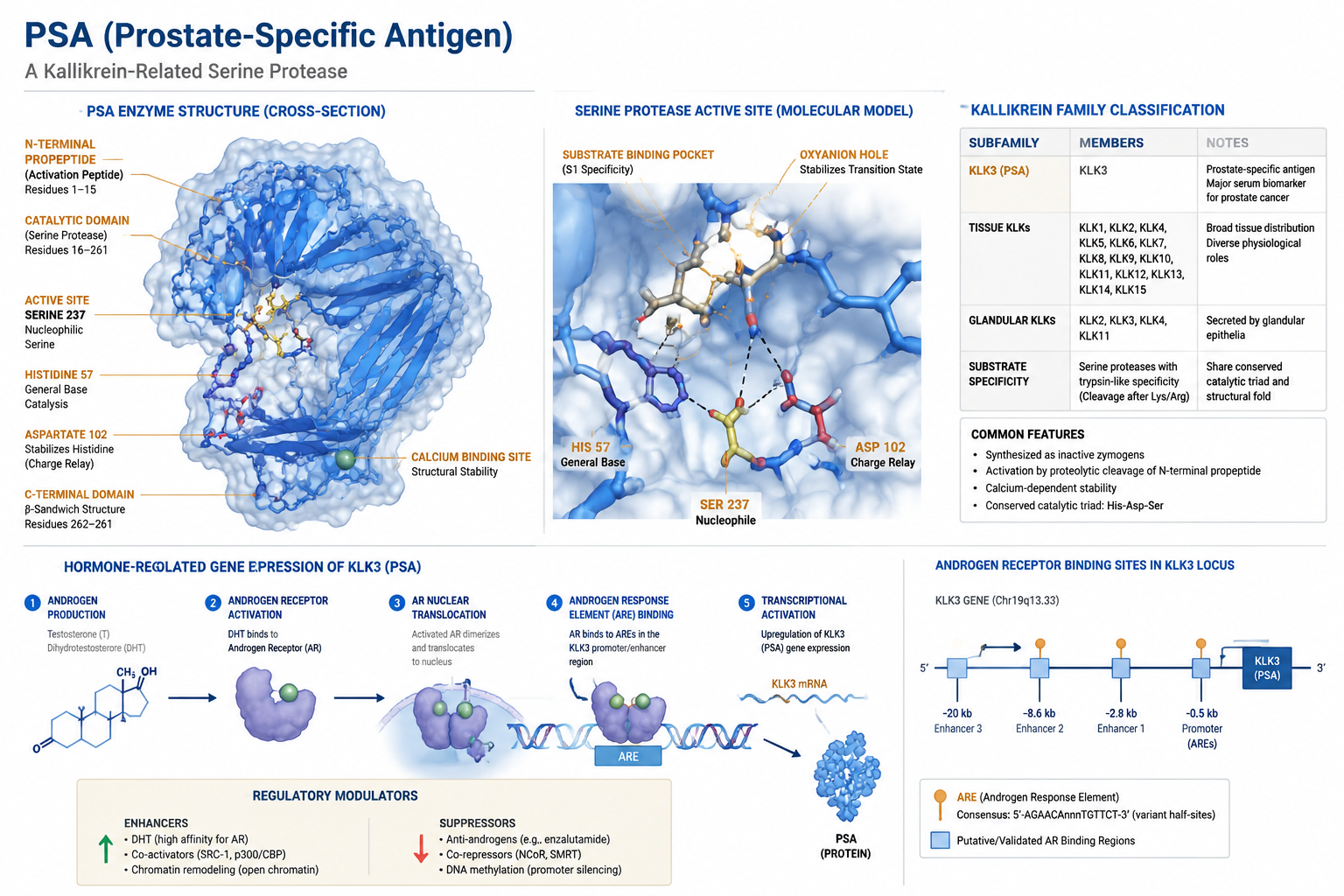
PSA, or Prostate-Specific Antigen, is a serine protease enzyme produced primarily by prostate epithelial cells. Its biological job is to liquefy seminal proteins — it does this by cleaving peptide bonds. That single function places PSA squarely within peptide biochemistry, not just urology.

Because PSA belongs to the human kallikrein family (specifically KLK3), it shares structural and functional characteristics with other kallikrein peptidases. Researchers studying peptide substrates, enzyme kinetics, or protease-activated drug delivery systems encounter PSA as a natural reference point.

"PSA is not merely a cancer screening number — it is an active peptide-processing enzyme whose substrate specificity has been mapped and exploited for targeted drug design."

This enzymatic identity explains why Prostate-Specific Antigen and Peptide Research topics appear together so frequently. Researchers have used phage display screening to identify peptides that bind specifically to PSA-low prostate cancer cells — work that is directly relevant to castration-resistant prostate cancer targeting. Separately, peptide-based inhibitors of PSA have been optimized as targeted imaging agents, and PSA-cleavable peptide substrates have been screened to develop albumin-binding anticancer prodrugs.

For researchers already exploring peptide mechanisms and research applications, PSA represents a well-characterized enzymatic model with translational implications.


What PSA Actually Is — And Why Peptide Research Overlaps

Hormone Regulation, Androgen Signaling, and PSA Expression

PSA expression is tightly regulated by androgen hormones, particularly testosterone and dihydrotestosterone (DHT), acting through androgen receptors. This hormonal control is why PSA levels drop when androgen deprivation therapy is used in prostate cancer management.

This connection to hormone signaling is a key reason Prostate-Specific Antigen and Peptide Research: Why PSA Appears in Hormone, Prostate, and Biomarker Content Strategy is such a relevant framework. Any content platform covering endocrine health, growth hormone peptides, or hormonal biomarkers will encounter PSA as a downstream androgen-regulated marker.

Key hormonal relationships involving PSA:

Factor Effect on PSA
Testosterone / DHT Upregulates PSA gene transcription
Androgen deprivation Suppresses PSA production
Estrogen (high levels) May reduce PSA expression
Inflammation Can elevate PSA independent of cancer

Research exploring gonadorelin and GnRH pulsatility is directly upstream of androgen signaling — and therefore upstream of PSA regulation. Similarly, content covering GLP-1 peptide research concepts or NAD research and metabolic peptides sits within the same broad endocrine-metabolic ecosystem that PSA inhabits.


Hormone Regulation, Androgen Signaling, and PSA Expression

Biomarker Evolution: Beyond Standard PSA Testing

Standard PSA immunoassays have well-documented limitations in specificity. Recent research has moved in two important directions: refining PSA measurement and identifying companion biomarkers.

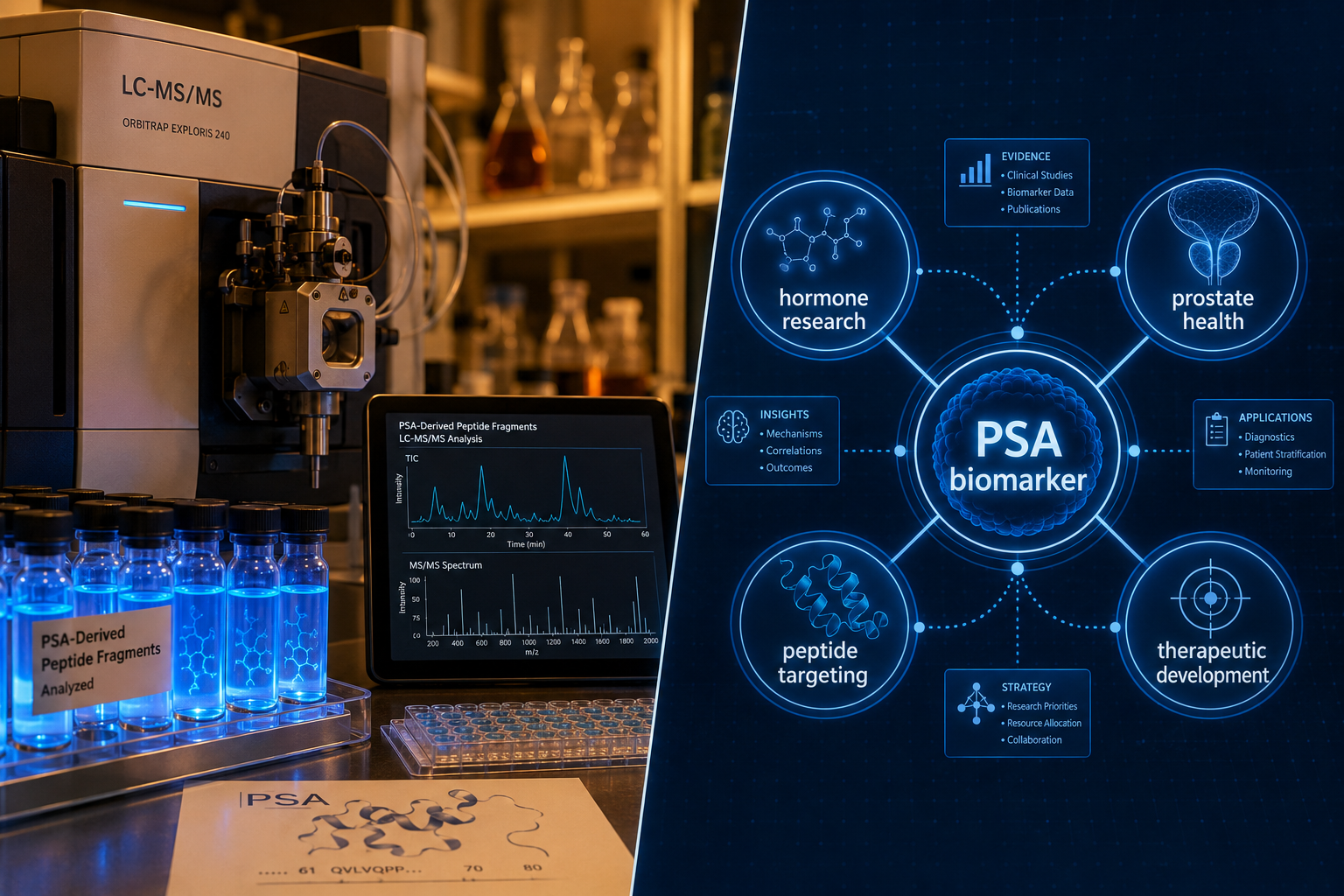
On the measurement side, mass spectrometry-based approaches now allow direct quantification of PSA-derived peptides, offering a path to harmonize inconsistencies across different immunoassay platforms. A first-in-class antibody targeting alpha-1,6-fucosylated PSA has also been developed to improve diagnostic specificity — a glycoproteomic refinement that sits at the intersection of peptide chemistry and clinical diagnostics.

On the companion biomarker side, Gastrin-Releasing Peptide Receptor (GRPR) has emerged as a significant parallel target. Studies evaluating GRPR alongside PSMA and Neurotensin Receptor 1 suggest that multi-receptor panels improve prostate cancer stratification compared to PSA alone. Research published in 2026 continues to explore theranostic targets beyond PSMA, reflecting a broader shift toward peptide-receptor-based diagnostics.

Ultrasensitive biosensors using octabranched peptide scaffolds and silver nanoparticles now enable PSA quantification at extremely low concentrations in human serum — a development with direct implications for early detection research.

For those tracking quality testing protocols in peptide research, this evolution in biomarker measurement methodology is directly applicable. Researchers interested in epithalon and aging biomarkers or GHK-Cu longevity research themes will recognize the same pattern: single-marker approaches give way to multi-pathway, peptide-informed frameworks.

PSA-Targeted Prodrugs and Peptide Delivery

One of the most compelling intersections between Prostate-Specific Antigen and Peptide Research: Why PSA Appears in Hormone, Prostate, and Biomarker Content Strategy is the field of PSA-activated prodrugs. Because PSA cleaves specific peptide sequences, researchers have engineered prodrugs that remain inactive until PSA cleaves a peptide linker — releasing the therapeutic payload selectively at the tumor site. Disulfide-constrained peptides that bind to the extracellular portion of PSMA (Prostate-Specific Membrane Antigen, a related but distinct target) have also been identified, further expanding the peptide-targeting toolkit.


Conclusion

PSA occupies a unique position in biomedical research — it is simultaneously a clinical screening marker, an androgen-regulated gene product, and an active peptide-cleaving enzyme. That triple identity explains precisely why Prostate-Specific Antigen and Peptide Research: Why PSA Appears in Hormone, Prostate, and Biomarker Content Strategy is a legitimate and valuable content framework, not keyword overlap.

Actionable next steps for researchers and content strategists:

  • Treat PSA as a peptide biochemistry topic, not just a urology metric, when building research content architecture.
  • Explore companion biomarkers (GRPR, Neurotensin Receptor 1) alongside PSA for a more complete prostate health research picture.
  • Follow developments in PSA-cleavable prodrug design as a model for targeted peptide delivery systems.
  • Use PSA's hormonal regulation as a bridge between endocrine peptide content and prostate health discussions.

Readers exploring broader peptide research themes can find relevant context in MOTS-C mitochondrial peptide research and IPA muscle and fat research themes — both of which operate within the same endocrine-metabolic landscape that PSA monitoring informs.

https://www.puretestedpeptides.com/wp-content/uploads/2026/06/Prostate-Specific-Antigen-and-Peptide-Research-Why-PSA-Appears-in-Hormone-Prostate-and-Biomarker-Content-Strategy.png 1024 1536 Pure Tested https://www.puretestedpeptides.com/wp-content/uploads/2026/01/buy-peptides-online.jpg Pure Tested2026-06-16 13:05:072026-07-20 15:02:58Prostate-Specific Antigen and Peptide Research: Why PSA Appears in Hormone, Prostate, and Biomarker Content Strategy
×

Helpful Links

  • My account
  • Cart
  • Checkout
  • Refund and Returns Policy
  • Privacy Policy
  • SMS Privacy Policy
  • Login
  • My Account
  • Logout

USA Made Lab Tested Peptides

All products are sold for research, laboratory, or analytical purposes only, and are not for human consumption


Pure Tested Peptides is a chemical supplier. Pure Tested Peptides is not a compounding / chemical compounding facility as defined under 503A of the Federal Food, Drug, and Cosmetic act. Pure Tested Peptides is not an outsourcing facility as defined under 503B of the Federal Food, Drug, and Cosmetic act.

The statements made within this website have not been evaluated by the US Food and Drug Administration. The products we offer are not intended to diagnose, treat, cure or prevent any disease.

Human/Animal Consumption Prohibited. Laboratory/In-Vitro Experimental Use Only

Scroll to top Scroll to top Scroll to top