

Tesofensine Research: Dopamine, Noradrenergic, and Appetite-Independent Endpoints
Roughly one in eight adults worldwide now lives with obesity, yet most approved pharmacotherapies still rely on a single mechanism, appetite suppression, as their primary endpoint. Tesofensine research challenges that framework. By blocking all three monoamine transporters simultaneously, tesofensine produces measurable effects on locomotor activity, reward behavior, resting energy expenditure, and cognitive function that exist independently of how much food a subject consumes. Understanding Tesofensine Research: Dopamine, Noradrenergic, and Appetite-Independent Endpoints means separating these pharmacological signals from the simpler story of "eating less and losing weight."
Key Takeaways
- Tesofensine inhibits dopamine (DAT), norepinephrine (NET), and serotonin (SERT) transporters simultaneously, producing effects that extend well beyond appetite suppression.
- Preclinical data show GABAergic pathway involvement and taste-independence, pointing to appetite-independent mechanisms of action.
- The TIPO-1 Phase 2 trial demonstrated meaningful weight loss in 203 adults over 24 weeks, but cardiovascular risk remains the central safety concern.
- Tesomet, a fixed-dose combination of tesofensine and metoprolol, is designed to preserve efficacy while reducing sympathetic side effects.
- Appetite-independent endpoints, including resting energy expenditure and cognition, remain secondary research targets with significant scientific value.
The Triple Monoamine Mechanism Behind Tesofensine
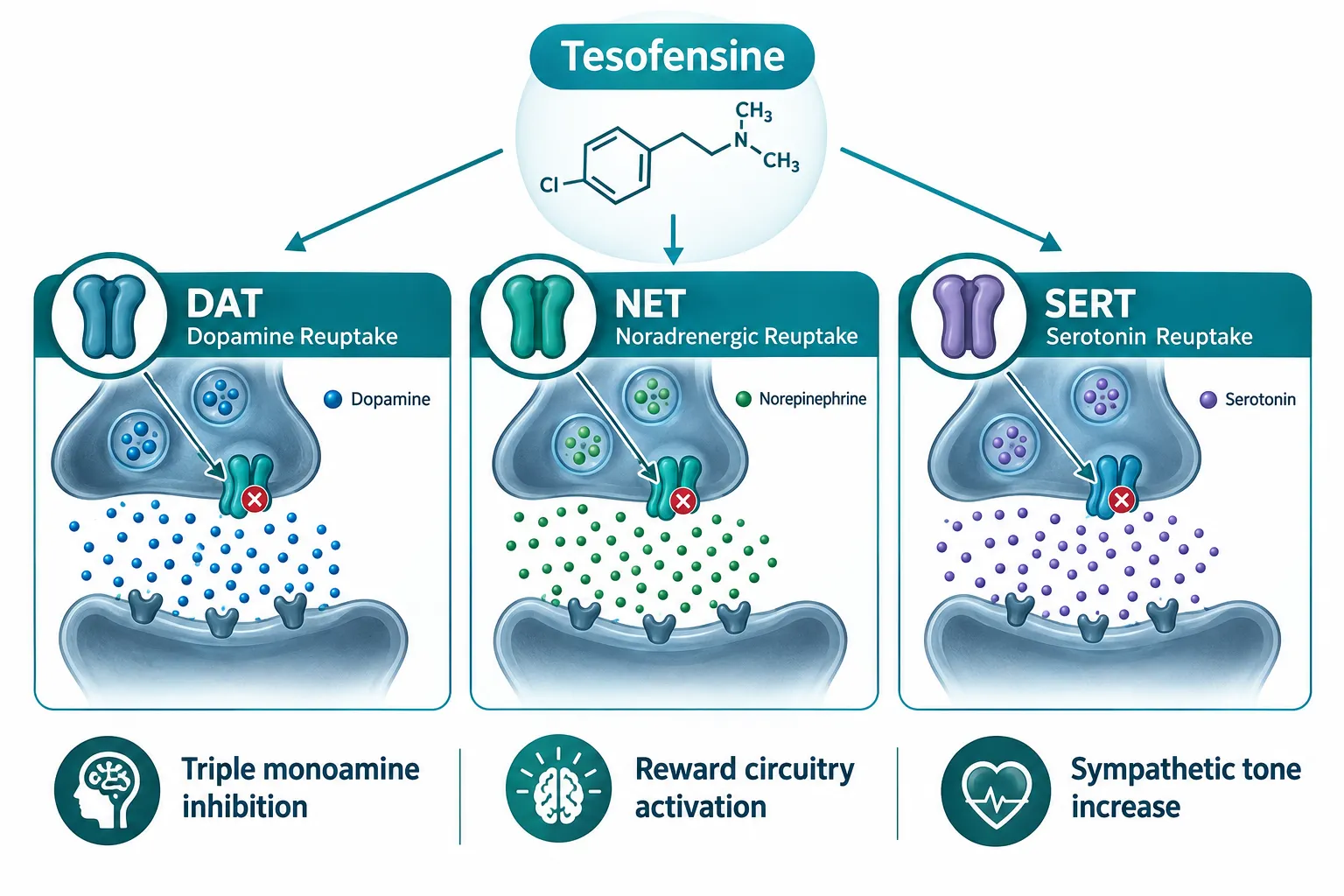
Tesofensine is a triple monoamine reuptake inhibitor, meaning it blocks DAT, NET, and SERT with high potency. This pharmacological profile is distinct from most weight-loss agents, which tend to favor one transporter over others. By preventing the reuptake of dopamine, norepinephrine, and serotonin simultaneously, tesofensine elevates all three neurotransmitters in the synaptic cleft.
The dopaminergic component is particularly important. Dopamine acts on mesolimbic reward circuits, influencing not just hunger but also motivation, locomotor drive, and reward salience. In preclinical models, dopamine receptor blockade eliminates much of tesofensine's appetite-suppressing effect, confirming that the dopamine pathway is mechanistically central rather than incidental.
The noradrenergic (alpha-1 adrenergic) component contributes to both appetite suppression and the drug's cardiovascular footprint. Norepinephrine increases heart rate and blood pressure, a pharmacological trade-off that has shaped the entire clinical development strategy around tesofensine.
The serotonergic component is comparatively modest but adds to the overall satiety signal, consistent with the mechanism seen in other SERT-targeting agents.
"The value of tesofensine is not just calorie restriction, it is the breadth of central nervous system engagement that makes it scientifically interesting and clinically complicated."
For researchers comparing metabolic peptides, the distinction between appetite-driven and non-appetite-driven weight loss is also relevant to tools like AOD 9604 sale research method notes, storage, and traceability, where fat-metabolism pathways operate through entirely different mechanisms.
Appetite-Independent Endpoints in Tesofensine Research
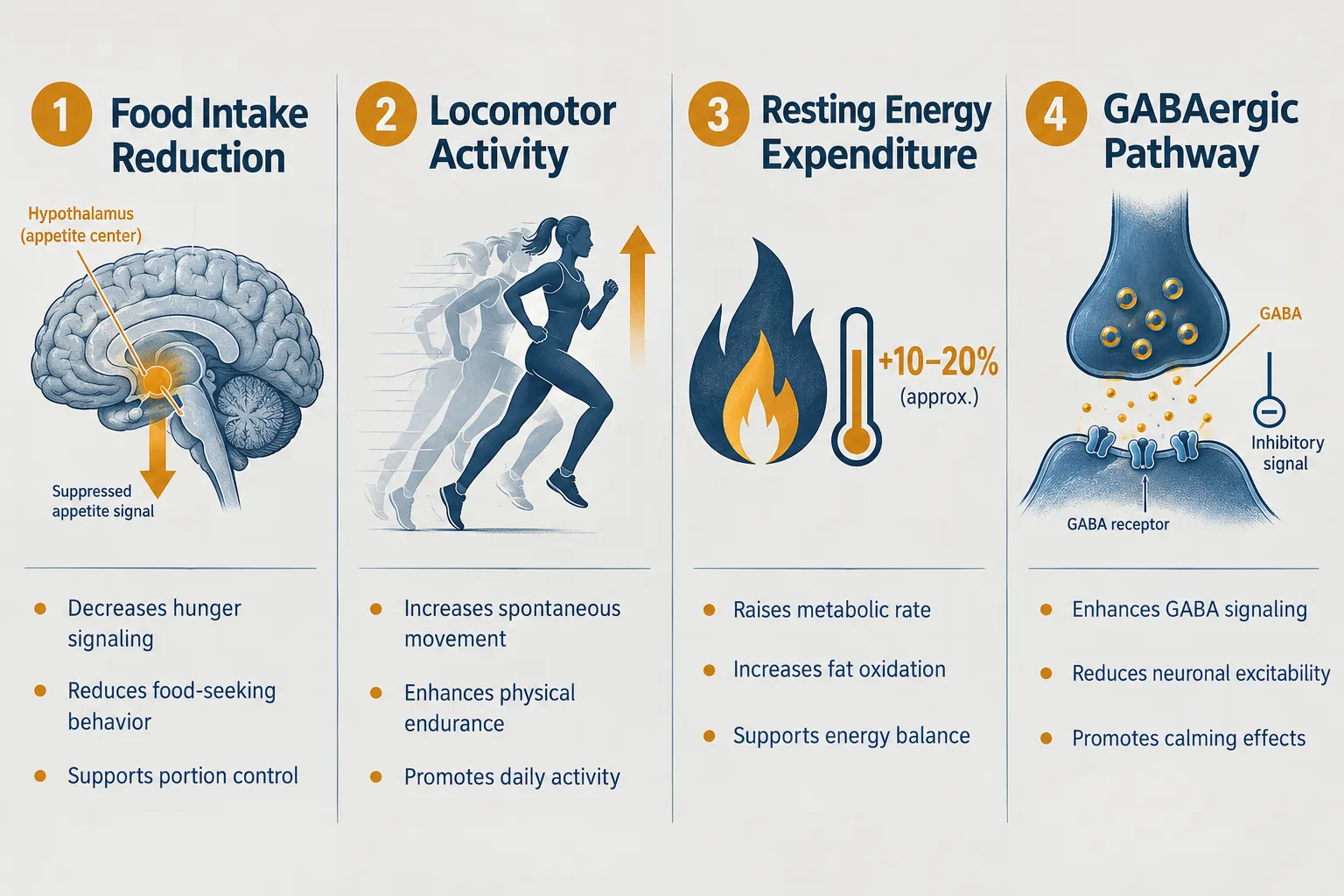
The most scientifically underreported aspect of Tesofensine Research: Dopamine, Noradrenergic, and Appetite-Independent Endpoints is the set of outcomes that persist even when food intake is held constant. These include:
| Endpoint | Mechanism Involved | Research Status |
|---|---|---|
| Resting Energy Expenditure | Sympathomimetic / thermogenic | Secondary in clinical trials |
| Locomotor Activity | Dopaminergic / reward activation | Confirmed in preclinical models |
| Reward Behavior | Mesolimbic dopamine | Preclinical; addiction-risk flag |
| Cognitive Function | Noradrenergic / prefrontal cortex | Early secondary endpoint |
| Sleep Architecture | Monoamine-wide | Preclinical observation |
GABAergic pathway data from recent preclinical studies add another layer. Tesofensine appears to modulate inhibitory GABAergic tone in hypothalamic circuits, which may contribute to appetite suppression independently of taste perception. Taste-independence data further suggest that the drug reduces food reward value rather than simply making food less accessible.
This matters for endpoint design. If a clinical trial measures only body weight and caloric intake, it misses the locomotor, thermogenic, and cognitive signals that distinguish tesofensine from a simple anorectic agent.
Researchers interested in CNS-active peptides with overlapping noradrenergic or dopaminergic relevance may also find value in reviewing Semax peptide research, which touches on prefrontal noradrenergic modulation through a different molecular route.
For those exploring the broader landscape of metabolic peptide research, what is the strongest peptide for weight loss provides a useful comparative framework across mechanisms.
Clinical Evidence, Safety Strategies, and the Road Ahead

The TIPO-1 Phase 2 trial enrolled 203 adults with obesity over 24 weeks and remains the most cited clinical dataset for tesofensine. Participants receiving 0.5 mg daily achieved approximately 10% body weight reduction, a result that outperformed most single-mechanism comparators at the time. The dose-response relationship was clear, but so was the cardiovascular signal: elevated heart rate and blood pressure tracked closely with dose escalation.
A Phase 3 dataset from Mexico showed strong weight-loss outcomes but has faced scrutiny over transparency, and as of 2026, tesofensine has not received regulatory approval in any major market for general obesity.
Tesomet: Separating Efficacy from Cardiovascular Risk
The most strategically significant development in Tesofensine Research: Dopamine, Noradrenergic, and Appetite-Independent Endpoints is Tesomet, a fixed-dose combination of tesofensine and metoprolol (a beta-blocker). The rationale is straightforward:
- Tesofensine drives weight loss and raises sympathetic tone.
- Metoprolol blunts the heart rate and blood pressure increases.
- The appetite-suppressing and energy-expenditure effects are preserved.
Tesomet has been studied specifically in hypothalamic obesity, a condition caused by damage to the hypothalamus (often from tumor surgery) that renders standard weight-loss interventions largely ineffective. This niche indication may represent the clearest regulatory path forward.
Expert commentary in 2026 consistently applies what researchers call a "big asterisk" to tesofensine's promise: the stimulant-like and cardiovascular risks require active pharmacological management, not just monitoring.
For context on how growth hormone-releasing peptides approach metabolic endpoints through a different axis, tesa benefits and tesa vs sermorelin offer relevant comparative reading. Researchers working on energy metabolism more broadly may also consult SS-31 mitochondrial research for mechanistically distinct approaches to cellular energy regulation.
Conclusion
Tesofensine's scientific value lies precisely in what makes it clinically complicated. Its triple monoamine inhibition profile generates measurable effects on locomotor activity, resting energy expenditure, reward behavior, and cognition, endpoints that appetite-only frameworks cannot capture. The TIPO-1 trial confirmed meaningful weight loss, and Tesomet represents a rational strategy for managing the sympathetic side effects that have stalled broader approval.
Actionable next steps for researchers:
- Design preclinical protocols that include locomotor, thermogenic, and cognitive endpoints alongside food intake measures.
- Evaluate GABAergic and taste-independence data as potential biomarkers for appetite-independent efficacy.
- Track the Tesomet hypothalamic obesity program as the most likely near-term approval pathway.
- Apply the dopamine/noradrenergic separation framework when comparing tesofensine to other monoamine-active compounds in the pipeline.
The compound remains a niche, high-potency option, but one whose full pharmacological story has not yet been told in a single approved indication.