

Tesofensine vs GLP-3 Retatrutide: Which Appetite-Modulating Pathways Each Answer in Metabolic Research Design
Only about 2% of adults with obesity achieve sustained weight loss through lifestyle intervention alone, a statistic that continues to drive demand for more precise pharmacological tools in metabolic research. The comparison of Tesofensine vs GLP-3 Retatrutide: Which Appetite-Modulating Pathways Each Answer in Metabolic Research Design is now a central question for labs building rigorous obesity and appetite studies. These two compounds operate through fundamentally different biological mechanisms, making each one better suited to specific experimental endpoints, study populations, and research questions.
Key Takeaways
- Tesofensine is a noradrenergic/dopaminergic/serotonergic reuptake inhibitor that primarily modulates central appetite circuits.
- Retatrutide (informally called GLP-3) is a triple incretin agonist acting on GLP-1R, GIPR, and glucagon receptors simultaneously.
- Each compound answers different mechanistic questions, CNS-driven satiety versus peripheral metabolic signaling.
- Study population selection, primary endpoints, and safety monitoring differ significantly between the two.
- Researchers should match compound choice to the specific appetite pathway under investigation.
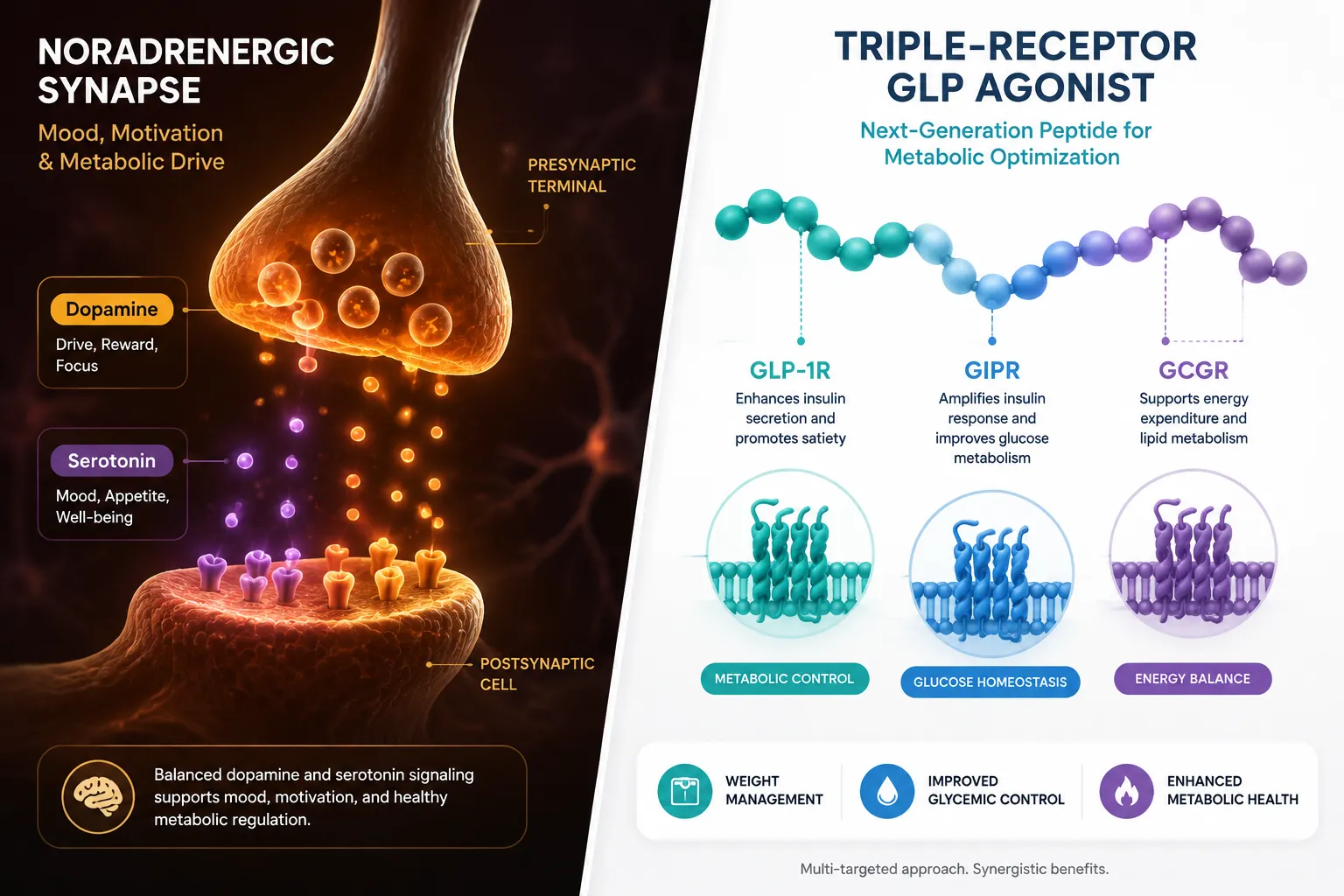
Mechanistic Differences at the Core of Tesofensine vs GLP-3 Retatrutide Research
Understanding the Tesofensine vs GLP-3 Retatrutide: Which Appetite-Modulating Pathways Each Answer in Metabolic Research Design question starts with receptor-level biology.
How Tesofensine Works
Tesofensine is a triple monoamine reuptake inhibitor. It blocks the reuptake of:
- Dopamine, reinforcing satiety signaling and reducing food reward behavior
- Norepinephrine, activating sympathetic pathways that suppress appetite
- Serotonin, modulating mood-linked eating and hypothalamic satiety centers
This CNS-centric mechanism makes tesofensine particularly relevant for studies examining hedonic eating, reward-driven food intake, and hypothalamic appetite regulation. Its action is upstream of peripheral hormones, targeting the brain's own appetite control architecture.
"Tesofensine's value in research lies in isolating the central nervous system's contribution to caloric intake reduction, independent of gut hormone signaling."
Relevant to labs studying neurochemical appetite control, tesofensine also shows interaction with MC4R signaling pathways, an important secondary endpoint in hypothalamic obesity models.
How Retatrutide (GLP-3) Works
Retatrutide is a triple incretin receptor agonist, simultaneously activating:
| Receptor | Primary Role |
|---|---|
| GLP-1R | Insulin secretion, gastric emptying delay, satiety |
| GIPR | Insulin potentiation, adipose tissue signaling |
| Glucagon receptor | Energy expenditure, hepatic glucose output |
This peripheral-dominant mechanism makes retatrutide ideal for studying metabolic flexibility, insulin sensitivity, and multi-hormonal appetite suppression. Researchers exploring the GLP-3 Retatrutide compound profile will find its multi-receptor activity creates a broader metabolic footprint than single-agonist GLP-1 analogs.
For labs already working with GLP-1 analogs available in the GLP-1 for sale research category, retatrutide represents a logical mechanistic expansion.

Matching Compound to Endpoint: Practical Research Design Considerations
The practical side of Tesofensine vs GLP-3 Retatrutide: Which Appetite-Modulating Pathways Each Answer in Metabolic Research Design comes down to four key design variables.
1. Primary Endpoint Selection
Tesofensine is best suited for endpoints including:
- Caloric intake reduction measured via food diary or indirect calorimetry
- Appetite visual analog scale (VAS) scores
- Neurochemical biomarkers (dopamine metabolites, serotonin turnover)
- Behavioral feeding frequency studies
Retatrutide is better aligned with:
- Body weight and BMI reduction over extended timeframes
- Fasting insulin and HOMA-IR scores
- Lipid panel changes (LDL, triglycerides)
- Glucagon suppression and hepatic fat reduction
2. Study Population Considerations
Tesofensine research typically enrolls subjects with behavioral or neurological contributors to obesity, including binge eating patterns or reward-pathway dysregulation. Its cardiovascular stimulant properties (from norepinephrine reuptake inhibition) require careful screening for hypertension and cardiac history.
Retatrutide studies are more appropriate for subjects with comorbid metabolic syndrome, type 2 diabetes risk, or significant adiposity where peripheral hormonal dysregulation is the primary driver. Labs comparing it to other incretin-based tools may also find the ipamorelin vs tesa comparison useful for contextualizing growth hormone axis interactions.
3. Monitoring Requirements
Both compounds require different safety monitoring frameworks:
- Tesofensine: Heart rate, blood pressure, mood/anxiety scales, sleep quality
- Retatrutide: Nausea/GI tolerability, pancreatic enzyme levels, thyroid screening
4. Combination Research Potential
Some advanced metabolic protocols explore CNS-plus-peripheral appetite suppression. Labs interested in stacking approaches may reference CJC-1295/Ipamorelin research frameworks for precedent on multi-compound metabolic study design. Similarly, BDNF induction research offers relevant context for understanding how central appetite circuits interact with peripheral metabolic signals.

Choosing the Right Tool for Specific Metabolic Research Questions
The decision between these two compounds is not about which is "better", it is about which pathway the research question demands.
Choose tesofensine when the study asks:
- How does central monoamine tone influence caloric intake?
- What is the neurochemical basis of appetite suppression in reward-driven obesity?
- How does CNS satiety signaling interact with behavioral eating patterns?
Choose retatrutide when the study asks:
- How does simultaneous multi-incretin receptor activation affect metabolic homeostasis?
- What is the relative contribution of GLP-1R vs GIPR vs glucagon receptor to weight loss magnitude?
- How does peripheral hormonal signaling reduce adiposity in metabolically complex subjects?
For labs sourcing research-grade peptides, exploring the GLP-1 peptide for sale options alongside dedicated retatrutide compounds allows direct mechanistic comparison within the same study design framework.
Conclusion
The Tesofensine vs GLP-3 Retatrutide: Which Appetite-Modulating Pathways Each Answer in Metabolic Research Design question has a clear answer: these compounds are complementary tools, not competing ones. Tesofensine isolates the CNS monoamine contribution to appetite suppression, while retatrutide maps the peripheral incretin axis. In 2026, metabolic research teams gain the most value by aligning compound selection to their specific mechanistic hypothesis before designing the study.
Actionable next steps for research teams:
- Define whether the primary appetite pathway under study is central (CNS) or peripheral (incretin/hormonal).
- Screen study populations for compound-specific contraindications before enrollment.
- Build monitoring protocols that match each compound's known safety profile.
- Consider whether a dual-pathway design could answer broader mechanistic questions with appropriate controls.
- Source compounds from verified, purity-tested suppliers to ensure data integrity.