Call or Text 727-513-9780
  • Shopping Cart Shopping Cart
    0Shopping Cart
Pure Tested Peptides | America's most trusted Peptides for sale online
  • Peptides for sale
    • Oral Peptides for sale
      • Peptide Capsules for sale
      • BPC 157 Capsules 1000mcg
      • SLU-PP-332 Capsules | 1000 mcg
      • 5-Amino-1MQ 50mg Capsules
      • Tesofensine 500mcg
    • All Peptides for sale
    • Peptide Sprays
      • BPC 157 Nasal Spray Kit
      • BPC-157 TB500 Nasal Spray Kit
      • Semax Nasal Spray 10mg
      • Selank – Nasal Spray Kit – 10mg
      • Epithalon 50MG Nasal Spray Kit
      • Ipamorelin 10mg Nasal Spray
      • Klow Nasal Spray (BPC-157 + TB-500 + GHK-Cu + KPV) | 80mg
      • Hulk Nasal Spray Tesa / Ipa Blend 6/3 MG
      • Klow Nasal Spray
      • NAD + 500 mg Nasal Spray
      • PT-141 Nasal Spray Kit
    • GHRH Peptides
      • Ipa Peptides
      • CJC-1295 Peptides
        • CJC-1295 with DAC 5 mg
        • CJC-1295 without DAC 5 mg
        • CJC-1295 Ipa 10mg
      • Tesa Peptides
        • Tesa Peptide
        • Tesa 20 mg
    • GHK-Cu Peptides
      • All GHK-Cu Peptides
      • GHK-Cu 100mg
      • KLOW Peptide Blend – Buy KLOW blend online
    • BPC Peptides
      • All BPC Peptides
      • BPC-157
      • BPC-157 TB-500
      • BPC 157 capsules 1000mcg
    • SLU-PP-332 Peptides
      • All SLU-PP-332 Peptides
      • SLU-PP-332 5mg
    • GLP3 Peptides
    • PT-141 Peptides
      • PT-141 Peptides for sale
      • PT-141 10mg
      • PT-141 Nasal Spray
    • CAG Peptides
      • Lipo-C Peptide Blend
      • CAG 5mg
      • CAG 10mg
    • MOTS-C Peptides
      • MOTS-C Peptides for sale
      • MOTS-c peptide
      • MOTS-c 10mg *6 pack*
    • 5 Amino 1MQ Peptides
      • 5 Amino 1MQ Peptides for sale
      • 5-Amino-1MQ 50mg Capsules
      • 5-Amino-1MQ 5mg
    • Epithalon Peptides
      • Epithalon Peptides for sale
      • Epithalon 10mg
      • Epithalon 50mg
  • Shop
    • GLPs
      • 5-Amino-1MQ 50mg Capsules
      • 5-Amino-1MQ 5mg
      • L-Carnitine 500mg/ml
      • Tesofensine 500mcg
      • SLU-PP-332 5mg
      • MOTS-c 10mg *6 pack*
    • Epithalon & BPC Peptides
      • Epithalon 10mg
      • Epithalon 50mg
      • BPC-157
      • BPC 157 capsules 1000mcg
      • BPC-157 TB-500
      • BPC-157 TB500 Nasal Spray Kit
      • BPC 157 Nasal Spray Kit
    • BPC TB-500 & NAD+ Peptides
      • NAD+ 500 mg
      • KLOW Peptide Blend – Buy KLOW blend online
      • GLOW Peptide Blend
      • TB 500 5mg
      • BPC 157 capsules 1000mcg – Supplement
      • BPC 157 Nasal Spray Kit
      • BPC-157
      • BPC-157 TB500 Nasal Spray Kit
      • BPC-157 TB-500
      • BPC 157 capsules 1000mcg
    • LL-37 Peptide
      • LL-37 10 mg
    • MOTS-C & Selank
      • MOTS-c peptide
      • Selank 10mg
    • GHK Peptides
      • GHK-Cu 100mg
      • GLOW Peptide Blend
      • KLOW Peptide Blend – Buy KLOW blend online
  • COAs
  • Wholesale
    • Wholesale Peptides for sale
  • PTP FAQ
  • Affiliates
    • Selank Peptide: Advanced Pharmacological Mechanisms Underlying Its Anxiolytic and Nootropic Effects in Research
      • 5-Amino-1MQ Peptide: Detailed Mechanisms of NNMT Inhibition and Its Impact on Cellular Metabolism Research
        • MOTS-C Peptide: Unraveling Its Role in Mitochondrial Dynamics and Energy Metabolism Research
          • Epithalon Peptide and Telomerase Regulation: Investigating Its Impact on Cellular Senescence and Lifespan Research Models
            • GLP2-T vs GLP2 Tirz Peptide: Understanding the Naming, Mechanistic Nuances, and Research Implications for Gut Health
      • Peptides and Polypeptides in Modern Pharmacology: What Research on Metoprolol, Prednisone, and Amlodipine Reveals
        • Polypeptide Peptides vs NSAIDs: What Naproxen and Diclofenac Teach Tissue-Repair Researchers About BPC‑157 and TB‑500
          • Peptides and Polypeptides in Endocrine Pharmacology: How GLP-1, GLP-2, and GLP-3 Retatrutide Differ From Classic Drugs Like Prednisone and Amlodipine
          • 5‑Amino‑1MQ Peptide and NNMT Inhibition: How It Compares With Statins Like Atorvastatin in Adipose and Lipid Metabolism Research
      • Enclomiphene, Estrogen Receptor Signaling, and Luteinizing Phase Biology: What Hormone Researchers Should Measure
        • Mesenchymal Stem Cells, BPC‑157, and GHK‑Cu: How Tissue Repair Peptides Compare With Classic NSAIDs Like Naproxen in Injury Models
          • Peptide Calculator Use Cases Beyond Growth Hormone: Working Through GLP‑3 Retatrutide, MOTS‑c, and BPC‑157 Research Dosing
        • Polypeptide Peptides in Endocrine and Metabolic Pharmacology: Lessons From Amlodipine, Prednisone, and Metoprolol
        • Peptides Calculator for Advanced Blends: Worked Examples for Tesamorelin, CJC‑1295, and Ipamorelin Stacks
          • Peptides and Polypeptides in Human Physiology: How Molecular Size Shapes Research Applications
            • Selank Peptide: Advanced Pharmacological Mechanisms Underlying Its Anxiolytic and Nootropic Effects in Research
          • 5-Amino-1MQ Peptide: Detailed Mechanisms of NNMT Inhibition and Its Impact on Cellular Metabolism Research
            • MOTS-C Peptide: Unraveling Its Role in Mitochondrial Dynamics and Energy Metabolism Research
              • Epithalon Peptide and Telomerase Regulation: Investigating Its Impact on Cellular Senescence and Lifespan Research Models
                • GLP2-T vs GLP2 Tirz Peptide: Understanding the Naming, Mechanistic Nuances, and Research Implications for Gut Health
                  • Peptides and Polypeptides in Endocrine Pharmacology: How GLP-1, GLP-2, and GLP-3 Retatrutide Differ From Classic Drugs Like Prednisone and Amlodipine
                    • Polypeptide Peptides vs NSAIDs: What Naproxen and Diclofenac Teach Tissue-Repair Researchers About BPC‑157 and TB‑500
                      • Peptides and Polypeptides in Modern Pharmacology: What Research on Metoprolol, Prednisone, and Amlodipine Reveals
                        • 5‑Amino‑1MQ Peptide and NNMT Inhibition: How It Compares With Statins Like Atorvastatin in Adipose and Lipid Metabolism Research
                        • Enclomiphene, Estrogen Receptor Signaling, and Luteinizing Phase Biology: What Hormone Researchers Should Measure
                        • Mesenchymal Stem Cells, BPC‑157, and GHK‑Cu: How Tissue Repair Peptides Compare With Classic NSAIDs Like Naproxen in Injury Models
                        • Peptide Calculator Use Cases Beyond Growth Hormone: Working Through GLP‑3 Retatrutide, MOTS‑c, and BPC‑157 Research Dosing
                        • Polypeptide Peptides in Endocrine and Metabolic Pharmacology: Lessons From Amlodipine, Prednisone, and Metoprolol
                        • Peptides Calculator for Advanced Blends: Worked Examples for Tesamorelin, CJC‑1295, and Ipamorelin Stacks
                        • Peptides and Polypeptides in Human Physiology: How Molecular Size Shapes Research Applications
                        • Selank Peptide: Advanced Pharmacological Mechanisms Underlying Its Anxiolytic and Nootropic Effects in Research
                        • MOTS-C Peptide: Unraveling Its Role in Mitochondrial Dynamics and Energy Metabolism Research
                        • Peptides and Polypeptides in Modern Pharmacology: What Research on Metoprolol, Prednisone, and Amlodipine Reveals
                        • Peptides and Polypeptides in Endocrine Pharmacology: How GLP-1, GLP-2, and GLP-3 Retatrutide Differ From Classic Drugs Like Prednisone and Amlodipine
                        • 5-Amino-1MQ Peptide: Detailed Mechanisms of NNMT Inhibition and Its Impact on Cellular Metabolism Research
                        • Mesenchymal Stem Cells, BPC‑157, and GHK‑Cu: How Tissue Repair Peptides Compare With Classic NSAIDs Like Naproxen in Injury Models
                        • Peptide Calculator Use Cases Beyond Growth Hormone: Working Through GLP‑3 Retatrutide, MOTS‑c, and BPC‑157 Research Dosing
                        • GLP2-T vs GLP2 Tirz Peptide: Understanding the Naming, Mechanistic Nuances, and Research Implications for Gut Health
                        • Polypeptide Peptides in Endocrine and Metabolic Pharmacology: Lessons From Amlodipine, Prednisone, and Metoprolol
                        • Polypeptide Peptides vs NSAIDs: What Naproxen and Diclofenac Teach Tissue-Repair Researchers About BPC‑157 and TB‑500
                        • Peptides and Polypeptides in Human Physiology: How Molecular Size Shapes Research Applications
                        • Peptides Calculator for Advanced Blends: Worked Examples for Tesamorelin, CJC‑1295, and Ipamorelin Stacks
                        • 5‑Amino‑1MQ Peptide and NNMT Inhibition: How It Compares With Statins Like Atorvastatin in Adipose and Lipid Metabolism Research
                        • Enclomiphene, Estrogen Receptor Signaling, and Luteinizing Phase Biology: What Hormone Researchers Should Measure
                        • Epithalon Peptide and Telomerase Regulation: Investigating Its Impact on Cellular Senescence and Lifespan Research Models
                        • Best research protocol Klow blend
                        • best time to take BPC-157
                        • best time to take DSIP (Delta Sleep Inducing Peptide)
                        • best time to take CJC-1295
                        • best time to take AOD-9604
                        • best time to take Follistatin 344
                        • best time to take Ipamorelin
                        • best time to take MK-677 (Ibutamoren)
                        • best time to take Ligandrol (LGD-4033) — research compound
                        • best time to take Ostarine (MK-2866) — research compound
                        • best time to take GHK-CU
                        • best time to take TB-500
                        • best time to take MOTS-c
                        • best time to take Semax
                        • best time to take RAD-140 (Testolone) — research compound
                        • best time to take Thymosin Alpha-1
                        • best time to take PEG-MGF
                        • Biolife Plasma, Octapharma Plasma, and Research Peptides: How Plasma Donation Labs Differ From Peptide Suppliers
                        • best time to take YK-11 — research compound
                        • best time to take PT-141 (Bremelanotide)
                        • Best research protocol Klow blend
                        • 5-Amino-1MQ and MOTS-C Synergy: Metabolic Signaling, Mitochondria, and Research Design
                        • BPC-157 and TB-500: Investigating Their Combined Effects on Angiogenesis and Cellular Migration in Tissue Repair Models
                        • BPC-157 Peptide: Gut Barrier Function, Inflammation, and Tissue-Recovery Research
                        • 5‑Amino‑1MQ and MOTS‑c Synergy in Metabolic Research: Designing NNMT and Mitochondrial Biogenesis Stacks
                        • CJC-1295 with DAC vs. Without DAC: Half-Life, Release Kinetics, and Research Implications
                        • CJC‑1295 with DAC vs. Without DAC: Expanding on Half‑Life Differences Using Tesamorelin and Ipamorelin Blend Case Studies
                        • Collagen Biology and Copper‑Binding Peptides: How GHK‑Cu, Glow Blend, and Klow Blend Interact with Skin and Connective Tissue
                        • Collagen Biology and Regenerative Peptides: How GHK‑Cu, Glow Blend, and Klow Blend Affect Extracellular Matrix Research
                    • DNA, Telomeres, and Longevity Peptides: Positioning Epithalon and MOTS‑c in Genetic Aging Research
                      • Enclomiphene Citrate: serm Mechanism, Testosterone Research, and Stack Compatibility
                        • Enclomiphene vs Enclomiphene Citrate: Formulation, Bioavailability, and Research Distinctions
                        • Epithalon Peptide Research: Telomerase Activation, Aging, and Pineal Gland Function
                        • Estrogen Receptor Signaling and Enclomiphene: How Selective Modulators Compare with Classic Polypeptide Hormones
                        • GHK-Cu Peptide: Advanced Mechanisms in Extracellular Matrix Remodeling and Wound Healing Research
                        • GHK-Cu Peptide: Collagen Synthesis, Wound Repair, and Skin-Barrier Research Models
                        • GLP-1 vs GLP-3 vs GLP-2: Peptide Classification and Research Applications
                        • GLP-2 Peptide Research Guide: Gut Barrier Function, Nutrient Absorption, and Intestinal Recovery Models
                        • GLP-3 Retatrutide vs. GLP-1 Drugs: What Triple-Agonist Biology Changes in Research Models
                        • Ipamorelin and Tesamorelin Combination: Synergistic GH Secretagogue Research and Dosing Protocols
                        • GLP2 Tirz Peptide: What It Is, Why the Name Exists, and How Researchers Should Interpret It
                        • Klow Blend Peptide Nasal Spray: What the Formulation Is Trying to Do in Cognitive Research
                        • Mitochondria, NNMT Inhibition, and Peptide Modulators: Where MOTS‑c and 5‑Amino‑1MQ Fit in Cellular Energy Research
                        • MOTS-c Peptide: Mitochondrial Function, Energy Metabolism, and What Researchers Measure
                        • MOTS-c vs. 5-Amino-1MQ: Which Metabolic Research Questions Each Compound Actually Answers
                        • Nasal Spray Peptides: Bioavailability, Administration, and Semax/Selank Research Applications
                        • PT-141 Peptide Research: Mechanism of Action and Melanocortin Receptor Signaling
                        • Retatrutide for Research: Mechanism, Structure, and GLP-1/GLP-3 Dual Action
                        • Retatrutide for Obesity and Type 2 Diabetes: What the Latest Trial Data Suggest
                        • Tesofensine Peptide Research: Mechanism, Appetite Suppression, and Neuropeptide Y Pathways
  • Contact
    • Contact Customer Service
    • Text Customer Support
  • About US
  • Shop all peptides
  • Affiliate Program
    • Affiliate Signup
  • Login / Register Login / Register Page Link Login / Register Page Link
  • Click to open the search input field Click to open the search input field Search
  • Menu Menu

Tag Archive for: behavioral endpoints

Selank vs Semax Peptide Research: Choosing Behavioral, Inflammatory, and Neurotrophic Readouts

Selank vs Semax Peptide Research: Choosing Behavioral, Inflammatory, and Neurotrophic Readouts

October 11, 2026/0 Comments/in Uncategorized/by

Two neuropeptides derived from endogenous sequences, one from tuftsin, one from ACTH, have generated a steady stream of preclinical and limited clinical data for nearly three decades, yet most researchers still treat them as interchangeable nootropics. That conflation creates real study-design problems. Selank vs Semax peptide research: choosing behavioral, inflammatory, and neurotrophic readouts is not a branding question; it is a methodological one that determines which endpoints are valid, which confounders must be controlled, and whether a research kit should contain one compound or both.

Key Takeaways

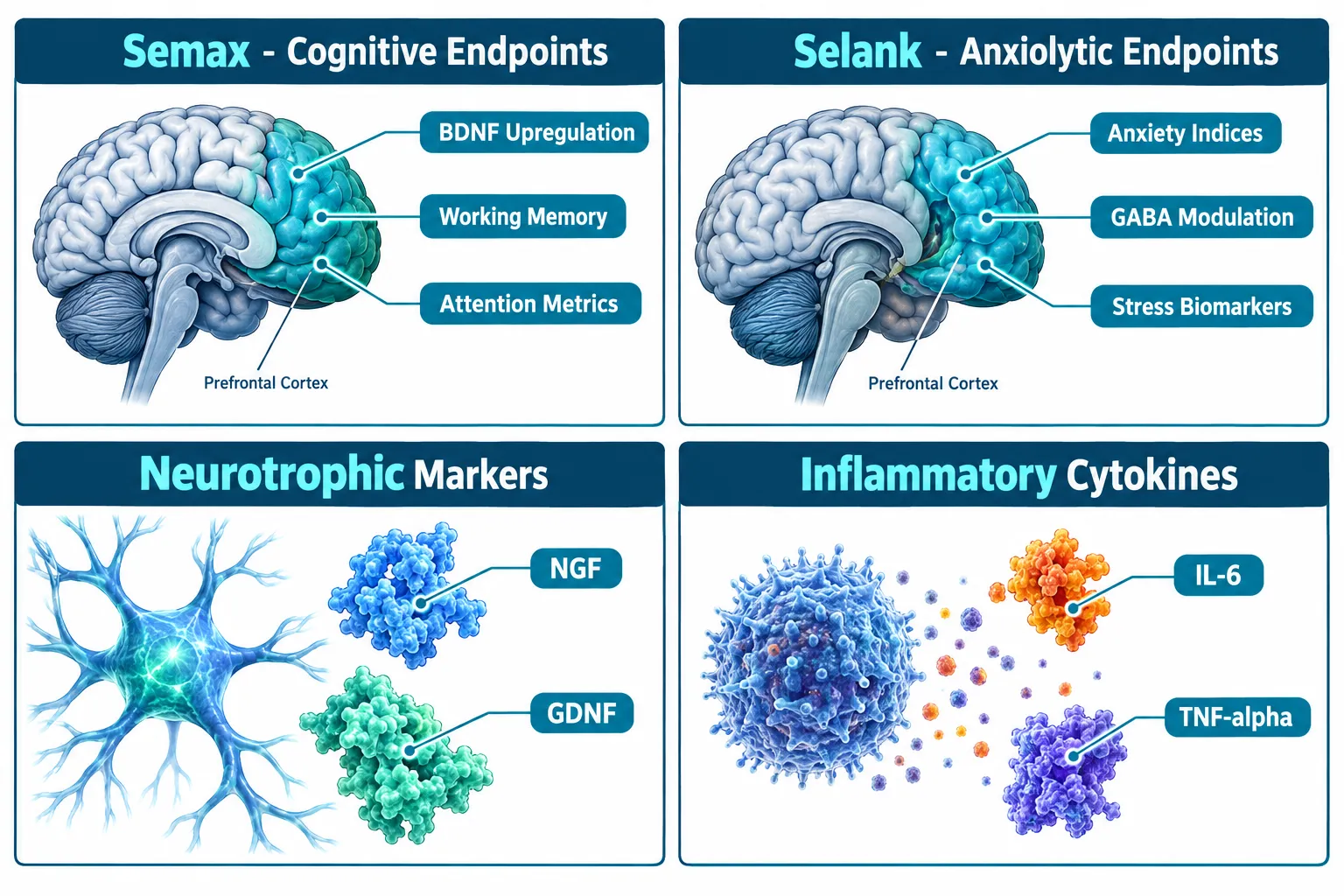
  • Semax shows stronger, more consistent neurotrophic effects (BDNF, NGF, GDNF), making it the better anchor for neurotrophic readout studies.
  • Selank's tuftsin lineage makes it the more defensible choice for cytokine and immune-modulation panels.
  • Behavioral readouts diverge sharply: Semax maps to cognitive and attention endpoints; Selank maps to anxiolytic and stress-response endpoints.
  • Nasal delivery introduces olfactory confounders that must be controlled in any behavioral assay for either peptide.
  • Dual-axis research kits combining both peptides are an emerging 2026 trend, but require pre-specified primary endpoints to avoid inflated false-discovery rates.

Mapping Peptide Origins to Study-Design Decisions
Mapping Peptide Origins to Study-Design Decisions

Understanding the structural lineage of each peptide is the fastest way to justify endpoint selection to a review committee.

Semax is a synthetic heptapeptide analog of the ACTH(4-10) fragment. Its sequence preserves the melanocortin receptor-binding core while adding a C-terminal Pro-Gly-Pro extension that slows enzymatic degradation. This origin predicts its primary research utility: cognitive performance, attention, and neurotrophic signaling in corticofrontal circuits.

Selank is a synthetic hexapeptide derived from tuftsin (Thr-Lys-Pro-Arg), an endogenous tetrapeptide produced by IgG cleavage in the spleen. Tuftsin is a well-characterized immune modulator. Selank extends this scaffold with a Gly-Glu-Pro tail, conferring anxiolytic-like properties and a more pronounced immune-regulatory profile.

Feature Semax Selank
Endogenous parent ACTH(4-10) Tuftsin
Primary behavioral signal Cognitive enhancement Anxiolysis
Neurotrophic evidence Strong (BDNF, NGF, GDNF) Weak to moderate
Cytokine evidence Moderate (cerebrovascular focus) Strong (IL-6, TNF-alpha, IL-10)
Regulatory status (Russia) Approved nasal spray Approved nasal spray

"Choosing the wrong primary endpoint for either peptide does not just waste resources, it produces null results that obscure genuine signals."

Researchers sourcing compounds for nasal administration should review nasal Semax spray specifications, including purity certificates and excipient profiles, before finalizing a delivery protocol.


Neurotrophic and Inflammatory Readouts: Where the Evidence Actually Points
Neurotrophic and Inflammatory Readouts: Where the Evidence Actually Points

Neurotrophic Markers: Semax as the Stronger Anchor

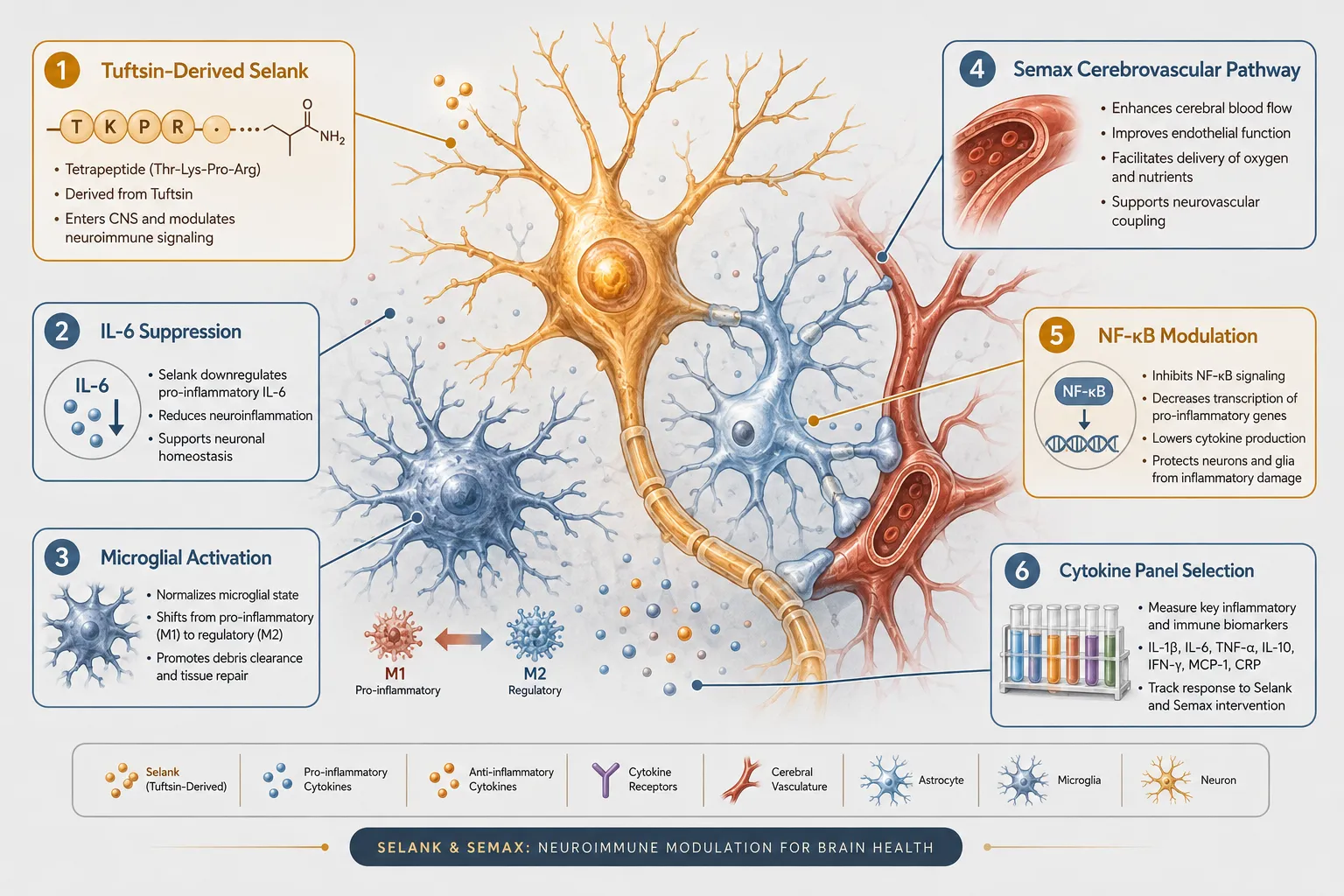
Semax's most replicated finding across rodent and limited human studies is upregulation of brain-derived neurotrophic factor (BDNF). Effects on nerve growth factor (NGF) and glial cell line-derived neurotrophic factor (GDNF) have also been reported, particularly in hippocampal and cortical tissue. These findings support using Semax as the primary compound when a study's pre-specified outcome is a neurotrophic marker panel.

Selank shows some BDNF-related activity, but the data are less consistent and the effect sizes smaller. Selecting Selank as the sole compound in a BDNF-focused study risks underpowering the assay.

Recommended neurotrophic readout panel for Semax studies:

  • BDNF (serum and tissue, time-matched)
  • NGF (hippocampal homogenate preferred)
  • GDNF (if cerebellar or dopaminergic circuits are in scope)
  • TrkB phosphorylation as a downstream confirmation marker

Inflammatory and Immune Readouts: Selank's Structural Advantage

Selank's tuftsin lineage makes it the more defensible anchor for cytokine panels. Published data show suppression of IL-6 and TNF-alpha alongside upregulation of IL-10, a pattern consistent with a shift toward anti-inflammatory macrophage polarization. Enkephalin system interactions have also been reported, adding a neuroimmune dimension.

Semax does carry anti-inflammatory signals, but these are more tightly associated with cerebrovascular protection models, ischemia-reperfusion paradigms, for example, rather than systemic immune modulation. Mixing Semax into a cytokine panel designed around Selank's immune profile introduces mechanistic noise.

Recommended cytokine panel for Selank studies:

  • IL-6, TNF-alpha, IL-1beta (pro-inflammatory axis)
  • IL-10, TGF-beta (regulatory axis)
  • Enkephalin metabolites if neuroimmune crosstalk is a secondary aim

For researchers building broader neuroprotective protocols, the SS-31 10mg research peptide considerations page offers useful context on mitochondrial-targeted peptides that can complement inflammatory readout designs.


Behavioral Endpoints, Nasal Delivery Confounders, and Dual-Axis Strategies
Behavioral Endpoints, Nasal Delivery Confounders, and Dual-Axis Strategies

Behavioral Readout Selection

Behavioral endpoints must match the peptide's mechanistic profile. Using an anxiety assay as the primary outcome for a Semax study, or a cognitive battery as the primary outcome for a Selank study, produces endpoints misaligned with the compound's most robust signals.

Semax behavioral endpoints (supported):

  • Morris water maze and radial arm maze (spatial memory)
  • Novel object recognition (recognition memory)
  • Sustained attention tasks (5-choice serial reaction time in rodents)
  • ADHD-adjacent attention metrics (exploratory; evidence is speculative in 2026)

Selank behavioral endpoints (supported):

  • Elevated plus maze and open field test (anxiety indices)
  • Forced swim test (stress-coping behavior)
  • Social interaction assays (social anxiety models)
  • Conditioned fear extinction protocols

Controlling Nasal Delivery Confounders

Both compounds are most commonly administered intranasally in research settings, mirroring their approved clinical formulations. This creates a specific confounder class: olfactory stimulation artifacts. Any behavioral assay sensitive to olfactory cues, which includes most rodent anxiety and memory paradigms, requires a vehicle-matched nasal control group that receives the same excipient volume and osmolarity without the active peptide.

Failure to include this control group is the single most common methodological weakness in published Selank and Semax behavioral studies. Reviewers in 2026 increasingly flag this omission as a reason for rejection.

Dual-Axis Research Kits: A 2026 Trend

Combined Selank-plus-Semax research kits have grown in popularity as investigators seek to interrogate both neurotrophic and immune axes within a single study. This approach is valid under specific conditions:

  1. Pre-specify a single primary endpoint before data collection begins.
  2. Assign secondary status to all cross-axis markers (e.g., cytokines in a BDNF-primary study).
  3. Apply appropriate corrections for multiple comparisons across the full readout panel.
  4. Include a four-arm design: vehicle, Semax alone, Selank alone, and combination.

Without these guardrails, dual-axis kits inflate false-discovery rates and produce results that are difficult to interpret or reproduce.

Researchers building multi-peptide protocols may also find the MOTS-C peptide and GLP-3 peptide signaling pathway resources useful for understanding how mitochondrial and metabolic peptides interact with neurotrophic readout systems.

Purity verification remains non-negotiable. Studies using sub-95% purity material cannot reliably attribute effects to the target compound. Third-party HPLC and mass spectrometry certificates should be obtained before any behavioral or biomarker assay begins.


Conclusion

Selank vs Semax peptide research: choosing behavioral, inflammatory, and neurotrophic readouts comes down to three decisions made before a single animal is dosed or a single sample is collected.

Actionable next steps for researchers:

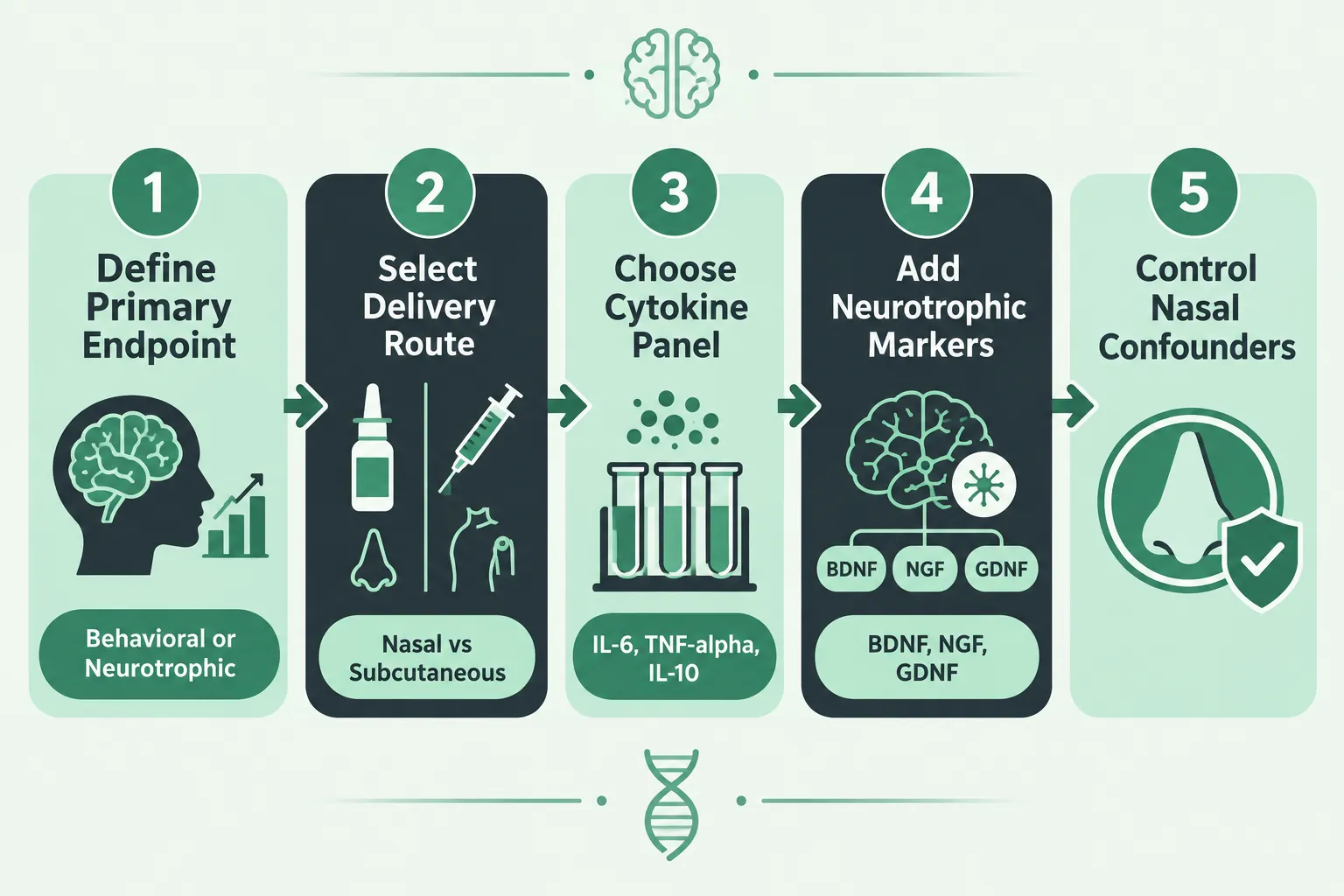
  1. Lock the primary endpoint first. Neurotrophic focus defaults to Semax; immune-cytokine focus defaults to Selank. Mixed designs require a four-arm layout and pre-registered analysis plans.
  2. Audit the delivery protocol. Nasal administration demands a vehicle-matched control group in every behavioral assay. Document excipient composition and volume in the methods section.
  3. Verify compound purity independently. Request certificates of analysis showing HPLC purity above 99% and mass spectrometry confirmation before procurement.
  4. Align the behavioral battery with mechanistic expectations. Cognitive and attention assays for Semax; anxiety and stress-coping assays for Selank.
  5. Label speculative endpoints clearly. ADHD applications, neuroimmune crosstalk in humans, and long-term neurodevelopmental effects remain exploratory in 2026 and should be framed as hypothesis-generating, not confirmatory.

Rigorous endpoint selection is what separates publishable data from inconclusive noise in this research space.

https://www.puretestedpeptides.com/wp-content/uploads/2026/10/selank-vs-semax-peptide-research-choosing-behavioral-inflammatory-and-neurotroph.webp 1024 1536 https://www.puretestedpeptides.com/wp-content/uploads/2026/01/buy-peptides-online.jpg 2026-10-11 13:04:402026-10-11 13:04:40Selank vs Semax Peptide Research: Choosing Behavioral, Inflammatory, and Neurotrophic Readouts
×

Helpful Links

  • My account
  • Cart
  • Checkout
  • Refund and Returns Policy
  • Privacy Policy
  • SMS Privacy Policy
  • Login
  • My Account
  • Logout

USA Made Lab Tested Peptides

All products are sold for research, laboratory, or analytical purposes only, and are not for human consumption


Pure Tested Peptides is a chemical supplier. Pure Tested Peptides is not a compounding / chemical compounding facility as defined under 503A of the Federal Food, Drug, and Cosmetic act. Pure Tested Peptides is not an outsourcing facility as defined under 503B of the Federal Food, Drug, and Cosmetic act.

The statements made within this website have not been evaluated by the US Food and Drug Administration. The products we offer are not intended to diagnose, treat, cure or prevent any disease.

Human/Animal Consumption Prohibited. Laboratory/In-Vitro Experimental Use Only

Scroll to top Scroll to top Scroll to top