

Where to Buy Klow Blend Peptide Nasal Spray: Purity, Concentration, and Research-Use Considerations
Fewer than one in five researchers sourcing multi-peptide blends report receiving a product that matches its advertised concentration on the first purchase attempt. For those investigating Klow Blend Peptide Nasal Spray, that statistic underscores why sourcing decisions deserve the same rigor as the laboratory protocols themselves. This guide addresses where to buy Klow Blend Peptide Nasal Spray, purity, concentration, and research-use considerations in a single, structured resource for scientists and institutional buyers in 2026.
Key Takeaways
- Klow Blend is a four-peptide proprietary stack, GHK-Cu, BPC-157, TB-500, and KPV, most commonly supplied as an 80 mg nasal spray for preclinical research.
- Verified vendors in North America, the UK, and the EU supply Klow Blend exclusively as a Research Use Only (RUO) reagent, not as a supplement or medicine.
- Purity verification via third-party HPLC and mass spectrometry is the single most important quality checkpoint before any laboratory use.
- Concentration labeling varies across vendors; researchers should confirm per-peptide dosing, not just total blend weight.
- Purchasing from vendors who require institutional research agreements reduces regulatory and compliance risk significantly.
Understanding the Klow Blend Formulation
Klow Blend is a proprietary four-peptide research stack containing GHK-Cu (copper peptide), BPC-157 (body protection compound), TB-500 (thymosin beta-4 analog), and KPV (a tripeptide with anti-inflammatory properties). The most widely referenced format is an 80 mg nasal spray, sometimes described as a "spray stack," formulated for in-vitro and preclinical laboratory investigation.
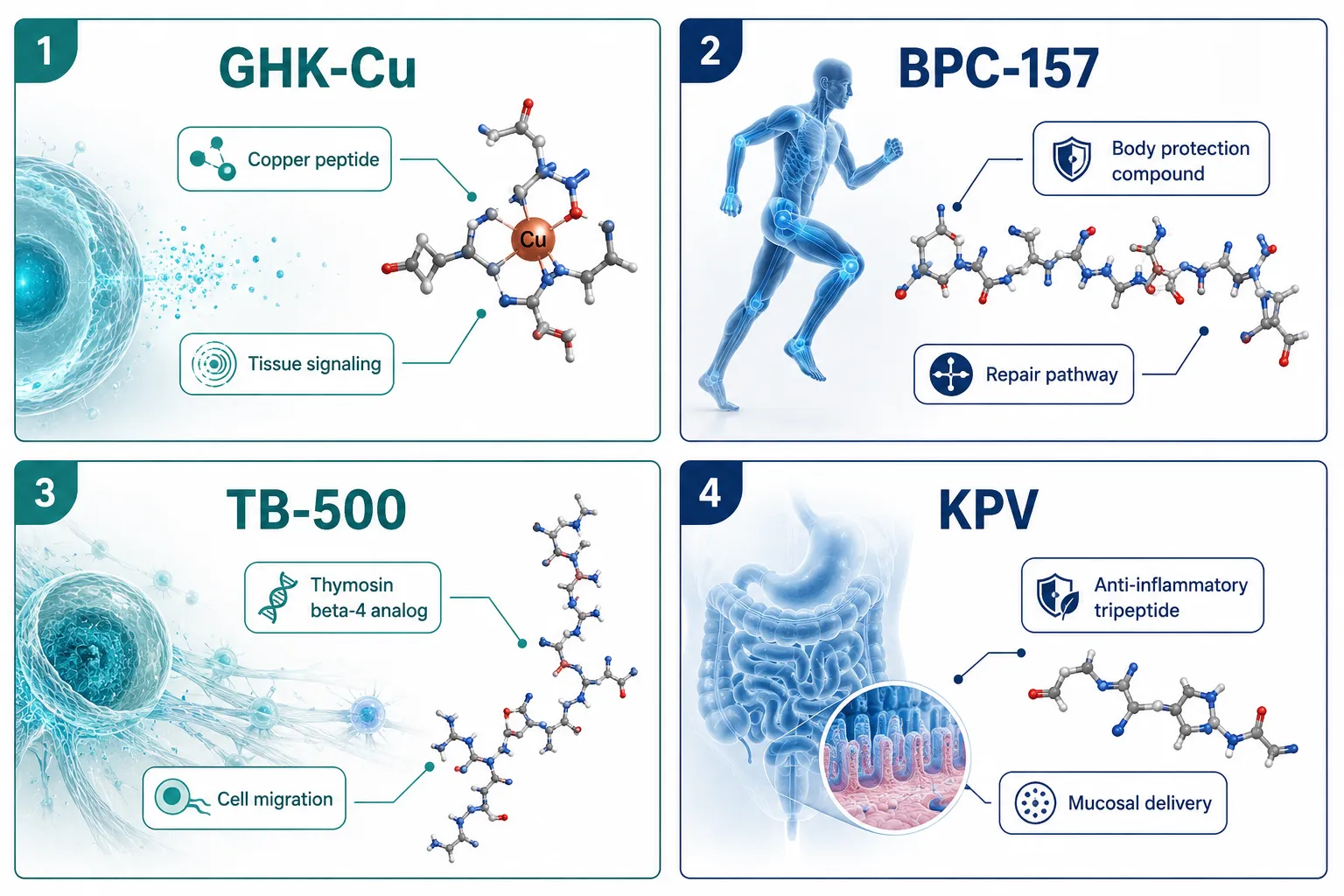
The nasal spray delivery format is relevant to researchers studying mucosal absorption pathways, as it allows controlled administration in animal model studies. It is important to note that the "Klow" name functions largely as a branding overlay. Several suppliers acknowledge that the same four-peptide biological mechanisms are marketed under house branding to avoid trademark complications. This means researchers may encounter equivalent products listed as "KLOW Nasal Spray Stack" or "Klow Peptide Multi-Blend" depending on the vendor.
Researchers interested in related single-peptide models can explore resources on Selank nasal spray and Semax nasal spray to understand how individual peptides in nasal formats are characterized before being combined into blends.
Where to Buy Klow Blend Peptide Nasal Spray: North American and International Sources
Sourcing decisions for where to buy Klow Blend Peptide Nasal Spray, purity, concentration, and research-use considerations all factor into vendor selection, vary significantly by geography.
North American Vendors
In the United States and Canada, several peptide research suppliers list Klow Blend or KLOW Nasal Spray as a research-grade product. U.S. vendors typically list the product as a "Klow Nasal Spray Stack 80 mg," while Canadian outlets have advertised a "KLOW Peptide Multi-Blend" explicitly labeled as research-grade. These vendors frame the product as a research kit or research reagent, and buyers are generally required to agree that the product will be used only within institutional or laboratory research contexts before completing a purchase.
Key vendor criteria to evaluate:
- Active Certificate of Analysis (COA) available for every batch
- Third-party HPLC purity data (minimum 98% purity threshold recommended)
- Mass spectrometry confirmation of peptide identity
- Clear "Research Use Only" labeling on product and packaging
- Documented storage and handling guidelines
For researchers also investigating growth hormone-related peptide blends, the Tesamorelin CJC1295 Ipamorelin 12mg blend page provides a useful reference point for how multi-peptide research products are typically documented and labeled.
UK and EU Vendors
In the United Kingdom, peptide research sites have listed a "KLOW Blend Peptide Pen" categorized under premium research peptides, made to order and clearly positioned without any therapeutic claims. In 2026, US-based peptide suppliers and EU-focused vendors have become primary sourcing channels, emphasizing lab-grade rather than cosmetic-grade supply chains.
A note on EU purchasing: Regulatory frameworks differ across EU member states. Researchers should confirm that their institution's procurement office has reviewed applicable import and handling regulations before ordering from non-domestic suppliers.
Verifying Purity and Concentration: What the COA Must Show
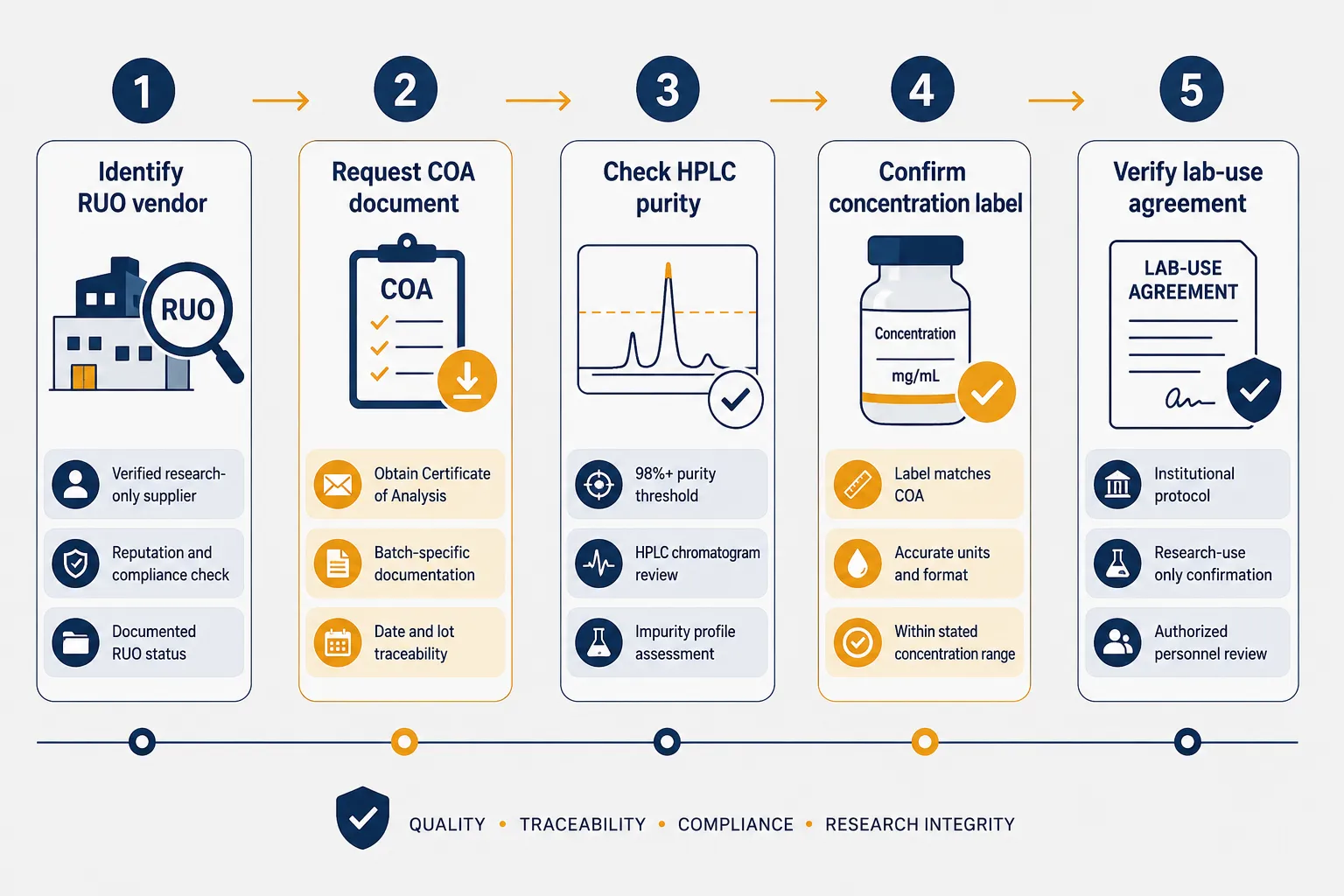
The single most critical document when sourcing any research peptide is the Certificate of Analysis. For Klow Blend specifically, the COA must address each of the four peptide components individually, not just the total blend weight.
What a credible COA should include:
| Parameter | Minimum Standard |
|---|---|
| HPLC purity per peptide | 98% or above |
| Mass spectrometry identity | Confirmed match to sequence |
| Endotoxin testing | Below LAL threshold for RUO use |
| Batch number | Traceable to production lot |
| Third-party lab signature | Independent, not in-house only |
Concentration labeling is a common source of confusion in blend products. An "80 mg" total weight label does not specify how much of each peptide is present. Researchers should request per-peptide concentration breakdowns, for example, how many milligrams of BPC-157 versus TB-500 are in each vial, before incorporating the product into any experimental protocol.
For context on how individual therapeutic peptides are characterized in research settings, the therapeutic peptides resource and the tissue repair research tag offer relevant background on documentation standards.
Research-Use-Only Requirements and Compliance Considerations
Understanding where to buy Klow Blend Peptide Nasal Spray, purity, concentration, and research-use considerations included, is incomplete without addressing the regulatory framework that governs its purchase and use.

All reputable vendors supplying Klow Blend in 2026 label their products as "Research Use Only (RUO)" and "not for human or veterinary use." Some suppliers go further, explicitly stating that KLOW is "not for administration to living organisms" and that completing a purchase constitutes agreement to use the reagent only in institutional laboratory research.
This has practical implications for buyers:
- Purchase orders should reference an institutional or commercial research facility
- Products should be stored and handled according to peptide stability guidelines (typically refrigerated at 2-8°C, protected from light)
- Any experimental protocol involving the blend should be reviewed by the relevant institutional oversight body
- Researchers should retain all COAs and purchase documentation for audit purposes
The RUO classification places Klow Blend entirely outside approved pharmaceutical channels. It is not a supplement, not a cosmetic ingredient, and not a clinical treatment. Researchers who require related background on preclinical peptide research frameworks may find the stem cell research and Semax peptide resources useful for understanding how analogous compounds are handled in laboratory contexts.
Conclusion
Sourcing Klow Blend Peptide Nasal Spray for legitimate preclinical research requires more than finding a vendor with stock. Researchers must verify per-peptide concentration breakdowns, demand third-party HPLC and mass spectrometry documentation, and confirm that every purchase is made through a vendor operating under strict RUO frameworks.
Actionable next steps for researchers:
- Identify two or three vendors in your region with publicly accessible, batch-specific COAs.
- Request per-peptide concentration data before placing any order.
- Confirm your institution's procurement and compliance requirements for RUO reagents.
- Review storage and handling protocols before the product arrives.
- Document all sourcing records for potential regulatory review.
The growing availability of Klow Blend across North American, UK, and EU research peptide channels in 2026 reflects increasing demand for multi-peptide nasal spray models in preclinical science. Rigorous vendor evaluation remains the most effective safeguard against substandard material entering the research pipeline.