Retatrutide Phase 3 Cardiometabolic Monitoring: Designing Research Panels for Triglycerides, Blood Pressure, hsCRP, and A1C
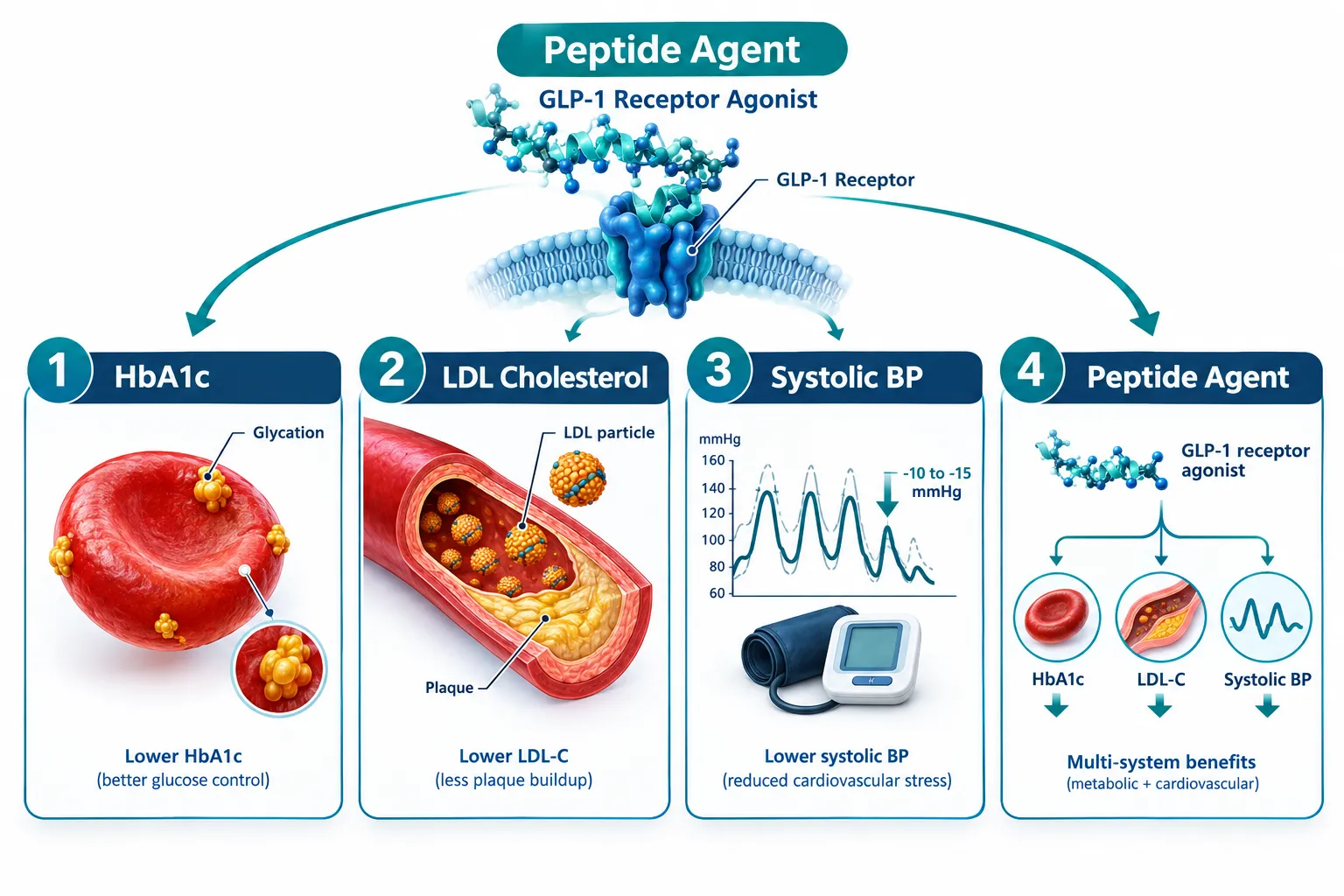
By mid-2026, five pivotal Phase 3 readouts from Eli Lilly's TRIUMPH program had confirmed that retatrutide produces weight loss exceeding 28% of body weight, a figure that surpasses every previously reported pharmacological result in humans. Yet the most consequential design challenge for researchers is not tracking weight. It is building a cardiometabolic panel rigorous enough to separate the independent effects of retatrutide on lipids, blood pressure, inflammation, and glycemic control from the cascade of changes that weight loss alone would produce. Retatrutide Phase 3 cardiometabolic monitoring: designing research panels for triglycerides, blood pressure, hsCRP, and A1C demands a structured, multi-domain approach grounded in the latest TRIUMPH data.
Key Takeaways
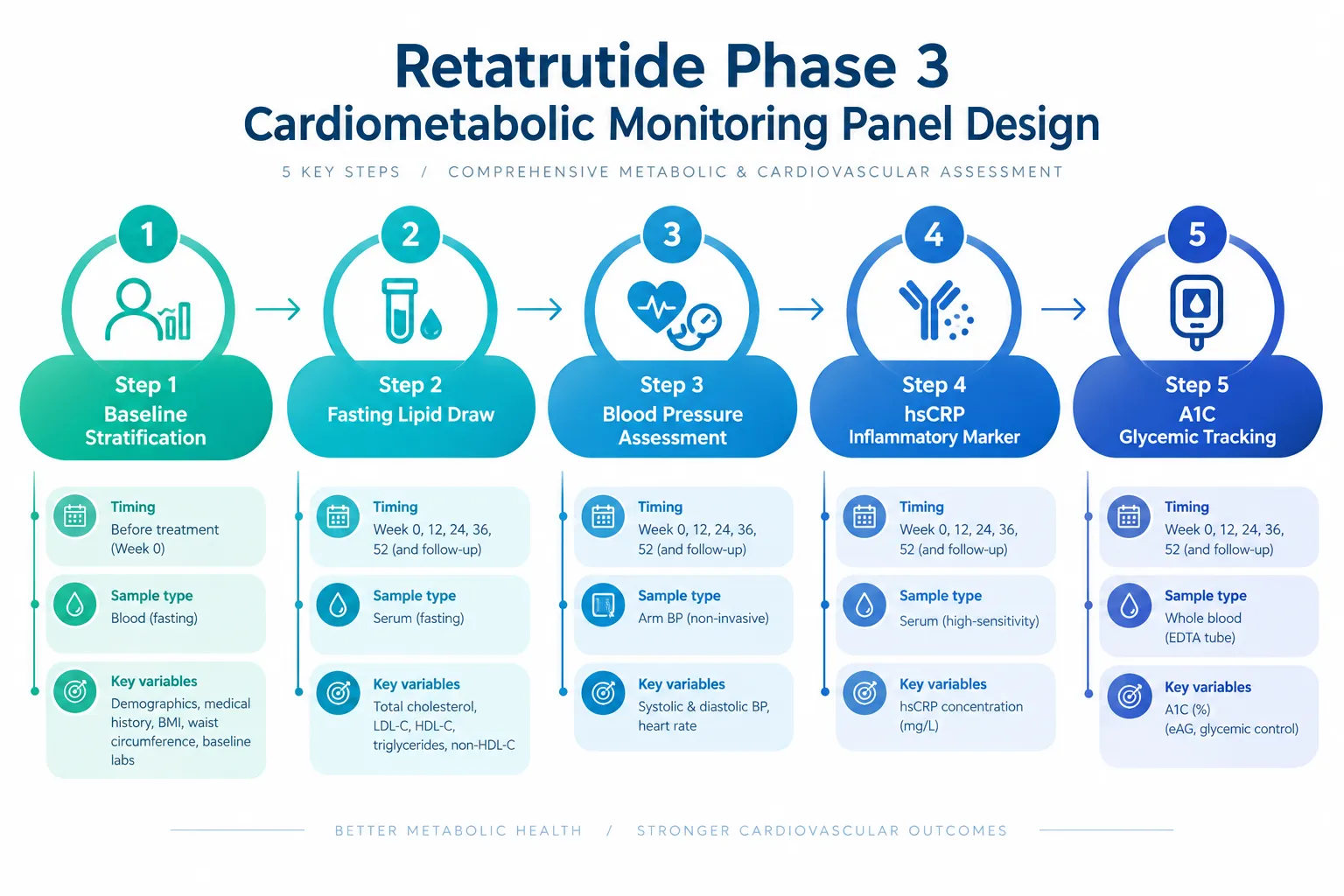
- TRIUMPH Phase 3 trials prespecify fasting triglycerides, non-HDL cholesterol, systolic blood pressure, hsCRP, A1C, and waist circumference as core cardiometabolic endpoints alongside weight loss.
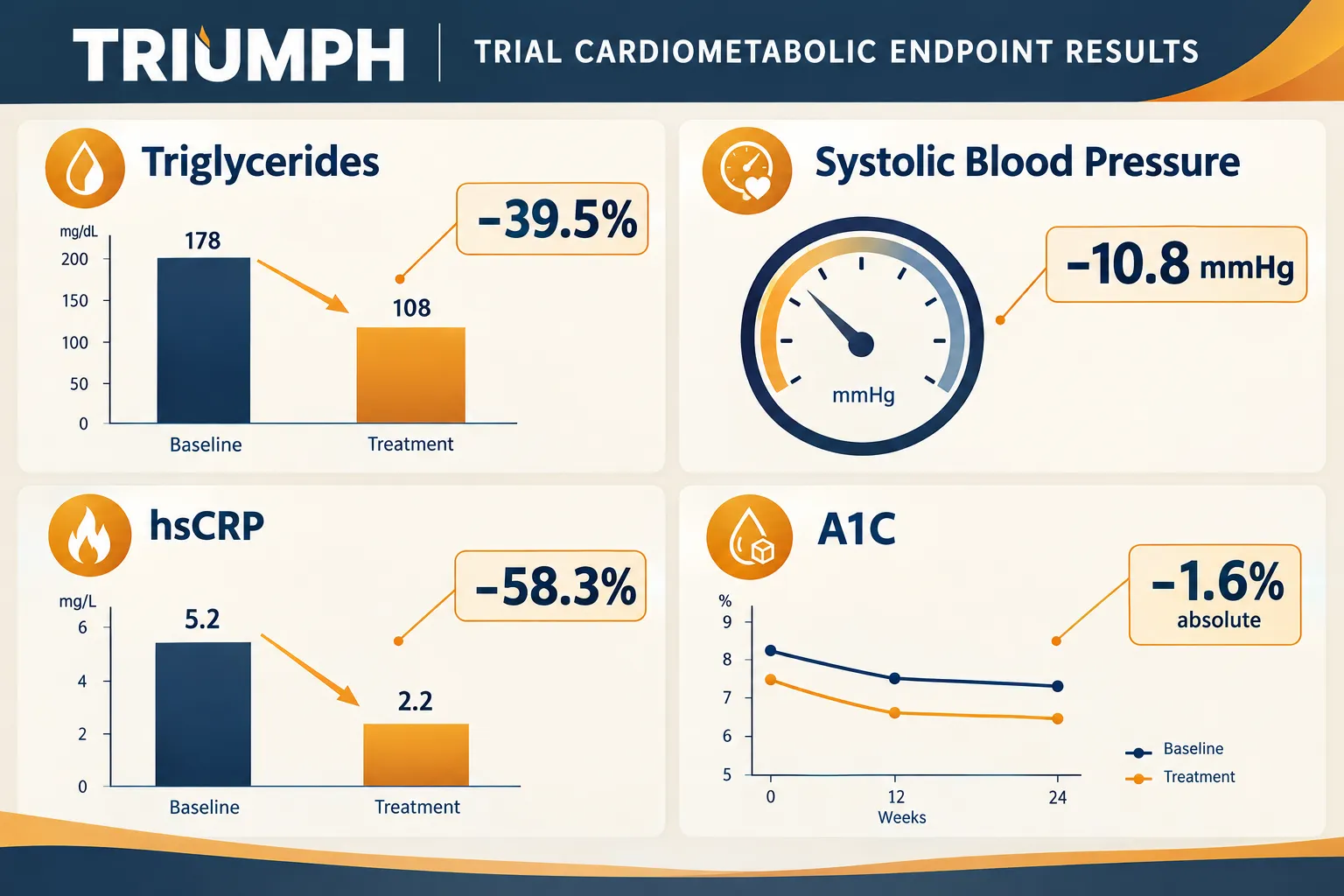
- Triglyceride reductions of up to 39.5%, hsCRP reductions of up to 58.3%, and systolic blood pressure drops of up to 10.8 mmHg were recorded at 80 weeks in TRIUMPH-2.
- Baseline stratification by diabetes status, cardiovascular disease history, and baseline triglyceride level is essential for interpreting correlated outcomes.
- A1C is a primary endpoint in diabetes-focused arms (TRIUMPH-2, TRANSCEND-T2D-1) and must be paired with lipid and inflammatory markers to capture the full cardiometabolic picture.
- The ongoing TRIUMPH-Outcomes CV/renal trial signals that future panels will expand to include kidney function markers such as eGFR and albuminuria.
Why the TRIUMPH Data Demand a Multi-Domain Panel
The TRIUMPH program is not a single study. It is a coordinated set of 80-week, randomized, double-blind, placebo-controlled trials targeting distinct populations: TRIUMPH-1 in adults with obesity or overweight, TRIUMPH-2 in adults with obesity or overweight plus type 2 diabetes, and TRIUMPH-3 in 1,949 adults with BMI of 35 or higher and established cardiovascular disease. Each trial prespecifies cardiometabolic endpoints beyond weight, and the consistency of those endpoints across trials is itself a design signal.
In TRIUMPH-3, participants on retatrutide 12 mg achieved a 22.6% reduction in body weight versus 3.2% on placebo. Alongside that, triglycerides fell 37.0%, non-HDL cholesterol dropped 16.5%, systolic blood pressure decreased 9.3 mmHg, waist circumference shrank 19.0 cm, and hsCRP fell 51.2%. The MACE-5 hazard ratio of 0.82 did not reach statistical significance, which is a critical interpretive point: robust improvements in surrogate biomarkers did not automatically translate into a proven reduction in hard cardiovascular events. This finding directly shapes panel philosophy, these markers must be tracked as risk-factor indicators, not as proxies for confirmed outcome benefit.
Researchers sourcing the compound for preclinical or translational work can explore GLP-1 Reta and Reta peptide for sale options to understand the molecular context before designing monitoring frameworks.
Core panel elements supported by TRIUMPH data:
| Biomarker | TRIUMPH-2 Change (12 mg) | TRIUMPH-3 Change (12 mg) |
|---|---|---|
| Triglycerides | -39.5% | -37.0% |
| Non-HDL Cholesterol | -19.6% | -16.5% |
| Systolic Blood Pressure | -10.8 mmHg | -9.3 mmHg |
| hsCRP | -58.3% | -51.2% |
| Waist Circumference | Significant | -19.0 cm |
| A1C | -1.6% absolute | Not primary |
Baseline Stratification and Sampling Schedules
Effective retatrutide Phase 3 cardiometabolic monitoring, designing research panels for triglycerides, blood pressure, hsCRP, and A1C, begins before the first dose. Baseline stratification is the mechanism that allows researchers to disentangle weight-mediated effects from direct receptor-driven changes.
Stratification variables to define at enrollment:
- Diabetes status: TRIUMPH-2 and TRANSCEND-T2D-1 demonstrate that A1C trajectories in diabetes populations diverge meaningfully from non-diabetes arms. Separate strata prevent dilution of glycemic signals.
- Baseline triglyceride level: Participants with hypertriglyceridemia at baseline show proportionally larger reductions. Stratifying by fasting triglycerides above or below 200 mg/dL allows dose-response analysis that is not confounded by regression to the mean.
- Cardiovascular disease history: TRIUMPH-3's CVD-enriched cohort produced the largest absolute hsCRP reductions. Mixing CVD and non-CVD participants without stratification obscures inflammation response patterns.
- Baseline BMI tier: Weight loss magnitude correlates with baseline BMI, and since triglycerides and blood pressure both respond to weight loss, BMI strata help isolate pharmacological signal.
"The consistent use of fasting triglycerides, non-HDL cholesterol, systolic blood pressure, hsCRP, A1C, and waist circumference over 40-to-80-week windows across five Phase 3 trials represents an emerging standard for retatrutide cardiometabolic panel design."
Recommended sampling schedule for an 80-week protocol:
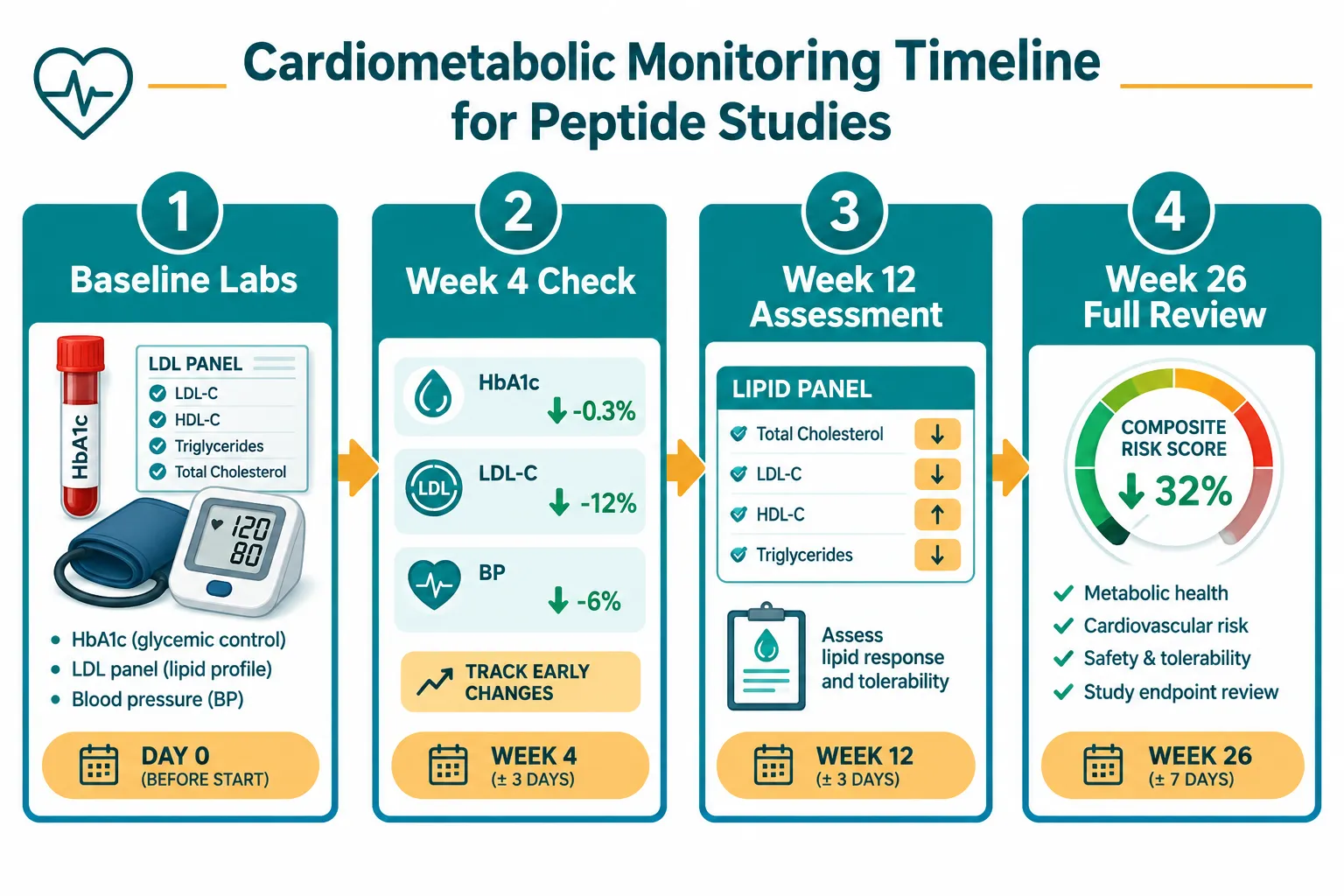
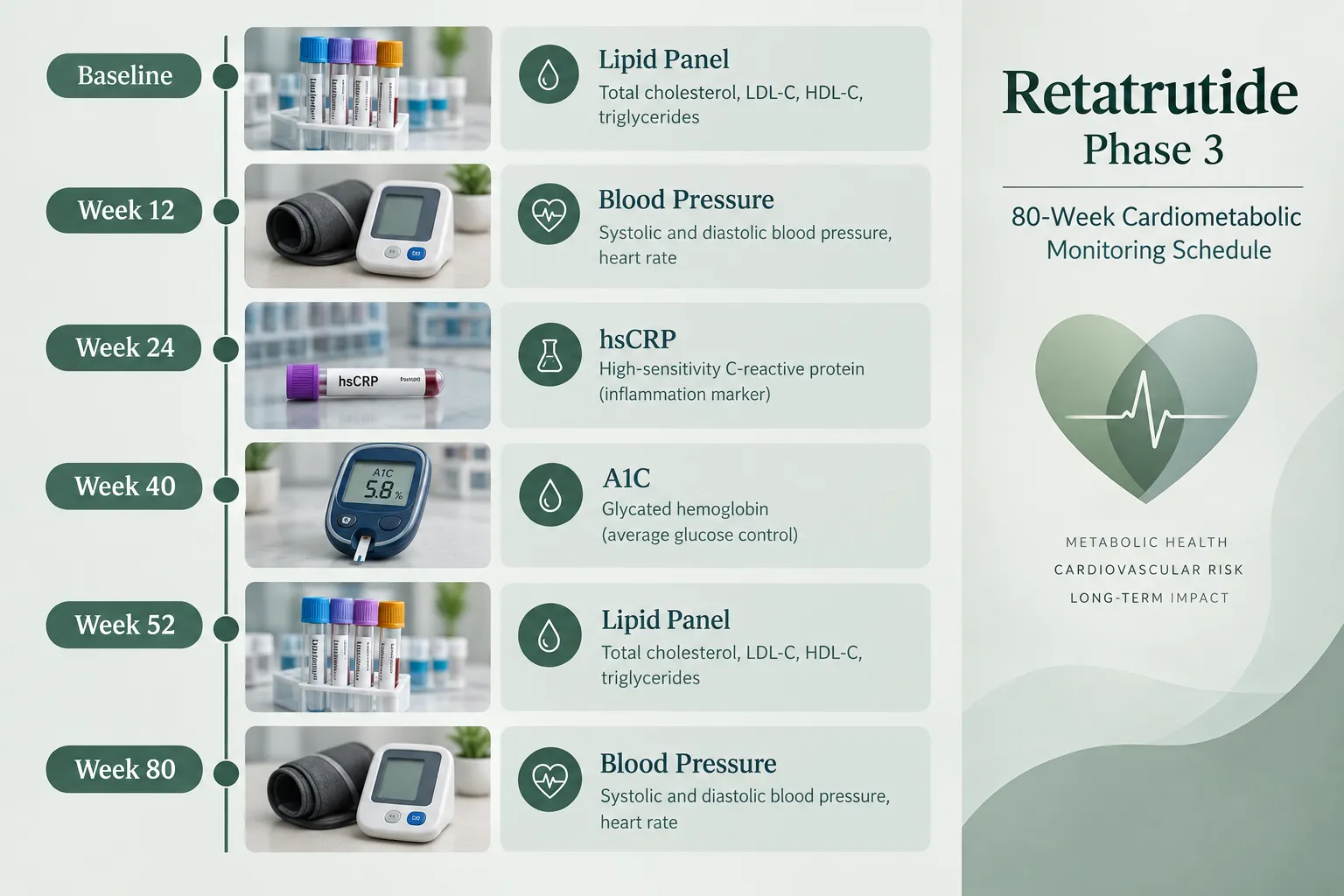
- Baseline (Week 0): Full fasting lipid panel, hsCRP, A1C, blood pressure (triplicate), waist circumference, eGFR, albuminuria
- Week 12: Fasting triglycerides, blood pressure, body weight
- Week 24: Full panel repeat
- Week 40: Full panel repeat (aligns with TRANSCEND-T2D-1 primary endpoint)
- Week 52: Fasting triglycerides, hsCRP, blood pressure, A1C
- Week 80: Full panel repeat, primary endpoint analysis
Fasting status for lipid draws must be standardized at 10-12 hours. Blood pressure should follow a three-reading protocol with the participant seated for five minutes, using the average of readings two and three. hsCRP should use the high-sensitivity assay (hs-CRP) to detect low-grade inflammation changes relevant to cardiovascular risk.
For researchers exploring related metabolic pathways, visceral fat research resources provide useful context on adipose-driven inflammation that intersects with hsCRP monitoring. Those studying growth hormone secretagogue stacks may also find the IPA Sermorelin stack research reference helpful for understanding parallel metabolic endpoints.
Interpreting Correlated Outcomes Without Overclaiming
The central interpretive challenge in retatrutide Phase 3 cardiometabolic monitoring, designing research panels for triglycerides, blood pressure, hsCRP, and A1C, is that all four major endpoints are correlated with each other and with weight loss. A 28% reduction in body weight alone would be expected to lower triglycerides, reduce systolic blood pressure, decrease hsCRP, and improve insulin sensitivity. Attributing the observed changes solely to receptor agonism requires deliberate analytical design.
Three analytical strategies to separate effects:
- Mediation analysis: Model weight loss as a mediator between retatrutide dose and each cardiometabolic endpoint. The residual direct effect after accounting for weight change estimates the weight-independent pharmacological contribution.
- Matched-weight comparator: Identify placebo participants who achieved similar weight loss through caloric restriction and compare their lipid and inflammatory trajectories to retatrutide-treated participants at the same weight-loss magnitude.
- Time-course divergence: Triglyceride and hsCRP reductions in TRIUMPH trials appear early and disproportionately large relative to the weight-loss timeline, suggesting direct receptor-mediated effects. Plotting biomarker change against cumulative weight loss at each time point can reveal non-linear relationships that indicate independent mechanisms.
A1C interpretation in mixed populations requires particular care. In TRIUMPH-2, the 1.6% absolute A1C reduction at the highest dose reflects both weight-mediated insulin sensitization and potential direct GLP-1 receptor-driven beta-cell effects. Panels that include fasting insulin and HOMA-IR alongside A1C allow researchers to partition these contributions.
Researchers interested in mitochondrial and cellular stress pathways that intersect with cardiometabolic function may find the SS-31 mitochondrial research tag and the detailed SS-31 mechanism and research guide useful for understanding complementary biomarker frameworks.
The TRIUMPH-Outcomes CV/renal trial (active as of October 2026) extends this logic further by enrolling adults with atherosclerotic cardiovascular disease and/or chronic kidney disease. Its design implies that future standard panels will add eGFR and albuminuria as kidney-function domains, creating a true multi-system cardiometabolic bundle rather than a lipid-and-pressure-only framework.
Avoid these common panel design errors:
- Using non-fasting lipid draws at inconsistent time points
- Measuring blood pressure immediately after physical activity or within 30 minutes of caffeine intake
- Reporting A1C without concurrent fasting glucose, which limits mechanistic interpretation
- Treating hsCRP as a hard outcome rather than a risk-factor surrogate
For those examining how to source research-grade retatrutide for preclinical panel validation studies, the how to buy Reta and Reta 10mg product tag pages provide relevant procurement context.
Conclusion
The TRIUMPH program has produced a clear, reproducible cardiometabolic signal: fasting triglycerides, non-HDL cholesterol, systolic blood pressure, hsCRP, A1C, and waist circumference all improve substantially with retatrutide across obesity, diabetes, and high-CVD-risk populations. The actionable next steps for researchers designing monitoring panels are straightforward.
Act on these priorities:
- Standardize baseline stratification by diabetes status, CVD history, and baseline triglyceride level before randomization.
- Implement a minimum six-timepoint sampling schedule across 80 weeks, with full fasting panels at baseline, week 24, week 40, and week 80.
- Build mediation analysis into the statistical analysis plan from the outset to separate weight-mediated from direct pharmacological effects.
- Add eGFR and albuminuria to panels that enroll participants with chronic kidney disease, anticipating the TRIUMPH-Outcomes readout framework.
- Treat all biomarker improvements as risk-factor endpoints, not as evidence of hard cardiovascular event reduction, until outcomes trial data are available.
Rigorous panel design is what will allow the field to move from observing that retatrutide changes biomarkers to understanding precisely how, in whom, and through which mechanisms those changes occur.