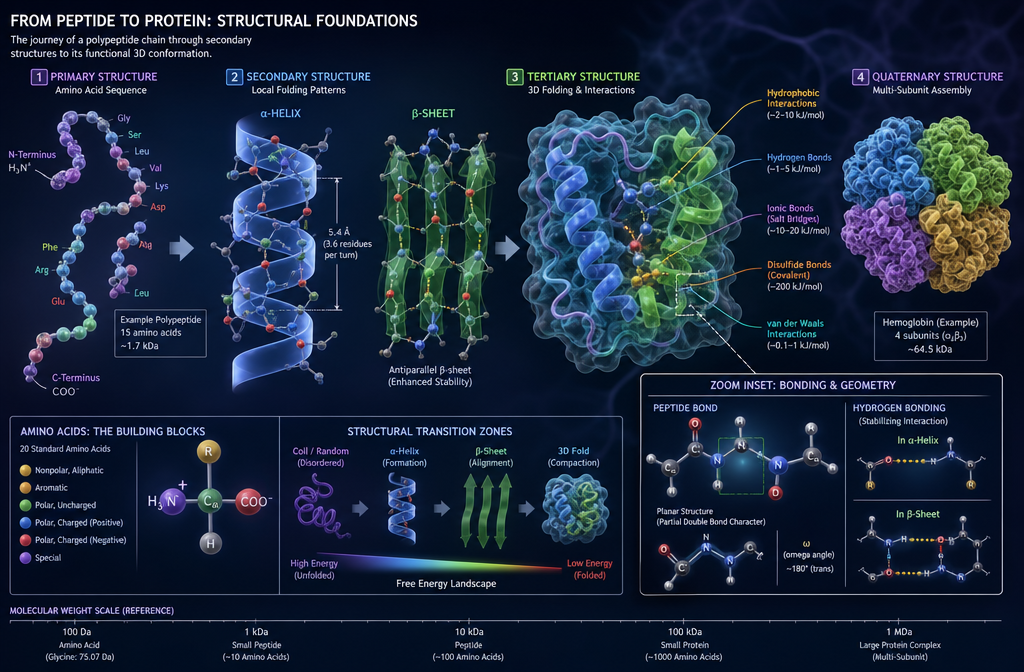
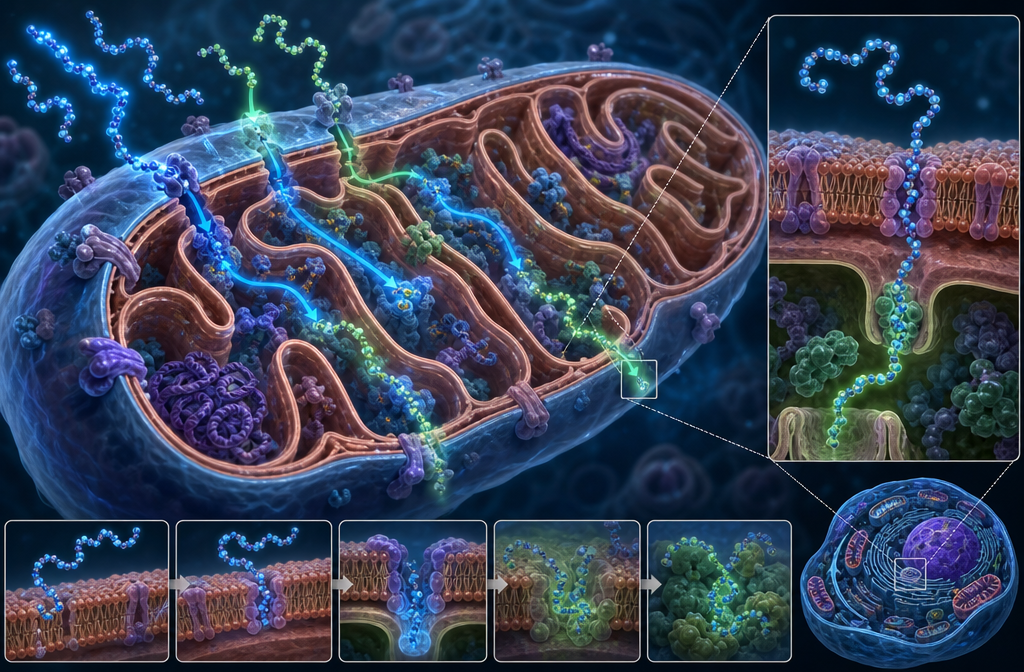
Call or Text 727-513-9780
  • Shopping Cart Shopping Cart
    0Shopping Cart
Pure Tested Peptides | America's most trusted Peptides for sale online
  • Peptides for sale
    • Oral Peptides for sale
      • Peptide Capsules for sale
      • BPC 157 Capsules 1000mcg
      • SLU-PP-332 Capsules | 1000 mcg
      • 5-Amino-1MQ 50mg Capsules
      • Tesofensine 500mcg
    • All Peptides for sale
    • Peptide Sprays
      • BPC 157 Nasal Spray Kit
      • BPC-157 TB500 Nasal Spray Kit
      • Semax Nasal Spray 10mg
      • Selank – Nasal Spray Kit – 10mg
      • Epithalon 50MG Nasal Spray Kit
      • Ipamorelin 10mg Nasal Spray
      • Klow Nasal Spray (BPC-157 + TB-500 + GHK-Cu + KPV) | 80mg
      • Hulk Nasal Spray Tesa / Ipa Blend 6/3 MG
      • Klow Nasal Spray
      • NAD + 500 mg Nasal Spray
      • PT-141 Nasal Spray Kit
    • GHRH Peptides
      • Ipa Peptides
      • CJC-1295 Peptides
        • CJC-1295 with DAC 5 mg
        • CJC-1295 without DAC 5 mg
        • CJC-1295 Ipa 10mg
      • Tesa Peptides
        • Tesa Peptide
        • Tesa 20 mg
    • GHK-Cu Peptides
      • All GHK-Cu Peptides
      • GHK-Cu 100mg
      • KLOW Peptide Blend – Buy KLOW blend online
    • BPC Peptides
      • All BPC Peptides
      • BPC-157
      • BPC-157 TB-500
      • BPC 157 capsules 1000mcg
    • SLU-PP-332 Peptides
      • All SLU-PP-332 Peptides
      • SLU-PP-332 5mg
    • GLP3 Peptides
    • PT-141 Peptides
      • PT-141 Peptides for sale
      • PT-141 10mg
      • PT-141 Nasal Spray
    • CAG Peptides
      • Lipo-C Peptide Blend
      • CAG 5mg
      • CAG 10mg
    • MOTS-C Peptides
      • MOTS-C Peptides for sale
      • MOTS-c peptide
      • MOTS-c 10mg *6 pack*
    • 5 Amino 1MQ Peptides
      • 5 Amino 1MQ Peptides for sale
      • 5-Amino-1MQ 50mg Capsules
      • 5-Amino-1MQ 5mg
    • Epithalon Peptides
      • Epithalon Peptides for sale
      • Epithalon 10mg
      • Epithalon 50mg
  • Shop
    • GLPs
      • 5-Amino-1MQ 50mg Capsules
      • 5-Amino-1MQ 5mg
      • L-Carnitine 500mg/ml
      • Tesofensine 500mcg
      • SLU-PP-332 5mg
      • MOTS-c 10mg *6 pack*
    • Epithalon & BPC Peptides
      • Epithalon 10mg
      • Epithalon 50mg
      • BPC-157
      • BPC 157 capsules 1000mcg
      • BPC-157 TB-500
      • BPC-157 TB500 Nasal Spray Kit
      • BPC 157 Nasal Spray Kit
    • BPC TB-500 & NAD+ Peptides
      • NAD+ 500 mg
      • KLOW Peptide Blend – Buy KLOW blend online
      • GLOW Peptide Blend
      • TB 500 5mg
      • BPC 157 capsules 1000mcg – Supplement
      • BPC 157 Nasal Spray Kit
      • BPC-157
      • BPC-157 TB500 Nasal Spray Kit
      • BPC-157 TB-500
      • BPC 157 capsules 1000mcg
    • LL-37 Peptide
      • LL-37 10 mg
    • MOTS-C & Selank
      • MOTS-c peptide
      • Selank 10mg
    • GHK Peptides
      • GHK-Cu 100mg
      • GLOW Peptide Blend
      • KLOW Peptide Blend – Buy KLOW blend online
  • COAs
  • Wholesale
    • Wholesale Peptides for sale
  • PTP FAQ
  • Affiliates
    • Selank Peptide: Advanced Pharmacological Mechanisms Underlying Its Anxiolytic and Nootropic Effects in Research
      • 5-Amino-1MQ Peptide: Detailed Mechanisms of NNMT Inhibition and Its Impact on Cellular Metabolism Research
        • MOTS-C Peptide: Unraveling Its Role in Mitochondrial Dynamics and Energy Metabolism Research
          • Epithalon Peptide and Telomerase Regulation: Investigating Its Impact on Cellular Senescence and Lifespan Research Models
            • GLP2-T vs GLP2 Tirz Peptide: Understanding the Naming, Mechanistic Nuances, and Research Implications for Gut Health
      • Peptides and Polypeptides in Modern Pharmacology: What Research on Metoprolol, Prednisone, and Amlodipine Reveals
        • Polypeptide Peptides vs NSAIDs: What Naproxen and Diclofenac Teach Tissue-Repair Researchers About BPC‑157 and TB‑500
          • Peptides and Polypeptides in Endocrine Pharmacology: How GLP-1, GLP-2, and GLP-3 Retatrutide Differ From Classic Drugs Like Prednisone and Amlodipine
          • 5‑Amino‑1MQ Peptide and NNMT Inhibition: How It Compares With Statins Like Atorvastatin in Adipose and Lipid Metabolism Research
      • Enclomiphene, Estrogen Receptor Signaling, and Luteinizing Phase Biology: What Hormone Researchers Should Measure
        • Mesenchymal Stem Cells, BPC‑157, and GHK‑Cu: How Tissue Repair Peptides Compare With Classic NSAIDs Like Naproxen in Injury Models
          • Peptide Calculator Use Cases Beyond Growth Hormone: Working Through GLP‑3 Retatrutide, MOTS‑c, and BPC‑157 Research Dosing
        • Polypeptide Peptides in Endocrine and Metabolic Pharmacology: Lessons From Amlodipine, Prednisone, and Metoprolol
        • Peptides Calculator for Advanced Blends: Worked Examples for Tesamorelin, CJC‑1295, and Ipamorelin Stacks
          • Peptides and Polypeptides in Human Physiology: How Molecular Size Shapes Research Applications
            • Selank Peptide: Advanced Pharmacological Mechanisms Underlying Its Anxiolytic and Nootropic Effects in Research
          • 5-Amino-1MQ Peptide: Detailed Mechanisms of NNMT Inhibition and Its Impact on Cellular Metabolism Research
            • MOTS-C Peptide: Unraveling Its Role in Mitochondrial Dynamics and Energy Metabolism Research
              • Epithalon Peptide and Telomerase Regulation: Investigating Its Impact on Cellular Senescence and Lifespan Research Models
                • GLP2-T vs GLP2 Tirz Peptide: Understanding the Naming, Mechanistic Nuances, and Research Implications for Gut Health
                  • Peptides and Polypeptides in Endocrine Pharmacology: How GLP-1, GLP-2, and GLP-3 Retatrutide Differ From Classic Drugs Like Prednisone and Amlodipine
                    • Polypeptide Peptides vs NSAIDs: What Naproxen and Diclofenac Teach Tissue-Repair Researchers About BPC‑157 and TB‑500
                      • Peptides and Polypeptides in Modern Pharmacology: What Research on Metoprolol, Prednisone, and Amlodipine Reveals
                        • 5‑Amino‑1MQ Peptide and NNMT Inhibition: How It Compares With Statins Like Atorvastatin in Adipose and Lipid Metabolism Research
                        • Enclomiphene, Estrogen Receptor Signaling, and Luteinizing Phase Biology: What Hormone Researchers Should Measure
                        • Mesenchymal Stem Cells, BPC‑157, and GHK‑Cu: How Tissue Repair Peptides Compare With Classic NSAIDs Like Naproxen in Injury Models
                        • Peptide Calculator Use Cases Beyond Growth Hormone: Working Through GLP‑3 Retatrutide, MOTS‑c, and BPC‑157 Research Dosing
                        • Polypeptide Peptides in Endocrine and Metabolic Pharmacology: Lessons From Amlodipine, Prednisone, and Metoprolol
                        • Peptides Calculator for Advanced Blends: Worked Examples for Tesamorelin, CJC‑1295, and Ipamorelin Stacks
                        • Peptides and Polypeptides in Human Physiology: How Molecular Size Shapes Research Applications
                        • Selank Peptide: Advanced Pharmacological Mechanisms Underlying Its Anxiolytic and Nootropic Effects in Research
                        • MOTS-C Peptide: Unraveling Its Role in Mitochondrial Dynamics and Energy Metabolism Research
                        • Peptides and Polypeptides in Modern Pharmacology: What Research on Metoprolol, Prednisone, and Amlodipine Reveals
                        • Peptides and Polypeptides in Endocrine Pharmacology: How GLP-1, GLP-2, and GLP-3 Retatrutide Differ From Classic Drugs Like Prednisone and Amlodipine
                        • 5-Amino-1MQ Peptide: Detailed Mechanisms of NNMT Inhibition and Its Impact on Cellular Metabolism Research
                        • Mesenchymal Stem Cells, BPC‑157, and GHK‑Cu: How Tissue Repair Peptides Compare With Classic NSAIDs Like Naproxen in Injury Models
                        • Peptide Calculator Use Cases Beyond Growth Hormone: Working Through GLP‑3 Retatrutide, MOTS‑c, and BPC‑157 Research Dosing
                        • GLP2-T vs GLP2 Tirz Peptide: Understanding the Naming, Mechanistic Nuances, and Research Implications for Gut Health
                        • Polypeptide Peptides in Endocrine and Metabolic Pharmacology: Lessons From Amlodipine, Prednisone, and Metoprolol
                        • Polypeptide Peptides vs NSAIDs: What Naproxen and Diclofenac Teach Tissue-Repair Researchers About BPC‑157 and TB‑500
                        • Peptides and Polypeptides in Human Physiology: How Molecular Size Shapes Research Applications
                        • Peptides Calculator for Advanced Blends: Worked Examples for Tesamorelin, CJC‑1295, and Ipamorelin Stacks
                        • 5‑Amino‑1MQ Peptide and NNMT Inhibition: How It Compares With Statins Like Atorvastatin in Adipose and Lipid Metabolism Research
                        • Enclomiphene, Estrogen Receptor Signaling, and Luteinizing Phase Biology: What Hormone Researchers Should Measure
                        • Epithalon Peptide and Telomerase Regulation: Investigating Its Impact on Cellular Senescence and Lifespan Research Models
                        • Best research protocol Klow blend
                        • best time to take BPC-157
                        • best time to take DSIP (Delta Sleep Inducing Peptide)
                        • best time to take CJC-1295
                        • best time to take AOD-9604
                        • best time to take Follistatin 344
                        • best time to take Ipamorelin
                        • best time to take MK-677 (Ibutamoren)
                        • best time to take Ligandrol (LGD-4033) — research compound
                        • best time to take Ostarine (MK-2866) — research compound
                        • best time to take GHK-CU
                        • best time to take TB-500
                        • best time to take MOTS-c
                        • best time to take Semax
                        • best time to take RAD-140 (Testolone) — research compound
                        • best time to take Thymosin Alpha-1
                        • best time to take PEG-MGF
                        • Biolife Plasma, Octapharma Plasma, and Research Peptides: How Plasma Donation Labs Differ From Peptide Suppliers
                        • best time to take YK-11 — research compound
                        • best time to take PT-141 (Bremelanotide)
                        • Best research protocol Klow blend
                        • 5-Amino-1MQ and MOTS-C Synergy: Metabolic Signaling, Mitochondria, and Research Design
                        • BPC-157 and TB-500: Investigating Their Combined Effects on Angiogenesis and Cellular Migration in Tissue Repair Models
                        • BPC-157 Peptide: Gut Barrier Function, Inflammation, and Tissue-Recovery Research
                        • 5‑Amino‑1MQ and MOTS‑c Synergy in Metabolic Research: Designing NNMT and Mitochondrial Biogenesis Stacks
                        • CJC-1295 with DAC vs. Without DAC: Half-Life, Release Kinetics, and Research Implications
                        • CJC‑1295 with DAC vs. Without DAC: Expanding on Half‑Life Differences Using Tesamorelin and Ipamorelin Blend Case Studies
                        • Collagen Biology and Copper‑Binding Peptides: How GHK‑Cu, Glow Blend, and Klow Blend Interact with Skin and Connective Tissue
                        • Collagen Biology and Regenerative Peptides: How GHK‑Cu, Glow Blend, and Klow Blend Affect Extracellular Matrix Research
                    • DNA, Telomeres, and Longevity Peptides: Positioning Epithalon and MOTS‑c in Genetic Aging Research
                      • Enclomiphene Citrate: serm Mechanism, Testosterone Research, and Stack Compatibility
                        • Enclomiphene vs Enclomiphene Citrate: Formulation, Bioavailability, and Research Distinctions
                        • Epithalon Peptide Research: Telomerase Activation, Aging, and Pineal Gland Function
                        • Estrogen Receptor Signaling and Enclomiphene: How Selective Modulators Compare with Classic Polypeptide Hormones
                        • GHK-Cu Peptide: Advanced Mechanisms in Extracellular Matrix Remodeling and Wound Healing Research
                        • GHK-Cu Peptide: Collagen Synthesis, Wound Repair, and Skin-Barrier Research Models
                        • GLP-1 vs GLP-3 vs GLP-2: Peptide Classification and Research Applications
                        • GLP-2 Peptide Research Guide: Gut Barrier Function, Nutrient Absorption, and Intestinal Recovery Models
                        • GLP-3 Retatrutide vs. GLP-1 Drugs: What Triple-Agonist Biology Changes in Research Models
                        • Ipamorelin and Tesamorelin Combination: Synergistic GH Secretagogue Research and Dosing Protocols
                        • GLP2 Tirz Peptide: What It Is, Why the Name Exists, and How Researchers Should Interpret It
                        • Klow Blend Peptide Nasal Spray: What the Formulation Is Trying to Do in Cognitive Research
                        • Mitochondria, NNMT Inhibition, and Peptide Modulators: Where MOTS‑c and 5‑Amino‑1MQ Fit in Cellular Energy Research
                        • MOTS-c Peptide: Mitochondrial Function, Energy Metabolism, and What Researchers Measure
                        • MOTS-c vs. 5-Amino-1MQ: Which Metabolic Research Questions Each Compound Actually Answers
                        • Nasal Spray Peptides: Bioavailability, Administration, and Semax/Selank Research Applications
                        • PT-141 Peptide Research: Mechanism of Action and Melanocortin Receptor Signaling
                        • Retatrutide for Research: Mechanism, Structure, and GLP-1/GLP-3 Dual Action
                        • Retatrutide for Obesity and Type 2 Diabetes: What the Latest Trial Data Suggest
                        • Tesofensine Peptide Research: Mechanism, Appetite Suppression, and Neuropeptide Y Pathways
  • Contact
    • Contact Customer Service
    • Text Customer Support
  • About US
  • Shop all peptides
  • Affiliate Program
    • Affiliate Signup
  • Login / Register Login / Register Page Link Login / Register Page Link
  • Click to open the search input field Click to open the search input field Search
  • Menu Menu

Tag Archive for: cjc-1295

Polypeptide Peptides and Drug Mechanisms: What Common Medications Reveal About Research-Use Peptide Pharmacology

Polypeptide Peptides and Drug Mechanisms: What Common Medications Reveal About Research-Use Peptide Pharmacology

July 29, 2026/0 Comments/in Uncategorized/by

More than 80 FDA-approved peptide-based drugs are currently on the market, generating over $50 billion in annual global sales, yet most researchers exploring novel compounds have only scratched the surface of what polypeptide pharmacology can teach them. The field of polypeptide peptides and drug mechanisms: what common medications reveal about research-use peptide pharmacology sits at a unique crossroads: approved drugs like insulin and GLP-1 agonists have mapped receptor signaling pathways that directly inform how newer, research-only compounds are designed, tested, and interpreted.

Understanding this bridge between clinical medications and experimental peptides is not just academic. It shapes how researchers evaluate half-life engineering, receptor selectivity, and structure-activity relationships (SAR) for compounds that are not yet approved for human use.

Key Takeaways

  • Approved polypeptide drugs (insulin, GLP-1 agonists, oxytocin) established the receptor signaling blueprints that research peptides now exploit.
  • Half-life engineering, through PEGylation, DAC technology, and amino acid substitution, is the central design challenge separating short-lived natural peptides from viable drug candidates.
  • Structure-activity relationships (SAR) explain why small changes in peptide sequence produce large changes in receptor binding affinity and biological effect.
  • Research-only peptides such as GLP-3 analogs, CJC-1295, and MOTS-c extend these pharmacological principles into territories not yet covered by approved medicines.
  • Purity and sourcing quality directly affect the reliability of any peptide pharmacology research.
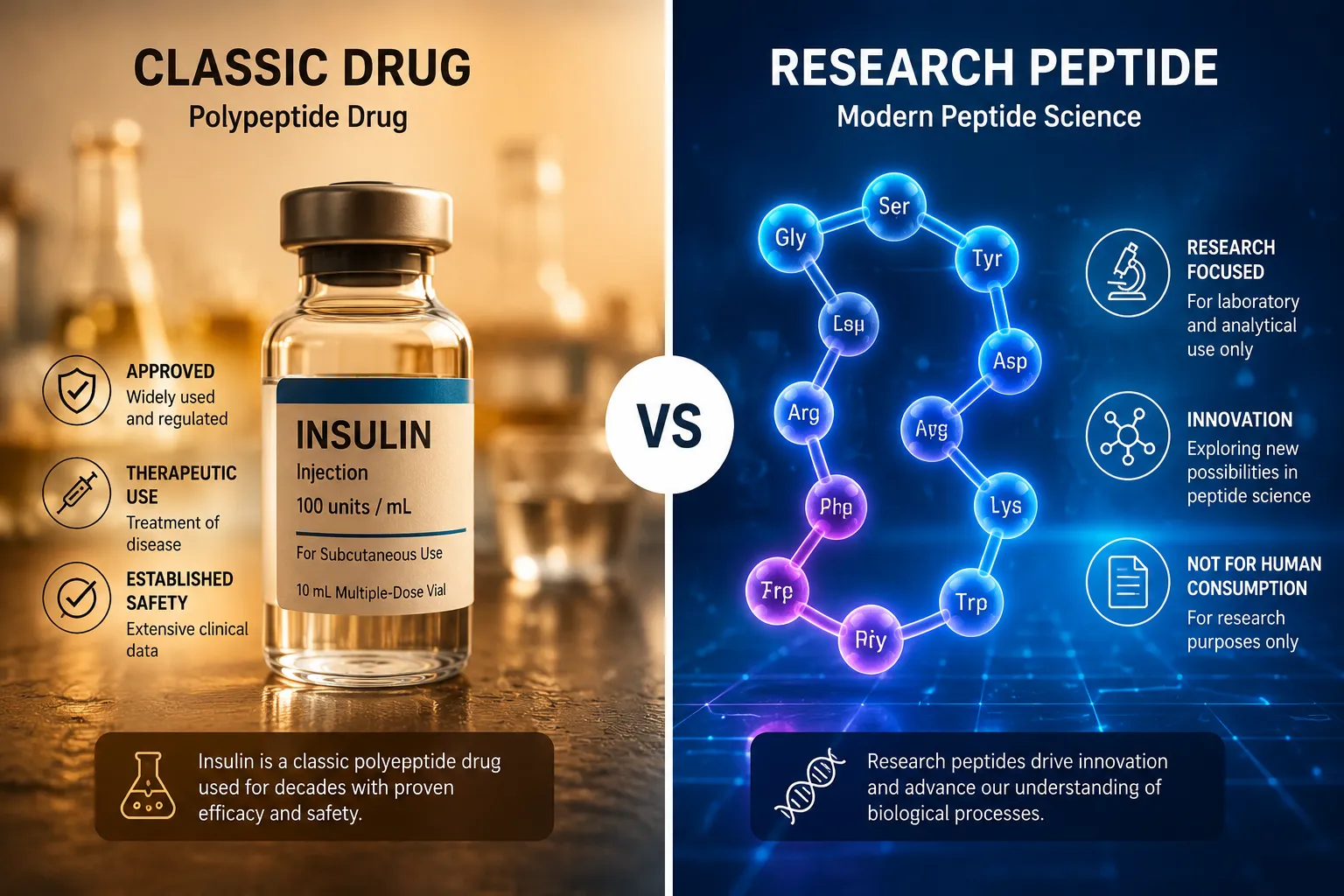
Key Takeaways

How Approved Polypeptide Drugs Built the Pharmacology Roadmap

The story of polypeptide peptides and drug mechanisms begins with insulin. Discovered in 1921, insulin is a 51-amino-acid polypeptide that binds the insulin receptor tyrosine kinase, triggering a phosphorylation cascade that drives glucose uptake. Every modern research peptide targeting metabolic pathways owes something to this foundational mechanism.

GLP-1 receptor agonists extended this roadmap dramatically. Drugs like semaglutide and liraglutide are engineered analogs of native glucagon-like peptide-1, a 30-amino-acid incretin hormone. Their pharmacological success revealed three principles now central to peptide drug design:

Principle Clinical Example Research Application
Receptor selectivity GLP-1R agonism vs. GLP-2R GLP-3 analog design
Half-life extension Fatty acid conjugation (liraglutide) DAC-modified CJC-1295
Structural mimicry Exendin-4 from Gila monster venom Non-mammalian peptide scaffolds

Native GLP-1 has a plasma half-life of under two minutes due to DPP-4 enzyme cleavage. Pharmaceutical engineers solved this by attaching C18 fatty acid chains, enabling albumin binding and extending half-life to 13 hours or more. Researchers studying GLP-1 peptide analogs apply this same logic when evaluating modified sequences in preclinical settings.

Similarly, GLP-3 and related peptide analogs represent the next generation of incretin-pathway research, building directly on the receptor mapping done by approved GLP-1 drugs.

Receptor Signaling and Structure-Activity Relationships in Peptide Pharmacology
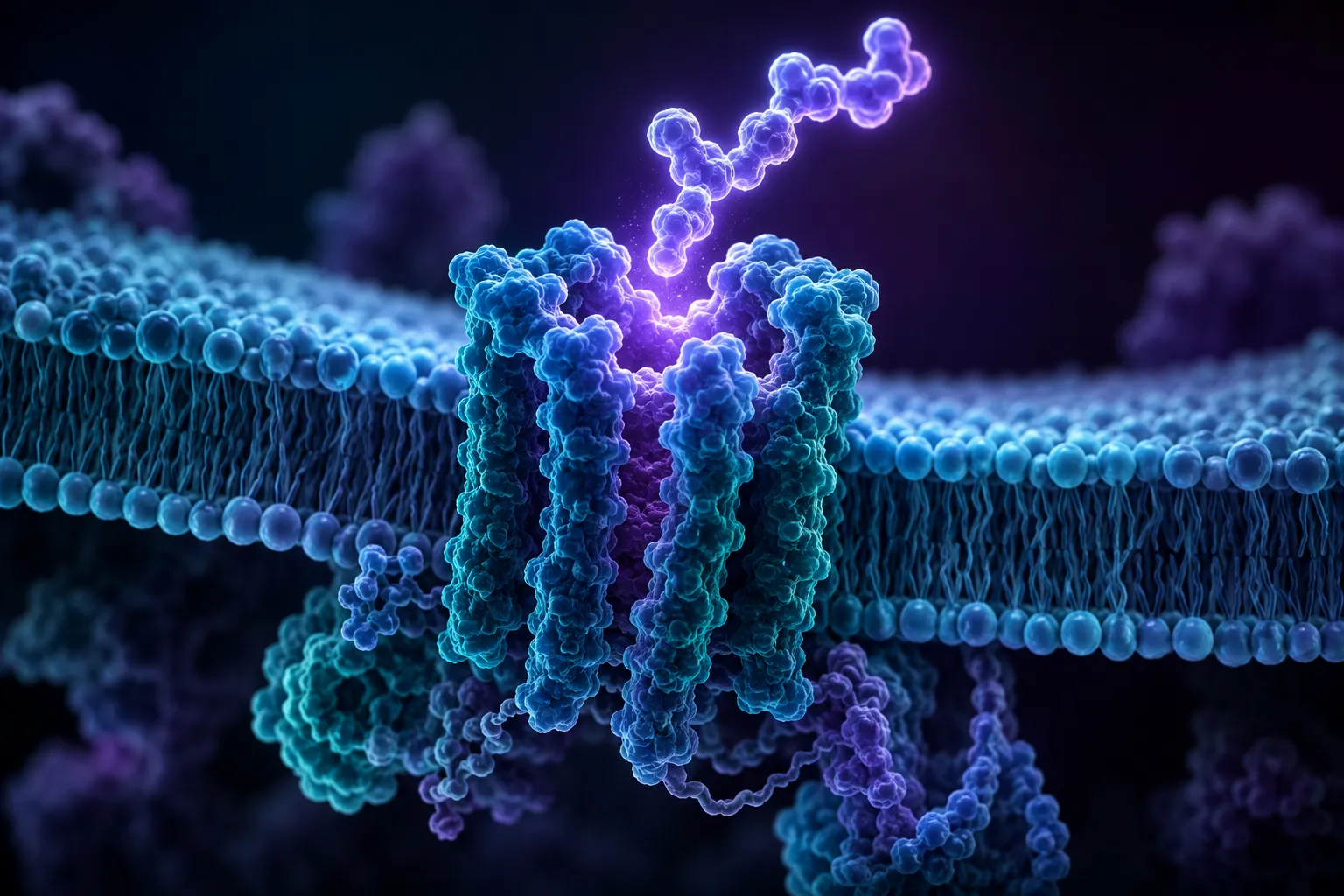
Receptor Signaling and Structure-Activity Relationships in Peptide Pharmacology

Most therapeutic peptides act on one of three receptor classes: G-protein coupled receptors (GPCRs), receptor tyrosine kinases, or nuclear receptors. Understanding which class a research peptide targets is the first step in predicting its downstream effects.

GPCRs are the most common target. When a peptide ligand binds a GPCR, it triggers either Gs (stimulatory), Gi (inhibitory), or Gq (phospholipase C) signaling cascades. The melanocortin system, targeted by research compounds like MT-1 peptide and PT-141, operates through MC1R and MC4R GPCRs. Approved drugs like afamelanotide (for erythropoietic protoporphyria) validated this receptor pathway before research analogs entered laboratory use.

Structure-activity relationships explain why even single amino acid substitutions matter enormously:

  • D-amino acid substitution resists proteolytic degradation without altering binding affinity
  • N-terminal acetylation increases lipophilicity and membrane permeability
  • Cyclization locks the peptide in a bioactive conformation, improving receptor fit

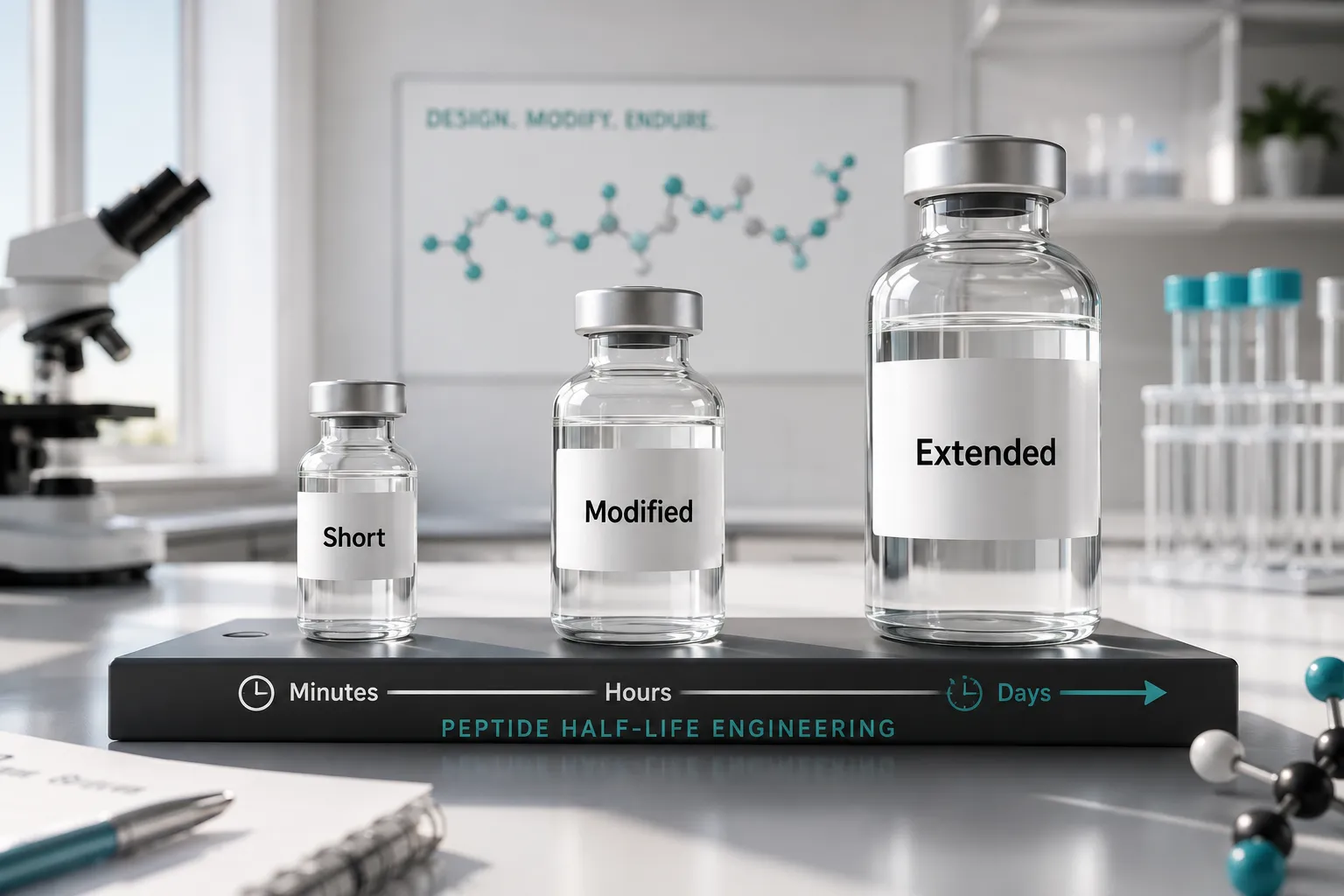
These are not theoretical concepts. They are the same tools used to engineer CJC-1295, a growth hormone-releasing hormone (GHRH) analog that uses Drug Affinity Complex (DAC) technology, essentially covalent albumin binding, to extend its half-life from minutes to days. Researchers studying CJC-1295 and ipamorelin combinations rely on this half-life engineering to design stable, reproducible experimental protocols.

"The difference between a peptide that lasts two minutes and one that lasts two days is almost entirely a structural chemistry decision, not a biological one."

Mitochondria-targeted peptides like SS-31 represent another frontier. Unlike GPCR-acting peptides, SS-31 penetrates the inner mitochondrial membrane through electrostatic interactions, scavenging reactive oxygen species at the source. Researchers exploring SS-31 peptide mechanisms are working in a pharmacological space that approved cardioprotective drugs have only partially mapped.

Research-Only Peptides: Extending the Pharmacological Blueprint
Research-Only Peptides: Extending the Pharmacological Blueprint

The principles established by approved polypeptide drugs now guide a generation of research-only compounds. The key distinction is regulatory status: these peptides are not approved for human therapeutic use and are studied exclusively in controlled research contexts.

MOTS-c is a 16-amino-acid peptide encoded within mitochondrial DNA, a discovery that overturned assumptions about where bioactive peptides originate. Its mechanism involves AMPK pathway activation, the same energy-sensing pathway targeted by metformin, the world's most prescribed diabetes drug. This pharmacological parallel gives researchers a validated reference point for interpreting MOTS-c data.

Epithalon (a tetrapeptide) and TB-500 (a thymosin beta-4 fragment) operate through entirely different mechanisms, telomerase activation and actin polymerization regulation, respectively, yet both reflect the same SAR principle: minimal sequence, maximal specificity. Researchers can explore Epithalon peptide research and TB-500 peptide studies with a clearer interpretive framework when they understand the approved-drug pharmacology that preceded them.

BPC-157, a 15-amino-acid gastric pentadecapeptide fragment, activates the NO-cGMP pathway and modulates VEGF expression, mechanisms shared with several approved wound-healing and gastroprotective agents. The BPC-157 research documentation available to researchers reflects years of preclinical data building on these established pathways.

Sourcing and Purity: The Variable That Changes Everything

Pharmacological research is only as reliable as the compound being studied. A peptide with 85% purity produces different receptor-binding data than one at 99%+ purity, not because the peptide itself is different, but because impurities compete for binding sites or trigger off-target effects. Researchers should consult peptide supplier comparison resources and prioritize vendors who provide third-party mass spectrometry and HPLC certificates of analysis.

Conclusion

The field of polypeptide peptides and drug mechanisms offers researchers a powerful interpretive lens. Approved medications, from insulin to semaglutide to afamelanotide, have already validated the receptor systems, signaling cascades, and structural engineering principles that research-only peptides now explore further.

Actionable next steps for researchers:

  1. Map any research peptide to its closest approved-drug analog to identify the validated receptor pathway it likely engages.
  2. Evaluate half-life data critically, always ask whether a modification (DAC, PEGylation, fatty acid conjugation) is present and how it affects experimental timing.
  3. Prioritize purity documentation. Request HPLC and mass spec data before any experimental protocol begins.
  4. Use SAR principles to interpret unexpected results, a single amino acid change can shift a peptide from agonist to antagonist.
  5. Stay current with preclinical literature on emerging peptides like MOTS-c and GLP-3 analogs, where the pharmacological blueprint is still being drawn.

The gap between a common medication and a research-use peptide is often smaller than it appears, and understanding that gap is what separates rigorous research from guesswork.

https://www.puretestedpeptides.com/wp-content/uploads/2026/07/polypeptide-peptides-and-drug-mechanisms-what-common-medications-reveal-about-re.webp 1024 1536 https://www.puretestedpeptides.com/wp-content/uploads/2026/01/buy-peptides-online.jpg 2026-07-29 13:05:092026-07-29 13:05:09Polypeptide Peptides and Drug Mechanisms: What Common Medications Reveal About Research-Use Peptide Pharmacology
Page 2 of 212

Tag Archive for: cjc-1295

CJC-1295 With and Without DAC: Peptide Structure, Half-Life, and Experimental GH/IGF-1 Dynamics

CJC-1295 With and Without DAC: Peptide Structure, Half-Life, and Experimental GH/IGF-1 Dynamics

June 4, 2026/0 Comments/by Pure Tested

A single structural modification — the addition of a maleimidopropionyl group — transforms a peptide with a 30-minute window of activity into one that remains active for nearly eight days. That is the pharmacological story at the heart of CJC-1295 with and without DAC: peptide structure, half-life, and experimental GH/IGF-1 dynamics, and it has significant implications for how researchers design growth hormone secretagogue protocols in vitro and in preclinical models.

Key Takeaways

  • CJC-1295 is a 30-amino-acid synthetic analog of growth hormone-releasing hormone (GHRH).
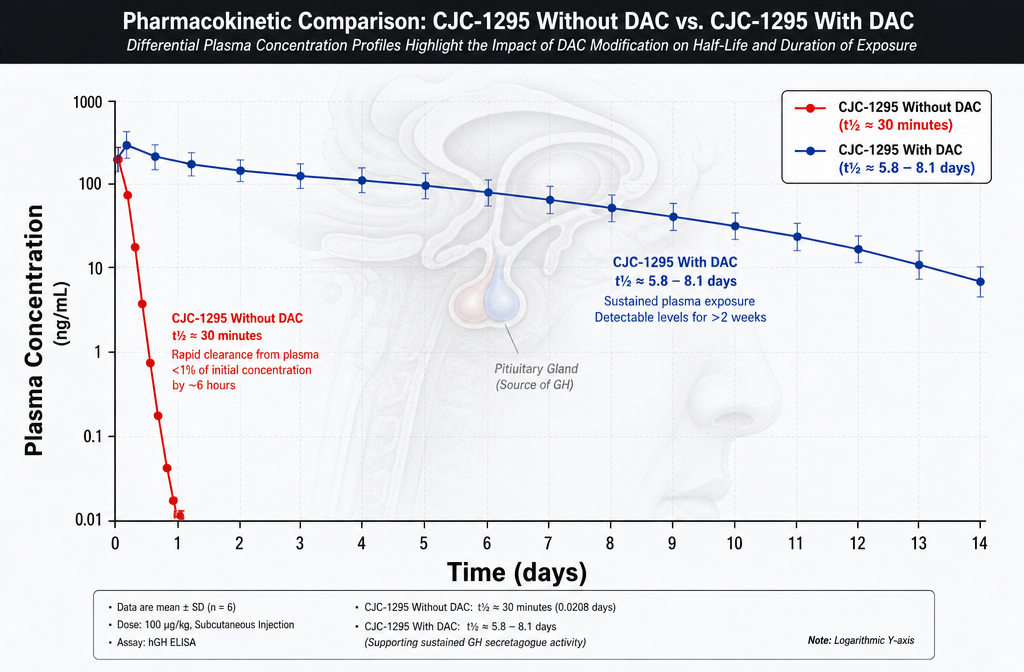
  • The Drug Affinity Complex (DAC) modification extends half-life from roughly 30 minutes to approximately 5.8-8.1 days via covalent albumin binding.
  • Without DAC (Modified GRF 1-29), the peptide requires more frequent dosing to sustain receptor stimulation.
  • A single CJC-1295 with DAC injection can produce a 2- to 10-fold increase in plasma GH lasting up to six days.
  • Combining CJC-1295 with ghrelin mimetics such as ipamorelin produces synergistic GH release through complementary pathways.

Key Takeaways


Peptide Structure: How the DAC Modification Changes Everything

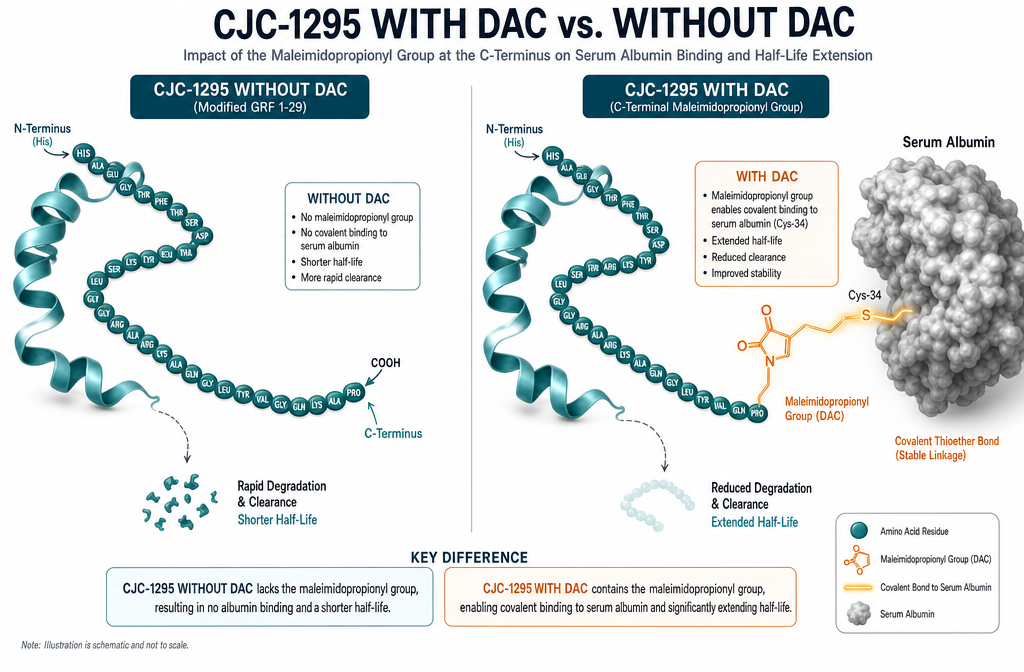
CJC-1295 is built on the first 29 amino acids of endogenous GHRH, with four strategic amino acid substitutions that resist enzymatic degradation. In its unmodified research form — commonly called Modified GRF (1-29) or CJC-1295 without DAC — the peptide retains high receptor affinity but is rapidly cleared from circulation.

The DAC version adds a maleimidopropionyl (MPA) bioconjugate to the peptide's C-terminus. This reactive group forms a covalent thioether bond with the free cysteine-34 residue on circulating serum albumin. Because albumin has a half-life of roughly 19 days and is too large to be filtered by the kidneys, the bound peptide is effectively shielded from proteolytic breakdown.

"The DAC modification does not alter receptor binding affinity — it changes how long the peptide survives long enough to bind."

This distinction matters for assay design. Researchers exploring CJC-1295 and ipamorelin combination protocols must account for whether the DAC form's prolonged presence will create sustained baseline GH stimulation or whether the pulsatile pattern of Modified GRF (1-29) better fits the experimental timeline.


Half-Life Comparison and Experimental Dosing Implications

The pharmacokinetic difference between the two forms is stark:

Form Common Name Approximate Half-Life Dosing Frequency
CJC-1295 with DAC DAC-GRF 5.8 – 8.1 days Once or twice weekly
CJC-1295 without DAC Modified GRF (1-29) ~30 minutes Multiple times daily

For context, other GHRH analogs fall well below even the without-DAC form: sermorelin has a half-life of 10-12 minutes, and tesa sits at approximately 30 minutes. Researchers can review tesa peptide benefits and pharmacology for a useful comparative baseline.

The without-DAC form is often preferred in protocols that require tight temporal control over GH pulses. Its short window allows researchers to time injections around specific assay windows, mimicking the body's natural ultradian GH rhythm. The DAC form, by contrast, produces a sustained elevation that is better suited to protocols measuring cumulative IGF-1 response over days.

For researchers building multi-peptide stacks, the sermorelin, ipamorelin, and CJC-1295 combination overview provides useful context on how different half-lives interact within the same protocol.

Half-Life Comparison and Experimental Dosing Implications


Experimental GH/IGF-1 Dynamics: What the Data Shows

Understanding CJC-1295 with and without DAC: peptide structure, half-life, and experimental GH/IGF-1 dynamics requires examining how each form drives the GH-IGF-1 axis differently.

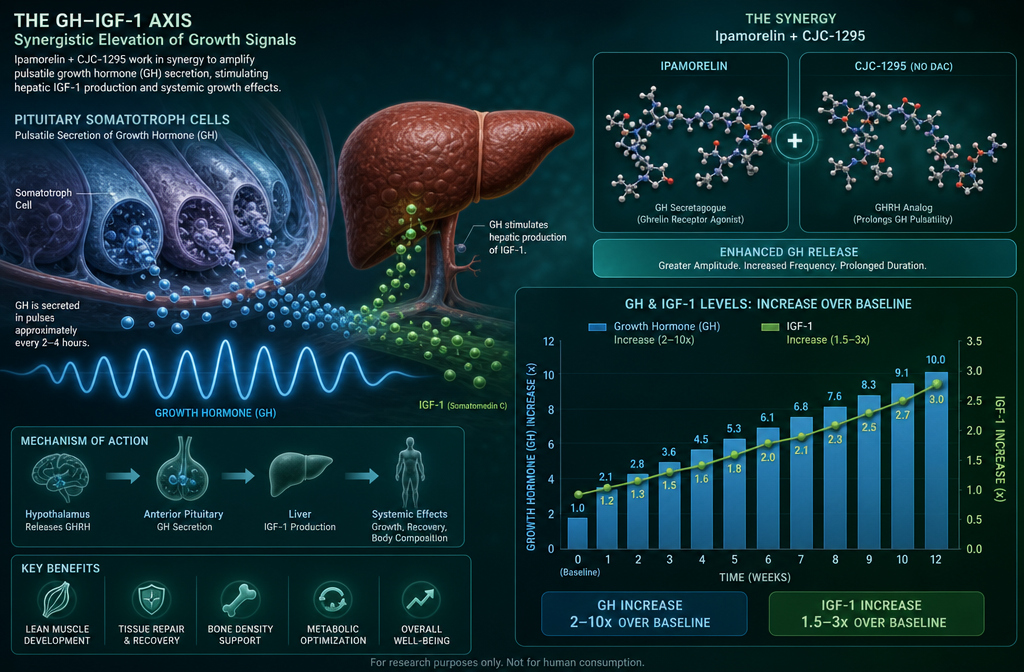
CJC-1295 with DAC binds GHRH receptors on pituitary somatotroph cells and sustains that stimulation across days. Phase I clinical data shows a single injection can produce:

  • A 2- to 10-fold increase in mean plasma GH levels lasting up to six days
  • A 1.5- to 3-fold increase in IGF-1 levels persisting for nine to eleven days

Critically, this occurs while preserving pulsatile GH secretion — a key advantage over exogenous GH administration, which suppresses the natural feedback loop. Pulsatility is associated with more physiological receptor sensitivity and reduced tachyphylaxis risk.

CJC-1295 without DAC produces sharp, transient GH spikes that closely mirror endogenous GHRH pulses. This makes it valuable for experiments requiring acute GH measurements or when researchers want to avoid prolonged IGF-1 elevation between assay time points.

Synergistic combinations are a major area of interest. Pairing CJC-1295 with a ghrelin mimetic like ipamorelin activates two distinct receptor pathways — GHRH receptors and ghrelin receptors (GHS-R1a) — simultaneously. The result is GH output greater than either peptide alone. The CJC-1295 ipamorelin assay planning and sourcing checklist is a practical resource for structuring such experiments.

Phase I safety data indicates CJC-1295 is well-tolerated at doses of 30-60 mcg/kg, with mild injection site reactions and occasional headaches as the most commonly noted effects. As of 2026, the peptide remains unapproved for human therapeutic use across most jurisdictions and is classified as a research compound.

For researchers sourcing reference-grade material, the GH axis product line overview and sermorelin ipamorelin CJC-1295 dosage reference guide offer structured starting points. Lyophilized CJC-1295 should be stored at 2-8°C and, once reconstituted, used within 30 days.

Experimental GH/IGF-1 Dynamics: What the Data Shows


Conclusion

The DAC modification is not a minor refinement — it fundamentally redefines how CJC-1295 interacts with the GH-IGF-1 axis. Researchers designing protocols in 2026 should base their form selection on experimental objectives: choose the without-DAC form when temporal precision and pulsatile GH mimicry are priorities, and the DAC form when sustained IGF-1 elevation or infrequent dosing windows are required.

Actionable next steps for researchers:

  1. Define whether the assay requires acute GH spikes or sustained IGF-1 elevation before selecting a form.
  2. Consider pairing either form with ipamorelin to leverage synergistic GH secretagogue pathways.
  3. Verify peptide purity through certificates of analysis before initiating any in vitro or preclinical work.
  4. Store lyophilized stock at 2-8°C and track reconstitution dates to maintain compound integrity.
  5. Cross-reference the CJC-1295 product and research reference page for sourcing and specification details.

https://www.puretestedpeptides.com/wp-content/uploads/2026/06/CJC-1295-With-and-Without-DAC-Peptide-Structure-Half-Life-and-Experimental-GHIGF-1-Dynamics.png 672 1024 Pure Tested https://www.puretestedpeptides.com/wp-content/uploads/2026/01/buy-peptides-online.jpg Pure Tested2026-06-04 13:05:432026-07-20 15:04:07CJC-1295 With and Without DAC: Peptide Structure, Half-Life, and Experimental GH/IGF-1 Dynamics
Peptides and Polypeptides in Cell Biology: How Experimental Peptides Interact With DNA, Mitochondria, and Hormone Receptors

Peptides and Polypeptides in Cell Biology: How Experimental Peptides Interact With DNA, Mitochondria, and Hormone Receptors

June 4, 2026/0 Comments/by Pure Tested

{"cover":"Professional landscape format (1536×1024) hero image with bold text overlay: 'Peptides & Polypeptides in Cell Biology' as main headline and subtitle 'How Experimental Peptides Interact With DNA, Mitochondria, and Hormone Receptors' in extra large 68pt bold white sans-serif font with deep navy semi-transparent overlay box, centered upper-third composition. Background shows a stunning macro scientific illustration of a glowing double-helix DNA strand intertwined with a luminous mitochondrion and molecular peptide chain structures, rendered in electric blue, teal, and white on deep navy background. Magazine cover aesthetic, editorial quality, high contrast, cinematic lighting, 2026 research theme.","content":["Detailed landscape format (1536×1024) scientific illustration showing intracellular peptide-DNA interaction: a close-up cross-section of a cell nucleus with glowing peptide chains (labeled EL28, PepH, Pep5) binding to a double-helix DNA strand. Molecular bonds shown as luminous gold nodes. Background features a translucent cell membrane with proteasome structures. Color palette: deep purple, gold, white. Clean lab-diagram aesthetic with annotated arrows, editorial quality, high contrast lighting from within the nucleus.","Detailed landscape format (1536×1024) visualization of mitochondrial targeting by peptides: a dramatic bird's-eye cross-section of a mitochondrion with its cristae structure clearly visible in electric teal and orange. Amphipathic peptide chains (MOTS-c labeled) are shown penetrating the outer mitochondrial membrane and localizing to the inner membrane. Surrounding cytoplasm shows cell-penetrating peptide vectors in motion. Deep charcoal background, bioluminescent glow effect, annotated molecular pathway arrows, editorial scientific illustration quality.","Detailed landscape format (1536×1024) diagram of hormone receptor signal transduction: a stylized cell surface showing multiple G protein-coupled receptors (GPCRs) with peptide hormone ligands docking onto receptor binding sites. Intracellular cascade shown with cAMP second messenger molecules, protein kinase activation chain, and nuclear receptor binding to DNA strand in the background. Color scheme: crimson red, white, slate blue. Clean infographic-style layout with labeled pathway steps, modern sans-serif annotations, editorial quality, high contrast."]

Professional landscape hero image () with : "Peptides and Polypeptides in Cell Biology: How Experimental Peptides Interact

Roughly 30% of all FDA-approved drugs work by targeting G protein-coupled receptors — proteins that respond directly to peptide signals. That single statistic reveals how deeply peptides and polypeptides in cell biology are woven into the machinery of life, and why research into experimental peptides has accelerated so sharply in 2026.

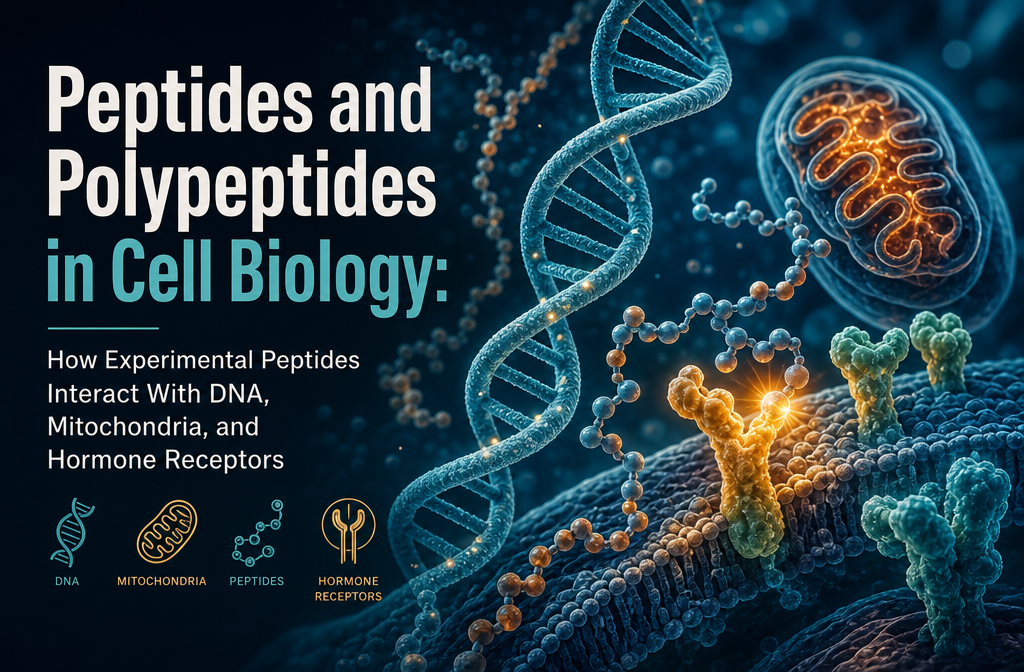
This article walks through the core mechanisms: how short amino acid chains reach the cell nucleus, penetrate mitochondrial membranes, and dock onto hormone receptors to trigger downstream signaling cascades.


Key Takeaways

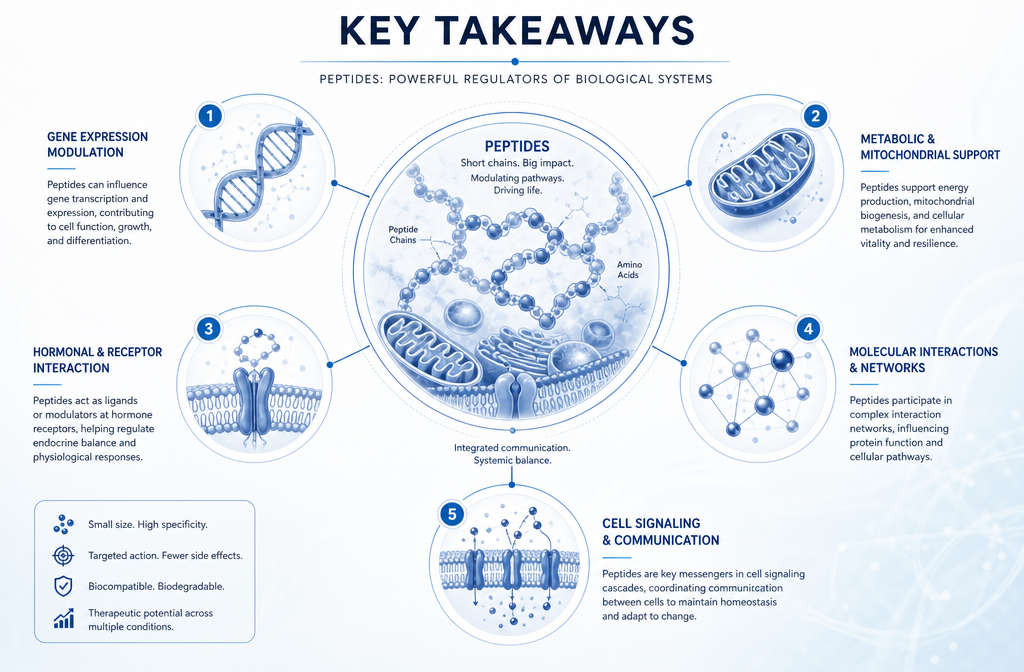
  • Intracellular peptides such as EL28, PepH, and Pep5 interact directly with DNA-associated proteins and are studied as drug prototypes.
  • Peptide hormones are hydrophilic and cannot cross the lipid bilayer, so they bind cell surface receptors and activate second messengers like cyclic AMP.
  • Experimental peptides including MOTS-c can localize to mitochondria and influence energy regulation pathways.
  • GPCRs are the primary receptor family for peptide hormones and represent a major pharmacological target class.
  • Research-grade peptides such as CJC-1295 and GLP-1 analogs operate through receptor-mediated signaling with measurable downstream effects on gene expression.

Peptides and Polypeptides in Cell Biology: The Structural Foundation

Peptides and Polypeptides in Cell Biology: The Structural Foundation

A peptide is a chain of two or more amino acids linked by peptide bonds. A polypeptide is simply a longer chain — typically more than 50 residues. When folded into functional shapes, polypeptides become proteins. The distinction matters in research because short peptides often behave differently from full proteins: they can slip through membranes, evade immune detection, and reach targets that larger molecules cannot.

Intracellular Peptides and DNA Interaction

Inside the cell, certain peptides operate in the nucleus itself. Intracellular peptides derived from proteasomal degradation — including EL28 (from proteasome regulatory subunit 4), PepH (from Histone H2B), and Pep5 (from cyclin D2) — have been identified as functional modulators of protein-protein interactions linked to gene regulation. These are not merely degradation byproducts; they act as prototype drug candidates because they already exist in the cellular environment and interact with DNA-associated machinery.

This opens a compelling research angle: if naturally occurring intracellular peptides can modulate transcription-linked proteins, then synthetic analogs designed to mimic or block those interactions could influence gene expression with high precision.


Mitochondrial Targeting: How Experimental Peptides Reach the Powerhouse

Mitochondrial Targeting: How Experimental Peptides Reach the Powerhouse

Mitochondria are not passive energy factories. They participate in intracrine signaling — internal signaling loops that influence cell survival, metabolism, and apoptosis. Peptides including angiotensin II and transforming growth factor-beta have been detected inside mitochondria, suggesting that peptide signaling extends well beyond the cell surface.

More recently, amphipathic proline-rich cell-penetrating peptides have been engineered to cross the plasma membrane and localize specifically to mitochondria. These vectors carry therapeutic payloads or act directly on mitochondrial membranes to stabilize cristae architecture and reduce oxidative stress.

MOTS-c, a mitochondria-derived peptide encoded in mitochondrial DNA, is one of the most studied examples. Research into MOTS-c mitochondrial research themes shows that it translocates to the nucleus under metabolic stress and regulates gene expression — a striking example of cross-compartment peptide signaling. The compound MOTS-c and SLU-PP-332 pairing has also attracted attention for its potential effects on mitochondrial biogenesis pathways.

The SS-31 peptide (elamipretide) represents another mitochondria-targeted research compound. Its mechanism centers on cardiolipin stabilization within the inner mitochondrial membrane. Detailed research considerations are covered in this SS-31 10mg research peptide overview, and its broader mitochondrial dynamics are explored in SS-31 mitochondrial dynamics research.


Hormone Receptors and Signal Transduction: Where Peptides Meet Cell Biology

Hormone Receptors and Signal Transduction: Where Peptides Meet Cell Biology

Because peptide hormones are hydrophilic, they cannot diffuse through the fatty lipid bilayer of the cell membrane. Instead, they bind to receptors on the cell surface, which then relay the signal inward.

Three Major Receptor Classes for Peptide Hormones

Receptor Type Mechanism Example Peptide
G protein-coupled receptors (GPCRs) Activate G proteins, trigger cAMP GLP-1, GIP
Enzyme-linked receptors Direct kinase activation Insulin, IGF-1
Ion channel receptors Gate ion flow Neuropeptides

GPCRs dominate peptide hormone pharmacology. When a peptide ligand binds, the receptor activates a G protein, which in turn stimulates adenylyl cyclase to produce cyclic AMP (cAMP). This second messenger activates protein kinases that phosphorylate downstream targets — ultimately altering metabolism, proliferation, or secretion.

Research into GLP-1 dual receptor agonism and GIP receptor importance illustrates how next-generation peptide drugs exploit this pathway. Similarly, CJC-1295 research demonstrates GPCR-mediated growth hormone secretion through GHRH receptor activation.

Steroid hormones follow a different route — they diffuse through the membrane and bind nuclear receptors that act directly as transcription factors, binding DNA to switch genes on or off. Experimental peptides that mimic steroid hormone behavior are therefore studied for their potential to regulate gene expression without the systemic side effects of steroids.


Conclusion

Understanding peptides and polypeptides in cell biology — how experimental peptides interact with DNA, mitochondria, and hormone receptors — is no longer purely academic. In 2026, this knowledge directly informs the design of research-grade compounds targeting metabolic disease, mitochondrial dysfunction, and endocrine signaling.

Actionable next steps for researchers:

  • Review mitochondria-targeted compounds such as SS-31 and MOTS-c for models of intracellular peptide delivery.
  • Study GPCR-mediated pathways when evaluating GLP-1, GIP, and secretagogue peptides like CJC-1295 and ipamorelin.
  • Examine intracellular peptide prototypes (EL28, PepH) as templates for nucleus-targeted drug design.
  • Explore the full peptides research catalog to identify compounds relevant to specific signaling pathways.

The cell is not a black box. Peptides are the keys — and mapping how they fit each lock is the central challenge of modern molecular biology.


https://www.puretestedpeptides.com/wp-content/uploads/2026/06/Peptides-and-Polypeptides-in-Cell-Biology-How-Experimental-Peptides-Interact-With-DNA-Mitochondria-and-Hormone-Receptors.png 672 1024 Pure Tested https://www.puretestedpeptides.com/wp-content/uploads/2026/01/buy-peptides-online.jpg Pure Tested2026-06-04 13:04:432026-07-20 15:04:08Peptides and Polypeptides in Cell Biology: How Experimental Peptides Interact With DNA, Mitochondria, and Hormone Receptors
Page 2 of 212
×

Helpful Links

  • My account
  • Cart
  • Checkout
  • Refund and Returns Policy
  • Privacy Policy
  • SMS Privacy Policy
  • Login
  • My Account
  • Logout

USA Made Lab Tested Peptides

All products are sold for research, laboratory, or analytical purposes only, and are not for human consumption


Pure Tested Peptides is a chemical supplier. Pure Tested Peptides is not a compounding / chemical compounding facility as defined under 503A of the Federal Food, Drug, and Cosmetic act. Pure Tested Peptides is not an outsourcing facility as defined under 503B of the Federal Food, Drug, and Cosmetic act.

The statements made within this website have not been evaluated by the US Food and Drug Administration. The products we offer are not intended to diagnose, treat, cure or prevent any disease.

Human/Animal Consumption Prohibited. Laboratory/In-Vitro Experimental Use Only

Scroll to top Scroll to top Scroll to top