

Ondansetron, Famotidine, and Peptide Feeding Studies: Controlling Nausea, Gastric Acidity, and Meal-Timing Bias
Roughly one-third of subjects in controlled enteral feeding trials experience moderate-to-severe nausea during nutrient infusion, yet most study protocols treat nausea, gastric acidity, and meal timing as background noise rather than as active confounders. That oversight can quietly invalidate outcome measurements. A rigorous understanding of how ondansetron, famotidine, and peptide feeding studies interact, and how to control for nausea, gastric acidity, and meal-timing bias, is now a practical requirement for any researcher or clinician designing a credible nutritional investigation.
Key Takeaways
- Ondansetron reduces symptom perception during nutrient infusion without necessarily changing gastric emptying rate, which means nausea scores and true nutrient delivery timing can become decoupled.
- Famotidine controls gastric pH independent of meal timing, but inconsistent pre-meal administration creates systematic bias when feeding-tolerance scores are compared across subjects.
- Meal-timing bias arises when the pharmacologic window of acid suppression or antiemetic coverage does not align consistently with the actual feed delivery window.
- Peptide-based enteral formulas interact with gastric transit differently than polymeric formulas, making standardized infusion rates and pH monitoring especially important.
- Combining pre-defined antiemetic dosing, titrated acid suppression, and objectively measured gastric emptying is the emerging standard for minimizing confounders in feeding research.
How Ondansetron Affects Symptom Measurement in Feeding Studies
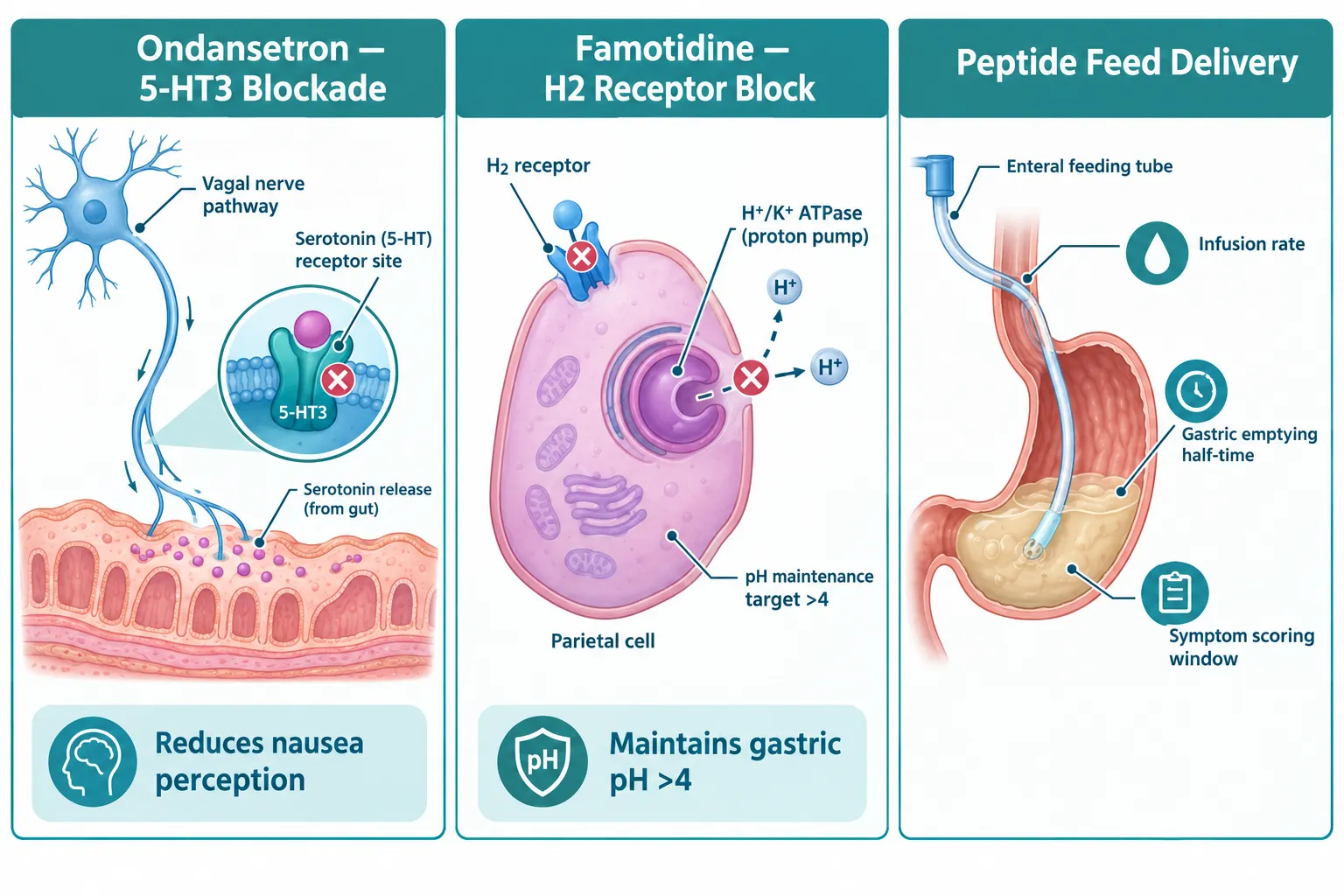
Ondansetron is a selective 5-HT3 receptor antagonist. It blocks serotonin receptors on vagal afferent nerves, reducing the gut-to-brain signaling that produces nausea and upper-GI discomfort. In a 2024 trial involving patients with delayed gastric emptying, ondansetron significantly reduced fullness (p = 0.02) and belching (p = 0.049) during a standardized enteral lipid challenge. Importantly, it did not change gastric emptying half-time. Severe nausea still occurred in approximately 32% of ondansetron subjects versus 29% on placebo.
"Ondansetron may allow patients to tolerate scheduled feeds better and report lower nausea scores, while underlying gastric emptying kinetics, and thus true nutrient delivery timing, remain unchanged."
This dissociation between symptom relief and motility has direct consequences for study design. If a trial uses patient-reported nausea as a proxy for feeding tolerance, ondansetron use will inflate the tolerance score without confirming that the peptide formula was actually absorbed on schedule. Researchers must therefore separate subjective symptom endpoints from objective delivery endpoints such as scintigraphic or breath-test gastric emptying measurements.
In chemotherapy research, a Bayesian network meta-analysis covering 16 randomized trials and more than 3,100 patients found that regimens combining an NK1 antagonist, ondansetron, and dexamethasone ranked highest for complete antiemetic response and were associated with better preservation of food intake. This positions ondansetron-based combinations as a practical tool not just for symptom control but for maintaining reliable oral and enteral intake, a prerequisite for valid nutritional outcome data.
For researchers exploring GLP-1 peptides in feeding protocols, the antiemetic coverage strategy is particularly relevant because GLP-class compounds themselves can induce nausea as an on-target effect.
Famotidine, Gastric pH Control, and the Meal-Timing Problem
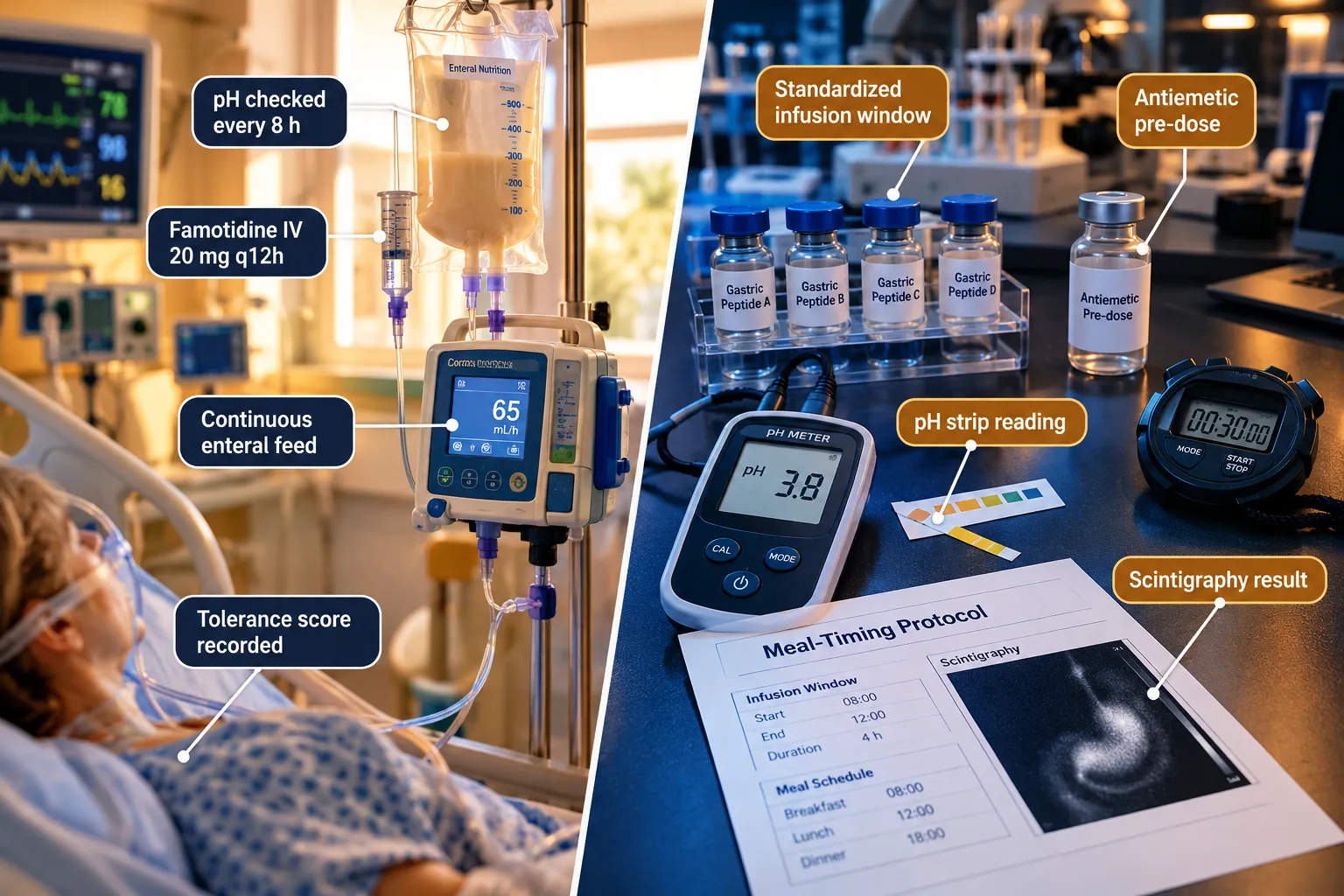
Famotidine is a histamine-2 (H2) receptor antagonist that suppresses parietal cell acid output. In pathological hypersecretory states, doses can range from 20 to 160 mg every six hours, titrated to keep basal gastric acid output below 10 mEq per hour. In standard stress-ulcer prophylaxis within critical care, the more common regimen is 20 mg intravenously every 12 hours, with pH checks every eight hours and escalation to a continuous infusion if gastric pH remains below 4 for more than 16 hours.
Meal-timing bias enters the picture in two ways:
-
Pre-meal administration gap. Product monographs for famotidine tablets specify administration 10-15 minutes before eating to prevent food-triggered acid symptoms. In research settings, inconsistent adherence to this pre-meal window produces variation in gastric pH at the moment of feed delivery, which directly affects peptide stability, absorption kinetics, and symptom scores.
-
Background versus meal-locked dosing. Neonatal guidelines note that famotidine drawn into enteral syringes "may be given anytime in relation to feeds," treating acid suppression as a continuous background modifier rather than a feed-synchronized event. When adult and neonatal protocols are mixed or when investigators switch between these philosophies mid-study, gastric pH at feed initiation becomes an unmeasured variable.
The practical solution is biochemical anchoring: document gastric pH at the start of each feed window, not just at scheduled dosing intervals. This converts famotidine from a source of noise into a controlled variable.
For teams working with GLP-3 peptides in feeding studies, gastric pH stability matters because peptide degradation at low pH can reduce bioavailability before absorption occurs, confounding dose-response calculations.
Additional context on specific peptide products, including purity standards relevant to research integrity, is available at the GLP-3 peptide for sale and buy GLP-3 peptide 10mg 99% pure pages for reference-grade sourcing considerations.
Building a Protocol That Controls All Three Confounders
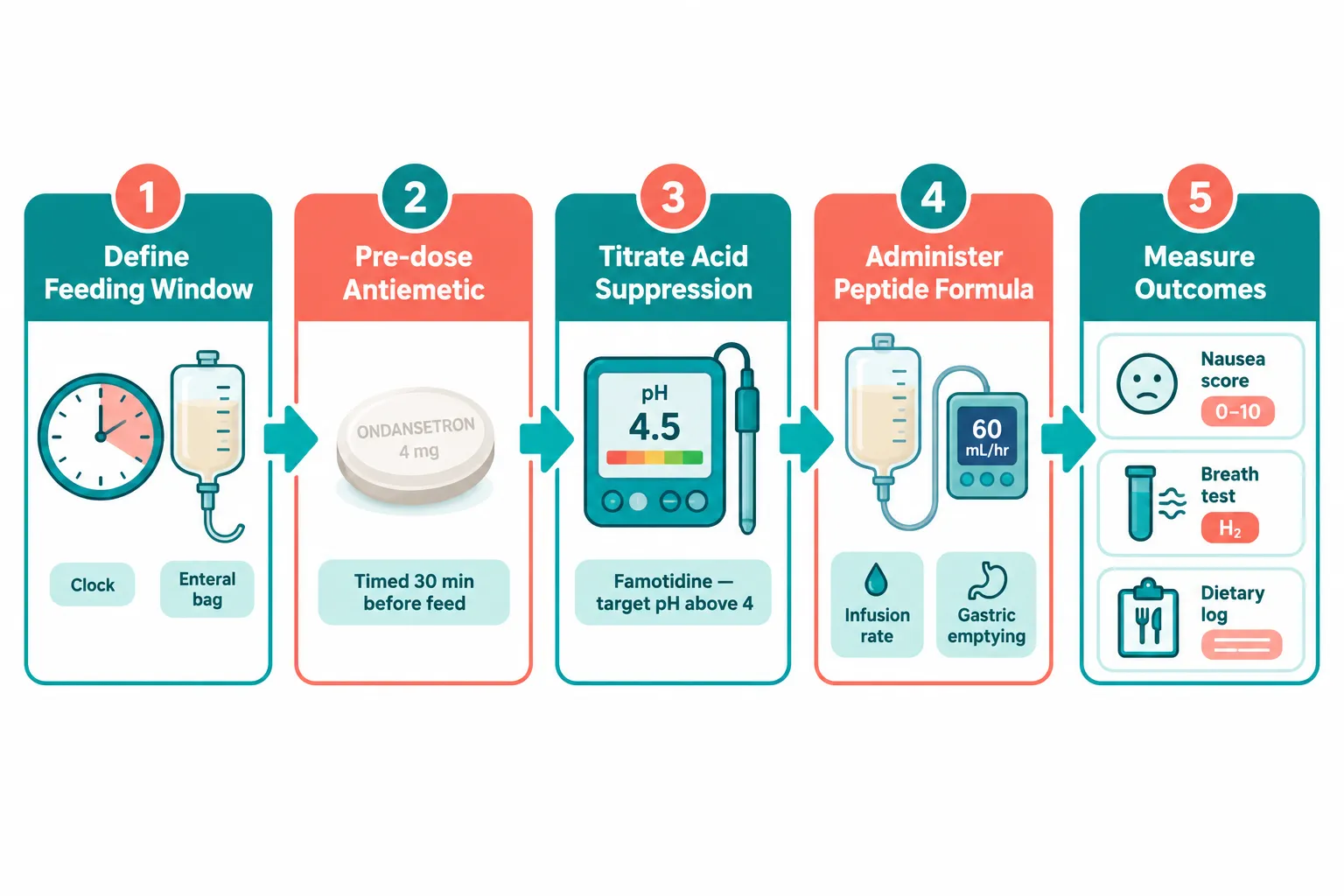
Emerging best practice in ondansetron, famotidine, and peptide feeding studies integrates three elements into a single, time-anchored protocol. The table below summarizes the core design components.
| Confounder | Control Strategy | Measurement Tool |
|---|---|---|
| Nausea perception | Ondansetron dosed 30 min before feed initiation | Validated nausea scale + separate emptying measurement |
| Gastric acidity | Famotidine titrated to maintain pH above 4; documented at feed start | Serial gastric pH strips or intragastric probe |
| Meal-timing bias | Fixed infusion rate; pharmacologic window aligned to feed window | Scintigraphy or C13 breath test; detailed dietary log |
In critically ill patients receiving enteral or parenteral nutrition, these three controls overlap. ICU protocols that add 40 mg famotidine to total parenteral nutrition bags and initiate continuous infusion when pH control fails show how acid suppression can be operationalized alongside continuous feeding, a model research teams can adapt for peptide-formula trials.
Hyperemesis gravidarum data reinforce why this matters. Despite profound nausea where ondansetron is widely used, only 8-10% of affected patients receive enteral tube feeding. The absence of standardized enteral protocols in that population makes it nearly impossible to study meal timing or peptide composition systematically, a cautionary example for any research program that delays protocol standardization.
Researchers sourcing research-grade peptides for feeding investigations can review purity and formulation standards at resources such as the where to buy research-grade peptide: evaluating purity guide, which covers third-party testing criteria applicable across multiple peptide classes.
Conclusion
Controlling nausea, gastric acidity, and meal-timing bias is not optional in peptide feeding research, each variable independently alters the data. The actionable steps for 2026 protocols are clear:
- Anchor ondansetron dosing to a defined pre-feed window and collect separate gastric emptying data so symptom relief and motility are never assumed to be the same endpoint.
- Document gastric pH at feed initiation, not just at medication administration, to confirm that famotidine has achieved biochemical control before peptide delivery begins.
- Standardize infusion rates and formulation composition, and use objective tools, scintigraphy, breath tests, dietary logs, to quantify true nutrient delivery timing rather than relying on scheduled times alone.
- Align the pharmacologic window of both drugs to the feed window, treating ondansetron and famotidine as protocol variables rather than background medications.
Research teams seeking high-purity peptides with verified third-party testing for use in controlled feeding studies should also consult a peptides doctor near me resource to ensure appropriate oversight for any in-vivo investigations. With all three confounders addressed systematically, feeding studies can yield data that genuinely reflects peptide effects rather than artifacts of uncontrolled nausea, variable acidity, or inconsistent timing.