Call or Text 727-513-9780
  • Shopping Cart Shopping Cart
    0Shopping Cart
Pure Tested Peptides | America's most trusted Peptides for sale online
  • Peptides for sale
    • Oral Peptides for sale
      • Peptide Capsules for sale
      • BPC 157 Capsules 1000mcg
      • SLU-PP-332 Capsules | 1000 mcg
      • 5-Amino-1MQ 50mg Capsules
      • Tesofensine 500mcg
    • All Peptides for sale
    • Peptide Sprays
      • BPC 157 Nasal Spray Kit
      • BPC-157 TB500 Nasal Spray Kit
      • Semax Nasal Spray 10mg
      • Selank – Nasal Spray Kit – 10mg
      • Epithalon 50MG Nasal Spray Kit
      • Ipamorelin 10mg Nasal Spray
      • Klow Nasal Spray (BPC-157 + TB-500 + GHK-Cu + KPV) | 80mg
      • Hulk Nasal Spray Tesa / Ipa Blend 6/3 MG
      • Klow Nasal Spray
      • NAD + 500 mg Nasal Spray
      • PT-141 Nasal Spray Kit
    • GHRH Peptides
      • Ipa Peptides
      • CJC-1295 Peptides
        • CJC-1295 with DAC 5 mg
        • CJC-1295 without DAC 5 mg
        • CJC-1295 Ipa 10mg
      • Tesa Peptides
        • Tesa Peptide
        • Tesa 20 mg
    • GHK-Cu Peptides
      • All GHK-Cu Peptides
      • GHK-Cu 100mg
      • KLOW Peptide Blend – Buy KLOW blend online
    • BPC Peptides
      • All BPC Peptides
      • BPC-157
      • BPC-157 TB-500
      • BPC 157 capsules 1000mcg
    • SLU-PP-332 Peptides
      • All SLU-PP-332 Peptides
      • SLU-PP-332 5mg
    • GLP3 Peptides
    • PT-141 Peptides
      • PT-141 Peptides for sale
      • PT-141 10mg
      • PT-141 Nasal Spray
    • CAG Peptides
      • Lipo-C Peptide Blend
      • CAG 5mg
      • CAG 10mg
    • MOTS-C Peptides
      • MOTS-C Peptides for sale
      • MOTS-c peptide
      • MOTS-c 10mg *6 pack*
    • 5 Amino 1MQ Peptides
      • 5 Amino 1MQ Peptides for sale
      • 5-Amino-1MQ 50mg Capsules
      • 5-Amino-1MQ 5mg
    • Epithalon Peptides
      • Epithalon Peptides for sale
      • Epithalon 10mg
      • Epithalon 50mg
  • Shop
    • GLPs
      • 5-Amino-1MQ 50mg Capsules
      • 5-Amino-1MQ 5mg
      • L-Carnitine 500mg/ml
      • Tesofensine 500mcg
      • SLU-PP-332 5mg
      • MOTS-c 10mg *6 pack*
    • Epithalon & BPC Peptides
      • Epithalon 10mg
      • Epithalon 50mg
      • BPC-157
      • BPC 157 capsules 1000mcg
      • BPC-157 TB-500
      • BPC-157 TB500 Nasal Spray Kit
      • BPC 157 Nasal Spray Kit
    • BPC TB-500 & NAD+ Peptides
      • NAD+ 500 mg
      • KLOW Peptide Blend – Buy KLOW blend online
      • GLOW Peptide Blend
      • TB 500 5mg
      • BPC 157 capsules 1000mcg – Supplement
      • BPC 157 Nasal Spray Kit
      • BPC-157
      • BPC-157 TB500 Nasal Spray Kit
      • BPC-157 TB-500
      • BPC 157 capsules 1000mcg
    • LL-37 Peptide
      • LL-37 10 mg
    • MOTS-C & Selank
      • MOTS-c peptide
      • Selank 10mg
    • GHK Peptides
      • GHK-Cu 100mg
      • GLOW Peptide Blend
      • KLOW Peptide Blend – Buy KLOW blend online
  • COAs
  • Wholesale
    • Wholesale Peptides for sale
  • PTP FAQ
  • Affiliates
    • Selank Peptide: Advanced Pharmacological Mechanisms Underlying Its Anxiolytic and Nootropic Effects in Research
      • 5-Amino-1MQ Peptide: Detailed Mechanisms of NNMT Inhibition and Its Impact on Cellular Metabolism Research
        • MOTS-C Peptide: Unraveling Its Role in Mitochondrial Dynamics and Energy Metabolism Research
          • Epithalon Peptide and Telomerase Regulation: Investigating Its Impact on Cellular Senescence and Lifespan Research Models
            • GLP2-T vs GLP2 Tirz Peptide: Understanding the Naming, Mechanistic Nuances, and Research Implications for Gut Health
      • Peptides and Polypeptides in Modern Pharmacology: What Research on Metoprolol, Prednisone, and Amlodipine Reveals
        • Polypeptide Peptides vs NSAIDs: What Naproxen and Diclofenac Teach Tissue-Repair Researchers About BPC‑157 and TB‑500
          • Peptides and Polypeptides in Endocrine Pharmacology: How GLP-1, GLP-2, and GLP-3 Retatrutide Differ From Classic Drugs Like Prednisone and Amlodipine
          • 5‑Amino‑1MQ Peptide and NNMT Inhibition: How It Compares With Statins Like Atorvastatin in Adipose and Lipid Metabolism Research
      • Enclomiphene, Estrogen Receptor Signaling, and Luteinizing Phase Biology: What Hormone Researchers Should Measure
        • Mesenchymal Stem Cells, BPC‑157, and GHK‑Cu: How Tissue Repair Peptides Compare With Classic NSAIDs Like Naproxen in Injury Models
          • Peptide Calculator Use Cases Beyond Growth Hormone: Working Through GLP‑3 Retatrutide, MOTS‑c, and BPC‑157 Research Dosing
        • Polypeptide Peptides in Endocrine and Metabolic Pharmacology: Lessons From Amlodipine, Prednisone, and Metoprolol
        • Peptides Calculator for Advanced Blends: Worked Examples for Tesamorelin, CJC‑1295, and Ipamorelin Stacks
          • Peptides and Polypeptides in Human Physiology: How Molecular Size Shapes Research Applications
            • Selank Peptide: Advanced Pharmacological Mechanisms Underlying Its Anxiolytic and Nootropic Effects in Research
          • 5-Amino-1MQ Peptide: Detailed Mechanisms of NNMT Inhibition and Its Impact on Cellular Metabolism Research
            • MOTS-C Peptide: Unraveling Its Role in Mitochondrial Dynamics and Energy Metabolism Research
              • Epithalon Peptide and Telomerase Regulation: Investigating Its Impact on Cellular Senescence and Lifespan Research Models
                • GLP2-T vs GLP2 Tirz Peptide: Understanding the Naming, Mechanistic Nuances, and Research Implications for Gut Health
                  • Peptides and Polypeptides in Endocrine Pharmacology: How GLP-1, GLP-2, and GLP-3 Retatrutide Differ From Classic Drugs Like Prednisone and Amlodipine
                    • Polypeptide Peptides vs NSAIDs: What Naproxen and Diclofenac Teach Tissue-Repair Researchers About BPC‑157 and TB‑500
                      • Peptides and Polypeptides in Modern Pharmacology: What Research on Metoprolol, Prednisone, and Amlodipine Reveals
                        • 5‑Amino‑1MQ Peptide and NNMT Inhibition: How It Compares With Statins Like Atorvastatin in Adipose and Lipid Metabolism Research
                        • Enclomiphene, Estrogen Receptor Signaling, and Luteinizing Phase Biology: What Hormone Researchers Should Measure
                        • Mesenchymal Stem Cells, BPC‑157, and GHK‑Cu: How Tissue Repair Peptides Compare With Classic NSAIDs Like Naproxen in Injury Models
                        • Peptide Calculator Use Cases Beyond Growth Hormone: Working Through GLP‑3 Retatrutide, MOTS‑c, and BPC‑157 Research Dosing
                        • Polypeptide Peptides in Endocrine and Metabolic Pharmacology: Lessons From Amlodipine, Prednisone, and Metoprolol
                        • Peptides Calculator for Advanced Blends: Worked Examples for Tesamorelin, CJC‑1295, and Ipamorelin Stacks
                        • Peptides and Polypeptides in Human Physiology: How Molecular Size Shapes Research Applications
                        • Selank Peptide: Advanced Pharmacological Mechanisms Underlying Its Anxiolytic and Nootropic Effects in Research
                        • MOTS-C Peptide: Unraveling Its Role in Mitochondrial Dynamics and Energy Metabolism Research
                        • Peptides and Polypeptides in Modern Pharmacology: What Research on Metoprolol, Prednisone, and Amlodipine Reveals
                        • Peptides and Polypeptides in Endocrine Pharmacology: How GLP-1, GLP-2, and GLP-3 Retatrutide Differ From Classic Drugs Like Prednisone and Amlodipine
                        • 5-Amino-1MQ Peptide: Detailed Mechanisms of NNMT Inhibition and Its Impact on Cellular Metabolism Research
                        • Mesenchymal Stem Cells, BPC‑157, and GHK‑Cu: How Tissue Repair Peptides Compare With Classic NSAIDs Like Naproxen in Injury Models
                        • Peptide Calculator Use Cases Beyond Growth Hormone: Working Through GLP‑3 Retatrutide, MOTS‑c, and BPC‑157 Research Dosing
                        • GLP2-T vs GLP2 Tirz Peptide: Understanding the Naming, Mechanistic Nuances, and Research Implications for Gut Health
                        • Polypeptide Peptides in Endocrine and Metabolic Pharmacology: Lessons From Amlodipine, Prednisone, and Metoprolol
                        • Polypeptide Peptides vs NSAIDs: What Naproxen and Diclofenac Teach Tissue-Repair Researchers About BPC‑157 and TB‑500
                        • Peptides and Polypeptides in Human Physiology: How Molecular Size Shapes Research Applications
                        • Peptides Calculator for Advanced Blends: Worked Examples for Tesamorelin, CJC‑1295, and Ipamorelin Stacks
                        • 5‑Amino‑1MQ Peptide and NNMT Inhibition: How It Compares With Statins Like Atorvastatin in Adipose and Lipid Metabolism Research
                        • Enclomiphene, Estrogen Receptor Signaling, and Luteinizing Phase Biology: What Hormone Researchers Should Measure
                        • Epithalon Peptide and Telomerase Regulation: Investigating Its Impact on Cellular Senescence and Lifespan Research Models
                        • Best research protocol Klow blend
                        • best time to take BPC-157
                        • best time to take DSIP (Delta Sleep Inducing Peptide)
                        • best time to take CJC-1295
                        • best time to take AOD-9604
                        • best time to take Follistatin 344
                        • best time to take Ipamorelin
                        • best time to take MK-677 (Ibutamoren)
                        • best time to take Ligandrol (LGD-4033) — research compound
                        • best time to take Ostarine (MK-2866) — research compound
                        • best time to take GHK-CU
                        • best time to take TB-500
                        • best time to take MOTS-c
                        • best time to take Semax
                        • best time to take RAD-140 (Testolone) — research compound
                        • best time to take Thymosin Alpha-1
                        • best time to take PEG-MGF
                        • Biolife Plasma, Octapharma Plasma, and Research Peptides: How Plasma Donation Labs Differ From Peptide Suppliers
                        • best time to take YK-11 — research compound
                        • best time to take PT-141 (Bremelanotide)
                        • Best research protocol Klow blend
                        • 5-Amino-1MQ and MOTS-C Synergy: Metabolic Signaling, Mitochondria, and Research Design
                        • BPC-157 and TB-500: Investigating Their Combined Effects on Angiogenesis and Cellular Migration in Tissue Repair Models
                        • BPC-157 Peptide: Gut Barrier Function, Inflammation, and Tissue-Recovery Research
                        • 5‑Amino‑1MQ and MOTS‑c Synergy in Metabolic Research: Designing NNMT and Mitochondrial Biogenesis Stacks
                        • CJC-1295 with DAC vs. Without DAC: Half-Life, Release Kinetics, and Research Implications
                        • CJC‑1295 with DAC vs. Without DAC: Expanding on Half‑Life Differences Using Tesamorelin and Ipamorelin Blend Case Studies
                        • Collagen Biology and Copper‑Binding Peptides: How GHK‑Cu, Glow Blend, and Klow Blend Interact with Skin and Connective Tissue
                        • Collagen Biology and Regenerative Peptides: How GHK‑Cu, Glow Blend, and Klow Blend Affect Extracellular Matrix Research
                    • DNA, Telomeres, and Longevity Peptides: Positioning Epithalon and MOTS‑c in Genetic Aging Research
                      • Enclomiphene Citrate: serm Mechanism, Testosterone Research, and Stack Compatibility
                        • Enclomiphene vs Enclomiphene Citrate: Formulation, Bioavailability, and Research Distinctions
                        • Epithalon Peptide Research: Telomerase Activation, Aging, and Pineal Gland Function
                        • Estrogen Receptor Signaling and Enclomiphene: How Selective Modulators Compare with Classic Polypeptide Hormones
                        • GHK-Cu Peptide: Advanced Mechanisms in Extracellular Matrix Remodeling and Wound Healing Research
                        • GHK-Cu Peptide: Collagen Synthesis, Wound Repair, and Skin-Barrier Research Models
                        • GLP-1 vs GLP-3 vs GLP-2: Peptide Classification and Research Applications
                        • GLP-2 Peptide Research Guide: Gut Barrier Function, Nutrient Absorption, and Intestinal Recovery Models
                        • GLP-3 Retatrutide vs. GLP-1 Drugs: What Triple-Agonist Biology Changes in Research Models
                        • Ipamorelin and Tesamorelin Combination: Synergistic GH Secretagogue Research and Dosing Protocols
                        • GLP2 Tirz Peptide: What It Is, Why the Name Exists, and How Researchers Should Interpret It
                        • Klow Blend Peptide Nasal Spray: What the Formulation Is Trying to Do in Cognitive Research
                        • Mitochondria, NNMT Inhibition, and Peptide Modulators: Where MOTS‑c and 5‑Amino‑1MQ Fit in Cellular Energy Research
                        • MOTS-c Peptide: Mitochondrial Function, Energy Metabolism, and What Researchers Measure
                        • MOTS-c vs. 5-Amino-1MQ: Which Metabolic Research Questions Each Compound Actually Answers
                        • Nasal Spray Peptides: Bioavailability, Administration, and Semax/Selank Research Applications
                        • PT-141 Peptide Research: Mechanism of Action and Melanocortin Receptor Signaling
                        • Retatrutide for Research: Mechanism, Structure, and GLP-1/GLP-3 Dual Action
                        • Retatrutide for Obesity and Type 2 Diabetes: What the Latest Trial Data Suggest
                        • Tesofensine Peptide Research: Mechanism, Appetite Suppression, and Neuropeptide Y Pathways
  • Contact
    • Contact Customer Service
    • Text Customer Support
  • About US
  • Shop all peptides
  • Affiliate Program
    • Affiliate Signup
  • Login / Register Login / Register Page Link Login / Register Page Link
  • Click to open the search input field Click to open the search input field Search
  • Menu Menu

Tag Archive for: freeze-thaw cycles

Peptide Reconstitution and Stability: How Buffer Choice, pH, Osmolality, and Freeze–Thaw Cycles Affect Research Samples

Peptide Reconstitution and Stability: How Buffer Choice, pH, Osmolality, and Freeze–Thaw Cycles Affect Research Samples

September 23, 2026/0 Comments/in Uncategorized/by

Roughly 30% of peptide research samples degrade before a single experiment is completed, not because of poor synthesis, but because of avoidable reconstitution errors. Peptide reconstitution and stability: how buffer choice, pH, osmolality, and freeze, thaw cycles affect research samples is one of the most consequential yet underappreciated topics in peptide science. A wrong buffer or a single extra freeze, thaw cycle can shift purity from 99% to well below 90%, invalidating weeks of downstream work.

Key Takeaways

  • The optimal pH window for most peptide solutions is 3.5-4.5, with acetate and citrate buffers as first-line choices.
  • Deamidation, hydrolysis, and aggregation each peak at distinct pH bands, making buffer selection sequence-specific.
  • Osmolality must be controlled (280-320 mOsm/kg for parenteral and intranasal formulations) to preserve biorelevance.
  • Every freeze, thaw cycle introduces measurable degradation; single-use aliquots are the primary mitigation strategy.
  • Stability profiles differ significantly across peptide classes, GLP-class, growth-hormone, regenerative, and nasal peptides each require tailored protocols.

Why Buffer Choice Drives Peptide Reconstitution and Stability
Why Buffer Choice Drives Peptide Reconstitution and Stability

The buffer is not a passive carrier. It sets the chemical environment that either protects or attacks a peptide's backbone and side chains from the moment of reconstitution.

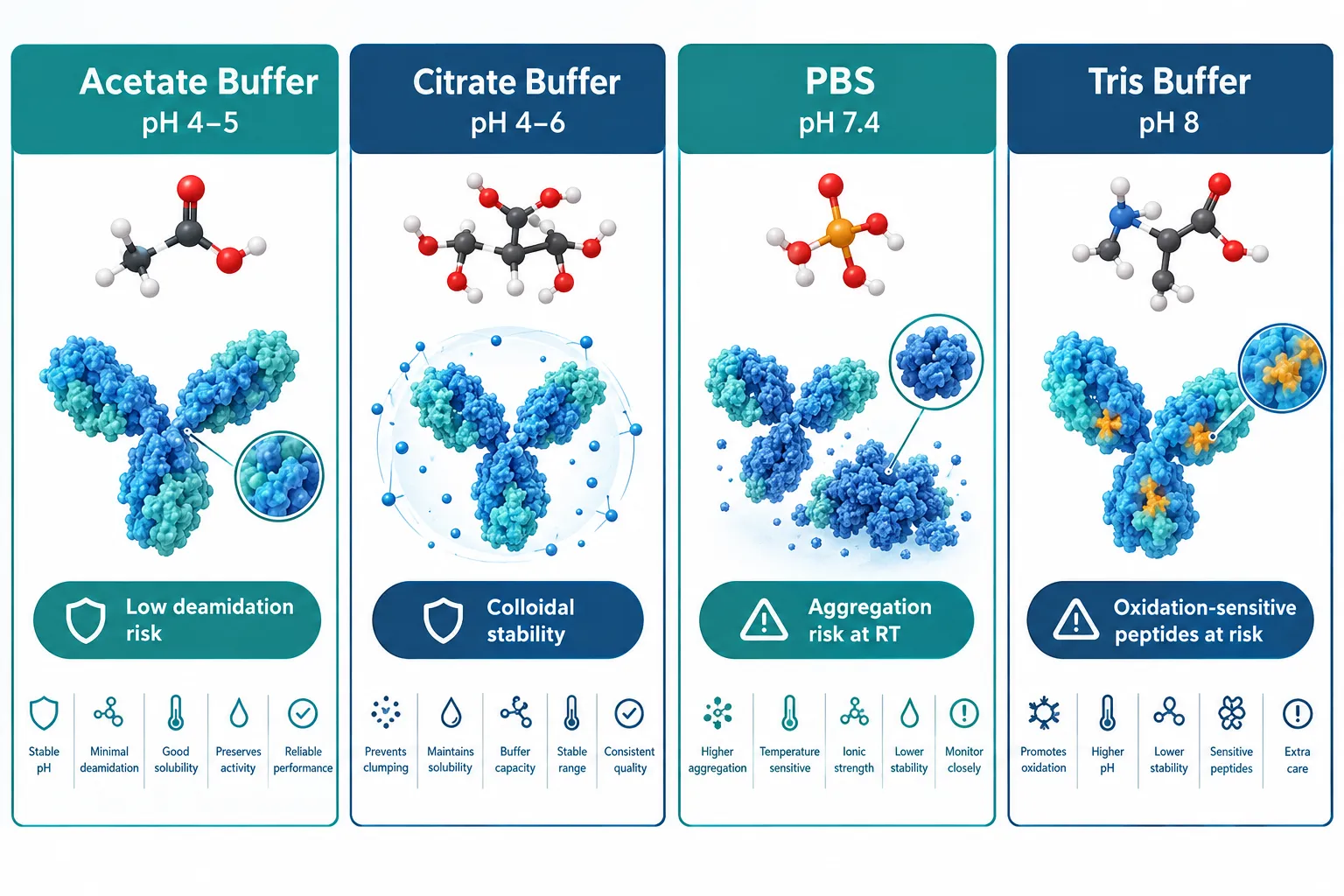
Acetate and citrate buffers at pH 4.0-6.0 have emerged as first-line vehicles for lab reconstitution. Both offer strong buffering capacity in the acidic range where most peptides show the lowest rates of deamidation and backbone hydrolysis. Citrate has the added advantage of mild metal-chelating activity, which is valuable for cysteine-containing and oxidation-sensitive sequences.

PBS (phosphate-buffered saline) at pH 7.4 remains widely used because it matches physiological conditions, but its limitations are now better characterized. At room temperature, PBS accelerates aggregation in hydrophobic peptides and offers no protection against oxidation. For short-term cell-based assays it is acceptable; for storage beyond 24 hours, it is a liability.

Tris and HEPES buffers (pH 7.5-8.0) are common in biochemistry but problematic for peptide stability. The alkaline environment accelerates deamidation of asparagine and glutamine residues and promotes beta-elimination in serine- and threonine-rich sequences.

"Buffer selection is not a formulation footnote, it is the first experimental variable that determines whether a peptide survives long enough to be tested."

Practical buffer selection by peptide class:

Peptide Class Recommended Buffer Target pH Key Risk Mitigated
GLP-class (e.g., GLP-3 analogs) Acetate or citrate 4.0-5.0 Hydrolysis, aggregation
Growth-hormone peptides (e.g., Sermorelin, CJC-1295) Acetate 4.5-5.5 Deamidation
Regenerative/antioxidant (e.g., SS-31, GHK-Cu) Citrate, pH-adjusted water 4.0-5.0 Oxidation, metal coordination
Nasal formulations (e.g., Semax) Citrate-phosphate 5.0-6.5 Mucosal compatibility, stability

Researchers working with SS-31 peptide should pay particular attention to citrate buffers, as the tetrapeptide's aromatic-cationic structure is sensitive to oxidative degradation at neutral or alkaline pH.


pH-Dependent Degradation Pathways: Mapping the Risk Zones

Every peptide has a pH-stability profile, and the degradation chemistry changes depending on where that profile sits.

Below pH 3.0: Acid-catalyzed hydrolysis of Asp-Pro bonds accelerates sharply. Peptides with proline-rich sequences or internal aspartate residues are particularly vulnerable.

pH 3.5-4.5 (optimal zone): For most peptides, this range minimizes both acid-catalyzed hydrolysis and base-catalyzed deamidation simultaneously. Solution purity data consistently show the slowest degradation rates here.

pH 5.0-6.5: Acceptable for many peptides, especially those destined for mucosal delivery. Deamidation begins to increase modestly above pH 5.5 for asparagine-containing sequences.

pH 7.0-8.0: Deamidation of Asn and Gln residues accelerates significantly. Beta-elimination in phosphorylated or glycosylated peptides also increases. Aggregation rates for hydrophobic sequences rise sharply.

Above pH 8.0: Racemization and disulfide scrambling become dominant degradation pathways. Cysteine-containing peptides are at high risk.

Researchers using GLP-3 peptide analogs should note that the long-chain fatty acid modifications common in this class increase hydrophobic aggregation risk at neutral pH, reinforcing the case for acidic reconstitution buffers.


Osmolality, Freeze, Thaw Cycles, and Practical Reconstitution Controls
Osmolality, Freeze, Thaw Cycles, and Practical Reconstitution Controls

Osmolality: The Overlooked Variable

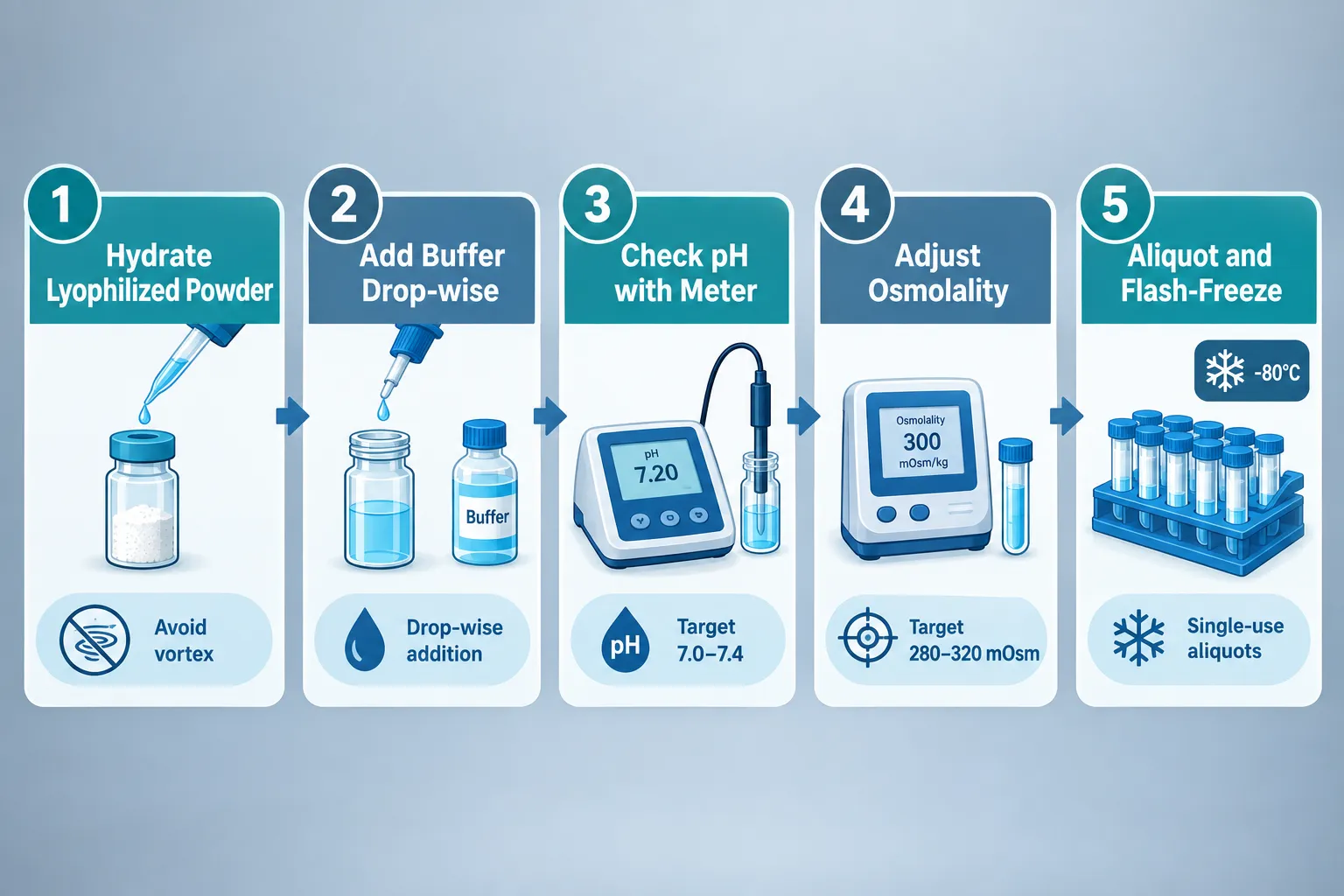
Osmolality is frequently treated as relevant only for clinical formulations, but it matters in research too. For intranasal peptides such as Semax peptide formulations, osmolality outside the 270-320 mOsm/kg range can alter mucosal absorption and confound pharmacokinetic data. For parenteral research models, hyperosmolar solutions cause cell stress artifacts that distort results.

Achieving isotonicity in an acidic buffer requires careful addition of sodium chloride or mannitol. Mannitol is preferred when freeze-drying stability is also a concern, as it acts as a lyoprotectant.

Freeze, Thaw Cycles: Quantifying the Damage

Each freeze, thaw cycle introduces two distinct stresses:

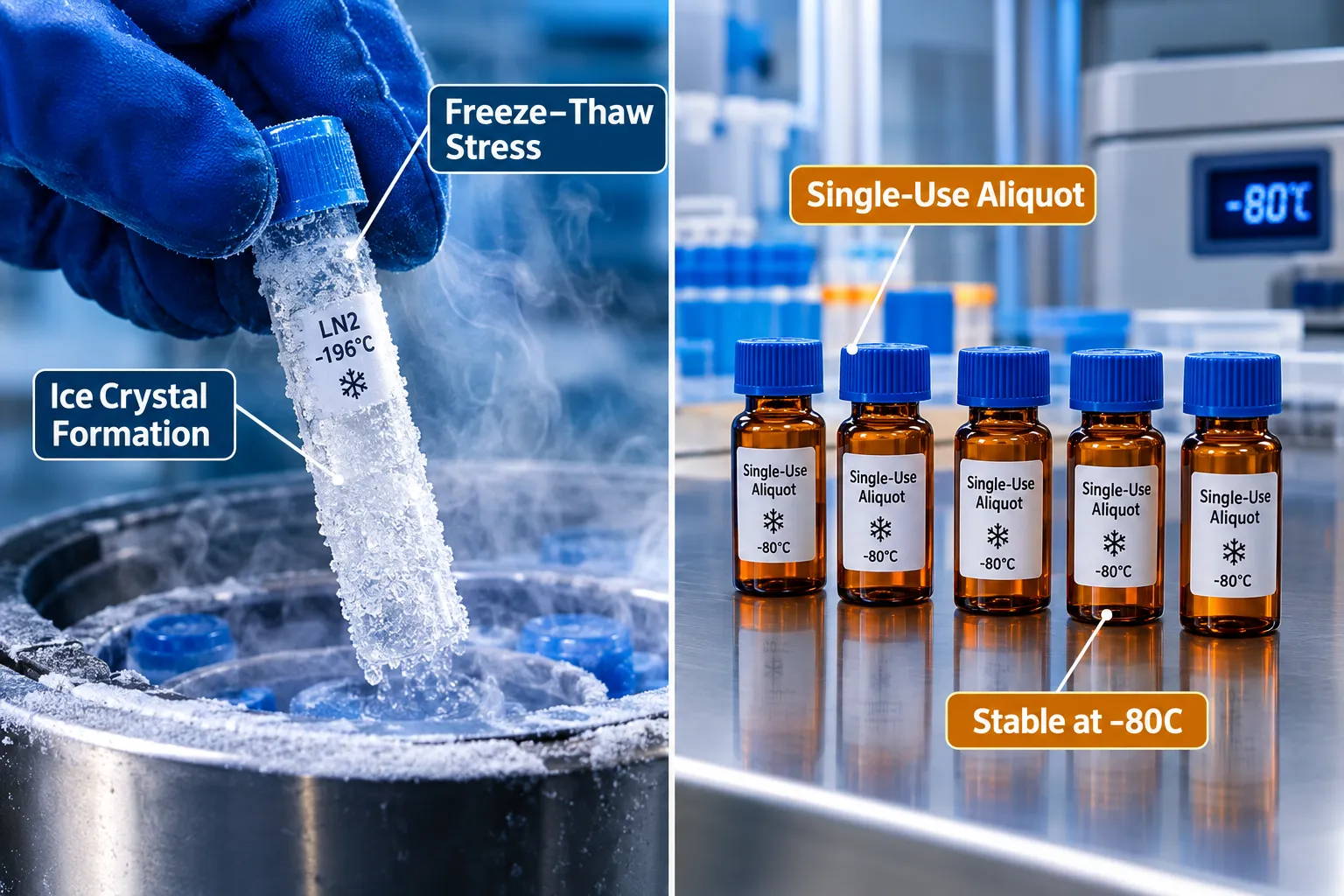
  1. Ice crystal formation, mechanical disruption of peptide aggregates and concentration effects at the ice-liquid interface
  2. Cryoconcentration, solutes concentrate in unfrozen microdomains, creating transient local pH extremes and ionic strength spikes

Studies tracking purity over repeated cycles show measurable losses beginning at cycle two for most peptides, with cumulative degradation accelerating nonlinearly by cycle four or five. The practical implication is unambiguous: single-use aliquots are not optional.

Freeze, thaw mitigation checklist:

  • Aliquot into volumes that match a single experiment
  • Use cryoprotectants (5-10% mannitol or trehalose) when lyophilization is not available
  • Flash-freeze in liquid nitrogen rather than slow-freezing at -20°C
  • Store at -80°C; avoid -20°C for samples held longer than two weeks
  • Never refreeze a thawed aliquot

For complex blends such as Tesamorelin/CJC-1295/Ipamorelin reconstitution, each component has its own freeze, thaw sensitivity, making single-use aliquoting even more critical.

Order of Addition and Mixing

Lab-scale reconstitution protocols now emphasize that order of addition matters. Adding buffer to lyophilized peptide (rather than the reverse) prevents local pH extremes that can occur when a small volume of concentrated peptide contacts a large buffer volume. Gentle swirling, not vortexing, prevents shear-induced aggregation. Sonication is reserved for peptides confirmed to be aggregation-prone, and only in short, controlled pulses.


Stability Matrix Across Peptide Classes
Stability Matrix Across Peptide Classes

The table below consolidates stability variables across four research-relevant peptide classes. It is designed as a practical bench reference.

Variable GLP-Class Analogs Growth-Hormone Peptides Regenerative Peptides (SS-31, GHK-Cu) Nasal Peptides (Semax)
Optimal pH 4.0-5.0 4.5-5.5 4.0-5.0 5.0-6.5
Preferred buffer Acetate Acetate Citrate Citrate-phosphate
Osmolality target 280-310 mOsm/kg 280-310 mOsm/kg 280-310 mOsm/kg 270-320 mOsm/kg
Max freeze, thaw cycles 1-2 2-3 1-2 1
Primary degradation risk Aggregation, hydrolysis Deamidation Oxidation Mucosal pH mismatch
Cryoprotectant recommended Mannitol Mannitol or trehalose Trehalose Mannitol
Stable at -80°C (reconstituted) Up to 3 months Up to 6 months Up to 3 months Up to 4 weeks

Researchers sourcing SS-31 peptide for sale or GHK-Cu peptides should verify that third-party purity certificates reflect post-reconstitution stability data, not just pre-reconstitution synthesis purity.

For GLP-3 peptide research, the fatty acid-modified backbone demands particular attention to aggregation at the reconstitution step. Warming to room temperature before adding buffer, rather than adding cold buffer to a cold vial, reduces nucleation of aggregates.


Conclusion

Peptide reconstitution and stability, how buffer choice, pH, osmolality, and freeze, thaw cycles affect research samples, is a discipline that rewards systematic attention. The actionable steps are clear:

  1. Select buffer based on sequence chemistry, defaulting to acetate at pH 4.0-5.0 for most classes and citrate for oxidation-sensitive peptides.
  2. Verify osmolality before any intranasal or parenteral experiment; adjust with mannitol or NaCl.
  3. Aliquot immediately after reconstitution into single-use volumes and flash-freeze.
  4. Never exceed two freeze, thaw cycles for any peptide; treat cycle one as a warning threshold.
  5. Request purity data at multiple time points and pH values from suppliers, not just a single synthesis certificate.
  6. Match the stability matrix to the peptide class before the experiment begins, not after anomalous results appear.

Implementing these controls does not require expensive equipment. It requires deliberate protocol design and an understanding that every variable in the reconstitution environment is an experimental variable.

https://www.puretestedpeptides.com/wp-content/uploads/2026/09/peptide-reconstitution-and-stability-how-buffer-choice-ph-osmolality-and-freeze.webp 1024 1536 https://www.puretestedpeptides.com/wp-content/uploads/2026/01/buy-peptides-online.jpg 2026-09-23 13:07:532026-09-23 13:07:53Peptide Reconstitution and Stability: How Buffer Choice, pH, Osmolality, and Freeze–Thaw Cycles Affect Research Samples

Tag Archive for: freeze-thaw cycles

Understanding Peptide Stability: A Guide to Optimizing Storage and Handling for Research Purity

Understanding Peptide Stability: A Guide to Optimizing Storage and Handling for Research Purity

July 6, 2026/0 Comments/by Pure Tested

A single improper storage decision can reduce a peptide's purity from over 98% to below 90% in less than four weeks. For researchers who depend on precise, reproducible results, that loss is not just inconvenient, it can invalidate entire experimental protocols. This guide to understanding peptide stability covers the essential storage and handling practices that protect research-grade compounds from the most common degradation threats.

Key Takeaways

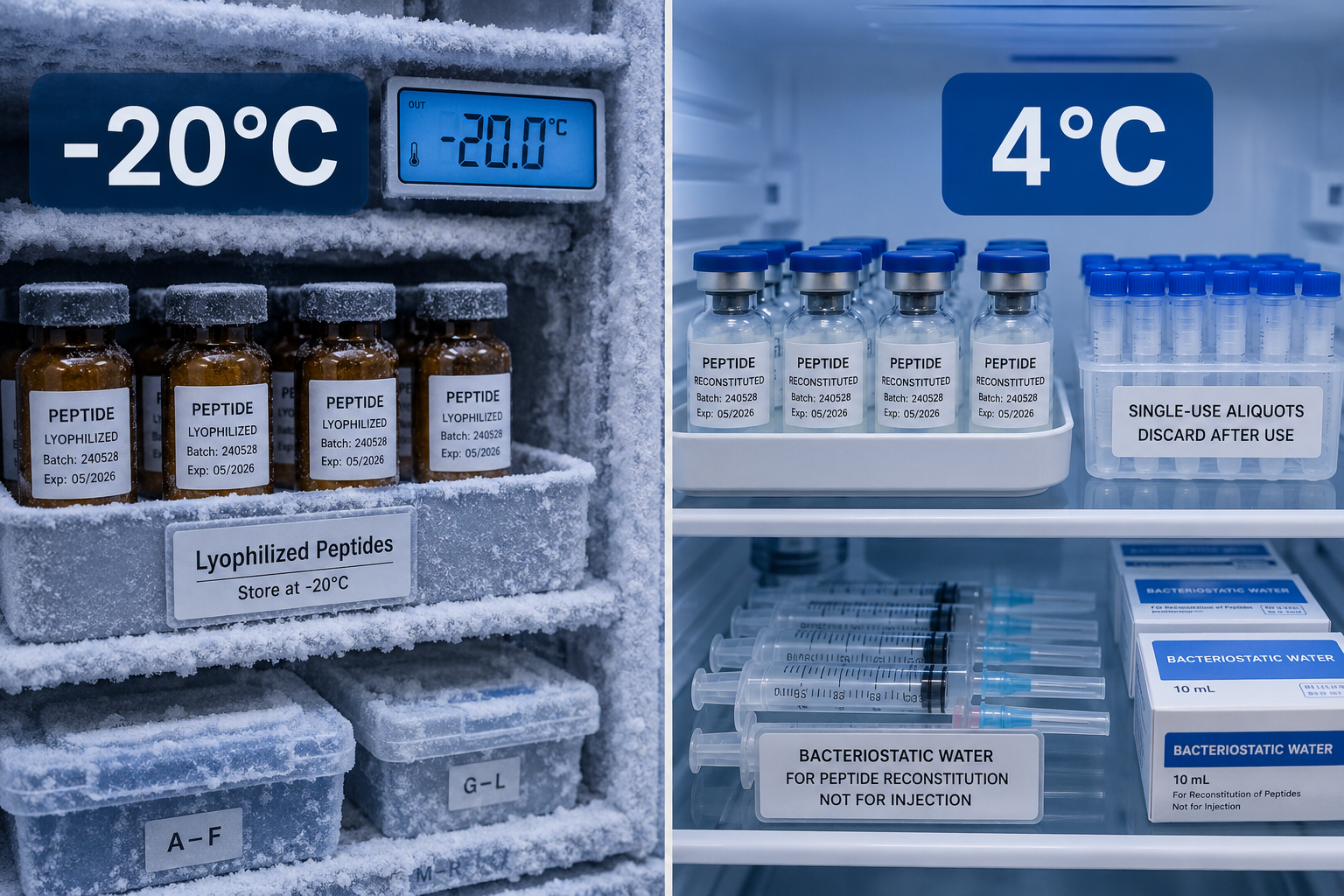
  • Lyophilized peptides stored at -20°C or below can remain stable for 2 to 3 years; reconstituted peptides degrade far more quickly.
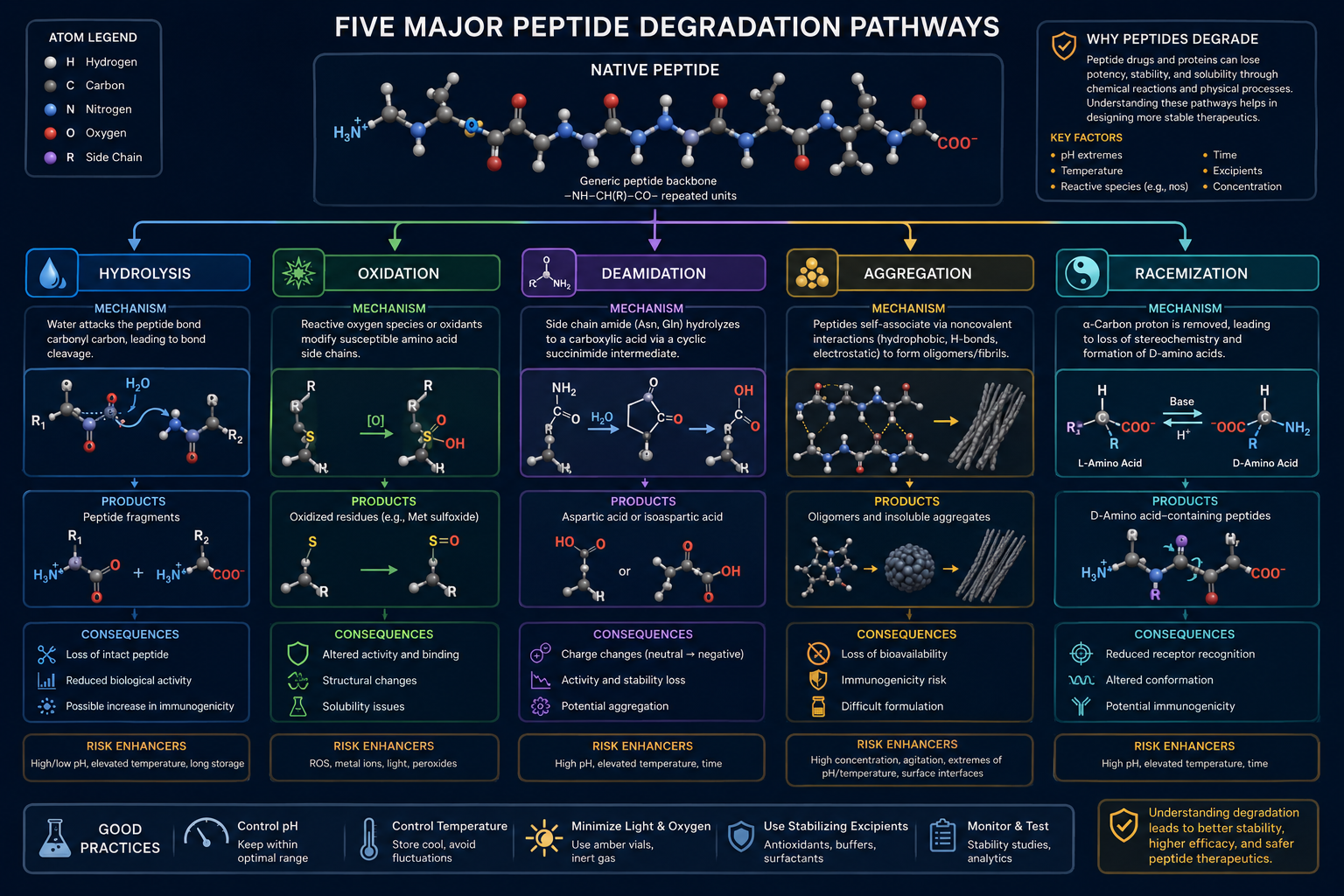
  • Five primary degradation pathways, hydrolysis, oxidation, deamidation, aggregation, and racemization, threaten purity at every stage.
  • Aliquoting reconstituted peptides into single-use portions dramatically reduces freeze-thaw damage.
  • Bacteriostatic water extends the usable life of reconstituted peptides compared to sterile water alone.
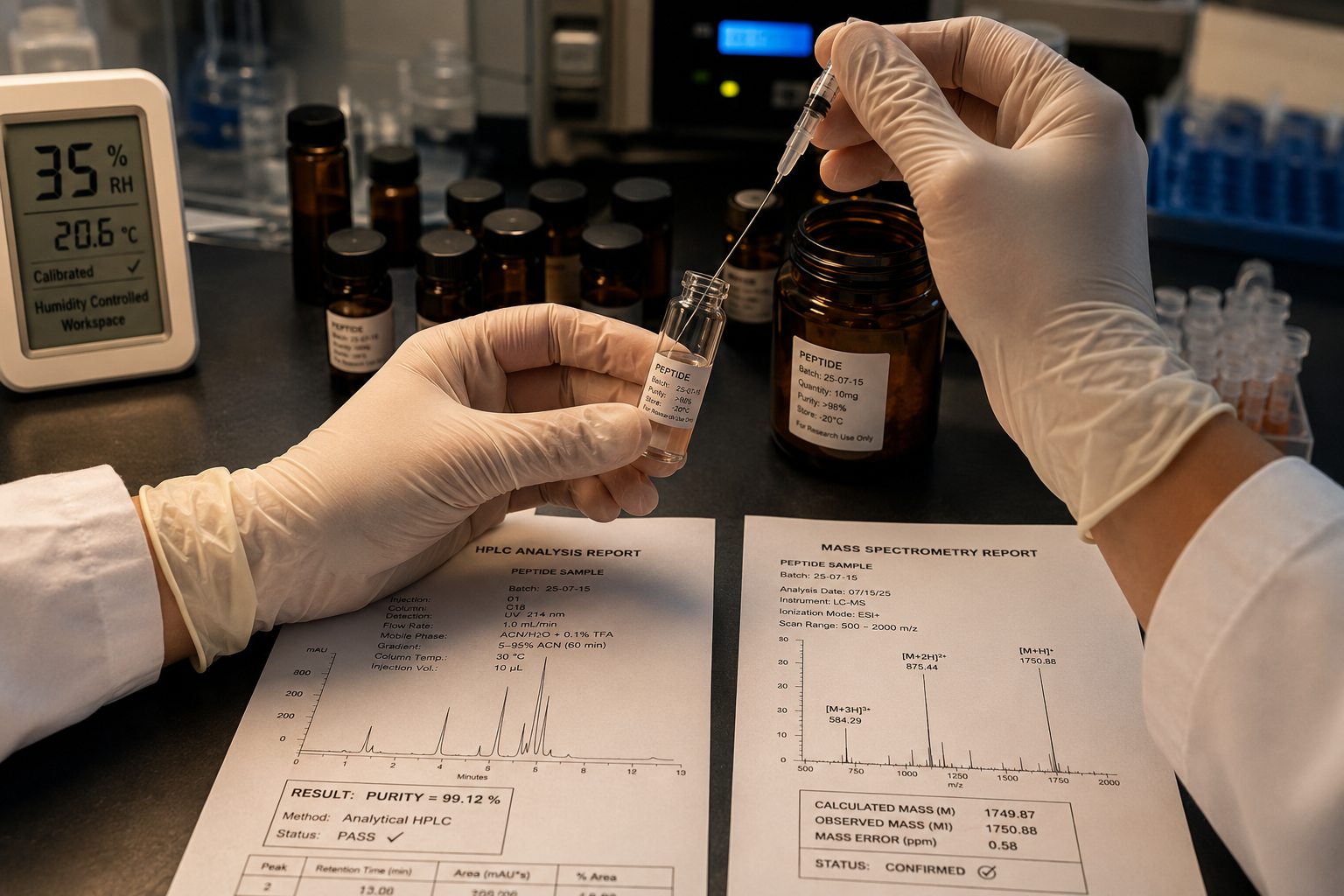
  • HPLC and mass spectrometry remain the gold-standard methods for verifying purity after storage.

Key Takeaways

The Five Degradation Pathways Every Researcher Must Know

A foundational part of understanding peptide stability is recognizing how compounds break down. Peptides degrade through five main chemical and physical pathways:

Degradation Pathway Primary Trigger Key Prevention Strategy
Hydrolysis Moisture exposure Sealed vials, low-humidity handling
Oxidation Oxygen, light Amber containers, inert atmosphere
Deamidation Heat, alkaline pH Cold storage, correct solvent pH
Aggregation Freeze-thaw cycling Single-use aliquots
Racemization Heat, extreme pH Stable temperature, proper solvent

Each pathway can occur independently or in combination. Hydrolysis is among the most common, triggered by even trace moisture entering a vial. Oxidation is accelerated by light exposure, which is why amber or opaque containers are standard in professional research settings. Aggregation, where peptide chains clump together and lose bioactivity, is most often caused by repeated freeze-thaw cycles.

Researchers working with sensitive compounds such as those explored in longevity peptide research or mitochondria-targeted molecules like those covered in the MOTS-C mitochondrial peptide overview must be especially attentive to these pathways, as structural integrity directly affects experimental outcomes.


The Five Degradation Pathways Every Researcher Must Know

Storage Conditions: Lyophilized vs. Reconstituted Peptides

Understanding peptide stability requires treating lyophilized and reconstituted peptides as two distinct categories with very different requirements.

Lyophilized (freeze-dried) peptides are the more stable form. When stored at -20°C or below in sealed, moisture-protected vials, they can remain viable for 2 to 3 years. The freeze-drying process removes water, which is the primary driver of hydrolytic breakdown. Handling lyophilized peptides in low-humidity environments and ensuring vials are tightly sealed before returning them to cold storage is essential.

Reconstituted peptides are considerably more vulnerable. Research monitoring eight common peptides in bacteriostatic water at 4°C over 30 days found average purity retention of 98.2% at day 7, dropping to 91.3% by day 28. This decline underscores the importance of using reconstituted peptides promptly and storing them correctly.

"Bacteriostatic water extends the usable life of reconstituted peptides by inhibiting microbial growth, a meaningful advantage over sterile water for short-term research use."

Standard short-term storage for reconstituted peptides is 2 to 8°C, typically supporting a usable window of 30 to 60 days depending on the specific compound. For peptides like those discussed in the TB-500 muscle recovery research overview or GHK-Cu longevity research themes, following these guidelines helps ensure data reliability.


Storage Conditions: Lyophilized vs. Reconstituted Peptides

Practical Handling Protocols for Maintaining Research Purity

Optimizing storage and handling for research purity extends beyond temperature settings. The physical act of reconstitution matters.

Best practices for reconstitution:

  • Add solvent slowly along the inside wall of the vial rather than directly onto the lyophilized cake.
  • Swirl gently, never vortex, to dissolve the peptide without causing mechanical denaturation.
  • Allow the vial to reach room temperature before opening to prevent condensation from entering.

Aliquoting strategy is equally important. Dividing a reconstituted batch into single-use portions before freezing eliminates the need to repeatedly thaw and refreeze the same vial. Each freeze-thaw cycle risks aggregation and structural damage.

For researchers sourcing compounds, peptide purity testing provides a clear framework for evaluating quality before storage even begins. Verifying purity at the point of purchase using HPLC and mass spectrometry data ensures the baseline is sound. Those exploring newer compounds can also review what is new in peptide research for evolving best practices.

Light protection is another often-overlooked factor. Peptides susceptible to photodegradation, including many aromatic amino acid-containing sequences, should be stored in amber containers and handled away from direct light sources.

For those interested in sourcing verified compounds, lab-tested peptides with documented purity certificates reduce the variables that compromise downstream research integrity.


Conclusion

Protecting peptide purity is not a passive process. It requires deliberate decisions at every stage, from the moment a lyophilized vial arrives to the final use of a reconstituted aliquot. The core actions are clear: store lyophilized peptides at -20°C or below, reconstitute with bacteriostatic water, aliquot before freezing, shield from light and moisture, and verify purity with HPLC or mass spectrometry before critical experiments. Researchers who treat these protocols as non-negotiable will see more consistent, reproducible results and fewer compromised data sets. Start by auditing current storage conditions, identify any gaps against the guidelines above, and implement changes systematically to build a more reliable research workflow.


https://www.puretestedpeptides.com/wp-content/uploads/2026/07/Understanding-Peptide-Stability-A-Guide-to-Optimizing-Storage-and-Handling-for-Research-Purity.png 1024 1536 Pure Tested https://www.puretestedpeptides.com/wp-content/uploads/2026/01/buy-peptides-online.jpg Pure Tested2026-07-06 13:04:302026-07-20 15:00:53Understanding Peptide Stability: A Guide to Optimizing Storage and Handling for Research Purity
Peptide Reconstitution, Storage, and Stability: A Complete Research Protocol Guide

Peptide Reconstitution, Storage, and Stability: A Complete Research Protocol Guide

June 22, 2026/0 Comments/by Pure Tested

Roughly 30% of research setbacks involving peptide compounds trace back not to flawed experimental design, but to improper handling before the experiment even begins. For researchers working with sensitive biological molecules in 2026, mastering the fundamentals of this Peptide Reconstitution, Storage, and Stability: A Complete Research Protocol Guide is not optional — it is the foundation of reproducible, reliable results.

Key Takeaways

  • Lyophilized peptides remain stable at 2-8 degrees Celsius for 12-24 months; long-term storage requires -20 degrees Celsius.
  • Always use bacteriostatic water for reconstitution to extend solution stability to 4-6 weeks under refrigeration.
  • Reconstituted peptides should be used within approximately 28 days and never left at room temperature for more than a few hours.
  • Divide reconstituted solutions into single-use aliquots to avoid damaging freeze-thaw cycles.
  • Visual inspection alone cannot confirm peptide integrity — degraded peptides often look identical to intact ones.

Key Takeaways

Reconstitution Best Practices for Research-Grade Peptides

Proper reconstitution is the first critical step in any peptide research protocol. Done incorrectly, it can denature the compound before a single experiment runs.

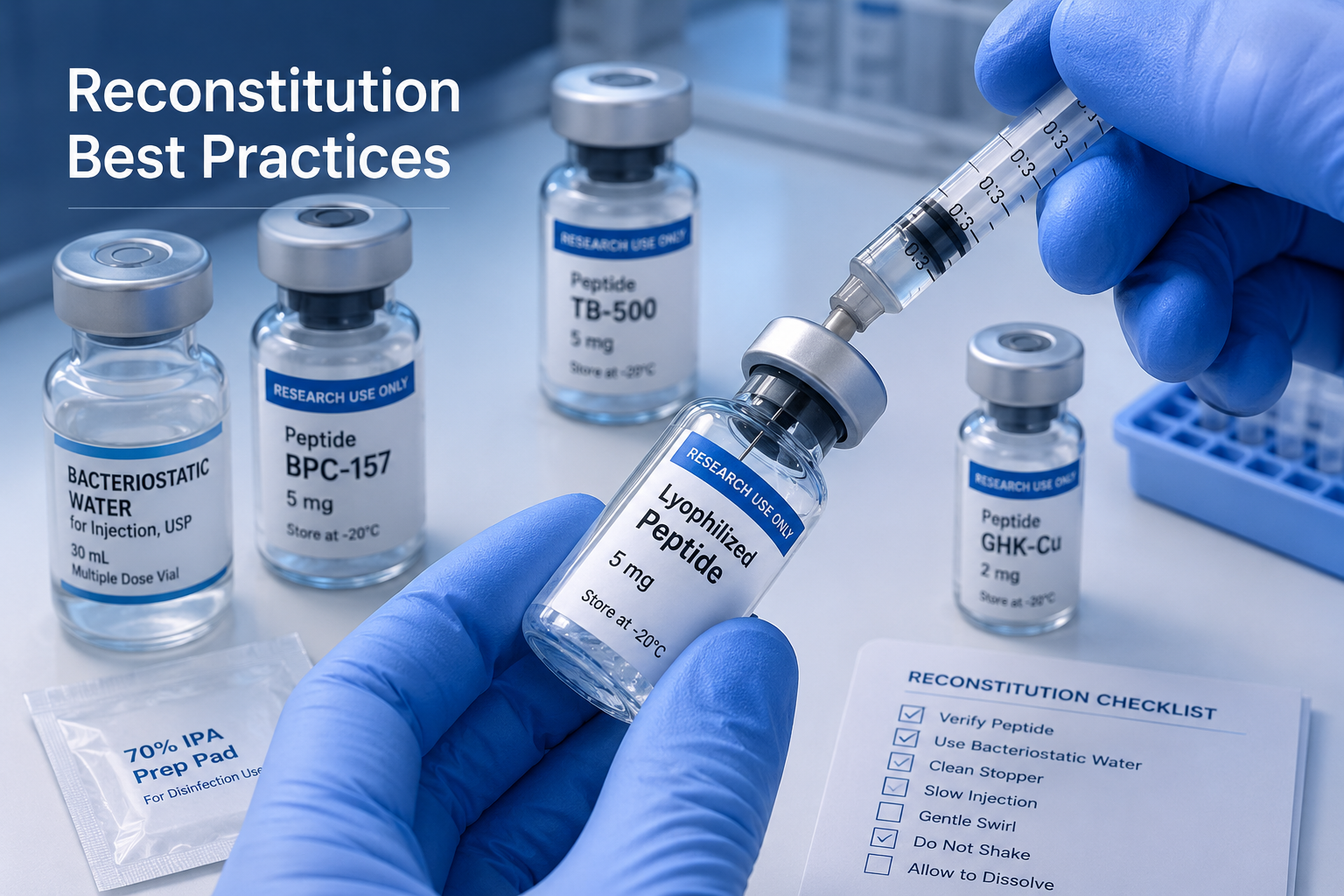
Choosing the right diluent matters enormously. Bacteriostatic water — containing 0.9% benzyl alcohol — is the preferred choice for most research peptides. The benzyl alcohol inhibits microbial growth, extending the stability of the reconstituted solution to 4-6 weeks under refrigeration. Sterile water is an acceptable alternative but offers no antimicrobial protection, shortening the usable window significantly.

Reconstitution technique:

  1. Allow the lyophilized vial to reach room temperature before opening to reduce condensation risk.
  2. Draw the appropriate volume of diluent into a clean syringe.
  3. Inject the diluent slowly along the inner glass wall of the vial — never directly onto the peptide powder.
  4. Gently swirl (do not shake) until the peptide fully dissolves.
  5. Avoid foaming, which can cause denaturation and compromise yield.

This slow-wall technique is especially important for fragile sequences. Researchers exploring compounds like GHK-Cu or TB-500 and BPC-157 blends should pay particular attention to gentle handling during this step, as both are sensitive to mechanical agitation.

For those working with multi-peptide formulations, the Tesamorelin/CJC-1295/Ipamorelin blend reconstitution guide provides compound-specific volume and diluent recommendations.


Reconstitution Best Practices for Research-Grade Peptides

Storage Protocols: Temperature, Location, and Aliquoting

Following this Peptide Reconstitution, Storage, and Stability: A Complete Research Protocol Guide means understanding that storage is not a passive step — it is an active variable that determines outcome quality.

Lyophilized (Unreconstituted) Peptides

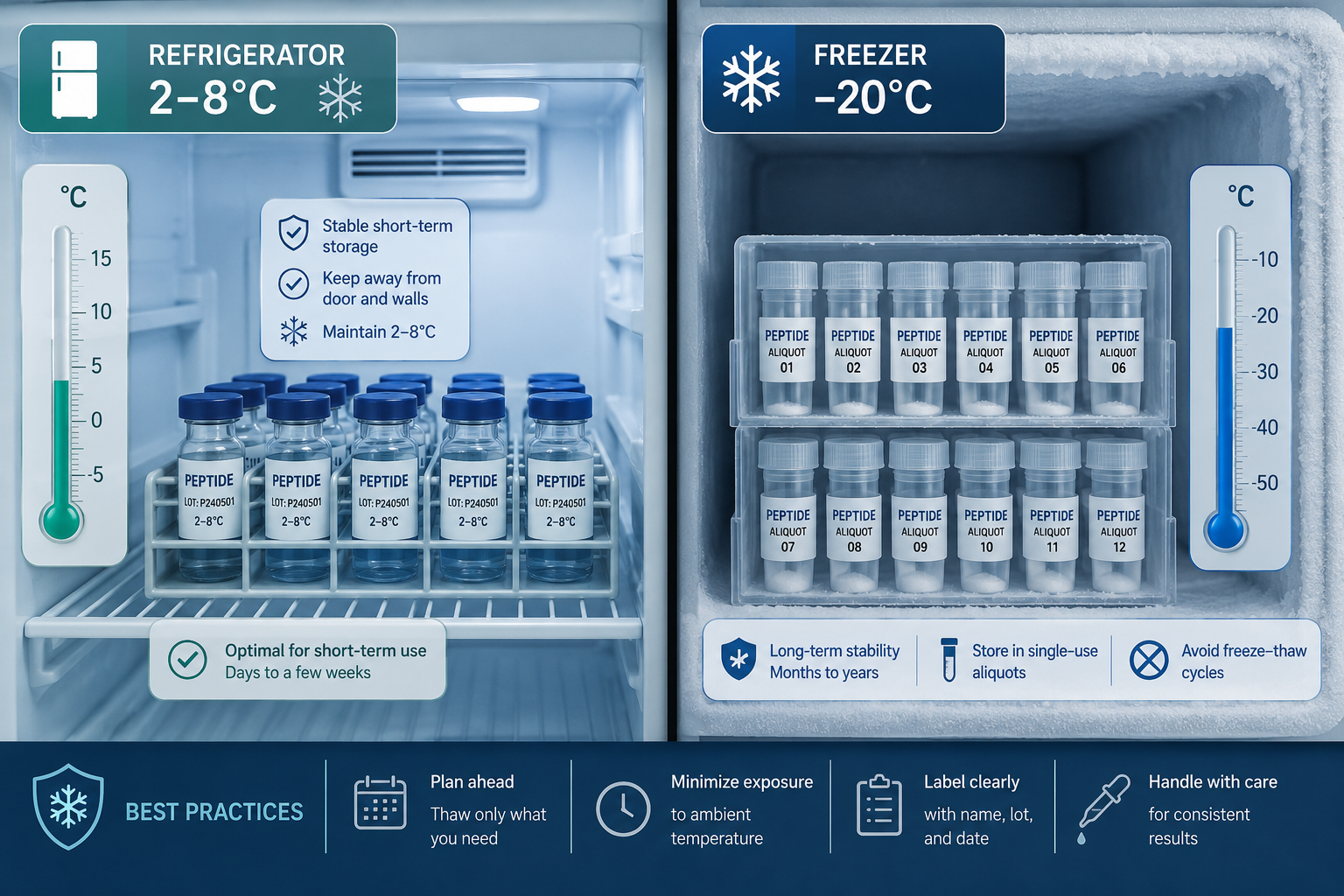
Storage Condition Temperature Stability Window
Short-term / Room Temp 15-25 degrees Celsius Days to weeks
Refrigerated 2-8 degrees Celsius 12-24 months
Frozen (long-term) -20 degrees Celsius Beyond 12 months

Keep lyophilized vials sealed, dry, and away from light. Moisture is the primary enemy at this stage.

Reconstituted Peptide Solutions

Once reconstituted, the stability window narrows considerably:

  • Refrigerate immediately at 2-8 degrees Celsius after reconstitution.
  • Use within 28 days under standard refrigerated conditions.
  • Never store at room temperature for more than a few hours — degradation accelerates sharply above 10 degrees Celsius.
  • Store vials in the main body of the refrigerator, not the door, to avoid temperature swings from repeated opening.

"Consistent temperature is not a convenience — it is a research variable. Fluctuations above 10 degrees Celsius can accelerate peptide degradation in ways that are invisible to the naked eye."

Aliquoting to Prevent Freeze-Thaw Damage

Repeated freeze-thaw cycles are one of the most common causes of peptide degradation in research settings. The solution is straightforward: divide reconstituted solutions into single-use aliquots immediately after reconstitution. Thaw each portion only once when needed, then discard any unused volume.

This practice is particularly relevant for longer research cycles involving compounds studied through resources like the longevity peptide research overview or MOTS-C metabolic flexibility research, where consistency across multiple sessions is essential.


Aliquoting to Prevent Freeze-Thaw Damage

Stability Monitoring and Quality Assurance in Peptide Research

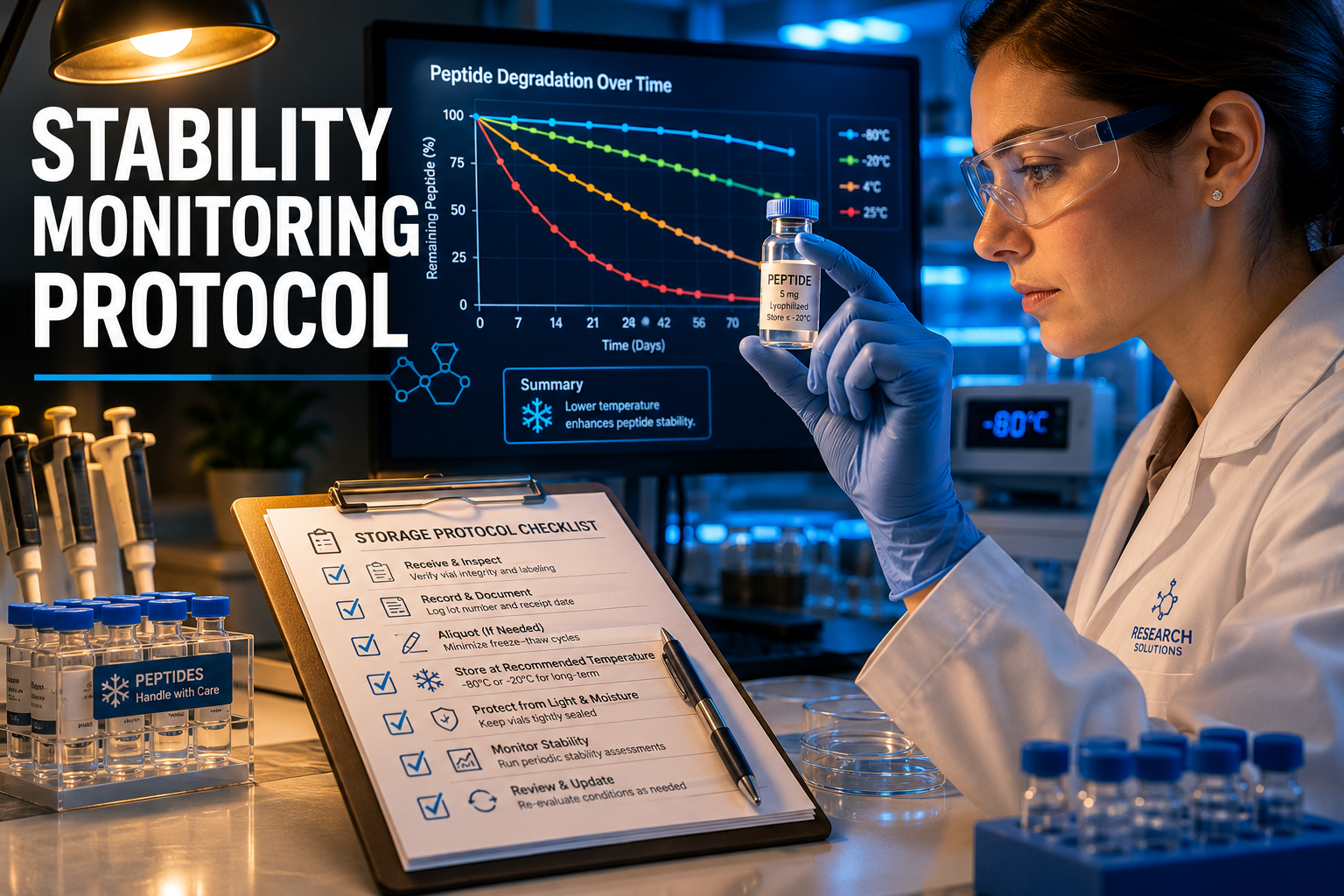
This section of the Peptide Reconstitution, Storage, and Stability: A Complete Research Protocol Guide addresses a widely misunderstood risk: assuming a peptide is still viable based on appearance alone.

Degraded peptides often look identical to intact ones. Clarity, color, and consistency do not confirm biological activity. Researchers must rely on documented storage timelines, proper labeling, and sourcing from suppliers with verified quality testing protocols.

Practical stability checklist:

  • Label every vial with reconstitution date and diluent used.
  • Track cumulative freeze-thaw events per aliquot.
  • Discard any solution stored beyond its recommended window, regardless of appearance.
  • Source peptides from suppliers who provide third-party purity verification.

For researchers sourcing compounds such as AOD-9604 for metabolic research or GLP-1 peptides, purity documentation at the point of purchase directly affects downstream stability outcomes.


Conclusion

Applying the principles outlined in this Peptide Reconstitution, Storage, and Stability: A Complete Research Protocol Guide protects both the integrity of the research and the investment in high-quality compounds. The actionable next steps are clear: use bacteriostatic water for reconstitution, store reconstituted solutions at 2-8 degrees Celsius in the main refrigerator body, aliquot immediately to avoid freeze-thaw damage, and never rely on visual inspection as a stability indicator. Source peptides from suppliers who provide transparent purity testing, label every vial with date and diluent, and adhere strictly to the 28-day reconstituted use window. Rigorous handling at every stage is what separates reproducible research from wasted resources.

https://www.puretestedpeptides.com/wp-content/uploads/2026/06/Peptide-Reconstitution-Storage-and-Stability-A-Complete-Research-Protocol-Guide.png 1024 1536 Pure Tested https://www.puretestedpeptides.com/wp-content/uploads/2026/01/buy-peptides-online.jpg Pure Tested2026-06-22 13:03:092026-07-20 15:02:36Peptide Reconstitution, Storage, and Stability: A Complete Research Protocol Guide
×

Helpful Links

  • My account
  • Cart
  • Checkout
  • Refund and Returns Policy
  • Privacy Policy
  • SMS Privacy Policy
  • Login
  • My Account
  • Logout

USA Made Lab Tested Peptides

All products are sold for research, laboratory, or analytical purposes only, and are not for human consumption


Pure Tested Peptides is a chemical supplier. Pure Tested Peptides is not a compounding / chemical compounding facility as defined under 503A of the Federal Food, Drug, and Cosmetic act. Pure Tested Peptides is not an outsourcing facility as defined under 503B of the Federal Food, Drug, and Cosmetic act.

The statements made within this website have not been evaluated by the US Food and Drug Administration. The products we offer are not intended to diagnose, treat, cure or prevent any disease.

Human/Animal Consumption Prohibited. Laboratory/In-Vitro Experimental Use Only

Scroll to top Scroll to top Scroll to top