Call or Text 727-513-9780
  • Shopping Cart Shopping Cart
    0Shopping Cart
Pure Tested Peptides | America's most trusted Peptides for sale online
  • Peptides for sale
    • Oral Peptides for sale
      • Peptide Capsules for sale
      • BPC 157 Capsules 1000mcg
      • SLU-PP-332 Capsules | 1000 mcg
      • 5-Amino-1MQ 50mg Capsules
      • Tesofensine 500mcg
    • All Peptides for sale
    • Peptide Sprays
      • BPC 157 Nasal Spray Kit
      • BPC-157 TB500 Nasal Spray Kit
      • Semax Nasal Spray 10mg
      • Selank – Nasal Spray Kit – 10mg
      • Epithalon 50MG Nasal Spray Kit
      • Ipamorelin 10mg Nasal Spray
      • Klow Nasal Spray (BPC-157 + TB-500 + GHK-Cu + KPV) | 80mg
      • Hulk Nasal Spray Tesa / Ipa Blend 6/3 MG
      • Klow Nasal Spray
      • NAD + 500 mg Nasal Spray
      • PT-141 Nasal Spray Kit
    • GHRH Peptides
      • Ipa Peptides
      • CJC-1295 Peptides
        • CJC-1295 with DAC 5 mg
        • CJC-1295 without DAC 5 mg
        • CJC-1295 Ipa 10mg
      • Tesa Peptides
        • Tesa Peptide
        • Tesa 20 mg
    • GHK-Cu Peptides
      • All GHK-Cu Peptides
      • GHK-Cu 100mg
      • KLOW Peptide Blend – Buy KLOW blend online
    • BPC Peptides
      • All BPC Peptides
      • BPC-157
      • BPC-157 TB-500
      • BPC 157 capsules 1000mcg
    • SLU-PP-332 Peptides
      • All SLU-PP-332 Peptides
      • SLU-PP-332 5mg
    • GLP3 Peptides
      • GLP3-R
      • GLP3-R CAG 10mg
      • GLP3-R 20mg
    • PT-141 Peptides
      • PT-141 Peptides for sale
      • PT-141 10mg
      • PT-141 Nasal Spray
    • CAG Peptides
      • Lipo-C Peptide Blend
      • CAG 5mg
      • CAG 10mg
    • MOTS-C Peptides
      • MOTS-C Peptides for sale
      • MOTS-c peptide
      • MOTS-c 10mg *6 pack*
    • 5 Amino 1MQ Peptides
      • 5 Amino 1MQ Peptides for sale
      • 5-Amino-1MQ 50mg Capsules
      • 5-Amino-1MQ 5mg
    • Epithalon Peptides
      • Epithalon Peptides for sale
      • Epithalon 10mg
      • Epithalon 50mg
  • Shop
    • GLPs
      • 5-Amino-1MQ 50mg Capsules
      • 5-Amino-1MQ 5mg
      • GLP3-Reta
      • L-Carnitine 500mg/ml
      • Tesofensine 500mcg
      • SLU-PP-332 5mg
      • MOTS-c 10mg *6 pack*
    • Epithalon & BPC Peptides
      • Epithalon 10mg
      • Epithalon 50mg
      • BPC-157
      • BPC 157 capsules 1000mcg
      • BPC-157 TB-500
      • BPC-157 TB500 Nasal Spray Kit
      • BPC 157 Nasal Spray Kit
    • BPC TB-500 & NAD+ Peptides
      • NAD+ 500 mg
      • KLOW Peptide Blend – Buy KLOW blend online
      • GLOW Peptide Blend
      • TB 500 5mg
      • BPC 157 capsules 1000mcg – Supplement
      • BPC 157 Nasal Spray Kit
      • BPC-157
      • BPC-157 TB500 Nasal Spray Kit
      • BPC-157 TB-500
      • BPC 157 capsules 1000mcg
    • LL-37 Peptide
      • LL-37 10 mg
    • MOTS-C & Selank
      • MOTS-c peptide
      • Selank 10mg
    • GHK Peptides
      • GHK-Cu 100mg
      • GLOW Peptide Blend
      • KLOW Peptide Blend – Buy KLOW blend online
  • COAs
  • Wholesale
    • Wholesale Peptides for sale
  • PTP FAQ
  • Affiliates
    • Selank Peptide: Advanced Pharmacological Mechanisms Underlying Its Anxiolytic and Nootropic Effects in Research
      • 5-Amino-1MQ Peptide: Detailed Mechanisms of NNMT Inhibition and Its Impact on Cellular Metabolism Research
        • MOTS-C Peptide: Unraveling Its Role in Mitochondrial Dynamics and Energy Metabolism Research
          • Epithalon Peptide and Telomerase Regulation: Investigating Its Impact on Cellular Senescence and Lifespan Research Models
            • GLP2-T vs GLP2 Tirz Peptide: Understanding the Naming, Mechanistic Nuances, and Research Implications for Gut Health
      • Peptides and Polypeptides in Modern Pharmacology: What Research on Metoprolol, Prednisone, and Amlodipine Reveals
        • Polypeptide Peptides vs NSAIDs: What Naproxen and Diclofenac Teach Tissue-Repair Researchers About BPC‑157 and TB‑500
          • Peptides and Polypeptides in Endocrine Pharmacology: How GLP-1, GLP-2, and GLP-3 Retatrutide Differ From Classic Drugs Like Prednisone and Amlodipine
          • 5‑Amino‑1MQ Peptide and NNMT Inhibition: How It Compares With Statins Like Atorvastatin in Adipose and Lipid Metabolism Research
      • Enclomiphene, Estrogen Receptor Signaling, and Luteinizing Phase Biology: What Hormone Researchers Should Measure
        • Mesenchymal Stem Cells, BPC‑157, and GHK‑Cu: How Tissue Repair Peptides Compare With Classic NSAIDs Like Naproxen in Injury Models
          • Peptide Calculator Use Cases Beyond Growth Hormone: Working Through GLP‑3 Retatrutide, MOTS‑c, and BPC‑157 Research Dosing
        • Polypeptide Peptides in Endocrine and Metabolic Pharmacology: Lessons From Amlodipine, Prednisone, and Metoprolol
        • Peptides Calculator for Advanced Blends: Worked Examples for Tesamorelin, CJC‑1295, and Ipamorelin Stacks
          • Peptides and Polypeptides in Human Physiology: How Molecular Size Shapes Research Applications
            • Selank Peptide: Advanced Pharmacological Mechanisms Underlying Its Anxiolytic and Nootropic Effects in Research
          • 5-Amino-1MQ Peptide: Detailed Mechanisms of NNMT Inhibition and Its Impact on Cellular Metabolism Research
            • MOTS-C Peptide: Unraveling Its Role in Mitochondrial Dynamics and Energy Metabolism Research
              • Epithalon Peptide and Telomerase Regulation: Investigating Its Impact on Cellular Senescence and Lifespan Research Models
                • GLP2-T vs GLP2 Tirz Peptide: Understanding the Naming, Mechanistic Nuances, and Research Implications for Gut Health
                  • Peptides and Polypeptides in Endocrine Pharmacology: How GLP-1, GLP-2, and GLP-3 Retatrutide Differ From Classic Drugs Like Prednisone and Amlodipine
                    • Polypeptide Peptides vs NSAIDs: What Naproxen and Diclofenac Teach Tissue-Repair Researchers About BPC‑157 and TB‑500
                      • Peptides and Polypeptides in Modern Pharmacology: What Research on Metoprolol, Prednisone, and Amlodipine Reveals
                        • 5‑Amino‑1MQ Peptide and NNMT Inhibition: How It Compares With Statins Like Atorvastatin in Adipose and Lipid Metabolism Research
                        • Enclomiphene, Estrogen Receptor Signaling, and Luteinizing Phase Biology: What Hormone Researchers Should Measure
                        • Mesenchymal Stem Cells, BPC‑157, and GHK‑Cu: How Tissue Repair Peptides Compare With Classic NSAIDs Like Naproxen in Injury Models
                        • Peptide Calculator Use Cases Beyond Growth Hormone: Working Through GLP‑3 Retatrutide, MOTS‑c, and BPC‑157 Research Dosing
                        • Polypeptide Peptides in Endocrine and Metabolic Pharmacology: Lessons From Amlodipine, Prednisone, and Metoprolol
                        • Peptides Calculator for Advanced Blends: Worked Examples for Tesamorelin, CJC‑1295, and Ipamorelin Stacks
                        • Peptides and Polypeptides in Human Physiology: How Molecular Size Shapes Research Applications
                        • Selank Peptide: Advanced Pharmacological Mechanisms Underlying Its Anxiolytic and Nootropic Effects in Research
                        • MOTS-C Peptide: Unraveling Its Role in Mitochondrial Dynamics and Energy Metabolism Research
                        • Peptides and Polypeptides in Modern Pharmacology: What Research on Metoprolol, Prednisone, and Amlodipine Reveals
                        • Peptides and Polypeptides in Endocrine Pharmacology: How GLP-1, GLP-2, and GLP-3 Retatrutide Differ From Classic Drugs Like Prednisone and Amlodipine
                        • 5-Amino-1MQ Peptide: Detailed Mechanisms of NNMT Inhibition and Its Impact on Cellular Metabolism Research
                        • Mesenchymal Stem Cells, BPC‑157, and GHK‑Cu: How Tissue Repair Peptides Compare With Classic NSAIDs Like Naproxen in Injury Models
                        • Peptide Calculator Use Cases Beyond Growth Hormone: Working Through GLP‑3 Retatrutide, MOTS‑c, and BPC‑157 Research Dosing
                        • GLP2-T vs GLP2 Tirz Peptide: Understanding the Naming, Mechanistic Nuances, and Research Implications for Gut Health
                        • Polypeptide Peptides in Endocrine and Metabolic Pharmacology: Lessons From Amlodipine, Prednisone, and Metoprolol
                        • Polypeptide Peptides vs NSAIDs: What Naproxen and Diclofenac Teach Tissue-Repair Researchers About BPC‑157 and TB‑500
                        • Peptides and Polypeptides in Human Physiology: How Molecular Size Shapes Research Applications
                        • Peptides Calculator for Advanced Blends: Worked Examples for Tesamorelin, CJC‑1295, and Ipamorelin Stacks
                        • 5‑Amino‑1MQ Peptide and NNMT Inhibition: How It Compares With Statins Like Atorvastatin in Adipose and Lipid Metabolism Research
                        • Enclomiphene, Estrogen Receptor Signaling, and Luteinizing Phase Biology: What Hormone Researchers Should Measure
                        • Epithalon Peptide and Telomerase Regulation: Investigating Its Impact on Cellular Senescence and Lifespan Research Models
                        • Best research protocol Klow blend
                        • best time to take BPC-157
                        • best time to take DSIP (Delta Sleep Inducing Peptide)
                        • best time to take CJC-1295
                        • best time to take AOD-9604
                        • best time to take Follistatin 344
                        • best time to take Ipamorelin
                        • best time to take MK-677 (Ibutamoren)
                        • best time to take Ligandrol (LGD-4033) — research compound
                        • best time to take Ostarine (MK-2866) — research compound
                        • best time to take GHK-CU
                        • best time to take TB-500
                        • best time to take MOTS-c
                        • best time to take Semax
                        • best time to take RAD-140 (Testolone) — research compound
                        • best time to take Thymosin Alpha-1
                        • best time to take PEG-MGF
                        • Biolife Plasma, Octapharma Plasma, and Research Peptides: How Plasma Donation Labs Differ From Peptide Suppliers
                        • best time to take YK-11 — research compound
                        • best time to take PT-141 (Bremelanotide)
                        • Best research protocol Klow blend
  • Contact
    • Contact Customer Service
    • Text Customer Support
  • About US
  • Shop all peptides
  • Affiliate Program
    • Affiliate Signup
  • Login / Register Login / Register Page Link Login / Register Page Link
  • Click to open the search input field Click to open the search input field Search
  • Menu Menu

Tag Archive for: gabaergic modulation

Semax and Selank Peptides: Comparative Research on Neurogenesis and Synaptic Plasticity

Semax and Selank Peptides: Comparative Research on Neurogenesis and Synaptic Plasticity

June 29, 2026/0 Comments/by Pure Tested

Two synthetic peptides developed in Russia have quietly generated some of the most compelling neuroscience research of the past two decades — yet most Western researchers are only beginning to take notice. Semax and Selank peptides comparative research on neurogenesis and synaptic plasticity reveals two compounds with overlapping yet distinctly different mechanisms, making a side-by-side analysis essential for anyone studying cognitive enhancement or neurological recovery in 2026.

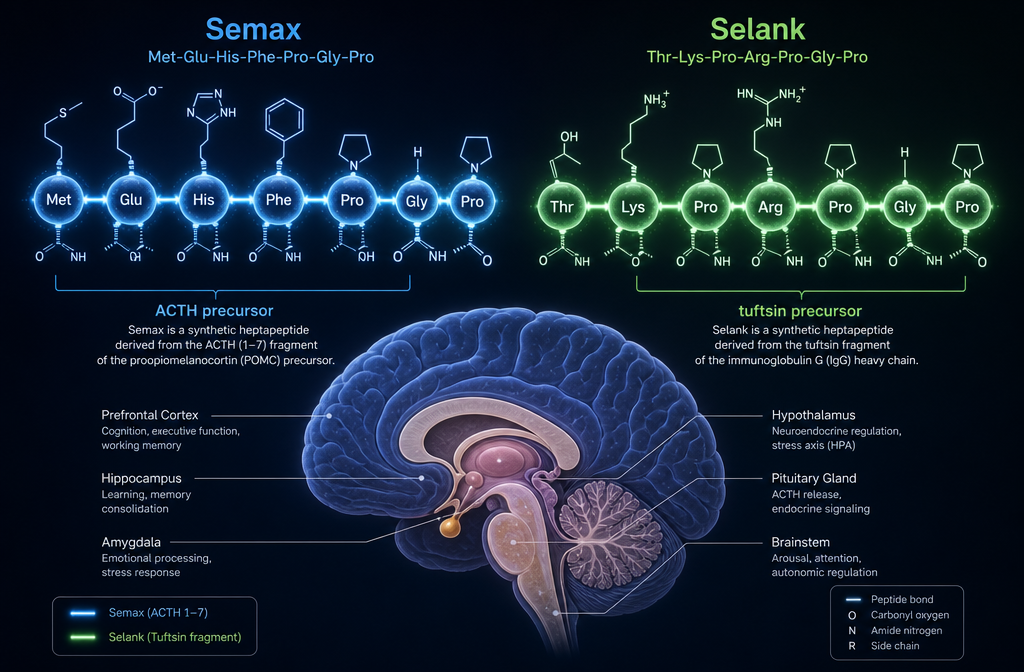
Detailed () scientific illustration showing a split-panel comparison of Semax and Selank molecular structures side by side,

Key Takeaways

  • Semax is derived from the ACTH(4-10) fragment and strongly upregulates BDNF and NGF, supporting neurogenesis and neuroprotection.
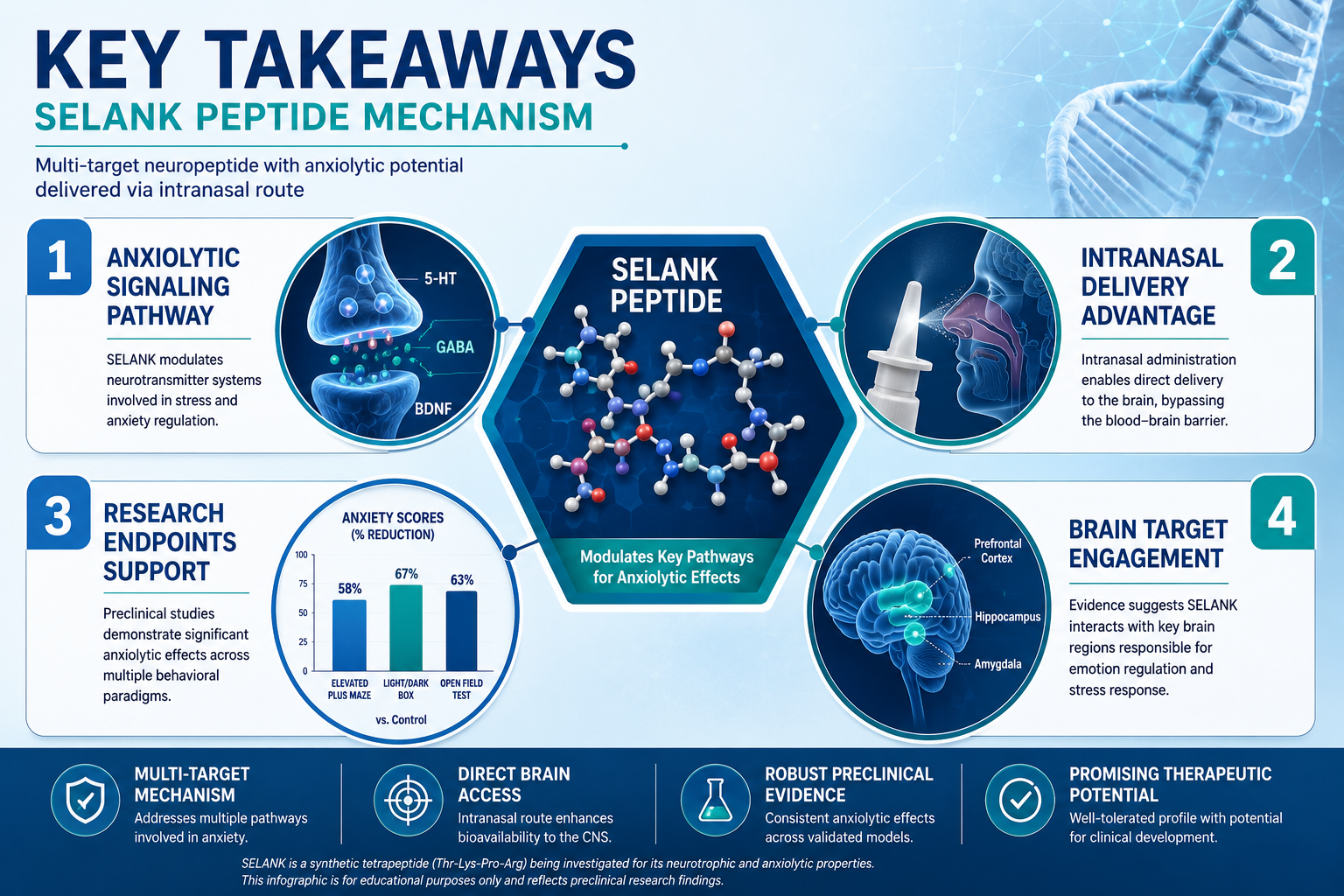
  • Selank is a tuftsin analog that modulates GABAergic signaling and also increases BDNF, producing anxiolytic effects without sedation.
  • Both peptides influence brain functional connectivity, particularly in regions associated with anxiety and cognition.
  • Semax has demonstrated neuroprotective effects in ischemic models; Selank is approved for generalized anxiety disorder.
  • Most existing research originates from Russian studies, and large-scale international clinical trials remain limited.

Structural Origins and Core Mechanisms

Understanding the differences in Semax and Selank peptides comparative research on neurogenesis and synaptic plasticity begins at the molecular level.

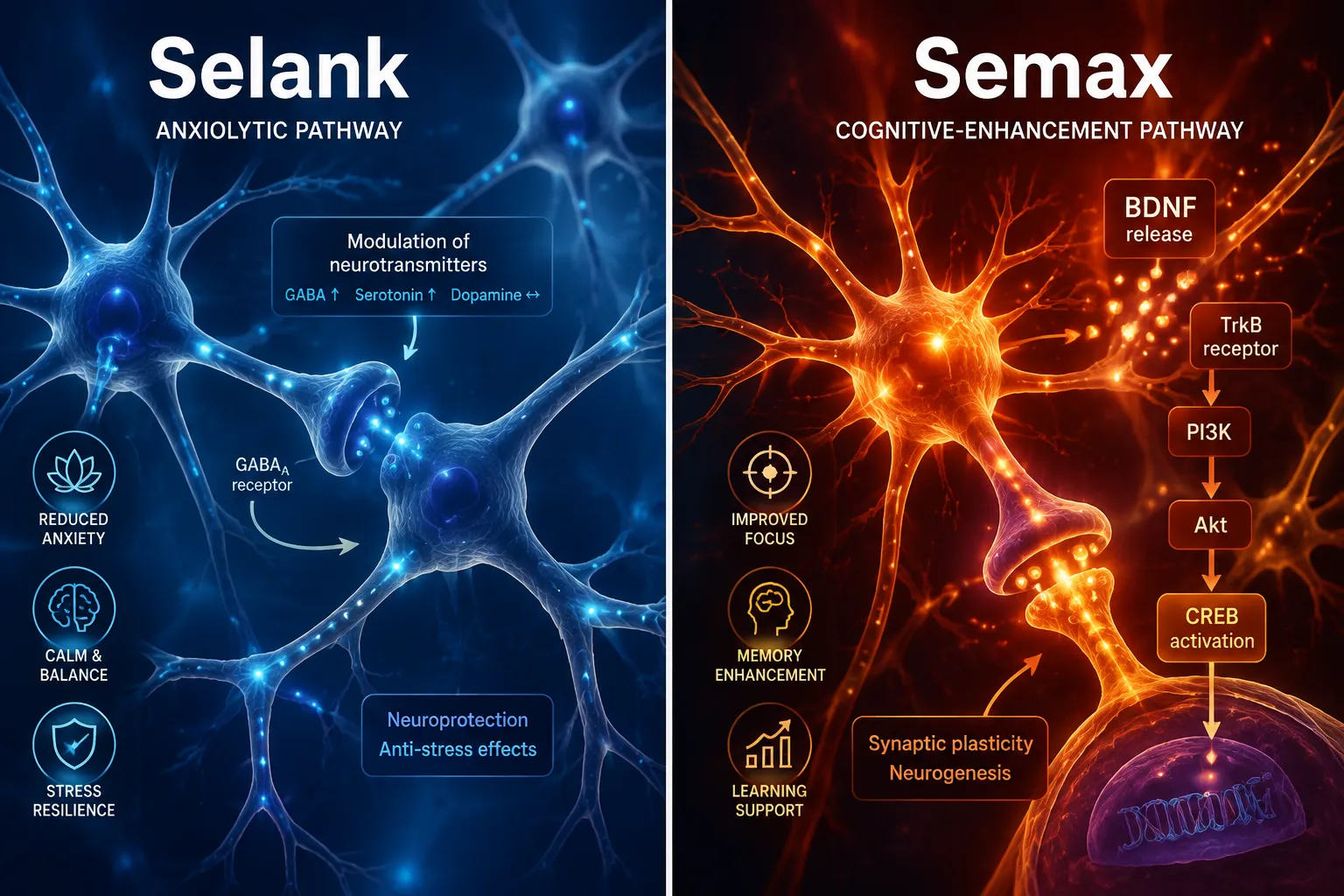
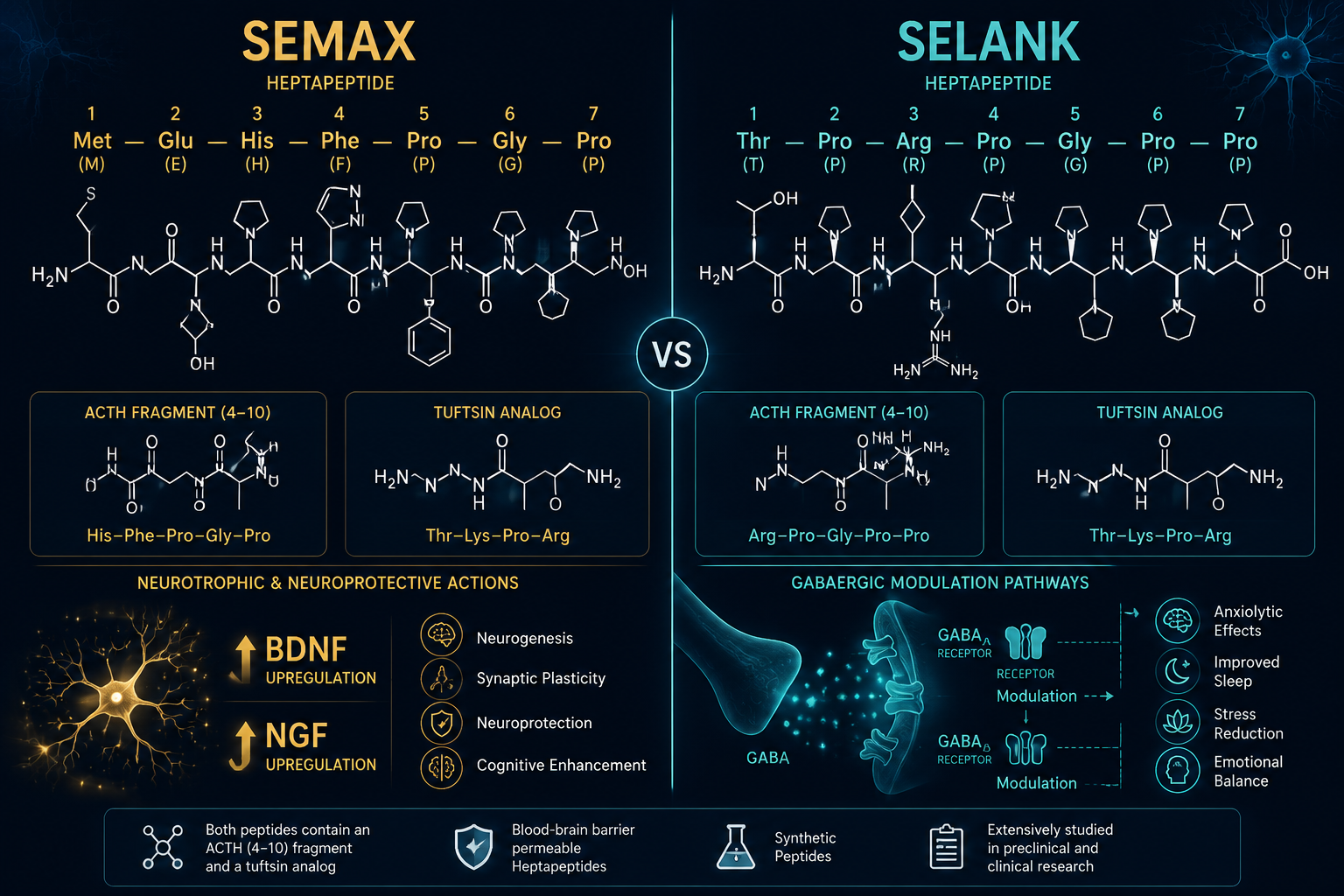
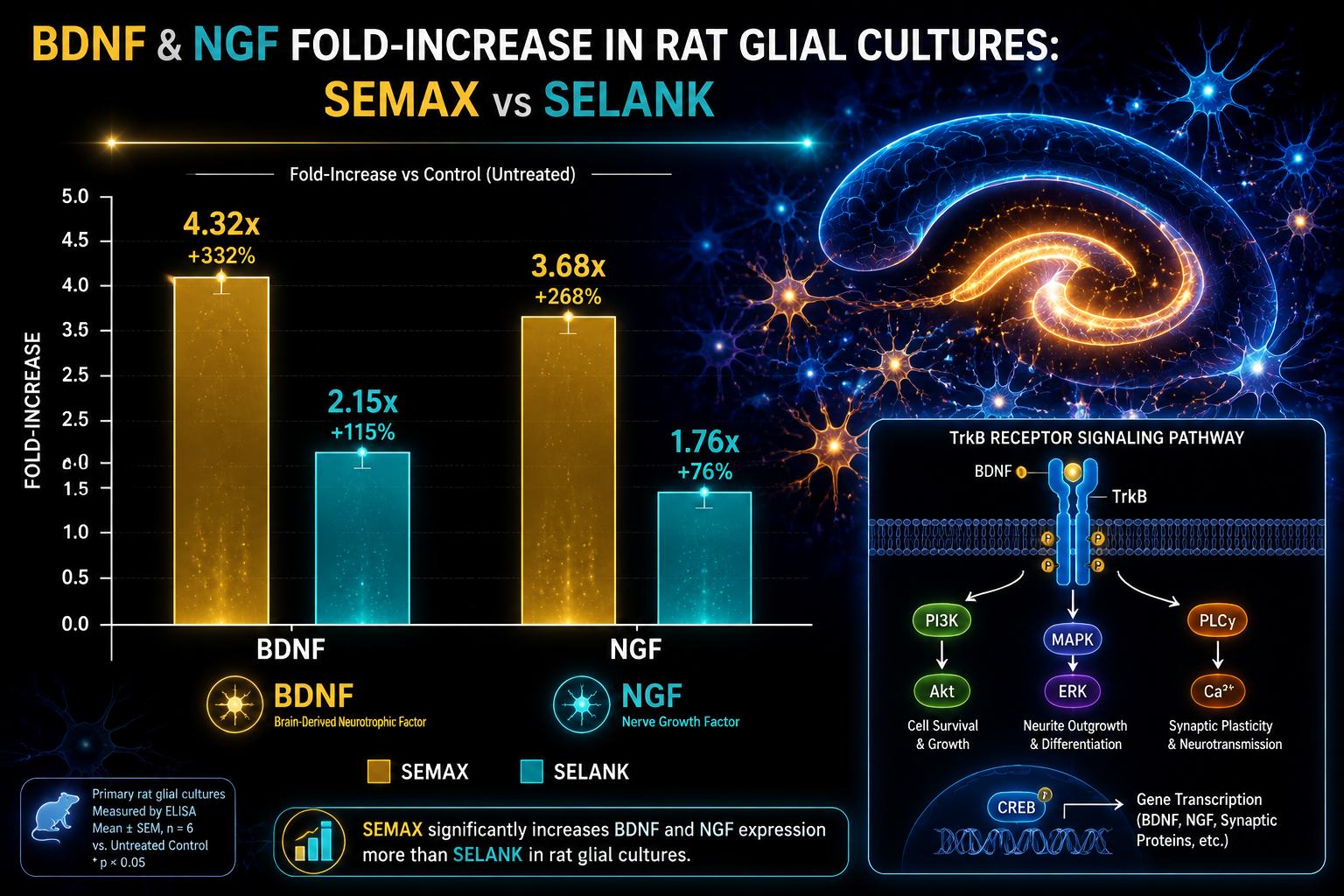
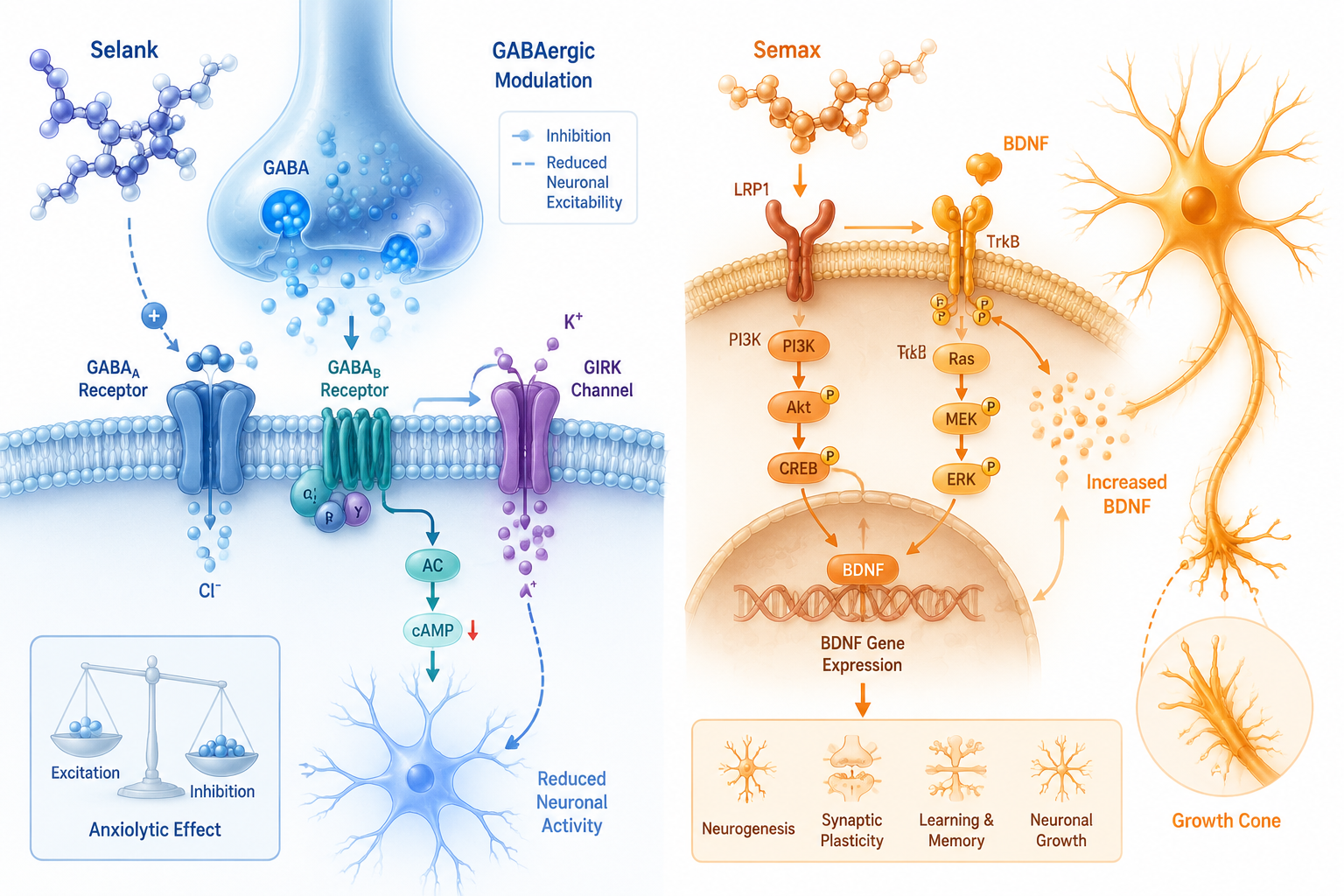
Semax is a synthetic heptapeptide derived from the ACTH(4-10) fragment, extended with a Pro-Gly-Pro sequence to improve metabolic stability. Its primary mechanism involves the rapid upregulation of brain-derived neurotrophic factor (BDNF) and nerve growth factor (NGF). In rat glial cultures, Semax has been shown to increase BDNF mRNA approximately eight-fold and NGF mRNA roughly five-fold within hours of administration. A single intranasal dose can elevate hippocampal BDNF protein and activate TrkB receptor signaling — a pathway critical for synaptic plasticity and long-term memory consolidation.

Selank, by contrast, is a synthetic analog of tuftsin, an endogenous immunomodulatory tetrapeptide. Rather than driving neurotrophin production as its primary action, Selank modulates GABAergic signaling while also increasing BDNF expression. This dual action produces meaningful anxiolytic effects without the sedation typically associated with GABA-targeting compounds.

Feature Semax Selank
Structural basis ACTH(4-10) fragment Tuftsin analog
Primary mechanism BDNF/NGF upregulation GABAergic modulation + BDNF
Key clinical use Stroke, neuroprotection Generalized anxiety disorder
Sedation risk Low Very low

Researchers exploring innovative peptide delivery systems will find both compounds relevant, as intranasal delivery is a defining feature of their administration protocols.


BDNF Upregulation, Synaptic Plasticity, and Neuroprotection

BDNF Upregulation, Synaptic Plasticity, and Neuroprotection

The divergence in how each peptide influences neurogenesis becomes clearest when examining downstream signaling. Semax's activation of TrkB receptors drives cascades associated with dendritic branching, long-term potentiation, and neuronal survival — processes at the heart of synaptic plasticity. In a rat cerebral ischemia-reperfusion model, Semax administration upregulated active CREB in subcortical structures, downregulated MMP-9 and c-Fos in the adjacent frontoparietal cortex, and reduced active JNK levels. These changes collectively point to reduced inflammation, attenuated apoptosis, and enhanced recovery signaling.

Selank's contribution to neuroplasticity is more indirect. By stabilizing GABAergic tone, it reduces the neurochemical noise that can impair synaptic consolidation. Its BDNF-elevating effect, while less dramatic than Semax's, still supports neuronal health and may complement anxiety-reduction strategies in research models.

"Semax's effects are more pronounced in cognitive enhancement and neuroprotection, whereas Selank's modulation of GABAergic signaling defines its anxiolytic profile — these are non-interchangeable roles."

Researchers interested in other neuroprotective peptide compounds may also want to review GHK-Cu longevity research themes and thymalin thymus bioregulation for broader context on peptide-driven cellular repair.


Functional Connectivity, Clinical Applications, and Research Gaps

Functional Connectivity, Clinical Applications, and Research Gaps

A resting-state fMRI study in 52 healthy participants found that both Semax and Selank influenced connectivity between the right amygdala and regions of the right temporal cortex. This suggests both peptides modulate neural networks tied to emotional regulation and cognitive processing — though through different primary mechanisms.

Registered clinical applications reinforce this distinction:

  • Semax is approved in Russia for ischemic stroke, transient ischemic attack, optic nerve atrophy, and neurasthenia.
  • Selank is approved for generalized anxiety disorder.

For researchers monitoring regulatory developments, Semax is scheduled to appear before the FDA's Pharmacy Compounding Advisory Committee in July 2026 for potential inclusion on the 503A Bulks List, which could significantly affect its research availability in the United States.

Those studying Selank's safety profile should review Selank side effects research before designing protocols. For broader peptide sourcing considerations, the peptide supplier comparison guide offers practical quality-control context.

Key research limitations to note:

  • Most published studies originate from Russian institutions.
  • Large-scale, randomized international clinical trials are scarce.
  • Long-term effects in diverse populations remain poorly characterized.

Researchers exploring multi-pathway cognitive support may also find value in reviewing the KLOW blend multipathway research for complementary mechanistic context.


Conclusion

Semax and Selank peptides comparative research on neurogenesis and synaptic plasticity makes one thing clear: these compounds are complementary rather than interchangeable. Semax offers stronger neurotrophin-driven neuroprotection and cognitive enhancement, while Selank provides GABAergic anxiolytic effects with secondary neuroplasticity benefits.

Actionable next steps for researchers:

  1. Design protocols that distinguish BDNF-driven endpoints (favoring Semax) from anxiety-modulation endpoints (favoring Selank).

  2. Monitor the FDA's 2026 advisory committee proceedings for updated compounding regulations affecting Semax availability.
  3. Prioritize sourcing from verified suppliers with documented purity testing to ensure experimental validity.
  4. Consider combination studies only after establishing individual baseline responses in the target model.
  5. Review the comprehensive peptide catalog to identify research-grade compounds with certificates of analysis.

The field is advancing rapidly, and rigorous, internationally replicated studies will be essential to fully validate what early research strongly suggests.

https://www.puretestedpeptides.com/wp-content/uploads/2026/06/Semax-and-Selank-Peptides-Comparative-Research-on-Neurogenesis-and-Synaptic-Plasticity.png 1024 1536 Pure Tested https://www.puretestedpeptides.com/wp-content/uploads/2026/01/buy-peptides-online.jpg Pure Tested2026-06-29 13:05:072026-07-20 15:01:58Semax and Selank Peptides: Comparative Research on Neurogenesis and Synaptic Plasticity
Selank Peptide Mechanism: Anxiolytic Signaling, Intranasal Delivery, and Research Endpoints

Selank Peptide Mechanism: Anxiolytic Signaling, Intranasal Delivery, and Research Endpoints

June 27, 2026/0 Comments/by Pure Tested

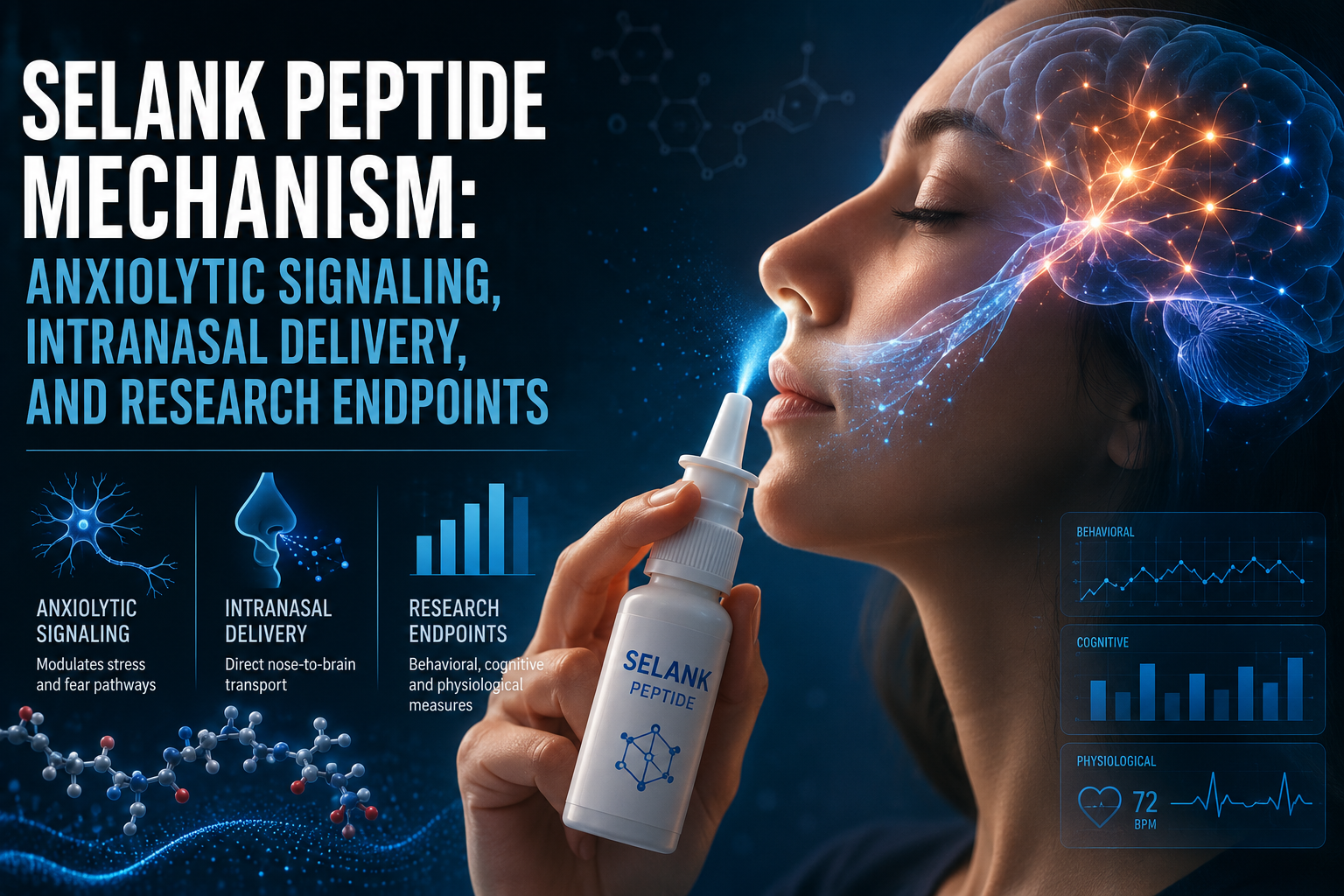
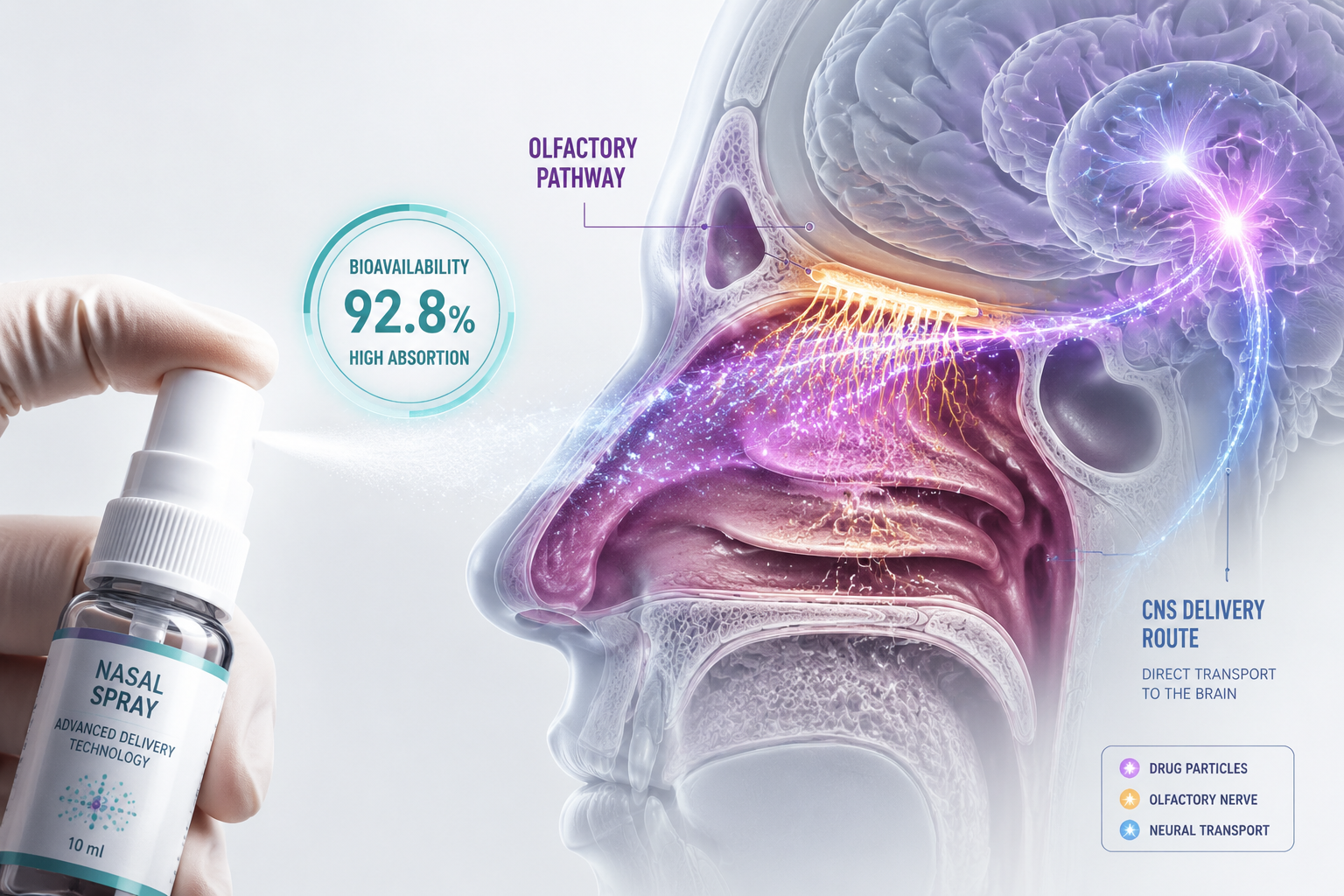
{"cover":"Professional landscape format (1536×1024) hero image with bold text overlay: 'Selank Peptide Mechanism: Anxiolytic Signaling, Intranasal Delivery & Research Endpoints' in extra large 72pt white bold sans-serif font with dark semi-transparent background bar for contrast, centered upper-third composition. Background shows a high-resolution macro photograph of a human brain neural network rendered in glowing blue and teal tones with synaptic connections visible, overlaid with faint molecular peptide chain diagrams. Color palette: deep navy blue, electric teal, clean white text. Magazine cover aesthetic, editorial quality, cinematic lighting.","content":["Detailed landscape format (1536×1024) scientific illustration showing a cross-sectional diagram of GABA receptor signaling in the brain, with labeled neural pathways highlighted in teal and gold. Foreground features a molecular model of the Selank heptapeptide chain with labeled amino acid nodes. Background shows a softly blurred neuron network in deep blue. Include small inset showing enkephalin enzyme inhibition pathway with arrows. Clean infographic style, clinical research aesthetic, white labels on dark background, no emojis.","Detailed landscape format (1536×1024) showing a close-up anatomical cross-section illustration of the human nasal cavity and olfactory pathway, with a highlighted delivery route from nasal mucosa through the cribriform plate to the brain. A translucent blue droplet representing intranasal peptide solution is shown entering the nasal passage. Overlay includes a bioavailability percentage callout (92.8%) in bold teal text. Background is a clean medical white-to-navy gradient. Clinical diagram style, precise anatomical labels, editorial quality.","Detailed landscape format (1536×1024) showing a research laboratory scene from an elevated angle, featuring a scientist in a white lab coat reviewing data charts on a large monitor displaying bar graphs of BDNF expression levels and anxiety scale scores. Foreground shows peptide vials, lab notebooks, and a molecular structure model. Color palette: cool grey, white, electric blue accents. Subtle overlay text reads 'Research Endpoints' in 36pt bold teal sans-serif. High contrast, professional editorial style, depth of field effect."]

Professional landscape hero image () with : "Selank Peptide Mechanism: Anxiolytic Signaling, Intranasal Delivery, and

A synthetic peptide achieving 92.8% intranasal bioavailability while producing anxiolytic effects comparable to benzodiazepines — without sedation or dependence — is a remarkable pharmacological profile. That is precisely what decades of Russian research have documented for Selank. Understanding the Selank peptide mechanism: anxiolytic signaling, intranasal delivery, and research endpoints requires a close look at its molecular design, its multi-target neurochemical activity, and the measurable outcomes researchers use to evaluate it.

Key Takeaways

  • Selank is a synthetic heptapeptide derived from tuftsin, engineered for metabolic stability and extended pharmacological activity.
  • It modulates GABA receptors, inhibits enkephalin-degrading enzymes, and influences monoamine neurotransmitters across several brain regions.
  • Intranasal administration delivers approximately 92.8% bioavailability with a pharmacodynamic window of 20 to 24 hours.
  • Selank upregulates BDNF in the hippocampus, supporting both neuroprotection and cognitive function in preclinical models.
  • It is approved in Russia for generalized anxiety disorder but remains a research chemical outside that regulatory framework.

Key Takeaways

Anxiolytic Signaling: How Selank Acts on the Brain

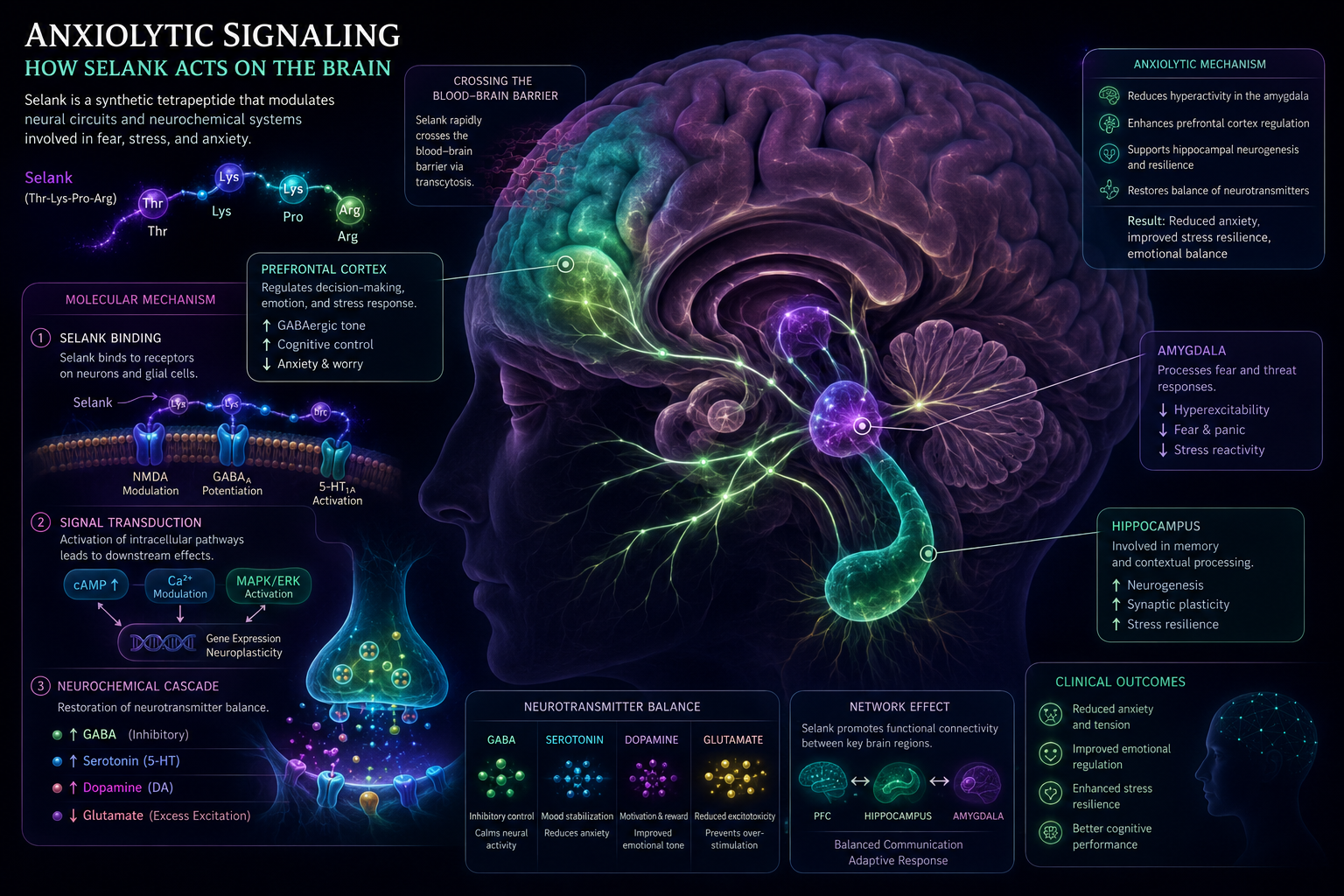
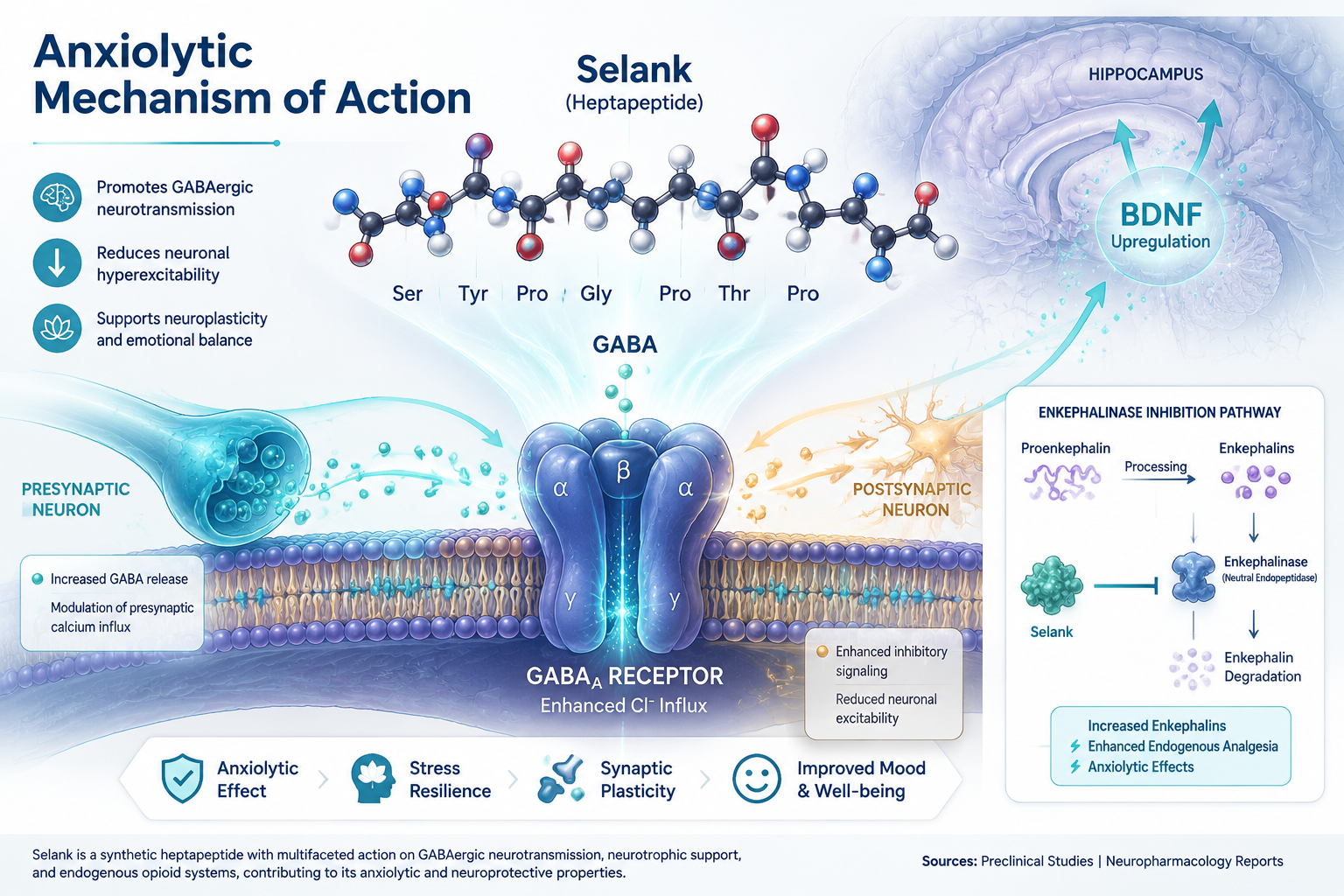
The Selank peptide mechanism: anxiolytic signaling, intranasal delivery, and research endpoints begins at the molecular level. Selank is a seven-amino-acid peptide derived from tuftsin, a naturally occurring immunomodulatory tetrapeptide. Researchers added a proline-glycine-proline sequence to the tuftsin backbone to dramatically slow enzymatic degradation, extending its biological half-life and making it viable for pharmacological study.

GABAergic Modulation

Selank's most studied anxiolytic pathway involves the GABAergic system. Rather than binding directly to GABA-A receptors the way benzodiazepines do, Selank modulates GABA metabolism and receptor sensitivity indirectly. This distinction is critical: it produces meaningful anxiety reduction without the sedation, motor impairment, tolerance development, or physical dependence that accompany classical GABA-A agonists.

"Selank produces anxiolytic effects equivalent to classical benzodiazepines without causing sedation, cognitive impairment, motor dysfunction, tolerance, or physical dependence."

Enkephalin Pathway

Selank also inhibits enkephalinase, the enzyme responsible for breaking down endogenous enkephalins. By slowing enkephalin degradation, Selank prolongs the activity of these naturally calming opioid peptides, contributing an additional layer of anxiolytic signaling that operates independently of the GABAergic axis.

Monoamine Neurotransmitter Effects

Research has documented Selank's influence on serotonin, norepinephrine, and dopamine levels across multiple brain regions, including the hippocampus, hypothalamus, striatum, and frontal cortex. This broad monoamine modulation is thought to underlie both its anxiety-reducing properties and its observed cognitive-enhancing effects in preclinical models.

BDNF Upregulation

One of the most clinically significant findings in Selank research is its ability to increase brain-derived neurotrophic factor (BDNF) expression in the hippocampus. BDNF supports neuronal survival, synaptic plasticity, and memory consolidation. Elevated BDNF is associated with resilience to stress-related neurodegeneration, making this pathway a key research endpoint. Researchers interested in neuroprotective peptide signaling may also find relevant context in studies on GHK-Cu longevity and neurotrophic research themes and NAD+ energetics and longevity research themes.


BDNF Upregulation

Intranasal Delivery: Pharmacokinetics and Practical Advantages

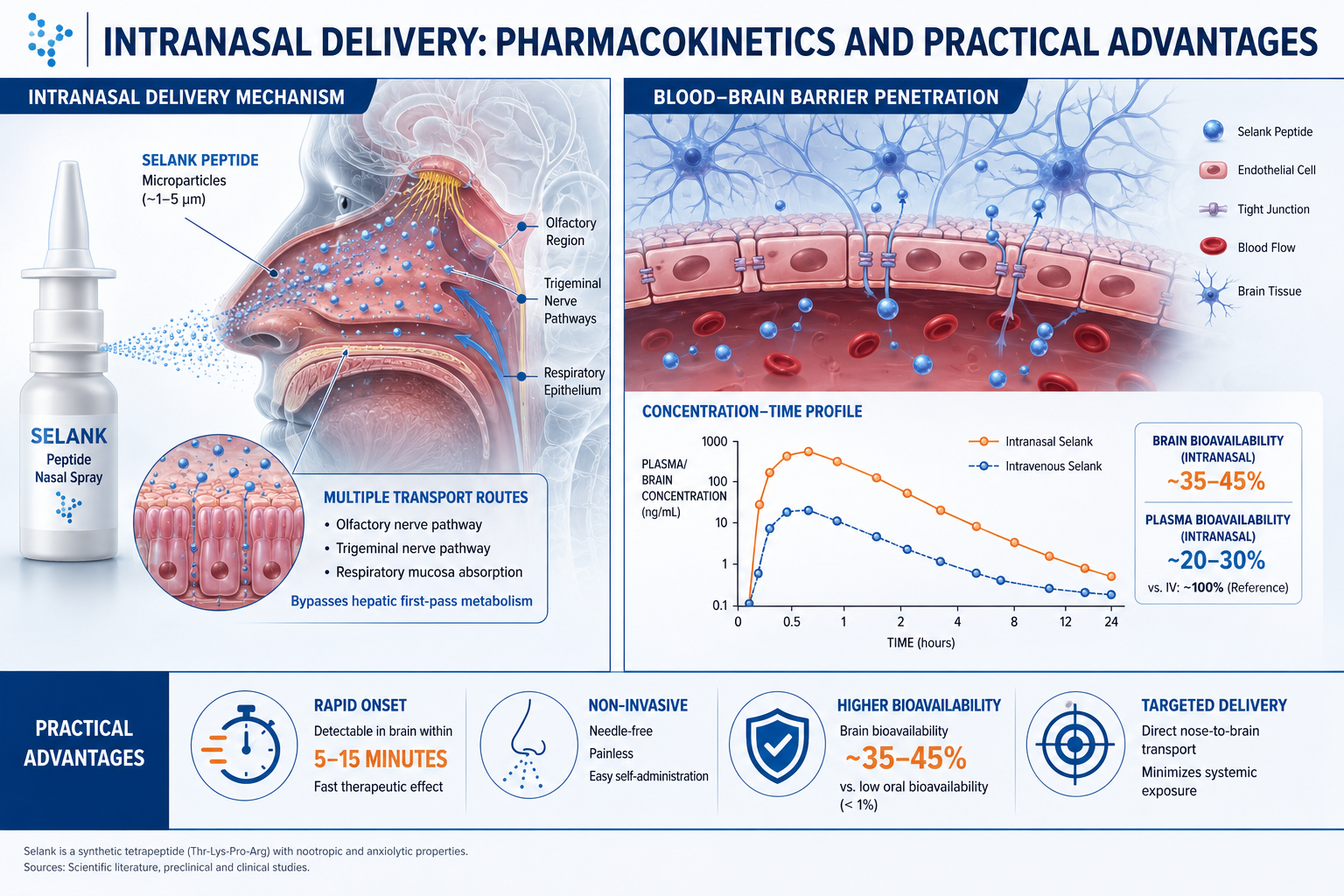
The delivery method is inseparable from the Selank peptide mechanism: anxiolytic signaling, intranasal delivery, and research endpoints. Selank's intranasal bioavailability has been measured at approximately 92.8%, a figure that far exceeds what most peptides achieve via this route. The olfactory epithelium and nasal mucosa provide a direct pathway to the central nervous system, bypassing the blood-brain barrier and hepatic first-pass metabolism.

Parameter Value
Intranasal bioavailability ~92.8%
Pharmacodynamic duration 20 to 24 hours
Route of administration Intranasal spray
Regulatory approval (Russia) 2009 (GAD, neurasthenia)

This extended pharmacodynamic window of 20 to 24 hours is particularly notable for anxiety research, as it suggests sustained receptor engagement from a single administration. For researchers comparing peptide delivery strategies, the Selank side effects research profile provides additional context on tolerability data from existing studies.


Intranasal Delivery: Pharmacokinetics and Practical Advantages

Research Endpoints and Regulatory Context

Selank received regulatory approval in the Russian Federation in 2009 for the treatment of generalized anxiety disorder and neurasthenia. As of 2026, however, no large placebo-controlled trials have been conducted outside Russia, and neither the FDA nor the EMA has reviewed or approved the compound. Outside Russia and select CIS countries, Selank is classified as a research chemical.

Common research endpoints used in Selank studies include:

  • Anxiety scale scores (Hamilton Anxiety Rating Scale, elevated plus maze in animal models)
  • BDNF expression levels in hippocampal tissue
  • Monoamine metabolite concentrations in cerebrospinal fluid
  • Enkephalin degradation rates
  • Cognitive performance metrics (working memory, attention tasks)
  • Neuroimmune markers, including interleukin profiles

Researchers exploring overlapping neuroimmune and peptide signaling topics may find useful comparative data in studies on LL-37 innate immunity research themes and KPV epithelial barrier research. For those cataloging peptide research by biological theme, the full peptide catalog organized by research theme offers a structured reference point.


Conclusion

The Selank peptide mechanism: anxiolytic signaling, intranasal delivery, and research endpoints represents a convergence of elegant molecular engineering and multi-pathway neurochemical activity. Its indirect GABAergic modulation, enkephalinase inhibition, monoamine regulation, and BDNF upregulation give researchers several distinct measurable targets. Its near-complete intranasal bioavailability and long pharmacodynamic duration make it a practical subject for CNS peptide delivery studies.

Actionable next steps for researchers:

  • Define primary endpoints (BDNF expression, anxiety scale scores, or monoamine profiling) before study design.
  • Review existing Russian clinical literature on GAD and neurasthenia outcomes as a baseline.
  • Confirm regulatory classification in your jurisdiction before procurement or use.
  • Cross-reference neuroimmune endpoints with related peptide research to build a broader mechanistic picture.
https://www.puretestedpeptides.com/wp-content/uploads/2026/06/Selank-Peptide-Mechanism-Anxiolytic-Signaling-Intranasal-Delivery-and-Research-Endpoints.png 1024 1536 Pure Tested https://www.puretestedpeptides.com/wp-content/uploads/2026/01/buy-peptides-online.jpg Pure Tested2026-06-27 13:04:442026-07-20 15:02:03Selank Peptide Mechanism: Anxiolytic Signaling, Intranasal Delivery, and Research Endpoints
Selank Peptide in Research: Anxiolytic Pathways, Intranasal Use, and Study Endpoints

Selank Peptide in Research: Anxiolytic Pathways, Intranasal Use, and Study Endpoints

June 24, 2026/0 Comments/by Pure Tested

Anxiety disorders affect roughly one in three adults globally over their lifetime, yet the dominant pharmacological tools — benzodiazepines — carry well-documented risks of sedation, cognitive blunting, and physical dependence. Against that backdrop, Selank Peptide in Research: Anxiolytic Pathways, Intranasal Use, and Study Endpoints has emerged as a focused area of scientific inquiry, drawing attention from neurochemists and clinical researchers who want a cleaner mechanistic profile. This article unpacks what the current evidence shows about how Selank works, how it is delivered, and how researchers are measuring its effects.

Key Takeaways

  • Selank is a synthetic heptapeptide derived from tuftsin that modulates GABAergic signaling and inhibits enkephalin-degrading enzymes.
  • Intranasal delivery provides rapid CNS access, with a plasma half-life of roughly 2-10 minutes but pharmacodynamic effects lasting up to 24 hours.
  • Russian clinical trials comparing Selank to benzodiazepines report comparable anxiolytic efficacy without sedation or dependence.
  • The Hamilton Anxiety Rating Scale (HARS) is the primary endpoint used in published trials.
  • Selank is not FDA- or EMA-approved; most clinical data originate from Russian research, and independent Western replication remains limited.

Key Takeaways

Anxiolytic Pathways: How Selank Works at the Molecular Level

Selank is a seven-amino-acid (heptapeptide) analog of tuftsin, an endogenous tetrapeptide naturally produced in the spleen. Its anxiolytic profile rests on at least three converging mechanisms.

GABAergic modulation is the most studied pathway. Selank appears to enhance the sensitivity of GABA-A receptors, the same receptor class targeted by benzodiazepines. However, unlike benzodiazepines, it does not bind directly to the benzodiazepine allosteric site, which may explain why it avoids the sedation and tolerance seen with classical drugs in that class.

Enkephalin preservation adds a second layer. Selank inhibits enzymes responsible for breaking down enkephalins — endogenous opioid peptides that contribute to stress regulation. By extending enkephalin activity, Selank may reduce the neurochemical "noise" that sustains anxious states.

Monoamine and BDNF effects round out the picture. Research shows upregulation of brain-derived neurotrophic factor (BDNF) in the hippocampus following Selank exposure, a finding relevant to both mood regulation and neuroprotection. Serotonin and dopamine turnover are also modestly influenced, though these effects appear secondary to GABAergic action.

Selank also demonstrates immunomodulatory properties, shifting the balance between T-helper 1 and T-helper 2 cytokines. This neuroimmune dimension connects it to broader research themes explored in areas like neuroendocrine and innate immunity interactions, where peptide signaling bridges the nervous and immune systems.


Anxiolytic Pathways: How Selank Works at the Molecular Level

Intranasal Use: Delivery Rationale and Dosing Parameters

The intranasal route is the defining feature of Selank's research administration protocol, and the choice is mechanistically deliberate.

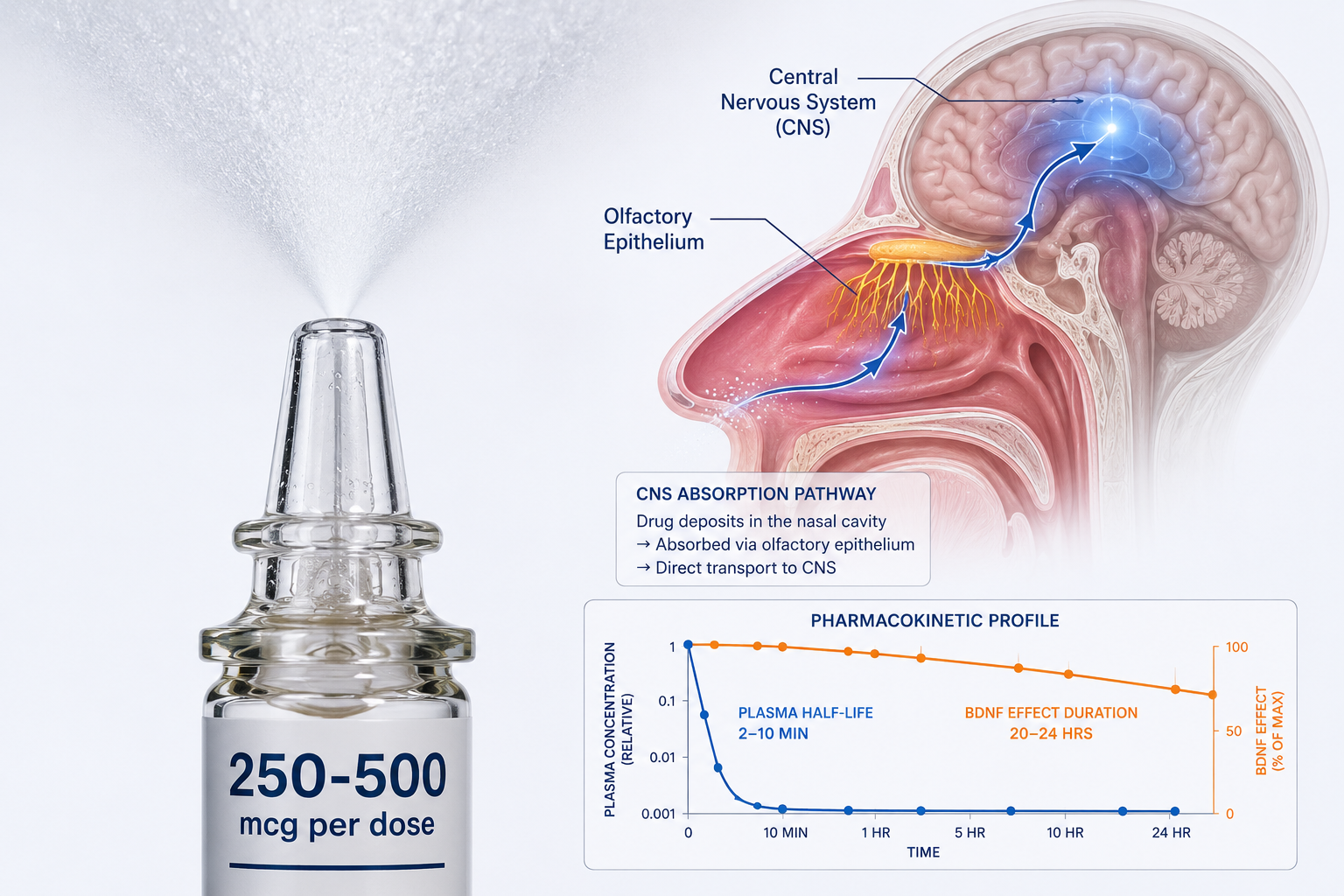
"Intranasal delivery bypasses hepatic first-pass metabolism and provides near-direct access to the central nervous system via the olfactory epithelium — a critical advantage for a peptide with a plasma half-life of just 2-10 minutes."

Despite that brief systemic half-life, Selank's pharmacodynamic footprint is far longer. BDNF upregulation and anxiolytic behavioral effects have been documented to persist for 20-24 hours after a single dose, suggesting receptor-level or transcriptional changes that outlast the peptide's presence in circulation.

Standard research dosing parameters:

Parameter Typical Range
Dose per administration 250-500 micrograms
Frequency 2-3 times daily
Cycle length 14-21 days
Route Intranasal spray

This delivery model shares conceptual ground with other peptides studied via mucosal or alternative routes. Researchers interested in delivery optimization may also find value in reviewing BPC-157 research themes and oral BPC-157 delivery considerations, where route selection similarly affects bioavailability outcomes.


Intranasal Use: Delivery Rationale and Dosing Parameters

Study Endpoints in Selank Peptide Research

Understanding Selank Peptide in Research: Anxiolytic Pathways, Intranasal Use, and Study Endpoints requires close attention to how trials are actually designed and measured.

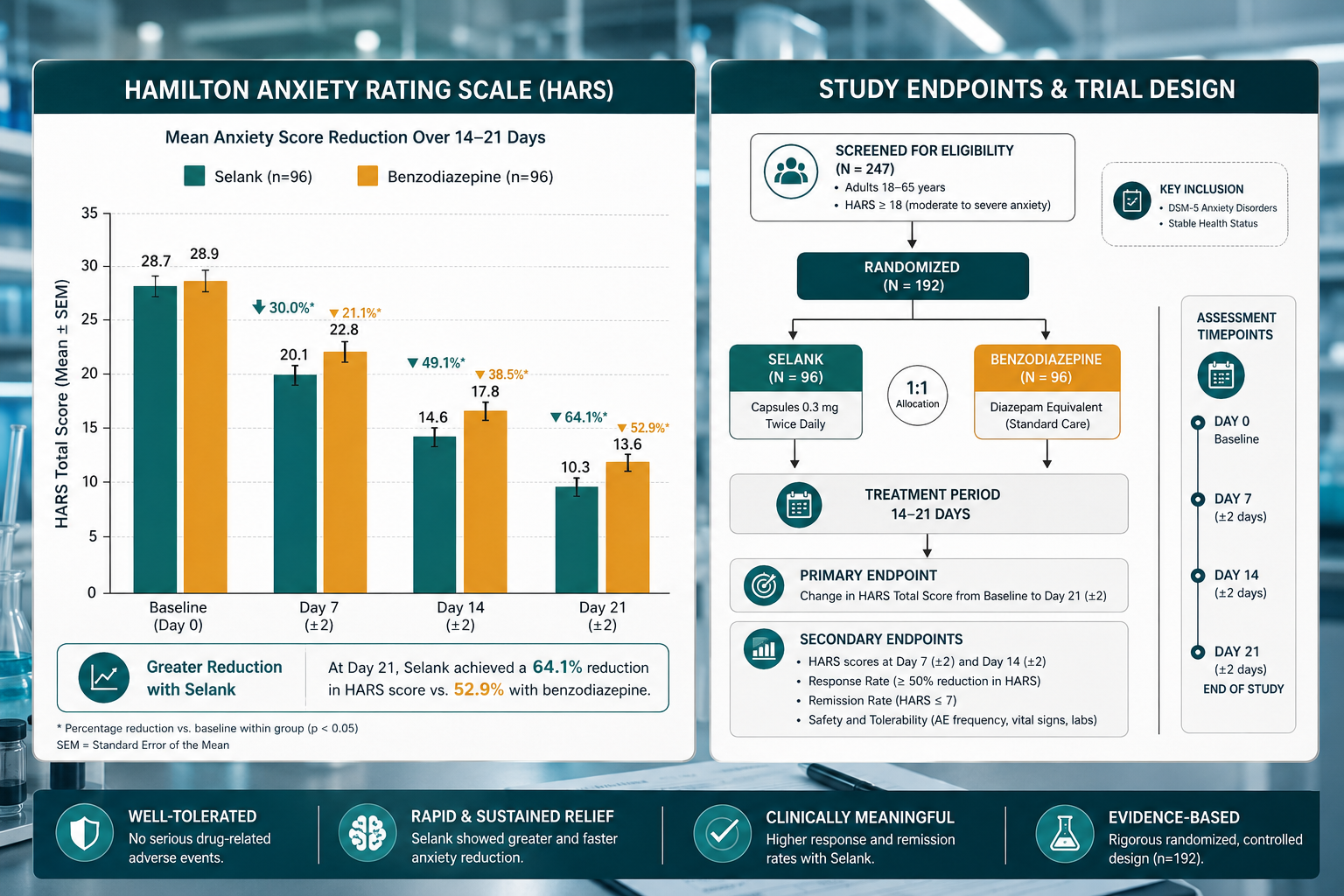
The Hamilton Anxiety Rating Scale (HARS) is the primary psychometric tool used in published Selank trials. HARS scores track somatic and psychological anxiety symptoms across 14 items, giving researchers a validated, quantitative endpoint for comparing treatment arms.

In Russian clinical trials involving approximately 192 patients, Selank produced HARS score reductions comparable to medazepam and phenazepam — two benzodiazepine-class drugs — over 14-21 day treatment periods. Critically, the Selank groups showed no clinically significant sedation, cognitive impairment, or signs of physical dependence, distinguishing it sharply from the comparator drugs.

Key endpoints used in Selank trials:

  • HARS total score reduction
  • Cognitive function assessments (attention, memory tasks)
  • Sedation scales
  • Dependence and withdrawal indicators
  • Immune marker panels (cytokine profiling)

Selank received regulatory approval in Russia in 2009 for generalized anxiety disorder and neurasthenia. It has not received FDA or EMA approval. A brief listing under FDA Category 2 in September 2023 was withdrawn by September 2024 after the nominator pulled the nomination.

The primary limitation of the existing evidence base is geographic concentration. Nearly all controlled data originate from Russian institutions, and independent replication in Western research settings remains sparse. This gap is a recognized priority for the field.

Researchers building multi-peptide experimental frameworks may find it useful to cross-reference metabolic modulation research lines and NAD+ energetics and longevity research themes for comparative endpoint design strategies, as well as reference standard benchmarking practices when establishing assay reliability.


Conclusion

Selank occupies a genuinely distinct position in peptide neuroscience research. Its multi-pathway anxiolytic mechanism — spanning GABAergic modulation, enkephalin preservation, and BDNF upregulation — gives researchers a compound with a cleaner safety signal than classical benzodiazepines, at least within the existing trial data. The intranasal delivery model is well-matched to its short plasma half-life, and the HARS-based endpoint framework provides a replicable measurement structure for future studies.

Actionable next steps for researchers:

  • Prioritize HARS as the primary endpoint alongside cognitive battery tests to capture both efficacy and safety dimensions.
  • Design cycle lengths of 14-21 days with intranasal dosing at 250-500 mcg per administration to align with published protocols.
  • Plan for cytokine profiling as a secondary endpoint to capture immunomodulatory effects.
  • Seek independently verified peptide sourcing with documented purity standards to ensure experimental reproducibility.

The field needs well-designed, independently replicated trials outside Russia to either confirm or refine the current evidence. Until that data exists, Selank remains a compelling but incompletely validated research compound — one that rewards rigorous experimental design.

https://www.puretestedpeptides.com/wp-content/uploads/2026/06/Selank-Peptide-in-Research-Anxiolytic-Pathways-Intranasal-Use-and-Study-Endpoints.png 1024 1536 Pure Tested https://www.puretestedpeptides.com/wp-content/uploads/2026/01/buy-peptides-online.jpg Pure Tested2026-06-24 13:07:052026-07-20 15:02:20Selank Peptide in Research: Anxiolytic Pathways, Intranasal Use, and Study Endpoints
Selank and Semax Nasal Spray: Comparative Research on Anxiolytic and Nootropic Effects

Selank and Semax Nasal Spray: Comparative Research on Anxiolytic and Nootropic Effects

June 21, 2026/0 Comments/by Pure Tested

Two peptides developed in Russia now sit at the center of a growing body of preclinical research: one primarily quiets anxiety, the other sharpens cognition — and their mechanisms could not be more different. Understanding the comparative research on Selank and Semax nasal spray: comparative research on anxiolytic and nootropic effects gives researchers and informed readers a clearer picture of how each compound works, where they overlap, and why combining them has attracted scientific interest.

Key Takeaways

  • Selank modulates the GABAergic system to produce rapid anxiolytic effects without sedation or dependence risk.
  • Semax upregulates BDNF and influences dopaminergic and serotonergic pathways, driving cognitive enhancement over time.
  • Both peptides are delivered intranasally, offering high bioavailability and fast central nervous system access.
  • Research suggests the two compounds may complement each other when used together in experimental models.
  • Both have favorable safety profiles in research settings, with minimal reported side effects.

Key Takeaways

Mechanisms of Action: How Each Peptide Works

Selank: GABAergic Modulation and Anxiety Relief

Selank is a synthetic analog of tuftsin, a naturally occurring immunomodulatory tetrapeptide. Its primary mechanism involves modulation of the GABAergic system — the same inhibitory network targeted by benzodiazepines — but without triggering the sedation, tolerance, or withdrawal risks associated with those drugs.

In preclinical models, Selank produces anxiolytic effects within minutes of intranasal administration. It also demonstrates mild immunomodulatory activity and has been shown to stabilize enkephalin levels, which play a role in mood regulation. For researchers exploring peptide-based approaches to anxiety, the Selank peptide benefits overview provides a useful starting point.

Semax: BDNF Upregulation and Cognitive Enhancement

Semax is derived from the ACTH(4–10) fragment of adrenocorticotropic hormone. Its standout feature in research is the upregulation of brain-derived neurotrophic factor (BDNF), a protein critical for neuronal survival, synaptic plasticity, and learning. Semax also modulates dopaminergic and serotonergic pathways, contributing to improved focus, memory consolidation, and neuroprotection.

Unlike Selank's rapid onset, Semax's cognitive benefits tend to build over time as BDNF levels rise and synaptic remodeling occurs. This slower but sustained profile makes it particularly relevant in neuroprotection research, including post-stroke recovery models.

"Selank calms the system quickly; Semax builds the system over time — two distinct timelines serving two distinct research goals."


Comparative Research on Anxiolytic and Nootropic Effects

Comparative Research on Anxiolytic and Nootropic Effects

The heart of the Selank and Semax nasal spray: comparative research on anxiolytic and nootropic effects debate lies in how their pharmacological profiles differ — and where they intersect.

Head-to-Head Profile Comparison

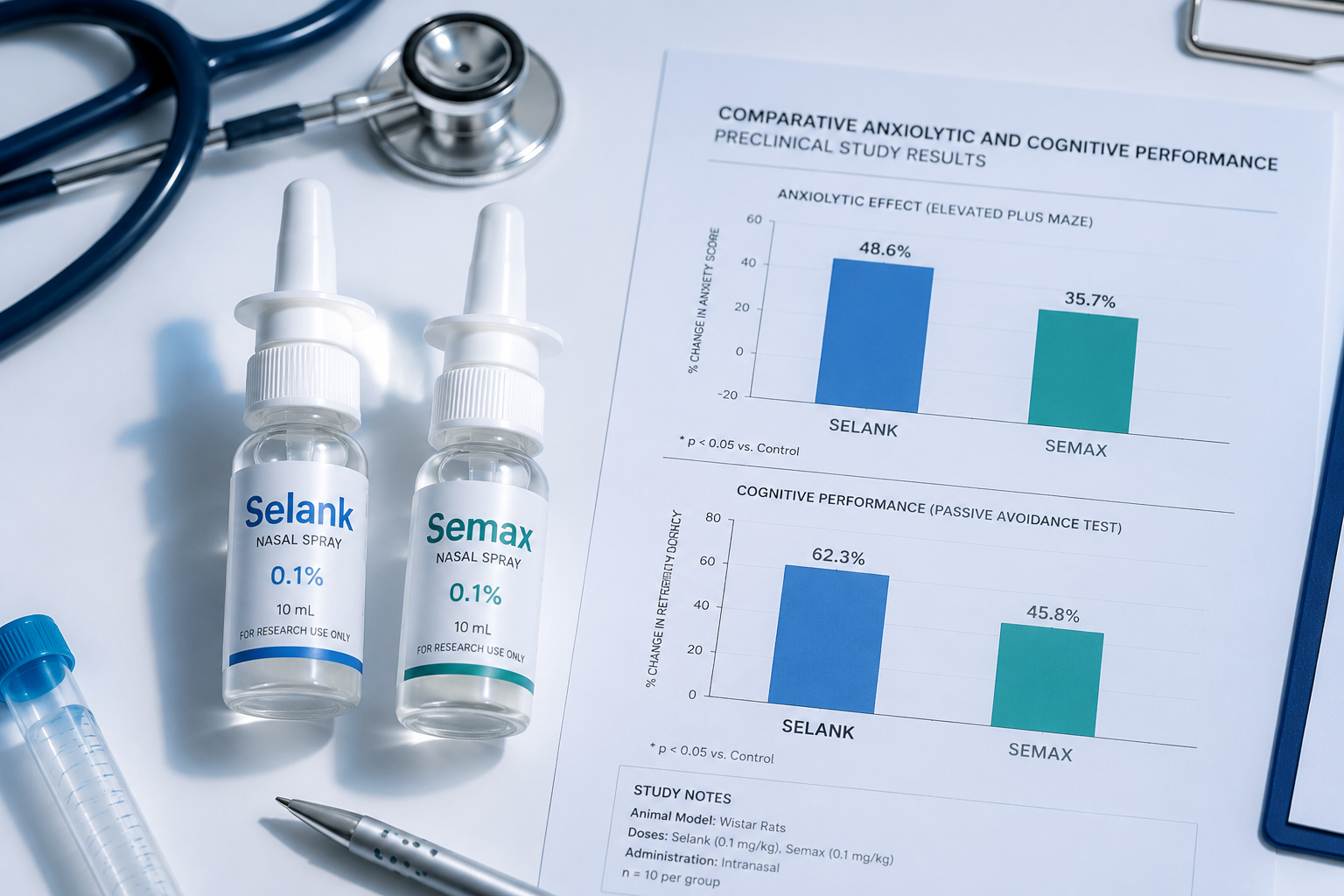
Feature Selank Semax
Primary mechanism GABAergic modulation BDNF upregulation
Primary effect Anxiolytic Cognitive enhancement
Onset of action Minutes Days to weeks
Typical research dosage 300–900 mcg/day 200–1,000 mcg/day
Administration route Intranasal Intranasal
Sedation risk None reported None reported
Regulatory status (Russia) Approved for anxiety Approved for cognition/neuroprotection

Both compounds are administered intranasally, which bypasses first-pass metabolism and allows direct transport along olfactory pathways to the brain. This delivery method is a key advantage shared by both peptides and explains their relatively high bioavailability compared to oral alternatives.

Complementary Research Applications

Research has explored whether combining Selank and Semax produces additive or synergistic effects. Early findings suggest the pairing may offer simultaneous anxiety reduction and cognitive enhancement — without the sedation or dependence concerns tied to conventional pharmacological approaches. This is particularly relevant for researchers studying stress-induced cognitive impairment, where anxiety and reduced mental performance co-occur.

Researchers interested in multi-peptide stacking strategies may also find value in reviewing simple peptides research frameworks and broader peptide supplier quality considerations when sourcing compounds for controlled models.

Both peptides show favorable safety profiles in research settings. The most commonly noted side effect is mild nasal irritation at the administration site — a minor and typically transient finding. Neither compound has demonstrated significant toxicity, addiction potential, or withdrawal effects in available preclinical data.


Research Considerations and Practical Notes

Research Considerations and Practical Notes

Dosage Windows in Preclinical Models

Selank research typically operates within a 300–900 mcg/day window, while Semax protocols range from 200–1,000 mcg/day depending on the model and outcome being measured. These ranges reflect the flexibility each compound offers across different experimental designs.

Researchers working with other peptide compounds may draw useful parallels from dosage structuring resources such as the SS-31 research peptide considerations guide or the epithalon peptides research overview, which address similar precision-dosing challenges. For those exploring broader neurological peptide research, NAD scientific evidence reviews also offer relevant context on neuroprotective pathways.

Regulatory and Research Context

In Russia, both peptides hold approved clinical status — Selank for generalized anxiety disorder and Semax for cognitive enhancement and neuroprotection. Outside Russia, both remain research compounds not approved for human therapeutic use in most jurisdictions. Researchers should ensure compliance with applicable regulations and source compounds only from verified, tested suppliers.


Conclusion

The Selank and Semax nasal spray: comparative research on anxiolytic and nootropic effects reveals two peptides with distinct but potentially complementary roles. Selank offers fast-acting GABAergic anxiolysis; Semax delivers sustained cognitive enhancement through BDNF-driven neuroplasticity. Together, they represent a compelling research pairing for models examining the intersection of mood regulation and cognitive performance.

Actionable next steps for researchers:

  • Define the primary endpoint before selecting a compound — anxiety reduction favors Selank; cognitive output favors Semax.
  • Consider combination protocols only in controlled settings with clear outcome metrics.

  • Source compounds with documented purity testing and certificates of analysis.
  • Review current literature on intranasal peptide bioavailability to optimize dosing windows.
  • Monitor for nasal irritation as the primary tolerability variable in any administration protocol.
https://www.puretestedpeptides.com/wp-content/uploads/2026/06/Selank-and-Semax-Nasal-Spray-Comparative-Research-on-Anxiolytic-and-Nootropic-Effects.png 1024 1536 Pure Tested https://www.puretestedpeptides.com/wp-content/uploads/2026/01/buy-peptides-online.jpg Pure Tested2026-06-21 13:05:022026-07-20 15:02:38Selank and Semax Nasal Spray: Comparative Research on Anxiolytic and Nootropic Effects
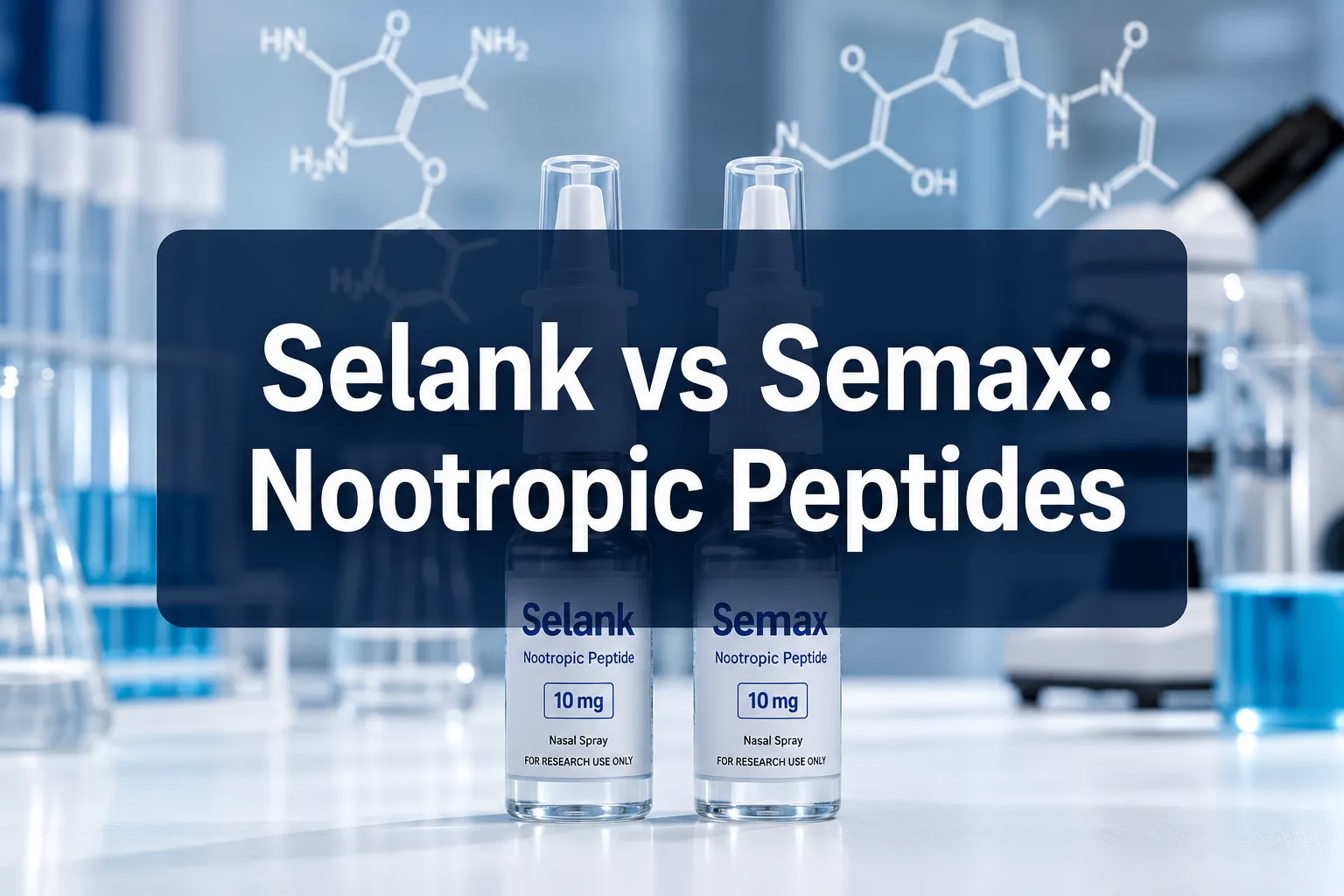
Selank vs Semax: Comparing Anxiolytic and Nootropic Peptides, Mechanisms, and Nasal Delivery

Selank vs Semax: Comparing Anxiolytic and Nootropic Peptides, Mechanisms, and Nasal Delivery

June 16, 2026/0 Comments/by Pure Tested

Both Selank and Semax emerged from the same Soviet-era research program, yet they target entirely different neurological pathways — a distinction that makes the comparison between them far more than a matter of preference. Selank vs Semax: Comparing Anxiolytic and Nootropic Peptides, Mechanisms, and Nasal Delivery is one of the most clinically relevant questions in current peptide research, particularly as interest in stress-response biology and cognitive neuroscience continues to grow in 2026.

Detailed () scientific illustration showing two peptide molecular structures side by side labeled Selank and Semax, with

Key Takeaways

  • Selank and Semax are both synthetic heptapeptides developed at the Institute of Molecular Genetics of the Russian Academy of Sciences.
  • Selank primarily modulates GABAergic signaling for anxiolytic effects; Semax upregulates BDNF for cognitive and neuroprotective outcomes.
  • Both peptides are delivered intranasally, bypassing the blood-brain barrier via the olfactory pathway.
  • Selank is approved in Russia for anxiety disorders; Semax is authorized for stroke and cognitive impairment management.
  • Neither peptide has been associated with dependence or significant withdrawal effects in research settings.

Origins and Chemical Structure

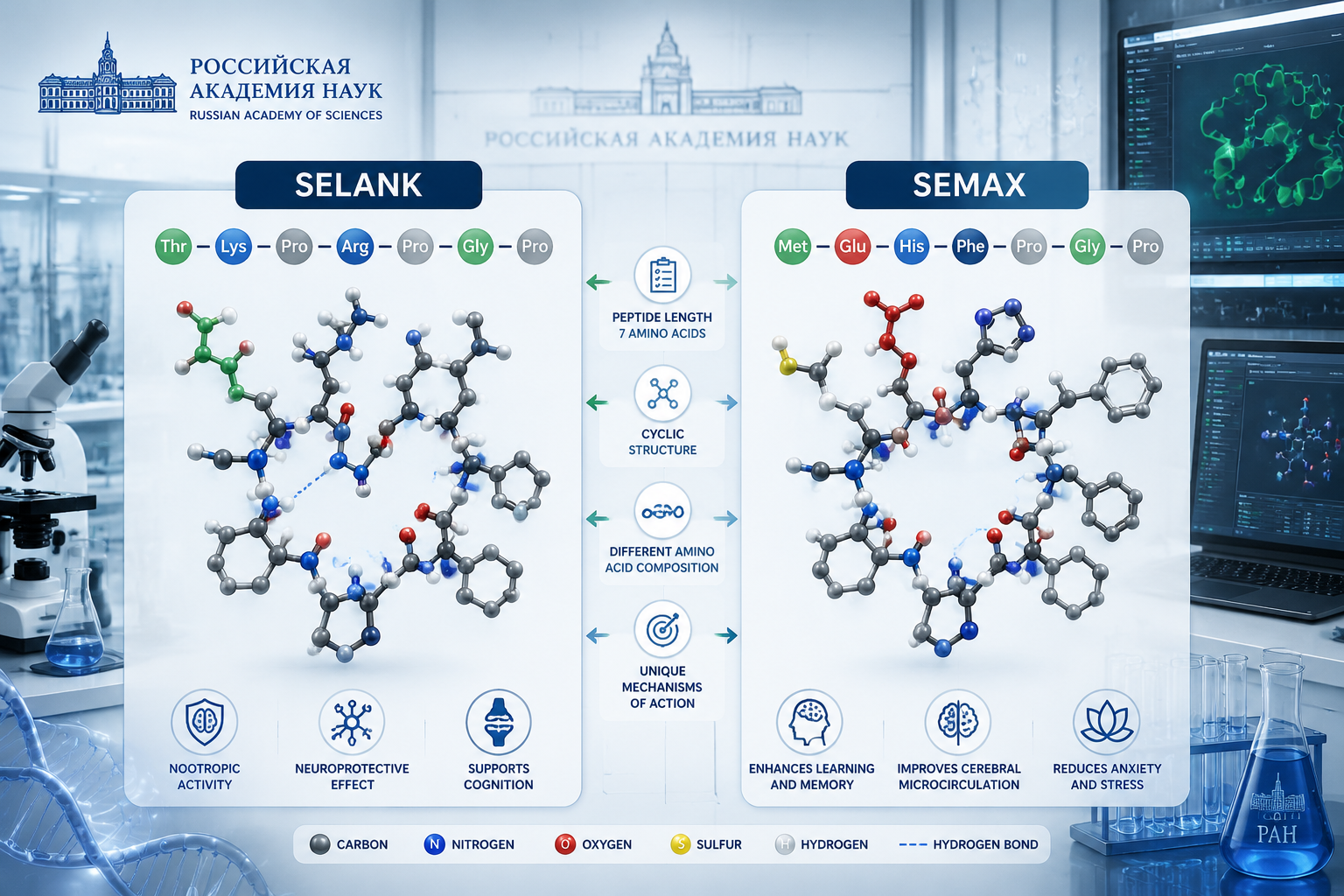
Both peptides are synthetic heptapeptides — chains of seven amino acids — created at the Institute of Molecular Genetics of the Russian Academy of Sciences. Despite sharing a common birthplace, their structural templates are entirely different.

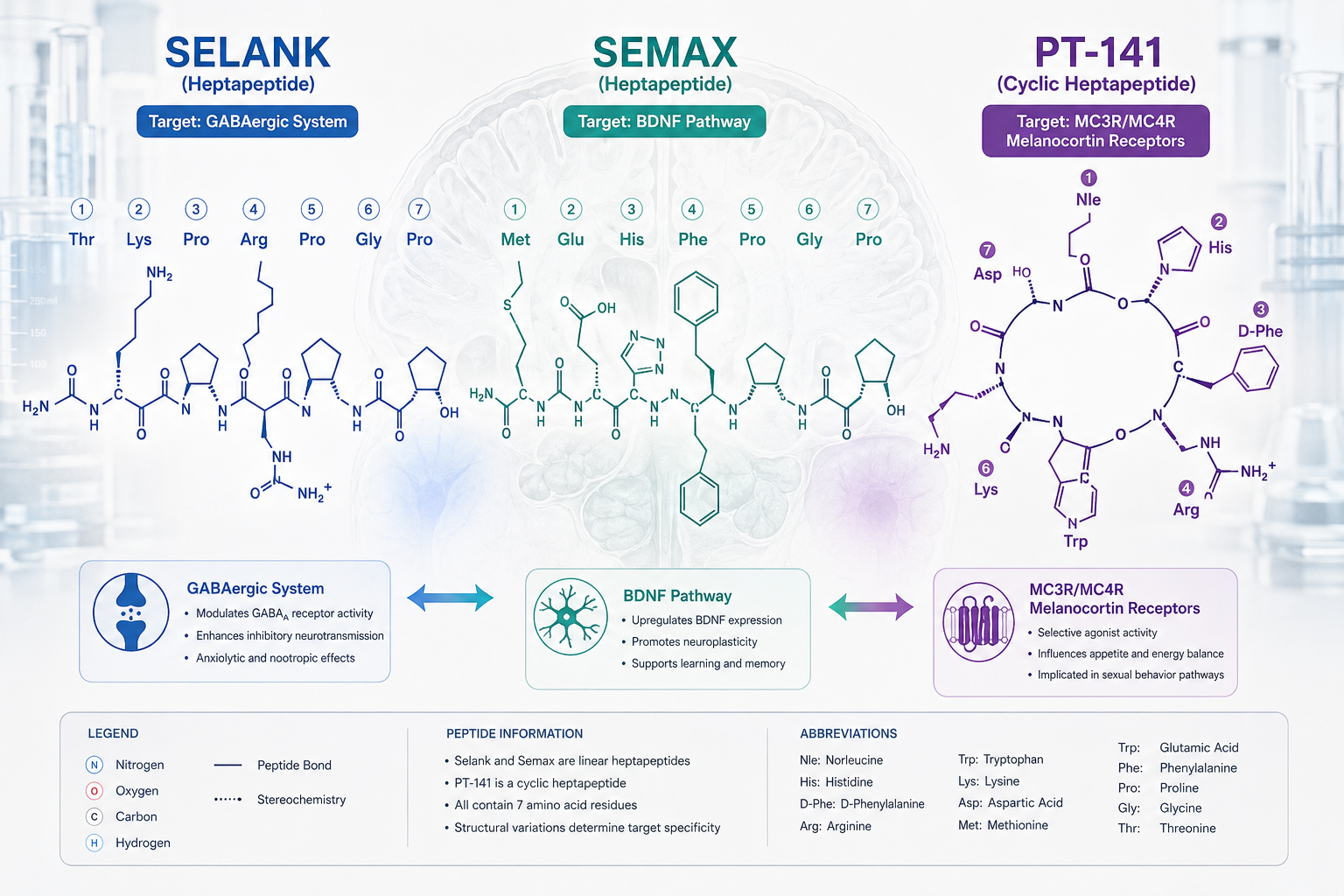
Selank is an analog of tuftsin, a naturally occurring immunomodulatory tetrapeptide. Its sequence is Thr-Lys-Pro-Arg-Pro-Gly-Pro. Researchers extended the tuftsin backbone to improve metabolic stability and CNS penetration.

Semax is derived from the adrenocorticotropic hormone fragment ACTH(4-10), carrying the sequence Met-Glu-His-Phe-Pro-Gly-Pro. The ACTH origin gives Semax a distinct neuroendocrine profile that influences stress-axis biology.

For a broader overview of how these two peptides compare across multiple research dimensions, the Selank and Semax research overview provides useful context.


Mechanisms of Action: Where the Pathways Diverge

This is the core of any meaningful Selank vs Semax: Comparing Anxiolytic and Nootropic Peptides, Mechanisms, and Nasal Delivery analysis.

Mechanisms of Action: Where the Pathways Diverge

Selank: GABAergic Modulation and Enkephalin Metabolism

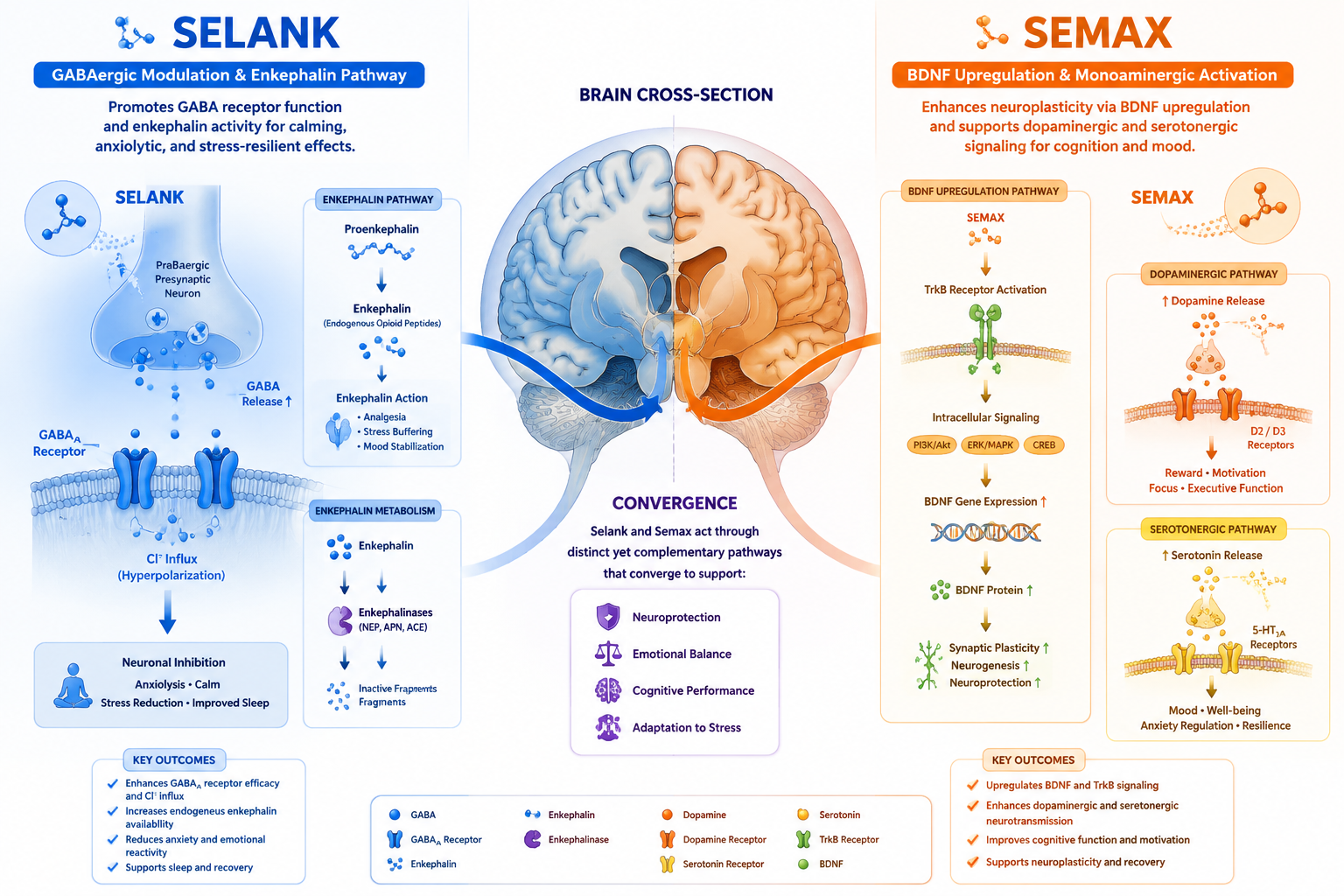
Selank's primary mechanism involves enhancement of GABA signaling — the brain's main inhibitory neurotransmitter system. By modulating GABAergic tone and influencing enkephalin metabolism, Selank produces anxiolytic effects without the sedation or tolerance risk associated with classical benzodiazepines.

Key research-supported effects include:

  • Reduced anxiety-like behavior in stress models
  • Modulation of interleukin expression, suggesting neuroimmune involvement
  • Stable anxiolytic profile without cognitive blunting

Understanding Selank's potential side effects is equally important when evaluating its research profile.

Semax: BDNF Upregulation and Monoamine Modulation

Semax operates through a fundamentally different mechanism. It upregulates brain-derived neurotrophic factor (BDNF), a protein critical for neuronal survival, synaptic plasticity, and learning. Semax also modulates dopaminergic and serotonergic systems, which underpins its cognitive-enhancing and neuroprotective properties.

Key research-supported effects include:

  • Enhanced memory consolidation and attention
  • Neuroprotection in ischemic models
  • Upregulation of BDNF in hippocampal and cortical regions
Feature Selank Semax
Primary target GABA system BDNF / monoamines
Main effect Anxiolytic Cognitive enhancement
Approved use (Russia) Anxiety, neurasthenia Stroke, cognitive disorders
Onset Minutes to hours Minutes to hours
Duration Several hours 2-4 hours

The neuroendocrine and innate immunity research context is relevant here, as Selank's immunomodulatory properties reflect a broader neuroimmune model.


Nasal Delivery, Bioavailability, and Research Use Cases

Both peptides are administered intranasally, which is not merely a matter of convenience. The intranasal route allows direct access to the central nervous system via the olfactory pathway, bypassing the blood-brain barrier entirely.

Nasal Delivery, Bioavailability, and Research Use Cases

Selank demonstrates a bioavailability of approximately 92.8% via this route — a notably high figure for a peptide compound. Semax also achieves high CNS bioavailability intranasally, though precise figures vary across studies.

"The intranasal route transforms peptide delivery from a systemic challenge into a targeted CNS strategy."

For researchers interested in how delivery systems affect peptide efficacy, innovative peptide delivery systems explores this topic in depth.

Safety profiles for both peptides are favorable in research contexts:

  • Mild nasal irritation is the most commonly reported adverse effect
  • No dependence or withdrawal symptoms have been documented
  • Neither compound shows significant sedative burden

Those researching Selank specifically may also find the detailed Selank side effects analysis and Selank overview useful for building a complete picture.

For researchers sourcing verified compounds, reviewing lab-tested peptides ensures quality and purity standards are met.


Conclusion

Selank vs Semax: Comparing Anxiolytic and Nootropic Peptides, Mechanisms, and Nasal Delivery ultimately comes down to target pathway and research objective. Selank is the stronger candidate for stress-response and neuroimmune models, given its GABAergic and enkephalin-modulating profile. Semax is better suited for cognitive neuroscience and neuroprotection research, driven by BDNF upregulation and monoamine modulation.

Actionable next steps for researchers:

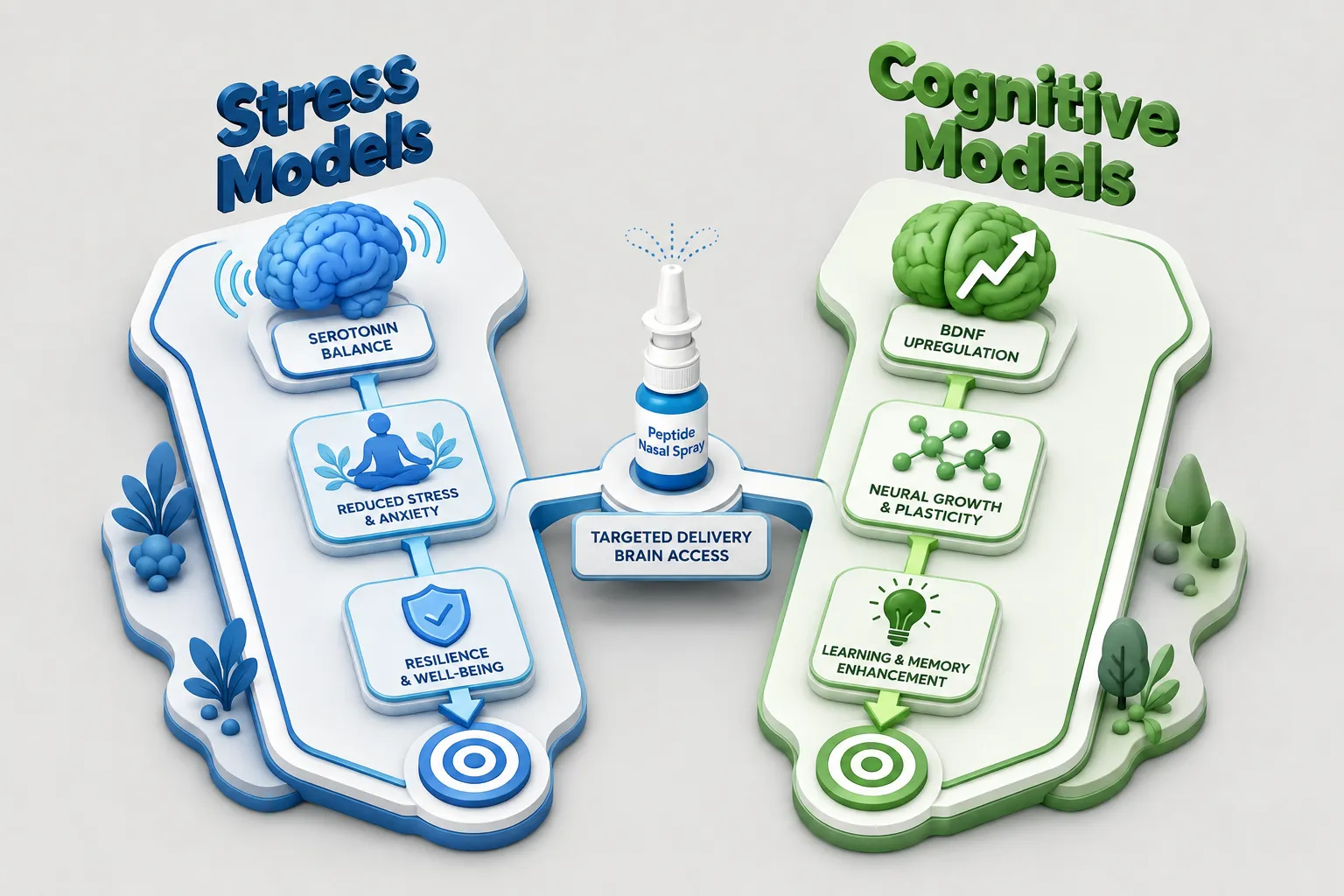
  1. Define the primary research endpoint — anxiety/stress models favor Selank; cognitive and neuroprotective models favor Semax.
  2. Confirm intranasal delivery protocols, as both peptides depend on olfactory pathway absorption for CNS efficacy.
  3. Source only verified, lab-tested compounds to ensure research integrity.
  4. Review the full side-effect and safety literature before designing protocols.

Both peptides represent a compelling frontier in neuropeptide research, and their distinct mechanisms make them complementary rather than interchangeable tools.

https://www.puretestedpeptides.com/wp-content/uploads/2026/06/Selank-vs-Semax-Comparing-Anxiolytic-and-Nootropic-Peptides-Mechanisms-and-Nasal-Delivery.png 1024 1536 Pure Tested https://www.puretestedpeptides.com/wp-content/uploads/2026/01/buy-peptides-online.jpg Pure Tested2026-06-16 13:04:162026-07-20 15:03:00Selank vs Semax: Comparing Anxiolytic and Nootropic Peptides, Mechanisms, and Nasal Delivery
Selank vs Semax vs PT-141: A Research-Only Guide to Distinct Neuropeptide Mechanisms, Delivery Routes, and Use Cases

Selank vs Semax vs PT-141: A Research-Only Guide to Distinct Neuropeptide Mechanisms, Delivery Routes, and Use Cases

June 9, 2026/0 Comments/by Pure Tested

Three synthetic heptapeptides. Three completely different receptor targets. Three delivery strategies that reflect fundamentally different pharmacological goals. Researchers who treat Selank, Semax, and PT-141 as interchangeable nootropic compounds are missing the point entirely — and potentially compromising experimental design in the process.

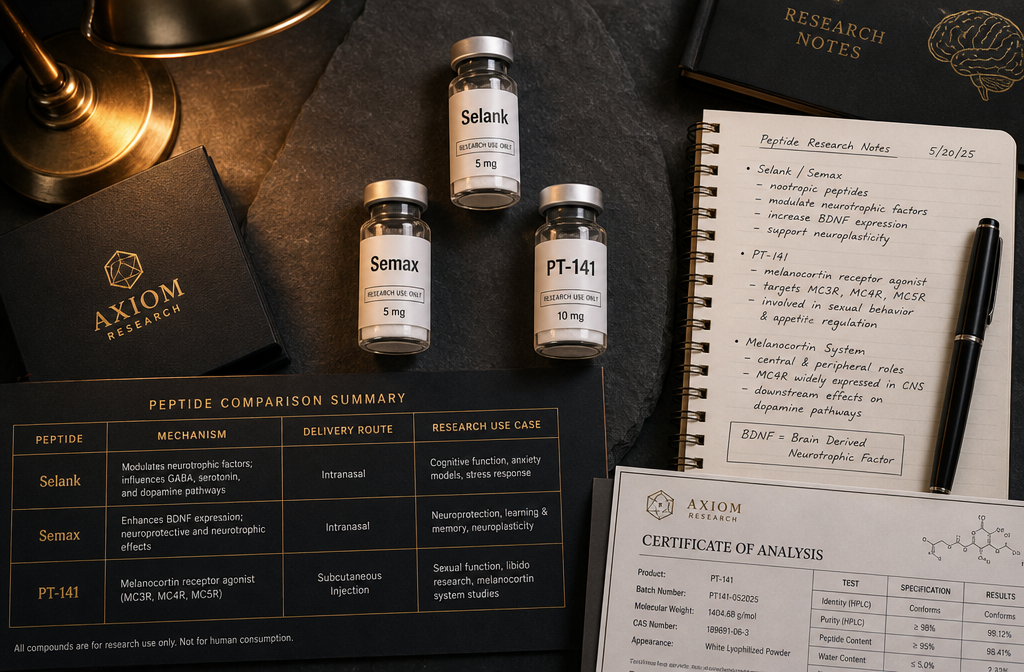
This guide to Selank vs Semax vs PT-141: A Research-Only Guide to Distinct Neuropeptide Mechanisms, Delivery Routes, and Use Cases breaks down what actually separates these compounds at the mechanistic level, where each one is delivered and why, and which research contexts each one fits.

All three compounds are for research purposes only. None should be used for human self-administration outside of approved clinical settings.


Key Takeaways

  • Selank targets the GABAergic system for anxiolytic effects without sedation; Semax modulates BDNF and monoamine pathways for cognitive enhancement.
  • PT-141 (bremelanotide) acts on central melanocortin receptors MC3R and MC4R — a mechanism entirely unrelated to the other two peptides.
  • Selank and Semax are primarily delivered intranasally; PT-141 is delivered via subcutaneous injection.
  • PT-141 received FDA approval in 2019 for HSDD in premenopausal women; Selank and Semax remain unapproved by the FDA.
  • Choosing the right peptide for a given research model requires understanding receptor specificity, not just general "neuropeptide" classification.

Key Takeaways

Mechanisms: What Each Peptide Actually Does

Understanding this research-only guide to distinct neuropeptide mechanisms starts at the receptor level.

Selank: GABAergic Modulation and Anxiolytic Signaling

Selank is a synthetic analog of the endogenous tetrapeptide tuftsin. Its primary mechanism involves modulating gene expression within the GABAergic system — the same neurotransmitter network targeted by benzodiazepines, but without the sedation or dependence risk associated with those drugs. Research models using Selank focus on anxiety reduction, stress response, and immune-adjacent signaling. For researchers studying the Selank side effects profile, the GABAergic mechanism is central to interpreting observed outcomes.

Semax: BDNF Upregulation and Monoamine Influence

Semax works differently. It is believed to enhance cognitive function by upregulating brain-derived neurotrophic factor (BDNF) and influencing dopaminergic and serotonergic systems. This makes Semax relevant to research on neuroplasticity, attention, and neuroprotection rather than anxiety. The two peptides are frequently compared, but their mechanisms are distinct enough that stacking them in a single model requires careful justification.

PT-141: Central Melanocortin Pathway

PT-141 (bremelanotide) operates through an entirely different system. As a synthetic cyclic heptapeptide, it acts as a melanocortin receptor agonist — specifically targeting MC3R and MC4R in the central nervous system. This distinguishes it sharply from PDE5 inhibitors, which work peripherally. PT-141 enhances sexual desire and arousal through central CNS signaling, not vasodilation. Researchers can explore the PT-141 research context and quality controls for sourcing and experimental design guidance.


Delivery Routes: Why Administration Method Matters

Delivery Routes: Why Administration Method Matters

Delivery route is not a minor detail — it directly affects bioavailability, onset time, and CNS penetration. This section of the Selank vs Semax vs PT-141 guide is where researchers often make consequential decisions.

Intranasal Delivery: Selank and Semax

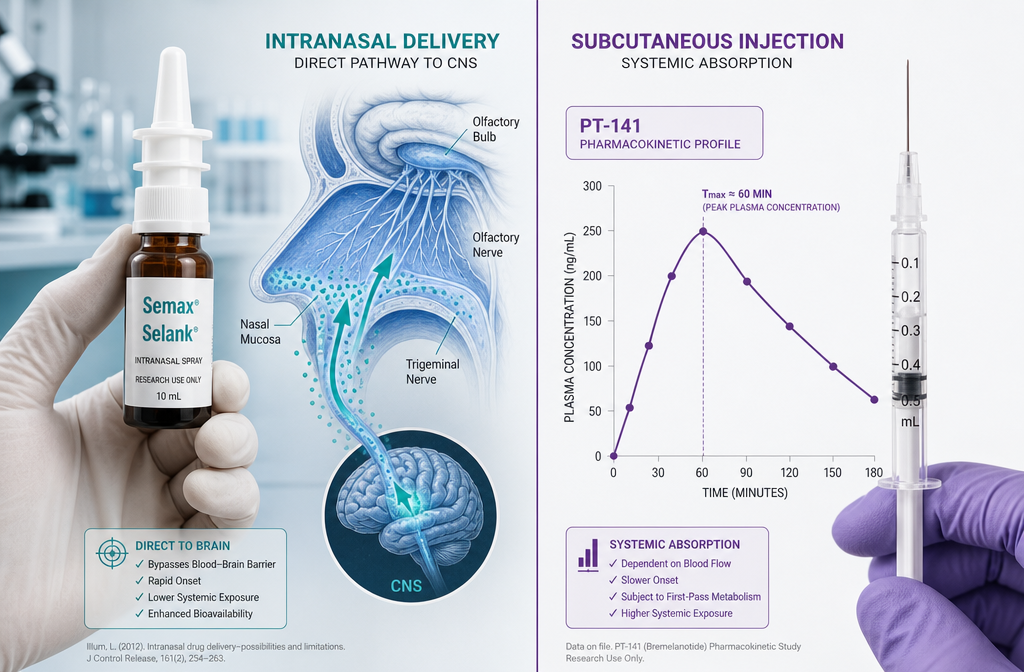
Both Selank and Semax are administered intranasally in research settings. The nasal mucosa offers rich vascularization and direct neural connections to the CNS via the olfactory pathway. This allows for rapid onset and relatively efficient CNS delivery without requiring injection. The intranasal route is also practical for repeated-dosing protocols.

Peptide Primary Delivery CNS Target Onset
Selank Intranasal GABAergic system Rapid
Semax Intranasal BDNF / Dopamine / Serotonin Rapid
PT-141 Subcutaneous injection MC3R / MC4R ~60 min

Subcutaneous Injection: PT-141

PT-141 follows a different path. The FDA-approved route is subcutaneous injection at 1.75 mg as needed. Following injection, peak plasma concentrations are reached approximately 60 minutes post-administration, with effects lasting 6 to 12 hours. Intranasal PT-141 was explored in early research but showed variable absorption and lower bioavailability, leading to its exclusion from the approved protocol.

Researchers comparing peptide delivery strategies may also find value in reviewing BPC-157 nasal spray and capsule evidence as a parallel case study in route-dependent outcomes.


Research Use Cases and Regulatory Status

Research Use Cases and Regulatory Status

Where Each Peptide Fits in Preclinical Research

Selank is best suited for models examining anxiety, stress resilience, and immune modulation. Its clean anxiolytic profile — without sedation — makes it useful in behavioral paradigms where motor function must remain intact.

Semax fits cognitive enhancement, neuroprotection, and neuroplasticity research. Its BDNF-modulating properties make it relevant in models of neurodegeneration or cognitive decline.

PT-141 belongs in research focused on sexual dysfunction, melanocortin signaling, or CNS-mediated arousal pathways. Its 2019 FDA approval for hypoactive sexual desire disorder (HSDD) in premenopausal women — based on two Phase III trials with 1,247 participants — gives it the strongest clinical validation of the three. Common side effects observed in trials included nausea (approximately 40% of participants), flushing, and headache.

Researchers building multi-peptide protocols may also want to examine how other neuropeptides interact with overlapping systems. The IPA-Sermorelin stack research overview and peptide supplier comparison guide offer useful context for sourcing decisions and protocol design.

Regulatory Landscape in 2026

As of 2026, Semax and Selank remain unapproved by the FDA for any medical use in the United States. They are available for research purposes only. PT-141 holds FDA approval under the brand name Vyleesi, though research-grade material is subject to different handling and documentation standards. Researchers should always verify certificates of analysis — the COA verification resource provides guidance on what to look for.

For those exploring adjacent peptide categories, GHK-Cu copper peptide sourcing guidance and AOD-9604 research method notes illustrate how traceability standards apply across different peptide classes.


Conclusion

The comparison at the heart of Selank vs Semax vs PT-141: A Research-Only Guide to Distinct Neuropeptide Mechanisms, Delivery Routes, and Use Cases reveals three peptides with almost nothing in common beyond their heptapeptide structure. Selank calms through GABAergic modulation. Semax stimulates cognitive pathways via BDNF and monoamines. PT-141 activates melanocortin receptors to influence central arousal signaling.

Actionable next steps for researchers:

  • Match peptide selection to the specific receptor system under investigation — do not group these compounds by structural similarity alone.
  • Account for delivery route when designing dosing intervals and bioavailability assumptions.
  • Verify regulatory status and obtain certificates of analysis before initiating any research protocol.
  • Review published clinical data on PT-141 as a benchmark for what rigorous peptide trial design looks like, then apply those standards to Selank and Semax research where Western-accessible data remains limited.

Precision in peptide research begins with precision in compound selection.

https://www.puretestedpeptides.com/wp-content/uploads/2026/06/Selank-vs-Semax-vs-PT-141-A-Research-Only-Guide-to-Distinct-Neuropeptide-Mechanisms-Delivery-Routes-and-Use-Cases.png 1024 1536 Pure Tested https://www.puretestedpeptides.com/wp-content/uploads/2026/01/buy-peptides-online.jpg Pure Tested2026-06-09 13:05:202026-07-20 15:03:36Selank vs Semax vs PT-141: A Research-Only Guide to Distinct Neuropeptide Mechanisms, Delivery Routes, and Use Cases
Semax and Selank Peptide Nasal Sprays: Comparative Mechanisms in Neurotrophic and Anxiolytic Research

Semax and Selank Peptide Nasal Sprays: Comparative Mechanisms in Neurotrophic and Anxiolytic Research

June 7, 2026/0 Comments/by Pure Tested

Two synthetic heptapeptides developed at the Russian Academy of Sciences have drawn sustained attention in preclinical neuroscience: Semax and Selank. Despite sharing a seven-amino-acid backbone and the same intranasal delivery route, their downstream effects diverge sharply — one drives neurotrophin expression, the other recalibrates GABAergic tone. Understanding this divergence is central to Semax and Selank peptide nasal sprays: comparative mechanisms in neurotrophic and anxiolytic research.

Key Takeaways

  • Semax is an ACTH(4-10) analog that upregulates BDNF and NGF, supporting cognitive and neuroprotective research models.
  • Selank is derived from the immunomodulatory peptide tuftsin and modulates GABAergic signaling without direct receptor binding.
  • Intranasal delivery bypasses first-pass metabolism, enabling rapid CNS uptake in animal research models.
  • Both peptides carry favorable preclinical safety profiles, but large-scale Western-standard trials remain limited.
  • Regulatory status differs by jurisdiction; researchers should verify current compliance requirements before sourcing.

Key Takeaways

Structural Origins and Mechanistic Divergence

Both peptides are heptapeptides, yet their parent sequences define entirely different pharmacological identities.

Semax (Met-Glu-His-Phe-Pro-Gly-Pro) is a synthetic analog of the ACTH(4-10) fragment. Its primary research interest lies in neurotrophin modulation. Preclinical data from rat glial cultures show that Semax rapidly induces BDNF mRNA expression approximately eight-fold and NGF mRNA approximately five-fold within hours of administration. These upregulations are believed to underlie the peptide's cognitive-enhancing and neuroprotective properties, making it a focus in stroke and ischemic injury models. In Russia, it holds approved status for ischemic stroke and transient ischemic attacks.

Selank (Thr-Lys-Pro-Arg-Pro-Gly-Pro) descends from tuftsin, a naturally occurring immunomodulatory tetrapeptide. Rather than driving neurotrophin synthesis, Selank modulates the GABAergic system by increasing expression of genes encoding GABA-A receptor subunits in the hippocampus and prefrontal cortex. Critically, it does not directly bind GABA-A receptors. Instead, it enhances receptor sensitivity to endogenous GABA — a mechanism that produces anxiolytic effects without the sedation, dependence, or withdrawal risks associated with benzodiazepines. Selank is registered in Russia for generalized anxiety disorder.

Feature Semax Selank
Parent sequence ACTH(4-10) Tuftsin
Primary mechanism BDNF/NGF upregulation GABAergic modulation
Key research area Neuroprotection, cognition Anxiety, stress response
Sedation risk Minimal None reported
Russian approval Ischemic stroke Generalized anxiety disorder

Researchers exploring broader neuropeptide frameworks may also find value in reviewing GHK-Cu longevity research themes and neuroendocrine and innate immunity interactions for comparative context.


Intranasal Delivery as a CNS Research Tool

The shared intranasal route is not incidental — it is mechanistically significant in Semax and Selank peptide nasal sprays: comparative mechanisms in neurotrophic and anxiolytic research.

Intranasal administration bypasses the blood-brain barrier via olfactory and trigeminal pathways, enabling direct CNS uptake without first-pass hepatic metabolism. In animal models, this translates to faster onset and more predictable CNS bioavailability compared to oral routes. Both peptides benefit from this delivery advantage, which is why nasal spray formulations remain the standard in preclinical protocols.

"Intranasal delivery offers a non-invasive pathway to CNS-targeted peptide exposure, making it particularly valuable in rodent behavioral and neurochemical research."

This delivery principle is relevant across multiple peptide research lines. For example, PT-141 neural and metabolic research themes similarly highlight how administration route shapes CNS receptor engagement. Likewise, Epithalon research demonstrates how peptide structure and delivery interact in longevity-focused models.


Evidence Landscape, Safety, and Research Gaps

The clinical evidence base for Semax and Selank peptide nasal sprays: comparative mechanisms in neurotrophic and anxiolytic research is real but geographically concentrated. Most published studies originate from Russian-language literature and report positive outcomes — improved cognitive markers with Semax, reduced anxiety indices with Selank. However, large-scale, randomized, double-blind, placebo-controlled trials meeting Western regulatory standards are sparse, limiting generalizability.

Safety profiles for both peptides appear favorable in available data. Selank in particular shows no sedation, dependence, or withdrawal effects across reported use, a meaningful distinction from classical anxiolytics.

On the regulatory front, Selank was placed on the FDA's Category 2 list in September 2023, restricting pharmacy compounding. A reclassification announced in February 2026 is expected to return it to Category 1 status, which would restore legal compounding access in the United States.

Evidence Landscape, Safety, and Research Gaps

Combination protocols pairing Semax's neurotrophic effects with Selank's anxiolytic profile are an emerging research direction. The rationale is straightforward: BDNF-driven plasticity and reduced stress-pathway interference may complement each other in cognitive performance models. Researchers interested in multi-pathway peptide stacking can also review the KLOW blend multipathway research overview and Selank side effects research for additional context.

For sourcing decisions, verifying supplier quality documentation is essential. Reviewing a supplier's certificate of analysis standards helps ensure peptide purity and traceability in research applications.


Conclusion

Semax and Selank represent two distinct but complementary research tools within CNS-targeted peptide science. Semax drives neurotrophin expression — particularly BDNF and NGF — making it relevant to neuroprotection and cognitive research models. Selank modulates GABAergic receptor sensitivity without direct binding, offering anxiolytic effects free of dependence risk. Intranasal delivery amplifies both peptides' CNS accessibility, making nasal spray formulations the preferred vehicle in animal research.

Actionable next steps for researchers:

  • Prioritize peer-reviewed preclinical data when designing protocols; acknowledge the Western-trial gap.
  • Verify current regulatory status in your jurisdiction before sourcing either peptide.
  • Request certificates of analysis from suppliers to confirm purity and batch consistency.
  • Consider combination protocols only after establishing individual baseline responses in your model system.
  • Monitor the FDA reclassification timeline for Selank, anticipated to shift in 2026.
https://www.puretestedpeptides.com/wp-content/uploads/2026/06/Semax-and-Selank-Peptide-Nasal-Sprays-Comparative-Mechanisms-in-Neurotrophic-and-Anxiolytic-Research.png 672 1024 Pure Tested https://www.puretestedpeptides.com/wp-content/uploads/2026/01/buy-peptides-online.jpg Pure Tested2026-06-07 13:03:562026-07-20 15:03:50Semax and Selank Peptide Nasal Sprays: Comparative Mechanisms in Neurotrophic and Anxiolytic Research
Selank vs Semax: Neuroimmune, Anxiolytic, and Cognitive Pathways Compared for Research Use

Selank vs Semax: Neuroimmune, Anxiolytic, and Cognitive Pathways Compared for Research Use

June 2, 2026/0 Comments/by Pure Tested

Two peptides developed at the same institution, sharing a stabilizing tripeptide backbone, yet targeting almost opposite ends of the neurological spectrum — that structural paradox is exactly what makes the Selank vs Semax comparison so valuable for researchers in 2026.

Both compounds emerged from the Russian Academy of Sciences in the 1990s. Both incorporate a Pro-Gly-Pro (PGP) sequence that resists enzymatic breakdown. Beyond those shared traits, their pharmacological profiles diverge sharply, and understanding where anxiolytic signaling ends and cognitive-support hypotheses begin is essential for any serious research application.

Close-up laboratory research scene showing two glass vials labeled with molecular diagrams on a reflective surface, one vial

Key Takeaways

  • Semax is an ACTH(4-10) analog focused on BDNF upregulation and dopaminergic cognitive enhancement.
  • Selank is derived from tuftsin and primarily modulates GABAergic and enkephalin pathways for anxiolytic effects.
  • Selank carries meaningful neuroimmune activity; Semax does not at standard research doses.
  • Neither compound is FDA, EMA, or Health Canada approved; both are research-use compounds outside Russia.
  • Combining both may offer complementary coverage, but no controlled combination studies exist yet.

Structural Origins and Primary Mechanisms

Semax is a synthetic analog of the adrenocorticotropic hormone fragment ACTH(4-10). Its dominant mechanism involves potent upregulation of brain-derived neurotrophic factor (BDNF) in the hippocampus and prefrontal cortex, supporting neuroplasticity, attention, and working memory. It also modulates serotonergic and dopaminergic signaling, which drives its cognitive-activating profile.

Selank traces its lineage to tuftsin, a naturally occurring immunopeptide. Rather than stimulating BDNF as its primary action, Selank acts as a positive allosteric modulator of GABA-A receptors and inhibits enkephalin degradation. The result is anxiety reduction without sedation or dependence risk — a profile that sets it apart from classical anxiolytics.

For researchers exploring Selank peptide benefits in greater depth, the GABAergic and enkephalin mechanisms are central to understanding its unique anxiolytic signature.


Anxiolytic and Neuroimmune Pathways: Where Selank Leads

Selank's anxiolytic effects are mechanistically distinct from benzodiazepines. By modulating GABA-A receptors allosterically and slowing enkephalin breakdown, it reduces anxiety without producing the sedation or withdrawal patterns associated with classical agents. This makes it a compelling research subject for stress-related behavioral models.

Critically, Selank also retains tuftsin's cytokine-regulatory properties. This neuroimmune activity — influencing interleukin expression and immune cell signaling — may itself contribute to its anxiolytic effects, suggesting a bidirectional brain-immune axis at work. Semax, by contrast, shows no significant immune modulation at standard nootropic research doses.

"Selank's neuroimmune activity represents a distinct mechanistic layer that Semax simply does not share — making the two compounds complementary rather than interchangeable."

Researchers interested in innate immune peptide interactions may find it useful to compare Selank's cytokine modulation with the mechanisms described in LL-37 innate research themes, where immune-neural crosstalk is also a central focus.

For a detailed look at Selank side effects observed in research contexts, mild nasal irritation from intranasal delivery is the most commonly noted finding, with no significant dependence signals reported.


Cognitive Pathways and Research Protocols: Selank vs Semax Compared

Cognitive Pathways and Research Protocols: Selank vs Semax Compared

When evaluating Selank vs Semax for cognitive research, the distinction comes down to mechanism and target population.

Semax enhances:

  • Attention and processing speed via dopaminergic modulation
  • Working memory through BDNF-driven hippocampal support
  • Neuroprotection in ischemic injury models (registered in Russia for stroke and transient ischemic attacks)

Selank enhances:

  • Emotional regulation and stress-impaired cognition
  • Anxiety-adjacent cognitive deficits via GABAergic and serotonergic pathways
  • Immune-mediated stress responses through cytokine modulation

A 2020 resting-state fMRI study in 52 healthy participants found that both peptides influence functional connectivity between the right amygdala and temporal cortex — confirming overlapping yet distinct effects on networks governing both anxiety and cognition.

Feature Selank Semax
Primary mechanism GABA-A modulation, enkephalin BDNF upregulation, dopamine
Anxiolytic activity Strong Mild
Cognitive enhancement Stress-impaired focus Direct attention/memory
Neuroimmune activity Yes (cytokine regulation) Minimal
Typical research dose 200-400 mcg, 2-3x daily 300-600 mcg, 1-2x daily
Approved use (Russia) Generalized anxiety disorder Ischemic stroke, TIA

Researchers building multi-pathway stacks may also find value in reviewing what is Selank as a foundational reference before designing protocols.

For broader neuromodulatory context, the PT-141 neural and metabolic research themes page illustrates how centrally acting peptides can produce overlapping yet mechanistically separate effects — a pattern directly relevant to the Selank vs Semax comparison.

Cognitive Pathways and Research Protocols: Selank vs Semax Compared

Combination use of both peptides has been discussed in research circles as a way to address both anxiety and direct cognitive activation simultaneously. However, no controlled Phase 3 trials have evaluated this combination, and caution is warranted until more data emerges. Researchers exploring multi-compound designs may also want to review KLow blend multipathway research for examples of how complementary mechanisms are structured in blended research protocols.

Both compounds remain unapproved by the FDA, EMA, MHRA, and Health Canada. The majority of published clinical evidence originates from Russian-language journals, limiting direct translation to Western research frameworks.


Conclusion

The Selank vs Semax comparison for neuroimmune, anxiolytic, and cognitive pathways reveals two compounds that are far more complementary than competitive. Semax is the stronger candidate for direct cognitive activation research — particularly attention, memory, and neuroprotection models. Selank is the clearer choice for anxiety-focused and neuroimmune research, with its GABAergic, enkephalin, and cytokine-regulatory mechanisms offering a profile no other peptide in this class replicates.

Actionable next steps for researchers in 2026:

  1. Define the primary research endpoint first — anxiety reduction or cognitive enhancement — before selecting a compound.
  2. Review available Russian-language clinical literature alongside Western fMRI and behavioral data.
  3. If designing a combination protocol, treat Selank and Semax as mechanistically distinct agents requiring independent dose optimization.
  4. Source only verified, lab-tested material and confirm purity documentation before any research application.
  5. Monitor for transient dopaminergic sensitization with higher Semax doses and nasal mucosal tolerance with Selank intranasal administration.

https://www.puretestedpeptides.com/wp-content/uploads/2026/06/Selank-vs-Semax-Neuroimmune-Anxiolytic-and-Cognitive-Pathways-Compared-for-Research-Use.png 1024 1536 Pure Tested https://www.puretestedpeptides.com/wp-content/uploads/2026/01/buy-peptides-online.jpg Pure Tested2026-06-02 22:10:112026-07-20 15:04:13Selank vs Semax: Neuroimmune, Anxiolytic, and Cognitive Pathways Compared for Research Use
×

Helpful Links

  • My account
  • Cart
  • Checkout
  • Refund and Returns Policy
  • Privacy Policy
  • SMS Privacy Policy
  • Login
  • My Account
  • Logout

USA Made Lab Tested Peptides

All products are sold for research, laboratory, or analytical purposes only, and are not for human consumption


Pure Tested Peptides is a chemical supplier. Pure Tested Peptides is not a compounding / chemical compounding facility as defined under 503A of the Federal Food, Drug, and Cosmetic act. Pure Tested Peptides is not an outsourcing facility as defined under 503B of the Federal Food, Drug, and Cosmetic act.

The statements made within this website have not been evaluated by the US Food and Drug Administration. The products we offer are not intended to diagnose, treat, cure or prevent any disease.

Human/Animal Consumption Prohibited. Laboratory/In-Vitro Experimental Use Only

Scroll to top Scroll to top Scroll to top