

What Is a GLP-3 Peptide? Retatrutide Receptor Activity, Terminology, and Research-Model Selection
Researchers searching for "GLP-3 peptide" often land in a terminology gap: no officially recognized peptide class carries that name, yet the phrase circulates widely in metabolic research circles and supplement forums alike. Understanding why that gap exists, and what retatrutide actually does at the receptor level, is essential before selecting assay formats or animal models for triple-agonist studies.
Key Takeaways
- "GLP-3 peptide" is an informal, colloquial label, not an established pharmacological class; retatrutide is formally described as a GLP-1R/GIPR/GCGR triple agonist.
- Retatrutide engages three distinct G-protein-coupled receptors simultaneously, producing additive metabolic effects that exceed those of GLP-1 monotherapy.
- Phase 2 clinical data showed average body weight reductions approaching 24% over 48 weeks, among the largest reported for any pharmacological obesity intervention.
- Naming confusion between GLP-1, GLP-2, and informal "GLP-3" labels can compromise assay design and literature searches if not addressed upfront.
- Research-model selection for triple agonism requires receptor-specific binding assays and metabolically relevant animal models, not standard GLP-1 protocols.
Where Does the "GLP-3 Peptide" Label Come From?
The glucagon-like peptide family is derived from the proglucagon gene. Proglucagon processing yields GLP-1 and GLP-2 as well-characterized peptides with defined receptors. No endogenous peptide named GLP-3 has been isolated or assigned an official receptor in peer-reviewed pharmacology. The informal "GLP-3" label appears to have emerged from two sources: a loose shorthand for third-generation GLP-1-class drugs, and occasional misreading of triple-agonist pipeline terminology.
Retatrutide is the compound most frequently linked to this informal label. Eli Lilly developed it as a single synthetic peptide capable of activating three receptors, GLP-1R, GIPR, and GCGR, in a carefully balanced ratio. Calling it a "GLP-3 peptide" conflates the number of receptors targeted with a nonexistent peptide subfamily. Researchers and procurement teams should note this distinction before designing experiments or sourcing materials.
For those exploring GLP-3 peptide signaling pathway data, understanding this naming context prevents misattribution of results to the wrong mechanistic framework.
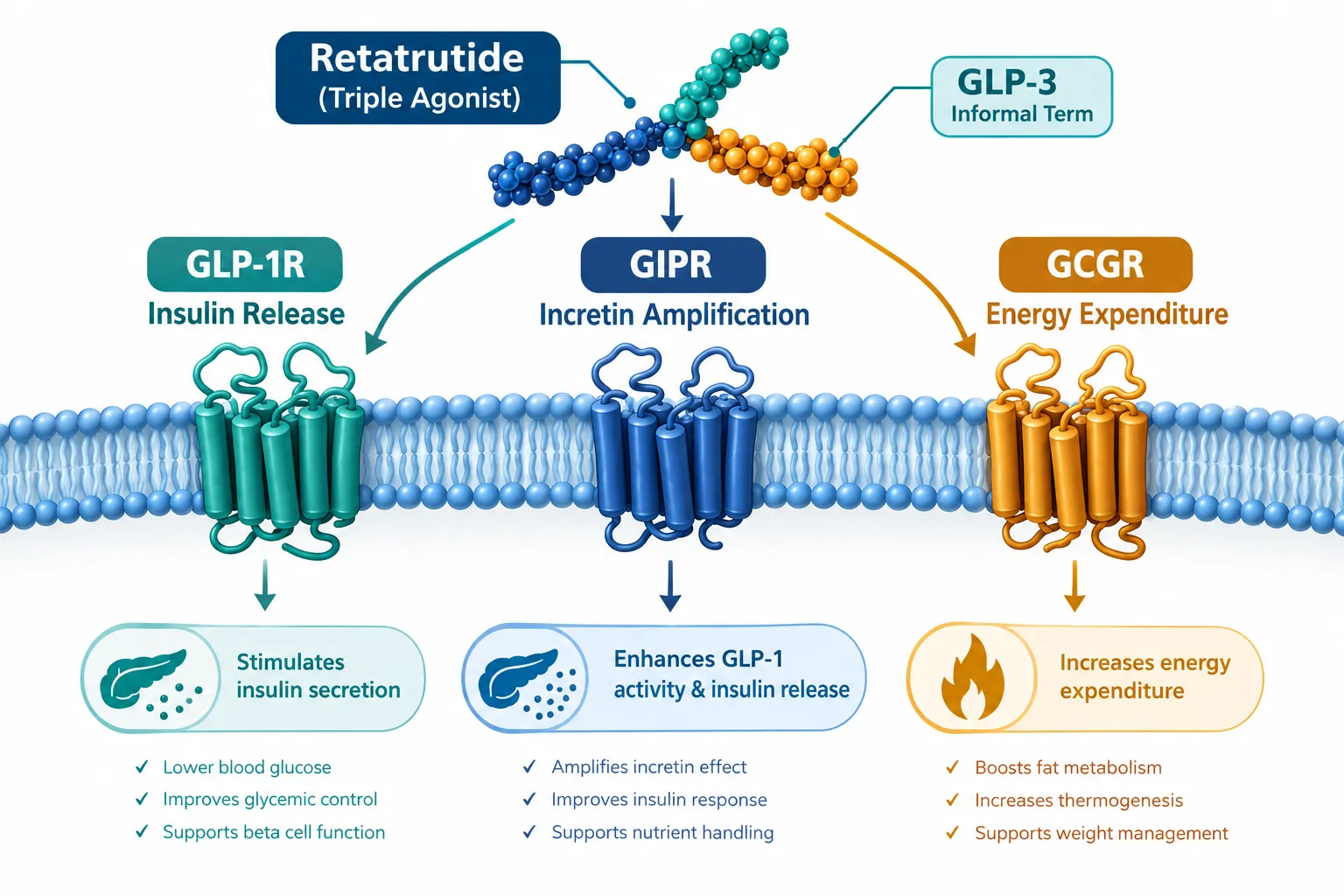
Retatrutide Receptor Activity: Triple Agonism Explained
Understanding what is a GLP-3 peptide in practical terms requires a close look at retatrutide's receptor pharmacology.
GLP-1R (Glucagon-Like Peptide-1 Receptor)
Activation suppresses appetite, slows gastric emptying, and stimulates glucose-dependent insulin secretion. This is the same receptor targeted by semaglutide and liraglutide.
GIPR (Glucose-Dependent Insulinotropic Polypeptide Receptor)
GIP amplifies the incretin effect and has been shown to enhance GLP-1R-mediated weight loss when combined, as demonstrated by tirzepatide's dual-agonist mechanism.
GCGR (Glucagon Receptor)
Glucagon receptor agonism increases energy expenditure and promotes hepatic fat oxidation. This is the distinguishing feature that separates retatrutide from dual GLP-1/GIP agonists.
"Triple agonism at GLP-1R, GIPR, and GCGR produces a pharmacological synergy that neither receptor alone nor any dual combination fully replicates."
The phase 2 obesity trial published in the New England Journal of Medicine reported mean weight reductions of approximately 17% at the 4 mg dose and up to 24% at the 12 mg dose over 48 weeks, figures that exceeded prior benchmarks for pharmacological interventions. Cardiometabolic markers, including triglycerides, fasting glucose, and blood pressure, also improved across dose cohorts.
Those interested in sourcing research-grade material can buy Retatrutide peptide through verified suppliers, or review available GLP-3 Retatrutide buy online USA options for laboratory use.
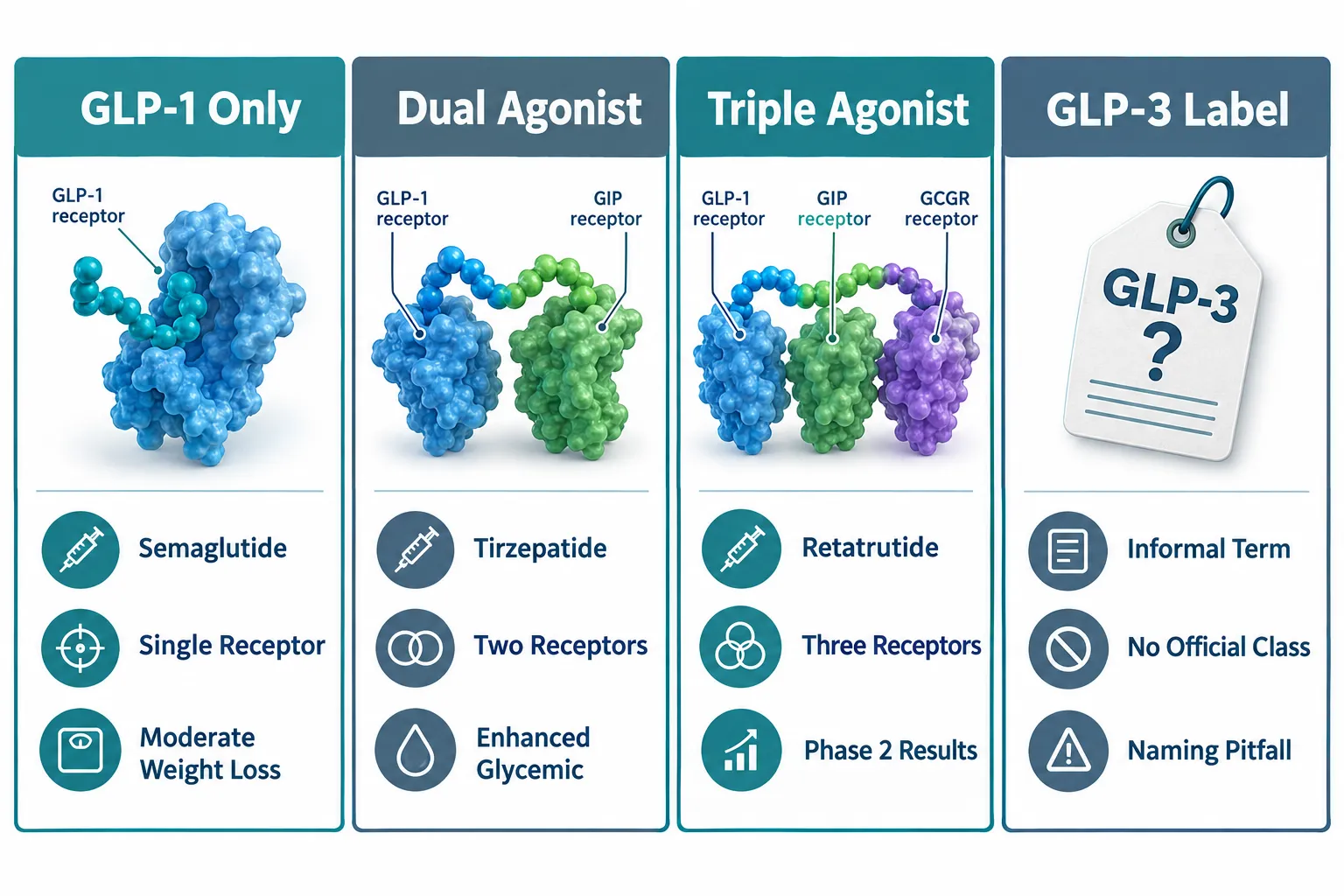
Terminology Pitfalls and How They Affect Research Design
The naming confusion around what is a GLP-3 peptide creates three concrete problems for researchers.
1. Literature Search Errors
Searching databases for "GLP-3" returns inconsistent results. Some papers use it as shorthand for third-generation agents; others use it in the context of proglucagon processing fragments with no receptor activity. Filtering by receptor target (GLP-1R + GIPR + GCGR) yields cleaner, more reproducible literature sets.
2. Assay Misspecification
Standard GLP-1 receptor binding assays measure only GLP-1R affinity. A triple-agonist compound like retatrutide requires three parallel cAMP accumulation assays, one per receptor, to characterize its full pharmacological profile. Using a single-receptor protocol underestimates potency and misrepresents the mechanism.
3. Procurement Confusion
Vendors sometimes list retatrutide under "GLP-3" product codes. Confirming the sequence, purity by HPLC, and receptor-binding data before purchase is non-negotiable. Products such as GLP-3R 30mg peptide and GLP-3R 10mg peptide GA10 use vendor-specific nomenclature that refers to retatrutide-class compounds, not an officially classified GLP-3 receptor ligand.
For broader context on how these compounds compare with other metabolic peptides, the article on polypeptide peptides in cardiometabolic models offers a useful structural comparison.
Research-Model Selection for Retatrutide and Triple-Agonist Studies
Choosing the right model is as important as understanding what is a GLP-3 peptide in the first place. The table below outlines common options.
| Model Type | Best For | Key Limitation |
|---|---|---|
| Diet-Induced Obese (DIO) Mouse | Weight loss, adiposity, metabolic panels | GCGR expression differs from humans |
| Zucker Diabetic Fatty Rat | Glycemic control, insulin sensitivity | Limited cardiovascular readouts |
| Non-Human Primate (NHP) | Translational cardiometabolic endpoints | High cost, regulatory complexity |
| In Vitro cAMP Assay (HEK293) | Receptor-specific potency ranking | No systemic pharmacokinetics |
For in vivo work, the DIO mouse model remains the most widely used starting point. Researchers should confirm that their animal colony expresses all three target receptors at physiologically relevant levels before interpreting weight or glucose data as triple-agonist effects.
Ongoing Retatrutide clinical trial data from phase 3 programs (initiated 2024-2025) are expected to clarify dose-response relationships and cardiovascular outcomes through 2026 and beyond. Analysts broadly expect regulatory submissions to follow positive phase 3 readouts, though timelines remain speculative and subject to trial outcomes.
Conclusion
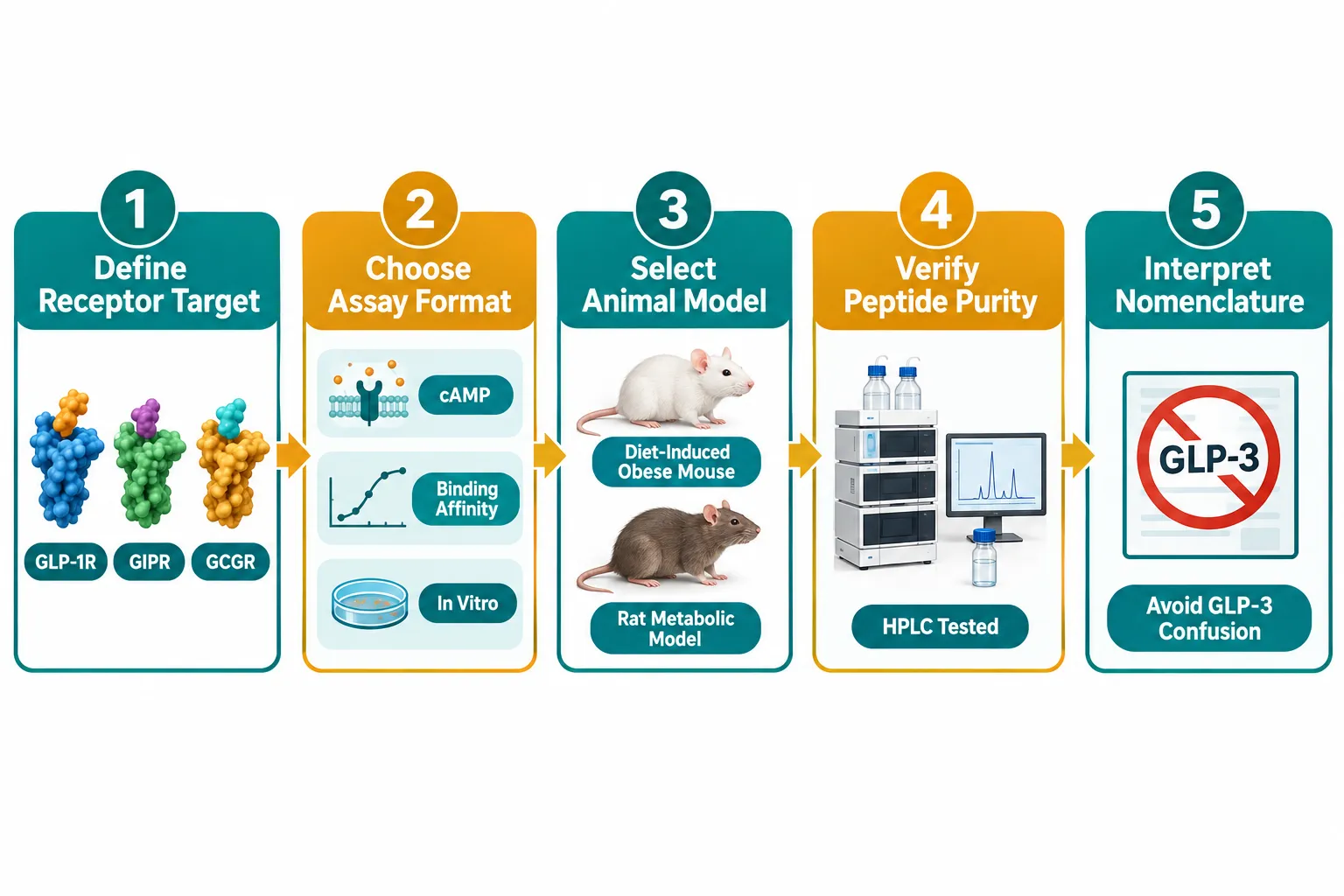
The question of what is a GLP-3 peptide resolves to a clear answer: it is an informal term, not a recognized pharmacological class. Retatrutide is a GLP-1R/GIPR/GCGR triple agonist whose clinical weight-loss results and cardiometabolic benefits place it among the most closely watched compounds in metabolic medicine in 2026. For researchers, the actionable steps are straightforward:
- Replace "GLP-3" with "GLP-1R/GIPR/GCGR triple agonist" in all literature searches and assay documentation.
- Run three parallel receptor-binding or cAMP assays rather than a single GLP-1R protocol.
- Select animal models with confirmed expression of all three target receptors.
- Verify peptide purity and sequence data from suppliers before initiating any study.
- Monitor phase 3 trial publications for updated dose-response and safety benchmarks.
Those sourcing material for preclinical work can explore options including GLP-3 Reta 30mg for sale and confirm specifications align with their receptor-activity requirements before procurement.