Call or Text 727-513-9780
  • Shopping Cart Shopping Cart
    0Shopping Cart
Pure Tested Peptides | America's most trusted Peptides for sale online
  • Peptides for sale
    • Oral Peptides for sale
      • Peptide Capsules for sale
      • BPC 157 Capsules 1000mcg
      • SLU-PP-332 Capsules | 1000 mcg
      • 5-Amino-1MQ 50mg Capsules
      • Tesofensine 500mcg
    • All Peptides for sale
    • Peptide Sprays
      • BPC 157 Nasal Spray Kit
      • BPC-157 TB500 Nasal Spray Kit
      • Semax Nasal Spray 10mg
      • Selank – Nasal Spray Kit – 10mg
      • Epithalon 50MG Nasal Spray Kit
      • Ipamorelin 10mg Nasal Spray
      • Klow Nasal Spray (BPC-157 + TB-500 + GHK-Cu + KPV) | 80mg
      • Hulk Nasal Spray Tesa / Ipa Blend 6/3 MG
      • Klow Nasal Spray
      • NAD + 500 mg Nasal Spray
      • PT-141 Nasal Spray Kit
    • GHRH Peptides
      • Ipa Peptides
      • CJC-1295 Peptides
        • CJC-1295 with DAC 5 mg
        • CJC-1295 without DAC 5 mg
        • CJC-1295 Ipa 10mg
      • Tesa Peptides
        • Tesa Peptide
        • Tesa 20 mg
    • GHK-Cu Peptides
      • All GHK-Cu Peptides
      • GHK-Cu 100mg
      • KLOW Peptide Blend – Buy KLOW blend online
    • BPC Peptides
      • All BPC Peptides
      • BPC-157
      • BPC-157 TB-500
      • BPC 157 capsules 1000mcg
    • SLU-PP-332 Peptides
      • All SLU-PP-332 Peptides
      • SLU-PP-332 5mg
    • GLP3 Peptides
      • GLP3-R
      • GLP3-R CAG 10mg
      • GLP3-R 20mg
    • PT-141 Peptides
      • PT-141 Peptides for sale
      • PT-141 10mg
      • PT-141 Nasal Spray
    • CAG Peptides
      • Lipo-C Peptide Blend
      • CAG 5mg
      • CAG 10mg
    • MOTS-C Peptides
      • MOTS-C Peptides for sale
      • MOTS-c peptide
      • MOTS-c 10mg *6 pack*
    • 5 Amino 1MQ Peptides
      • 5 Amino 1MQ Peptides for sale
      • 5-Amino-1MQ 50mg Capsules
      • 5-Amino-1MQ 5mg
    • Epithalon Peptides
      • Epithalon Peptides for sale
      • Epithalon 10mg
      • Epithalon 50mg
  • Shop
    • GLPs
      • 5-Amino-1MQ 50mg Capsules
      • 5-Amino-1MQ 5mg
      • GLP3-Reta
      • L-Carnitine 500mg/ml
      • Tesofensine 500mcg
      • SLU-PP-332 5mg
      • MOTS-c 10mg *6 pack*
    • Epithalon & BPC Peptides
      • Epithalon 10mg
      • Epithalon 50mg
      • BPC-157
      • BPC 157 capsules 1000mcg
      • BPC-157 TB-500
      • BPC-157 TB500 Nasal Spray Kit
      • BPC 157 Nasal Spray Kit
    • BPC TB-500 & NAD+ Peptides
      • NAD+ 500 mg
      • KLOW Peptide Blend – Buy KLOW blend online
      • GLOW Peptide Blend
      • TB 500 5mg
      • BPC 157 capsules 1000mcg – Supplement
      • BPC 157 Nasal Spray Kit
      • BPC-157
      • BPC-157 TB500 Nasal Spray Kit
      • BPC-157 TB-500
      • BPC 157 capsules 1000mcg
    • LL-37 Peptide
      • LL-37 10 mg
    • MOTS-C & Selank
      • MOTS-c peptide
      • Selank 10mg
    • GHK Peptides
      • GHK-Cu 100mg
      • GLOW Peptide Blend
      • KLOW Peptide Blend – Buy KLOW blend online
  • COAs
  • Wholesale
    • Wholesale Peptides for sale
  • PTP FAQ
  • Affiliates
    • Selank Peptide: Advanced Pharmacological Mechanisms Underlying Its Anxiolytic and Nootropic Effects in Research
      • 5-Amino-1MQ Peptide: Detailed Mechanisms of NNMT Inhibition and Its Impact on Cellular Metabolism Research
        • MOTS-C Peptide: Unraveling Its Role in Mitochondrial Dynamics and Energy Metabolism Research
          • Epithalon Peptide and Telomerase Regulation: Investigating Its Impact on Cellular Senescence and Lifespan Research Models
            • GLP2-T vs GLP2 Tirz Peptide: Understanding the Naming, Mechanistic Nuances, and Research Implications for Gut Health
      • Peptides and Polypeptides in Modern Pharmacology: What Research on Metoprolol, Prednisone, and Amlodipine Reveals
        • Polypeptide Peptides vs NSAIDs: What Naproxen and Diclofenac Teach Tissue-Repair Researchers About BPC‑157 and TB‑500
          • Peptides and Polypeptides in Endocrine Pharmacology: How GLP-1, GLP-2, and GLP-3 Retatrutide Differ From Classic Drugs Like Prednisone and Amlodipine
          • 5‑Amino‑1MQ Peptide and NNMT Inhibition: How It Compares With Statins Like Atorvastatin in Adipose and Lipid Metabolism Research
      • Enclomiphene, Estrogen Receptor Signaling, and Luteinizing Phase Biology: What Hormone Researchers Should Measure
        • Mesenchymal Stem Cells, BPC‑157, and GHK‑Cu: How Tissue Repair Peptides Compare With Classic NSAIDs Like Naproxen in Injury Models
          • Peptide Calculator Use Cases Beyond Growth Hormone: Working Through GLP‑3 Retatrutide, MOTS‑c, and BPC‑157 Research Dosing
        • Polypeptide Peptides in Endocrine and Metabolic Pharmacology: Lessons From Amlodipine, Prednisone, and Metoprolol
        • Peptides Calculator for Advanced Blends: Worked Examples for Tesamorelin, CJC‑1295, and Ipamorelin Stacks
          • Peptides and Polypeptides in Human Physiology: How Molecular Size Shapes Research Applications
            • Selank Peptide: Advanced Pharmacological Mechanisms Underlying Its Anxiolytic and Nootropic Effects in Research
          • 5-Amino-1MQ Peptide: Detailed Mechanisms of NNMT Inhibition and Its Impact on Cellular Metabolism Research
            • MOTS-C Peptide: Unraveling Its Role in Mitochondrial Dynamics and Energy Metabolism Research
              • Epithalon Peptide and Telomerase Regulation: Investigating Its Impact on Cellular Senescence and Lifespan Research Models
                • GLP2-T vs GLP2 Tirz Peptide: Understanding the Naming, Mechanistic Nuances, and Research Implications for Gut Health
                  • Peptides and Polypeptides in Endocrine Pharmacology: How GLP-1, GLP-2, and GLP-3 Retatrutide Differ From Classic Drugs Like Prednisone and Amlodipine
                    • Polypeptide Peptides vs NSAIDs: What Naproxen and Diclofenac Teach Tissue-Repair Researchers About BPC‑157 and TB‑500
                      • Peptides and Polypeptides in Modern Pharmacology: What Research on Metoprolol, Prednisone, and Amlodipine Reveals
                        • 5‑Amino‑1MQ Peptide and NNMT Inhibition: How It Compares With Statins Like Atorvastatin in Adipose and Lipid Metabolism Research
                        • Enclomiphene, Estrogen Receptor Signaling, and Luteinizing Phase Biology: What Hormone Researchers Should Measure
                        • Mesenchymal Stem Cells, BPC‑157, and GHK‑Cu: How Tissue Repair Peptides Compare With Classic NSAIDs Like Naproxen in Injury Models
                        • Peptide Calculator Use Cases Beyond Growth Hormone: Working Through GLP‑3 Retatrutide, MOTS‑c, and BPC‑157 Research Dosing
                        • Polypeptide Peptides in Endocrine and Metabolic Pharmacology: Lessons From Amlodipine, Prednisone, and Metoprolol
                        • Peptides Calculator for Advanced Blends: Worked Examples for Tesamorelin, CJC‑1295, and Ipamorelin Stacks
                        • Peptides and Polypeptides in Human Physiology: How Molecular Size Shapes Research Applications
                        • Selank Peptide: Advanced Pharmacological Mechanisms Underlying Its Anxiolytic and Nootropic Effects in Research
                        • MOTS-C Peptide: Unraveling Its Role in Mitochondrial Dynamics and Energy Metabolism Research
                        • Peptides and Polypeptides in Modern Pharmacology: What Research on Metoprolol, Prednisone, and Amlodipine Reveals
                        • Peptides and Polypeptides in Endocrine Pharmacology: How GLP-1, GLP-2, and GLP-3 Retatrutide Differ From Classic Drugs Like Prednisone and Amlodipine
                        • 5-Amino-1MQ Peptide: Detailed Mechanisms of NNMT Inhibition and Its Impact on Cellular Metabolism Research
                        • Mesenchymal Stem Cells, BPC‑157, and GHK‑Cu: How Tissue Repair Peptides Compare With Classic NSAIDs Like Naproxen in Injury Models
                        • Peptide Calculator Use Cases Beyond Growth Hormone: Working Through GLP‑3 Retatrutide, MOTS‑c, and BPC‑157 Research Dosing
                        • GLP2-T vs GLP2 Tirz Peptide: Understanding the Naming, Mechanistic Nuances, and Research Implications for Gut Health
                        • Polypeptide Peptides in Endocrine and Metabolic Pharmacology: Lessons From Amlodipine, Prednisone, and Metoprolol
                        • Polypeptide Peptides vs NSAIDs: What Naproxen and Diclofenac Teach Tissue-Repair Researchers About BPC‑157 and TB‑500
                        • Peptides and Polypeptides in Human Physiology: How Molecular Size Shapes Research Applications
                        • Peptides Calculator for Advanced Blends: Worked Examples for Tesamorelin, CJC‑1295, and Ipamorelin Stacks
                        • 5‑Amino‑1MQ Peptide and NNMT Inhibition: How It Compares With Statins Like Atorvastatin in Adipose and Lipid Metabolism Research
                        • Enclomiphene, Estrogen Receptor Signaling, and Luteinizing Phase Biology: What Hormone Researchers Should Measure
                        • Epithalon Peptide and Telomerase Regulation: Investigating Its Impact on Cellular Senescence and Lifespan Research Models
                        • Best research protocol Klow blend
                        • best time to take BPC-157
                        • best time to take DSIP (Delta Sleep Inducing Peptide)
                        • best time to take CJC-1295
                        • best time to take AOD-9604
                        • best time to take Follistatin 344
                        • best time to take Ipamorelin
                        • best time to take MK-677 (Ibutamoren)
                        • best time to take Ligandrol (LGD-4033) — research compound
                        • best time to take Ostarine (MK-2866) — research compound
                        • best time to take GHK-CU
                        • best time to take TB-500
                        • best time to take MOTS-c
                        • best time to take Semax
                        • best time to take RAD-140 (Testolone) — research compound
                        • best time to take Thymosin Alpha-1
                        • best time to take PEG-MGF
                        • Biolife Plasma, Octapharma Plasma, and Research Peptides: How Plasma Donation Labs Differ From Peptide Suppliers
                        • best time to take YK-11 — research compound
                        • best time to take PT-141 (Bremelanotide)
                        • Best research protocol Klow blend
  • Contact
    • Contact Customer Service
    • Text Customer Support
  • About US
  • Shop all peptides
  • Affiliate Program
    • Affiliate Signup
  • Login / Register Login / Register Page Link Login / Register Page Link
  • Click to open the search input field Click to open the search input field Search
  • Menu Menu

Tag Archive for: gh pulsatility

CJC‑1295 with DAC vs. Without DAC: Expanding on Half‑Life Differences Using Tesamorelin and Ipamorelin Blend Case Studies

CJC‑1295 with DAC vs. Without DAC: Expanding on Half‑Life Differences Using Tesamorelin and Ipamorelin Blend Case Studies

July 22, 2026/0 Comments/in Uncategorized/by

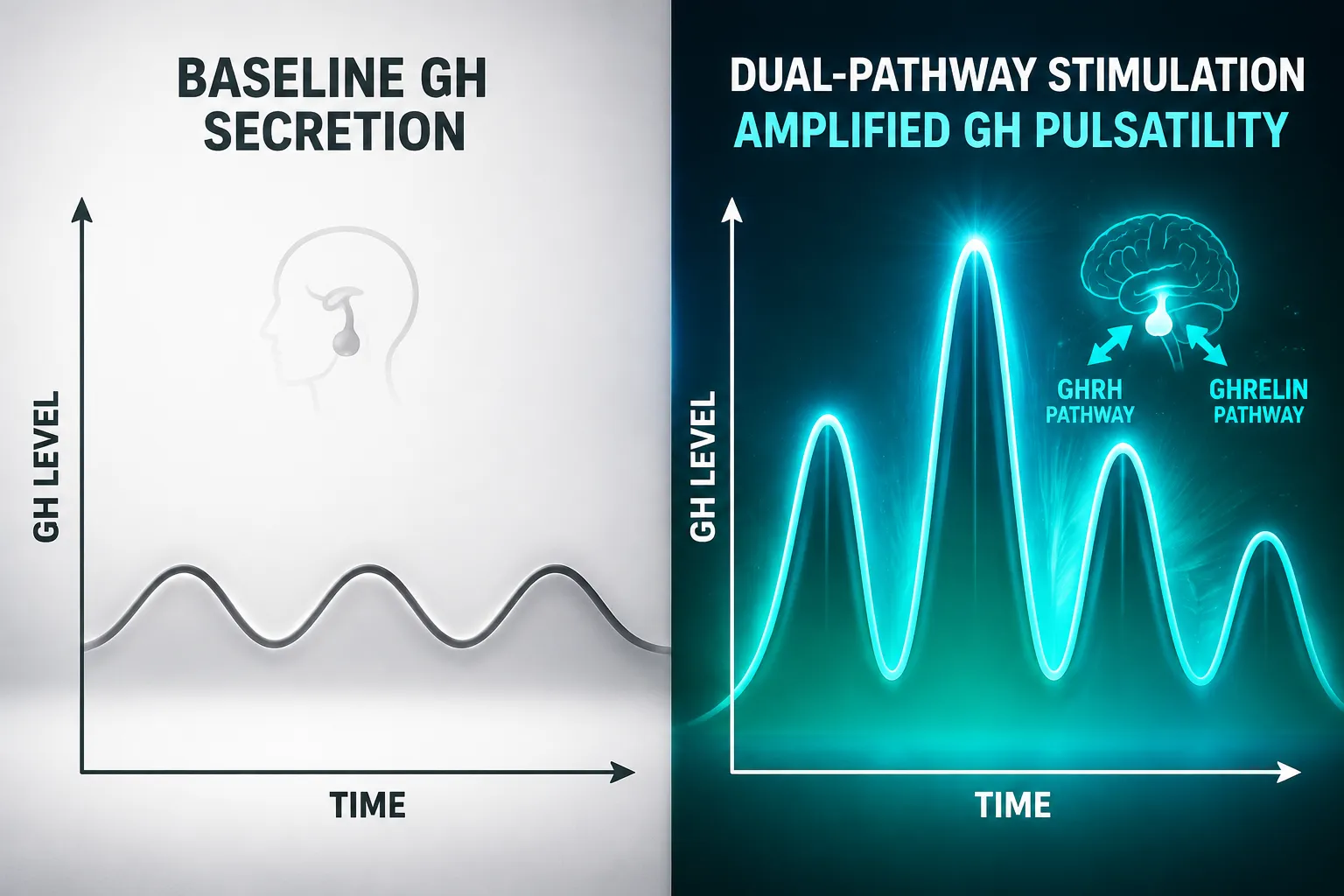
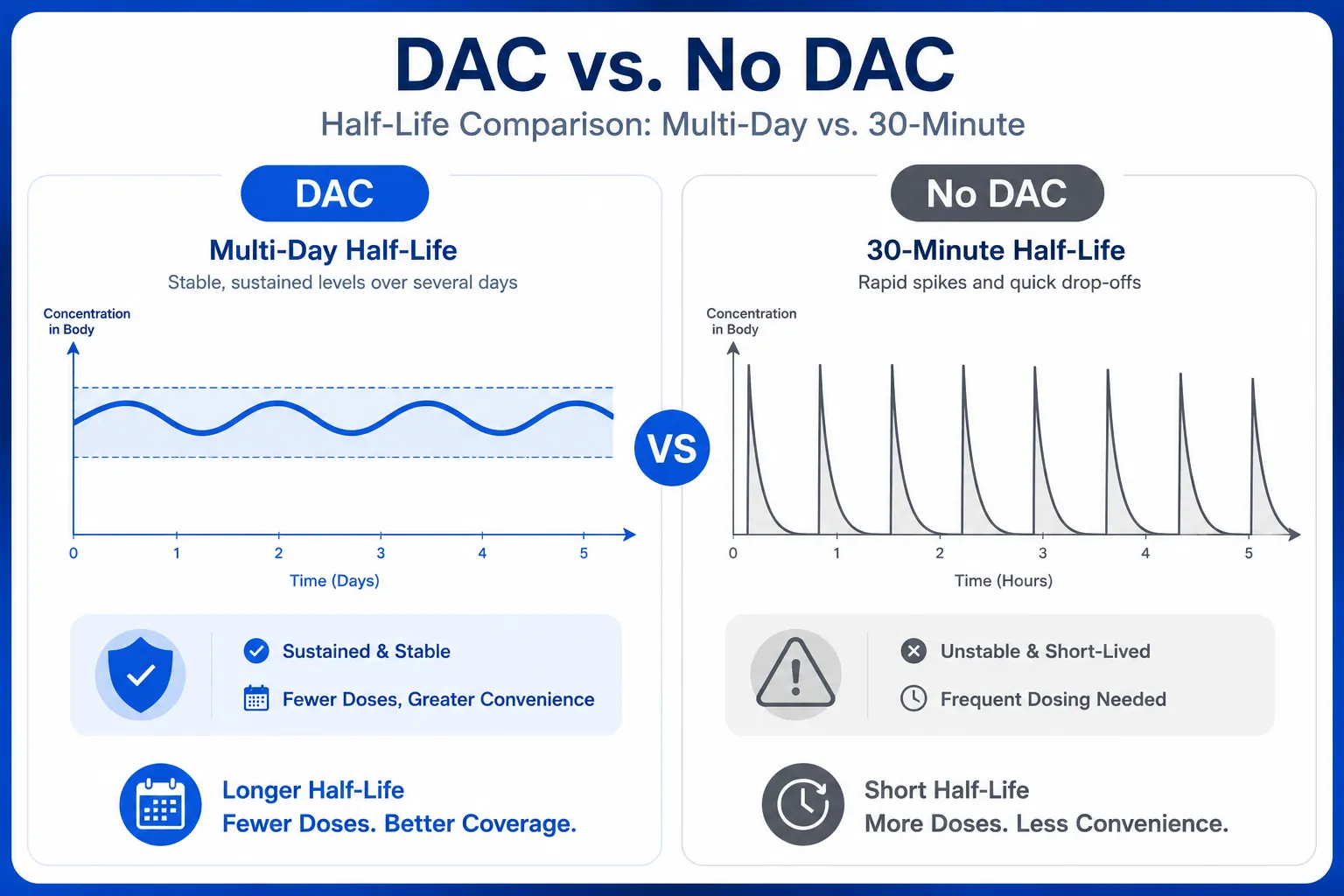
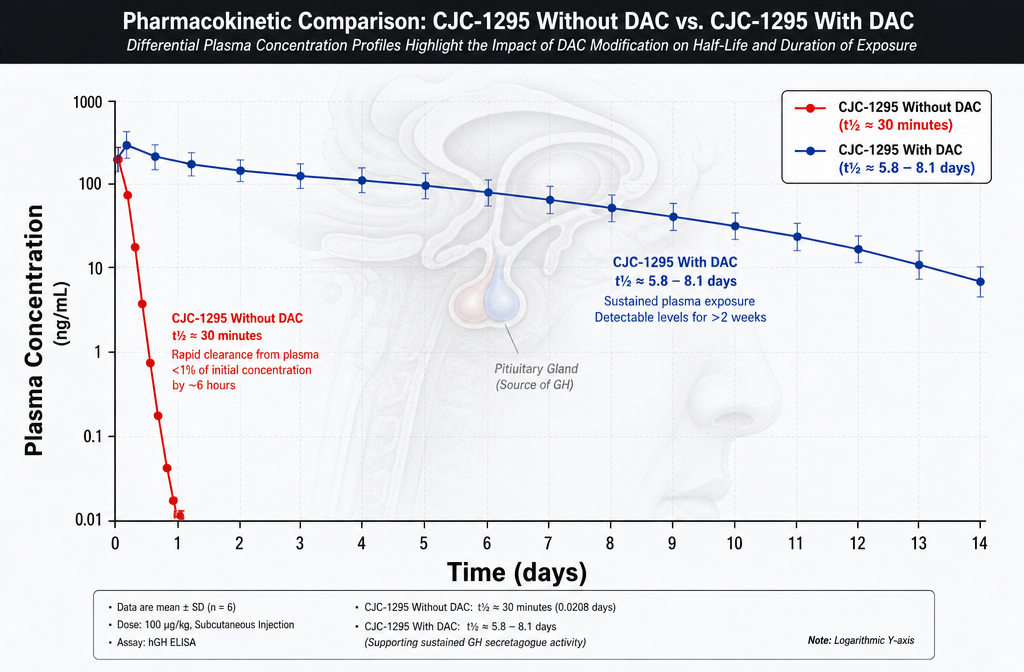
Swapping CJC-1295 with DAC for its non-DAC counterpart in a research stack is not a minor formulation tweak, it fundamentally rewrites the pharmacokinetic story. The half-life difference between these two peptides spans roughly five to eight days versus thirty minutes, a gap wide enough to change dosing schedules, alter GH pulsatility, and reshape how researchers design and interpret blend studies. Understanding CJC-1295 with DAC vs. Without DAC: Expanding on Half-Life Differences Using Tesamorelin and Ipamorelin Blend Case Studies is therefore essential before drawing any conclusions from multi-peptide stacks.

Split-screen infographic illustration () in bright clinical white and cobalt blue: left panel shows a smooth, sustained sine

Key Takeaways

  • CJC-1295 with DAC achieves a half-life of approximately 5.8 to 8.1 days through covalent albumin binding; the non-DAC form lasts roughly 30 minutes in plasma.
  • The DAC moiety uses a maleimidopropionic acid linker to "hitchhike" on serum albumin, which itself persists for 19 to 21 days in humans.
  • No published human pharmacokinetic profile exists for CJC-1295 without DAC; its half-life is inferred rather than directly measured.
  • In tesa-CJC-1295-ipamorelin blend research, the choice of DAC or non-DAC form determines whether GH output is a sustained basal elevation or a series of short pulses.
  • Dosing frequency, study design, and safety monitoring must be adapted separately for each form, data from DAC trials cannot be applied to non-DAC protocols.

The Mechanism Behind the Half-Life Gap

The entire pharmacokinetic difference between the two forms traces back to a single chemical addition: the Drug Affinity Complex (DAC) moiety. This maleimidopropionic acid linker covalently binds to serum albumin after injection. Because albumin circulates in the bloodstream for 19 to 21 days, any peptide attached to it inherits a dramatically extended lifespan. The result is a half-life of 5.8 to 8.1 days for CJC-1295 with DAC in healthy adults, compared with roughly 30 minutes for the non-DAC peptide.

The non-DAC form, structurally similar to tetrasubstituted modified GRF 1-29, does carry amino acid substitutions that resist dipeptidyl peptidase-4 (DPP-4) cleavage. This resistance extends its survival beyond native GHRH's two-minute plasma half-life, but without albumin binding, clearance still occurs within half an hour. Critically, no direct human pharmacokinetic measurement for CJC-1295 without DAC has been published as of mid-2026. The 30-minute estimate is inferred from DPP-4 resistance data and the known absence of albumin binding, not from a controlled PK trial.

For a detailed breakdown of the albumin-binding mechanism and its downstream effects on IGF-1, see this deeper dive into CJC-1295 with DAC research findings.

"Extrapolating DAC-trial data to the non-DAC peptide is pharmacokinetically invalid, the multi-day duration is unique to the DAC modification."

Modeling Pharmacokinetics in Common Research Stacks

CJC-1295 with DAC vs. Without DAC: How the Tesamorelin and Ipamorelin Blend Changes the Picture

CJC-1295 with DAC vs. Without DAC: How the Tesamorelin and Ipamorelin Blend Changes the Picture

Tesamorelin is an FDA-approved GHRH analog with a relatively short plasma half-life, making it a useful pharmacokinetic comparator when modeling blend behavior. In a tesa-CJC-1295-ipamorelin stack, the choice of DAC or non-DAC CJC-1295 produces two very different GH output profiles.

With DAC in the blend:

  • CJC-1295 with DAC provides a continuous, low-level GHRH signal lasting several days per injection.
  • Ipamorelin, a selective GHRP with a half-life of roughly two hours, adds superimposed short pulses on top of this basal elevation.
  • The combined effect is a sustained GH baseline with intermittent amplified peaks.
  • IGF-1 can remain above baseline for up to 28 days after multiple doses, which has significant implications for study endpoints and washout periods.

Without DAC in the blend:

  • Non-DAC CJC-1295 acts as a brief GHRH burst, peaking and clearing within 30 minutes.
  • Ipamorelin's pulses align temporally with these short GHRH windows, creating a synchronized but transient GH spike.
  • The overall GH profile more closely resembles physiologic pulsatility.
  • Researchers studying tesa alongside this form are effectively comparing two short-acting GHRH analogs rather than a long-acting versus short-acting pair.

For researchers exploring blend formulations, the tesa-CJC-1295-ipamorelin 12mg blend and the tesa-AOD9604-CJC-1295-ipamorelin blend illustrate how component selection shapes the overall protocol design.

A comparison of tesa's standalone pharmacokinetics versus ipamorelin's is also covered in this ipamorelin vs. tesa overview, which helps contextualize blend behavior further.

Dosing Schedules, GH Pulsatility, and Study Design Implications

Applying CJC-1295 with DAC vs. Without DAC Half-Life Differences to Protocol Planning

Applying CJC-1295 with DAC vs. Without DAC Half-Life Differences to Protocol Planning

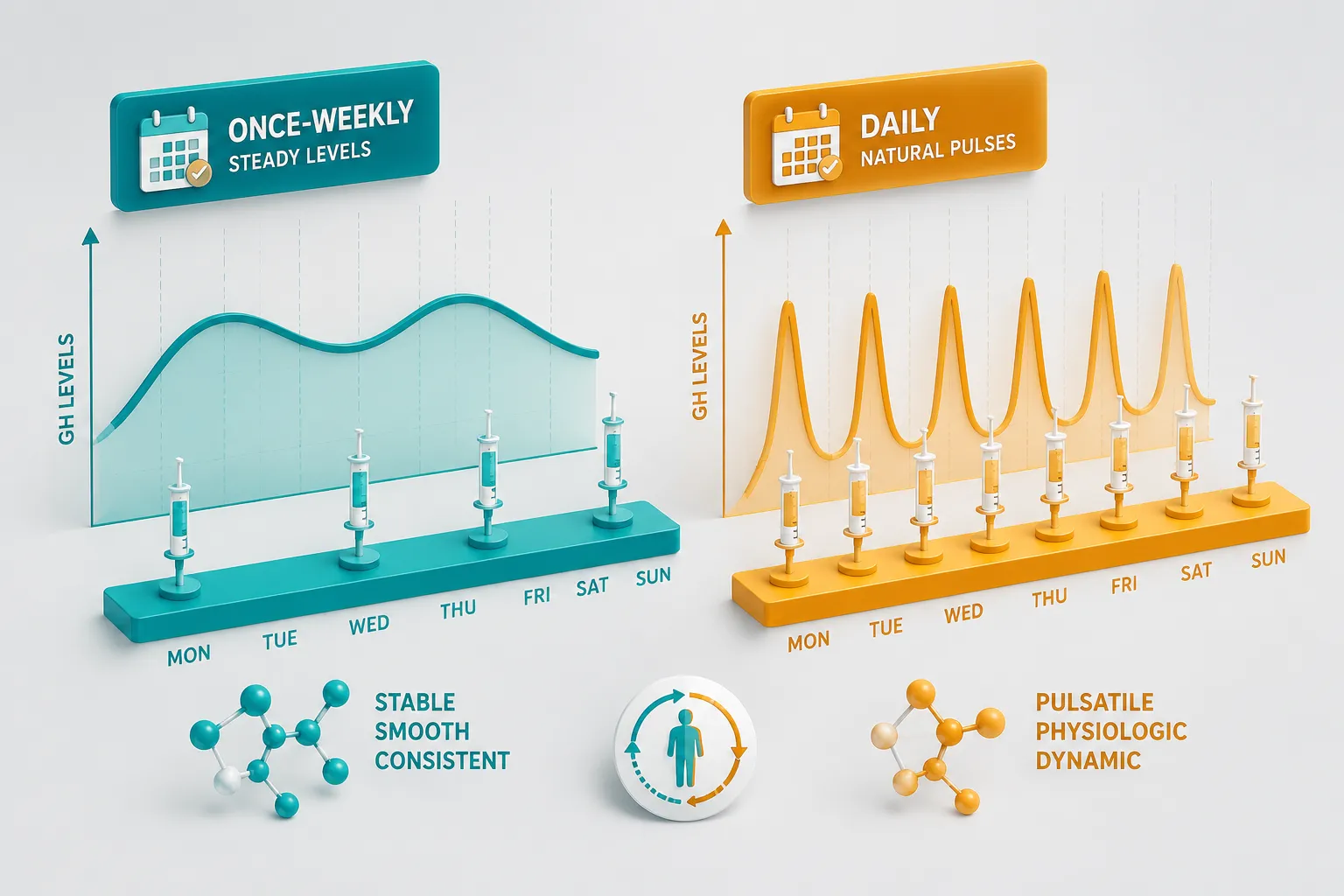
The half-life gap directly dictates dosing frequency. CJC-1295 with DAC supports once- or twice-weekly injection schedules while maintaining sustained GH and IGF-1 elevation between doses. Non-DAC CJC-1295, by contrast, requires daily or multiple-daily dosing to maintain any meaningful GHRH presence.

Feature CJC-1295 with DAC CJC-1295 without DAC
Plasma half-life 5.8 to 8.1 days Approx. 30 minutes (inferred)
Albumin binding Yes (covalent) No
GH output pattern Sustained basal elevation Short pulsatile burst
Recommended dosing frequency Once or twice weekly Daily or multiple times daily
Human PK data available Yes (Phase 1 trial data) No direct measurement

Key study design considerations include:

  • Washout periods: The DAC form requires washout periods of several weeks due to prolonged IGF-1 elevation; non-DAC washout is far shorter.
  • Pulsatility preservation: Researchers prioritizing physiologic GH pulse patterns should favor non-DAC CJC-1295 or tesa as the GHRH component.
  • Blunted pulsatility risk: The sustained flat GH signal from CJC-1295 with DAC may suppress normal GH pulsatility, an endocrinological consideration absent from short-acting protocols.
  • Endpoint timing: IGF-1 measurements taken at 24 hours post-dose will reflect very different biological states depending on which form is used.

For researchers examining the CJC-1295 with DAC profile in greater depth, this CJC-1295 with DAC deeper dive and the sermorelin-ipamorelin-CJC-1295 combination overview provide additional context on how half-life interacts with GHRP co-administration.

Conclusion

The core lesson from examining CJC-1295 with DAC vs. Without DAC: Expanding on Half-Life Differences Using Tesamorelin and Ipamorelin Blend Case Studies is straightforward: these are not interchangeable peptides with minor formulation differences. The DAC moiety transforms a 30-minute compound into a multi-day one, and that transformation cascades into every aspect of blend design, from dosing frequency and GH pulsatility to washout periods and safety monitoring.

Actionable next steps for researchers:

  1. Define the desired GH output pattern first, sustained basal elevation or pulsatile bursts, before selecting the CJC-1295 form.
  2. Never apply DAC-derived pharmacokinetic data to non-DAC protocols; treat them as separate compounds.
  3. When designing tesa-CJC-1295-ipamorelin blend studies, account for the dramatically different washout requirements between DAC and non-DAC variants.
  4. Consult current tesa dosing and pharmacokinetic guidance to calibrate expectations when tesa serves as the GHRH comparator.
  5. Review the GH axis product line overview for a broader perspective on how each component fits within a well-structured research protocol.

Rigorous protocol design begins with understanding the pharmacokinetics of each component individually, only then can blend behavior be accurately modeled and interpreted.

https://www.puretestedpeptides.com/wp-content/uploads/2026/07/cjc-1295-with-dac-vs-without-dac-expanding-on-half-life-differences-using-tesamo.webp 1024 1536 https://www.puretestedpeptides.com/wp-content/uploads/2026/01/buy-peptides-online.jpg 2026-07-22 13:05:412026-07-22 13:05:41CJC‑1295 with DAC vs. Without DAC: Expanding on Half‑Life Differences Using Tesamorelin and Ipamorelin Blend Case Studies

Tag Archive for: gh pulsatility

Tesamorelin and Ipamorelin Mechanism: How Their Growth-Hormone Signaling Differs in Research Models

Tesamorelin and Ipamorelin Mechanism: How Their Growth-Hormone Signaling Differs in Research Models

June 27, 2026/0 Comments/by Pure Tested

{"cover":"Professional landscape format (1536×1024) hero image with bold text overlay: 'Tesamorelin vs Ipamorelin: How Their GH Signaling Differs' in extra large 72pt white bold sans-serif font with dark semi-transparent overlay box, centered upper third. Background shows a dramatic close-up of a pituitary gland cross-section illustration merged with molecular receptor diagrams, deep navy blue and teal color palette, glowing cAMP and calcium signaling pathway nodes rendered in bright white and gold, editorial magazine cover quality, high contrast, scientific research aesthetic.","content":["Detailed landscape format (1536×1024) scientific diagram illustration showing two distinct receptor pathways side by side: left panel depicts GHRH receptor on a pituitary somatotroph cell with cAMP and PKA cascade arrows in cool blue tones, right panel shows GHS-R1a ghrelin receptor activating phospholipase C and intracellular calcium release in warm amber tones, labeled molecular nodes, clean white background with subtle lab texture, research infographic style, high contrast annotations, editorial quality","Landscape format (1536×1024) data visualization showing two overlapping GH pulse waveform graphs on a dark charcoal background: one smooth physiological pulsatile curve in electric blue representing Tesamorelin-driven GH release, one sharp clean spike in gold representing Ipamorelin-induced GH pulse, time axis labeled in hours, amplitude axis labeled in ng/mL, subtle grid lines, cortisol and prolactin flat reference lines in red dashes, preclinical research model aesthetic, clean scientific chart style, editorial quality","Landscape format (1536×1024) overhead view of a modern preclinical research laboratory bench showing two separate experimental setups: left side has molecular model of Tesamorelin peptide chain with trans-3-hexenoic acid modification highlighted in blue, right side shows Ipamorelin pentapeptide structure in gold, surrounded by pharmacokinetic half-life timeline bars, CT scan visceral fat reduction imagery in background, subtle teal and white lab aesthetic, research-grade editorial photography style, high contrast, scientific publication quality"}

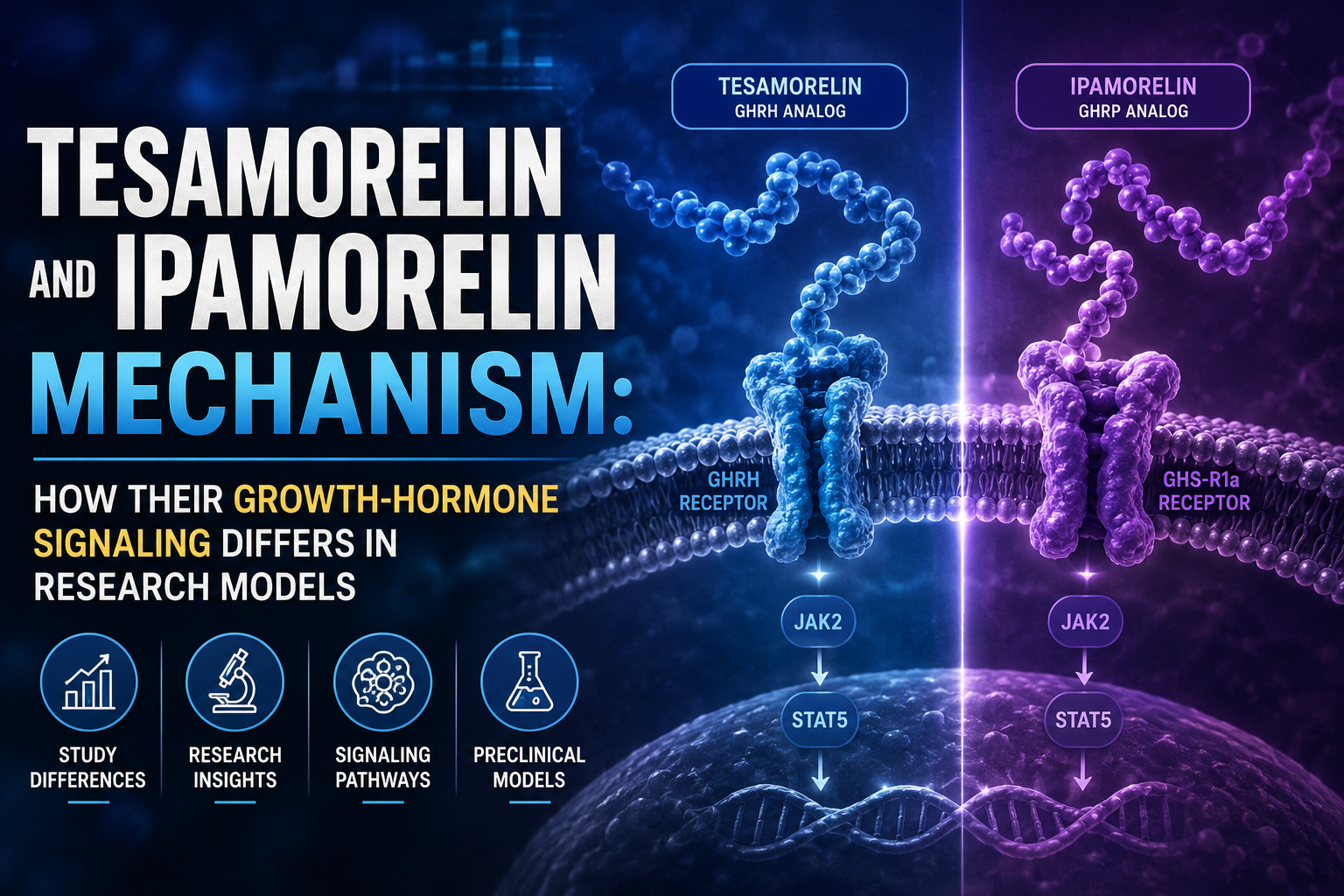
Professional landscape hero image () with : "Tesamorelin and Ipamorelin Mechanism: How Their Growth-Hormone Signaling

Two peptides can both raise growth hormone levels yet work through entirely separate receptor systems — and that distinction matters enormously when designing preclinical studies. Understanding the Tesamorelin and Ipamorelin mechanism: how their growth-hormone signaling differs in research models is not simply academic. It determines which endpoints are valid, which biomarkers to track, and whether combining the two compounds makes mechanistic sense.


Key Takeaways

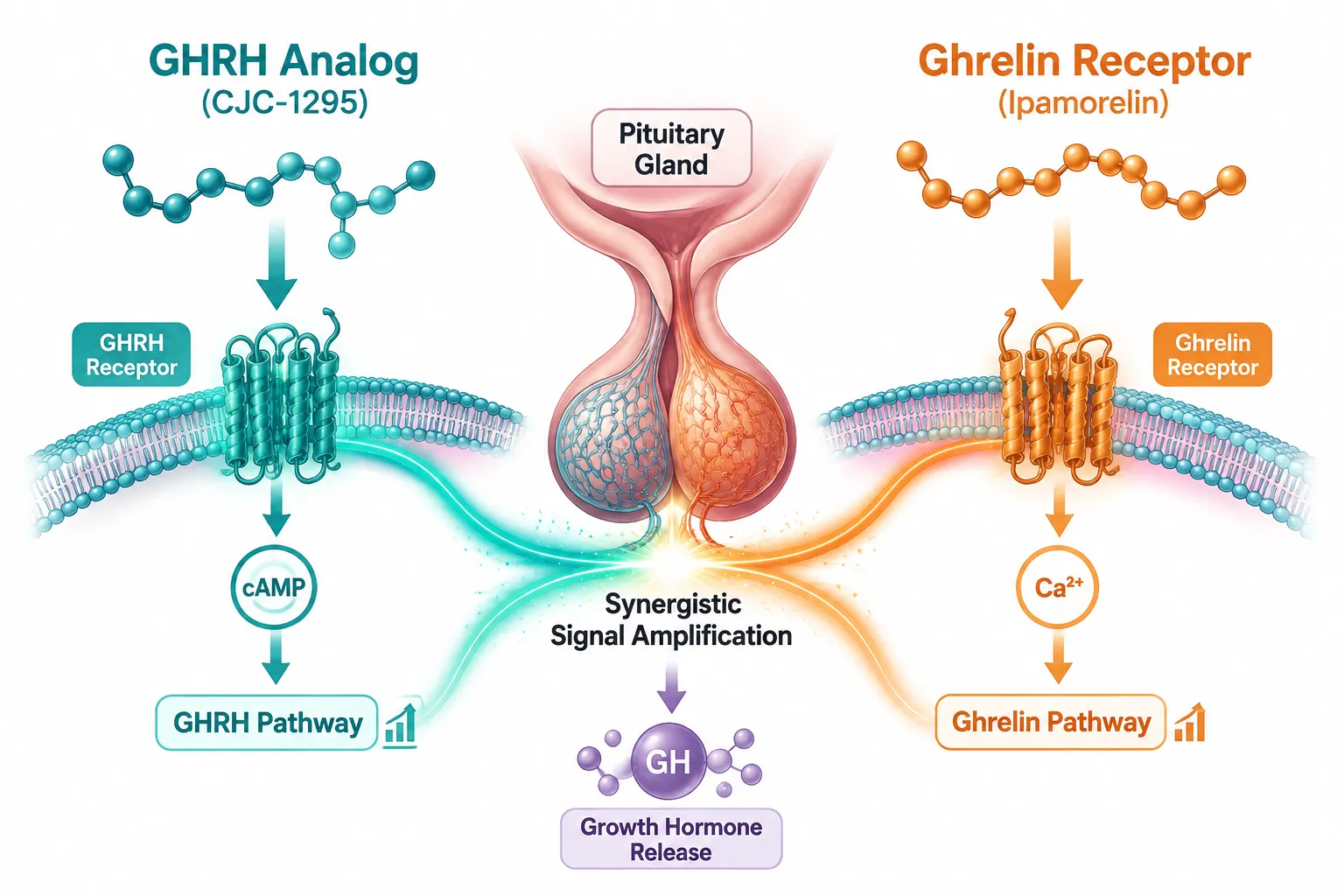
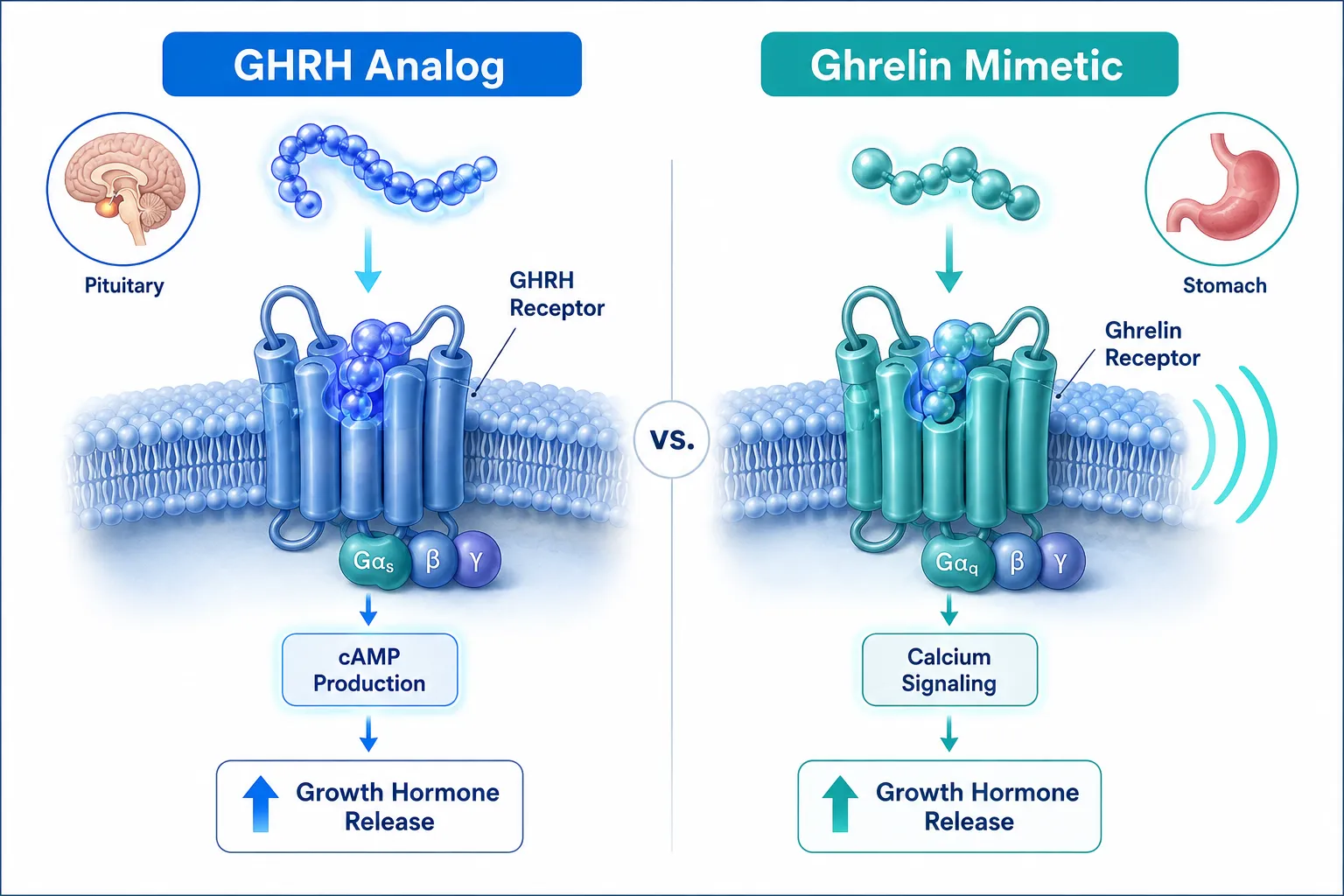
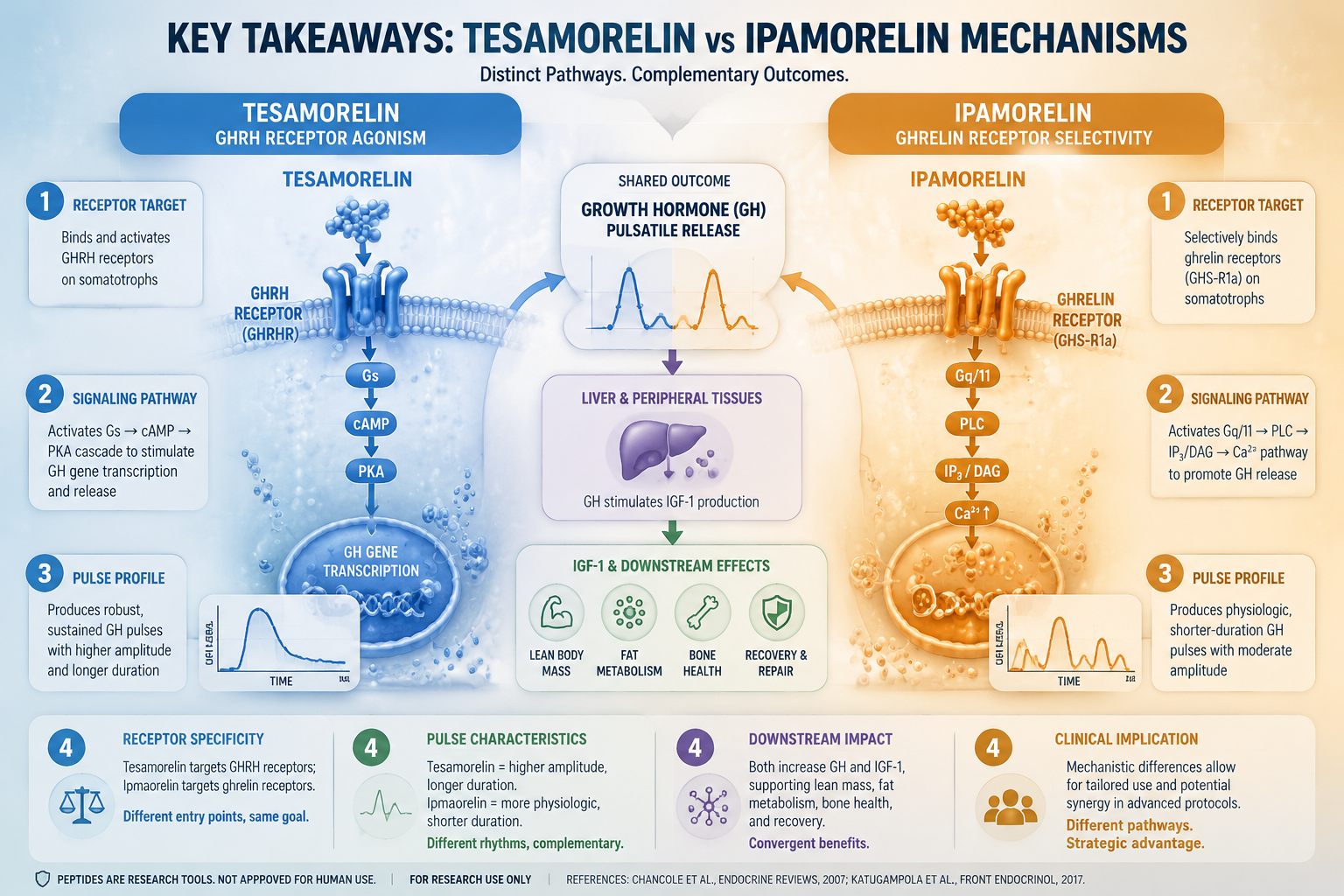
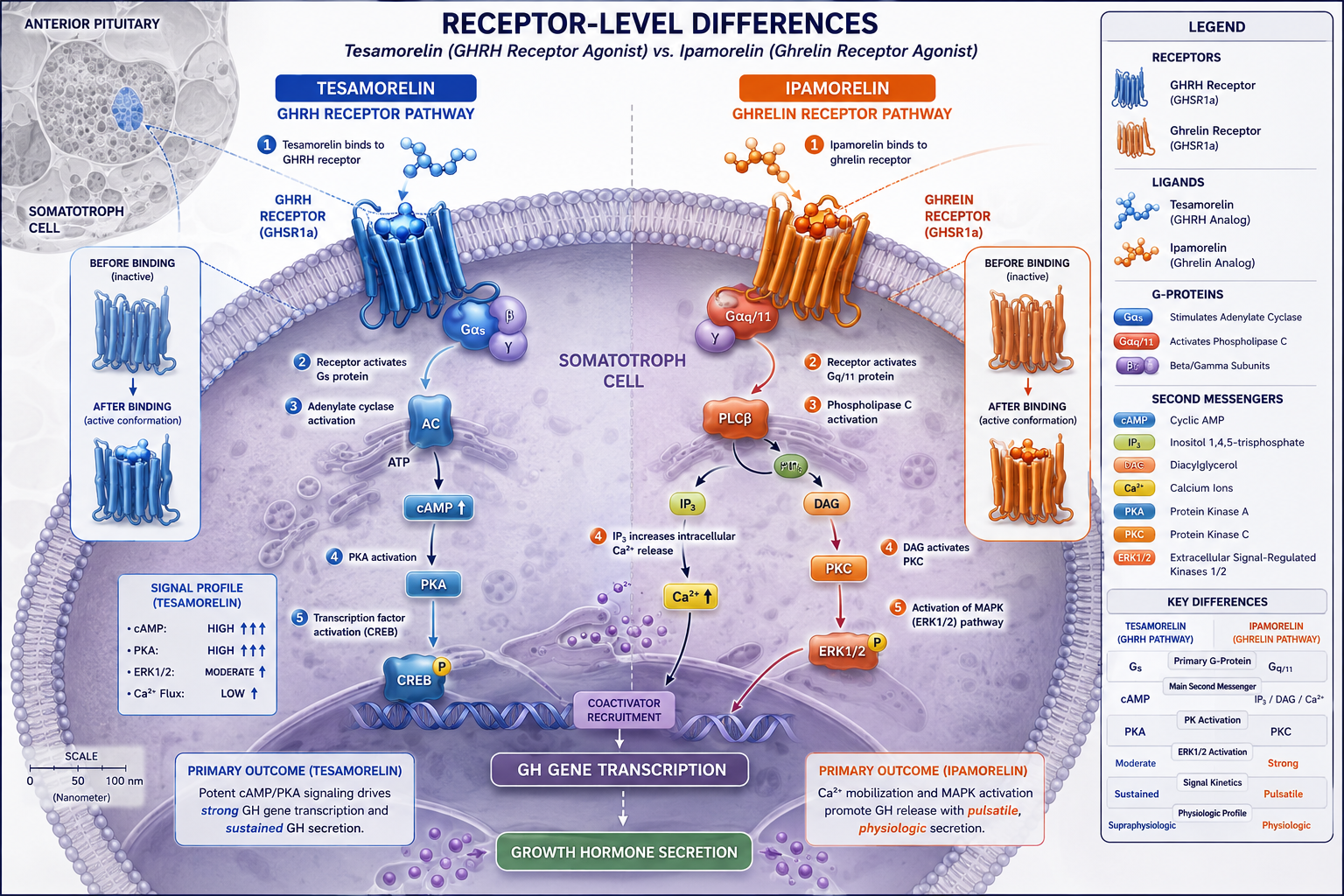
  • Tesamorelin activates the GHRH receptor via the cAMP/PKA pathway; ipamorelin activates the ghrelin receptor (GHS-R1a) via phospholipase C and intracellular calcium.
  • The two pathways are complementary, not redundant, making dual-pathway research designs scientifically justified.
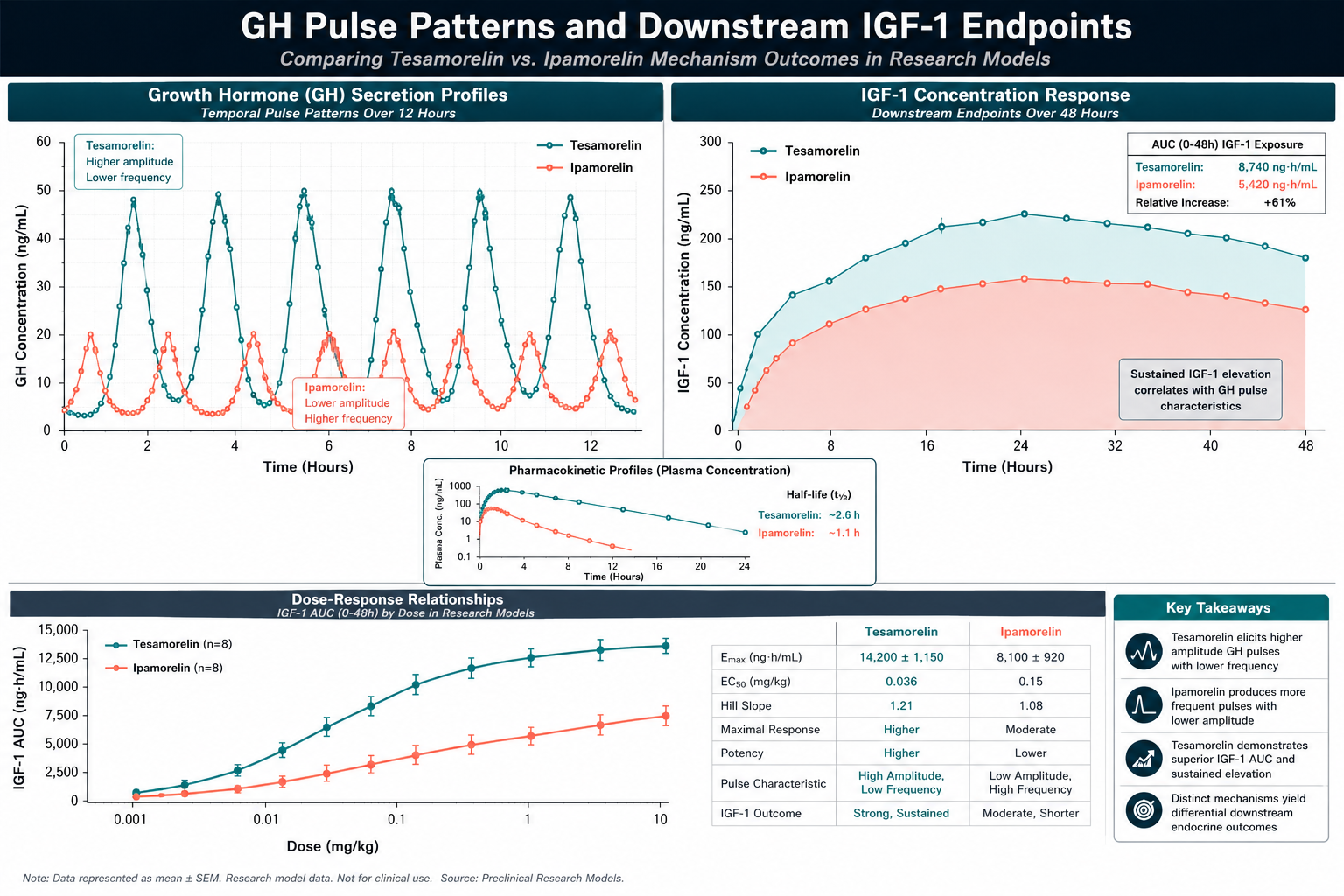
  • Tesamorelin preserves physiological GH pulsatility; ipamorelin produces a selective, "clean" GH pulse without elevating cortisol or prolactin.
  • Half-life differences (25-40 minutes vs. approximately 2 hours) affect dosing interval choices in animal pharmacokinetic models.
  • IGF-1 elevation is a shared downstream endpoint, but the upstream signaling routes remain distinct.

Receptor-Level Differences That Define the Tesamorelin and Ipamorelin Mechanism

Receptor-Level Differences That Define the Tesamorelin and Ipamorelin Mechanism

At the receptor level, these two secretagogues operate on separate systems.

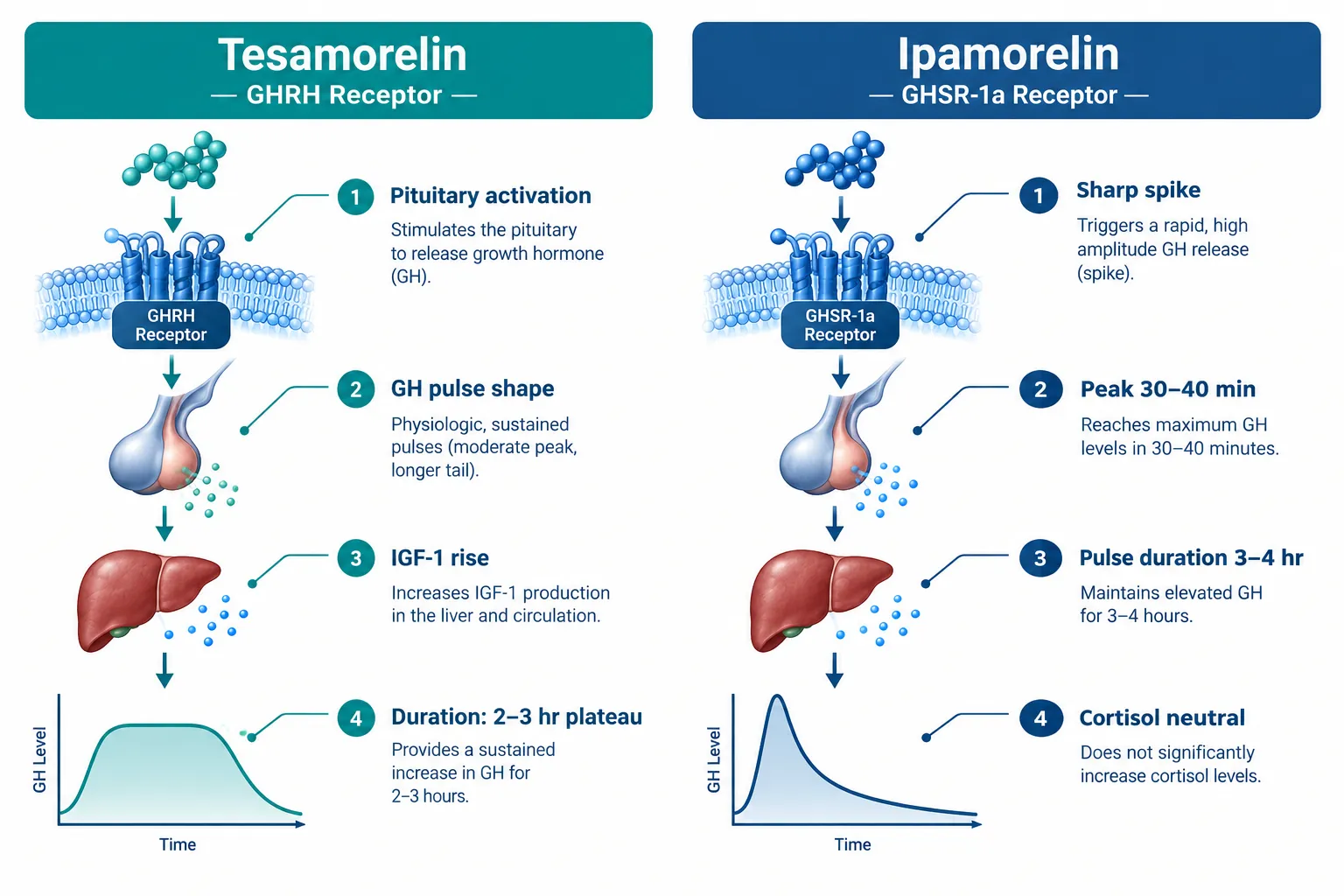
Tesamorelin is a synthetic analog of endogenous growth hormone-releasing hormone (GHRH). Its N-terminal modification with trans-3-hexenoic acid protects it from enzymatic degradation, extending its half-life to roughly 25-40 minutes. It binds selectively to the GHRH receptor (GHRHR) on anterior pituitary somatotrophs and activates the cAMP/PKA signaling cascade, which drives GH gene transcription and pulsatile secretion. This mechanism mirrors the body's own GHRH signaling, preserving the natural rhythm of GH release.

Ipamorelin takes a different route entirely. It is a selective agonist of the growth hormone secretagogue receptor type 1a (GHS-R1a) — the same receptor that endogenous ghrelin activates. Rather than cAMP, GHS-R1a engagement triggers phospholipase C (PLC) activation, leading to IP3-mediated calcium release from intracellular stores. This calcium surge is what drives GH secretion in ipamorelin-treated models.

Feature Tesamorelin Ipamorelin
Target Receptor GHRHR GHS-R1a (ghrelin receptor)
Signaling Cascade cAMP / PKA PLC / intracellular Ca2+
Half-Life ~25-40 minutes ~2 hours
GH Release Pattern Pulsatile, physiological Sharp, selective pulse
Cortisol / ACTH Effect Minimal Negligible

For researchers exploring ipamorelin muscle and fat research themes, this receptor distinction is foundational to interpreting results accurately.


GH Pulse Patterns and Downstream IGF-1 Endpoints in Research Models

GH Pulse Patterns and Downstream IGF-1 Endpoints in Research Models

The pattern of GH release produced by each compound is as important as the magnitude.

Tesamorelin's activation of GHRHR amplifies both basal and pulsatile GH secretion, closely replicating the endogenous GHRH-driven rhythm. This physiological pulsatility is considered advantageous in research models where mimicking natural GH dynamics is a priority. Studies examining tesa peptide benefits often highlight this feature as a key differentiator from synthetic GH administration.

Ipamorelin, by contrast, generates what researchers describe as a "clean" GH pulse. Its selectivity for GHS-R1a means it does not significantly elevate cortisol, ACTH, or prolactin — a profile that distinguishes it from earlier GH secretagogues like GHRP-6 or hexarelin. For models where hormonal specificity is critical, this selectivity reduces confounding variables. Detailed analysis of ipamorelin as a GH secretagogue underscores why this selectivity is valued in controlled research settings.

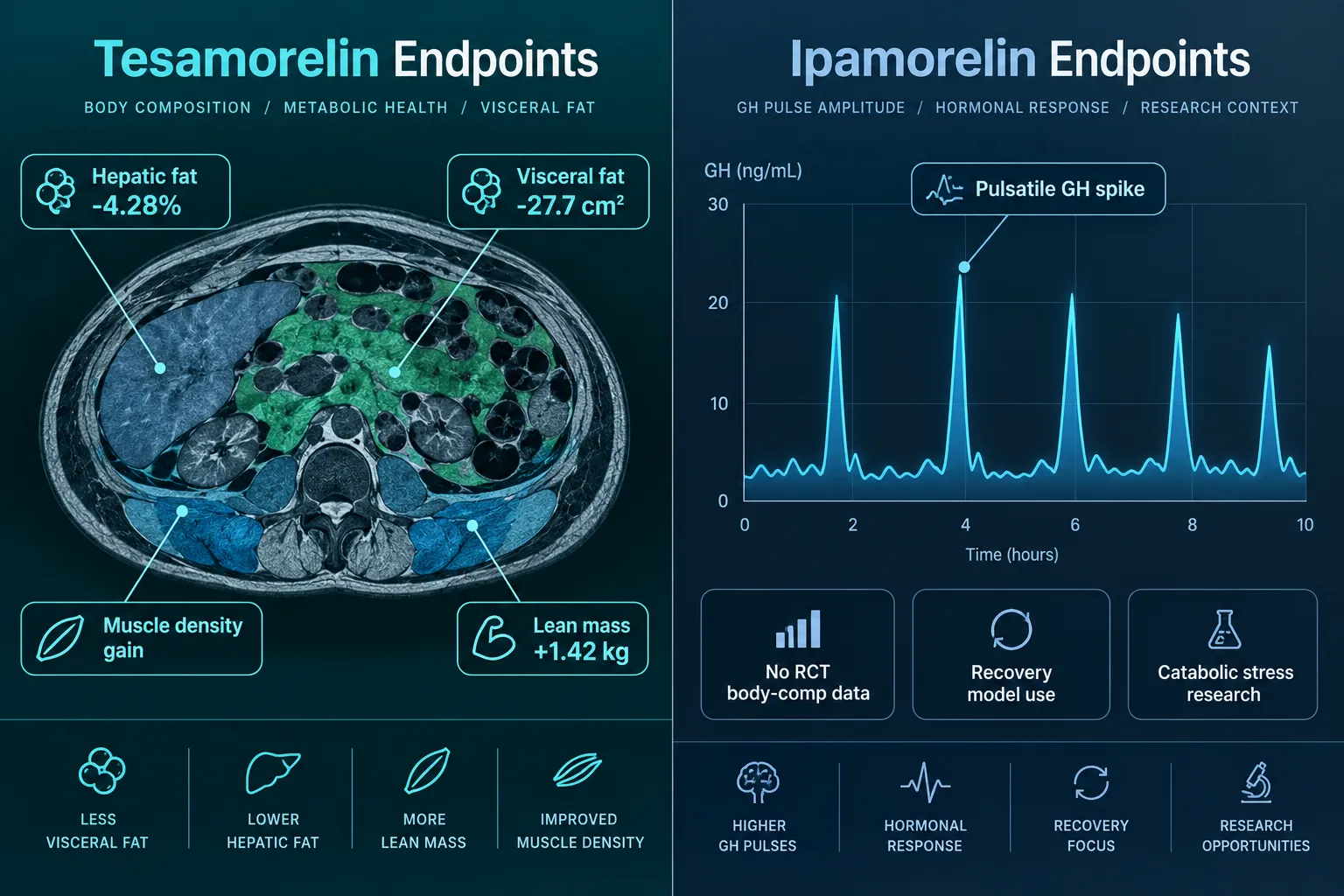
Downstream, both peptides elevate IGF-1, which serves as a practical shared endpoint. Tesamorelin's IGF-1 effects have been documented in Phase 3 clinical trials — including data from HIV-associated lipodystrophy studies showing measurable visceral adipose tissue (VAT) reduction via CT scan. Ipamorelin's IGF-1 elevation has been confirmed in preclinical models, though large-scale clinical quantification remains limited.

"The upstream receptor divergence between these two secretagogues does not prevent a shared downstream outcome — but it does mean the signaling routes, and therefore the research questions, are fundamentally different."


Preclinical Study Design: Applying the Tesamorelin and Ipamorelin Mechanism to Research Endpoints

Preclinical Study Design: Applying the Tesamorelin and Ipamorelin Mechanism to Research Endpoints

Understanding the Tesamorelin and Ipamorelin mechanism: how their growth-hormone signaling differs in research models has direct implications for study design.

Relevant preclinical endpoints include:

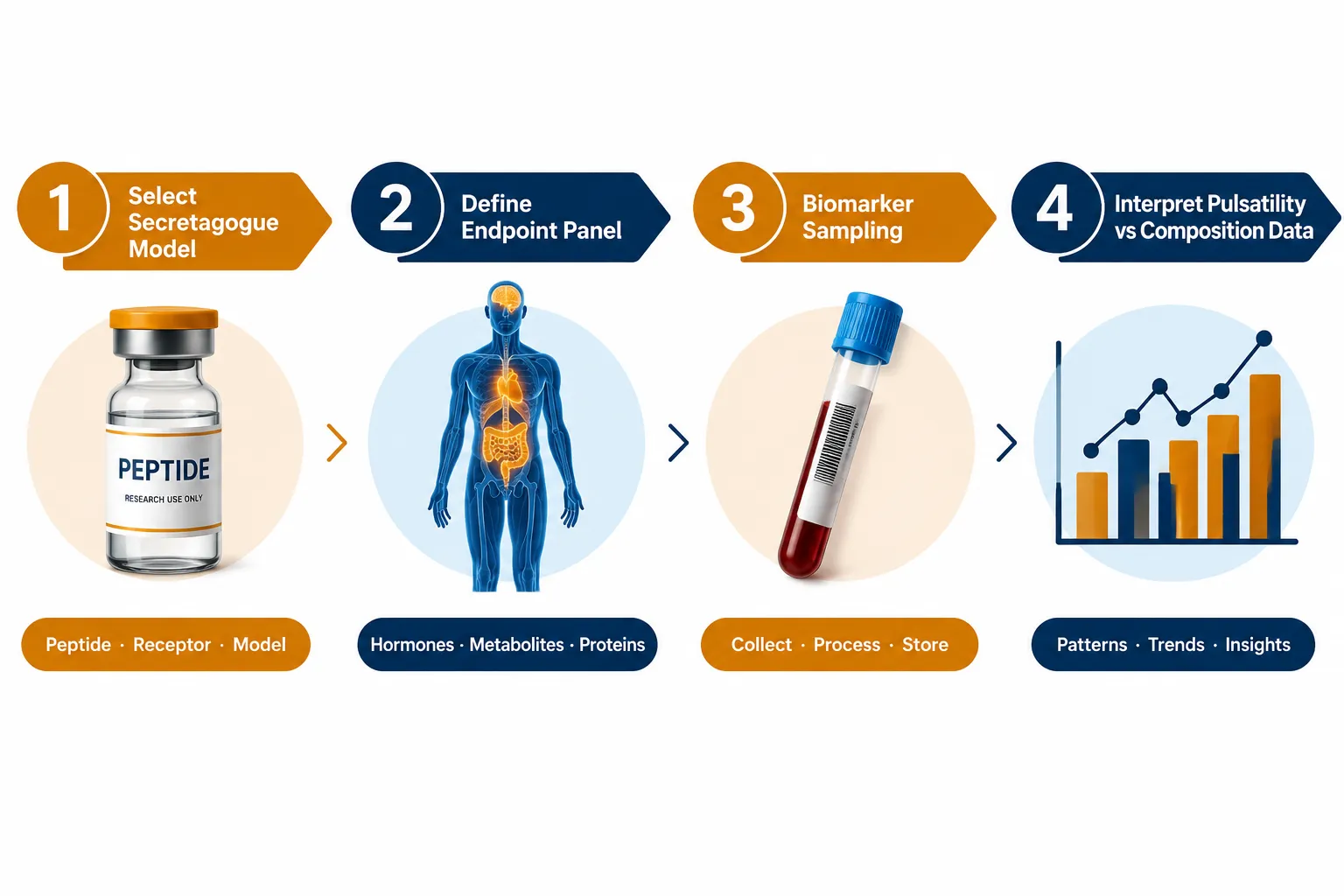
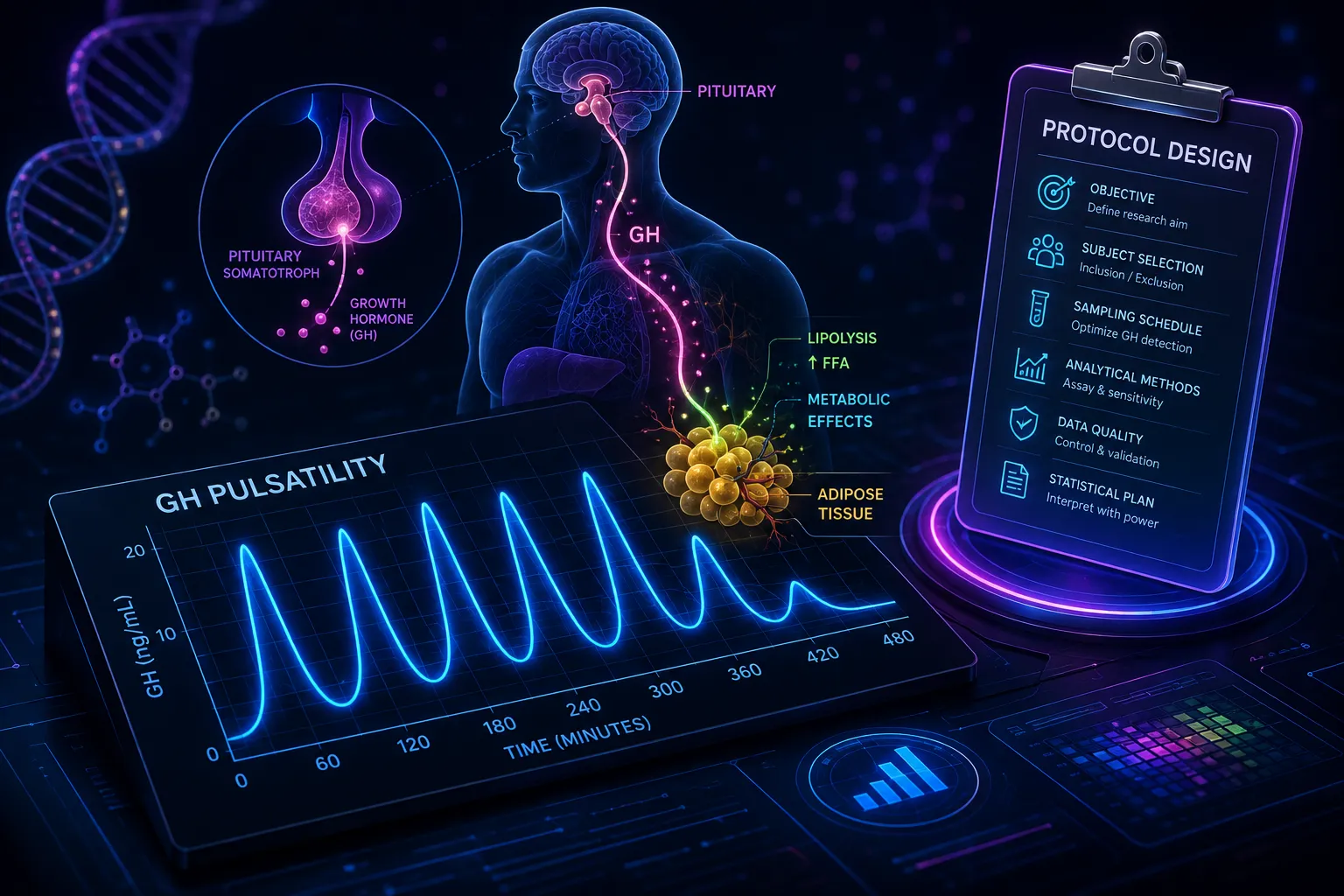
  • Serum GH pulse amplitude and frequency (assessed via serial blood sampling)
  • Plasma IGF-1 levels at defined intervals post-administration
  • Visceral fat mass via imaging or tissue dissection in rodent models
  • Cortisol and ACTH levels to confirm ipamorelin's hormonal selectivity
  • Muscle protein synthesis markers for anabolic pathway assessment

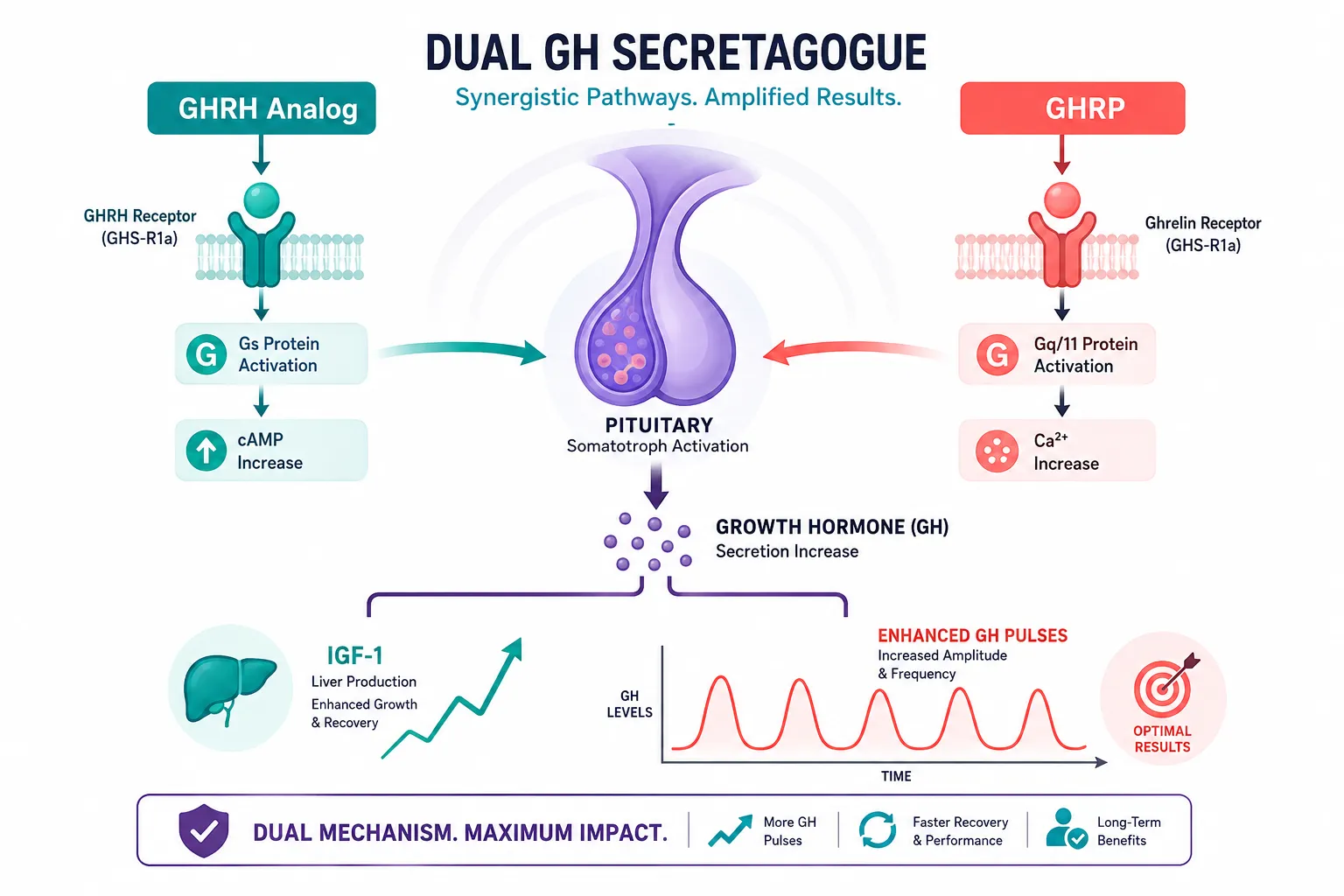
Because the two pathways are complementary — cAMP/PKA versus PLC/calcium — researchers have proposed dual-pathway designs that combine both compounds. The rationale is that simultaneous GHRHR and GHS-R1a activation may produce synergistic GH release exceeding what either compound achieves alone. Blended formulations explored in Tesamorelin, CJC-1295, and Ipamorelin combination research reflect this mechanistic logic.

Half-life differences also shape dosing interval decisions. Tesamorelin's shorter plasma stability (~25-40 minutes) suggests more frequent administration windows in acute models, while ipamorelin's approximately 2-hour half-life in animal pharmacokinetic studies supports less frequent dosing. Researchers reviewing CJC-1295 and ipamorelin combination dosing will find that pairing compounds with complementary half-lives is a common strategy to sustain GH elevation across a study window.

For broader context on metabolic peptide research, exploring metabolic modulation research lines provides useful comparative frameworks alongside GH secretagogue work.


Conclusion

The mechanistic contrast between tesa and ipamorelin is not a minor technical detail — it is the foundation of any rigorous research design involving these compounds. Tesamorelin drives GH release through GHRHR and cAMP/PKA signaling, preserving physiological pulsatility. Ipamorelin activates GHS-R1a and the PLC/calcium pathway, producing a selective GH pulse without hormonal side effects.

Actionable next steps for researchers:

  1. Define whether the study requires physiological GH pulsatility (favor tesa) or hormonal selectivity (favor ipamorelin) before choosing a compound.
  2. Use IGF-1 as a shared downstream biomarker while tracking pathway-specific markers (cAMP vs. intracellular calcium) to confirm receptor engagement.
  3. Consider dual-pathway designs when the research goal is maximal GH output, accounting for the complementary receptor systems.
  4. Align dosing intervals with each compound's half-life data from pharmacokinetic models to avoid under- or over-dosing in timed studies.
https://www.puretestedpeptides.com/wp-content/uploads/2026/06/Tesamorelin-and-Ipamorelin-Mechanism-How-Their-Growth-Hormone-Signaling-Differs-in-Research-Models.png 1024 1536 Pure Tested https://www.puretestedpeptides.com/wp-content/uploads/2026/01/buy-peptides-online.jpg Pure Tested2026-06-27 13:04:472026-07-20 15:02:03Tesamorelin and Ipamorelin Mechanism: How Their Growth-Hormone Signaling Differs in Research Models
CJC-1295 With and Without DAC: Peptide Structure, Half-Life, and Experimental GH/IGF-1 Dynamics

CJC-1295 With and Without DAC: Peptide Structure, Half-Life, and Experimental GH/IGF-1 Dynamics

June 4, 2026/0 Comments/by Pure Tested

A single structural modification — the addition of a maleimidopropionyl group — transforms a peptide with a 30-minute window of activity into one that remains active for nearly eight days. That is the pharmacological story at the heart of CJC-1295 with and without DAC: peptide structure, half-life, and experimental GH/IGF-1 dynamics, and it has significant implications for how researchers design growth hormone secretagogue protocols in vitro and in preclinical models.

Key Takeaways

  • CJC-1295 is a 30-amino-acid synthetic analog of growth hormone-releasing hormone (GHRH).
  • The Drug Affinity Complex (DAC) modification extends half-life from roughly 30 minutes to approximately 5.8-8.1 days via covalent albumin binding.
  • Without DAC (Modified GRF 1-29), the peptide requires more frequent dosing to sustain receptor stimulation.
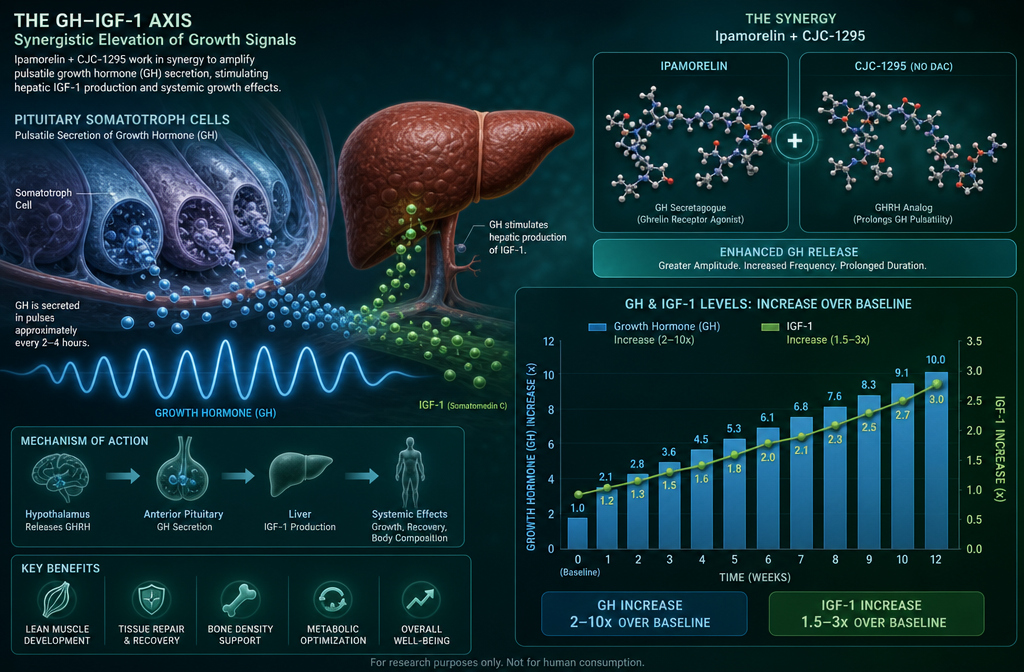
  • A single CJC-1295 with DAC injection can produce a 2- to 10-fold increase in plasma GH lasting up to six days.
  • Combining CJC-1295 with ghrelin mimetics such as ipamorelin produces synergistic GH release through complementary pathways.

Key Takeaways


Peptide Structure: How the DAC Modification Changes Everything

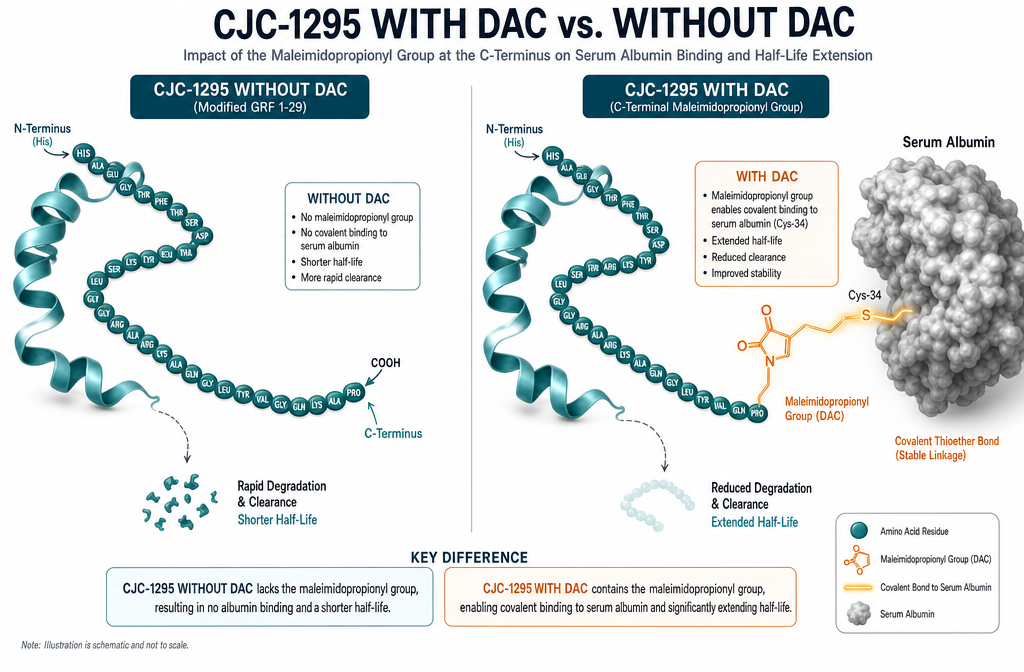
CJC-1295 is built on the first 29 amino acids of endogenous GHRH, with four strategic amino acid substitutions that resist enzymatic degradation. In its unmodified research form — commonly called Modified GRF (1-29) or CJC-1295 without DAC — the peptide retains high receptor affinity but is rapidly cleared from circulation.

The DAC version adds a maleimidopropionyl (MPA) bioconjugate to the peptide's C-terminus. This reactive group forms a covalent thioether bond with the free cysteine-34 residue on circulating serum albumin. Because albumin has a half-life of roughly 19 days and is too large to be filtered by the kidneys, the bound peptide is effectively shielded from proteolytic breakdown.

"The DAC modification does not alter receptor binding affinity — it changes how long the peptide survives long enough to bind."

This distinction matters for assay design. Researchers exploring CJC-1295 and ipamorelin combination protocols must account for whether the DAC form's prolonged presence will create sustained baseline GH stimulation or whether the pulsatile pattern of Modified GRF (1-29) better fits the experimental timeline.


Half-Life Comparison and Experimental Dosing Implications

The pharmacokinetic difference between the two forms is stark:

Form Common Name Approximate Half-Life Dosing Frequency
CJC-1295 with DAC DAC-GRF 5.8 – 8.1 days Once or twice weekly
CJC-1295 without DAC Modified GRF (1-29) ~30 minutes Multiple times daily

For context, other GHRH analogs fall well below even the without-DAC form: sermorelin has a half-life of 10-12 minutes, and tesa sits at approximately 30 minutes. Researchers can review tesa peptide benefits and pharmacology for a useful comparative baseline.

The without-DAC form is often preferred in protocols that require tight temporal control over GH pulses. Its short window allows researchers to time injections around specific assay windows, mimicking the body's natural ultradian GH rhythm. The DAC form, by contrast, produces a sustained elevation that is better suited to protocols measuring cumulative IGF-1 response over days.

For researchers building multi-peptide stacks, the sermorelin, ipamorelin, and CJC-1295 combination overview provides useful context on how different half-lives interact within the same protocol.

Half-Life Comparison and Experimental Dosing Implications


Experimental GH/IGF-1 Dynamics: What the Data Shows

Understanding CJC-1295 with and without DAC: peptide structure, half-life, and experimental GH/IGF-1 dynamics requires examining how each form drives the GH-IGF-1 axis differently.

CJC-1295 with DAC binds GHRH receptors on pituitary somatotroph cells and sustains that stimulation across days. Phase I clinical data shows a single injection can produce:

  • A 2- to 10-fold increase in mean plasma GH levels lasting up to six days
  • A 1.5- to 3-fold increase in IGF-1 levels persisting for nine to eleven days

Critically, this occurs while preserving pulsatile GH secretion — a key advantage over exogenous GH administration, which suppresses the natural feedback loop. Pulsatility is associated with more physiological receptor sensitivity and reduced tachyphylaxis risk.

CJC-1295 without DAC produces sharp, transient GH spikes that closely mirror endogenous GHRH pulses. This makes it valuable for experiments requiring acute GH measurements or when researchers want to avoid prolonged IGF-1 elevation between assay time points.

Synergistic combinations are a major area of interest. Pairing CJC-1295 with a ghrelin mimetic like ipamorelin activates two distinct receptor pathways — GHRH receptors and ghrelin receptors (GHS-R1a) — simultaneously. The result is GH output greater than either peptide alone. The CJC-1295 ipamorelin assay planning and sourcing checklist is a practical resource for structuring such experiments.

Phase I safety data indicates CJC-1295 is well-tolerated at doses of 30-60 mcg/kg, with mild injection site reactions and occasional headaches as the most commonly noted effects. As of 2026, the peptide remains unapproved for human therapeutic use across most jurisdictions and is classified as a research compound.

For researchers sourcing reference-grade material, the GH axis product line overview and sermorelin ipamorelin CJC-1295 dosage reference guide offer structured starting points. Lyophilized CJC-1295 should be stored at 2-8°C and, once reconstituted, used within 30 days.

Experimental GH/IGF-1 Dynamics: What the Data Shows


Conclusion

The DAC modification is not a minor refinement — it fundamentally redefines how CJC-1295 interacts with the GH-IGF-1 axis. Researchers designing protocols in 2026 should base their form selection on experimental objectives: choose the without-DAC form when temporal precision and pulsatile GH mimicry are priorities, and the DAC form when sustained IGF-1 elevation or infrequent dosing windows are required.

Actionable next steps for researchers:

  1. Define whether the assay requires acute GH spikes or sustained IGF-1 elevation before selecting a form.
  2. Consider pairing either form with ipamorelin to leverage synergistic GH secretagogue pathways.
  3. Verify peptide purity through certificates of analysis before initiating any in vitro or preclinical work.
  4. Store lyophilized stock at 2-8°C and track reconstitution dates to maintain compound integrity.
  5. Cross-reference the CJC-1295 product and research reference page for sourcing and specification details.

https://www.puretestedpeptides.com/wp-content/uploads/2026/06/CJC-1295-With-and-Without-DAC-Peptide-Structure-Half-Life-and-Experimental-GHIGF-1-Dynamics.png 672 1024 Pure Tested https://www.puretestedpeptides.com/wp-content/uploads/2026/01/buy-peptides-online.jpg Pure Tested2026-06-04 13:05:432026-07-20 15:04:07CJC-1295 With and Without DAC: Peptide Structure, Half-Life, and Experimental GH/IGF-1 Dynamics
×

Helpful Links

  • My account
  • Cart
  • Checkout
  • Refund and Returns Policy
  • Privacy Policy
  • SMS Privacy Policy
  • Login
  • My Account
  • Logout

USA Made Lab Tested Peptides

All products are sold for research, laboratory, or analytical purposes only, and are not for human consumption


Pure Tested Peptides is a chemical supplier. Pure Tested Peptides is not a compounding / chemical compounding facility as defined under 503A of the Federal Food, Drug, and Cosmetic act. Pure Tested Peptides is not an outsourcing facility as defined under 503B of the Federal Food, Drug, and Cosmetic act.

The statements made within this website have not been evaluated by the US Food and Drug Administration. The products we offer are not intended to diagnose, treat, cure or prevent any disease.

Human/Animal Consumption Prohibited. Laboratory/In-Vitro Experimental Use Only

Scroll to top Scroll to top Scroll to top