Tesamorelin and Ipamorelin: A Comparative Analysis of Their Mechanisms in Growth Hormone Secretion Research
Growth hormone deficiency affects an estimated 1 in 4,000 to 10,000 adults worldwide, yet the molecular tools researchers use to study GH axis modulation have grown far more precise than most realize. Two peptides sit at the center of this research landscape: Tesamorelin and Ipamorelin. A comparative analysis of their mechanisms in growth hormone secretion research reveals that these compounds work through fundamentally different receptor systems, signaling cascades, and downstream effects, making their distinction scientifically significant rather than merely academic.
Key Takeaways
- Tesamorelin is a synthetic GHRH analog that binds GHRH receptors and triggers cAMP/PKA signaling to stimulate pulsatile GH release.
- Ipamorelin is a selective GHS-R1a agonist that activates the Gq/11-PLC-calcium pathway to induce GH exocytosis.
- The two peptides operate through distinct receptor systems and intracellular cascades, making them complementary rather than interchangeable in research models.
- Tesamorelin holds FDA-approved status for HIV-associated lipodystrophy; Ipamorelin remains a research compound as of 2026.
- Combining both peptides in research protocols may amplify GH output by engaging two separate stimulatory pathways simultaneously.
Distinct Receptor Targets: The Foundation of Mechanistic Differences
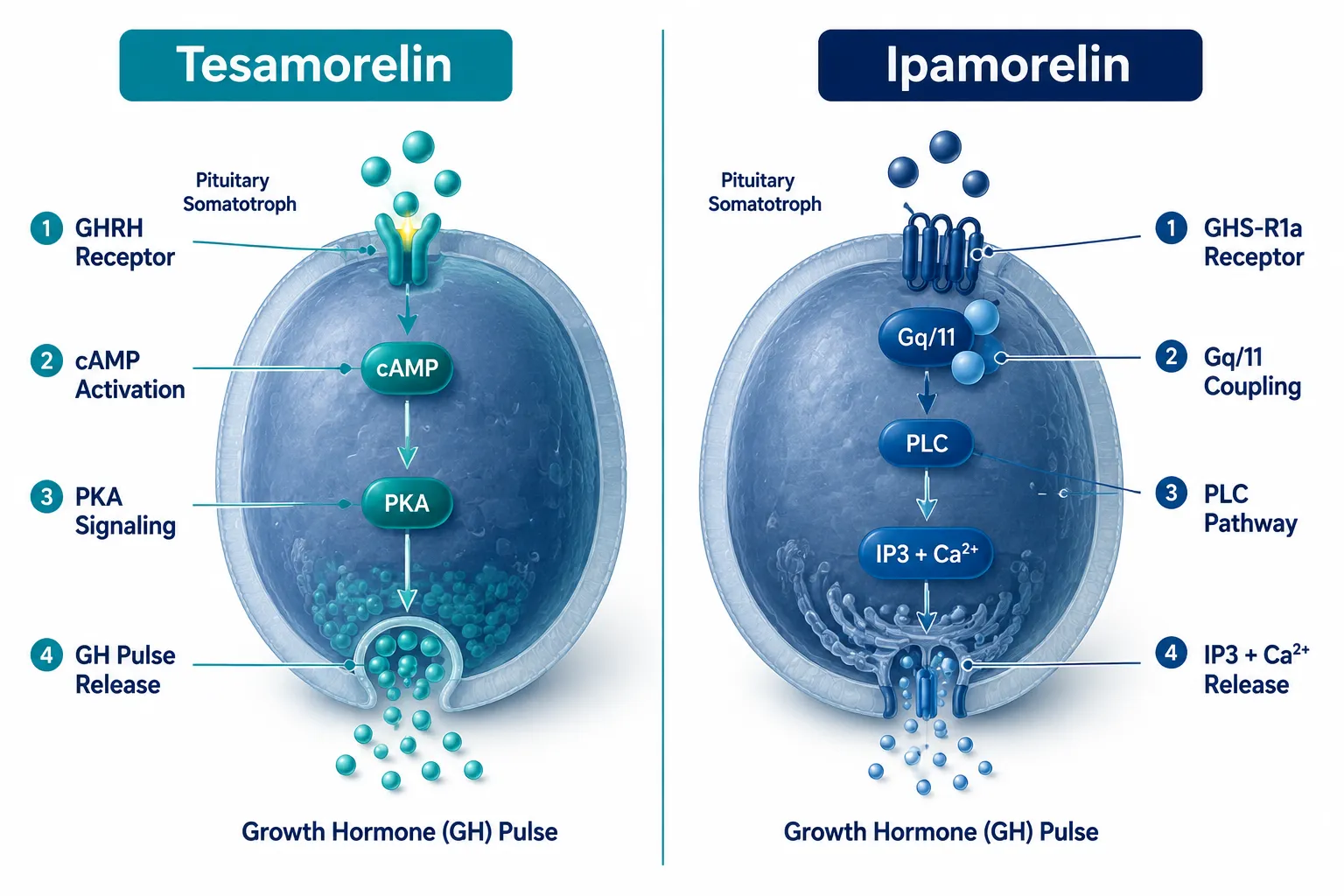
Understanding Tesamorelin and Ipamorelin through a comparative analysis of their mechanisms in growth hormone secretion research begins at the receptor level. These two peptides do not compete for the same binding site, they target entirely separate receptor classes on pituitary somatotroph cells.
Tesamorelin is a 44-amino acid synthetic analog of endogenous human growth hormone-releasing hormone (GHRH). It binds with high affinity to GHRH receptors (GHRH-R), which are G-protein-coupled receptors linked to the Gs alpha subunit. Once bound, the receptor activates adenylyl cyclase, elevating intracellular cyclic AMP (cAMP) levels. This rise in cAMP activates protein kinase A (PKA), which phosphorylates downstream targets that ultimately trigger GH gene transcription and secretion in a pulsatile pattern that mirrors the body's natural rhythm.
Ipamorelin, by contrast, is a synthetic pentapeptide and a selective agonist of the growth hormone secretagogue receptor subtype 1a (GHS-R1a), the same receptor that endogenous ghrelin activates. GHS-R1a couples to the Gq/11 protein, which activates phospholipase C (PLC). PLC cleaves phosphatidylinositol 4,5-bisphosphate into inositol trisphosphate (IP3) and diacylglycerol (DAG). IP3 then triggers calcium release from intracellular stores, and the resulting surge in intracellular calcium drives GH-containing vesicle exocytosis.
| Feature | Tesamorelin | Ipamorelin |
|---|---|---|
| Receptor target | GHRH-R | GHS-R1a |
| G-protein coupling | Gs | Gq/11 |
| Second messenger | cAMP | IP3 / Ca2+ |
| Signaling kinase | PKA | PLC / DAG |
| Structural class | 44-AA GHRH analog | Synthetic pentapeptide |
For researchers exploring Ipamorelin vs Tesamorelin in experimental models, this receptor divergence is the starting point for every downstream comparison.
Intracellular Signaling Cascades and GH Pulsatility
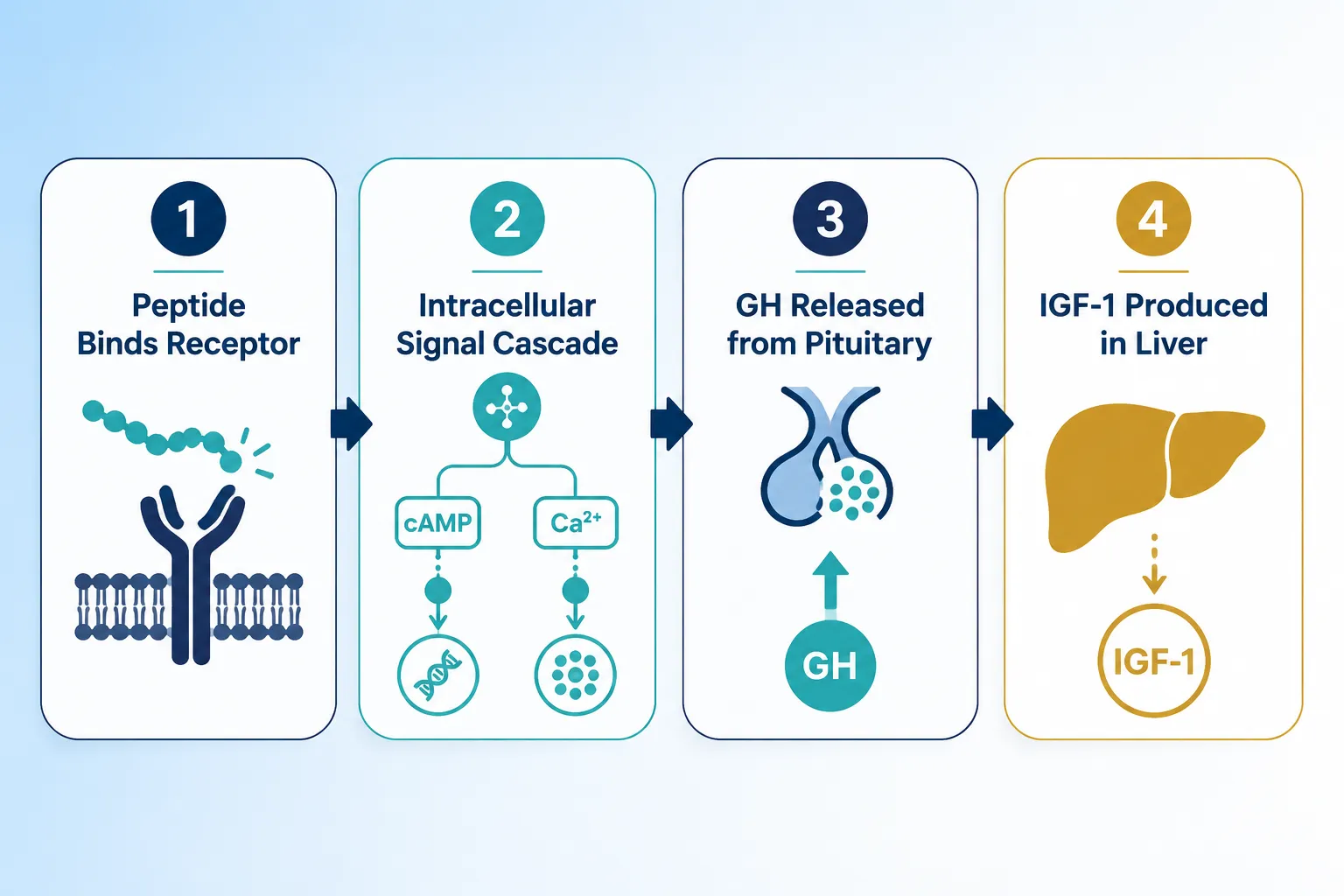
The intracellular pathways activated by each peptide produce meaningfully different GH secretion profiles, and this distinction matters for research design.
The cAMP/PKA pathway activated by Tesamorelin is closely aligned with the body's endogenous GHRH signaling. It supports the natural pulsatile architecture of GH release, bursts of secretion followed by troughs, which is important for maintaining physiological feedback sensitivity. Research on the science behind Tesamorelin consistently highlights this pulsatility as a defining feature.
The Gq/PLC/Ca2+ pathway activated by Ipamorelin operates on a slightly different temporal scale. Calcium-mediated exocytosis can be rapid and robust, but Ipamorelin's selectivity for GHS-R1a is a key research advantage. Unlike earlier-generation GH secretagogues such as GHRP-6, Ipamorelin produces minimal elevation in cortisol or prolactin at research-relevant doses. This selectivity makes it a cleaner tool for isolating GH axis effects.
"The mechanistic separation between GHRH-analog and ghrelin-receptor pathways is precisely what makes dual-peptide research protocols scientifically compelling."
When both pathways are engaged simultaneously, as studied in Tesamorelin CJC1295 Ipamorelin blend research, the synergistic effect on GH output is substantially greater than either compound alone. The cAMP arm primes somatotrophs while the calcium arm triggers rapid vesicle release, creating an amplified but still physiologically patterned secretion event.
Researchers examining CJC-1295 without DAC and half-life considerations in GH research will find similar half-life dynamics at play with Tesamorelin, which has a relatively short active window compared to DAC-modified analogs.
Downstream Effects, Regulatory Status, and Research Applications
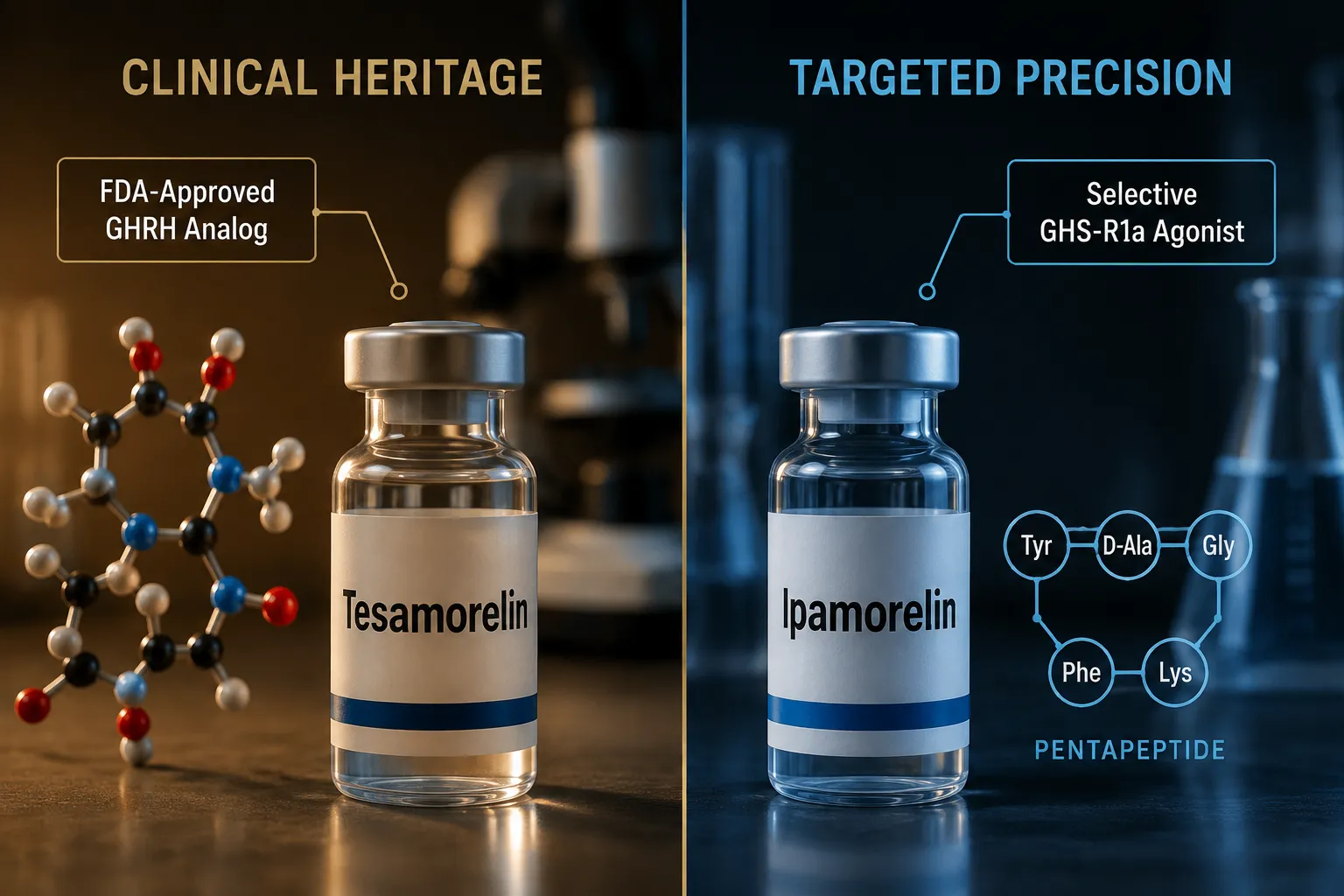
A thorough Tesamorelin and Ipamorelin comparative analysis of their mechanisms in growth hormone secretion research must extend beyond receptor binding to examine what happens after GH is released.
IGF-1 elevation is a shared downstream outcome. Both peptides stimulate pituitary GH secretion, which in turn drives hepatic production of insulin-like growth factor 1 (IGF-1). IGF-1 mediates many of GH's anabolic and metabolic effects, including lean mass support and lipid metabolism regulation. Researchers tracking Tesamorelin benefits note its well-documented effect on visceral adipose tissue reduction, an outcome directly tied to elevated GH and IGF-1 signaling.
Regulatory status as of 2026 differs sharply between the two:
- Tesamorelin (brand name Egrifta) holds FDA approval specifically for reducing excess abdominal fat in HIV-positive adults with lipodystrophy. This clinical validation provides a strong evidence base for its GHRH-mimetic mechanism.
- Ipamorelin remains a research compound with no current FDA-approved indication, used exclusively in preclinical and investigational contexts.
Researchers should also note that Tesamorelin side effects in clinical data include injection-site reactions and potential glucose metabolism changes, findings relevant to any research protocol design.
For those designing multi-peptide studies, the is it safe to combine Tesamorelin with Ipamorelin resource offers protocol-level considerations worth reviewing before initiating research.
Key research applications in 2026:
- Metabolic and adipose tissue studies (Tesamorelin-dominant protocols)
- Selective GH axis stimulation with minimal hormonal off-target effects (Ipamorelin-dominant protocols)
- Synergistic dual-pathway activation studies using blended formulations
- Age-related GH decline models examining somatotroph responsiveness
Conclusion
The mechanistic divergence between Tesamorelin and Ipamorelin is not a minor technical footnote, it defines how each compound fits into a research protocol and what questions each can answer. Tesamorelin replicates endogenous GHRH signaling through the cAMP/PKA axis, producing pulsatile GH release with strong clinical validation. Ipamorelin engages the ghrelin receptor pathway via Gq/PLC/calcium signaling, offering high selectivity and a clean hormonal profile.
Actionable next steps for researchers:
- Define the specific GH axis question before selecting a compound, receptor target determines the answer you can extract.
- Review half-life and dosing timing data for each peptide to align secretion peaks with measurement windows.
- Consider dual-pathway protocols when maximum GH output with physiological patterning is the research goal.
- Consult current regulatory guidance, as the status of research peptides continues to evolve in 2026.
- Source compounds from verified, tested suppliers to ensure purity and consistency across experimental runs.
Researchers who understand the mechanistic distinction between these two peptides are better positioned to design rigorous, reproducible studies that advance the broader science of hormone research.