Tesamorelin and Ipamorelin Mechanism: How GH-Releasing Peptides Differ in Research Models
{"cover":"Professional landscape format (1536×1024) hero image with bold text overlay (≤42 chars): 'GH Peptides: Tesamorelin vs Ipamorelin' in crisp white bold sans-serif on a deep navy semi-transparent overlay panel, centered with 8% safe margins from every edge. Background: stunning macro editorial photograph of two distinct molecular helix structures side by side, rendered in glowing teal and amber on a dark scientific gradient background, laboratory aesthetic with soft bokeh light particles, magazine cover quality, high contrast, biotech editorial style.","content":["Flat vector infographic illustration in landscape format (1536×1024): two distinct signaling pathway diagrams side by side on a clean white background, left pathway labeled 'GHRH Receptor' with cAMP and PKA cascade shown as clean arrows in deep blue tones, right pathway labeled 'Ghrelin Receptor' with Gq/PLC/IP3 and calcium wave icons in warm amber tones. Bold minimal icons, short 2-3 word labels only, bright clinical palette, save-worthy scientific education style, no tables, generous 8% safe margins.","Editorial split-screen landscape (1536×1024): left half shows a stylized pituitary gland illustration with rhythmic pulse wave lines in cool blue representing pulsatile GH release from GHRH stimulation; right half shows a warm amber-toned illustration of ghrelin receptor activation with calcium ion burst and downstream metabolic fat-cell icons. High-contrast dividing line down center, clean biotech magazine aesthetic, minimal 3-word labels only, no pricing or tables, varied composition from section 1.","Cinematic editorial photograph in landscape format (1536×1024): a focused female South Asian researcher in her 30s in a bright modern laboratory, examining a glowing digital screen displaying IGF-1 and GH pulse graphs with two distinct waveform patterns highlighted in blue and orange. Clean white lab coat, shallow depth of field, natural daylight from large windows, warm-cool contrast lighting, research-focused composition, magazine quality, no tables, 8% safe margins on any overlay text.","content":["prompt1","prompt2","prompt3"]}
Two peptides. One shared goal, stimulating growth hormone release. Yet the Tesamorelin and Ipamorelin mechanism diverges at the receptor level in ways that produce measurably different downstream effects in research models. Understanding that divergence is not a minor academic detail; it shapes how researchers design experiments, interpret IGF-1 data, and evaluate fat-related endpoints.
Key Takeaways
- Tesamorelin is a GHRH analog that activates the GHRH receptor via a cAMP/PKA signaling cascade, closely mimicking endogenous hypothalamic input.
- Ipamorelin is a ghrelin mimetic that activates the GHS-R1a receptor through a Gq/PLC/IP3-calcium pathway, a mechanistically distinct route.
- The two pathways produce different pulsatility profiles and downstream IGF-1 responses in preclinical models.
- Tesamorelin has a documented record in visceral fat reduction research; Ipamorelin is studied primarily for clean GH pulse amplification with minimal off-target hormone effects.
- Combining both peptides in research designs may engage complementary axes of GH secretion, a rationale explored in multi-peptide blend studies.
Core Receptor Biology: Where the Pathways Split
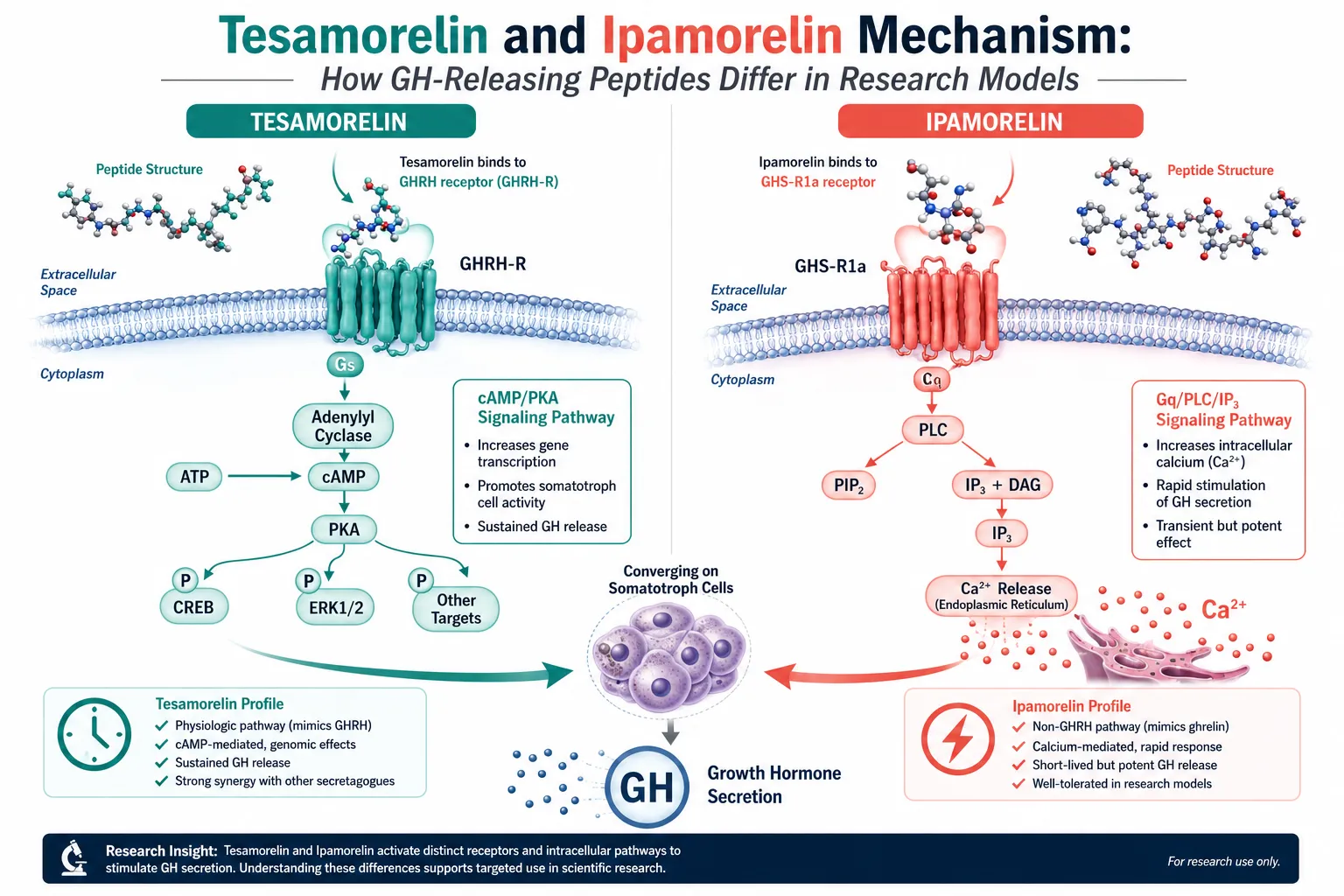
The Tesamorelin and Ipamorelin mechanism comparison begins at the receptor binding step, and the differences are fundamental.
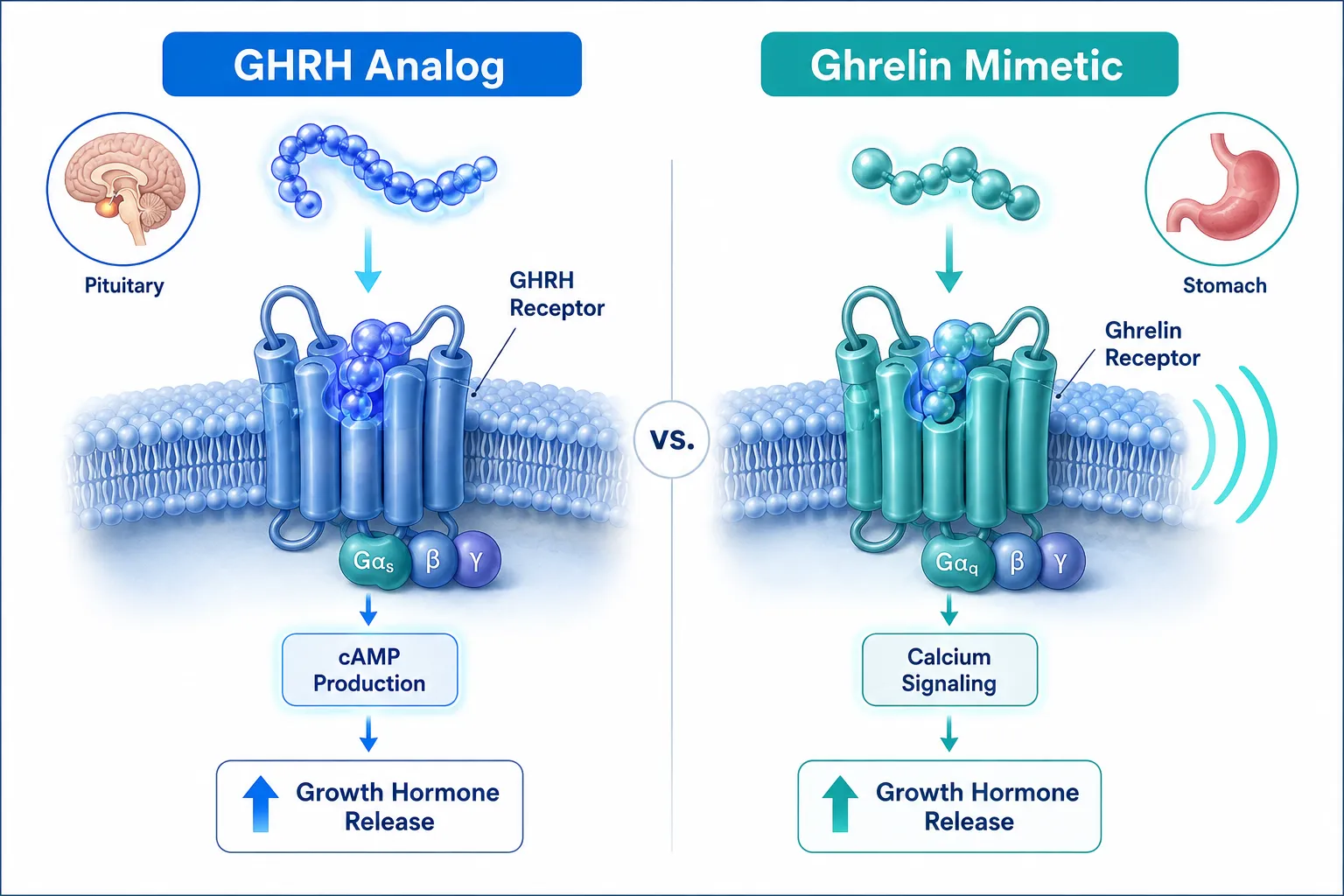
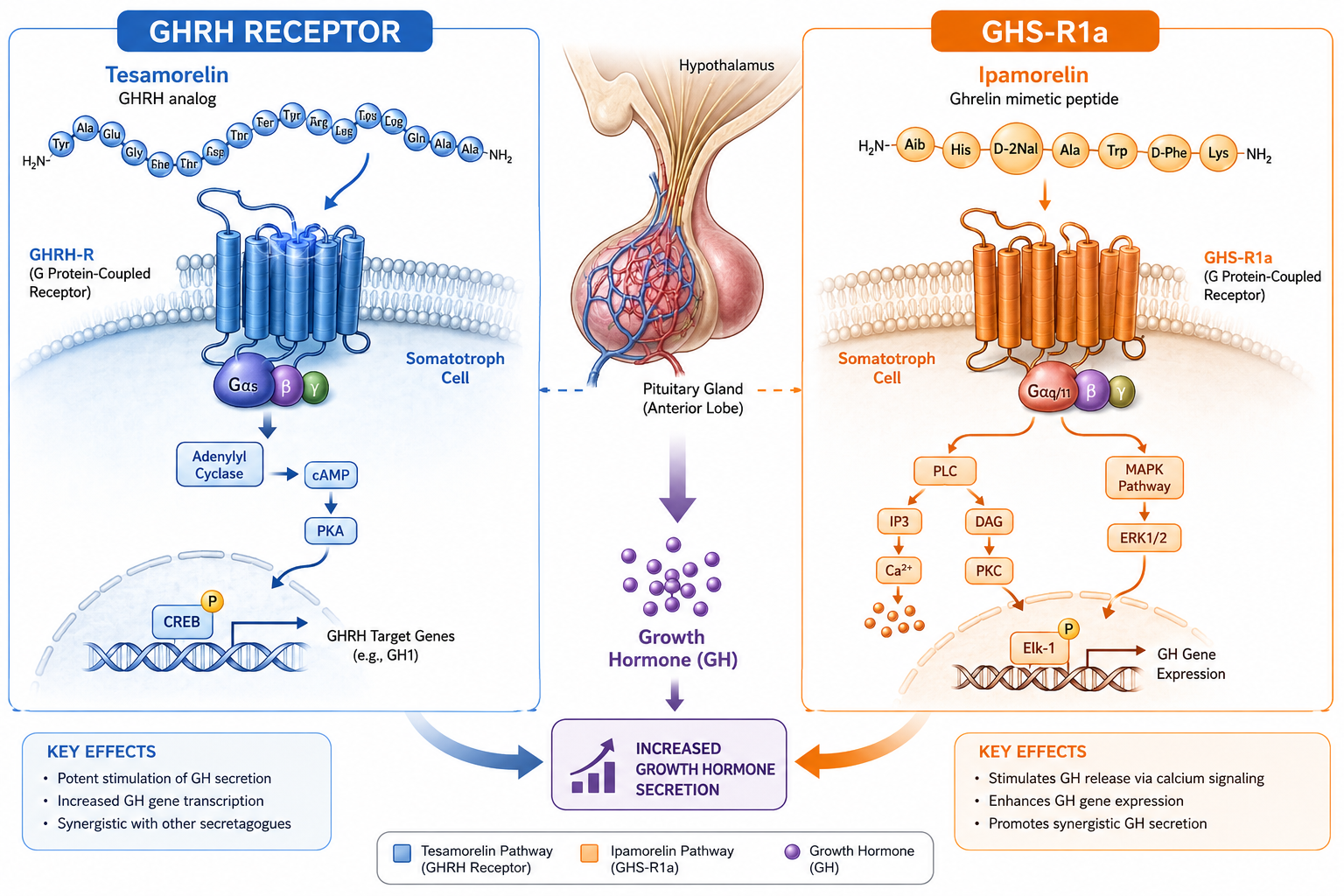
Tesamorelin is a stabilized synthetic analog of growth hormone-releasing hormone (GHRH). It binds selectively to the GHRH receptor (GHRHR) on somatotroph cells in the anterior pituitary. Activation of GHRHR couples to a Gs protein, which stimulates adenylyl cyclase to elevate intracellular cyclic AMP (cAMP). Elevated cAMP activates protein kinase A (PKA), which then phosphorylates transcription factors and ion channels that drive GH synthesis and secretion. This pathway closely mirrors the body's own hypothalamic signal.
Ipamorelin, by contrast, is a selective ghrelin receptor agonist, specifically targeting the growth hormone secretagogue receptor type 1a (GHS-R1a). This receptor couples to a Gq protein rather than Gs. Gq activates phospholipase C (PLC), which cleaves PIP2 into inositol trisphosphate (IP3) and diacylglycerol (DAG). IP3 triggers calcium release from intracellular stores, and the resulting calcium surge drives GH exocytosis from somatotroph granules.
| Feature | Tesamorelin | Ipamorelin |
|---|---|---|
| Receptor target | GHRHR | GHS-R1a |
| G-protein coupling | Gs | Gq |
| Second messenger | cAMP / PKA | IP3 / Ca²⁺ |
| Endogenous analog | GHRH | Ghrelin |
| Primary research focus | Visceral fat, IGF-1 | GH pulse amplitude |
For a broader look at how these and related peptides fit into GH-axis research design, the article on Tesamorelin and Ipamorelin peptides: mechanism, synergy, and growth hormone research design provides useful context.
Pulsatility, IGF-1 Profiles, and Fat-Related Endpoints
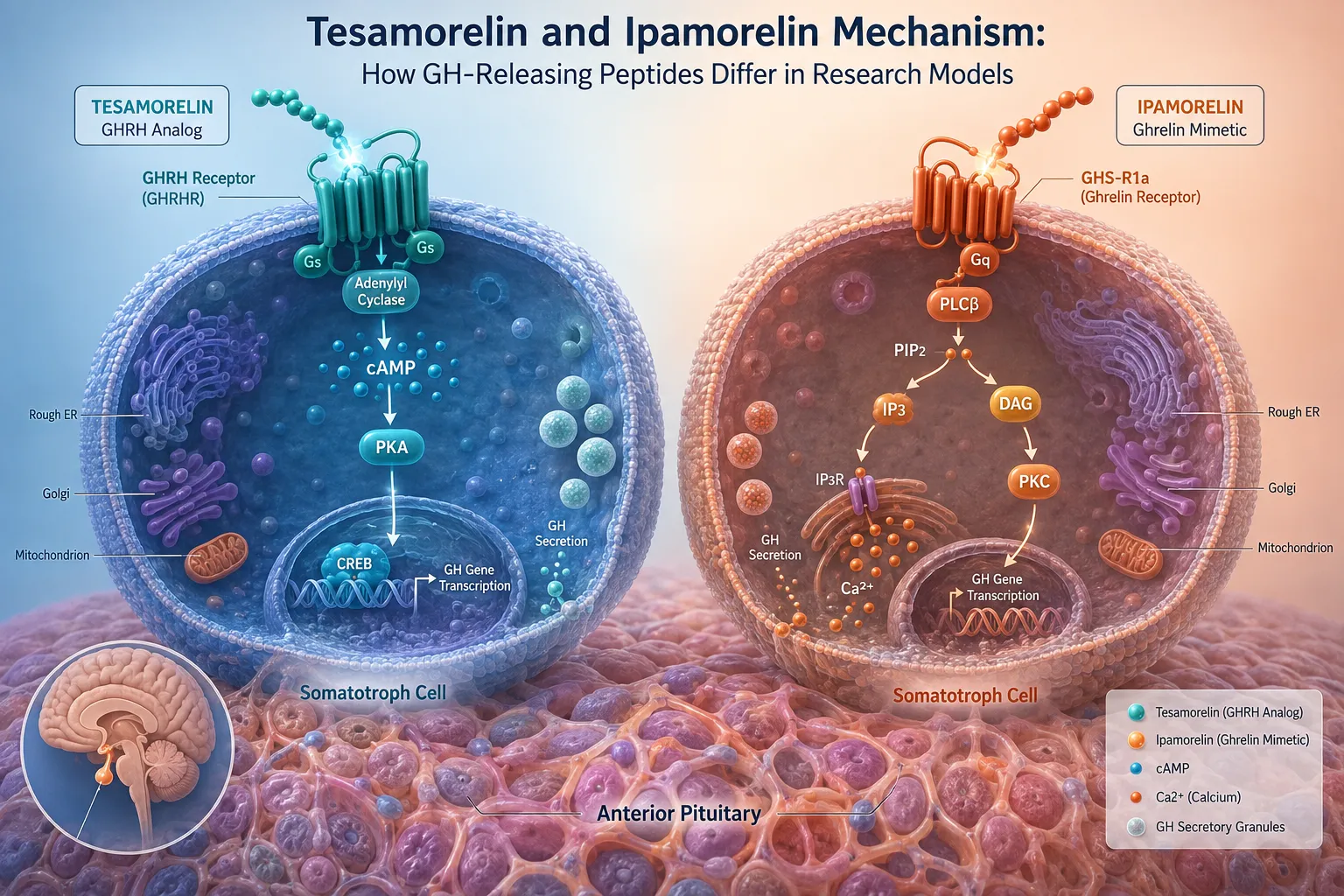
The signaling difference between cAMP/PKA and Gq/PLC/IP3-Ca²⁺ is not merely biochemical trivia. It translates into distinct patterns of GH secretion that researchers observe in animal models.
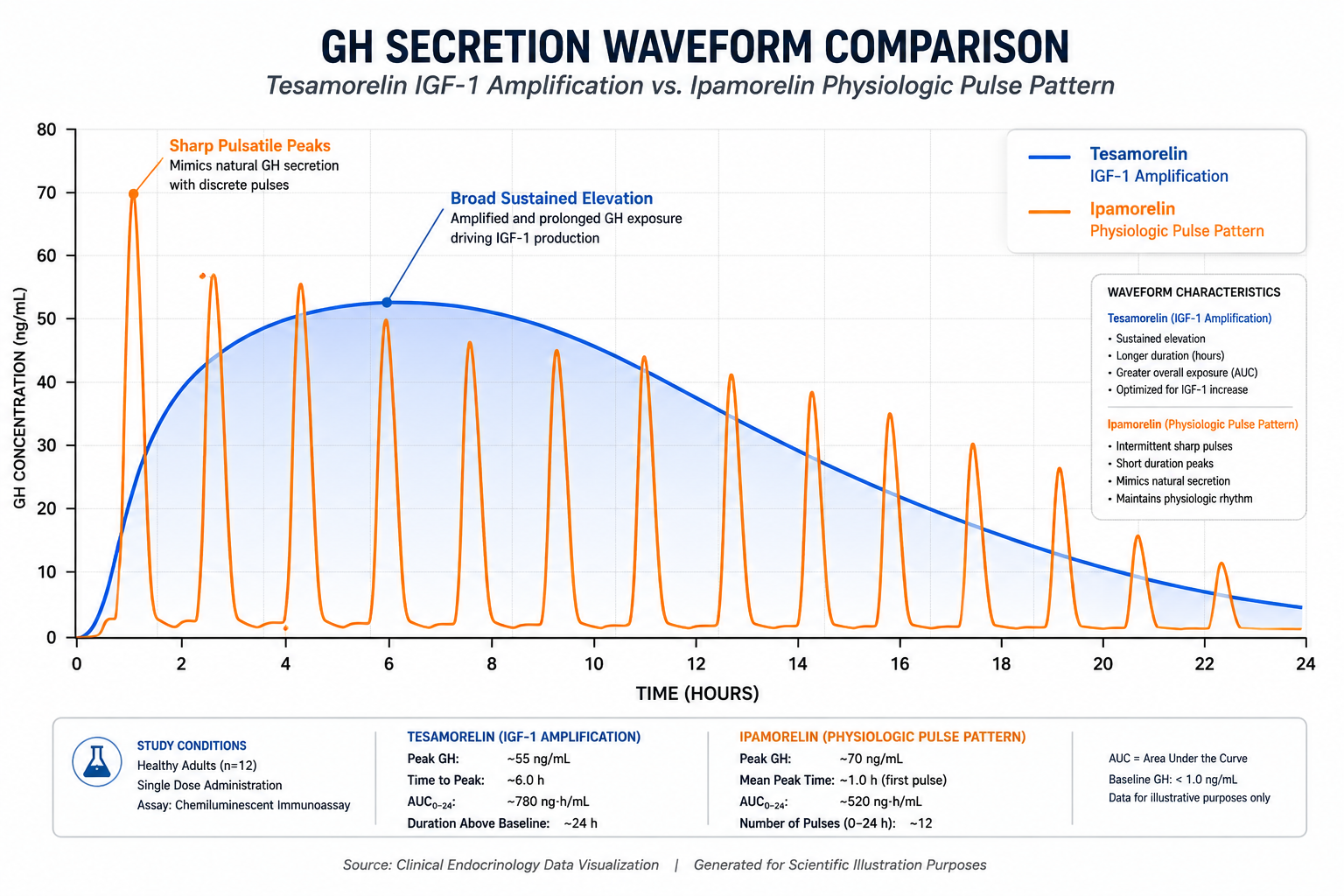
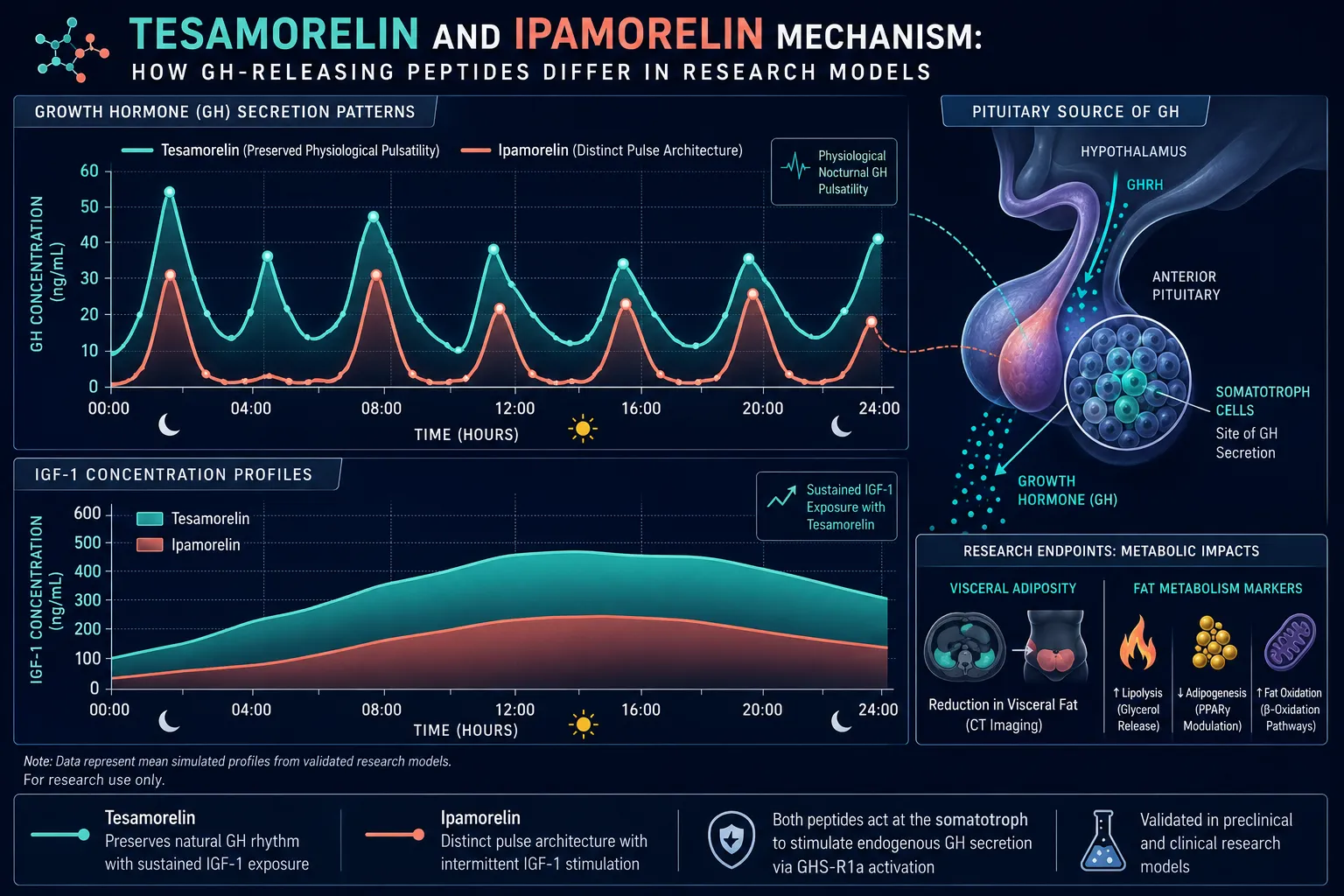
Pulsatile GH release is a physiologically critical feature. The pituitary does not secrete GH continuously; it releases it in discrete pulses. Tesamorelin, acting through the GHRH receptor, amplifies the natural pulsatile rhythm because it reinforces the same hypothalamic timing signal. Research models show that GHRH analogs tend to preserve the episodic architecture of GH release rather than flattening it into a tonic pattern.
Ipamorelin's ghrelin-receptor pathway adds a complementary but distinct stimulus. GHS-R1a activation can trigger GH release independently of the GHRH clock, effectively amplifying pulse height without necessarily altering pulse frequency in the same way. Importantly, Ipamorelin is noted in research for its selectivity, it does not significantly stimulate cortisol, prolactin, or ACTH at research-relevant concentrations, unlike older GH secretagogues such as GHRP-2. This makes it a cleaner tool for isolating GH-specific effects.
IGF-1 downstream effects differ accordingly. Because Tesamorelin closely mimics endogenous GHRH input, it tends to produce sustained IGF-1 elevation in models where the GH axis is intact. This sustained IGF-1 response is mechanistically linked to the visceral fat reduction endpoints that have made Tesamorelin one of the more studied GHRH analogs. Researchers interested in the science behind these effects can explore what Tesamorelin is and the science behind it for additional background.
Ipamorelin's IGF-1 profile in models tends to be robust but tied more directly to pulse amplitude than to tonic elevation, reflecting its role as a pulse amplifier rather than a rhythm synchronizer.
Key distinction: Tesamorelin drives GH secretion by reinforcing the hypothalamic clock signal. Ipamorelin drives it by pulling a separate calcium-dependent trigger at the somatotroph level. Both increase GH output, but through non-overlapping molecular events.
Research Design Implications: Choosing Between or Combining Both
Understanding the Tesamorelin and Ipamorelin mechanism difference has direct implications for how researchers structure their protocols.
When to study each compound separately:
- Use Tesamorelin when the research question centers on GHRH-receptor signaling, visceral adiposity models, or IGF-1-mediated anabolic endpoints.
- Use Ipamorelin when the goal is to study GHS-R1a pharmacology, clean GH pulse amplification, or selectivity relative to other pituitary hormones.
Rationale for combination approaches:
Because the two peptides act on different receptors through different second-messenger systems, they are not redundant. Activating both GHRHR and GHS-R1a simultaneously can produce additive or potentially synergistic GH release. This dual-axis rationale underlies multi-peptide research blends. Researchers exploring combination formats may find the Tesamorelin, CJC-1295, Ipamorelin 12mg blend dosing resource relevant to experimental design considerations.
For those comparing GHRH-class peptides more broadly, the Sermorelin vs Tesamorelin comparison and the Tesamorelin vs Sermorelin analysis offer additional mechanistic context on how different GHRH analogs behave.
Researchers working across the GH axis may also benefit from reviewing peptide mechanism fundamentals covering GLP-3 Retatrutide, CJC-1295, and MOTS-c to situate GH-releasing peptides within the broader landscape of receptor-level research.
Somatostatin tone matters. Both peptides operate within the context of endogenous somatostatin inhibition. Tesamorelin's efficacy depends partly on the prevailing somatostatin tone in the model; high somatostatin suppression can blunt GHRHR-driven cAMP responses. Ipamorelin is partially resistant to somatostatin inhibition because its calcium-dependent pathway is less sensitive to somatostatin's inhibitory mechanism, giving it a practical advantage in models with elevated somatostatin tone.
Conclusion
The Tesamorelin and Ipamorelin mechanism comparison reveals two peptides that share a functional output, increased GH secretion, while operating through entirely separate receptor systems and intracellular cascades. Tesamorelin drives the cAMP/PKA axis via GHRHR, preserving pulsatile rhythm and supporting sustained IGF-1 elevation relevant to visceral fat endpoints. Ipamorelin activates GHS-R1a through a calcium-dependent Gq pathway, amplifying GH pulse height with high hormonal selectivity.
For researchers working with GH-axis models in 2026, the actionable next steps are clear:
- Define the research question first. GHRH-receptor pharmacology calls for Tesamorelin; GHS-R1a selectivity studies call for Ipamorelin.
- Consider dual-axis designs when the goal is maximal GH output or when studying synergistic receptor interactions.
- Account for somatostatin tone in the model, as it differentially affects each compound's efficacy.
- Verify peptide purity before any mechanistic study, receptor-level research requires compounds with confirmed identity and minimal impurities.