Call or Text 727-513-9780
  • Shopping Cart Shopping Cart
    0Shopping Cart
Pure Tested Peptides | America's most trusted Peptides for sale online
  • Peptides for sale
    • Oral Peptides for sale
      • Peptide Capsules for sale
      • BPC 157 Capsules 1000mcg
      • SLU-PP-332 Capsules | 1000 mcg
      • 5-Amino-1MQ 50mg Capsules
      • Tesofensine 500mcg
    • All Peptides for sale
    • Peptide Sprays
      • BPC 157 Nasal Spray Kit
      • BPC-157 TB500 Nasal Spray Kit
      • Semax Nasal Spray 10mg
      • Selank – Nasal Spray Kit – 10mg
      • Epithalon 50MG Nasal Spray Kit
      • Ipamorelin 10mg Nasal Spray
      • Klow Nasal Spray (BPC-157 + TB-500 + GHK-Cu + KPV) | 80mg
      • Hulk Nasal Spray Tesa / Ipa Blend 6/3 MG
      • Klow Nasal Spray
      • NAD + 500 mg Nasal Spray
      • PT-141 Nasal Spray Kit
    • GHRH Peptides
      • Ipa Peptides
      • CJC-1295 Peptides
        • CJC-1295 with DAC 5 mg
        • CJC-1295 without DAC 5 mg
        • CJC-1295 Ipa 10mg
      • Tesa Peptides
        • Tesa Peptide
        • Tesa 20 mg
    • GHK-Cu Peptides
      • All GHK-Cu Peptides
      • GHK-Cu 100mg
      • KLOW Peptide Blend – Buy KLOW blend online
    • BPC Peptides
      • All BPC Peptides
      • BPC-157
      • BPC-157 TB-500
      • BPC 157 capsules 1000mcg
    • SLU-PP-332 Peptides
      • All SLU-PP-332 Peptides
      • SLU-PP-332 5mg
    • GLP3 Peptides
      • GLP3-R
      • GLP3-R CAG 10mg
      • GLP3-R 20mg
    • PT-141 Peptides
      • PT-141 Peptides for sale
      • PT-141 10mg
      • PT-141 Nasal Spray
    • CAG Peptides
      • Lipo-C Peptide Blend
      • CAG 5mg
      • CAG 10mg
    • MOTS-C Peptides
      • MOTS-C Peptides for sale
      • MOTS-c peptide
      • MOTS-c 10mg *6 pack*
    • 5 Amino 1MQ Peptides
      • 5 Amino 1MQ Peptides for sale
      • 5-Amino-1MQ 50mg Capsules
      • 5-Amino-1MQ 5mg
    • Epithalon Peptides
      • Epithalon Peptides for sale
      • Epithalon 10mg
      • Epithalon 50mg
  • Shop
    • GLPs
      • 5-Amino-1MQ 50mg Capsules
      • 5-Amino-1MQ 5mg
      • GLP3-Reta
      • L-Carnitine 500mg/ml
      • Tesofensine 500mcg
      • SLU-PP-332 5mg
      • MOTS-c 10mg *6 pack*
    • Epithalon & BPC Peptides
      • Epithalon 10mg
      • Epithalon 50mg
      • BPC-157
      • BPC 157 capsules 1000mcg
      • BPC-157 TB-500
      • BPC-157 TB500 Nasal Spray Kit
      • BPC 157 Nasal Spray Kit
    • BPC TB-500 & NAD+ Peptides
      • NAD+ 500 mg
      • KLOW Peptide Blend – Buy KLOW blend online
      • GLOW Peptide Blend
      • TB 500 5mg
      • BPC 157 capsules 1000mcg – Supplement
      • BPC 157 Nasal Spray Kit
      • BPC-157
      • BPC-157 TB500 Nasal Spray Kit
      • BPC-157 TB-500
      • BPC 157 capsules 1000mcg
    • LL-37 Peptide
      • LL-37 10 mg
    • MOTS-C & Selank
      • MOTS-c peptide
      • Selank 10mg
    • GHK Peptides
      • GHK-Cu 100mg
      • GLOW Peptide Blend
      • KLOW Peptide Blend – Buy KLOW blend online
  • COAs
  • Wholesale
    • Wholesale Peptides for sale
  • PTP FAQ
  • Affiliates
    • Selank Peptide: Advanced Pharmacological Mechanisms Underlying Its Anxiolytic and Nootropic Effects in Research
      • 5-Amino-1MQ Peptide: Detailed Mechanisms of NNMT Inhibition and Its Impact on Cellular Metabolism Research
        • MOTS-C Peptide: Unraveling Its Role in Mitochondrial Dynamics and Energy Metabolism Research
          • Epithalon Peptide and Telomerase Regulation: Investigating Its Impact on Cellular Senescence and Lifespan Research Models
            • GLP2-T vs GLP2 Tirz Peptide: Understanding the Naming, Mechanistic Nuances, and Research Implications for Gut Health
      • Peptides and Polypeptides in Modern Pharmacology: What Research on Metoprolol, Prednisone, and Amlodipine Reveals
        • Polypeptide Peptides vs NSAIDs: What Naproxen and Diclofenac Teach Tissue-Repair Researchers About BPC‑157 and TB‑500
          • Peptides and Polypeptides in Endocrine Pharmacology: How GLP-1, GLP-2, and GLP-3 Retatrutide Differ From Classic Drugs Like Prednisone and Amlodipine
          • 5‑Amino‑1MQ Peptide and NNMT Inhibition: How It Compares With Statins Like Atorvastatin in Adipose and Lipid Metabolism Research
      • Enclomiphene, Estrogen Receptor Signaling, and Luteinizing Phase Biology: What Hormone Researchers Should Measure
        • Mesenchymal Stem Cells, BPC‑157, and GHK‑Cu: How Tissue Repair Peptides Compare With Classic NSAIDs Like Naproxen in Injury Models
          • Peptide Calculator Use Cases Beyond Growth Hormone: Working Through GLP‑3 Retatrutide, MOTS‑c, and BPC‑157 Research Dosing
        • Polypeptide Peptides in Endocrine and Metabolic Pharmacology: Lessons From Amlodipine, Prednisone, and Metoprolol
        • Peptides Calculator for Advanced Blends: Worked Examples for Tesamorelin, CJC‑1295, and Ipamorelin Stacks
          • Peptides and Polypeptides in Human Physiology: How Molecular Size Shapes Research Applications
            • Selank Peptide: Advanced Pharmacological Mechanisms Underlying Its Anxiolytic and Nootropic Effects in Research
          • 5-Amino-1MQ Peptide: Detailed Mechanisms of NNMT Inhibition and Its Impact on Cellular Metabolism Research
            • MOTS-C Peptide: Unraveling Its Role in Mitochondrial Dynamics and Energy Metabolism Research
              • Epithalon Peptide and Telomerase Regulation: Investigating Its Impact on Cellular Senescence and Lifespan Research Models
                • GLP2-T vs GLP2 Tirz Peptide: Understanding the Naming, Mechanistic Nuances, and Research Implications for Gut Health
                  • Peptides and Polypeptides in Endocrine Pharmacology: How GLP-1, GLP-2, and GLP-3 Retatrutide Differ From Classic Drugs Like Prednisone and Amlodipine
                    • Polypeptide Peptides vs NSAIDs: What Naproxen and Diclofenac Teach Tissue-Repair Researchers About BPC‑157 and TB‑500
                      • Peptides and Polypeptides in Modern Pharmacology: What Research on Metoprolol, Prednisone, and Amlodipine Reveals
                        • 5‑Amino‑1MQ Peptide and NNMT Inhibition: How It Compares With Statins Like Atorvastatin in Adipose and Lipid Metabolism Research
                        • Enclomiphene, Estrogen Receptor Signaling, and Luteinizing Phase Biology: What Hormone Researchers Should Measure
                        • Mesenchymal Stem Cells, BPC‑157, and GHK‑Cu: How Tissue Repair Peptides Compare With Classic NSAIDs Like Naproxen in Injury Models
                        • Peptide Calculator Use Cases Beyond Growth Hormone: Working Through GLP‑3 Retatrutide, MOTS‑c, and BPC‑157 Research Dosing
                        • Polypeptide Peptides in Endocrine and Metabolic Pharmacology: Lessons From Amlodipine, Prednisone, and Metoprolol
                        • Peptides Calculator for Advanced Blends: Worked Examples for Tesamorelin, CJC‑1295, and Ipamorelin Stacks
                        • Peptides and Polypeptides in Human Physiology: How Molecular Size Shapes Research Applications
                        • Selank Peptide: Advanced Pharmacological Mechanisms Underlying Its Anxiolytic and Nootropic Effects in Research
                        • MOTS-C Peptide: Unraveling Its Role in Mitochondrial Dynamics and Energy Metabolism Research
                        • Peptides and Polypeptides in Modern Pharmacology: What Research on Metoprolol, Prednisone, and Amlodipine Reveals
                        • Peptides and Polypeptides in Endocrine Pharmacology: How GLP-1, GLP-2, and GLP-3 Retatrutide Differ From Classic Drugs Like Prednisone and Amlodipine
                        • 5-Amino-1MQ Peptide: Detailed Mechanisms of NNMT Inhibition and Its Impact on Cellular Metabolism Research
                        • Mesenchymal Stem Cells, BPC‑157, and GHK‑Cu: How Tissue Repair Peptides Compare With Classic NSAIDs Like Naproxen in Injury Models
                        • Peptide Calculator Use Cases Beyond Growth Hormone: Working Through GLP‑3 Retatrutide, MOTS‑c, and BPC‑157 Research Dosing
                        • GLP2-T vs GLP2 Tirz Peptide: Understanding the Naming, Mechanistic Nuances, and Research Implications for Gut Health
                        • Polypeptide Peptides in Endocrine and Metabolic Pharmacology: Lessons From Amlodipine, Prednisone, and Metoprolol
                        • Polypeptide Peptides vs NSAIDs: What Naproxen and Diclofenac Teach Tissue-Repair Researchers About BPC‑157 and TB‑500
                        • Peptides and Polypeptides in Human Physiology: How Molecular Size Shapes Research Applications
                        • Peptides Calculator for Advanced Blends: Worked Examples for Tesamorelin, CJC‑1295, and Ipamorelin Stacks
                        • 5‑Amino‑1MQ Peptide and NNMT Inhibition: How It Compares With Statins Like Atorvastatin in Adipose and Lipid Metabolism Research
                        • Enclomiphene, Estrogen Receptor Signaling, and Luteinizing Phase Biology: What Hormone Researchers Should Measure
                        • Epithalon Peptide and Telomerase Regulation: Investigating Its Impact on Cellular Senescence and Lifespan Research Models
                        • Best research protocol Klow blend
                        • best time to take BPC-157
                        • best time to take DSIP (Delta Sleep Inducing Peptide)
                        • best time to take CJC-1295
                        • best time to take AOD-9604
                        • best time to take Follistatin 344
                        • best time to take Ipamorelin
                        • best time to take MK-677 (Ibutamoren)
                        • best time to take Ligandrol (LGD-4033) — research compound
                        • best time to take Ostarine (MK-2866) — research compound
                        • best time to take GHK-CU
                        • best time to take TB-500
                        • best time to take MOTS-c
                        • best time to take Semax
                        • best time to take RAD-140 (Testolone) — research compound
                        • best time to take Thymosin Alpha-1
                        • best time to take PEG-MGF
                        • Biolife Plasma, Octapharma Plasma, and Research Peptides: How Plasma Donation Labs Differ From Peptide Suppliers
                        • best time to take YK-11 — research compound
                        • best time to take PT-141 (Bremelanotide)
                        • Best research protocol Klow blend
                        • 5-Amino-1MQ and MOTS-C Synergy: Metabolic Signaling, Mitochondria, and Research Design
                        • BPC-157 and TB-500: Investigating Their Combined Effects on Angiogenesis and Cellular Migration in Tissue Repair Models
                        • BPC-157 Peptide: Gut Barrier Function, Inflammation, and Tissue-Recovery Research
                        • 5‑Amino‑1MQ and MOTS‑c Synergy in Metabolic Research: Designing NNMT and Mitochondrial Biogenesis Stacks
                        • CJC-1295 with DAC vs. Without DAC: Half-Life, Release Kinetics, and Research Implications
                        • CJC‑1295 with DAC vs. Without DAC: Expanding on Half‑Life Differences Using Tesamorelin and Ipamorelin Blend Case Studies
                        • Collagen Biology and Copper‑Binding Peptides: How GHK‑Cu, Glow Blend, and Klow Blend Interact with Skin and Connective Tissue
                        • Collagen Biology and Regenerative Peptides: How GHK‑Cu, Glow Blend, and Klow Blend Affect Extracellular Matrix Research
                    • DNA, Telomeres, and Longevity Peptides: Positioning Epithalon and MOTS‑c in Genetic Aging Research
                      • Enclomiphene Citrate: serm Mechanism, Testosterone Research, and Stack Compatibility
                        • Enclomiphene vs Enclomiphene Citrate: Formulation, Bioavailability, and Research Distinctions
                        • Epithalon Peptide Research: Telomerase Activation, Aging, and Pineal Gland Function
                        • Estrogen Receptor Signaling and Enclomiphene: How Selective Modulators Compare with Classic Polypeptide Hormones
                        • GHK-Cu Peptide: Advanced Mechanisms in Extracellular Matrix Remodeling and Wound Healing Research
                        • GHK-Cu Peptide: Collagen Synthesis, Wound Repair, and Skin-Barrier Research Models
                        • GLP-1 vs GLP-3 vs GLP-2: Peptide Classification and Research Applications
                        • GLP-2 Peptide Research Guide: Gut Barrier Function, Nutrient Absorption, and Intestinal Recovery Models
                        • GLP-3 Retatrutide vs. GLP-1 Drugs: What Triple-Agonist Biology Changes in Research Models
                        • Ipamorelin and Tesamorelin Combination: Synergistic GH Secretagogue Research and Dosing Protocols
                        • GLP2 Tirz Peptide: What It Is, Why the Name Exists, and How Researchers Should Interpret It
                        • Klow Blend Peptide Nasal Spray: What the Formulation Is Trying to Do in Cognitive Research
                        • Mitochondria, NNMT Inhibition, and Peptide Modulators: Where MOTS‑c and 5‑Amino‑1MQ Fit in Cellular Energy Research
                        • MOTS-c Peptide: Mitochondrial Function, Energy Metabolism, and What Researchers Measure
                        • MOTS-c vs. 5-Amino-1MQ: Which Metabolic Research Questions Each Compound Actually Answers
                        • Nasal Spray Peptides: Bioavailability, Administration, and Semax/Selank Research Applications
                        • PT-141 Peptide Research: Mechanism of Action and Melanocortin Receptor Signaling
                        • Retatrutide for Research: Mechanism, Structure, and GLP-1/GLP-3 Dual Action
                        • Retatrutide for Obesity and Type 2 Diabetes: What the Latest Trial Data Suggest
                        • Tesofensine Peptide Research: Mechanism, Appetite Suppression, and Neuropeptide Y Pathways
  • Contact
    • Contact Customer Service
    • Text Customer Support
  • About US
  • Shop all peptides
  • Affiliate Program
    • Affiliate Signup
  • Login / Register Login / Register Page Link Login / Register Page Link
  • Click to open the search input field Click to open the search input field Search
  • Menu Menu

Tag Archive for: ghsr1a receptor

Peptides in Basic Cell Biology: How GLP-3, GLP-2-T, and Growth Hormone Secretagogues Interact With Animal and Plant Cells

Peptides in Basic Cell Biology: How GLP-3, GLP-2-T, and Growth Hormone Secretagogues Interact With Animal and Plant Cells

September 3, 2026/0 Comments/in Uncategorized/by

Fewer than five years ago, the concept of a single peptide activating three distinct hormone receptors simultaneously existed only in theoretical pharmacology. Today, the study of peptides in basic cell biology, how GLP-3, GLP-2-T, and growth hormone secretagogues interact with animal and plant cells, sits at the center of metabolic research, driving some of the most consequential findings in endocrine science and preclinical investigation.

Key Takeaways

  • GLP-3 is not a naturally occurring hormone but an informal label for synthetic triple agonist peptides such as retatrutide, which simultaneously activates GLP-1R, GIPR, and glucagon receptors in animal cells.
  • GLP-2-T refers to tirzepatide-class dual incretin peptides that target GLP-1R and GIPR, reshaping signaling in pancreatic, hepatic, and neuronal cell populations.
  • Growth hormone secretagogues act through the GHSR1a receptor, a seven-transmembrane GPCR found in pituitary, hypothalamic, and other vertebrate tissues.
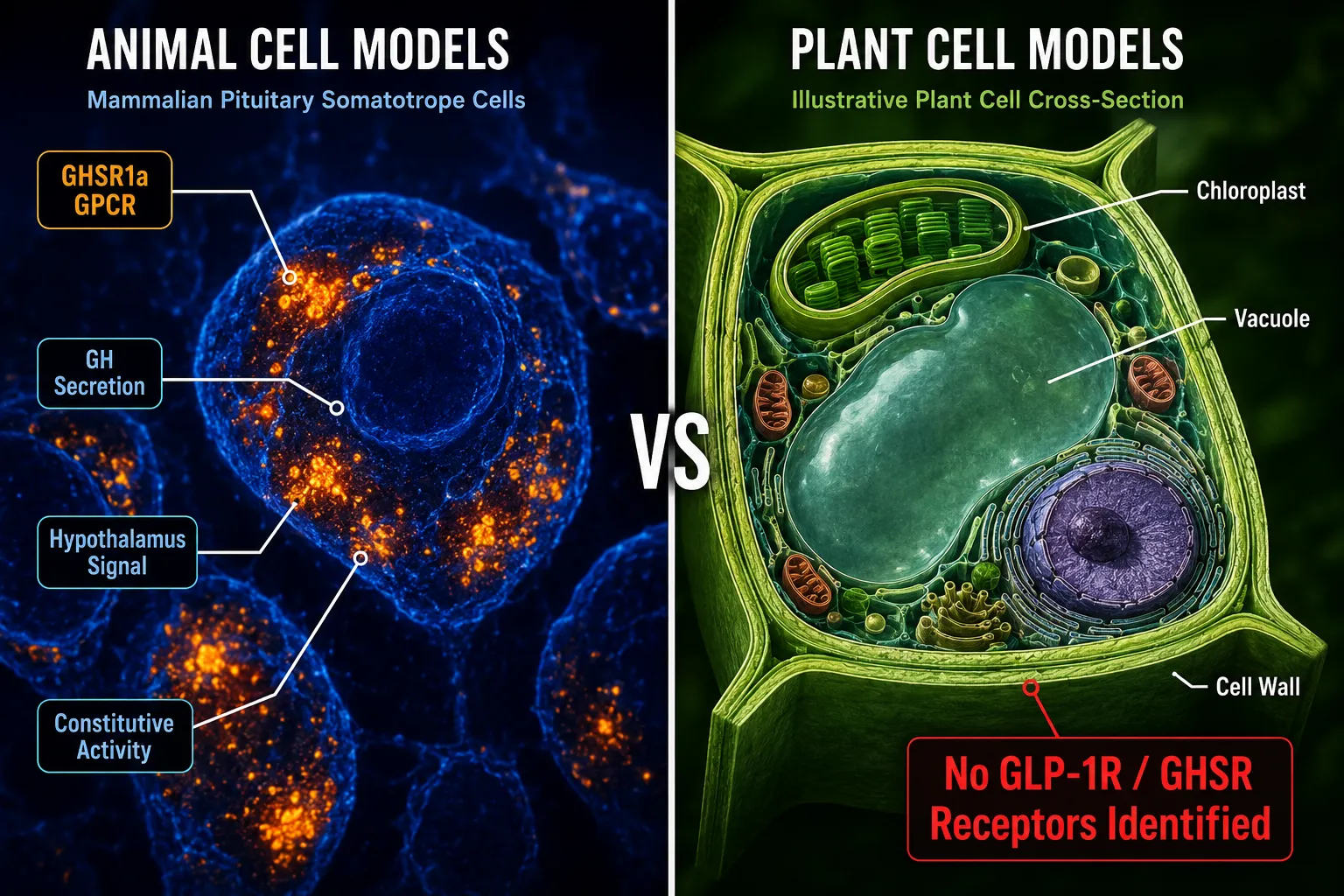
  • None of these receptor systems, GLP-1R, GIPR, GCGR, GLP-2R, or GHSR1a, have been identified in plant cell genomes, making their interaction with plant cells non-canonical and outside current mainstream research.
  • All three peptide classes are currently classified as research-use-only compounds, applied in controlled in-vitro and preclinical animal cell studies.

Understanding GLP-3 and GLP-2-T in Animal Cell Signaling
Understanding GLP-3 and GLP-2-T in Animal Cell Signaling

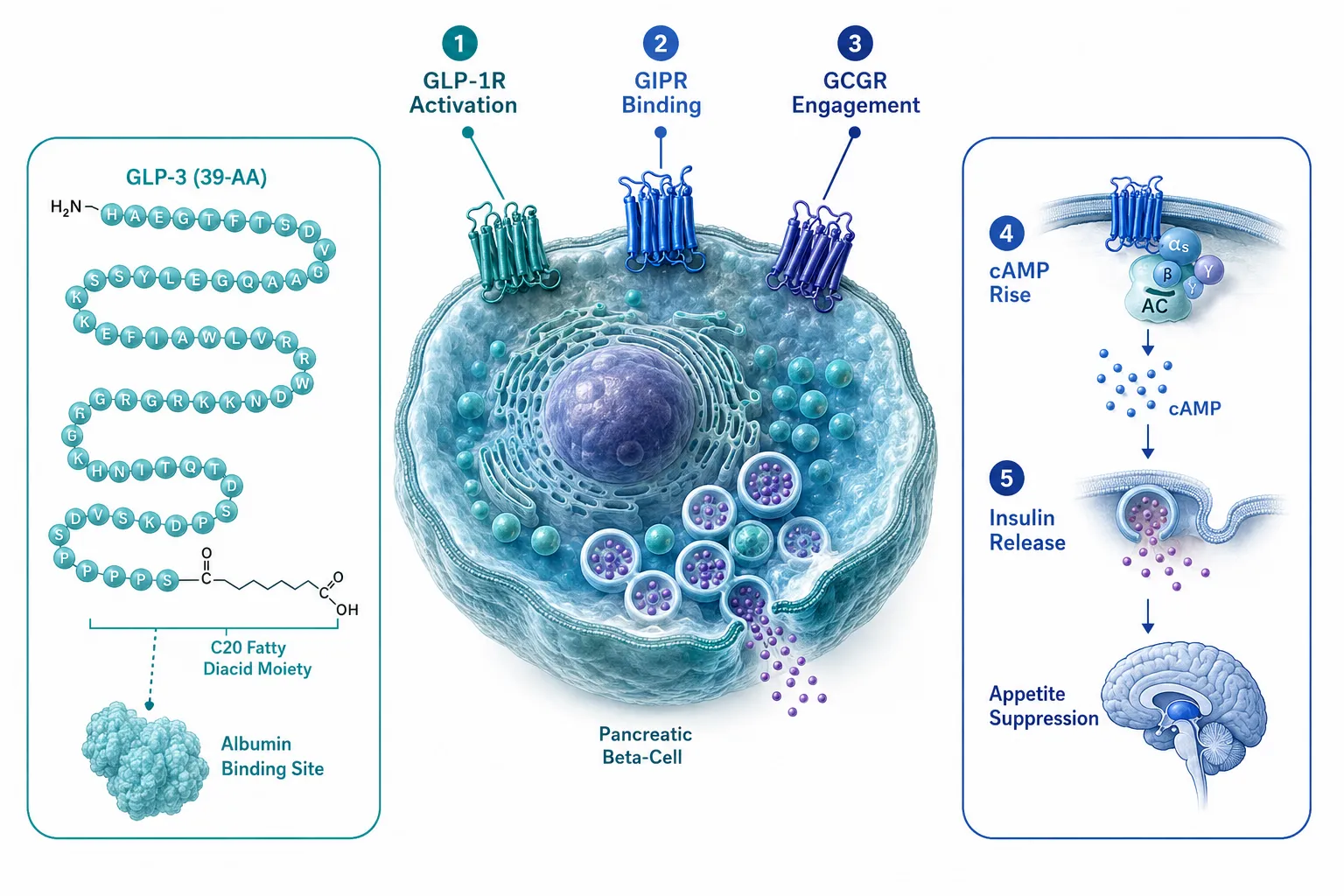
The label "GLP-3" does not correspond to a naturally secreted human hormone. Humans produce GLP-1 and GLP-2 from proglucagon processing, but no endogenous GLP-3 exists. Instead, the term has become informal shorthand for synthetic triple agonist peptides, most notably retatrutide (LY3437943), engineered to engage three receptors at once: the glucagon-like peptide-1 receptor (GLP-1R), the glucose-dependent insulinotropic polypeptide receptor (GIPR), and the glucagon receptor (GCGR).

Retatrutide is a 39-amino-acid acylated peptide built on a glucagon-based scaffold. Its C20 fatty diacid moiety promotes strong albumin binding, extending its pharmacokinetic half-life to approximately six days. In animal cell models, this structural feature alters receptor residence time and sustains signaling across pancreatic islets, hepatocytes, and central nervous system neurons. The coordinated activation of all three receptors drives glucose-dependent insulin secretion, appetite suppression via hypothalamic circuits, and increased energy expenditure, effects that no single-receptor agonist can fully replicate.

GLP-2-T, often associated with tirzepatide-class analogs (LY3298176), follows a related but distinct logic. These truncated peptide analogs are 39-amino-acid dual incretins with a C20 fatty diacid side chain, a molecular weight around 4.8 kDa, and an in-vivo half-life of roughly five days. Their "twincretin" behavior, balanced GIPR agonism paired with biased GLP-1R activation, targets pancreatic beta-cells, gut epithelium, and CNS appetite circuits in mammalian models.

Key distinction: GLP-3 engages three receptors simultaneously; GLP-2-T engages two. Both are tools for dissecting how multi-receptor incretin signaling reshapes metabolic cell networks.

Truncated GLP-2 variants, such as GLP-2(11-33) and the dipeptidyl peptidase IV (DPP-IV) metabolite GLP-2(3-33), serve as pharmacological probes in intestinal and endocrine cell research. DPP-IV cleaves both GLP-1 and GLP-2 at the N-terminus in vivo, generating metabolites with altered receptor binding and reduced signaling intensity. Studying these truncations helps researchers understand how peptide half-life and structural integrity govern GLP-2 receptor (GLP-2R) pharmacology in gut cells.

Growth Hormone Secretagogues and Their Cellular Mechanisms in Animal Models
Growth Hormone Secretagogues and Their Cellular Mechanisms in Animal Models

Growth hormone secretagogues (GHS) represent a structurally diverse class of peptides that share one defining feature: activation of the growth hormone secretagogue receptor 1a (GHSR1a), a 366-amino-acid, seven-transmembrane G-protein-coupled receptor (GPCR). GHSR1a was originally characterized as the receptor for synthetic GHS peptides before ghrelin was identified as its endogenous ligand.

GHSR1a is highly expressed in:

  • Anterior pituitary somatotrope cells (primary site of GH release)
  • Hypothalamic neurons (appetite and energy regulation)
  • Pancreatic tissue
  • Cardiac and neuronal cells (neuroprotection and cardiovascular signaling)
  • Thymic immune cells

One biologically unusual feature of GHSR1a is its high constitutive activity, it signals even without a ligand present. Two endogenous molecules modulate this baseline activity: octanoylated ghrelin, which acts as a full agonist, and LEAP2 (liver-expressed antimicrobial peptide 2), which functions as an inverse agonist and antagonist.

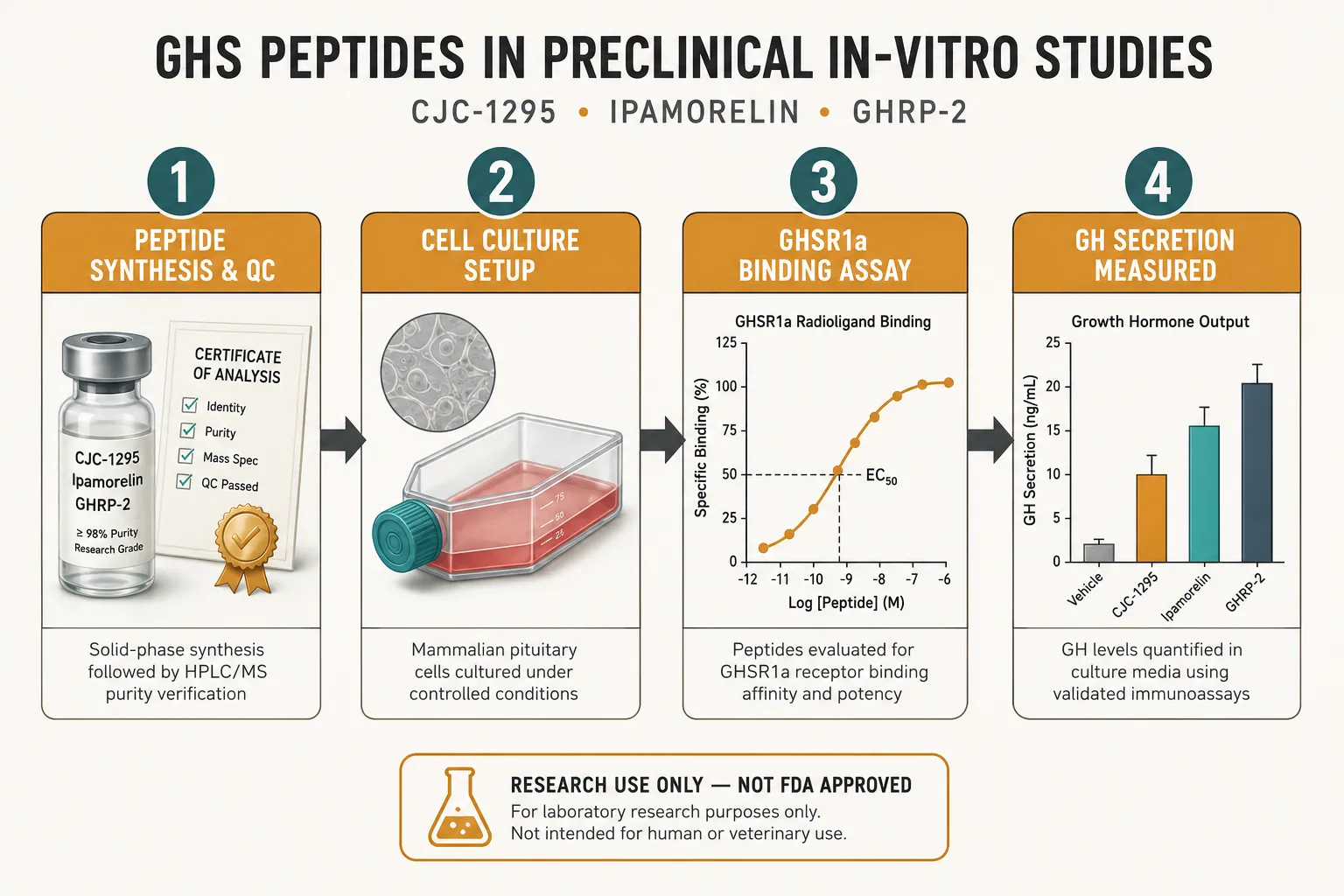
In 2026, the most studied synthetic GHS peptides include CJC-1295 (with or without drug affinity complex/DAC), ipamorelin, hexarelin, GHRP-2, GHRP-6, sermorelin, tesa, and the small-molecule MK-677 (ibutamoren). Researchers working with IPA peptides and related compounds apply these agents to pituitary and hypothalamic cell cultures to map intracellular signaling cascades, G-protein activation, calcium flux, and downstream transcriptional responses, that govern GH synthesis and secretion.

Beyond GH release, GHSR signaling exerts pleiotropic effects on cell populations across multiple tissues, including modulation of glucose and lipid metabolism, gastrointestinal motility, neuronal survival, and immune function.

Peptides in Basic Cell Biology Across Animal and Plant Systems
Peptides in Basic Cell Biology Across Animal and Plant Systems

A critical boundary in understanding peptides in basic cell biology, how GLP-3, GLP-2-T, and growth hormone secretagogues interact with animal and plant cells, is the receptor distribution question. The receptors central to GLP-3, GLP-2-T, and GHS pharmacology (GLP-1R, GIPR, GCGR, GLP-2R, and GHSR1a) are all vertebrate-specific GPCRs. Plant genomes do not encode these receptors. No credible evidence from current plant cell biology literature supports canonical GLP-3, GLP-2-T, or GHSR-mediated signaling in plant cells.

This distinction matters practically. Researchers designing study design peptides protocols for cross-kingdom comparative work must account for the absence of these receptor systems in plant models. Any peptide effects observed in plant cell assays would reflect non-specific or structural interactions rather than receptor-mediated signaling.

In contrast, animal cell models, particularly mammalian pancreatic islets, hepatocytes, pituitary cultures, and neuronal lines, remain the primary systems for applying these compounds. Researchers sourcing wholesale peptides for sale for preclinical programs consistently apply GLP-3 and GLP-2-T analogs in these controlled mammalian settings to interrogate incretin network biology.

All three peptide classes carry consistent "research use only" designations in 2026 catalogs. GLP-3/retatrutide remains in Phase 3 clinical trials and is not FDA-approved. GLP-2-T/tirzepatide-class research analogs are similarly restricted to laboratory use. These compounds are not intended for human or veterinary therapy outside approved clinical frameworks.

Research Context Note: The convergence of triple and dual incretin agonists as cell-biology tools marks a central 2026 development. Moving from single-receptor to multi-receptor agonists allows researchers to map how simultaneous receptor activation reshapes signaling networks in pancreatic beta-cells, hepatocytes, and CNS neurons, producing effects on glucose homeostasis and appetite that single-target compounds cannot replicate.

For researchers focused on tissue-level outcomes, tissue repair peptides and stimuli responsive peptides offer complementary frameworks for studying how peptide-receptor interactions translate into cellular repair and adaptive responses in animal models.

Conclusion

The study of peptides in basic cell biology, how GLP-3, GLP-2-T, and growth hormone secretagogues interact with animal and plant cells, reveals a field defined by precision engineering and receptor specificity. GLP-3/retatrutide-class triple agonists and GLP-2-T/tirzepatide-class dual incretins are powerful probes for dissecting multi-receptor metabolic signaling in mammalian cell systems. GHS peptides extend this toolkit into pituitary and hypothalamic biology through GHSR1a-mediated pathways.

Actionable next steps for researchers:

  1. Confirm receptor expression profiles in your specific cell line before selecting a GLP-class or GHS peptide, receptor absence invalidates the model.
  2. Account for DPP-IV-mediated truncation when designing in-vitro assays with GLP-1 or GLP-2 analogs; use DPP-IV-resistant variants or inhibitors where appropriate.
  3. Apply plant cell models only for non-receptor-mediated peptide studies; do not extrapolate GLP-3 or GHSR findings to plant systems.
  4. Source research-grade compounds with certificates of analysis and maintain strict research-use-only protocols in compliance with institutional guidelines.
  5. Monitor Phase 3 trial data for retatrutide, the mechanistic insights from clinical outcomes will refine in-vitro model design.
https://www.puretestedpeptides.com/wp-content/uploads/2026/09/peptides-in-basic-cell-biology-how-glp-3-glp-2-t-and-growth-hormone-secretagogue.webp 1024 1536 https://www.puretestedpeptides.com/wp-content/uploads/2026/01/buy-peptides-online.jpg 2026-09-03 13:06:212026-09-03 13:06:21Peptides in Basic Cell Biology: How GLP-3, GLP-2-T, and Growth Hormone Secretagogues Interact With Animal and Plant Cells
×

Helpful Links

  • My account
  • Cart
  • Checkout
  • Refund and Returns Policy
  • Privacy Policy
  • SMS Privacy Policy
  • Login
  • My Account
  • Logout

USA Made Lab Tested Peptides

All products are sold for research, laboratory, or analytical purposes only, and are not for human consumption


Pure Tested Peptides is a chemical supplier. Pure Tested Peptides is not a compounding / chemical compounding facility as defined under 503A of the Federal Food, Drug, and Cosmetic act. Pure Tested Peptides is not an outsourcing facility as defined under 503B of the Federal Food, Drug, and Cosmetic act.

The statements made within this website have not been evaluated by the US Food and Drug Administration. The products we offer are not intended to diagnose, treat, cure or prevent any disease.

Human/Animal Consumption Prohibited. Laboratory/In-Vitro Experimental Use Only

Scroll to top Scroll to top Scroll to top