GLP2-T Peptide and GLP2 Tirz Peptide: Naming Confusion, Product Labels, and Research Interpretation
Fewer than a dozen amino acids separate some of the most misunderstood peptide labels in the research supply market, yet that gap creates enormous confusion for buyers, researchers, and anyone trying to match a product vial to a published study. The terms GLP2-T and GLP2 Tirz appear on supplier pages, forum threads, and search results in ways that blur distinct compounds, mechanisms, and research contexts. Understanding the difference is not a minor detail; it directly shapes how data is interpreted and how sourcing decisions are made.
This article addresses the GLP2-T Peptide and GLP2 Tirz Peptide naming confusion, product labels, and research interpretation challenges head-on, giving researchers and informed buyers a clear framework for navigating this terminology landscape in 2026.
Key Takeaways
- GLP-2 (glucagon-like peptide-2) is a distinct gut hormone with well-documented intestinal trophic effects; "GLP2-T" is a vendor shorthand, not a standardized scientific name.
- "Tirz" in GLP2 Tirz typically references tirzepatide-adjacent formulation concepts, not a standalone GLP-2 analog, the two should not be conflated.
- Product labels using abbreviated or blended names require cross-referencing with sequence data and Certificate of Analysis (CoA) documentation.
- Misreading these labels can lead to incorrect research protocols, dosing errors, and flawed data interpretation.
- Verified sourcing and third-party testing are the most reliable tools for resolving naming ambiguity.
Understanding the Core Compounds: GLP-2, GLP2-T, and the Tirz Label
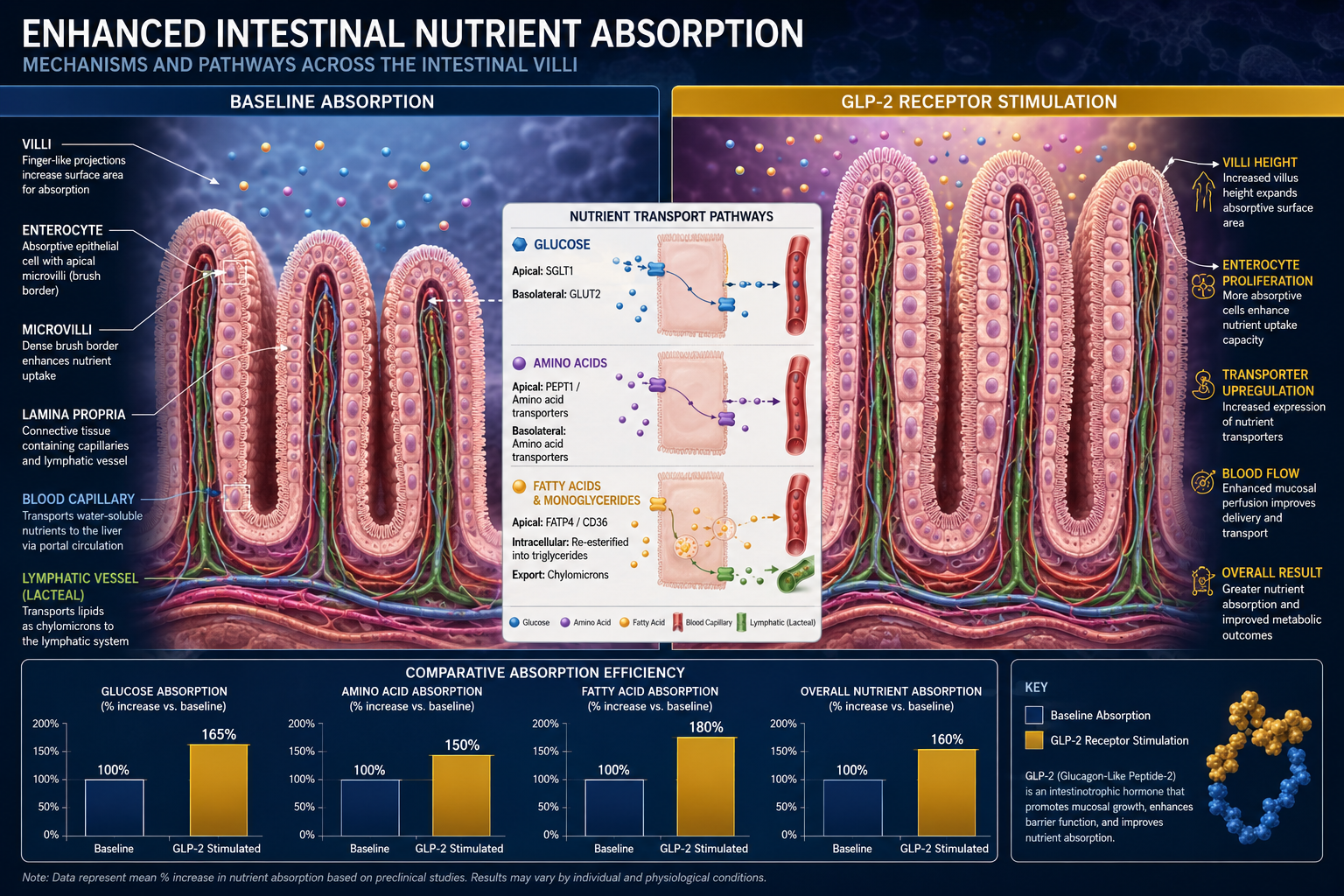
GLP-2 is a 33-amino-acid peptide secreted by intestinal L-cells. Its primary research focus involves intestinal epithelial proliferation, gut barrier integrity, and nutrient absorption. The endogenous form has a short half-life due to rapid degradation by dipeptidyl peptidase-4 (DPP-4). Teduglutide, a GLP-2 analog approved for short bowel syndrome, was engineered specifically to resist this degradation.
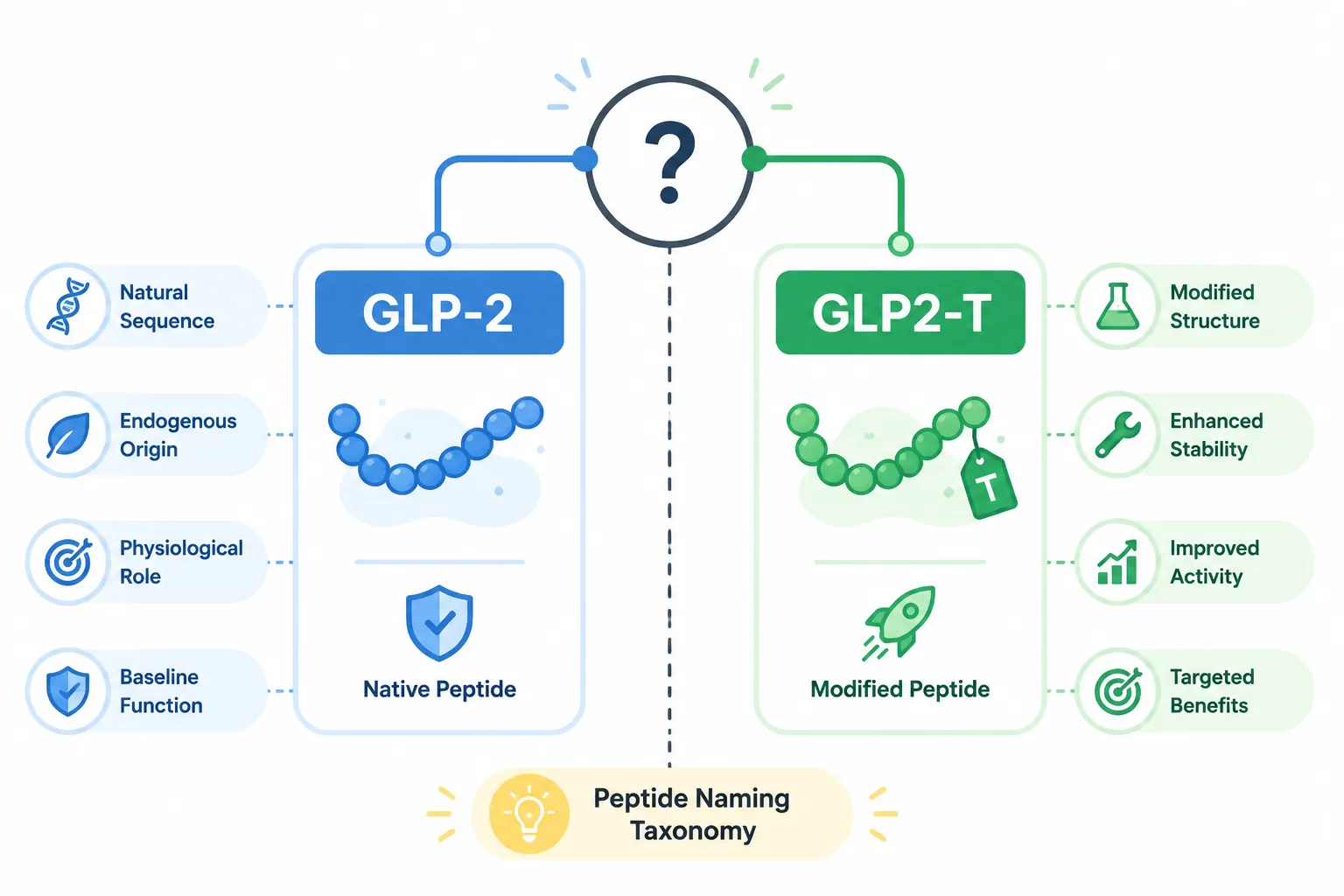
When vendor labels read "GLP2-T," the "T" suffix most commonly signals one of three things:
| Suffix Interpretation | What It Likely Means |
|---|---|
| T = Teduglutide analog | A DPP-4-resistant GLP-2 sequence variant |
| T = Tirzepatide blend | A multi-agonist formulation referencing GIP/GLP-1/GLP-2 activity |
| T = Truncated form | A shortened peptide sequence with modified receptor binding |
None of these interpretations is universally standardized. Without a published sequence or a CoA confirming amino acid composition, "GLP2-T" on a product label is essentially a marketing shorthand.
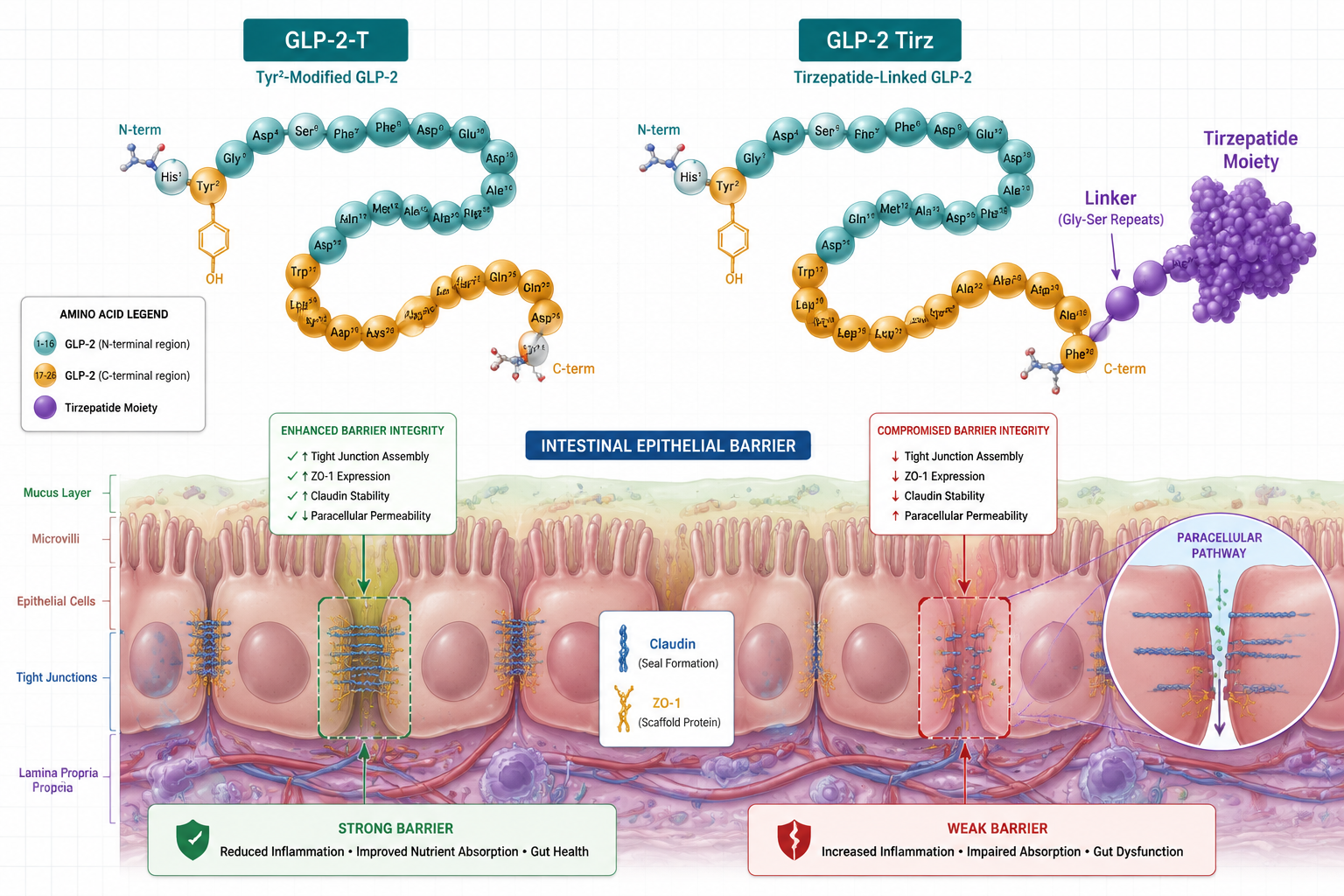
GLP2 Tirz, meanwhile, conflates GLP-2 receptor activity with tirzepatide's dual GIP/GLP-1 agonism. Tirzepatide itself does not target the GLP-2 receptor. When a product is labeled "GLP2 Tirz," it may indicate a blended or stacked formulation, a vendor-coined name for a novel analog, or simply a mislabeled product. Researchers exploring GLP-1 peptides for metabolic studies should be especially cautious here, as GLP-1 and GLP-2 share structural similarity but activate entirely different receptors with distinct downstream effects.
How GLP2-T Peptide and GLP2 Tirz Peptide Naming Confusion Appears on Product Labels
The research peptide supply market operates without uniform naming conventions. Vendors frequently create proprietary shorthand to differentiate products, signal formulation variants, or optimize for search visibility. This is where the GLP2-T Peptide and GLP2 Tirz Peptide naming confusion, product labels, and research interpretation problem becomes most acute.
Common label patterns that create confusion:
- "GLP-2 (1-33)" vs. "GLP2-T", the former specifies the full native sequence; the latter does not
- "GLP2 Tirz Blend", implies a multi-peptide formulation without disclosing individual component ratios
- "GLP2 Analog T", suggests structural modification without specifying which residue was altered
- Numeric suffixes like "GLP2-T 5mg", dosage is listed but sequence identity is absent
"A product name is not a substitute for a sequence. Every research decision should begin with the CoA, not the label."
For researchers accustomed to working with well-characterized compounds like TB-500 or BPC-157 blends, where naming conventions are more established, the GLP-2 space can feel unusually opaque. The GLP-2 peptide research tag and GLP-2 receptor tag pages offer useful context for tracking how these terms appear across research product listings.
Practical Steps for Decoding a GLP-2 Product Label
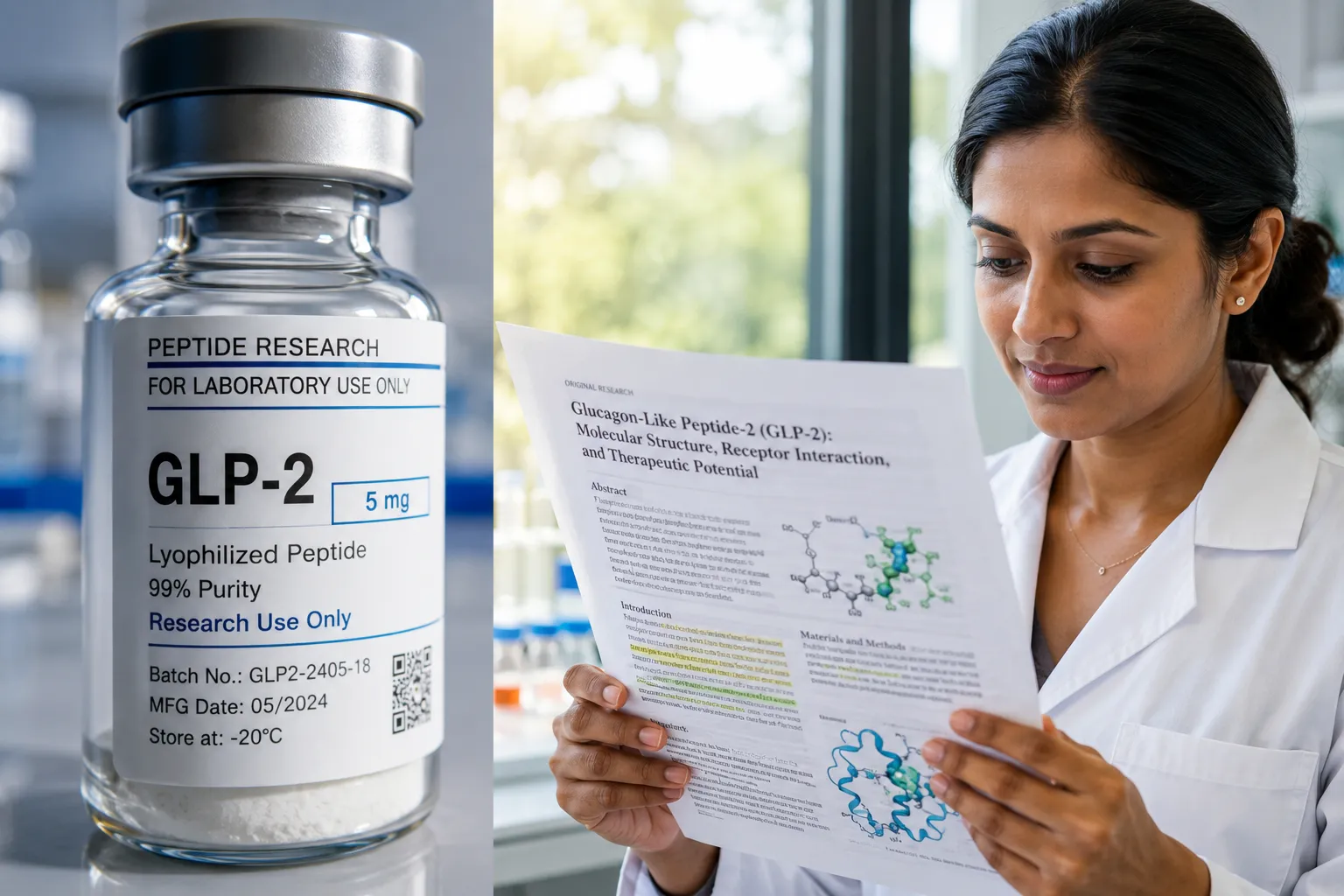
- Request the full amino acid sequence from the supplier before purchase.
- Cross-reference with published analogs, teduglutide, GLP-2 (3-33), and native GLP-2 are the most commonly studied forms.
- Verify purity via HPLC and mass spectrometry data on the CoA.
- Check for blend disclosures, if "Tirz" is in the name, confirm whether tirzepatide-related peptides (GIP or GLP-1 analogs) are present and at what ratio.
- Compare against reference standards, resources on building robust peptide benchmarks provide guidance on how reference-grade materials should be documented.
Research Interpretation: Why the GLP2-T Peptide and GLP2 Tirz Peptide Distinction Matters
Misidentifying a compound at the sourcing stage cascades into every downstream research decision. If a protocol calls for native GLP-2 to study intestinal permeability but the vial contains a DPP-4-resistant analog, the half-life, receptor binding kinetics, and dose-response curve will all differ from published baselines.
The GLP-2 receptor (GLP2R) is expressed primarily in the intestine, brain, and bone. Studies targeting gut barrier repair, inflammatory bowel models, or short bowel syndrome rely on precise receptor engagement. An analog with modified N-terminal residues, which is what many "GLP2-T" products likely are, will produce different receptor activation profiles than the native sequence.
Key interpretive risks when labels are ambiguous:
- Overstating efficacy, a more stable analog may show stronger effects than native GLP-2 in short-duration assays, skewing conclusions
- Dosing miscalculation, blended "Tirz" products with multiple active peptides require adjusted molar dosing for each component
- Cross-contamination of data, if a GLP-1 agonist component is present in a "GLP2 Tirz" product, metabolic readouts (insulin secretion, glucose clearance) will reflect GLP-1R activity, not GLP-2R activity
Researchers working across multiple peptide classes, for example, those also studying tesa for GH-axis effects or AOD-9604 for metabolic research, will recognize this pattern: the more novel or blended a compound, the more critical documentation becomes.
For those sourcing GLP-1 adjacent compounds, the GLP-1 T 20mg product page illustrates how responsible vendors document their formulations with specificity, a model worth applying when evaluating any GLP-2 variant.

Conclusion
The GLP2-T Peptide and GLP2 Tirz Peptide naming confusion, product labels, and research interpretation challenge is ultimately a documentation problem with real scientific consequences. Vendors use abbreviated names for legitimate reasons, brevity, differentiation, search optimization, but researchers cannot afford to treat a label as a specification.
Actionable next steps for researchers and buyers in 2026:
- Always obtain a full sequence disclosure and CoA before committing to any GLP-2 variant purchase.
- Treat "Tirz" in any peptide name as a signal to investigate further, not a descriptor of a known compound.
- Use established reference standards and peer-reviewed analog profiles to validate what a product actually is before designing a protocol around it.
- Consult supplier documentation pages that show HPLC traces, mass spec data, and batch-specific purity reports.
- When in doubt, source from vendors who publish transparent product documentation and support third-party verification.
Clarity at the label stage protects the integrity of every experiment that follows.