Call or Text 727-513-9780
  • Shopping Cart Shopping Cart
    0Shopping Cart
Pure Tested Peptides | America's most trusted Peptides for sale online
  • Peptides for sale
    • Oral Peptides for sale
      • Peptide Capsules for sale
      • BPC 157 Capsules 1000mcg
      • SLU-PP-332 Capsules | 1000 mcg
      • 5-Amino-1MQ 50mg Capsules
      • Tesofensine 500mcg
    • All Peptides for sale
    • Peptide Sprays
      • BPC 157 Nasal Spray Kit
      • BPC-157 TB500 Nasal Spray Kit
      • Semax Nasal Spray 10mg
      • Selank – Nasal Spray Kit – 10mg
      • Epithalon 50MG Nasal Spray Kit
      • Ipamorelin 10mg Nasal Spray
      • Klow Nasal Spray (BPC-157 + TB-500 + GHK-Cu + KPV) | 80mg
      • Hulk Nasal Spray Tesa / Ipa Blend 6/3 MG
      • Klow Nasal Spray
      • NAD + 500 mg Nasal Spray
      • PT-141 Nasal Spray Kit
    • GHRH Peptides
      • Ipa Peptides
      • CJC-1295 Peptides
        • CJC-1295 with DAC 5 mg
        • CJC-1295 without DAC 5 mg
        • CJC-1295 Ipa 10mg
      • Tesa Peptides
        • Tesa Peptide
        • Tesa 20 mg
    • GHK-Cu Peptides
      • All GHK-Cu Peptides
      • GHK-Cu 100mg
      • KLOW Peptide Blend – Buy KLOW blend online
    • BPC Peptides
      • All BPC Peptides
      • BPC-157
      • BPC-157 TB-500
      • BPC 157 capsules 1000mcg
    • SLU-PP-332 Peptides
      • All SLU-PP-332 Peptides
      • SLU-PP-332 5mg
    • GLP3 Peptides
    • PT-141 Peptides
      • PT-141 Peptides for sale
      • PT-141 10mg
      • PT-141 Nasal Spray
    • CAG Peptides
      • Lipo-C Peptide Blend
      • CAG 5mg
      • CAG 10mg
    • MOTS-C Peptides
      • MOTS-C Peptides for sale
      • MOTS-c peptide
      • MOTS-c 10mg *6 pack*
    • 5 Amino 1MQ Peptides
      • 5 Amino 1MQ Peptides for sale
      • 5-Amino-1MQ 50mg Capsules
      • 5-Amino-1MQ 5mg
    • Epithalon Peptides
      • Epithalon Peptides for sale
      • Epithalon 10mg
      • Epithalon 50mg
  • Shop
    • GLPs
      • 5-Amino-1MQ 50mg Capsules
      • 5-Amino-1MQ 5mg
      • L-Carnitine 500mg/ml
      • Tesofensine 500mcg
      • SLU-PP-332 5mg
      • MOTS-c 10mg *6 pack*
    • Epithalon & BPC Peptides
      • Epithalon 10mg
      • Epithalon 50mg
      • BPC-157
      • BPC 157 capsules 1000mcg
      • BPC-157 TB-500
      • BPC-157 TB500 Nasal Spray Kit
      • BPC 157 Nasal Spray Kit
    • BPC TB-500 & NAD+ Peptides
      • NAD+ 500 mg
      • KLOW Peptide Blend – Buy KLOW blend online
      • GLOW Peptide Blend
      • TB 500 5mg
      • BPC 157 capsules 1000mcg – Supplement
      • BPC 157 Nasal Spray Kit
      • BPC-157
      • BPC-157 TB500 Nasal Spray Kit
      • BPC-157 TB-500
      • BPC 157 capsules 1000mcg
    • LL-37 Peptide
      • LL-37 10 mg
    • MOTS-C & Selank
      • MOTS-c peptide
      • Selank 10mg
    • GHK Peptides
      • GHK-Cu 100mg
      • GLOW Peptide Blend
      • KLOW Peptide Blend – Buy KLOW blend online
  • COAs
  • Wholesale
    • Wholesale Peptides for sale
  • PTP FAQ
  • Affiliates
    • Selank Peptide: Advanced Pharmacological Mechanisms Underlying Its Anxiolytic and Nootropic Effects in Research
      • 5-Amino-1MQ Peptide: Detailed Mechanisms of NNMT Inhibition and Its Impact on Cellular Metabolism Research
        • MOTS-C Peptide: Unraveling Its Role in Mitochondrial Dynamics and Energy Metabolism Research
          • Epithalon Peptide and Telomerase Regulation: Investigating Its Impact on Cellular Senescence and Lifespan Research Models
            • GLP2-T vs GLP2 Tirz Peptide: Understanding the Naming, Mechanistic Nuances, and Research Implications for Gut Health
      • Peptides and Polypeptides in Modern Pharmacology: What Research on Metoprolol, Prednisone, and Amlodipine Reveals
        • Polypeptide Peptides vs NSAIDs: What Naproxen and Diclofenac Teach Tissue-Repair Researchers About BPC‑157 and TB‑500
          • Peptides and Polypeptides in Endocrine Pharmacology: How GLP-1, GLP-2, and GLP-3 Retatrutide Differ From Classic Drugs Like Prednisone and Amlodipine
          • 5‑Amino‑1MQ Peptide and NNMT Inhibition: How It Compares With Statins Like Atorvastatin in Adipose and Lipid Metabolism Research
      • Enclomiphene, Estrogen Receptor Signaling, and Luteinizing Phase Biology: What Hormone Researchers Should Measure
        • Mesenchymal Stem Cells, BPC‑157, and GHK‑Cu: How Tissue Repair Peptides Compare With Classic NSAIDs Like Naproxen in Injury Models
          • Peptide Calculator Use Cases Beyond Growth Hormone: Working Through GLP‑3 Retatrutide, MOTS‑c, and BPC‑157 Research Dosing
        • Polypeptide Peptides in Endocrine and Metabolic Pharmacology: Lessons From Amlodipine, Prednisone, and Metoprolol
        • Peptides Calculator for Advanced Blends: Worked Examples for Tesamorelin, CJC‑1295, and Ipamorelin Stacks
          • Peptides and Polypeptides in Human Physiology: How Molecular Size Shapes Research Applications
            • Selank Peptide: Advanced Pharmacological Mechanisms Underlying Its Anxiolytic and Nootropic Effects in Research
          • 5-Amino-1MQ Peptide: Detailed Mechanisms of NNMT Inhibition and Its Impact on Cellular Metabolism Research
            • MOTS-C Peptide: Unraveling Its Role in Mitochondrial Dynamics and Energy Metabolism Research
              • Epithalon Peptide and Telomerase Regulation: Investigating Its Impact on Cellular Senescence and Lifespan Research Models
                • GLP2-T vs GLP2 Tirz Peptide: Understanding the Naming, Mechanistic Nuances, and Research Implications for Gut Health
                  • Peptides and Polypeptides in Endocrine Pharmacology: How GLP-1, GLP-2, and GLP-3 Retatrutide Differ From Classic Drugs Like Prednisone and Amlodipine
                    • Polypeptide Peptides vs NSAIDs: What Naproxen and Diclofenac Teach Tissue-Repair Researchers About BPC‑157 and TB‑500
                      • Peptides and Polypeptides in Modern Pharmacology: What Research on Metoprolol, Prednisone, and Amlodipine Reveals
                        • 5‑Amino‑1MQ Peptide and NNMT Inhibition: How It Compares With Statins Like Atorvastatin in Adipose and Lipid Metabolism Research
                        • Enclomiphene, Estrogen Receptor Signaling, and Luteinizing Phase Biology: What Hormone Researchers Should Measure
                        • Mesenchymal Stem Cells, BPC‑157, and GHK‑Cu: How Tissue Repair Peptides Compare With Classic NSAIDs Like Naproxen in Injury Models
                        • Peptide Calculator Use Cases Beyond Growth Hormone: Working Through GLP‑3 Retatrutide, MOTS‑c, and BPC‑157 Research Dosing
                        • Polypeptide Peptides in Endocrine and Metabolic Pharmacology: Lessons From Amlodipine, Prednisone, and Metoprolol
                        • Peptides Calculator for Advanced Blends: Worked Examples for Tesamorelin, CJC‑1295, and Ipamorelin Stacks
                        • Peptides and Polypeptides in Human Physiology: How Molecular Size Shapes Research Applications
                        • Selank Peptide: Advanced Pharmacological Mechanisms Underlying Its Anxiolytic and Nootropic Effects in Research
                        • MOTS-C Peptide: Unraveling Its Role in Mitochondrial Dynamics and Energy Metabolism Research
                        • Peptides and Polypeptides in Modern Pharmacology: What Research on Metoprolol, Prednisone, and Amlodipine Reveals
                        • Peptides and Polypeptides in Endocrine Pharmacology: How GLP-1, GLP-2, and GLP-3 Retatrutide Differ From Classic Drugs Like Prednisone and Amlodipine
                        • 5-Amino-1MQ Peptide: Detailed Mechanisms of NNMT Inhibition and Its Impact on Cellular Metabolism Research
                        • Mesenchymal Stem Cells, BPC‑157, and GHK‑Cu: How Tissue Repair Peptides Compare With Classic NSAIDs Like Naproxen in Injury Models
                        • Peptide Calculator Use Cases Beyond Growth Hormone: Working Through GLP‑3 Retatrutide, MOTS‑c, and BPC‑157 Research Dosing
                        • GLP2-T vs GLP2 Tirz Peptide: Understanding the Naming, Mechanistic Nuances, and Research Implications for Gut Health
                        • Polypeptide Peptides in Endocrine and Metabolic Pharmacology: Lessons From Amlodipine, Prednisone, and Metoprolol
                        • Polypeptide Peptides vs NSAIDs: What Naproxen and Diclofenac Teach Tissue-Repair Researchers About BPC‑157 and TB‑500
                        • Peptides and Polypeptides in Human Physiology: How Molecular Size Shapes Research Applications
                        • Peptides Calculator for Advanced Blends: Worked Examples for Tesamorelin, CJC‑1295, and Ipamorelin Stacks
                        • 5‑Amino‑1MQ Peptide and NNMT Inhibition: How It Compares With Statins Like Atorvastatin in Adipose and Lipid Metabolism Research
                        • Enclomiphene, Estrogen Receptor Signaling, and Luteinizing Phase Biology: What Hormone Researchers Should Measure
                        • Epithalon Peptide and Telomerase Regulation: Investigating Its Impact on Cellular Senescence and Lifespan Research Models
                        • Best research protocol Klow blend
                        • best time to take BPC-157
                        • best time to take DSIP (Delta Sleep Inducing Peptide)
                        • best time to take CJC-1295
                        • best time to take AOD-9604
                        • best time to take Follistatin 344
                        • best time to take Ipamorelin
                        • best time to take MK-677 (Ibutamoren)
                        • best time to take Ligandrol (LGD-4033) — research compound
                        • best time to take Ostarine (MK-2866) — research compound
                        • best time to take GHK-CU
                        • best time to take TB-500
                        • best time to take MOTS-c
                        • best time to take Semax
                        • best time to take RAD-140 (Testolone) — research compound
                        • best time to take Thymosin Alpha-1
                        • best time to take PEG-MGF
                        • Biolife Plasma, Octapharma Plasma, and Research Peptides: How Plasma Donation Labs Differ From Peptide Suppliers
                        • best time to take YK-11 — research compound
                        • best time to take PT-141 (Bremelanotide)
                        • Best research protocol Klow blend
                        • 5-Amino-1MQ and MOTS-C Synergy: Metabolic Signaling, Mitochondria, and Research Design
                        • BPC-157 and TB-500: Investigating Their Combined Effects on Angiogenesis and Cellular Migration in Tissue Repair Models
                        • BPC-157 Peptide: Gut Barrier Function, Inflammation, and Tissue-Recovery Research
                        • 5‑Amino‑1MQ and MOTS‑c Synergy in Metabolic Research: Designing NNMT and Mitochondrial Biogenesis Stacks
                        • CJC-1295 with DAC vs. Without DAC: Half-Life, Release Kinetics, and Research Implications
                        • CJC‑1295 with DAC vs. Without DAC: Expanding on Half‑Life Differences Using Tesamorelin and Ipamorelin Blend Case Studies
                        • Collagen Biology and Copper‑Binding Peptides: How GHK‑Cu, Glow Blend, and Klow Blend Interact with Skin and Connective Tissue
                        • Collagen Biology and Regenerative Peptides: How GHK‑Cu, Glow Blend, and Klow Blend Affect Extracellular Matrix Research
                    • DNA, Telomeres, and Longevity Peptides: Positioning Epithalon and MOTS‑c in Genetic Aging Research
                      • Enclomiphene Citrate: serm Mechanism, Testosterone Research, and Stack Compatibility
                        • Enclomiphene vs Enclomiphene Citrate: Formulation, Bioavailability, and Research Distinctions
                        • Epithalon Peptide Research: Telomerase Activation, Aging, and Pineal Gland Function
                        • Estrogen Receptor Signaling and Enclomiphene: How Selective Modulators Compare with Classic Polypeptide Hormones
                        • GHK-Cu Peptide: Advanced Mechanisms in Extracellular Matrix Remodeling and Wound Healing Research
                        • GHK-Cu Peptide: Collagen Synthesis, Wound Repair, and Skin-Barrier Research Models
                        • GLP-1 vs GLP-3 vs GLP-2: Peptide Classification and Research Applications
                        • GLP-2 Peptide Research Guide: Gut Barrier Function, Nutrient Absorption, and Intestinal Recovery Models
                        • GLP-3 Retatrutide vs. GLP-1 Drugs: What Triple-Agonist Biology Changes in Research Models
                        • Ipamorelin and Tesamorelin Combination: Synergistic GH Secretagogue Research and Dosing Protocols
                        • GLP2 Tirz Peptide: What It Is, Why the Name Exists, and How Researchers Should Interpret It
                        • Klow Blend Peptide Nasal Spray: What the Formulation Is Trying to Do in Cognitive Research
                        • Mitochondria, NNMT Inhibition, and Peptide Modulators: Where MOTS‑c and 5‑Amino‑1MQ Fit in Cellular Energy Research
                        • MOTS-c Peptide: Mitochondrial Function, Energy Metabolism, and What Researchers Measure
                        • MOTS-c vs. 5-Amino-1MQ: Which Metabolic Research Questions Each Compound Actually Answers
                        • Nasal Spray Peptides: Bioavailability, Administration, and Semax/Selank Research Applications
                        • PT-141 Peptide Research: Mechanism of Action and Melanocortin Receptor Signaling
                        • Retatrutide for Research: Mechanism, Structure, and GLP-1/GLP-3 Dual Action
                        • Retatrutide for Obesity and Type 2 Diabetes: What the Latest Trial Data Suggest
                        • Tesofensine Peptide Research: Mechanism, Appetite Suppression, and Neuropeptide Y Pathways
  • Contact
    • Contact Customer Service
    • Text Customer Support
  • About US
  • Shop all peptides
  • Affiliate Program
    • Affiliate Signup
  • Login / Register Login / Register Page Link Login / Register Page Link
  • Click to open the search input field Click to open the search input field Search
  • Menu Menu

Tag Archive for: glp-2 signaling

GLP-2-T and GLP2 Tirz Peptides: Measuring Intestinal Barrier Function Without Confounding Motility

GLP-2-T and GLP2 Tirz Peptides: Measuring Intestinal Barrier Function Without Confounding Motility

October 19, 2026/0 Comments/in Uncategorized/by

Roughly 70% of the body's immune interface sits along the intestinal epithelium, a single-cell layer held together by tight junction proteins that can be disrupted in hours. That vulnerability makes accurate barrier measurement critical, yet most in vivo gut assays pick up motility signals alongside permeability signals, blurring the picture. Research into GLP-2-T and GLP2 Tirz peptides: measuring intestinal barrier function without confounding motility demands a cleaner experimental lens, one focused on permeability tracers, junction protein profiling, and organoid morphology rather than transit-time endpoints alone.

Key Takeaways

  • GLP-2 enhances intestinal barrier integrity through IGF-1 and PI3K/Akt/mTORC1 signaling, directly upregulating tight junction proteins such as occludin, claudin-1, and ZO-1.
  • Motility effects of GLP-2 and related peptides can confound in vivo permeability data; isolating barrier outcomes requires motility-independent readouts.
  • Transepithelial electrical resistance (TER), fluorescent tracer flux, and tight junction protein profiling are the gold-standard motility-independent assays.
  • Intestinal organoids and isolated epithelial monolayers allow researchers to study GLP-2-based peptide effects on barrier structure without peristaltic interference.
  • Separating barrier endpoints from motility endpoints is essential for interpreting next-generation multi-agonist peptides like GLP-2-T and GLP2 Tirz compounds.

How GLP-2 Signals to the Intestinal Barrier

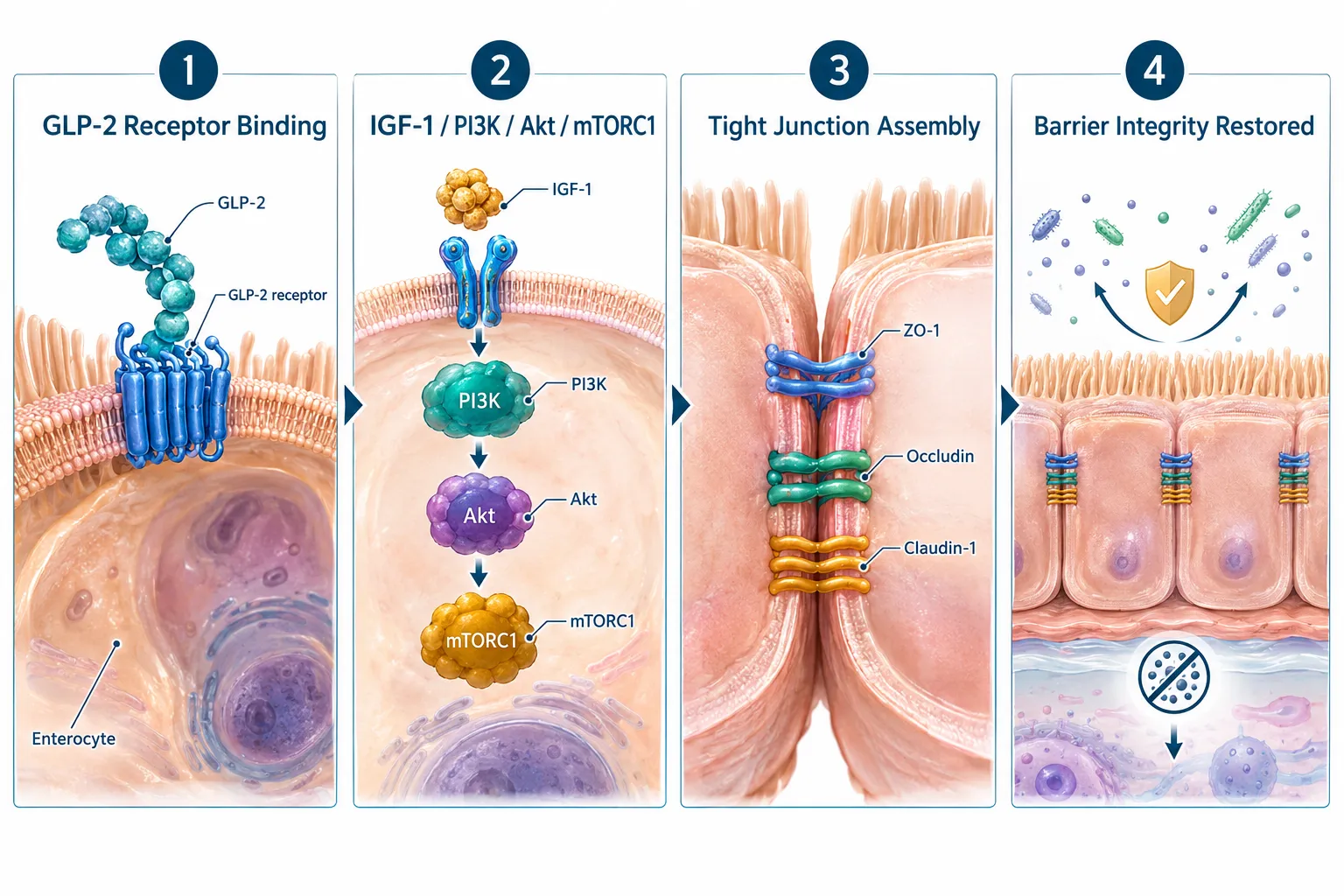
GLP-2 (glucagon-like peptide-2) is produced by L-cells in the distal intestine and acts as a master regulator of mucosal integrity. Its receptor is expressed on enteric neurons, subepithelial myofibroblasts, and enteroendocrine cells, not directly on absorptive enterocytes. This indirect architecture means GLP-2 recruits IGF-1 as a downstream mediator, which then activates PI3K/Akt/mTORC1 signaling within the epithelium.
How GLP-2 Signals to the Intestinal Barrier

The downstream result is rapid upregulation of three key tight junction proteins:

Protein Role in Barrier
Occludin Seals paracellular space against macromolecules
Claudin-1 Controls ion and water flux selectivity
ZO-1 Scaffolds junction complex to actin cytoskeleton

Barrier improvement can be measurable within minutes to hours of GLP-2 exposure, far faster than structural changes in villus height or crypt depth. This speed is important: it means barrier assays must capture early molecular events, not just histological endpoints. Understanding this pathway is foundational for anyone exploring the GLP-3 peptide signaling pathway and related glucagon-family mechanisms.

Key insight: GLP-2's barrier effect is mechanistically separable from its motility effect because they operate through different receptor populations and different downstream effectors.


Why Motility Confounds Barrier Measurement, and How to Avoid It

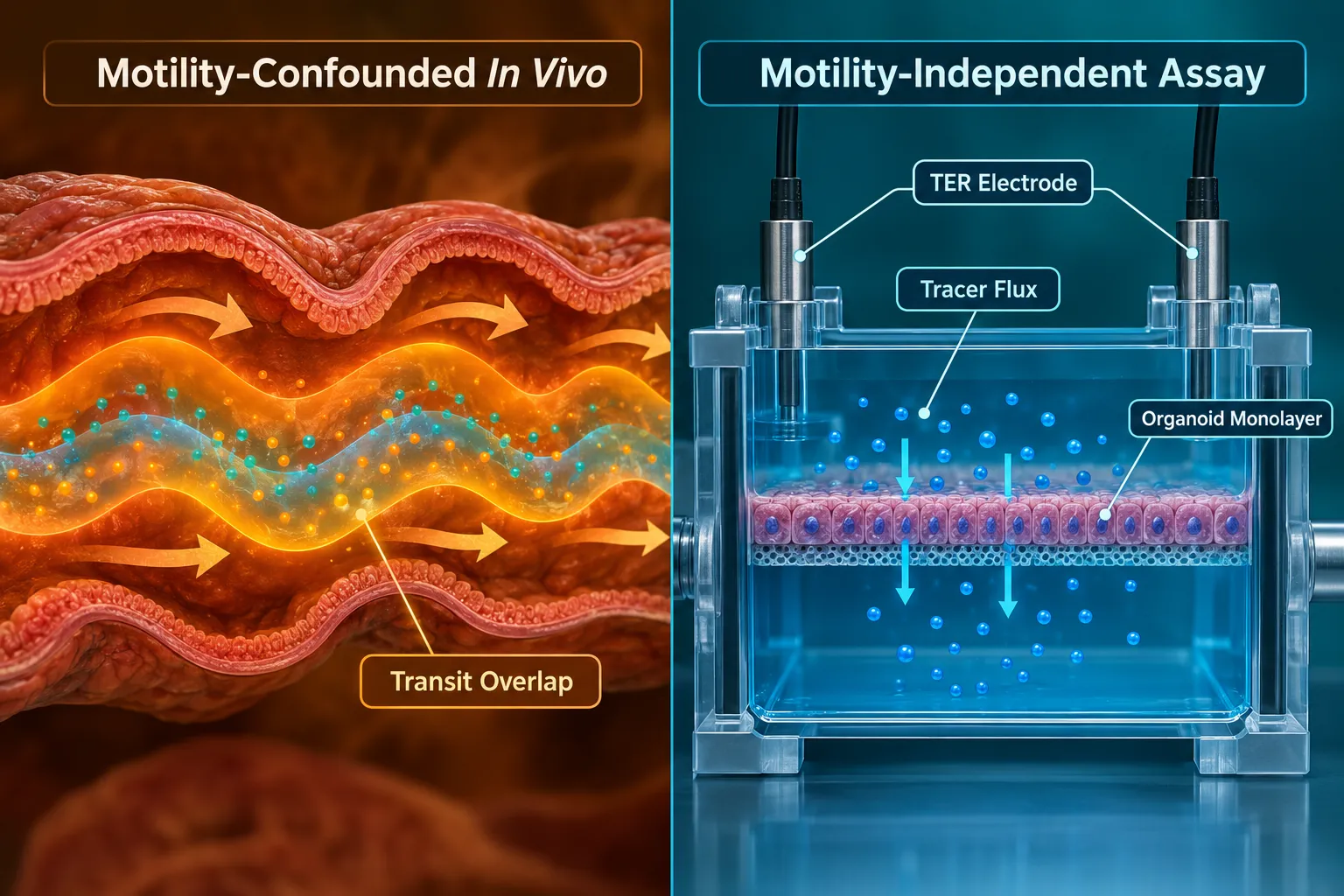
GLP-2 slows intestinal transit. That is useful clinically, it extends nutrient contact time and supports absorption, but it creates a measurement problem. When researchers measure gut permeability in a living animal after GLP-2 dosing, slower transit means luminal tracers spend more time in contact with the mucosa. That extended contact artificially reduces apparent permeability, mimicking a barrier-tightening effect even if no molecular junction changes occurred.

This confound is the central challenge when evaluating GLP-2-T and GLP2 Tirz peptides: measuring intestinal barrier function without confounding motility.
Why Motility Confounds Barrier Measurement, and How to Avoid It

Motility-Independent Assay Toolkit

Three readout categories sidestep the motility problem entirely:

1. Transepithelial Electrical Resistance (TER)
TER measures how well an epithelial monolayer resists ionic current. Higher resistance equals tighter junctions. Performed in Ussing chambers or Transwell inserts on isolated tissue or organoid-derived monolayers, TER is completely independent of peristalsis.

2. Fluorescent Tracer Flux
FITC-dextran (typically 4 kDa) is applied to the apical surface of isolated epithelium. The rate at which it crosses to the basolateral side reflects paracellular permeability. Because the tissue is excised or the organoid is controlled, transit time is irrelevant.

3. Tight Junction Protein Profiling
Western blot, immunofluorescence, or proximity ligation assays quantify occludin, claudin-1, and ZO-1 expression and localization. A peptide that genuinely tightens the barrier will show increased junctional protein density at the membrane, a molecular endpoint with no motility component.

For context on how related peptide classes are being studied, the Peptides 101 guide for research-use-only buyers covers structural and mechanistic frameworks that apply across GLP-family compounds.

Osmotic and Intake Controls

Two additional confounds must be controlled in any barrier study:

  • Osmotic load: High-osmolality solutions draw water into the lumen, mechanically stretching tight junctions and inflating permeability readings. Vehicle and tracer solutions should be iso-osmotic to luminal fluid.
  • Food and water intake: GLP-2 suppresses appetite in some models. Reduced intake lowers luminal content and can alter barrier hydration. Pair-feeding controls or continuous enteral nutrition protocols normalize this variable.

Organoids, Epithelial Monolayers, and the Future of GLP-2-T Research

Intestinal organoids, three-dimensional epithelial structures grown from intestinal stem cells, have transformed barrier research. They recapitulate villus-crypt architecture, express all major tight junction proteins, and respond to GLP-2 pathway agonists. Critically, they have no enteric nervous system and no peristaltic activity, making them ideal for isolating direct epithelial effects of novel peptides.
Organoids, Epithelial Monolayers, and the Future of GLP-2-T Research

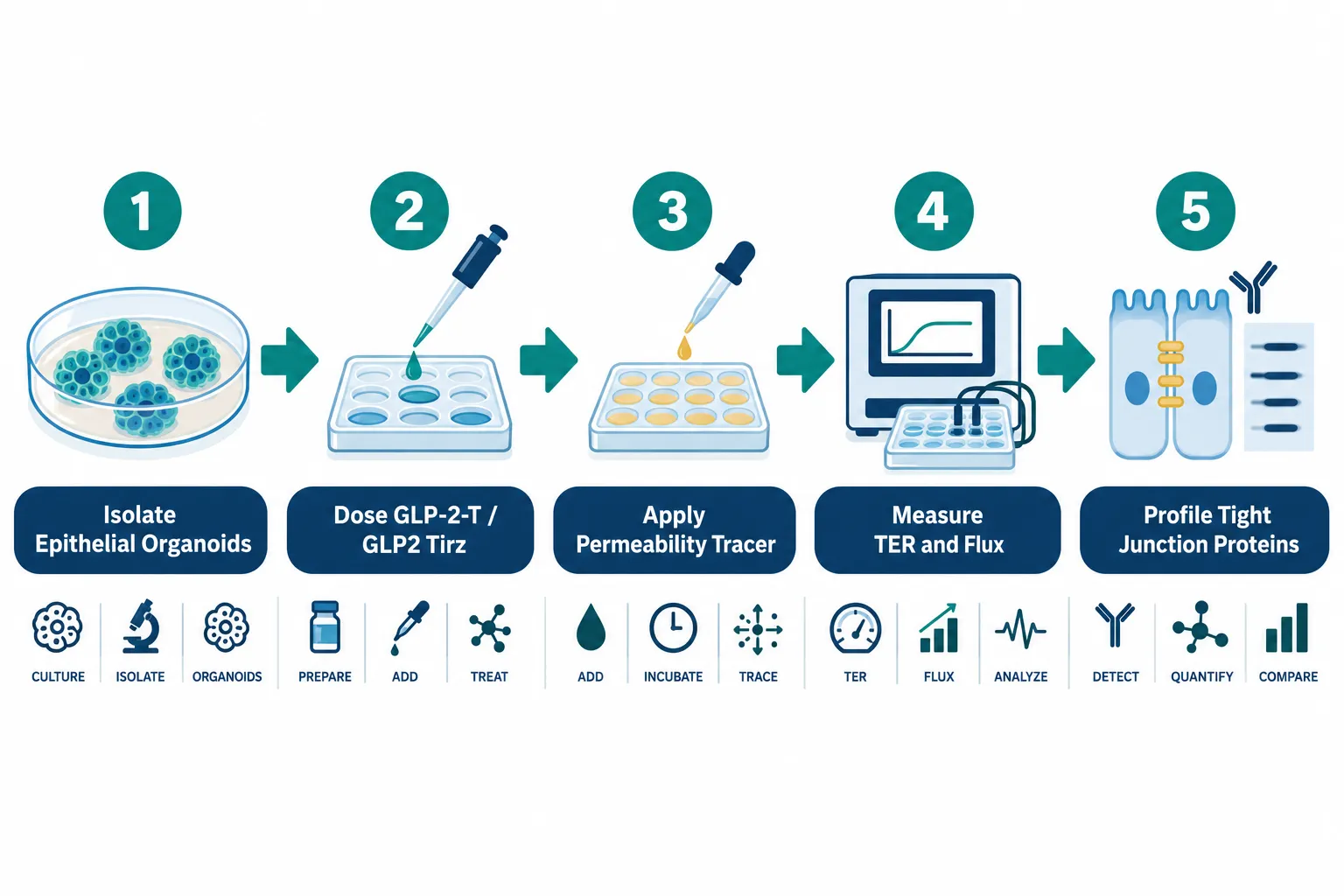
For GLP-2-T and GLP2 Tirz peptides specifically, the peer-reviewed literature does not yet contain dedicated mechanistic studies as of 2026. These appear to be emerging research-grade compounds in the glucagon-family multi-agonist space. Based on GLP-2's established biology, a rigorous experimental protocol for evaluating such peptides would include:

  1. Organoid monolayer preparation, seed organoid-derived cells on permeable Transwell supports until confluent
  2. Peptide dosing, apply GLP-2-T or GLP2 Tirz at graded concentrations to the basolateral compartment (mimicking systemic delivery)
  3. TER measurement, record resistance at baseline, 1 hour, 4 hours, and 24 hours
  4. Tracer flux assay, add apical FITC-dextran at the 4-hour time point; sample basolateral fluid at 30-minute intervals
  5. Junction protein profiling, fix and stain for ZO-1, occludin, and claudin-1 at study end; quantify membrane vs. cytoplasmic distribution

This design generates motility-independent barrier data while controlling for osmotic load and intake variables. Researchers exploring related GLP-3 peptides for sale in the glucagon family may find this protocol framework directly transferable, given overlapping receptor biology.

Short bowel syndrome research has already validated this approach for GLP-2 agonists: permeability and absorption metrics, not motility metrics, drove the key efficacy conclusions. Livestock studies using histology and tight-junction markers rather than transit endpoints add further proof-of-concept that barrier and motility are separable outcomes.

For researchers sourcing compounds for these studies, reviewing wholesale peptides for sale options and understanding purity standards is an important pre-study step. Purity directly affects TER and tracer flux signal quality; contaminants can independently alter epithelial resistance. Those looking for related reference compounds may also find value in reviewing IPA peptides as additional intestinal-integrity research tools.


Conclusion

Separating intestinal barrier function from motility effects is not a minor methodological detail, it is the difference between measuring what a peptide does to tight junctions and measuring what it does to transit time. For GLP-2-T and GLP2 Tirz peptides: measuring intestinal barrier function without confounding motility, the path forward is clear.

Actionable next steps for researchers:

  • Prioritize TER and FITC-dextran flux assays in isolated epithelium or organoid monolayers as primary barrier endpoints
  • Run separate, parallel motility assessments (bead transit, manometry) rather than combining them with permeability readouts
  • Include iso-osmotic vehicle controls and pair-feeding protocols in every study design
  • Profile ZO-1, occludin, and claudin-1 at the membrane level to confirm molecular barrier changes
  • Consult resources such as the Peptides Doctor Near Me directory when translating preclinical findings toward supervised research applications

As multi-agonist GLP-family peptides continue to evolve, the assay toolkit described here will be essential for generating clean, interpretable data on intestinal barrier biology.

https://www.puretestedpeptides.com/wp-content/uploads/2026/10/glp-2-t-and-glp2-tirz-peptides-measuring-intestinal-barrier-function-without-con.webp 1254 1254 https://www.puretestedpeptides.com/wp-content/uploads/2026/01/buy-peptides-online.jpg 2026-10-19 13:06:432026-10-19 13:06:43GLP-2-T and GLP2 Tirz Peptides: Measuring Intestinal Barrier Function Without Confounding Motility
×

Helpful Links

  • My account
  • Cart
  • Checkout
  • Refund and Returns Policy
  • Privacy Policy
  • SMS Privacy Policy
  • Login
  • My Account
  • Logout

USA Made Lab Tested Peptides

All products are sold for research, laboratory, or analytical purposes only, and are not for human consumption


Pure Tested Peptides is a chemical supplier. Pure Tested Peptides is not a compounding / chemical compounding facility as defined under 503A of the Federal Food, Drug, and Cosmetic act. Pure Tested Peptides is not an outsourcing facility as defined under 503B of the Federal Food, Drug, and Cosmetic act.

The statements made within this website have not been evaluated by the US Food and Drug Administration. The products we offer are not intended to diagnose, treat, cure or prevent any disease.

Human/Animal Consumption Prohibited. Laboratory/In-Vitro Experimental Use Only

Scroll to top Scroll to top Scroll to top