Call or Text 727-513-9780
  • Shopping Cart Shopping Cart
    0Shopping Cart
Pure Tested Peptides | America's most trusted Peptides for sale online
  • Peptides for sale
    • Oral Peptides for sale
      • Peptide Capsules for sale
      • BPC 157 Capsules 1000mcg
      • SLU-PP-332 Capsules | 1000 mcg
      • 5-Amino-1MQ 50mg Capsules
      • Tesofensine 500mcg
    • All Peptides for sale
    • Peptide Sprays
      • BPC 157 Nasal Spray Kit
      • BPC-157 TB500 Nasal Spray Kit
      • Semax Nasal Spray 10mg
      • Selank – Nasal Spray Kit – 10mg
      • Epithalon 50MG Nasal Spray Kit
      • Ipamorelin 10mg Nasal Spray
      • Klow Nasal Spray (BPC-157 + TB-500 + GHK-Cu + KPV) | 80mg
      • Hulk Nasal Spray Tesa / Ipa Blend 6/3 MG
      • Klow Nasal Spray
      • NAD + 500 mg Nasal Spray
      • PT-141 Nasal Spray Kit
    • GHRH Peptides
      • Ipa Peptides
      • CJC-1295 Peptides
        • CJC-1295 with DAC 5 mg
        • CJC-1295 without DAC 5 mg
        • CJC-1295 Ipa 10mg
      • Tesa Peptides
        • Tesa Peptide
        • Tesa 20 mg
    • GHK-Cu Peptides
      • All GHK-Cu Peptides
      • GHK-Cu 100mg
      • KLOW Peptide Blend – Buy KLOW blend online
    • BPC Peptides
      • All BPC Peptides
      • BPC-157
      • BPC-157 TB-500
      • BPC 157 capsules 1000mcg
    • SLU-PP-332 Peptides
      • All SLU-PP-332 Peptides
      • SLU-PP-332 5mg
    • GLP3 Peptides
      • GLP3-R
      • GLP3-R CAG 10mg
      • GLP3-R 20mg
    • PT-141 Peptides
      • PT-141 Peptides for sale
      • PT-141 10mg
      • PT-141 Nasal Spray
    • CAG Peptides
      • Lipo-C Peptide Blend
      • CAG 5mg
      • CAG 10mg
    • MOTS-C Peptides
      • MOTS-C Peptides for sale
      • MOTS-c peptide
      • MOTS-c 10mg *6 pack*
    • 5 Amino 1MQ Peptides
      • 5 Amino 1MQ Peptides for sale
      • 5-Amino-1MQ 50mg Capsules
      • 5-Amino-1MQ 5mg
    • Epithalon Peptides
      • Epithalon Peptides for sale
      • Epithalon 10mg
      • Epithalon 50mg
  • Shop
    • GLPs
      • 5-Amino-1MQ 50mg Capsules
      • 5-Amino-1MQ 5mg
      • GLP3-Reta
      • L-Carnitine 500mg/ml
      • Tesofensine 500mcg
      • SLU-PP-332 5mg
      • MOTS-c 10mg *6 pack*
    • Epithalon & BPC Peptides
      • Epithalon 10mg
      • Epithalon 50mg
      • BPC-157
      • BPC 157 capsules 1000mcg
      • BPC-157 TB-500
      • BPC-157 TB500 Nasal Spray Kit
      • BPC 157 Nasal Spray Kit
    • BPC TB-500 & NAD+ Peptides
      • NAD+ 500 mg
      • KLOW Peptide Blend – Buy KLOW blend online
      • GLOW Peptide Blend
      • TB 500 5mg
      • BPC 157 capsules 1000mcg – Supplement
      • BPC 157 Nasal Spray Kit
      • BPC-157
      • BPC-157 TB500 Nasal Spray Kit
      • BPC-157 TB-500
      • BPC 157 capsules 1000mcg
    • LL-37 Peptide
      • LL-37 10 mg
    • MOTS-C & Selank
      • MOTS-c peptide
      • Selank 10mg
    • GHK Peptides
      • GHK-Cu 100mg
      • GLOW Peptide Blend
      • KLOW Peptide Blend – Buy KLOW blend online
  • COAs
  • Wholesale
    • Wholesale Peptides for sale
  • PTP FAQ
  • Affiliates
    • Selank Peptide: Advanced Pharmacological Mechanisms Underlying Its Anxiolytic and Nootropic Effects in Research
      • 5-Amino-1MQ Peptide: Detailed Mechanisms of NNMT Inhibition and Its Impact on Cellular Metabolism Research
        • MOTS-C Peptide: Unraveling Its Role in Mitochondrial Dynamics and Energy Metabolism Research
          • Epithalon Peptide and Telomerase Regulation: Investigating Its Impact on Cellular Senescence and Lifespan Research Models
            • GLP2-T vs GLP2 Tirz Peptide: Understanding the Naming, Mechanistic Nuances, and Research Implications for Gut Health
      • Peptides and Polypeptides in Modern Pharmacology: What Research on Metoprolol, Prednisone, and Amlodipine Reveals
        • Polypeptide Peptides vs NSAIDs: What Naproxen and Diclofenac Teach Tissue-Repair Researchers About BPC‑157 and TB‑500
          • Peptides and Polypeptides in Endocrine Pharmacology: How GLP-1, GLP-2, and GLP-3 Retatrutide Differ From Classic Drugs Like Prednisone and Amlodipine
          • 5‑Amino‑1MQ Peptide and NNMT Inhibition: How It Compares With Statins Like Atorvastatin in Adipose and Lipid Metabolism Research
      • Enclomiphene, Estrogen Receptor Signaling, and Luteinizing Phase Biology: What Hormone Researchers Should Measure
        • Mesenchymal Stem Cells, BPC‑157, and GHK‑Cu: How Tissue Repair Peptides Compare With Classic NSAIDs Like Naproxen in Injury Models
          • Peptide Calculator Use Cases Beyond Growth Hormone: Working Through GLP‑3 Retatrutide, MOTS‑c, and BPC‑157 Research Dosing
        • Polypeptide Peptides in Endocrine and Metabolic Pharmacology: Lessons From Amlodipine, Prednisone, and Metoprolol
        • Peptides Calculator for Advanced Blends: Worked Examples for Tesamorelin, CJC‑1295, and Ipamorelin Stacks
          • Peptides and Polypeptides in Human Physiology: How Molecular Size Shapes Research Applications
            • Selank Peptide: Advanced Pharmacological Mechanisms Underlying Its Anxiolytic and Nootropic Effects in Research
          • 5-Amino-1MQ Peptide: Detailed Mechanisms of NNMT Inhibition and Its Impact on Cellular Metabolism Research
            • MOTS-C Peptide: Unraveling Its Role in Mitochondrial Dynamics and Energy Metabolism Research
              • Epithalon Peptide and Telomerase Regulation: Investigating Its Impact on Cellular Senescence and Lifespan Research Models
                • GLP2-T vs GLP2 Tirz Peptide: Understanding the Naming, Mechanistic Nuances, and Research Implications for Gut Health
                  • Peptides and Polypeptides in Endocrine Pharmacology: How GLP-1, GLP-2, and GLP-3 Retatrutide Differ From Classic Drugs Like Prednisone and Amlodipine
                    • Polypeptide Peptides vs NSAIDs: What Naproxen and Diclofenac Teach Tissue-Repair Researchers About BPC‑157 and TB‑500
                      • Peptides and Polypeptides in Modern Pharmacology: What Research on Metoprolol, Prednisone, and Amlodipine Reveals
                        • 5‑Amino‑1MQ Peptide and NNMT Inhibition: How It Compares With Statins Like Atorvastatin in Adipose and Lipid Metabolism Research
                        • Enclomiphene, Estrogen Receptor Signaling, and Luteinizing Phase Biology: What Hormone Researchers Should Measure
                        • Mesenchymal Stem Cells, BPC‑157, and GHK‑Cu: How Tissue Repair Peptides Compare With Classic NSAIDs Like Naproxen in Injury Models
                        • Peptide Calculator Use Cases Beyond Growth Hormone: Working Through GLP‑3 Retatrutide, MOTS‑c, and BPC‑157 Research Dosing
                        • Polypeptide Peptides in Endocrine and Metabolic Pharmacology: Lessons From Amlodipine, Prednisone, and Metoprolol
                        • Peptides Calculator for Advanced Blends: Worked Examples for Tesamorelin, CJC‑1295, and Ipamorelin Stacks
                        • Peptides and Polypeptides in Human Physiology: How Molecular Size Shapes Research Applications
                        • Selank Peptide: Advanced Pharmacological Mechanisms Underlying Its Anxiolytic and Nootropic Effects in Research
                        • MOTS-C Peptide: Unraveling Its Role in Mitochondrial Dynamics and Energy Metabolism Research
                        • Peptides and Polypeptides in Modern Pharmacology: What Research on Metoprolol, Prednisone, and Amlodipine Reveals
                        • Peptides and Polypeptides in Endocrine Pharmacology: How GLP-1, GLP-2, and GLP-3 Retatrutide Differ From Classic Drugs Like Prednisone and Amlodipine
                        • 5-Amino-1MQ Peptide: Detailed Mechanisms of NNMT Inhibition and Its Impact on Cellular Metabolism Research
                        • Mesenchymal Stem Cells, BPC‑157, and GHK‑Cu: How Tissue Repair Peptides Compare With Classic NSAIDs Like Naproxen in Injury Models
                        • Peptide Calculator Use Cases Beyond Growth Hormone: Working Through GLP‑3 Retatrutide, MOTS‑c, and BPC‑157 Research Dosing
                        • GLP2-T vs GLP2 Tirz Peptide: Understanding the Naming, Mechanistic Nuances, and Research Implications for Gut Health
                        • Polypeptide Peptides in Endocrine and Metabolic Pharmacology: Lessons From Amlodipine, Prednisone, and Metoprolol
                        • Polypeptide Peptides vs NSAIDs: What Naproxen and Diclofenac Teach Tissue-Repair Researchers About BPC‑157 and TB‑500
                        • Peptides and Polypeptides in Human Physiology: How Molecular Size Shapes Research Applications
                        • Peptides Calculator for Advanced Blends: Worked Examples for Tesamorelin, CJC‑1295, and Ipamorelin Stacks
                        • 5‑Amino‑1MQ Peptide and NNMT Inhibition: How It Compares With Statins Like Atorvastatin in Adipose and Lipid Metabolism Research
                        • Enclomiphene, Estrogen Receptor Signaling, and Luteinizing Phase Biology: What Hormone Researchers Should Measure
                        • Epithalon Peptide and Telomerase Regulation: Investigating Its Impact on Cellular Senescence and Lifespan Research Models
                        • Best research protocol Klow blend
                        • best time to take BPC-157
                        • best time to take DSIP (Delta Sleep Inducing Peptide)
                        • best time to take CJC-1295
                        • best time to take AOD-9604
                        • best time to take Follistatin 344
                        • best time to take Ipamorelin
                        • best time to take MK-677 (Ibutamoren)
                        • best time to take Ligandrol (LGD-4033) — research compound
                        • best time to take Ostarine (MK-2866) — research compound
                        • best time to take GHK-CU
                        • best time to take TB-500
                        • best time to take MOTS-c
                        • best time to take Semax
                        • best time to take RAD-140 (Testolone) — research compound
                        • best time to take Thymosin Alpha-1
                        • best time to take PEG-MGF
                        • Biolife Plasma, Octapharma Plasma, and Research Peptides: How Plasma Donation Labs Differ From Peptide Suppliers
                        • best time to take YK-11 — research compound
                        • best time to take PT-141 (Bremelanotide)
                        • Best research protocol Klow blend
                        • 5-Amino-1MQ and MOTS-C Synergy: Metabolic Signaling, Mitochondria, and Research Design
                        • BPC-157 and TB-500: Investigating Their Combined Effects on Angiogenesis and Cellular Migration in Tissue Repair Models
                        • BPC-157 Peptide: Gut Barrier Function, Inflammation, and Tissue-Recovery Research
                        • 5‑Amino‑1MQ and MOTS‑c Synergy in Metabolic Research: Designing NNMT and Mitochondrial Biogenesis Stacks
                        • CJC-1295 with DAC vs. Without DAC: Half-Life, Release Kinetics, and Research Implications
                        • CJC‑1295 with DAC vs. Without DAC: Expanding on Half‑Life Differences Using Tesamorelin and Ipamorelin Blend Case Studies
                        • Collagen Biology and Copper‑Binding Peptides: How GHK‑Cu, Glow Blend, and Klow Blend Interact with Skin and Connective Tissue
                        • Collagen Biology and Regenerative Peptides: How GHK‑Cu, Glow Blend, and Klow Blend Affect Extracellular Matrix Research
                    • DNA, Telomeres, and Longevity Peptides: Positioning Epithalon and MOTS‑c in Genetic Aging Research
                      • Enclomiphene Citrate: serm Mechanism, Testosterone Research, and Stack Compatibility
                        • Enclomiphene vs Enclomiphene Citrate: Formulation, Bioavailability, and Research Distinctions
                        • Epithalon Peptide Research: Telomerase Activation, Aging, and Pineal Gland Function
                        • Estrogen Receptor Signaling and Enclomiphene: How Selective Modulators Compare with Classic Polypeptide Hormones
                        • GHK-Cu Peptide: Advanced Mechanisms in Extracellular Matrix Remodeling and Wound Healing Research
                        • GHK-Cu Peptide: Collagen Synthesis, Wound Repair, and Skin-Barrier Research Models
                        • GLP-1 vs GLP-3 vs GLP-2: Peptide Classification and Research Applications
                        • GLP-2 Peptide Research Guide: Gut Barrier Function, Nutrient Absorption, and Intestinal Recovery Models
                        • GLP-3 Retatrutide vs. GLP-1 Drugs: What Triple-Agonist Biology Changes in Research Models
                        • Ipamorelin and Tesamorelin Combination: Synergistic GH Secretagogue Research and Dosing Protocols
                        • GLP2 Tirz Peptide: What It Is, Why the Name Exists, and How Researchers Should Interpret It
                        • Klow Blend Peptide Nasal Spray: What the Formulation Is Trying to Do in Cognitive Research
                        • Mitochondria, NNMT Inhibition, and Peptide Modulators: Where MOTS‑c and 5‑Amino‑1MQ Fit in Cellular Energy Research
                        • MOTS-c Peptide: Mitochondrial Function, Energy Metabolism, and What Researchers Measure
                        • MOTS-c vs. 5-Amino-1MQ: Which Metabolic Research Questions Each Compound Actually Answers
                        • Nasal Spray Peptides: Bioavailability, Administration, and Semax/Selank Research Applications
                        • PT-141 Peptide Research: Mechanism of Action and Melanocortin Receptor Signaling
                        • Retatrutide for Research: Mechanism, Structure, and GLP-1/GLP-3 Dual Action
                        • Retatrutide for Obesity and Type 2 Diabetes: What the Latest Trial Data Suggest
                        • Tesofensine Peptide Research: Mechanism, Appetite Suppression, and Neuropeptide Y Pathways
  • Contact
    • Contact Customer Service
    • Text Customer Support
  • About US
  • Shop all peptides
  • Affiliate Program
    • Affiliate Signup
  • Login / Register Login / Register Page Link Login / Register Page Link
  • Click to open the search input field Click to open the search input field Search
  • Menu Menu

Tag Archive for: growth hormone axis

Tesamorelin and Ipamorelin Combination Protocols: GH-Axis Modulation and Visceral Fat Research Design

Tesamorelin and Ipamorelin Combination Protocols: GH-Axis Modulation and Visceral Fat Research Design

August 5, 2026/0 Comments/in Uncategorized/by

Visceral adipose tissue (VAT) is metabolically distinct from subcutaneous fat, it drives insulin resistance, systemic inflammation, and cardiovascular risk at rates that subcutaneous depots simply do not. Targeting VAT through the growth hormone (GH) axis has become one of the most studied strategies in metabolic peptide research. Tesamorelin and Ipamorelin combination protocols: GH-axis modulation and visceral fat research design represent a sophisticated dual-secretagogue framework that addresses this challenge from two complementary biological angles simultaneously.
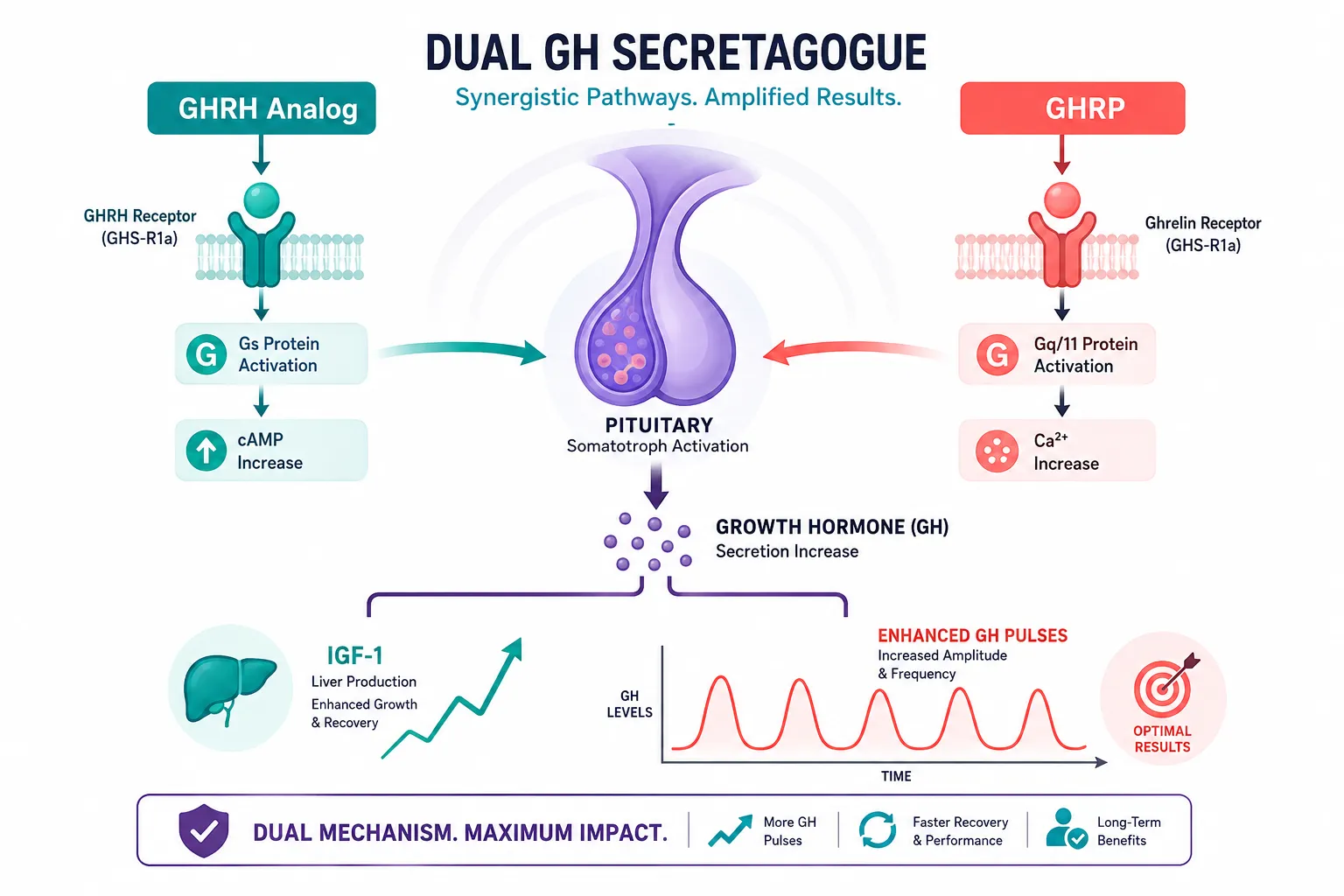
Flat-vector infographic landscape () showing dual GH secretagogue mechanism diagram: two molecular pathway arrows labeled

Key Takeaways

  • Tesamorelin acts as a GHRH analog, stimulating the pituitary through the GHRH receptor, while ipamorelin acts as a ghrelin-receptor agonist (GHSR), creating two distinct but synergistic GH-release pathways.
  • Combining both peptides in research protocols produces amplified, more physiologically pulsatile GH secretion compared to either agent alone.
  • Tesamorelin has the strongest clinical evidence base for visceral fat reduction, particularly in HIV-associated lipodystrophy populations.
  • Dual-secretagogue research designs must control for IGF-1 elevation, cortisol blunting, and inter-dose timing to produce reliable metabolic data.
  • Ipamorelin's selectivity for GH release with minimal cortisol or prolactin stimulation makes it a preferred GHSR agonist for combination work.

How the GH Axis Responds to Dual Secretagogue Stimulation

The GH axis operates through two primary regulatory inputs: growth hormone-releasing hormone (GHRH), which stimulates GH secretion, and somatostatin, which inhibits it. Ghrelin-receptor agonists like ipamorelin add a third lever, they amplify GH pulse amplitude by acting on GHSR-1a receptors independently of the GHRH pathway.

Tesamorelin is a synthetic analog of endogenous GHRH, stabilized with a trans-3-hexenoic acid modification that extends its half-life. It binds GHRH receptors on somatotroph cells in the anterior pituitary, triggering GH synthesis and release. For a detailed breakdown of its pharmacology, see this overview of what tesa is and how it works.

Ipamorelin, by contrast, is a pentapeptide GHSR agonist. It mimics ghrelin's action without significantly raising cortisol or prolactin, a key advantage over older GHRPs like GHRP-6 or hexarelin. Researchers comparing secretagogue profiles can reference this ipamorelin vs. sermorelin vs. hexarelin comparison for mechanistic context.

When both agents are co-administered, the GHRH pathway and the ghrelin pathway converge on the somatotroph simultaneously. The result is a supra-additive increase in GH pulse amplitude, a phenomenon well-documented in pituitary physiology. This dual-pathway stimulation is the core rationale behind tesa and ipamorelin combination protocols for GH-axis modulation and visceral fat research design.

GH Pulse Architecture: Why Pulsatility Matters

Continuous GH elevation is not the goal. Physiological GH acts in pulses, typically 4 to 9 pulses per 24 hours in healthy adults. Pulsatile GH preferentially activates lipolytic pathways in visceral adipocytes, while tonic GH exposure can desensitize receptors and paradoxically increase insulin resistance.

Feature Tesamorelin Alone Ipamorelin Alone Combination Protocol
Mechanism GHRH receptor agonism GHSR-1a agonism Dual-pathway convergence
GH Pulse Amplitude Moderate increase Moderate increase High increase
Cortisol Effect Minimal Minimal Minimal
VAT Evidence Strong (clinical trials) Indirect/preclinical Emerging
IGF-1 Elevation Moderate Mild Higher; requires monitoring

Visceral Fat Mechanisms in Tesamorelin and Ipamorelin Combination Research Design

Visceral Fat Mechanisms in Tesamorelin and Ipamorelin Combination Research Design

Tesamorelin's effect on VAT is the most clinically validated aspect of GH-secretagogue research. Phase III trials demonstrated a 15-20% reduction in VAT area in HIV-associated lipodystrophy patients over 26 weeks. The mechanism involves GH-driven upregulation of hormone-sensitive lipase (HSL) and adipose triglyceride lipase (ATGL) in visceral adipocytes, combined with suppression of lipoprotein lipase (LPL) activity, the enzyme responsible for fat storage.

For researchers designing tesa-focused protocols, the tesa dosage calculator and tesa dosage chart provide structured reference points for weight-adjusted and time-based dosing frameworks.

Ipamorelin's contribution to VAT reduction is less direct but mechanistically important. By amplifying GH pulse amplitude, it enhances the lipolytic signal that tesa initiates. Research models suggest the combination may also modulate adipokine secretion, particularly adiponectin and leptin, though controlled human data remain limited as of 2026.

Key Variables in Dual-Secretagogue Research Design

Researchers building combination protocols should account for the following variables:

  • Timing of co-administration: Simultaneous injection versus staggered dosing (e.g., ipamorelin 30 minutes before tesa) affects peak GH amplitude differently.
  • IGF-1 monitoring: Dual stimulation elevates IGF-1 more than either agent alone; baseline and interval IGF-1 measurement is essential.
  • Fasting state: GH secretion is blunted by postprandial insulin; administering secretagogues in a fasted state (typically pre-sleep) maximizes pulse amplitude.
  • Somatostatin rebound: Repeated stimulation can upregulate somatostatin tone; research designs should incorporate washout periods or cycling protocols.

For comparison with single-agent GHRH protocols, the tesa vs. CJC-1295 analysis offers useful mechanistic contrast. Researchers interested in multi-peptide frameworks may also find the sermorelin, ipamorelin, and CJC-1295 combination overview relevant for comparative design.

Designing Research Protocols Around GH-Axis Modulation and Metabolic Outcomes
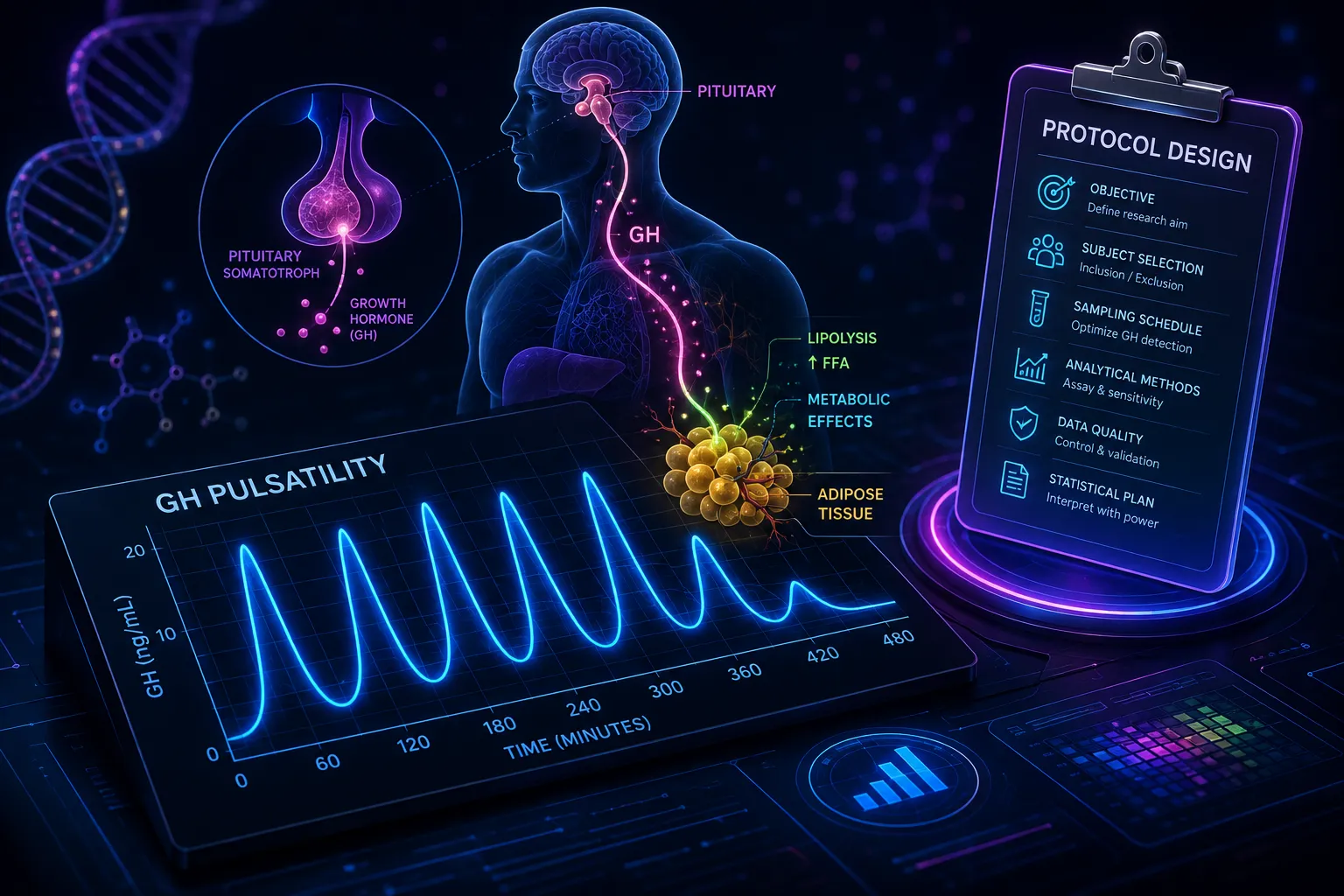
Designing Research Protocols Around GH-Axis Modulation and Metabolic Outcomes

A rigorous tesa and ipamorelin combination protocol for GH-axis modulation and visceral fat research design requires clearly defined endpoints, standardized measurement tools, and mechanistic controls.

Primary endpoints in VAT-focused research typically include:

  • Cross-sectional VAT area via DEXA or CT imaging
  • Fasting triglycerides and HDL-C
  • IGF-1 serum levels
  • Waist circumference as a surrogate marker

Secondary endpoints may include insulin sensitivity indices (HOMA-IR), adipokine panels, and GH pulse profiling via frequent sampling protocols.

Researchers should also evaluate potential adverse signal patterns. Reviewing documented tesa side effects and understanding how they may be modified by concurrent ipamorelin exposure is a necessary step in protocol safety design.

For broader metabolic research contexts, adipotide (FTPP) represents a distinct mechanistic approach to VAT targeting, useful as a comparative reference when evaluating GH-axis versus non-GH-axis fat reduction strategies.

"The combination of a GHRH analog and a GHSR agonist does not simply add two effects, it multiplies the pituitary's output through synchronized receptor convergence."

Dosing frameworks for combination protocols should reference established single-agent baselines. The tesa dosage per day guide provides a clinical anchor from which combination adjustments can be modeled.

Conclusion

Tesamorelin and ipamorelin combination protocols represent one of the most mechanistically coherent approaches to GH-axis modulation and visceral fat research design available in the peptide research landscape. By engaging both the GHRH receptor and GHSR-1a simultaneously, dual-secretagogue frameworks produce amplified, pulsatile GH release that preferentially targets visceral adipose tissue through well-characterized lipolytic pathways.

Actionable next steps for researchers:

  1. Establish baseline IGF-1, fasting insulin, and VAT imaging before initiating any combination protocol.
  2. Use validated dosing references for each agent independently before modeling combination schedules.
  3. Design protocols with defined cycling periods to prevent somatostatin upregulation and receptor desensitization.
  4. Monitor for additive IGF-1 elevation and document all adverse signals systematically.
  5. Compare findings against single-agent controls to isolate the combinatorial effect.

As 2026 research continues to refine dual-secretagogue models, the tesa-ipamorelin combination stands as a high-priority framework for investigators focused on metabolic health, GH pulsatility, and evidence-based visceral fat reduction strategies.

https://www.puretestedpeptides.com/wp-content/uploads/2026/08/tesa-and-ipamorelin-combination-protocols-gh-axis-modulation-and-visceral.webp 1024 1536 https://www.puretestedpeptides.com/wp-content/uploads/2026/01/buy-peptides-online.jpg 2026-08-05 13:04:152026-08-05 13:04:15Tesamorelin and Ipamorelin Combination Protocols: GH-Axis Modulation and Visceral Fat Research Design
×

Helpful Links

  • My account
  • Cart
  • Checkout
  • Refund and Returns Policy
  • Privacy Policy
  • SMS Privacy Policy
  • Login
  • My Account
  • Logout

USA Made Lab Tested Peptides

All products are sold for research, laboratory, or analytical purposes only, and are not for human consumption


Pure Tested Peptides is a chemical supplier. Pure Tested Peptides is not a compounding / chemical compounding facility as defined under 503A of the Federal Food, Drug, and Cosmetic act. Pure Tested Peptides is not an outsourcing facility as defined under 503B of the Federal Food, Drug, and Cosmetic act.

The statements made within this website have not been evaluated by the US Food and Drug Administration. The products we offer are not intended to diagnose, treat, cure or prevent any disease.

Human/Animal Consumption Prohibited. Laboratory/In-Vitro Experimental Use Only

Scroll to top Scroll to top Scroll to top