

Peptide Calculators for Tesamorelin and Ipamorelin: Optimizing Reconstitution and Dosing Accuracy
"
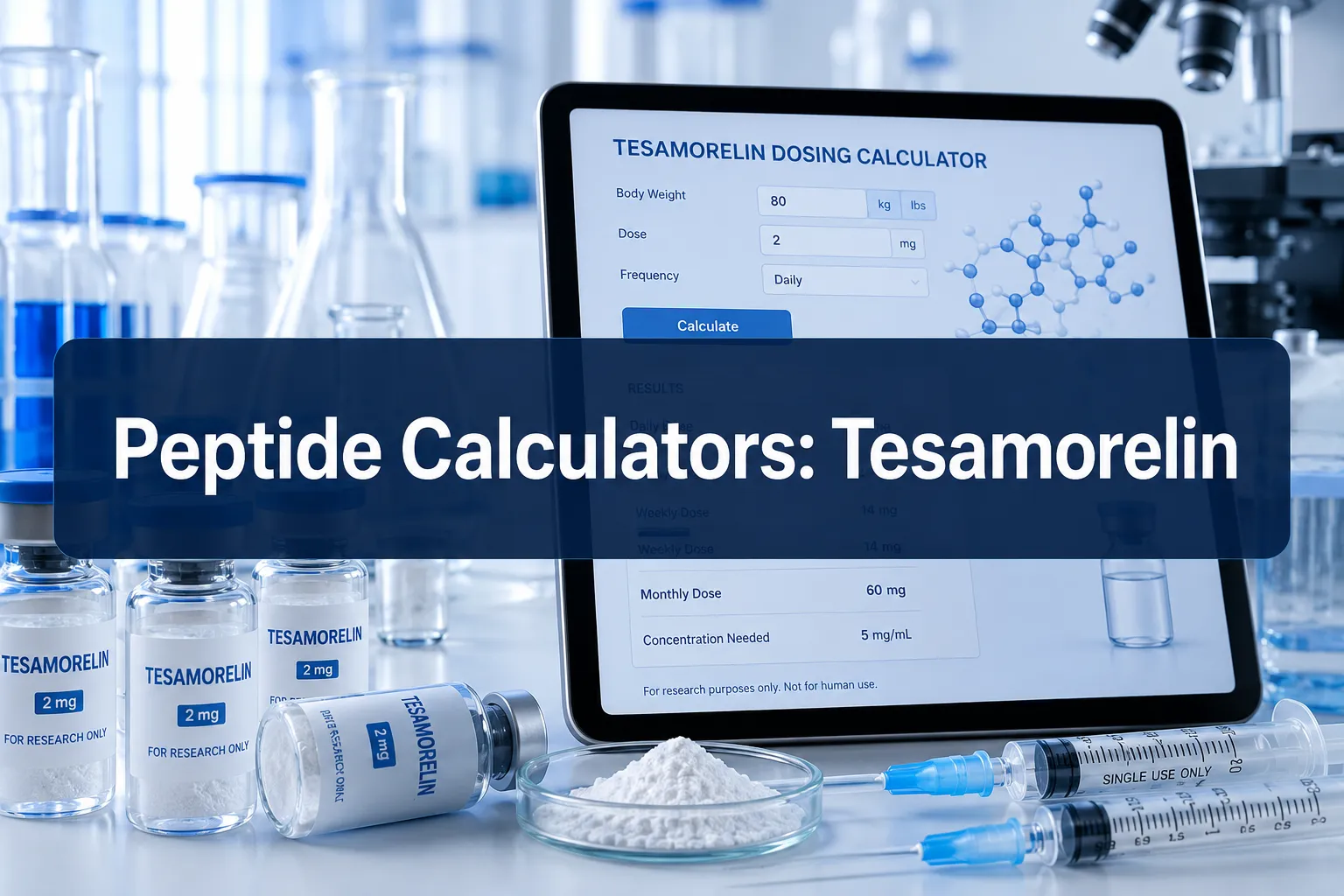
A dosing error as small as 0.1 mL can translate to a 50% deviation from the intended peptide amount, a margin that renders research data unreliable before the experiment even begins. For researchers working with growth hormone secretagogues, precision is not optional. Using peptide calculators for Tesamorelin and Ipamorelin: optimizing reconstitution and dosing accuracy is one of the most practical steps any researcher can take to eliminate preventable errors and produce consistent, reproducible outcomes.
This guide walks through the mechanics of peptide calculators, explains why reconstitution ratios matter, and provides a clear framework for applying these tools to Tesamorelin and Ipamorelin research protocols.
Key Takeaways
- Peptide calculators convert vial concentration and desired dose into exact injection volumes, removing guesswork from the process.
- The amount of bacteriostatic water (BAC water) added during reconstitution directly determines the concentration of every subsequent dose.
- Tesamorelin and Ipamorelin have different molecular weights and standard research dosing ranges, requiring separate calculations.
- Small syringe selection errors compound over time and can significantly skew cumulative dosing across a research cycle.
- Verifying purity and peptide mass through third-party-tested sources is a prerequisite for any calculation to be meaningful.
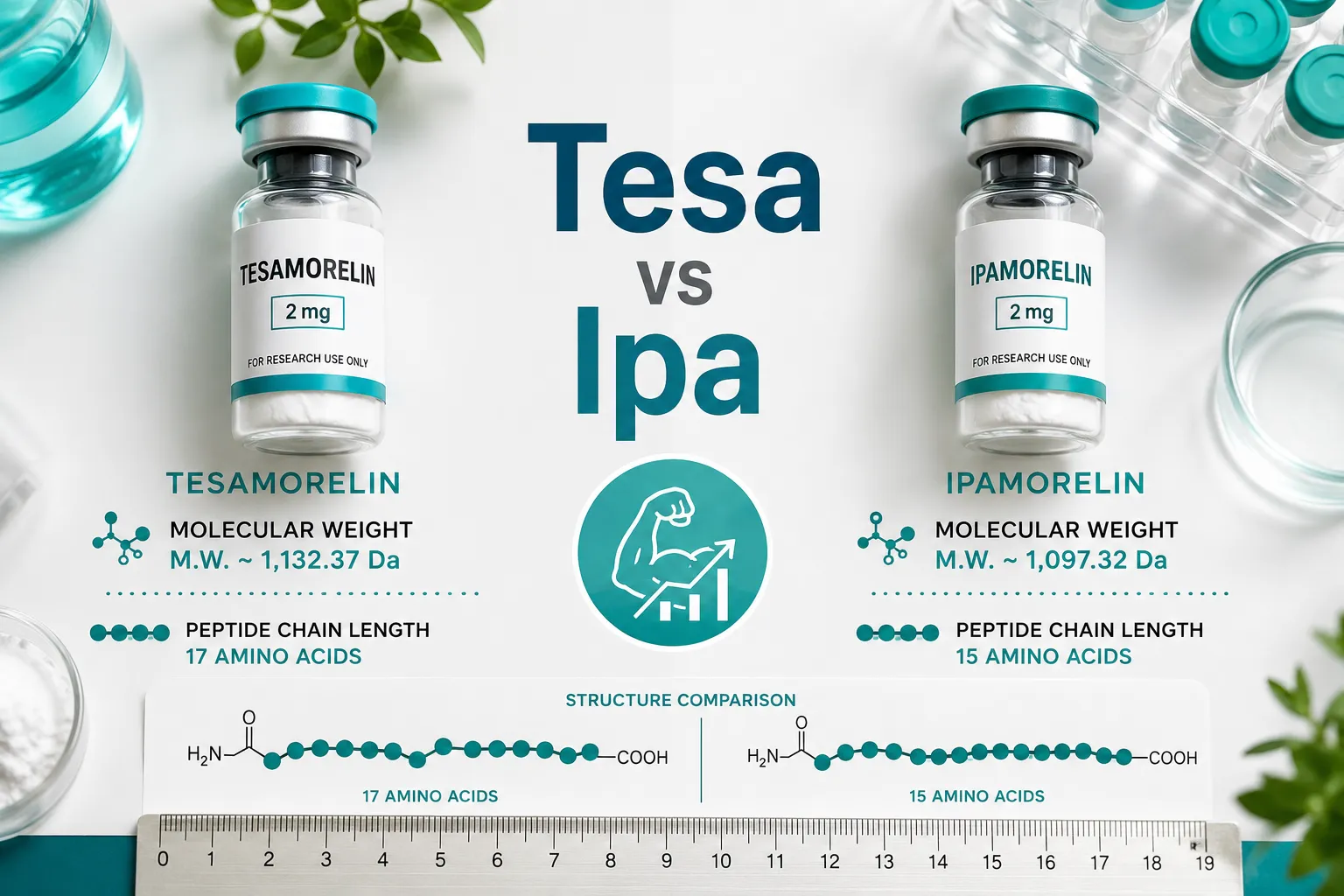
Understanding the Core Math Behind Peptide Calculators
Before any syringe is filled, a researcher must establish one foundational number: concentration, expressed in micrograms per milliliter (mcg/mL). Every downstream calculation depends on it.
The formula is straightforward:
Concentration (mcg/mL) = Total peptide mass (mcg) / Volume of BAC water added (mL)
For example, a 2 mg (2,000 mcg) vial of Tesamorelin reconstituted with 2 mL of BAC water yields a concentration of 1,000 mcg/mL. If the target research dose is 500 mcg, the required injection volume is exactly 0.5 mL.
Why BAC Water Volume Is the Critical Variable
Many researchers focus on dose size but overlook that the volume of BAC water added is the variable that controls everything else. Adding more water lowers concentration and increases injection volume per dose. Adding less water raises concentration and shrinks injection volume, which can make accurate measurement on a standard insulin syringe harder.
A practical rule: aim for a reconstitution volume that places the target dose between 0.1 mL and 0.5 mL on a 1 mL insulin syringe. This range offers the best balance of measurement accuracy and manageable injection volume.
"The most common reconstitution mistake is not calculating the dose wrong, it is adding an unmeasured amount of BAC water and then trying to back-calculate afterward."
Researchers exploring Tesamorelin dosage protocols should establish their BAC water volume before reconstitution, not after.
Applying Peptide Calculators for Tesamorelin and Ipamorelin: Optimizing Reconstitution and Dosing Accuracy
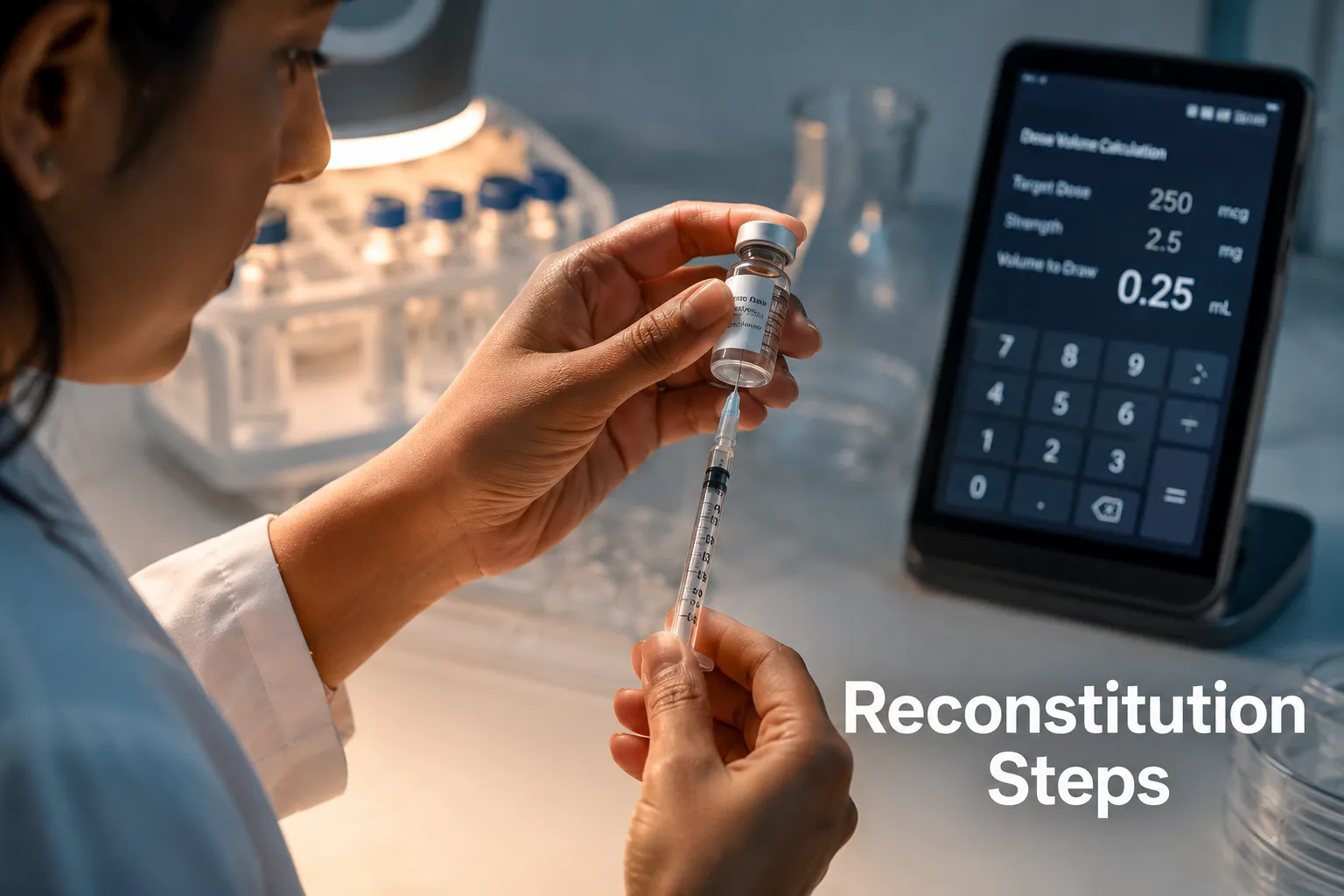
Tesamorelin and Ipamorelin are frequently used together in research settings, but they have distinct properties that affect how calculations are performed.
Tesamorelin Calculation Example
Tesamorelin is a synthetic analogue of growth hormone-releasing hormone (GHRH). Common research vial sizes are 2 mg and 5 mg. For a Tesamorelin research peptide vial of 5 mg (5,000 mcg):
| Reconstitution Volume | Concentration | Volume for 1,000 mcg dose |
|---|---|---|
| 2.5 mL BAC water | 2,000 mcg/mL | 0.50 mL |
| 5.0 mL BAC water | 1,000 mcg/mL | 1.00 mL |
| 1.0 mL BAC water | 5,000 mcg/mL | 0.20 mL |
The 2.5 mL option is often preferred because the 0.50 mL draw is easy to read on a standard U-100 insulin syringe.
Researchers comparing growth hormone secretagogue options may also find the Sermorelin vs Tesamorelin breakdown useful for contextualizing dosing differences.
Ipamorelin Calculation Example
Ipamorelin is a selective growth hormone secretagogue receptor agonist. Vials are commonly available at 2 mg and 5 mg. For a 2 mg (2,000 mcg) vial:
| Reconstitution Volume | Concentration | Volume for 200 mcg dose |
|---|---|---|
| 2.0 mL BAC water | 1,000 mcg/mL | 0.20 mL |
| 1.0 mL BAC water | 2,000 mcg/mL | 0.10 mL |
Researchers using combination products should note that blend vials, such as those in Tesamorelin/CJC-1295/Ipamorelin 12 mg blends, require the calculator to account for the total mass of all peptides combined, not just one component.
For those comparing secretagogue combinations, the Ipamorelin vs Sermorelin vs Hexarelin comparison provides relevant research context.
Avoiding Common Errors: Practical Tips for Dosing Accuracy
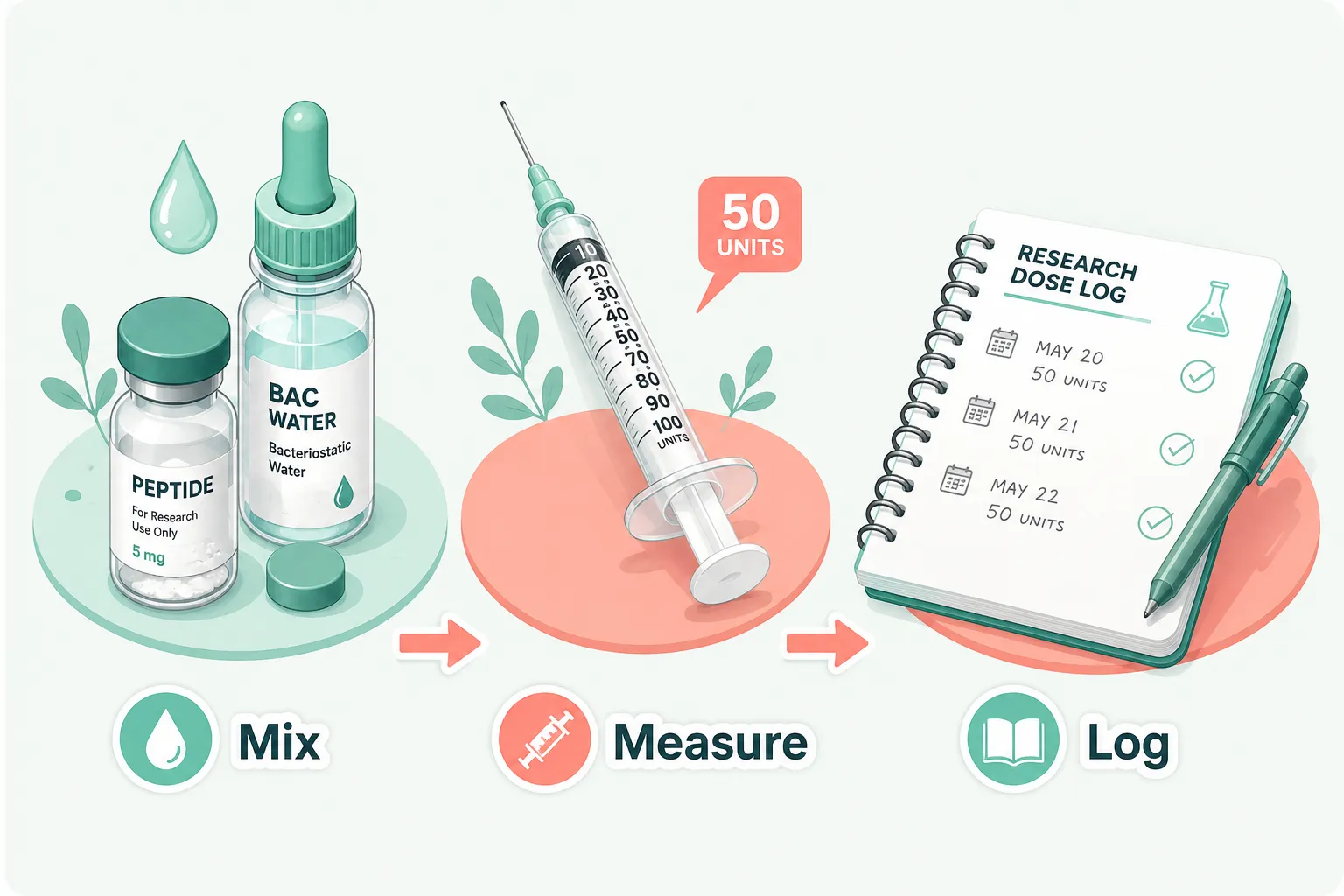
Even with a calculator, errors occur. The following checklist addresses the most frequent failure points in peptide reconstitution and dosing workflows.
Before Reconstitution
- Confirm vial mass matches the label (third-party COA verification is essential, see quality peptides sourcing guidance)
- Use a calibrated, sterile BAC water syringe for adding diluent
- Record the exact volume of BAC water added immediately
During Dosing
- Use a U-100 insulin syringe for doses under 1 mL
- Read the syringe at eye level to avoid parallax error
- Never estimate, if the dose falls between graduation marks, recalculate the reconstitution
Storage and Stability
- Reconstituted peptides should be stored at 2-8°C and used within the manufacturer's recommended window
- Avoid repeated freeze-thaw cycles, which degrade peptide integrity and alter effective concentration
Researchers working with multi-peptide protocols, for instance, those incorporating CJC-1295/Ipamorelin assay planning, should maintain a separate calculation log for each peptide in the stack.
For fat-loss focused research designs, the Tesamorelin dosage for fat loss resource offers protocol-specific dosing context that complements calculator outputs.
Conclusion
Accurate research outcomes with Tesamorelin and Ipamorelin depend on a simple but non-negotiable chain: verified peptide mass, precise BAC water volume, correct concentration calculation, and accurate syringe measurement. Peptide calculators for Tesamorelin and Ipamorelin: optimizing reconstitution and dosing accuracy are not a shortcut, they are the standard operating procedure for any researcher who wants data they can trust.
Actionable next steps:
- Before reconstituting any vial, calculate your target concentration and write it down.
- Select a BAC water volume that places your dose in the 0.1-0.5 mL range on a U-100 syringe.
- Source peptides only from suppliers with third-party purity verification to ensure the labeled mass is accurate.
- Keep a dosing log for every session, recording concentration, draw volume, and administration time.
- Revisit your calculations if you switch vial sizes, suppliers, or reconstitution volumes mid-protocol.
Precision at the preparation stage is the single highest-leverage action a researcher can take before any experiment begins.