Call or Text 727-513-9780
  • Shopping Cart Shopping Cart
    0Shopping Cart
Pure Tested Peptides | America's most trusted Peptides for sale online
  • Peptides for sale
    • Oral Peptides for sale
      • Peptide Capsules for sale
      • BPC 157 Capsules 1000mcg
      • SLU-PP-332 Capsules | 1000 mcg
      • 5-Amino-1MQ 50mg Capsules
      • Tesofensine 500mcg
    • All Peptides for sale
    • Peptide Sprays
      • BPC 157 Nasal Spray Kit
      • BPC-157 TB500 Nasal Spray Kit
      • Semax Nasal Spray 10mg
      • Selank – Nasal Spray Kit – 10mg
      • Epithalon 50MG Nasal Spray Kit
      • Ipamorelin 10mg Nasal Spray
      • Klow Nasal Spray (BPC-157 + TB-500 + GHK-Cu + KPV) | 80mg
      • Hulk Nasal Spray Tesa / Ipa Blend 6/3 MG
      • Klow Nasal Spray
      • NAD + 500 mg Nasal Spray
      • PT-141 Nasal Spray Kit
    • GHRH Peptides
      • Ipa Peptides
      • CJC-1295 Peptides
        • CJC-1295 with DAC 5 mg
        • CJC-1295 without DAC 5 mg
        • CJC-1295 Ipa 10mg
      • Tesa Peptides
        • Tesa Peptide
        • Tesa 20 mg
    • GHK-Cu Peptides
      • All GHK-Cu Peptides
      • GHK-Cu 100mg
      • KLOW Peptide Blend – Buy KLOW blend online
    • BPC Peptides
      • All BPC Peptides
      • BPC-157
      • BPC-157 TB-500
      • BPC 157 capsules 1000mcg
    • SLU-PP-332 Peptides
      • All SLU-PP-332 Peptides
      • SLU-PP-332 5mg
    • GLP3 Peptides
      • GLP3-R
      • GLP3-R CAG 10mg
      • GLP3-R 20mg
    • PT-141 Peptides
      • PT-141 Peptides for sale
      • PT-141 10mg
      • PT-141 Nasal Spray
    • CAG Peptides
      • Lipo-C Peptide Blend
      • CAG 5mg
      • CAG 10mg
    • MOTS-C Peptides
      • MOTS-C Peptides for sale
      • MOTS-c peptide
      • MOTS-c 10mg *6 pack*
    • 5 Amino 1MQ Peptides
      • 5 Amino 1MQ Peptides for sale
      • 5-Amino-1MQ 50mg Capsules
      • 5-Amino-1MQ 5mg
    • Epithalon Peptides
      • Epithalon Peptides for sale
      • Epithalon 10mg
      • Epithalon 50mg
  • Shop
    • GLPs
      • 5-Amino-1MQ 50mg Capsules
      • 5-Amino-1MQ 5mg
      • GLP3-Reta
      • L-Carnitine 500mg/ml
      • Tesofensine 500mcg
      • SLU-PP-332 5mg
      • MOTS-c 10mg *6 pack*
    • Epithalon & BPC Peptides
      • Epithalon 10mg
      • Epithalon 50mg
      • BPC-157
      • BPC 157 capsules 1000mcg
      • BPC-157 TB-500
      • BPC-157 TB500 Nasal Spray Kit
      • BPC 157 Nasal Spray Kit
    • BPC TB-500 & NAD+ Peptides
      • NAD+ 500 mg
      • KLOW Peptide Blend – Buy KLOW blend online
      • GLOW Peptide Blend
      • TB 500 5mg
      • BPC 157 capsules 1000mcg – Supplement
      • BPC 157 Nasal Spray Kit
      • BPC-157
      • BPC-157 TB500 Nasal Spray Kit
      • BPC-157 TB-500
      • BPC 157 capsules 1000mcg
    • LL-37 Peptide
      • LL-37 10 mg
    • MOTS-C & Selank
      • MOTS-c peptide
      • Selank 10mg
    • GHK Peptides
      • GHK-Cu 100mg
      • GLOW Peptide Blend
      • KLOW Peptide Blend – Buy KLOW blend online
  • COAs
  • Wholesale
    • Wholesale Peptides for sale
  • PTP FAQ
  • Affiliates
    • Selank Peptide: Advanced Pharmacological Mechanisms Underlying Its Anxiolytic and Nootropic Effects in Research
      • 5-Amino-1MQ Peptide: Detailed Mechanisms of NNMT Inhibition and Its Impact on Cellular Metabolism Research
        • MOTS-C Peptide: Unraveling Its Role in Mitochondrial Dynamics and Energy Metabolism Research
          • Epithalon Peptide and Telomerase Regulation: Investigating Its Impact on Cellular Senescence and Lifespan Research Models
            • GLP2-T vs GLP2 Tirz Peptide: Understanding the Naming, Mechanistic Nuances, and Research Implications for Gut Health
      • Peptides and Polypeptides in Modern Pharmacology: What Research on Metoprolol, Prednisone, and Amlodipine Reveals
        • Polypeptide Peptides vs NSAIDs: What Naproxen and Diclofenac Teach Tissue-Repair Researchers About BPC‑157 and TB‑500
          • Peptides and Polypeptides in Endocrine Pharmacology: How GLP-1, GLP-2, and GLP-3 Retatrutide Differ From Classic Drugs Like Prednisone and Amlodipine
          • 5‑Amino‑1MQ Peptide and NNMT Inhibition: How It Compares With Statins Like Atorvastatin in Adipose and Lipid Metabolism Research
      • Enclomiphene, Estrogen Receptor Signaling, and Luteinizing Phase Biology: What Hormone Researchers Should Measure
        • Mesenchymal Stem Cells, BPC‑157, and GHK‑Cu: How Tissue Repair Peptides Compare With Classic NSAIDs Like Naproxen in Injury Models
          • Peptide Calculator Use Cases Beyond Growth Hormone: Working Through GLP‑3 Retatrutide, MOTS‑c, and BPC‑157 Research Dosing
        • Polypeptide Peptides in Endocrine and Metabolic Pharmacology: Lessons From Amlodipine, Prednisone, and Metoprolol
        • Peptides Calculator for Advanced Blends: Worked Examples for Tesamorelin, CJC‑1295, and Ipamorelin Stacks
          • Peptides and Polypeptides in Human Physiology: How Molecular Size Shapes Research Applications
            • Selank Peptide: Advanced Pharmacological Mechanisms Underlying Its Anxiolytic and Nootropic Effects in Research
          • 5-Amino-1MQ Peptide: Detailed Mechanisms of NNMT Inhibition and Its Impact on Cellular Metabolism Research
            • MOTS-C Peptide: Unraveling Its Role in Mitochondrial Dynamics and Energy Metabolism Research
              • Epithalon Peptide and Telomerase Regulation: Investigating Its Impact on Cellular Senescence and Lifespan Research Models
                • GLP2-T vs GLP2 Tirz Peptide: Understanding the Naming, Mechanistic Nuances, and Research Implications for Gut Health
                  • Peptides and Polypeptides in Endocrine Pharmacology: How GLP-1, GLP-2, and GLP-3 Retatrutide Differ From Classic Drugs Like Prednisone and Amlodipine
                    • Polypeptide Peptides vs NSAIDs: What Naproxen and Diclofenac Teach Tissue-Repair Researchers About BPC‑157 and TB‑500
                      • Peptides and Polypeptides in Modern Pharmacology: What Research on Metoprolol, Prednisone, and Amlodipine Reveals
                        • 5‑Amino‑1MQ Peptide and NNMT Inhibition: How It Compares With Statins Like Atorvastatin in Adipose and Lipid Metabolism Research
                        • Enclomiphene, Estrogen Receptor Signaling, and Luteinizing Phase Biology: What Hormone Researchers Should Measure
                        • Mesenchymal Stem Cells, BPC‑157, and GHK‑Cu: How Tissue Repair Peptides Compare With Classic NSAIDs Like Naproxen in Injury Models
                        • Peptide Calculator Use Cases Beyond Growth Hormone: Working Through GLP‑3 Retatrutide, MOTS‑c, and BPC‑157 Research Dosing
                        • Polypeptide Peptides in Endocrine and Metabolic Pharmacology: Lessons From Amlodipine, Prednisone, and Metoprolol
                        • Peptides Calculator for Advanced Blends: Worked Examples for Tesamorelin, CJC‑1295, and Ipamorelin Stacks
                        • Peptides and Polypeptides in Human Physiology: How Molecular Size Shapes Research Applications
                        • Selank Peptide: Advanced Pharmacological Mechanisms Underlying Its Anxiolytic and Nootropic Effects in Research
                        • MOTS-C Peptide: Unraveling Its Role in Mitochondrial Dynamics and Energy Metabolism Research
                        • Peptides and Polypeptides in Modern Pharmacology: What Research on Metoprolol, Prednisone, and Amlodipine Reveals
                        • Peptides and Polypeptides in Endocrine Pharmacology: How GLP-1, GLP-2, and GLP-3 Retatrutide Differ From Classic Drugs Like Prednisone and Amlodipine
                        • 5-Amino-1MQ Peptide: Detailed Mechanisms of NNMT Inhibition and Its Impact on Cellular Metabolism Research
                        • Mesenchymal Stem Cells, BPC‑157, and GHK‑Cu: How Tissue Repair Peptides Compare With Classic NSAIDs Like Naproxen in Injury Models
                        • Peptide Calculator Use Cases Beyond Growth Hormone: Working Through GLP‑3 Retatrutide, MOTS‑c, and BPC‑157 Research Dosing
                        • GLP2-T vs GLP2 Tirz Peptide: Understanding the Naming, Mechanistic Nuances, and Research Implications for Gut Health
                        • Polypeptide Peptides in Endocrine and Metabolic Pharmacology: Lessons From Amlodipine, Prednisone, and Metoprolol
                        • Polypeptide Peptides vs NSAIDs: What Naproxen and Diclofenac Teach Tissue-Repair Researchers About BPC‑157 and TB‑500
                        • Peptides and Polypeptides in Human Physiology: How Molecular Size Shapes Research Applications
                        • Peptides Calculator for Advanced Blends: Worked Examples for Tesamorelin, CJC‑1295, and Ipamorelin Stacks
                        • 5‑Amino‑1MQ Peptide and NNMT Inhibition: How It Compares With Statins Like Atorvastatin in Adipose and Lipid Metabolism Research
                        • Enclomiphene, Estrogen Receptor Signaling, and Luteinizing Phase Biology: What Hormone Researchers Should Measure
                        • Epithalon Peptide and Telomerase Regulation: Investigating Its Impact on Cellular Senescence and Lifespan Research Models
                        • Best research protocol Klow blend
                        • best time to take BPC-157
                        • best time to take DSIP (Delta Sleep Inducing Peptide)
                        • best time to take CJC-1295
                        • best time to take AOD-9604
                        • best time to take Follistatin 344
                        • best time to take Ipamorelin
                        • best time to take MK-677 (Ibutamoren)
                        • best time to take Ligandrol (LGD-4033) — research compound
                        • best time to take Ostarine (MK-2866) — research compound
                        • best time to take GHK-CU
                        • best time to take TB-500
                        • best time to take MOTS-c
                        • best time to take Semax
                        • best time to take RAD-140 (Testolone) — research compound
                        • best time to take Thymosin Alpha-1
                        • best time to take PEG-MGF
                        • Biolife Plasma, Octapharma Plasma, and Research Peptides: How Plasma Donation Labs Differ From Peptide Suppliers
                        • best time to take YK-11 — research compound
                        • best time to take PT-141 (Bremelanotide)
                        • Best research protocol Klow blend
                        • 5-Amino-1MQ and MOTS-C Synergy: Metabolic Signaling, Mitochondria, and Research Design
                        • BPC-157 and TB-500: Investigating Their Combined Effects on Angiogenesis and Cellular Migration in Tissue Repair Models
                        • BPC-157 Peptide: Gut Barrier Function, Inflammation, and Tissue-Recovery Research
                        • 5‑Amino‑1MQ and MOTS‑c Synergy in Metabolic Research: Designing NNMT and Mitochondrial Biogenesis Stacks
                        • CJC-1295 with DAC vs. Without DAC: Half-Life, Release Kinetics, and Research Implications
                        • CJC‑1295 with DAC vs. Without DAC: Expanding on Half‑Life Differences Using Tesamorelin and Ipamorelin Blend Case Studies
                        • Collagen Biology and Copper‑Binding Peptides: How GHK‑Cu, Glow Blend, and Klow Blend Interact with Skin and Connective Tissue
                        • Collagen Biology and Regenerative Peptides: How GHK‑Cu, Glow Blend, and Klow Blend Affect Extracellular Matrix Research
                    • DNA, Telomeres, and Longevity Peptides: Positioning Epithalon and MOTS‑c in Genetic Aging Research
                      • Enclomiphene Citrate: serm Mechanism, Testosterone Research, and Stack Compatibility
                        • Enclomiphene vs Enclomiphene Citrate: Formulation, Bioavailability, and Research Distinctions
                        • Epithalon Peptide Research: Telomerase Activation, Aging, and Pineal Gland Function
                        • Estrogen Receptor Signaling and Enclomiphene: How Selective Modulators Compare with Classic Polypeptide Hormones
                        • GHK-Cu Peptide: Advanced Mechanisms in Extracellular Matrix Remodeling and Wound Healing Research
                        • GHK-Cu Peptide: Collagen Synthesis, Wound Repair, and Skin-Barrier Research Models
                        • GLP-1 vs GLP-3 vs GLP-2: Peptide Classification and Research Applications
                        • GLP-2 Peptide Research Guide: Gut Barrier Function, Nutrient Absorption, and Intestinal Recovery Models
                        • GLP-3 Retatrutide vs. GLP-1 Drugs: What Triple-Agonist Biology Changes in Research Models
                        • Ipamorelin and Tesamorelin Combination: Synergistic GH Secretagogue Research and Dosing Protocols
                        • GLP2 Tirz Peptide: What It Is, Why the Name Exists, and How Researchers Should Interpret It
                        • Klow Blend Peptide Nasal Spray: What the Formulation Is Trying to Do in Cognitive Research
                        • Mitochondria, NNMT Inhibition, and Peptide Modulators: Where MOTS‑c and 5‑Amino‑1MQ Fit in Cellular Energy Research
                        • MOTS-c Peptide: Mitochondrial Function, Energy Metabolism, and What Researchers Measure
                        • MOTS-c vs. 5-Amino-1MQ: Which Metabolic Research Questions Each Compound Actually Answers
                        • Nasal Spray Peptides: Bioavailability, Administration, and Semax/Selank Research Applications
                        • PT-141 Peptide Research: Mechanism of Action and Melanocortin Receptor Signaling
                        • Retatrutide for Research: Mechanism, Structure, and GLP-1/GLP-3 Dual Action
                        • Retatrutide for Obesity and Type 2 Diabetes: What the Latest Trial Data Suggest
                        • Tesofensine Peptide Research: Mechanism, Appetite Suppression, and Neuropeptide Y Pathways
  • Contact
    • Contact Customer Service
    • Text Customer Support
  • About US
  • Shop all peptides
  • Affiliate Program
    • Affiliate Signup
  • Login / Register Login / Register Page Link Login / Register Page Link
  • Click to open the search input field Click to open the search input field Search
  • Menu Menu

Tag Archive for: mash treatment

Retatrutide and MASLD: How Triple-Agonist Research Is Reframing Liver-Fat Endpoints

Retatrutide and MASLD: How Triple-Agonist Research Is Reframing Liver-Fat Endpoints

July 28, 2026/0 Comments/in Uncategorized/by

Nearly 38% of adults worldwide carry excess liver fat, yet until recently, no single drug candidate had shown the ability to clear it with the speed and depth that phase 2 data now attribute to retatrutide. The conversation around Retatrutide and MASLD: How Triple-Agonist Research Is Reframing Liver-Fat Endpoints is no longer speculative. It sits at the center of hepatology and metabolic medicine in 2026, driven by trial results that are forcing researchers to reconsider what "meaningful" liver-fat reduction actually looks like.
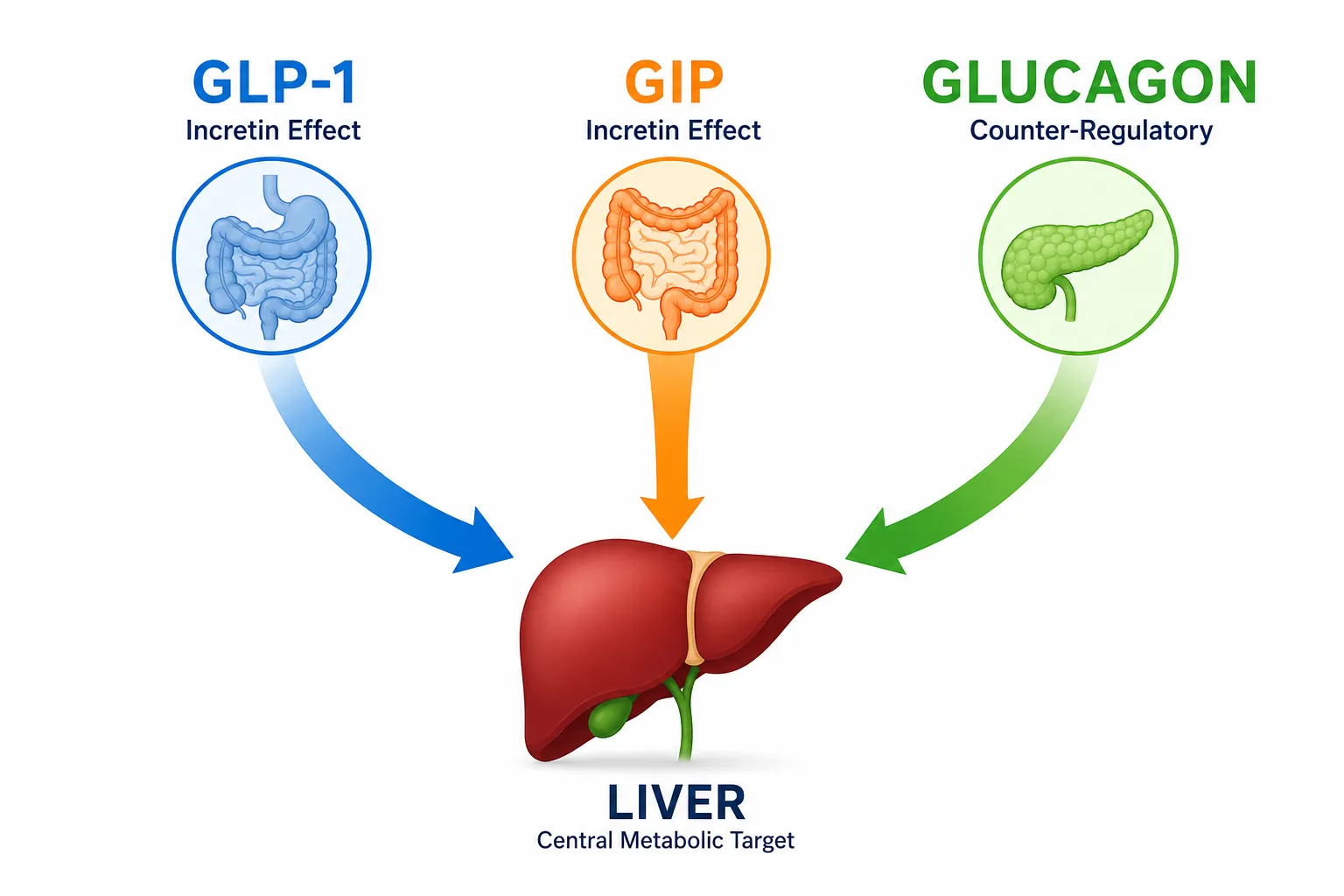
Bright editorial infographic-style landscape (): labeled diagram of three receptor pathways — GLP-1, GIP, and glucagon —

Key Takeaways

  • Retatrutide simultaneously activates GLP-1, GIP, and glucagon receptors, giving it a broader metabolic reach than dual-agonist or single-agonist alternatives.
  • Phase 2a data published in Nature Medicine showed relative liver-fat reductions exceeding 70% at higher doses, with steatosis resolution in the majority of participants.
  • MASLD (Metabolic dysfunction-Associated Steatotic Liver Disease) researchers are now debating whether older endpoints, such as modest fat reduction thresholds, remain adequate benchmarks.
  • Histologic improvement, not just imaging-based fat reduction, is emerging as the next critical endpoint frontier.
  • Researchers sourcing retatrutide for preclinical work should prioritize verified purity and documented assay data.

Why MASLD Needed a New Benchmark

Metabolic dysfunction-Associated Steatotic Liver Disease replaced the older "NAFLD" terminology to better reflect the condition's metabolic roots. The renaming was more than cosmetic, it signaled a shift toward treating liver disease as an organ-level consequence of systemic metabolic dysfunction, not an isolated condition.

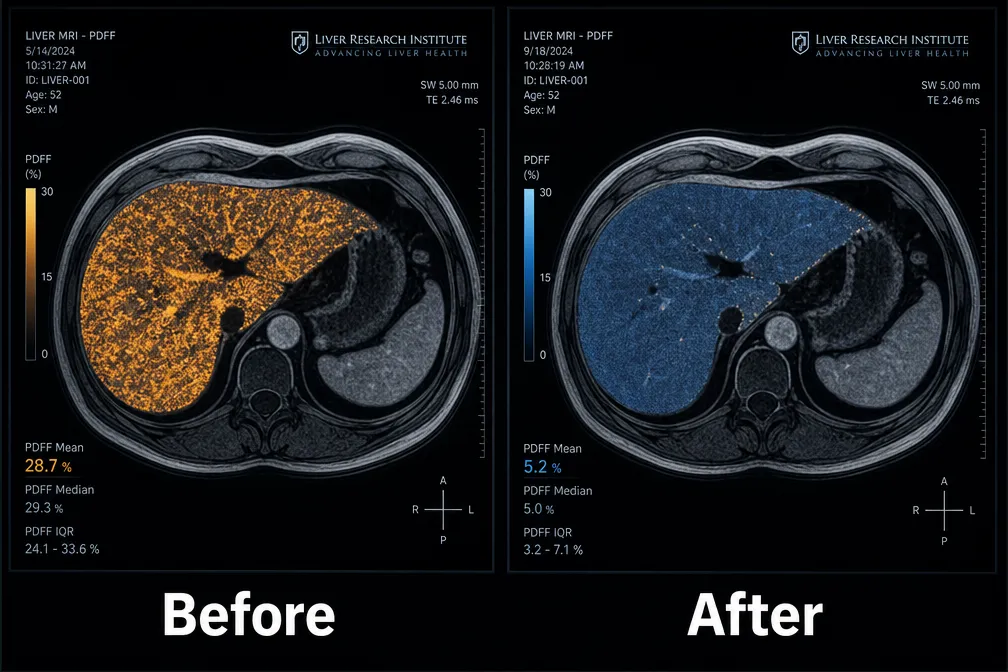
For years, clinical trials defined success as a relative reduction in liver fat of 30% or more by MRI-PDFF (magnetic resonance imaging proton density fat fraction). That threshold made sense when available therapies could barely reach it. Retatrutide has made it look modest.

Why does this matter for endpoint design?

  • Trials built around 30% reduction thresholds may underestimate a drug's true biological impact.
  • Regulators and investigators are now asking whether resolution of steatosis, not just reduction, should be the primary bar.
  • Histologic endpoints (biopsy-confirmed MASH resolution without worsening fibrosis) are gaining weight as co-primary outcomes.

The GLP-3 retatrutide peptide research overview provides useful background on how the molecule's receptor profile distinguishes it from earlier GLP-1-only compounds.

The Triple-Agonist Mechanism Driving Liver-Fat Results

Retatrutide's defining feature is its simultaneous activity at three receptors: GLP-1R, GIPR, and GCGR (glucagon receptor). Each contributes to the liver-fat story in a distinct way.

Receptor Primary Liver-Relevant Action
GLP-1R Reduces hepatic glucose output, improves insulin sensitivity
GIPR Enhances lipid clearance, supports adipose remodeling
GCGR Directly stimulates hepatic fat oxidation

The glucagon component is especially significant for MASLD. Glucagon receptor activation accelerates beta-oxidation, the process by which liver cells burn fatty acids for energy. Earlier GLP-1 agonists largely bypassed this pathway. By adding glucagon agonism, retatrutide essentially recruits the liver's own fat-burning machinery rather than relying solely on upstream metabolic improvements.

This mechanistic depth helps explain why the phase 2a trial results were so striking. At the highest doses studied, more than 80% of participants achieved steatosis resolution by MRI-PDFF criteria, a figure that outpaced anything previously reported for a pharmacological intervention in this disease area.

Researchers interested in the broader landscape of metabolic peptides may also find value in reviewing tesa's mechanisms and fat-loss research, which similarly targets visceral and hepatic fat through a different pathway.

For those exploring related receptor biology, the GLP-2 receptor tag offers additional context on incretin-family signaling in metabolic tissues.

Retatrutide and MASLD: How Triple-Agonist Research Is Reframing Liver-Fat Endpoints in Clinical Practice
Retatrutide and MASLD: How Triple-Agonist Research Is Reframing Liver-Fat Endpoints in Clinical Practice

The phase 2a data published in Nature Medicine did more than demonstrate efficacy, they created a measurement problem. When a drug achieves greater than 70% relative liver-fat reduction and resolves steatosis in the majority of subjects at higher doses, the field must ask: are current endpoints sensitive enough to differentiate between candidates, or do they simply confirm a floor?

Three shifts now underway in MASLD trial design:

  1. Raising the resolution bar. Some investigators now propose complete steatosis resolution (liver fat below 5% by MRI-PDFF) as a primary endpoint rather than a secondary one.
  2. Integrating histology earlier. Biopsy-confirmed MASH resolution without fibrosis progression is moving from exploratory to co-primary status in phase 3 designs.
  3. Longer follow-up windows. Durable liver-fat suppression, not just end-of-treatment snapshots, is becoming a key differentiator.

For preclinical researchers building MASLD study protocols, understanding what GLP-3 retatrutide is and how it is named can help clarify nomenclature when reviewing cross-study literature.

Mitochondrial health is another area gaining attention in MASLD research. Compounds like SS-31 are being studied for their role in hepatic mitochondrial dynamics, see the SS-31 mitochondrial dynamics research summary for parallel mechanistic context.

What Researchers Should Watch Next

The most important open questions in retatrutide-MASLD research heading into late 2026 center on three areas:

Fibrosis outcomes. Liver-fat reduction is necessary but not sufficient. Phase 3 trials must demonstrate that steatosis resolution translates into meaningful antifibrotic effects, the endpoint that actually predicts long-term liver-related mortality.

Dose-response durability. The phase 2a trial showed a clear dose-response relationship for liver-fat reduction. Whether the highest-dose benefits are maintained beyond 48 weeks, and whether any rebound occurs after discontinuation, remains to be established.

Biomarker validation. Non-invasive biomarkers, including liver stiffness measurement and circulating fibrosis panels, are being evaluated as surrogate endpoints. Their validation against biopsy data in retatrutide-treated cohorts will shape how future trials are powered.

Researchers sourcing retatrutide for preclinical investigations should consult verified suppliers. The retatrutide 10mg product page and the GLP-3 retatrutide 10mg product listing both offer documented purity specifications relevant to laboratory-grade work.

What Researchers Should Watch Next

Conclusion

Retatrutide and MASLD: How Triple-Agonist Research Is Reframing Liver-Fat Endpoints represents one of the most consequential developments in hepatology research in over a decade. The data are clear: triple-receptor agonism produces liver-fat reductions that older endpoints were never designed to fully capture.

For researchers and clinicians, the actionable steps are straightforward. First, review current MASLD trial protocols against the new efficacy benchmarks emerging from phase 2a data, endpoints built for modest reductions may need revision. Second, prioritize histologic and fibrosis outcomes alongside imaging-based fat measures in any new study design. Third, monitor phase 3 trial publications closely, as durability and antifibrotic data will define retatrutide's ultimate clinical position.

The field is moving fast. Researchers who align their endpoint frameworks with the new evidence now will be better positioned to contribute meaningfully to the next generation of MASLD trials.

https://www.puretestedpeptides.com/wp-content/uploads/2026/07/retatrutide-and-masld-how-triple-agonist-research-is-reframing-liver-fat-endpoin-1.webp 1024 1536 https://www.puretestedpeptides.com/wp-content/uploads/2026/01/buy-peptides-online.jpg 2026-07-28 13:14:132026-07-28 13:14:13Retatrutide and MASLD: How Triple-Agonist Research Is Reframing Liver-Fat Endpoints
×

Helpful Links

  • My account
  • Cart
  • Checkout
  • Refund and Returns Policy
  • Privacy Policy
  • SMS Privacy Policy
  • Login
  • My Account
  • Logout

USA Made Lab Tested Peptides

All products are sold for research, laboratory, or analytical purposes only, and are not for human consumption


Pure Tested Peptides is a chemical supplier. Pure Tested Peptides is not a compounding / chemical compounding facility as defined under 503A of the Federal Food, Drug, and Cosmetic act. Pure Tested Peptides is not an outsourcing facility as defined under 503B of the Federal Food, Drug, and Cosmetic act.

The statements made within this website have not been evaluated by the US Food and Drug Administration. The products we offer are not intended to diagnose, treat, cure or prevent any disease.

Human/Animal Consumption Prohibited. Laboratory/In-Vitro Experimental Use Only

Scroll to top Scroll to top Scroll to top