Call or Text 727-513-9780
  • Shopping Cart Shopping Cart
    0Shopping Cart
Pure Tested Peptides | America's most trusted Peptides for sale online
  • Peptides for sale
    • Oral Peptides for sale
      • Peptide Capsules for sale
      • BPC 157 Capsules 1000mcg
      • SLU-PP-332 Capsules | 1000 mcg
      • 5-Amino-1MQ 50mg Capsules
      • Tesofensine 500mcg
    • All Peptides for sale
    • Peptide Sprays
      • BPC 157 Nasal Spray Kit
      • BPC-157 TB500 Nasal Spray Kit
      • Semax Nasal Spray 10mg
      • Selank – Nasal Spray Kit – 10mg
      • Epithalon 50MG Nasal Spray Kit
      • Ipamorelin 10mg Nasal Spray
      • Klow Nasal Spray (BPC-157 + TB-500 + GHK-Cu + KPV) | 80mg
      • Hulk Nasal Spray Tesa / Ipa Blend 6/3 MG
      • Klow Nasal Spray
      • NAD + 500 mg Nasal Spray
      • PT-141 Nasal Spray Kit
    • GHRH Peptides
      • Ipa Peptides
      • CJC-1295 Peptides
        • CJC-1295 with DAC 5 mg
        • CJC-1295 without DAC 5 mg
        • CJC-1295 Ipa 10mg
      • Tesa Peptides
        • Tesa Peptide
        • Tesa 20 mg
    • GHK-Cu Peptides
      • All GHK-Cu Peptides
      • GHK-Cu 100mg
      • KLOW Peptide Blend – Buy KLOW blend online
    • BPC Peptides
      • All BPC Peptides
      • BPC-157
      • BPC-157 TB-500
      • BPC 157 capsules 1000mcg
    • SLU-PP-332 Peptides
      • All SLU-PP-332 Peptides
      • SLU-PP-332 5mg
    • GLP3 Peptides
    • PT-141 Peptides
      • PT-141 Peptides for sale
      • PT-141 10mg
      • PT-141 Nasal Spray
    • CAG Peptides
      • Lipo-C Peptide Blend
      • CAG 5mg
      • CAG 10mg
    • MOTS-C Peptides
      • MOTS-C Peptides for sale
      • MOTS-c peptide
      • MOTS-c 10mg *6 pack*
    • 5 Amino 1MQ Peptides
      • 5 Amino 1MQ Peptides for sale
      • 5-Amino-1MQ 50mg Capsules
      • 5-Amino-1MQ 5mg
    • Epithalon Peptides
      • Epithalon Peptides for sale
      • Epithalon 10mg
      • Epithalon 50mg
  • Shop
    • GLPs
      • 5-Amino-1MQ 50mg Capsules
      • 5-Amino-1MQ 5mg
      • L-Carnitine 500mg/ml
      • Tesofensine 500mcg
      • SLU-PP-332 5mg
      • MOTS-c 10mg *6 pack*
    • Epithalon & BPC Peptides
      • Epithalon 10mg
      • Epithalon 50mg
      • BPC-157
      • BPC 157 capsules 1000mcg
      • BPC-157 TB-500
      • BPC-157 TB500 Nasal Spray Kit
      • BPC 157 Nasal Spray Kit
    • BPC TB-500 & NAD+ Peptides
      • NAD+ 500 mg
      • KLOW Peptide Blend – Buy KLOW blend online
      • GLOW Peptide Blend
      • TB 500 5mg
      • BPC 157 capsules 1000mcg – Supplement
      • BPC 157 Nasal Spray Kit
      • BPC-157
      • BPC-157 TB500 Nasal Spray Kit
      • BPC-157 TB-500
      • BPC 157 capsules 1000mcg
    • LL-37 Peptide
      • LL-37 10 mg
    • MOTS-C & Selank
      • MOTS-c peptide
      • Selank 10mg
    • GHK Peptides
      • GHK-Cu 100mg
      • GLOW Peptide Blend
      • KLOW Peptide Blend – Buy KLOW blend online
  • COAs
  • Wholesale
    • Wholesale Peptides for sale
  • PTP FAQ
  • Affiliates
    • Selank Peptide: Advanced Pharmacological Mechanisms Underlying Its Anxiolytic and Nootropic Effects in Research
      • 5-Amino-1MQ Peptide: Detailed Mechanisms of NNMT Inhibition and Its Impact on Cellular Metabolism Research
        • MOTS-C Peptide: Unraveling Its Role in Mitochondrial Dynamics and Energy Metabolism Research
          • Epithalon Peptide and Telomerase Regulation: Investigating Its Impact on Cellular Senescence and Lifespan Research Models
            • GLP2-T vs GLP2 Tirz Peptide: Understanding the Naming, Mechanistic Nuances, and Research Implications for Gut Health
      • Peptides and Polypeptides in Modern Pharmacology: What Research on Metoprolol, Prednisone, and Amlodipine Reveals
        • Polypeptide Peptides vs NSAIDs: What Naproxen and Diclofenac Teach Tissue-Repair Researchers About BPC‑157 and TB‑500
          • Peptides and Polypeptides in Endocrine Pharmacology: How GLP-1, GLP-2, and GLP-3 Retatrutide Differ From Classic Drugs Like Prednisone and Amlodipine
          • 5‑Amino‑1MQ Peptide and NNMT Inhibition: How It Compares With Statins Like Atorvastatin in Adipose and Lipid Metabolism Research
      • Enclomiphene, Estrogen Receptor Signaling, and Luteinizing Phase Biology: What Hormone Researchers Should Measure
        • Mesenchymal Stem Cells, BPC‑157, and GHK‑Cu: How Tissue Repair Peptides Compare With Classic NSAIDs Like Naproxen in Injury Models
          • Peptide Calculator Use Cases Beyond Growth Hormone: Working Through GLP‑3 Retatrutide, MOTS‑c, and BPC‑157 Research Dosing
        • Polypeptide Peptides in Endocrine and Metabolic Pharmacology: Lessons From Amlodipine, Prednisone, and Metoprolol
        • Peptides Calculator for Advanced Blends: Worked Examples for Tesamorelin, CJC‑1295, and Ipamorelin Stacks
          • Peptides and Polypeptides in Human Physiology: How Molecular Size Shapes Research Applications
            • Selank Peptide: Advanced Pharmacological Mechanisms Underlying Its Anxiolytic and Nootropic Effects in Research
          • 5-Amino-1MQ Peptide: Detailed Mechanisms of NNMT Inhibition and Its Impact on Cellular Metabolism Research
            • MOTS-C Peptide: Unraveling Its Role in Mitochondrial Dynamics and Energy Metabolism Research
              • Epithalon Peptide and Telomerase Regulation: Investigating Its Impact on Cellular Senescence and Lifespan Research Models
                • GLP2-T vs GLP2 Tirz Peptide: Understanding the Naming, Mechanistic Nuances, and Research Implications for Gut Health
                  • Peptides and Polypeptides in Endocrine Pharmacology: How GLP-1, GLP-2, and GLP-3 Retatrutide Differ From Classic Drugs Like Prednisone and Amlodipine
                    • Polypeptide Peptides vs NSAIDs: What Naproxen and Diclofenac Teach Tissue-Repair Researchers About BPC‑157 and TB‑500
                      • Peptides and Polypeptides in Modern Pharmacology: What Research on Metoprolol, Prednisone, and Amlodipine Reveals
                        • 5‑Amino‑1MQ Peptide and NNMT Inhibition: How It Compares With Statins Like Atorvastatin in Adipose and Lipid Metabolism Research
                        • Enclomiphene, Estrogen Receptor Signaling, and Luteinizing Phase Biology: What Hormone Researchers Should Measure
                        • Mesenchymal Stem Cells, BPC‑157, and GHK‑Cu: How Tissue Repair Peptides Compare With Classic NSAIDs Like Naproxen in Injury Models
                        • Peptide Calculator Use Cases Beyond Growth Hormone: Working Through GLP‑3 Retatrutide, MOTS‑c, and BPC‑157 Research Dosing
                        • Polypeptide Peptides in Endocrine and Metabolic Pharmacology: Lessons From Amlodipine, Prednisone, and Metoprolol
                        • Peptides Calculator for Advanced Blends: Worked Examples for Tesamorelin, CJC‑1295, and Ipamorelin Stacks
                        • Peptides and Polypeptides in Human Physiology: How Molecular Size Shapes Research Applications
                        • Selank Peptide: Advanced Pharmacological Mechanisms Underlying Its Anxiolytic and Nootropic Effects in Research
                        • MOTS-C Peptide: Unraveling Its Role in Mitochondrial Dynamics and Energy Metabolism Research
                        • Peptides and Polypeptides in Modern Pharmacology: What Research on Metoprolol, Prednisone, and Amlodipine Reveals
                        • Peptides and Polypeptides in Endocrine Pharmacology: How GLP-1, GLP-2, and GLP-3 Retatrutide Differ From Classic Drugs Like Prednisone and Amlodipine
                        • 5-Amino-1MQ Peptide: Detailed Mechanisms of NNMT Inhibition and Its Impact on Cellular Metabolism Research
                        • Mesenchymal Stem Cells, BPC‑157, and GHK‑Cu: How Tissue Repair Peptides Compare With Classic NSAIDs Like Naproxen in Injury Models
                        • Peptide Calculator Use Cases Beyond Growth Hormone: Working Through GLP‑3 Retatrutide, MOTS‑c, and BPC‑157 Research Dosing
                        • GLP2-T vs GLP2 Tirz Peptide: Understanding the Naming, Mechanistic Nuances, and Research Implications for Gut Health
                        • Polypeptide Peptides in Endocrine and Metabolic Pharmacology: Lessons From Amlodipine, Prednisone, and Metoprolol
                        • Polypeptide Peptides vs NSAIDs: What Naproxen and Diclofenac Teach Tissue-Repair Researchers About BPC‑157 and TB‑500
                        • Peptides and Polypeptides in Human Physiology: How Molecular Size Shapes Research Applications
                        • Peptides Calculator for Advanced Blends: Worked Examples for Tesamorelin, CJC‑1295, and Ipamorelin Stacks
                        • 5‑Amino‑1MQ Peptide and NNMT Inhibition: How It Compares With Statins Like Atorvastatin in Adipose and Lipid Metabolism Research
                        • Enclomiphene, Estrogen Receptor Signaling, and Luteinizing Phase Biology: What Hormone Researchers Should Measure
                        • Epithalon Peptide and Telomerase Regulation: Investigating Its Impact on Cellular Senescence and Lifespan Research Models
                        • Best research protocol Klow blend
                        • best time to take BPC-157
                        • best time to take DSIP (Delta Sleep Inducing Peptide)
                        • best time to take CJC-1295
                        • best time to take AOD-9604
                        • best time to take Follistatin 344
                        • best time to take Ipamorelin
                        • best time to take MK-677 (Ibutamoren)
                        • best time to take Ligandrol (LGD-4033) — research compound
                        • best time to take Ostarine (MK-2866) — research compound
                        • best time to take GHK-CU
                        • best time to take TB-500
                        • best time to take MOTS-c
                        • best time to take Semax
                        • best time to take RAD-140 (Testolone) — research compound
                        • best time to take Thymosin Alpha-1
                        • best time to take PEG-MGF
                        • Biolife Plasma, Octapharma Plasma, and Research Peptides: How Plasma Donation Labs Differ From Peptide Suppliers
                        • best time to take YK-11 — research compound
                        • best time to take PT-141 (Bremelanotide)
                        • Best research protocol Klow blend
                        • 5-Amino-1MQ and MOTS-C Synergy: Metabolic Signaling, Mitochondria, and Research Design
                        • BPC-157 and TB-500: Investigating Their Combined Effects on Angiogenesis and Cellular Migration in Tissue Repair Models
                        • BPC-157 Peptide: Gut Barrier Function, Inflammation, and Tissue-Recovery Research
                        • 5‑Amino‑1MQ and MOTS‑c Synergy in Metabolic Research: Designing NNMT and Mitochondrial Biogenesis Stacks
                        • CJC-1295 with DAC vs. Without DAC: Half-Life, Release Kinetics, and Research Implications
                        • CJC‑1295 with DAC vs. Without DAC: Expanding on Half‑Life Differences Using Tesamorelin and Ipamorelin Blend Case Studies
                        • Collagen Biology and Copper‑Binding Peptides: How GHK‑Cu, Glow Blend, and Klow Blend Interact with Skin and Connective Tissue
                        • Collagen Biology and Regenerative Peptides: How GHK‑Cu, Glow Blend, and Klow Blend Affect Extracellular Matrix Research
                    • DNA, Telomeres, and Longevity Peptides: Positioning Epithalon and MOTS‑c in Genetic Aging Research
                      • Enclomiphene Citrate: serm Mechanism, Testosterone Research, and Stack Compatibility
                        • Enclomiphene vs Enclomiphene Citrate: Formulation, Bioavailability, and Research Distinctions
                        • Epithalon Peptide Research: Telomerase Activation, Aging, and Pineal Gland Function
                        • Estrogen Receptor Signaling and Enclomiphene: How Selective Modulators Compare with Classic Polypeptide Hormones
                        • GHK-Cu Peptide: Advanced Mechanisms in Extracellular Matrix Remodeling and Wound Healing Research
                        • GHK-Cu Peptide: Collagen Synthesis, Wound Repair, and Skin-Barrier Research Models
                        • GLP-1 vs GLP-3 vs GLP-2: Peptide Classification and Research Applications
                        • GLP-2 Peptide Research Guide: Gut Barrier Function, Nutrient Absorption, and Intestinal Recovery Models
                        • GLP-3 Retatrutide vs. GLP-1 Drugs: What Triple-Agonist Biology Changes in Research Models
                        • Ipamorelin and Tesamorelin Combination: Synergistic GH Secretagogue Research and Dosing Protocols
                        • GLP2 Tirz Peptide: What It Is, Why the Name Exists, and How Researchers Should Interpret It
                        • Klow Blend Peptide Nasal Spray: What the Formulation Is Trying to Do in Cognitive Research
                        • Mitochondria, NNMT Inhibition, and Peptide Modulators: Where MOTS‑c and 5‑Amino‑1MQ Fit in Cellular Energy Research
                        • MOTS-c Peptide: Mitochondrial Function, Energy Metabolism, and What Researchers Measure
                        • MOTS-c vs. 5-Amino-1MQ: Which Metabolic Research Questions Each Compound Actually Answers
                        • Nasal Spray Peptides: Bioavailability, Administration, and Semax/Selank Research Applications
                        • PT-141 Peptide Research: Mechanism of Action and Melanocortin Receptor Signaling
                        • Retatrutide for Research: Mechanism, Structure, and GLP-1/GLP-3 Dual Action
                        • Retatrutide for Obesity and Type 2 Diabetes: What the Latest Trial Data Suggest
                        • Tesofensine Peptide Research: Mechanism, Appetite Suppression, and Neuropeptide Y Pathways
  • Contact
    • Contact Customer Service
    • Text Customer Support
  • About US
  • Shop all peptides
  • Affiliate Program
    • Affiliate Signup
  • Login / Register Login / Register Page Link Login / Register Page Link
  • Click to open the search input field Click to open the search input field Search
  • Menu Menu

Tag Archive for: metabolic readouts

GLP-3 Retatrutide and Metformin: Comparing Incretin Receptor Signaling With AMPK-Linked Metabolic Readouts

GLP-3 Retatrutide and Metformin: Comparing Incretin Receptor Signaling With AMPK-Linked Metabolic Readouts

October 15, 2026/0 Comments/in Uncategorized/by

{"cover":"Professional landscape format (1536×1024) hero image with bold text overlay 'GLP-3 Retatrutide and Metformin' in crisp white sans-serif centered on a deep navy semi-transparent overlay panel, 8% safe margins from every edge, no character touching the border. Background: high-resolution editorial medical illustration of interconnected molecular receptor structures, GLP-1R, GIPR, GCGR triple agonist binding sites rendered in luminous teal and cobalt blue, with AMPK pathway nodes glowing amber, set against a clean dark-gradient laboratory aesthetic. Magazine cover quality, pharmaceutical editorial style, 2-3 color scheme of navy, teal, and warm gold, rule-of-thirds composition, visually balanced and engaging.","content":["Annotated mechanism-of-action diagram, landscape format (1536×1024), for the incretin receptor signaling section. Four-panel infographic on a clean white background with teal-and-navy palette. Panel 1 labeled 'GLP-1R Activation' showing a stylized G-protein coupled receptor with callout lines to 'cAMP Surge', 'Insulin Release', 'Appetite Suppression'. Panel 2 labeled 'GIPR Activation' with callouts 'Fat Cell Signaling', 'Glucose Uptake'. Panel 3 labeled 'GCGR Activation' with callouts 'Energy Expenditure', 'Hepatic Glucose'. Panel 4 labeled 'Triple Agonism Net Effect' with callouts 'Weight Loss', 'Glycemic Control', 'Liver Fat Reduction'. Thin callout lines, short 1-5 word labels, editorial medical-guide polish, no full sentences as image text.", "Split-screen comparison infographic, landscape format (1536×1024), for the AMPK-linked metformin metabolic readouts section. Left half on a warm amber background shows a stylized mitochondrial diagram labeled 'Metformin: AMPK Pathway' with callout nodes, 'Complex I Inhibition', 'AMPK Phosphorylation', 'Hepatic Glucose Output', 'Modest Weight Effect', 'GI Tolerability'. Right half on a cool teal background shows a receptor-signaling cascade labeled 'Retatrutide: Incretin Signaling' with callout nodes, 'Triple Receptor Agonism', 'Appetite Reduction', 'Adipose Mobilization', 'Liver Steatosis Reversal', 'BP Improvement'. Bold dividing line down the center, short 1-5 word labels, no pricing or number grids, pharmaceutical editorial quality.", "Numbered step-by-step flow diagram, landscape format (1536×1024), for the clinical outcomes and future positioning section. Clean white background with navy and gold accent palette. Five sequential horizontal steps connected by arrows: Step 1 'Baseline Metabolic State' with small icon of metabolic dysfunction indicators; Step 2 'Drug Mechanism Engaged' showing receptor vs enzyme pathway fork; Step 3 'Glucose Flux Normalized' with callout 'HbA1c Reduction'; Step 4 'Body Weight Reduced' with callout '24% Loss (Phase 2)'; Step 5 'Organ-Level Readouts' with callouts 'MASLD Improvement', 'Blood Pressure', 'Lipid Profile'. Each step in a rounded card, short 1-5 word labels only, editorial pharmaceutical infographic style, high contrast, magazine quality."]
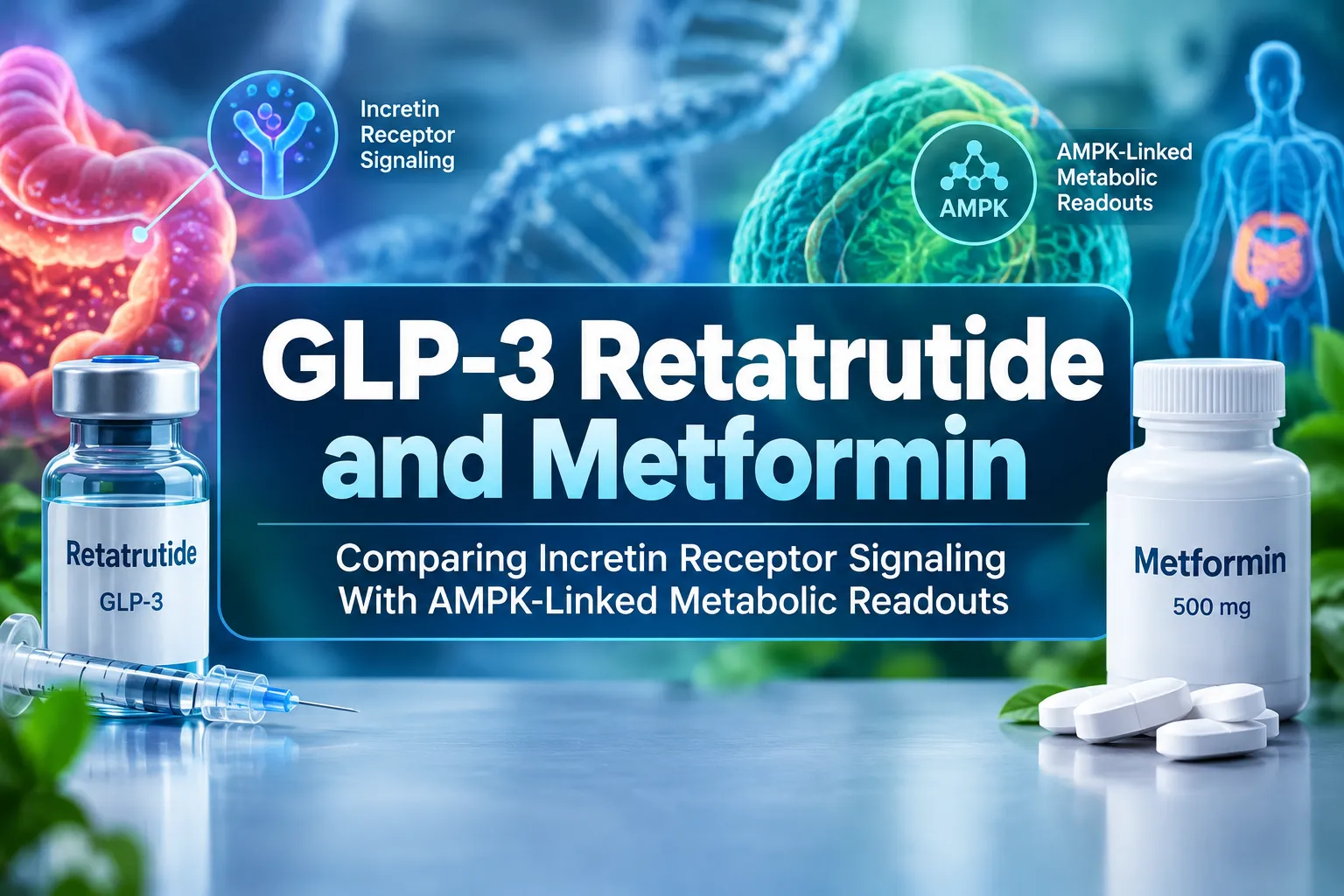
Professional landscape hero image () with a reading "GLP-3 Retatrutide and Metformin". CRITICAL TYPOGRAPHY RULES: render the

Metformin has been prescribed to more than 150 million people worldwide, yet a single peptide in late-stage clinical development, retatrutide, produced roughly 24% mean body weight loss in a Phase 2 trial, a figure metformin has never approached in decades of use. That gap demands a mechanistic explanation, not just a clinical one. Understanding GLP-3 Retatrutide and Metformin: Comparing Incretin Receptor Signaling With AMPK-Linked Metabolic Readouts requires moving upstream, into receptor pharmacology, intracellular signaling cascades, and the metabolic outputs each pathway controls.

Key Takeaways

  • Retatrutide is a triple incretin-glucagon receptor agonist (GLP-1R, GIPR, GCGR); metformin primarily activates AMPK via mitochondrial Complex I inhibition.
  • These two mechanisms produce overlapping but distinct metabolic readouts: retatrutide drives large-magnitude weight loss and appetite suppression; metformin delivers modest weight neutrality and reliable glycemic control.
  • Incretin receptor signaling is receptor-proximal and amplified through cAMP; AMPK activation is enzyme-proximal and energy-sensing.
  • Both agents show activity in metabolic dysfunction-associated steatotic liver disease (MASLD), but via different hepatic pathways.
  • Combination use and first-line repositioning remain speculative but scientifically plausible as of 2026.

How Retatrutide Engages Three Incretin Receptors Simultaneously
How Retatrutide Engages Three Incretin Receptors Simultaneously

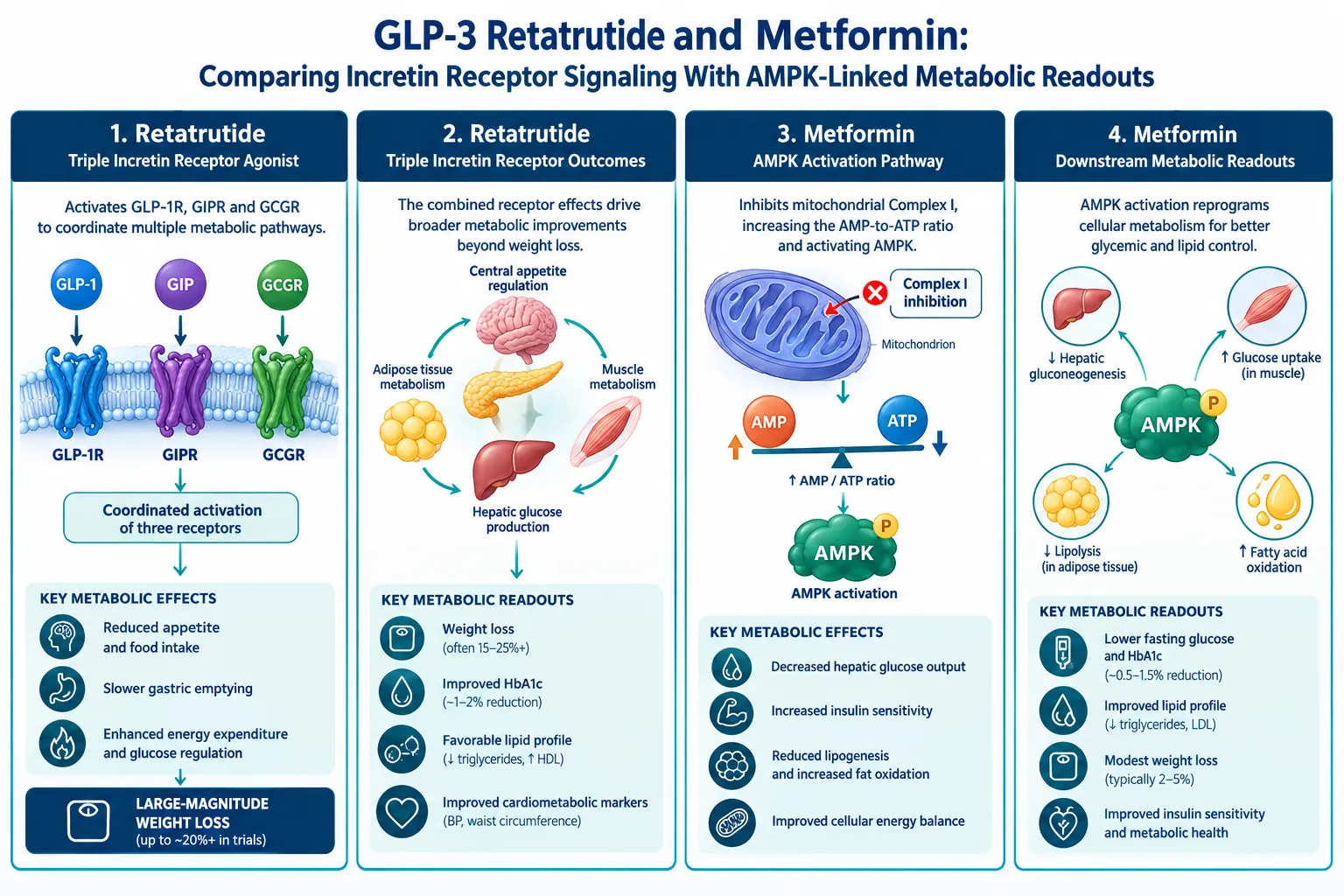
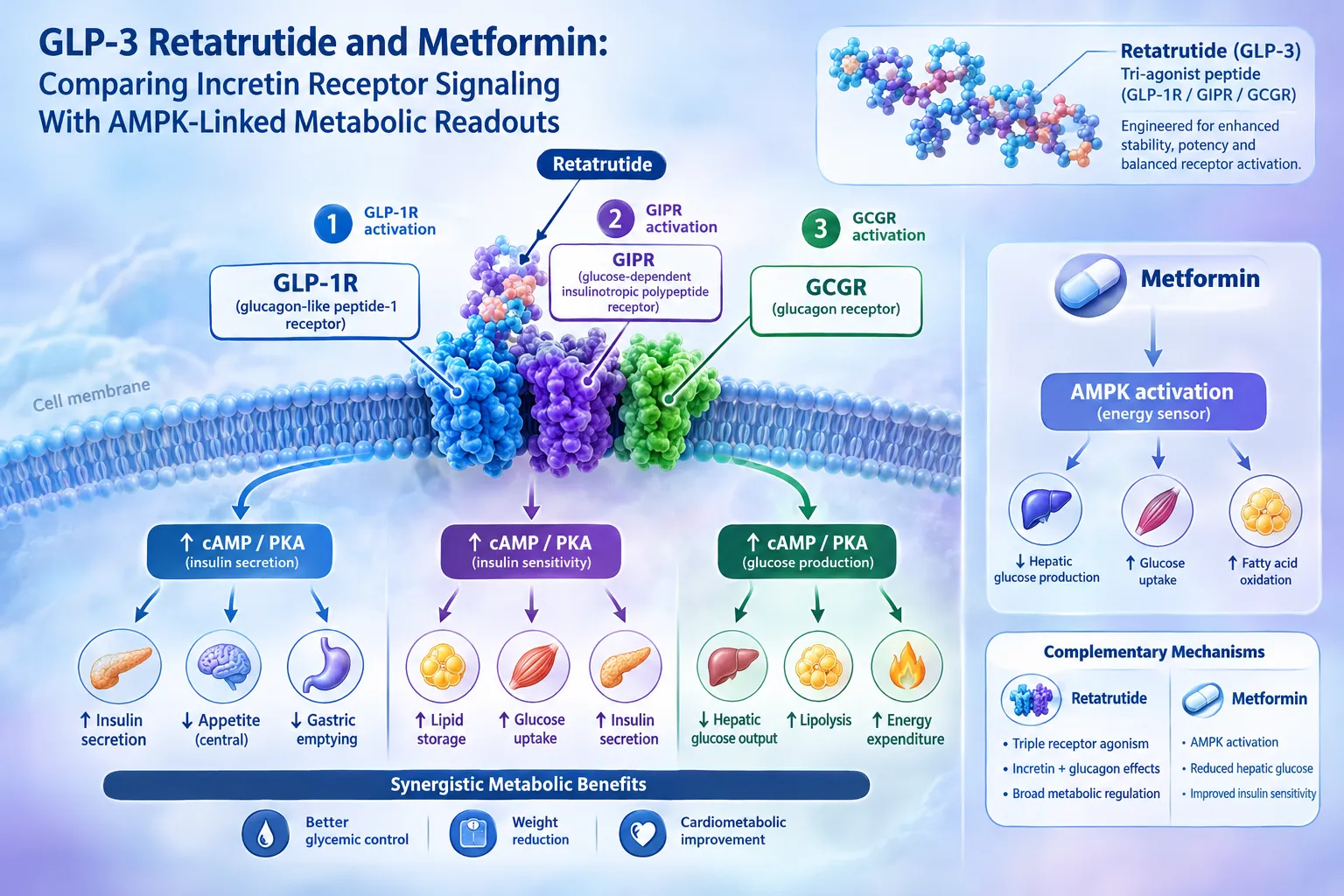
Retatrutide, sometimes tagged in research pipelines as a GLP-3 Reta compound, is structurally engineered to co-activate three G-protein coupled receptors: the glucagon-like peptide-1 receptor (GLP-1R), the glucose-dependent insulinotropic polypeptide receptor (GIPR), and the glucagon receptor (GCGR). Each receptor triggers its own cAMP-mediated signaling cascade, but the combined effect is greater than the sum of its parts.

GLP-1R activation suppresses appetite via hypothalamic pathways, slows gastric emptying, and potentiates glucose-dependent insulin secretion. GIPR activation enhances adipose tissue remodeling and complements GLP-1R-driven insulin release. GCGR activation, the differentiating element, increases energy expenditure and promotes hepatic glucose output, which is carefully balanced by the simultaneous insulin-stimulating effects of the other two receptors.

"Triple agonism creates a metabolic environment where energy intake falls, energy expenditure rises, and glucose flux is tightly regulated, three levers pulled at once."

This receptor-proximal signaling architecture explains why GLP-1 Reta research consistently shows weight-loss magnitudes that far exceed single-receptor GLP-1 agonists like semaglutide. The Phase 2 NEJM data confirmed up to 24.2% mean body weight reduction at 48 weeks, a clinical benchmark that repositions the entire obesity pharmacotherapy landscape.


GLP-3 Retatrutide and Metformin: Comparing Incretin Receptor Signaling With AMPK-Linked Metabolic Readouts at the Cellular Level
GLP-3 Retatrutide and Metformin: Comparing Incretin Receptor Signaling With AMPK-Linked Metabolic Readouts at the Cellular Le

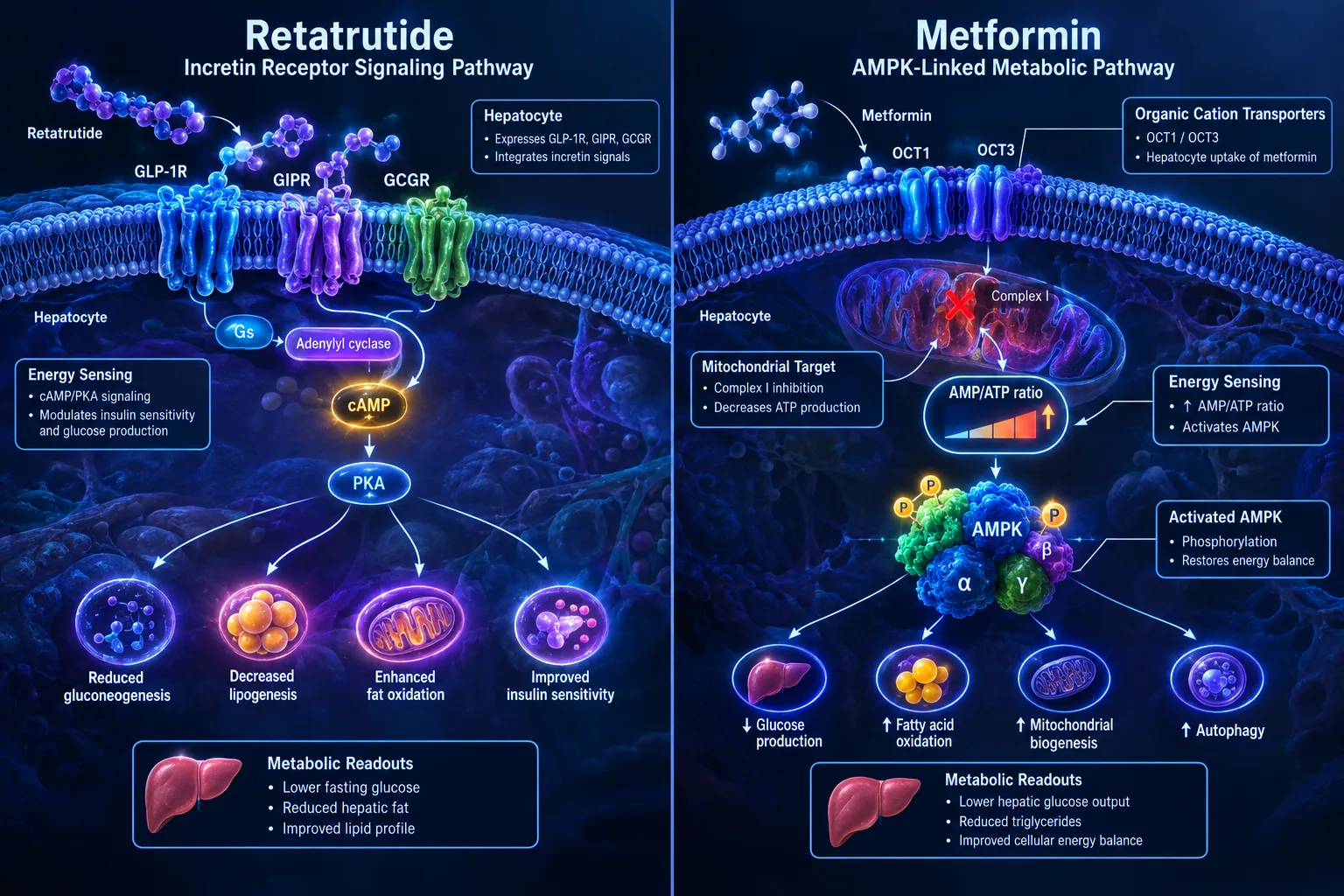
Metformin's mechanism is fundamentally different. It enters hepatocytes via organic cation transporters and inhibits mitochondrial respiratory Complex I. This raises the cellular AMP-to-ATP ratio, which in turn activates AMP-activated protein kinase (AMPK). AMPK is an energy-sensing enzyme that:

  • Suppresses hepatic gluconeogenesis (reducing fasting glucose)
  • Enhances peripheral insulin sensitivity
  • Modestly reduces lipid synthesis
  • Produces minor weight neutrality or small weight reduction

The contrast with retatrutide's receptor-proximal cAMP signaling is stark. Metformin works intracellularly, downstream of energy status. Retatrutide works at the cell surface, upstream of multiple metabolic programs simultaneously.

Mechanistic Comparison at a Glance

Parameter Retatrutide Metformin
Primary target GLP-1R / GIPR / GCGR Mitochondrial Complex I / AMPK
Signaling node cAMP (receptor-proximal) AMP:ATP ratio (enzyme-proximal)
Weight loss magnitude Up to ~24% body weight 1-3 kg typical
Appetite suppression Strong (central + peripheral) Mild
MASLD activity Hepatic fat reduction via GCGR Modest via AMPK lipogenesis suppression

Both agents reduce HbA1c, but through different glucose flux mechanisms. Metformin primarily cuts hepatic glucose output. Retatrutide combines glucose-dependent insulin stimulation with glucagon-mediated hepatic effects, producing broader glycemic control with lower hypoglycemia risk.

For researchers exploring the Reta GLP-3 peptide landscape, this mechanistic divergence is critical when selecting model systems. AMPK-knockout models, for example, will blunt metformin's effects but leave retatrutide's receptor signaling largely intact, a model-selection limitation that has led to misattributed comparisons in earlier literature.


Clinical Metabolic Readouts, Safety Profiles, and the 2026 Development Landscape
Clinical Metabolic Readouts, Safety Profiles, and the 2026 Development Landscape

The metabolic readout differences between these two agents extend well beyond weight. Meta-analyses of metformin trials show consistent but modest effects: HbA1c reductions of 1.0-1.5%, systolic blood pressure changes near zero, and lipid profiles that shift minimally. Retatrutide's Phase 2 data showed clinically meaningful reductions in blood pressure, triglycerides, and liver fat, readouts consistent with its multi-receptor mechanism.

MASLD is an important battleground. Both agents show hepatic benefit, but retatrutide's GCGR component drives direct hepatic fat mobilization, while metformin's AMPK-mediated suppression of lipogenesis is secondary and slower. For patients with obesity-driven liver disease, this distinction matters clinically.

On tolerability, metformin's profile is well-characterized: gastrointestinal side effects (nausea, diarrhea) are common early on, and B12 malabsorption is a long-term concern. Retatrutide shares GI tolerability challenges typical of incretin-based therapies, primarily nausea and vomiting, which are dose-dependent and generally transient. Researchers seeking GLP-3 Reta 30mg for research purposes should account for these tolerability parameters in study design.

As of late 2026, retatrutide (LY3437943, developed by Eli Lilly) is advancing through Phase 3 trials for obesity and type 2 diabetes. Regulatory submission timelines remain under active industry analysis. Metformin, meanwhile, retains first-line status in most international diabetes guidelines, a position unlikely to shift in the near term given its cost, safety record, and decades of outcome data.

Speculative outlook: Some researchers propose that combining retatrutide with metformin could be synergistic, incretin receptor signaling driving weight loss and appetite suppression while AMPK activation independently optimizes hepatic glucose flux. This hypothesis is scientifically plausible but remains untested in controlled trials as of 2026. Those tracking where to buy Reta for preclinical research should monitor Phase 3 combination-arm data as it emerges.


Conclusion

GLP-3 Retatrutide and Metformin: Comparing Incretin Receptor Signaling With AMPK-Linked Metabolic Readouts is not simply an academic exercise, it defines how clinicians and researchers should frame treatment selection, model design, and combination strategies. Retatrutide's triple receptor agonism produces receptor-proximal cAMP signaling with broad, large-magnitude metabolic effects. Metformin's AMPK activation is narrower, enzyme-proximal, and reliably effective for glycemic management at modest scale.

Actionable next steps for researchers and clinicians in 2026:

  1. When designing preclinical studies, select knockout models that match the pathway under investigation, AMPK models are not appropriate for evaluating incretin receptor endpoints.
  2. Evaluate MASLD patients separately, as hepatic fat readouts differ meaningfully between the two mechanisms.
  3. Monitor Phase 3 retatrutide data for blood pressure, lipid, and liver endpoints that go beyond glycemia.
  4. Treat combination therapy as a hypothesis to test, not a current clinical recommendation.
  5. For research procurement, explore buy GLP-3 Reta options from verified, tested sources to ensure compound integrity in preclinical work.

The mechanistic gap between these two agents is wide, but their metabolic goals converge. Understanding both pathways in depth is the foundation for the next generation of metabolic disease research.

https://www.puretestedpeptides.com/wp-content/uploads/2026/10/glp-3-retatrutide-and-metformin-comparing-incretin-receptor-signaling-with-ampk-1.webp 1024 1536 https://www.puretestedpeptides.com/wp-content/uploads/2026/01/buy-peptides-online.jpg 2026-10-15 13:07:282026-10-15 13:07:28GLP-3 Retatrutide and Metformin: Comparing Incretin Receptor Signaling With AMPK-Linked Metabolic Readouts
GLP-3 Retatrutide vs GLP-2-T: Choosing Metabolic, Intestinal, and Organoid Readouts for Comparative Research

GLP-3 Retatrutide vs GLP-2-T: Choosing Metabolic, Intestinal, and Organoid Readouts for Comparative Research

October 5, 2026/0 Comments/in Uncategorized/by

Retatrutide produced mean weight reductions exceeding 24% over 48 weeks in phase 2 trials, a figure that no single-receptor incretin therapy had previously achieved. That single data point signals why researchers face a genuine decision problem when designing comparative studies: retatrutide operates through a fundamentally different biological model than GLP-2-type agents, and conflating their readout frameworks produces unreliable conclusions.

This article builds a practical decision framework for GLP-3 Retatrutide vs GLP-2-T: Choosing Metabolic, Intestinal, and Organoid Readouts for Comparative Research. The goal is to separate retatrutide's multi-receptor systemic model from GLP-2-T's intestinal-repair context, then map each to the endpoints, assay systems, and interpretation boundaries that fit them best.

Key Takeaways

  • Retatrutide simultaneously activates GLP-1R, GIPR, and GCGR, making systemic metabolic endpoints the primary readout domain.
  • GLP-2-type agents act principally on intestinal GLP-2 receptors; their readouts center on mucosal structure, barrier function, and organoid proliferation.
  • Mixing readout frameworks across these two agent classes introduces mechanistic confounds that weaken comparative data.
  • Receptor expression confirmation is a non-negotiable first step before running any parallel assay.
  • Organoid platforms can serve both arms only when receptor expression and endpoint domains are kept strictly separate.

Understanding the Mechanistic Divide

Understanding the Mechanistic Divide

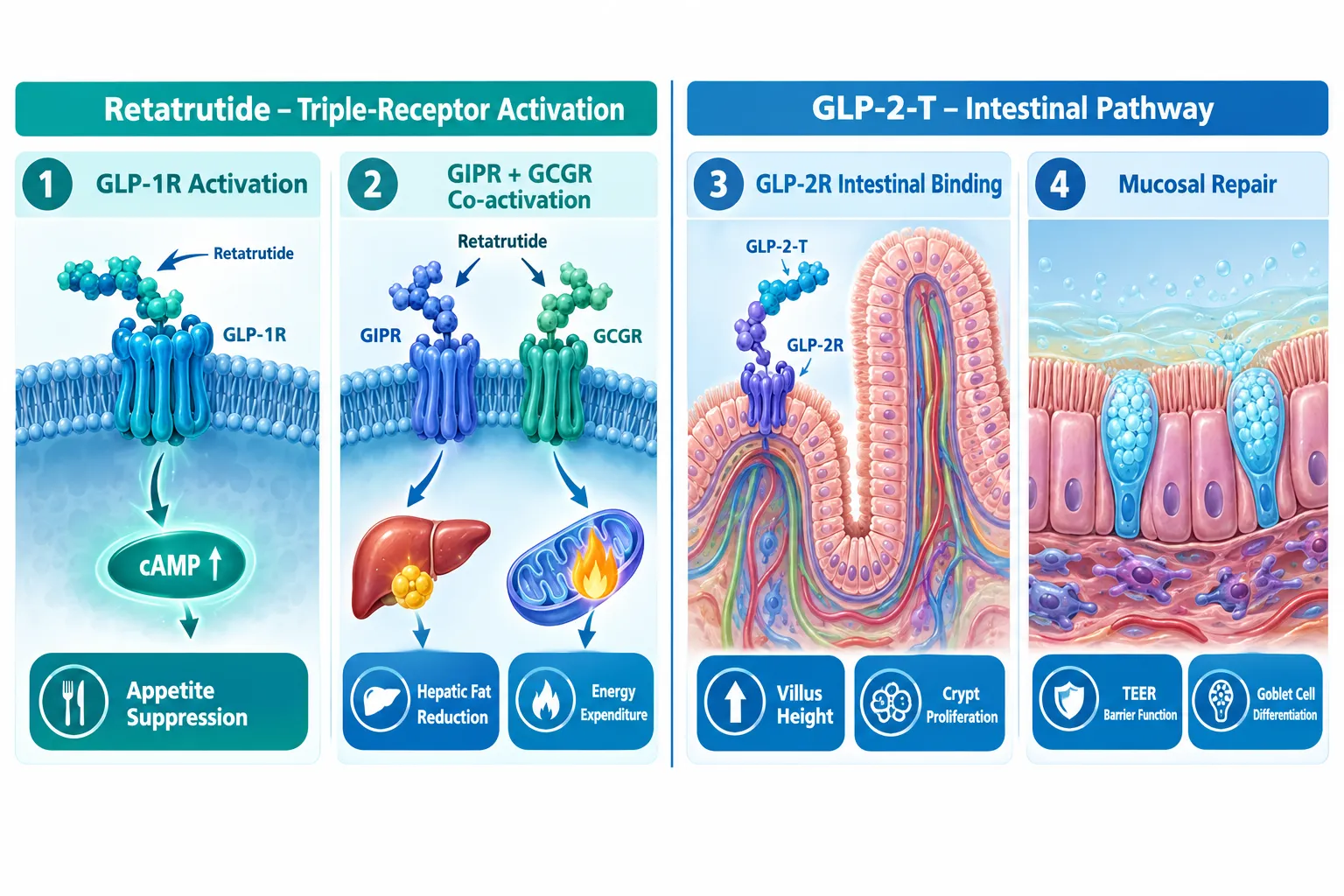
The core challenge in GLP-3 Retatrutide vs GLP-2-T comparative research is that these two agent classes do not share a primary tissue target. Retatrutide (LY3437943) is the first GLP-1/GIP/glucagon triple agonist to complete phase 2 trials in both obesity and type 2 diabetes. It engages three distinct receptors, GLP-1R, GIPR, and GCGR, through a single peptide conjugated to a fatty diacid moiety. The downstream effects span appetite suppression, hepatic fat reduction, and systemic energy expenditure.

GLP-2-type agents (GLP-2-T), by contrast, bind the GLP-2 receptor expressed predominantly on intestinal subepithelial myofibroblasts and enteroendocrine cells. Their documented effects are gut-trophic: increased villus height, crypt cell proliferation, improved mucosal barrier integrity, and enhanced nutrient absorption. These are the readouts that define clinical use cases such as short bowel syndrome and intestinal failure.

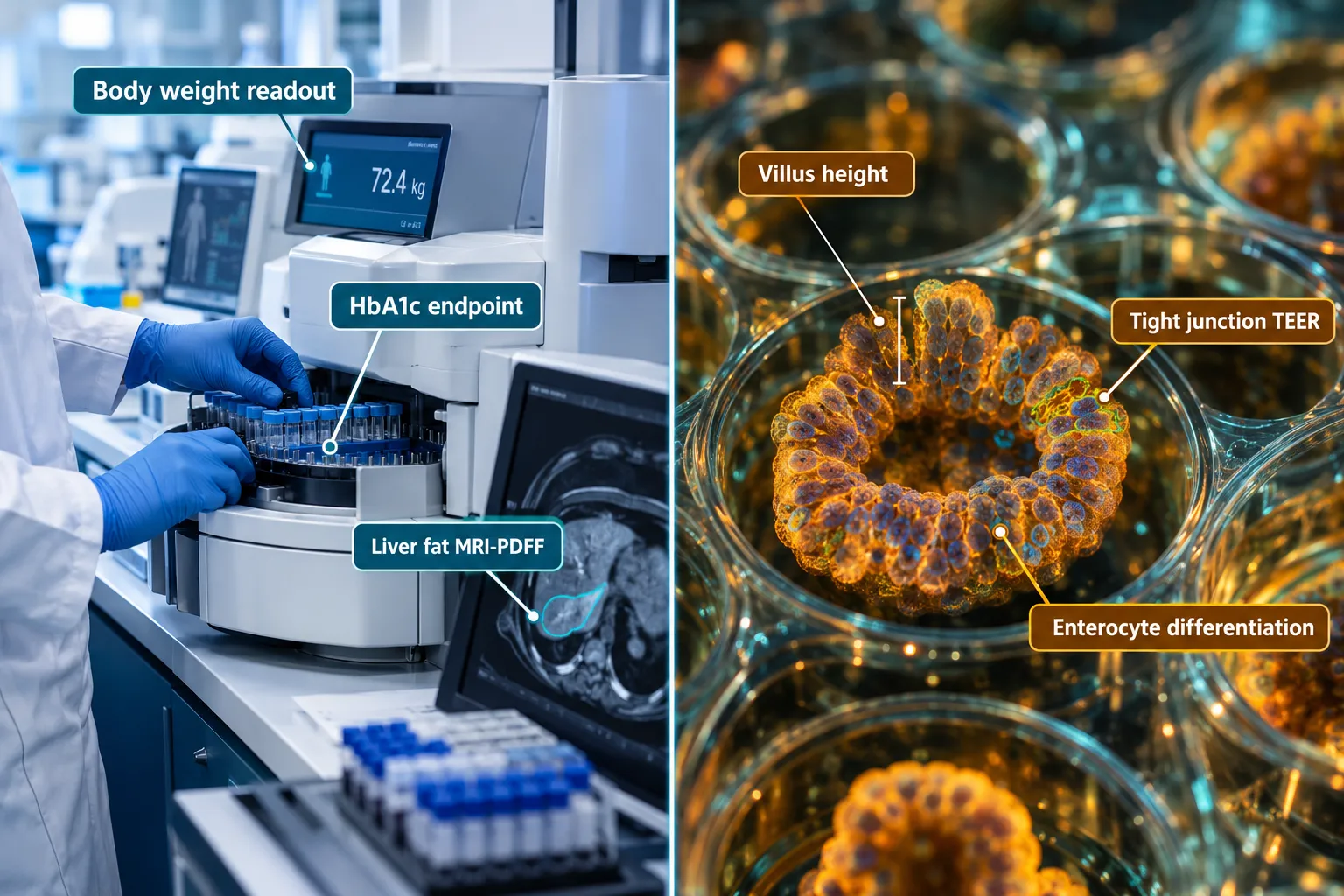
The mechanistic divide is not a matter of degree, it is a matter of tissue domain. Retatrutide's phase 2 MASLD trial reinforced this by demonstrating meaningful reductions in liver fat measured by MRI-proton density fat fraction (MRI-PDFF), alongside improvements in hepatic enzymes and non-invasive fibrosis markers. None of those endpoints are relevant to GLP-2-T's primary mechanism.

"Choosing the wrong readout domain does not just weaken a study, it actively misrepresents the biology of both agents."

Researchers looking to source well-characterized material for this work can review options through the Buy Retatrutide Peptide page or explore the broader GLP-3 Retatrutide buy online USA resource for purity and specification details.


Building the Readout Decision Framework

Building the Readout Decision Framework

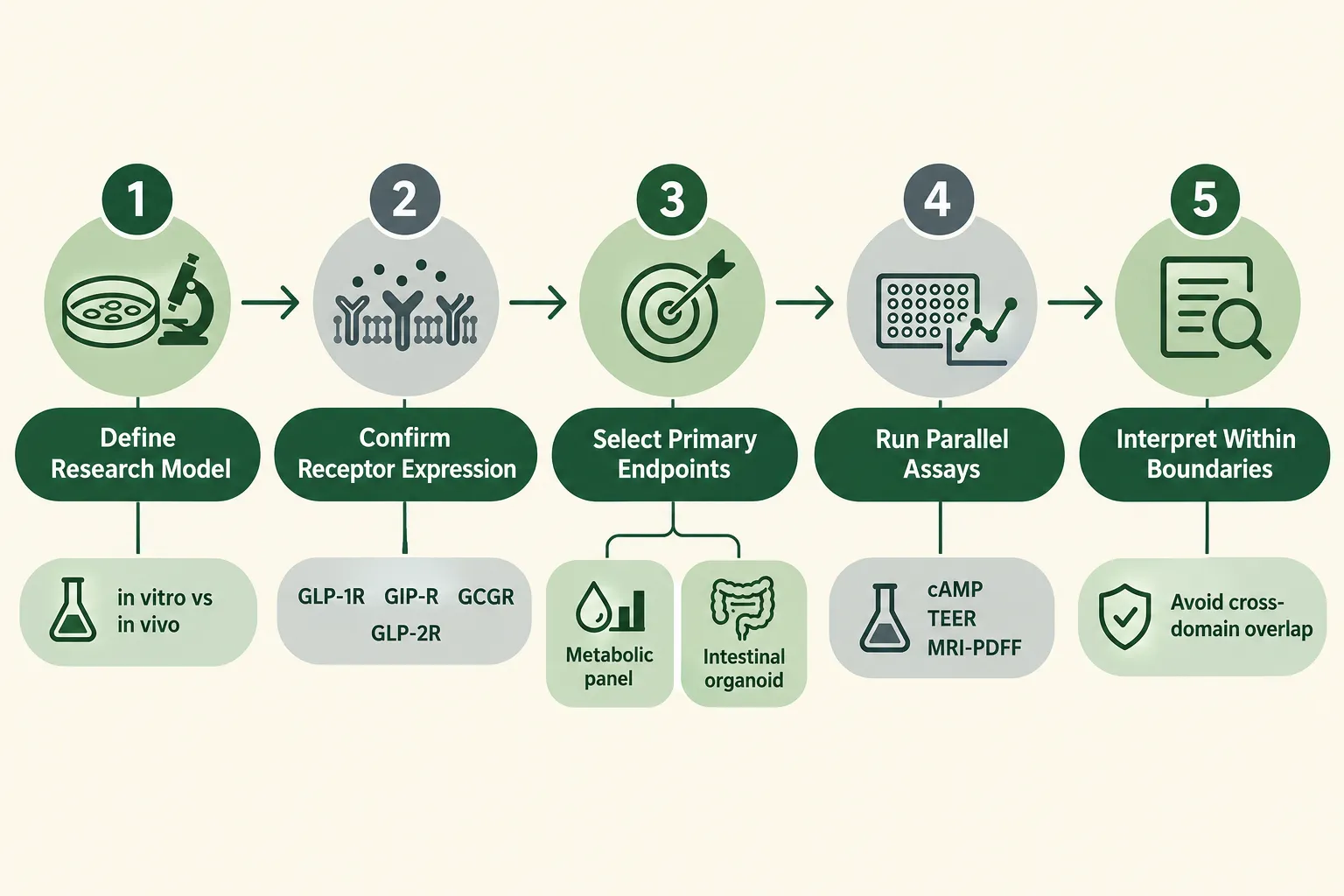
A structured five-step decision process reduces the risk of endpoint misalignment when designing GLP-3 Retatrutide vs GLP-2-T: Choosing Metabolic, Intestinal, and Organoid Readouts for Comparative Research studies.

Step 1: Define the Research Model

Choose whether the study is in vitro, ex vivo, or in vivo before selecting any endpoint. Retatrutide's receptor profile requires models that co-express GLP-1R, GIPR, and GCGR, hepatocyte lines, adipocyte cultures, pancreatic islet preparations, or diet-induced obesity rodent models. GLP-2-T studies require intestinal epithelial models: primary organoids derived from small intestinal crypts, Caco-2 monolayers, or murine intestinal preparations.

Step 2: Confirm Receptor Expression

This step is non-negotiable. Structural work published in 2024 clarified that retatrutide engages all three receptors with defined binding modes and biased signaling profiles. Before running any assay, confirm receptor expression using qPCR or immunofluorescence. A GLP-2-T study run in a model lacking adequate GLP-2R expression produces noise, not data.

Step 3: Select Primary Endpoints by Agent Class

Endpoint Category Retatrutide (GLP-3-like) GLP-2-T
Primary metabolic Body weight, HbA1c, fasting glucose, lipids Not applicable as primary
Hepatic MRI-PDFF, ALT/AST, fibrosis markers Minimal relevance
Intestinal structure Secondary / safety monitoring Villus height, crypt depth, cell proliferation
Barrier function GI tolerability (adverse event tracking) TEER, tight junction proteins (ZO-1, claudin)
Receptor signaling cAMP, beta-arrestin, downstream kinase activity cAMP via GLP-2R, PI3K/Akt pathway
Organoid readouts Hepatic organoid fat accumulation, glucose uptake Enterocyte and goblet cell differentiation, proliferation index

Step 4: Run Parallel Assays With Separated Domains

Phase 2 safety data for retatrutide identified dose-dependent gastrointestinal adverse events, nausea and diarrhea, alongside signals for lean mass changes and modest heart rate increases. These findings make body composition and heart rate monitoring essential safety-related readouts for the retatrutide arm. They are not shared endpoints with GLP-2-T, which does not produce systemic energy expenditure effects. Running parallel assays only works when each arm's endpoint set remains internally consistent.

Step 5: Interpret Within Defined Boundaries

No published 2025-2026 literature presents a formal GLP-3 vs GLP-2-T comparative schema. The framework described here is constructed from separate evidence streams. Researchers must therefore resist interpreting GLP-2-T intestinal organoid results as informative about systemic metabolic efficacy, and vice versa.

For additional context on related peptide research methodologies, the SLUPP332 oral versus injectable research resource offers useful parallel considerations on route-of-administration variables that affect readout selection.


Organoid Platforms: Where the Two Frameworks Can Intersect

Organoid Platforms: Where the Two Frameworks Can Intersect

Organoid technology is the one research context where GLP-3 Retatrutide vs GLP-2-T: Choosing Metabolic, Intestinal, and Organoid Readouts for Comparative Research can share a platform, but only with strict compartmentalization.

For retatrutide, hepatic organoids derived from primary hepatocytes or iPSC-derived liver cells provide a controlled system for measuring fat accumulation (lipid droplet quantification), glucose output, and receptor-level signaling (cAMP production, beta-arrestin recruitment). These models mirror the liver-fat and glycemic endpoints validated in the MASLD phase 2a trial.

For GLP-2-T, intestinal organoids derived from small intestinal crypts are the gold-standard platform. Key readouts include:

  • Organoid surface area expansion as a proxy for villus-like growth
  • Goblet cell and enterocyte differentiation ratios
  • Tight junction protein expression (ZO-1, occludin, claudin-3)
  • Transepithelial electrical resistance (TEER) as a barrier integrity measure
  • Nutrient transporter expression (SGLT1, GLUT2)

The intersection point is co-culture or multi-organ chip systems that link hepatic and intestinal compartments. In that setting, retatrutide's hepatic effects and GLP-2-T's intestinal effects can be observed in the same platform without conflating their primary readout domains. This remains a speculative but scientifically grounded direction for 2026 research programs.

Researchers sourcing material for organoid-based work should verify purity documentation carefully. The GLP3 RETA CAG 10mg for sale and GLP3 RETA CAG 10mg GA5 product pages provide specification details relevant to in vitro dosing decisions. For broader sourcing considerations, the GLP-3 Retatrutide buy online USA cheap resource addresses cost-quality tradeoffs that matter in multi-arm organoid studies.


Conclusion

The central lesson from aligning retatrutide's clinical trial evidence with GLP-2-T's intestinal biology is straightforward: these agents require separate readout frameworks, not a shared one. Retatrutide's primary endpoints are systemic, body weight, HbA1c, liver fat, lipids, and cardiometabolic markers. GLP-2-T's primary endpoints are structural and functional at the intestinal level, villus morphology, barrier integrity, and organoid proliferation.

Actionable next steps for research teams in 2026:

  1. Audit existing assay panels and remove any endpoints that do not align with the receptor biology of the agent being tested.
  2. Confirm GLP-1R, GIPR, and GCGR co-expression in every model used for retatrutide; confirm GLP-2R expression in every model used for GLP-2-T.
  3. Use MRI-PDFF, ALT/AST, and body composition as the metabolic arm's anchor endpoints.
  4. Use TEER, tight junction protein quantification, and organoid proliferation index as the intestinal arm's anchor endpoints.
  5. Consider multi-organ chip platforms only after single-domain validation is complete.

Maintaining this discipline protects the interpretive value of comparative data and positions research outputs for stronger translational relevance as triple-agonist therapies move through phase 3 development.

https://www.puretestedpeptides.com/wp-content/uploads/2026/10/glp-3-retatrutide-vs-glp-2-t-choosing-metabolic-intestinal-and-organoid-readouts.webp 1024 1536 https://www.puretestedpeptides.com/wp-content/uploads/2026/01/buy-peptides-online.jpg 2026-10-05 13:04:282026-10-05 13:04:28GLP-3 Retatrutide vs GLP-2-T: Choosing Metabolic, Intestinal, and Organoid Readouts for Comparative Research
×

Helpful Links

  • My account
  • Cart
  • Checkout
  • Refund and Returns Policy
  • Privacy Policy
  • SMS Privacy Policy
  • Login
  • My Account
  • Logout

USA Made Lab Tested Peptides

All products are sold for research, laboratory, or analytical purposes only, and are not for human consumption


Pure Tested Peptides is a chemical supplier. Pure Tested Peptides is not a compounding / chemical compounding facility as defined under 503A of the Federal Food, Drug, and Cosmetic act. Pure Tested Peptides is not an outsourcing facility as defined under 503B of the Federal Food, Drug, and Cosmetic act.

The statements made within this website have not been evaluated by the US Food and Drug Administration. The products we offer are not intended to diagnose, treat, cure or prevent any disease.

Human/Animal Consumption Prohibited. Laboratory/In-Vitro Experimental Use Only

Scroll to top Scroll to top Scroll to top