Call or Text 727-513-9780
  • Shopping Cart Shopping Cart
    0Shopping Cart
Pure Tested Peptides | America's most trusted Peptides for sale online
  • Peptides for sale
    • Oral Peptides for sale
      • Peptide Capsules for sale
      • BPC 157 Capsules 1000mcg
      • SLU-PP-332 Capsules | 1000 mcg
      • 5-Amino-1MQ 50mg Capsules
      • Tesofensine 500mcg
    • All Peptides for sale
    • Peptide Sprays
      • BPC 157 Nasal Spray Kit
      • BPC-157 TB500 Nasal Spray Kit
      • Semax Nasal Spray 10mg
      • Selank – Nasal Spray Kit – 10mg
      • Epithalon 50MG Nasal Spray Kit
      • Ipamorelin 10mg Nasal Spray
      • Klow Nasal Spray (BPC-157 + TB-500 + GHK-Cu + KPV) | 80mg
      • Hulk Nasal Spray Tesa / Ipa Blend 6/3 MG
      • Klow Nasal Spray
      • NAD + 500 mg Nasal Spray
      • PT-141 Nasal Spray Kit
    • GHRH Peptides
      • Ipa Peptides
      • CJC-1295 Peptides
        • CJC-1295 with DAC 5 mg
        • CJC-1295 without DAC 5 mg
        • CJC-1295 Ipa 10mg
      • Tesa Peptides
        • Tesa Peptide
        • Tesa 20 mg
    • GHK-Cu Peptides
      • All GHK-Cu Peptides
      • GHK-Cu 100mg
      • KLOW Peptide Blend – Buy KLOW blend online
    • BPC Peptides
      • All BPC Peptides
      • BPC-157
      • BPC-157 TB-500
      • BPC 157 capsules 1000mcg
    • SLU-PP-332 Peptides
      • All SLU-PP-332 Peptides
      • SLU-PP-332 5mg
    • GLP3 Peptides
    • PT-141 Peptides
      • PT-141 Peptides for sale
      • PT-141 10mg
      • PT-141 Nasal Spray
    • CAG Peptides
      • Lipo-C Peptide Blend
      • CAG 5mg
      • CAG 10mg
    • MOTS-C Peptides
      • MOTS-C Peptides for sale
      • MOTS-c peptide
      • MOTS-c 10mg *6 pack*
    • 5 Amino 1MQ Peptides
      • 5 Amino 1MQ Peptides for sale
      • 5-Amino-1MQ 50mg Capsules
      • 5-Amino-1MQ 5mg
    • Epithalon Peptides
      • Epithalon Peptides for sale
      • Epithalon 10mg
      • Epithalon 50mg
  • Shop
    • GLPs
      • 5-Amino-1MQ 50mg Capsules
      • 5-Amino-1MQ 5mg
      • L-Carnitine 500mg/ml
      • Tesofensine 500mcg
      • SLU-PP-332 5mg
      • MOTS-c 10mg *6 pack*
    • Epithalon & BPC Peptides
      • Epithalon 10mg
      • Epithalon 50mg
      • BPC-157
      • BPC 157 capsules 1000mcg
      • BPC-157 TB-500
      • BPC-157 TB500 Nasal Spray Kit
      • BPC 157 Nasal Spray Kit
    • BPC TB-500 & NAD+ Peptides
      • NAD+ 500 mg
      • KLOW Peptide Blend – Buy KLOW blend online
      • GLOW Peptide Blend
      • TB 500 5mg
      • BPC 157 capsules 1000mcg – Supplement
      • BPC 157 Nasal Spray Kit
      • BPC-157
      • BPC-157 TB500 Nasal Spray Kit
      • BPC-157 TB-500
      • BPC 157 capsules 1000mcg
    • LL-37 Peptide
      • LL-37 10 mg
    • MOTS-C & Selank
      • MOTS-c peptide
      • Selank 10mg
    • GHK Peptides
      • GHK-Cu 100mg
      • GLOW Peptide Blend
      • KLOW Peptide Blend – Buy KLOW blend online
  • COAs
  • Wholesale
    • Wholesale Peptides for sale
  • PTP FAQ
  • Affiliates
    • Selank Peptide: Advanced Pharmacological Mechanisms Underlying Its Anxiolytic and Nootropic Effects in Research
      • 5-Amino-1MQ Peptide: Detailed Mechanisms of NNMT Inhibition and Its Impact on Cellular Metabolism Research
        • MOTS-C Peptide: Unraveling Its Role in Mitochondrial Dynamics and Energy Metabolism Research
          • Epithalon Peptide and Telomerase Regulation: Investigating Its Impact on Cellular Senescence and Lifespan Research Models
            • GLP2-T vs GLP2 Tirz Peptide: Understanding the Naming, Mechanistic Nuances, and Research Implications for Gut Health
      • Peptides and Polypeptides in Modern Pharmacology: What Research on Metoprolol, Prednisone, and Amlodipine Reveals
        • Polypeptide Peptides vs NSAIDs: What Naproxen and Diclofenac Teach Tissue-Repair Researchers About BPC‑157 and TB‑500
          • Peptides and Polypeptides in Endocrine Pharmacology: How GLP-1, GLP-2, and GLP-3 Retatrutide Differ From Classic Drugs Like Prednisone and Amlodipine
          • 5‑Amino‑1MQ Peptide and NNMT Inhibition: How It Compares With Statins Like Atorvastatin in Adipose and Lipid Metabolism Research
      • Enclomiphene, Estrogen Receptor Signaling, and Luteinizing Phase Biology: What Hormone Researchers Should Measure
        • Mesenchymal Stem Cells, BPC‑157, and GHK‑Cu: How Tissue Repair Peptides Compare With Classic NSAIDs Like Naproxen in Injury Models
          • Peptide Calculator Use Cases Beyond Growth Hormone: Working Through GLP‑3 Retatrutide, MOTS‑c, and BPC‑157 Research Dosing
        • Polypeptide Peptides in Endocrine and Metabolic Pharmacology: Lessons From Amlodipine, Prednisone, and Metoprolol
        • Peptides Calculator for Advanced Blends: Worked Examples for Tesamorelin, CJC‑1295, and Ipamorelin Stacks
          • Peptides and Polypeptides in Human Physiology: How Molecular Size Shapes Research Applications
            • Selank Peptide: Advanced Pharmacological Mechanisms Underlying Its Anxiolytic and Nootropic Effects in Research
          • 5-Amino-1MQ Peptide: Detailed Mechanisms of NNMT Inhibition and Its Impact on Cellular Metabolism Research
            • MOTS-C Peptide: Unraveling Its Role in Mitochondrial Dynamics and Energy Metabolism Research
              • Epithalon Peptide and Telomerase Regulation: Investigating Its Impact on Cellular Senescence and Lifespan Research Models
                • GLP2-T vs GLP2 Tirz Peptide: Understanding the Naming, Mechanistic Nuances, and Research Implications for Gut Health
                  • Peptides and Polypeptides in Endocrine Pharmacology: How GLP-1, GLP-2, and GLP-3 Retatrutide Differ From Classic Drugs Like Prednisone and Amlodipine
                    • Polypeptide Peptides vs NSAIDs: What Naproxen and Diclofenac Teach Tissue-Repair Researchers About BPC‑157 and TB‑500
                      • Peptides and Polypeptides in Modern Pharmacology: What Research on Metoprolol, Prednisone, and Amlodipine Reveals
                        • 5‑Amino‑1MQ Peptide and NNMT Inhibition: How It Compares With Statins Like Atorvastatin in Adipose and Lipid Metabolism Research
                        • Enclomiphene, Estrogen Receptor Signaling, and Luteinizing Phase Biology: What Hormone Researchers Should Measure
                        • Mesenchymal Stem Cells, BPC‑157, and GHK‑Cu: How Tissue Repair Peptides Compare With Classic NSAIDs Like Naproxen in Injury Models
                        • Peptide Calculator Use Cases Beyond Growth Hormone: Working Through GLP‑3 Retatrutide, MOTS‑c, and BPC‑157 Research Dosing
                        • Polypeptide Peptides in Endocrine and Metabolic Pharmacology: Lessons From Amlodipine, Prednisone, and Metoprolol
                        • Peptides Calculator for Advanced Blends: Worked Examples for Tesamorelin, CJC‑1295, and Ipamorelin Stacks
                        • Peptides and Polypeptides in Human Physiology: How Molecular Size Shapes Research Applications
                        • Selank Peptide: Advanced Pharmacological Mechanisms Underlying Its Anxiolytic and Nootropic Effects in Research
                        • MOTS-C Peptide: Unraveling Its Role in Mitochondrial Dynamics and Energy Metabolism Research
                        • Peptides and Polypeptides in Modern Pharmacology: What Research on Metoprolol, Prednisone, and Amlodipine Reveals
                        • Peptides and Polypeptides in Endocrine Pharmacology: How GLP-1, GLP-2, and GLP-3 Retatrutide Differ From Classic Drugs Like Prednisone and Amlodipine
                        • 5-Amino-1MQ Peptide: Detailed Mechanisms of NNMT Inhibition and Its Impact on Cellular Metabolism Research
                        • Mesenchymal Stem Cells, BPC‑157, and GHK‑Cu: How Tissue Repair Peptides Compare With Classic NSAIDs Like Naproxen in Injury Models
                        • Peptide Calculator Use Cases Beyond Growth Hormone: Working Through GLP‑3 Retatrutide, MOTS‑c, and BPC‑157 Research Dosing
                        • GLP2-T vs GLP2 Tirz Peptide: Understanding the Naming, Mechanistic Nuances, and Research Implications for Gut Health
                        • Polypeptide Peptides in Endocrine and Metabolic Pharmacology: Lessons From Amlodipine, Prednisone, and Metoprolol
                        • Polypeptide Peptides vs NSAIDs: What Naproxen and Diclofenac Teach Tissue-Repair Researchers About BPC‑157 and TB‑500
                        • Peptides and Polypeptides in Human Physiology: How Molecular Size Shapes Research Applications
                        • Peptides Calculator for Advanced Blends: Worked Examples for Tesamorelin, CJC‑1295, and Ipamorelin Stacks
                        • 5‑Amino‑1MQ Peptide and NNMT Inhibition: How It Compares With Statins Like Atorvastatin in Adipose and Lipid Metabolism Research
                        • Enclomiphene, Estrogen Receptor Signaling, and Luteinizing Phase Biology: What Hormone Researchers Should Measure
                        • Epithalon Peptide and Telomerase Regulation: Investigating Its Impact on Cellular Senescence and Lifespan Research Models
                        • Best research protocol Klow blend
                        • best time to take BPC-157
                        • best time to take DSIP (Delta Sleep Inducing Peptide)
                        • best time to take CJC-1295
                        • best time to take AOD-9604
                        • best time to take Follistatin 344
                        • best time to take Ipamorelin
                        • best time to take MK-677 (Ibutamoren)
                        • best time to take Ligandrol (LGD-4033) — research compound
                        • best time to take Ostarine (MK-2866) — research compound
                        • best time to take GHK-CU
                        • best time to take TB-500
                        • best time to take MOTS-c
                        • best time to take Semax
                        • best time to take RAD-140 (Testolone) — research compound
                        • best time to take Thymosin Alpha-1
                        • best time to take PEG-MGF
                        • Biolife Plasma, Octapharma Plasma, and Research Peptides: How Plasma Donation Labs Differ From Peptide Suppliers
                        • best time to take YK-11 — research compound
                        • best time to take PT-141 (Bremelanotide)
                        • Best research protocol Klow blend
                        • 5-Amino-1MQ and MOTS-C Synergy: Metabolic Signaling, Mitochondria, and Research Design
                        • BPC-157 and TB-500: Investigating Their Combined Effects on Angiogenesis and Cellular Migration in Tissue Repair Models
                        • BPC-157 Peptide: Gut Barrier Function, Inflammation, and Tissue-Recovery Research
                        • 5‑Amino‑1MQ and MOTS‑c Synergy in Metabolic Research: Designing NNMT and Mitochondrial Biogenesis Stacks
                        • CJC-1295 with DAC vs. Without DAC: Half-Life, Release Kinetics, and Research Implications
                        • CJC‑1295 with DAC vs. Without DAC: Expanding on Half‑Life Differences Using Tesamorelin and Ipamorelin Blend Case Studies
                        • Collagen Biology and Copper‑Binding Peptides: How GHK‑Cu, Glow Blend, and Klow Blend Interact with Skin and Connective Tissue
                        • Collagen Biology and Regenerative Peptides: How GHK‑Cu, Glow Blend, and Klow Blend Affect Extracellular Matrix Research
                    • DNA, Telomeres, and Longevity Peptides: Positioning Epithalon and MOTS‑c in Genetic Aging Research
                      • Enclomiphene Citrate: serm Mechanism, Testosterone Research, and Stack Compatibility
                        • Enclomiphene vs Enclomiphene Citrate: Formulation, Bioavailability, and Research Distinctions
                        • Epithalon Peptide Research: Telomerase Activation, Aging, and Pineal Gland Function
                        • Estrogen Receptor Signaling and Enclomiphene: How Selective Modulators Compare with Classic Polypeptide Hormones
                        • GHK-Cu Peptide: Advanced Mechanisms in Extracellular Matrix Remodeling and Wound Healing Research
                        • GHK-Cu Peptide: Collagen Synthesis, Wound Repair, and Skin-Barrier Research Models
                        • GLP-1 vs GLP-3 vs GLP-2: Peptide Classification and Research Applications
                        • GLP-2 Peptide Research Guide: Gut Barrier Function, Nutrient Absorption, and Intestinal Recovery Models
                        • GLP-3 Retatrutide vs. GLP-1 Drugs: What Triple-Agonist Biology Changes in Research Models
                        • Ipamorelin and Tesamorelin Combination: Synergistic GH Secretagogue Research and Dosing Protocols
                        • GLP2 Tirz Peptide: What It Is, Why the Name Exists, and How Researchers Should Interpret It
                        • Klow Blend Peptide Nasal Spray: What the Formulation Is Trying to Do in Cognitive Research
                        • Mitochondria, NNMT Inhibition, and Peptide Modulators: Where MOTS‑c and 5‑Amino‑1MQ Fit in Cellular Energy Research
                        • MOTS-c Peptide: Mitochondrial Function, Energy Metabolism, and What Researchers Measure
                        • MOTS-c vs. 5-Amino-1MQ: Which Metabolic Research Questions Each Compound Actually Answers
                        • Nasal Spray Peptides: Bioavailability, Administration, and Semax/Selank Research Applications
                        • PT-141 Peptide Research: Mechanism of Action and Melanocortin Receptor Signaling
                        • Retatrutide for Research: Mechanism, Structure, and GLP-1/GLP-3 Dual Action
                        • Retatrutide for Obesity and Type 2 Diabetes: What the Latest Trial Data Suggest
                        • Tesofensine Peptide Research: Mechanism, Appetite Suppression, and Neuropeptide Y Pathways
  • Contact
    • Contact Customer Service
    • Text Customer Support
  • About US
  • Shop all peptides
  • Affiliate Program
    • Affiliate Signup
  • Login / Register Login / Register Page Link Login / Register Page Link
  • Click to open the search input field Click to open the search input field Search
  • Menu Menu

Tag Archive for: metoprolol beta-blockade

Metoprolol in Incretin and Growth-Hormone Studies: Separating Heart-Rate Effects From Peptide Responses

Metoprolol in Incretin and Growth-Hormone Studies: Separating Heart-Rate Effects From Peptide Responses

October 4, 2026/0 Comments/in Uncategorized/by

Beta-blockers have long been used as tools to control cardiovascular variables in research, but their role in isolating peptide-specific signals is underappreciated. When GLP-1 receptor agonists can raise resting heart rate by as much as 10 beats per minute in some patients, and when growth-hormone release is modulated by adrenergic tone, the question of how to cleanly attribute any observed response to the peptide itself becomes urgent. This is exactly where metoprolol in incretin and growth-hormone studies: separating heart-rate effects from peptide responses becomes a precise and practical strategy.


Key Takeaways

  • Metoprolol lowers resting heart rate by approximately 5-7 bpm on average, making it a reliable pharmacological tool to "clamp" heart rate in mechanistic studies.
  • GLP-1 receptor agonists raise heart rate by 2-10 bpm depending on the agent, creating a confounding variable that beta-blockade can suppress.
  • Beta-adrenergic tone exerts a tonic inhibitory effect on growth-hormone release, meaning metoprolol itself can unmask GH responses.
  • Careful baseline and repeated-measure design is essential when using metoprolol as an experimental variable.
  • Co-administration of metoprolol with incretin or GH-related peptides is clinically feasible with appropriate monitoring.

Why Beta-Blockade Matters as an Experimental Variable
Why Beta-Blockade Matters as an Experimental Variable

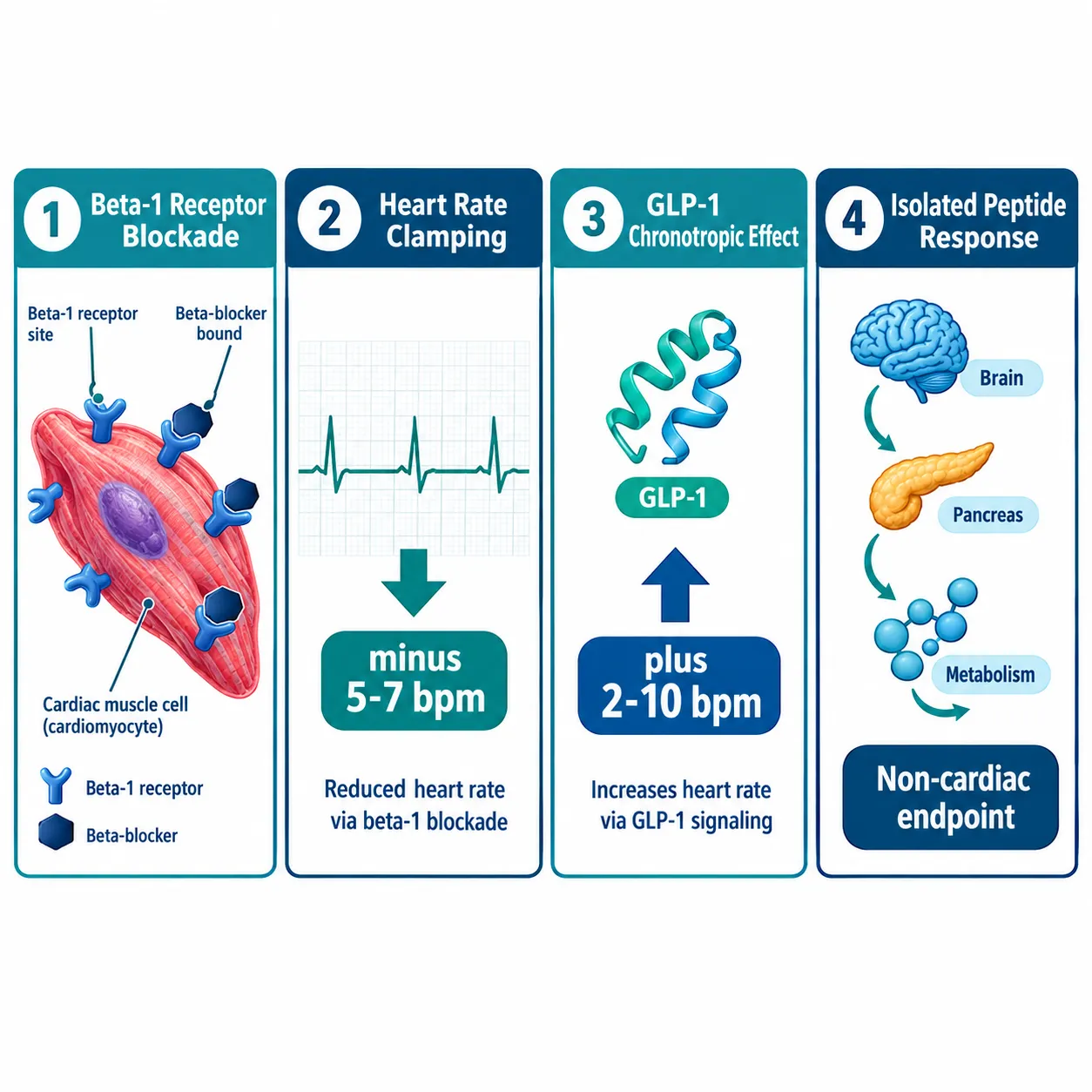
Metoprolol is a beta-1 selective adrenergic blocker. At standard doses, it reduces heart rate, myocardial contractility, and cardiac output both at rest and during exercise. Extended-release metoprolol succinate produces mean resting heart-rate reductions of roughly 5-7 bpm, with some individuals showing larger drops. This predictable, dose-dependent, and reversible effect is exactly what researchers need when designing studies where heart rate must be held steady.

The problem in peptide research is that many bioactive compounds have direct or indirect chronotropic effects. If a study measures glucose metabolism, vascular tone, or endocrine secretion after administering an incretin peptide, an uncontrolled rise in heart rate will alter blood pressure, cardiac output, and tissue perfusion simultaneously. Those changes then confound the metabolic or hormonal readout.

By using metoprolol to suppress the chronotropic component, investigators can attribute downstream effects more confidently to the peptide's direct receptor-mediated actions.

This is not a theoretical exercise. Animal studies have used combined beta-blockade and muscarinic blockade to establish intrinsic heart rate, then shown that peptides like oxyntomodulin can still raise intrinsic heart rate through pathways independent of GLP-1 receptors. That finding only became visible because beta-adrenergic confounding was removed first.

For researchers exploring GH analogue peptides or incretin-based compounds, understanding this pharmacological separation is foundational.


Incretin Peptides and the Chronotropic Problem
Incretin Peptides and the Chronotropic Problem

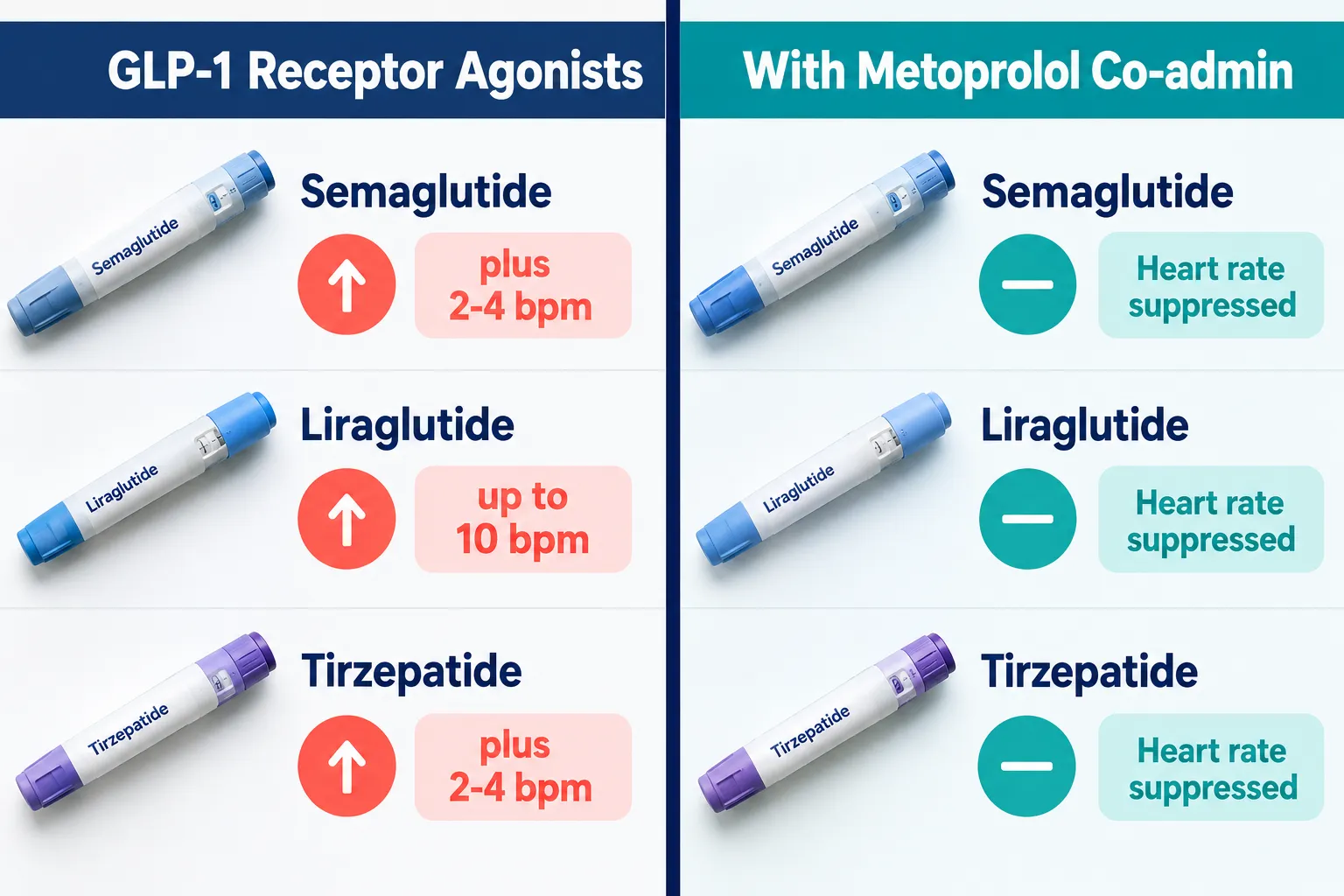
GLP-1 receptor agonists are now central to obesity and diabetes care. Their cardiovascular effects are well documented, but the magnitude of heart-rate elevation varies considerably by agent.

Agent Approximate HR Increase
Liraglutide Up to ~10 bpm
Semaglutide ~2-4 bpm
Dulaglutide ~2-4 bpm
Tirzepatide ~2-4 bpm
24-hour average (class) ~7 bpm

Real-world data from patients with implantable cardioverter-defibrillators show that starting a GLP-1 receptor agonist raises daily heart rate by a median 1.5 bpm and nighttime heart rate by about 2.0 bpm, with roughly 2.5 bpm additional nighttime increases per dose uptitration. These are small numbers in clinical practice, but in a mechanistic study designed to detect a 3-4 bpm signal, they represent meaningful noise.

"When the peptide-induced heart-rate change is the same order of magnitude as the outcome you are trying to measure, you cannot separate signal from confound without pharmacological control."

This is the core argument for metoprolol in incretin and growth-hormone studies: separating heart-rate effects from peptide responses. Beta-blockade suppresses the chronotropic signal, allowing the researcher to focus on non-cardiac endpoints such as insulin secretion, glucose disposal, or endocrine axis activity.

Researchers interested in weight-loss peptide mechanisms should also review what is the strongest peptide for weight loss for context on how incretin-class compounds compare on metabolic endpoints.

For those studying tesa peptide benefits, the same principle applies: any growth-hormone-releasing peptide that alters autonomic tone will require heart-rate control to isolate the GH-specific signal.


Growth Hormone, Adrenergic Tone, and Metoprolol's Dual Role

Historical endocrine research in animal models demonstrated that central administration of beta-adrenergic antagonists, including metoprolol, produced a gradual elevation in plasma growth hormone, while beta-agonists reduced GH. The conclusion was that beta-adrenergic tone exerts a tonic inhibitory effect on GH release.

This creates a dual consideration for study design:

  1. Metoprolol suppresses heart rate (the desired confound-control effect).
  2. Metoprolol may itself unmask or amplify GH responses by removing inhibitory adrenergic input.

Both effects must be accounted for. If a study uses metoprolol to control heart rate during a GH-releasing peptide protocol, the observed GH elevation may reflect both the peptide's action and the removal of adrenergic inhibition. Crossover designs with placebo beta-blockade arms are therefore essential.

For background on how peptides interact with endocrine pharmacology more broadly, the article on peptides and polypeptides in endocrine pharmacology provides useful mechanistic context.


Practical Study Design: Baseline and Repeated-Measure Recommendations
Practical Study Design: Baseline and Repeated-Measure Recommendations

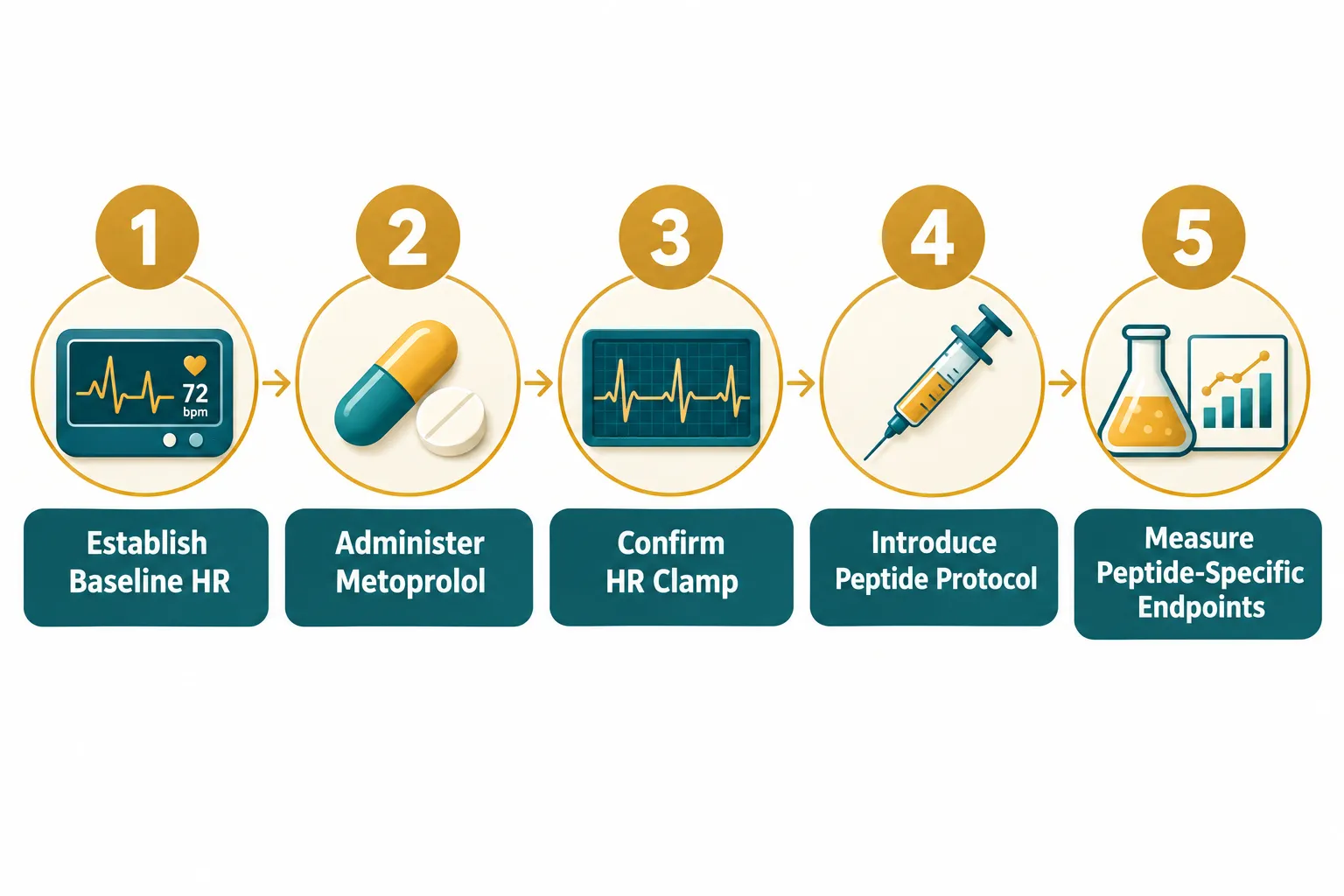
Applying metoprolol in incretin and growth-hormone studies: separating heart-rate effects from peptide responses effectively requires structured protocols. The following recommendations reflect current best practice for mechanistic research designs.

Before starting any intervention:

  • Record resting heart rate on at least three separate days to establish a stable baseline.
  • Document blood pressure, fasting glucose, and fasting insulin at each baseline visit.
  • Confirm that metoprolol has reached steady-state plasma levels (typically 4-5 half-lives after initiation or dose change) before introducing the peptide protocol.

During the study:

  • Use continuous or frequent intermittent heart-rate monitoring to confirm the "clamp" is maintained.
  • Measure peptide-specific endpoints (e.g., GLP-1 levels, GH pulse amplitude, insulin secretion) at standardized time points relative to peptide administration, not relative to drug administration.
  • In crossover designs, allow sufficient washout time for metoprolol; withdrawal data confirm that heart rate normalizes to the mid-60s bpm range after discontinuation, but full washout should be confirmed by repeated measurement rather than assumed from timing alone.

Repeated-measure considerations:

  • Collect hormone and metabolic samples at the same time of day across all study arms to control for circadian variation in GH pulsatility and insulin sensitivity.
  • Account for exercise tolerance changes: metoprolol blunts exercise-induced tachycardia, so any exercise challenge used to stimulate GH must be standardized by workload output, not by target heart rate.

Understanding peptide dosing protocols is equally important when designing repeated-measure studies, as dose timing relative to beta-blockade will affect the observed peptide response window.

For studies involving mitochondrial or cytoprotective peptides alongside cardiovascular variables, the SS-31 10mg research peptide considerations resource offers relevant parallel design guidance.


Conclusion

The value of metoprolol in incretin and growth-hormone studies lies in its predictability. A 5-7 bpm heart-rate reduction, reliably achieved and reversible, gives researchers a clean pharmacological lever to isolate peptide-specific effects from autonomic noise. The key practical steps are straightforward: establish a stable heart-rate baseline before intervention, confirm steady-state beta-blockade before introducing the peptide, use continuous monitoring to verify the clamp throughout the protocol, and build crossover or placebo-controlled arms to separate metoprolol's own endocrine effects from those of the peptide under study.

As incretin therapies expand in obesity and cardiometabolic medicine, mechanistic trials will increasingly need this kind of pharmacological scaffolding. Researchers and clinicians designing such studies should treat beta-blockade not as a background medication but as an active experimental variable that requires the same rigorous characterization as the peptide itself. Reviewing the broader landscape of peptides 101 for research-use only buyers is a practical next step for anyone building a comprehensive mechanistic protocol.

https://www.puretestedpeptides.com/wp-content/uploads/2026/10/metoprolol-in-incretin-and-growth-hormone-studies-separating-heart-rate-effects.webp 1024 1536 https://www.puretestedpeptides.com/wp-content/uploads/2026/01/buy-peptides-online.jpg 2026-10-04 13:04:572026-10-04 13:04:57Metoprolol in Incretin and Growth-Hormone Studies: Separating Heart-Rate Effects From Peptide Responses
×

Helpful Links

  • My account
  • Cart
  • Checkout
  • Refund and Returns Policy
  • Privacy Policy
  • SMS Privacy Policy
  • Login
  • My Account
  • Logout

USA Made Lab Tested Peptides

All products are sold for research, laboratory, or analytical purposes only, and are not for human consumption


Pure Tested Peptides is a chemical supplier. Pure Tested Peptides is not a compounding / chemical compounding facility as defined under 503A of the Federal Food, Drug, and Cosmetic act. Pure Tested Peptides is not an outsourcing facility as defined under 503B of the Federal Food, Drug, and Cosmetic act.

The statements made within this website have not been evaluated by the US Food and Drug Administration. The products we offer are not intended to diagnose, treat, cure or prevent any disease.

Human/Animal Consumption Prohibited. Laboratory/In-Vitro Experimental Use Only

Scroll to top Scroll to top Scroll to top