Call or Text 727-513-9780
  • Shopping Cart Shopping Cart
    0Shopping Cart
Pure Tested Peptides | America's most trusted Peptides for sale online
  • Peptides for sale
    • Oral Peptides for sale
      • Peptide Capsules for sale
      • BPC 157 Capsules 1000mcg
      • SLU-PP-332 Capsules | 1000 mcg
      • 5-Amino-1MQ 50mg Capsules
      • Tesofensine 500mcg
    • All Peptides for sale
    • Peptide Sprays
      • BPC 157 Nasal Spray Kit
      • BPC-157 TB500 Nasal Spray Kit
      • Semax Nasal Spray 10mg
      • Selank – Nasal Spray Kit – 10mg
      • Epithalon 50MG Nasal Spray Kit
      • Ipamorelin 10mg Nasal Spray
      • Klow Nasal Spray (BPC-157 + TB-500 + GHK-Cu + KPV) | 80mg
      • Hulk Nasal Spray Tesa / Ipa Blend 6/3 MG
      • Klow Nasal Spray
      • NAD + 500 mg Nasal Spray
      • PT-141 Nasal Spray Kit
    • GHRH Peptides
      • Ipa Peptides
      • CJC-1295 Peptides
        • CJC-1295 with DAC 5 mg
        • CJC-1295 without DAC 5 mg
        • CJC-1295 Ipa 10mg
      • Tesa Peptides
        • Tesa Peptide
        • Tesa 20 mg
    • GHK-Cu Peptides
      • All GHK-Cu Peptides
      • GHK-Cu 100mg
      • KLOW Peptide Blend – Buy KLOW blend online
    • BPC Peptides
      • All BPC Peptides
      • BPC-157
      • BPC-157 TB-500
      • BPC 157 capsules 1000mcg
    • SLU-PP-332 Peptides
      • All SLU-PP-332 Peptides
      • SLU-PP-332 5mg
    • GLP3 Peptides
    • PT-141 Peptides
      • PT-141 Peptides for sale
      • PT-141 10mg
      • PT-141 Nasal Spray
    • CAG Peptides
      • Lipo-C Peptide Blend
      • CAG 5mg
      • CAG 10mg
    • MOTS-C Peptides
      • MOTS-C Peptides for sale
      • MOTS-c peptide
      • MOTS-c 10mg *6 pack*
    • 5 Amino 1MQ Peptides
      • 5 Amino 1MQ Peptides for sale
      • 5-Amino-1MQ 50mg Capsules
      • 5-Amino-1MQ 5mg
    • Epithalon Peptides
      • Epithalon Peptides for sale
      • Epithalon 10mg
      • Epithalon 50mg
  • Shop
    • GLPs
      • 5-Amino-1MQ 50mg Capsules
      • 5-Amino-1MQ 5mg
      • L-Carnitine 500mg/ml
      • Tesofensine 500mcg
      • SLU-PP-332 5mg
      • MOTS-c 10mg *6 pack*
    • Epithalon & BPC Peptides
      • Epithalon 10mg
      • Epithalon 50mg
      • BPC-157
      • BPC 157 capsules 1000mcg
      • BPC-157 TB-500
      • BPC-157 TB500 Nasal Spray Kit
      • BPC 157 Nasal Spray Kit
    • BPC TB-500 & NAD+ Peptides
      • NAD+ 500 mg
      • KLOW Peptide Blend – Buy KLOW blend online
      • GLOW Peptide Blend
      • TB 500 5mg
      • BPC 157 capsules 1000mcg – Supplement
      • BPC 157 Nasal Spray Kit
      • BPC-157
      • BPC-157 TB500 Nasal Spray Kit
      • BPC-157 TB-500
      • BPC 157 capsules 1000mcg
    • LL-37 Peptide
      • LL-37 10 mg
    • MOTS-C & Selank
      • MOTS-c peptide
      • Selank 10mg
    • GHK Peptides
      • GHK-Cu 100mg
      • GLOW Peptide Blend
      • KLOW Peptide Blend – Buy KLOW blend online
  • COAs
  • Wholesale
    • Wholesale Peptides for sale
  • PTP FAQ
  • Affiliates
    • Selank Peptide: Advanced Pharmacological Mechanisms Underlying Its Anxiolytic and Nootropic Effects in Research
      • 5-Amino-1MQ Peptide: Detailed Mechanisms of NNMT Inhibition and Its Impact on Cellular Metabolism Research
        • MOTS-C Peptide: Unraveling Its Role in Mitochondrial Dynamics and Energy Metabolism Research
          • Epithalon Peptide and Telomerase Regulation: Investigating Its Impact on Cellular Senescence and Lifespan Research Models
            • GLP2-T vs GLP2 Tirz Peptide: Understanding the Naming, Mechanistic Nuances, and Research Implications for Gut Health
      • Peptides and Polypeptides in Modern Pharmacology: What Research on Metoprolol, Prednisone, and Amlodipine Reveals
        • Polypeptide Peptides vs NSAIDs: What Naproxen and Diclofenac Teach Tissue-Repair Researchers About BPC‑157 and TB‑500
          • Peptides and Polypeptides in Endocrine Pharmacology: How GLP-1, GLP-2, and GLP-3 Retatrutide Differ From Classic Drugs Like Prednisone and Amlodipine
          • 5‑Amino‑1MQ Peptide and NNMT Inhibition: How It Compares With Statins Like Atorvastatin in Adipose and Lipid Metabolism Research
      • Enclomiphene, Estrogen Receptor Signaling, and Luteinizing Phase Biology: What Hormone Researchers Should Measure
        • Mesenchymal Stem Cells, BPC‑157, and GHK‑Cu: How Tissue Repair Peptides Compare With Classic NSAIDs Like Naproxen in Injury Models
          • Peptide Calculator Use Cases Beyond Growth Hormone: Working Through GLP‑3 Retatrutide, MOTS‑c, and BPC‑157 Research Dosing
        • Polypeptide Peptides in Endocrine and Metabolic Pharmacology: Lessons From Amlodipine, Prednisone, and Metoprolol
        • Peptides Calculator for Advanced Blends: Worked Examples for Tesamorelin, CJC‑1295, and Ipamorelin Stacks
          • Peptides and Polypeptides in Human Physiology: How Molecular Size Shapes Research Applications
            • Selank Peptide: Advanced Pharmacological Mechanisms Underlying Its Anxiolytic and Nootropic Effects in Research
          • 5-Amino-1MQ Peptide: Detailed Mechanisms of NNMT Inhibition and Its Impact on Cellular Metabolism Research
            • MOTS-C Peptide: Unraveling Its Role in Mitochondrial Dynamics and Energy Metabolism Research
              • Epithalon Peptide and Telomerase Regulation: Investigating Its Impact on Cellular Senescence and Lifespan Research Models
                • GLP2-T vs GLP2 Tirz Peptide: Understanding the Naming, Mechanistic Nuances, and Research Implications for Gut Health
                  • Peptides and Polypeptides in Endocrine Pharmacology: How GLP-1, GLP-2, and GLP-3 Retatrutide Differ From Classic Drugs Like Prednisone and Amlodipine
                    • Polypeptide Peptides vs NSAIDs: What Naproxen and Diclofenac Teach Tissue-Repair Researchers About BPC‑157 and TB‑500
                      • Peptides and Polypeptides in Modern Pharmacology: What Research on Metoprolol, Prednisone, and Amlodipine Reveals
                        • 5‑Amino‑1MQ Peptide and NNMT Inhibition: How It Compares With Statins Like Atorvastatin in Adipose and Lipid Metabolism Research
                        • Enclomiphene, Estrogen Receptor Signaling, and Luteinizing Phase Biology: What Hormone Researchers Should Measure
                        • Mesenchymal Stem Cells, BPC‑157, and GHK‑Cu: How Tissue Repair Peptides Compare With Classic NSAIDs Like Naproxen in Injury Models
                        • Peptide Calculator Use Cases Beyond Growth Hormone: Working Through GLP‑3 Retatrutide, MOTS‑c, and BPC‑157 Research Dosing
                        • Polypeptide Peptides in Endocrine and Metabolic Pharmacology: Lessons From Amlodipine, Prednisone, and Metoprolol
                        • Peptides Calculator for Advanced Blends: Worked Examples for Tesamorelin, CJC‑1295, and Ipamorelin Stacks
                        • Peptides and Polypeptides in Human Physiology: How Molecular Size Shapes Research Applications
                        • Selank Peptide: Advanced Pharmacological Mechanisms Underlying Its Anxiolytic and Nootropic Effects in Research
                        • MOTS-C Peptide: Unraveling Its Role in Mitochondrial Dynamics and Energy Metabolism Research
                        • Peptides and Polypeptides in Modern Pharmacology: What Research on Metoprolol, Prednisone, and Amlodipine Reveals
                        • Peptides and Polypeptides in Endocrine Pharmacology: How GLP-1, GLP-2, and GLP-3 Retatrutide Differ From Classic Drugs Like Prednisone and Amlodipine
                        • 5-Amino-1MQ Peptide: Detailed Mechanisms of NNMT Inhibition and Its Impact on Cellular Metabolism Research
                        • Mesenchymal Stem Cells, BPC‑157, and GHK‑Cu: How Tissue Repair Peptides Compare With Classic NSAIDs Like Naproxen in Injury Models
                        • Peptide Calculator Use Cases Beyond Growth Hormone: Working Through GLP‑3 Retatrutide, MOTS‑c, and BPC‑157 Research Dosing
                        • GLP2-T vs GLP2 Tirz Peptide: Understanding the Naming, Mechanistic Nuances, and Research Implications for Gut Health
                        • Polypeptide Peptides in Endocrine and Metabolic Pharmacology: Lessons From Amlodipine, Prednisone, and Metoprolol
                        • Polypeptide Peptides vs NSAIDs: What Naproxen and Diclofenac Teach Tissue-Repair Researchers About BPC‑157 and TB‑500
                        • Peptides and Polypeptides in Human Physiology: How Molecular Size Shapes Research Applications
                        • Peptides Calculator for Advanced Blends: Worked Examples for Tesamorelin, CJC‑1295, and Ipamorelin Stacks
                        • 5‑Amino‑1MQ Peptide and NNMT Inhibition: How It Compares With Statins Like Atorvastatin in Adipose and Lipid Metabolism Research
                        • Enclomiphene, Estrogen Receptor Signaling, and Luteinizing Phase Biology: What Hormone Researchers Should Measure
                        • Epithalon Peptide and Telomerase Regulation: Investigating Its Impact on Cellular Senescence and Lifespan Research Models
                        • Best research protocol Klow blend
                        • best time to take BPC-157
                        • best time to take DSIP (Delta Sleep Inducing Peptide)
                        • best time to take CJC-1295
                        • best time to take AOD-9604
                        • best time to take Follistatin 344
                        • best time to take Ipamorelin
                        • best time to take MK-677 (Ibutamoren)
                        • best time to take Ligandrol (LGD-4033) — research compound
                        • best time to take Ostarine (MK-2866) — research compound
                        • best time to take GHK-CU
                        • best time to take TB-500
                        • best time to take MOTS-c
                        • best time to take Semax
                        • best time to take RAD-140 (Testolone) — research compound
                        • best time to take Thymosin Alpha-1
                        • best time to take PEG-MGF
                        • Biolife Plasma, Octapharma Plasma, and Research Peptides: How Plasma Donation Labs Differ From Peptide Suppliers
                        • best time to take YK-11 — research compound
                        • best time to take PT-141 (Bremelanotide)
                        • Best research protocol Klow blend
                        • 5-Amino-1MQ and MOTS-C Synergy: Metabolic Signaling, Mitochondria, and Research Design
                        • BPC-157 and TB-500: Investigating Their Combined Effects on Angiogenesis and Cellular Migration in Tissue Repair Models
                        • BPC-157 Peptide: Gut Barrier Function, Inflammation, and Tissue-Recovery Research
                        • 5‑Amino‑1MQ and MOTS‑c Synergy in Metabolic Research: Designing NNMT and Mitochondrial Biogenesis Stacks
                        • CJC-1295 with DAC vs. Without DAC: Half-Life, Release Kinetics, and Research Implications
                        • CJC‑1295 with DAC vs. Without DAC: Expanding on Half‑Life Differences Using Tesamorelin and Ipamorelin Blend Case Studies
                        • Collagen Biology and Copper‑Binding Peptides: How GHK‑Cu, Glow Blend, and Klow Blend Interact with Skin and Connective Tissue
                        • Collagen Biology and Regenerative Peptides: How GHK‑Cu, Glow Blend, and Klow Blend Affect Extracellular Matrix Research
                    • DNA, Telomeres, and Longevity Peptides: Positioning Epithalon and MOTS‑c in Genetic Aging Research
                      • Enclomiphene Citrate: serm Mechanism, Testosterone Research, and Stack Compatibility
                        • Enclomiphene vs Enclomiphene Citrate: Formulation, Bioavailability, and Research Distinctions
                        • Epithalon Peptide Research: Telomerase Activation, Aging, and Pineal Gland Function
                        • Estrogen Receptor Signaling and Enclomiphene: How Selective Modulators Compare with Classic Polypeptide Hormones
                        • GHK-Cu Peptide: Advanced Mechanisms in Extracellular Matrix Remodeling and Wound Healing Research
                        • GHK-Cu Peptide: Collagen Synthesis, Wound Repair, and Skin-Barrier Research Models
                        • GLP-1 vs GLP-3 vs GLP-2: Peptide Classification and Research Applications
                        • GLP-2 Peptide Research Guide: Gut Barrier Function, Nutrient Absorption, and Intestinal Recovery Models
                        • GLP-3 Retatrutide vs. GLP-1 Drugs: What Triple-Agonist Biology Changes in Research Models
                        • Ipamorelin and Tesamorelin Combination: Synergistic GH Secretagogue Research and Dosing Protocols
                        • GLP2 Tirz Peptide: What It Is, Why the Name Exists, and How Researchers Should Interpret It
                        • Klow Blend Peptide Nasal Spray: What the Formulation Is Trying to Do in Cognitive Research
                        • Mitochondria, NNMT Inhibition, and Peptide Modulators: Where MOTS‑c and 5‑Amino‑1MQ Fit in Cellular Energy Research
                        • MOTS-c Peptide: Mitochondrial Function, Energy Metabolism, and What Researchers Measure
                        • MOTS-c vs. 5-Amino-1MQ: Which Metabolic Research Questions Each Compound Actually Answers
                        • Nasal Spray Peptides: Bioavailability, Administration, and Semax/Selank Research Applications
                        • PT-141 Peptide Research: Mechanism of Action and Melanocortin Receptor Signaling
                        • Retatrutide for Research: Mechanism, Structure, and GLP-1/GLP-3 Dual Action
                        • Retatrutide for Obesity and Type 2 Diabetes: What the Latest Trial Data Suggest
                        • Tesofensine Peptide Research: Mechanism, Appetite Suppression, and Neuropeptide Y Pathways
  • Contact
    • Contact Customer Service
    • Text Customer Support
  • About US
  • Shop all peptides
  • Affiliate Program
    • Affiliate Signup
  • Login / Register Login / Register Page Link Login / Register Page Link
  • Click to open the search input field Click to open the search input field Search
  • Menu Menu

Tag Archive for: modified grf 1-29

CJC-1295 With DAC vs Without DAC: Mechanism, Duration, and Research Design Differences

CJC-1295 With DAC vs Without DAC: Mechanism, Duration, and Research Design Differences

August 14, 2026/0 Comments/in Uncategorized/by

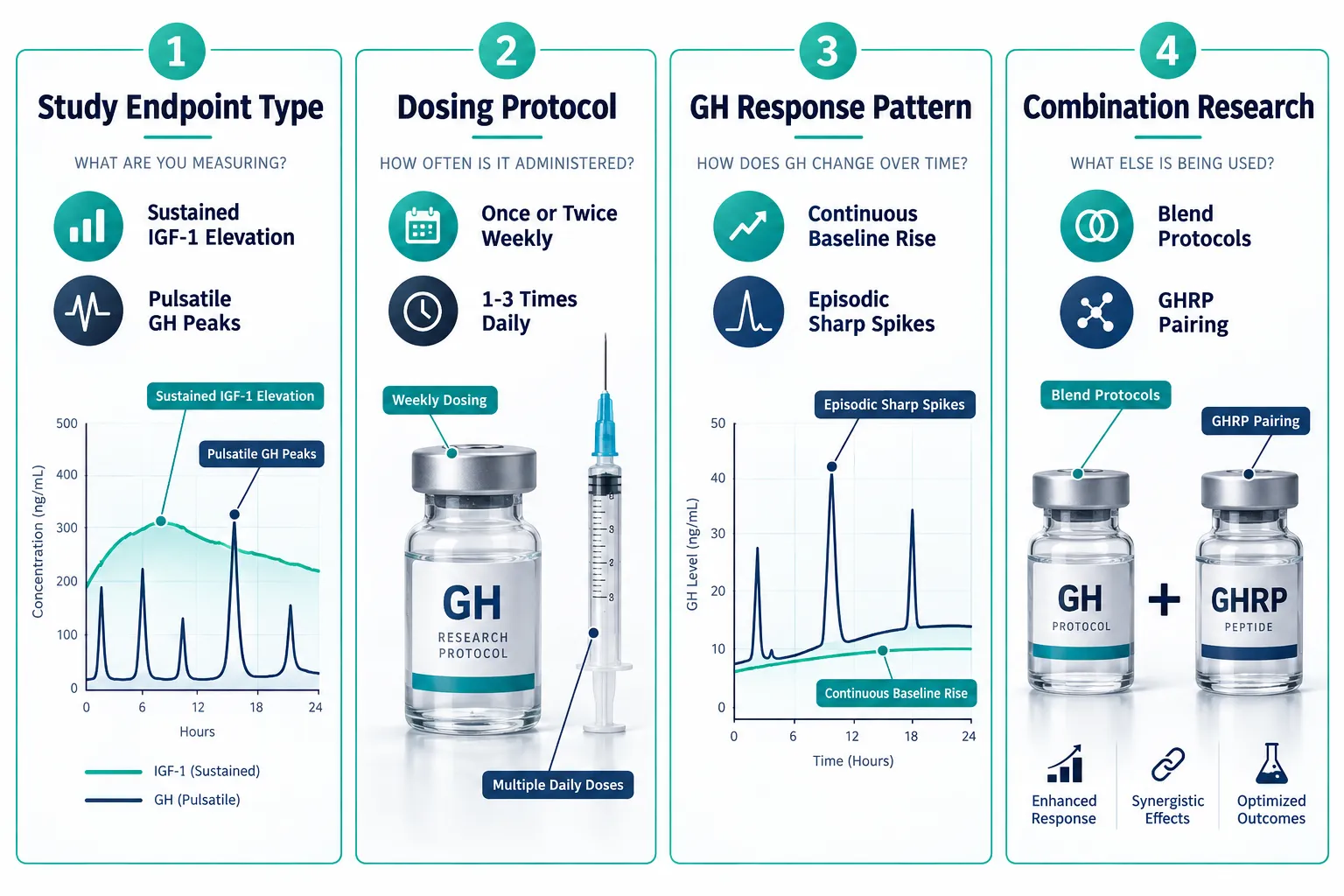
A single molecular attachment, a drug affinity complex, or DAC, separates two peptides that share a name but behave in fundamentally different ways inside a biological system. Understanding the CJC-1295 with DAC vs without DAC mechanism, duration, and research design differences is not a matter of splitting hairs; it determines whether a study captures sustained growth hormone (GH) elevation or episodic GH pulses, and whether dosing happens once a week or three times a day.

Key Takeaways

  • CJC-1295 with DAC covalently binds serum albumin via a maleimide-lysine conjugate, creating a circulating depot with a half-life of 5.8 to 8.1 days.
  • CJC-1295 without DAC, more accurately called Modified GRF 1-29, resists DPP-IV degradation but clears within 30 to 120 minutes, producing short GH pulses.
  • With DAC produces sustained GH and IGF-1 elevation; without DAC mimics physiologic pulsatile secretion.
  • Dosing frequency differs dramatically: once or twice weekly for the DAC form versus one to three times daily for the no-DAC form.
  • Research design must align with the pharmacokinetic profile of whichever form is selected; the two are not interchangeable in study protocols.

The Core Structural Difference: Albumin Binding vs DPP-IV Resistance
The Core Structural Difference: Albumin Binding vs DPP-IV Resistance

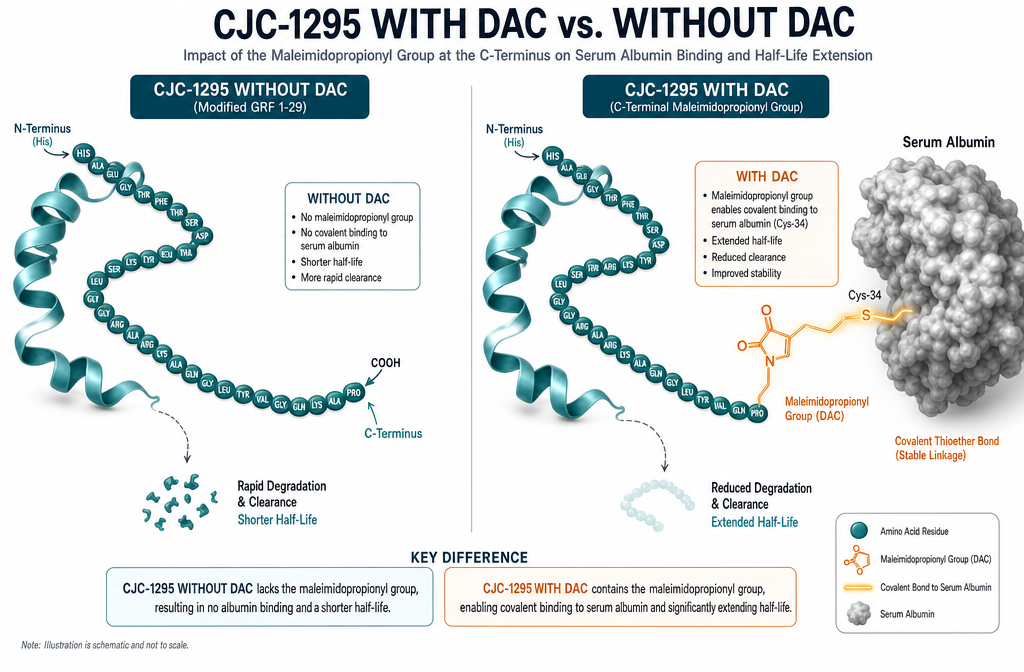
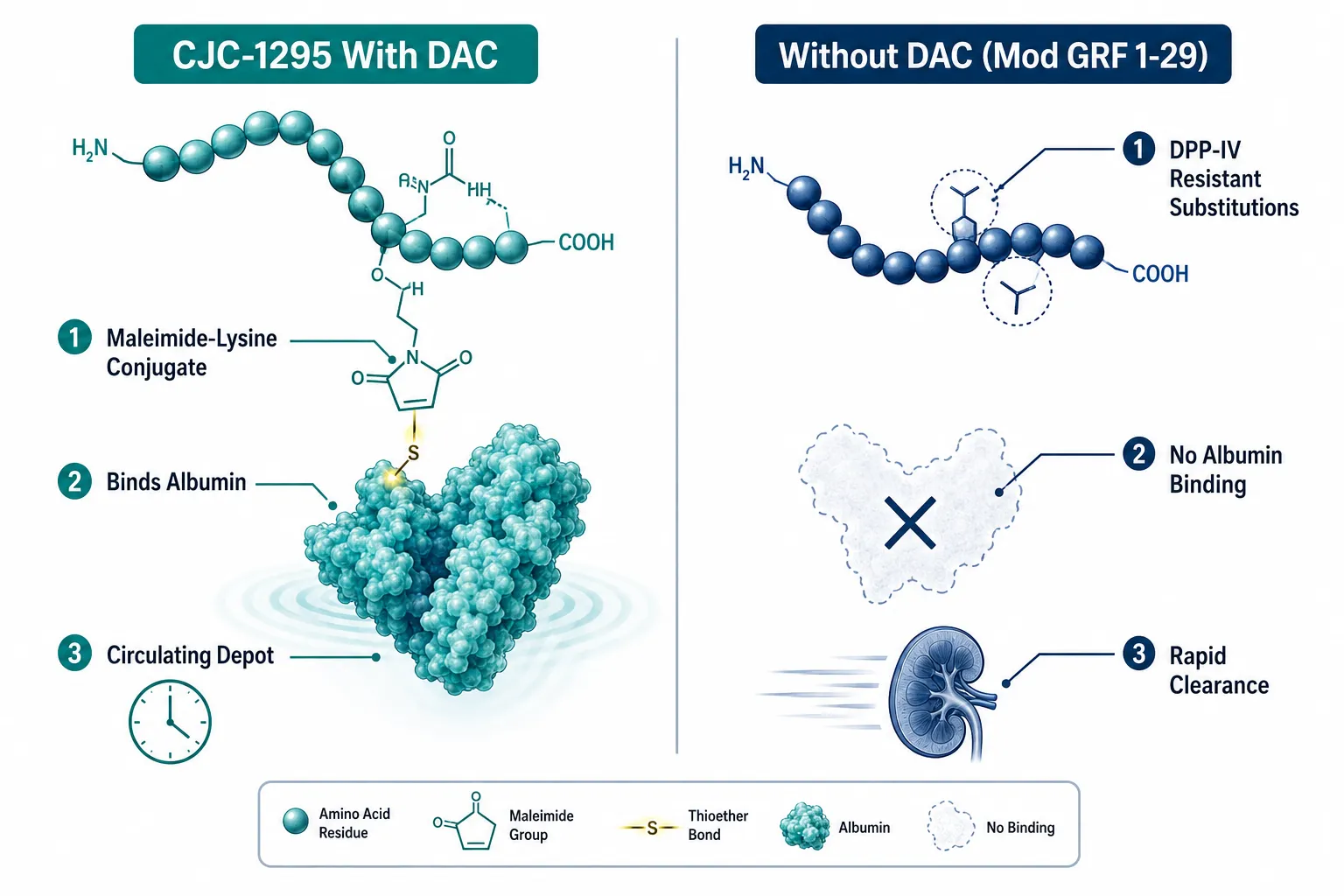
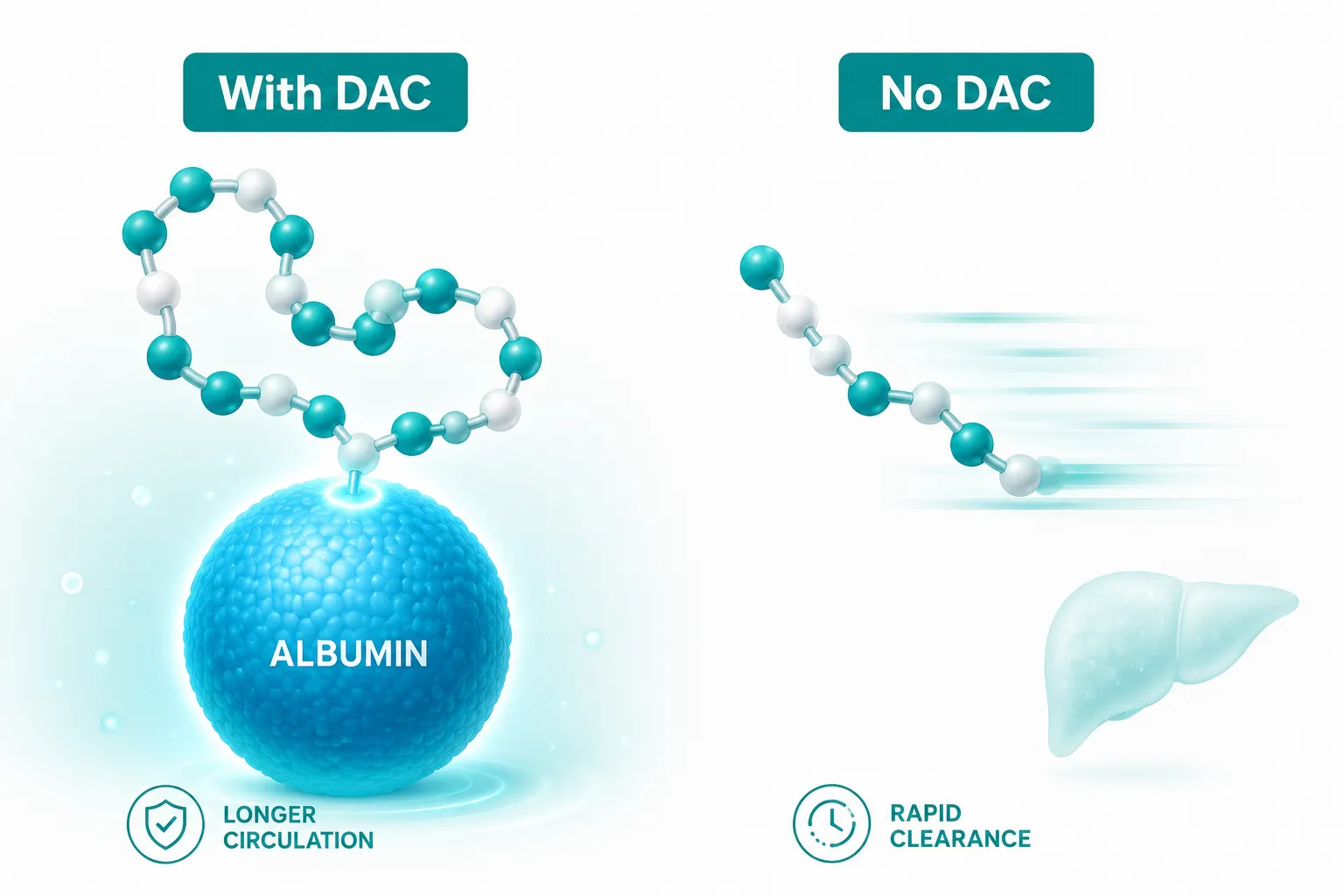
The CJC-1295 with DAC vs without DAC distinction begins at the molecular level. CJC-1295 with DAC incorporates a lysine-linked maleimidopropionic acid group at position 30. This chemical handle covalently attaches to serum albumin once the peptide enters circulation. Albumin is the most abundant plasma protein in the body, and by hitching to it, the peptide essentially becomes part of a large, slowly cleared macromolecule. The result is a circulating depot that releases active peptide gradually over days rather than hours.

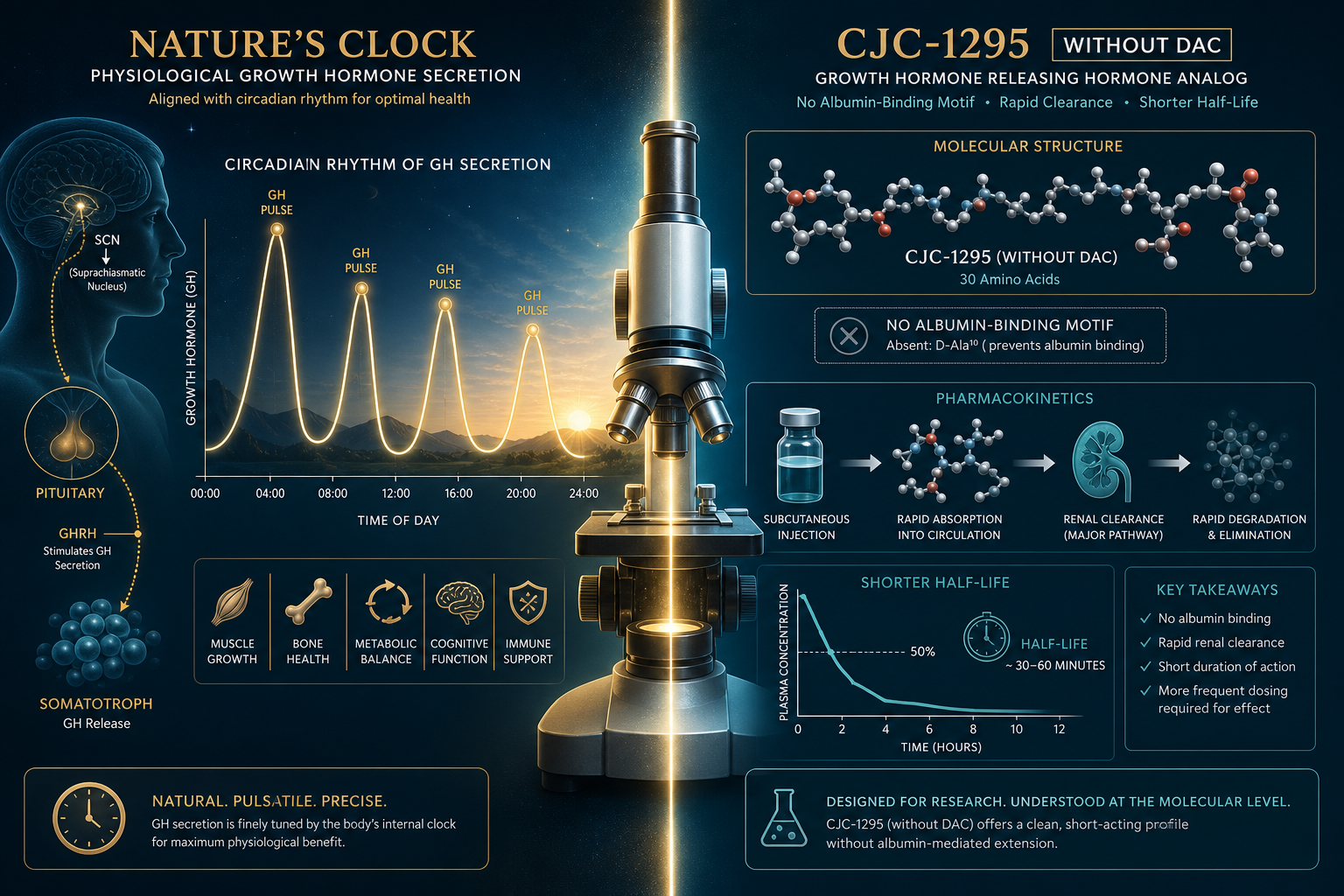
CJC-1295 without DAC, the compound more precisely termed Modified GRF 1-29, takes a different approach to stability. It uses four strategic amino acid substitutions to resist cleavage by dipeptidyl peptidase-IV (DPP-IV), the enzyme that rapidly degrades native growth hormone-releasing hormone (GHRH). There is no albumin-binding group. The peptide remains free in plasma, acts quickly at the pituitary, and clears within 30 to 120 minutes.

In plain terms:

  • With DAC = albumin-bound, extended-release GHRH analog
  • Without DAC = short-acting, DPP-IV-resistant GHRH analog

This structural difference is the single most important concept when evaluating research that involves either compound. For a broader look at how peptide structure governs function, the overview of polypeptide peptides explained: structure, function, and research applications provides useful context.

Half-Life and Duration: Minutes vs Days
Half-Life and Duration: Minutes vs Days

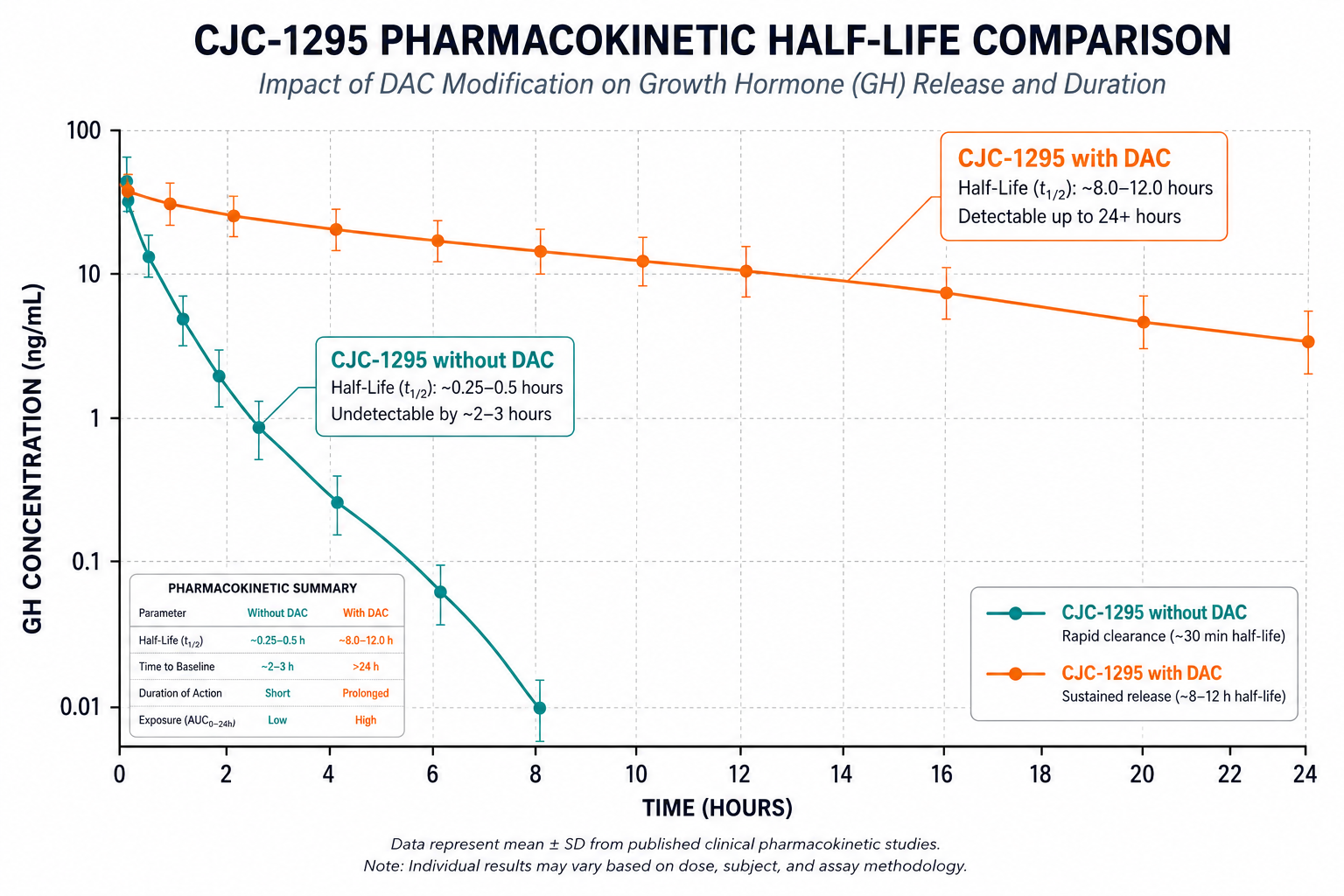
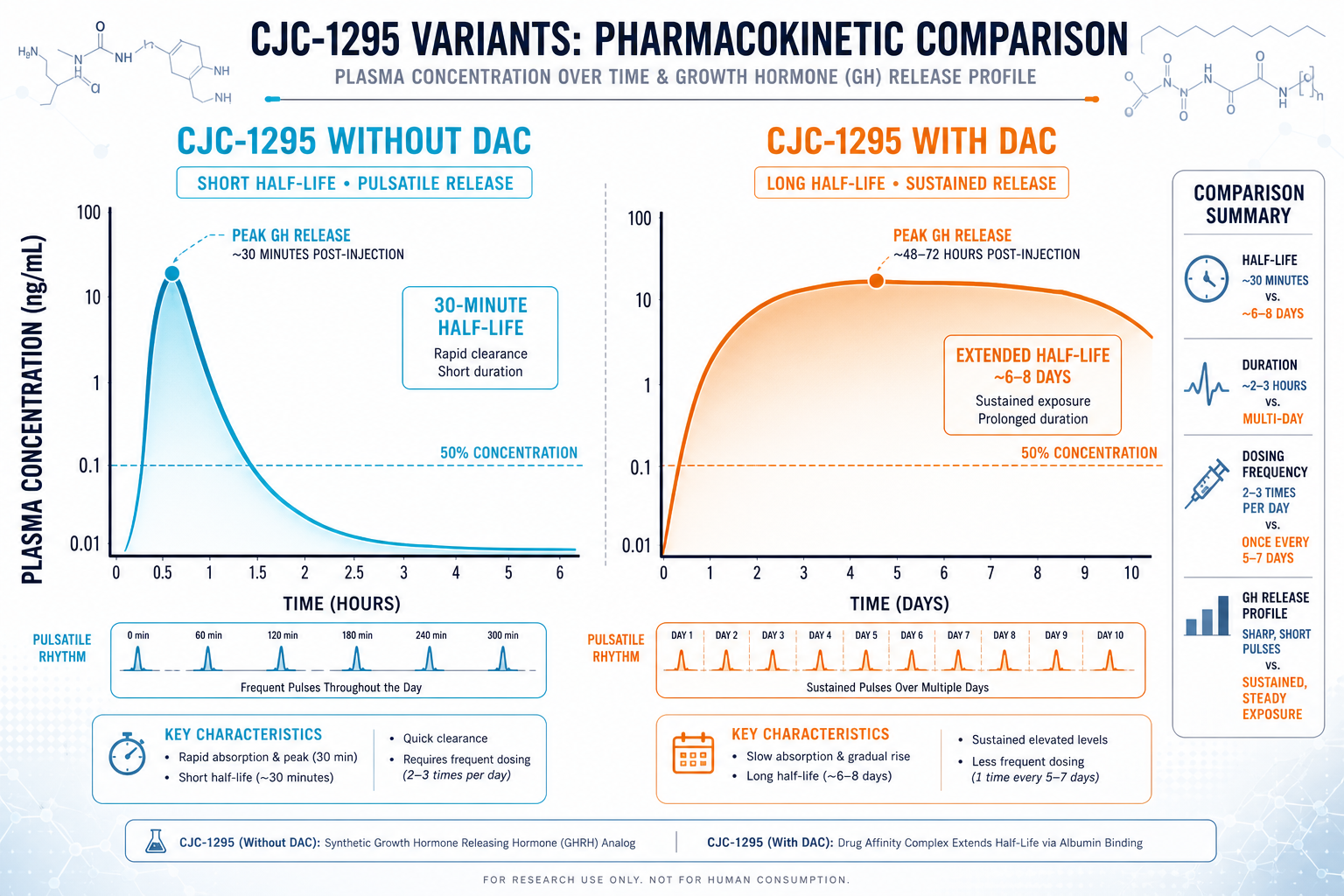
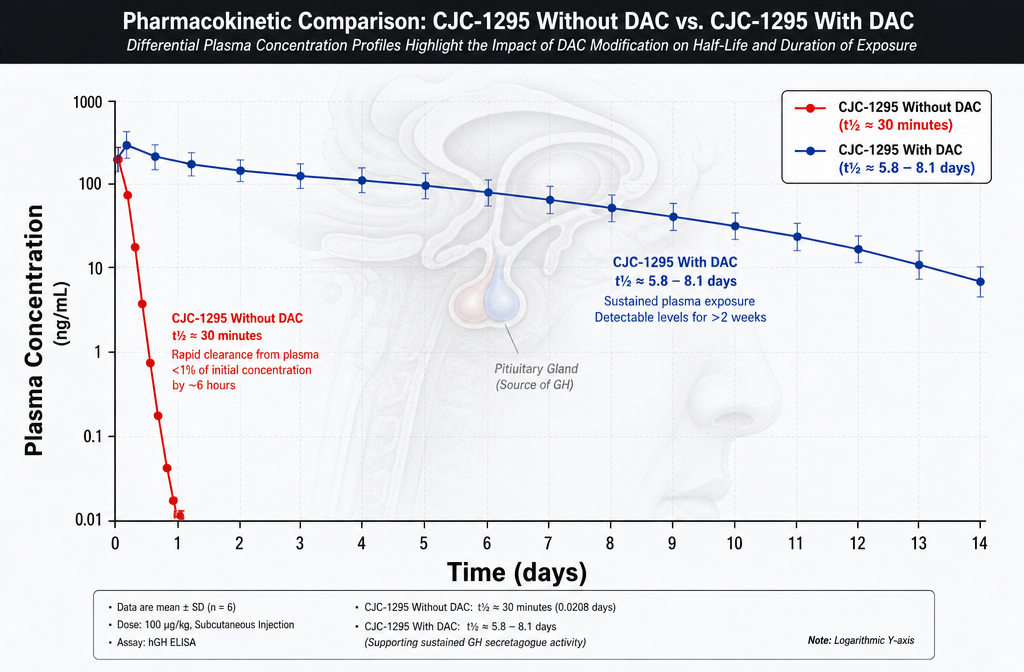
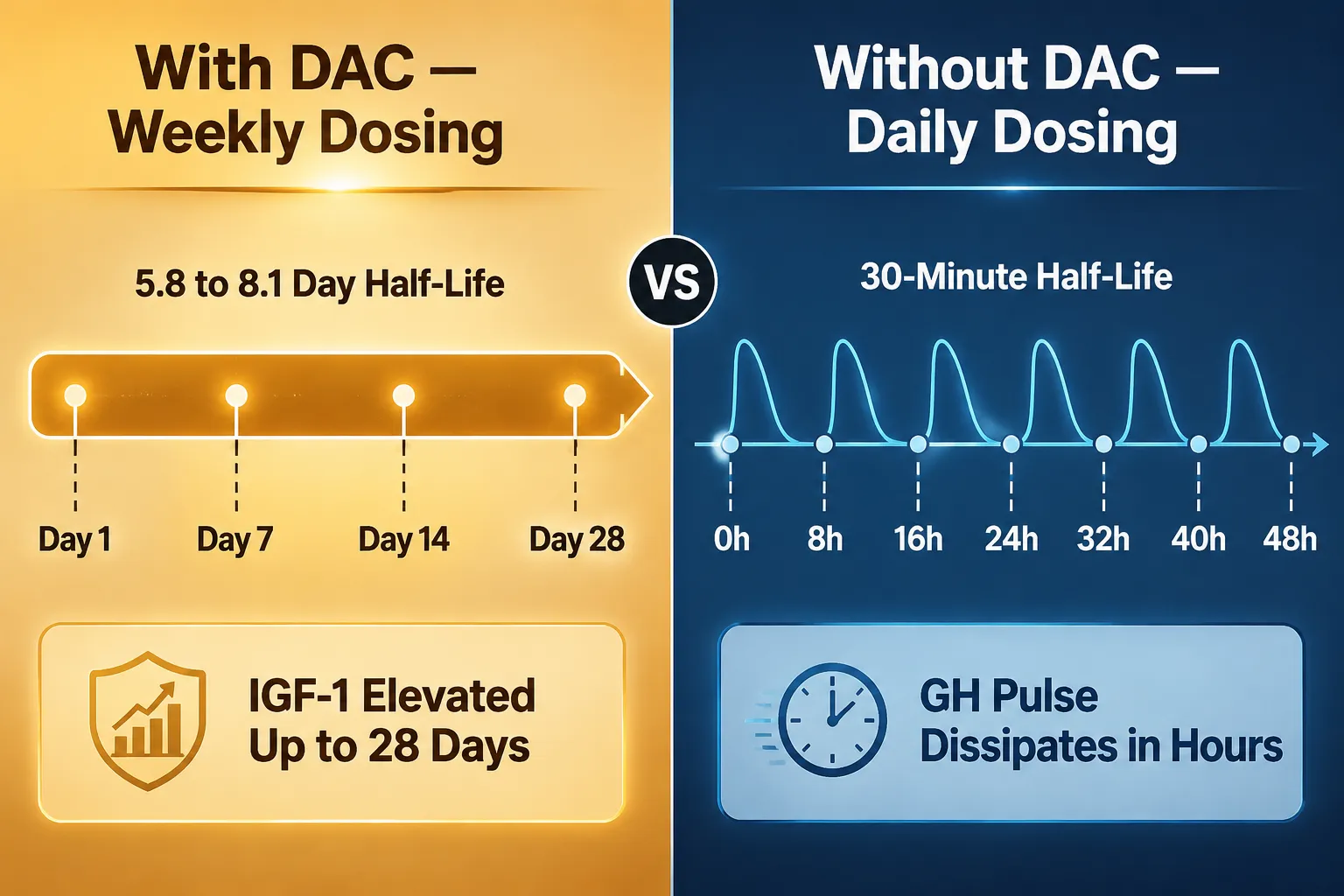
The pharmacokinetic gap between these two forms is striking. Phase 2 data on CJC-1295 with DAC in approximately 65 adults established a half-life of 5.8 to 8.1 days. After multiple doses, IGF-1 levels remained elevated above baseline for up to 28 days. Mean plasma GH showed two- to tenfold increases persisting for six days or more after a single injection. This is not a transient spike, it is a prolonged hormonal shift.

CJC-1295 without DAC tells a very different story. Its half-life sits around 30 minutes, occasionally extended to 30 to 120 minutes depending on the measurement methodology. GH pulses rise sharply after injection and return toward baseline within hours, leaving no lasting depot activity.

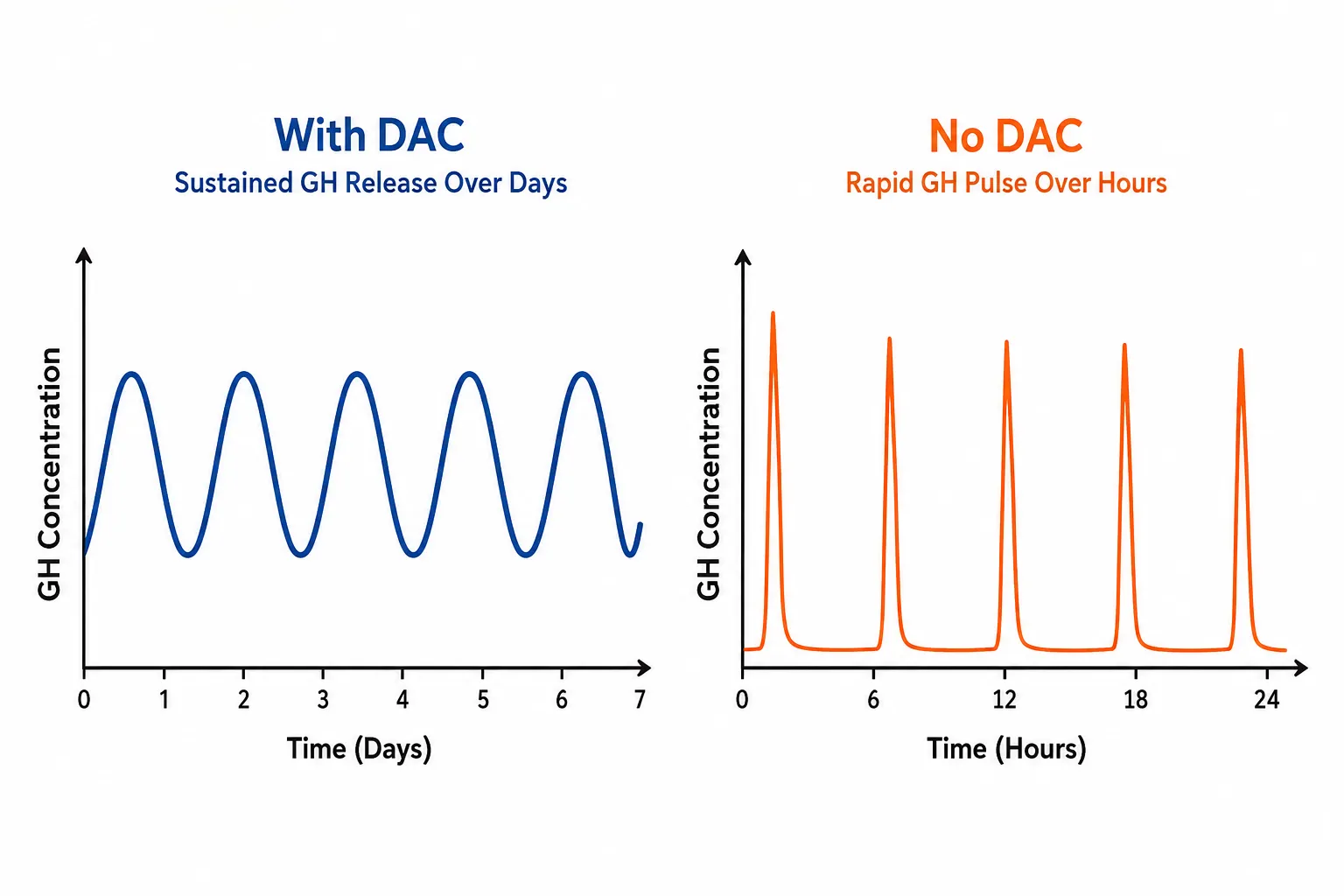
Key insight: The DAC form produces a “continuous GH/IGF-1 elevation” pattern. The no-DAC form produces “episodic GH pulses.” Neither pattern is inherently superior, the right choice depends entirely on the research question.

Dosing frequency follows directly from half-life:

Form Half-Life Typical Research Dosing
CJC-1295 with DAC 5.8 to 8.1 days Once or twice weekly
CJC-1295 without DAC (Mod GRF 1-29) 30 to 120 minutes 1 to 3 times daily

Researchers studying combination protocols, for example, pairing a GHRH analog with a ghrelin mimetic, should review how these compounds are combined in products like the CJC-1295 IPA 10mg formulation, or in multi-compound blends such as the Tesamorelin AOD9604 CJC1295 Ipamorelin 12mg protocol. For a broader comparison of GHRH-axis peptides, the article on Tesamorelin and Ipamorelin peptides: mechanism, synergy, and growth hormone research design is also worth consulting.

Research Design Implications of CJC-1295 With DAC vs Without DAC
Research Design Implications of CJC-1295 With DAC vs Without DAC

Selecting between these two forms is a research design decision, not simply a dosing preference. The CJC-1295 with DAC vs without DAC mechanism, duration, and research design differences translate directly into how endpoints are measured, how frequently samples are collected, and what kind of GH-axis activity the study is actually designed to observe.

When studying sustained IGF-1 elevation:
The with-DAC form is appropriate. Its long half-life means fewer injections, simpler dosing schedules, and a more stable hormonal environment during the observation window. Researchers can track IGF-1 over days or weeks without daily interventions.

When studying pulsatile GH dynamics:
The no-DAC form is the better fit. Its short action window allows researchers to time injections precisely and observe discrete GH pulses. This is useful when the research question involves mimicking natural secretion patterns or assessing acute pituitary responsiveness.

Additional design considerations:

  • Washout periods differ substantially. The DAC form may require weeks of washout; the no-DAC form clears within hours.
  • Combination protocols involving a GHRP (such as Ipamorelin) are common with the no-DAC form, since both compounds share a short-acting, pulse-oriented profile. Researchers can explore Sermorelin Ipamorelin CJC1295 combination designs for reference.
  • Endpoint timing must account for the GH response curve. Sampling 24 hours post-injection is meaningful for the DAC form but largely irrelevant for the no-DAC form.
  • Blinding and control arms are easier to manage with the weekly-dosed DAC form in longer studies, since compliance and administration frequency are reduced.

For researchers interested in how metabolic peptides fit into broader study frameworks, the top 5 research peptides for metabolic health: an updated buyer's guide offers comparative context across multiple compound classes.

Conclusion

The CJC-1295 with DAC vs without DAC mechanism, duration, and research design differences are not trivial. They represent two distinct pharmacological tools built on the same GHRH backbone but optimized for entirely different applications. The DAC form, with its albumin-binding mechanism and multi-day half-life, is suited to studies targeting sustained GH and IGF-1 elevation. The no-DAC form, with its rapid clearance and pulsatile GH output, fits studies that require episodic, physiologically patterned hormone responses.

Actionable next steps for researchers:

  1. Define the primary endpoint first, sustained IGF-1 elevation or pulsatile GH dynamics, before selecting a form.
  2. Build washout periods and sampling schedules around the specific half-life of the chosen compound.
  3. Review existing combination protocols (GHRH plus GHRP) to determine whether the dosing frequencies of all compounds in the design are compatible.
  4. Source compounds with verified purity and documentation, since structural integrity is essential when the entire mechanistic distinction rests on a single molecular group.

Matching the compound to the research question is the foundation of valid, reproducible GH-axis research in 2026.

https://www.puretestedpeptides.com/wp-content/uploads/2026/08/cjc-1295-with-dac-vs-without-dac-mechanism-duration-and-research-design-differen.webp 1024 1536 https://www.puretestedpeptides.com/wp-content/uploads/2026/01/buy-peptides-online.jpg 2026-08-14 13:06:412026-08-14 13:06:41CJC-1295 With DAC vs Without DAC: Mechanism, Duration, and Research Design Differences
CJC-1295 With and Without DAC: A Detailed Mechanism and Pharmacokinetic Comparison for Growth Hormone Research

CJC-1295 With and Without DAC: A Detailed Mechanism and Pharmacokinetic Comparison for Growth Hormone Research

August 3, 2026/0 Comments/in Uncategorized/by

The difference between a peptide that clears the bloodstream in under two hours and one that persists for more than a week comes down to a single molecular modification, the Drug Affinity Complex, or DAC. That distinction sits at the heart of CJC-1295 with and without DAC: a detailed mechanism and pharmacokinetic comparison for growth hormone research, and it has significant implications for how researchers design experiments, interpret data, and select appropriate compounds.

Key Takeaways

  • CJC-1295 with DAC binds to serum albumin, extending its half-life to approximately 6-8 days, while the no-DAC variant (Modified GRF 1-29) has a half-life of roughly 30 minutes.
  • The DAC modification creates a continuous, blunted GH release pattern; the no-DAC form produces sharp, pulsatile GH spikes that more closely mimic natural secretion.
  • Pulsatile dosing with Modified GRF 1-29 is commonly paired with a GHRP such as Ipamorelin to amplify GH pulse magnitude.
  • Receptor desensitization is a key concern with the long-acting DAC form; pulse-based protocols may reduce this risk.
  • Experimental design must account for these pharmacokinetic differences when measuring GH or IGF-1 endpoints.

Key Takeaways

Understanding the DAC Modification at the Receptor Level

CJC-1295 is a synthetic analogue of growth hormone-releasing hormone (GHRH), engineered to stimulate the GHRH receptor (GHRHR) on somatotroph cells in the anterior pituitary. Both the DAC and no-DAC variants bind the same receptor, but their pharmacokinetic profiles diverge sharply because of one structural addition.

The DAC moiety is a maleimidopropionic acid group attached to the peptide's lysine residue. Once injected, this reactive group forms a covalent bond with the cysteine-34 residue on circulating serum albumin. Because albumin has a natural half-life of roughly 19 days and is protected from renal filtration by its size, the CJC-1295/albumin complex becomes a slow-release depot.

The result:

  • CJC-1295 with DAC, half-life of approximately 6-8 days; single injection sustains elevated GH secretion for up to two weeks in preclinical models.
  • CJC-1295 without DAC (Modified GRF 1-29), half-life of approximately 30 minutes; rapid enzymatic degradation by dipeptidyl peptidase IV (DPP-IV) limits its activity window.

The no-DAC form retains four amino acid substitutions that improve DPP-IV resistance compared to native GHRH(1-29), but it still clears quickly. This makes it functionally a short-acting, pulsatile secretagogue, whereas the DAC version operates more like a sustained-release depot.

"The albumin-anchoring mechanism of DAC does not change receptor affinity, it changes residence time. The receptor sees the same signal; the body sees it for far longer."

Pharmacokinetic Comparison: Half-Life, GH Pulse Architecture, and Desensitization Risk

Pharmacokinetic Comparison: Half-Life, GH Pulse Architecture, and Desensitization Risk

The pharmacokinetic divergence between the two forms directly shapes the GH secretion pattern observed in research subjects.

GH Release Profiles

Parameter CJC-1295 with DAC CJC-1295 without DAC (Mod GRF 1-29)
Half-life ~6-8 days ~30 minutes
GH release pattern Sustained, blunted elevation Sharp, pulsatile spikes
Dosing frequency Once or twice weekly Per-pulse (multiple times daily)
IGF-1 elevation Gradual, prolonged Transient, context-dependent

Receptor Desensitization

Continuous GHRHR stimulation from the DAC form raises a legitimate concern: receptor downregulation. Prolonged agonist exposure can reduce receptor density on somatotrophs, potentially blunting GH output over extended research periods. The pulsatile pattern of Modified GRF 1-29 more closely mirrors endogenous GHRH secretion, which occurs in discrete bursts, and may carry a lower desensitization risk when protocols include adequate inter-dose intervals.

Enzymatic Stability

Both variants include substitutions at positions 2 and 8 to resist DPP-IV cleavage. However, the DAC form's albumin binding provides an additional layer of protection simply by shielding the peptide from enzymatic access, a pharmacokinetic advantage that extends far beyond the amino acid modifications alone.

Experimental Design Considerations: CJC-1295 With and Without DAC in Growth Hormone Research

Experimental Design Considerations: CJC-1295 With and Without DAC in Growth Hormone Research

Selecting between these two forms is not merely a pharmacokinetic preference, it fundamentally shapes what a research protocol can and cannot measure. A thorough understanding of CJC-1295 with and without DAC: a detailed mechanism and pharmacokinetic comparison for growth hormone research is essential before any experimental design is finalized.

When the DAC Form May Be Appropriate

  • Studies requiring stable, elevated IGF-1 levels over days without frequent dosing
  • Long-duration models where consistent GH axis stimulation is the independent variable
  • Protocols where injection frequency must be minimized

When Modified GRF 1-29 (No-DAC) Is Preferred

  • Research modeling physiological GH pulsatility
  • Studies examining acute GH secretion dynamics or GH pulse amplitude
  • Combination protocols with a GHRP such as Ipamorelin, where synergistic pulse amplification is the target

Stacking with Ipamorelin

The most widely studied combination in growth hormone research pairs Modified GRF 1-29 with a ghrelin mimetic. Researchers interested in this approach can review CJC-1295 and Ipamorelin dosage protocols for detailed experimental parameters, or explore the Sermorelin, Ipamorelin, and CJC-1295 combination framework for broader GHRH-stack context.

When Ipamorelin acts on the ghrelin receptor (GHS-R1a) simultaneously with Mod GRF 1-29 acting on GHRHR, the two signals converge on somatotrophs through separate intracellular pathways (cAMP and IP3/PKC, respectively), producing a synergistic GH pulse larger than either compound alone. For researchers comparing related secretagogues, the Ipamorelin vs. Tesamorelin analysis provides useful receptor-level context.

Researchers working with blended formulations can also reference the Tesamorelin, CJC-1295, and Ipamorelin 12mg blend as a reference point for multi-peptide GH axis research designs, or consult the Sermorelin, Ipamorelin, and CJC-1295 dosage guide for structured dosing frameworks.

For researchers also exploring peptides outside the GH axis, the GHK-Cu peptide sourcing and research guide offers a parallel reference for compound quality standards.

Measuring Outcomes

  • With DAC protocols: Measure IGF-1 at baseline and at steady-state (typically day 7-14). Single-point GH measurements are less informative given the blunted pulse architecture.
  • No-DAC protocols: Time GH sampling to the expected pulse window (typically 15-45 minutes post-administration). IGF-1 measurements should be taken at 24-hour intervals to capture cumulative secretion effects.

Conclusion

The choice between CJC-1295 with DAC and its no-DAC counterpart is a mechanistic decision, not simply a convenience preference. The DAC modification transforms a short-acting GHRH analogue into an albumin-anchored depot with a multi-day half-life, producing sustained but blunted GH elevation and a meaningful desensitization risk over time. Modified GRF 1-29 preserves pulsatile GH dynamics, integrates cleanly with GHRP co-administration, and offers more granular experimental control over GH secretion timing.

Actionable next steps for researchers:

  1. Define the GH secretion pattern required by the study endpoint before selecting a form.
  2. For pulse-based designs, establish co-administration timing with a GHRP and confirm sampling windows align with expected GH peaks.
  3. For DAC-based designs, include receptor desensitization controls and monitor IGF-1 at multiple time points.
  4. Verify peptide purity and sequence confirmation from the source before initiating any protocol.
  5. Cross-reference related GHRH analogue data, including Tesamorelin and Sermorelin comparisons, to contextualize findings within the broader GH secretagogue literature.
https://www.puretestedpeptides.com/wp-content/uploads/2026/08/cjc-1295-with-and-without-dac-a-detailed-mechanism-and-pharmacokinetic-compariso.webp 1024 1536 https://www.puretestedpeptides.com/wp-content/uploads/2026/01/buy-peptides-online.jpg 2026-08-03 13:03:562026-08-03 13:03:56CJC-1295 With and Without DAC: A Detailed Mechanism and Pharmacokinetic Comparison for Growth Hormone Research

Tag Archive for: modified grf 1-29

CJC-1295 Without DAC: Why Half-Life Matters in Growth Hormone Research

CJC-1295 Without DAC: Why Half-Life Matters in Growth Hormone Research

June 28, 2026/0 Comments/by Pure Tested

A peptide with a 30-minute half-life may sound like a limitation. In growth hormone research, it is often the point. CJC-1295 Without DAC: Why Half-Life Matters in Growth Hormone Research is a question that cuts to the core of how researchers design protocols that respect the body's natural hormonal rhythms rather than override them.

Also known as Modified GRF 1-29, CJC-1295 without DAC is a synthetic analog of growth hormone-releasing hormone (GHRH). Its short active window is not a flaw in the design — it is the design.

Key Takeaways

  • CJC-1295 without DAC has a half-life of approximately 30 minutes, supporting pulsatile GH release
  • The absence of the Drug Affinity Complex (DAC) distinguishes it from the longer-acting DAC variant
  • Pulsatile GH secretion more closely mirrors natural physiology and may reduce receptor desensitization
  • It is frequently paired with ipamorelin to target complementary GH-release pathways
  • CJC-1295 without DAC is not FDA-approved and is intended strictly for research purposes

Key Takeaways

Understanding the Half-Life Difference in CJC-1295 Without DAC Research

Half-life determines how long a compound remains active in a biological system. For CJC-1295 without DAC, that window is roughly 30 minutes. For the DAC version, the half-life stretches to approximately 5.8 to 8.1 days.

That difference is not trivial. It changes everything about how GH is released.

Variant Half-Life GH Release Pattern
CJC-1295 without DAC ~30 minutes Pulsatile, physiological
CJC-1295 with DAC ~5.8–8.1 days Sustained, continuous

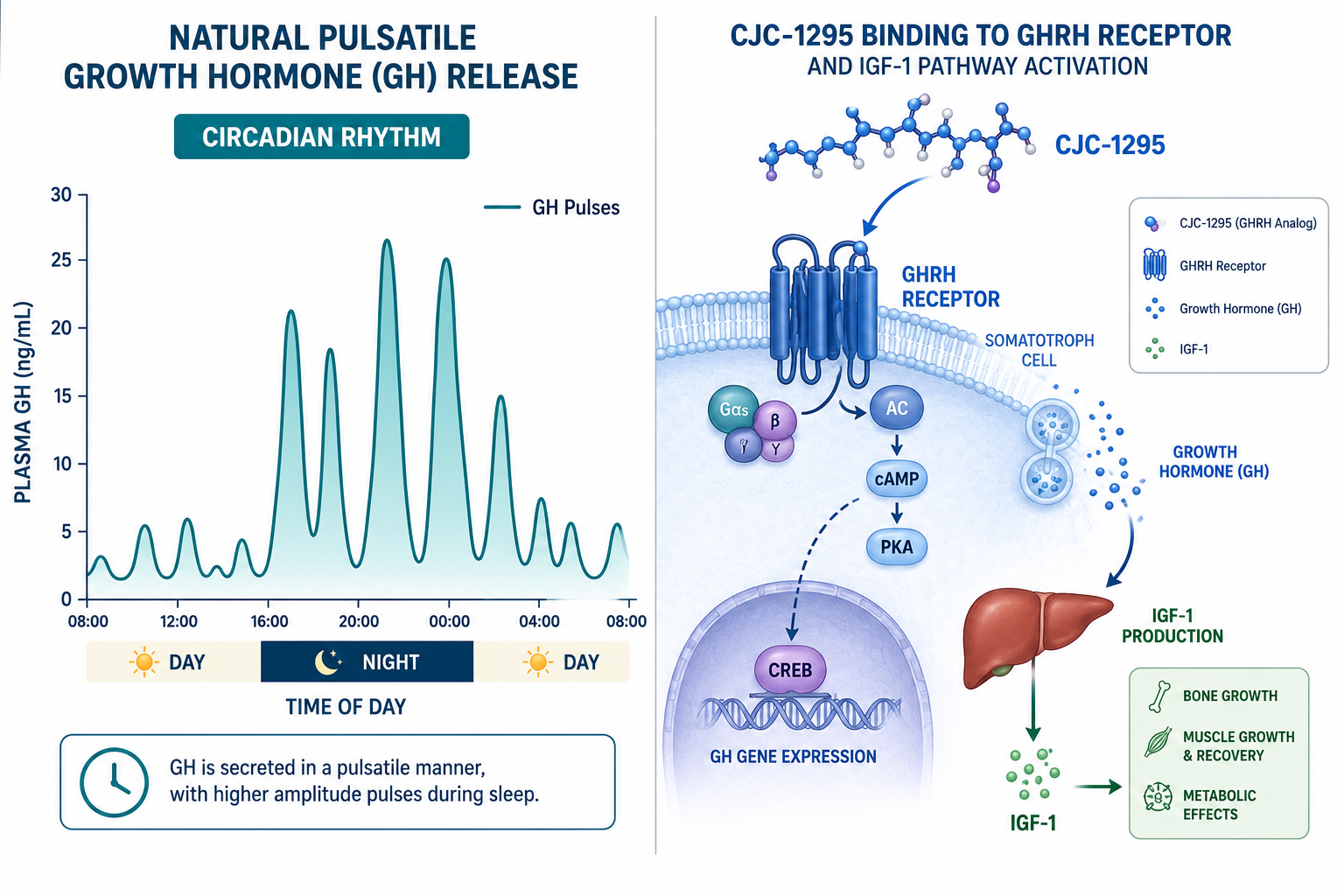
The body does not release GH in a steady stream. It releases it in pulses — sharp peaks followed by quiet troughs. This rhythm is tied to sleep cycles, metabolic signaling, and feedback loops involving IGF-1. A compound that mimics this pattern is considered more physiologically aligned than one that maintains constant elevation.

"The short half-life of the no-DAC variant allows researchers to time GH pulses with precision, which is central to protocols designed around natural secretion windows."

For a deeper look at how the DAC modification changes the pharmacological profile, the CJC-1295 with DAC deeper dive offers a useful comparison.


Mechanism of Action: How the No-DAC Version Triggers GH Pulses

CJC-1295 without DAC binds to GHRH receptors on pituitary somatotroph cells. This binding stimulates the release of GH, which in turn drives IGF-1 production in the liver. The cascade is well-characterized in the scientific literature.

What makes the no-DAC version distinct is its rapid clearance. Because it leaves the system quickly, GH levels rise sharply and then return to baseline — closely matching the body's endogenous pattern.

Why this matters in research:

  • Avoids prolonged receptor activation that can lead to desensitization
  • Allows multiple dosing windows within a single day
  • Enables researchers to observe GH pulse responses in controlled intervals

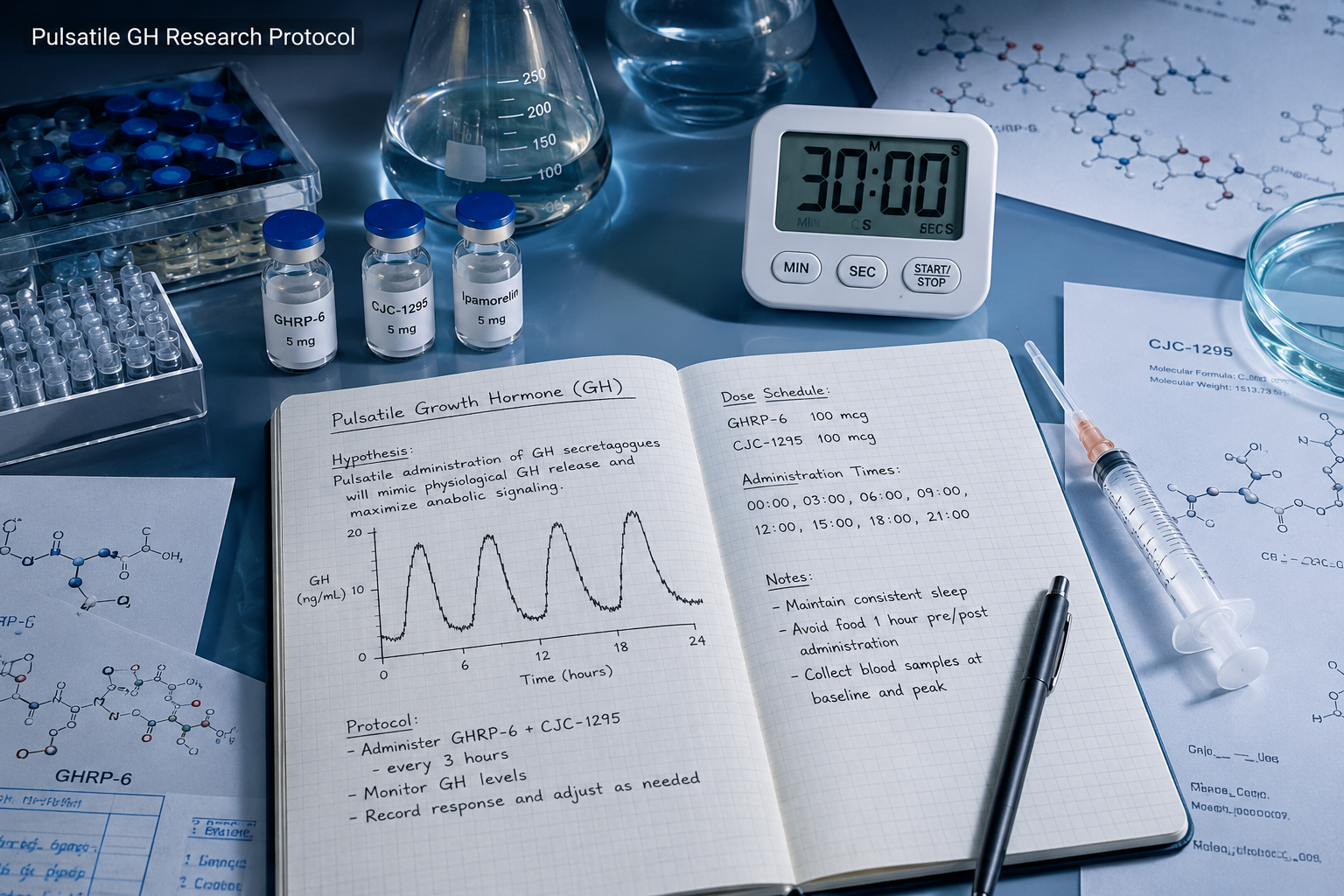
Typical research protocols use doses of 100–300 mcg administered two to three times daily, often timed around sleep onset and morning windows when natural GH secretion is highest. Cycles in research settings commonly run 12 to 16 weeks.

The CJC-1295 product page provides additional catalog context for researchers sourcing this compound.


Mechanism of Action: How the No-DAC Version Triggers GH Pulses

CJC-1295 Without DAC and Ipamorelin: A Common Research Pairing

One of the most studied combinations in GH research pairs CJC-1295 without DAC with ipamorelin. These two compounds work through different but complementary pathways.

  • CJC-1295 without DAC activates the GHRH receptor, amplifying the GH pulse
  • Ipamorelin activates the growth hormone secretagogue receptor (GHSR), independently triggering GH release

Together, they produce a stronger, more synchronized GH response than either compound alone. Researchers value this pairing because it targets two separate mechanisms while still producing a pulsatile, time-limited GH spike.

Pre-formulated blends are available for research use, including the CJC-1295 and ipamorelin combination and the CJC-1295 plus IPA research blend.

For researchers exploring broader GH-axis protocols, the tesa vs ipamorelin comparison provides useful context on how different GHRH analogs differ in their pharmacological profiles.


CJC-1295 Without DAC and Ipamorelin: A Common Research Pairing

Storage, Safety, and Research Considerations

Lyophilized CJC-1295 without DAC should be stored at 2–8°C. Once reconstituted, it remains stable under refrigeration for up to 30 days.

The available safety data — drawn from studies on the parent CJC-1295 compound — suggest reasonable tolerability at research doses, with no serious adverse reactions reported at doses of 30 or 60 mcg/kg. However, long-term safety data remain limited, and the compound is not FDA-approved for human or veterinary use.

The evidence base includes 18 human studies, 126 animal studies, and over 56 published reviews — a substantial foundation, though researchers should note that studies specific to the no-DAC variant are less numerous than those on the DAC form.

Researchers interested in broader peptide research contexts may also find value in reviewing BPC-157 research documentation and TB-500 and BPC-157 regeneration research as complementary areas of study.


Conclusion

CJC-1295 Without DAC: Why Half-Life Matters in Growth Hormone Research comes down to one core principle: shorter is sometimes smarter. A 30-minute half-life is not a compromise — it is a tool that allows researchers to replicate pulsatile GH dynamics with precision.

Actionable next steps for researchers in 2026:

  1. Review the pharmacokinetic literature on Modified GRF 1-29 before designing protocols
  2. Consider the ipamorelin pairing to target complementary GH-release pathways
  3. Source compounds from verified suppliers with documented purity testing
  4. Align dosing windows with natural GH secretion peaks (sleep onset, morning)
  5. Monitor IGF-1 markers as a downstream indicator of GH pulse activity

Understanding half-life is not a detail — it is the foundation of responsible, reproducible growth hormone research.

https://www.puretestedpeptides.com/wp-content/uploads/2026/06/CJC-1295-Without-DAC-Why-Half-Life-Matters-in-Growth-Hormone-Research.png 1024 1536 Pure Tested https://www.puretestedpeptides.com/wp-content/uploads/2026/01/buy-peptides-online.jpg Pure Tested2026-06-28 13:04:042026-07-20 15:02:00CJC-1295 Without DAC: Why Half-Life Matters in Growth Hormone Research
CJC-1295 Without DAC for Pulsatile GH Research: Why Shorter Half-Life Can Be an Advantage

CJC-1295 Without DAC for Pulsatile GH Research: Why Shorter Half-Life Can Be an Advantage

June 14, 2026/0 Comments/by Pure Tested

A 30-minute plasma half-life sounds like a weakness. In the world of growth hormone research, it is one of the most useful properties a peptide can have.

CJC-1295 without DAC, also known as Modified GRF (1-29), clears the bloodstream rapidly after administration. That rapid clearance is not a flaw in the molecule's design — it is the feature that makes CJC-1295 Without DAC for Pulsatile GH Research: Why Shorter Half-Life Can Be an Advantage such a compelling area of study. When the goal is to replicate the body's natural growth hormone (GH) secretion patterns rather than override them, timing matters more than duration.

Detailed () scientific infographic illustration showing two side-by-side pharmacokinetic curves: one steep short-duration

Key Takeaways

  • CJC-1295 without DAC has a plasma half-life of approximately 30 minutes, enabling discrete, pulsatile GH release.
  • Pulsatile GH secretion more closely mirrors natural physiology than continuous elevation.
  • The absence of the Drug Affinity Complex (DAC) prevents albumin binding, causing rapid clearance.
  • Pairing the peptide with ghrelin receptor agonists like Ipamorelin is a common research protocol.
  • The short duration of action helps preserve natural feedback mechanisms and may reduce desensitization risk.

The Structural Difference That Changes Everything

The DAC (Drug Affinity Complex) modification in the longer-acting CJC-1295 variant allows the peptide to bind to albumin in the bloodstream, extending its half-life to 5.8–8.1 days. Remove that complex, and the peptide loses its anchor. Without albumin binding, Modified GRF (1-29) is cleared within roughly 30 minutes.

This structural distinction creates two fundamentally different research tools. For a deeper look at how the DAC variant behaves, the CJC-1295 with DAC deeper dive provides useful context. The key point for researchers is that neither form is universally superior — the right choice depends entirely on what the study is designed to measure.

The no-DAC form is the tool of choice when the research question centers on GH pulse dynamics.


Why Pulsatile GH Release Matters in Research

The pituitary gland does not release GH in a steady stream. It fires in discrete pulses, typically peaking during deep sleep and in response to exercise or fasting. These pulses are not random — they are tightly regulated by a feedback loop involving growth hormone-releasing hormone (GHRH), somatostatin, and IGF-1.

Continuous GH elevation disrupts this loop. It can blunt receptor sensitivity, promote insulin resistance, and trigger fluid retention. Pulsatile release, by contrast, preserves the natural rhythm that keeps these feedback mechanisms functional.

This is precisely why CJC-1295 Without DAC for Pulsatile GH Research: Why Shorter Half-Life Can Be an Advantage as a research model. Each administration produces a discrete GH pulse and then clears, allowing the system to reset before the next dose. The body's regulatory architecture remains largely intact.

"The transient activity of short-acting GHRH analogs allows for the preservation of natural feedback systems — a critical variable in physiologically valid GH research."


Experimental Use Cases and Protocol Design

Experimental Use Cases and Protocol Design

Because the peptide requires multiple daily administrations to sustain GH pulsatility, research protocols using the no-DAC form tend to be more granular and time-sensitive than those using the DAC variant. This is not a disadvantage — it is what makes the molecule suitable for specific experimental designs.

Common Research Applications

Research Area Why No-DAC Is Preferred
GH pulse frequency studies Short half-life allows discrete, measurable pulses
Metabolic function research Avoids chronic GH elevation that skews metabolic markers
Receptor sensitivity studies Reduces desensitization risk between doses
Aging and GH axis research Mimics natural age-related GH secretion patterns

Pairing with Ghrelin Receptor Agonists

Research protocols frequently combine CJC-1295 without DAC with Ipamorelin, a selective ghrelin receptor agonist. The two peptides act on complementary pathways — one stimulates GHRH receptors, the other activates ghrelin receptors — producing a synergistic GH release without significantly elevating cortisol or prolactin. The CJC-1295 plus Ipamorelin research model outlines how this combination is structured in preclinical settings.

For researchers exploring broader GH-axis stacks, the Sermorelin, Ipamorelin, and CJC-1295 combination offers another framework that incorporates multiple secretagogues.

Researchers interested in metabolic endpoints may also find the Ipamorelin and GHRH/GRF research overview useful for understanding how these pathways interact in experimental models.


Feedback Preservation and Safety Profile Considerations

Feedback Preservation and Safety Profile Considerations

One of the most important — and often underappreciated — advantages of CJC-1295 Without DAC for Pulsatile GH Research: Why Shorter Half-Life Can Be an Advantage is what it does not do. It does not sustain GH elevation long enough to significantly suppress somatostatin feedback. It does not bind albumin and accumulate over days. It does not force the pituitary into a state of chronic stimulation.

This makes it a more conservative tool for studies where receptor desensitization would confound results. Research comparing Tesamorelin versus Ipamorelin highlights how half-life and receptor selectivity interact in GH secretagogue research — a useful parallel for understanding the no-DAC model.

For broader context on how GH-adjacent peptides are being studied in metabolic and longevity research, the AOD-9604 metabolic research overview provides relevant background on downstream GH pathway targets.

It is important to note that CJC-1295 without DAC remains classified as a research chemical as of 2026. It is not approved for therapeutic use in humans, and all studies must be conducted within appropriate regulatory and institutional frameworks.


Conclusion

The short half-life of CJC-1295 without DAC is not a limitation to work around — it is a precision instrument for researchers who need controlled, physiologically relevant GH pulses. When the experimental goal is to study GH dynamics without overriding the body's own regulatory systems, the no-DAC form offers a level of control that longer-acting variants simply cannot provide.

Actionable next steps for researchers:

  • Define whether the study requires sustained GH elevation or discrete pulsatile events before selecting a variant.
  • Consider pairing with Ipamorelin to target complementary GH-release pathways.
  • Design dosing schedules that account for the 30-minute half-life to achieve consistent pulse modeling.
  • Review institutional guidelines to ensure all protocols meet current regulatory standards.

For researchers building multi-peptide GH-axis protocols, exploring Ipamorelin and Sermorelin stack research can provide additional design considerations relevant to pulsatile GH study models.

https://www.puretestedpeptides.com/wp-content/uploads/2026/06/CJC-1295-Without-DAC-for-Pulsatile-GH-Research-Why-Shorter-Half-Life-Can-Be-an-Advantage.png 1024 1536 Pure Tested https://www.puretestedpeptides.com/wp-content/uploads/2026/01/buy-peptides-online.jpg Pure Tested2026-06-14 13:04:302026-07-20 15:03:16CJC-1295 Without DAC for Pulsatile GH Research: Why Shorter Half-Life Can Be an Advantage
CJC-1295 With and Without DAC: Peptide Structure, Half-Life, and Experimental GH/IGF-1 Dynamics

CJC-1295 With and Without DAC: Peptide Structure, Half-Life, and Experimental GH/IGF-1 Dynamics

June 4, 2026/0 Comments/by Pure Tested

A single structural modification — the addition of a maleimidopropionyl group — transforms a peptide with a 30-minute window of activity into one that remains active for nearly eight days. That is the pharmacological story at the heart of CJC-1295 with and without DAC: peptide structure, half-life, and experimental GH/IGF-1 dynamics, and it has significant implications for how researchers design growth hormone secretagogue protocols in vitro and in preclinical models.

Key Takeaways

  • CJC-1295 is a 30-amino-acid synthetic analog of growth hormone-releasing hormone (GHRH).
  • The Drug Affinity Complex (DAC) modification extends half-life from roughly 30 minutes to approximately 5.8-8.1 days via covalent albumin binding.
  • Without DAC (Modified GRF 1-29), the peptide requires more frequent dosing to sustain receptor stimulation.
  • A single CJC-1295 with DAC injection can produce a 2- to 10-fold increase in plasma GH lasting up to six days.
  • Combining CJC-1295 with ghrelin mimetics such as ipamorelin produces synergistic GH release through complementary pathways.

Key Takeaways


Peptide Structure: How the DAC Modification Changes Everything

CJC-1295 is built on the first 29 amino acids of endogenous GHRH, with four strategic amino acid substitutions that resist enzymatic degradation. In its unmodified research form — commonly called Modified GRF (1-29) or CJC-1295 without DAC — the peptide retains high receptor affinity but is rapidly cleared from circulation.

The DAC version adds a maleimidopropionyl (MPA) bioconjugate to the peptide's C-terminus. This reactive group forms a covalent thioether bond with the free cysteine-34 residue on circulating serum albumin. Because albumin has a half-life of roughly 19 days and is too large to be filtered by the kidneys, the bound peptide is effectively shielded from proteolytic breakdown.

"The DAC modification does not alter receptor binding affinity — it changes how long the peptide survives long enough to bind."

This distinction matters for assay design. Researchers exploring CJC-1295 and ipamorelin combination protocols must account for whether the DAC form's prolonged presence will create sustained baseline GH stimulation or whether the pulsatile pattern of Modified GRF (1-29) better fits the experimental timeline.


Half-Life Comparison and Experimental Dosing Implications

The pharmacokinetic difference between the two forms is stark:

Form Common Name Approximate Half-Life Dosing Frequency
CJC-1295 with DAC DAC-GRF 5.8 – 8.1 days Once or twice weekly
CJC-1295 without DAC Modified GRF (1-29) ~30 minutes Multiple times daily

For context, other GHRH analogs fall well below even the without-DAC form: sermorelin has a half-life of 10-12 minutes, and tesa sits at approximately 30 minutes. Researchers can review tesa peptide benefits and pharmacology for a useful comparative baseline.

The without-DAC form is often preferred in protocols that require tight temporal control over GH pulses. Its short window allows researchers to time injections around specific assay windows, mimicking the body's natural ultradian GH rhythm. The DAC form, by contrast, produces a sustained elevation that is better suited to protocols measuring cumulative IGF-1 response over days.

For researchers building multi-peptide stacks, the sermorelin, ipamorelin, and CJC-1295 combination overview provides useful context on how different half-lives interact within the same protocol.

Half-Life Comparison and Experimental Dosing Implications


Experimental GH/IGF-1 Dynamics: What the Data Shows

Understanding CJC-1295 with and without DAC: peptide structure, half-life, and experimental GH/IGF-1 dynamics requires examining how each form drives the GH-IGF-1 axis differently.

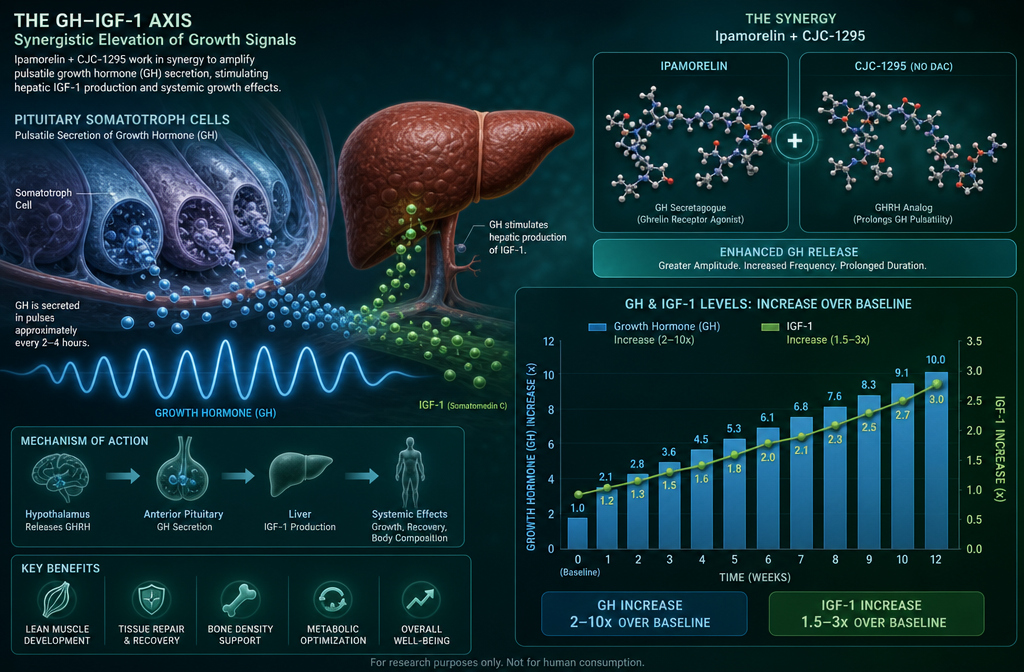
CJC-1295 with DAC binds GHRH receptors on pituitary somatotroph cells and sustains that stimulation across days. Phase I clinical data shows a single injection can produce:

  • A 2- to 10-fold increase in mean plasma GH levels lasting up to six days
  • A 1.5- to 3-fold increase in IGF-1 levels persisting for nine to eleven days

Critically, this occurs while preserving pulsatile GH secretion — a key advantage over exogenous GH administration, which suppresses the natural feedback loop. Pulsatility is associated with more physiological receptor sensitivity and reduced tachyphylaxis risk.

CJC-1295 without DAC produces sharp, transient GH spikes that closely mirror endogenous GHRH pulses. This makes it valuable for experiments requiring acute GH measurements or when researchers want to avoid prolonged IGF-1 elevation between assay time points.

Synergistic combinations are a major area of interest. Pairing CJC-1295 with a ghrelin mimetic like ipamorelin activates two distinct receptor pathways — GHRH receptors and ghrelin receptors (GHS-R1a) — simultaneously. The result is GH output greater than either peptide alone. The CJC-1295 ipamorelin assay planning and sourcing checklist is a practical resource for structuring such experiments.

Phase I safety data indicates CJC-1295 is well-tolerated at doses of 30-60 mcg/kg, with mild injection site reactions and occasional headaches as the most commonly noted effects. As of 2026, the peptide remains unapproved for human therapeutic use across most jurisdictions and is classified as a research compound.

For researchers sourcing reference-grade material, the GH axis product line overview and sermorelin ipamorelin CJC-1295 dosage reference guide offer structured starting points. Lyophilized CJC-1295 should be stored at 2-8°C and, once reconstituted, used within 30 days.

Experimental GH/IGF-1 Dynamics: What the Data Shows


Conclusion

The DAC modification is not a minor refinement — it fundamentally redefines how CJC-1295 interacts with the GH-IGF-1 axis. Researchers designing protocols in 2026 should base their form selection on experimental objectives: choose the without-DAC form when temporal precision and pulsatile GH mimicry are priorities, and the DAC form when sustained IGF-1 elevation or infrequent dosing windows are required.

Actionable next steps for researchers:

  1. Define whether the assay requires acute GH spikes or sustained IGF-1 elevation before selecting a form.
  2. Consider pairing either form with ipamorelin to leverage synergistic GH secretagogue pathways.
  3. Verify peptide purity through certificates of analysis before initiating any in vitro or preclinical work.
  4. Store lyophilized stock at 2-8°C and track reconstitution dates to maintain compound integrity.
  5. Cross-reference the CJC-1295 product and research reference page for sourcing and specification details.

https://www.puretestedpeptides.com/wp-content/uploads/2026/06/CJC-1295-With-and-Without-DAC-Peptide-Structure-Half-Life-and-Experimental-GHIGF-1-Dynamics.png 672 1024 Pure Tested https://www.puretestedpeptides.com/wp-content/uploads/2026/01/buy-peptides-online.jpg Pure Tested2026-06-04 13:05:432026-07-20 15:04:07CJC-1295 With and Without DAC: Peptide Structure, Half-Life, and Experimental GH/IGF-1 Dynamics
×

Helpful Links

  • My account
  • Cart
  • Checkout
  • Refund and Returns Policy
  • Privacy Policy
  • SMS Privacy Policy
  • Login
  • My Account
  • Logout

USA Made Lab Tested Peptides

All products are sold for research, laboratory, or analytical purposes only, and are not for human consumption


Pure Tested Peptides is a chemical supplier. Pure Tested Peptides is not a compounding / chemical compounding facility as defined under 503A of the Federal Food, Drug, and Cosmetic act. Pure Tested Peptides is not an outsourcing facility as defined under 503B of the Federal Food, Drug, and Cosmetic act.

The statements made within this website have not been evaluated by the US Food and Drug Administration. The products we offer are not intended to diagnose, treat, cure or prevent any disease.

Human/Animal Consumption Prohibited. Laboratory/In-Vitro Experimental Use Only

Scroll to top Scroll to top Scroll to top