Call or Text 727-513-9780
  • Shopping Cart Shopping Cart
    0Shopping Cart
Pure Tested Peptides | America's most trusted Peptides for sale online
  • Peptides for sale
    • Oral Peptides for sale
      • Peptide Capsules for sale
      • BPC 157 Capsules 1000mcg
      • SLU-PP-332 Capsules | 1000 mcg
      • 5-Amino-1MQ 50mg Capsules
      • Tesofensine 500mcg
    • All Peptides for sale
    • Peptide Sprays
      • BPC 157 Nasal Spray Kit
      • BPC-157 TB500 Nasal Spray Kit
      • Semax Nasal Spray 10mg
      • Selank – Nasal Spray Kit – 10mg
      • Epithalon 50MG Nasal Spray Kit
      • Ipamorelin 10mg Nasal Spray
      • Klow Nasal Spray (BPC-157 + TB-500 + GHK-Cu + KPV) | 80mg
      • Hulk Nasal Spray Tesa / Ipa Blend 6/3 MG
      • Klow Nasal Spray
      • NAD + 500 mg Nasal Spray
      • PT-141 Nasal Spray Kit
    • GHRH Peptides
      • Ipa Peptides
      • CJC-1295 Peptides
        • CJC-1295 with DAC 5 mg
        • CJC-1295 without DAC 5 mg
        • CJC-1295 Ipa 10mg
      • Tesa Peptides
        • Tesa Peptide
        • Tesa 20 mg
    • GHK-Cu Peptides
      • All GHK-Cu Peptides
      • GHK-Cu 100mg
      • KLOW Peptide Blend – Buy KLOW blend online
    • BPC Peptides
      • All BPC Peptides
      • BPC-157
      • BPC-157 TB-500
      • BPC 157 capsules 1000mcg
    • SLU-PP-332 Peptides
      • All SLU-PP-332 Peptides
      • SLU-PP-332 5mg
    • GLP3 Peptides
    • PT-141 Peptides
      • PT-141 Peptides for sale
      • PT-141 10mg
      • PT-141 Nasal Spray
    • CAG Peptides
      • Lipo-C Peptide Blend
      • CAG 5mg
      • CAG 10mg
    • MOTS-C Peptides
      • MOTS-C Peptides for sale
      • MOTS-c peptide
      • MOTS-c 10mg *6 pack*
    • 5 Amino 1MQ Peptides
      • 5 Amino 1MQ Peptides for sale
      • 5-Amino-1MQ 50mg Capsules
      • 5-Amino-1MQ 5mg
    • Epithalon Peptides
      • Epithalon Peptides for sale
      • Epithalon 10mg
      • Epithalon 50mg
  • Shop
    • GLPs
      • 5-Amino-1MQ 50mg Capsules
      • 5-Amino-1MQ 5mg
      • L-Carnitine 500mg/ml
      • Tesofensine 500mcg
      • SLU-PP-332 5mg
      • MOTS-c 10mg *6 pack*
    • Epithalon & BPC Peptides
      • Epithalon 10mg
      • Epithalon 50mg
      • BPC-157
      • BPC 157 capsules 1000mcg
      • BPC-157 TB-500
      • BPC-157 TB500 Nasal Spray Kit
      • BPC 157 Nasal Spray Kit
    • BPC TB-500 & NAD+ Peptides
      • NAD+ 500 mg
      • KLOW Peptide Blend – Buy KLOW blend online
      • GLOW Peptide Blend
      • TB 500 5mg
      • BPC 157 capsules 1000mcg – Supplement
      • BPC 157 Nasal Spray Kit
      • BPC-157
      • BPC-157 TB500 Nasal Spray Kit
      • BPC-157 TB-500
      • BPC 157 capsules 1000mcg
    • LL-37 Peptide
      • LL-37 10 mg
    • MOTS-C & Selank
      • MOTS-c peptide
      • Selank 10mg
    • GHK Peptides
      • GHK-Cu 100mg
      • GLOW Peptide Blend
      • KLOW Peptide Blend – Buy KLOW blend online
  • COAs
  • Wholesale
    • Wholesale Peptides for sale
  • PTP FAQ
  • Affiliates
    • Selank Peptide: Advanced Pharmacological Mechanisms Underlying Its Anxiolytic and Nootropic Effects in Research
      • 5-Amino-1MQ Peptide: Detailed Mechanisms of NNMT Inhibition and Its Impact on Cellular Metabolism Research
        • MOTS-C Peptide: Unraveling Its Role in Mitochondrial Dynamics and Energy Metabolism Research
          • Epithalon Peptide and Telomerase Regulation: Investigating Its Impact on Cellular Senescence and Lifespan Research Models
            • GLP2-T vs GLP2 Tirz Peptide: Understanding the Naming, Mechanistic Nuances, and Research Implications for Gut Health
      • Peptides and Polypeptides in Modern Pharmacology: What Research on Metoprolol, Prednisone, and Amlodipine Reveals
        • Polypeptide Peptides vs NSAIDs: What Naproxen and Diclofenac Teach Tissue-Repair Researchers About BPC‑157 and TB‑500
          • Peptides and Polypeptides in Endocrine Pharmacology: How GLP-1, GLP-2, and GLP-3 Retatrutide Differ From Classic Drugs Like Prednisone and Amlodipine
          • 5‑Amino‑1MQ Peptide and NNMT Inhibition: How It Compares With Statins Like Atorvastatin in Adipose and Lipid Metabolism Research
      • Enclomiphene, Estrogen Receptor Signaling, and Luteinizing Phase Biology: What Hormone Researchers Should Measure
        • Mesenchymal Stem Cells, BPC‑157, and GHK‑Cu: How Tissue Repair Peptides Compare With Classic NSAIDs Like Naproxen in Injury Models
          • Peptide Calculator Use Cases Beyond Growth Hormone: Working Through GLP‑3 Retatrutide, MOTS‑c, and BPC‑157 Research Dosing
        • Polypeptide Peptides in Endocrine and Metabolic Pharmacology: Lessons From Amlodipine, Prednisone, and Metoprolol
        • Peptides Calculator for Advanced Blends: Worked Examples for Tesamorelin, CJC‑1295, and Ipamorelin Stacks
          • Peptides and Polypeptides in Human Physiology: How Molecular Size Shapes Research Applications
            • Selank Peptide: Advanced Pharmacological Mechanisms Underlying Its Anxiolytic and Nootropic Effects in Research
          • 5-Amino-1MQ Peptide: Detailed Mechanisms of NNMT Inhibition and Its Impact on Cellular Metabolism Research
            • MOTS-C Peptide: Unraveling Its Role in Mitochondrial Dynamics and Energy Metabolism Research
              • Epithalon Peptide and Telomerase Regulation: Investigating Its Impact on Cellular Senescence and Lifespan Research Models
                • GLP2-T vs GLP2 Tirz Peptide: Understanding the Naming, Mechanistic Nuances, and Research Implications for Gut Health
                  • Peptides and Polypeptides in Endocrine Pharmacology: How GLP-1, GLP-2, and GLP-3 Retatrutide Differ From Classic Drugs Like Prednisone and Amlodipine
                    • Polypeptide Peptides vs NSAIDs: What Naproxen and Diclofenac Teach Tissue-Repair Researchers About BPC‑157 and TB‑500
                      • Peptides and Polypeptides in Modern Pharmacology: What Research on Metoprolol, Prednisone, and Amlodipine Reveals
                        • 5‑Amino‑1MQ Peptide and NNMT Inhibition: How It Compares With Statins Like Atorvastatin in Adipose and Lipid Metabolism Research
                        • Enclomiphene, Estrogen Receptor Signaling, and Luteinizing Phase Biology: What Hormone Researchers Should Measure
                        • Mesenchymal Stem Cells, BPC‑157, and GHK‑Cu: How Tissue Repair Peptides Compare With Classic NSAIDs Like Naproxen in Injury Models
                        • Peptide Calculator Use Cases Beyond Growth Hormone: Working Through GLP‑3 Retatrutide, MOTS‑c, and BPC‑157 Research Dosing
                        • Polypeptide Peptides in Endocrine and Metabolic Pharmacology: Lessons From Amlodipine, Prednisone, and Metoprolol
                        • Peptides Calculator for Advanced Blends: Worked Examples for Tesamorelin, CJC‑1295, and Ipamorelin Stacks
                        • Peptides and Polypeptides in Human Physiology: How Molecular Size Shapes Research Applications
                        • Selank Peptide: Advanced Pharmacological Mechanisms Underlying Its Anxiolytic and Nootropic Effects in Research
                        • MOTS-C Peptide: Unraveling Its Role in Mitochondrial Dynamics and Energy Metabolism Research
                        • Peptides and Polypeptides in Modern Pharmacology: What Research on Metoprolol, Prednisone, and Amlodipine Reveals
                        • Peptides and Polypeptides in Endocrine Pharmacology: How GLP-1, GLP-2, and GLP-3 Retatrutide Differ From Classic Drugs Like Prednisone and Amlodipine
                        • 5-Amino-1MQ Peptide: Detailed Mechanisms of NNMT Inhibition and Its Impact on Cellular Metabolism Research
                        • Mesenchymal Stem Cells, BPC‑157, and GHK‑Cu: How Tissue Repair Peptides Compare With Classic NSAIDs Like Naproxen in Injury Models
                        • Peptide Calculator Use Cases Beyond Growth Hormone: Working Through GLP‑3 Retatrutide, MOTS‑c, and BPC‑157 Research Dosing
                        • GLP2-T vs GLP2 Tirz Peptide: Understanding the Naming, Mechanistic Nuances, and Research Implications for Gut Health
                        • Polypeptide Peptides in Endocrine and Metabolic Pharmacology: Lessons From Amlodipine, Prednisone, and Metoprolol
                        • Polypeptide Peptides vs NSAIDs: What Naproxen and Diclofenac Teach Tissue-Repair Researchers About BPC‑157 and TB‑500
                        • Peptides and Polypeptides in Human Physiology: How Molecular Size Shapes Research Applications
                        • Peptides Calculator for Advanced Blends: Worked Examples for Tesamorelin, CJC‑1295, and Ipamorelin Stacks
                        • 5‑Amino‑1MQ Peptide and NNMT Inhibition: How It Compares With Statins Like Atorvastatin in Adipose and Lipid Metabolism Research
                        • Enclomiphene, Estrogen Receptor Signaling, and Luteinizing Phase Biology: What Hormone Researchers Should Measure
                        • Epithalon Peptide and Telomerase Regulation: Investigating Its Impact on Cellular Senescence and Lifespan Research Models
                        • Best research protocol Klow blend
                        • best time to take BPC-157
                        • best time to take DSIP (Delta Sleep Inducing Peptide)
                        • best time to take CJC-1295
                        • best time to take AOD-9604
                        • best time to take Follistatin 344
                        • best time to take Ipamorelin
                        • best time to take MK-677 (Ibutamoren)
                        • best time to take Ligandrol (LGD-4033) — research compound
                        • best time to take Ostarine (MK-2866) — research compound
                        • best time to take GHK-CU
                        • best time to take TB-500
                        • best time to take MOTS-c
                        • best time to take Semax
                        • best time to take RAD-140 (Testolone) — research compound
                        • best time to take Thymosin Alpha-1
                        • best time to take PEG-MGF
                        • Biolife Plasma, Octapharma Plasma, and Research Peptides: How Plasma Donation Labs Differ From Peptide Suppliers
                        • best time to take YK-11 — research compound
                        • best time to take PT-141 (Bremelanotide)
                        • Best research protocol Klow blend
                        • 5-Amino-1MQ and MOTS-C Synergy: Metabolic Signaling, Mitochondria, and Research Design
                        • BPC-157 and TB-500: Investigating Their Combined Effects on Angiogenesis and Cellular Migration in Tissue Repair Models
                        • BPC-157 Peptide: Gut Barrier Function, Inflammation, and Tissue-Recovery Research
                        • 5‑Amino‑1MQ and MOTS‑c Synergy in Metabolic Research: Designing NNMT and Mitochondrial Biogenesis Stacks
                        • CJC-1295 with DAC vs. Without DAC: Half-Life, Release Kinetics, and Research Implications
                        • CJC‑1295 with DAC vs. Without DAC: Expanding on Half‑Life Differences Using Tesamorelin and Ipamorelin Blend Case Studies
                        • Collagen Biology and Copper‑Binding Peptides: How GHK‑Cu, Glow Blend, and Klow Blend Interact with Skin and Connective Tissue
                        • Collagen Biology and Regenerative Peptides: How GHK‑Cu, Glow Blend, and Klow Blend Affect Extracellular Matrix Research
                    • DNA, Telomeres, and Longevity Peptides: Positioning Epithalon and MOTS‑c in Genetic Aging Research
                      • Enclomiphene Citrate: serm Mechanism, Testosterone Research, and Stack Compatibility
                        • Enclomiphene vs Enclomiphene Citrate: Formulation, Bioavailability, and Research Distinctions
                        • Epithalon Peptide Research: Telomerase Activation, Aging, and Pineal Gland Function
                        • Estrogen Receptor Signaling and Enclomiphene: How Selective Modulators Compare with Classic Polypeptide Hormones
                        • GHK-Cu Peptide: Advanced Mechanisms in Extracellular Matrix Remodeling and Wound Healing Research
                        • GHK-Cu Peptide: Collagen Synthesis, Wound Repair, and Skin-Barrier Research Models
                        • GLP-1 vs GLP-3 vs GLP-2: Peptide Classification and Research Applications
                        • GLP-2 Peptide Research Guide: Gut Barrier Function, Nutrient Absorption, and Intestinal Recovery Models
                        • GLP-3 Retatrutide vs. GLP-1 Drugs: What Triple-Agonist Biology Changes in Research Models
                        • Ipamorelin and Tesamorelin Combination: Synergistic GH Secretagogue Research and Dosing Protocols
                        • GLP2 Tirz Peptide: What It Is, Why the Name Exists, and How Researchers Should Interpret It
                        • Klow Blend Peptide Nasal Spray: What the Formulation Is Trying to Do in Cognitive Research
                        • Mitochondria, NNMT Inhibition, and Peptide Modulators: Where MOTS‑c and 5‑Amino‑1MQ Fit in Cellular Energy Research
                        • MOTS-c Peptide: Mitochondrial Function, Energy Metabolism, and What Researchers Measure
                        • MOTS-c vs. 5-Amino-1MQ: Which Metabolic Research Questions Each Compound Actually Answers
                        • Nasal Spray Peptides: Bioavailability, Administration, and Semax/Selank Research Applications
                        • PT-141 Peptide Research: Mechanism of Action and Melanocortin Receptor Signaling
                        • Retatrutide for Research: Mechanism, Structure, and GLP-1/GLP-3 Dual Action
                        • Retatrutide for Obesity and Type 2 Diabetes: What the Latest Trial Data Suggest
                        • Tesofensine Peptide Research: Mechanism, Appetite Suppression, and Neuropeptide Y Pathways
  • Contact
    • Contact Customer Service
    • Text Customer Support
  • About US
  • Shop all peptides
  • Affiliate Program
    • Affiliate Signup
  • Login / Register Login / Register Page Link Login / Register Page Link
  • Click to open the search input field Click to open the search input field Search
  • Menu Menu

Tag Archive for: nad+ metabolism

5-Amino-1MQ Peptide: How Researchers Frame NAD+ and Metabolic Pathway Questions

5-Amino-1MQ Peptide: How Researchers Frame NAD+ and Metabolic Pathway Questions

August 14, 2026/0 Comments/in Uncategorized/by

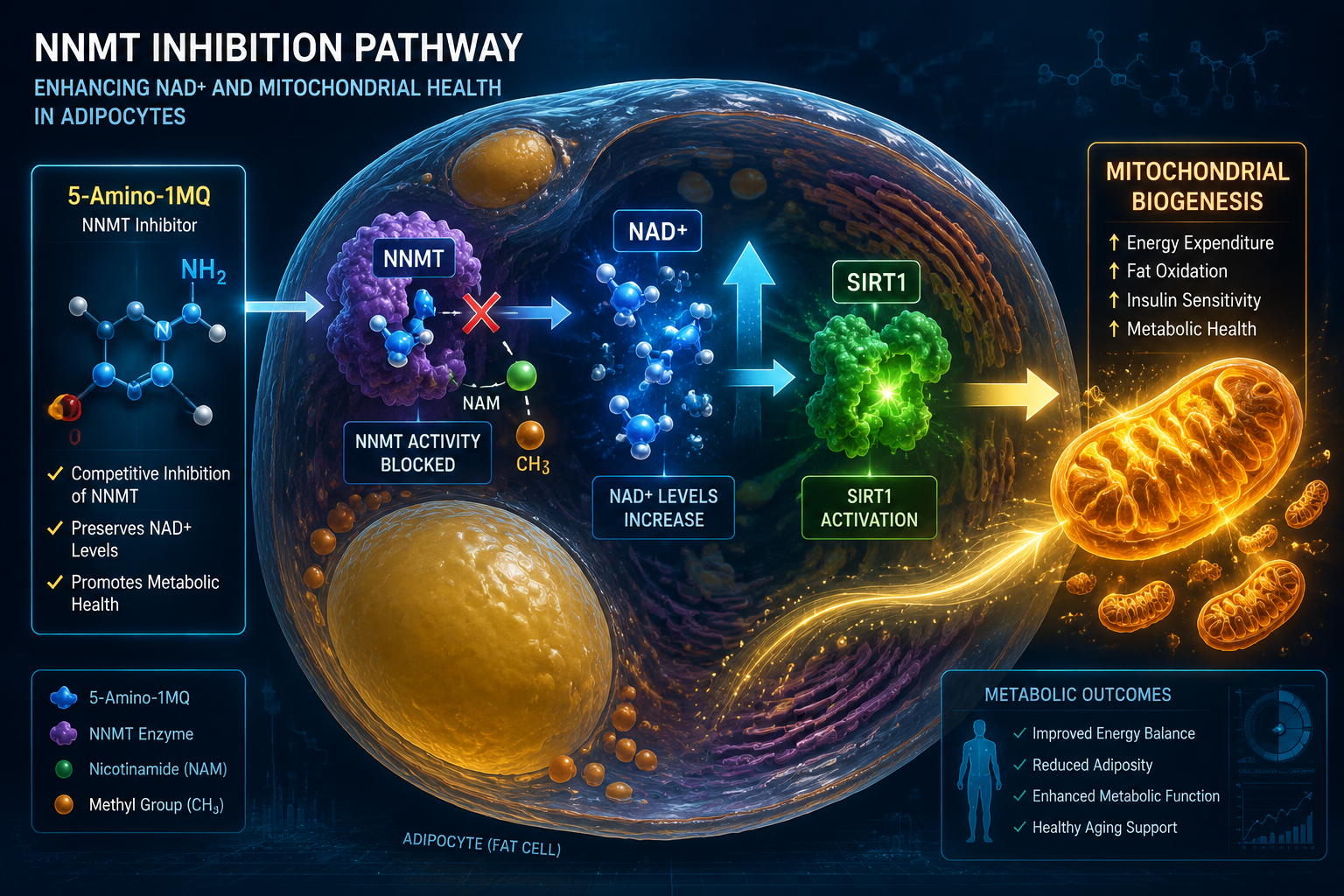
NAD+ depletion is one of the most studied variables in modern metabolic research, and the enzyme that quietly drains it, NNMT, has become a focal point for a growing class of small-molecule inhibitors. Among them, 5-Amino-1MQ has attracted significant attention from researchers who want to understand how blocking NNMT reshapes energy metabolism, fat storage, and cellular methylation balance.

This article maps the search demand around the 5-Amino-1MQ peptide: how researchers frame NAD+ and metabolic pathway questions, and provides a clean foundation before diving into more advanced protocol content.

Key Takeaways

  • 5-Amino-1MQ is a small-molecule NNMT inhibitor, not technically a peptide, though it is widely grouped with research peptides in the supplier market.
  • Its primary mechanism involves blocking NNMT to preserve NAD+ availability and improve the SAM/SAH methylation ratio.
  • Most foundational data comes from mouse obesity models; no human clinical trials have been completed as of mid-2026.
  • Researchers distinguish it from other NAD+ strategies such as NR, NMN, and NAMPT activators because it targets consumption rather than production.
  • Selectivity and off-target effects in NAD+-linked pathways remain active areas of study.

What 5-Amino-1MQ Actually Is (And Why "Peptide" Is a Misnomer)
What 5-Amino-1MQ Actually Is (And Why "Peptide" Is a Misnomer)

The compound formally known as 5-amino-1-methylquinolinium is a quaternary ammonium salt, a small organic molecule, not a peptide chain. It does not contain amino acid residues linked by peptide bonds. Despite this, the research-peptide supplier market routinely groups it alongside true peptides, partly because its experimental applications overlap with those of metabolically active peptides, and partly because the term "research peptide" has become a broad commercial category.

Understanding this distinction matters when reviewing literature. Studies that examine 5-Amino-1MQ are classified under small-molecule pharmacology, not peptide biochemistry. Researchers sourcing it should apply the same purity and documentation standards they would for any research-grade compound.

For context on how molecular size shapes function and experimental design, see Peptides and Polypeptides in Modern Research: How Molecular Size Shapes Function, Stability, and Experimental Design.

The NNMT Mechanism: Where NAD+ and Methylation Intersect

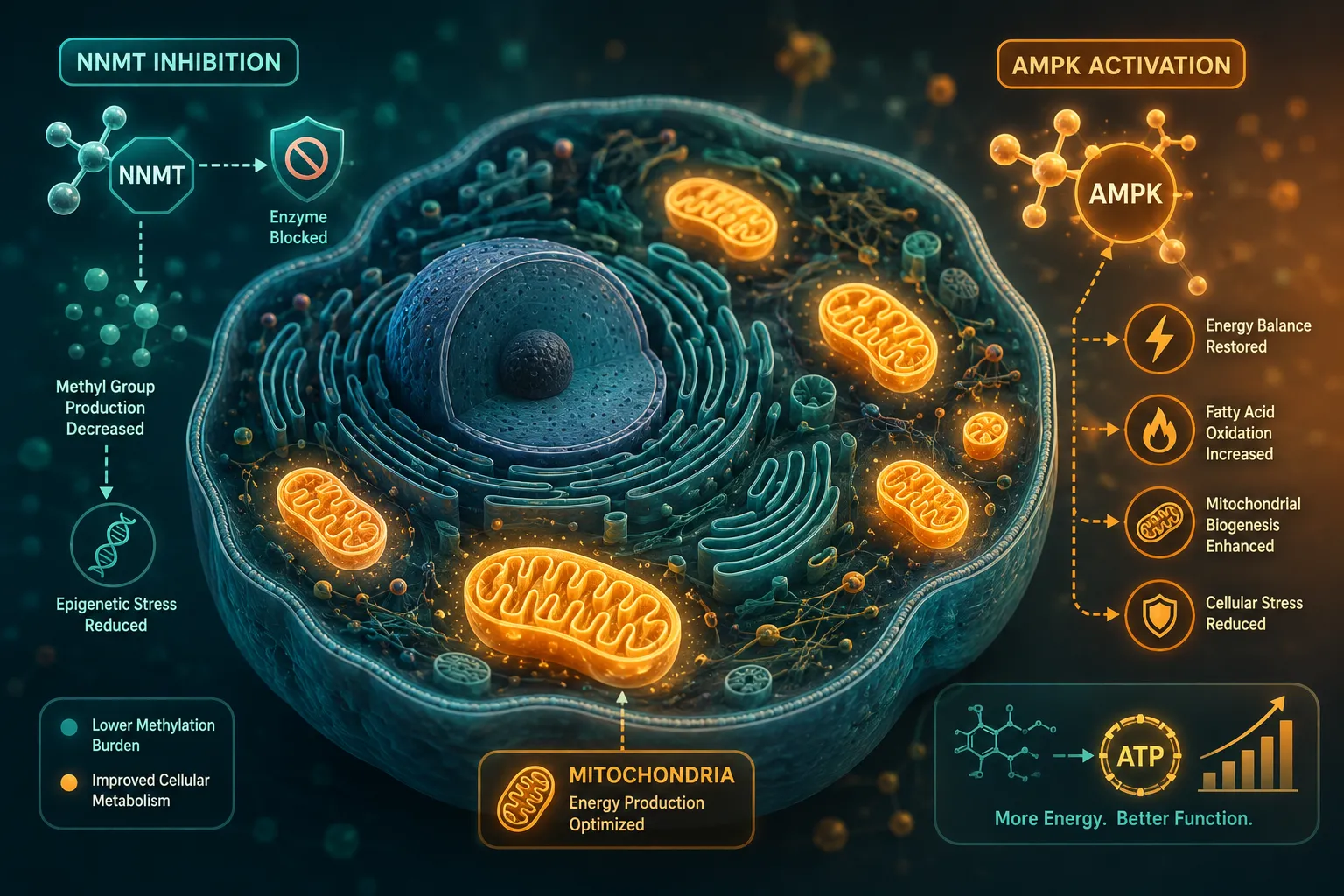
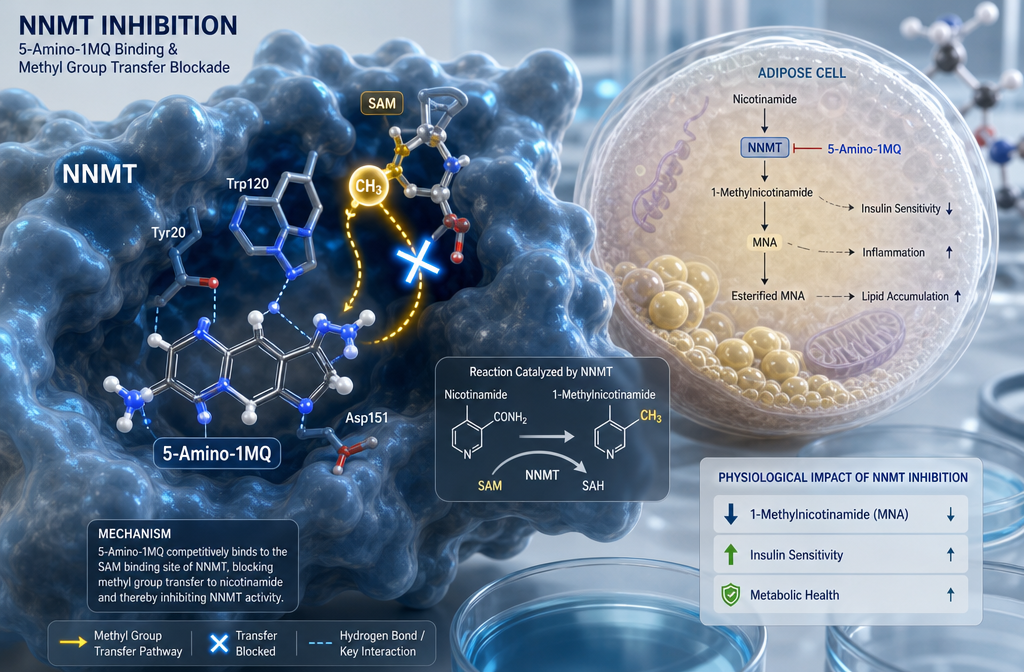
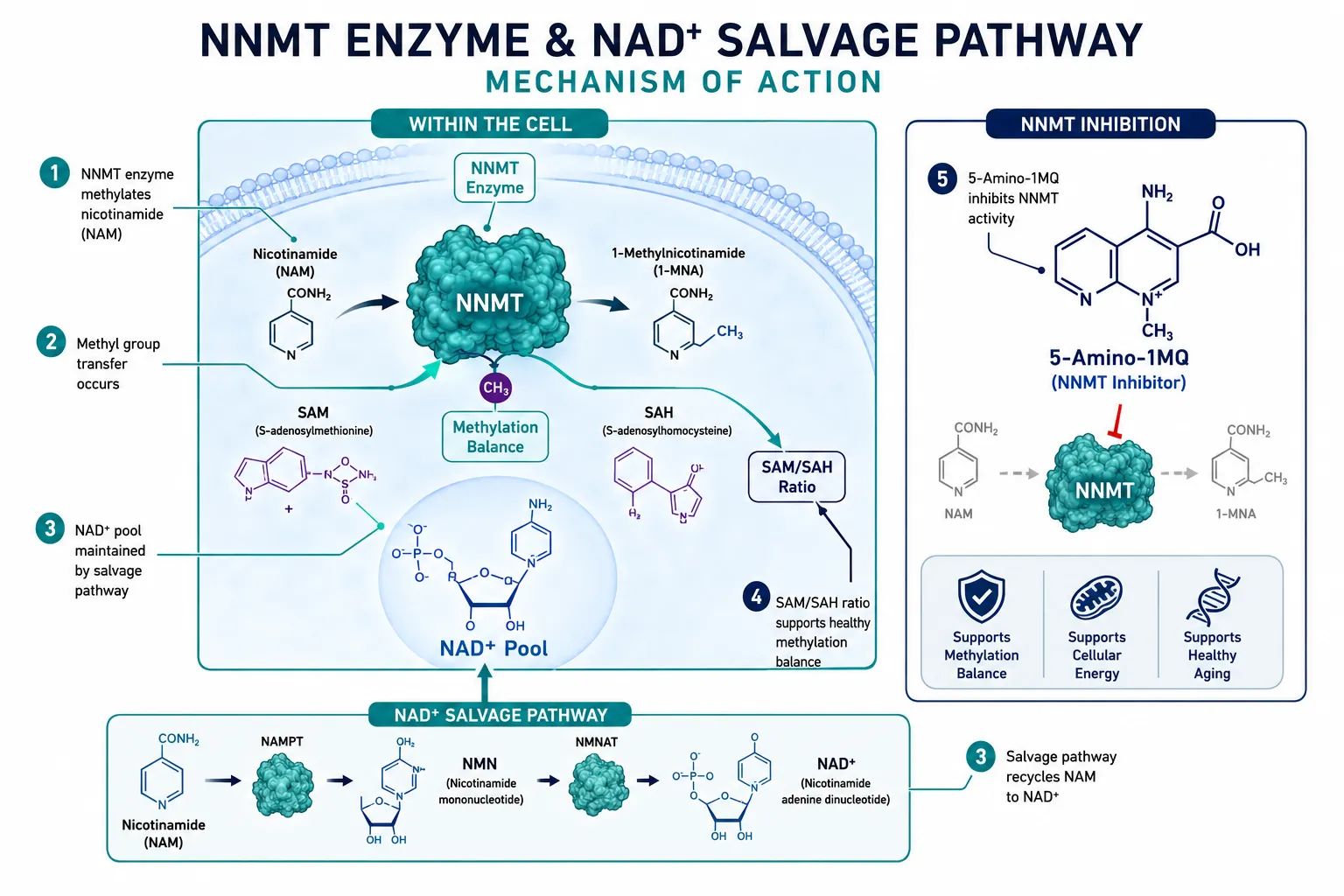
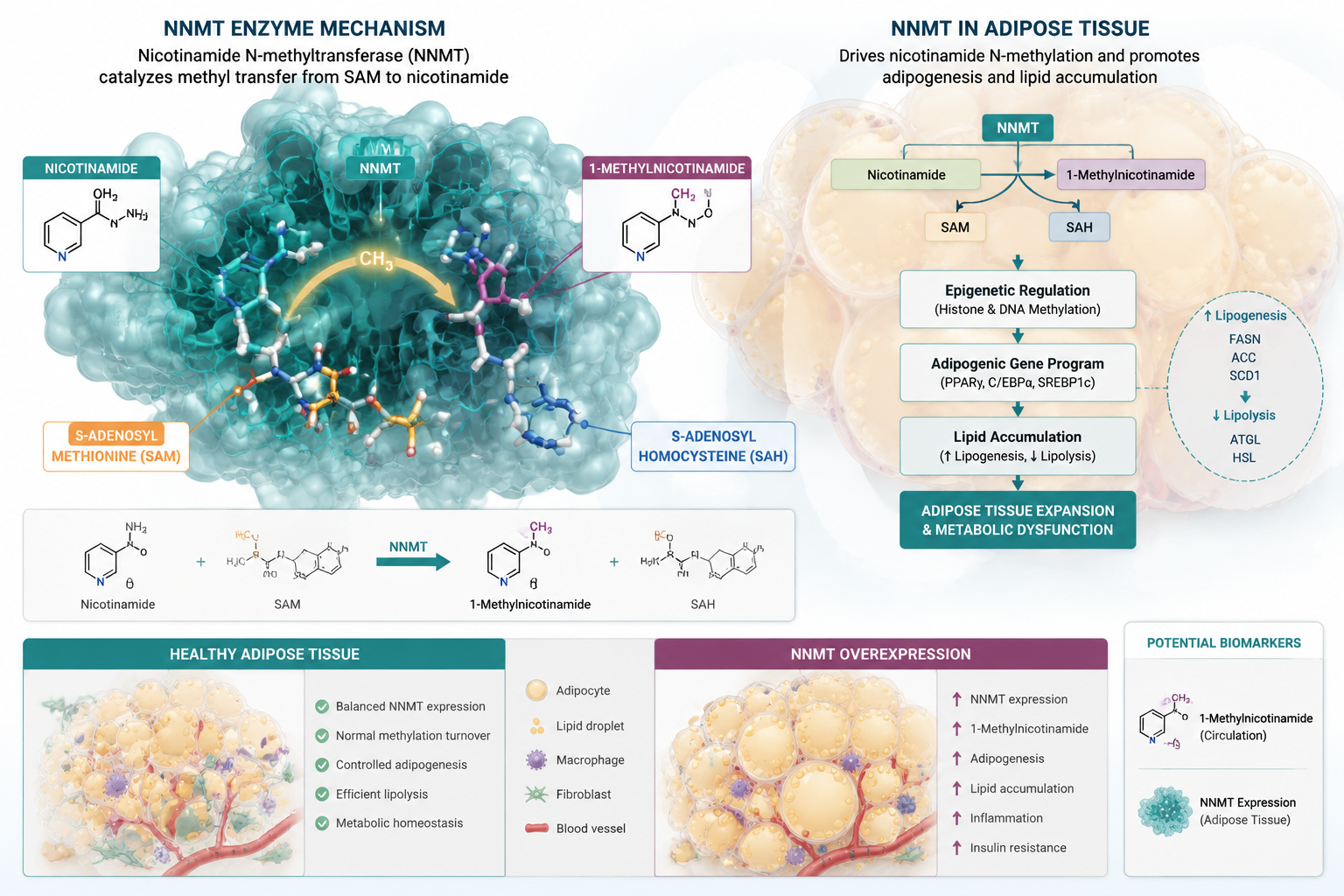
The enzyme nicotinamide N-methyltransferase (NNMT) catalyzes the transfer of a methyl group from S-adenosylmethionine (SAM) to nicotinamide, producing 1-methylnicotinamide and S-adenosylhomocysteine (SAH). This reaction has two downstream consequences that researchers care about:

  1. NAD+ pool reduction, nicotinamide is a precursor in the NAD+ salvage pathway. When NNMT diverts it, less nicotinamide is available for NAD+ resynthesis.
  2. Methylation imbalance, the conversion of SAM to SAH lowers the SAM/SAH ratio, reducing the cell's capacity for other methylation reactions.

5-Amino-1MQ competitively inhibits NNMT, which theoretically redirects nicotinamide back into the salvage pathway and restores a more favorable SAM/SAH ratio. This dual effect is why researchers frame it as a metabolic pathway regulator rather than a simple energy booster.

"The appeal of NNMT inhibition is that it addresses NAD+ availability from the consumption side rather than the production side, a fundamentally different angle from precursor supplementation strategies."

How Researchers Frame NAD+ and Metabolic Pathway Questions with 5-Amino-1MQ
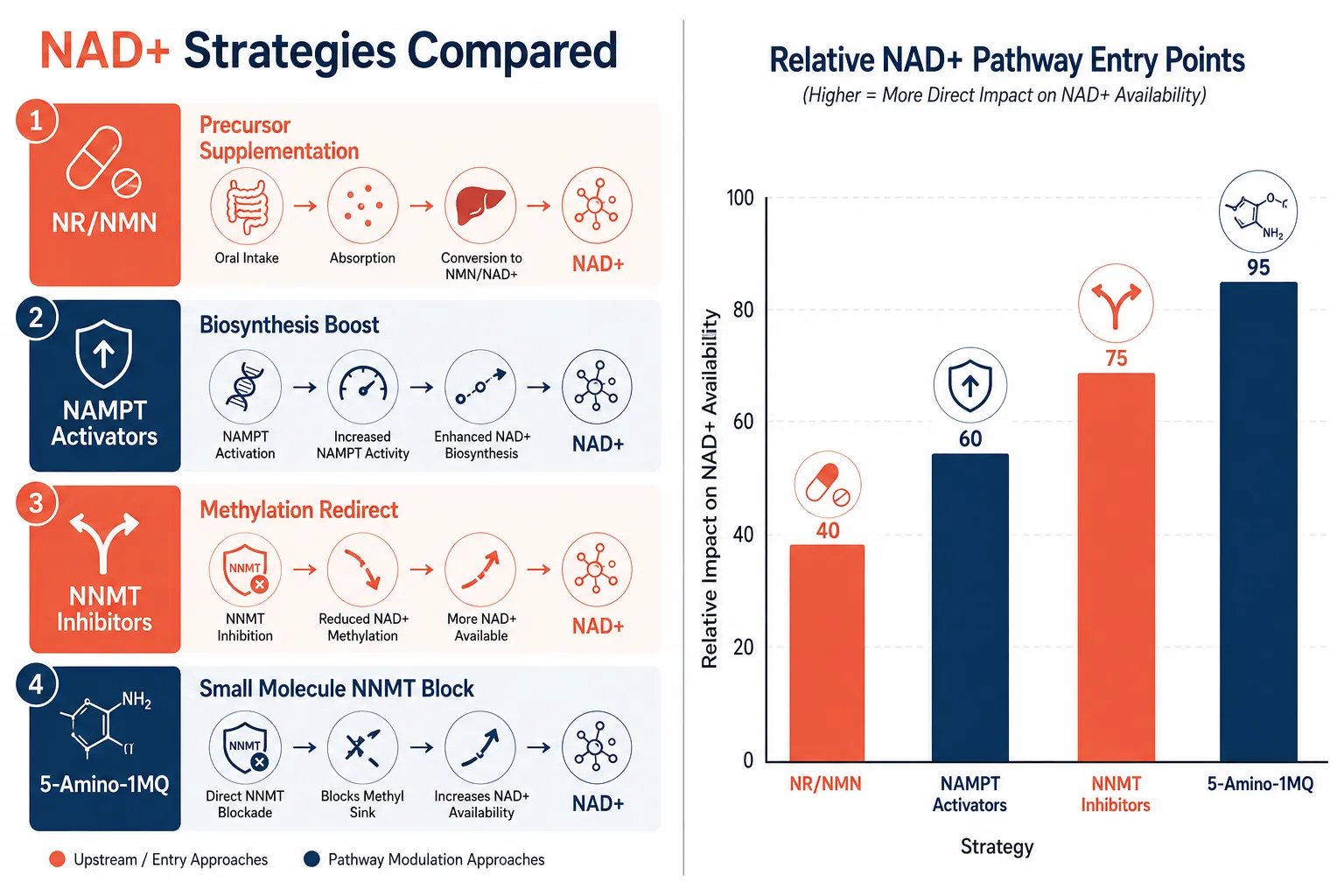
How Researchers Frame NAD+ and Metabolic Pathway Questions with 5-Amino-1MQ

Distinguishing 5-Amino-1MQ from Other NAD+ Strategies

The NAD+ research landscape includes several distinct intervention points. Understanding where 5-Amino-1MQ sits helps researchers design cleaner experiments.

Strategy Mechanism Entry Point
NR / NMN supplementation Provides NAD+ precursors Production side
NAMPT activators Boost rate-limiting biosynthesis enzyme Production side
Sirtuin activators Modulate NAD+-consuming enzymes Consumption side
NNMT inhibitors (5-Amino-1MQ) Block nicotinamide diversion Consumption/salvage side

This positioning is important. When researchers ask "what happens to NAD+ levels if we reduce NNMT activity?", they are probing a conservation mechanism rather than a synthesis mechanism. The experimental questions differ accordingly, outcome measures tend to focus on adipocyte metabolism, mitochondrial efficiency, and methylation markers rather than simple NAD+ concentration alone.

For a broader look at metabolically active research compounds, the Top 5 Research Peptides for Metabolic Health: An Updated Buyer's Guide provides useful comparative context.

Core Preclinical Data That Anchor Current Framing

The foundational experiments most cited in 5-Amino-1MQ discussions used diet-induced obese mouse models. Key observations included:

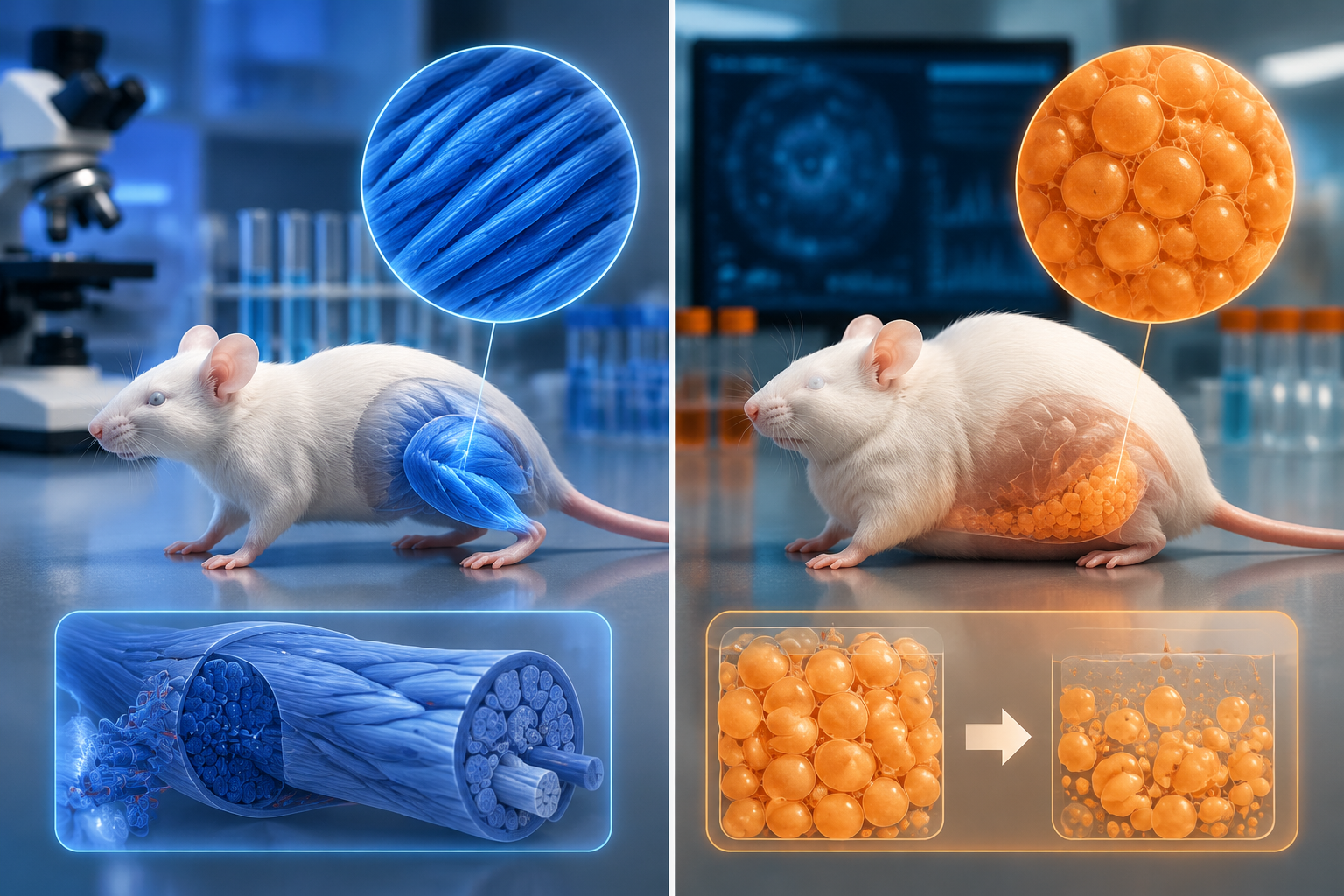
  • Reduced fat mass without significant changes in lean mass
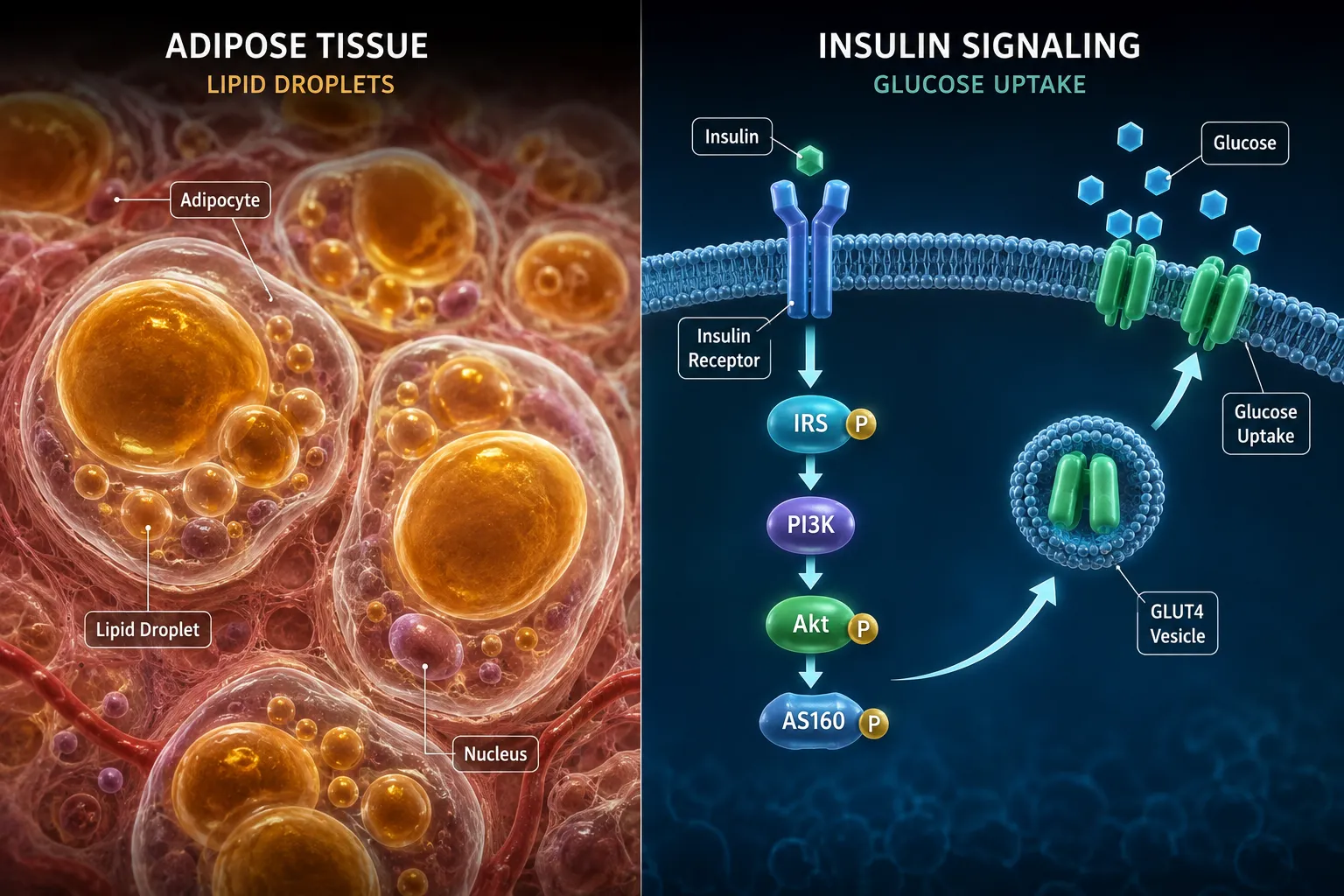
  • Improved insulin sensitivity markers in adipose tissue
  • Elevated NAD+ levels in metabolically active tissues
  • Increased energy expenditure as measured by indirect calorimetry

Researchers have also examined 5-Amino-1MQ in combination with caloric restriction protocols, asking whether NNMT inhibition amplifies the metabolic adaptations seen during energy deficit. These combination studies raise specific NAD+ questions: does restricting calories and simultaneously conserving nicotinamide create additive effects on mitochondrial function, or does one intervention dominate?

For researchers studying related mitochondrial pathways, the article on 5-Amino-1MQ and MOTS-c Synergy: How Mitochondrial Pathways Are Studied Together explores how these compounds are paired in experimental designs.

Selectivity and Off-Target Considerations

A recurring concern in NNMT inhibitor research is selectivity. NNMT shares structural features with other methyltransferases, and researchers must account for potential off-target activity when interpreting metabolic data. Current in vitro selectivity profiling for 5-Amino-1MQ suggests reasonable specificity, but comprehensive off-target panels in mammalian systems remain an area of active investigation.

This is particularly relevant when designing NAD+-centric experiments: if an NNMT inhibitor also affects other SAM-dependent reactions, attributing observed metabolic changes solely to NAD+ salvage becomes methodologically problematic.

Clinical Status, Market Framing, and Research Ethics in 2026

Clinical Status, Market Framing, and Research Ethics in 2026

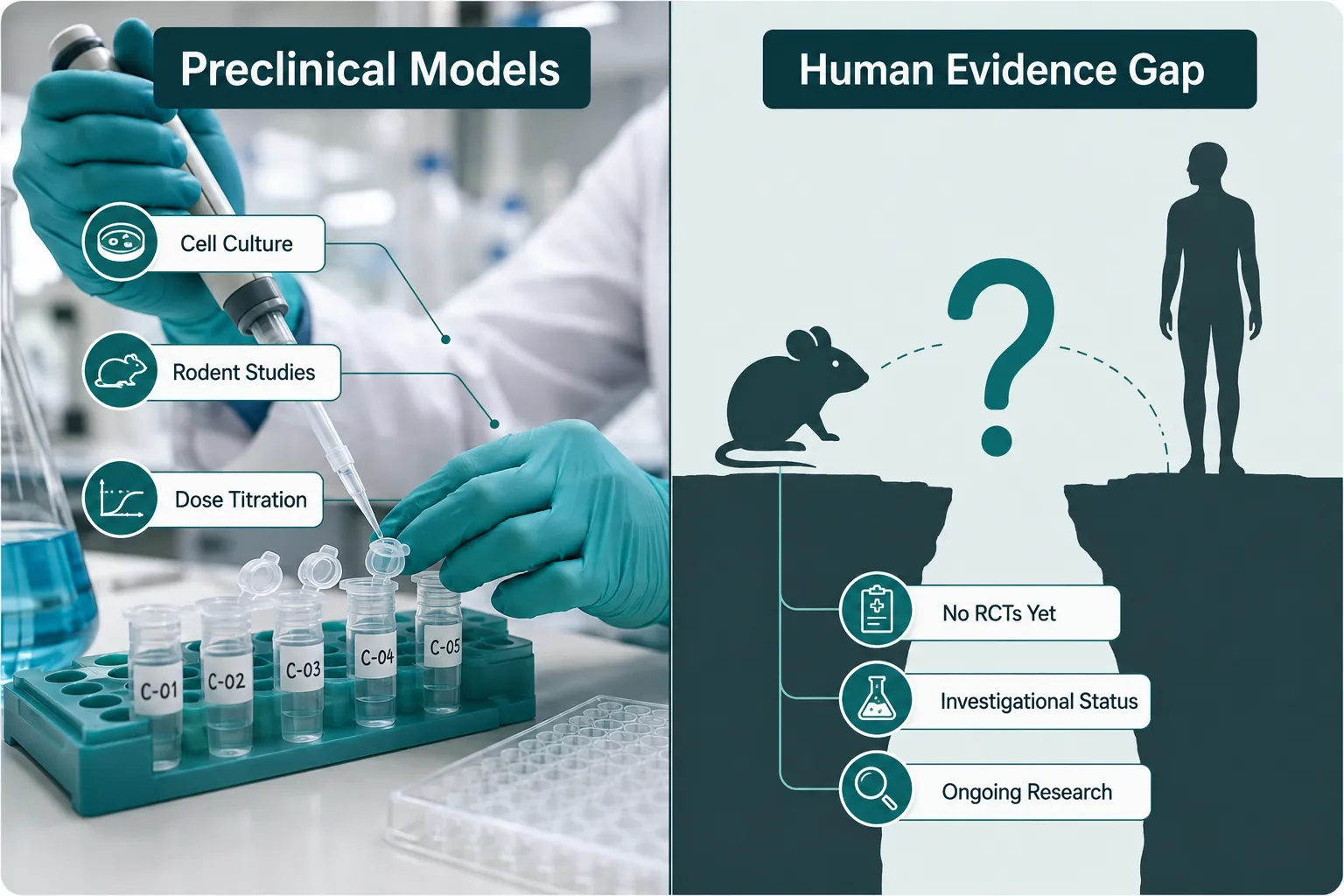
As of mid-2026, no completed human clinical trials for 5-Amino-1MQ have been published. The compound remains in the preclinical research phase. Its appearance in the "research peptide" market means it is sold for laboratory and in vitro use only, not for human administration.

Researchers and clinicians reviewing the landscape should note several important framing issues:

  • Regulatory status: 5-Amino-1MQ is not approved by the FDA or equivalent bodies for therapeutic use.
  • Market labeling: Supplier descriptions often emphasize weight loss and energy metabolism in language that implies clinical readiness. This framing outpaces the available evidence.
  • Ethical sourcing: Research-use compounds should come with certificates of analysis, HPLC purity data, and clear documentation of synthesis origin.

For foundational guidance on evaluating research compounds before purchasing, Peptides 101 for Research-Use Only Buyers: Structure, Mechanisms, and Where GLP-3, MOTS-c, and 5-Amino-1MQ Fit In is a practical starting point.

Researchers interested in how other metabolic compounds are positioned in 2026 can also review the Polypeptide Peptides in Cardiometabolic Models article for comparative framing across compound classes.

Conclusion

The 5-Amino-1MQ peptide: how researchers frame NAD+ and metabolic pathway questions is a topic that sits at the intersection of enzyme biology, methylation chemistry, and metabolic research design. The compound's value in a research context lies in its ability to probe the consumption side of NAD+ availability, a mechanistically distinct angle from precursor or biosynthesis strategies.

Actionable next steps for researchers:

  • Review the preclinical obesity model data critically, noting species, dosing, and duration before extrapolating to other models.
  • Design selectivity controls when using 5-Amino-1MQ in NAD+-centric assays to isolate NNMT-specific effects.
  • Source only from suppliers who provide third-party HPLC and mass spectrometry documentation.
  • Monitor the clinical trial registry landscape through 2026 and beyond for any first-in-human studies that may reframe current preclinical assumptions.
  • Pair 5-Amino-1MQ experiments with complementary mitochondrial markers, such as those used in MOTS-c mitochondrial peptide research, to build a more complete metabolic picture.

The preclinical foundation is genuinely interesting. The gap between that foundation and clinical application remains wide, and that gap is exactly where rigorous, well-controlled research belongs.

https://www.puretestedpeptides.com/wp-content/uploads/2026/08/5-amino-1mq-peptide-how-researchers-frame-nad-and-metabolic-pathway-questions.webp 1024 1536 https://www.puretestedpeptides.com/wp-content/uploads/2026/01/buy-peptides-online.jpg 2026-08-14 13:06:102026-08-14 13:06:105-Amino-1MQ Peptide: How Researchers Frame NAD+ and Metabolic Pathway Questions
How 5-Amino-1MQ and MOTS-c Are Studied Together in Metabolic Research

How 5-Amino-1MQ and MOTS-c Are Studied Together in Metabolic Research

August 13, 2026/0 Comments/in Uncategorized/by

Metabolic dysfunction now affects more than one billion people globally, yet the pipeline of approved pharmacological tools remains narrow. That gap has pushed researchers toward investigational compounds with complementary mechanisms, and few pairings have attracted more scientific curiosity in 2026 than 5-Amino-1MQ and MOTS-c. Understanding how 5-Amino-1MQ and MOTS-c are studied together in metabolic research requires looking at what each compound does independently before examining why their combination is considered scientifically interesting.

Key Takeaways

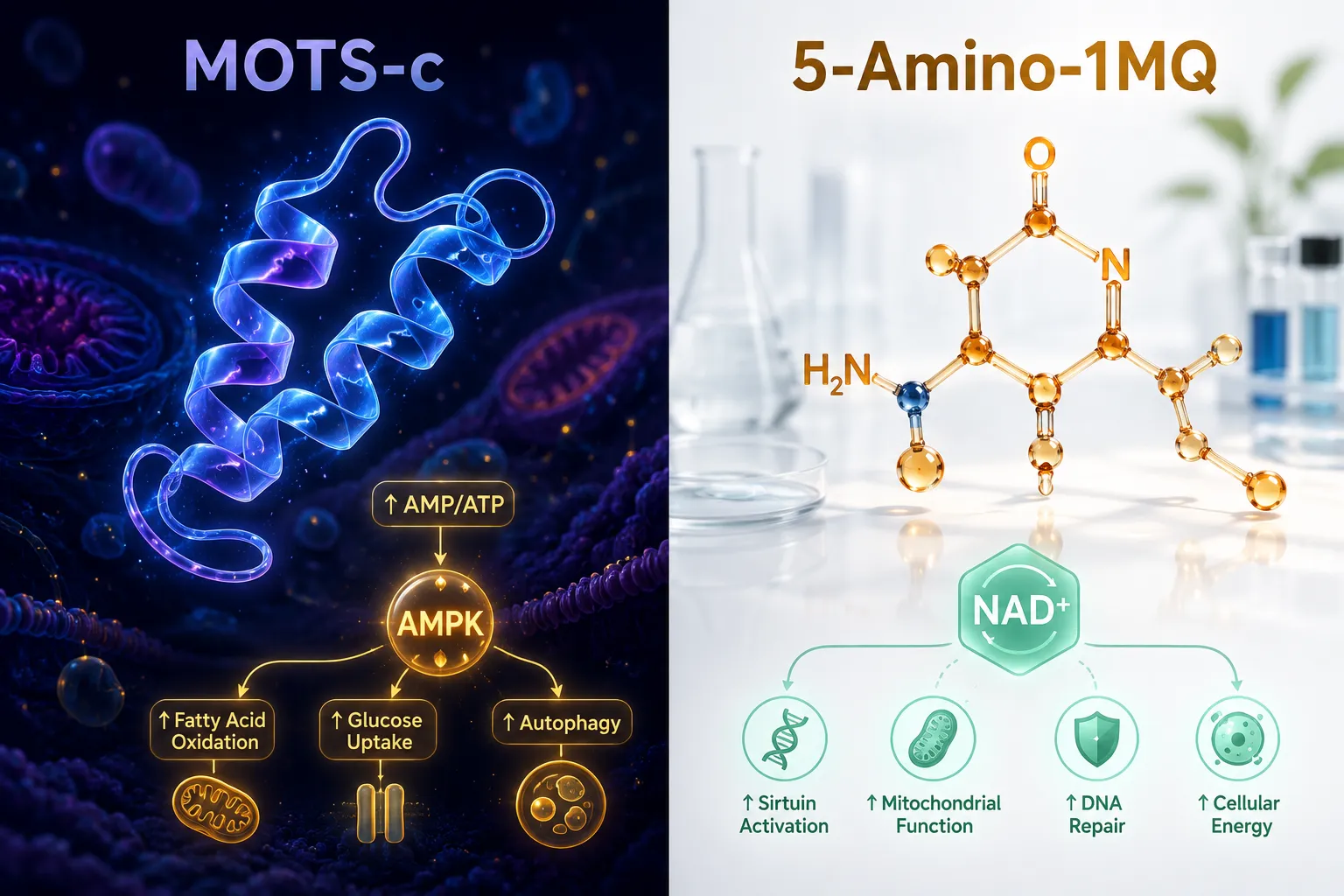
  • 5-Amino-1MQ inhibits the enzyme NNMT, raising NAD+ levels and activating fat metabolism at the cellular level.
  • MOTS-c is a mitochondria-derived peptide that activates AMPK signaling and improves glucose handling in preclinical models.
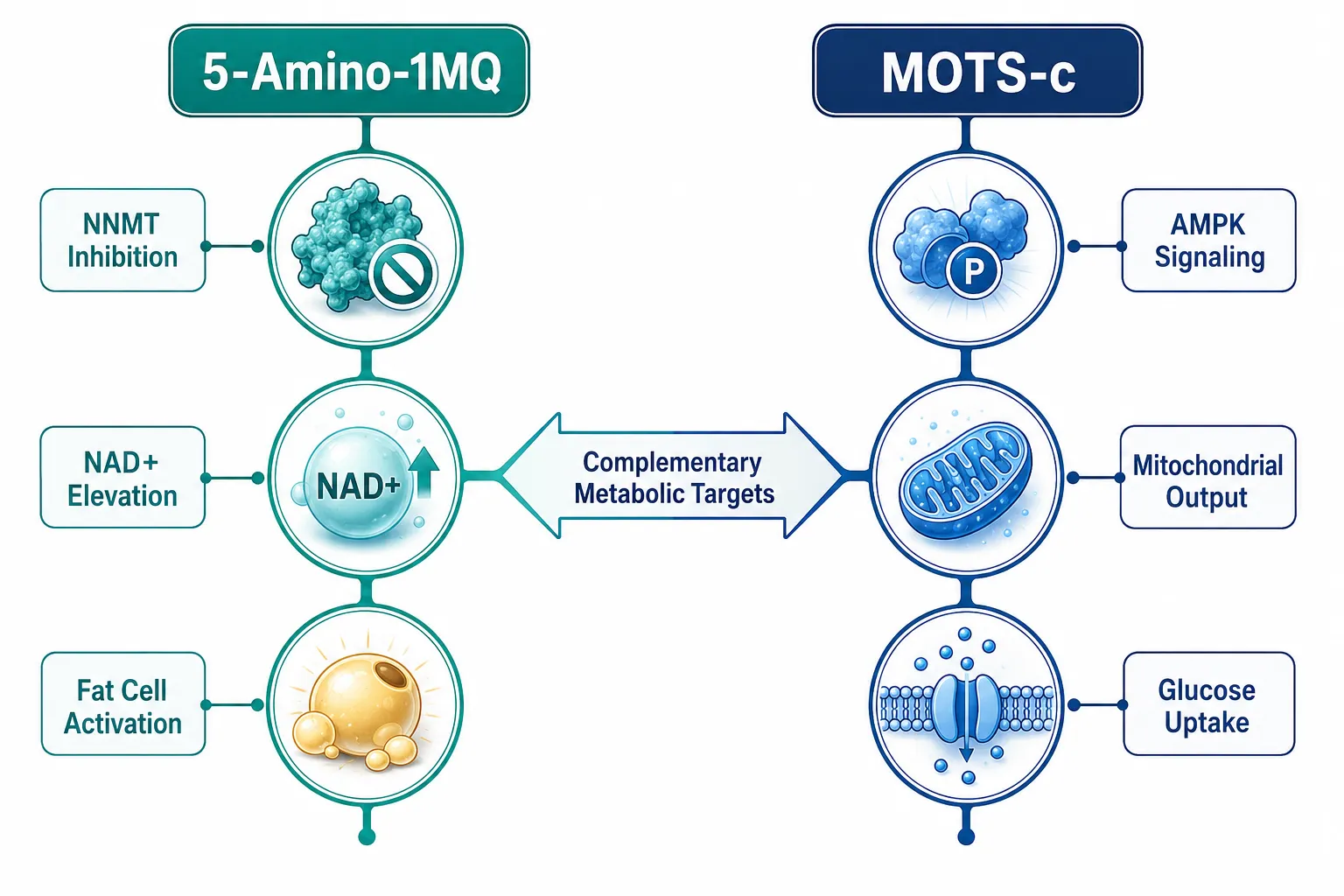
  • The two compounds target different but interconnected metabolic pathways, making them a subject of combination research.
  • Both remain investigational; no randomized controlled trials in humans have confirmed fat-loss or metabolic outcomes for either agent.
  • Researchers and clinics are exploring stacking protocols with NAD+ precursors and GLP-1 agonists, though evidence remains early-stage.

The Distinct Mechanisms Behind Each Compound

The Distinct Mechanisms Behind Each Compound

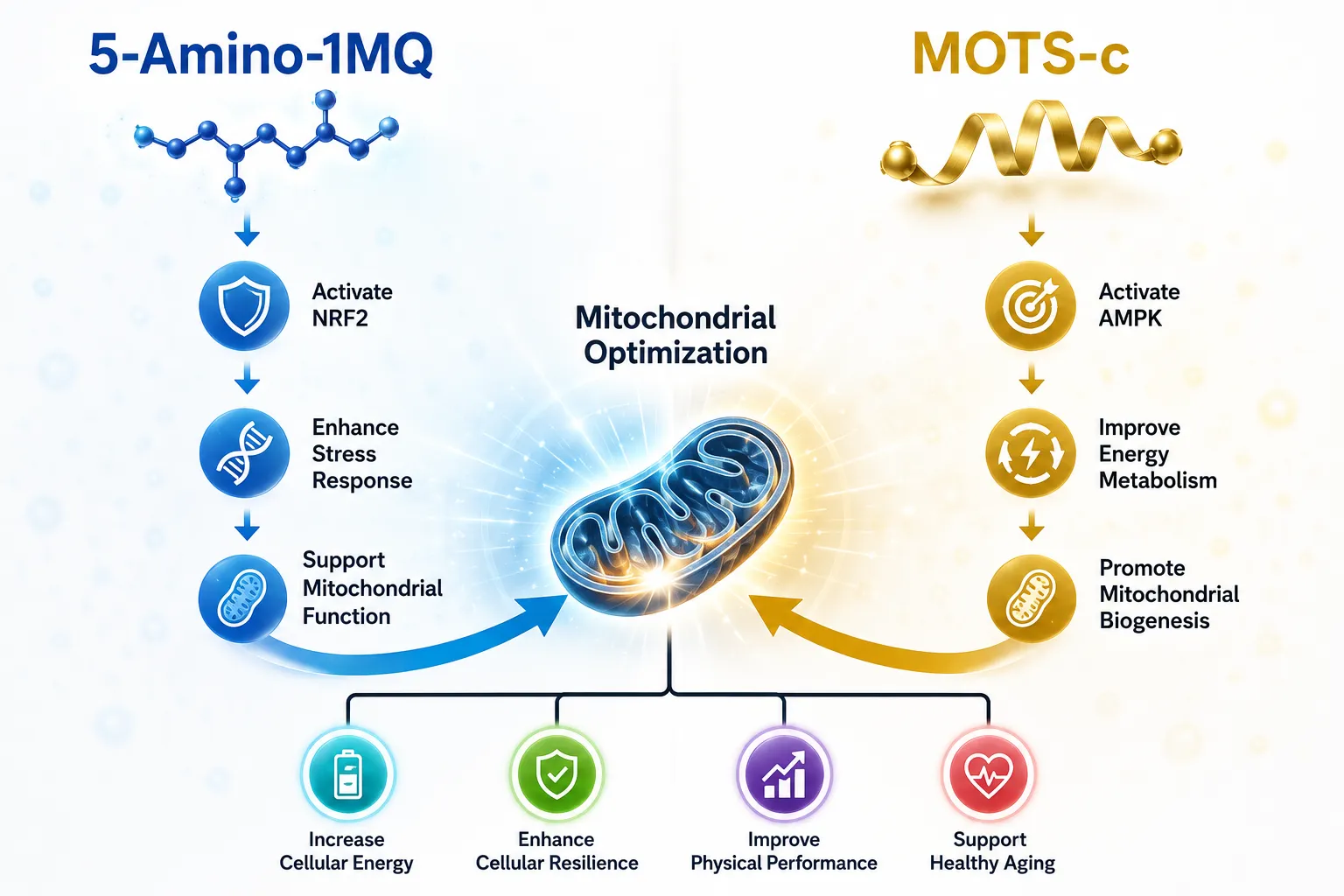
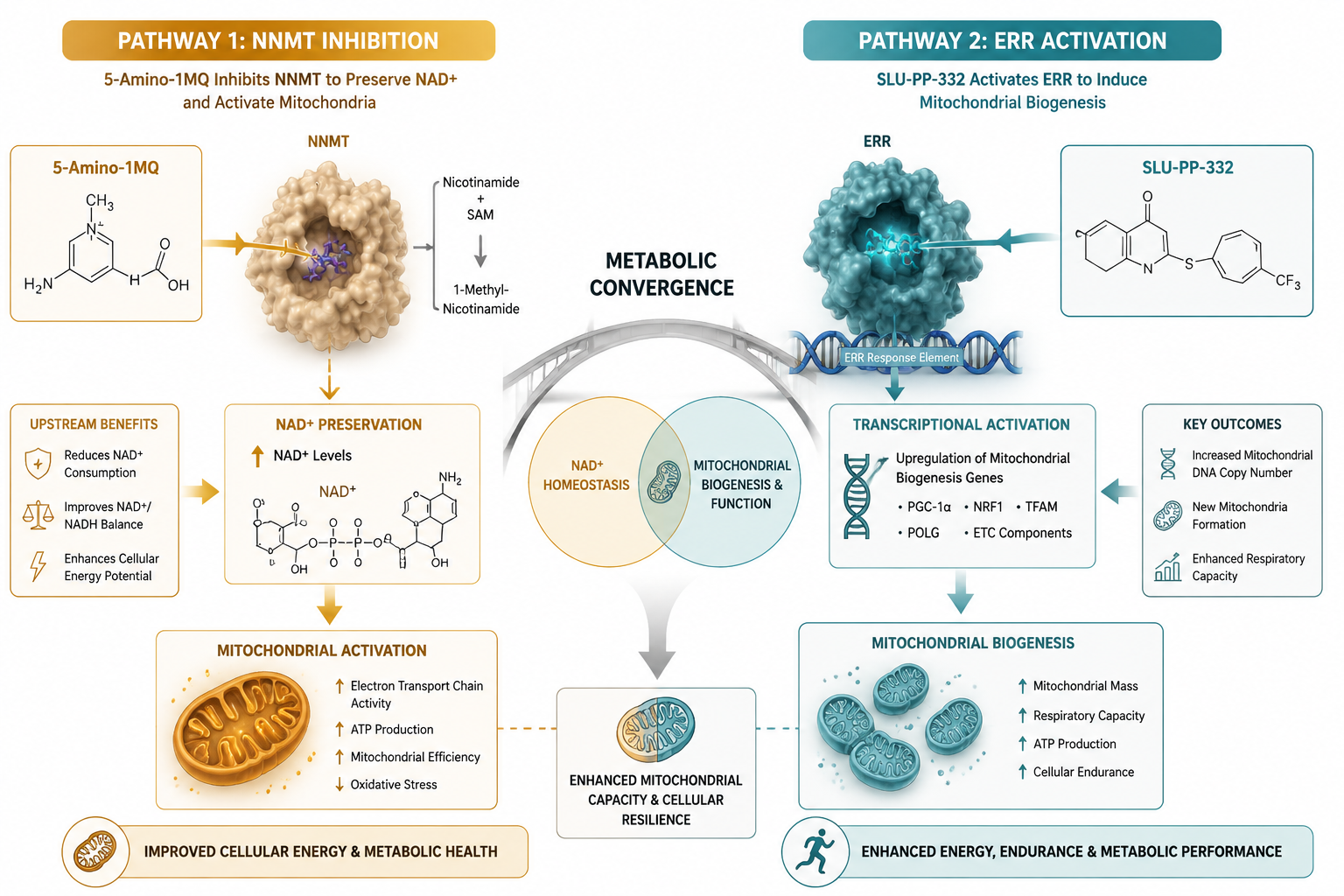
5-Amino-1MQ is a small-molecule inhibitor of nicotinamide N-methyltransferase (NNMT), an enzyme that consumes NAD+ precursors. When NNMT is blocked, cellular NAD+ availability rises. Higher NAD+ levels are associated with increased activity of sirtuins and other metabolic regulators that govern fat oxidation and energy expenditure. In adipose tissue, this shift appears to reduce lipid storage and promote lipolysis in cell and animal models. For a deeper look at how NAD+ connects to these peptide systems, the resource on adenosine triphosphate and mitochondrial peptides: how MOTS-c and 5-Amino-1MQ influence ATP production provides useful mechanistic context.

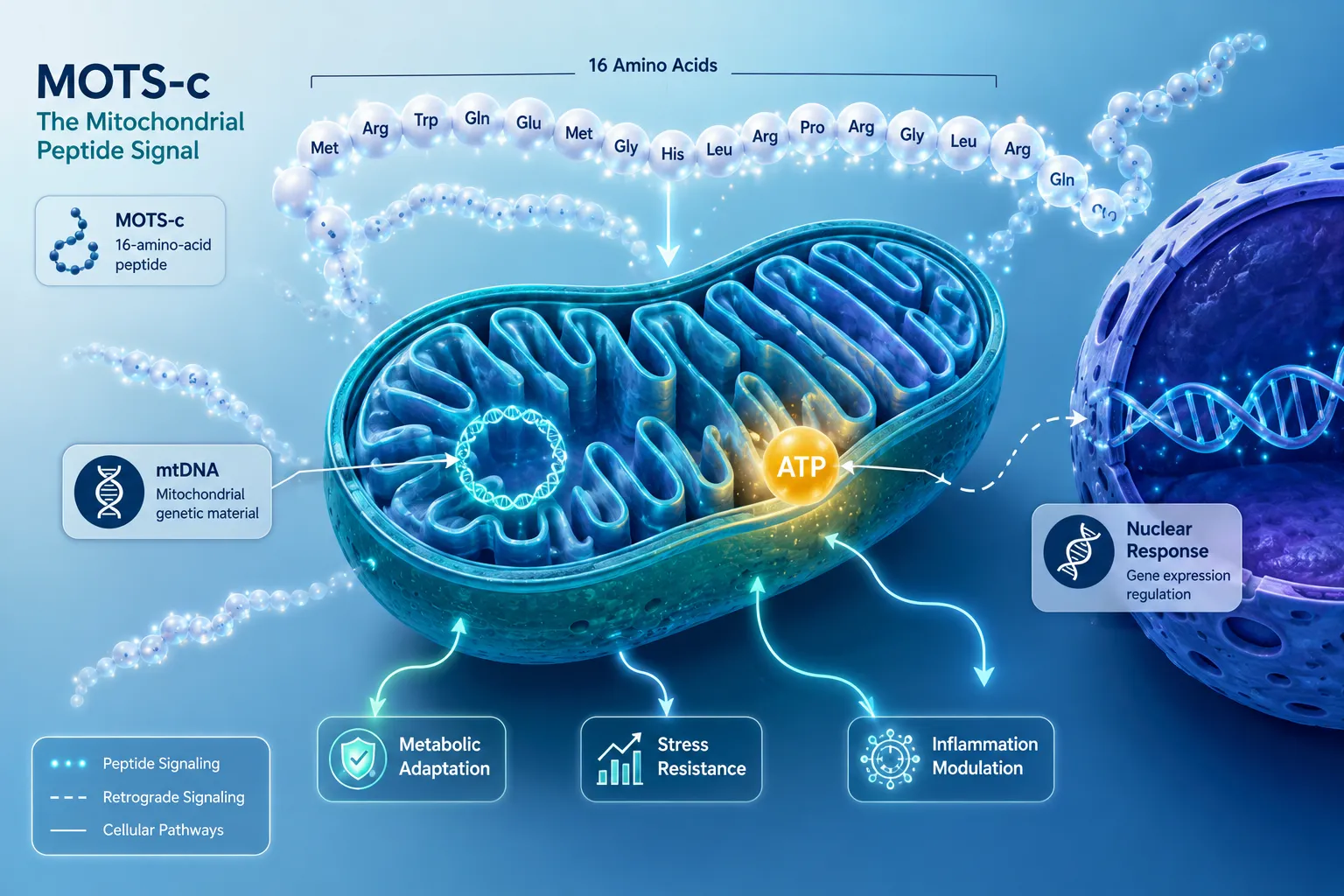
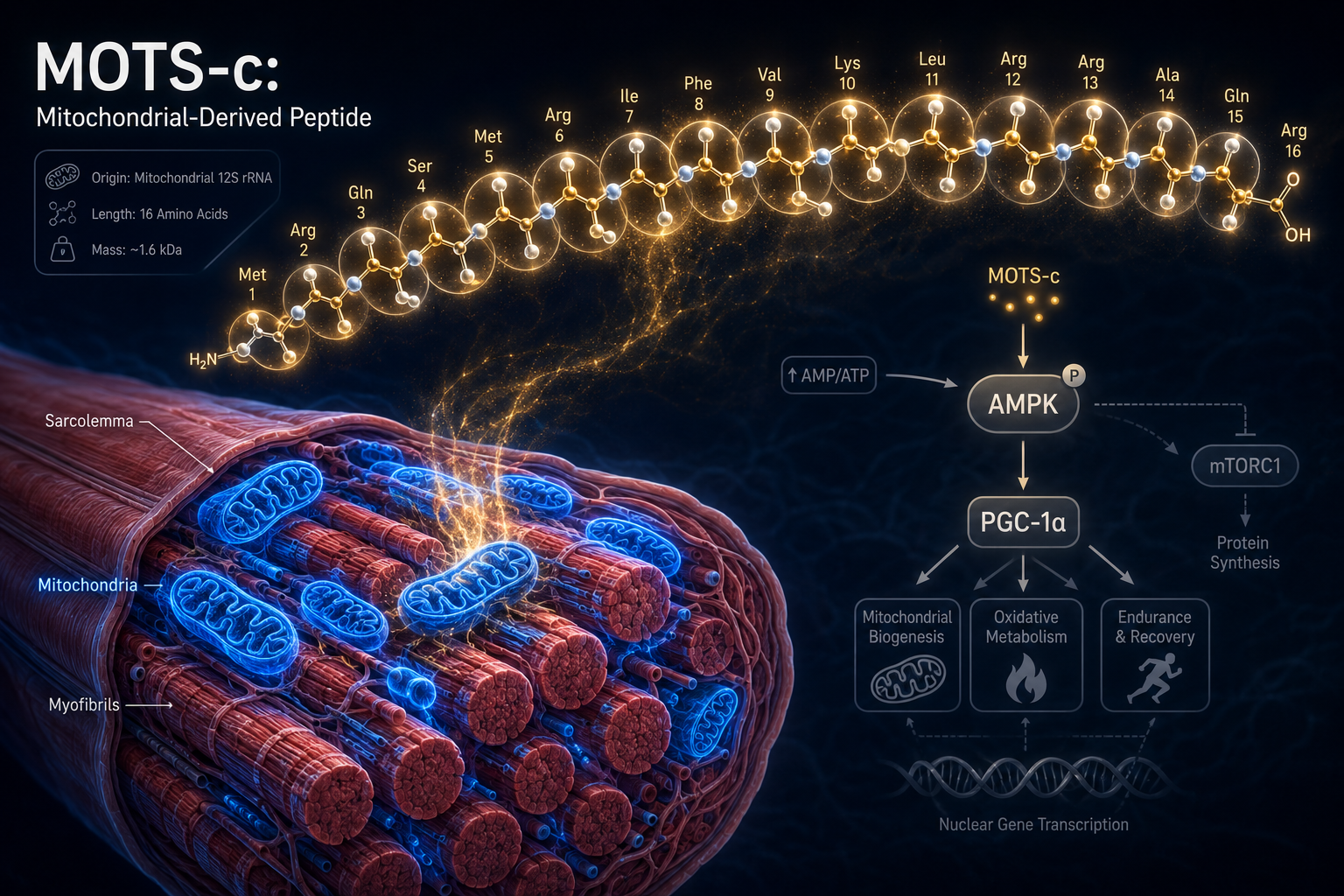
MOTS-c is a 16-amino-acid peptide encoded within mitochondrial DNA. It primarily works through AMPK activation, a master energy sensor that promotes glucose uptake, suppresses lipogenesis, and enhances mitochondrial biogenesis. Unlike most peptides, MOTS-c can translocate to the nucleus under metabolic stress, where it modulates gene expression tied to metabolic flexibility. Researchers interested in its foundational biology can explore MOTS-c: the mitochondrial peptide for background on its discovery and signaling profile.

The key distinction is target specificity:

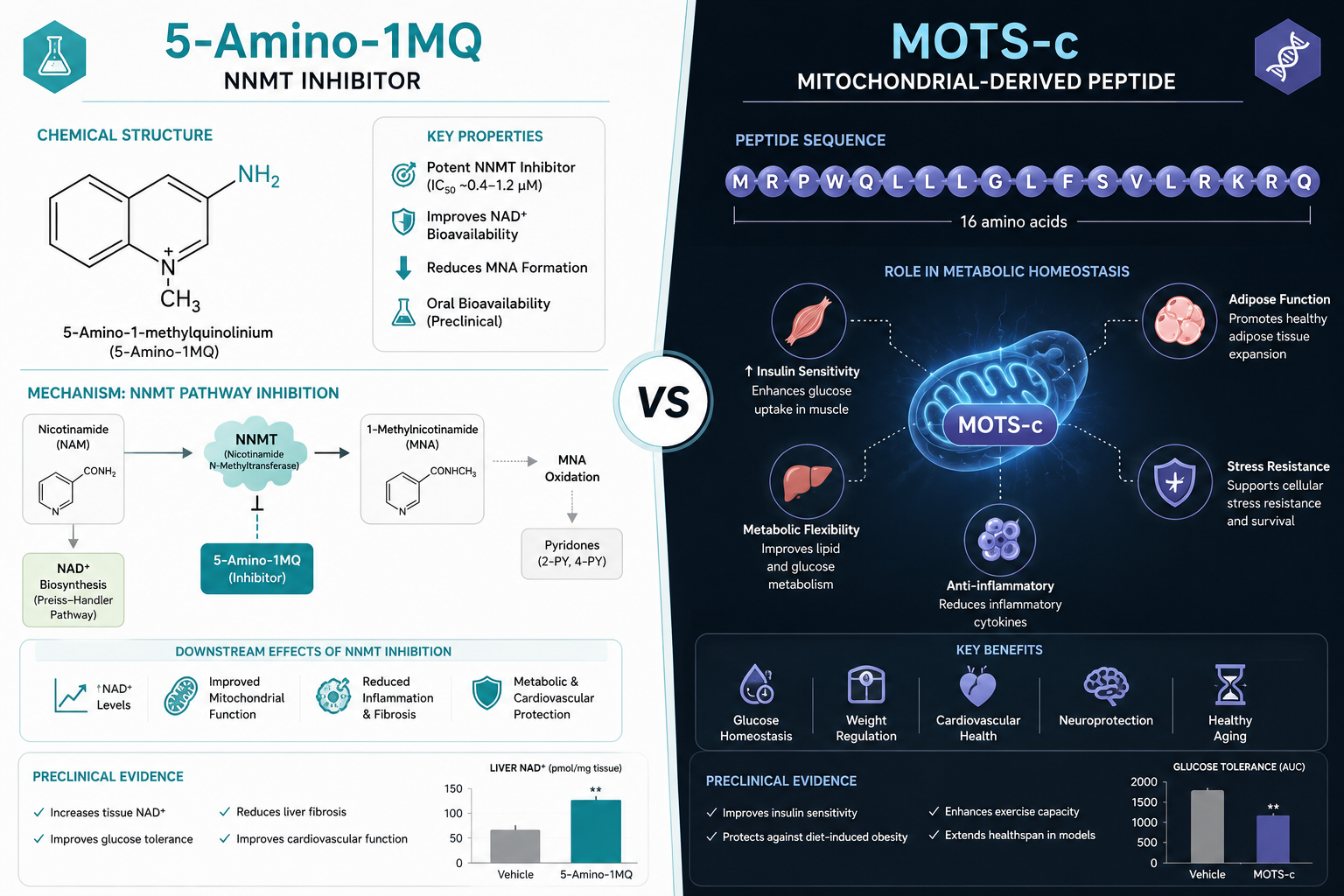
Feature 5-Amino-1MQ MOTS-c
Primary target NNMT enzyme AMPK pathway
Key metabolite affected NAD+ Glucose / lipid flux
Main tissue focus Adipose tissue Skeletal muscle, liver
Molecule type Small molecule Mitochondrial peptide
Administration route (research) Oral (preclinical) Injectable (preclinical)

How 5-Amino-1MQ and MOTS-c Are Studied Together in Metabolic Research: The Combination Rationale

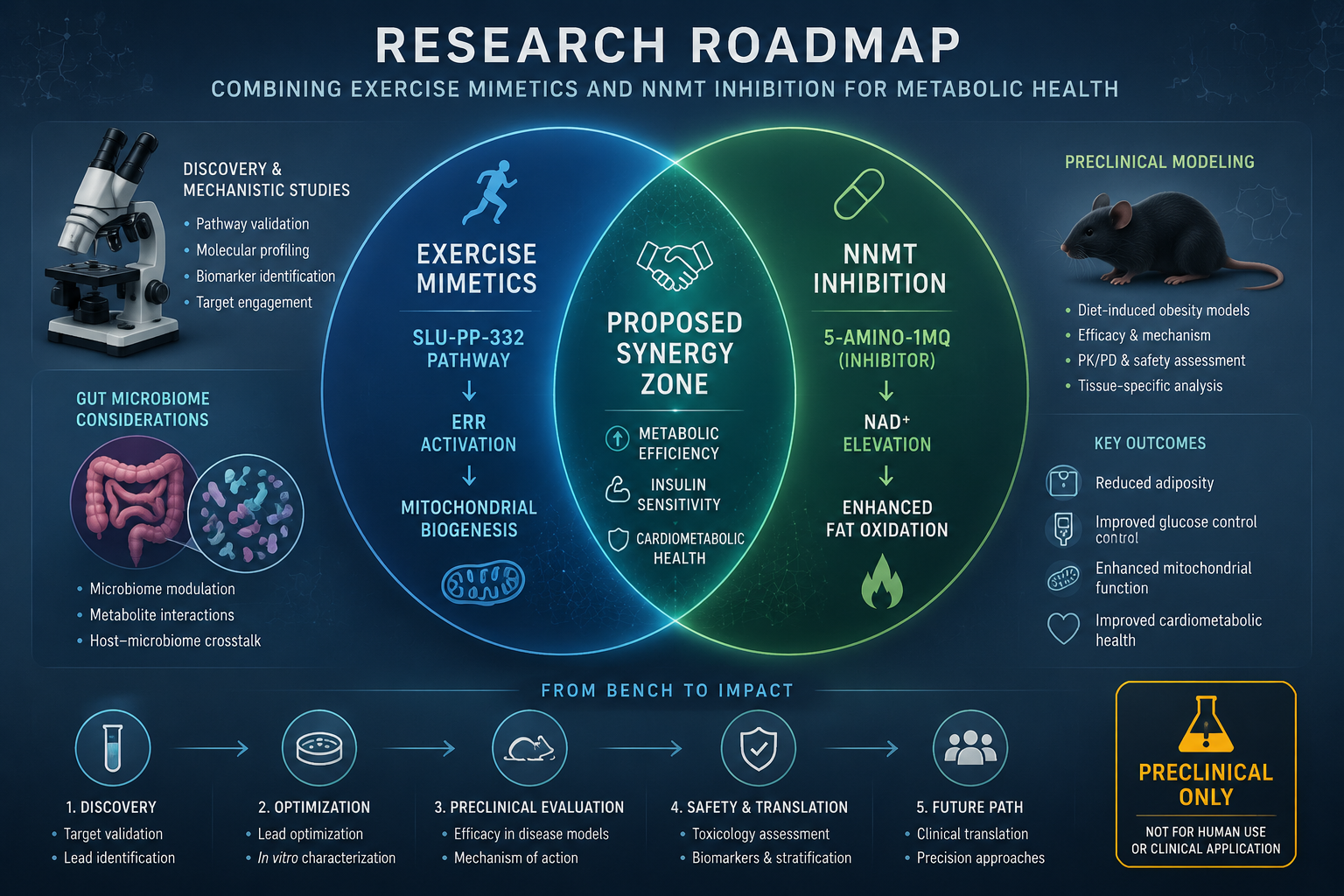
The rationale for studying these two agents together is rooted in pathway complementarity. NNMT inhibition by 5-Amino-1MQ addresses the upstream availability of NAD+, while MOTS-c operates downstream through AMPK to improve how cells use the energy that NAD+ helps generate. In theory, raising NAD+ and simultaneously activating AMPK could produce additive effects on mitochondrial efficiency and substrate utilization.

Key insight: Researchers describe the pairing as targeting "two different floors of the same metabolic building", one compound improves fuel supply, the other improves how cells burn it.

Preclinical models examining this combination have focused on:

  • Adipose tissue remodeling, measuring changes in white adipose depots
  • Insulin sensitivity markers, fasting glucose, HOMA-IR in rodent models
  • Mitochondrial respiration assays, oxygen consumption rate in isolated cells
  • Body composition endpoints, lean mass preservation alongside fat reduction

Researchers studying related mitochondrial peptide combinations, such as the MOTS-c and Elamipretide pairing, have used similar assay frameworks, making that work a useful methodological reference point.

Evidence Tiers and Research Gaps

Evidence Tiers and Research Gaps

Both compounds remain firmly in the investigational category. Neither 5-Amino-1MQ nor MOTS-c is FDA-approved, and both are currently sold exclusively as research chemicals. The evidence base, as of mid-2026, sits at the following tiers:

Established (in vitro and animal data):

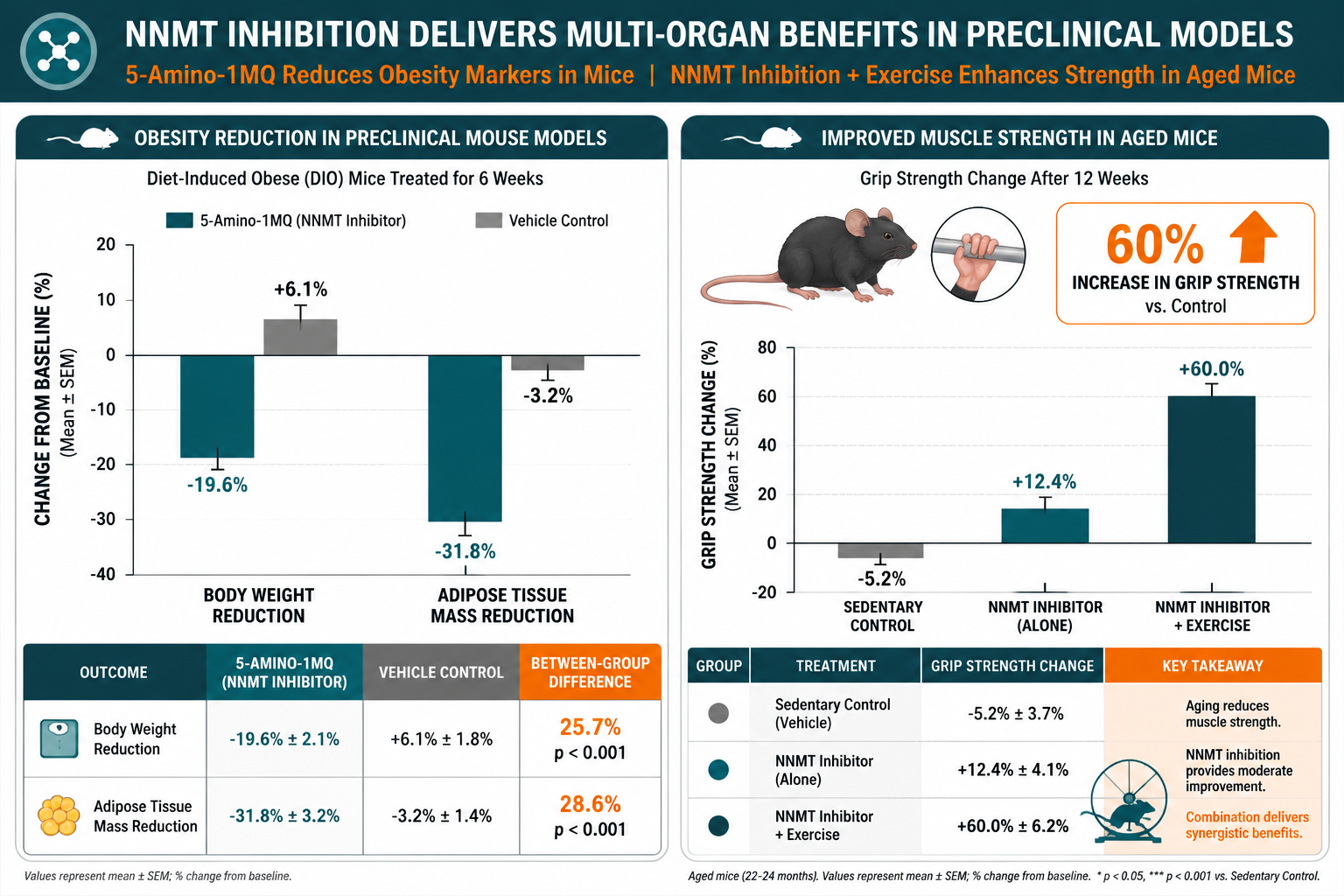
  • NNMT inhibition by 5-Amino-1MQ reduces adiposity in diet-induced obese mouse models
  • MOTS-c improves glucose tolerance and exercise capacity in aged rodents
  • Combination protocols in cell models suggest non-overlapping pathway activation

Emerging (mechanistic speculation and early protocol design):

  • Longevity-focused researchers have proposed NAD+/MOTS-c/5-Amino-1MQ stacks as a multi-target approach to metabolic aging
  • Clinics have begun positioning the duo for "weight plateau" scenarios alongside GLP-1 agonists, though this is protocol-level practice without controlled trial support

Missing (critical evidence gaps):

  • No randomized controlled trials in humans for either compound alone
  • No published human pharmacokinetic data for the combination
  • Organ-target interaction profiles at combined doses remain unstudied

Expert commentary from metabolic biology reviewers in 2026 consistently frames the situation as "interesting biology, weak human evidence." That honest assessment should anchor any research design that incorporates this pairing. For comparison, researchers interested in how appetite-modulating compounds are evaluated alongside metabolic peptides may find the analysis of tesofensine vs GLP-3 retatrutide appetite-modulating pathways instructive for study design principles.

How 5-Amino-1MQ and MOTS-c Are Studied Together: Protocol Design Considerations

How 5-Amino-1MQ and MOTS-c Are Studied Together: Protocol Design Considerations

For researchers designing combination studies, several practical considerations emerge from the existing preclinical literature.

Dosing sequencing: Some protocols administer 5-Amino-1MQ first to elevate NAD+ availability before introducing MOTS-c, hypothesizing that a primed NAD+ environment amplifies AMPK responsiveness. This sequencing remains theoretical but is gaining traction in research design discussions as of July 2026.

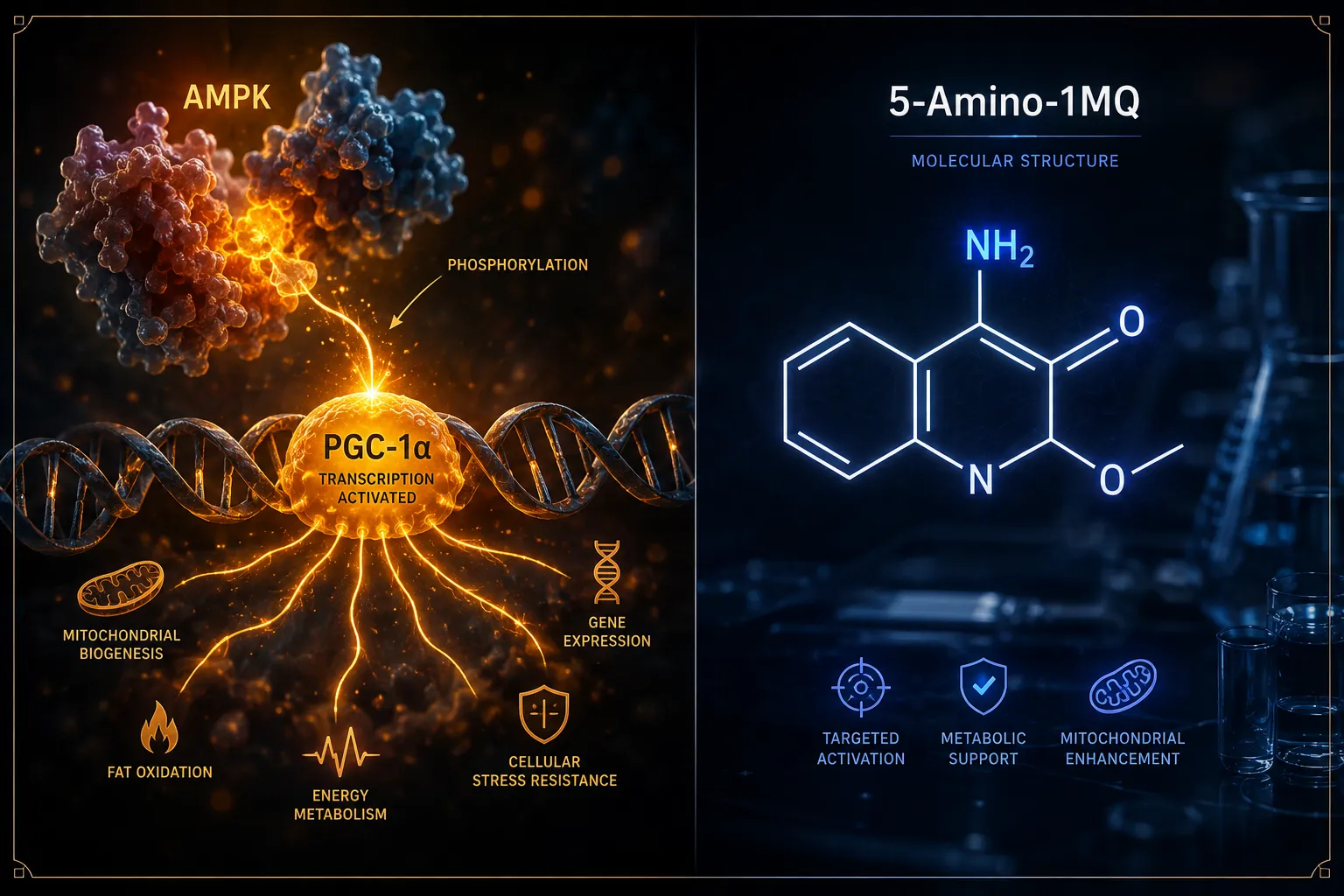
Biomarker selection: Researchers typically track NAD+/NADH ratios, phosphorylated AMPK levels, PGC-1 alpha expression, and mitochondrial membrane potential as primary readouts when studying this combination.

Stacking with other agents: A growing number of protocols layer this pairing with NAD+ precursors (NMN or NR) or GLP-1 receptor agonists. The MOTS-c and SLU-PP332 research context offers a parallel example of how MOTS-c is studied alongside exercise-mimetic compounds, which shares methodological overlap with 5-Amino-1MQ combination work.

Researchers comparing 5-Amino-1MQ against other weight-related compounds in isolation may also benefit from reviewing the 5-Amino-1MQ vs Tesofensine comparison to understand its standalone profile before interpreting combination data.

Conclusion

The study of how 5-Amino-1MQ and MOTS-c are examined together in metabolic research represents one of the more scientifically grounded areas of investigational peptide science in 2026. The mechanistic logic is sound: NNMT inhibition and AMPK activation address metabolic dysfunction from different but reinforcing angles. However, the evidence base remains preclinical, and the absence of human trial data is a significant limitation that no amount of mechanistic elegance can substitute.

Actionable next steps for researchers:

  1. Ground any combination protocol in the existing rodent and cell-model literature before extrapolating to human applications.
  2. Use validated biomarker panels (NAD+/NADH, p-AMPK, PGC-1 alpha) to generate quantifiable endpoints.
  3. Source research-grade material with verified purity documentation, the MOTS-c peptide 10mg research-grade product page is one reference point for purity standards.
  4. Monitor the clinical trial registries for emerging human studies, as this area is expected to move quickly given commercial and longevity-research interest.
  5. Treat any "synergy" claims with appropriate skepticism until controlled human data is available.

The biology is compelling. The human evidence is not yet there. That gap is precisely what makes this combination a productive area for rigorous investigation.

https://www.puretestedpeptides.com/wp-content/uploads/2026/08/how-5-amino-1mq-and-mots-c-are-studied-together-in-metabolic-research.webp 1024 1536 https://www.puretestedpeptides.com/wp-content/uploads/2026/01/buy-peptides-online.jpg 2026-08-13 13:04:512026-08-13 13:04:51How 5-Amino-1MQ and MOTS-c Are Studied Together in Metabolic Research
5-Amino-1MQ and MOTS-c Synergy: How Mitochondrial Pathways Are Studied Together

5-Amino-1MQ and MOTS-c Synergy: How Mitochondrial Pathways Are Studied Together

August 7, 2026/0 Comments/in Uncategorized/by

Mitochondrial dysfunction now appears in the pathophysiology of more than 150 human diseases, yet most research still examines metabolic compounds one at a time. That single-compound approach misses something important: inside living cells, energy-regulating molecules rarely act alone. The growing body of research around 5-Amino-1MQ and MOTS-c synergy: how mitochondrial pathways are studied together reflects a deliberate shift toward multi-target experimental frameworks, and the early data explain why.

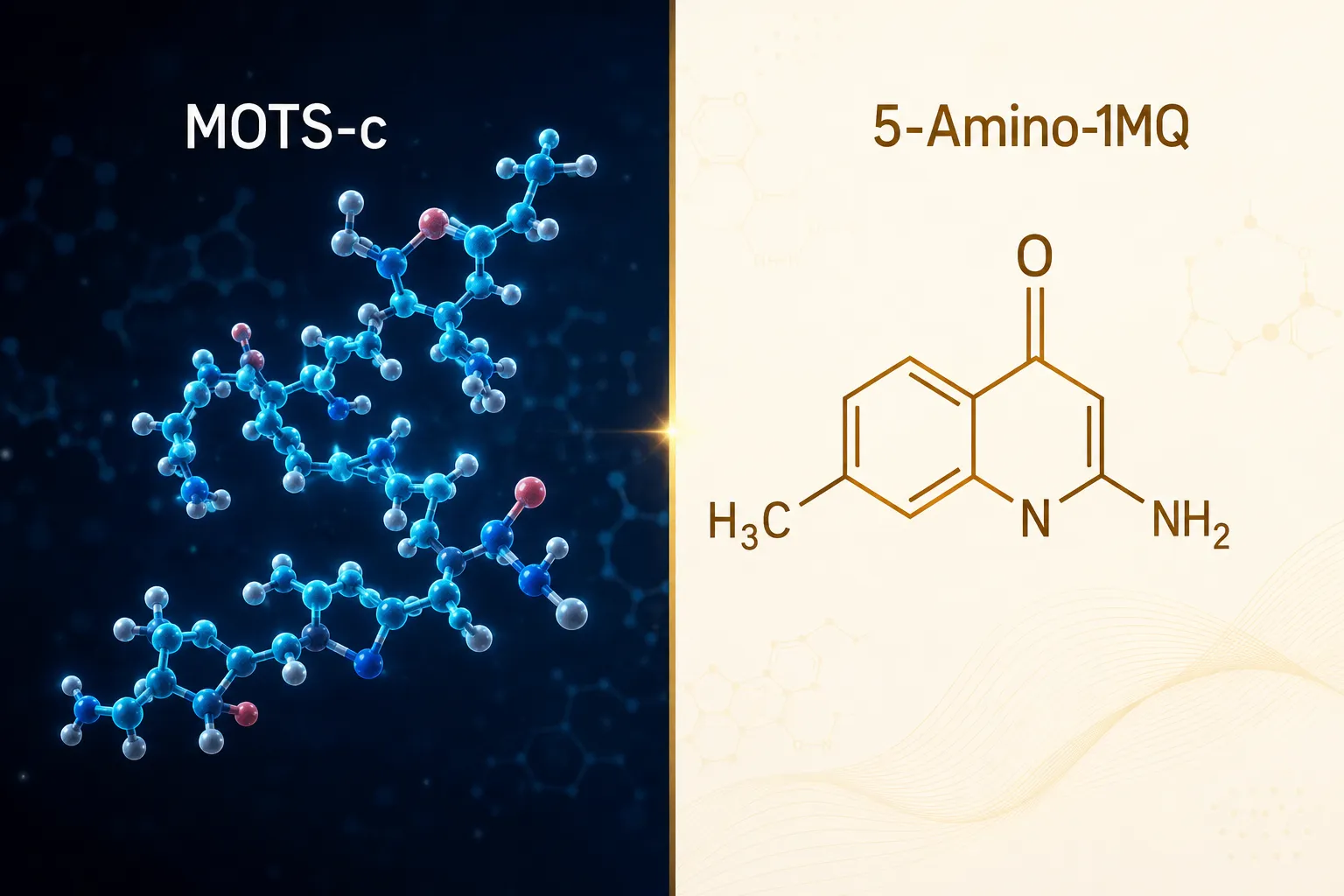
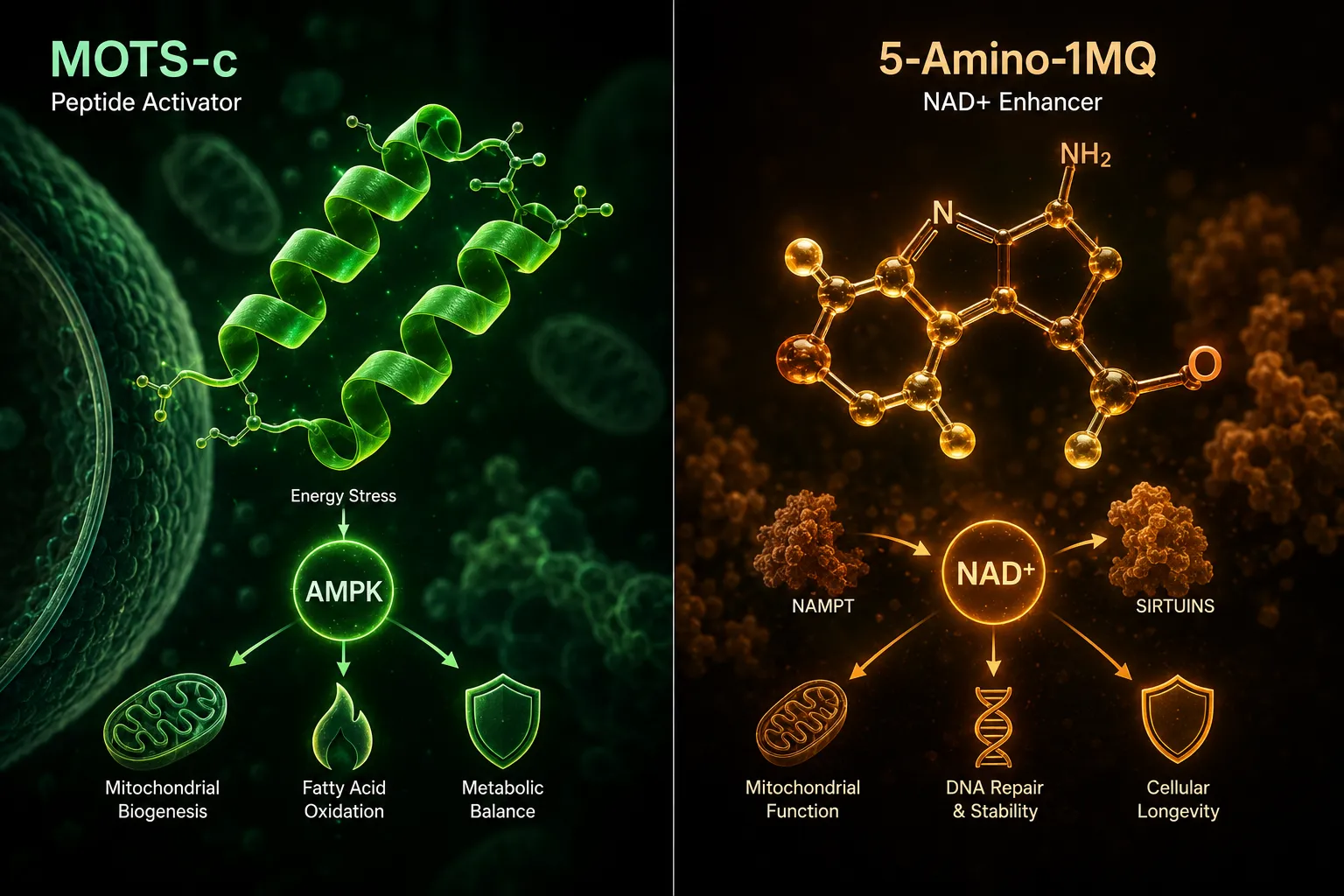
Bright editorial infographic-style landscape (): a split-panel scientific diagram showing two molecular pathway arrows — one

Key Takeaways

  • 5-Amino-1MQ inhibits NNMT, raising cellular NAD+ and SAM levels, while MOTS-c activates AMPK and regulates mitochondrial gene expression.
  • Researchers pair these two compounds because their mechanisms are complementary rather than redundant.
  • Adiposity models and metabolic disease frameworks are the most common contexts for studying this combination.
  • Translational questions about aging, obesity, and insulin sensitivity drive much of the current experimental design.
  • Purity and sourcing quality are critical variables when designing reproducible multi-compound studies.

What Is 5-Amino-1MQ and Why Does It Matter for Mitochondrial Research

5-Amino-1MQ (5-amino-1-methylquinolinium) is a small-molecule inhibitor of nicotinamide N-methyltransferase (NNMT). NNMT is an enzyme found in high concentrations in adipose tissue. When NNMT is overactive, it consumes S-adenosyl methionine (SAM) and reduces cellular NAD+ availability, two outcomes that suppress mitochondrial efficiency.

By blocking NNMT, 5-Amino-1MQ effectively raises the intracellular pool of both NAD+ and SAM. Higher NAD+ levels feed into sirtuin pathways (particularly SIRT1 and SIRT3), which regulate mitochondrial biogenesis, fatty acid oxidation, and cellular stress responses.

Key mechanisms under study:

  • NNMT inhibition and NAD+ restoration
  • Sirtuin pathway activation downstream of elevated NAD+
  • Reduction of adipocyte hypertrophy in white adipose tissue
  • Potential effects on beige adipose tissue phenotype conversion

In preclinical models, 5-Amino-1MQ has shown measurable reductions in fat mass without caloric restriction, which makes it particularly relevant for obesity and metabolic syndrome research frameworks.

What Is MOTS-c and How Does It Interact With Cellular Energy Systems

MOTS-c is a mitochondria-derived peptide (MDP) encoded within the 12S rRNA region of mitochondrial DNA. Unlike most peptides, it is not encoded by nuclear DNA, it originates inside the mitochondria themselves. This origin makes MOTS-c a direct signal of mitochondrial status.

MOTS-c activates AMP-activated protein kinase (AMPK), the master energy sensor of the cell. AMPK activation triggers a cascade that includes:

  • Increased glucose uptake in skeletal muscle
  • Suppression of de novo lipogenesis
  • Enhanced mitochondrial fatty acid oxidation
  • Regulation of the folate cycle and methionine metabolism

Researchers studying MOTS-c alongside elamipretide have noted that mitochondria-targeted compounds can produce additive effects when their mechanisms address different nodes of the same pathway network.

MOTS-c levels decline with age and in states of metabolic stress, which positions it as both a biomarker and a potential research tool in aging and obesity models.

Studying 5-Amino-1MQ and MOTS-c Synergy: How Mitochondrial Pathways Are Studied Together

The central question researchers ask when designing co-administration experiments is: do these compounds address the same bottleneck, or different ones? If two compounds share a single mechanism, combining them offers little additional insight. If they act at distinct but connected nodes, the combination reveals pathway architecture that single-compound studies cannot.

Studying 5-Amino-1MQ and MOTS-c Synergy: How Mitochondrial Pathways Are Studied Together

5-Amino-1MQ and MOTS-c address different nodes:

Compound Primary Target Downstream Effect
5-Amino-1MQ NNMT enzyme inhibition Raises NAD+, activates sirtuins
MOTS-c AMPK activation Improves glucose uptake, reduces lipogenesis

Because NAD+-sirtuin signaling and AMPK signaling both converge on mitochondrial biogenesis and fatty acid oxidation, the two pathways are complementary, not redundant. This is the core rationale for studying them together.

"Combining compounds with distinct but convergent mechanisms allows researchers to map the actual topology of metabolic networks rather than just confirming that a single node matters."

Experimental Models Used in Synergy Research

Researchers typically use three types of models to study this combination:

  1. Adiposity and obesity models, High-fat diet rodent models where both fat mass reduction and insulin sensitivity can be measured simultaneously.
  2. Aging models, Aged cell cultures or animal models where declining NAD+ and MOTS-c levels can be artificially restored.
  3. Skeletal muscle energy models, Focused on glucose uptake efficiency and mitochondrial respiration rates.

In adiposity models specifically, the combination of NNMT inhibition (raising NAD+) and AMPK activation (suppressing fat synthesis) creates a dual pressure on adipocyte metabolism. This is why the SS-31 elamipretide research community, which also focuses on mitochondrial membrane integrity, has begun watching MOTS-c co-administration data closely.

Translational Questions Driving the Research

The translational questions are direct:

  • Can restoring both NAD+ availability and AMPK activity simultaneously produce greater metabolic correction than either alone?
  • Does the combination affect insulin sensitivity additively or synergistically?
  • Are there tissue-specific differences in how the two pathways interact in muscle versus adipose tissue?

These questions are not yet fully answered. Most current data come from preclinical models, and rigorous dose-response mapping for the combination remains an active area. Researchers sourcing compounds for these studies consistently prioritize verified purity, a variable that becomes even more critical when interpreting multi-compound results. Sourcing from a best peptide manufacturer with documented testing reduces confounding variables in experimental design.

Methodological Considerations for Multi-Compound Mitochondrial Studies

Designing a valid co-administration study requires more than simply administering both compounds. Several methodological factors determine whether the data will be interpretable.

Methodological Considerations for Multi-Compound Mitochondrial Studies

Critical design variables include:

  • Dosing sequence and timing, Whether compounds are administered simultaneously or in sequence affects which pathway activates first and whether downstream signals interfere.
  • Readout selection, Measuring only body weight misses mechanistic data. Researchers typically track NAD+/NADH ratios, AMPK phosphorylation status, oxygen consumption rates (OCR), and adipocyte morphology.
  • Compound purity, Impurities in either compound introduce confounding signals. Researchers also examining SS-31 kidney health research have documented how trace contaminants skew mitochondrial respiration readings.

  • Model selection, In vitro models confirm mechanism but cannot capture systemic metabolic feedback loops that appear in vivo.

A related consideration is how findings from MOTS-c and 5-Amino-1MQ studies connect to broader peptide combination research. Work on compounds like TB-500 and BPC-157 has established methodological templates for multi-peptide experimental designs that the mitochondrial research community is now adapting.

Researchers also note that the wholesale peptides for sale market varies significantly in quality, and batch-to-batch consistency is a non-negotiable requirement when designing longitudinal studies.

Conclusion

The research framework around 5-Amino-1MQ and MOTS-c synergy: how mitochondrial pathways are studied together represents a meaningful evolution in metabolic science. Rather than asking whether a single compound affects mitochondrial function, researchers are now mapping how complementary mechanisms interact across the NAD+-sirtuin and AMPK networks simultaneously.

Actionable next steps for researchers and informed readers:

  • Review published preclinical data on NNMT inhibition and AMPK activation in adiposity models before designing new experiments.
  • Prioritize sourcing compounds from manufacturers with third-party purity documentation to ensure reproducible results.
  • Design readout panels that capture both sirtuin pathway markers and AMPK phosphorylation status to detect true synergy rather than simple additive effects.
  • Monitor translational literature closely, human-relevant data on this combination is emerging in 2026 and will likely reshape experimental protocols.

Understanding how these two mitochondrial pathways interact is not just a mechanistic question. It is the foundation for developing more precise interventions in metabolic disease, aging, and obesity research.

https://www.puretestedpeptides.com/wp-content/uploads/2026/08/5-amino-1mq-and-mots-c-synergy-how-mitochondrial-pathways-are-studied-together.webp 1024 1536 https://www.puretestedpeptides.com/wp-content/uploads/2026/01/buy-peptides-online.jpg 2026-08-07 13:07:402026-08-07 13:07:405-Amino-1MQ and MOTS-c Synergy: How Mitochondrial Pathways Are Studied Together
5-Amino-1MQ and MOTS-c Synergy: How Mitochondrial Peptides Target Adiposity and Insulin Resistance in Experimental Models

5-Amino-1MQ and MOTS-c Synergy: How Mitochondrial Peptides Target Adiposity and Insulin Resistance in Experimental Models

August 5, 2026/0 Comments/in Uncategorized/by

Metabolic dysfunction now affects more than one billion people worldwide, yet the molecular machinery driving fat accumulation and insulin resistance remains only partially mapped. Two research compounds, 5-Amino-1MQ and MOTS-c, are drawing serious attention in 2026 precisely because they appear to converge on that machinery from complementary angles. The study of 5-Amino-1MQ and MOTS-c synergy: how mitochondrial peptides target adiposity and insulin resistance in experimental models offers a mechanistic lens that goes well beyond conventional metabolic research.

Bright isometric scientific illustration () showing two molecular structures labeled '5-Amino-1MQ' and 'MOTS-c' (short

Key Takeaways

  • 5-Amino-1MQ inhibits NNMT, reducing fat cell formation and improving energy expenditure in preclinical models.
  • MOTS-c is a mitochondria-derived peptide that activates AMPK and improves insulin sensitivity in animal studies.
  • Both compounds influence overlapping metabolic pathways, suggesting additive or synergistic effects when combined.
  • Preclinical data support their combined use as a research framework for studying adiposity and glucose regulation.
  • Neither compound is approved for human therapeutic use; all findings are restricted to experimental research contexts.

What Are 5-Amino-1MQ and MOTS-c?

5-Amino-1MQ: An NNMT Inhibitor

5-Amino-1MQ (5-amino-1-methylquinolinium) is a small-molecule inhibitor of nicotinamide N-methyltransferase (NNMT). NNMT is an enzyme highly expressed in white adipose tissue. When overactive, it drains the NAD+ precursor pool and suppresses cellular energy expenditure.

By blocking NNMT, 5-Amino-1MQ:

  • Raises intracellular SAM (S-adenosylmethionine) levels
  • Increases NAD+ availability
  • Reduces adipogenesis (new fat cell formation)
  • Enhances resting metabolic rate in diet-induced obesity mouse models

A landmark study by Neelakantan et al. (2019) demonstrated that NNMT inhibition with a structurally related compound reduced fat mass and improved metabolic markers without altering food intake in obese mice, a finding that positioned NNMT inhibitors as promising anti-obesity research tools.

MOTS-c: A Mitochondrial Microprotein

MOTS-c (mitochondrial open reading frame of the 12S rRNA-c) is a 16-amino acid peptide encoded within mitochondrial DNA. It is not a synthetic invention, it is naturally produced in human tissue and declines with age and metabolic stress.

MOTS-c primarily works by:

  • Activating AMPK (AMP-activated protein kinase), the master energy sensor
  • Improving skeletal muscle glucose uptake
  • Reducing hepatic lipid accumulation
  • Modulating the folate cycle and methionine metabolism

Research published by Lee et al. (2015) showed that MOTS-c administration improved insulin sensitivity and reduced obesity in high-fat diet mouse models. Subsequent studies confirmed its role as an exercise-mimetic signal, released during physical exertion to coordinate systemic metabolic adaptation.

For researchers exploring related mitochondrial peptide interactions, the MOTS-c and elamipretide research overview provides useful comparative context. Similarly, SS-31 mitochondrial dynamics research illustrates how mitochondria-targeted compounds share overlapping mechanisms.

Mechanistic Overlap: Where the Pathways Converge

Understanding 5-Amino-1MQ and MOTS-c synergy in targeting adiposity and insulin resistance requires mapping where their pathways intersect.

Mechanistic Overlap: Where the Pathways Converge

AMPK as the Central Node

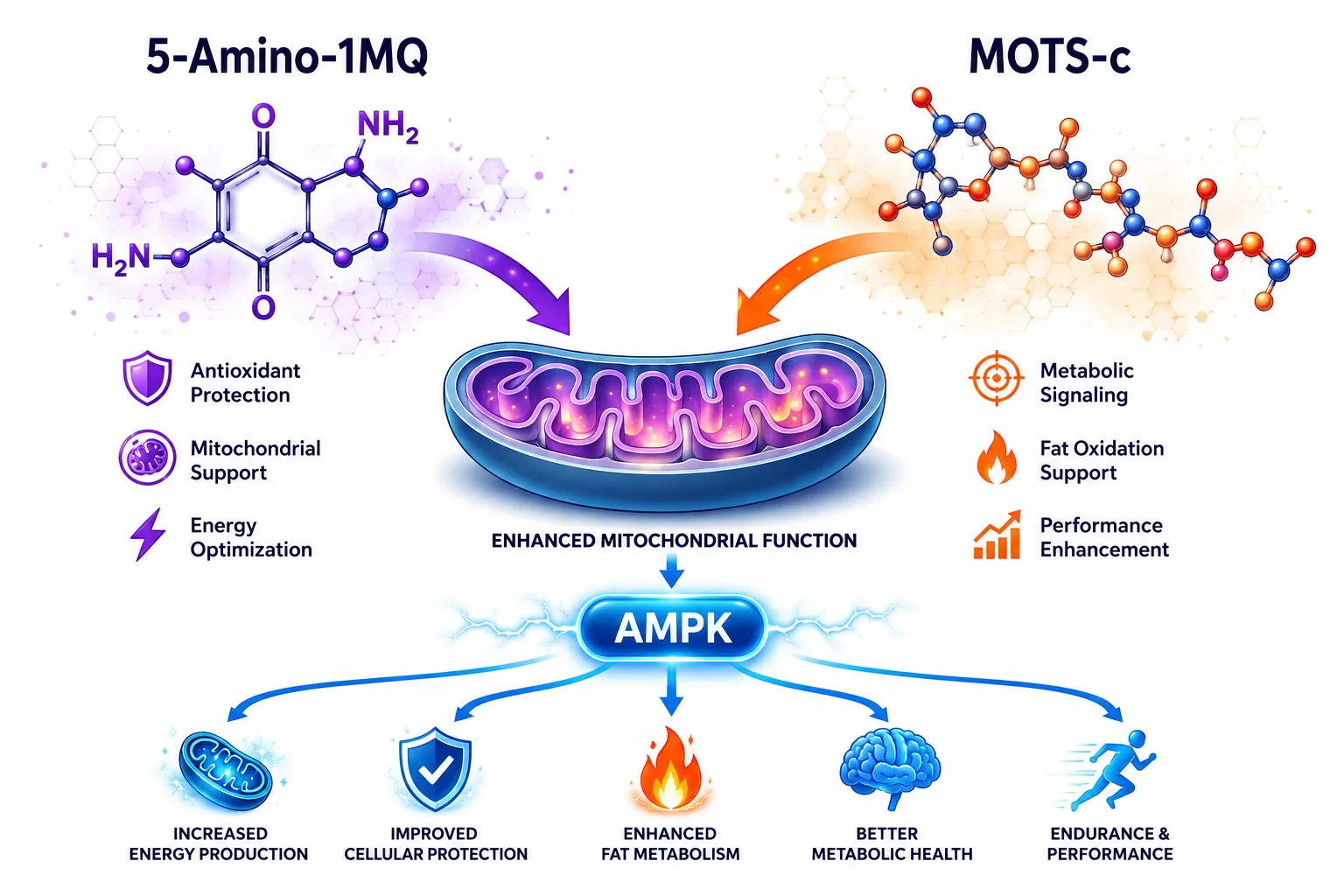
Both compounds ultimately elevate AMPK activity, though through different upstream routes:

Compound Primary Target Route to AMPK Activation
5-Amino-1MQ NNMT enzyme Raises NAD+, activates SIRT1/AMPK axis
MOTS-c Mitochondrial signaling Direct AMPK phosphorylation in muscle

Elevated AMPK suppresses lipogenesis, promotes fatty acid oxidation, and enhances GLUT4 translocation, the glucose transporter responsible for insulin-stimulated glucose uptake in muscle.

NAD+ and Methionine Cycle Crosstalk

5-Amino-1MQ increases SAM availability by reducing NNMT-driven methylation drain. MOTS-c independently modulates the folate-methionine cycle. In combination, preclinical logic suggests they may produce a more sustained elevation of metabolic cofactors than either agent alone.

"Compounds that converge on AMPK and NAD+ metabolism from distinct upstream nodes represent a rational basis for combination research designs in metabolic disease models."

Adipogenesis Suppression

5-Amino-1MQ directly reduces the differentiation of preadipocytes into mature fat cells. MOTS-c reduces lipid accumulation in liver and muscle. Together, they may address both peripheral fat storage and ectopic lipid deposition, two distinct but interrelated drivers of insulin resistance.

Researchers interested in peptide combinations targeting metabolic pathways may also find value in reviewing the synergy of LL-37 and SS-31 as a model for how mechanistically distinct peptides can complement each other.

Experimental Evidence and Research Design Considerations

Preclinical Findings

In diet-induced obesity (DIO) mouse models, NNMT inhibitors have consistently reduced:

  • Adipose tissue mass by 15-30% over 4-8 week protocols
  • Fasting insulin levels
  • Hepatic triglyceride content

MOTS-c administration in similar DIO models has shown:

  • Improved glucose tolerance test (GTT) results within 2 weeks
  • Reduced HOMA-IR scores (a measure of insulin resistance)
  • Increased mitochondrial biogenesis markers in skeletal muscle

Combination Research Design Notes

When designing experiments to study 5-Amino-1MQ and MOTS-c synergy in experimental models targeting adiposity and insulin resistance, researchers typically consider:

  1. Dose sequencing, whether to co-administer or stagger dosing
  2. Tissue-specific readouts, adipose, liver, and skeletal muscle panels
  3. Biomarker selection, AMPK phosphorylation, NAD+/NADH ratio, GLUT4 expression
  4. Model selection, DIO vs. genetic obesity models (e.g., db/db mice)

Researchers exploring growth hormone secretagogue combinations for metabolic endpoints may also reference tesa peptide benefits and AOD-9604 research method notes for comparative fat-loss mechanism data.

For broader metabolic peptide context, GLP-1 peptide research and GLP-3 retratrutide research represent parallel pathways targeting adiposity through incretin mechanisms.

Combination Research Design Notes

Conclusion

The mechanistic case for studying 5-Amino-1MQ and MOTS-c synergy, how mitochondrial peptides target adiposity and insulin resistance in experimental models, is grounded in converging biology. Both compounds act on AMPK, NAD+ metabolism, and lipid regulation through distinct but complementary upstream routes. Preclinical data from independent studies on each agent are promising, and the rationale for combination protocols is scientifically coherent.

Actionable next steps for researchers:

  • Review published NNMT inhibitor and MOTS-c literature to establish baseline biomarker panels before designing combination studies.
  • Select DIO mouse models with well-characterized insulin resistance phenotypes for maximum translational relevance.
  • Include tissue-specific mitochondrial function assays (e.g., oxygen consumption rate) alongside standard metabolic endpoints.
  • Consult current IRB and institutional guidelines, neither compound has regulatory approval for human use.

As metabolic research tools, 5-Amino-1MQ and MOTS-c represent a compelling frontier for understanding how the mitochondria-adipose axis can be modulated at the molecular level.

https://www.puretestedpeptides.com/wp-content/uploads/2026/08/5-amino-1mq-and-mots-c-synergy-how-mitochondrial-peptides-target-adiposity-and-i.webp 1024 1536 https://www.puretestedpeptides.com/wp-content/uploads/2026/01/buy-peptides-online.jpg 2026-08-05 13:05:262026-08-05 13:05:265-Amino-1MQ and MOTS-c Synergy: How Mitochondrial Peptides Target Adiposity and Insulin Resistance in Experimental Models
DNA, Mitochondria, and Research Peptides: How MOTS-c and 5-Amino-1MQ Interface With Cellular Energy and Genomic Pathways

DNA, Mitochondria, and Research Peptides: How MOTS-c and 5-Amino-1MQ Interface With Cellular Energy and Genomic Pathways

August 4, 2026/0 Comments/in Uncategorized/by

Fewer than 37 genes in the human mitochondrial genome were thought to matter for decades, until researchers discovered that a tiny open reading frame within one of those genes encodes a peptide capable of reshaping whole-body metabolism. That discovery opened an entirely new field. Today, the study of DNA, mitochondria, and research peptides, specifically how MOTS-c and 5-Amino-1MQ interface with cellular energy and genomic pathways, sits at the frontier of metabolic biology and peptide science.

Key Takeaways

  • MOTS-c is a 16-amino-acid peptide encoded directly within mitochondrial DNA, making it one of the few known peptides with a purely mitochondrial genetic origin.
  • MOTS-c activates AMPK and PGC-1alpha, two master regulators that link mitochondrial signaling to nuclear gene expression and energy metabolism.
  • 5-Amino-1MQ is a small-molecule NNMT inhibitor that modulates cellular energy balance by influencing NAD+ metabolism and mitochondrial function.
  • Both compounds are strictly research-use compounds studied in preclinical and early clinical models, neither is approved for human therapeutic use.
  • Understanding how these agents interact with mitochondrial and genomic pathways helps contextualize the broader landscape of experimental metabolic peptides.

Key Takeaways

The Mitochondrial Genome: A Hidden Source of Bioactive Peptides

Most biology courses teach that the mitochondrial genome encodes only structural components, ribosomal RNAs, transfer RNAs, and a handful of proteins involved in oxidative phosphorylation. That picture is now incomplete.

Mitochondrial-derived peptides (MDPs) are a class of small signaling molecules translated from short open reading frames within mitochondrial DNA. MOTS-c is among the most studied. Its full sequence, MRWQEMGYIFYPRKLR, is translated from within the MT-RNR1 gene, which codes for the 12S ribosomal RNA. The fact that a metabolically active signaling peptide emerges from what was once considered a purely structural gene region underscores how much remains to be learned about the mitochondrial genome.

This discovery matters because it reframes the mitochondrion not just as an energy factory, but as an active endocrine organ, one capable of producing peptides that travel to distant tissues and influence gene expression at the nuclear level.

For researchers already familiar with mitochondria-targeting compounds, this connects directly to work on other mitochondrial research themes, such as those explored in SS-31 mitochondrial research contexts, where membrane-targeted peptides address oxidative stress and bioenergetic efficiency from a different mechanistic angle.

How MOTS-c Interfaces With Cellular Energy and Genomic Pathways

The central question in the study of DNA, mitochondria, and research peptides, specifically how MOTS-c and 5-Amino-1MQ interface with cellular energy and genomic pathways, is mechanistic: exactly how does a peptide born in the mitochondria influence the nucleus?

AMPK and PGC-1alpha: The Genomic Bridge

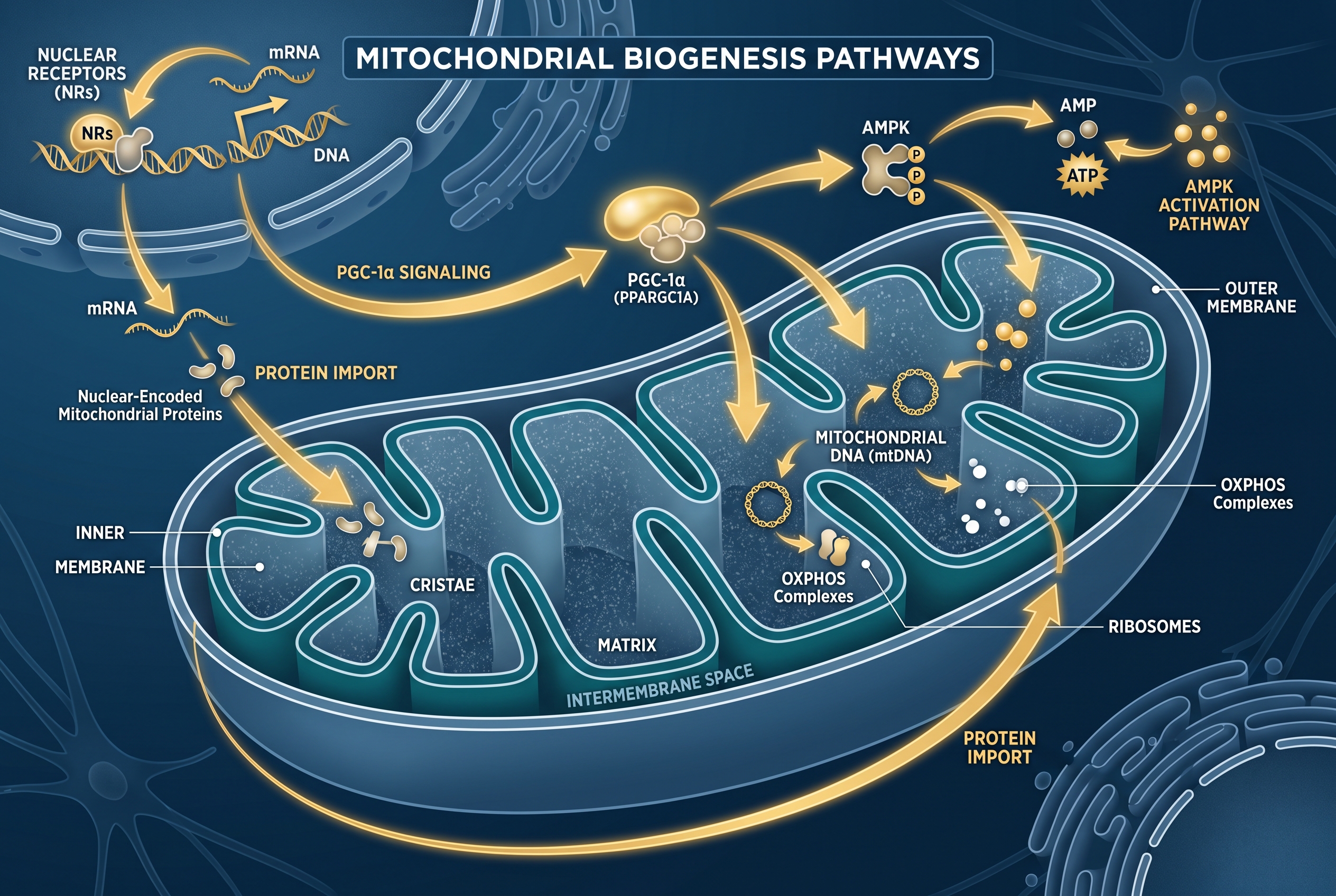
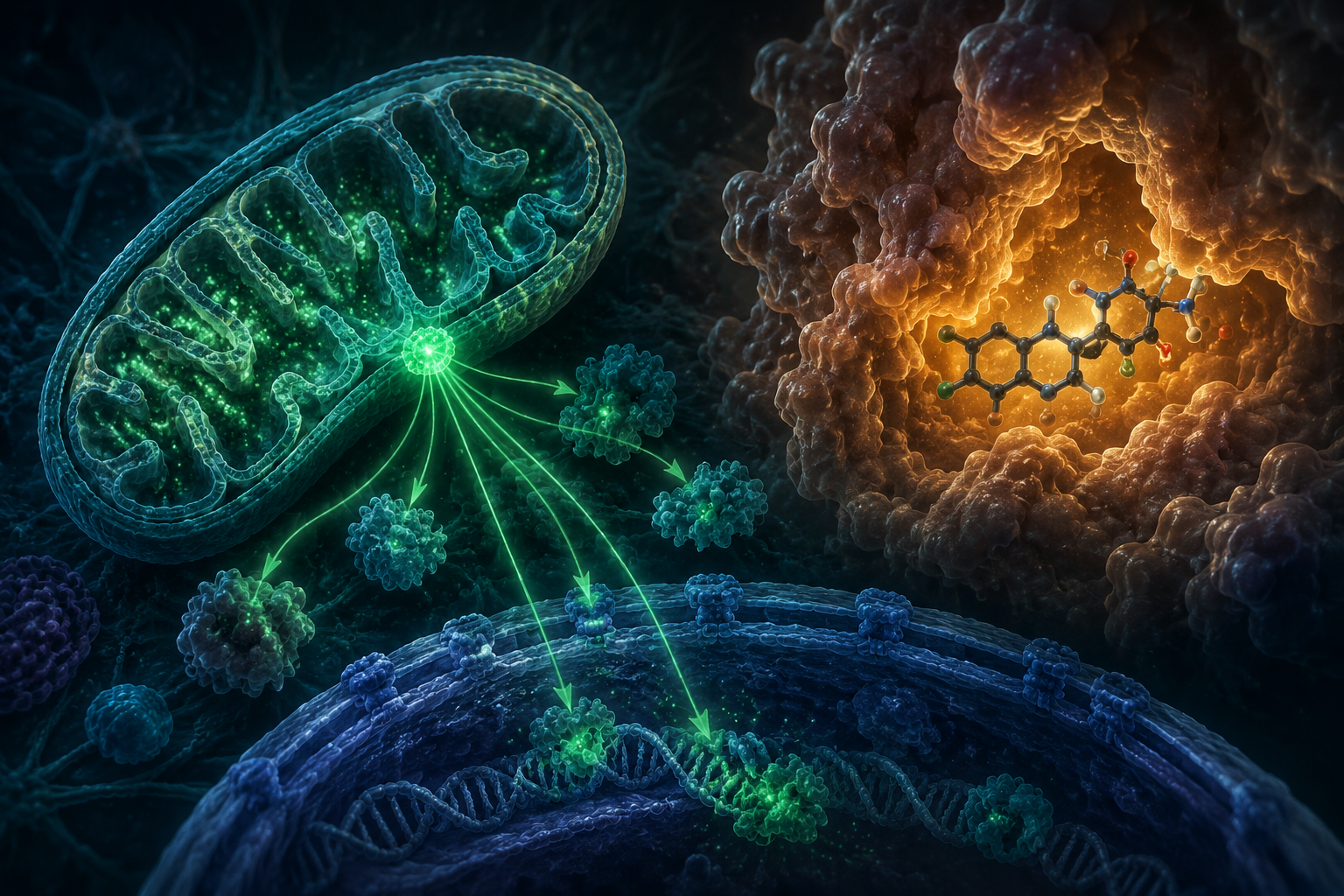
MOTS-c activates AMP-activated protein kinase (AMPK), a cellular energy sensor that responds to low ATP states. AMPK activation triggers a cascade that includes upregulation of PGC-1alpha, a transcriptional coactivator that controls mitochondrial biogenesis and oxidative metabolism genes housed in nuclear DNA.

"MOTS-c essentially acts as a messenger that tells the nucleus: the mitochondria need more capacity, build it."

A 2026 transgenic mouse study confirmed this pathway directly. In two distinct mouse strains, exogenous MOTS-c increased intrinsic muscle mitochondrial performance, with measurable improvements in oxidative phosphorylation and ATP output. The dependency on AMPK and PGC-1alpha was mechanistically confirmed, positioning MOTS-c as a genuine bridge between mitochondrial peptide signaling and nuclear genomic programs.

Metabolic Flexibility and the "Exercise Mimetic" Concept

MOTS-c has been described in research literature as a mitochondrial exercise mimetic, a compound that replicates some metabolic adaptations normally triggered by physical exercise. These include:

  • Improved fatty acid oxidation
  • Enhanced glucose uptake in skeletal muscle
  • Greater resistance to metabolic stress
  • Upregulation of mitochondrial biogenesis markers

Human clinical development has advanced to at least one Phase 2a trial examining insulin sensitivity, suggesting that the preclinical findings are compelling enough to warrant early human investigation.

Researchers sourcing compounds for mitochondrial pathway studies can also explore the SS-31 and MOTS-c product tag for catalog context, or review SS-31 mitochondrial dynamics research for comparative mechanistic reading.

Metabolic Flexibility and the "Exercise Mimetic" Concept

5-Amino-1MQ: NAD+ Metabolism and Mitochondrial Energy Balance

While MOTS-c originates from mitochondrial DNA itself, 5-Amino-1MQ approaches the same energy-regulation problem from a different direction. It is a small-molecule inhibitor of nicotinamide N-methyltransferase (NNMT), an enzyme that consumes SAM (S-adenosylmethionine) and diverts nicotinamide away from NAD+ synthesis.

Why NNMT Inhibition Matters for Mitochondria

NAD+ is essential for mitochondrial function. It serves as a critical electron carrier in the oxidative phosphorylation chain and as a substrate for sirtuins, NAD+-dependent deacetylases that regulate mitochondrial biogenesis and stress response. When NNMT is overactive, NAD+ availability drops, and mitochondrial efficiency suffers.

By inhibiting NNMT, 5-Amino-1MQ research models have demonstrated:

Effect Mechanism
Increased NAD+ levels Reduced nicotinamide diversion
Elevated cellular energy expenditure Enhanced mitochondrial activity
Reduced lipid accumulation Improved fatty acid oxidation
Potential epigenetic effects SAM availability for methylation reactions

This positions 5-Amino-1MQ as a metabolic amplifier that works upstream of mitochondrial function, influencing the availability of molecules the mitochondria depend on to generate ATP efficiently.

Researchers interested in broader metabolic peptide stacks may find relevant context in IPA-Sermorelin stack research or explore Epithalon peptide research, which touches on genomic longevity pathways from a telomere-based perspective.

Why NNMT Inhibition Matters for Mitochondria

Comparing the Two Compounds: Convergent Pathways, Distinct Origins

Understanding DNA, mitochondria, and research peptides, and how MOTS-c and 5-Amino-1MQ interface with cellular energy and genomic pathways, is clearer when both compounds are viewed side by side.

MOTS-c acts top-down: it is produced by the mitochondria, released into circulation, and signals back to the nucleus via AMPK/PGC-1alpha to increase mitochondrial capacity. 5-Amino-1MQ acts bottom-up: it preserves NAD+ availability so the mitochondria have the substrates needed to function optimally.

Both compounds are strictly for research use in preclinical and early clinical models. Neither has received regulatory approval for therapeutic application. Researchers working in this space should source compounds through verified, tested suppliers. Those evaluating supplier quality can consult peptide supplier comparison resources before procurement.

For researchers building broader experimental protocols, the SS-31 ideal dosage research page offers a useful reference for how dosing rationale is developed in mitochondria-targeted peptide research.

Conclusion

The intersection of DNA, mitochondria, and research peptides, specifically how MOTS-c and 5-Amino-1MQ interface with cellular energy and genomic pathways, represents one of the most mechanistically rich areas in current metabolic science. MOTS-c demonstrates that mitochondrial DNA is not a passive bystander but an active producer of signaling molecules that reach the nucleus and reshape gene expression. 5-Amino-1MQ shows that protecting the metabolic inputs mitochondria depend on can produce measurable bioenergetic benefits in research models.

Actionable next steps for researchers:

  • Review the primary literature on MOTS-c transgenic mouse models to understand AMPK/PGC-1alpha dependency before designing protocols.
  • Evaluate NAD+ pathway data for 5-Amino-1MQ in the context of your specific cell or animal model.
  • Source both compounds only from suppliers with documented purity testing and COA availability.
  • Consider comparative mitochondrial peptide models, including SS-31, to build mechanistically layered experimental designs.

As 2026 research continues to clarify the clinical relevance of these pathways, the foundational preclinical work on MOTS-c and 5-Amino-1MQ provides a strong framework for understanding how mitochondrial biology and genomic regulation are far more intertwined than once believed.

https://www.puretestedpeptides.com/wp-content/uploads/2026/08/dna-mitochondria-and-research-peptides-how-mots-c-and-5-amino-1mq-interface-with.webp 1024 1536 https://www.puretestedpeptides.com/wp-content/uploads/2026/01/buy-peptides-online.jpg 2026-08-04 13:05:302026-08-04 13:05:30DNA, Mitochondria, and Research Peptides: How MOTS-c and 5-Amino-1MQ Interface With Cellular Energy and Genomic Pathways
Peptides and Polypeptides in Mitochondrial Biology: How MOTS-c and 5-Amino-1MQ Compare With Classic Mitochondrial Pathways

Peptides and Polypeptides in Mitochondrial Biology: How MOTS-c and 5-Amino-1MQ Compare With Classic Mitochondrial Pathways

August 1, 2026/0 Comments/in Uncategorized/by

Mitochondria consume roughly 90% of the oxygen a cell uses, yet the molecular signals that govern their health remain one of biology's most active research frontiers. Exploring peptides and polypeptides in mitochondrial biology: how MOTS-c and 5-Amino-1MQ compare with classic mitochondrial pathways gives researchers a sharper map of where newer mitochondria-targeted compounds sit relative to well-established mechanisms like oxidative phosphorylation, the electron transport chain (ETC), and mitochondrial biogenesis.

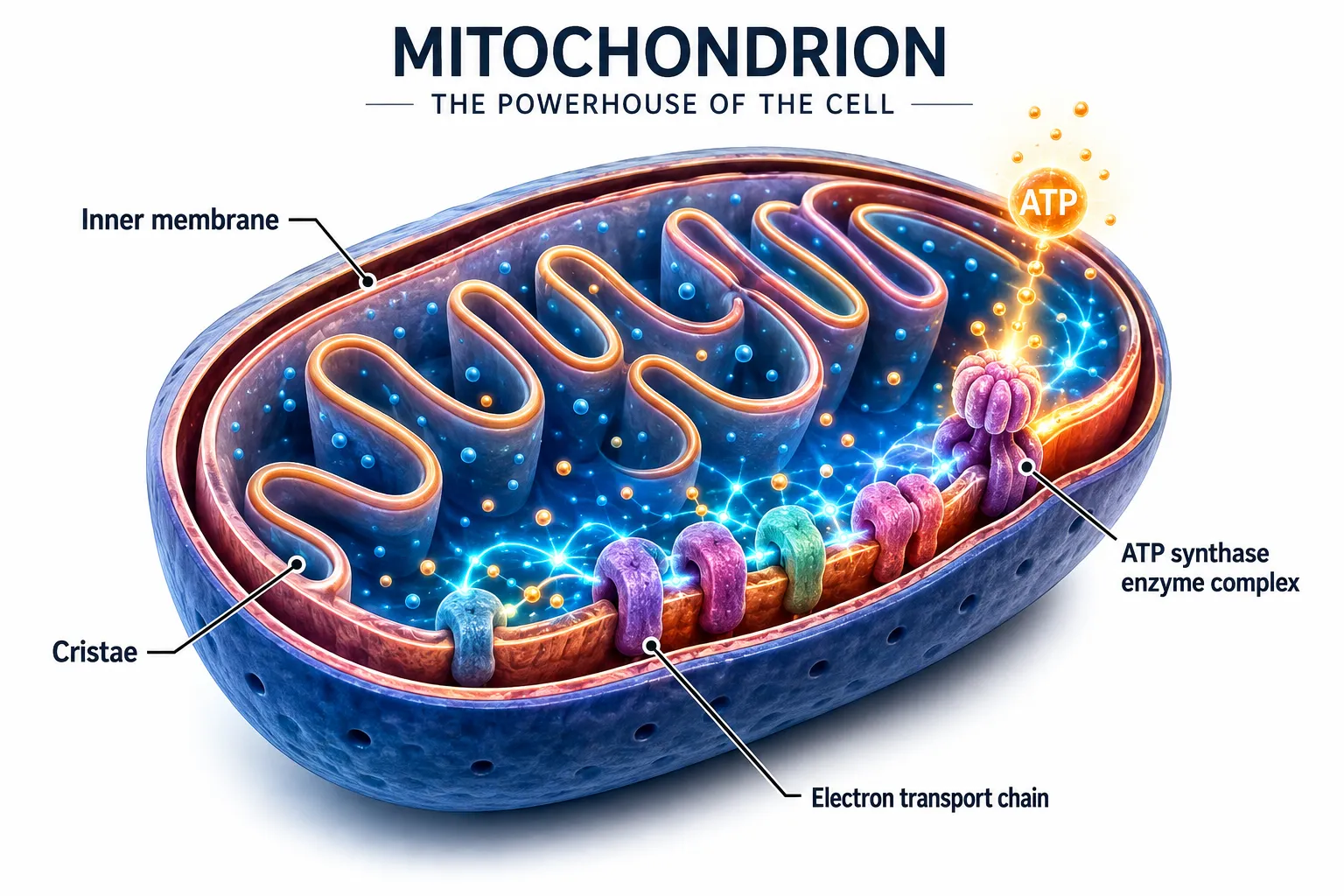
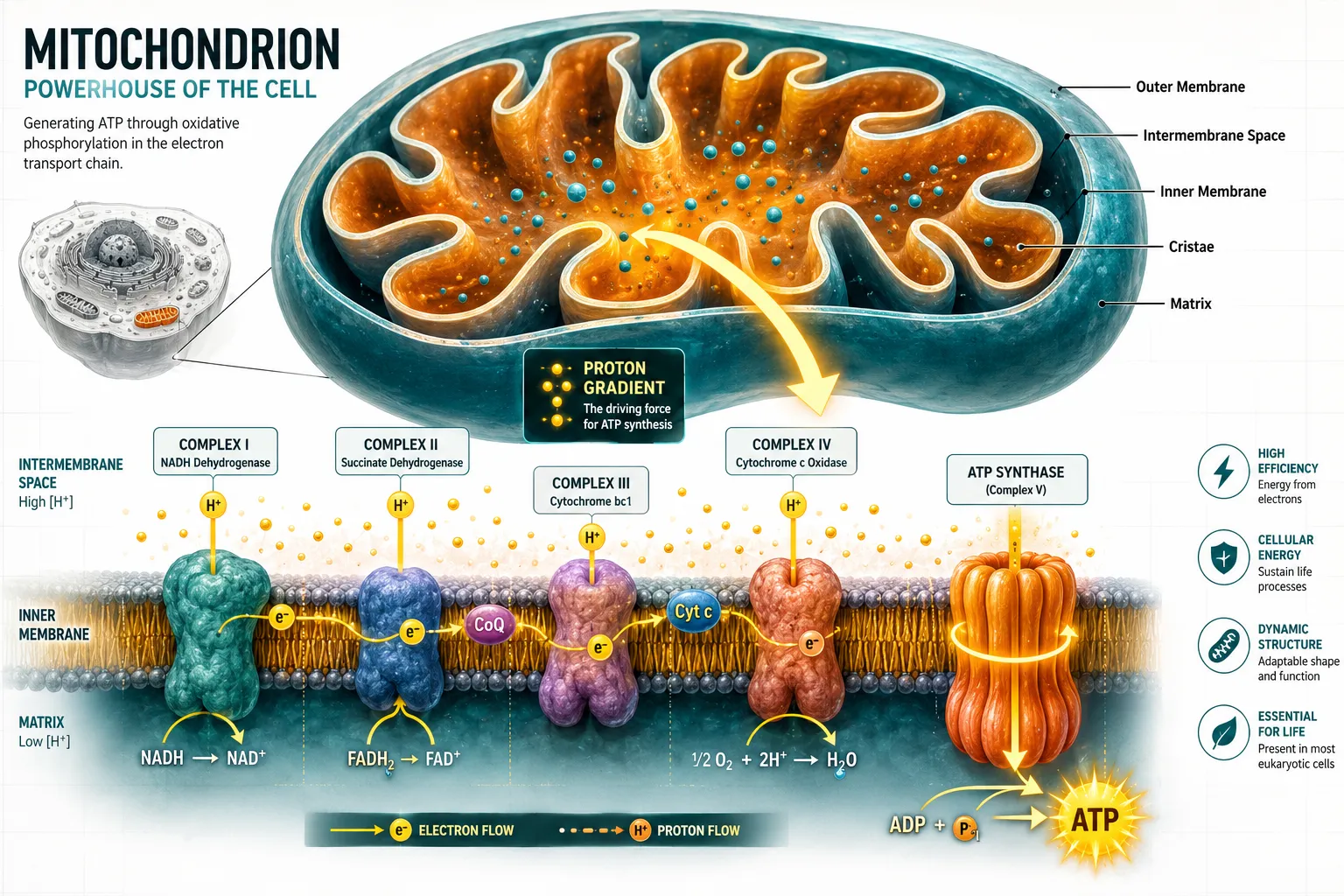
Bright editorial infographic-style landscape (): a vivid cross-section diagram of a mitochondrion with clearly labeled short

Key Takeaways

  • Mitochondria rely on canonical pathways, the ETC, ATP synthase, and PGC-1alpha-driven biogenesis, to sustain cellular energy.
  • MOTS-c is a mitochondria-derived peptide (MDP) encoded in mitochondrial DNA that activates AMPK and influences metabolic homeostasis.
  • 5-Amino-1MQ is a small-molecule NNMT inhibitor that raises NAD+ precursor availability, indirectly supporting mitochondrial function.
  • Both agents intersect classic pathways at distinct nodes, making their mechanisms complementary rather than redundant.
  • Ongoing preclinical research continues to clarify how these compounds compare with established mitochondrial targets such as SS-31 (elamipretide).

Classic Mitochondrial Pathways: The Baseline for Comparison

Before mapping newer peptide research, it helps to anchor the discussion in core mitochondrial biology.

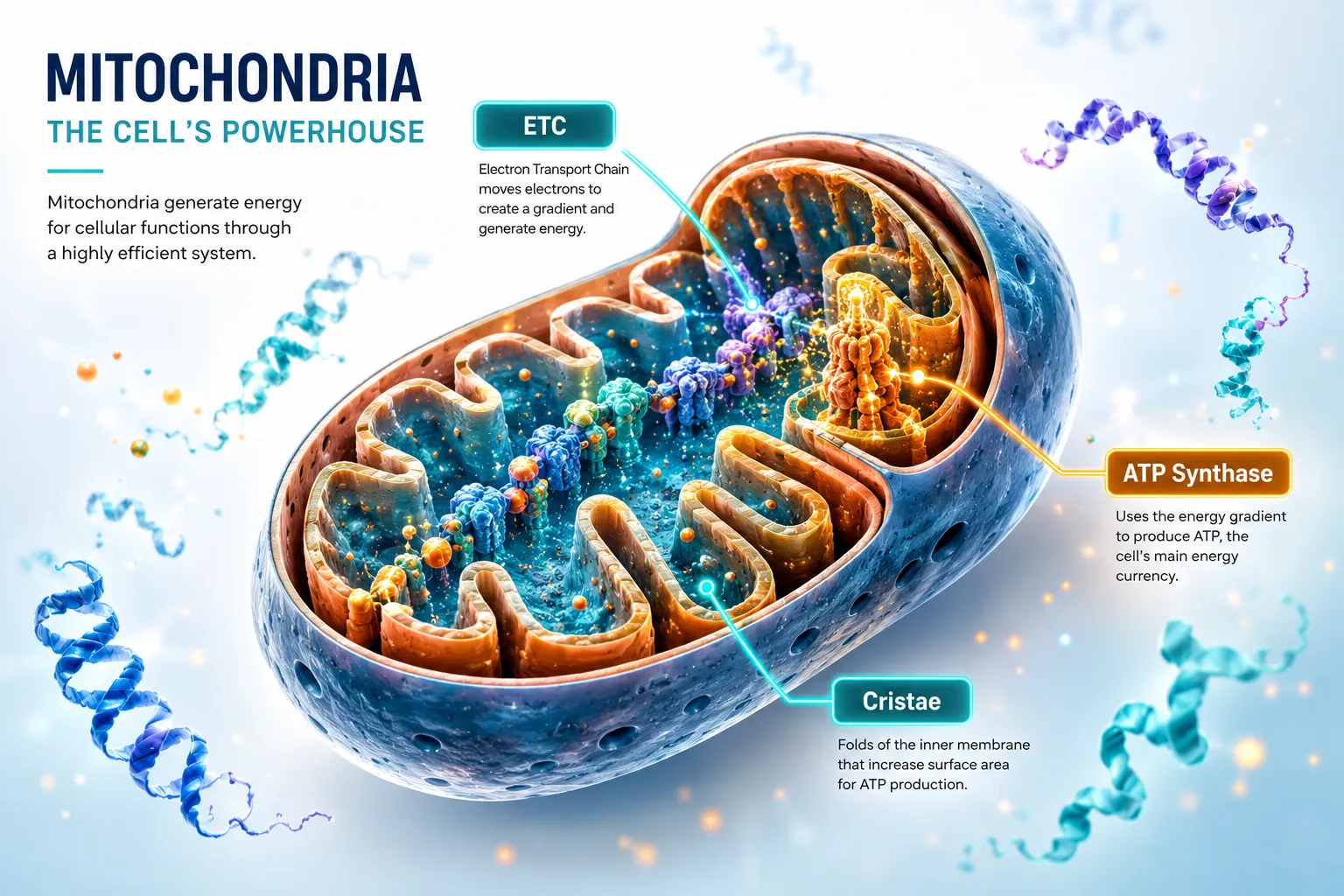
Oxidative phosphorylation (OXPHOS) is the process by which electrons from NADH and FADH2 travel through five protein complexes embedded in the inner mitochondrial membrane. This electron flow drives proton pumping, creating a gradient that ATP synthase (Complex V) converts into ATP, the cell's primary energy currency.

Mitochondrial biogenesis is the regulated growth and division of mitochondria. The transcriptional coactivator PGC-1alpha sits at the top of this regulatory cascade, coordinating nuclear respiratory factors (NRF-1, NRF-2) and mitochondrial transcription factor A (TFAM) to replicate mitochondrial DNA and build new organelles.

AMPK (AMP-activated protein kinase) acts as a cellular energy sensor. When the AMP:ATP ratio rises, signaling low energy, AMPK activates PGC-1alpha, stimulates fatty acid oxidation, and suppresses anabolic pathways that consume ATP.

NAD+ metabolism links directly to both OXPHOS and biogenesis. NAD+ is the electron acceptor that feeds Complex I of the ETC; it also activates sirtuins (SIRT1, SIRT3) that deacetylate and activate PGC-1alpha. Declining NAD+ is a hallmark of cellular aging and metabolic dysfunction.

These four nodes, OXPHOS, biogenesis via PGC-1alpha, AMPK signaling, and NAD+ flux, form the reference framework against which MOTS-c and 5-Amino-1MQ can be evaluated.

MOTS-c and 5-Amino-1MQ: Mechanisms Within Mitochondrial Pathways

MOTS-c and 5-Amino-1MQ: Mechanisms Within Mitochondrial Pathways

MOTS-c: A Mitochondria-Derived Peptide With AMPK Activity

MOTS-c (Mitochondrial Open Reading Frame of the 12S rRNA-c) is a 16-amino-acid peptide encoded within the 12S rRNA gene of mitochondrial DNA. Its discovery in 2015 by Lee et al. established a new class of signaling molecules: mitochondria-derived peptides (MDPs).

Key mechanistic points:

  • AMPK activation: MOTS-c translocates to the nucleus under metabolic stress and activates AMPK, mirroring the energy-sensing role that classic AMPK activators (e.g., AICAR, metformin) fulfill.
  • Folate cycle interference: MOTS-c inhibits the folate cycle and de novo purine synthesis, which raises AMP levels and secondarily activates AMPK, a unique upstream mechanism not shared by conventional AMPK agonists.
  • Metabolic homeostasis: Preclinical studies show MOTS-c improves insulin sensitivity and reduces diet-induced obesity in mouse models, consistent with enhanced mitochondrial substrate utilization.

Compared to the classic PGC-1alpha pathway, MOTS-c does not directly upregulate mitochondrial biogenesis genes. Instead, it optimizes existing mitochondrial function by shifting cellular metabolism toward fatty acid oxidation and away from glucose dependence.

5-Amino-1MQ: NAD+ Restoration Through NNMT Inhibition

5-Amino-1-methylquinolinium (5-Amino-1MQ) is a small-molecule inhibitor of nicotinamide N-methyltransferase (NNMT), an enzyme that consumes S-adenosylmethionine (SAM) and converts nicotinamide into 1-methylnicotinamide, effectively sequestering NAD+ precursors away from biosynthetic use.

By blocking NNMT, 5-Amino-1MQ:

  • Increases intracellular nicotinamide availability, boosting NAD+ biosynthesis via the salvage pathway.
  • Elevates SIRT1 and SIRT3 activity, which deacetylates and activates PGC-1alpha, linking this compound directly to mitochondrial biogenesis.
  • Reduces adipogenesis in preclinical models, an effect attributed to improved mitochondrial energy expenditure.

Unlike direct NAD+ precursors (NMN, NR), 5-Amino-1MQ acts upstream by preventing precursor loss rather than supplying additional substrate. This positions it at a distinct node within NAD+ metabolism.

Comparing Peptides and Polypeptides in Mitochondrial Biology: MOTS-c, 5-Amino-1MQ, and SS-31

Comparing Peptides and Polypeptides in Mitochondrial Biology: MOTS-c, 5-Amino-1MQ, and SS-31

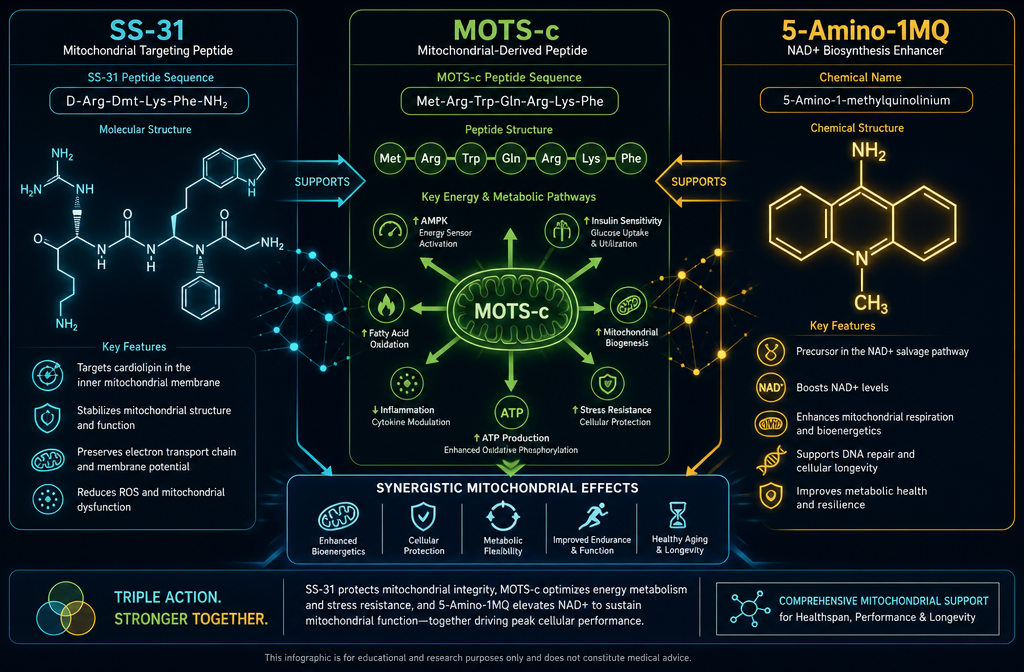
Understanding peptides and polypeptides in mitochondrial biology: how MOTS-c and 5-Amino-1MQ compare with classic mitochondrial pathways becomes clearer when these agents are placed alongside SS-31 (elamipretide), a well-studied mitochondria-targeted peptide. Researchers exploring SS-31 mitochondrial dynamics will recognize that SS-31 operates primarily at the inner mitochondrial membrane, stabilizing cardiolipin and protecting the structural integrity of ETC complexes, a mechanism distinct from both MOTS-c and 5-Amino-1MQ.

Agent Primary Target Classic Pathway Node
MOTS-c AMPK activation Energy sensing / substrate utilization
5-Amino-1MQ NNMT inhibition NAD+ metabolism / biogenesis
SS-31 Cardiolipin stabilization ETC structural integrity

Those researching SS-31 elamipretide will find that its cardiolipin-targeting mechanism complements MOTS-c's metabolic signaling role rather than overlapping with it. Similarly, resources on SS-31 mechanism and research provide useful context for understanding how structural mitochondrial peptides differ from signaling MDPs.

For researchers building a broader peptide research framework, reviewing research-only peptides and quality peptides sourcing considerations remains an essential step before experimental design. Aging-focused research programs may also find value in the aging support product category when planning compound selection.

Where the Mechanisms Converge

Despite their distinct entry points, all three agents ultimately support mitochondrial efficiency:

  • MOTS-c and 5-Amino-1MQ both feed into PGC-1alpha activity, MOTS-c via AMPK upstream signaling and 5-Amino-1MQ via SIRT1 activation downstream of NAD+.
  • SS-31 preserves the structural platform (cristae morphology, cardiolipin integrity) on which OXPHOS complexes operate.
  • Together, they represent complementary layers: structural protection, energy sensing, and metabolic substrate management.

Conclusion

Mapping peptides and polypeptides in mitochondrial biology: how MOTS-c and 5-Amino-1MQ compare with classic mitochondrial pathways reveals a layered picture. MOTS-c engages the AMPK energy-sensing node through a novel folate-cycle mechanism, while 5-Amino-1MQ restores NAD+ precursor flux by blocking NNMT, each intersecting canonical pathways at a different control point. Neither replaces the foundational biology of OXPHOS or PGC-1alpha-driven biogenesis; both modulate it.

Actionable next steps for researchers in 2026:

  1. Establish baseline NAD+ and AMPK activity measurements in your model system before introducing either compound.
  2. Consider whether structural mitochondrial protection (SS-31) should precede or accompany metabolic signaling interventions.
  3. Review current preclinical literature on MOTS-c dosing windows and 5-Amino-1MQ selectivity profiles before experimental design.
  4. Source compounds from verified, tested suppliers and document purity certificates for all research-grade materials.

The intersection of mitochondrial peptide biology with classic energy pathways is one of the most promising areas in cellular research today, and understanding where each tool fits within that map is the first step toward rigorous, reproducible science.


References

  • Lee, C., et al. (2015). "The mitochondrial-derived peptide MOTS-c promotes metabolic homeostasis and reduces obesity and insulin resistance." Cell Metabolism, 21(3), 443-454.
  • Neinast, M., et al. (2019). "Quantitative Analysis of the Whole-Body Metabolic Fate of Branched-Chain Amino Acids." Cell Metabolism, 29(2), 417-429.
  • Hong, S., et al. (2021). "NAD+ metabolism and its roles in cellular processes during ageing." Nature Reviews Molecular Cell Biology, 22(2), 119-141.
  • Bhullar, K. S., & Hubbard, B. P. (2015). "Lifespan and healthspan extension by resveratrol." Biochimica et Biophysica Acta, 1852(6), 1209-1218.
  • Szeto, H. H. (2014). "First-in-class cardiolipin-protective compound as a therapeutic agent to restore mitochondrial bioenergetics." British Journal of Pharmacology, 171(8), 2029-2050.
  • Eckert, M. A., et al. (2019). "Proteomics reveals NNMT as a master metabolic regulator of cancer-associated fibroblasts." Nature, 569(7758), 723-728.
https://www.puretestedpeptides.com/wp-content/uploads/2026/08/peptides-and-polypeptides-in-mitochondrial-biology-how-mots-c-and-5-amino-1mq-co.webp 1024 1536 https://www.puretestedpeptides.com/wp-content/uploads/2026/01/buy-peptides-online.jpg 2026-08-01 13:05:102026-08-01 13:05:10Peptides and Polypeptides in Mitochondrial Biology: How MOTS-c and 5-Amino-1MQ Compare With Classic Mitochondrial Pathways
Adenosine Triphosphate and Mitochondrial Peptides: How MOTS-c and 5-Amino-1MQ Influence ATP Production in Research Models

Adenosine Triphosphate and Mitochondrial Peptides: How MOTS-c and 5-Amino-1MQ Influence ATP Production in Research Models

August 1, 2026/0 Comments/in Uncategorized/by

Every cell in the body runs on a single molecular currency, adenosine triphosphate (ATP). When that currency becomes scarce, cellular function deteriorates rapidly. The emerging science of mitochondrial peptides now offers researchers a new lens for understanding how ATP production can be modulated at the molecular level, and two compounds sit at the center of that conversation: MOTS-c and 5-Amino-1MQ. The study of adenosine triphosphate and mitochondrial peptides, specifically how MOTS-c and 5-Amino-1MQ influence ATP production in research models, has accelerated considerably in 2026, with the first interventional human trials now recruiting.

Bright editorial infographic-style landscape image () showing a detailed cross-section diagram of a mitochondrion with

Key Takeaways

  • ATP is the primary energy currency of cells, produced mainly within mitochondrial inner membranes via oxidative phosphorylation.
  • MOTS-c is a mitochondria-encoded peptide that modulates the AMP/ATP ratio and activates AMPK, indirectly protecting ATP reserves under metabolic stress.
  • 5-Amino-1MQ inhibits NNMT, raising intracellular NAD+ levels and supporting mitochondrial electron transport chain efficiency.
  • Both compounds influence overlapping metabolic pathways, including NAD+ metabolism and AMPK signaling, making them complementary subjects in energy research.
  • The evidence base for both compounds remains primarily preclinical, though human data for MOTS-c is growing rapidly.

ATP Fundamentals: Why Mitochondrial Output Matters

Adenosine triphosphate is synthesized primarily through oxidative phosphorylation, a process driven by the electron transport chain (ETC) embedded in the inner mitochondrial membrane. Each glucose molecule, when fully oxidized, yields approximately 30-32 ATP molecules, the majority generated at the ATP synthase complex (Complex V).

Several factors limit this output in aging or diseased tissue:

  • Declining NAD+ availability, which slows ETC electron flow
  • Mitochondrial membrane damage, reducing proton gradient efficiency
  • Excess ATP hydrolysis under stress conditions, depleting reserves faster than they can be replenished
  • Impaired mitophagy, allowing dysfunctional mitochondria to accumulate

Understanding these bottlenecks is essential context for evaluating how peptides like MOTS-c and 5-Amino-1MQ interact with ATP metabolism. Researchers exploring related mitochondrial compounds such as SS-31 and its mitochondrial research themes will recognize many of the same upstream mechanisms at work.

How MOTS-c and 5-Amino-1MQ Influence ATP Production in Research Models

How MOTS-c and 5-Amino-1MQ Influence ATP Production in Research Models

MOTS-c: A Mitochondria-Encoded Metabolic Regulator

MOTS-c (Mitochondrial Open Reading Frame of the 12S rRNA type-c) is a 16-amino-acid peptide encoded directly within mitochondrial DNA, a distinction that makes it biologically unique. Rather than directly synthesizing ATP, MOTS-c acts as a metabolic stress sensor that modulates the AMP-to-ATP ratio and activates AMP-activated protein kinase (AMPK).

Key findings from preclinical and early human research include:

Observation Model Type
Acute exercise sharply elevates MOTS-c in muscle and circulation Human subjects
MOTS-c reduces ATP hydrolysis during anoxic stress Cellular/animal models
AMPK activation improves glucose uptake and fatty acid oxidation Animal models
MOTS-c preserves mitochondrial membrane integrity under oxidative load Preclinical

By slowing ATP hydrolysis rather than boosting raw production, MOTS-c effectively conserves the ATP pool when cellular demand outpaces supply. This mechanism is especially relevant in hypoxic or ischemic conditions studied in research settings.

Researchers interested in exploring MOTS-c peptide research will find it pairs conceptually with other mitochondria-targeted compounds. For a broader comparative view, the MOTS-c and elamipretide research overview provides useful context on how these agents differ mechanistically.
5-Amino-1MQ: NAD+ Elevation and ETC Support

5-Amino-1MQ (5-amino-1-methylquinolinium) takes a fundamentally different approach. It is a small-molecule inhibitor of nicotinamide N-methyltransferase (NNMT), an enzyme that consumes S-adenosylmethionine and depletes the methyl donor pool needed for NAD+ biosynthesis.

By blocking NNMT, 5-Amino-1MQ:

  1. Raises intracellular NAD+ concentrations
  2. Supports sirtuin (SIRT1/SIRT3) activity, which regulates mitochondrial biogenesis
  3. Enhances electron flow through Complexes I and III of the ETC
  4. Reduces adipogenesis in preclinical obesity models, indirectly improving metabolic efficiency

The downstream result in research models is improved mitochondrial respiratory capacity and greater ATP output per unit of substrate. Because NAD+ is consumed at multiple points in the ETC, even modest increases in its availability can meaningfully shift ATP yield.

"NAD+ is not merely a cofactor, it is a rate-limiting variable in mitochondrial energy production, and compounds that restore its availability represent a high-leverage intervention point in metabolic research."

Overlapping Pathways and Downstream Signaling

The significance of studying adenosine triphosphate and mitochondrial peptides, how MOTS-c and 5-Amino-1MQ influence ATP production in research models, becomes clearest when their pathways are examined together.

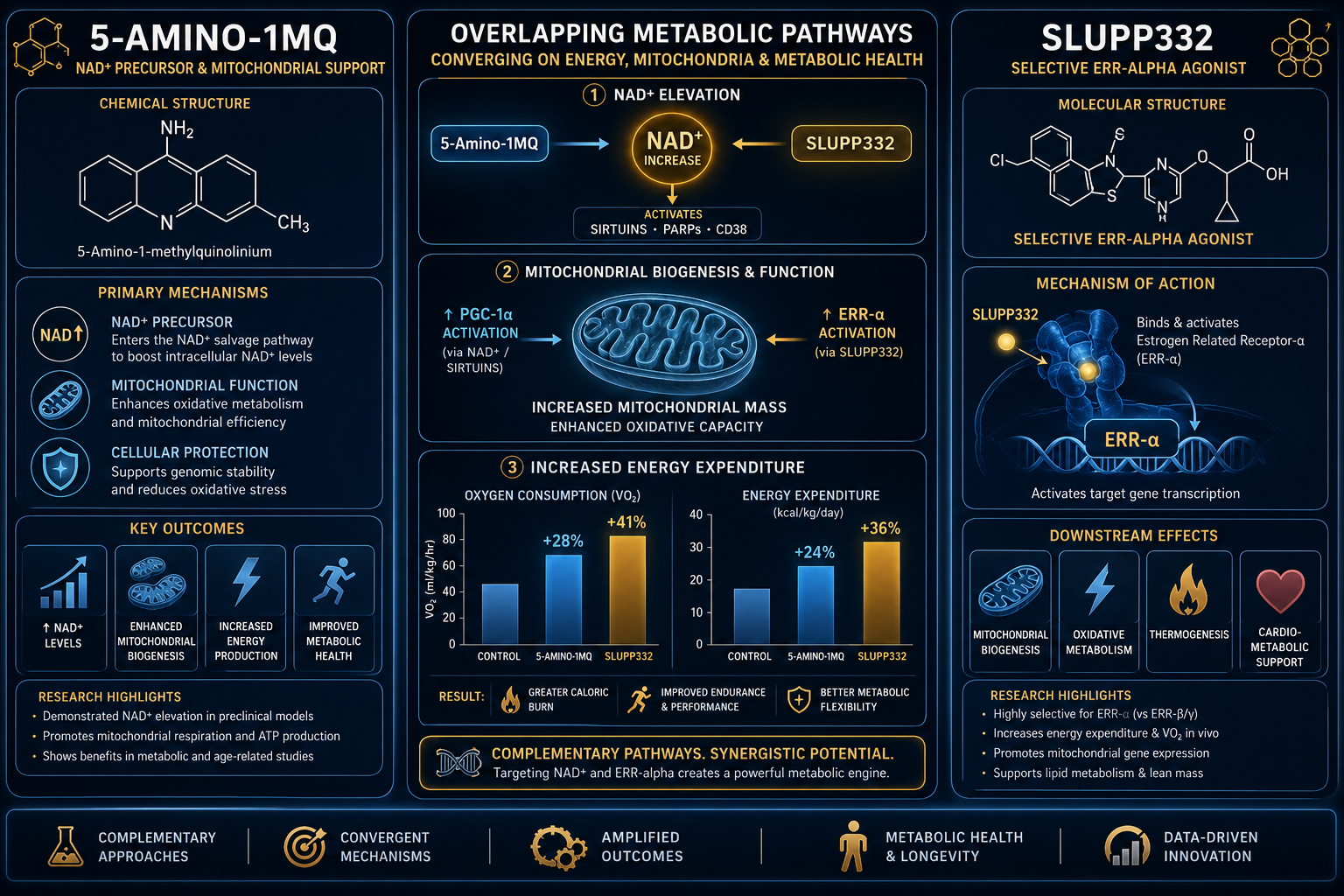
Both compounds converge on AMPK and sirtuin signaling:

  • MOTS-c activates AMPK via AMP/ATP ratio changes
  • Elevated NAD+ from 5-Amino-1MQ activates SIRT1, which can also stimulate AMPK indirectly

This convergence suggests potential synergistic effects in research models, though direct combination studies remain limited as of 2026. Researchers studying mitochondrial dynamics may also find value in reviewing SS-31 mitochondrial dynamics research, which addresses cristae remodeling, a structural factor that influences ETC efficiency upstream of both MOTS-c and 5-Amino-1MQ targets.

Additional peptides with metabolic relevance, such as those explored in epithalon peptide research, demonstrate that mitochondrial health intersects with broader cellular aging pathways, reinforcing the value of a systems-level research approach.

Overlapping Pathways and Downstream Signaling

The 2026 Research Landscape

The field has matured considerably. Key developments include:

  • First interventional human MOTS-c trials now actively recruiting as of 2026
  • Growing body of human exercise data showing MOTS-c responds dynamically to metabolic demand
  • Increased interest in 5-Amino-1MQ as a metabolic adjunct in obesity and insulin resistance models
  • Expanded understanding of how NAD+ precursor availability limits or enables peptide-driven ATP gains

Researchers sourcing compounds for preclinical work should prioritize purity and documentation. Resources such as quality peptides for research and verified peptides for sale help ensure experimental reproducibility.

Conclusion

The intersection of adenosine triphosphate and mitochondrial peptides, specifically how MOTS-c and 5-Amino-1MQ influence ATP production in research models, represents one of the most actionable frontiers in cellular bioenergetics research today. MOTS-c protects ATP reserves by moderating hydrolysis and activating AMPK, while 5-Amino-1MQ raises NAD+ availability to directly support electron transport chain throughput. Together, they illuminate distinct but complementary levers for improving mitochondrial energy output.

Actionable next steps for researchers:

  • Review current preclinical literature on MOTS-c's AMP/ATP modulation before designing in vitro protocols
  • Establish baseline NAD+ measurements in model systems before introducing 5-Amino-1MQ to accurately assess ETC changes
  • Consider AMPK pathway readouts as shared endpoints when studying both compounds
  • Monitor 2026 clinical trial registries for emerging human MOTS-c data that may inform translational research design
  • Source research-grade compounds from verified suppliers with documented purity testing to ensure data integrity
https://www.puretestedpeptides.com/wp-content/uploads/2026/08/adenosine-triphosphate-and-mitochondrial-peptides-how-mots-c-and-5-amino-1mq-inf.webp 1024 1536 https://www.puretestedpeptides.com/wp-content/uploads/2026/01/buy-peptides-online.jpg 2026-08-01 13:04:542026-08-01 13:04:54Adenosine Triphosphate and Mitochondrial Peptides: How MOTS-c and 5-Amino-1MQ Influence ATP Production in Research Models
Adenosine Triphosphate, Cellular Energy, and Metabolic Peptides: How MOTS‑c and 5‑Amino‑1MQ Influence ATP-Linked Pathways

Adenosine Triphosphate, Cellular Energy, and Metabolic Peptides: How MOTS‑c and 5‑Amino‑1MQ Influence ATP-Linked Pathways

July 30, 2026/0 Comments/in Uncategorized/by

Every cell in the human body burns through roughly its own weight in adenosine triphosphate (ATP) each day, a staggering metabolic fact that underscores just how central this molecule is to survival. When that production falters, fatigue, metabolic dysfunction, and accelerated aging follow. Researchers are now exploring how specific mitochondrial peptides, particularly MOTS-c and 5-Amino-1MQ, can modulate the very signaling networks that govern ATP synthesis and consumption. The study of Adenosine Triphosphate, Cellular Energy, and Metabolic Peptides: How MOTS-c and 5-Amino-1MQ Influence ATP-Linked Pathways sits at the frontier of metabolic science, offering new frameworks for understanding energy regulation at the cellular level.

Key Takeaways

  • ATP is the universal energy currency of the cell, produced primarily through mitochondrial oxidative phosphorylation.
  • MOTS-c is a mitochondria-derived peptide that activates AMPK and supports metabolic flexibility.
  • 5-Amino-1MQ inhibits NNMT, raising NAD+ availability and enhancing mitochondrial energy output.
  • Both peptides influence overlapping ATP-linked signaling pathways, including AMPK, NAD+/SIRT1, and PGC-1 alpha.
  • Current research is preclinical; these compounds are studied in controlled laboratory settings.

Key Takeaways

ATP Production: The Mitochondrial Engine

Adenosine triphosphate is synthesized primarily through oxidative phosphorylation, a process occurring across the inner mitochondrial membrane. Electrons stripped from nutrients like glucose and fatty acids travel down the electron transport chain (ETC), releasing energy that pumps protons across the membrane. ATP synthase then harnesses this proton gradient to phosphorylate ADP into ATP, a process called chemiosmosis.

Key stages of ATP production include:

  • Glycolysis, produces 2 net ATP per glucose molecule in the cytoplasm
  • Citric acid cycle (Krebs cycle), generates electron carriers (NADH, FADH2) in the mitochondrial matrix
  • Oxidative phosphorylation, yields approximately 30-32 ATP per glucose molecule

"Mitochondrial efficiency is not just about energy output, it determines how well a cell responds to metabolic stress, inflammation, and aging."

When mitochondrial function declines, ATP output drops, triggering compensatory stress responses. This is where metabolic peptides enter the picture. Compounds like SS-31 (Elamipretide) have been studied for their ability to stabilize cardiolipin on the inner mitochondrial membrane, directly supporting ETC integrity and ATP production efficiency.

ATP Production: The Mitochondrial Engine

How MOTS-c and 5-Amino-1MQ Influence ATP-Linked Pathways

Understanding Adenosine Triphosphate, Cellular Energy, and Metabolic Peptides: How MOTS-c and 5-Amino-1MQ Influence ATP-Linked Pathways requires examining each compound's distinct mechanism, and where those mechanisms converge.

MOTS-c: A Mitochondria-Encoded Metabolic Regulator

MOTS-c (Mitochondrial Open Reading Frame of the 12S rRNA type-c) is a 16-amino-acid peptide encoded within mitochondrial DNA. Unlike most peptides, it originates inside the mitochondria and can translocate to the nucleus, where it regulates gene expression related to metabolism.

Primary mechanisms of MOTS-c:

Mechanism Effect on ATP-Linked Signaling
AMPK activation Increases glucose uptake, inhibits anabolic pathways that consume ATP
Folate cycle modulation Reduces AICAR accumulation, fine-tuning purine synthesis
Mitochondrial biogenesis Upregulates PGC-1 alpha, increasing mitochondrial mass and ATP capacity
Insulin sensitization Improves glucose flux into energy-producing pathways

AMPK (AMP-activated protein kinase) is essentially the cell's low-energy sensor. When ATP levels fall and AMP rises, AMPK switches on catabolic pathways to restore energy balance. MOTS-c amplifies this response, making cells more responsive to metabolic stress. Research on MOTS-c and related mitochondrial peptides highlights its role in exercise mimicry and metabolic flexibility.

Researchers interested in combined mitochondrial support have also examined SS-31 and MOTS-c together, given their complementary actions on membrane integrity and AMPK signaling respectively.

5-Amino-1MQ: Targeting NNMT to Elevate NAD+

5-Amino-1-methylquinolinium (5-Amino-1MQ) takes a different approach. It is a small-molecule inhibitor of nicotinamide N-methyltransferase (NNMT), an enzyme that consumes SAM (S-adenosylmethionine) and diverts nicotinamide away from NAD+ synthesis.

By blocking NNMT, 5-Amino-1MQ:

  • Raises intracellular NAD+ levels, fueling the electron transport chain
  • Activates SIRT1, a NAD+-dependent deacetylase that promotes mitochondrial biogenesis
  • Reduces fat cell differentiation by altering methylation patterns in adipocytes
  • Supports PGC-1 alpha expression, linking NAD+ status to mitochondrial ATP output

NAD+ is indispensable to ATP production, it serves as the primary electron carrier feeding into Complex I of the ETC. When NAD+ availability increases, the mitochondrial proton gradient strengthens, and ATP synthase output rises accordingly.

This mechanism places 5-Amino-1MQ squarely within the broader landscape of metabolic peptides and small molecules that target ATP-linked pathways from the upstream NAD+ supply side. Researchers exploring mitochondrial dynamics and SS-31 will recognize the parallel logic: support the upstream inputs, and ATP production follows.

5-Amino-1MQ: Targeting NNMT to Elevate NAD+

Convergence Points: AMPK, NAD+, and Mitochondrial Biogenesis

The deepest insight from studying Adenosine Triphosphate, Cellular Energy, and Metabolic Peptides: How MOTS-c and 5-Amino-1MQ Influence ATP-Linked Pathways is that these two compounds converge on the same downstream targets through different upstream routes.

Shared pathway nodes:

  • AMPK activation, MOTS-c directly activates AMPK; elevated NAD+ from 5-Amino-1MQ activates SIRT1, which deacetylates and activates LKB1, an upstream AMPK kinase
  • PGC-1 alpha upregulation, both compounds promote this master regulator of mitochondrial biogenesis
  • Mitochondrial membrane potential, improved NAD+ flux and AMPK-mediated fission/fusion balance both support a healthy proton gradient

This convergence suggests potential complementarity in research models, though all current data remains preclinical. For researchers building comprehensive metabolic protocols, resources on quality-tested peptides and aging support compounds provide relevant context for experimental design.

It is also worth noting that other peptides studied in metabolic contexts, such as those reviewed in SS-31 peptide benefits research, share the theme of protecting mitochondrial function to preserve ATP output under stress conditions.

Conclusion

The science of adenosine triphosphate, cellular energy, and metabolic peptides is rapidly evolving. MOTS-c and 5-Amino-1MQ represent two mechanistically distinct but functionally convergent tools for modulating ATP-linked signaling, one acting through AMPK activation at the mitochondrial genome level, the other through NAD+ elevation via NNMT inhibition.

Actionable next steps for researchers:

  1. Review preclinical literature on MOTS-c's AMPK activation and compare dosing models used in rodent metabolic studies.
  2. Examine NNMT inhibition data for 5-Amino-1MQ in adipocyte and hepatocyte models to understand tissue-specific NAD+ responses.
  3. Explore complementary mitochondrial peptides, including SS-31, to build multi-target experimental frameworks.
  4. Source compounds only from verified, purity-tested suppliers to ensure research integrity.
  5. Consult current regulatory guidelines, as these compounds are for research use only and not approved for human therapeutic use.

The intersection of ATP biology and mitochondrial peptide research offers one of the most promising avenues in metabolic science today.

References

  • Lee, C., Zeng, J., Drew, B. G., Sallam, T., Martin-Montalvo, A., Wan, J., Kim, S. J., Mehta, H., Hevener, A. L., de Cabo, R., & Cohen, P. (2015). The mitochondrial-derived peptide MOTS-c promotes metabolic homeostasis and reduces obesity and insulin resistance. Cell Metabolism, 21(3), 443-454.
  • Kim, S. J., Mehta, H. H., Wan, J., Kuehnemann, C., Chen, J., Hu, J. F., Hoffman, A. R., & Cohen, P. (2018). Mitochondrial peptides modulate mitochondrial function during cellular senescence. Aging, 10(6), 1239-1256.
  • Neelakantan, H., Vance, V., Wetzel, M. D., Wang, H. L., McHardy, S. F., Finnerty, C. C., Hommel, J. D., & Watowich, S. J. (2018). Selective and membrane-permeable small molecule inhibitors of nicotinamide N-methyltransferase reverse high fat diet-induced obesity in mice. Biochemical Pharmacology, 147, 141-152.
  • Hardie, D. G., Ross, F. A., & Hawley, S. A. (2012). AMPK: a nutrient and energy sensor that maintains energy homeostasis. Nature Reviews Molecular Cell Biology, 13(4), 251-262.
  • Yoshino, J., Baur, J. A., & Imai, S. I. (2018). NAD+ intermediates: the biology and therapeutic potential of NMN and NR. Cell Metabolism, 27(3), 513-528.
https://www.puretestedpeptides.com/wp-content/uploads/2026/07/adenosine-triphosphate-cellular-energy-and-metabolic-peptides-how-mots-c-and-5-a.webp 1024 1536 https://www.puretestedpeptides.com/wp-content/uploads/2026/01/buy-peptides-online.jpg 2026-07-30 13:05:352026-07-30 13:05:35Adenosine Triphosphate, Cellular Energy, and Metabolic Peptides: How MOTS‑c and 5‑Amino‑1MQ Influence ATP-Linked Pathways
Page 2 of 212

Tag Archive for: nad+ metabolism

Best Research Peptides for Mitochondrial Health: A Comparison of MOTS-c, 5-Amino-1MQ, and Emerging Compounds

Best Research Peptides for Mitochondrial Health: A Comparison of MOTS-c, 5-Amino-1MQ, and Emerging Compounds

June 20, 2026/0 Comments/by Pure Tested

Mitochondrial dysfunction now appears in the mechanistic pathway of over 50 human diseases, from type 2 diabetes to neurodegeneration — yet the pharmacological toolkit for directly targeting these organelles remained thin until the last decade. The field of best research peptides for mitochondrial health: a comparison of MOTS-c, 5-Amino-1MQ, and emerging compounds has moved quickly, giving researchers a growing menu of targeted molecules to evaluate. This article breaks down the leading candidates, their mechanisms, and what distinguishes each for preclinical study design in 2026.

Key Takeaways

  • MOTS-c is a 16-amino-acid mitochondrial-derived peptide that activates AMPK, reduces oxidative stress, and declines naturally with age.
  • 5-Amino-1MQ targets NNMT enzyme inhibition, influencing NAD+ metabolism and energy expenditure at the cellular level.
  • SS-31 (elamipretide) protects the inner mitochondrial membrane and is one of the most studied structural mitochondrial peptides.
  • Researchers should evaluate purity, mechanism specificity, and study context when selecting among these compounds.
  • Emerging molecules such as SLU-PP-332 and humanin analogs are expanding the mitochondrial peptide research landscape.

Key Takeaways

MOTS-c: The Mitochondrial-Derived Peptide Redefining Metabolic Research

MOTS-c is encoded within the mitochondrial genome itself — a distinction that separates it from most synthetic research peptides. This 16-amino-acid peptide translocates to the nucleus under metabolic stress and exercise, where it activates antioxidant response elements and regulates stress-adaptation genes.

Key mechanisms of MOTS-c:

  • Inhibits the folate cycle and de novo purine biosynthesis
  • Activates AMPK, the master cellular energy sensor
  • Upregulates PGC-1alpha, promoting mitochondrial biogenesis
  • Reduces reactive oxygen species (ROS) emission and protein oxidative damage

Research shows that MOTS-c levels increase in skeletal muscle, systemic circulation, and the hypothalamus following exercise. Critically, circulating MOTS-c declines with age, which correlates with reduced insulin sensitivity, increased adiposity, and impaired muscle homeostasis. Exogenous MOTS-c administration in animal models has reversed age-dependent and diet-induced insulin resistance.

"MOTS-c acts as a molecular signal linking mitochondrial stress to whole-body metabolic adaptation — a property no synthetic small molecule fully replicates."

For researchers building study frameworks around this peptide, the MOTS-c mitochondrial research themes resource provides a useful orientation to current experimental directions. Those interested in mechanistic depth can also explore MOTS-c and mitochondrial dynamics for pathway-level detail.


MOTS-c: The Mitochondrial-Derived Peptide Redefining Metabolic Research

Comparing the Best Research Peptides for Mitochondrial Health: A Comparison of MOTS-c, 5-Amino-1MQ, and Emerging Compounds

5-Amino-1MQ: NNMT Inhibition and NAD+ Metabolism

5-Amino-1MQ is a small-molecule NNMT (nicotinamide N-methyltransferase) inhibitor rather than a peptide in the classical sense, but it is routinely grouped with research peptides given its metabolic targeting profile. NNMT consumes SAM (S-adenosylmethionine) and reduces NAD+ precursor availability. By blocking NNMT, 5-Amino-1MQ effectively raises intracellular NAD+ levels, which supports mitochondrial electron transport chain efficiency.

Comparison table: MOTS-c vs. 5-Amino-1MQ

Feature MOTS-c 5-Amino-1MQ
Origin Mitochondrial genome Synthetic small molecule
Primary target AMPK / PGC-1alpha NNMT enzyme
NAD+ effect Indirect (via AMPK) Direct (via NNMT inhibition)
Oxidative stress reduction Demonstrated Under active study
Age-related decline Yes Not applicable

SS-31 (Elamipretide): Structural Mitochondrial Protection

SS-31 targets cardiolipin on the inner mitochondrial membrane, stabilizing cristae architecture and improving ATP synthesis efficiency. Unlike MOTS-c, SS-31 does not rely on nuclear translocation — it acts directly at the membrane. Researchers studying kidney, cardiac, or skeletal muscle models frequently pair SS-31 with MOTS-c to address both structural and signaling dimensions of mitochondrial health. The SS-31 and MOTS-c research tag reflects this growing interest in combinatorial study designs.

For kidney-specific mitochondrial research, the SS-31 kidney health research page offers relevant preclinical context.


SS-31 (Elamipretide): Structural Mitochondrial Protection

Emerging Compounds and Sourcing Considerations

Humanin, SLU-PP-332, and Beyond

The mitochondrial-derived peptide (MDP) family extends beyond MOTS-c. Humanin and SHLP2 (small humanin-like peptides) are encoded in the same mitochondrial 16S rRNA region and show cytoprotective effects in neuronal and cardiomyocyte models. SLU-PP-332 is an ERR-alpha/gamma agonist that mimics exercise-induced mitochondrial gene expression — a distinct but complementary mechanism. Researchers interested in this compound can review the SLU-PP-332 metabolic research overview for study design notes.

Longevity-oriented research programs increasingly stack these compounds. The longevity peptide research framework outlines how multiple mitochondrial targets can be addressed within a single experimental protocol.

Sourcing and Purity Standards

Compound quality is non-negotiable in mitochondrial research. ROS-sensitive assays and AMPK phosphorylation readouts are highly vulnerable to contaminant interference. Researchers should prioritize suppliers with documented certificate of analysis (COA) data and reference standard benchmarking. The Bachem and reference standards guide addresses how to evaluate peptide purity against validated benchmarks.

For researchers building broader metabolic study panels, the MOTS-c and elamipretide comparison page provides a useful side-by-side of two of the field's most studied mitochondrial compounds.


Conclusion

Selecting among the best research peptides for mitochondrial health requires matching mechanism to research question. MOTS-c is the strongest candidate for studies targeting AMPK activation, age-related metabolic decline, and exercise physiology. 5-Amino-1MQ suits protocols focused on NAD+ metabolism and NNMT-driven energy regulation. SS-31 remains the reference compound for inner mitochondrial membrane integrity. Emerging molecules like SLU-PP-332 and humanin analogs are broadening the toolkit further.

Actionable next steps for researchers:

  1. Define the specific mitochondrial pathway under investigation before compound selection.
  2. Obtain COA-verified peptides from suppliers using validated reference standards.
  3. Consider combinatorial designs (e.g., MOTS-c plus SS-31) for multi-target mitochondrial studies.
  4. Monitor the MDP literature actively — this field is advancing rapidly in 2026.
https://www.puretestedpeptides.com/wp-content/uploads/2026/06/Best-Research-Peptides-for-Mitochondrial-Health-A-Comparison-of-MOTS-c-5-Amino-1MQ-and-Emerging-Compounds.png 1024 1536 Pure Tested https://www.puretestedpeptides.com/wp-content/uploads/2026/01/buy-peptides-online.jpg Pure Tested2026-06-20 13:04:512026-07-20 15:02:39Best Research Peptides for Mitochondrial Health: A Comparison of MOTS-c, 5-Amino-1MQ, and Emerging Compounds
5-Amino-1MQ Peptide: Exploring its Metabolic Pathway and Emerging Research Applications

5-Amino-1MQ Peptide: Exploring its Metabolic Pathway and Emerging Research Applications

June 19, 2026/0 Comments/by Pure Tested

Obesity affects more than one billion people worldwide, yet the enzyme at the center of its cellular machinery — nicotinamide N-methyltransferase (NNMT) — remains largely outside mainstream awareness. Research into 5-Amino-1MQ Peptide: Exploring its Metabolic Pathway and Emerging Research Applications has placed this small molecule at the forefront of metabolic science, offering a targeted approach to fat regulation and cellular energy that differs fundamentally from conventional strategies.

Key Takeaways

  • 5-Amino-1MQ selectively inhibits NNMT, an enzyme overexpressed in the fat tissue of obese individuals, raising intracellular NAD+ levels and activating key metabolic regulators.
  • Preclinical studies in obese mice show significant reductions in body weight and white adipose tissue without changes in food intake.
  • Aged mice treated with 5-Amino-1MQ demonstrated up to a 60% improvement in muscle function when combined with exercise, suggesting anti-sarcopenia potential.
  • The compound also appears to alter gut microbiome composition, adding another layer to its metabolic influence.
  • As of 2026, 5-Amino-1MQ remains a research compound with no approved human clinical trials, requiring further validation before any therapeutic conclusions can be drawn.

Key Takeaways

How 5-Amino-1MQ Targets the Metabolic Pathway

The core mechanism of 5-Amino-1MQ centers on NNMT inhibition. NNMT is an enzyme found at elevated levels in the adipose tissue of obese individuals. It consumes SAM (S-adenosylmethionine) and diverts it away from NAD+ biosynthesis, effectively slowing the cell's energy machinery.

By selectively blocking NNMT, 5-Amino-1MQ redirects metabolic resources. Within 48 hours of administration in diet-induced obese mice, researchers observed a 34% increase in intracellular NAD+ concentrations. This surge in NAD+ then activates sirtuins — particularly SIRT1 — which are proteins that regulate mitochondrial biogenesis, fat oxidation, and energy expenditure.

Key metabolic effects observed in preclinical models:

Effect Observation
NAD+ increase 34% within 48 hours
Body weight reduction Significant vs. control
White adipose tissue mass Measurably reduced
Food intake change None observed
Muscle function (aged mice + exercise) 60% improvement

This cascade — NNMT inhibition leading to NAD+ elevation, sirtuin activation, and mitochondrial enhancement — forms the backbone of 5-Amino-1MQ's proposed metabolic pathway. For researchers interested in related mitochondrial energy research, MOTS-c mitochondrial research themes offer a useful comparative framework.

"Raising NAD+ through NNMT inhibition represents a fundamentally different strategy than caloric restriction — it targets the enzyme machinery directly."

The compound also shows promise for metabolic syndrome components, including insulin resistance and dyslipidemia, in preclinical models. This positions it alongside other metabolically active compounds such as those explored in SLU-PP-332 metabolic research.


How 5-Amino-1MQ Targets the Metabolic Pathway

Emerging Research Applications of 5-Amino-1MQ Peptide

Beyond fat metabolism, 5-Amino-1MQ Peptide: Exploring its Metabolic Pathway and Emerging Research Applications reveals several compelling research directions.

Muscle Function and Aging

A 2024 preclinical study found that aged mice receiving 5-Amino-1MQ showed a 40% improvement in grip strength — double the 20% improvement seen with exercise alone. When treatment was combined with exercise, muscle function improved by 60%. This finding positions 5-Amino-1MQ as a candidate for research into age-related sarcopenia, a field also explored through mitochondrial longevity-focused compounds.

Gut Microbiome Modulation

Research in obese mice indicates that 5-Amino-1MQ treatment increases the abundance of Lactobacillus species — bacteria associated with favorable metabolic outcomes. This gut-metabolism connection adds a systemic dimension to what was initially viewed as a purely cellular mechanism.

Pharmacokinetics

  • Oral half-life: approximately 6.9 hours
  • Typical research dose range: 50–100 mg daily
  • Supports once-daily dosing regimens

This oral bioavailability profile distinguishes 5-Amino-1MQ from many peptide compounds that require injection. Researchers comparing delivery methods may also find value in reviewing NAD+ scientific evidence for related pathway context.

Safety and Regulatory Status

Preclinical studies report no significant adverse effects at therapeutic doses. However, no published human clinical trials exist as of 2026, and the compound remains classified as a research chemical — not approved by the FDA for therapeutic use. Independent replication of existing findings is also limited, which is a meaningful caveat for any research team evaluating this compound.

For those sourcing compounds for research, peptide purity testing and working with a best peptide manufacturer are critical steps in ensuring data integrity.


Emerging Research Applications of 5-Amino-1MQ Peptide

Research Limitations and the Road Ahead

The science behind 5-Amino-1MQ Peptide: Exploring its Metabolic Pathway and Emerging Research Applications is promising, but it carries important caveats. Most studies originate from a small number of research groups, and independent replication remains sparse. All data are preclinical, meaning translation to human physiology is unconfirmed.

Future research directions may include:

  • Muscle regeneration therapy models
  • Synergistic protocols combining 5-Amino-1MQ with structured exercise in aging populations
  • Gut microbiome interaction studies in metabolic syndrome models
  • Long-term safety profiling across diverse preclinical models

Researchers exploring adjacent metabolic pathways may also benefit from reviewing Tesamorelin peptide research and AOD-9604 fat metabolism research for comparative context.


Conclusion

5-Amino-1MQ occupies a genuinely unique space in metabolic research. Its selective inhibition of NNMT, downstream elevation of NAD+, and activation of sirtuin pathways create a multi-layered mechanism that addresses fat storage, energy regulation, and potentially muscle aging from a single molecular target. The gut microbiome findings add further depth to an already compelling preclinical profile.

Actionable next steps for researchers:

  1. Review the existing preclinical literature critically, noting the limited number of independent replication studies.
  2. Ensure any research-grade compound is sourced from verified, purity-tested suppliers and review quality testing protocols before procurement.
  3. Design studies that pair 5-Amino-1MQ with exercise interventions, given the synergistic muscle function data.
  4. Monitor regulatory updates, as the compound's status may evolve as human trial data emerge.
  5. Cross-reference findings with related NAD+ and mitochondrial pathway research to build a more complete metabolic picture.

The compound is not a clinical therapy — it is a research tool with significant potential. Treating it as such, with rigorous methodology and appropriate sourcing standards, is the most responsible path forward.

https://www.puretestedpeptides.com/wp-content/uploads/2026/06/5-Amino-1MQ-Peptide-Exploring-its-Metabolic-Pathway-and-Emerging-Research-Applications.png 1024 1536 Pure Tested https://www.puretestedpeptides.com/wp-content/uploads/2026/01/buy-peptides-online.jpg Pure Tested2026-06-19 13:07:122026-07-20 15:02:435-Amino-1MQ Peptide: Exploring its Metabolic Pathway and Emerging Research Applications
5-Amino-1MQ and SLUPP332 in Metabolic Research: How NNMT Targeting Is Framed in Experimental Design

5-Amino-1MQ and SLUPP332 in Metabolic Research: How NNMT Targeting Is Framed in Experimental Design

June 17, 2026/0 Comments/by Pure Tested

Nicotinamide N-methyltransferase (NNMT) overexpression in adipose tissue correlates with increased fat accumulation, insulin resistance, and suppressed energy expenditure — yet the enzyme received relatively little research attention until small-molecule inhibitors made precise targeting feasible. The study of 5-Amino-1MQ and SLUPP332 in metabolic research: how NNMT targeting is framed in experimental design has since become a focused area for researchers building body-composition models around enzymatic control of the NAD+ pool and mitochondrial activity.

Key Takeaways

  • NNMT acts as a "methylation sink," consuming S-adenosyl methionine and depleting the NAD+ precursor pool in adipose tissue.
  • 5-Amino-1MQ inhibits NNMT directly, raising intracellular NAD+ and shifting adipocyte metabolism toward energy expenditure.
  • SLUPP332 targets ERR-alpha, a downstream node of mitochondrial biogenesis, making it a mechanistically distinct but complementary research tool.
  • Most 5-Amino-1MQ evidence comes from animal models; human clinical data remain limited as of 2026.
  • Experimental designs pairing these compounds typically use multi-arm layouts to isolate pathway-specific effects.

Key Takeaways

Understanding NNMT's Role in Metabolic Dysfunction

NNMT catalyzes the transfer of a methyl group from S-adenosyl methionine (SAM) to nicotinamide, producing 1-methylnicotinamide. This reaction has two major downstream consequences. First, it consumes SAM, reducing the cell's overall methylation potential — a process that, when chronic, leads to histone hypomethylation and altered gene expression. Second, it diverts nicotinamide away from NAD+ synthesis, shrinking the intracellular NAD+ pool that mitochondria depend on for oxidative phosphorylation.

In adipose tissue, NNMT overexpression is strongly associated with:

Effect Mechanism
Increased fat storage Reduced NAD+ limits fatty acid oxidation
Insulin resistance Impaired mitochondrial signaling
Epigenetic remodeling SAM depletion causes histone hypomethylation
Suppressed thermogenesis Lower energy expenditure in adipocytes

"NNMT functions less like a simple metabolic enzyme and more like a regulatory switch that integrates energy status, epigenetic state, and immune signaling simultaneously."

This multifaceted role is why NNMT has attracted attention in both metabolic disorder research and oncology. In cancer biology, the same methylation-sink mechanism supports tumor cell survival by remodeling chromatin. For researchers focused on metabolic modulation research lines, the adipose-tissue angle is the primary focus.

How 5-Amino-1MQ and SLUPP332 in Metabolic Research Frame NNMT Targeting in Experimental Design

How 5-Amino-1MQ and SLUPP332 in Metabolic Research Frame NNMT Targeting in Experimental Design

5-Amino-1MQ: The Direct NNMT Inhibitor

5-Amino-1MQ is a small-molecule competitive inhibitor of NNMT. By blocking the enzyme's active site, it prevents nicotinamide from being methylated, which preserves the substrate pool available for NAD+ synthesis. The result, observed consistently in rodent models, is a measurable rise in adipose NAD+ levels, increased mitochondrial activity, and a shift in energy balance away from lipid storage.

Researchers sourcing 5-Amino-1MQ for preclinical studies typically frame their endpoints around:

  • NAD+ quantification in adipose and liver tissue
  • Oxygen consumption rate (OCR) in isolated mitochondria
  • Body composition metrics via DEXA or MRI in diet-induced obesity models
  • Insulin sensitivity markers including HOMA-IR and glucose tolerance curves

Newer NNMT inhibitors such as II559 (Ki = 1.2 nM) and II802 (Ki = 1.6 nM) have demonstrated over 5,000-fold selectivity for NNMT over related methyltransferases, with cellular IC50 values near 150 nM. These figures provide a useful selectivity benchmark when designing controls for 5-Amino-1MQ studies.

Critical caveat: Despite strong animal-model data, human clinical trials for 5-Amino-1MQ remain in early stages. Researchers should treat all mechanistic claims as preclinical until robust human data emerge.

SLUPP332: A Complementary Mitochondrial Target

SLUPP332 (also written SLU-PP-332) works through a different mechanism. It is an agonist of estrogen-related receptor alpha (ERR-alpha), a nuclear receptor that drives mitochondrial biogenesis and oxidative metabolism gene expression. Rather than targeting NNMT directly, SLUPP332 in oral and subcutaneous evidence models activates downstream transcriptional programs that overlap with the metabolic benefits sought through NNMT inhibition.

This mechanistic distinction is precisely why researchers pair the two compounds in multi-arm designs — to determine whether upstream enzyme inhibition (5-Amino-1MQ) and downstream receptor activation (SLUPP332) produce additive, synergistic, or redundant effects on mitochondrial output and fat oxidation.

Experimental Design Considerations

Rigorous study layouts for 5-Amino-1MQ and SLUPP332 in metabolic research typically include:

  1. Control arm — vehicle only
  2. 5-Amino-1MQ arm — NNMT inhibition, NAD+ restoration
  3. SLUPP332 arm — ERR-alpha activation, biogenesis upregulation
  4. Combination arm — both compounds to test interaction effects

Researchers also integrate MOTS-c metabolic flexibility models as parallel comparators, given MOTS-c's role in AMPK activation and mitochondrial stress response. Similarly, IPA muscle and fat research themes offer adjacent endpoints for lean mass preservation alongside fat-loss outcomes.

For broader longevity-oriented panels, some investigators incorporate NAD+ precursor co-treatments, referencing NAD+ scientific evidence frameworks to contextualize NNMT inhibition within the wider NAD+ biology literature.

Experimental Design Considerations

Framing Limitations and Research Integrity

Honest experimental framing requires acknowledging several constraints:

  • Species translation gaps: Rodent adipose biology does not always map cleanly to human adipose, particularly regarding NNMT expression levels and tissue distribution.
  • In vivo bioavailability: Many NNMT inhibitors show strong in vitro potency but limited in vivo activity, a challenge that applies to 5-Amino-1MQ as well.
  • SLUPP332 data scarcity: Publicly available mechanistic data on SLUPP332 remain limited, making independent replication difficult.
  • Confounding variables: Diet-induced obesity models introduce metabolic heterogeneity that can obscure compound-specific signals.

Researchers building longevity peptide research protocols that include NNMT-targeting agents should pre-register endpoints and use blinded outcome assessment to minimize bias.

Conclusion

The study of 5-Amino-1MQ and SLUPP332 in metabolic research: how NNMT targeting is framed in experimental design rewards researchers who prioritize mechanistic clarity over outcome assumptions. The core logic is straightforward: NNMT overexpression depletes NAD+ and impairs mitochondrial function; inhibiting it restores metabolic flexibility. SLUPP332 adds a complementary activation signal at the transcriptional level, making multi-arm designs the most informative approach.

Actionable next steps for researchers:

  • Define NAD+ quantification and OCR as primary endpoints before dosing begins.
  • Include a selectivity control arm using a structurally related but inactive analog.
  • Cross-reference findings against mitochondrial longevity research frameworks to situate results within the broader field.
  • Treat human translation with caution until Phase I/II data are available.
  • Source compounds with verified purity documentation to ensure assay reproducibility.

Rigorous design, not compound enthusiasm, is what advances NNMT research from promising mechanism to actionable biology.

https://www.puretestedpeptides.com/wp-content/uploads/2026/06/5-Amino-1MQ-and-SLUPP332-in-Metabolic-Research-How-NNMT-Targeting-Is-Framed-in-Experimental-Design.png 1024 1536 Pure Tested https://www.puretestedpeptides.com/wp-content/uploads/2026/01/buy-peptides-online.jpg Pure Tested2026-06-17 13:04:092026-07-20 15:02:565-Amino-1MQ and SLUPP332 in Metabolic Research: How NNMT Targeting Is Framed in Experimental Design
SLUPP332 With 5-Amino-1MQ: Designing Mitochondrial and NNMT-Targeted Peptide Stacks for Obesity Research

SLUPP332 With 5-Amino-1MQ: Designing Mitochondrial and NNMT-Targeted Peptide Stacks for Obesity Research

June 14, 2026/0 Comments/by Pure Tested

Global obesity rates have more than doubled since 1990, yet the molecular tools available to researchers studying fat metabolism remain limited. Two compounds — SLUPP332 and 5-Amino-1MQ — are drawing serious attention in preclinical science because they target distinct but overlapping pathways inside fat cells. Exploring SLUPP332 with 5-Amino-1MQ: designing mitochondrial and NNMT-targeted peptide stacks for obesity research represents one of the more mechanistically coherent strategies emerging from metabolic biology labs in 2026.

Key Takeaways

  • SLUPP332 activates estrogen-related receptors (ERRalpha/gamma), stimulating mitochondrial biogenesis and fat oxidation in adipocytes
  • 5-Amino-1MQ inhibits the NNMT enzyme, raising intracellular NAD+ levels and activating sirtuin-driven metabolic programs
  • Combined, these two compounds may produce complementary effects on mitochondrial function and energy expenditure
  • All current evidence is derived from cell culture and rodent models — no human clinical trials exist as of 2026
  • Researchers designing stacks with these compounds must account for unknown long-term NNMT inhibition consequences

How SLUPP332 and 5-Amino-1MQ Each Target Metabolism

To understand the rationale behind combining these compounds, it helps to examine what each one does independently.

SLUPP332: Activating the Mitochondrial Gene Network

SLUPP332 is a synthetic small-molecule agonist of estrogen-related receptors, specifically ERRalpha and ERRgamma. These nuclear receptors function as master regulators of mitochondrial biogenesis — the process by which cells generate new mitochondria. When ERRalpha/gamma are activated, downstream gene expression shifts toward increased fatty acid oxidation, oxidative phosphorylation, and overall energy expenditure.

In rodent models, SLUPP332 has been shown to mimic aspects of exercise-induced metabolic adaptation, making it a subject of interest for researchers studying SLU-PP-332 metabolic modulation in obesity and insulin resistance contexts. For a deeper look at its preclinical profile, the SLU-PP-332 research overview provides additional mechanistic context.

5-Amino-1MQ: Blocking NNMT to Raise NAD+

5-Amino-1MQ takes a different entry point. It inhibits nicotinamide N-methyltransferase (NNMT), an enzyme that consumes S-adenosyl methionine and diverts nicotinamide away from the NAD+ synthesis pathway. By blocking NNMT, 5-Amino-1MQ allows intracellular NAD+ concentrations to rise. Elevated NAD+ then activates sirtuin enzymes — particularly SIRT1 and SIRT3 — which regulate mitochondrial function, fat oxidation, and insulin sensitivity.

In preclinical studies, 5-Amino-1MQ administration produced significant reductions in body weight, white adipose tissue mass, and adipocyte cell size without altering food intake — a notable finding suggesting the effect is metabolic rather than appetite-driven. Oral dosing in animal models has ranged from 50 to 100 mg daily, though these figures are strictly for research reference and have no established human equivalent. Researchers interested in the broader NAD+ pathway can explore the NAD+ research overview for related context. The dedicated 5-Amino-1MQ compound page also outlines its research profile in detail.


Designing the Stack: Synergistic Logic Behind SLUPP332 With 5-Amino-1MQ

Designing the Stack: Synergistic Logic Behind SLUPP332 With 5-Amino-1MQ

The rationale for pairing these two compounds in SLUPP332 with 5-Amino-1MQ: designing mitochondrial and NNMT-targeted peptide stacks for obesity research lies in their complementary mechanisms.

Compound Primary Target Downstream Effect
SLUPP332 ERRalpha/gamma receptors Mitochondrial biogenesis, fat oxidation
5-Amino-1MQ NNMT enzyme inhibition Elevated NAD+, sirtuin activation

SLUPP332 drives the structural expansion of the mitochondrial network. 5-Amino-1MQ raises the NAD+ fuel that sirtuins need to function. Together, they may address mitochondrial quantity and metabolic efficiency simultaneously — two variables that are both impaired in obese adipose tissue.

This dual-pathway logic mirrors approaches seen in other mitochondrial research stacks. For instance, MOTS-c mitochondrial research themes explore a peptide encoded in mitochondrial DNA that also influences AMPK signaling and glucose uptake, showing that multi-target approaches to metabolic dysfunction are gaining traction across the field. Similarly, mitochondrial longevity research highlights how overlapping mitochondrial interventions are being studied in aging and metabolic disease models.

A critical note for researchers: NNMT participates in methylation reactions across multiple cell types beyond adipocytes. Chronic inhibition carries unknown systemic consequences, and this uncertainty demands rigorous safety evaluation before any translational application is considered.


Current Evidence, Limitations, and Research Outlook

As of 2026, every data point supporting the SLUPP332 and 5-Amino-1MQ combination originates from cell culture experiments or rodent obesity models. No published human clinical trials exist for either compound individually, let alone in combination. Researchers and analysts working in this area consistently emphasize that preclinical promise does not guarantee clinical translation.

Current Evidence, Limitations, and Research Outlook

The absence of human data means:

  • Optimal dosing ratios for the stack are entirely unknown
  • Long-term safety of NNMT inhibition has not been characterized in humans
  • ERR agonism via SLUPP332 may have off-target hormonal effects not yet identified
  • Bioavailability and pharmacokinetics in human subjects remain unstudied

Those designing research protocols around SLUPP332 with 5-Amino-1MQ: designing mitochondrial and NNMT-targeted peptide stacks for obesity research should treat these compounds strictly as investigational tools. Researchers exploring adjacent metabolic peptides may also find value in reviewing what is new in peptide research for the broader landscape of compounds under investigation in 2026.

If ongoing rodent studies produce consistent, reproducible results, the scientific community may have grounds to design Phase I safety trials within the next several years — though this timeline remains speculative.


Conclusion

The combination of SLUPP332 and 5-Amino-1MQ represents a mechanistically grounded approach to studying mitochondrial dysfunction and fat storage in obesity models. SLUPP332 drives mitochondrial biogenesis through ERR receptor activation; 5-Amino-1MQ raises NAD+ availability by blocking NNMT, enabling sirtuin-mediated metabolic reprogramming. Together, they address two distinct but interconnected failure points in obese adipose tissue.

Actionable next steps for researchers:

  • Review published rodent model data for each compound independently before designing combination protocols
  • Establish baseline mitochondrial function markers in study subjects to measure stack effects accurately
  • Monitor systemic methylation markers when using 5-Amino-1MQ to detect off-target NNMT inhibition effects
  • Follow emerging preclinical literature closely, as this field is moving quickly in 2026
  • Ensure all compounds used meet verified purity standards before inclusion in any research protocol

The field is early-stage but scientifically coherent. Rigorous preclinical work now will determine whether this dual-pathway stack earns a path toward human investigation.

https://www.puretestedpeptides.com/wp-content/uploads/2026/06/SLUPP332-With-5-Amino-1MQ-Designing-Mitochondrial-and-NNMT-Targeted-Peptide-Stacks-for-Obesity-Research.png 1024 1536 Pure Tested https://www.puretestedpeptides.com/wp-content/uploads/2026/01/buy-peptides-online.jpg Pure Tested2026-06-14 13:20:312026-07-20 15:03:14SLUPP332 With 5-Amino-1MQ: Designing Mitochondrial and NNMT-Targeted Peptide Stacks for Obesity Research
Slupp332 With 5-Amino-1MQ: How Exercise-Mimetic and NNMT-Targeted Research Are Being Connected

Slupp332 With 5-Amino-1MQ: How Exercise-Mimetic and NNMT-Targeted Research Are Being Connected

June 13, 2026/0 Comments/by Pure Tested

Two compounds with entirely different mechanisms are increasingly appearing in the same metabolic research conversations — and the reason why is worth understanding carefully. The discussion around Slupp332 with 5-Amino-1MQ centers on a hypothesis: that combining an exercise-mimetic compound with an NNMT-targeted molecule could produce complementary effects on energy metabolism, fat oxidation, and mitochondrial function. This article breaks down what each compound does, why researchers are connecting them, and what the current evidence actually supports.

Key Takeaways

  • SLU-PP-332 activates estrogen-related receptors (ERRs) to mimic exercise-induced mitochondrial biogenesis
  • 5-Amino-1MQ inhibits the NNMT enzyme to preserve NAD+ levels and promote fat oxidation
  • The two compounds operate through distinct but potentially complementary pathways
  • All supporting evidence remains preclinical — no human clinical trials have been completed for either compound in combination
  • Both are classified as research chemicals and are not approved for human use

Key Takeaways

What Each Compound Does on Its Own

Understanding the proposed synergy in Slupp332 with 5-Amino-1MQ research starts with understanding each compound independently.

SLU-PP-332 is a synthetic agonist for estrogen-related receptors — specifically ERR-alpha, ERR-beta, and ERR-gamma. These nuclear receptors regulate mitochondrial biogenesis and oxidative metabolism. When activated, they trigger many of the same cellular adaptations seen after sustained aerobic exercise: increased energy expenditure, greater fatty acid oxidation, and improved mitochondrial density. For a deeper look at SLU-PP-332's metabolic profile, see this SLU-PP-332 metabolic research overview.

5-Amino-1MQ works through a completely different entry point. It selectively inhibits nicotinamide N-methyltransferase (NNMT), an enzyme that is overexpressed in the adipose tissue of obese individuals. NNMT consumes S-adenosylmethionine (SAM) and reduces NAD+ availability. By blocking NNMT, 5-Amino-1MQ preserves intracellular NAD+ levels, which in turn supports mitochondrial efficiency and fat oxidation. In a well-cited preclinical study, diet-induced obese mice treated with 5-Amino-1MQ for 11 days showed significant reductions in body weight, white adipose tissue mass, and adipocyte size — without changes in food intake.

Feature SLU-PP-332 5-Amino-1MQ
Primary Target ERR-alpha/beta/gamma NNMT enzyme
Core Effect Mitochondrial biogenesis NAD+ preservation
Research Model Preclinical (animal/cell) Preclinical (animal/cell)
Human Trials None completed None completed

The Proposed Synergy in Slupp332 With 5-Amino-1MQ Research

The central hypothesis connecting Slupp332 with 5-Amino-1MQ is that their mechanisms do not overlap — they stack. SLU-PP-332 pushes the cell to build more mitochondria and run oxidative pathways harder. 5-Amino-1MQ ensures the metabolic currency (NAD+) needed to fuel those pathways is not depleted by NNMT activity.

"Two compounds targeting separate bottlenecks in the same metabolic pipeline — one building the engine, the other supplying the fuel."

This logic is not without preclinical support. A 2024 study examining NNMT inhibition combined with exercise in aged mice reported a 60% improvement in grip strength compared to either intervention alone. While this study did not use SLU-PP-332 specifically, it illustrates the principle that NNMT inhibition can amplify exercise-type stimuli on muscle function. Researchers interested in related NAD+ and mitochondrial longevity themes can explore NAD+ energetics and longevity research and the mitochondrial longevity focus resource pages.

A 2022 study added another dimension: combining 5-Amino-1MQ with a reduced-calorie diet in obese mice produced a gut microbiome profile distinct from both obese and lean controls, including increased Lactobacillus species associated with weight loss. This suggests systemic effects beyond direct mitochondrial action.

The Proposed Synergy in Slupp332 With 5-Amino-1MQ Research


What the Evidence Does and Does Not Support

Evaluating Slupp332 with 5-Amino-1MQ: how exercise-mimetic and NNMT-targeted research are being connected requires honesty about the evidence gap. As of 2026, there are no completed human clinical trials for either compound individually, let alone in combination. All efficacy data come from cell cultures and animal models.

Key limitations to keep in mind:

  • Translational uncertainty: Animal model results frequently do not replicate in humans at equivalent doses
  • Regulatory status: 5-Amino-1MQ is classified as a research chemical, is not FDA-approved, and is banned by WADA under the S0 category
  • Safety data: Long-term safety profiles for both compounds in humans remain unknown
  • Combination pharmacokinetics: How these two compounds interact in vivo has not been formally studied

For researchers exploring adjacent metabolic compounds, MOTS-c peptide research and longevity peptide research themes offer related context on mitochondrial and metabolic signaling. Those interested in the broader landscape of metabolic peptides can also review SLU-PP-332 peptide research.

What the Evidence Does and Does Not Support


Conclusion

The connection being drawn between SLU-PP-332 and 5-Amino-1MQ in metabolic research circles is mechanistically coherent. One compound activates the cellular machinery for oxidative metabolism; the other removes a key enzymatic brake on the NAD+ supply that machinery depends on. The hypothesis is logical, and early preclinical data — particularly around NNMT inhibition combined with exercise stimuli — provides a reasonable basis for continued investigation.

However, the evidence base remains firmly preclinical. Researchers and readers evaluating this space should:

  1. Distinguish hypothesis from proof — mechanistic plausibility is not clinical validation
  2. Monitor peer-reviewed literature for any emerging human trial data on either compound
  3. Review regulatory and safety classifications before any research protocol design
  4. Explore related metabolic research themes to build a fuller picture of the pathways involved

The most productive next step for anyone following this area is to track primary literature on ERR agonism and NNMT inhibition separately, then assess combination data as it emerges from controlled preclinical studies.

https://www.puretestedpeptides.com/wp-content/uploads/2026/06/Slupp332-With-5-Amino-1MQ-How-Exercise-Mimetic-and-NNMT-Targeted-Research-Are-Being-Connected.png 1024 1536 Pure Tested https://www.puretestedpeptides.com/wp-content/uploads/2026/01/buy-peptides-online.jpg Pure Tested2026-06-13 13:03:092026-07-20 15:03:19Slupp332 With 5-Amino-1MQ: How Exercise-Mimetic and NNMT-Targeted Research Are Being Connected
Mitochondria and Experimental Peptides: How MOTS‑c, 5‑Amino‑1MQ, and SLUPP332 Are Used in Metabolic Research Models

Mitochondria and Experimental Peptides: How MOTS‑c, 5‑Amino‑1MQ, and SLUPP332 Are Used in Metabolic Research Models

June 5, 2026/0 Comments/by Pure Tested

Roughly 90% of cellular ATP is produced inside mitochondria — yet these organelles are also command centers for hormone signaling, fat oxidation, and stress response. That dual role makes them a prime target in modern metabolic research, and it explains why scientists are mapping how experimental compounds like MOTS‑c, 5‑Amino‑1MQ, and SLU‑PP‑332 interact with mitochondrial biology. Understanding Mitochondria and Experimental Peptides: How MOTS‑c, 5‑Amino‑1MQ, and SLUPP332 Are Used in Metabolic Research Models is now a central theme for researchers studying energy balance, obesity, and age-related metabolic decline.

Detailed () scientific illustration showing a cross-section of a mitochondrion with labeled inner membrane, cristae, and

Key Takeaways

  • Mitochondria are not just energy factories — they encode peptides like MOTS‑c that act as hormones in skeletal muscle and fat tissue.
  • MOTS‑c activates AMPK through the folate-methionine cycle, improving glucose homeostasis in preclinical models.
  • 5‑Amino‑1MQ inhibits NNMT, an enzyme linked to fat accumulation and impaired NAD+ metabolism.
  • SLU‑PP‑332 targets ERR‑alpha receptors to mimic exercise-like signals in muscle and cardiac tissue.
  • All three compounds remain strictly research-stage tools with no established clinical dosing protocols as of 2026.

Mitochondria as Metabolic Regulators — Not Just Power Plants

For decades, biology textbooks described mitochondria as passive energy converters. More recent research has overturned that view. Mitochondria actively secrete signaling molecules called mitokines, communicate with the nucleus, and respond dynamically to nutrient status and physical stress.

This reframing is central to understanding Mitochondria and Experimental Peptides: How MOTS‑c, 5‑Amino‑1MQ, and SLUPP332 Are Used in Metabolic Research Models. Each compound in this research cluster targets a different node in mitochondrial or mitochondria-adjacent signaling:

Compound Primary Target Research Focus
MOTS‑c AMPK / folate cycle Glucose metabolism, muscle homeostasis
5‑Amino‑1MQ NNMT enzyme Fat loss, NAD+ regulation
SLU‑PP‑332 ERR‑alpha receptor Exercise mimicry, energy expenditure

Researchers exploring mitochondrial longevity pathways often use these compounds in combination to probe how different arms of mitochondrial biology interact.


MOTS‑c: A Peptide Encoded Inside the Mitochondrial Genome

MOTS‑c is a 16‑amino‑acid peptide encoded not by nuclear DNA, but by mitochondrial DNA — a distinction that makes it biologically unusual. It circulates in the bloodstream and primarily targets skeletal muscle and adipose tissue, qualifying it as a true mitochondrial hormone.

How MOTS‑c Works in Research Models

MOTS‑c disrupts the folate-methionine cycle, which leads to accumulation of AICAR — a naturally occurring AMPK activator. AMPK activation then drives downstream effects including improved insulin sensitivity, enhanced fatty acid oxidation, and upregulation of PGC‑1alpha, a master regulator of mitochondrial biogenesis.

A March 2026 study confirmed that MOTS‑c administration in animal models improved muscle mitochondrial bioenergetic performance while reducing reactive oxygen species emission and stress-related protein damage. Separate research showed that exercise itself stimulates MOTS‑c expression in humans, suggesting the peptide may partially mediate the metabolic benefits of physical activity.

Researchers can explore MOTS‑c metabolic flexibility research themes for a deeper look at how these pathways are being studied. For those comparing compound profiles, the MOTS‑c and Elamipretide research overview provides useful context on stacking strategies in preclinical settings.

"MOTS‑c may represent the first mitochondria-derived peptide hormone with systemic metabolic effects — a finding that reshapes how researchers think about organelle-to-organ communication."

Important caveat: As of 2026, no peer-reviewed human clinical trials on MOTS‑c have been published. Optimal dosing and long-term safety remain uncharacterized outside animal models.


5‑Amino‑1MQ and SLU‑PP‑332: Complementary Tools in Metabolic Research Models

5‑Amino‑1MQ and SLU‑PP‑332: Complementary Tools in Metabolic Research Models

While MOTS‑c works from inside the mitochondrial genome outward, 5‑Amino‑1MQ and SLU‑PP‑332 approach mitochondrial metabolism from different angles.

5‑Amino‑1MQ: NNMT Inhibition and NAD+ Metabolism

5‑Amino‑1MQ is a small-molecule inhibitor of nicotinamide N-methyltransferase (NNMT), an enzyme highly expressed in fat tissue. NNMT consumes methyl groups and depletes SAM (S-adenosylmethionine), indirectly reducing NAD+ availability. By blocking NNMT, 5‑Amino‑1MQ preserves NAD+ pools and appears to shift fat cells toward a leaner metabolic phenotype.

In obese rodent models, 5‑Amino‑1MQ has shown associations with reduced fat mass and improved muscle stem-cell function without significant changes to food intake — a profile that distinguishes it from appetite-suppressing compounds. Researchers interested in NAD+ and metabolic pathway research will find this mechanism particularly relevant.

SLU‑PP‑332: ERR‑Alpha Agonism as Exercise Mimicry

SLU‑PP‑332 is an agonist of estrogen-related receptor alpha (ERR‑alpha), a nuclear receptor that regulates mitochondrial biogenesis and oxidative metabolism in muscle and cardiac tissue. By activating ERR‑alpha, SLU‑PP‑332 appears to trigger gene expression patterns that overlap with those induced by aerobic exercise — without the physical activity itself.

Preclinical data on SLU‑PP‑332 metabolic modulation shows improved endurance markers and increased mitochondrial density in muscle tissue of sedentary animal models. Detailed SLU‑PP‑332 oral and subcutaneous evidence further outlines route-of-administration differences being studied.

Like MOTS‑c, both compounds remain strictly research tools with no established human dosing protocols.


Applying These Compounds Together in Metabolic Research

Applying These Compounds Together in Metabolic Research

The growing interest in combining these compounds reflects a systems-biology approach to mitochondrial research. Rather than targeting a single pathway, researchers are using MOTS‑c, 5‑Amino‑1MQ, and SLU‑PP‑332 together to simultaneously probe AMPK signaling, NAD+ metabolism, and ERR‑alpha-driven biogenesis.

Blends incorporating NAD+ alongside MOTS‑c and 5‑Amino‑1MQ are being explored specifically for their potential in mitochondrial longevity research, targeting multiple metabolic checkpoints at once. This multi-pathway approach is also reflected in broader metabolic modulation research lines that map how different peptide classes interact.

Researchers comparing compound profiles should also review SS‑31 (Elamipretide) research, another mitochondria-targeted peptide that works through cardiolipin stabilization on the inner mitochondrial membrane — a distinct but complementary mechanism.

Key research considerations when using these compounds:

  • All three are preclinical tools only — not approved for human use
  • Animal model results may not translate directly to human physiology
  • Purity and quality verification are essential for reproducible results
  • Multi-compound protocols require careful controls to isolate individual effects

Conclusion

Mitochondria and Experimental Peptides: How MOTS‑c, 5‑Amino‑1MQ, and SLUPP332 Are Used in Metabolic Research Models represents one of the most active frontiers in preclinical metabolic science in 2026. Each compound offers a distinct lens into mitochondrial function: MOTS‑c as a mitochondria-encoded hormone activating AMPK, 5‑Amino‑1MQ as an NNMT inhibitor preserving NAD+ pools, and SLU‑PP‑332 as an ERR‑alpha agonist mimicking exercise-induced biogenesis.

Actionable next steps for researchers:

  1. Review the primary literature on MOTS‑c AMPK activation before designing animal model protocols.
  2. Establish baseline NAD+ and NNMT activity measurements when incorporating 5‑Amino‑1MQ.
  3. Use SLU‑PP‑332 alongside sedentary control groups to isolate ERR‑alpha-specific effects.
  4. Source compounds only from suppliers with verified purity testing to ensure data integrity.
  5. Treat all findings as hypothesis-generating until human trial data becomes available.

The mitochondrion is no longer just a power plant. It is a signaling hub — and these experimental peptides are the tools researchers are using to map exactly how that hub works.

https://www.puretestedpeptides.com/wp-content/uploads/2026/06/Mitochondria-and-Experimental-Peptides-How-MOTS‑c-5‑Amino‑1MQ-and-SLUPP332-Are-Used-in-Metabolic-Research-Models.png 1024 1536 Pure Tested https://www.puretestedpeptides.com/wp-content/uploads/2026/01/buy-peptides-online.jpg Pure Tested2026-06-05 13:36:412026-07-20 15:03:53Mitochondria and Experimental Peptides: How MOTS‑c, 5‑Amino‑1MQ, and SLUPP332 Are Used in Metabolic Research Models
5-Amino-1MQ Peptide Research: NNMT Inhibition, Fat Metabolism, and Why It Is Often Paired With Mitochondrial Stacks

5-Amino-1MQ Peptide Research: NNMT Inhibition, Fat Metabolism, and Why It Is Often Paired With Mitochondrial Stacks

June 4, 2026/0 Comments/by Pure Tested

Nicotinamide N-methyltransferase, or NNMT, is overexpressed in the adipose tissue of individuals with obesity at rates roughly two to four times higher than in lean controls — a biochemical pattern that has made it one of the more compelling metabolic targets in current research. At the center of that research sits 5-Amino-1MQ, a small-molecule NNMT inhibitor that has attracted growing interest for its role in fat metabolism and energy regulation. This article breaks down 5-Amino-1MQ peptide research: NNMT inhibition, fat metabolism, and why it is often paired with mitochondrial stacks — covering the core biology, the metabolic rationale, and how researchers are thinking about combination protocols.

Key Takeaways

  • 5-Amino-1MQ is a selective NNMT inhibitor, not a true peptide, though it is commonly grouped with peptide-based metabolic compounds in research contexts.
  • NNMT regulates the methyl economy of cells; inhibiting it raises SAM levels and shifts adipose tissue toward greater energy expenditure.
  • Preclinical data suggest NNMT inhibition can reduce fat mass, improve insulin sensitivity, and support a shift from white to beige adipose phenotype.
  • Mitochondrial peptides such as SS-31 and MOTS-c are frequently studied alongside 5-Amino-1MQ because they address complementary steps in the same metabolic pathway.
  • Research into this compound remains at the preclinical stage; no approved clinical applications exist as of 2026.

Key Takeaways

Understanding NNMT and What 5-Amino-1MQ Actually Does

Despite being called a peptide in many research discussions, 5-Amino-1MQ is technically a small-molecule compound — a methylquinolinium derivative. The distinction matters because its mechanism is enzymatic inhibition rather than receptor binding in the conventional peptide sense. However, it is routinely grouped with peptide-based metabolic stacks because it targets overlapping biological pathways.

NNMT's core function is to transfer methyl groups from S-adenosylmethionine (SAM) to nicotinamide, producing S-adenosylhomocysteine (SAH) and 1-methylnicotinamide. This process consumes methyl groups that would otherwise support epigenetic regulation, NAD+ recycling, and mitochondrial signaling. When NNMT activity is high — as it tends to be in obese adipose tissue — the methyl pool is depleted, and cellular energy metabolism slows.

By selectively blocking NNMT, 5-Amino-1MQ preserves SAM availability. The downstream effects observed in preclinical models include:

  • Increased NAD+ and NADH cycling
  • Upregulation of thermogenic gene expression in adipose tissue
  • Reduced lipid accumulation in fat cells
  • Improved insulin sensitivity markers

"NNMT sits at a metabolic crossroads — its inhibition does not simply block one pathway but redistributes methyl currency across multiple energy-sensing systems."

This broad upstream influence is precisely why 5-Amino-1MQ peptide research has attracted attention beyond simple fat-loss applications.


Understanding NNMT and What 5-Amino-1MQ Actually Does

NNMT Inhibition, Fat Metabolism, and the Adipose Tissue Connection

The adipose tissue findings from 5-Amino-1MQ research are among its most discussed features. In mouse models, NNMT inhibition has been associated with a shift in white adipose tissue toward a beige or brown-like phenotype — a process sometimes called "beiging." Beige adipocytes express higher levels of uncoupling protein 1 (UCP1), which dissipates energy as heat rather than storing it as fat.

Key metabolic outcomes observed in preclinical studies:

Outcome Direction
Body fat mass Decreased
Lean mass Preserved or increased
Insulin sensitivity Improved
SAM/SAH ratio Increased
UCP1 expression Upregulated

This metabolic profile makes 5-Amino-1MQ relevant to researchers studying AOD-9604 metabolic research and other compounds targeting adipose function. It also connects naturally to GLP-1 and incretin research themes, since both pathways converge on insulin sensitivity and energy partitioning.

Researchers studying MOTS-c and metabolic flexibility have noted similar adipose remodeling effects, which has prompted interest in whether combining these compounds produces additive or synergistic outcomes.


NNMT Inhibition, Fat Metabolism, and the Adipose Tissue Connection

Why 5-Amino-1MQ Is Often Paired With Mitochondrial Stacks

The pairing of 5-Amino-1MQ with mitochondrial peptides is not arbitrary. It reflects a layered approach to metabolic research where each compound addresses a distinct step in the same energy-production hierarchy.

The rationale works like this:

  1. 5-Amino-1MQ preserves the methyl pool and raises NAD+ availability — setting the biochemical conditions for efficient mitochondrial function.
  2. SS-31 (Elamipretide) targets cardiolipin on the inner mitochondrial membrane, stabilizing electron transport chain efficiency. Research on SS-31 mitochondrial research themes highlights its role in reducing oxidative stress at the mitochondrial level.
  3. MOTS-c is a mitochondria-derived peptide that activates AMPK and supports glucose uptake in skeletal muscle — complementing the insulin-sensitizing effects of NNMT inhibition.

The combination of MOTS-c and SS-31 (Elamipretide) has already been explored in preclinical contexts, and 5-Amino-1MQ is increasingly discussed as a third layer in such stacks.

Researchers also note that NAD+ availability — which NNMT inhibition supports — is directly relevant to NAD+ scientific evidence and the broader sirtuin/AMPK signaling network that mitochondrial peptides also engage.

For those reviewing broader metabolic peptide combinations, IPA muscle and fat research themes offer additional context on how growth hormone secretagogues interact with fat oxidation pathways that 5-Amino-1MQ may also influence.


Conclusion

5-Amino-1MQ occupies a unique position in metabolic research: it acts upstream of both fat storage and mitochondrial efficiency by preserving the methyl economy that both systems depend on. The preclinical evidence for NNMT inhibition — reduced fat mass, beige adipose conversion, improved insulin sensitivity, and elevated NAD+ cycling — provides a mechanistic basis for why researchers pair it with mitochondrial peptides like SS-31 and MOTS-c.

Actionable next steps for researchers:

  • Review the preclinical NNMT inhibition literature before designing any combination protocol.
  • Examine SS-31 and MOTS-c data independently to understand where their mechanisms overlap with and differ from 5-Amino-1MQ.
  • Source compounds only from verified, third-party-tested suppliers to ensure research-grade purity.
  • Treat all findings as preclinical; no human clinical approvals exist for 5-Amino-1MQ as of 2026.

The mechanistic logic behind 5-Amino-1MQ peptide research — NNMT inhibition, fat metabolism, and mitochondrial stack pairing — is coherent and well-grounded in cell biology. As research matures, this compound is likely to remain a central figure in metabolic and longevity-focused peptide discussions.


https://www.puretestedpeptides.com/wp-content/uploads/2026/06/5-Amino-1MQ-Peptide-Research-NNMT-Inhibition-Fat-Metabolism-and-Why-It-Is-Often-Paired-With-Mitochondrial-Stacks.png 672 1024 Pure Tested https://www.puretestedpeptides.com/wp-content/uploads/2026/01/buy-peptides-online.jpg Pure Tested2026-06-04 13:04:412026-07-20 15:04:095-Amino-1MQ Peptide Research: NNMT Inhibition, Fat Metabolism, and Why It Is Often Paired With Mitochondrial Stacks
MOTS-C vs 5-Amino-1MQ: Mitochondrial Signaling vs NNMT Inhibition in Fat-Loss Research

MOTS-C vs 5-Amino-1MQ: Mitochondrial Signaling vs NNMT Inhibition in Fat-Loss Research

June 2, 2026/0 Comments/by Pure Tested

}

Professional () hero image depicting a split-screen scientific visualization: left side shows a glowing blue mitochondrion

Obesity-related metabolic dysfunction now affects more than one billion people globally, yet the biological levers researchers use to study fat loss are remarkably different from one compound to the next. Two molecules generating serious scientific interest in 2026 — MOTS-C and 5-Amino-1MQ — work through entirely separate mechanisms, making a direct comparison both useful and necessary for anyone designing a metabolic research protocol.

This article provides a clean side-by-side look at MOTS-C vs 5-Amino-1MQ: Mitochondrial Signaling vs NNMT Inhibition in Fat-Loss Research, covering how each compound works, what preclinical evidence shows, and how researchers approach their use.

Key Takeaways

  • MOTS-C is a mitochondrial-derived peptide that activates AMPK and improves insulin sensitivity; 5-Amino-1MQ is a small-molecule enzyme inhibitor that raises cellular NAD+ levels.
  • Both compounds remain research-only and are not FDA-approved for human therapeutic use.
  • MOTS-C has early-phase clinical trials underway; 5-Amino-1MQ is still in the preclinical stage.
  • Administration routes differ: MOTS-C is typically injected subcutaneously, while 5-Amino-1MQ is taken orally.
  • Choosing between them depends on the biological pathway a researcher wants to target — mitochondrial signaling or enzyme inhibition.

How Each Compound Works

How Each Compound Works

MOTS-C: A Signal From the Mitochondria

MOTS-C is a 16-amino-acid peptide encoded in the mitochondrial genome. Unlike most peptides, it originates inside the mitochondria and travels to the cell nucleus, where it regulates gene expression tied to metabolism and proteostasis. Its primary action involves activating AMP-activated protein kinase (AMPK), a central energy-sensing enzyme that promotes glucose uptake, fatty acid oxidation, and improved insulin sensitivity.

Because MOTS-C is mitochondria-derived, it functions as a genuine intracellular messenger — a type of "mitokine" — linking energy status directly to metabolic output. Researchers studying MOTS-C mitochondrial dynamics have noted its capacity to regulate skeletal muscle metabolism and support adaptation under metabolic stress conditions.

5-Amino-1MQ: Blocking the Fat-Storage Enzyme

5-Amino-1MQ takes a completely different approach. It is a small-molecule inhibitor of nicotinamide N-methyltransferase (NNMT), an enzyme that is overexpressed in the adipose tissue of obese individuals. NNMT consumes SAM (S-adenosylmethionine) and depletes cellular NAD+ precursors, effectively slowing metabolism and encouraging fat storage.

By blocking NNMT, 5-Amino-1MQ allows NAD+ levels to rise. Higher NAD+ activates sirtuins and other energy-expenditure pathways, shifting cellular behavior away from fat accumulation. This makes it a pharmacological tool for studying how enzyme inhibition can reprogram metabolic set points.


Preclinical Evidence and Research Findings

Preclinical Evidence and Research Findings

In the context of MOTS-C vs 5-Amino-1MQ: Mitochondrial Signaling vs NNMT Inhibition in Fat-Loss Research, the preclinical data for each compound tells a distinct story.

What Animal Studies Show

Feature MOTS-C 5-Amino-1MQ
Primary target AMPK / nuclear gene expression NNMT enzyme
Key metabolic effect Insulin sensitivity, muscle metabolism NAD+ elevation, fat reduction
Animal model outcomes Improved physical performance, metabolic regulation Fat loss, improved muscle stem-cell function
Human trials Early-phase clinical trials underway No RCTs conducted yet
Regulatory status Research compound Research compound

MOTS-C animal studies have shown improvements in physical performance across multiple age groups, with notable effects on skeletal muscle adaptation. Researchers exploring MOTS-C and SLU-PP332 combinations have examined whether stacking exercise-mimetic compounds amplifies these metabolic benefits.

5-Amino-1MQ demonstrated measurable fat loss and improved muscle stem-cell function in obese rodent models. However, no human randomized controlled trials have been completed, placing it firmly in the preclinical category.

For researchers interested in broader metabolic modulation research lines, both compounds represent distinct entry points into fat-loss biology.


Dosage, Administration, and Safety Considerations

Dosage, Administration, and Safety Considerations

Understanding the practical side of MOTS-C vs 5-Amino-1MQ: Mitochondrial Signaling vs NNMT Inhibition in Fat-Loss Research requires looking at how each compound is handled in research settings.

Research Dosing Protocols

MOTS-C is administered subcutaneously, typically at doses of 5–10 mg given two to three times per week. Its peptide structure requires injection to preserve bioavailability.

5-Amino-1MQ is taken orally at doses ranging from 50–150 mg daily in research contexts. Its small-molecule structure allows it to survive the digestive process, making oral delivery practical.

Neither compound has an established comprehensive safety profile due to the limited scope of human trials conducted to date.

Researchers comparing these agents alongside other metabolic peptides — such as those reviewed in longevity peptide research — should note that combining multiple metabolic modulators requires careful experimental design.

Those evaluating adjacent research tools, including Tesamorelin for fat-loss protocols or GLP-1 incretin research themes, will find that each compound targets a different node in the metabolic network.


Conclusion

The comparison of MOTS-C vs 5-Amino-1MQ: Mitochondrial Signaling vs NNMT Inhibition in Fat-Loss Research reveals two compounds that are complementary in concept but distinct in mechanism. MOTS-C targets mitochondrial-to-nuclear signaling through AMPK activation, while 5-Amino-1MQ removes an enzymatic brake on NAD+ metabolism.

Actionable next steps for researchers:

  • Define the biological pathway of interest before selecting a compound — mitochondrial signaling or enzyme inhibition.
  • Review current early-phase trial data for MOTS-C before designing human-adjacent protocols.
  • Treat 5-Amino-1MQ as a purely preclinical tool until RCT data becomes available.
  • Consider whether multi-pathway approaches, such as those explored in peptide blend research, could address multiple metabolic targets simultaneously.
  • Source research compounds only from suppliers providing verified purity documentation.

Both compounds are research tools, not therapeutic agents. Rigorous experimental design, appropriate controls, and attention to evolving regulatory guidance remain essential for any serious investigation into metabolic fat-loss biology.


https://www.puretestedpeptides.com/wp-content/uploads/2026/06/MOTS-C-vs-5-Amino-1MQ-Mitochondrial-Signaling-vs-NNMT-Inhibition-in-Fat-Loss-Research.png 1024 1536 Pure Tested https://www.puretestedpeptides.com/wp-content/uploads/2026/01/buy-peptides-online.jpg Pure Tested2026-06-02 22:09:332026-07-20 15:04:15MOTS-C vs 5-Amino-1MQ: Mitochondrial Signaling vs NNMT Inhibition in Fat-Loss Research
Page 2 of 212
×

Helpful Links

  • My account
  • Cart
  • Checkout
  • Refund and Returns Policy
  • Privacy Policy
  • SMS Privacy Policy
  • Login
  • My Account
  • Logout

USA Made Lab Tested Peptides

All products are sold for research, laboratory, or analytical purposes only, and are not for human consumption


Pure Tested Peptides is a chemical supplier. Pure Tested Peptides is not a compounding / chemical compounding facility as defined under 503A of the Federal Food, Drug, and Cosmetic act. Pure Tested Peptides is not an outsourcing facility as defined under 503B of the Federal Food, Drug, and Cosmetic act.

The statements made within this website have not been evaluated by the US Food and Drug Administration. The products we offer are not intended to diagnose, treat, cure or prevent any disease.

Human/Animal Consumption Prohibited. Laboratory/In-Vitro Experimental Use Only

Scroll to top Scroll to top Scroll to top