Call or Text 727-513-9780
  • Shopping Cart Shopping Cart
    0Shopping Cart
Pure Tested Peptides | America's most trusted Peptides for sale online
  • Peptides for sale
    • Oral Peptides for sale
      • Peptide Capsules for sale
      • BPC 157 Capsules 1000mcg
      • SLU-PP-332 Capsules | 1000 mcg
      • 5-Amino-1MQ 50mg Capsules
      • Tesofensine 500mcg
    • All Peptides for sale
    • Peptide Sprays
      • BPC 157 Nasal Spray Kit
      • BPC-157 TB500 Nasal Spray Kit
      • Semax Nasal Spray 10mg
      • Selank – Nasal Spray Kit – 10mg
      • Epithalon 50MG Nasal Spray Kit
      • Ipamorelin 10mg Nasal Spray
      • Klow Nasal Spray (BPC-157 + TB-500 + GHK-Cu + KPV) | 80mg
      • Hulk Nasal Spray Tesa / Ipa Blend 6/3 MG
      • Klow Nasal Spray
      • NAD + 500 mg Nasal Spray
      • PT-141 Nasal Spray Kit
    • GHRH Peptides
      • Ipa Peptides
      • CJC-1295 Peptides
        • CJC-1295 with DAC 5 mg
        • CJC-1295 without DAC 5 mg
        • CJC-1295 Ipa 10mg
      • Tesa Peptides
        • Tesa Peptide
        • Tesa 20 mg
    • GHK-Cu Peptides
      • All GHK-Cu Peptides
      • GHK-Cu 100mg
      • KLOW Peptide Blend – Buy KLOW blend online
    • BPC Peptides
      • All BPC Peptides
      • BPC-157
      • BPC-157 TB-500
      • BPC 157 capsules 1000mcg
    • SLU-PP-332 Peptides
      • All SLU-PP-332 Peptides
      • SLU-PP-332 5mg
    • GLP3 Peptides
    • PT-141 Peptides
      • PT-141 Peptides for sale
      • PT-141 10mg
      • PT-141 Nasal Spray
    • CAG Peptides
      • Lipo-C Peptide Blend
      • CAG 5mg
      • CAG 10mg
    • MOTS-C Peptides
      • MOTS-C Peptides for sale
      • MOTS-c peptide
      • MOTS-c 10mg *6 pack*
    • 5 Amino 1MQ Peptides
      • 5 Amino 1MQ Peptides for sale
      • 5-Amino-1MQ 50mg Capsules
      • 5-Amino-1MQ 5mg
    • Epithalon Peptides
      • Epithalon Peptides for sale
      • Epithalon 10mg
      • Epithalon 50mg
  • Shop
    • GLPs
      • 5-Amino-1MQ 50mg Capsules
      • 5-Amino-1MQ 5mg
      • L-Carnitine 500mg/ml
      • Tesofensine 500mcg
      • SLU-PP-332 5mg
      • MOTS-c 10mg *6 pack*
    • Epithalon & BPC Peptides
      • Epithalon 10mg
      • Epithalon 50mg
      • BPC-157
      • BPC 157 capsules 1000mcg
      • BPC-157 TB-500
      • BPC-157 TB500 Nasal Spray Kit
      • BPC 157 Nasal Spray Kit
    • BPC TB-500 & NAD+ Peptides
      • NAD+ 500 mg
      • KLOW Peptide Blend – Buy KLOW blend online
      • GLOW Peptide Blend
      • TB 500 5mg
      • BPC 157 capsules 1000mcg – Supplement
      • BPC 157 Nasal Spray Kit
      • BPC-157
      • BPC-157 TB500 Nasal Spray Kit
      • BPC-157 TB-500
      • BPC 157 capsules 1000mcg
    • LL-37 Peptide
      • LL-37 10 mg
    • MOTS-C & Selank
      • MOTS-c peptide
      • Selank 10mg
    • GHK Peptides
      • GHK-Cu 100mg
      • GLOW Peptide Blend
      • KLOW Peptide Blend – Buy KLOW blend online
  • COAs
  • Wholesale
    • Wholesale Peptides for sale
  • PTP FAQ
  • Affiliates
    • Selank Peptide: Advanced Pharmacological Mechanisms Underlying Its Anxiolytic and Nootropic Effects in Research
      • 5-Amino-1MQ Peptide: Detailed Mechanisms of NNMT Inhibition and Its Impact on Cellular Metabolism Research
        • MOTS-C Peptide: Unraveling Its Role in Mitochondrial Dynamics and Energy Metabolism Research
          • Epithalon Peptide and Telomerase Regulation: Investigating Its Impact on Cellular Senescence and Lifespan Research Models
            • GLP2-T vs GLP2 Tirz Peptide: Understanding the Naming, Mechanistic Nuances, and Research Implications for Gut Health
      • Peptides and Polypeptides in Modern Pharmacology: What Research on Metoprolol, Prednisone, and Amlodipine Reveals
        • Polypeptide Peptides vs NSAIDs: What Naproxen and Diclofenac Teach Tissue-Repair Researchers About BPC‑157 and TB‑500
          • Peptides and Polypeptides in Endocrine Pharmacology: How GLP-1, GLP-2, and GLP-3 Retatrutide Differ From Classic Drugs Like Prednisone and Amlodipine
          • 5‑Amino‑1MQ Peptide and NNMT Inhibition: How It Compares With Statins Like Atorvastatin in Adipose and Lipid Metabolism Research
      • Enclomiphene, Estrogen Receptor Signaling, and Luteinizing Phase Biology: What Hormone Researchers Should Measure
        • Mesenchymal Stem Cells, BPC‑157, and GHK‑Cu: How Tissue Repair Peptides Compare With Classic NSAIDs Like Naproxen in Injury Models
          • Peptide Calculator Use Cases Beyond Growth Hormone: Working Through GLP‑3 Retatrutide, MOTS‑c, and BPC‑157 Research Dosing
        • Polypeptide Peptides in Endocrine and Metabolic Pharmacology: Lessons From Amlodipine, Prednisone, and Metoprolol
        • Peptides Calculator for Advanced Blends: Worked Examples for Tesamorelin, CJC‑1295, and Ipamorelin Stacks
          • Peptides and Polypeptides in Human Physiology: How Molecular Size Shapes Research Applications
            • Selank Peptide: Advanced Pharmacological Mechanisms Underlying Its Anxiolytic and Nootropic Effects in Research
          • 5-Amino-1MQ Peptide: Detailed Mechanisms of NNMT Inhibition and Its Impact on Cellular Metabolism Research
            • MOTS-C Peptide: Unraveling Its Role in Mitochondrial Dynamics and Energy Metabolism Research
              • Epithalon Peptide and Telomerase Regulation: Investigating Its Impact on Cellular Senescence and Lifespan Research Models
                • GLP2-T vs GLP2 Tirz Peptide: Understanding the Naming, Mechanistic Nuances, and Research Implications for Gut Health
                  • Peptides and Polypeptides in Endocrine Pharmacology: How GLP-1, GLP-2, and GLP-3 Retatrutide Differ From Classic Drugs Like Prednisone and Amlodipine
                    • Polypeptide Peptides vs NSAIDs: What Naproxen and Diclofenac Teach Tissue-Repair Researchers About BPC‑157 and TB‑500
                      • Peptides and Polypeptides in Modern Pharmacology: What Research on Metoprolol, Prednisone, and Amlodipine Reveals
                        • 5‑Amino‑1MQ Peptide and NNMT Inhibition: How It Compares With Statins Like Atorvastatin in Adipose and Lipid Metabolism Research
                        • Enclomiphene, Estrogen Receptor Signaling, and Luteinizing Phase Biology: What Hormone Researchers Should Measure
                        • Mesenchymal Stem Cells, BPC‑157, and GHK‑Cu: How Tissue Repair Peptides Compare With Classic NSAIDs Like Naproxen in Injury Models
                        • Peptide Calculator Use Cases Beyond Growth Hormone: Working Through GLP‑3 Retatrutide, MOTS‑c, and BPC‑157 Research Dosing
                        • Polypeptide Peptides in Endocrine and Metabolic Pharmacology: Lessons From Amlodipine, Prednisone, and Metoprolol
                        • Peptides Calculator for Advanced Blends: Worked Examples for Tesamorelin, CJC‑1295, and Ipamorelin Stacks
                        • Peptides and Polypeptides in Human Physiology: How Molecular Size Shapes Research Applications
                        • Selank Peptide: Advanced Pharmacological Mechanisms Underlying Its Anxiolytic and Nootropic Effects in Research
                        • MOTS-C Peptide: Unraveling Its Role in Mitochondrial Dynamics and Energy Metabolism Research
                        • Peptides and Polypeptides in Modern Pharmacology: What Research on Metoprolol, Prednisone, and Amlodipine Reveals
                        • Peptides and Polypeptides in Endocrine Pharmacology: How GLP-1, GLP-2, and GLP-3 Retatrutide Differ From Classic Drugs Like Prednisone and Amlodipine
                        • 5-Amino-1MQ Peptide: Detailed Mechanisms of NNMT Inhibition and Its Impact on Cellular Metabolism Research
                        • Mesenchymal Stem Cells, BPC‑157, and GHK‑Cu: How Tissue Repair Peptides Compare With Classic NSAIDs Like Naproxen in Injury Models
                        • Peptide Calculator Use Cases Beyond Growth Hormone: Working Through GLP‑3 Retatrutide, MOTS‑c, and BPC‑157 Research Dosing
                        • GLP2-T vs GLP2 Tirz Peptide: Understanding the Naming, Mechanistic Nuances, and Research Implications for Gut Health
                        • Polypeptide Peptides in Endocrine and Metabolic Pharmacology: Lessons From Amlodipine, Prednisone, and Metoprolol
                        • Polypeptide Peptides vs NSAIDs: What Naproxen and Diclofenac Teach Tissue-Repair Researchers About BPC‑157 and TB‑500
                        • Peptides and Polypeptides in Human Physiology: How Molecular Size Shapes Research Applications
                        • Peptides Calculator for Advanced Blends: Worked Examples for Tesamorelin, CJC‑1295, and Ipamorelin Stacks
                        • 5‑Amino‑1MQ Peptide and NNMT Inhibition: How It Compares With Statins Like Atorvastatin in Adipose and Lipid Metabolism Research
                        • Enclomiphene, Estrogen Receptor Signaling, and Luteinizing Phase Biology: What Hormone Researchers Should Measure
                        • Epithalon Peptide and Telomerase Regulation: Investigating Its Impact on Cellular Senescence and Lifespan Research Models
                        • Best research protocol Klow blend
                        • best time to take BPC-157
                        • best time to take DSIP (Delta Sleep Inducing Peptide)
                        • best time to take CJC-1295
                        • best time to take AOD-9604
                        • best time to take Follistatin 344
                        • best time to take Ipamorelin
                        • best time to take MK-677 (Ibutamoren)
                        • best time to take Ligandrol (LGD-4033) — research compound
                        • best time to take Ostarine (MK-2866) — research compound
                        • best time to take GHK-CU
                        • best time to take TB-500
                        • best time to take MOTS-c
                        • best time to take Semax
                        • best time to take RAD-140 (Testolone) — research compound
                        • best time to take Thymosin Alpha-1
                        • best time to take PEG-MGF
                        • Biolife Plasma, Octapharma Plasma, and Research Peptides: How Plasma Donation Labs Differ From Peptide Suppliers
                        • best time to take YK-11 — research compound
                        • best time to take PT-141 (Bremelanotide)
                        • Best research protocol Klow blend
                        • 5-Amino-1MQ and MOTS-C Synergy: Metabolic Signaling, Mitochondria, and Research Design
                        • BPC-157 and TB-500: Investigating Their Combined Effects on Angiogenesis and Cellular Migration in Tissue Repair Models
                        • BPC-157 Peptide: Gut Barrier Function, Inflammation, and Tissue-Recovery Research
                        • 5‑Amino‑1MQ and MOTS‑c Synergy in Metabolic Research: Designing NNMT and Mitochondrial Biogenesis Stacks
                        • CJC-1295 with DAC vs. Without DAC: Half-Life, Release Kinetics, and Research Implications
                        • CJC‑1295 with DAC vs. Without DAC: Expanding on Half‑Life Differences Using Tesamorelin and Ipamorelin Blend Case Studies
                        • Collagen Biology and Copper‑Binding Peptides: How GHK‑Cu, Glow Blend, and Klow Blend Interact with Skin and Connective Tissue
                        • Collagen Biology and Regenerative Peptides: How GHK‑Cu, Glow Blend, and Klow Blend Affect Extracellular Matrix Research
                    • DNA, Telomeres, and Longevity Peptides: Positioning Epithalon and MOTS‑c in Genetic Aging Research
                      • Enclomiphene Citrate: serm Mechanism, Testosterone Research, and Stack Compatibility
                        • Enclomiphene vs Enclomiphene Citrate: Formulation, Bioavailability, and Research Distinctions
                        • Epithalon Peptide Research: Telomerase Activation, Aging, and Pineal Gland Function
                        • Estrogen Receptor Signaling and Enclomiphene: How Selective Modulators Compare with Classic Polypeptide Hormones
                        • GHK-Cu Peptide: Advanced Mechanisms in Extracellular Matrix Remodeling and Wound Healing Research
                        • GHK-Cu Peptide: Collagen Synthesis, Wound Repair, and Skin-Barrier Research Models
                        • GLP-1 vs GLP-3 vs GLP-2: Peptide Classification and Research Applications
                        • GLP-2 Peptide Research Guide: Gut Barrier Function, Nutrient Absorption, and Intestinal Recovery Models
                        • GLP-3 Retatrutide vs. GLP-1 Drugs: What Triple-Agonist Biology Changes in Research Models
                        • Ipamorelin and Tesamorelin Combination: Synergistic GH Secretagogue Research and Dosing Protocols
                        • GLP2 Tirz Peptide: What It Is, Why the Name Exists, and How Researchers Should Interpret It
                        • Klow Blend Peptide Nasal Spray: What the Formulation Is Trying to Do in Cognitive Research
                        • Mitochondria, NNMT Inhibition, and Peptide Modulators: Where MOTS‑c and 5‑Amino‑1MQ Fit in Cellular Energy Research
                        • MOTS-c Peptide: Mitochondrial Function, Energy Metabolism, and What Researchers Measure
                        • MOTS-c vs. 5-Amino-1MQ: Which Metabolic Research Questions Each Compound Actually Answers
                        • Nasal Spray Peptides: Bioavailability, Administration, and Semax/Selank Research Applications
                        • PT-141 Peptide Research: Mechanism of Action and Melanocortin Receptor Signaling
                        • Retatrutide for Research: Mechanism, Structure, and GLP-1/GLP-3 Dual Action
                        • Retatrutide for Obesity and Type 2 Diabetes: What the Latest Trial Data Suggest
                        • Tesofensine Peptide Research: Mechanism, Appetite Suppression, and Neuropeptide Y Pathways
  • Contact
    • Contact Customer Service
    • Text Customer Support
  • About US
  • Shop all peptides
  • Affiliate Program
    • Affiliate Signup
  • Login / Register Login / Register Page Link Login / Register Page Link
  • Click to open the search input field Click to open the search input field Search
  • Menu Menu

Tag Archive for: nasal spray formulation

Semax Peptide Nasal Spray Reviews for Research Use: A Structured Method for Comparing Products

Semax Peptide Nasal Spray Reviews for Research Use: A Structured Method for Comparing Products

October 7, 2026/0 Comments/in Uncategorized/by

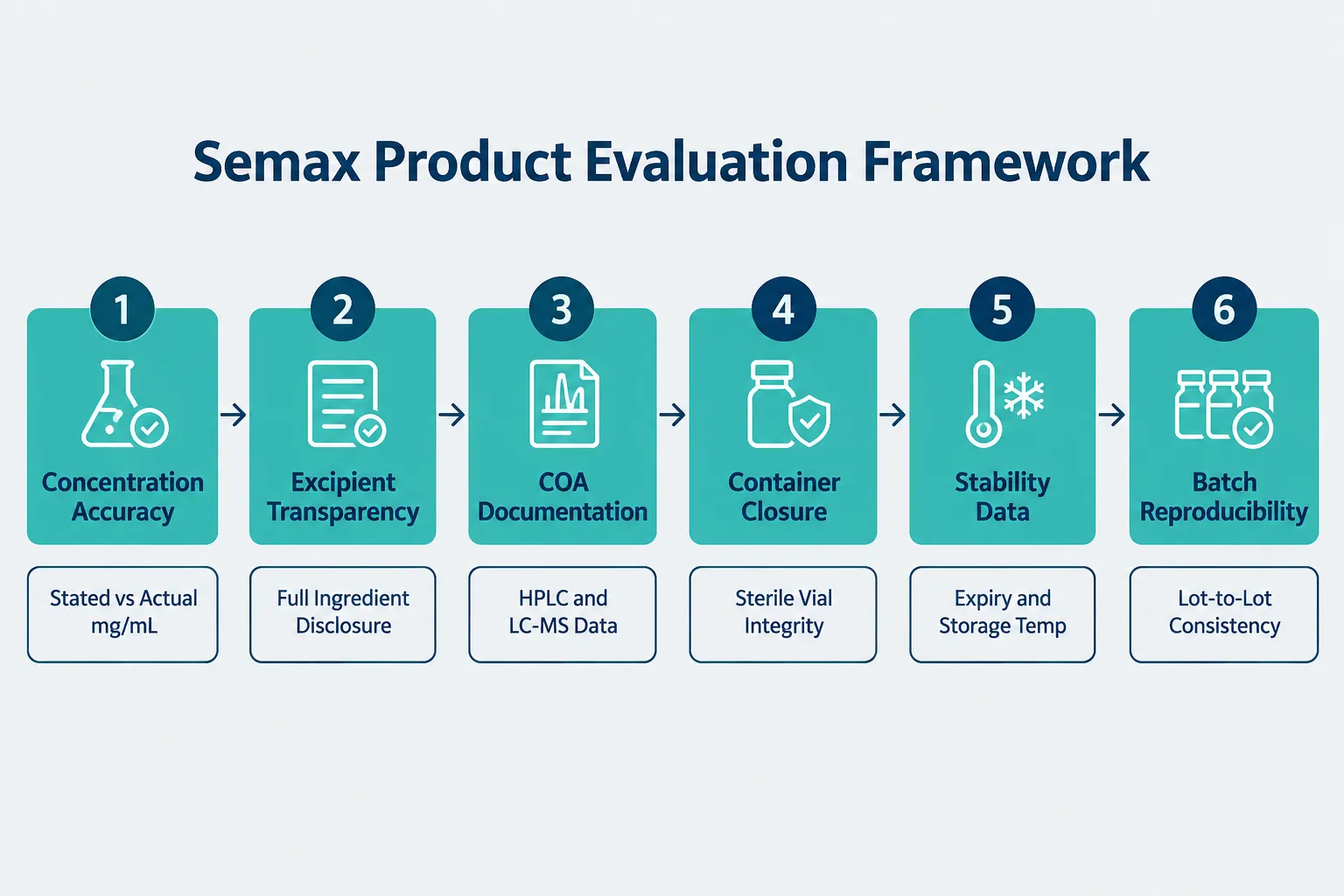
Most published commentary on Semax nasal spray focuses on subjective user experiences rather than the analytical criteria that actually determine whether a product is suitable for controlled research. That gap matters enormously. When a laboratory study produces inconsistent results, the culprit is often a poorly characterized formulation, not the peptide itself. This article presents a structured review rubric for evaluating Semax peptide nasal spray products for research use, covering concentration accuracy, excipient transparency, analytical documentation, container closure, stability data, and batch reproducibility.

Key Takeaways

  • Semax nasal spray products sold for research use must carry a "research use only" label and are not approved for human therapeutic use in most Western jurisdictions.
  • Analytical documentation, specifically HPLC and LC-MS Certificates of Analysis, is the single most important differentiator between research-grade and substandard products.
  • Concentration accuracy and excipient transparency directly affect reproducibility in preclinical models.
  • Intranasal delivery provides a rationale for bypassing the blood-brain barrier, making formulation quality especially critical.
  • A six-point evaluation rubric gives researchers an objective method for comparing Semax nasal spray products without relying on anecdotal testimonials.

Understanding Semax and Its Research Context

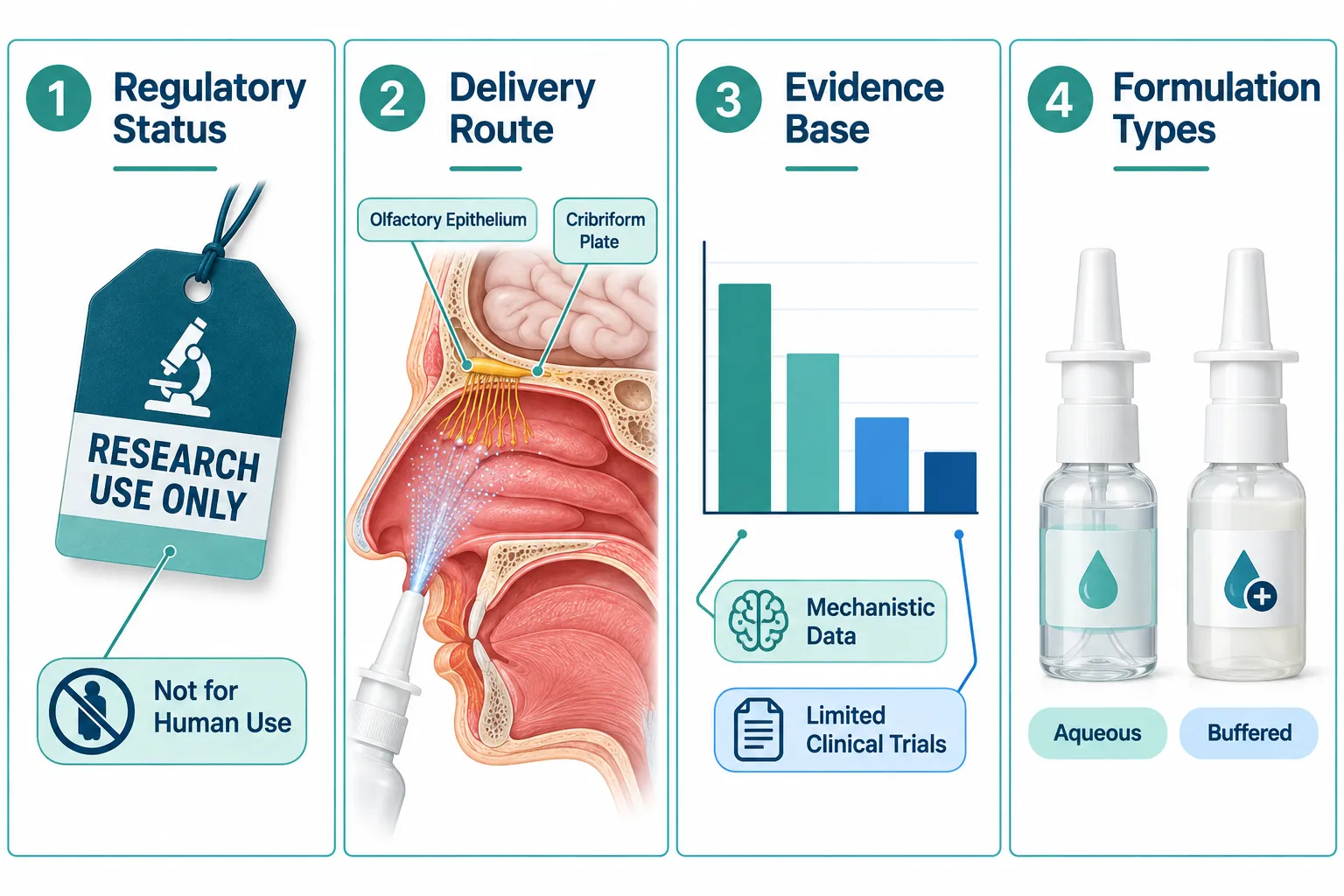
Semax is a synthetic heptapeptide analog of the adrenocorticotropic hormone (ACTH) fragment 4-10, originally developed in Russia during the 1980s. It has been used clinically in Russia and Ukraine for neurological indications, but it holds no regulatory approval from the FDA, EMA, or equivalent Western agencies for therapeutic use. In 2026, products sold in the United States, United Kingdom, and most of Europe are labeled strictly for research use only and must not be administered to humans outside of formally approved clinical protocols.

The mechanistic rationale for Semax is well-supported. Research demonstrates interactions with brain-derived neurotrophic factor (BDNF) pathways, serotonergic and dopaminergic systems, and emerging data point to copper-chelation activity with potential anti-amyloid properties. Intranasal delivery is the preferred route in most research models because the olfactory epithelium and cribriform plate provide a pathway that can bypass first-pass hepatic metabolism, making formulation quality directly relevant to experimental outcomes.

Researchers comparing Semax products can also benefit from reviewing related peptide evaluation frameworks, such as those used for research-grade Glow Blend peptide purity and copper complexes, which share overlapping quality criteria.
Understanding Semax and Its Research Context


A Structured Method for Comparing Semax Peptide Nasal Spray Products for Research Use

Applying a consistent rubric removes subjectivity from the evaluation process. The six criteria below form the core of any defensible product comparison.

1. Concentration Accuracy

The stated peptide concentration (typically expressed in mg/mL) must be verifiable against independent analytical data. A product labeled at 0.1% Semax (1 mg/mL) should reflect that figure in the accompanying Certificate of Analysis (COA). Discrepancies between labeled and actual concentration directly undermine dose-response calculations in research models.

"Concentration accuracy is not a quality-of-life feature, it is a scientific validity requirement."

2. Excipient Transparency

Nasal spray formulations require excipients: preservatives, buffering agents, and tonicity adjusters. Common components include benzalkonium chloride, sodium phosphate buffers, and sodium chloride. A reputable supplier discloses the full excipient list. Undisclosed preservatives can confound results, particularly in neurological cell models where cytotoxicity thresholds are low.

3. Analytical Documentation (COA, HPLC, LC-MS)

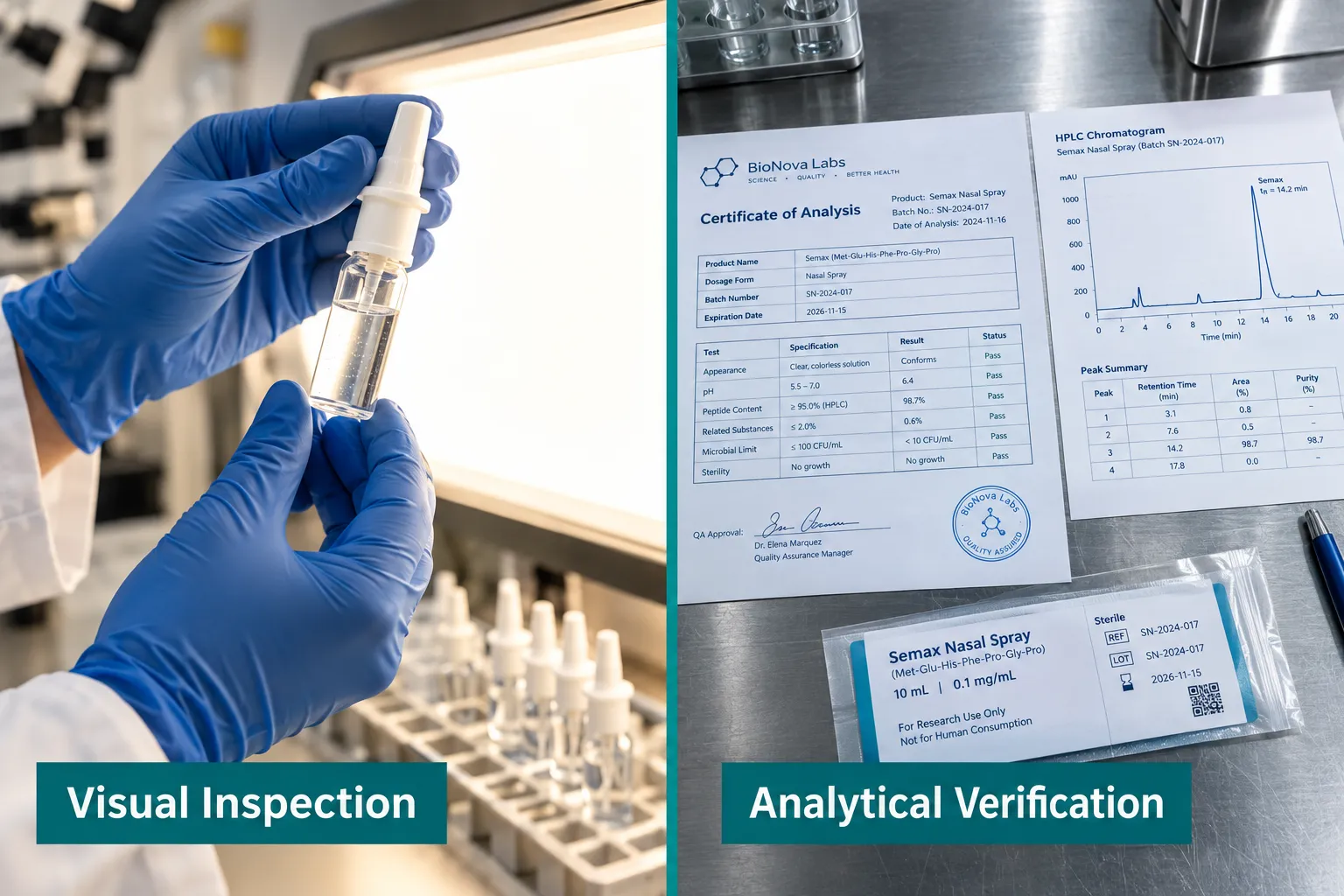
This is the most critical differentiator. A credible research-grade product provides:

  • HPLC purity data confirming peptide identity and ruling out major impurities
  • LC-MS mass confirmation verifying molecular weight matches the Semax sequence
  • Endotoxin testing results (LAL assay or equivalent) for any product intended for cell-based or animal research
  • Lot-specific COA tied to the batch number on the product label

Suppliers who provide only generic or undated COAs should be treated with caution. Researchers evaluating SS-31 10mg research peptide considerations face identical documentation standards, illustrating that this criterion applies across peptide classes.

4. Container Closure Integrity

Nasal spray vials must maintain sterility and prevent oxidative degradation. Key features to evaluate include:

Feature Research-Grade Standard
Vial material Borosilicate glass or pharmaceutical-grade polymer
Closure type Crimp-sealed or luer-lock with tamper evidence
Headspace Nitrogen or argon purge preferred
Volume accuracy Actuator-calibrated spray volume stated

Poor container closure accelerates peptide degradation and introduces contamination risk that invalidates experimental data.

5. Stability Data and Storage Conditions

Semax is sensitive to temperature and light. Suppliers should provide stability data indicating shelf life under recommended storage conditions (typically 2-8°C refrigerated, protected from light). Products lacking stated expiry dates or stability studies present an unquantifiable variable in research design. This consideration is equally relevant when sourcing other sensitive peptides, such as those discussed in peptide dosing guidance.

6. Batch Reproducibility

Single-lot purity data is insufficient for ongoing research programs. Researchers should request multi-lot COA data or ask suppliers directly about lot-to-lot variability metrics. High reproducibility, defined as less than 2% variance in purity across consecutive lots, is the standard that serious research suppliers should be able to demonstrate.
6. Batch Reproducibility


Applying the Rubric: Practical Comparison of Semax Nasal Spray Products for Research Use

When applying the structured method above to available Semax nasal spray products for research use, several patterns emerge from 2025-2026 supplier analyses.

Products with strong analytical packages typically come from suppliers who operate ISO-certified or cGMP-adjacent facilities, provide lot-specific HPLC and LC-MS data on their product pages, and disclose full excipient lists. These products command a premium but reduce experimental confounders substantially.

Products with weak documentation often rely on third-party review aggregators and user testimonials rather than analytical data. While anecdotal feedback can suggest tolerability in informal research contexts, it provides no information about concentration accuracy or impurity profiles.

Researchers can explore Semax nasal spray product listings alongside comparisons such as Selank vs Semax to understand how structurally related peptides differ in formulation requirements. For broader peptide research context, reviewing how other nasal or injectable peptides are evaluated, for example, the CJC-1295 with and without DAC mechanism and pharmacokinetic comparison, reinforces how formulation variables affect research outcomes across compound classes.

A practical checklist before purchasing:

  • Request the lot-specific COA before placing an order
  • Confirm HPLC purity is stated as a percentage (not just "high purity")
  • Verify the excipient list matches the intended research model's compatibility requirements
  • Check that storage and expiry information appears on the product label, not just the website
  • Confirm the supplier's return or replacement policy for failed QC verification
Applying the Rubric: Practical Comparison of Semax Nasal Spray Products for Research Use


Conclusion

Semax peptide nasal spray reviews for research use are only as useful as the criteria applied to generate them. Subjective testimonials cannot substitute for concentration accuracy data, excipient disclosure, lot-specific HPLC and LC-MS documentation, verified container closure integrity, stability studies, and demonstrated batch reproducibility. Researchers who apply the six-point rubric outlined here will make more defensible procurement decisions and produce more reproducible experimental outcomes.

Actionable next steps:

  1. Download and review the COA for any Semax nasal spray product before purchase, reject any supplier that cannot provide a lot-specific document.
  2. Cross-reference excipient lists against the cytotoxicity thresholds of the specific cell or animal model being used.
  3. Establish a baseline lot comparison by requesting data from at least two consecutive batches before committing to a supplier for a multi-experiment research program.
  4. Revisit supplier documentation annually, as manufacturing processes and testing standards evolve.

Rigorous product selection is not bureaucratic overhead, it is the foundation of valid research.

https://www.puretestedpeptides.com/wp-content/uploads/2026/10/semax-peptide-nasal-spray-reviews-for-research-use-a-structured-method-for-compa.webp 1024 1536 https://www.puretestedpeptides.com/wp-content/uploads/2026/01/buy-peptides-online.jpg 2026-10-07 13:03:532026-10-07 13:03:53Semax Peptide Nasal Spray Reviews for Research Use: A Structured Method for Comparing Products
×

Helpful Links

  • My account
  • Cart
  • Checkout
  • Refund and Returns Policy
  • Privacy Policy
  • SMS Privacy Policy
  • Login
  • My Account
  • Logout

USA Made Lab Tested Peptides

All products are sold for research, laboratory, or analytical purposes only, and are not for human consumption


Pure Tested Peptides is a chemical supplier. Pure Tested Peptides is not a compounding / chemical compounding facility as defined under 503A of the Federal Food, Drug, and Cosmetic act. Pure Tested Peptides is not an outsourcing facility as defined under 503B of the Federal Food, Drug, and Cosmetic act.

The statements made within this website have not been evaluated by the US Food and Drug Administration. The products we offer are not intended to diagnose, treat, cure or prevent any disease.

Human/Animal Consumption Prohibited. Laboratory/In-Vitro Experimental Use Only

Scroll to top Scroll to top Scroll to top