Call or Text 727-513-9780
  • Shopping Cart Shopping Cart
    0Shopping Cart
Pure Tested Peptides | America's most trusted Peptides for sale online
  • Peptides for sale
    • Oral Peptides for sale
      • Peptide Capsules for sale
      • BPC 157 Capsules 1000mcg
      • SLU-PP-332 Capsules | 1000 mcg
      • 5-Amino-1MQ 50mg Capsules
      • Tesofensine 500mcg
    • All Peptides for sale
    • Peptide Sprays
      • BPC 157 Nasal Spray Kit
      • BPC-157 TB500 Nasal Spray Kit
      • Semax Nasal Spray 10mg
      • Selank – Nasal Spray Kit – 10mg
      • Epithalon 50MG Nasal Spray Kit
      • Ipamorelin 10mg Nasal Spray
      • Klow Nasal Spray (BPC-157 + TB-500 + GHK-Cu + KPV) | 80mg
      • Hulk Nasal Spray Tesa / Ipa Blend 6/3 MG
      • Klow Nasal Spray
      • NAD + 500 mg Nasal Spray
      • PT-141 Nasal Spray Kit
    • GHRH Peptides
      • Ipa Peptides
      • CJC-1295 Peptides
        • CJC-1295 with DAC 5 mg
        • CJC-1295 without DAC 5 mg
        • CJC-1295 Ipa 10mg
      • Tesa Peptides
        • Tesa Peptide
        • Tesa 20 mg
    • GHK-Cu Peptides
      • All GHK-Cu Peptides
      • GHK-Cu 100mg
      • KLOW Peptide Blend – Buy KLOW blend online
    • BPC Peptides
      • All BPC Peptides
      • BPC-157
      • BPC-157 TB-500
      • BPC 157 capsules 1000mcg
    • SLU-PP-332 Peptides
      • All SLU-PP-332 Peptides
      • SLU-PP-332 5mg
    • GLP3 Peptides
    • PT-141 Peptides
      • PT-141 Peptides for sale
      • PT-141 10mg
      • PT-141 Nasal Spray
    • CAG Peptides
      • Lipo-C Peptide Blend
      • CAG 5mg
      • CAG 10mg
    • MOTS-C Peptides
      • MOTS-C Peptides for sale
      • MOTS-c peptide
      • MOTS-c 10mg *6 pack*
    • 5 Amino 1MQ Peptides
      • 5 Amino 1MQ Peptides for sale
      • 5-Amino-1MQ 50mg Capsules
      • 5-Amino-1MQ 5mg
    • Epithalon Peptides
      • Epithalon Peptides for sale
      • Epithalon 10mg
      • Epithalon 50mg
  • Shop
    • GLPs
      • 5-Amino-1MQ 50mg Capsules
      • 5-Amino-1MQ 5mg
      • L-Carnitine 500mg/ml
      • Tesofensine 500mcg
      • SLU-PP-332 5mg
      • MOTS-c 10mg *6 pack*
    • Epithalon & BPC Peptides
      • Epithalon 10mg
      • Epithalon 50mg
      • BPC-157
      • BPC 157 capsules 1000mcg
      • BPC-157 TB-500
      • BPC-157 TB500 Nasal Spray Kit
      • BPC 157 Nasal Spray Kit
    • BPC TB-500 & NAD+ Peptides
      • NAD+ 500 mg
      • KLOW Peptide Blend – Buy KLOW blend online
      • GLOW Peptide Blend
      • TB 500 5mg
      • BPC 157 capsules 1000mcg – Supplement
      • BPC 157 Nasal Spray Kit
      • BPC-157
      • BPC-157 TB500 Nasal Spray Kit
      • BPC-157 TB-500
      • BPC 157 capsules 1000mcg
    • LL-37 Peptide
      • LL-37 10 mg
    • MOTS-C & Selank
      • MOTS-c peptide
      • Selank 10mg
    • GHK Peptides
      • GHK-Cu 100mg
      • GLOW Peptide Blend
      • KLOW Peptide Blend – Buy KLOW blend online
  • COAs
  • Wholesale
    • Wholesale Peptides for sale
  • PTP FAQ
  • Affiliates
    • Selank Peptide: Advanced Pharmacological Mechanisms Underlying Its Anxiolytic and Nootropic Effects in Research
      • 5-Amino-1MQ Peptide: Detailed Mechanisms of NNMT Inhibition and Its Impact on Cellular Metabolism Research
        • MOTS-C Peptide: Unraveling Its Role in Mitochondrial Dynamics and Energy Metabolism Research
          • Epithalon Peptide and Telomerase Regulation: Investigating Its Impact on Cellular Senescence and Lifespan Research Models
            • GLP2-T vs GLP2 Tirz Peptide: Understanding the Naming, Mechanistic Nuances, and Research Implications for Gut Health
      • Peptides and Polypeptides in Modern Pharmacology: What Research on Metoprolol, Prednisone, and Amlodipine Reveals
        • Polypeptide Peptides vs NSAIDs: What Naproxen and Diclofenac Teach Tissue-Repair Researchers About BPC‑157 and TB‑500
          • Peptides and Polypeptides in Endocrine Pharmacology: How GLP-1, GLP-2, and GLP-3 Retatrutide Differ From Classic Drugs Like Prednisone and Amlodipine
          • 5‑Amino‑1MQ Peptide and NNMT Inhibition: How It Compares With Statins Like Atorvastatin in Adipose and Lipid Metabolism Research
      • Enclomiphene, Estrogen Receptor Signaling, and Luteinizing Phase Biology: What Hormone Researchers Should Measure
        • Mesenchymal Stem Cells, BPC‑157, and GHK‑Cu: How Tissue Repair Peptides Compare With Classic NSAIDs Like Naproxen in Injury Models
          • Peptide Calculator Use Cases Beyond Growth Hormone: Working Through GLP‑3 Retatrutide, MOTS‑c, and BPC‑157 Research Dosing
        • Polypeptide Peptides in Endocrine and Metabolic Pharmacology: Lessons From Amlodipine, Prednisone, and Metoprolol
        • Peptides Calculator for Advanced Blends: Worked Examples for Tesamorelin, CJC‑1295, and Ipamorelin Stacks
          • Peptides and Polypeptides in Human Physiology: How Molecular Size Shapes Research Applications
            • Selank Peptide: Advanced Pharmacological Mechanisms Underlying Its Anxiolytic and Nootropic Effects in Research
          • 5-Amino-1MQ Peptide: Detailed Mechanisms of NNMT Inhibition and Its Impact on Cellular Metabolism Research
            • MOTS-C Peptide: Unraveling Its Role in Mitochondrial Dynamics and Energy Metabolism Research
              • Epithalon Peptide and Telomerase Regulation: Investigating Its Impact on Cellular Senescence and Lifespan Research Models
                • GLP2-T vs GLP2 Tirz Peptide: Understanding the Naming, Mechanistic Nuances, and Research Implications for Gut Health
                  • Peptides and Polypeptides in Endocrine Pharmacology: How GLP-1, GLP-2, and GLP-3 Retatrutide Differ From Classic Drugs Like Prednisone and Amlodipine
                    • Polypeptide Peptides vs NSAIDs: What Naproxen and Diclofenac Teach Tissue-Repair Researchers About BPC‑157 and TB‑500
                      • Peptides and Polypeptides in Modern Pharmacology: What Research on Metoprolol, Prednisone, and Amlodipine Reveals
                        • 5‑Amino‑1MQ Peptide and NNMT Inhibition: How It Compares With Statins Like Atorvastatin in Adipose and Lipid Metabolism Research
                        • Enclomiphene, Estrogen Receptor Signaling, and Luteinizing Phase Biology: What Hormone Researchers Should Measure
                        • Mesenchymal Stem Cells, BPC‑157, and GHK‑Cu: How Tissue Repair Peptides Compare With Classic NSAIDs Like Naproxen in Injury Models
                        • Peptide Calculator Use Cases Beyond Growth Hormone: Working Through GLP‑3 Retatrutide, MOTS‑c, and BPC‑157 Research Dosing
                        • Polypeptide Peptides in Endocrine and Metabolic Pharmacology: Lessons From Amlodipine, Prednisone, and Metoprolol
                        • Peptides Calculator for Advanced Blends: Worked Examples for Tesamorelin, CJC‑1295, and Ipamorelin Stacks
                        • Peptides and Polypeptides in Human Physiology: How Molecular Size Shapes Research Applications
                        • Selank Peptide: Advanced Pharmacological Mechanisms Underlying Its Anxiolytic and Nootropic Effects in Research
                        • MOTS-C Peptide: Unraveling Its Role in Mitochondrial Dynamics and Energy Metabolism Research
                        • Peptides and Polypeptides in Modern Pharmacology: What Research on Metoprolol, Prednisone, and Amlodipine Reveals
                        • Peptides and Polypeptides in Endocrine Pharmacology: How GLP-1, GLP-2, and GLP-3 Retatrutide Differ From Classic Drugs Like Prednisone and Amlodipine
                        • 5-Amino-1MQ Peptide: Detailed Mechanisms of NNMT Inhibition and Its Impact on Cellular Metabolism Research
                        • Mesenchymal Stem Cells, BPC‑157, and GHK‑Cu: How Tissue Repair Peptides Compare With Classic NSAIDs Like Naproxen in Injury Models
                        • Peptide Calculator Use Cases Beyond Growth Hormone: Working Through GLP‑3 Retatrutide, MOTS‑c, and BPC‑157 Research Dosing
                        • GLP2-T vs GLP2 Tirz Peptide: Understanding the Naming, Mechanistic Nuances, and Research Implications for Gut Health
                        • Polypeptide Peptides in Endocrine and Metabolic Pharmacology: Lessons From Amlodipine, Prednisone, and Metoprolol
                        • Polypeptide Peptides vs NSAIDs: What Naproxen and Diclofenac Teach Tissue-Repair Researchers About BPC‑157 and TB‑500
                        • Peptides and Polypeptides in Human Physiology: How Molecular Size Shapes Research Applications
                        • Peptides Calculator for Advanced Blends: Worked Examples for Tesamorelin, CJC‑1295, and Ipamorelin Stacks
                        • 5‑Amino‑1MQ Peptide and NNMT Inhibition: How It Compares With Statins Like Atorvastatin in Adipose and Lipid Metabolism Research
                        • Enclomiphene, Estrogen Receptor Signaling, and Luteinizing Phase Biology: What Hormone Researchers Should Measure
                        • Epithalon Peptide and Telomerase Regulation: Investigating Its Impact on Cellular Senescence and Lifespan Research Models
                        • Best research protocol Klow blend
                        • best time to take BPC-157
                        • best time to take DSIP (Delta Sleep Inducing Peptide)
                        • best time to take CJC-1295
                        • best time to take AOD-9604
                        • best time to take Follistatin 344
                        • best time to take Ipamorelin
                        • best time to take MK-677 (Ibutamoren)
                        • best time to take Ligandrol (LGD-4033) — research compound
                        • best time to take Ostarine (MK-2866) — research compound
                        • best time to take GHK-CU
                        • best time to take TB-500
                        • best time to take MOTS-c
                        • best time to take Semax
                        • best time to take RAD-140 (Testolone) — research compound
                        • best time to take Thymosin Alpha-1
                        • best time to take PEG-MGF
                        • Biolife Plasma, Octapharma Plasma, and Research Peptides: How Plasma Donation Labs Differ From Peptide Suppliers
                        • best time to take YK-11 — research compound
                        • best time to take PT-141 (Bremelanotide)
                        • Best research protocol Klow blend
                        • 5-Amino-1MQ and MOTS-C Synergy: Metabolic Signaling, Mitochondria, and Research Design
                        • BPC-157 and TB-500: Investigating Their Combined Effects on Angiogenesis and Cellular Migration in Tissue Repair Models
                        • BPC-157 Peptide: Gut Barrier Function, Inflammation, and Tissue-Recovery Research
                        • 5‑Amino‑1MQ and MOTS‑c Synergy in Metabolic Research: Designing NNMT and Mitochondrial Biogenesis Stacks
                        • CJC-1295 with DAC vs. Without DAC: Half-Life, Release Kinetics, and Research Implications
                        • CJC‑1295 with DAC vs. Without DAC: Expanding on Half‑Life Differences Using Tesamorelin and Ipamorelin Blend Case Studies
                        • Collagen Biology and Copper‑Binding Peptides: How GHK‑Cu, Glow Blend, and Klow Blend Interact with Skin and Connective Tissue
                        • Collagen Biology and Regenerative Peptides: How GHK‑Cu, Glow Blend, and Klow Blend Affect Extracellular Matrix Research
                    • DNA, Telomeres, and Longevity Peptides: Positioning Epithalon and MOTS‑c in Genetic Aging Research
                      • Enclomiphene Citrate: serm Mechanism, Testosterone Research, and Stack Compatibility
                        • Enclomiphene vs Enclomiphene Citrate: Formulation, Bioavailability, and Research Distinctions
                        • Epithalon Peptide Research: Telomerase Activation, Aging, and Pineal Gland Function
                        • Estrogen Receptor Signaling and Enclomiphene: How Selective Modulators Compare with Classic Polypeptide Hormones
                        • GHK-Cu Peptide: Advanced Mechanisms in Extracellular Matrix Remodeling and Wound Healing Research
                        • GHK-Cu Peptide: Collagen Synthesis, Wound Repair, and Skin-Barrier Research Models
                        • GLP-1 vs GLP-3 vs GLP-2: Peptide Classification and Research Applications
                        • GLP-2 Peptide Research Guide: Gut Barrier Function, Nutrient Absorption, and Intestinal Recovery Models
                        • GLP-3 Retatrutide vs. GLP-1 Drugs: What Triple-Agonist Biology Changes in Research Models
                        • Ipamorelin and Tesamorelin Combination: Synergistic GH Secretagogue Research and Dosing Protocols
                        • GLP2 Tirz Peptide: What It Is, Why the Name Exists, and How Researchers Should Interpret It
                        • Klow Blend Peptide Nasal Spray: What the Formulation Is Trying to Do in Cognitive Research
                        • Mitochondria, NNMT Inhibition, and Peptide Modulators: Where MOTS‑c and 5‑Amino‑1MQ Fit in Cellular Energy Research
                        • MOTS-c Peptide: Mitochondrial Function, Energy Metabolism, and What Researchers Measure
                        • MOTS-c vs. 5-Amino-1MQ: Which Metabolic Research Questions Each Compound Actually Answers
                        • Nasal Spray Peptides: Bioavailability, Administration, and Semax/Selank Research Applications
                        • PT-141 Peptide Research: Mechanism of Action and Melanocortin Receptor Signaling
                        • Retatrutide for Research: Mechanism, Structure, and GLP-1/GLP-3 Dual Action
                        • Retatrutide for Obesity and Type 2 Diabetes: What the Latest Trial Data Suggest
                        • Tesofensine Peptide Research: Mechanism, Appetite Suppression, and Neuropeptide Y Pathways
  • Contact
    • Contact Customer Service
    • Text Customer Support
  • About US
  • Shop all peptides
  • Affiliate Program
    • Affiliate Signup
  • Login / Register Login / Register Page Link Login / Register Page Link
  • Click to open the search input field Click to open the search input field Search
  • Menu Menu

Tag Archive for: obesity drug research

GLP-3 Retatrutide and Appetite Research: Measuring Food Intake Without Confounding Gastric Emptying, Nausea, or Sedation

GLP-3 Retatrutide and Appetite Research: Measuring Food Intake Without Confounding Gastric Emptying, Nausea, or Sedation

November 2, 2026/0 Comments/in Uncategorized/by

Fewer than 5% of obesity drug candidates ever produce double-digit body weight reductions in phase 2 trials. Retatrutide, a triple agonist targeting GLP-1, GIP, and glucagon receptors simultaneously, shattered that baseline by delivering mean weight loss exceeding 24% at 48 weeks in a landmark New England Journal of Medicine phase 2 study. That result has made GLP-3 retatrutide and appetite research a critical frontier, but it has also created a pressing methodological question: when a molecule simultaneously suppresses appetite, slows gastric emptying, and produces dose-dependent nausea, how do researchers isolate true changes in caloric desire from confounded side-effect-driven intake suppression?

This article builds a behavioral-metabolic control framework for answering that question precisely.


Key Takeaways

  • Retatrutide is a first-in-class GLP-1/GIP/glucagon triple agonist showing unprecedented weight loss in phase 2 trials as of 2026.
  • Appetite suppression cannot be reliably attributed to direct central or behavioral mechanisms unless gastric emptying delay, nausea burden, sedation, and locomotion changes are systematically controlled.
  • Visual analog scale (VAS) hunger scores and validated Eating Inventory tools capture subjective appetite but must be paired with side-effect exclusion protocols to yield clean signals.
  • A behavioral-metabolic control framework, combining meal-pattern recording, gastric-emptying proxies, nausea-behavior screening, and medication exclusions, is the current methodological gold standard.
  • Phase 3 TRIUMPH program data emerging in 2026 will further test whether retatrutide's weight-loss magnitude reflects genuine appetite biology or compounded confounders.

Understanding the Triple-Agonist Mechanism Behind Retatrutide

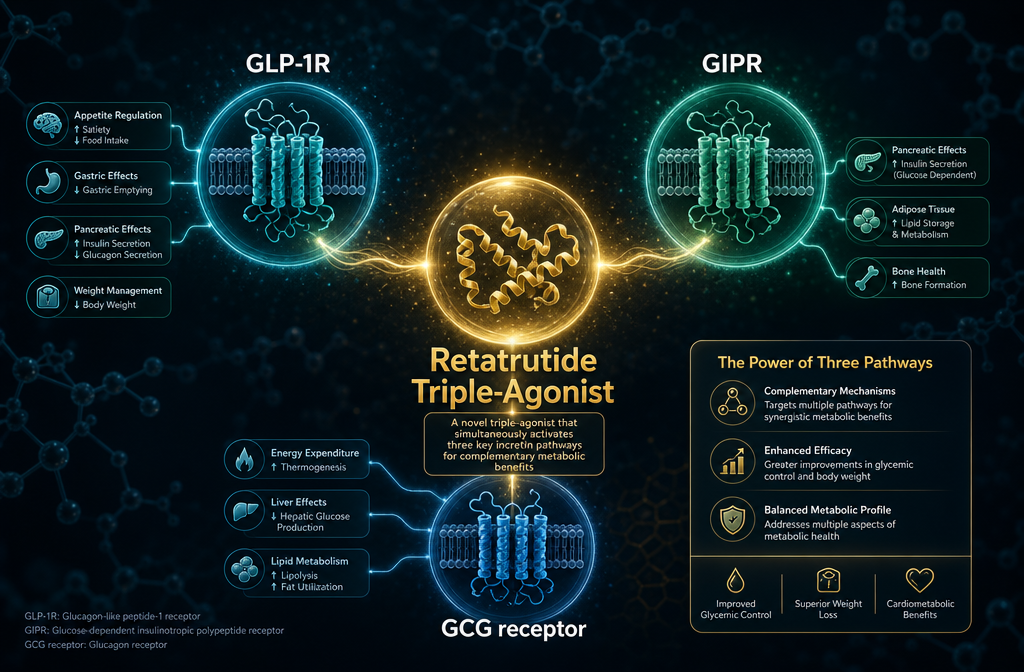
Retatrutide triple-agonist receptor pathway infographic

Retatrutide activates three distinct receptor pathways in a single molecule. GLP-1 receptor agonism drives satiety signaling in the hypothalamus and slows gut transit. GIP receptor agonism enhances insulin secretion and appears to modulate adipose tissue directly. Glucagon receptor agonism increases energy expenditure and promotes hepatic fat oxidation.

This multi-receptor profile is what distinguishes retatrutide from earlier agents like semaglutide (a single GLP-1 agonist) or tirzepatide (a dual GLP-1/GIP agonist). For researchers studying retatrutide clinical trials, this layered mechanism is both an advantage and an interpretive challenge.

Why the mechanism complicates appetite measurement:

Receptor Target Weight-Loss Pathway Confounding Risk
GLP-1 Central satiety, gut motility slow-down Nausea, gastric emptying delay
GIP Adipose signaling, insulin modulation Sedation-related inactivity
Glucagon Energy expenditure, fat oxidation Locomotion changes, reduced meal frequency

Each pathway can reduce caloric intake through a mechanism that is not pure appetite suppression. A participant eating less because of nausea is not the same as one eating less because hypothalamic hunger signals have genuinely decreased. Without a control framework, these signals collapse into one undifferentiated number.

Pull quote: "Reduced food intake is not synonymous with reduced appetite. The distinction is what separates mechanistic insight from noise."


The Core Problem in GLP-3 Retatrutide and Appetite Research: Measuring Food Intake Without Confounding Gastric Emptying, Nausea, or Sedation

Step-by-step behavioral-metabolic control framework diagram

Phase 2 obesity and type 2 diabetes trials using retatrutide have consistently recorded gastrointestinal adverse events, primarily nausea, vomiting, and diarrhea, in 30 to 60% of participants at higher doses. Gastric emptying is slowed by GLP-1 agonism, which creates post-meal fullness that can persist for hours. Both effects reduce caloric intake, yet neither reflects a clean appetite signal.

The behavioral-metabolic control framework addresses five confounders:

  1. Meal pattern recording — Logging meal timing, frequency, and portion size independent of self-reported hunger separates behavioral eating patterns from physiological drive.
  2. Gastric-emptying proxy measurement — Tools such as 13C-octanoic acid breath tests or standardized symptom questionnaires after fixed test meals quantify transit delay without full scintigraphy.
  3. Nausea-behavior exclusion protocols — Participants reporting nausea at the time of appetite assessment are flagged; their VAS scores are analyzed separately or excluded from primary appetite endpoints.
  4. Locomotion and sedation screening — Actigraphy or validated sedation scales detect activity reductions that lower caloric need rather than caloric desire.
  5. Medication and concomitant therapy exclusions — Antiemetics, prokinetics, and CNS-active drugs alter hunger perception and must be tracked as covariates.

Applied together, these steps allow researchers to isolate appetite from artifact. Studies comparing retatrutide directly to dulaglutide in type 2 diabetes populations have used Eating Inventory (EI) subscales, specifically the cognitive restraint, disinhibition, and hunger subscales, to add dimensional granularity that a single caloric-intake measure cannot provide.

When reviewing GLP-3 Reta 10mg research-grade peptide options, it is important to understand that these methodological controls are what give mechanistic findings their validity.


Validated Appetite Tools and Metabolic Signatures in Retatrutide Studies

Confounded vs. clean appetite measurement split-screen comparison

Visual analog scale (VAS) hunger assessments remain the most widely used direct measure of subjective appetite in clinical obesity trials. When administered at standardized times, fasting, post-meal, and pre-meal, VAS scores produce reproducible hunger trajectories. In retatrutide phase 2 data, VAS-measured hunger declined significantly versus placebo, but the magnitude of that decline correlated with dose-dependent nausea incidence, raising the confounding flag immediately.

Eating Inventory tools add behavioral depth. The hunger subscale specifically captures frequency and intensity of food cravings between meals, largely independent of gastric fullness. Retatrutide participants showed reductions across all three EI subscales, suggesting genuine behavioral appetite suppression beyond gastric slowing alone.

Metabolic and lipid profiling provides a third, indirect validation layer. Retatrutide-treated participants show metabolic signatures consistent with reduced caloric intake and enhanced fat oxidation, including falling non-esterified fatty acid levels, improved fasting insulin, and lipid panel changes aligned with a hypocaloric state. These biomarkers corroborate self-reported appetite measures without relying on patient recall.

For those tracking the latest research on GLP-3 Reta 20mg GSF and GLP-3 Reta CAG 10mg formulations, understanding which appetite metrics hold up under controlled conditions is essential for interpreting preclinical and translational data accurately.

The 2026 TRIUMPH phase 3 program is expected to generate the largest controlled appetite dataset for retatrutide to date, with endpoints designed to address the confounding issues discussed here. Early comparative data against semaglutide suggests retatrutide maintains its weight-loss advantage even when nausea-related intake suppression is modeled out, a finding that would confirm the triple-agonist mechanism produces genuine appetite biology.

Researchers interested in parallel methodologies from adjacent peptide fields may also find value in examining SS-31 mechanism and research for context on how mitochondrial and metabolic control approaches inform appetite-adjacent research frameworks.


Conclusion

GLP-3 retatrutide and appetite research, specifically the challenge of measuring food intake without confounding gastric emptying, nausea, or sedation, sits at the intersection of pharmacology, behavioral science, and clinical methodology. The behavioral-metabolic control framework outlined here provides a practical roadmap: record meal patterns systematically, use gastric-emptying proxies, apply nausea-behavior exclusion protocols, screen for locomotion and sedation changes, and control for concomitant medications.

Actionable next steps for researchers and clinicians:

  • Pre-register nausea-exclusion criteria as primary analysis rules before unblinding trial data.
  • Pair VAS hunger scores with Eating Inventory subscales to capture both intensity and behavioral dimensions of appetite.
  • Integrate actigraphy into study protocols to detect sedation-driven activity reductions that confound caloric need estimates.
  • Monitor lipid and metabolite profiles as independent biomarker validation of appetite-driven intake changes.
  • Follow TRIUMPH phase 3 results in 2026 for the most powered dataset to date on true appetite suppression separate from gastrointestinal side effects.

Those interested in research-grade retatrutide can explore buy GLP-3 Reta options from tested, verified sources to support legitimate scientific inquiry.

https://www.puretestedpeptides.com/wp-content/uploads/2026/11/glp-3-retatrutide-and-appetite-research-measuring-food-intake-without-confoundin.webp 672 1008 https://www.puretestedpeptides.com/wp-content/uploads/2026/01/buy-peptides-online.jpg 2026-11-02 14:25:042026-11-02 14:25:04GLP-3 Retatrutide and Appetite Research: Measuring Food Intake Without Confounding Gastric Emptying, Nausea, or Sedation

Retatrutide Phase 3 Obesity and Metabolic Data Updates: Clinical Trial Benchmarks for Laboratory Researchers

October 29, 2026/0 Comments/in Uncategorized/by

Retatrutide Phase 3 Obesity and Metabolic Data Updates: Clinical Trial Benchmarks for Laboratory Researchers

No obesity drug in recent memory has produced weight loss exceeding 24% of body weight in a phase 3 pivotal trial, until retatrutide. For laboratory researchers building translational models, these Retatrutide Phase 3 Obesity and Metabolic Data Updates: Clinical Trial Benchmarks for Laboratory Researchers represent more than headline news. They are a set of quantitative anchors that should directly inform experimental design in rodent and organoid systems.

Key Takeaways

  • Retatrutide's TRIUMPH-1 trial reported approximately 24.2% mean weight loss at 80 weeks, setting a new upper-bound benchmark for triple receptor agonist research.
  • The TRIUMPH-2 trial confirmed clinically meaningful A1C reductions alongside substantial weight loss in participants with type 2 diabetes.
  • A notable proportion of participants reached a non-obese BMI during treatment, a functional outcome rarely achieved in pharmacotherapy.
  • The TRIUMPH program now spans eight or more substudies, including hepatic, pain, and sleep-related metabolic endpoints.
  • Laboratory researchers should use phase 3 dose-response curves and timeline data to calibrate rodent model dosing and organoid assay endpoints.

The TRIUMPH Program: Scope and Architecture

The TRIUMPH clinical program is one of the most expansive obesity drug development portfolios currently active. As of late 2026, the program includes multiple phase 3 studies targeting different patient populations and metabolic complications. TRIUMPH-1 serves as the core pivotal obesity study, while TRIUMPH-2 focuses on participants with both obesity or overweight and type 2 diabetes.

TRIUMPH program trial architecture and benchmarks

Additional substudies extend the program into non-alcoholic steatohepatitis (NASH), obstructive sleep apnea, chronic pain with metabolic overlap, and cardiovascular risk reduction. TRIUMPH-8 and a related phase 3b arm are refining indication-specific dosing strategies. For laboratory researchers, this breadth is highly relevant: it means retatrutide is generating benchmark data across multiple metabolic pathways simultaneously, each of which may map to a distinct in vitro or preclinical endpoint.

Retatrutide is a triple receptor agonist, simultaneously targeting GLP-1, GIP, and glucagon receptors. This mechanism distinguishes it from dual agonists like tirzepatide, and the incremental metabolic effect appears real in clinical data.

"Triple receptor co-agonism appears to drive additive energy expenditure beyond what GLP-1 and GIP alone can achieve, a distinction that matters significantly when modeling adipose tissue dynamics in preclinical systems."


Efficacy Benchmarks from Retatrutide Phase 3 Obesity and Metabolic Data Updates: Clinical Trial Benchmarks for Laboratory Researchers

TRIUMPH-1: Headline Weight Loss Numbers

At 80 weeks, the highest dose group in TRIUMPH-1 achieved approximately 24.2% mean body weight reduction from baseline. This is the benchmark that translational researchers should anchor their rodent model expectations to. For context:

Endpoint Approximate Value
Mean weight loss (highest dose) ~24.2% body weight
Proportion reaching non-obese BMI Significant minority of participants
Placebo-subtracted weight loss ~22 percentage points
Duration to near-plateau ~48-60 weeks

The dose-response relationship is steep between mid and high doses, with a meaningful increment between the 8 mg and 12 mg weekly injection groups. This gradient is directly useful when scaling to rodent milligram-per-kilogram equivalents.

For researchers sourcing retatrutide at research scale, options such as GLP-3 Reta 30mg or Reta 20mg provide quantity tiers aligned with extended study protocols. The GLP-3 Reta 20mg GA5 formulation is also commonly referenced in preclinical supply chains.

TRIUMPH-2: Metabolic Outcomes in Type 2 Diabetes

In participants with type 2 diabetes and obesity, TRIUMPH-2 produced weight reductions approaching 16-17% alongside statistically significant A1C improvements. The dual metabolic signal, weight loss plus glycemic control, is particularly important for organoid researchers modeling hepatic lipid accumulation or pancreatic beta-cell stress. These two pathways do not always move in parallel, and TRIUMPH-2 data suggests retatrutide may influence them through partially independent mechanisms.

The glucagon receptor component likely drives a portion of the hepatic glucose output reduction, while GIP and GLP-1 arms contribute to satiety and insulin sensitivity respectively.


Translational Implications: Using Clinical Data as Laboratory Benchmarks

Retatrutide triple receptor mechanism and translational model steps

For researchers working with diet-induced obesity (DIO) mouse models or high-fat diet rat models, the TRIUMPH timeline data suggests that meaningful adiposity reduction requires dosing windows of at least 8 weeks, with the maximal preclinical effect likely appearing between weeks 10 and 16. Using shorter protocols risks under-representing the drug's full pharmacodynamic profile.

Key translational benchmarks to apply:

  • Dose-response shaping: The human phase 3 curve suggests a near-linear response from low to mid doses, then diminishing returns above 8 mg equivalent weekly. Rodent studies should include at least three dose tiers.
  • Time-matched endpoints: Weight, adipokine panels, and liver fat markers should be collected at intervals matching the human trial's scheduled assessments (weeks 4, 12, 24, and 48 equivalent).
  • Non-obese BMI as a functional endpoint: This clinically novel benchmark, rarely achieved pharmacologically, suggests rodent models should track lean mass percentage, not just body weight.

Researchers interested in parallel peptide comparisons may also find value in reviewing IPA Sermorelin stack research for complementary growth hormone axis data, or SS-31 mitochondrial research themes when modeling mitochondrial efficiency in metabolically stressed cells.

For additional retatrutide supply formats relevant to dose-titration protocols, the GLP-3 Reta 20mg GSF and GLP-3 Reta 20mg GA1 variants offer formulation flexibility.


Safety Profile and Research Considerations

Research-grade peptide sourcing and organoid validation lab

The emerging safety profile from the TRIUMPH program shows a tolerability pattern broadly consistent with other incretin-based therapies. Nausea and gastrointestinal effects are the most commonly reported adverse events, dose-dependent, and most prominent during titration. Serious adverse event rates have been low relative to effect magnitude.

For laboratory researchers, several safety-informed design considerations apply:

  • GI endpoint monitoring: Preclinical gut motility and mucosal integrity assays should be included in any retatrutide rodent protocol.
  • Renal hemodynamics: Given the glucagon receptor component's effects on renal glucose handling, researchers should track kidney function markers, a consideration explored in related peptide literature such as SS-31 kidney health research.
  • Purity verification: Clinical-grade outcomes depend on compound purity. Laboratory researchers should apply similar diligence when sourcing, evaluating standards as described in guidance on research-grade peptide purity evaluation.

Expert commentary in 2026 positions retatrutide as a likely best-in-class candidate among next-generation obesity drugs, contingent on full cardiovascular outcomes trial data. Analyst projections suggest regulatory submission in major markets could occur within 12-18 months, though these remain forward-looking estimates.


Conclusion

The Retatrutide Phase 3 Obesity and Metabolic Data Updates: Clinical Trial Benchmarks for Laboratory Researchers emerging from the TRIUMPH program provide the most granular human pharmacodynamic dataset currently available for a triple receptor agonist. For translational researchers, the actionable steps are clear.

Next steps for laboratory researchers:

  1. Recalibrate rodent model dosing tiers against the human phase 3 dose-response curve.
  2. Extend DIO protocol durations to at least 10 weeks to capture maximal effect windows.
  3. Add non-obese BMI equivalents (lean mass percentage) as a primary endpoint.
  4. Monitor hepatic, renal, and GI endpoints in parallel with body composition measures.
  5. Track TRIUMPH-8 and ongoing hepatic substudies for disease-specific endpoint benchmarks as data publishes.

The TRIUMPH program is still generating data. Researchers who align preclinical systems now will be best positioned to generate translational findings that remain relevant when full phase 3 results are published.

https://www.puretestedpeptides.com/wp-content/uploads/2026/01/buy-peptides-online.jpg 0 0 https://www.puretestedpeptides.com/wp-content/uploads/2026/01/buy-peptides-online.jpg 2026-10-29 13:19:072026-10-29 13:19:07Retatrutide Phase 3 Obesity and Metabolic Data Updates: Clinical Trial Benchmarks for Laboratory Researchers

Tag Archive for: obesity drug research

Peptides and Polypeptides in Endocrine Pharmacology: How GLP-1, GLP-2, and GLP-3 Retatrutide Differ From Classic Drugs Like Prednisone and Amlodipine

Peptides and Polypeptides in Endocrine Pharmacology: How GLP-1, GLP-2, and GLP-3 Retatrutide Differ From Classic Drugs Like Prednisone and Amlodipine

July 18, 2026/0 Comments/by Pure Tested

Roughly 28% average body weight loss in 18 months, a figure once reserved for bariatric surgery, is now being reported in Phase 3 trials for a single injectable peptide. That number signals something larger than one drug's success. It marks a turning point in how researchers understand the difference between peptide-based endocrine agents and the small-molecule drugs that defined pharmacology for decades.

Understanding peptides and polypeptides in endocrine pharmacology: how GLP-1, GLP-2, and GLP-3 retatrutide differ from classic drugs like prednisone and amlodipine is no longer a niche academic exercise. It is central to modern metabolic and hormonal research.

Bright isometric illustration () showing two distinct molecular structures side by side: left side depicts a long coiled

Key Takeaways

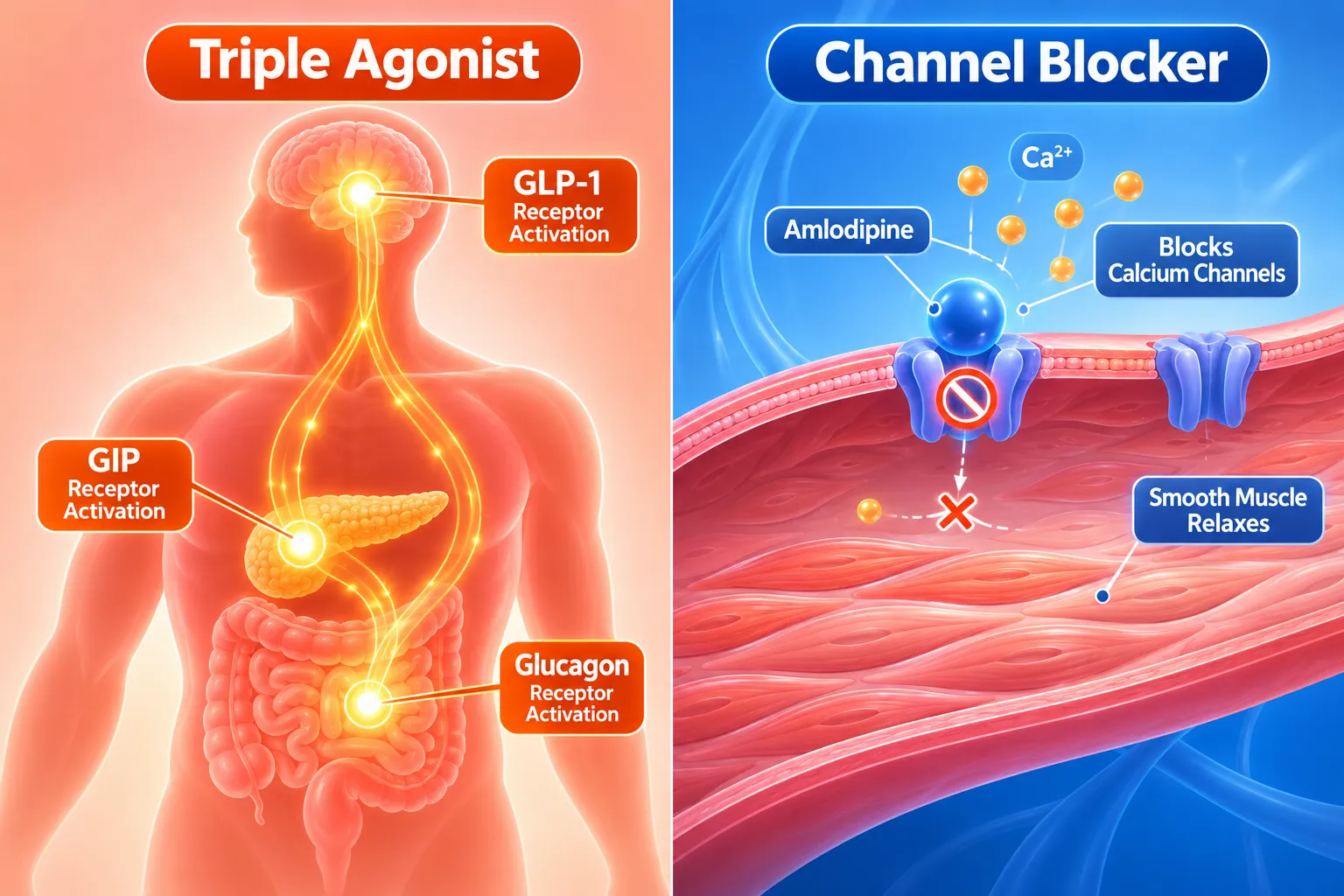
  • Peptide drugs like GLP-1, GLP-2, and retatrutide (GLP-3 class) act on specific receptor pathways, while classic drugs like prednisone and amlodipine use broad or channel-level mechanisms.
  • Retatrutide is a triple-agonist that activates GLP-1, GIP, and glucagon receptors simultaneously, producing surgical-level weight loss outcomes in trials.
  • Small molecules such as amlodipine block ion channels; corticosteroids like prednisone alter gene expression, both differ fundamentally from incretin peptide signaling.
  • Peptide drugs carry distinct tolerability profiles, including gastrointestinal side effects not always captured in early clinical trials.
  • As of 2026, retatrutide remains investigational and is not FDA-approved, with a potential NDA submission planned for late 2026.

What Makes Peptide Drugs Structurally Different

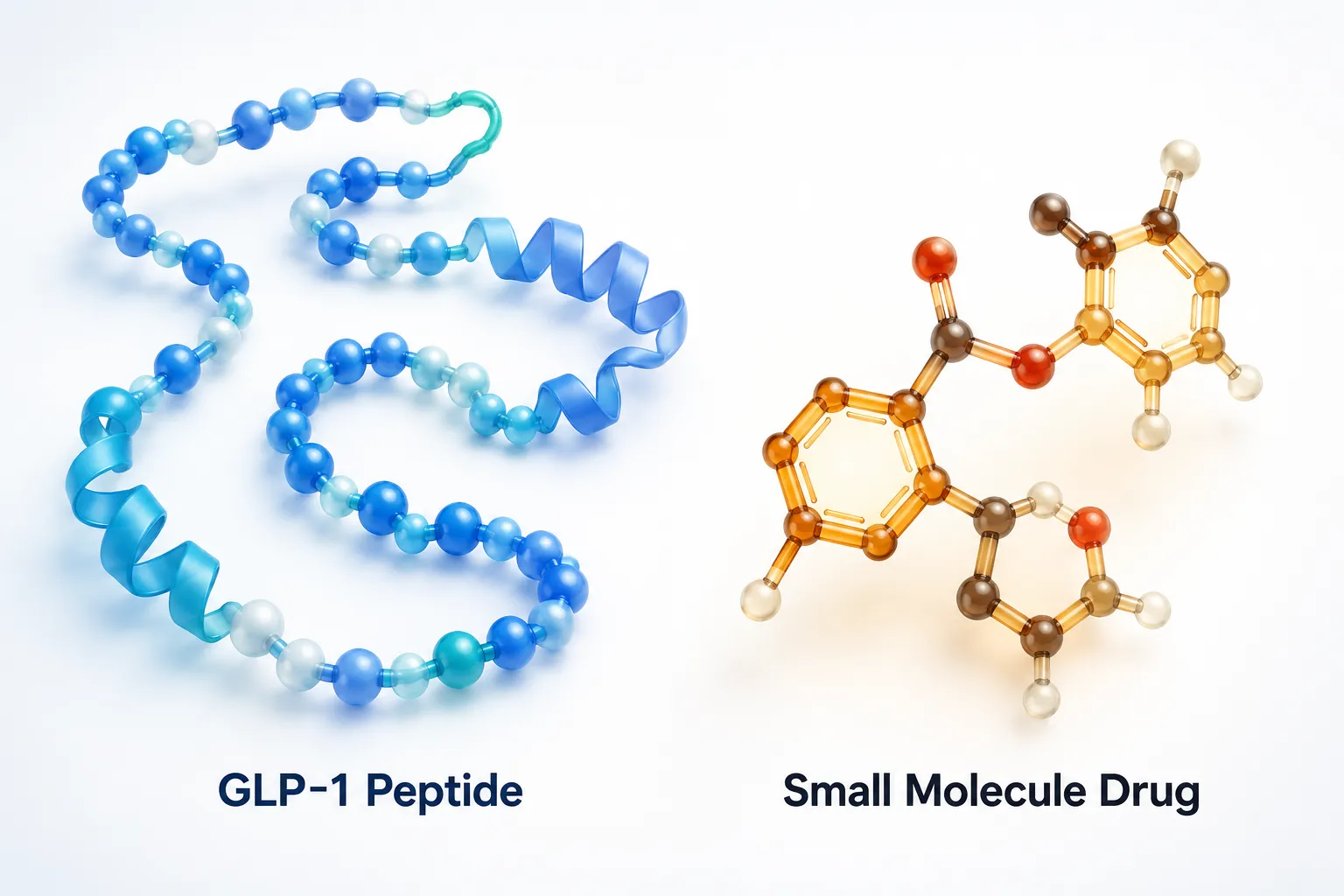
At the most basic level, the distinction comes down to molecular size and biological origin. Classic drugs like prednisone and amlodipine are small molecules, compact, chemically synthesized compounds that can often be taken orally because they survive digestion and cross cell membranes easily.

Peptides, by contrast, are chains of amino acids. Short chains are called peptides; longer chains are polypeptides. GLP-1 (glucagon-like peptide-1), GLP-2, and the newer triple-agonist retatrutide all belong to this class. Because they are protein-based, they are typically administered by injection to avoid degradation in the gut.

Amlodipine works by blocking calcium channels in vascular smooth muscle. When calcium cannot enter the cell, the muscle relaxes, blood vessels widen, and blood pressure drops. The mechanism is direct and localized. Prednisone operates differently, it enters cells and binds to glucocorticoid receptors, then travels to the cell nucleus and alters gene expression. This produces wide-ranging anti-inflammatory effects but also broad systemic consequences.

Neither mechanism resembles how incretin peptides work.

Researchers exploring simple peptides and their biological roles will recognize that even short amino acid sequences can trigger highly specific receptor cascades, a precision that small molecules rarely achieve.


GLP-1, GLP-2, and GLP-3 Retatrutide: Mechanisms in Endocrine Pharmacology

The incretin peptides represent a fundamentally different pharmacological strategy. Rather than blocking a channel or altering gene transcription broadly, they mimic or amplify endogenous hormonal signals already present in the body.

GLP-1 (glucagon-like peptide-1) is released from intestinal L-cells after eating. It stimulates insulin secretion in a glucose-dependent manner, suppresses glucagon, slows gastric emptying, and reduces appetite. GLP-1 receptor agonists like semaglutide replicate this signal pharmacologically.

GLP-2 acts primarily on the intestinal epithelium, promoting gut mucosal growth and nutrient absorption. Its research applications differ from GLP-1, focusing more on intestinal health than metabolic weight regulation.

Retatrutide, sometimes referred to in the GLP-3 research context, is a triple-agonist developed by Eli Lilly. It activates GLP-1, GIP (glucose-dependent insulinotropic polypeptide), and glucagon receptors simultaneously. This multi-receptor engagement is what separates it from earlier single-agonist drugs. For a deeper look at how these generations evolved, see this overview of generations of GLP-1 differences.

The Phase 3 TRIUMPH program data show retatrutide achieving approximately 28% average weight loss over 18 months, outcomes comparable to bariatric surgery. Eli Lilly plans to submit a New Drug Application to the FDA in late 2026, with potential approval anticipated in 2027-2028.

GLP-1, GLP-2, and GLP-3 Retatrutide: Mechanisms in Endocrine Pharmacology

For researchers following the latest developments, the GLP-3 retatrutide product page and the newest GLP-1 triple agonist overview provide current sourcing and research context.

Side Effect Profiles: A Meaningful Contrast

The tolerability differences between peptide drugs and classic small molecules are clinically significant. Prednisone's broad gene-expression effects produce well-known systemic issues: elevated blood glucose, bone density loss, immune suppression. Amlodipine's side effects, peripheral edema, flushing, are largely mechanical, tied to vasodilation.

GLP-1 receptor agonists produce a different profile. Analyses of real-world user reports show:

Side Effect Approximate Reported Rate
Nausea 36.9%
Fatigue 16.7%
Vomiting 16.3%
Constipation 15.3%
Diarrhea 12.6%

Reproductive and temperature-related symptoms have also been reported, effects not always captured in formal clinical trials, highlighting the importance of ongoing post-market surveillance.


Why the Mechanistic Distinction Matters for Research Models

Understanding peptides and polypeptides in endocrine pharmacology is not just about comparing drug classes academically. For researchers designing metabolic or hormonal study models, the choice between a peptide agent and a small molecule carries direct implications for experimental design, dosing intervals, receptor selectivity, and downstream signaling interpretation.

"Multi-agonist peptides target multiple hormonal pathways simultaneously, a contrast to the singular mechanisms of classic drugs that defined pharmacology for half a century."

Small molecules like amlodipine act quickly and wash out relatively fast. Peptide drugs often require consideration of half-life extension strategies, receptor downregulation over time, and the interplay between multiple activated pathways. Retatrutide's simultaneous engagement of three receptors, for example, creates a metabolic effect that no single-receptor drug can replicate.

Researchers interested in related peptide mechanisms may also find value in exploring GHK-Cu peptide research and sourcing and SS-31 peptide benefits as examples of how structurally distinct peptides produce highly targeted biological effects.

For those working in metabolic research, tesa benefits offer another example of a growth-hormone-releasing peptide with specific endocrine applications that differ sharply from corticosteroid or calcium channel blocker mechanisms.

Why the Mechanistic Distinction Matters for Research Models

The obesity drug landscape in 2026 is also shifting beyond efficacy toward long-term patient retention. Companies are exploring delivery innovations and combination therapies to improve tolerability, a challenge that does not arise in the same way with once-daily oral small molecules like amlodipine.

Ensuring peptide purity in research settings is equally critical. Researchers sourcing peptide compounds should review peptide purity testing standards to ensure experimental validity.


Conclusion

The contrast between peptides and polypeptides in endocrine pharmacology, how GLP-1, GLP-2, and GLP-3 retatrutide differ from classic drugs like prednisone and amlodipine, reflects a broader shift in how pharmacology approaches complex metabolic disease. Small molecules act through channel blockade or gene expression changes. Incretin peptides mimic endogenous hormonal signals with receptor-level precision, and multi-agonists like retatrutide amplify that approach across three pathways at once.

Actionable next steps for researchers:

  • Review current GLP-1 generation comparisons to contextualize where retatrutide sits in the incretin drug timeline.
  • Evaluate peptide purity standards before incorporating any peptide compound into a research model.
  • Monitor the FDA NDA timeline for retatrutide, expected in late 2026, for regulatory updates.
  • Explore related endocrine peptides, including GHK-Cu, tesa, and SS-31, to build a fuller picture of peptide mechanism diversity.
  • Distinguish clearly in study design between small-molecule controls (prednisone, amlodipine) and peptide interventions to avoid conflating mechanistically distinct pharmacological classes.
https://www.puretestedpeptides.com/wp-content/uploads/2026/07/peptides-and-polypeptides-in-endocrine-pharmacology-how-glp-1-glp-2-and-glp-3-re.webp 1024 1536 Pure Tested https://www.puretestedpeptides.com/wp-content/uploads/2026/01/buy-peptides-online.jpg Pure Tested2026-07-18 13:05:342026-07-20 14:59:47Peptides and Polypeptides in Endocrine Pharmacology: How GLP-1, GLP-2, and GLP-3 Retatrutide Differ From Classic Drugs Like Prednisone and Amlodipine
What Is GLP-3 Retatrutide? Triple-Agonist Biology, Receptor Targets, and Why It Is Different From GLP-1

What Is GLP-3 Retatrutide? Triple-Agonist Biology, Receptor Targets, and Why It Is Different From GLP-1

June 9, 2026/0 Comments/by Pure Tested

Forty-five percent of participants in a Phase 3 clinical trial lost at least 30% of their body weight — a result once reserved for bariatric surgery. That single data point from the TRIUMPH-1 trial has made retatrutide one of the most closely watched compounds in metabolic medicine today. Understanding what is GLP-3 retatrutide, its triple-agonist biology, receptor targets, and why it is different from GLP-1 drugs already on the market is the essential first step for any researcher or clinician tracking this space.

Key Takeaways

  • Retatrutide simultaneously activates three hormone receptors: GLP-1R, GIPR, and the glucagon receptor (GCG-R).
  • The informal label "GLP-3" is not a scientific hormone classification — it is shorthand for the compound's triple-receptor profile.
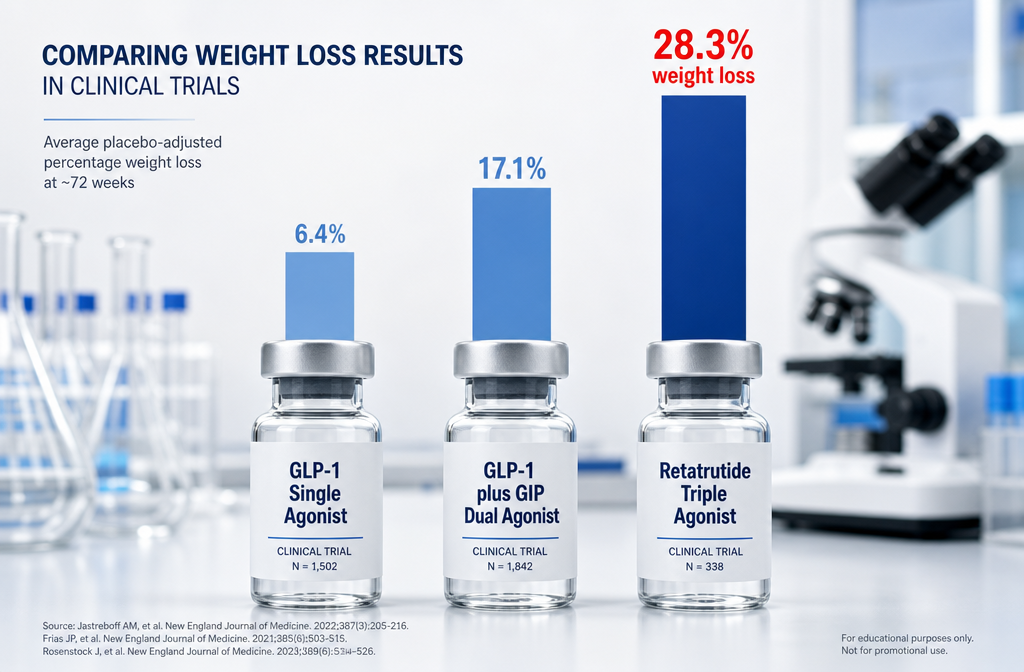
  • In the TRIUMPH-1 Phase 3 trial, participants on 12 mg weekly lost an average of 28.3% of body weight over 80 weeks.
  • Retatrutide outperforms single-agonist (semaglutide) and dual-agonist (tirzepatide) therapies in early head-to-head comparisons.
  • As of 2026, retatrutide has not received FDA approval and remains in Phase 3 development under Eli Lilly.

Key Takeaways

The Triple-Agonist Biology Behind Retatrutide

Retatrutide is a synthetic peptide engineered to bind and activate three distinct incretin and metabolic hormone receptors at the same time. Each receptor plays a separate but complementary role in energy regulation.

Receptor Primary Role Contribution to Retatrutide's Effect
GLP-1R (Glucagon-Like Peptide-1) Insulin secretion, appetite suppression Reduces hunger, slows gastric emptying
GIPR (Glucose-Dependent Insulinotropic Polypeptide) Insulin amplification, fat metabolism Enhances insulin response, supports fat tissue signaling
GCG-R (Glucagon Receptor) Energy expenditure, hepatic glucose output Increases calorie burn, reduces liver fat

This simultaneous three-receptor engagement is what separates retatrutide from every approved obesity drug on the market. The glucagon receptor component is particularly significant: glucagon typically raises blood sugar, but when its receptor is activated alongside GLP-1R and GIPR, the net effect shifts toward increased thermogenesis and fat oxidation rather than hyperglycemia.

Researchers exploring the GLP-1 generations overview will recognize this as a logical progression from first-generation single-agonist molecules toward increasingly complex multi-receptor strategies.

Why the "GLP-3" Label Is Informal — and What It Actually Means

The term "GLP-3" does not refer to a real hormone. No such molecule exists in human physiology. The label emerged informally to describe retatrutide's position as the third generation of GLP-based obesity therapies:

  • Generation 1: GLP-1 single agonists (e.g., semaglutide / Wegovy)
  • Generation 2: GLP-1 + GIP dual agonists (e.g., tirzepatide / Zepbound)
  • Generation 3: GLP-1 + GIP + Glucagon triple agonists (retatrutide)

The correct scientific description is triple hormone receptor agonist. Researchers browsing retatrutide research and catalog resources or the GLP-1 Reta product tag will encounter both terms, but the informal "GLP-3" label should always be understood as generational shorthand rather than pharmacological classification.

Why the "GLP-3" Label Is Informal — and What It Actually Means

How Retatrutide Differs From GLP-1 Drugs: Receptor Targets and Clinical Outcomes

This is the core question for anyone asking what is GLP-3 retatrutide and why it is different from GLP-1. The differences operate on two levels: mechanistic and clinical.

Mechanistically, semaglutide targets only GLP-1R. Tirzepatide adds GIPR. Retatrutide adds the glucagon receptor on top of both. That third receptor drives a meaningful increase in resting energy expenditure — the body burns more calories even at rest — which neither of the earlier drugs can replicate.

Clinically, the TRIUMPH-1 Phase 3 trial reported an average weight loss of 28.3% (approximately 70.3 pounds) over 80 weeks at the 12 mg weekly dose. By comparison, semaglutide typically produces roughly 15% weight loss, and tirzepatide reaches approximately 20-22%. Retatrutide also demonstrated an A1C reduction of up to 2.0% over 40 weeks in participants with type 2 diabetes, suggesting strong glycemic benefit beyond weight loss alone.

"Retatrutide's glucagon receptor component is the differentiating factor — it converts what would otherwise be a pure appetite-suppression strategy into a genuine energy-expenditure intervention."

Side effects remain consistent with the incretin drug class: nausea, diarrhea, constipation, and vomiting, all dose-dependent and generally manageable. Those interested in how metabolic peptides interact with energy systems may also find value in reviewing mitochondrial longevity research and AOD9604 metabolic research for broader context.

For researchers sourcing compounds for study, reviewing lab-tested peptide standards and certificate of analysis documentation ensures quality benchmarks are met before any research protocol begins.

As of 2026, retatrutide is not FDA-approved. Eli Lilly anticipates filing for approval in 2026-2027, with potential market availability by 2027 or 2028. Those planning research timelines can consult the GLP-3 research planning and catalog navigation guide for sourcing and protocol considerations.

How Retatrutide Differs From GLP-1 Drugs: Receptor Targets and Clinical Outcomes

Conclusion

Retatrutide represents a genuine structural advance over existing GLP-1 therapies. Its triple-agonist biology — engaging GLP-1R, GIPR, and the glucagon receptor simultaneously — produces weight loss outcomes that approach bariatric surgery benchmarks and glycemic improvements that matter for type 2 diabetes management. The informal "GLP-3" label is a useful shorthand, but researchers should understand it as a generational marker, not a hormone designation.

Actionable next steps for researchers in 2026:

  • Review the TRIUMPH-1 Phase 3 trial data in detail to understand dose-response relationships.
  • Compare retatrutide's receptor profile against tirzepatide using the GLP-1 peptide generational research overview.
  • Verify compound purity standards before initiating any research protocol by consulting available COA documentation.
  • Monitor FDA filing timelines, currently projected for 2026-2027, to align research planning accordingly.
https://www.puretestedpeptides.com/wp-content/uploads/2026/06/What-Is-GLP-3-Retatrutide-Triple-Agonist-Biology-Receptor-Targets-and-Why-It-Is-Different-From-GLP-1.png 672 1024 Pure Tested https://www.puretestedpeptides.com/wp-content/uploads/2026/01/buy-peptides-online.jpg Pure Tested2026-06-09 13:05:142026-07-20 15:03:37What Is GLP-3 Retatrutide? Triple-Agonist Biology, Receptor Targets, and Why It Is Different From GLP-1
×

Helpful Links

  • My account
  • Cart
  • Checkout
  • Refund and Returns Policy
  • Privacy Policy
  • SMS Privacy Policy
  • Login
  • My Account
  • Logout

USA Made Lab Tested Peptides

All products are sold for research, laboratory, or analytical purposes only, and are not for human consumption


Pure Tested Peptides is a chemical supplier. Pure Tested Peptides is not a compounding / chemical compounding facility as defined under 503A of the Federal Food, Drug, and Cosmetic act. Pure Tested Peptides is not an outsourcing facility as defined under 503B of the Federal Food, Drug, and Cosmetic act.

The statements made within this website have not been evaluated by the US Food and Drug Administration. The products we offer are not intended to diagnose, treat, cure or prevent any disease.

Human/Animal Consumption Prohibited. Laboratory/In-Vitro Experimental Use Only

Scroll to top Scroll to top Scroll to top