Call or Text 727-513-9780
  • Shopping Cart Shopping Cart
    0Shopping Cart
Pure Tested Peptides | America's most trusted Peptides for sale online
  • Peptides for sale
    • Oral Peptides for sale
      • Peptide Capsules for sale
      • BPC 157 Capsules 1000mcg
      • SLU-PP-332 Capsules | 1000 mcg
      • 5-Amino-1MQ 50mg Capsules
      • Tesofensine 500mcg
    • All Peptides for sale
    • Peptide Sprays
      • BPC 157 Nasal Spray Kit
      • BPC-157 TB500 Nasal Spray Kit
      • Semax Nasal Spray 10mg
      • Selank – Nasal Spray Kit – 10mg
      • Epithalon 50MG Nasal Spray Kit
      • Ipamorelin 10mg Nasal Spray
      • Klow Nasal Spray (BPC-157 + TB-500 + GHK-Cu + KPV) | 80mg
      • Hulk Nasal Spray Tesa / Ipa Blend 6/3 MG
      • Klow Nasal Spray
      • NAD + 500 mg Nasal Spray
      • PT-141 Nasal Spray Kit
    • GHRH Peptides
      • Ipa Peptides
      • CJC-1295 Peptides
        • CJC-1295 with DAC 5 mg
        • CJC-1295 without DAC 5 mg
        • CJC-1295 Ipa 10mg
      • Tesa Peptides
        • Tesa Peptide
        • Tesa 20 mg
    • GHK-Cu Peptides
      • All GHK-Cu Peptides
      • GHK-Cu 100mg
      • KLOW Peptide Blend – Buy KLOW blend online
    • BPC Peptides
      • All BPC Peptides
      • BPC-157
      • BPC-157 TB-500
      • BPC 157 capsules 1000mcg
    • SLU-PP-332 Peptides
      • All SLU-PP-332 Peptides
      • SLU-PP-332 5mg
    • GLP3 Peptides
      • GLP3-R
      • GLP3-R CAG 10mg
      • GLP3-R 20mg
    • PT-141 Peptides
      • PT-141 Peptides for sale
      • PT-141 10mg
      • PT-141 Nasal Spray
    • CAG Peptides
      • Lipo-C Peptide Blend
      • CAG 5mg
      • CAG 10mg
    • MOTS-C Peptides
      • MOTS-C Peptides for sale
      • MOTS-c peptide
      • MOTS-c 10mg *6 pack*
    • 5 Amino 1MQ Peptides
      • 5 Amino 1MQ Peptides for sale
      • 5-Amino-1MQ 50mg Capsules
      • 5-Amino-1MQ 5mg
    • Epithalon Peptides
      • Epithalon Peptides for sale
      • Epithalon 10mg
      • Epithalon 50mg
  • Shop
    • GLPs
      • 5-Amino-1MQ 50mg Capsules
      • 5-Amino-1MQ 5mg
      • GLP3-Reta
      • L-Carnitine 500mg/ml
      • Tesofensine 500mcg
      • SLU-PP-332 5mg
      • MOTS-c 10mg *6 pack*
    • Epithalon & BPC Peptides
      • Epithalon 10mg
      • Epithalon 50mg
      • BPC-157
      • BPC 157 capsules 1000mcg
      • BPC-157 TB-500
      • BPC-157 TB500 Nasal Spray Kit
      • BPC 157 Nasal Spray Kit
    • BPC TB-500 & NAD+ Peptides
      • NAD+ 500 mg
      • KLOW Peptide Blend – Buy KLOW blend online
      • GLOW Peptide Blend
      • TB 500 5mg
      • BPC 157 capsules 1000mcg – Supplement
      • BPC 157 Nasal Spray Kit
      • BPC-157
      • BPC-157 TB500 Nasal Spray Kit
      • BPC-157 TB-500
      • BPC 157 capsules 1000mcg
    • LL-37 Peptide
      • LL-37 10 mg
    • MOTS-C & Selank
      • MOTS-c peptide
      • Selank 10mg
    • GHK Peptides
      • GHK-Cu 100mg
      • GLOW Peptide Blend
      • KLOW Peptide Blend – Buy KLOW blend online
  • COAs
  • Wholesale
    • Wholesale Peptides for sale
  • PTP FAQ
  • Affiliates
    • Selank Peptide: Advanced Pharmacological Mechanisms Underlying Its Anxiolytic and Nootropic Effects in Research
      • 5-Amino-1MQ Peptide: Detailed Mechanisms of NNMT Inhibition and Its Impact on Cellular Metabolism Research
        • MOTS-C Peptide: Unraveling Its Role in Mitochondrial Dynamics and Energy Metabolism Research
          • Epithalon Peptide and Telomerase Regulation: Investigating Its Impact on Cellular Senescence and Lifespan Research Models
            • GLP2-T vs GLP2 Tirz Peptide: Understanding the Naming, Mechanistic Nuances, and Research Implications for Gut Health
      • Peptides and Polypeptides in Modern Pharmacology: What Research on Metoprolol, Prednisone, and Amlodipine Reveals
        • Polypeptide Peptides vs NSAIDs: What Naproxen and Diclofenac Teach Tissue-Repair Researchers About BPC‑157 and TB‑500
          • Peptides and Polypeptides in Endocrine Pharmacology: How GLP-1, GLP-2, and GLP-3 Retatrutide Differ From Classic Drugs Like Prednisone and Amlodipine
          • 5‑Amino‑1MQ Peptide and NNMT Inhibition: How It Compares With Statins Like Atorvastatin in Adipose and Lipid Metabolism Research
      • Enclomiphene, Estrogen Receptor Signaling, and Luteinizing Phase Biology: What Hormone Researchers Should Measure
        • Mesenchymal Stem Cells, BPC‑157, and GHK‑Cu: How Tissue Repair Peptides Compare With Classic NSAIDs Like Naproxen in Injury Models
          • Peptide Calculator Use Cases Beyond Growth Hormone: Working Through GLP‑3 Retatrutide, MOTS‑c, and BPC‑157 Research Dosing
        • Polypeptide Peptides in Endocrine and Metabolic Pharmacology: Lessons From Amlodipine, Prednisone, and Metoprolol
        • Peptides Calculator for Advanced Blends: Worked Examples for Tesamorelin, CJC‑1295, and Ipamorelin Stacks
          • Peptides and Polypeptides in Human Physiology: How Molecular Size Shapes Research Applications
            • Selank Peptide: Advanced Pharmacological Mechanisms Underlying Its Anxiolytic and Nootropic Effects in Research
          • 5-Amino-1MQ Peptide: Detailed Mechanisms of NNMT Inhibition and Its Impact on Cellular Metabolism Research
            • MOTS-C Peptide: Unraveling Its Role in Mitochondrial Dynamics and Energy Metabolism Research
              • Epithalon Peptide and Telomerase Regulation: Investigating Its Impact on Cellular Senescence and Lifespan Research Models
                • GLP2-T vs GLP2 Tirz Peptide: Understanding the Naming, Mechanistic Nuances, and Research Implications for Gut Health
                  • Peptides and Polypeptides in Endocrine Pharmacology: How GLP-1, GLP-2, and GLP-3 Retatrutide Differ From Classic Drugs Like Prednisone and Amlodipine
                    • Polypeptide Peptides vs NSAIDs: What Naproxen and Diclofenac Teach Tissue-Repair Researchers About BPC‑157 and TB‑500
                      • Peptides and Polypeptides in Modern Pharmacology: What Research on Metoprolol, Prednisone, and Amlodipine Reveals
                        • 5‑Amino‑1MQ Peptide and NNMT Inhibition: How It Compares With Statins Like Atorvastatin in Adipose and Lipid Metabolism Research
                        • Enclomiphene, Estrogen Receptor Signaling, and Luteinizing Phase Biology: What Hormone Researchers Should Measure
                        • Mesenchymal Stem Cells, BPC‑157, and GHK‑Cu: How Tissue Repair Peptides Compare With Classic NSAIDs Like Naproxen in Injury Models
                        • Peptide Calculator Use Cases Beyond Growth Hormone: Working Through GLP‑3 Retatrutide, MOTS‑c, and BPC‑157 Research Dosing
                        • Polypeptide Peptides in Endocrine and Metabolic Pharmacology: Lessons From Amlodipine, Prednisone, and Metoprolol
                        • Peptides Calculator for Advanced Blends: Worked Examples for Tesamorelin, CJC‑1295, and Ipamorelin Stacks
                        • Peptides and Polypeptides in Human Physiology: How Molecular Size Shapes Research Applications
                        • Selank Peptide: Advanced Pharmacological Mechanisms Underlying Its Anxiolytic and Nootropic Effects in Research
                        • MOTS-C Peptide: Unraveling Its Role in Mitochondrial Dynamics and Energy Metabolism Research
                        • Peptides and Polypeptides in Modern Pharmacology: What Research on Metoprolol, Prednisone, and Amlodipine Reveals
                        • Peptides and Polypeptides in Endocrine Pharmacology: How GLP-1, GLP-2, and GLP-3 Retatrutide Differ From Classic Drugs Like Prednisone and Amlodipine
                        • 5-Amino-1MQ Peptide: Detailed Mechanisms of NNMT Inhibition and Its Impact on Cellular Metabolism Research
                        • Mesenchymal Stem Cells, BPC‑157, and GHK‑Cu: How Tissue Repair Peptides Compare With Classic NSAIDs Like Naproxen in Injury Models
                        • Peptide Calculator Use Cases Beyond Growth Hormone: Working Through GLP‑3 Retatrutide, MOTS‑c, and BPC‑157 Research Dosing
                        • GLP2-T vs GLP2 Tirz Peptide: Understanding the Naming, Mechanistic Nuances, and Research Implications for Gut Health
                        • Polypeptide Peptides in Endocrine and Metabolic Pharmacology: Lessons From Amlodipine, Prednisone, and Metoprolol
                        • Polypeptide Peptides vs NSAIDs: What Naproxen and Diclofenac Teach Tissue-Repair Researchers About BPC‑157 and TB‑500
                        • Peptides and Polypeptides in Human Physiology: How Molecular Size Shapes Research Applications
                        • Peptides Calculator for Advanced Blends: Worked Examples for Tesamorelin, CJC‑1295, and Ipamorelin Stacks
                        • 5‑Amino‑1MQ Peptide and NNMT Inhibition: How It Compares With Statins Like Atorvastatin in Adipose and Lipid Metabolism Research
                        • Enclomiphene, Estrogen Receptor Signaling, and Luteinizing Phase Biology: What Hormone Researchers Should Measure
                        • Epithalon Peptide and Telomerase Regulation: Investigating Its Impact on Cellular Senescence and Lifespan Research Models
                        • Best research protocol Klow blend
                        • best time to take BPC-157
                        • best time to take DSIP (Delta Sleep Inducing Peptide)
                        • best time to take CJC-1295
                        • best time to take AOD-9604
                        • best time to take Follistatin 344
                        • best time to take Ipamorelin
                        • best time to take MK-677 (Ibutamoren)
                        • best time to take Ligandrol (LGD-4033) — research compound
                        • best time to take Ostarine (MK-2866) — research compound
                        • best time to take GHK-CU
                        • best time to take TB-500
                        • best time to take MOTS-c
                        • best time to take Semax
                        • best time to take RAD-140 (Testolone) — research compound
                        • best time to take Thymosin Alpha-1
                        • best time to take PEG-MGF
                        • Biolife Plasma, Octapharma Plasma, and Research Peptides: How Plasma Donation Labs Differ From Peptide Suppliers
                        • best time to take YK-11 — research compound
                        • best time to take PT-141 (Bremelanotide)
                        • Best research protocol Klow blend
  • Contact
    • Contact Customer Service
    • Text Customer Support
  • About US
  • Shop all peptides
  • Affiliate Program
    • Affiliate Signup
  • Login / Register Login / Register Page Link Login / Register Page Link
  • Click to open the search input field Click to open the search input field Search
  • Menu Menu

Tag Archive for: peptide mechanism of action

Semax Nasal Spray for Research: Mechanism, Delivery Route, and Neurocognitive Study Design

June 24, 2026/0 Comments/by Pure Tested

Cover Image

Fewer than 1% of peptide compounds ever reach the brain intact when administered systemically — a pharmacokinetic reality that makes intranasal delivery not just convenient, but scientifically decisive. For researchers studying Semax nasal spray for research: mechanism, delivery route, and neurocognitive study design, this single fact reshapes every experimental decision, from formulation choice to outcome measurement.

Key Takeaways

  • Semax is a synthetic heptapeptide derived from ACTH 4-7, with documented activity on BDNF expression and dopaminergic pathways.
  • Intranasal delivery bypasses the blood-brain barrier via the olfactory and trigeminal nerve routes, improving CNS bioavailability.
  • Proper study design requires validated cognitive endpoints, controlled dosing intervals, and verified peptide purity.
  • Semax research intersects with broader neuropeptide and neuroendocrine biology, including pathways explored in neuroendocrine and innate immunity research.
  • Peptide integrity at the point of administration is non-negotiable; researchers should consult quality testing protocols before sourcing.

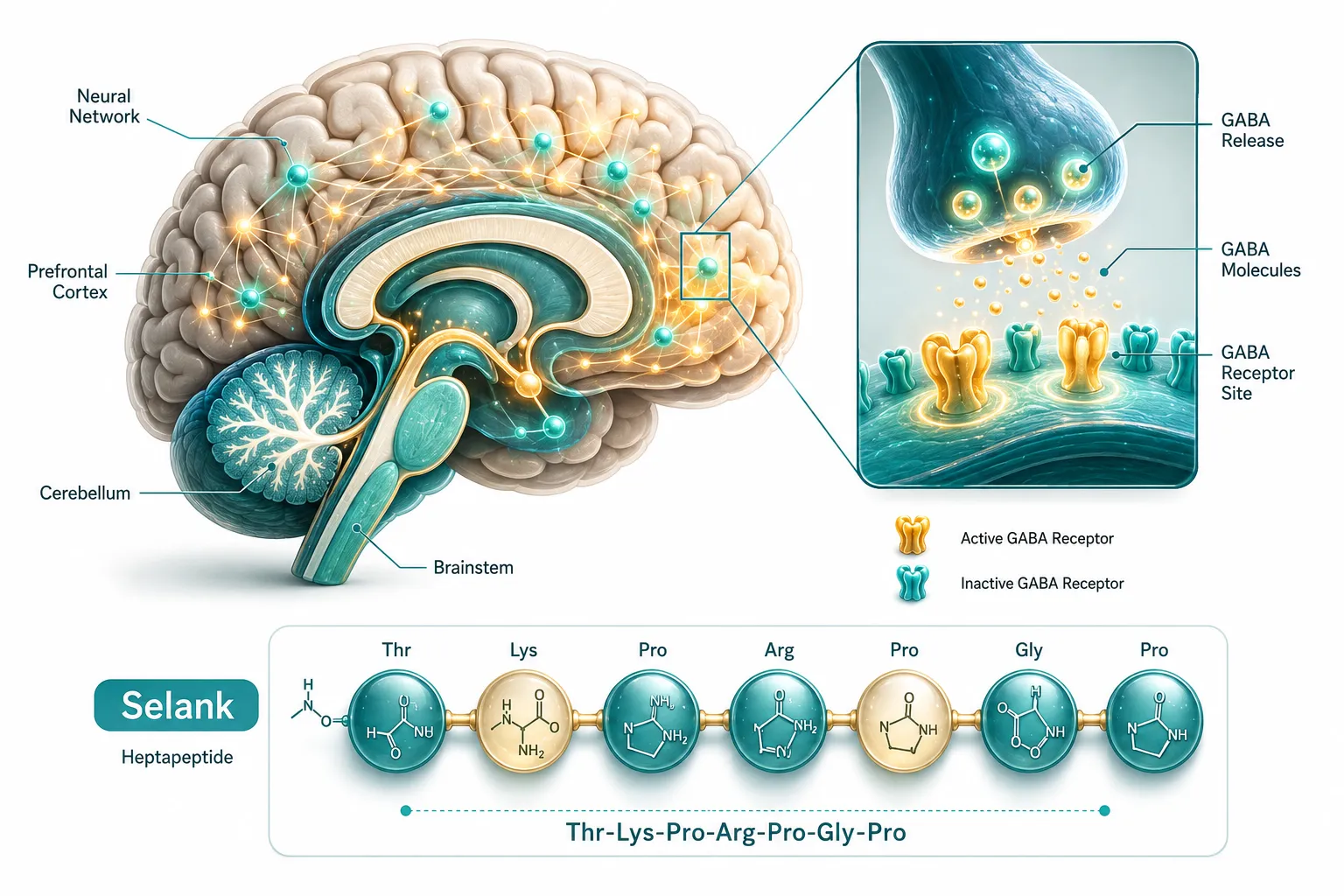
Semax nasal spray peptide mechanism brain delivery diagram

Mechanism of Action: What Semax Does in the Brain

Semax (Met-Glu-His-Phe-Pro-Gly-Pro) is a synthetic analog of the adrenocorticotropic hormone fragment ACTH 4-7. Unlike the parent hormone, Semax carries no adrenal activity. Instead, its biological interest lies in the central nervous system.

Primary mechanisms under investigation include:

Mechanism Target System Research Significance
BDNF upregulation Hippocampus, prefrontal cortex Memory consolidation, neuroplasticity
Dopaminergic modulation Mesolimbic pathway Attention, motivation circuits
Serotonin system interaction Raphe nuclei Mood-adjacent cognitive function
Neuroprotective signaling Oxidative stress pathways Ischemia and stress models

BDNF (brain-derived neurotrophic factor) elevation is the most replicated finding in preclinical Semax literature. Elevated BDNF supports synaptic density and long-term potentiation — processes central to learning and memory paradigms used in neurocognitive research.

Researchers studying neuropeptide biology alongside Semax may find parallel interest in Pinealon neuroprotection research, which examines a related class of short peptides with CNS-targeted action.


Laboratory researcher preparing Semax nasal spray formulation

Intranasal Delivery Route: Why It Changes the Research Equation

The intranasal route is not simply an alternative to injection — it is a fundamentally different pharmacological pathway. When a peptide is administered intranasally, two anatomical corridors matter most:

  1. Olfactory pathway — Peptides contact the olfactory epithelium, cross the cribriform plate, and access the olfactory bulb directly. This bypasses the blood-brain barrier almost entirely.
  2. Trigeminal pathway — A secondary route along trigeminal nerve branches that terminates in the brainstem and cerebellum.

"The olfactory epithelium is, in effect, an open window between the external environment and the central nervous system."

For Semax specifically, this matters because the peptide has a short plasma half-life. Systemic injection exposes Semax to rapid enzymatic degradation before meaningful CNS concentrations are achieved. Intranasal delivery sidesteps this degradation window.

Key formulation variables researchers must control:

  • pH of the solution (optimal range: 4.5–6.5 for mucosal stability)
  • Volume per actuation (typically 100 mcL per nostril in preclinical protocols)
  • Preservative selection (benzalkonium chloride at low concentrations is common but must be documented)
  • Peptide concentration verified by third-party certificate of analysis

Researchers sourcing peptides for intranasal protocols should review certificate of analysis documentation to confirm purity, sterility, and absence of endotoxins before any study begins.


Neurocognitive study design flowchart with brain imaging data

Neurocognitive Study Design: Building a Rigorous Semax Protocol

Designing a valid neurocognitive study around Semax nasal spray for research requires decisions at three levels: subject selection, outcome measurement, and statistical architecture.

Subject and Model Selection

Rodent models (Wistar rats, C57BL/6 mice) dominate the preclinical Semax literature. Ischemia models, chronic stress paradigms, and aging models have all been used. Researchers should pre-register the model rationale and define inclusion/exclusion criteria before dosing begins.

Validated Cognitive Endpoints

Cognitive outcomes must be operationalized. Common instruments include:

  • Morris Water Maze — spatial learning and memory
  • Novel Object Recognition — episodic-like memory
  • Radial Arm Maze — working memory
  • Open Field Test — anxiety-adjacent locomotor behavior (confound control)

Pairing behavioral endpoints with biomarker assays (BDNF ELISA, c-Fos immunohistochemistry) strengthens mechanistic claims.

Dosing and Timeline Considerations

Most published Semax protocols use doses of 25–200 mcg/kg administered once or twice daily. Duration ranges from acute single-dose studies to 28-day chronic exposure designs. Washout periods must be defined when crossover designs are used.

Researchers exploring broader peptide-based cognitive and longevity models may find value in reviewing longevity peptide research frameworks for complementary study design approaches.

For those integrating Semax into multi-peptide panels, understanding how other neuropeptides interact with recovery and tissue biology is essential — the recovery and tissue biology overview provides a useful reference framework.


Conclusion

Semax nasal spray for research — encompassing mechanism, delivery route, and neurocognitive study design — represents one of the more methodologically demanding areas of neuropeptide science. The intranasal route is not a shortcut; it is a precision tool that demands equally precise formulation, sourcing, and study architecture.

Actionable next steps for researchers in 2026:

  1. Confirm peptide purity via independent certificate of analysis before any protocol begins.
  2. Pre-register cognitive endpoints and statistical analysis plans to reduce outcome-reporting bias.
  3. Control for delivery volume, pH, and mucosal contact time as primary formulation variables.
  4. Pair behavioral outcomes with molecular biomarkers to build mechanistic claims.
  5. Review adjacent neuropeptide literature — including Humanin cellular protection research — to contextualize Semax findings within the broader neuroprotective peptide landscape.

Rigorous design is what separates publishable data from noise. In Semax research, that rigor begins at the nasal tip.


References

  • Dolotov, O. V., et al. (2006). Semax, an analog of ACTH(4-7), regulates BDNF and trkB expression in the rat hippocampus. Journal of Neurochemistry, 97(S1), 82–86.
  • Mironova, V. I., et al. (2007). Effects of Semax on the expression of neurotrophins and their receptors in the rat brain during learning. Ross Fiziol Zh Im I M Sechenova, 93(7), 768–775.
  • Illum, L. (2000). Transport of drugs from the nasal cavity to the central nervous system. European Journal of Pharmaceutical Sciences, 11(1), 1–18.
  • Kozlovskaya, M. M., et al. (2003). Semax and its influence on the brain dopaminergic system. Eksperimental'naia i Klinicheskaia Farmakologiia, 66(5), 9–12.
https://www.puretestedpeptides.com/wp-content/uploads/2026/01/buy-peptides-online.jpg 0 0 Pure Tested https://www.puretestedpeptides.com/wp-content/uploads/2026/01/buy-peptides-online.jpg Pure Tested2026-06-24 13:20:102026-07-20 15:02:19Semax Nasal Spray for Research: Mechanism, Delivery Route, and Neurocognitive Study Design
Retatrutide (GLP-1/GIP/GCG) Mechanism of Action: A Triple Agonist Research Guide for Metabolic Studies

Retatrutide (GLP-1/GIP/GCG) Mechanism of Action: A Triple Agonist Research Guide for Metabolic Studies

June 19, 2026/0 Comments/by Pure Tested

Obesity affects more than one billion adults worldwide as of 2026, yet most pharmacological tools target only a single metabolic receptor. Retatrutide breaks from that pattern entirely. This investigational peptide simultaneously activates three distinct receptor systems, making the Retatrutide (GLP-1/GIP/GCG) Mechanism of Action: A Triple Agonist Research Guide for Metabolic Studies one of the most pharmacologically rich subjects in current metabolic research.

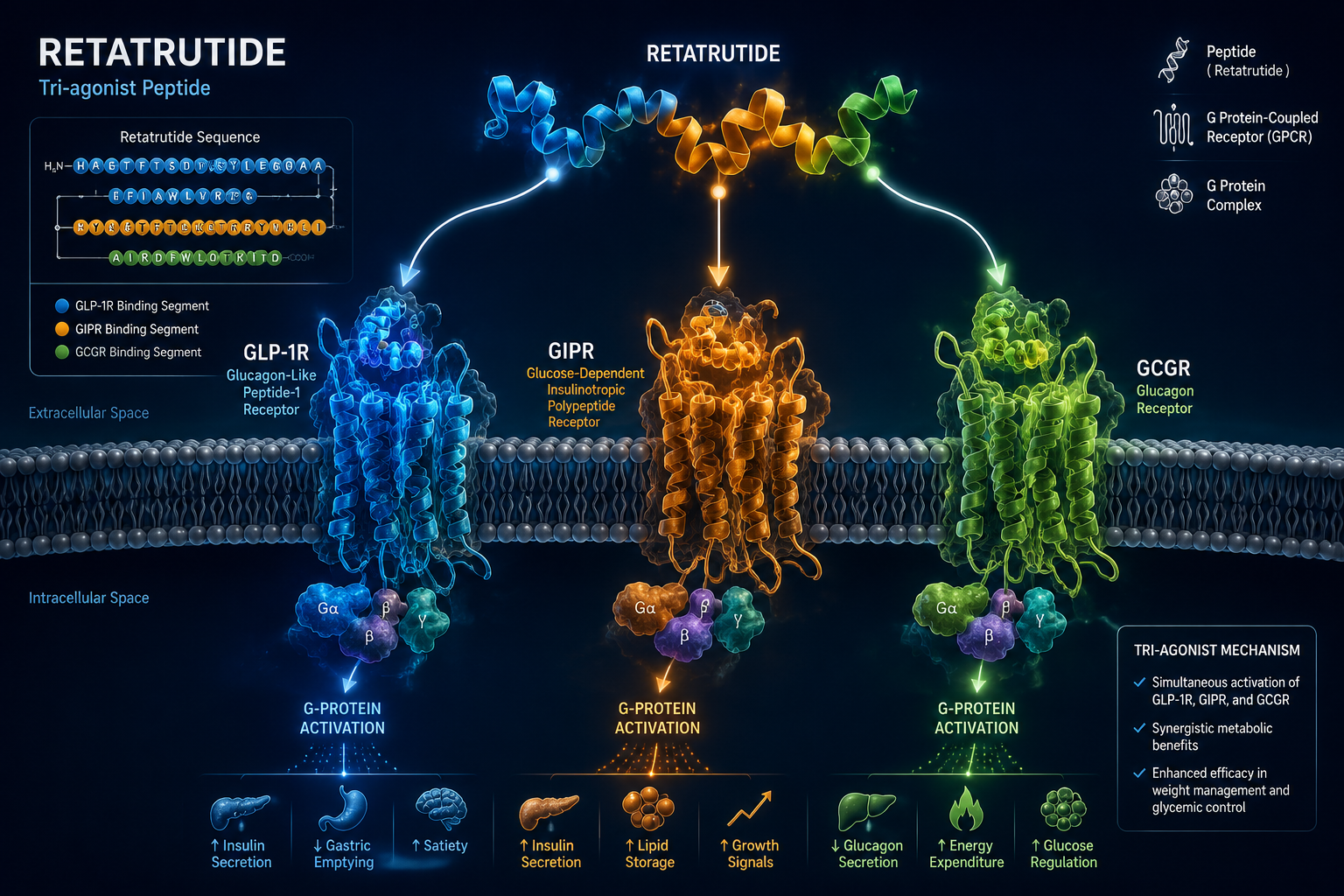
Detailed () scientific diagram showing Retatrutide peptide structure as a 3D ribbon model binding simultaneously to three

Key Takeaways

  • Retatrutide is a unimolecular triple agonist that activates GLP-1, GIP, and glucagon receptors simultaneously.
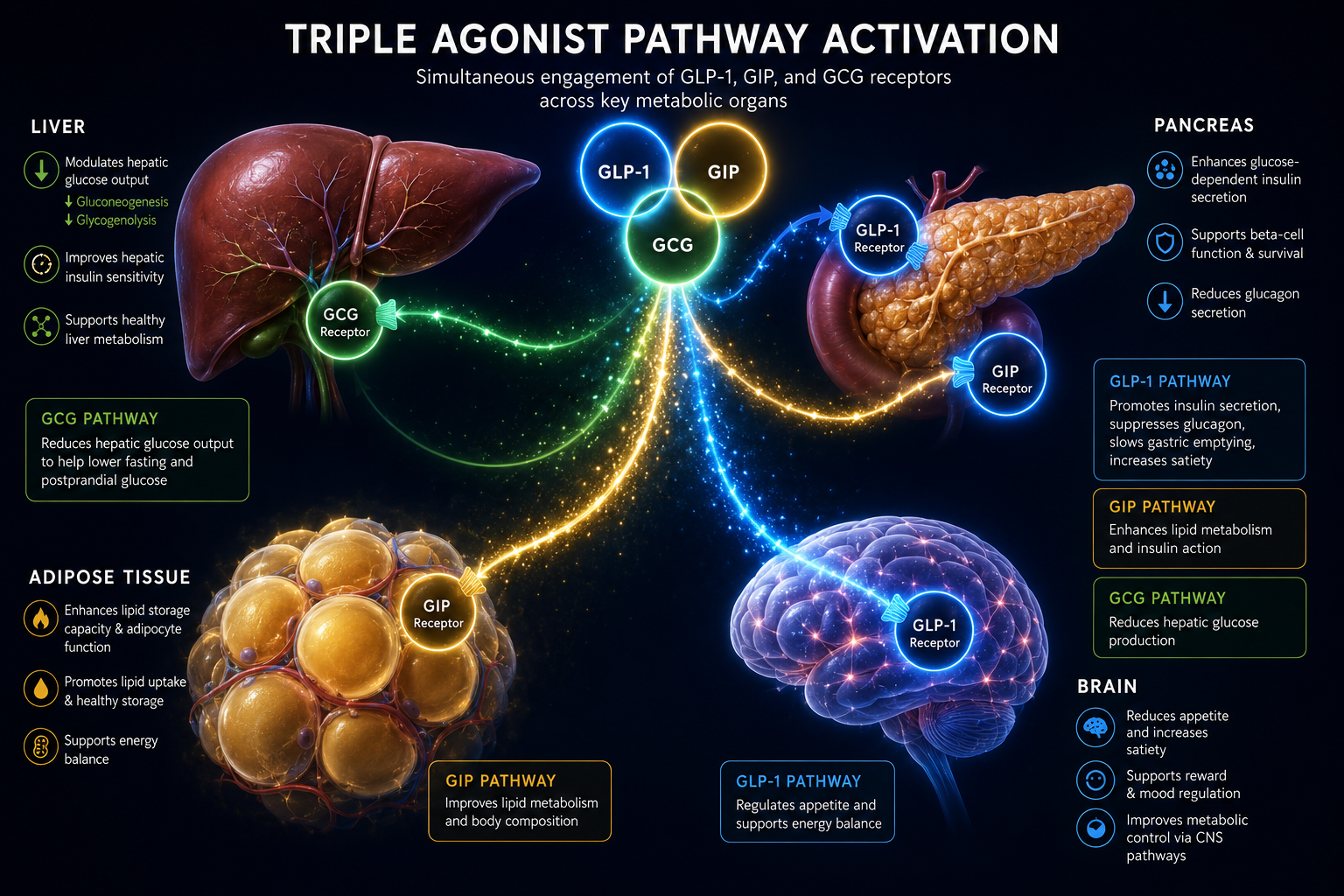
  • Each receptor arm contributes a distinct and complementary metabolic effect, including insulin secretion, lipid regulation, and hepatic glucose control.
  • The compound's design allows coordinated signaling that may exceed the efficacy of single or dual agonists in preclinical metabolic models.
  • Peptide purity and sourcing quality are critical variables when using Retatrutide in controlled research settings.
  • Researchers should treat Retatrutide strictly as a laboratory research compound and not for human therapeutic use outside of clinical trials.

Understanding the Triple Agonist Architecture

The central innovation behind Retatrutide is its unimolecular design. Rather than combining separate peptides into a mixture, Retatrutide is engineered as a single molecule capable of binding three G-protein coupled receptors: the glucagon-like peptide-1 receptor (GLP-1R), the glucose-dependent insulinotropic polypeptide receptor (GIPR), and the glucagon receptor (GCGR).

This architecture matters because each receptor sits in a different tissue and drives a different downstream effect. The molecule must balance agonist activity across all three without allowing one arm to dominate and produce undesirable off-target signaling.

GLP-1 Receptor Arm

GLP-1R activation is the most well-characterized component. When stimulated, this receptor:

  • Promotes glucose-dependent insulin secretion from pancreatic beta cells
  • Suppresses glucagon release from alpha cells
  • Slows gastric emptying, which reduces postprandial glucose spikes
  • Acts on hypothalamic satiety centers to reduce caloric intake

GIP Receptor Arm

GIPR activation adds a complementary layer. GIP works synergistically with GLP-1 to amplify insulin secretion and also plays a direct role in adipose tissue metabolism. In preclinical models, GIPR agonism has been associated with improved lipid handling and reduced lipotoxicity in peripheral tissues.

Glucagon Receptor Arm

GCGR activation is the most counterintuitive component. Glucagon is classically associated with raising blood glucose, so why include it? At calibrated activity levels, GCGR stimulation drives hepatic fat oxidation and increases energy expenditure. When balanced against GLP-1R-mediated insulin secretion, the net glycemic effect remains controlled while thermogenic output increases. This balance is the pharmacological core of the triple agonist strategy.


Receptor Interaction Table

Receptor Primary Tissue Key Research Effect
GLP-1R Pancreas, Brain Insulin secretion, satiety signaling
GIPR Pancreas, Adipose Insulin amplification, lipid regulation
GCGR Liver Hepatic fat oxidation, energy expenditure

Retatrutide (GLP-1/GIP/GCG) Mechanism of Action in Metabolic Research Contexts

Researchers studying metabolic flexibility, adiposity, and hepatic lipid accumulation find the triple agonist framework particularly useful. The compound allows simultaneous interrogation of multiple pathways within a single experimental variable, which simplifies study design compared to combining three separate agents.

Retatrutide (GLP-1/GIP/GCG) Mechanism of Action in Metabolic Research Contexts

For labs already exploring mitochondrial and energy metabolism themes, Retatrutide complements research on compounds like MOTS-c and metabolic flexibility and MOTS-c mitochondrial dynamics, where cellular energy regulation is a shared axis of investigation.

Researchers interested in the GH axis and body composition may also find value in comparing Retatrutide's lipid-mobilizing effects to those studied in tesa lipid mobilization research or AOD-9604 fat metabolism studies.

"The value of a triple agonist is not simply additive — it is architecturally synergistic, with each receptor arm modifying the physiological context in which the others operate."

For direct access to Retatrutide research material, labs can review the GLP-3 Retatrutide product page and the GLP-1 Reta research tag for sourcing context.


Research Quality and Sourcing Considerations

The complexity of a triple agonist peptide demands exceptional synthesis quality. Impurities in any segment of the molecule can distort receptor binding ratios and invalidate experimental results. Researchers should prioritize suppliers with documented quality testing protocols and verifiable purity data.

Research Quality and Sourcing Considerations

When evaluating peptide suppliers, key criteria include:

  • High-performance liquid chromatography (HPLC) purity reports above 98%
  • Mass spectrometry confirmation of molecular weight
  • Sterility and endotoxin testing for injectable-grade research use
  • Batch-specific certificates of analysis

Researchers working across multiple metabolic peptide classes can also explore GLP-1 peptides for research to contextualize Retatrutide within the broader incretin research landscape.


Conclusion

The Retatrutide (GLP-1/GIP/GCG) Mechanism of Action: A Triple Agonist Research Guide for Metabolic Studies reveals a compound that operates at the intersection of endocrinology, metabolic biology, and peptide pharmacology. Its three-receptor architecture offers researchers a powerful tool for studying coordinated metabolic signaling in ways that single or dual agonists cannot replicate.

Actionable next steps for research teams:

  1. Review published preclinical data on GLP-1R/GIPR/GCGR co-activation to establish baseline hypotheses.
  2. Source Retatrutide only from suppliers with full analytical documentation and batch-level purity verification.
  3. Design studies that isolate each receptor contribution using selective antagonists as controls.
  4. Cross-reference findings with parallel research in metabolic flexibility peptides to build a broader mechanistic picture.

Retatrutide represents a frontier in metabolic peptide research. Approaching it with rigorous methodology and verified materials will yield the most meaningful data.

https://www.puretestedpeptides.com/wp-content/uploads/2026/06/Retatrutide-GLP-1GIPGCG-Mechanism-of-Action-A-Triple-Agonist-Research-Guide-for-Metabolic-Studies.png 1024 1536 Pure Tested https://www.puretestedpeptides.com/wp-content/uploads/2026/01/buy-peptides-online.jpg Pure Tested2026-06-19 13:07:222026-07-20 15:02:42Retatrutide (GLP-1/GIP/GCG) Mechanism of Action: A Triple Agonist Research Guide for Metabolic Studies
PT-141 Peptide: Melanocortin Receptor Agonist Research and its Mechanism of Action

PT-141 Peptide: Melanocortin Receptor Agonist Research and its Mechanism of Action

June 19, 2026/0 Comments/by Pure Tested

Only one FDA-approved peptide targets sexual desire directly at the level of the brain rather than the body's vascular system — and that peptide is bremelanotide, better known as PT-141. This distinction makes PT-141 peptide: melanocortin receptor agonist research and its mechanism of action one of the most scientifically compelling areas in modern peptide pharmacology. Unlike conventional approaches that work downstream of arousal, PT-141 engages the central nervous system at the motivational level, opening research pathways that extend well beyond its approved indication.

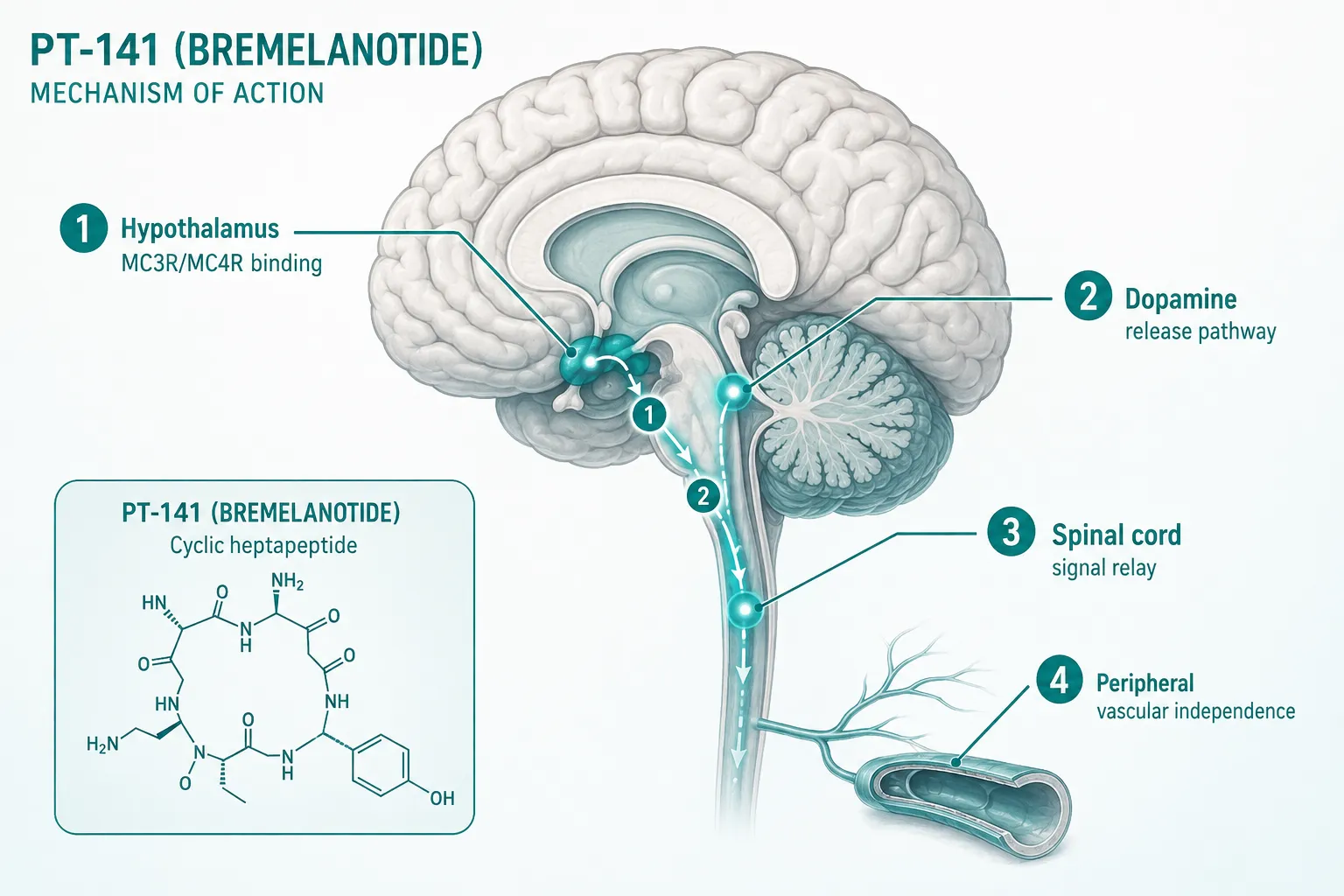
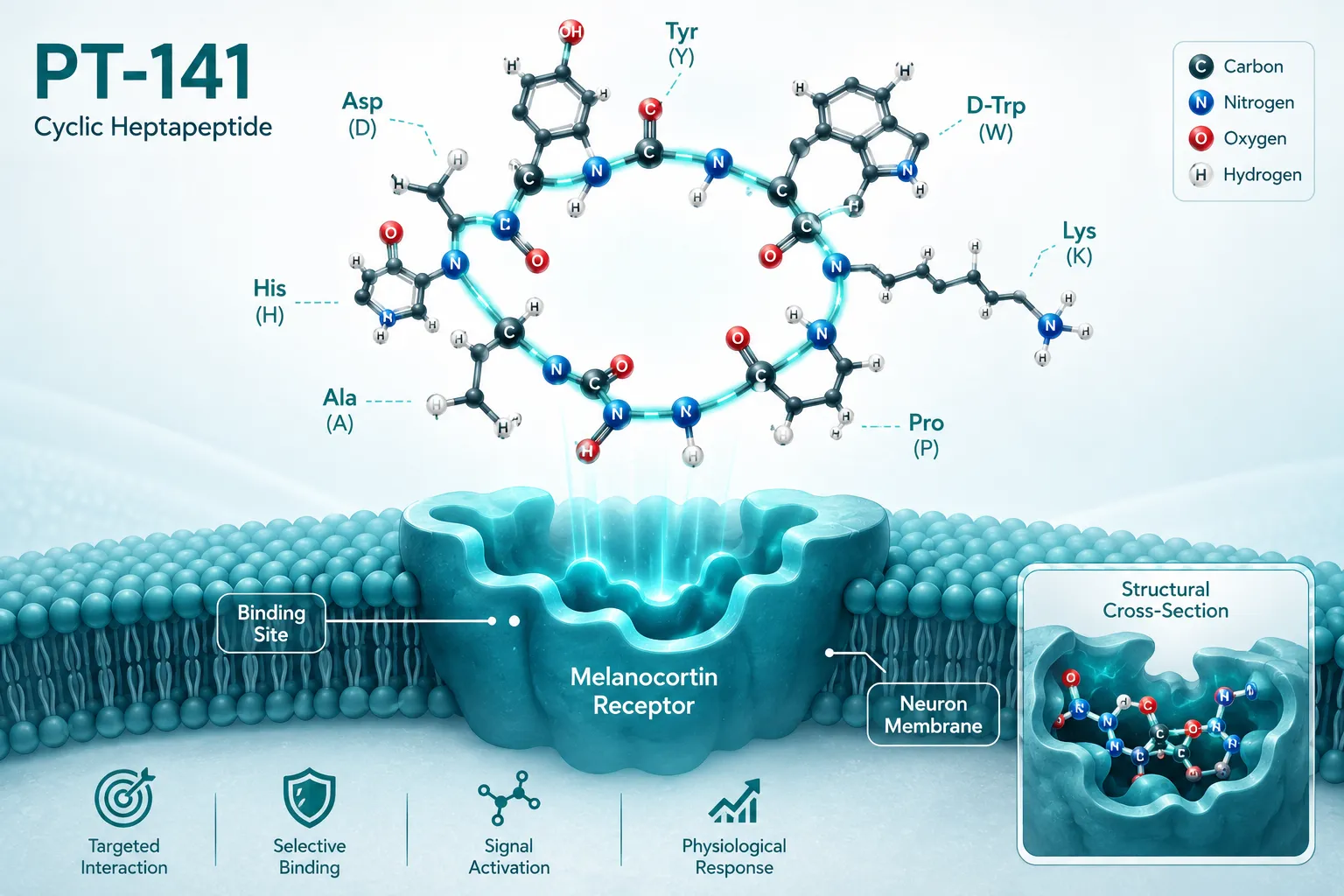
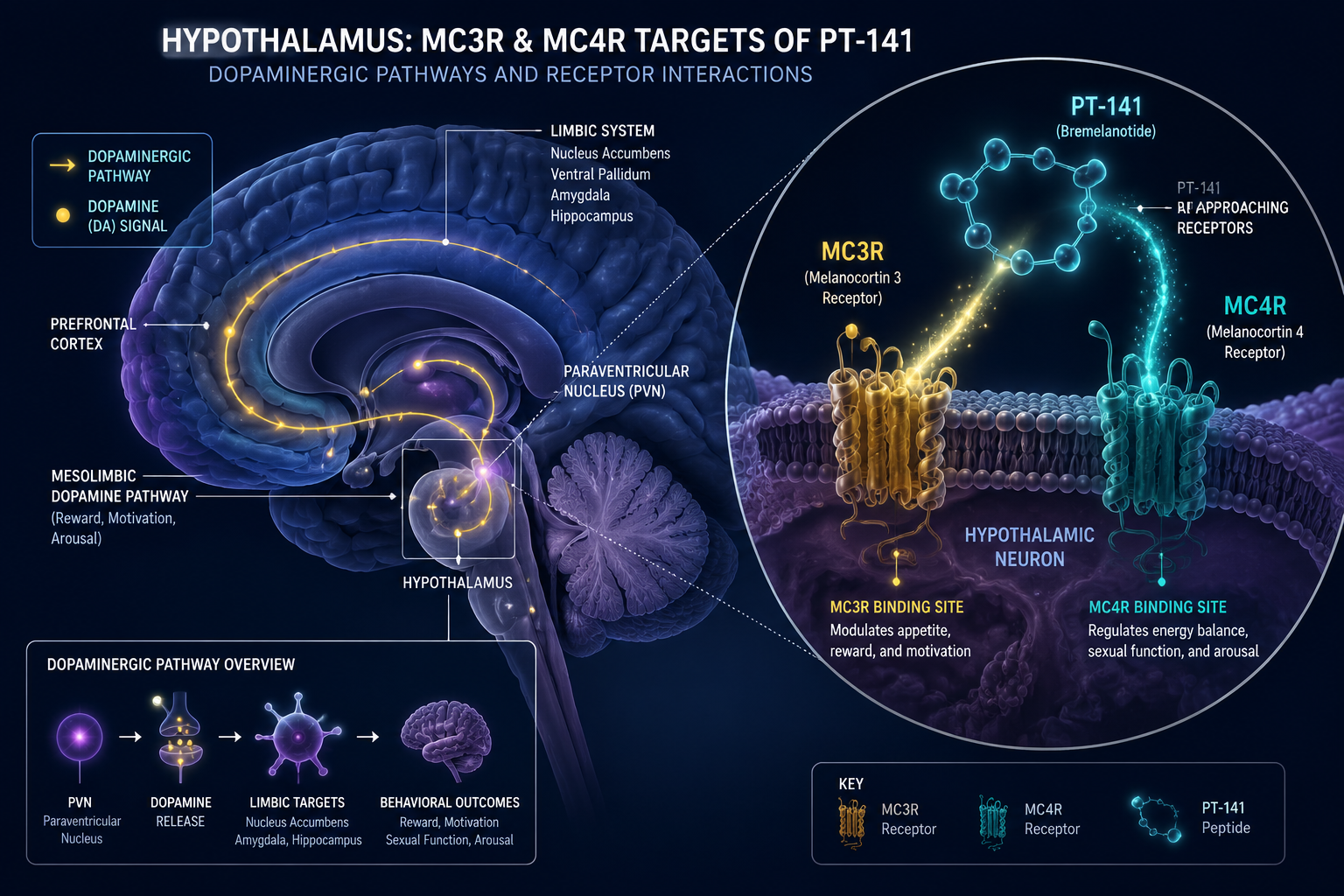
Detailed () scientific diagram illustration showing a cross-sectional view of the human brain hypothalamus with labeled MC3R

Key Takeaways

  • PT-141 is a synthetic cyclic heptapeptide that activates MC3R and MC4R receptors in the hypothalamus and limbic brain regions.
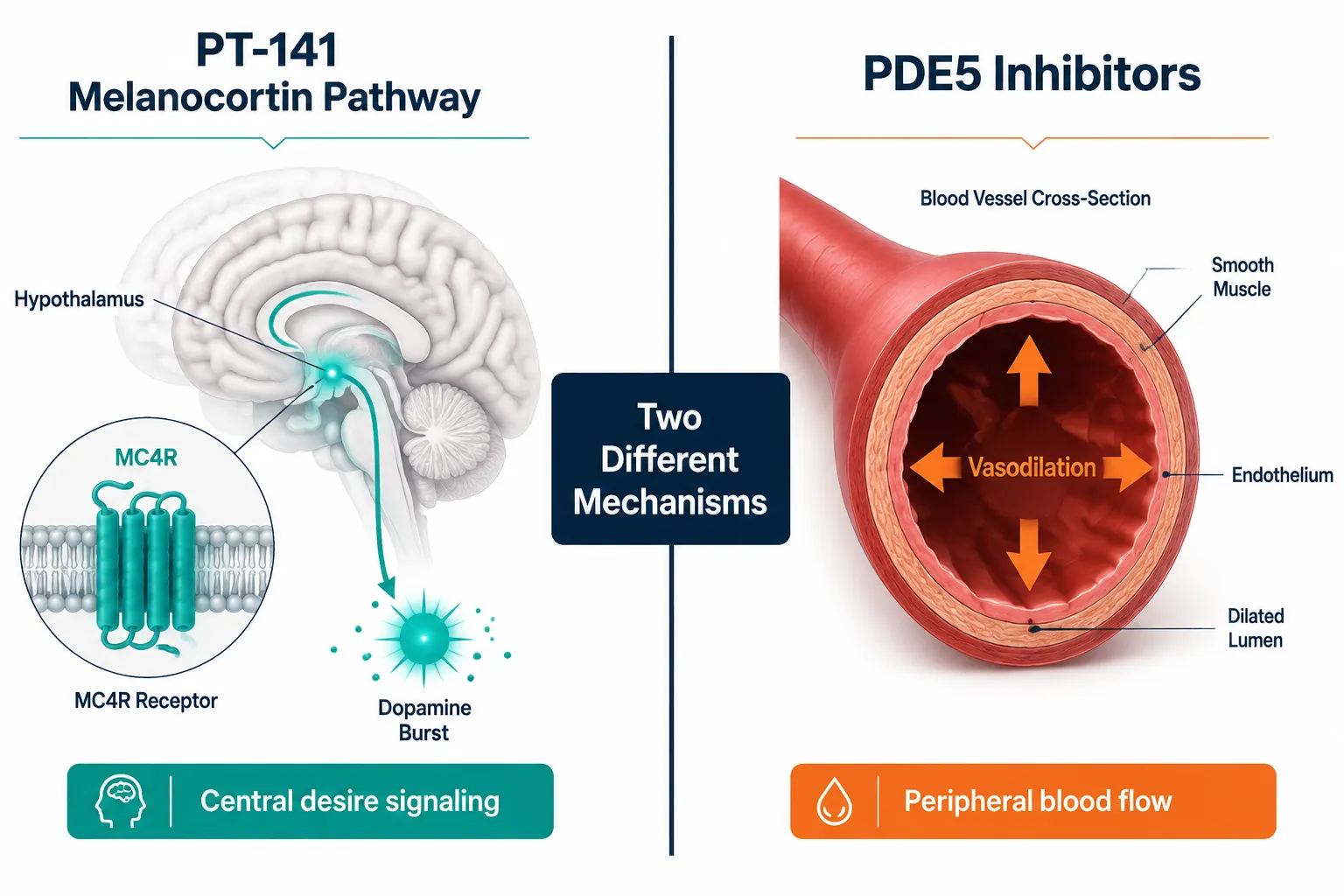
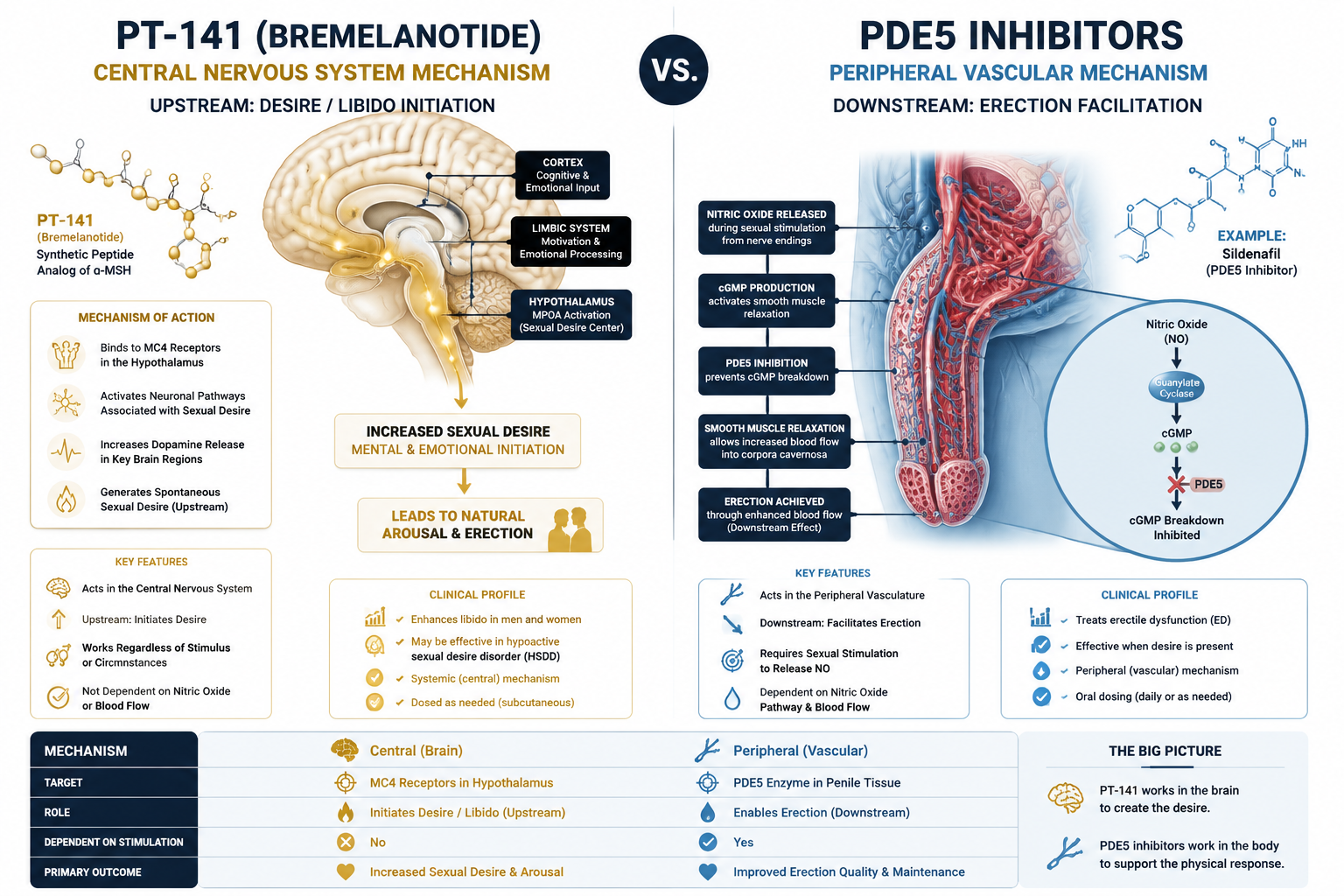
  • Its central mechanism distinguishes it from PDE5 inhibitors, which act peripherally on vascular tissue.
  • PT-141 received FDA approval in 2019 as Vyleesi for hypoactive sexual desire disorder (HSDD) in premenopausal women.
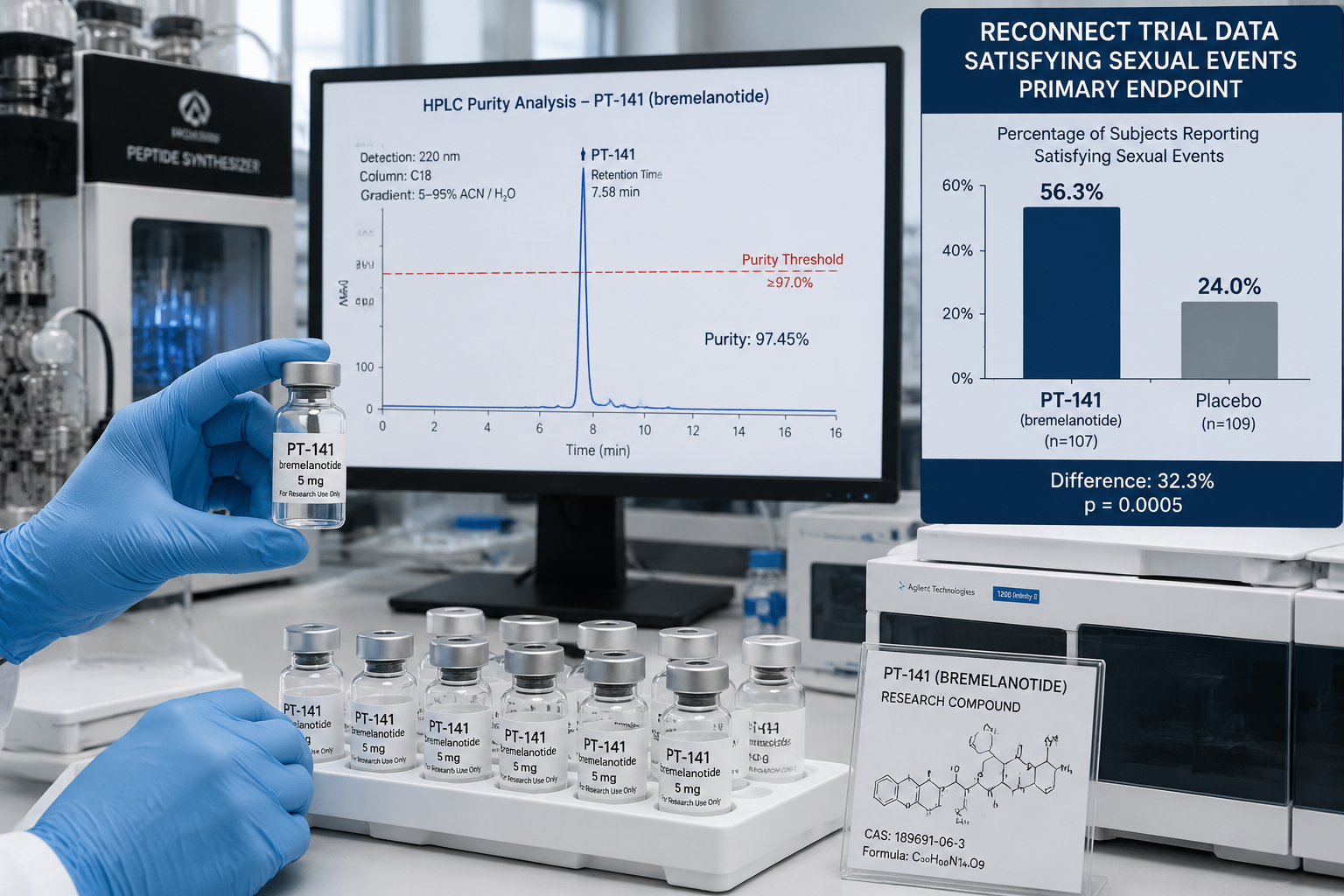
  • Purity standards matter significantly: batches below 97% purity show up to 24% variance in receptor binding affinity.
  • Active research in 2026 continues to map MC4R receptor density in previously uncharted hypothalamic regions.

How PT-141 Engages the Melanocortin System

PT-141 is a cyclic heptapeptide derived from Melanotan II. Its cyclic lactam structure resists enzymatic breakdown, giving it an elimination half-life of approximately 2.7 hours. Importantly, its biological effects persist well beyond plasma clearance, a feature that distinguishes it from linear peptides with similar receptor targets.

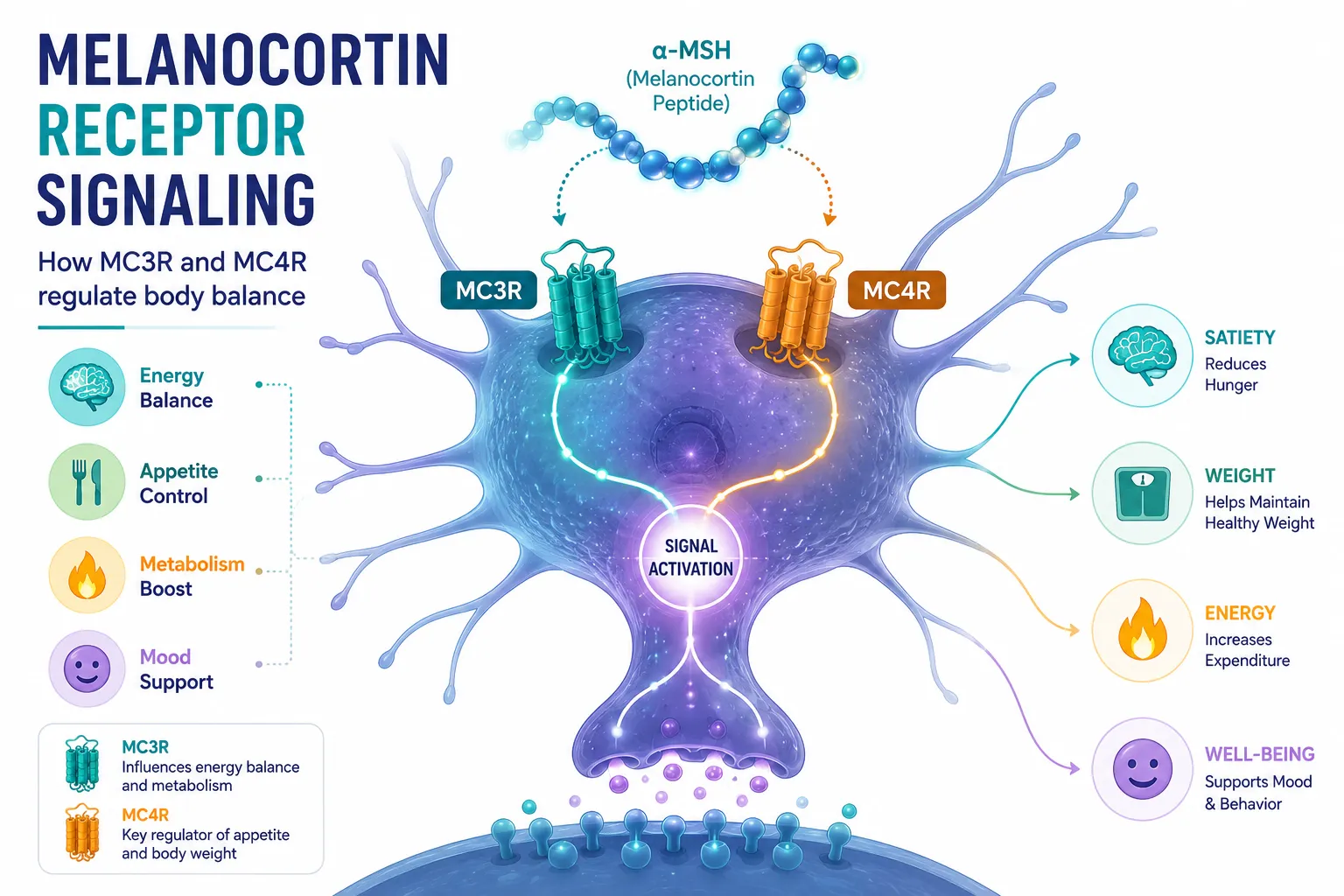
The compound functions as a non-selective agonist at melanocortin receptors, with primary activity at MC3R and MC4R. It bypasses MC1R (which governs pigmentation) and MC2R (which regulates cortisol) almost entirely. This selectivity is central to understanding PT-141 peptide: melanocortin receptor agonist research and its mechanism of action, because it means the compound's effects are routed through neural circuits rather than hormonal or pigmentation pathways.

A multi-institution study published in Nature Communications in early 2026 mapped MC4R receptor density across the paraventricular nucleus (PVN) and the lateral hypothalamic area (LHA) — regions previously under-characterized in melanocortin research. These findings provide a more precise anatomical map of where PT-141 exerts its influence, which has significant implications for targeted research design.

Researchers exploring other neuropeptide systems, such as those studying PT-141 neural and metabolic research themes, will find these receptor mapping results directly applicable to experimental design.


Central vs. Peripheral: A Mechanistic Distinction That Matters

Central vs. Peripheral: A Mechanistic Distinction That Matters

Understanding PT-141 peptide: melanocortin receptor agonist research and its mechanism of action requires a clear comparison with existing pharmacological tools.

PDE5 inhibitors such as sildenafil act peripherally. They enhance the vascular nitric oxide response once sexual stimulation has already occurred. They do not influence desire or motivation — they only amplify the downstream vascular response.

PT-141 operates upstream of arousal, working at the level of desire and motivation by modulating dopaminergic pathways within the hypothalamus and limbic system. This makes it effective in cases where vascular drugs fail or are contraindicated.

Feature PT-141 (Bremelanotide) PDE5 Inhibitors
Site of action Central nervous system Peripheral vasculature
Target receptors MC3R, MC4R Phosphodiesterase-5 enzyme
Requires stimulation No Yes
Primary effect Desire and motivation Vascular response
FDA approval Yes (HSDD in women) Yes (erectile dysfunction)

For researchers interested in how other peptides interact with neuroendocrine systems, the article on neuroendocrine and innate immunity offers useful comparative context.


Clinical Research, Purity Standards, and Emerging Applications

Clinical Research, Purity Standards, and Emerging Applications

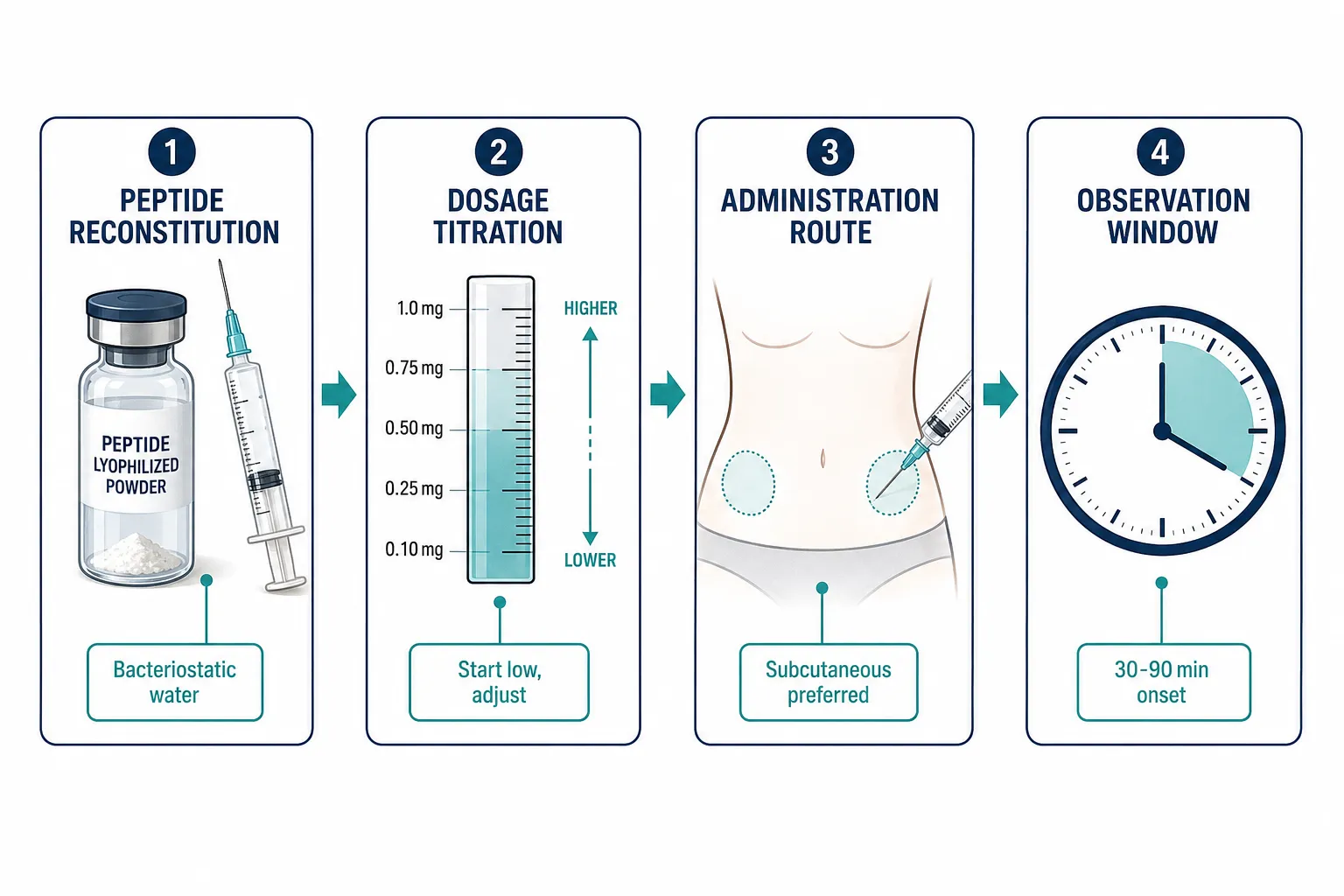
The FDA approved PT-141 in 2019 under the brand name Vyleesi, based on the RECONNECT trials — two Phase 3 randomized controlled trials enrolling over 1,200 premenopausal women with HSDD. Women receiving 1.75 mg subcutaneous PT-141 reported a mean increase of 0.7 satisfying sexual events per month compared to 0.3 in the placebo group. Common side effects included nausea, flushing, and headache, with approximately 40% of participants discontinuing due to adverse effects or lack of efficacy.

Off-label research in men has also produced notable data. A 2024 observational study of 318 men using compounded bremelanotide found that 52% at 1.75 mg reported a strong response, defined as noticeable increases in spontaneous desire and sustained erectile quality. Another 23% reported mild benefit.

Purity is a critical research variable. Research published in the Journal of Peptide Science in early 2026 demonstrated that PT-141 batches below 97% purity showed 18-24% variance in receptor binding affinity compared to pharmaceutical-grade bremelanotide. This finding has driven stricter synthesis and batch testing protocols across the research supply chain. Researchers sourcing peptides should review quality testing protocols before selecting a supplier.

Those comparing PT-141 to other peptides with central or metabolic activity may also find value in reviewing research on MOTS-c, the mitochondrial peptide, or exploring nasal spray peptide delivery formats as alternative administration routes under investigation.

For researchers seeking PT-141 specifically, the PT-141 for sale research page and the PT-141 central arousal research themes page provide additional sourcing and study context.


Conclusion

PT-141 peptide: melanocortin receptor agonist research and its mechanism of action represents a genuinely distinct class of pharmacological investigation. By targeting MC3R and MC4R centrally rather than acting on peripheral vasculature, PT-141 addresses desire and motivation at their neurological source. The 2026 receptor mapping data from the PVN and LHA adds anatomical precision to existing mechanistic models, while updated purity standards reinforce the importance of sourcing high-quality, rigorously tested material.

Actionable next steps for researchers:

  • Prioritize peptide batches verified at 97% purity or above to ensure consistent receptor binding data.
  • Review the latest MC4R receptor density mapping literature when designing hypothalamic stimulation protocols.
  • Compare PT-141's central mechanism against PDE5 inhibitor data in mixed-population study designs.
  • Monitor regulatory developments, as PT-141's FDA-approved status provides a relatively stable compliance baseline heading into any future reclassification reviews.
https://www.puretestedpeptides.com/wp-content/uploads/2026/06/PT-141-Peptide-Melanocortin-Receptor-Agonist-Research-and-its-Mechanism-of-Action.png 1024 1536 Pure Tested https://www.puretestedpeptides.com/wp-content/uploads/2026/01/buy-peptides-online.jpg Pure Tested2026-06-19 13:07:062026-07-20 15:02:51PT-141 Peptide: Melanocortin Receptor Agonist Research and its Mechanism of Action
×

Helpful Links

  • My account
  • Cart
  • Checkout
  • Refund and Returns Policy
  • Privacy Policy
  • SMS Privacy Policy
  • Login
  • My Account
  • Logout

USA Made Lab Tested Peptides

All products are sold for research, laboratory, or analytical purposes only, and are not for human consumption


Pure Tested Peptides is a chemical supplier. Pure Tested Peptides is not a compounding / chemical compounding facility as defined under 503A of the Federal Food, Drug, and Cosmetic act. Pure Tested Peptides is not an outsourcing facility as defined under 503B of the Federal Food, Drug, and Cosmetic act.

The statements made within this website have not been evaluated by the US Food and Drug Administration. The products we offer are not intended to diagnose, treat, cure or prevent any disease.

Human/Animal Consumption Prohibited. Laboratory/In-Vitro Experimental Use Only

Scroll to top Scroll to top Scroll to top