

Where to Buy Glow Blend and Klow Blend Peptides Online: Research-Grade vs Cosmetic-Grade Sourcing and Quality Control
Less than 30% of peptide products sold online include a verifiable third-party Certificate of Analysis, yet buyers routinely pay premium prices assuming research-grade purity. For anyone navigating where to buy Glow Blend and Klow Blend peptides online, understanding the difference between research-grade and cosmetic-grade sourcing is not just a matter of preference; it directly affects the integrity of any study or protocol that depends on these compounds.
Key Takeaways
- Glow Blend and Klow Blend are distinct multi-peptide formulations with different compositional targets and mechanisms of action.
- Research-grade products must carry third-party Certificates of Analysis (COAs) confirming purity, sequence accuracy, and absence of contaminants.
- Cosmetic-grade or cosmetic-positioned products may use the same ingredient names but lack the documentation required for rigorous research use.
- Red flags in vendor marketing include vague purity claims, no HPLC data, and language implying direct human therapeutic use.
- Sourcing from vendors who publish transparent COAs and maintain research-only disclaimers is the safest approach for legitimate research purposes.
Understanding Glow Blend and Klow Blend: Composition and Purpose
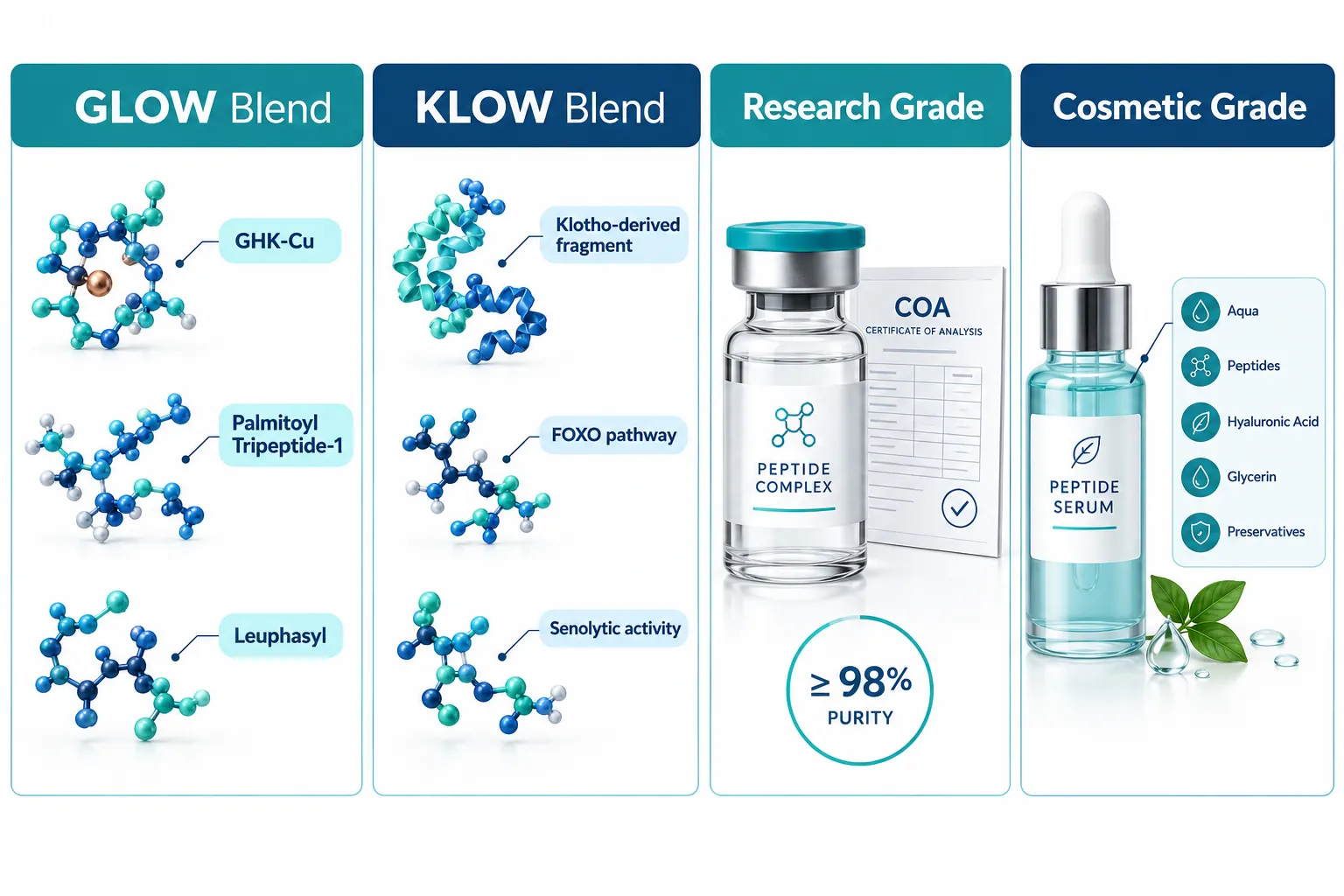
Glow Blend is a multi-peptide formulation typically built around skin-targeted bioactive peptides such as GHK-Cu (copper tripeptide-1), Palmitoyl Tripeptide-1, and signal peptides like Leuphasyl. These components are selected for their studied roles in collagen synthesis signaling, oxidative stress modulation, and dermal matrix support. In a research context, Glow Blend is examined for its potential effects on fibroblast activity and extracellular matrix remodeling.
Klow Blend takes a different mechanistic angle. It is formulated around Klotho-derived peptide fragments, which are of significant interest in longevity and cellular senescence research. Klotho-related peptides are studied for their interactions with FOXO signaling pathways, fibroblast growth factor receptors, and potential senolytic-adjacent activity. Klow Blend is therefore positioned more firmly in the anti-aging and cellular biology research space, rather than the topical cosmetic space.
The distinction matters enormously when sourcing. Because Glow Blend overlaps with cosmetic ingredient categories, it occupies a gray zone where cosmetic-grade and research-grade products can appear nearly identical on a product page. Klow Blend, being less mainstream, is more consistently sold through research-oriented channels, but that does not guarantee quality by default.
For broader context on how peptide blends are structured and categorized, the Peptides 101 for Research-Use Only Buyers guide provides a strong foundation.
Research-Grade vs Cosmetic-Grade: What the Distinction Actually Means
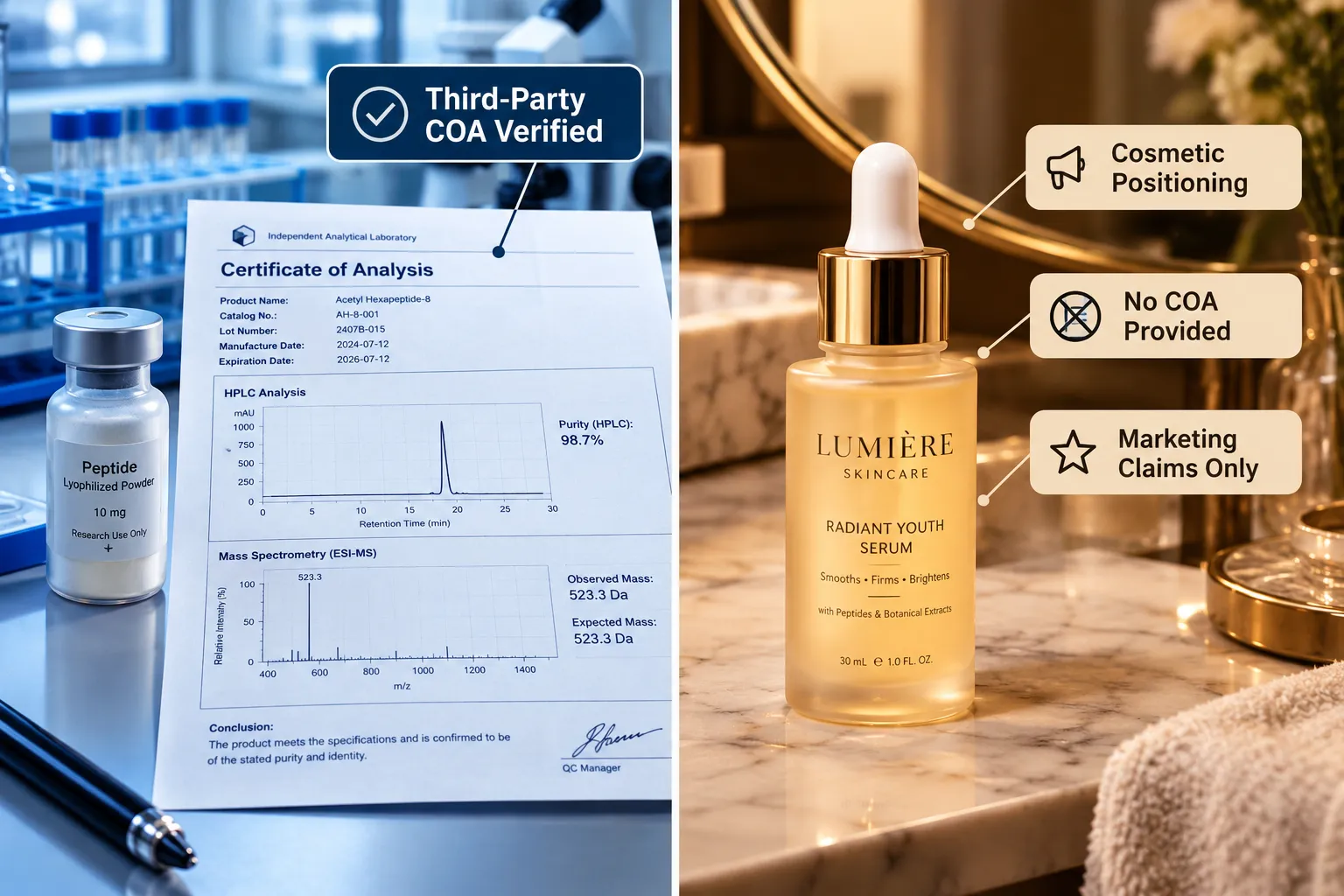
The terms "research-grade" and "cosmetic-grade" are not always defined consistently across the industry, which creates real confusion for buyers. Here is what each designation should mean in practice:
Research-Grade Standards
- Purity of 98% or higher, confirmed by HPLC (High-Performance Liquid Chromatography)
- Mass spectrometry verification of correct amino acid sequence
- Endotoxin testing results included on the COA
- Sterility or microbial testing documentation
- Batch-specific COA linked to the product lot number
- Clear "for research use only" labeling, not intended for human consumption
Cosmetic-Grade Standards
- Purity thresholds are lower and often unspecified
- COAs may be absent, generic, or not batch-specific
- Formulated for topical application, not injection or reconstitution
- May include preservatives, emulsifiers, or carrier ingredients not suitable for research
- Often sold with marketing language implying direct skin or health benefits
"A COA without an HPLC chromatogram attached is not a COA, it is a label."
This distinction is especially critical for Glow Blend, where cosmetic serum brands and research peptide vendors may use nearly identical product names. A buyer who does not check for batch-specific HPLC data could easily purchase a cosmetic formulation while believing they have secured a research-grade compound.
Similar sourcing diligence applies to other research peptide blends. Buyers exploring BPC-157 and TB-500 blend products will recognize the same documentation requirements.
Where to Buy Glow Blend and Klow Blend Peptides Online: Vendor Evaluation Framework
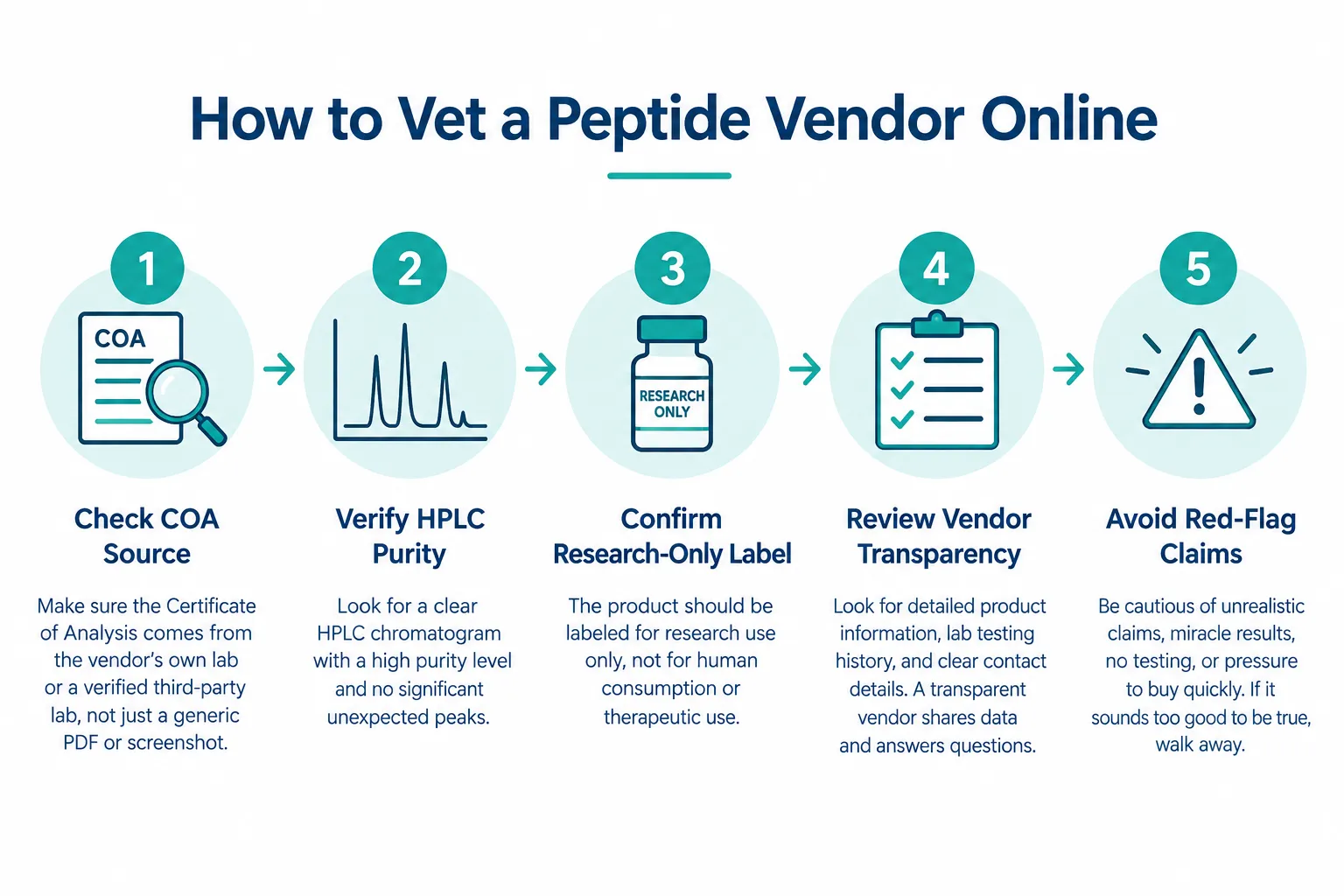
Knowing where to buy Glow Blend and Klow Blend peptides online requires a structured approach to vendor evaluation. The following framework helps separate credible research suppliers from cosmetic-adjacent or low-quality sources.
Step 1: Confirm Third-Party COA Availability
Every legitimate research-grade vendor publishes batch-specific COAs from independent laboratories. The COA should include:
- HPLC purity percentage (target: 98%+)
- Mass spectrometry confirmation
- Endotoxin levels
- The specific lot number matching the product being sold
If a vendor links to a generic or undated COA, treat it as a red flag.
Step 2: Evaluate Research-Only Disclaimers
Reputable vendors clearly state that their products are sold for laboratory and research purposes only, not for human use. Vendors who use language like "supports glowing skin" or "clinically shown to reduce wrinkles" without referencing controlled research are blurring the line between cosmetic marketing and research supply, and may not be held to research-grade standards.
Step 3: Assess Vendor Transparency
Look for vendors who publish:
- Ingredient sourcing disclosures
- Manufacturing location or GMP (Good Manufacturing Practice) compliance statements
- Contact information for technical or scientific inquiries
- Clear return and quality guarantee policies
Buyers sourcing other specialized peptides can apply the same framework. Resources like the guide on where to buy SS31 and Epithalon online demonstrate what transparent vendor communication looks like in practice.
Red Flags to Avoid
- Purity claims with no supporting HPLC data
- COA dated more than 12 months ago with no batch reference
- Product descriptions using therapeutic or cosmetic benefit language
- No research-use-only disclaimer anywhere on the product page
- Vague sourcing statements like “pharmaceutical grade” without documentation
Quality Control Practices: What Separates Top-Tier Suppliers
For both Glow Blend and Klow Blend, the highest-quality research suppliers in 2026 follow a consistent quality control model:
| QC Element | What to Look For |
|---|---|
| HPLC Testing | Batch-specific chromatogram attached to COA |
| Mass Spec | Sequence confirmation for each peptide component |
| Endotoxin | Results below 1 EU/mg for injectable-grade research |
| Sterility | Microbial testing documentation available |
| Packaging | Lyophilized powder in sealed, labeled vials with lot number |
Klow Blend, given its Klotho-derived peptide components, requires particular attention to sequence fidelity. Even minor synthesis errors in Klotho fragment peptides can alter receptor binding behavior, making mass spectrometry confirmation non-negotiable for serious research applications.
For researchers interested in how peptide endocrine interactions are documented and verified, the article on peptides and polypeptides in endocrine pharmacology offers useful mechanistic context.
Regulatory Context and the Telehealth Gray Zone
A growing number of telehealth and concierge wellness services in 2026 are incorporating peptide blends, including Glow Blend formulations, into supervised protocols. This creates a secondary market where research-grade compounds are sourced by practitioners for use in patient-adjacent contexts.
This practice exists in a regulatory gray zone. In the United States, peptides sold as research chemicals are not FDA-approved for human therapeutic use. Practitioners sourcing these compounds bear responsibility for verifying purity and safety documentation. Buyers in this space should be especially rigorous about COA verification and should not assume that a telehealth provider's use of a compound implies regulatory approval.
Understanding peptide dosing considerations is a related area where documentation quality directly affects research validity and safety.
Conclusion
Sourcing Glow Blend and Klow Blend peptides online in 2026 demands more than finding a vendor with a professional-looking website. The gap between cosmetic-grade and research-grade products is real, measurable, and consequential for anyone conducting legitimate research or operating within a supervised protocol.
Actionable next steps:
- Request batch-specific COAs with HPLC chromatograms before purchasing any Glow or Klow Blend product.
- Verify that the vendor uses clear research-only disclaimers and avoids therapeutic benefit language.
- Cross-reference endotoxin and mass spectrometry data for Klow Blend products specifically, given the sequence sensitivity of Klotho-derived fragments.
- Avoid vendors who cannot provide direct contact for scientific or technical questions.
- Use the vendor evaluation framework above as a repeatable checklist for every new supplier.
Quality documentation is not a bureaucratic formality, it is the foundation of reproducible, trustworthy research.