Call or Text 727-513-9780
  • Shopping Cart Shopping Cart
    0Shopping Cart
Pure Tested Peptides | America's most trusted Peptides for sale online
  • Peptides for sale
    • Oral Peptides for sale
      • Peptide Capsules for sale
      • BPC 157 Capsules 1000mcg
      • SLU-PP-332 Capsules | 1000 mcg
      • 5-Amino-1MQ 50mg Capsules
      • Tesofensine 500mcg
    • All Peptides for sale
    • Peptide Sprays
      • BPC 157 Nasal Spray Kit
      • BPC-157 TB500 Nasal Spray Kit
      • Semax Nasal Spray 10mg
      • Selank – Nasal Spray Kit – 10mg
      • Epithalon 50MG Nasal Spray Kit
      • Ipamorelin 10mg Nasal Spray
      • Klow Nasal Spray (BPC-157 + TB-500 + GHK-Cu + KPV) | 80mg
      • Hulk Nasal Spray Tesa / Ipa Blend 6/3 MG
      • Klow Nasal Spray
      • NAD + 500 mg Nasal Spray
      • PT-141 Nasal Spray Kit
    • GHRH Peptides
      • Ipa Peptides
      • CJC-1295 Peptides
        • CJC-1295 with DAC 5 mg
        • CJC-1295 without DAC 5 mg
        • CJC-1295 Ipa 10mg
      • Tesa Peptides
        • Tesa Peptide
        • Tesa 20 mg
    • GHK-Cu Peptides
      • All GHK-Cu Peptides
      • GHK-Cu 100mg
      • KLOW Peptide Blend – Buy KLOW blend online
    • BPC Peptides
      • All BPC Peptides
      • BPC-157
      • BPC-157 TB-500
      • BPC 157 capsules 1000mcg
    • SLU-PP-332 Peptides
      • All SLU-PP-332 Peptides
      • SLU-PP-332 5mg
    • GLP3 Peptides
      • GLP3-R
      • GLP3-R CAG 10mg
      • GLP3-R 20mg
    • PT-141 Peptides
      • PT-141 Peptides for sale
      • PT-141 10mg
      • PT-141 Nasal Spray
    • CAG Peptides
      • Lipo-C Peptide Blend
      • CAG 5mg
      • CAG 10mg
    • MOTS-C Peptides
      • MOTS-C Peptides for sale
      • MOTS-c peptide
      • MOTS-c 10mg *6 pack*
    • 5 Amino 1MQ Peptides
      • 5 Amino 1MQ Peptides for sale
      • 5-Amino-1MQ 50mg Capsules
      • 5-Amino-1MQ 5mg
    • Epithalon Peptides
      • Epithalon Peptides for sale
      • Epithalon 10mg
      • Epithalon 50mg
  • Shop
    • GLPs
      • 5-Amino-1MQ 50mg Capsules
      • 5-Amino-1MQ 5mg
      • GLP3-Reta
      • L-Carnitine 500mg/ml
      • Tesofensine 500mcg
      • SLU-PP-332 5mg
      • MOTS-c 10mg *6 pack*
    • Epithalon & BPC Peptides
      • Epithalon 10mg
      • Epithalon 50mg
      • BPC-157
      • BPC 157 capsules 1000mcg
      • BPC-157 TB-500
      • BPC-157 TB500 Nasal Spray Kit
      • BPC 157 Nasal Spray Kit
    • BPC TB-500 & NAD+ Peptides
      • NAD+ 500 mg
      • KLOW Peptide Blend – Buy KLOW blend online
      • GLOW Peptide Blend
      • TB 500 5mg
      • BPC 157 capsules 1000mcg – Supplement
      • BPC 157 Nasal Spray Kit
      • BPC-157
      • BPC-157 TB500 Nasal Spray Kit
      • BPC-157 TB-500
      • BPC 157 capsules 1000mcg
    • LL-37 Peptide
      • LL-37 10 mg
    • MOTS-C & Selank
      • MOTS-c peptide
      • Selank 10mg
    • GHK Peptides
      • GHK-Cu 100mg
      • GLOW Peptide Blend
      • KLOW Peptide Blend – Buy KLOW blend online
  • COAs
  • Wholesale
    • Wholesale Peptides for sale
  • PTP FAQ
  • Affiliates
    • Selank Peptide: Advanced Pharmacological Mechanisms Underlying Its Anxiolytic and Nootropic Effects in Research
      • 5-Amino-1MQ Peptide: Detailed Mechanisms of NNMT Inhibition and Its Impact on Cellular Metabolism Research
        • MOTS-C Peptide: Unraveling Its Role in Mitochondrial Dynamics and Energy Metabolism Research
          • Epithalon Peptide and Telomerase Regulation: Investigating Its Impact on Cellular Senescence and Lifespan Research Models
            • GLP2-T vs GLP2 Tirz Peptide: Understanding the Naming, Mechanistic Nuances, and Research Implications for Gut Health
      • Peptides and Polypeptides in Modern Pharmacology: What Research on Metoprolol, Prednisone, and Amlodipine Reveals
        • Polypeptide Peptides vs NSAIDs: What Naproxen and Diclofenac Teach Tissue-Repair Researchers About BPC‑157 and TB‑500
          • Peptides and Polypeptides in Endocrine Pharmacology: How GLP-1, GLP-2, and GLP-3 Retatrutide Differ From Classic Drugs Like Prednisone and Amlodipine
          • 5‑Amino‑1MQ Peptide and NNMT Inhibition: How It Compares With Statins Like Atorvastatin in Adipose and Lipid Metabolism Research
      • Enclomiphene, Estrogen Receptor Signaling, and Luteinizing Phase Biology: What Hormone Researchers Should Measure
        • Mesenchymal Stem Cells, BPC‑157, and GHK‑Cu: How Tissue Repair Peptides Compare With Classic NSAIDs Like Naproxen in Injury Models
          • Peptide Calculator Use Cases Beyond Growth Hormone: Working Through GLP‑3 Retatrutide, MOTS‑c, and BPC‑157 Research Dosing
        • Polypeptide Peptides in Endocrine and Metabolic Pharmacology: Lessons From Amlodipine, Prednisone, and Metoprolol
        • Peptides Calculator for Advanced Blends: Worked Examples for Tesamorelin, CJC‑1295, and Ipamorelin Stacks
          • Peptides and Polypeptides in Human Physiology: How Molecular Size Shapes Research Applications
            • Selank Peptide: Advanced Pharmacological Mechanisms Underlying Its Anxiolytic and Nootropic Effects in Research
          • 5-Amino-1MQ Peptide: Detailed Mechanisms of NNMT Inhibition and Its Impact on Cellular Metabolism Research
            • MOTS-C Peptide: Unraveling Its Role in Mitochondrial Dynamics and Energy Metabolism Research
              • Epithalon Peptide and Telomerase Regulation: Investigating Its Impact on Cellular Senescence and Lifespan Research Models
                • GLP2-T vs GLP2 Tirz Peptide: Understanding the Naming, Mechanistic Nuances, and Research Implications for Gut Health
                  • Peptides and Polypeptides in Endocrine Pharmacology: How GLP-1, GLP-2, and GLP-3 Retatrutide Differ From Classic Drugs Like Prednisone and Amlodipine
                    • Polypeptide Peptides vs NSAIDs: What Naproxen and Diclofenac Teach Tissue-Repair Researchers About BPC‑157 and TB‑500
                      • Peptides and Polypeptides in Modern Pharmacology: What Research on Metoprolol, Prednisone, and Amlodipine Reveals
                        • 5‑Amino‑1MQ Peptide and NNMT Inhibition: How It Compares With Statins Like Atorvastatin in Adipose and Lipid Metabolism Research
                        • Enclomiphene, Estrogen Receptor Signaling, and Luteinizing Phase Biology: What Hormone Researchers Should Measure
                        • Mesenchymal Stem Cells, BPC‑157, and GHK‑Cu: How Tissue Repair Peptides Compare With Classic NSAIDs Like Naproxen in Injury Models
                        • Peptide Calculator Use Cases Beyond Growth Hormone: Working Through GLP‑3 Retatrutide, MOTS‑c, and BPC‑157 Research Dosing
                        • Polypeptide Peptides in Endocrine and Metabolic Pharmacology: Lessons From Amlodipine, Prednisone, and Metoprolol
                        • Peptides Calculator for Advanced Blends: Worked Examples for Tesamorelin, CJC‑1295, and Ipamorelin Stacks
                        • Peptides and Polypeptides in Human Physiology: How Molecular Size Shapes Research Applications
                        • Selank Peptide: Advanced Pharmacological Mechanisms Underlying Its Anxiolytic and Nootropic Effects in Research
                        • MOTS-C Peptide: Unraveling Its Role in Mitochondrial Dynamics and Energy Metabolism Research
                        • Peptides and Polypeptides in Modern Pharmacology: What Research on Metoprolol, Prednisone, and Amlodipine Reveals
                        • Peptides and Polypeptides in Endocrine Pharmacology: How GLP-1, GLP-2, and GLP-3 Retatrutide Differ From Classic Drugs Like Prednisone and Amlodipine
                        • 5-Amino-1MQ Peptide: Detailed Mechanisms of NNMT Inhibition and Its Impact on Cellular Metabolism Research
                        • Mesenchymal Stem Cells, BPC‑157, and GHK‑Cu: How Tissue Repair Peptides Compare With Classic NSAIDs Like Naproxen in Injury Models
                        • Peptide Calculator Use Cases Beyond Growth Hormone: Working Through GLP‑3 Retatrutide, MOTS‑c, and BPC‑157 Research Dosing
                        • GLP2-T vs GLP2 Tirz Peptide: Understanding the Naming, Mechanistic Nuances, and Research Implications for Gut Health
                        • Polypeptide Peptides in Endocrine and Metabolic Pharmacology: Lessons From Amlodipine, Prednisone, and Metoprolol
                        • Polypeptide Peptides vs NSAIDs: What Naproxen and Diclofenac Teach Tissue-Repair Researchers About BPC‑157 and TB‑500
                        • Peptides and Polypeptides in Human Physiology: How Molecular Size Shapes Research Applications
                        • Peptides Calculator for Advanced Blends: Worked Examples for Tesamorelin, CJC‑1295, and Ipamorelin Stacks
                        • 5‑Amino‑1MQ Peptide and NNMT Inhibition: How It Compares With Statins Like Atorvastatin in Adipose and Lipid Metabolism Research
                        • Enclomiphene, Estrogen Receptor Signaling, and Luteinizing Phase Biology: What Hormone Researchers Should Measure
                        • Epithalon Peptide and Telomerase Regulation: Investigating Its Impact on Cellular Senescence and Lifespan Research Models
                        • Best research protocol Klow blend
                        • best time to take BPC-157
                        • best time to take DSIP (Delta Sleep Inducing Peptide)
                        • best time to take CJC-1295
                        • best time to take AOD-9604
                        • best time to take Follistatin 344
                        • best time to take Ipamorelin
                        • best time to take MK-677 (Ibutamoren)
                        • best time to take Ligandrol (LGD-4033) — research compound
                        • best time to take Ostarine (MK-2866) — research compound
                        • best time to take GHK-CU
                        • best time to take TB-500
                        • best time to take MOTS-c
                        • best time to take Semax
                        • best time to take RAD-140 (Testolone) — research compound
                        • best time to take Thymosin Alpha-1
                        • best time to take PEG-MGF
                        • Biolife Plasma, Octapharma Plasma, and Research Peptides: How Plasma Donation Labs Differ From Peptide Suppliers
                        • best time to take YK-11 — research compound
                        • best time to take PT-141 (Bremelanotide)
                        • Best research protocol Klow blend
                        • 5-Amino-1MQ and MOTS-C Synergy: Metabolic Signaling, Mitochondria, and Research Design
                        • BPC-157 and TB-500: Investigating Their Combined Effects on Angiogenesis and Cellular Migration in Tissue Repair Models
                        • BPC-157 Peptide: Gut Barrier Function, Inflammation, and Tissue-Recovery Research
                        • 5‑Amino‑1MQ and MOTS‑c Synergy in Metabolic Research: Designing NNMT and Mitochondrial Biogenesis Stacks
                        • CJC-1295 with DAC vs. Without DAC: Half-Life, Release Kinetics, and Research Implications
                        • CJC‑1295 with DAC vs. Without DAC: Expanding on Half‑Life Differences Using Tesamorelin and Ipamorelin Blend Case Studies
                        • Collagen Biology and Copper‑Binding Peptides: How GHK‑Cu, Glow Blend, and Klow Blend Interact with Skin and Connective Tissue
                        • Collagen Biology and Regenerative Peptides: How GHK‑Cu, Glow Blend, and Klow Blend Affect Extracellular Matrix Research
                    • DNA, Telomeres, and Longevity Peptides: Positioning Epithalon and MOTS‑c in Genetic Aging Research
                      • Enclomiphene Citrate: serm Mechanism, Testosterone Research, and Stack Compatibility
                        • Enclomiphene vs Enclomiphene Citrate: Formulation, Bioavailability, and Research Distinctions
                        • Epithalon Peptide Research: Telomerase Activation, Aging, and Pineal Gland Function
                        • Estrogen Receptor Signaling and Enclomiphene: How Selective Modulators Compare with Classic Polypeptide Hormones
                        • GHK-Cu Peptide: Advanced Mechanisms in Extracellular Matrix Remodeling and Wound Healing Research
                        • GHK-Cu Peptide: Collagen Synthesis, Wound Repair, and Skin-Barrier Research Models
                        • GLP-1 vs GLP-3 vs GLP-2: Peptide Classification and Research Applications
                        • GLP-2 Peptide Research Guide: Gut Barrier Function, Nutrient Absorption, and Intestinal Recovery Models
                        • GLP-3 Retatrutide vs. GLP-1 Drugs: What Triple-Agonist Biology Changes in Research Models
                        • Ipamorelin and Tesamorelin Combination: Synergistic GH Secretagogue Research and Dosing Protocols
                        • GLP2 Tirz Peptide: What It Is, Why the Name Exists, and How Researchers Should Interpret It
                        • Klow Blend Peptide Nasal Spray: What the Formulation Is Trying to Do in Cognitive Research
                        • Mitochondria, NNMT Inhibition, and Peptide Modulators: Where MOTS‑c and 5‑Amino‑1MQ Fit in Cellular Energy Research
                        • MOTS-c Peptide: Mitochondrial Function, Energy Metabolism, and What Researchers Measure
                        • MOTS-c vs. 5-Amino-1MQ: Which Metabolic Research Questions Each Compound Actually Answers
                        • Nasal Spray Peptides: Bioavailability, Administration, and Semax/Selank Research Applications
                        • PT-141 Peptide Research: Mechanism of Action and Melanocortin Receptor Signaling
                        • Retatrutide for Research: Mechanism, Structure, and GLP-1/GLP-3 Dual Action
                        • Retatrutide for Obesity and Type 2 Diabetes: What the Latest Trial Data Suggest
                        • Tesofensine Peptide Research: Mechanism, Appetite Suppression, and Neuropeptide Y Pathways
  • Contact
    • Contact Customer Service
    • Text Customer Support
  • About US
  • Shop all peptides
  • Affiliate Program
    • Affiliate Signup
  • Login / Register Login / Register Page Link Login / Register Page Link
  • Click to open the search input field Click to open the search input field Search
  • Menu Menu

Tag Archive for: preclinical metabolic models

Slupp332 With 5-Amino-1MQ: What This Advanced Metabolic Stack Means in Research Models

Slupp332 With 5-Amino-1MQ: What This Advanced Metabolic Stack Means in Research Models

August 19, 2026/0 Comments/in Uncategorized/by

,

Professional () hero image with SHORT (≤42 chars): 'Slupp332 With 5-Amino-1MQ: What This', white on a deep navy

Fewer than five years ago, the idea of pairing a nuclear receptor agonist with an enzyme inhibitor to simultaneously mimic exercise and reset cellular energy metabolism would have seemed like a distant theoretical exercise. By mid-2026, the combination of SLU-PP-332 and 5-Amino-1MQ has become one of the most discussed dual-compound stacks in preclinical metabolic research circles. Understanding Slupp332 With 5-Amino-1MQ: What This Advanced Metabolic Stack Means in Research Models requires unpacking two distinct but complementary mechanisms and asking a sharper question: why are researchers pairing them at all?

Key Takeaways

  • SLU-PP-332 is a pan-ERR agonist that activates estrogen-related receptors to drive mitochondrial biogenesis and fatty acid oxidation in preclinical models.
  • 5-Amino-1MQ is an NNMT inhibitor that elevates NAD+ availability and disrupts the methyl-sink pathway linked to adipogenesis.
  • The combination targets two separate but interconnected metabolic bottlenecks, which is the primary rationale for stacking them in research settings.
  • All available data as of 2026 remain preclinical; neither compound is approved for human therapeutic use.
  • Purity and characterization standards are critical variables when sourcing either compound for controlled experimental work.

What SLU-PP-332 and 5-Amino-1MQ Each Do Individually
What SLU-PP-332 and 5-Amino-1MQ Each Do Individually

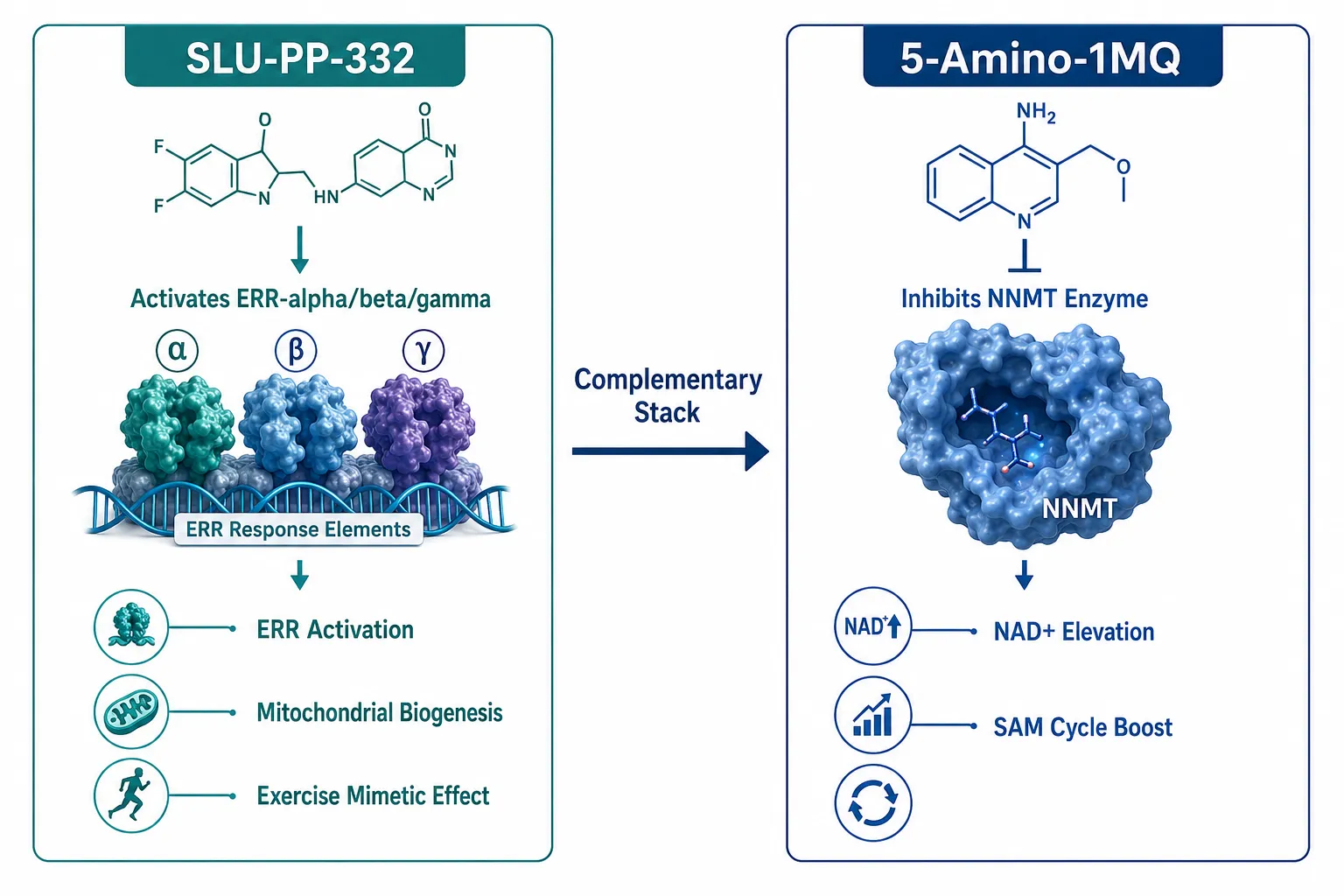
SLU-PP-332 is a small-molecule agonist of the estrogen-related receptor (ERR) family, specifically ERR-alpha, ERR-beta, and ERR-gamma. These nuclear receptors regulate genes involved in mitochondrial biogenesis, oxidative phosphorylation, and fatty acid metabolism. When activated in cell and rodent models, SLU-PP-332 has been shown to increase endurance-related gene expression in skeletal muscle, reduce fat accumulation, and improve markers of metabolic flexibility. Researchers have described it informally as an "exercise mimetic" because its downstream signaling overlaps with pathways activated by sustained aerobic activity.

5-Amino-1MQ works through an entirely different entry point. It selectively inhibits nicotinamide N-methyltransferase (NNMT), an enzyme that consumes S-adenosylmethionine (SAM) to methylate nicotinamide. When NNMT is overactive, a state commonly observed in obese adipose tissue, it depletes both SAM and the NAD+ precursor pool. By blocking NNMT, 5-Amino-1MQ frees up these substrates, elevating intracellular NAD+ and reducing the epigenetic signals that promote fat cell expansion. In vitro studies have linked this mechanism to reduced adipocyte differentiation and improved energy sensing via sirtuins and PARP enzymes.

For researchers exploring metabolic dysfunction, the top research peptides for metabolic health provide useful context for where these compounds sit within the broader landscape of investigational agents.

"The value of understanding each compound in isolation is that it makes the rationale for combining them far more defensible in a research design."

The Rationale Behind Slupp332 With 5-Amino-1MQ: What This Advanced Metabolic Stack Means in Research Models
The Rationale Behind Slupp332 With 5-Amino-1MQ: What This Advanced Metabolic Stack Means in Research Models

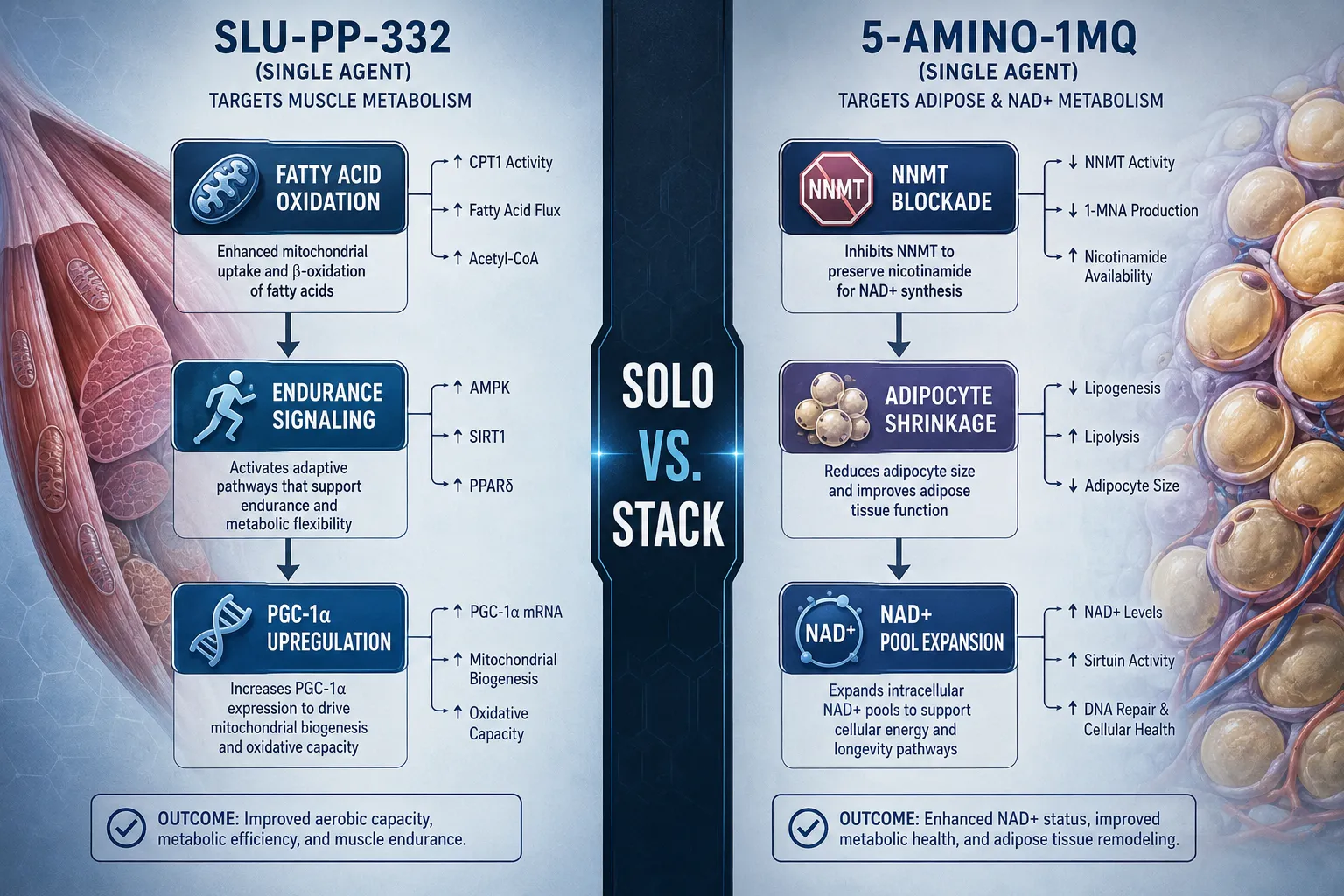
The logic behind combining these two agents is not additive, it is complementary at the mechanistic level.

SLU-PP-332 drives mitochondrial capacity upward. It tells the cell to build more oxidative machinery and burn more fuel. However, if the NAD+ pool is depleted, as it often is in metabolically compromised tissue, the downstream sirtuins and energy sensors that depend on NAD+ cannot respond efficiently. This is where 5-Amino-1MQ enters the equation. By restoring NAD+ availability through NNMT inhibition, it supplies the cofactor that SLU-PP-332-driven mitochondrial activity needs to function optimally.

Why This Stack Is Being Studied
Researchers are not simply combining two trending compounds. The pairing addresses two distinct failure points in metabolic disease: insufficient mitochondrial drive (targeted by SLU-PP-332) and insufficient cofactor availability (targeted by 5-Amino-1MQ). Addressing both simultaneously in a model is what makes the stack scientifically interesting rather than redundant.

This dual-target approach also aligns with emerging interest in combination metabolic therapies. Research into agents like retatrutide has demonstrated that triple-agonist research is reframing liver fat endpoints, reinforcing the broader trend toward multi-pathway intervention in metabolic disease models.

Key mechanistic interactions being examined in 2026 research models include:

  • Mitochondrial density, whether ERR activation paired with elevated NAD+ produces synergistic increases in mitochondrial copy number
  • Adipocyte remodeling, whether NNMT inhibition amplifies the fat-oxidation signal initiated by SLU-PP-332
  • Sirtuin activity, whether the NAD+ elevation from 5-Amino-1MQ enhances SIRT1 and SIRT3 responses downstream of ERR signaling
  • Metabolic gene expression panels, whether combined dosing produces distinct transcriptomic signatures versus either compound alone

Researchers working with hormone research protocols have noted that ERR-gamma in particular has significant overlap with thyroid and estrogen receptor signaling, adding another layer of relevance to the ERR-targeting mechanism.

Research Design Considerations for This Stack in 2026
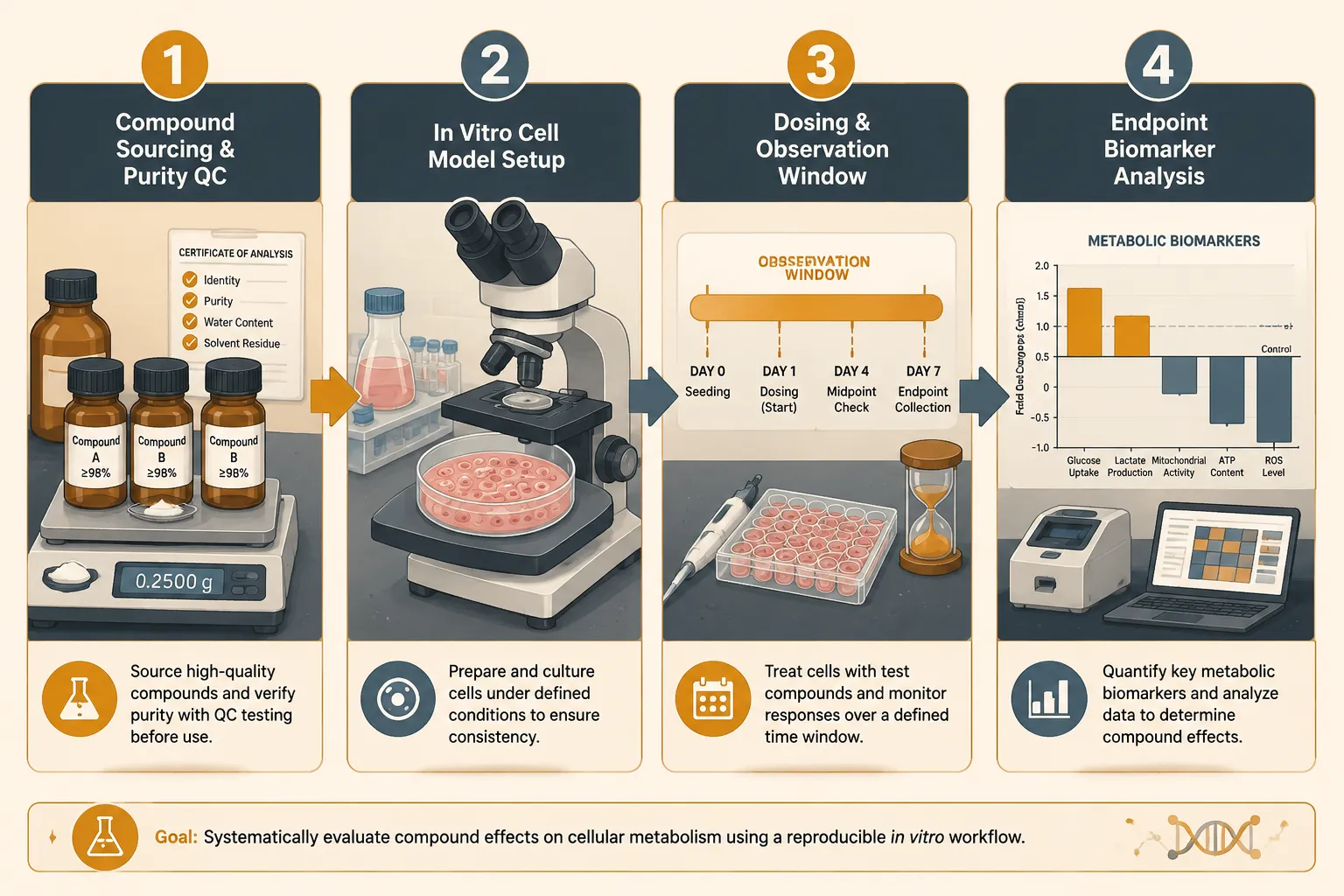
Research Design Considerations for This Stack in 2026

Translating the theoretical rationale into a controlled experiment requires careful attention to several variables. The following table summarizes the primary design considerations researchers are working through in 2026:

Variable SLU-PP-332 Specific 5-Amino-1MQ Specific Stack Consideration
Purity threshold Greater than 98% HPLC Greater than 98% HPLC Independent CoA for each lot
In vitro stability DMSO stock, 4 degrees C Aqueous solubility moderate Separate vehicle controls needed
Endpoint markers PGC-1 alpha, TFAM, CPT1 NAD+/NADH ratio, SIRT1 Overlapping sirtuin panel
Regulatory status Research chemical only Research chemical only Not for human administration

Quality control is not optional in this context. In vitro characterization studies published in 2026 have highlighted that SLU-PP-332 metabolizes relatively quickly in microsomal assays, making lot-to-lot consistency and precise dosing windows essential for reproducible results. Researchers sourcing compounds for this type of work should apply the same rigor discussed in resources covering TB-500 in controlled experimental models and QC workflow.

The regulatory position is unambiguous: both SLU-PP-332 and 5-Amino-1MQ are classified as research chemicals. Neither has completed clinical trials nor received approval from any regulatory authority for therapeutic use in humans. Any discussion of this stack outside a controlled research context falls outside the scope of current evidence.

Researchers interested in how other investigational compounds are being characterized for hormone research compounds will find useful methodological parallels when designing endpoints for ERR-targeting agents.

Conclusion

The combination of SLU-PP-332 and 5-Amino-1MQ represents a mechanistically coherent research stack, not a random pairing of trending compounds. Slupp332 With 5-Amino-1MQ: What This Advanced Metabolic Stack Means in Research Models ultimately comes down to a dual-target hypothesis: activate mitochondrial programming through ERR agonism while simultaneously ensuring the NAD+ cofactor supply is sufficient to support that activation. The logic is sound at the preclinical level, and 2026 has seen growing experimental interest in testing whether the combination produces effects that neither compound achieves alone.

For researchers considering this stack, the actionable next steps are clear:

  1. Establish independent purity documentation for each compound before any experimental use.
  2. Design separate vehicle controls to account for differing solubility profiles.
  3. Select a biomarker panel that captures both ERR-downstream targets and NAD+-dependent enzyme activity.
  4. Treat all findings as preclinical and avoid extrapolating to human outcomes without a robust clinical evidence base.

The field is moving quickly, and the mechanistic rationale for this combination is compelling enough to warrant rigorous investigation. Staying grounded in controlled methodology is what will determine whether this stack becomes a footnote or a meaningful contribution to metabolic research.

https://www.puretestedpeptides.com/wp-content/uploads/2026/08/slupp332-with-5-amino-1mq-what-this-advanced-metabolic-stack-means-in-research-m.webp 1024 1536 https://www.puretestedpeptides.com/wp-content/uploads/2026/01/buy-peptides-online.jpg 2026-08-19 13:03:582026-08-19 13:03:58Slupp332 With 5-Amino-1MQ: What This Advanced Metabolic Stack Means in Research Models

Tag Archive for: preclinical metabolic models

MOTS-c vs. 5-Amino-1MQ: Which Metabolic Research Questions Each Compound Actually Answers

MOTS-c vs. 5-Amino-1MQ: Which Metabolic Research Questions Each Compound Actually Answers

July 27, 2026/0 Comments/by Pure Tested

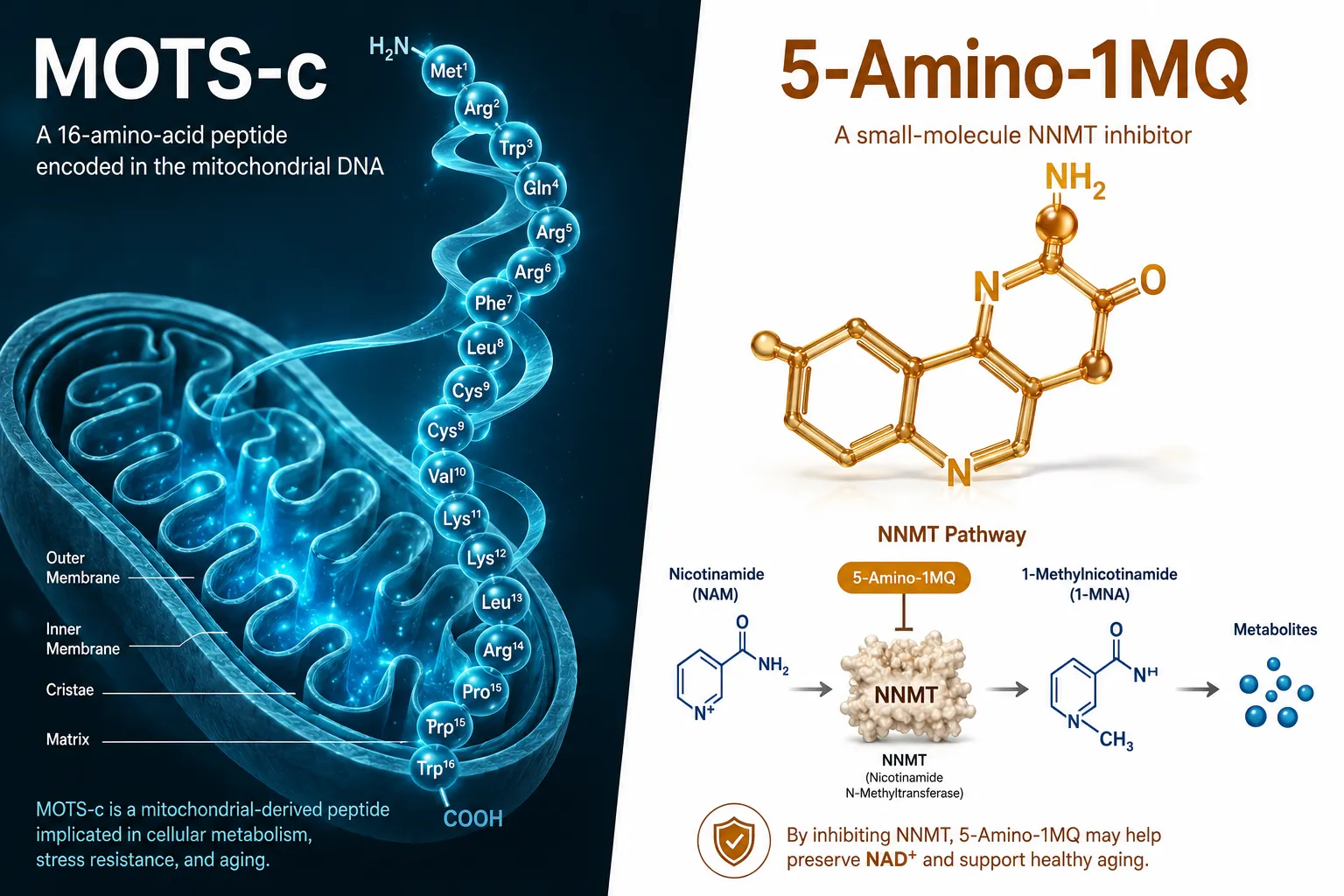
Fewer than 1% of mitochondrial genes encode functional peptides, yet one of them, MOTS-c, has reshaped how researchers think about metabolic regulation at the cellular level. Meanwhile, 5-Amino-1MQ arrived from a completely different direction: synthetic chemistry targeting an enzyme most metabolic researchers had largely ignored. Understanding MOTS-c vs. 5-Amino-1MQ: which metabolic research questions each compound actually answers is not a matter of picking a winner. It is a matter of matching the right tool to the right experimental question.

Key Takeaways

  • MOTS-c is a 16-amino-acid mitochondrial-encoded peptide; 5-Amino-1MQ is a small-molecule NNMT inhibitor, their mechanisms are fundamentally different.
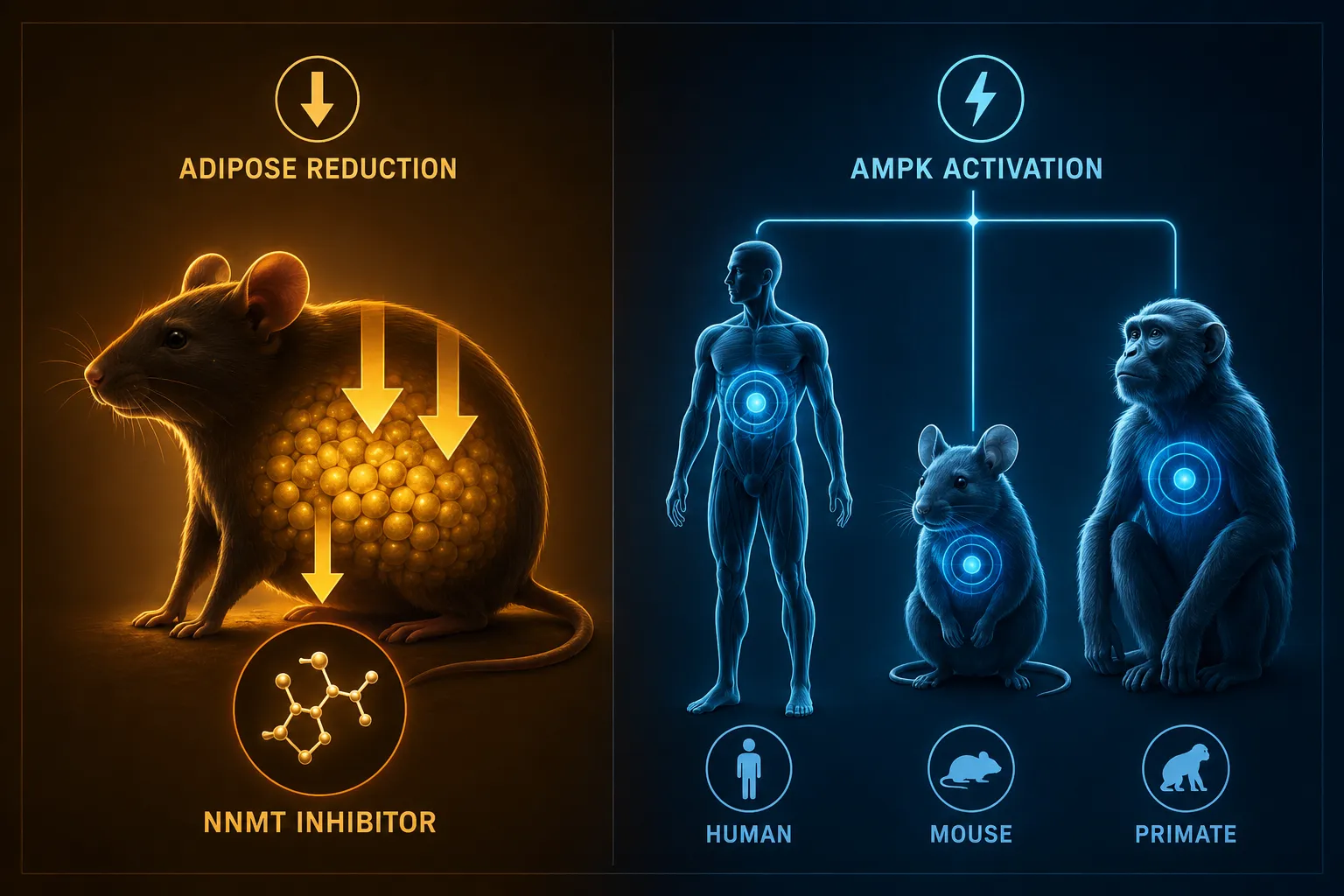
  • MOTS-c activates AMPK and has multi-species, multi-endpoint data supporting its role in energy sensing and glucose metabolism.
  • 5-Amino-1MQ targets nicotinamide N-methyltransferase (NNMT) and currently has efficacy data limited to mouse models.
  • Researchers studying mitochondrial signaling or insulin sensitivity should look first at MOTS-c; those investigating NNMT-driven adiposity have a specific reason to reach for 5-Amino-1MQ.
  • Neither compound replaces the other, they probe distinct nodes in the metabolic network.

Key Takeaways

What Each Compound Actually Is

MOTS-c: A Peptide Born Inside the Mitochondria

MOTS-c (Mitochondrial Open Reading Frame of the 12S rRNA type-c) is a 16-amino-acid peptide encoded not by the nuclear genome but by mitochondrial DNA. That origin is significant. It means MOTS-c functions as a retrograde signal, a message the mitochondria sends outward to the rest of the cell when metabolic stress is detected.

Its primary mechanism involves the activation of AMP-activated protein kinase (AMPK), the master energy sensor of the cell. When AMPK is activated, cells shift toward fat oxidation, reduce glucose synthesis, and improve insulin sensitivity. MOTS-c also interacts with the folate cycle and one-carbon metabolism, giving it a broader reach than a simple hormone mimic.

Researchers can explore the MOTS-c peptide research profile for a detailed look at its structural properties and documented experimental endpoints.

5-Amino-1MQ: A Small Molecule With a Narrow Target

5-Amino-1MQ (5-amino-1-methylquinolinium) is a synthetic small molecule, not a peptide. It works by inhibiting nicotinamide N-methyltransferase (NNMT), an enzyme that methylates nicotinamide and plays a direct role in regulating NAD+ precursor availability and adipocyte differentiation.

When NNMT is active at high levels, as it tends to be in obese adipose tissue, it diverts methyl groups away from pathways that support fat cell maturation. By blocking NNMT, 5-Amino-1MQ aims to reduce adipogenesis and shift energy balance in white adipose tissue.

The key distinction: MOTS-c works upstream through mitochondrial signaling; 5-Amino-1MQ works downstream in the epigenetic regulation of fat cell biology.

Mapping the Research Questions Each Compound Answers

Questions MOTS-c Is Built to Answer

MOTS-c has accumulated data across multiple species and multiple metabolic endpoints. That breadth makes it the stronger candidate for questions involving:

  • Insulin resistance and glucose uptake in skeletal muscle
  • AMPK-dependent energy sensing under caloric restriction or exercise mimicry
  • Mitochondrial stress responses and their systemic effects
  • Age-related metabolic decline, given that circulating MOTS-c levels fall with age in humans

For researchers already working with mitochondria-focused compounds, pairing MOTS-c with SS-31 (Elamipretide), a cardiolipin-targeting peptide, can help isolate whether an observed effect is driven by membrane integrity or by retrograde signaling. The SS-31 and MOTS-c research tag highlights studies that have used both compounds in complementary designs.

"MOTS-c is one of the few mitochondria-derived signals with confirmed activity in human tissue samples, giving it a translational relevance that most metabolic peptides cannot yet claim."

Questions 5-Amino-1MQ Is Built to Answer

5-Amino-1MQ is a more specialized instrument. Its current evidence base is mouse-only for efficacy, which limits but does not eliminate its research value. It is the right compound when the question specifically involves:

  • NNMT inhibition as a lever for adiposity reduction
  • NAD+ precursor flux in white adipose tissue
  • Adipocyte differentiation and lipid storage at the epigenetic level
  • Comparison of NNMT-dependent vs. NNMT-independent fat loss pathways

Researchers studying fat depot-specific metabolism may also find value in reviewing AOD-9604 research notes, since AOD-9604 targets lipolysis through a different receptor pathway entirely, providing a useful mechanistic contrast.

Questions 5-Amino-1MQ Is Built to Answer

Evidence Tiers and Translational Readiness

The evidence gap between these two compounds is meaningful for study design.

Dimension MOTS-c 5-Amino-1MQ
Origin Mitochondrial peptide Synthetic small molecule
Primary target AMPK activation NNMT inhibition
Species data Multi-species including human tissue Mouse-only (efficacy)
Metabolic focus Glucose, insulin, energy sensing Adipogenesis, NAD+ flux
Translational stage More advanced Earlier preclinical

MOTS-c's multi-species data means researchers can design studies with greater confidence that observed effects will generalize. 5-Amino-1MQ requires more careful controls and species-specific interpretation.

For researchers building broader metabolic panels, compounds like Tesamorelin, which targets visceral fat through growth hormone-releasing hormone pathways, offer yet another mechanistic layer that neither MOTS-c nor 5-Amino-1MQ covers.

Choosing the Right Compound for Your Model

When to Choose MOTS-c

Choose MOTS-c when the research question centers on mitochondrial-nuclear communication, systemic insulin sensitivity, or AMPK-driven metabolic adaptation. Its peptide structure also makes it compatible with standard subcutaneous delivery protocols used across most rodent and primate metabolic models.

Researchers sourcing verified material should review quality peptide standards before committing to a supplier, as purity directly affects AMPK activation assay reliability.

When to Choose 5-Amino-1MQ

Choose 5-Amino-1MQ when the hypothesis specifically implicates NNMT in adipose tissue remodeling. Its small-molecule format offers oral bioavailability advantages in mouse models, which can simplify dosing protocols. However, researchers should build in appropriate controls for NAD+ pathway effects that may confound readouts unrelated to fat mass.

When to Use Both

A dual-compound design makes sense when the goal is to separate AMPK-mediated metabolic effects from NNMT-mediated adipogenic effects. Running parallel arms with each compound, and a third arm combining both, can help attribute observed changes to specific nodes in the metabolic network.

When to Use Both

Conclusion

The question of MOTS-c vs. 5-Amino-1MQ: which metabolic research questions each compound actually answers resolves cleanly once mechanism and evidence tier are considered together. MOTS-c is the broader, more translationally mature tool for questions about mitochondrial signaling, AMPK activation, and systemic glucose metabolism. 5-Amino-1MQ is a precise instrument for NNMT-specific adipose biology, with a current evidence base that demands careful species-matched study design.

Actionable next steps for researchers:

  • Define the specific metabolic node under investigation before selecting a compound.
  • If studying mitochondrial retrograde signaling or insulin sensitivity, prioritize MOTS-c and consider pairing it with SS-31 for mechanistic contrast.
  • If studying NNMT-driven adipogenesis in a mouse model, 5-Amino-1MQ is the appropriate primary compound.
  • For visceral fat studies requiring a GH-axis comparator, review Tesamorelin dosage protocols as a parallel reference arm.
  • Always verify compound purity through third-party testing before initiating any metabolic assay series.
https://www.puretestedpeptides.com/wp-content/uploads/2026/07/mots-c-vs-5-amino-1mq-which-metabolic-research-questions-each-compound-actually.webp 1024 1536 Pure Tested https://www.puretestedpeptides.com/wp-content/uploads/2026/01/buy-peptides-online.jpg Pure Tested2026-07-27 13:03:582026-07-27 13:32:01MOTS-c vs. 5-Amino-1MQ: Which Metabolic Research Questions Each Compound Actually Answers
×

Helpful Links

  • My account
  • Cart
  • Checkout
  • Refund and Returns Policy
  • Privacy Policy
  • SMS Privacy Policy
  • Login
  • My Account
  • Logout

USA Made Lab Tested Peptides

All products are sold for research, laboratory, or analytical purposes only, and are not for human consumption


Pure Tested Peptides is a chemical supplier. Pure Tested Peptides is not a compounding / chemical compounding facility as defined under 503A of the Federal Food, Drug, and Cosmetic act. Pure Tested Peptides is not an outsourcing facility as defined under 503B of the Federal Food, Drug, and Cosmetic act.

The statements made within this website have not been evaluated by the US Food and Drug Administration. The products we offer are not intended to diagnose, treat, cure or prevent any disease.

Human/Animal Consumption Prohibited. Laboratory/In-Vitro Experimental Use Only

Scroll to top Scroll to top Scroll to top