Call or Text 727-513-9780
  • Shopping Cart Shopping Cart
    0Shopping Cart
Pure Tested Peptides | America's most trusted Peptides for sale online
  • Peptides for sale
    • Oral Peptides for sale
      • Peptide Capsules for sale
      • BPC 157 Capsules 1000mcg
      • SLU-PP-332 Capsules | 1000 mcg
      • 5-Amino-1MQ 50mg Capsules
      • Tesofensine 500mcg
    • All Peptides for sale
    • Peptide Sprays
      • BPC 157 Nasal Spray Kit
      • BPC-157 TB500 Nasal Spray Kit
      • Semax Nasal Spray 10mg
      • Selank – Nasal Spray Kit – 10mg
      • Epithalon 50MG Nasal Spray Kit
      • Ipamorelin 10mg Nasal Spray
      • Klow Nasal Spray (BPC-157 + TB-500 + GHK-Cu + KPV) | 80mg
      • Hulk Nasal Spray Tesa / Ipa Blend 6/3 MG
      • Klow Nasal Spray
      • NAD + 500 mg Nasal Spray
      • PT-141 Nasal Spray Kit
    • GHRH Peptides
      • Ipa Peptides
      • CJC-1295 Peptides
        • CJC-1295 with DAC 5 mg
        • CJC-1295 without DAC 5 mg
        • CJC-1295 Ipa 10mg
      • Tesa Peptides
        • Tesa Peptide
        • Tesa 20 mg
    • GHK-Cu Peptides
      • All GHK-Cu Peptides
      • GHK-Cu 100mg
      • KLOW Peptide Blend – Buy KLOW blend online
    • BPC Peptides
      • All BPC Peptides
      • BPC-157
      • BPC-157 TB-500
      • BPC 157 capsules 1000mcg
    • SLU-PP-332 Peptides
      • All SLU-PP-332 Peptides
      • SLU-PP-332 5mg
    • GLP3 Peptides
      • GLP3-R
      • GLP3-R CAG 10mg
      • GLP3-R 20mg
    • PT-141 Peptides
      • PT-141 Peptides for sale
      • PT-141 10mg
      • PT-141 Nasal Spray
    • CAG Peptides
      • Lipo-C Peptide Blend
      • CAG 5mg
      • CAG 10mg
    • MOTS-C Peptides
      • MOTS-C Peptides for sale
      • MOTS-c peptide
      • MOTS-c 10mg *6 pack*
    • 5 Amino 1MQ Peptides
      • 5 Amino 1MQ Peptides for sale
      • 5-Amino-1MQ 50mg Capsules
      • 5-Amino-1MQ 5mg
    • Epithalon Peptides
      • Epithalon Peptides for sale
      • Epithalon 10mg
      • Epithalon 50mg
  • Shop
    • GLPs
      • 5-Amino-1MQ 50mg Capsules
      • 5-Amino-1MQ 5mg
      • GLP3-Reta
      • L-Carnitine 500mg/ml
      • Tesofensine 500mcg
      • SLU-PP-332 5mg
      • MOTS-c 10mg *6 pack*
    • Epithalon & BPC Peptides
      • Epithalon 10mg
      • Epithalon 50mg
      • BPC-157
      • BPC 157 capsules 1000mcg
      • BPC-157 TB-500
      • BPC-157 TB500 Nasal Spray Kit
      • BPC 157 Nasal Spray Kit
    • BPC TB-500 & NAD+ Peptides
      • NAD+ 500 mg
      • KLOW Peptide Blend – Buy KLOW blend online
      • GLOW Peptide Blend
      • TB 500 5mg
      • BPC 157 capsules 1000mcg – Supplement
      • BPC 157 Nasal Spray Kit
      • BPC-157
      • BPC-157 TB500 Nasal Spray Kit
      • BPC-157 TB-500
      • BPC 157 capsules 1000mcg
    • LL-37 Peptide
      • LL-37 10 mg
    • MOTS-C & Selank
      • MOTS-c peptide
      • Selank 10mg
    • GHK Peptides
      • GHK-Cu 100mg
      • GLOW Peptide Blend
      • KLOW Peptide Blend – Buy KLOW blend online
  • COAs
  • Wholesale
    • Wholesale Peptides for sale
  • PTP FAQ
  • Affiliates
    • Selank Peptide: Advanced Pharmacological Mechanisms Underlying Its Anxiolytic and Nootropic Effects in Research
      • 5-Amino-1MQ Peptide: Detailed Mechanisms of NNMT Inhibition and Its Impact on Cellular Metabolism Research
        • MOTS-C Peptide: Unraveling Its Role in Mitochondrial Dynamics and Energy Metabolism Research
          • Epithalon Peptide and Telomerase Regulation: Investigating Its Impact on Cellular Senescence and Lifespan Research Models
            • GLP2-T vs GLP2 Tirz Peptide: Understanding the Naming, Mechanistic Nuances, and Research Implications for Gut Health
      • Peptides and Polypeptides in Modern Pharmacology: What Research on Metoprolol, Prednisone, and Amlodipine Reveals
        • Polypeptide Peptides vs NSAIDs: What Naproxen and Diclofenac Teach Tissue-Repair Researchers About BPC‑157 and TB‑500
          • Peptides and Polypeptides in Endocrine Pharmacology: How GLP-1, GLP-2, and GLP-3 Retatrutide Differ From Classic Drugs Like Prednisone and Amlodipine
          • 5‑Amino‑1MQ Peptide and NNMT Inhibition: How It Compares With Statins Like Atorvastatin in Adipose and Lipid Metabolism Research
      • Enclomiphene, Estrogen Receptor Signaling, and Luteinizing Phase Biology: What Hormone Researchers Should Measure
        • Mesenchymal Stem Cells, BPC‑157, and GHK‑Cu: How Tissue Repair Peptides Compare With Classic NSAIDs Like Naproxen in Injury Models
          • Peptide Calculator Use Cases Beyond Growth Hormone: Working Through GLP‑3 Retatrutide, MOTS‑c, and BPC‑157 Research Dosing
        • Polypeptide Peptides in Endocrine and Metabolic Pharmacology: Lessons From Amlodipine, Prednisone, and Metoprolol
        • Peptides Calculator for Advanced Blends: Worked Examples for Tesamorelin, CJC‑1295, and Ipamorelin Stacks
          • Peptides and Polypeptides in Human Physiology: How Molecular Size Shapes Research Applications
            • Selank Peptide: Advanced Pharmacological Mechanisms Underlying Its Anxiolytic and Nootropic Effects in Research
          • 5-Amino-1MQ Peptide: Detailed Mechanisms of NNMT Inhibition and Its Impact on Cellular Metabolism Research
            • MOTS-C Peptide: Unraveling Its Role in Mitochondrial Dynamics and Energy Metabolism Research
              • Epithalon Peptide and Telomerase Regulation: Investigating Its Impact on Cellular Senescence and Lifespan Research Models
                • GLP2-T vs GLP2 Tirz Peptide: Understanding the Naming, Mechanistic Nuances, and Research Implications for Gut Health
                  • Peptides and Polypeptides in Endocrine Pharmacology: How GLP-1, GLP-2, and GLP-3 Retatrutide Differ From Classic Drugs Like Prednisone and Amlodipine
                    • Polypeptide Peptides vs NSAIDs: What Naproxen and Diclofenac Teach Tissue-Repair Researchers About BPC‑157 and TB‑500
                      • Peptides and Polypeptides in Modern Pharmacology: What Research on Metoprolol, Prednisone, and Amlodipine Reveals
                        • 5‑Amino‑1MQ Peptide and NNMT Inhibition: How It Compares With Statins Like Atorvastatin in Adipose and Lipid Metabolism Research
                        • Enclomiphene, Estrogen Receptor Signaling, and Luteinizing Phase Biology: What Hormone Researchers Should Measure
                        • Mesenchymal Stem Cells, BPC‑157, and GHK‑Cu: How Tissue Repair Peptides Compare With Classic NSAIDs Like Naproxen in Injury Models
                        • Peptide Calculator Use Cases Beyond Growth Hormone: Working Through GLP‑3 Retatrutide, MOTS‑c, and BPC‑157 Research Dosing
                        • Polypeptide Peptides in Endocrine and Metabolic Pharmacology: Lessons From Amlodipine, Prednisone, and Metoprolol
                        • Peptides Calculator for Advanced Blends: Worked Examples for Tesamorelin, CJC‑1295, and Ipamorelin Stacks
                        • Peptides and Polypeptides in Human Physiology: How Molecular Size Shapes Research Applications
                        • Selank Peptide: Advanced Pharmacological Mechanisms Underlying Its Anxiolytic and Nootropic Effects in Research
                        • MOTS-C Peptide: Unraveling Its Role in Mitochondrial Dynamics and Energy Metabolism Research
                        • Peptides and Polypeptides in Modern Pharmacology: What Research on Metoprolol, Prednisone, and Amlodipine Reveals
                        • Peptides and Polypeptides in Endocrine Pharmacology: How GLP-1, GLP-2, and GLP-3 Retatrutide Differ From Classic Drugs Like Prednisone and Amlodipine
                        • 5-Amino-1MQ Peptide: Detailed Mechanisms of NNMT Inhibition and Its Impact on Cellular Metabolism Research
                        • Mesenchymal Stem Cells, BPC‑157, and GHK‑Cu: How Tissue Repair Peptides Compare With Classic NSAIDs Like Naproxen in Injury Models
                        • Peptide Calculator Use Cases Beyond Growth Hormone: Working Through GLP‑3 Retatrutide, MOTS‑c, and BPC‑157 Research Dosing
                        • GLP2-T vs GLP2 Tirz Peptide: Understanding the Naming, Mechanistic Nuances, and Research Implications for Gut Health
                        • Polypeptide Peptides in Endocrine and Metabolic Pharmacology: Lessons From Amlodipine, Prednisone, and Metoprolol
                        • Polypeptide Peptides vs NSAIDs: What Naproxen and Diclofenac Teach Tissue-Repair Researchers About BPC‑157 and TB‑500
                        • Peptides and Polypeptides in Human Physiology: How Molecular Size Shapes Research Applications
                        • Peptides Calculator for Advanced Blends: Worked Examples for Tesamorelin, CJC‑1295, and Ipamorelin Stacks
                        • 5‑Amino‑1MQ Peptide and NNMT Inhibition: How It Compares With Statins Like Atorvastatin in Adipose and Lipid Metabolism Research
                        • Enclomiphene, Estrogen Receptor Signaling, and Luteinizing Phase Biology: What Hormone Researchers Should Measure
                        • Epithalon Peptide and Telomerase Regulation: Investigating Its Impact on Cellular Senescence and Lifespan Research Models
                        • Best research protocol Klow blend
                        • best time to take BPC-157
                        • best time to take DSIP (Delta Sleep Inducing Peptide)
                        • best time to take CJC-1295
                        • best time to take AOD-9604
                        • best time to take Follistatin 344
                        • best time to take Ipamorelin
                        • best time to take MK-677 (Ibutamoren)
                        • best time to take Ligandrol (LGD-4033) — research compound
                        • best time to take Ostarine (MK-2866) — research compound
                        • best time to take GHK-CU
                        • best time to take TB-500
                        • best time to take MOTS-c
                        • best time to take Semax
                        • best time to take RAD-140 (Testolone) — research compound
                        • best time to take Thymosin Alpha-1
                        • best time to take PEG-MGF
                        • Biolife Plasma, Octapharma Plasma, and Research Peptides: How Plasma Donation Labs Differ From Peptide Suppliers
                        • best time to take YK-11 — research compound
                        • best time to take PT-141 (Bremelanotide)
                        • Best research protocol Klow blend
                        • 5-Amino-1MQ and MOTS-C Synergy: Metabolic Signaling, Mitochondria, and Research Design
                        • BPC-157 and TB-500: Investigating Their Combined Effects on Angiogenesis and Cellular Migration in Tissue Repair Models
                        • BPC-157 Peptide: Gut Barrier Function, Inflammation, and Tissue-Recovery Research
                        • 5‑Amino‑1MQ and MOTS‑c Synergy in Metabolic Research: Designing NNMT and Mitochondrial Biogenesis Stacks
                        • CJC-1295 with DAC vs. Without DAC: Half-Life, Release Kinetics, and Research Implications
                        • CJC‑1295 with DAC vs. Without DAC: Expanding on Half‑Life Differences Using Tesamorelin and Ipamorelin Blend Case Studies
                        • Collagen Biology and Copper‑Binding Peptides: How GHK‑Cu, Glow Blend, and Klow Blend Interact with Skin and Connective Tissue
                        • Collagen Biology and Regenerative Peptides: How GHK‑Cu, Glow Blend, and Klow Blend Affect Extracellular Matrix Research
                    • DNA, Telomeres, and Longevity Peptides: Positioning Epithalon and MOTS‑c in Genetic Aging Research
                      • Enclomiphene Citrate: serm Mechanism, Testosterone Research, and Stack Compatibility
                        • Enclomiphene vs Enclomiphene Citrate: Formulation, Bioavailability, and Research Distinctions
                        • Epithalon Peptide Research: Telomerase Activation, Aging, and Pineal Gland Function
                        • Estrogen Receptor Signaling and Enclomiphene: How Selective Modulators Compare with Classic Polypeptide Hormones
                        • GHK-Cu Peptide: Advanced Mechanisms in Extracellular Matrix Remodeling and Wound Healing Research
                        • GHK-Cu Peptide: Collagen Synthesis, Wound Repair, and Skin-Barrier Research Models
                        • GLP-1 vs GLP-3 vs GLP-2: Peptide Classification and Research Applications
                        • GLP-2 Peptide Research Guide: Gut Barrier Function, Nutrient Absorption, and Intestinal Recovery Models
                        • GLP-3 Retatrutide vs. GLP-1 Drugs: What Triple-Agonist Biology Changes in Research Models
                        • Ipamorelin and Tesamorelin Combination: Synergistic GH Secretagogue Research and Dosing Protocols
                        • GLP2 Tirz Peptide: What It Is, Why the Name Exists, and How Researchers Should Interpret It
                        • Klow Blend Peptide Nasal Spray: What the Formulation Is Trying to Do in Cognitive Research
                        • Mitochondria, NNMT Inhibition, and Peptide Modulators: Where MOTS‑c and 5‑Amino‑1MQ Fit in Cellular Energy Research
                        • MOTS-c Peptide: Mitochondrial Function, Energy Metabolism, and What Researchers Measure
                        • MOTS-c vs. 5-Amino-1MQ: Which Metabolic Research Questions Each Compound Actually Answers
                        • Nasal Spray Peptides: Bioavailability, Administration, and Semax/Selank Research Applications
                        • PT-141 Peptide Research: Mechanism of Action and Melanocortin Receptor Signaling
                        • Retatrutide for Research: Mechanism, Structure, and GLP-1/GLP-3 Dual Action
                        • Retatrutide for Obesity and Type 2 Diabetes: What the Latest Trial Data Suggest
                        • Tesofensine Peptide Research: Mechanism, Appetite Suppression, and Neuropeptide Y Pathways
  • Contact
    • Contact Customer Service
    • Text Customer Support
  • About US
  • Shop all peptides
  • Affiliate Program
    • Affiliate Signup
  • Login / Register Login / Register Page Link Login / Register Page Link
  • Click to open the search input field Click to open the search input field Search
  • Menu Menu

Tag Archive for: receptor binding

Complete Guide to Peptide Mechanisms: How GLP-1, GLP-3, and Growth Hormone Peptides Work at the Molecular Level

Complete Guide to Peptide Mechanisms: How GLP-1, GLP-3, and Growth Hormone Peptides Work at the Molecular Level

August 7, 2026/0 Comments/in Uncategorized/by

Fewer than 50 amino acids separate a metabolically inert string of molecules from a compound that can reshape insulin secretion, fat oxidation, and tissue repair. That structural precision is exactly what makes peptide pharmacology one of the most rapidly advancing fields in 2026 biomedical research.

This complete guide to peptide mechanisms covers how GLP-1, GLP-3, and growth hormone peptides bind to their targets, activate downstream signaling cascades, and produce distinct metabolic outcomes, giving researchers and informed readers the mechanistic foundation they need.

Key Takeaways

  • GLP-1 receptor agonists work through G-protein coupled receptor (GPCR) activation, triggering cAMP-mediated insulin secretion in a glucose-dependent manner.
  • GLP-3, represented by retatrutide, is a triple-receptor agonist targeting GLP-1R, GIPR, and glucagon receptors simultaneously, producing additive metabolic effects.
  • Growth hormone secretagogues stimulate the pituitary via GHRH receptors or ghrelin receptors, increasing endogenous GH pulse amplitude.
  • Different peptide families produce different outcomes because they bind to structurally distinct receptor classes and activate non-overlapping second-messenger pathways.
  • Purity and structural integrity of any peptide compound are non-negotiable for reliable downstream signaling.
Key Takeaways

How GLP-1 Receptor Agonists Activate Downstream Signaling

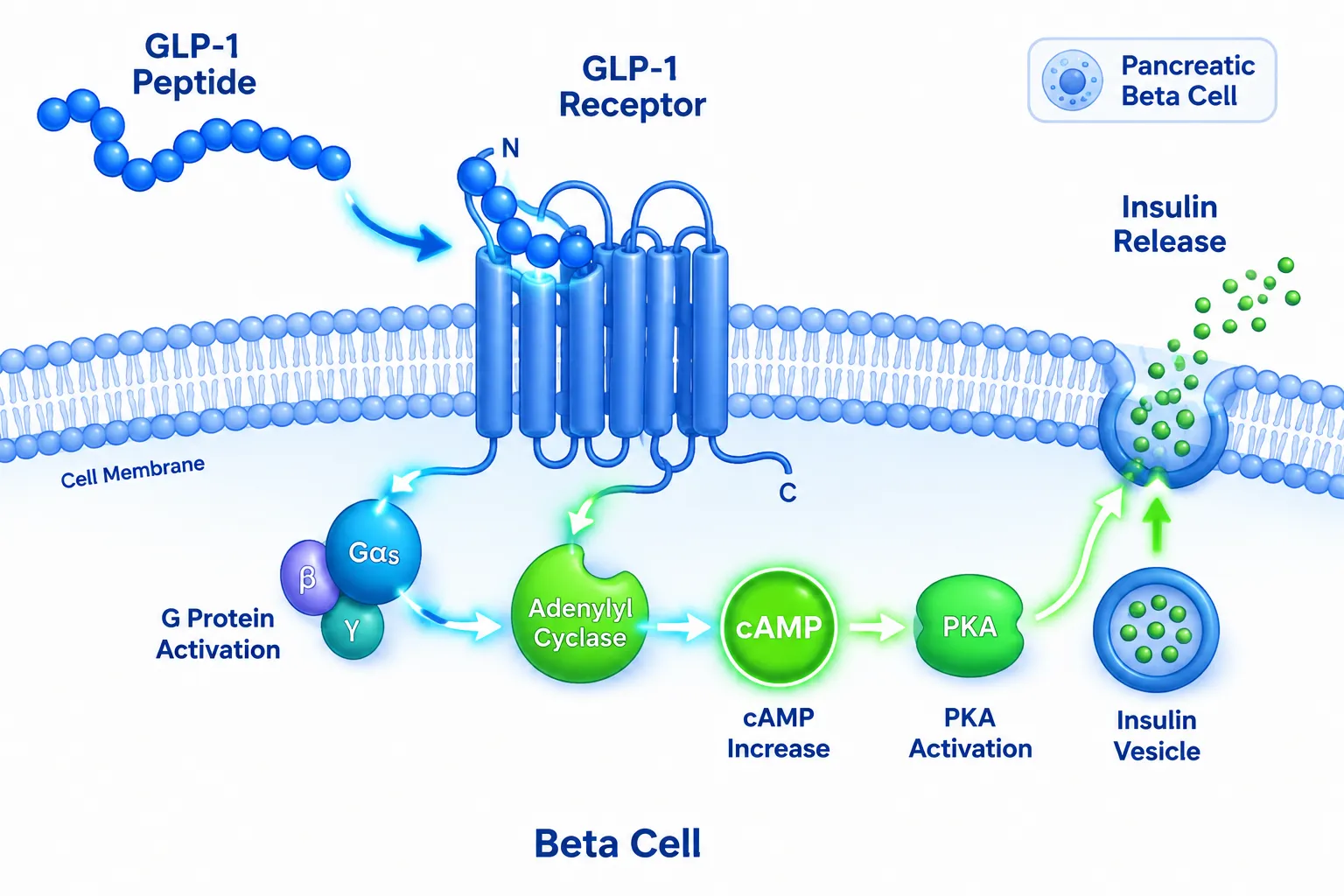
The molecular story of GLP-1 peptides begins at the cell surface. GLP-1 (glucagon-like peptide-1) is a 30-amino acid incretin hormone cleaved from proglucagon in intestinal L-cells. Its receptor, GLP-1R, belongs to the class B family of G-protein coupled receptors, a structurally distinct group that uses a large extracellular domain to capture peptide ligands.

Receptor Binding and Conformational Change

When GLP-1 approaches GLP-1R, the C-terminal helix of the peptide docks into the receptor's extracellular domain first. This initial contact triggers a conformational shift that draws the peptide's N-terminus into the transmembrane bundle, locking the receptor into an active state. The canonical molecular mechanism of GLP-1 receptor agonists has been refined through cryo-EM studies but the core two-step binding model remains the accepted framework.

The cAMP Cascade

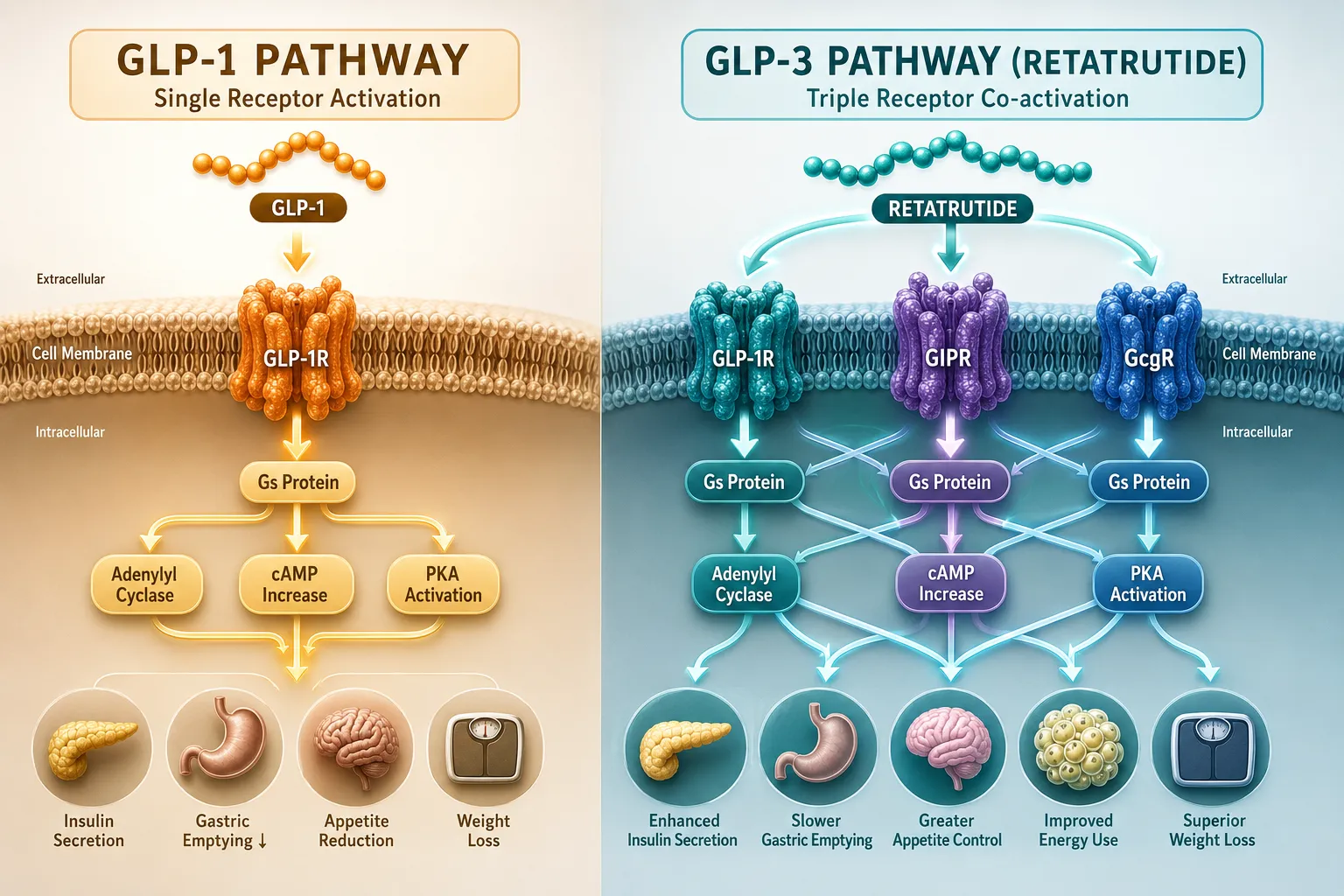
Active GLP-1R couples to the stimulatory G-protein (Gs), which activates adenylyl cyclase and elevates intracellular cyclic AMP (cAMP). Rising cAMP activates protein kinase A (PKA) and the exchange protein EPAC2. Together, these effectors:

  • Close ATP-sensitive potassium channels, depolarizing the beta cell membrane
  • Trigger calcium influx through voltage-gated channels
  • Stimulate insulin vesicle exocytosis in a glucose-dependent manner

This glucose dependency is the central safety feature of the GLP-1 pathway, insulin release only amplifies when blood glucose is already elevated, reducing hypoglycemia risk.

"The glucose-dependence of GLP-1 receptor signaling is not a limitation, it is an elegant molecular safeguard built into the receptor's coupling architecture."

Beyond the pancreas, GLP-1R is expressed in the hypothalamus, brainstem, and vagal afferents, where the same cAMP cascade suppresses appetite and slows gastric emptying. Researchers looking to purchase GLP-1 peptide for study purposes should prioritize verified purity, since even minor sequence truncations at the N-terminus abolish receptor activation.
The cAMP Cascade

GLP-3 and Multi-Receptor Agonism: A Mechanistic Overview

Understanding the complete guide to peptide mechanisms requires distinguishing single-receptor from multi-receptor strategies. The compound commonly referred to as GLP-3 (retatrutide) is a triagonist that simultaneously engages three receptor types:

Receptor Primary Tissue Key Metabolic Effect
GLP-1R Pancreas, CNS Insulin secretion, appetite suppression
GIPR Adipose, pancreas Enhanced insulin response, fat mobilization
Glucagon receptor Liver, adipose Hepatic glucose output, thermogenesis

Why Triple Agonism Produces Additive Outcomes

Each receptor activates Gs-cAMP signaling, but the downstream effectors diverge by tissue. Glucagon receptor activation in adipose tissue upregulates hormone-sensitive lipase, accelerating lipolysis. GIPR co-activation in the pancreas potentiates glucose-stimulated insulin secretion beyond what GLP-1R alone achieves. The net result is a broader metabolic remodeling effect compared to mono-agonism.

Those researching buy GLP-3 peptide options should note that the triagonist structure is significantly more complex than GLP-1 analogs, making synthesis quality especially critical.

Why Triple Agonism Produces Additive Outcomes

Growth Hormone Peptides: Pituitary Signaling and Secretagogue Mechanisms

Growth hormone secretagogues (GHS) represent a third mechanistic class. Rather than acting peripherally on metabolic tissues, they target the anterior pituitary and hypothalamus to amplify endogenous GH release. A well-studied example is tesa, a stabilized analog of growth hormone-releasing hormone (GHRH).

GHRH Receptor Pathway

Tesamorelin binds the GHRH receptor (GHRHR), a class B GPCR expressed on somatotroph cells. Receptor activation elevates cAMP, which opens voltage-gated calcium channels and triggers GH vesicle release. Critically, tesa preserves the pulsatile pattern of GH secretion, a feature that distinguishes it mechanistically from exogenous GH administration.

Ghrelin-Receptor Secretagogues

A parallel class of GHS compounds, including peptides like ipamorelin, binds the ghrelin receptor (GHSR-1a). GHSR-1a couples to Gq proteins, activating phospholipase C and generating IP3-mediated calcium release. This Gq pathway is mechanistically distinct from the GHRH-Gs route, which explains why combining both classes can produce synergistic GH pulse amplification.

Researchers interested in the broader peptide landscape, including mitochondria-targeted compounds like those found at Peptide SS-31, will find that each peptide class operates through a unique receptor-effector architecture. Similarly, tissue-repair peptides such as those covered in the BPC-157 and TB-500 peptides overview rely on growth factor receptor pathways rather than GPCR cascades entirely.

Why Receptor Selectivity Determines Metabolic Outcomes

The central lesson of this complete guide to peptide mechanisms is that receptor identity dictates biological outcome. Three structural variables drive selectivity:

  1. Peptide sequence, even single amino acid substitutions shift receptor affinity by orders of magnitude
  2. N-terminal modifications, fatty acid conjugations extend half-life but can alter receptor residence time
  3. Conformational stability, alpha-helical stabilization in GHRH analogs prevents enzymatic degradation that would otherwise truncate signaling

This is why sourcing from a best peptide manufacturer with verified analytical testing is not a commercial preference but a scientific necessity. A peptide with incorrect disulfide bonding or racemized residues will bind its receptor with altered kinetics, producing unpredictable downstream effects.

Conclusion

The mechanistic differences between GLP-1, GLP-3, and growth hormone peptides are not subtle, they operate through distinct receptor families, second-messenger systems, and tissue distributions. Researchers building a working knowledge of peptide pharmacology should start with receptor class identification, trace the primary second messenger (cAMP vs. IP3 vs. direct ion channel modulation), and then map the downstream effectors to the observed physiological outcome.

Actionable next steps:

  • Study cryo-EM structures of GLP-1R and GHRHR to visualize the binding interfaces described here
  • Cross-reference peptide purity certificates against known receptor activation thresholds before designing experiments
  • Explore the mechanistic profiles of adjacent peptide families, including BDNF peptides for neurotrophin signaling, to build a complete receptor-level map of the peptide landscape
  • Source compounds only from suppliers offering full analytical documentation to ensure structural fidelity

Mechanism-first understanding is the most durable foundation for any serious peptide research program.

https://www.puretestedpeptides.com/wp-content/uploads/2026/08/complete-guide-to-peptide-mechanisms-how-glp-1-glp-3-and-growth-hormone-peptides.webp 1024 1536 https://www.puretestedpeptides.com/wp-content/uploads/2026/01/buy-peptides-online.jpg 2026-08-07 13:06:472026-08-07 13:06:47Complete Guide to Peptide Mechanisms: How GLP-1, GLP-3, and Growth Hormone Peptides Work at the Molecular Level
Peptides and Polypeptides in Modern Research: How Molecular Size Shapes Function, Stability, and Experimental Design

Peptides and Polypeptides in Modern Research: How Molecular Size Shapes Function, Stability, and Experimental Design

July 29, 2026/0 Comments/in Uncategorized/by

{"cover":"Professional landscape format (1536×1024) hero image with bold text overlay (≤42 chars): 'Peptides & Polypeptides in Research' in crisp white sans-serif on a deep navy semi-transparent overlay panel, centered with 8% safe margins from every edge. Background: stunning macro editorial photograph of glowing molecular chain structures, helical protein ribbons and short peptide sequences rendered in electric blue and silver against a dark laboratory gradient, high-contrast editorial quality, science magazine cover aesthetic, 2-3 color palette of navy, white, and electric blue.","content":["Bright isometric illustration in landscape format (1536×1024): two molecular structures side by side, a short 4-amino-acid peptide chain on the left labeled 'Peptide' in bold 3-4 words, and a long coiled polypeptide chain on the right labeled 'Polypeptide', both rendered in vivid teal and coral on a clean white background, crisp flat-vector scientific diagram style, generous spacing, no tables, Pinterest-worthy infographic polish, 8% safe margins on all labels.","Editorial laboratory photography in landscape format (1536×1024): close-up of a female South Asian scientist in her 30s examining a vial of clear peptide solution under bright daylight-temperature studio lighting, sterile white lab environment, shallow depth of field on the vial, secondary focus on assay plates and pipettes in background, warm-cool contrast, magazine editorial quality, no text overlays, high-resolution scientific photography aesthetic.","Split-screen cinematic landscape format (1536×1024): left half shows a glowing receptor-binding diagram with a small peptide molecule docking into a cell surface receptor, rendered in electric blue on dark background; right half shows a bright clean laboratory bench with peptide vials, lyophilized powder, and cold storage equipment under white studio lighting, symbolizing stability and experimental design, high-contrast editorial composition, no pricing or table elements, 8% safe margins if any label text is used (max 4 words)."]

Professional landscape hero image () with a reading "Peptides and Polypeptides in Modern…". CRITICAL TYPOGRAPHY RULES:

Over 7,000 naturally occurring peptides have been identified in the human body, each one performing a precise biological task, yet researchers still debate where a peptide ends and a polypeptide begins. That boundary is not merely academic. In Peptides and Polypeptides in Modern Research: How Molecular Size Shapes Function, Stability, and Experimental Design, molecular size is the single variable that most consistently determines how a compound behaves in an assay, how long it survives in solution, and which delivery method will actually work.

Key Takeaways

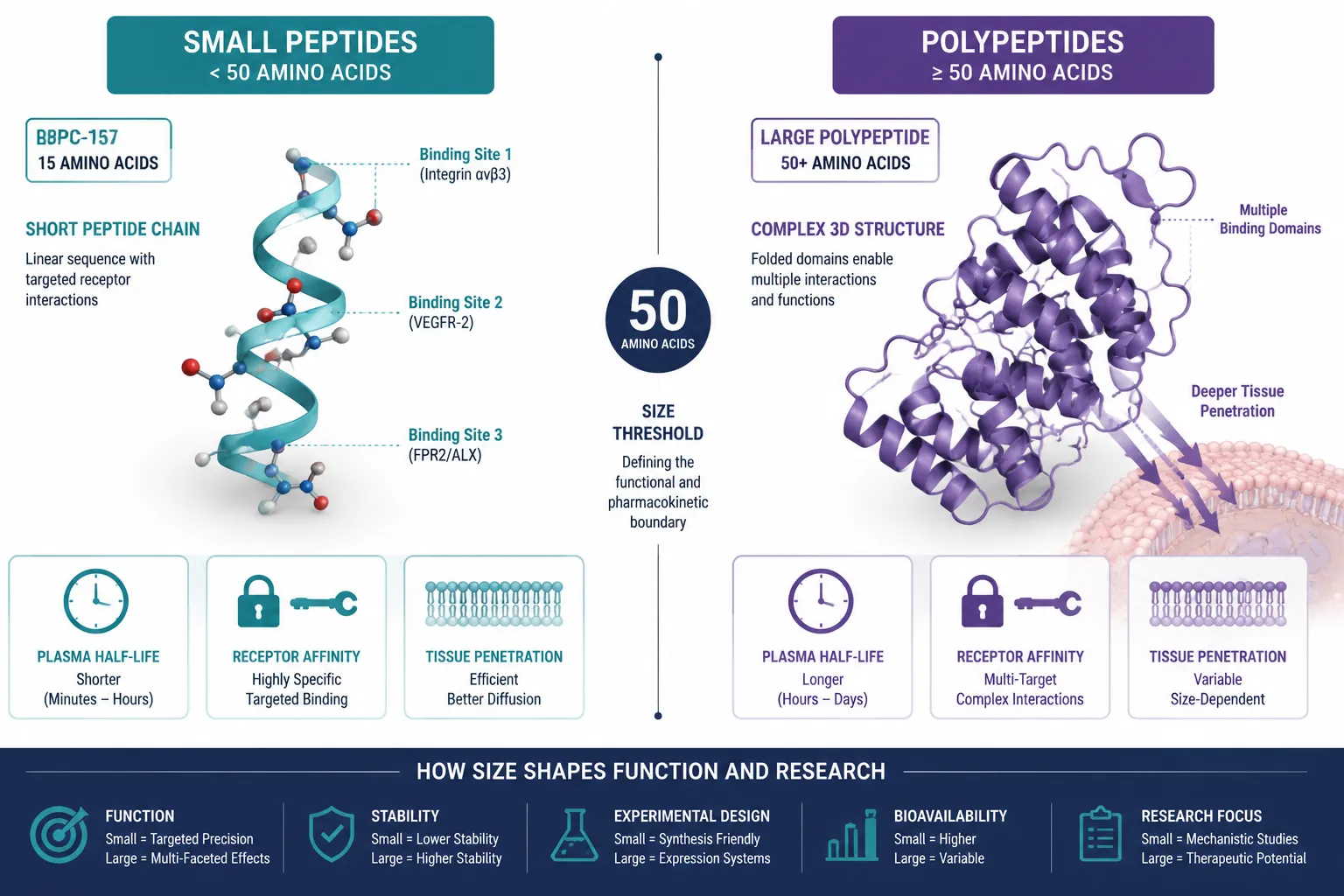
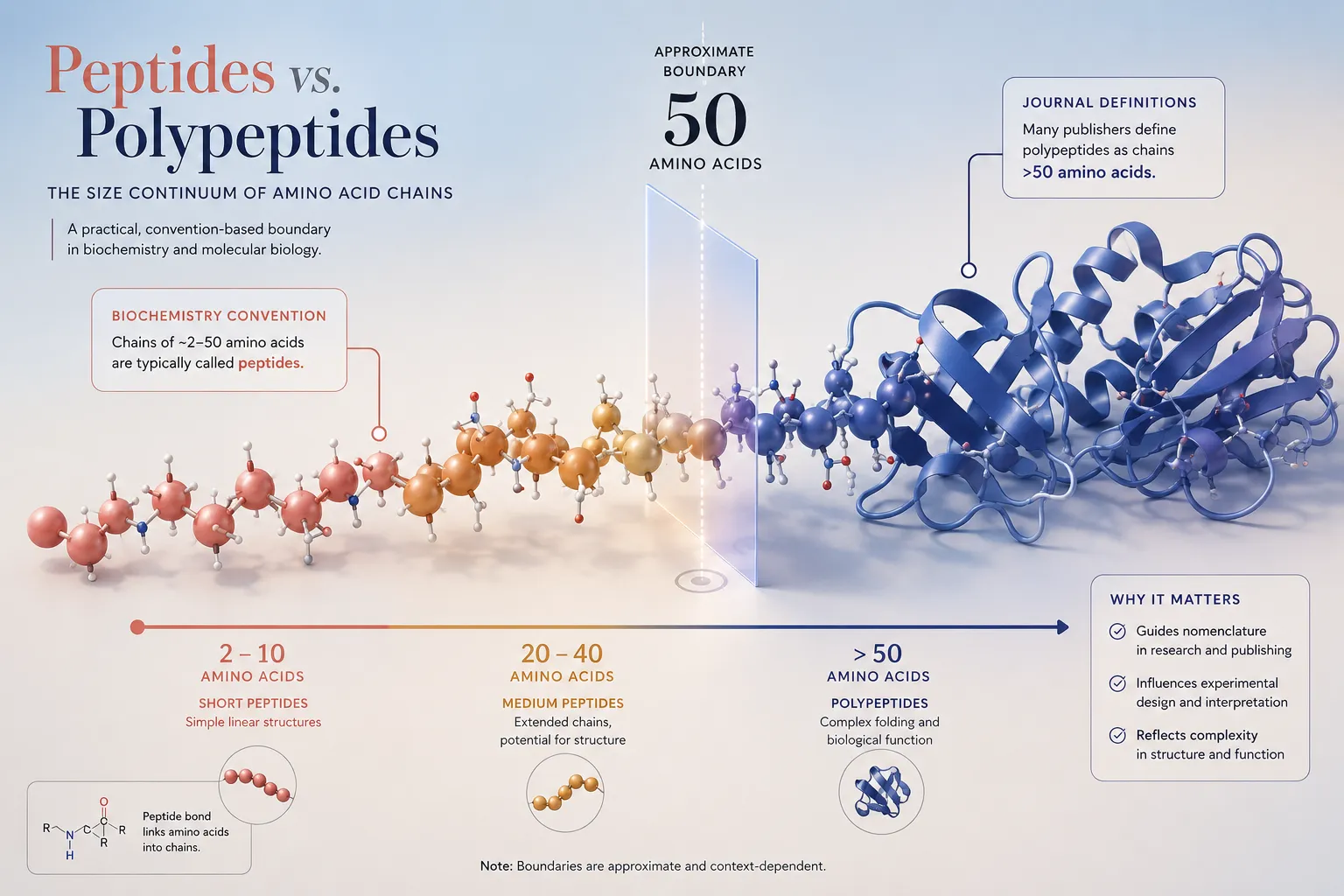
  • Peptides are generally defined as chains of 2-50 amino acids; polypeptides exceed that range and often fold into complex three-dimensional structures.
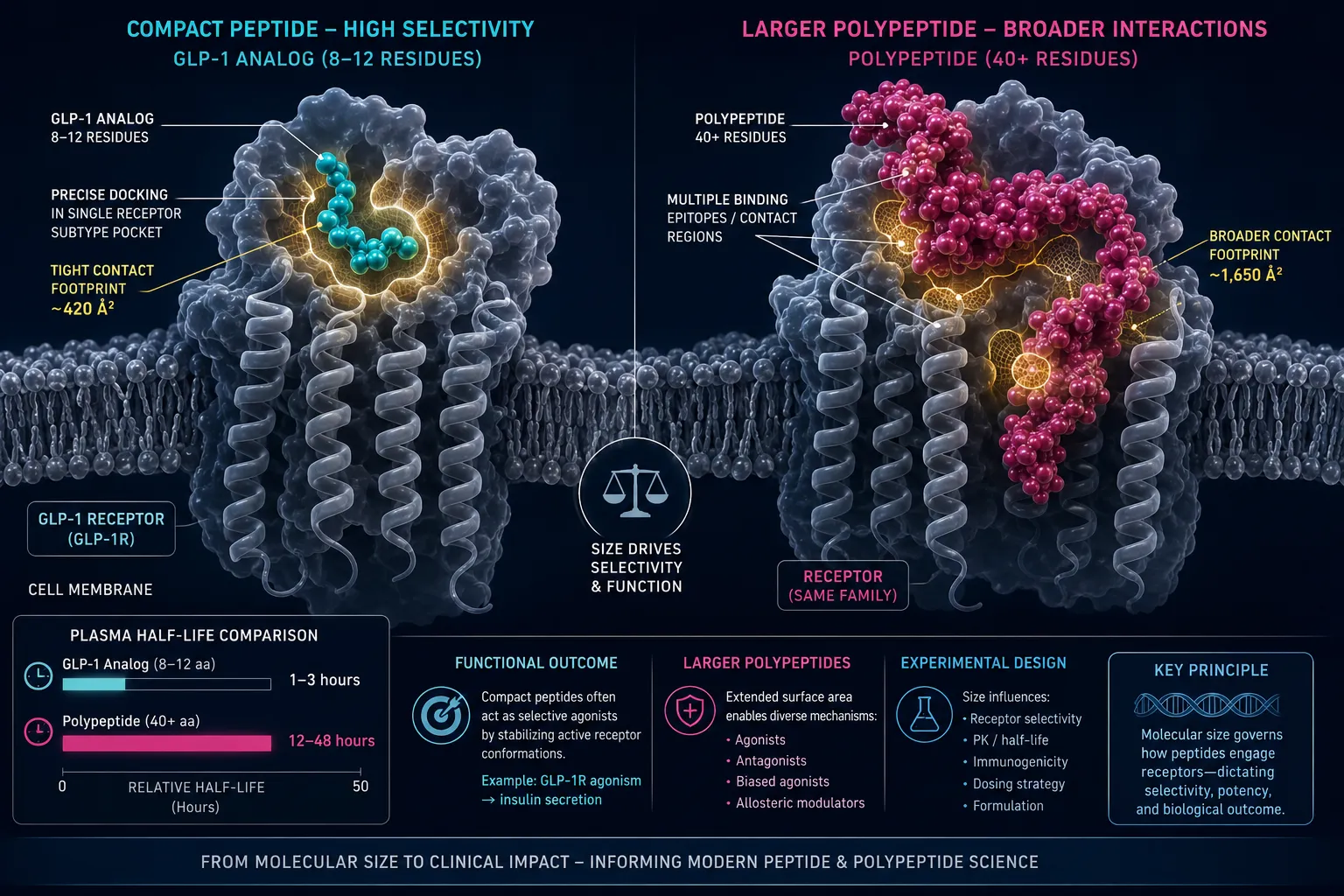
  • Molecular size directly influences receptor binding affinity, plasma half-life, and tissue penetration.
  • Short peptides such as BPC-157 and Epithalon are favored in many research protocols because of their predictable stability profiles.
  • Experimental design choices, solvent, temperature, storage format, must align with the size class of the compound being studied.
  • Sourcing quality peptides with verified purity is a non-negotiable foundation for reproducible results.

Key Takeaways

Defining the Size Boundary: Peptides vs. Polypeptides

The most widely used convention in biochemistry sets the cutoff at approximately 50 amino acid residues. Chains below that threshold are called peptides; chains above it are polypeptides or proteins. In practice, the line is blurry, and different journals apply slightly different rules. What matters more for research purposes is what size actually does to molecular behavior.

Property Short Peptide (2-20 aa) Polypeptide (50+ aa)
Molecular weight Under ~2,200 Da 5,500 Da and above
3D folding Minimal Extensive secondary/tertiary structure
Plasma half-life Minutes to hours Hours to days (often)
Membrane permeability Generally higher Lower without carriers
Synthesis complexity Low to moderate High

Short peptides like the tetrapeptide Epithalon (Ala-Glu-Asp-Gly) illustrate the small end of the spectrum. Its four-residue chain means minimal steric bulk, rapid tissue distribution, and straightforward lyophilized storage. Larger growth hormone-releasing constructs such as Tesamorelin, a 44-amino-acid analog, sit closer to the polypeptide boundary and require more careful cold-chain handling.

"Molecular size is not just a number, it is a set of instructions that tells a compound how to behave in every environment it enters."

How Molecular Size Shapes Function, Stability, and Experimental Design

Receptor Binding and Selectivity

Size governs the surface area a molecule can present to a receptor. Short peptides often act as agonists or antagonists at a single receptor subtype because their contact footprint is small and precise. GLP-1 analogs, for example, bind the GLP-1 receptor through a defined N-terminal helix; even minor truncation changes potency. Researchers exploring GLP-3 receptor activity must account for these size-dependent binding dynamics when designing dose-response curves.

Polypeptides, by contrast, can engage multiple receptor domains simultaneously. This multi-point contact often increases binding affinity but reduces selectivity, a trade-off that must be built into the experimental hypothesis from the start.

Stability in Solution and Storage

Peptide stability is one of the most underestimated variables in research. Key degradation pathways include:

  • Proteolytic cleavage, enzymes in serum rapidly cleave unprotected peptide bonds
  • Oxidation, methionine and cysteine residues are especially vulnerable
  • Aggregation, larger polypeptides self-associate at higher concentrations
  • Hydrolysis, asparagine and glutamine residues deamidate over time

Short peptides generally resist aggregation but are more susceptible to proteolysis. Researchers working with compounds like BPC-157 and TB-500, a popular pairing in tissue-repair studies, must store each compound separately in lyophilized form and reconstitute only what is needed per session. TB-500, a 43-amino-acid fragment of Thymosin Beta-4, sits near the polypeptide boundary and is particularly sensitive to freeze-thaw cycling.

Experimental Design Considerations

Choosing the right molecular size class for a given assay is not optional, it shapes every downstream decision:

  1. Solvent selection, short peptides often dissolve in sterile water or dilute acetic acid; larger polypeptides may require chaotropic agents.
  2. Detection method, HPLC and mass spectrometry perform differently across size ranges; calibration must reflect the target compound.
  3. Dosing interval, shorter half-lives in small peptides typically demand more frequent administration windows in in-vivo models.
  4. Blended formulations, multi-peptide blends such as KLOW blend peptides combine compounds with different size profiles, requiring compatibility testing before use.

Experimental Design Considerations

Practical Research Applications by Size Class

Short Peptides in Targeted Assays

Short peptides dominate early-phase research because they are easier to synthesize, characterize, and modify. Researchers can introduce D-amino acids, PEGylation, or cyclization to extend half-life without dramatically altering the binding epitope. The benefits of TB-500 in actin-binding studies, for instance, stem from a specific nine-residue actin-binding domain, a short sequence that retains function even when the parent polypeptide is fragmented.

Similarly, Epithalon's documented research profile centers on its tetrapeptide structure interacting with telomerase regulatory pathways, a function that would likely be obscured if the sequence were embedded in a larger folded protein.

Polypeptides and Complex Functional Studies

When the research question requires mimicking a full hormonal signal, such as growth hormone secretion or glucagon-like peptide activity, polypeptide-length constructs become necessary. The added residues provide conformational stability and the allosteric surface needed for full receptor activation. This is why GLP-1TZ peptide analogs retain structural elements that shorter fragments cannot replicate.

Polypeptides and Complex Functional Studies

Conclusion

Understanding how molecular size shapes function, stability, and experimental design is not background knowledge, it is the foundation of every sound peptide research protocol. Researchers should:

  • Classify compounds by size class first, then select compatible storage, solvent, and detection methods.
  • Match the compound's half-life to the assay timeline to avoid false-negative results from premature degradation.
  • Verify purity documentation before any experiment; sourcing from a reliable supplier of tested peptides eliminates a major confounding variable.
  • Review size-specific literature for each compound rather than applying generic peptide handling protocols across all molecular weights.

As 2026 research programs push further into precision biology, the distinction between peptides and polypeptides will only grow more consequential. Researchers who internalize these size-driven principles will design better experiments, generate cleaner data, and draw more defensible conclusions.

https://www.puretestedpeptides.com/wp-content/uploads/2026/07/peptides-and-polypeptides-in-modern-research-how-molecular-size-shapes-function.webp 1024 1536 https://www.puretestedpeptides.com/wp-content/uploads/2026/01/buy-peptides-online.jpg 2026-07-29 13:06:032026-07-29 13:06:03Peptides and Polypeptides in Modern Research: How Molecular Size Shapes Function, Stability, and Experimental Design
×

Helpful Links

  • My account
  • Cart
  • Checkout
  • Refund and Returns Policy
  • Privacy Policy
  • SMS Privacy Policy
  • Login
  • My Account
  • Logout

USA Made Lab Tested Peptides

All products are sold for research, laboratory, or analytical purposes only, and are not for human consumption


Pure Tested Peptides is a chemical supplier. Pure Tested Peptides is not a compounding / chemical compounding facility as defined under 503A of the Federal Food, Drug, and Cosmetic act. Pure Tested Peptides is not an outsourcing facility as defined under 503B of the Federal Food, Drug, and Cosmetic act.

The statements made within this website have not been evaluated by the US Food and Drug Administration. The products we offer are not intended to diagnose, treat, cure or prevent any disease.

Human/Animal Consumption Prohibited. Laboratory/In-Vitro Experimental Use Only

Scroll to top Scroll to top Scroll to top