

Retatrutide, GLP-1 Pills, and Small-Molecule Weight-Loss Options: What Researchers Should Compare Before Selecting a Model
Fewer than five years ago, the only oral option for metabolic research was a single approved peptide formulation with modest weight-loss signals. By mid-2026, the landscape includes a triple-receptor injectable peptide, a first-in-class non-peptide oral GLP-1 agonist, and a reformulated oral semaglutide, each with a distinct mechanism, tolerability profile, and regulatory standing. Choosing the wrong model for a given research question wastes resources and produces data that cannot be compared across studies. Understanding the key variables in Retatrutide, GLP-1 Pills, and Small-Molecule Weight-Loss Options is the first step toward designing a rigorous protocol.
Key Takeaways
- Retatrutide is a triple agonist (GLP-1, GIP, glucagon receptors) with phase 3 data showing substantially higher weight-loss magnitude than single-agonist comparators.
- Orforglipron (Foundayo) is a non-peptide small molecule that achieves oral bioavailability without an absorption enhancer, making it mechanistically distinct from oral semaglutide.
- Oral semaglutide (Wegovy pill) is a peptide formulation requiring a specific absorption agent; it is broadly available in the US but shows more modest weight-loss numbers in smaller patient cohorts.
- Regulatory status differs sharply: some agents are approved, others remain in late-stage trials or are available only for research purposes.
- Researchers must explicitly encode receptor target depth, delivery route, glycemic endpoints, and tolerability variables before selecting any model.
Understanding the Compound Classes in Play
Not all weight-loss agents work the same way, and conflating them in a research design leads to flawed conclusions. The current field breaks into three meaningful categories.
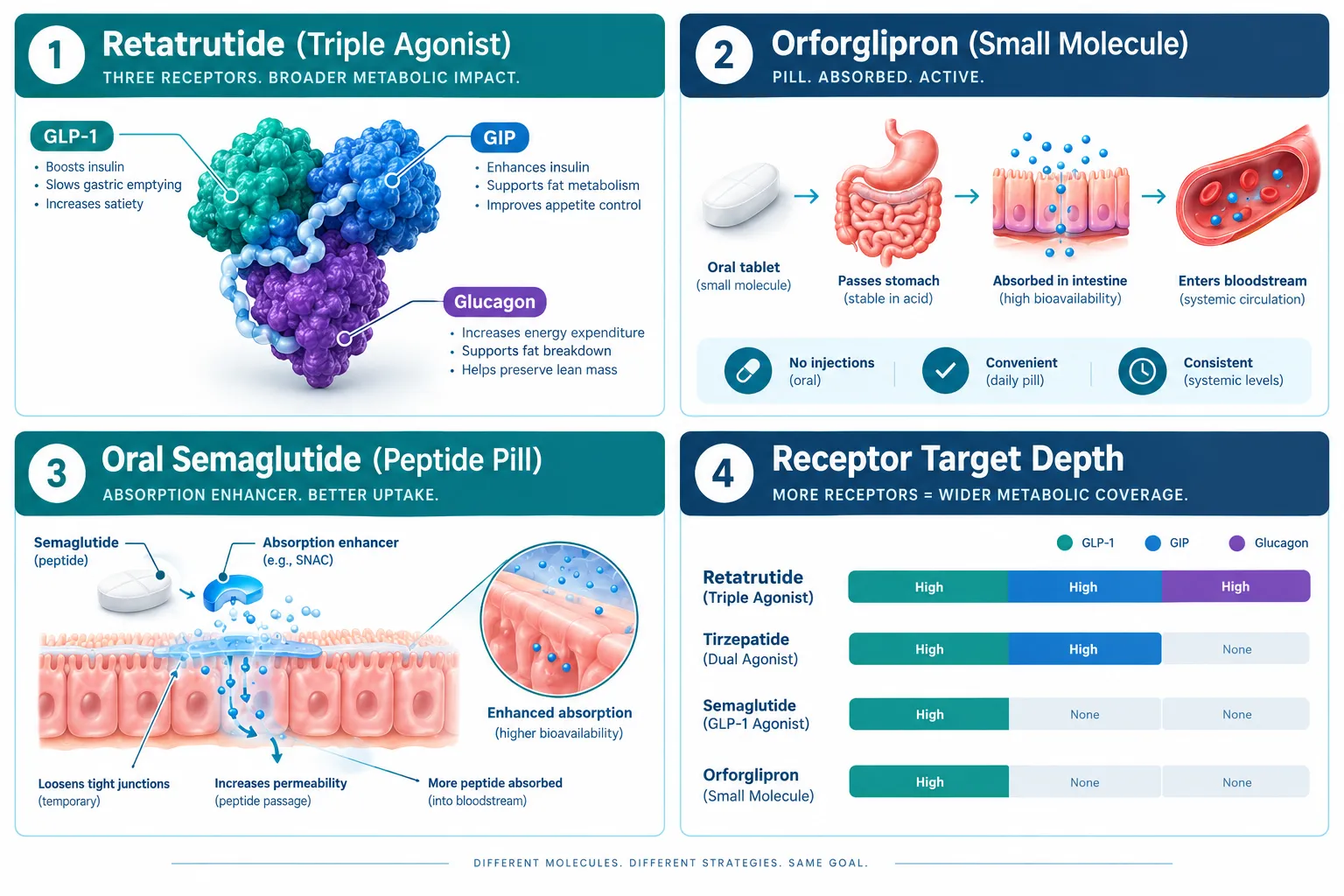
Retatrutide is a single-molecule triple agonist that activates GLP-1, GIP, and glucagon receptors simultaneously. Phase 3 data from the TRIUMPH-1 trial in obesity showed weight reductions that outpaced earlier dual-agonist benchmarks. In a separate type 2 diabetes cohort, weight loss was more modest and gastrointestinal adverse events were notably more frequent, a signal researchers must account for when selecting a population model. The broader TRIUMPH program also covers comorbidity-focused indications including obstructive sleep apnea, knee osteoarthritis, and cardiovascular disease, making it one of the most expansive obesity drug programs currently running. The planned TRIUMPH-5 head-to-head against tirzepatide will eventually serve as a key benchmark, but that data is not yet available. Researchers interested in the evidence base can review Retatrutide clinical trial summaries and Retatrutide clinical trials data as the program evolves.
Orforglipron (Foundayo) is a non-peptide small molecule, meaning it is not built from amino acids and does not require an absorption enhancer to survive the GI tract. ATTAIN-1 phase 3 data for obesity showed meaningful weight loss with an all-oral dosing schedule. Because it engages only the GLP-1 receptor, its appetite and glycemic effects are narrower than retatrutide's triple-agonist profile.
Oral semaglutide (Wegovy pill) is a peptide reformulated with the absorption enhancer SNAC. It is broadly available in the US market as of 2026 but carries more modest weight-loss numbers in published cohorts compared to injectable semaglutide or the newer agents. Its primary research value lies in head-to-head oral comparisons.
For a broader orientation to peptide classes and how GLP-3 compounds fit alongside these agents, the Peptides 101 for research-use only buyers resource provides useful structural context.
Core Variables Researchers Must Encode When Comparing Retatrutide, GLP-1 Pills, and Small-Molecule Weight-Loss Options
Selecting a model without explicitly defining the following variables produces data that cannot be interpreted cleanly.
Receptor Target Depth
"A single receptor target and a triple receptor target are not interchangeable models, even when the primary endpoint is body weight."
The table below summarizes receptor engagement across the three compound classes:
| Compound | GLP-1 | GIP | Glucagon | Delivery |
|---|---|---|---|---|
| Retatrutide | Yes | Yes | Yes | Injectable |
| Orforglipron | Yes | No | No | Oral (non-peptide) |
| Oral Semaglutide | Yes | No | No | Oral (peptide + SNAC) |
Glucagon receptor activation drives additional energy expenditure beyond appetite suppression. Researchers modeling thermogenic pathways must account for this difference. Researchers sourcing retatrutide for in-vitro or preclinical work can reference GLP-3 Reta 10mg 99% pure third-party tested or GLP-3 Reta 30mg for sale for research-grade supply options.
Oral Exposure and Bioavailability
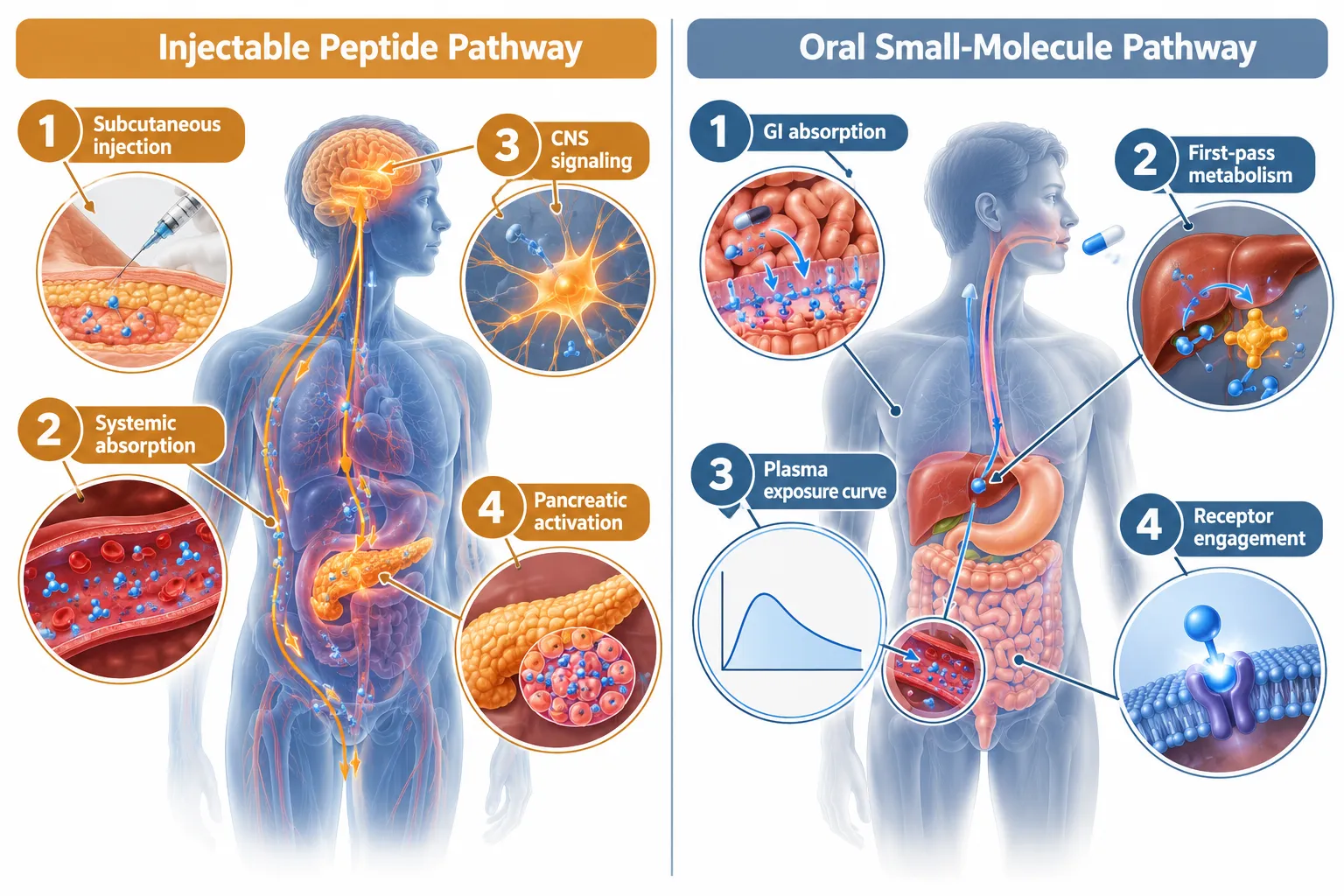
Oral bioavailability varies dramatically between a non-peptide small molecule and a peptide-based oral agent. Orforglipron achieves systemic exposure without an absorption enhancer, producing a cleaner pharmacokinetic curve. Oral semaglutide depends on SNAC to open tight junctions in the gastric mucosa, which introduces variability based on food timing and gastric pH. Researchers designing oral exposure models must encode this difference explicitly in their protocols.
Glycemic vs. Weight Endpoints
Retatrutide's type 2 diabetes cohort showed that glycemic and weight outcomes do not move in parallel. Models built around HbA1c reduction require different dose-escalation assumptions than models built around percent body weight change. Researchers should not assume that a compound's obesity-trial weight-loss magnitude will replicate in a glycemic-focused design.
Tolerability Variables
Gastrointestinal adverse events, nausea, vomiting, diarrhea, appear across all three agents but with different frequency profiles. Retatrutide's diabetes cohort showed notably higher GI event rates than its obesity cohort, likely reflecting dose-escalation speed and baseline metabolic status. Any comparative model must pre-specify tolerability endpoints rather than treating them as secondary observations.
Regulatory Status and Research-Use Considerations in 2026
As of 2026, orforglipron (Foundayo) has received regulatory approval for obesity, making it the first non-peptide oral GLP-1 agonist to reach that status. Oral semaglutide for obesity is also approved and commercially available in the US. Retatrutide remains in phase 3 trials and has not yet received approval; it is available only as a research compound through verified research-grade suppliers.
This distinction matters for study design. Approved agents can be studied in clinical settings with standard IRB frameworks. Research compounds require additional documentation, sourcing from qualified suppliers, and strict adherence to research-use-only protocols.
Researchers building comparative models should also consider how retatrutide's comorbidity-focused TRIUMPH sub-studies (OSA, knee OA, CVD) may eventually generate approval pathways beyond obesity, expanding the range of valid research questions.
For researchers exploring related peptide mechanisms, resources on Tesamorelin dosage for fat loss and Tesamorelin before and after offer useful comparisons for growth-hormone-mediated fat metabolism models alongside GLP-1-axis compounds.
Conclusion
The question of which model to select from Retatrutide, GLP-1 Pills, and Small-Molecule Weight-Loss Options is not answered by weight-loss magnitude alone. Receptor target depth, oral bioavailability mechanism, glycemic versus weight endpoints, tolerability profiles, and current regulatory status all shape what a given compound can and cannot tell a researcher.
Actionable next steps for researchers:
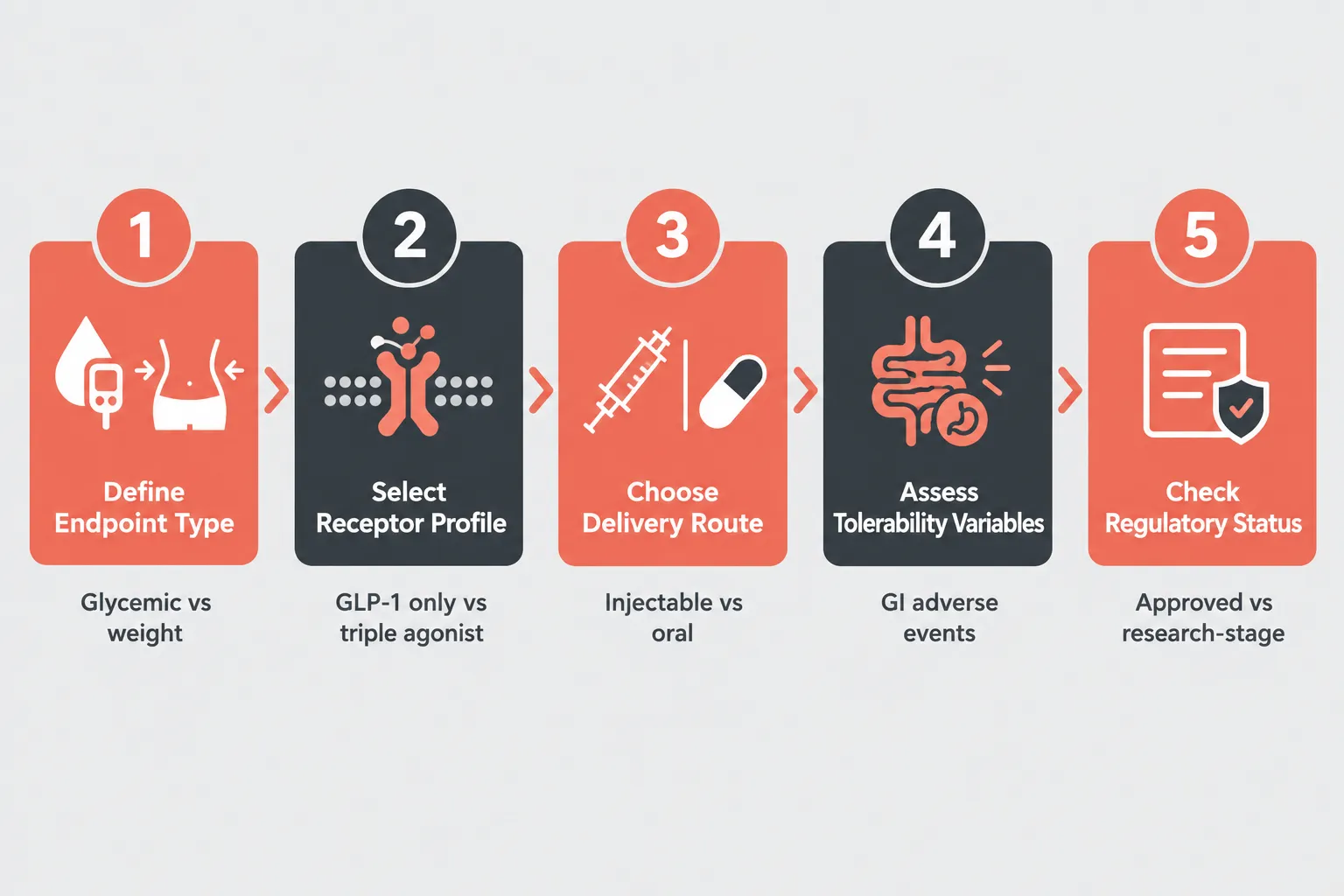
- Define the primary endpoint first, weight loss, glycemic control, or comorbidity reduction, before selecting a compound.
- Map receptor targets explicitly; do not treat GLP-1-only agents as equivalent to triple agonists in mechanistic models.
- Account for oral exposure variability when designing pharmacokinetic comparisons between peptide-based and non-peptide oral agents.
- Pre-specify tolerability endpoints, particularly in diabetic population models where GI event rates differ from obesity cohorts.
- Verify regulatory status before sourcing; approved agents and research-stage compounds require different procurement and documentation protocols.
The TRIUMPH-5 head-to-head data, when available, will provide the most direct comparative benchmark in this field. Until then, rigorous model selection depends on encoding the variables above with precision.