Advanced Glycation End-Products in Peptide Research: Measuring Glycemic Memory, Collagen Crosslinking, and Tissue Repair
Collagen laid down decades ago still carries the chemical signature of every glucose spike it ever witnessed. That silent biochemical record, preserved in the very scaffolding of skin, tendons, discs, and blood vessels, is what researchers now call glycemic memory, and it explains why vascular complications persist even after blood sugar is brought under control. Understanding advanced glycation end-products in peptide research: measuring glycemic memory, collagen crosslinking, and tissue repair has therefore become one of the most consequential frontiers in translational biology, sitting at the intersection of metabolic disease, structural biology, and next-generation peptide science.
Key Takeaways
- AGEs accumulate irreversibly in long-lived matrix proteins, encoding years of metabolic history independently of current blood glucose.
- Skin autofluorescence (SAF) provides a non-invasive window into cumulative AGE burden and predicts micro- and macrovascular risk.
- AGE-driven collagen crosslinking stiffens tissues, impairs macrophage-mediated remodeling, and delays wound healing.
- Peptides such as BPC-157, GHK-Cu, and retatrutide-adjacent GLP-class compounds occupy distinct but complementary roles in AGE-associated tissue repair models.
- Three therapeutic directions dominate current research: limiting new AGE formation, breaking established crosslinks, and restoring matrix turnover.
What Are AGEs and Why Do They Encode Glycemic Memory
Advanced glycation end-products form when reducing sugars react non-enzymatically with free amino groups on proteins, lipids, and nucleic acids, a cascade known as the Maillard reaction. In short-lived proteins this chemistry is a nuisance. In long-lived extracellular matrix proteins such as collagen type I, elastin, and basement membrane laminins, it is a permanent structural edit.
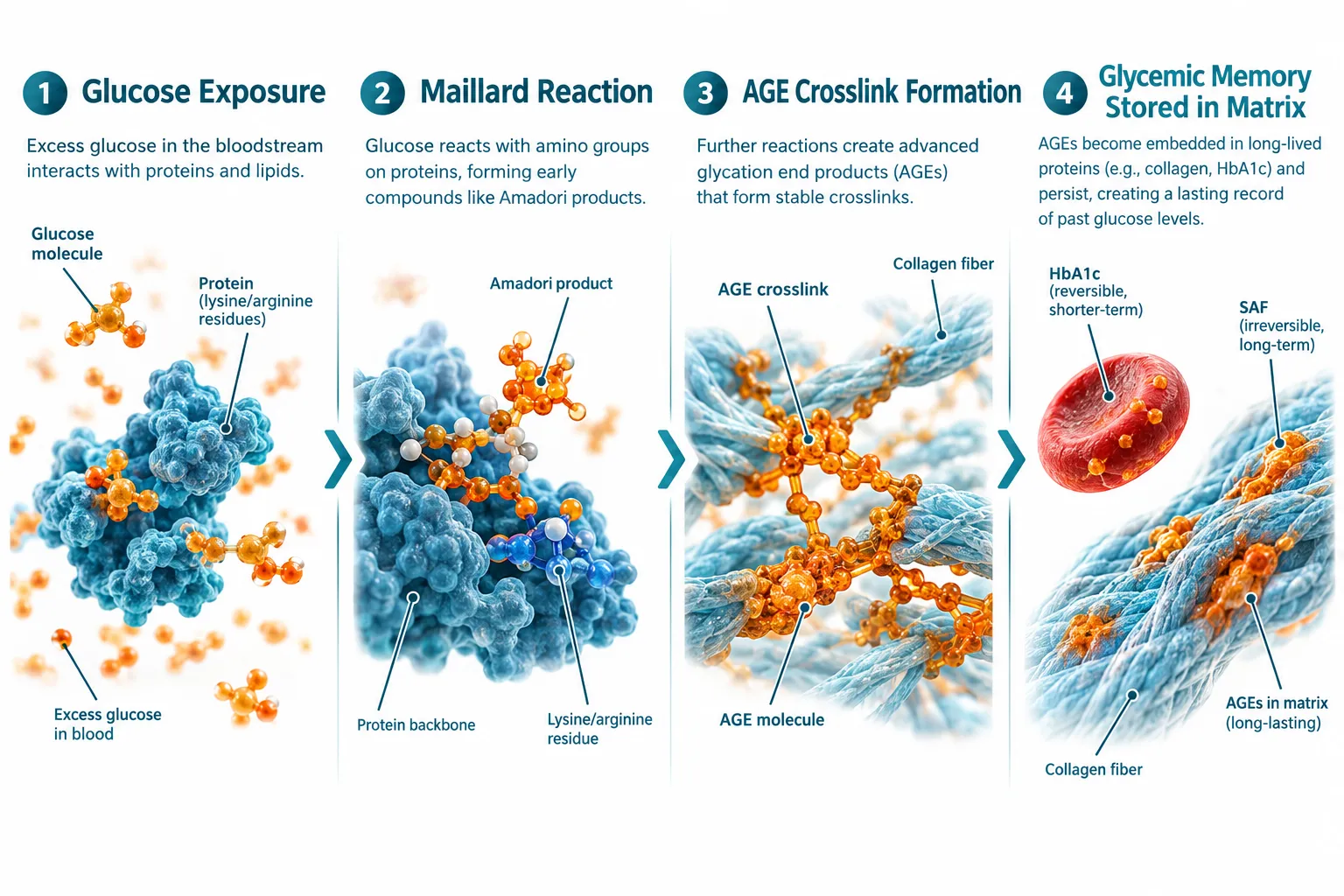
Because collagen in tendons, skin, and arterial walls turns over on timescales of years to decades, AGE modifications accumulate progressively. Lysine and arginine residues are the primary targets, and the resulting crosslinks, including pentosidine and carboxymethyl-lysine, alter fiber geometry, reduce compliance, and resist proteolytic clearance. The tissue therefore retains a biochemical record of prior hyperglycemia long after HbA1c normalizes. This is the mechanistic core of glycemic memory: past glucose exposure continues to drive complication risk through matrix chemistry rather than circulating glucose.
Skin autofluorescence (SAF) has emerged as the most practical non-invasive readout of this burden. SAF correlates with HbA1c measured over the preceding three to ten years across type 1, type 2, and gestational diabetes populations, and it predicts both current and future micro- and macrovascular complications. Crucially, SAF provides information about cumulative metabolic injury that a single-time-point HbA1c measurement cannot capture, making it a genuine "memory" biomarker rather than a snapshot.
"AGEs encode lasting tissue damage despite later normoglycemia, measuring them changes what clinicians and researchers know about a patient's risk."
Collagen Crosslinking, RAGE Signaling, and Impaired Tissue Repair
The structural consequences of AGE-mediated crosslinking extend far beyond stiffness. In tendon tissue, non-enzymatic crosslinks accumulate at lysine and arginine residues in telopeptide regions, degrading biomechanical properties and activating the receptor for AGEs (RAGE). RAGE-dependent signaling disrupts extracellular matrix integrity and impairs wound healing, positioning AGE load as a modifiable variable in connective tissue repair quality.
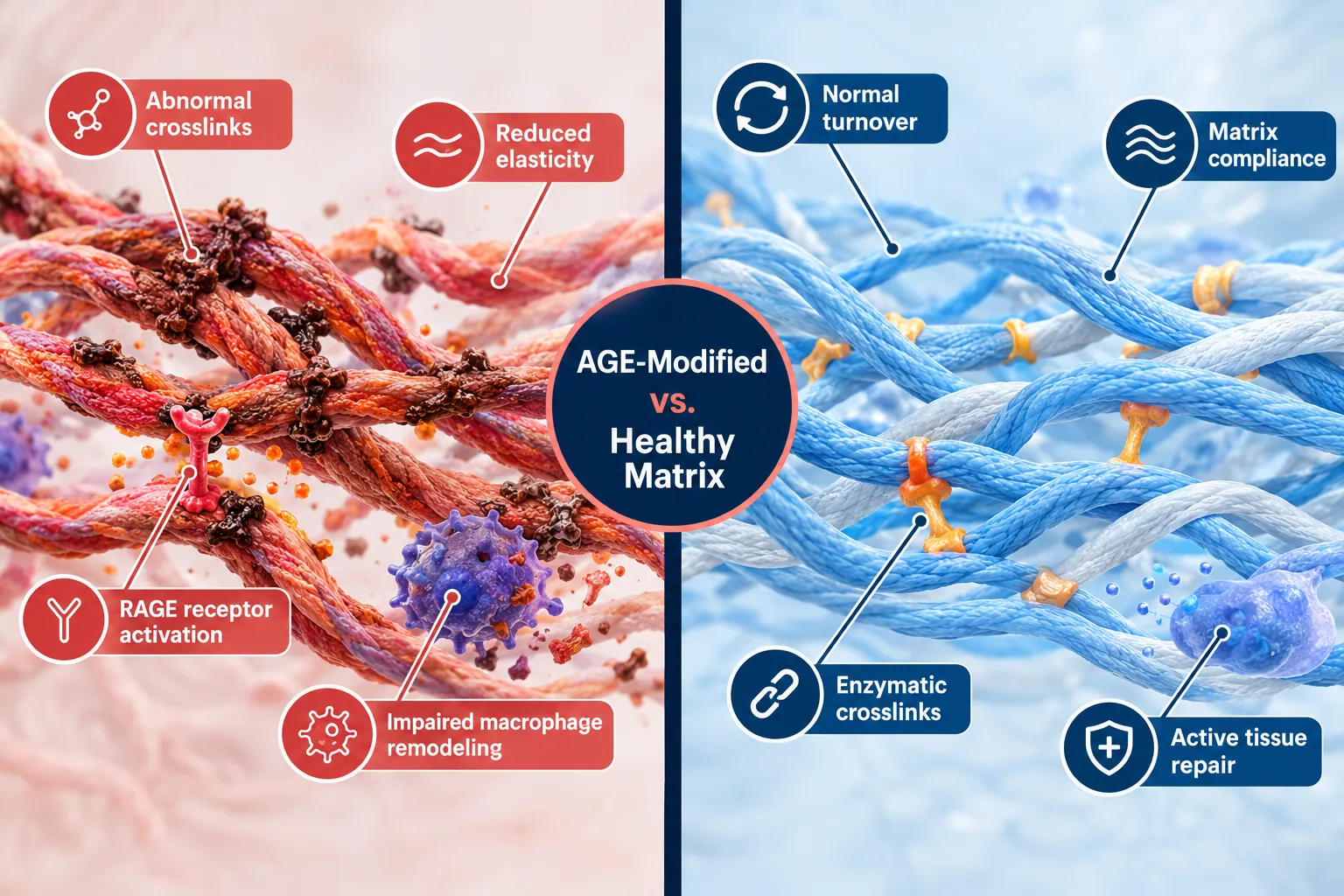
In the intervertebral disc, AGEs covalently modify collagen and elastin, promoting abnormal crosslinking and tissue stiffening. Animal model studies with AGE crosslink breakers, including N-phenacylthiazolium bromide (PTB) and ALT-711, partially reverse AGE-induced stiffness, offering proof of concept for structurally targeted therapy.
Fibrotic liver tissue illustrates the repair-blocking dimension most starkly. AGE-driven crosslinking alters collagen architecture and impairs macrophage-mediated matrix remodeling, effectively locking tissues in a state of defective repair. The same principle applies to skin, where AGE crosslinks with structural proteins including collagen, elastin, fibronectin, and laminin contribute to stiffening, reduced elasticity, and delayed wound healing.
Epigenetic mechanisms add another layer. Chronic AGE stimulation, for example, via AGE-albumin exposure in renal tubular cells, reduces EZH2 and H3K27me3 levels, upregulating injury-related genes at the chromatin level. This histone modification persists after glucose normalization, linking AGE biology directly to the epigenetic machinery of metabolic memory. A 2026 synthesis of trained immunity research further proposes that AGEs interact with innate immune reprogramming to sustain inflammatory tone and impair repair responses, explaining interindividual variability that AGE accumulation alone cannot account for.
Advanced Glycation End-Products in Peptide Research: Measuring Glycemic Memory, Collagen Crosslinking, and Tissue Repair Through Targeted Interventions
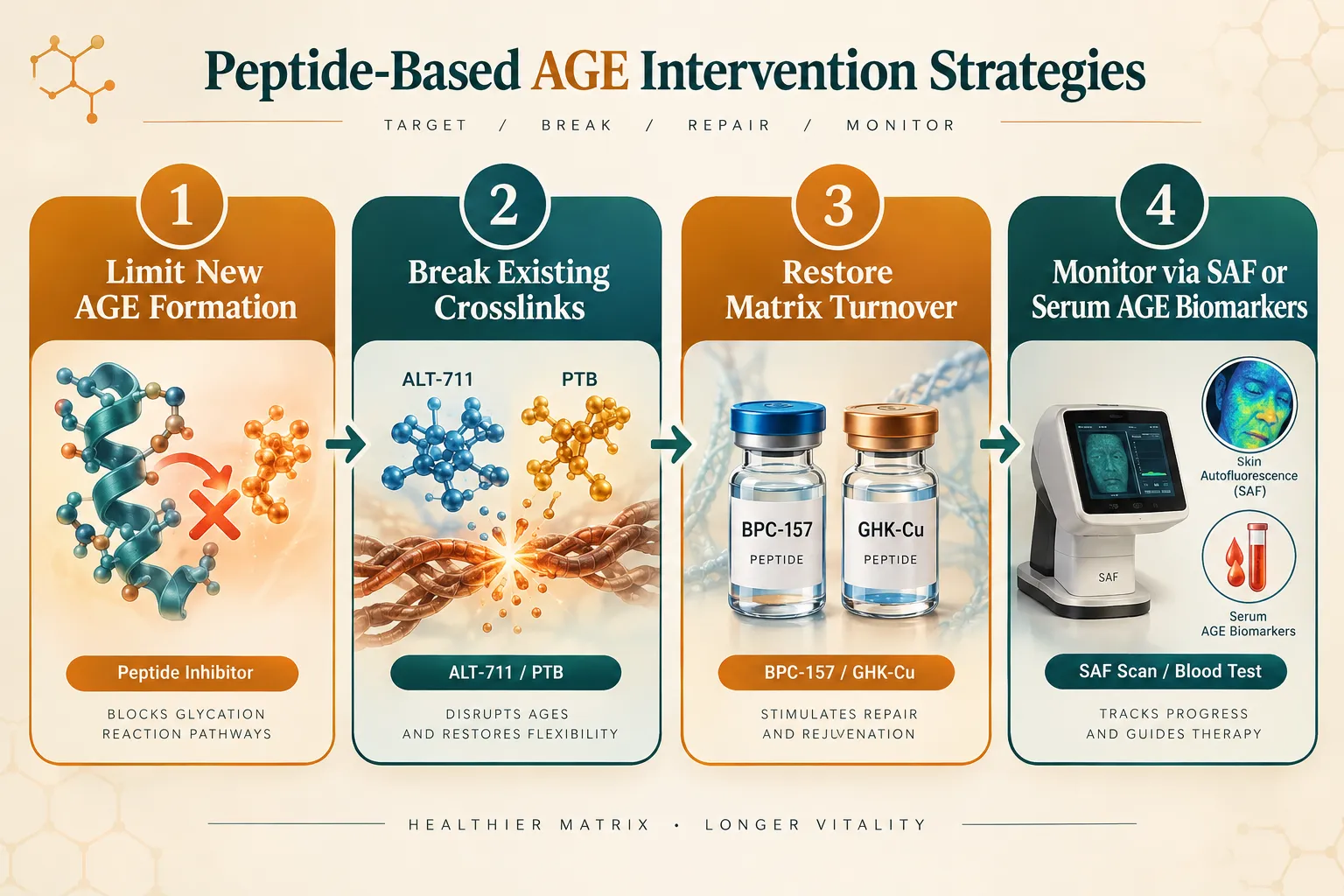
Three therapeutic directions now define how advanced glycation end-products in peptide research frame targeting strategies: limiting new AGE formation, breaking established crosslinks, and restoring matrix turnover.
1. Limiting new AGE formation
Carbonyl scavengers and RAGE antagonists reduce the substrate available for further glycation. In metabolic research contexts, GLP-1 receptor agonists, including compounds related to retatrutide (a GLP-1/GIP/glucagon triple agonist), reduce chronic hyperglycemia and thereby slow the rate of new AGE deposition. Researchers sourcing retatrutide for sale in preclinical contexts often frame glycemic control as the upstream lever for AGE management.
2. Breaking established crosslinks
Small-molecule breakers (PTB, ALT-711) represent the classical approach. Peptide-based crosslink breakers and peptide mimetics are now catalogued as emerging candidates alongside established carbonyl scavengers, particularly for collagen-rich tissues with clear structural endpoints.
3. Restoring matrix turnover and tissue compliance
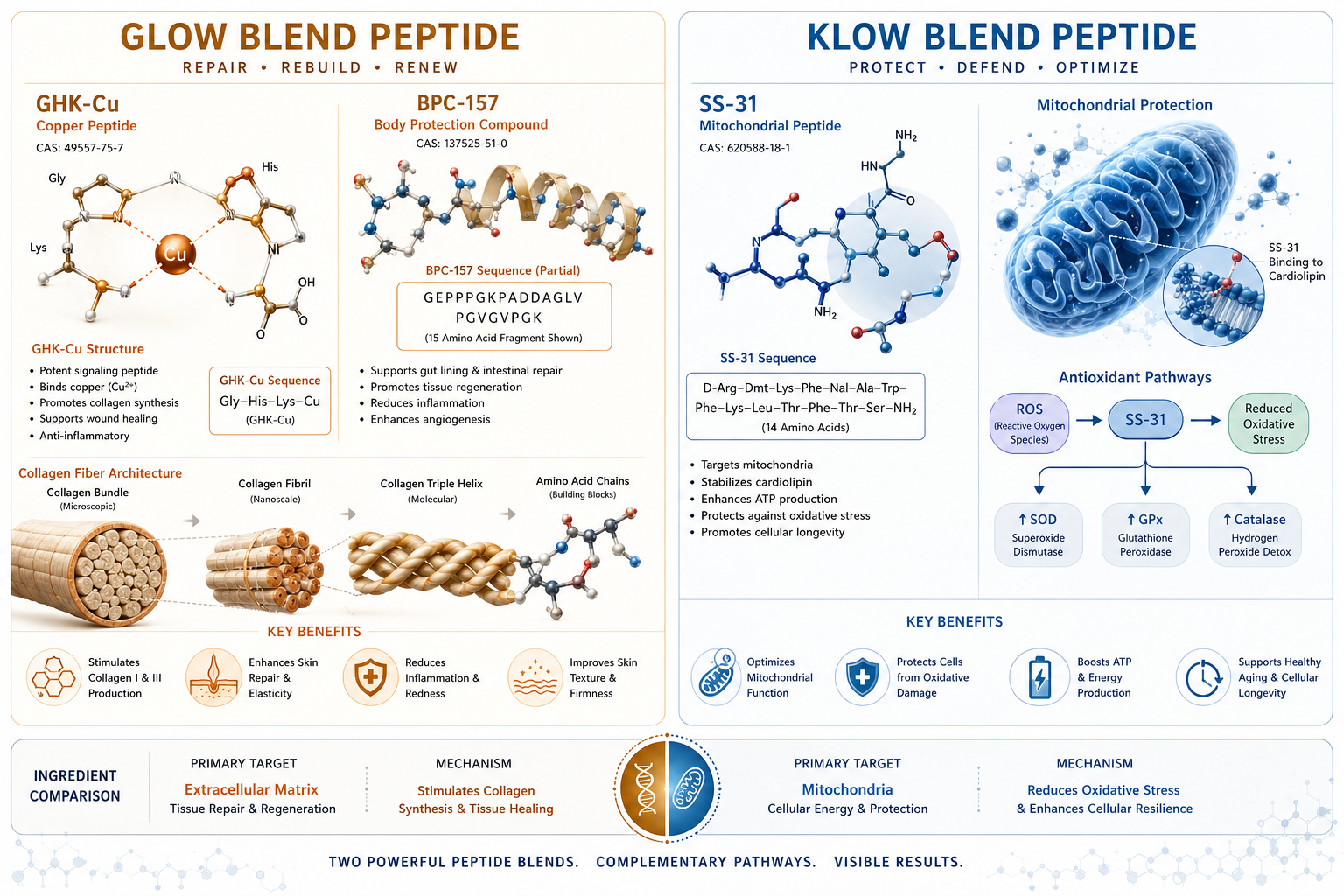
This is where peptides such as BPC-157 and GHK-Cu become directly relevant. The BPC-157 core peptides documentation describes a body pentadecapeptide with well-characterized effects on angiogenesis, tendon-to-bone healing, and extracellular matrix remodeling, precisely the endpoints most impaired by AGE-driven crosslinking. GHK-Cu (glycine-histidine-lysine copper complex) upregulates matrix metalloproteinases and promotes collagen synthesis, offering a complementary matrix-renewal mechanism.
SS-31, a mitochondria-targeted peptide, addresses the oxidative stress dimension that AGEs amplify. Studies on SS-31 peptide benefits suggest it reduces reactive oxygen species generated downstream of RAGE activation, potentially interrupting the epigenetic reinforcement loop that sustains glycemic memory. Researchers have also examined SS-31 and MOTS-c combinations for metabolic and mitochondrial synergy.
GLP-2-related compounds are relevant to intestinal matrix repair, where AGE-modified basement membrane components impair epithelial turnover. The GLP-3 peptide signaling pathway article outlines receptor-level mechanisms applicable to gut mucosal repair models.
| Biomarker | Timescale Reflected | Practical Use |
|---|---|---|
| Fasting glucose | Hours | Acute glycemic state |
| HbA1c | 8-12 weeks | Short-term control |
| Skin autofluorescence | 3-10 years | Cumulative AGE burden |
| Tissue collagen AGEs | Decades | Structural glycemic memory |
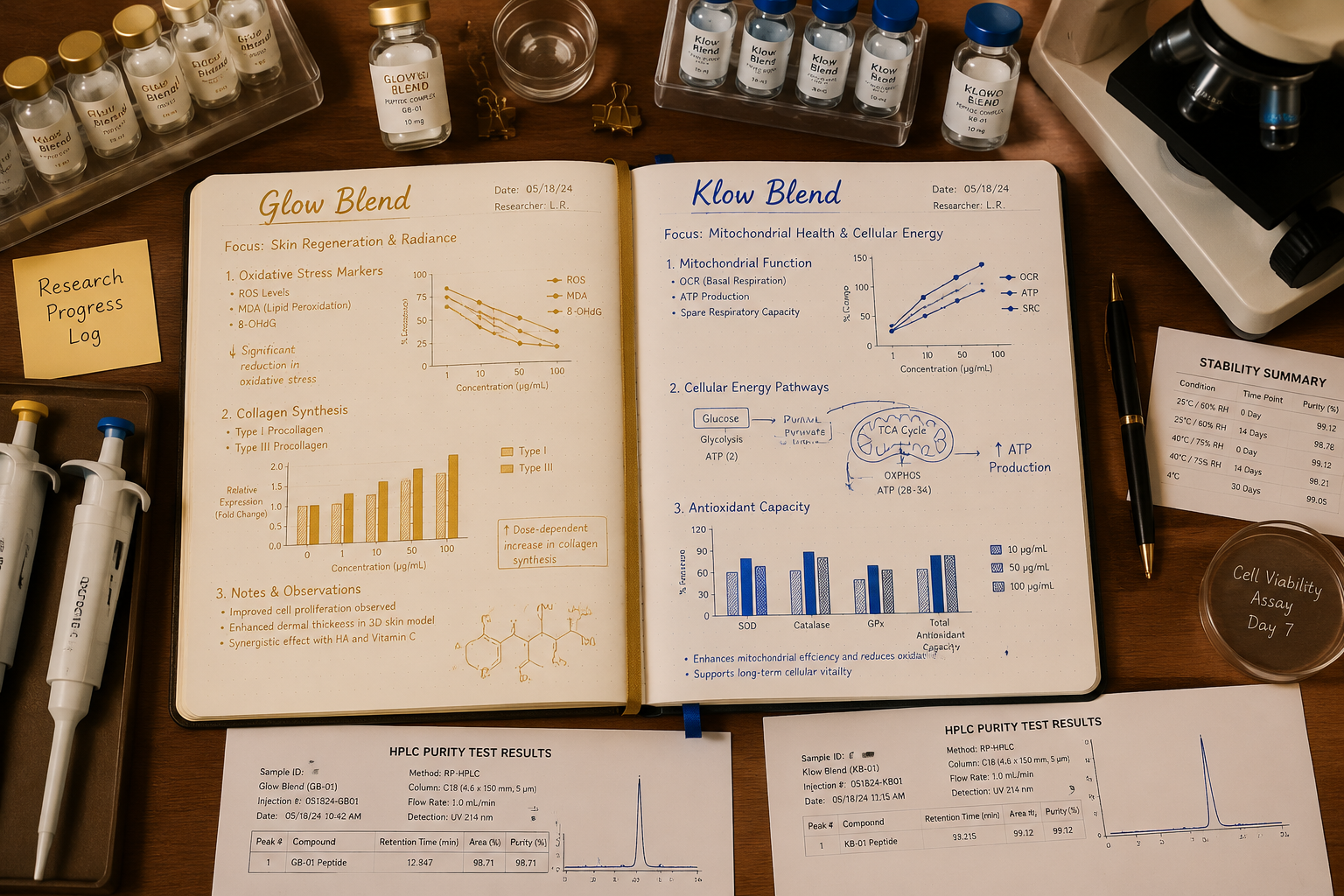
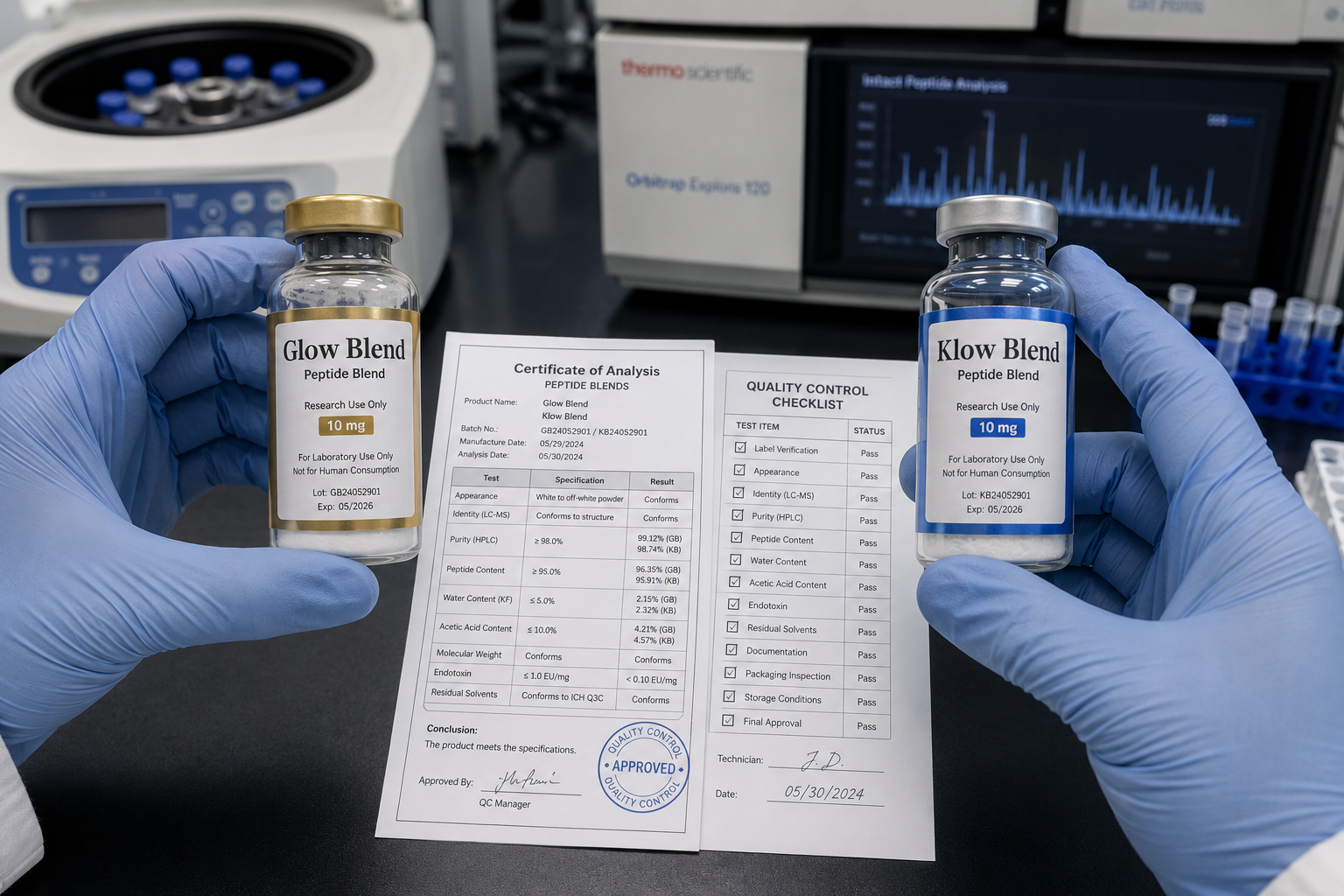
For researchers evaluating supplier quality before initiating AGE-related studies, peptide supplier comparisons offer a useful framework for interpreting purity documentation.
Conclusion
Advanced glycation end-products in peptide research represent more than a niche biochemistry topic, they are the molecular link between metabolic history and structural tissue fate. The key actions for researchers in 2026 are clear:
- Measure AGE burden correctly. Use SAF or tissue-specific AGE assays rather than relying solely on HbA1c when studying chronic complications or long-term tissue remodeling.
- Match the peptide to the mechanism. BPC-157 and GHK-Cu target matrix turnover; SS-31 targets oxidative RAGE signaling; GLP-class peptides address upstream hyperglycemia. These are complementary, not interchangeable.
- Choose structural endpoints. Collagen crosslink density, tissue stiffness, and biomechanical properties are the most informative surrogates for reversing glycemic memory in preclinical models.
- Prioritize source quality. AGE research depends on reproducible peptide preparations; verify purity data before drawing mechanistic conclusions.
The intersection of AGE biology and targeted peptide science is where some of the most actionable translational discoveries are likely to emerge over the next few years. The structural record written by decades of glycation can, incrementally, be revised.