Call or Text 727-513-9780
  • Shopping Cart Shopping Cart
    0Shopping Cart
Pure Tested Peptides | America's most trusted Peptides for sale online
  • Peptides for sale
    • Oral Peptides for sale
      • Peptide Capsules for sale
      • BPC 157 Capsules 1000mcg
      • SLU-PP-332 Capsules | 1000 mcg
      • 5-Amino-1MQ 50mg Capsules
      • Tesofensine 500mcg
    • All Peptides for sale
    • Peptide Sprays
      • BPC 157 Nasal Spray Kit
      • BPC-157 TB500 Nasal Spray Kit
      • Semax Nasal Spray 10mg
      • Selank – Nasal Spray Kit – 10mg
      • Epithalon 50MG Nasal Spray Kit
      • Ipamorelin 10mg Nasal Spray
      • Klow Nasal Spray (BPC-157 + TB-500 + GHK-Cu + KPV) | 80mg
      • Hulk Nasal Spray Tesa / Ipa Blend 6/3 MG
      • Klow Nasal Spray
      • NAD + 500 mg Nasal Spray
      • PT-141 Nasal Spray Kit
    • GHRH Peptides
      • Ipa Peptides
      • CJC-1295 Peptides
        • CJC-1295 with DAC 5 mg
        • CJC-1295 without DAC 5 mg
        • CJC-1295 Ipa 10mg
      • Tesa Peptides
        • Tesa Peptide
        • Tesa 20 mg
    • GHK-Cu Peptides
      • All GHK-Cu Peptides
      • GHK-Cu 100mg
      • KLOW Peptide Blend – Buy KLOW blend online
    • BPC Peptides
      • All BPC Peptides
      • BPC-157
      • BPC-157 TB-500
      • BPC 157 capsules 1000mcg
    • SLU-PP-332 Peptides
      • All SLU-PP-332 Peptides
      • SLU-PP-332 5mg
    • GLP3 Peptides
    • PT-141 Peptides
      • PT-141 Peptides for sale
      • PT-141 10mg
      • PT-141 Nasal Spray
    • CAG Peptides
      • Lipo-C Peptide Blend
      • CAG 5mg
      • CAG 10mg
    • MOTS-C Peptides
      • MOTS-C Peptides for sale
      • MOTS-c peptide
      • MOTS-c 10mg *6 pack*
    • 5 Amino 1MQ Peptides
      • 5 Amino 1MQ Peptides for sale
      • 5-Amino-1MQ 50mg Capsules
      • 5-Amino-1MQ 5mg
    • Epithalon Peptides
      • Epithalon Peptides for sale
      • Epithalon 10mg
      • Epithalon 50mg
  • Shop
    • GLPs
      • 5-Amino-1MQ 50mg Capsules
      • 5-Amino-1MQ 5mg
      • L-Carnitine 500mg/ml
      • Tesofensine 500mcg
      • SLU-PP-332 5mg
      • MOTS-c 10mg *6 pack*
    • Epithalon & BPC Peptides
      • Epithalon 10mg
      • Epithalon 50mg
      • BPC-157
      • BPC 157 capsules 1000mcg
      • BPC-157 TB-500
      • BPC-157 TB500 Nasal Spray Kit
      • BPC 157 Nasal Spray Kit
    • BPC TB-500 & NAD+ Peptides
      • NAD+ 500 mg
      • KLOW Peptide Blend – Buy KLOW blend online
      • GLOW Peptide Blend
      • TB 500 5mg
      • BPC 157 capsules 1000mcg – Supplement
      • BPC 157 Nasal Spray Kit
      • BPC-157
      • BPC-157 TB500 Nasal Spray Kit
      • BPC-157 TB-500
      • BPC 157 capsules 1000mcg
    • LL-37 Peptide
      • LL-37 10 mg
    • MOTS-C & Selank
      • MOTS-c peptide
      • Selank 10mg
    • GHK Peptides
      • GHK-Cu 100mg
      • GLOW Peptide Blend
      • KLOW Peptide Blend – Buy KLOW blend online
  • COAs
  • Wholesale
    • Wholesale Peptides for sale
  • PTP FAQ
  • Affiliates
    • Selank Peptide: Advanced Pharmacological Mechanisms Underlying Its Anxiolytic and Nootropic Effects in Research
      • 5-Amino-1MQ Peptide: Detailed Mechanisms of NNMT Inhibition and Its Impact on Cellular Metabolism Research
        • MOTS-C Peptide: Unraveling Its Role in Mitochondrial Dynamics and Energy Metabolism Research
          • Epithalon Peptide and Telomerase Regulation: Investigating Its Impact on Cellular Senescence and Lifespan Research Models
            • GLP2-T vs GLP2 Tirz Peptide: Understanding the Naming, Mechanistic Nuances, and Research Implications for Gut Health
      • Peptides and Polypeptides in Modern Pharmacology: What Research on Metoprolol, Prednisone, and Amlodipine Reveals
        • Polypeptide Peptides vs NSAIDs: What Naproxen and Diclofenac Teach Tissue-Repair Researchers About BPC‑157 and TB‑500
          • Peptides and Polypeptides in Endocrine Pharmacology: How GLP-1, GLP-2, and GLP-3 Retatrutide Differ From Classic Drugs Like Prednisone and Amlodipine
          • 5‑Amino‑1MQ Peptide and NNMT Inhibition: How It Compares With Statins Like Atorvastatin in Adipose and Lipid Metabolism Research
      • Enclomiphene, Estrogen Receptor Signaling, and Luteinizing Phase Biology: What Hormone Researchers Should Measure
        • Mesenchymal Stem Cells, BPC‑157, and GHK‑Cu: How Tissue Repair Peptides Compare With Classic NSAIDs Like Naproxen in Injury Models
          • Peptide Calculator Use Cases Beyond Growth Hormone: Working Through GLP‑3 Retatrutide, MOTS‑c, and BPC‑157 Research Dosing
        • Polypeptide Peptides in Endocrine and Metabolic Pharmacology: Lessons From Amlodipine, Prednisone, and Metoprolol
        • Peptides Calculator for Advanced Blends: Worked Examples for Tesamorelin, CJC‑1295, and Ipamorelin Stacks
          • Peptides and Polypeptides in Human Physiology: How Molecular Size Shapes Research Applications
            • Selank Peptide: Advanced Pharmacological Mechanisms Underlying Its Anxiolytic and Nootropic Effects in Research
          • 5-Amino-1MQ Peptide: Detailed Mechanisms of NNMT Inhibition and Its Impact on Cellular Metabolism Research
            • MOTS-C Peptide: Unraveling Its Role in Mitochondrial Dynamics and Energy Metabolism Research
              • Epithalon Peptide and Telomerase Regulation: Investigating Its Impact on Cellular Senescence and Lifespan Research Models
                • GLP2-T vs GLP2 Tirz Peptide: Understanding the Naming, Mechanistic Nuances, and Research Implications for Gut Health
                  • Peptides and Polypeptides in Endocrine Pharmacology: How GLP-1, GLP-2, and GLP-3 Retatrutide Differ From Classic Drugs Like Prednisone and Amlodipine
                    • Polypeptide Peptides vs NSAIDs: What Naproxen and Diclofenac Teach Tissue-Repair Researchers About BPC‑157 and TB‑500
                      • Peptides and Polypeptides in Modern Pharmacology: What Research on Metoprolol, Prednisone, and Amlodipine Reveals
                        • 5‑Amino‑1MQ Peptide and NNMT Inhibition: How It Compares With Statins Like Atorvastatin in Adipose and Lipid Metabolism Research
                        • Enclomiphene, Estrogen Receptor Signaling, and Luteinizing Phase Biology: What Hormone Researchers Should Measure
                        • Mesenchymal Stem Cells, BPC‑157, and GHK‑Cu: How Tissue Repair Peptides Compare With Classic NSAIDs Like Naproxen in Injury Models
                        • Peptide Calculator Use Cases Beyond Growth Hormone: Working Through GLP‑3 Retatrutide, MOTS‑c, and BPC‑157 Research Dosing
                        • Polypeptide Peptides in Endocrine and Metabolic Pharmacology: Lessons From Amlodipine, Prednisone, and Metoprolol
                        • Peptides Calculator for Advanced Blends: Worked Examples for Tesamorelin, CJC‑1295, and Ipamorelin Stacks
                        • Peptides and Polypeptides in Human Physiology: How Molecular Size Shapes Research Applications
                        • Selank Peptide: Advanced Pharmacological Mechanisms Underlying Its Anxiolytic and Nootropic Effects in Research
                        • MOTS-C Peptide: Unraveling Its Role in Mitochondrial Dynamics and Energy Metabolism Research
                        • Peptides and Polypeptides in Modern Pharmacology: What Research on Metoprolol, Prednisone, and Amlodipine Reveals
                        • Peptides and Polypeptides in Endocrine Pharmacology: How GLP-1, GLP-2, and GLP-3 Retatrutide Differ From Classic Drugs Like Prednisone and Amlodipine
                        • 5-Amino-1MQ Peptide: Detailed Mechanisms of NNMT Inhibition and Its Impact on Cellular Metabolism Research
                        • Mesenchymal Stem Cells, BPC‑157, and GHK‑Cu: How Tissue Repair Peptides Compare With Classic NSAIDs Like Naproxen in Injury Models
                        • Peptide Calculator Use Cases Beyond Growth Hormone: Working Through GLP‑3 Retatrutide, MOTS‑c, and BPC‑157 Research Dosing
                        • GLP2-T vs GLP2 Tirz Peptide: Understanding the Naming, Mechanistic Nuances, and Research Implications for Gut Health
                        • Polypeptide Peptides in Endocrine and Metabolic Pharmacology: Lessons From Amlodipine, Prednisone, and Metoprolol
                        • Polypeptide Peptides vs NSAIDs: What Naproxen and Diclofenac Teach Tissue-Repair Researchers About BPC‑157 and TB‑500
                        • Peptides and Polypeptides in Human Physiology: How Molecular Size Shapes Research Applications
                        • Peptides Calculator for Advanced Blends: Worked Examples for Tesamorelin, CJC‑1295, and Ipamorelin Stacks
                        • 5‑Amino‑1MQ Peptide and NNMT Inhibition: How It Compares With Statins Like Atorvastatin in Adipose and Lipid Metabolism Research
                        • Enclomiphene, Estrogen Receptor Signaling, and Luteinizing Phase Biology: What Hormone Researchers Should Measure
                        • Epithalon Peptide and Telomerase Regulation: Investigating Its Impact on Cellular Senescence and Lifespan Research Models
                        • Best research protocol Klow blend
                        • best time to take BPC-157
                        • best time to take DSIP (Delta Sleep Inducing Peptide)
                        • best time to take CJC-1295
                        • best time to take AOD-9604
                        • best time to take Follistatin 344
                        • best time to take Ipamorelin
                        • best time to take MK-677 (Ibutamoren)
                        • best time to take Ligandrol (LGD-4033) — research compound
                        • best time to take Ostarine (MK-2866) — research compound
                        • best time to take GHK-CU
                        • best time to take TB-500
                        • best time to take MOTS-c
                        • best time to take Semax
                        • best time to take RAD-140 (Testolone) — research compound
                        • best time to take Thymosin Alpha-1
                        • best time to take PEG-MGF
                        • Biolife Plasma, Octapharma Plasma, and Research Peptides: How Plasma Donation Labs Differ From Peptide Suppliers
                        • best time to take YK-11 — research compound
                        • best time to take PT-141 (Bremelanotide)
                        • Best research protocol Klow blend
                        • 5-Amino-1MQ and MOTS-C Synergy: Metabolic Signaling, Mitochondria, and Research Design
                        • BPC-157 and TB-500: Investigating Their Combined Effects on Angiogenesis and Cellular Migration in Tissue Repair Models
                        • BPC-157 Peptide: Gut Barrier Function, Inflammation, and Tissue-Recovery Research
                        • 5‑Amino‑1MQ and MOTS‑c Synergy in Metabolic Research: Designing NNMT and Mitochondrial Biogenesis Stacks
                        • CJC-1295 with DAC vs. Without DAC: Half-Life, Release Kinetics, and Research Implications
                        • CJC‑1295 with DAC vs. Without DAC: Expanding on Half‑Life Differences Using Tesamorelin and Ipamorelin Blend Case Studies
                        • Collagen Biology and Copper‑Binding Peptides: How GHK‑Cu, Glow Blend, and Klow Blend Interact with Skin and Connective Tissue
                        • Collagen Biology and Regenerative Peptides: How GHK‑Cu, Glow Blend, and Klow Blend Affect Extracellular Matrix Research
                    • DNA, Telomeres, and Longevity Peptides: Positioning Epithalon and MOTS‑c in Genetic Aging Research
                      • Enclomiphene Citrate: serm Mechanism, Testosterone Research, and Stack Compatibility
                        • Enclomiphene vs Enclomiphene Citrate: Formulation, Bioavailability, and Research Distinctions
                        • Epithalon Peptide Research: Telomerase Activation, Aging, and Pineal Gland Function
                        • Estrogen Receptor Signaling and Enclomiphene: How Selective Modulators Compare with Classic Polypeptide Hormones
                        • GHK-Cu Peptide: Advanced Mechanisms in Extracellular Matrix Remodeling and Wound Healing Research
                        • GHK-Cu Peptide: Collagen Synthesis, Wound Repair, and Skin-Barrier Research Models
                        • GLP-1 vs GLP-3 vs GLP-2: Peptide Classification and Research Applications
                        • GLP-2 Peptide Research Guide: Gut Barrier Function, Nutrient Absorption, and Intestinal Recovery Models
                        • GLP-3 Retatrutide vs. GLP-1 Drugs: What Triple-Agonist Biology Changes in Research Models
                        • Ipamorelin and Tesamorelin Combination: Synergistic GH Secretagogue Research and Dosing Protocols
                        • GLP2 Tirz Peptide: What It Is, Why the Name Exists, and How Researchers Should Interpret It
                        • Klow Blend Peptide Nasal Spray: What the Formulation Is Trying to Do in Cognitive Research
                        • Mitochondria, NNMT Inhibition, and Peptide Modulators: Where MOTS‑c and 5‑Amino‑1MQ Fit in Cellular Energy Research
                        • MOTS-c Peptide: Mitochondrial Function, Energy Metabolism, and What Researchers Measure
                        • MOTS-c vs. 5-Amino-1MQ: Which Metabolic Research Questions Each Compound Actually Answers
                        • Nasal Spray Peptides: Bioavailability, Administration, and Semax/Selank Research Applications
                        • PT-141 Peptide Research: Mechanism of Action and Melanocortin Receptor Signaling
                        • Retatrutide for Research: Mechanism, Structure, and GLP-1/GLP-3 Dual Action
                        • Retatrutide for Obesity and Type 2 Diabetes: What the Latest Trial Data Suggest
                        • Tesofensine Peptide Research: Mechanism, Appetite Suppression, and Neuropeptide Y Pathways
  • Contact
    • Contact Customer Service
    • Text Customer Support
  • About US
  • Shop all peptides
  • Affiliate Program
    • Affiliate Signup
  • Login / Register Login / Register Page Link Login / Register Page Link
  • Click to open the search input field Click to open the search input field Search
  • Menu Menu

Tag Archive for: sterile water for injection

Where to Buy Research-Grade Phosphate Buffered Saline and Reconstitution Solvents: Lab Standards and Quality Verification

Where to Buy Research-Grade Phosphate Buffered Saline and Reconstitution Solvents: Lab Standards and Quality Verification

September 17, 2026/0 Comments/in Uncategorized/by

Endotoxin contamination in a single lot of buffer has derailed entire peptide assay series, a costly, time-consuming failure that begins not at the bench but at the purchasing decision. Knowing where to buy research-grade phosphate buffered saline and reconstitution solvents, and how to verify their quality before use, is one of the most practical skills a lab manager can develop in 2026.

Key Takeaways

  • Research-grade PBS must carry a documented pH specification (typically 7.4), sterility testing, and a certificate of analysis (COA) for every lot.
  • Reconstitution solvents, bacteriostatic water, sterile water for injection (WFI), and sterile saline, should meet USP, PhEur, or JP standards and be tested for endotoxins.
  • Major distributors such as VWR, Fisher Scientific, and BD offer multiple PBS formats including liquid, dehydrated, and assay-specific grades.
  • Specialized suppliers focus on pharmacopeial-grade WFI and bacteriostatic water with ISO 5 packaging and HPLC-verified lots.
  • Always match the solvent grade to the assay type, peptide reconstitution for research use has different requirements than routine cell culture.

Understanding PBS Grades and Why They Matter for Peptide Assays
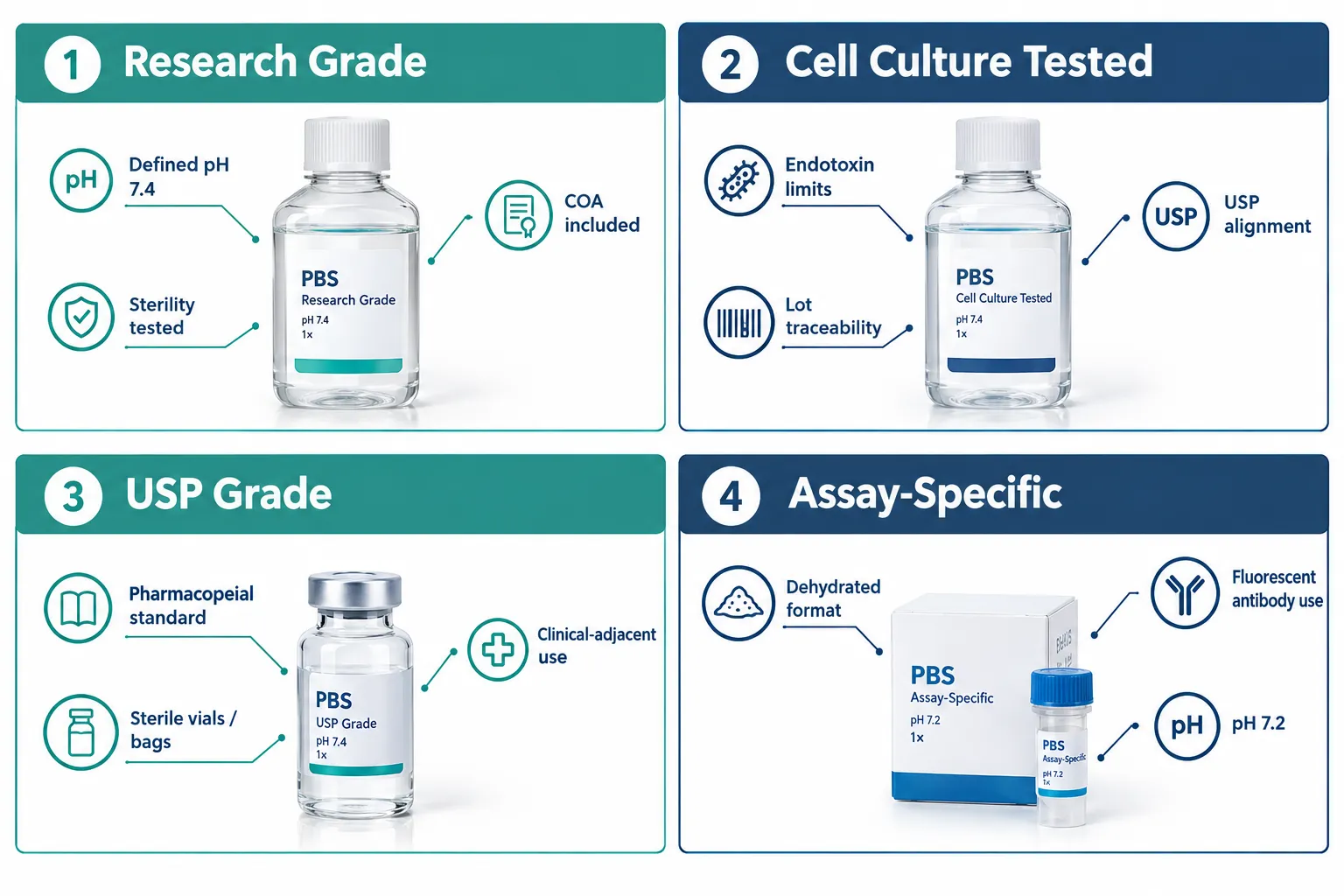
Understanding PBS Grades and Why They Matter for Peptide Assays

Not all phosphate buffered saline is equal. The label "PBS" on a catalog page can describe anything from a basic buffer for routine washing steps to a rigorously tested, endotoxin-controlled solution intended for sensitive biological assays. When researchers work with peptides, including compounds studied for visceral fat research or Semax research, the purity of the reconstitution solvent directly affects data reliability.

Key PBS specifications to evaluate:

Specification Minimum Standard Preferred for Peptide Assays
pH Labeled (e.g., 7.4) Verified per lot, COA provided
Sterility Filtered Tested, documented
Endotoxin Not stated EU/mL limit specified
Grade Research Cell-culture-tested or USP
Format Liquid or powder Ready-to-use liquid, lot-tracked

Research-grade PBS is the baseline for most molecular biology and protein work. It carries a defined pH, a sterile preparation method, and a COA. Cell-culture-tested PBS adds endotoxin screening and lot-to-lot consistency documentation. USP-grade PBS, such as the sterile 1x PBS offered in vials, bags, and bottles by suppliers like Alanza Inc., is appropriate for applications closer to pharmaceutical or clinical use where pharmacopeial compliance is mandatory.

For peptide assay work specifically, cell-culture-tested or USP-grade PBS is the safer choice. Endotoxin contamination at even low levels can interfere with receptor-binding assays, cell viability measurements, and ELISA results.

Where to Buy Research-Grade Phosphate Buffered Saline and Reconstitution Solvents: Top Supplier Categories
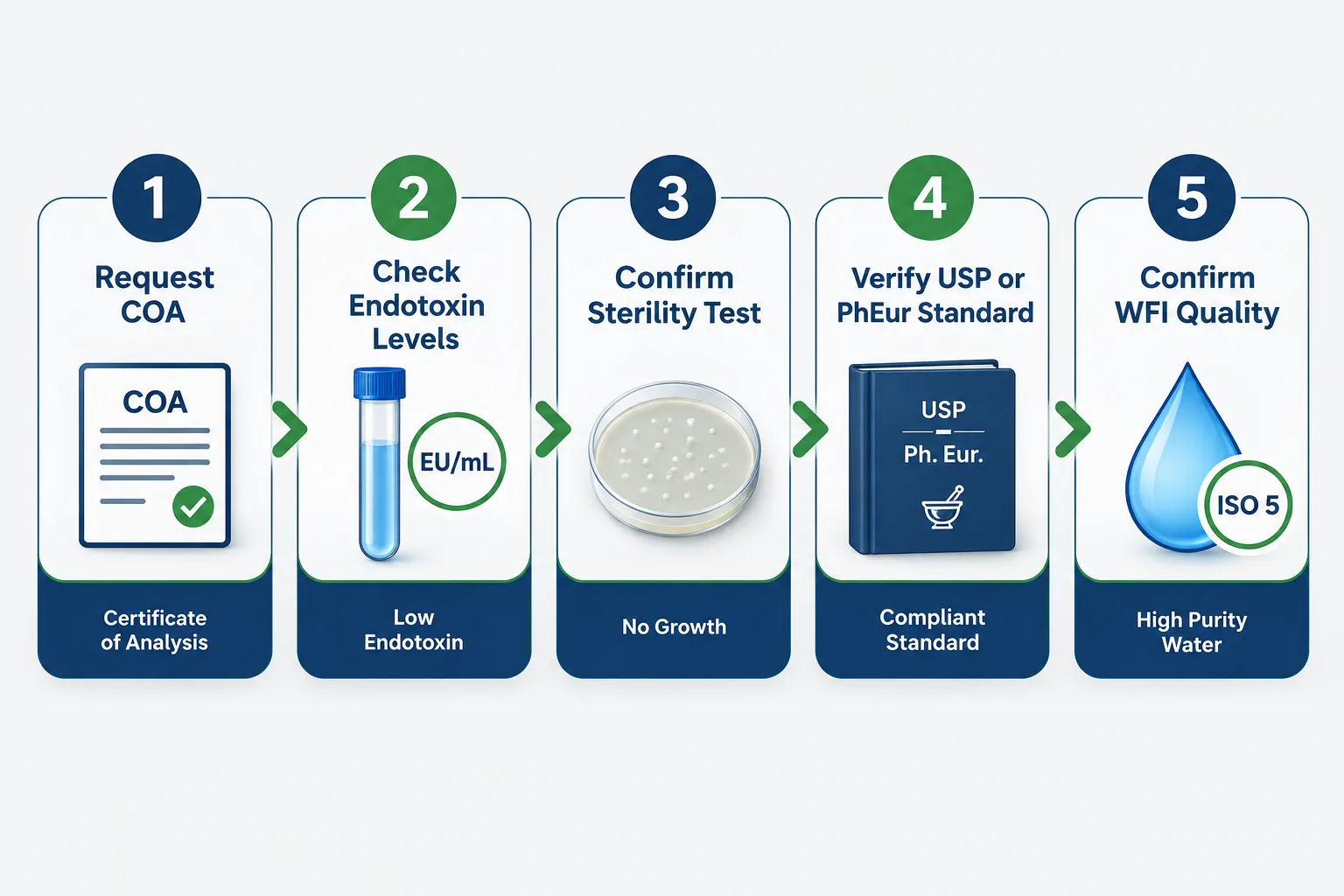
Where to Buy Research-Grade Phosphate Buffered Saline and Reconstitution Solvents: Top Supplier Categories

Understanding where to buy research-grade phosphate buffered saline and reconstitution solvents requires mapping the supplier landscape by category. Each tier serves different lab needs.

Major Scientific Distributors

VWR remains one of the most widely used sources for research-grade PBS. Their core PBS line includes ready-to-use liquid formulations with defined pH and composition, supported by COA and specification sheets. VWR also distributes CellPro PBS from Alkali Scientific, a standard phosphate buffered saline validated for routine cell and tissue culture workflows. The advantage of large distributors is catalog tracking, batch documentation, and consistent availability.

Fisher Scientific offers a broad "Sterile Life Science Water" portfolio that includes multiple WFI-quality sterile purified waters and cell-culture-tested formulations. Each lot is tested to USP, PhEur, and JP requirements for sterile water for injection and shipped with a certificate of analysis, making Fisher a strong choice for reconstitution solvents in regulated or near-regulated research environments.

BD supplies PBS in dehydrated, assay-specific formats, including a dried PBS FA buffer at pH 7.2 designed for fluorescent antibody reagents. BD notes more than 400 different media and ingredient formulations in dehydrated form, giving immunofluorescence and diagnostic labs access to PBS tailored to specific assay workflows.

Specialized Pharmaceutical-Grade Suppliers

For labs requiring the highest solvent purity, particularly those reconstituting peptides for sensitive assays, specialized suppliers offer pharmacopeial-grade products with tighter documentation.

Renew Lab Group, a U.S. pharmaceutical-grade water manufacturer, supplies bacteriostatic water and sterile water for injection that is HPLC-tested, COA-certified, and packaged in ISO 5 conditions. Their products are explicitly aligned with USP and EP monograph specifications and are marketed to compounding pharmacies, biotech firms, and research laboratories. This level of quality documentation is directly relevant to researchers working with peptides such as those reviewed in SS-31 mechanism and research or Tesamorelin CJC1295 Ipamorelin blend reconstitution.

Bacteriostatic Water Lab focuses specifically on supplying authentic bacteriostatic water for injection formulated with 0.9% benzyl alcohol as a preservative. This is the preferred reconstitution solvent when a peptide vial will be accessed multiple times, as the preservative inhibits microbial growth between uses.

Bio-Link markets sterile water for injection (WFI) to global customers, confirming ongoing international availability of pharmacopeial-grade WFI for labs and manufacturers needing large-volume sterile water that meets injection standards.

Global Supplier Directories

Aggregated directories such as ChemicalBook list over 200 global PBS suppliers, including Sigma-Aldrich and numerous regional biotech vendors. These directories are useful for identifying bulk or cost-sensitive procurement options, though they require more rigorous independent vetting of quality documentation.

Quality Verification Practices: What to Check Before Using Any Lot
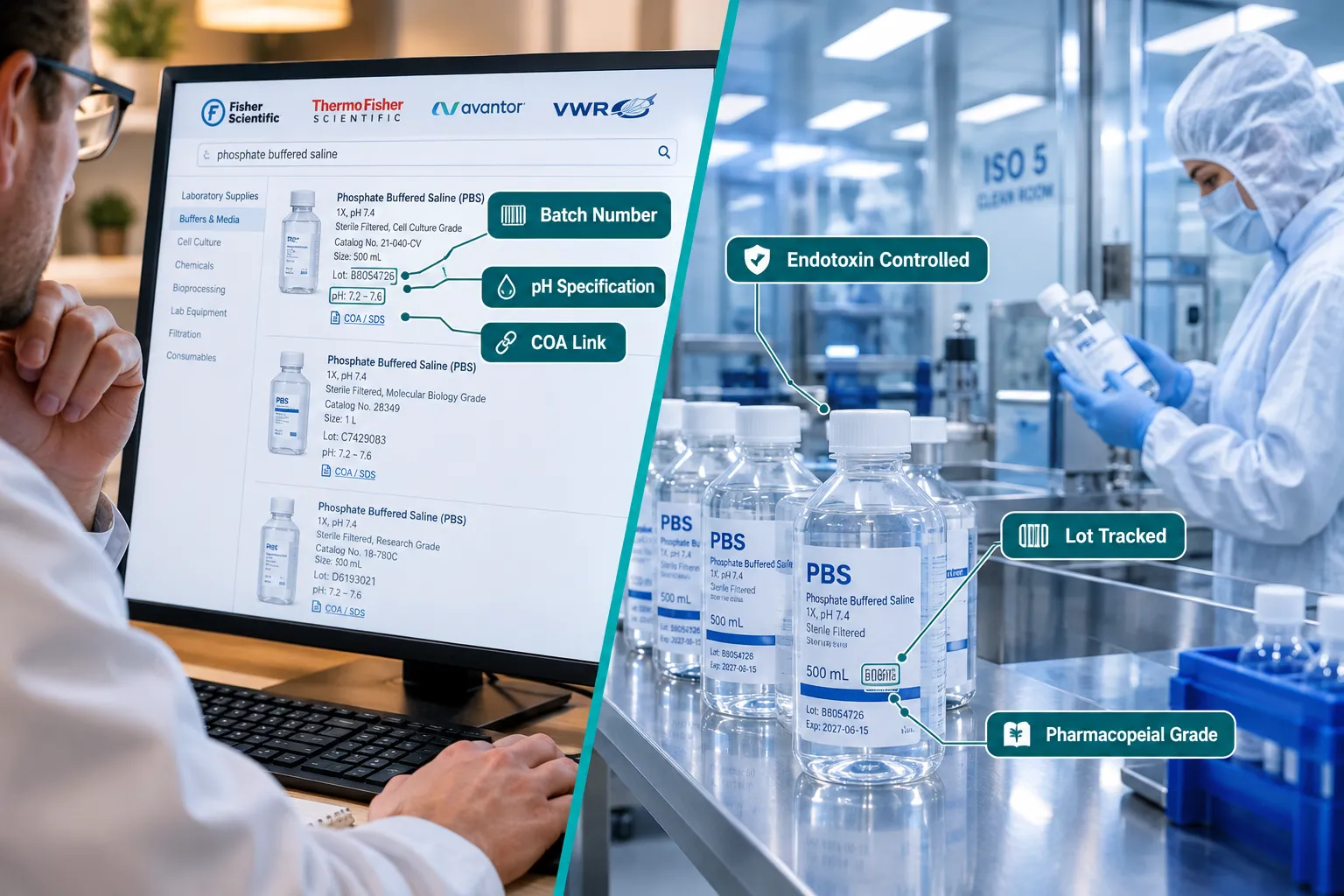
Quality Verification Practices: What to Check Before Using Any Lot

Knowing where to buy research-grade phosphate buffered saline and reconstitution solvents is only half the process. Verifying quality before use is equally critical.

A practical pre-use verification checklist:

  • Certificate of Analysis (COA): Request a lot-specific COA. Confirm pH, sterility method, and endotoxin results are listed.
  • Endotoxin limits: For peptide assays, look for EU/mL values that meet or exceed cell-culture-grade standards.
  • Sterility testing: Confirm the lot was tested, not just filtered.
  • Pharmacopeial alignment: USP, PhEur, or JP compliance indicates the product meets internationally recognized standards.
  • WFI quality: For reconstitution solvents, "WFI quality" or "water for injection" labeling signals endotoxin control and process rigor.
  • Packaging integrity: ISO 5 fill environments and tamper-evident seals reduce contamination risk during transit.

"The COA is not a formality, it is the primary quality document that connects a specific lot to its test results. Never use a lot without one."

In 2026, industry messaging from suppliers like Fisher Scientific and Renew Lab Group reflects a clear trend: stronger emphasis on pharmacopeial compliance (USP/PhEur/JP), HPLC-based analytical testing, endotoxin control, and detailed lot documentation. This shift aligns with growing demand from biotech companies and research labs that need reagents bridging research and regulated manufacturing environments.

For labs working with complex peptide blends, such as those described in Tesamorelin peptide benefits or where to buy Tesamorelin online, choosing solvents with this level of documentation protects both the integrity of the compound and the validity of the data.

Conclusion

Selecting the right PBS and reconstitution solvents is a foundational decision that shapes the reproducibility of every downstream assay. The actionable steps are clear:

  1. Match grade to application, use cell-culture-tested or USP-grade PBS for peptide assays; reserve basic research-grade PBS for washing and general buffer steps.
  2. Source from documented suppliers, VWR, Fisher Scientific, BD, Renew Lab Group, and Bacteriostatic Water Lab all provide lot-specific COAs and pharmacopeial alignment.
  3. Verify before use, check endotoxin values, sterility test results, and pH confirmation on every incoming lot.
  4. Use the right reconstitution solvent, bacteriostatic water for multi-use vials, sterile WFI for single-use reconstitution, and PBS only when the protocol specifically calls for it.

Labs that treat solvent selection as a quality event, not a routine supply task, consistently produce cleaner data and fewer unexplained assay failures.

https://www.puretestedpeptides.com/wp-content/uploads/2026/09/where-to-buy-research-grade-phosphate-buffered-saline-and-reconstitution-solvent-1.webp 1024 1536 https://www.puretestedpeptides.com/wp-content/uploads/2026/01/buy-peptides-online.jpg 2026-09-17 13:03:542026-09-17 13:03:54Where to Buy Research-Grade Phosphate Buffered Saline and Reconstitution Solvents: Lab Standards and Quality Verification
×

Helpful Links

  • My account
  • Cart
  • Checkout
  • Refund and Returns Policy
  • Privacy Policy
  • SMS Privacy Policy
  • Login
  • My Account
  • Logout

USA Made Lab Tested Peptides

All products are sold for research, laboratory, or analytical purposes only, and are not for human consumption


Pure Tested Peptides is a chemical supplier. Pure Tested Peptides is not a compounding / chemical compounding facility as defined under 503A of the Federal Food, Drug, and Cosmetic act. Pure Tested Peptides is not an outsourcing facility as defined under 503B of the Federal Food, Drug, and Cosmetic act.

The statements made within this website have not been evaluated by the US Food and Drug Administration. The products we offer are not intended to diagnose, treat, cure or prevent any disease.

Human/Animal Consumption Prohibited. Laboratory/In-Vitro Experimental Use Only

Scroll to top Scroll to top Scroll to top