Call or Text 727-513-9780
  • Shopping Cart Shopping Cart
    0Shopping Cart
Pure Tested Peptides | America's most trusted Peptides for sale online
  • Peptides for sale
    • Oral Peptides for sale
      • Peptide Capsules for sale
      • BPC 157 Capsules 1000mcg
      • SLU-PP-332 Capsules | 1000 mcg
      • 5-Amino-1MQ 50mg Capsules
      • Tesofensine 500mcg
    • All Peptides for sale
    • Peptide Sprays
      • BPC 157 Nasal Spray Kit
      • BPC-157 TB500 Nasal Spray Kit
      • Semax Nasal Spray 10mg
      • Selank – Nasal Spray Kit – 10mg
      • Epithalon 50MG Nasal Spray Kit
      • Ipamorelin 10mg Nasal Spray
      • Klow Nasal Spray (BPC-157 + TB-500 + GHK-Cu + KPV) | 80mg
      • Hulk Nasal Spray Tesa / Ipa Blend 6/3 MG
      • Klow Nasal Spray
      • NAD + 500 mg Nasal Spray
      • PT-141 Nasal Spray Kit
    • GHRH Peptides
      • Ipa Peptides
      • CJC-1295 Peptides
        • CJC-1295 with DAC 5 mg
        • CJC-1295 without DAC 5 mg
        • CJC-1295 Ipa 10mg
      • Tesa Peptides
        • Tesa Peptide
        • Tesa 20 mg
    • GHK-Cu Peptides
      • All GHK-Cu Peptides
      • GHK-Cu 100mg
      • KLOW Peptide Blend – Buy KLOW blend online
    • BPC Peptides
      • All BPC Peptides
      • BPC-157
      • BPC-157 TB-500
      • BPC 157 capsules 1000mcg
    • SLU-PP-332 Peptides
      • All SLU-PP-332 Peptides
      • SLU-PP-332 5mg
    • GLP3 Peptides
    • PT-141 Peptides
      • PT-141 Peptides for sale
      • PT-141 10mg
      • PT-141 Nasal Spray
    • CAG Peptides
      • Lipo-C Peptide Blend
      • CAG 5mg
      • CAG 10mg
    • MOTS-C Peptides
      • MOTS-C Peptides for sale
      • MOTS-c peptide
      • MOTS-c 10mg *6 pack*
    • 5 Amino 1MQ Peptides
      • 5 Amino 1MQ Peptides for sale
      • 5-Amino-1MQ 50mg Capsules
      • 5-Amino-1MQ 5mg
    • Epithalon Peptides
      • Epithalon Peptides for sale
      • Epithalon 10mg
      • Epithalon 50mg
  • Shop
    • GLPs
      • 5-Amino-1MQ 50mg Capsules
      • 5-Amino-1MQ 5mg
      • L-Carnitine 500mg/ml
      • Tesofensine 500mcg
      • SLU-PP-332 5mg
      • MOTS-c 10mg *6 pack*
    • Epithalon & BPC Peptides
      • Epithalon 10mg
      • Epithalon 50mg
      • BPC-157
      • BPC 157 capsules 1000mcg
      • BPC-157 TB-500
      • BPC-157 TB500 Nasal Spray Kit
      • BPC 157 Nasal Spray Kit
    • BPC TB-500 & NAD+ Peptides
      • NAD+ 500 mg
      • KLOW Peptide Blend – Buy KLOW blend online
      • GLOW Peptide Blend
      • TB 500 5mg
      • BPC 157 capsules 1000mcg – Supplement
      • BPC 157 Nasal Spray Kit
      • BPC-157
      • BPC-157 TB500 Nasal Spray Kit
      • BPC-157 TB-500
      • BPC 157 capsules 1000mcg
    • LL-37 Peptide
      • LL-37 10 mg
    • MOTS-C & Selank
      • MOTS-c peptide
      • Selank 10mg
    • GHK Peptides
      • GHK-Cu 100mg
      • GLOW Peptide Blend
      • KLOW Peptide Blend – Buy KLOW blend online
  • COAs
  • Wholesale
    • Wholesale Peptides for sale
  • PTP FAQ
  • Affiliates
    • Selank Peptide: Advanced Pharmacological Mechanisms Underlying Its Anxiolytic and Nootropic Effects in Research
      • 5-Amino-1MQ Peptide: Detailed Mechanisms of NNMT Inhibition and Its Impact on Cellular Metabolism Research
        • MOTS-C Peptide: Unraveling Its Role in Mitochondrial Dynamics and Energy Metabolism Research
          • Epithalon Peptide and Telomerase Regulation: Investigating Its Impact on Cellular Senescence and Lifespan Research Models
            • GLP2-T vs GLP2 Tirz Peptide: Understanding the Naming, Mechanistic Nuances, and Research Implications for Gut Health
      • Peptides and Polypeptides in Modern Pharmacology: What Research on Metoprolol, Prednisone, and Amlodipine Reveals
        • Polypeptide Peptides vs NSAIDs: What Naproxen and Diclofenac Teach Tissue-Repair Researchers About BPC‑157 and TB‑500
          • Peptides and Polypeptides in Endocrine Pharmacology: How GLP-1, GLP-2, and GLP-3 Retatrutide Differ From Classic Drugs Like Prednisone and Amlodipine
          • 5‑Amino‑1MQ Peptide and NNMT Inhibition: How It Compares With Statins Like Atorvastatin in Adipose and Lipid Metabolism Research
      • Enclomiphene, Estrogen Receptor Signaling, and Luteinizing Phase Biology: What Hormone Researchers Should Measure
        • Mesenchymal Stem Cells, BPC‑157, and GHK‑Cu: How Tissue Repair Peptides Compare With Classic NSAIDs Like Naproxen in Injury Models
          • Peptide Calculator Use Cases Beyond Growth Hormone: Working Through GLP‑3 Retatrutide, MOTS‑c, and BPC‑157 Research Dosing
        • Polypeptide Peptides in Endocrine and Metabolic Pharmacology: Lessons From Amlodipine, Prednisone, and Metoprolol
        • Peptides Calculator for Advanced Blends: Worked Examples for Tesamorelin, CJC‑1295, and Ipamorelin Stacks
          • Peptides and Polypeptides in Human Physiology: How Molecular Size Shapes Research Applications
            • Selank Peptide: Advanced Pharmacological Mechanisms Underlying Its Anxiolytic and Nootropic Effects in Research
          • 5-Amino-1MQ Peptide: Detailed Mechanisms of NNMT Inhibition and Its Impact on Cellular Metabolism Research
            • MOTS-C Peptide: Unraveling Its Role in Mitochondrial Dynamics and Energy Metabolism Research
              • Epithalon Peptide and Telomerase Regulation: Investigating Its Impact on Cellular Senescence and Lifespan Research Models
                • GLP2-T vs GLP2 Tirz Peptide: Understanding the Naming, Mechanistic Nuances, and Research Implications for Gut Health
                  • Peptides and Polypeptides in Endocrine Pharmacology: How GLP-1, GLP-2, and GLP-3 Retatrutide Differ From Classic Drugs Like Prednisone and Amlodipine
                    • Polypeptide Peptides vs NSAIDs: What Naproxen and Diclofenac Teach Tissue-Repair Researchers About BPC‑157 and TB‑500
                      • Peptides and Polypeptides in Modern Pharmacology: What Research on Metoprolol, Prednisone, and Amlodipine Reveals
                        • 5‑Amino‑1MQ Peptide and NNMT Inhibition: How It Compares With Statins Like Atorvastatin in Adipose and Lipid Metabolism Research
                        • Enclomiphene, Estrogen Receptor Signaling, and Luteinizing Phase Biology: What Hormone Researchers Should Measure
                        • Mesenchymal Stem Cells, BPC‑157, and GHK‑Cu: How Tissue Repair Peptides Compare With Classic NSAIDs Like Naproxen in Injury Models
                        • Peptide Calculator Use Cases Beyond Growth Hormone: Working Through GLP‑3 Retatrutide, MOTS‑c, and BPC‑157 Research Dosing
                        • Polypeptide Peptides in Endocrine and Metabolic Pharmacology: Lessons From Amlodipine, Prednisone, and Metoprolol
                        • Peptides Calculator for Advanced Blends: Worked Examples for Tesamorelin, CJC‑1295, and Ipamorelin Stacks
                        • Peptides and Polypeptides in Human Physiology: How Molecular Size Shapes Research Applications
                        • Selank Peptide: Advanced Pharmacological Mechanisms Underlying Its Anxiolytic and Nootropic Effects in Research
                        • MOTS-C Peptide: Unraveling Its Role in Mitochondrial Dynamics and Energy Metabolism Research
                        • Peptides and Polypeptides in Modern Pharmacology: What Research on Metoprolol, Prednisone, and Amlodipine Reveals
                        • Peptides and Polypeptides in Endocrine Pharmacology: How GLP-1, GLP-2, and GLP-3 Retatrutide Differ From Classic Drugs Like Prednisone and Amlodipine
                        • 5-Amino-1MQ Peptide: Detailed Mechanisms of NNMT Inhibition and Its Impact on Cellular Metabolism Research
                        • Mesenchymal Stem Cells, BPC‑157, and GHK‑Cu: How Tissue Repair Peptides Compare With Classic NSAIDs Like Naproxen in Injury Models
                        • Peptide Calculator Use Cases Beyond Growth Hormone: Working Through GLP‑3 Retatrutide, MOTS‑c, and BPC‑157 Research Dosing
                        • GLP2-T vs GLP2 Tirz Peptide: Understanding the Naming, Mechanistic Nuances, and Research Implications for Gut Health
                        • Polypeptide Peptides in Endocrine and Metabolic Pharmacology: Lessons From Amlodipine, Prednisone, and Metoprolol
                        • Polypeptide Peptides vs NSAIDs: What Naproxen and Diclofenac Teach Tissue-Repair Researchers About BPC‑157 and TB‑500
                        • Peptides and Polypeptides in Human Physiology: How Molecular Size Shapes Research Applications
                        • Peptides Calculator for Advanced Blends: Worked Examples for Tesamorelin, CJC‑1295, and Ipamorelin Stacks
                        • 5‑Amino‑1MQ Peptide and NNMT Inhibition: How It Compares With Statins Like Atorvastatin in Adipose and Lipid Metabolism Research
                        • Enclomiphene, Estrogen Receptor Signaling, and Luteinizing Phase Biology: What Hormone Researchers Should Measure
                        • Epithalon Peptide and Telomerase Regulation: Investigating Its Impact on Cellular Senescence and Lifespan Research Models
                        • Best research protocol Klow blend
                        • best time to take BPC-157
                        • best time to take DSIP (Delta Sleep Inducing Peptide)
                        • best time to take CJC-1295
                        • best time to take AOD-9604
                        • best time to take Follistatin 344
                        • best time to take Ipamorelin
                        • best time to take MK-677 (Ibutamoren)
                        • best time to take Ligandrol (LGD-4033) — research compound
                        • best time to take Ostarine (MK-2866) — research compound
                        • best time to take GHK-CU
                        • best time to take TB-500
                        • best time to take MOTS-c
                        • best time to take Semax
                        • best time to take RAD-140 (Testolone) — research compound
                        • best time to take Thymosin Alpha-1
                        • best time to take PEG-MGF
                        • Biolife Plasma, Octapharma Plasma, and Research Peptides: How Plasma Donation Labs Differ From Peptide Suppliers
                        • best time to take YK-11 — research compound
                        • best time to take PT-141 (Bremelanotide)
                        • Best research protocol Klow blend
                        • 5-Amino-1MQ and MOTS-C Synergy: Metabolic Signaling, Mitochondria, and Research Design
                        • BPC-157 and TB-500: Investigating Their Combined Effects on Angiogenesis and Cellular Migration in Tissue Repair Models
                        • BPC-157 Peptide: Gut Barrier Function, Inflammation, and Tissue-Recovery Research
                        • 5‑Amino‑1MQ and MOTS‑c Synergy in Metabolic Research: Designing NNMT and Mitochondrial Biogenesis Stacks
                        • CJC-1295 with DAC vs. Without DAC: Half-Life, Release Kinetics, and Research Implications
                        • CJC‑1295 with DAC vs. Without DAC: Expanding on Half‑Life Differences Using Tesamorelin and Ipamorelin Blend Case Studies
                        • Collagen Biology and Copper‑Binding Peptides: How GHK‑Cu, Glow Blend, and Klow Blend Interact with Skin and Connective Tissue
                        • Collagen Biology and Regenerative Peptides: How GHK‑Cu, Glow Blend, and Klow Blend Affect Extracellular Matrix Research
                    • DNA, Telomeres, and Longevity Peptides: Positioning Epithalon and MOTS‑c in Genetic Aging Research
                      • Enclomiphene Citrate: serm Mechanism, Testosterone Research, and Stack Compatibility
                        • Enclomiphene vs Enclomiphene Citrate: Formulation, Bioavailability, and Research Distinctions
                        • Epithalon Peptide Research: Telomerase Activation, Aging, and Pineal Gland Function
                        • Estrogen Receptor Signaling and Enclomiphene: How Selective Modulators Compare with Classic Polypeptide Hormones
                        • GHK-Cu Peptide: Advanced Mechanisms in Extracellular Matrix Remodeling and Wound Healing Research
                        • GHK-Cu Peptide: Collagen Synthesis, Wound Repair, and Skin-Barrier Research Models
                        • GLP-1 vs GLP-3 vs GLP-2: Peptide Classification and Research Applications
                        • GLP-2 Peptide Research Guide: Gut Barrier Function, Nutrient Absorption, and Intestinal Recovery Models
                        • GLP-3 Retatrutide vs. GLP-1 Drugs: What Triple-Agonist Biology Changes in Research Models
                        • Ipamorelin and Tesamorelin Combination: Synergistic GH Secretagogue Research and Dosing Protocols
                        • GLP2 Tirz Peptide: What It Is, Why the Name Exists, and How Researchers Should Interpret It
                        • Klow Blend Peptide Nasal Spray: What the Formulation Is Trying to Do in Cognitive Research
                        • Mitochondria, NNMT Inhibition, and Peptide Modulators: Where MOTS‑c and 5‑Amino‑1MQ Fit in Cellular Energy Research
                        • MOTS-c Peptide: Mitochondrial Function, Energy Metabolism, and What Researchers Measure
                        • MOTS-c vs. 5-Amino-1MQ: Which Metabolic Research Questions Each Compound Actually Answers
                        • Nasal Spray Peptides: Bioavailability, Administration, and Semax/Selank Research Applications
                        • PT-141 Peptide Research: Mechanism of Action and Melanocortin Receptor Signaling
                        • Retatrutide for Research: Mechanism, Structure, and GLP-1/GLP-3 Dual Action
                        • Retatrutide for Obesity and Type 2 Diabetes: What the Latest Trial Data Suggest
                        • Tesofensine Peptide Research: Mechanism, Appetite Suppression, and Neuropeptide Y Pathways
  • Contact
    • Contact Customer Service
    • Text Customer Support
  • About US
  • Shop all peptides
  • Affiliate Program
    • Affiliate Signup
  • Login / Register Login / Register Page Link Login / Register Page Link
  • Click to open the search input field Click to open the search input field Search
  • Menu Menu
Glow Blend vs. Klow Blend: Which Peptide Formulation is Best for Skin Rejuvenation Research?

Glow Blend vs. Klow Blend: Which Peptide Formulation is Best for Skin Rejuvenation Research?

July 4, 2026/0 Comments/by Pure Tested

{"cover":"Professional landscape format (1536×1024) hero image with bold text overlay: 'Glow Blend vs. Klow Blend: Which Peptide Formulation is Best for Skin Rejuvenation Research?' in extra large 72pt white bold sans-serif font with dark drop shadow, centered upper third. Background features a split-panel laboratory aesthetic: left side glowing amber-gold vials labeled Glow Blend on a clean white lab bench, right side cool blue-tinted vials labeled Klow Blend, with microscopic skin cell imagery subtly overlaid. Color palette: deep navy, gold, white. Magazine cover quality, editorial style, high contrast, cinematic lighting.","content":["Detailed landscape format (1536×1024) scientific comparison infographic showing two peptide vial sets side by side on a sterile lab surface, left vial cluster labeled Glow Blend with GHK-Cu, BPC-157, TB-500 ingredient callouts in gold text, right cluster labeled Klow Blend with added KPV callout in blue text. Molecular structure diagrams float above each set. Clean white background with subtle skin-texture overlay. Professional research aesthetic, annotated diagram style, high contrast labels.","Landscape format (1536×1024) close-up macro photography of human skin cross-section illustration showing collagen fiber networks and cellular repair activity, with split overlay: left half showing smooth rejuvenated skin texture representing Glow Blend effects, right half showing reduced redness and inflammation representing Klow Blend KPV action. Warm amber and cool teal color grading. Scientific diagram aesthetic with subtle peptide molecule graphics, editorial quality, research-focused composition.","Landscape format (1536×1024) overhead flat-lay research planning scene on a dark slate surface: open laboratory notebook with peptide comparison notes, two clearly labeled research vials (Glow Blend and Klow Blend), a magnifying glass, printed assay results, and a checklist. Soft directional lighting from upper left. Color palette: charcoal, white, gold accents. Clean, professional research workspace aesthetic, editorial quality, no people, organized composition emphasizing decision-making in peptide research."]

Professional landscape hero image () with : "Glow Blend vs. Klow Blend: Which Peptide Formulation is Best for Skin

Collagen synthesis declines by roughly 1% per year after age 20, a fact that has driven researchers toward multi-peptide formulations designed to address skin aging at the cellular level. Among the most discussed options in 2026 are two closely related blends: Glow Blend and Klow Blend. The question of Glow Blend vs. Klow Blend: Which Peptide Formulation is Best for Skin Rejuvenation Research? is not simply a matter of preference, it depends on the specific biological pathways a study aims to target.
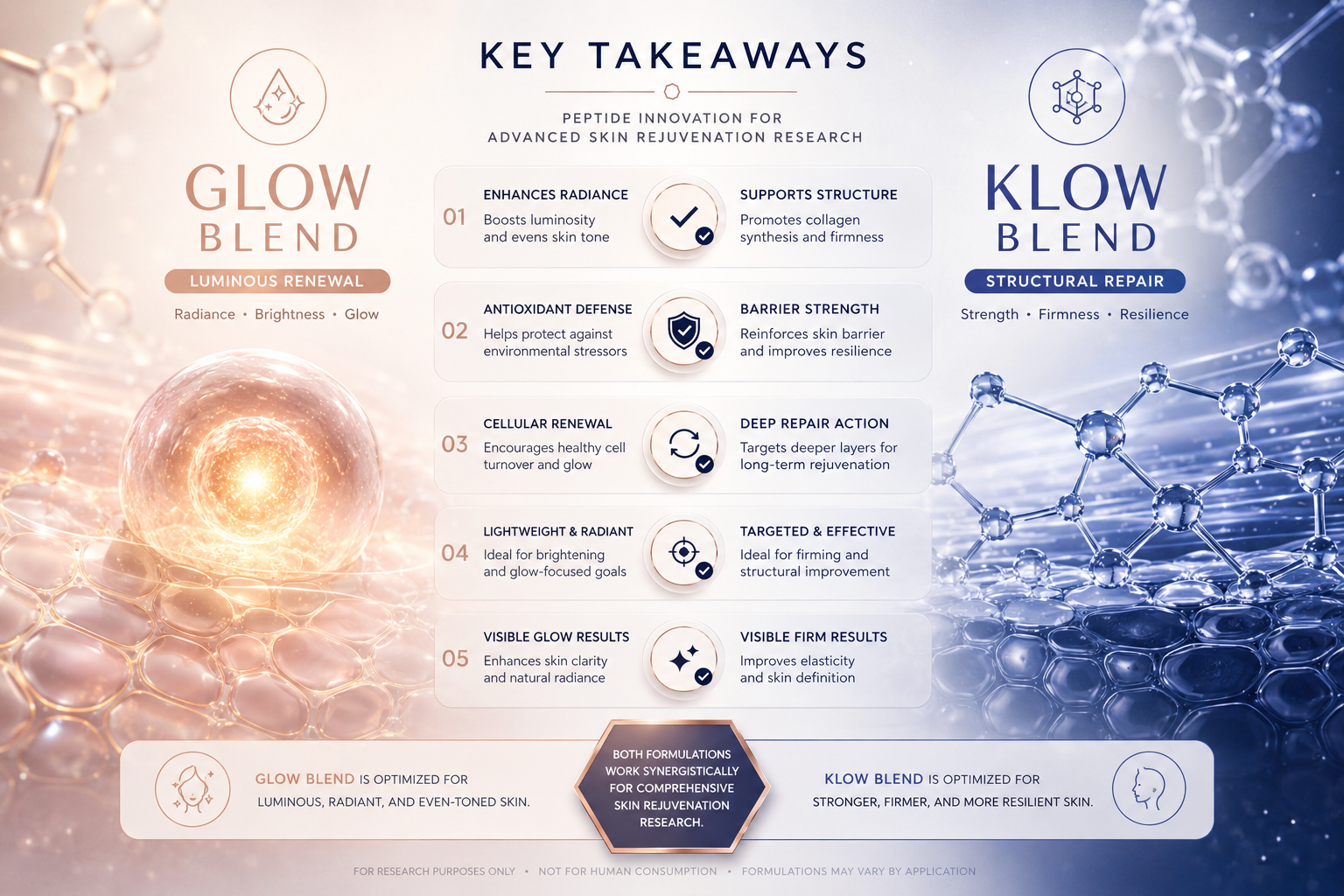
Editorial infographic for 'Key Takeaways' section comparing Glow Blend vs. Klow Blend peptide formulations for skin

Key Takeaways

  • Glow Blend and Klow Blend share three core peptides: GHK-Cu, BPC-157, and TB-500.
  • Klow Blend adds KPV, a tripeptide with targeted anti-inflammatory properties.
  • Glow Blend is best suited for collagen-focused and general anti-aging research protocols.
  • Klow Blend is more appropriate for studies involving inflammation-driven skin conditions such as rosacea or post-procedure redness.
  • Choosing between the two depends on the primary research endpoint: structural rejuvenation versus inflammatory modulation.

Composition: What Sets These Two Formulations Apart

Both blends are built on a shared foundation of three well-studied peptides.

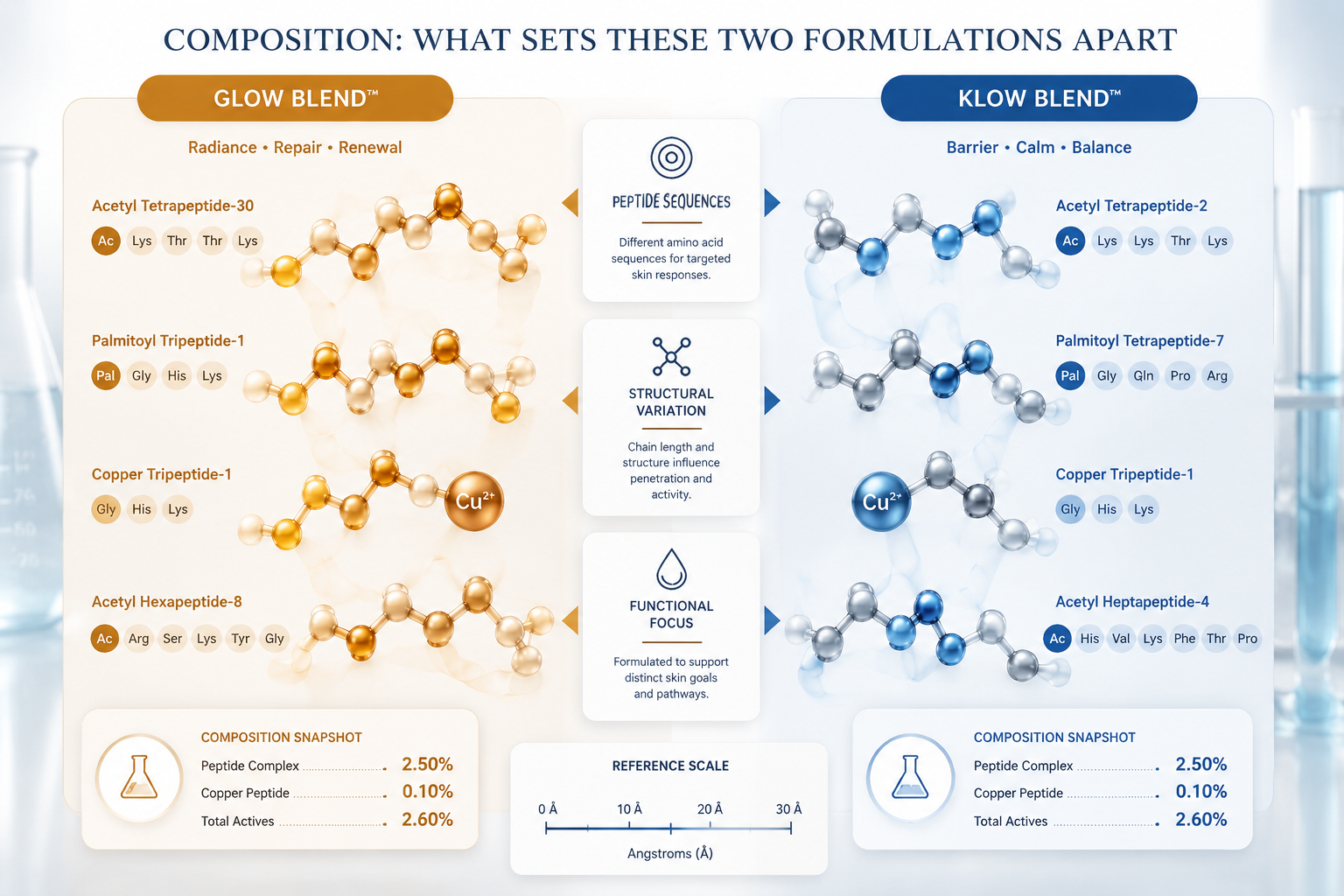
Peptide Glow Blend Klow Blend
GHK-Cu (50 mg) Yes Yes
BPC-157 (10 mg) Yes Yes
TB-500 (10 mg) Yes Yes
KPV (10 mg) No Yes

The addition of KPV in Klow Blend is the defining difference. KPV is a tripeptide fragment derived from alpha-melanocyte-stimulating hormone. It works primarily by inhibiting NF-kB signaling, which reduces the production of pro-inflammatory cytokines. This makes Klow Blend a more targeted tool for research involving skin inflammation rather than structural remodeling alone.

Researchers exploring the Glow Blend formulation will find it optimized for collagen-centric endpoints, while those examining the Klow Blend formulation gain an additional inflammatory modulation variable.


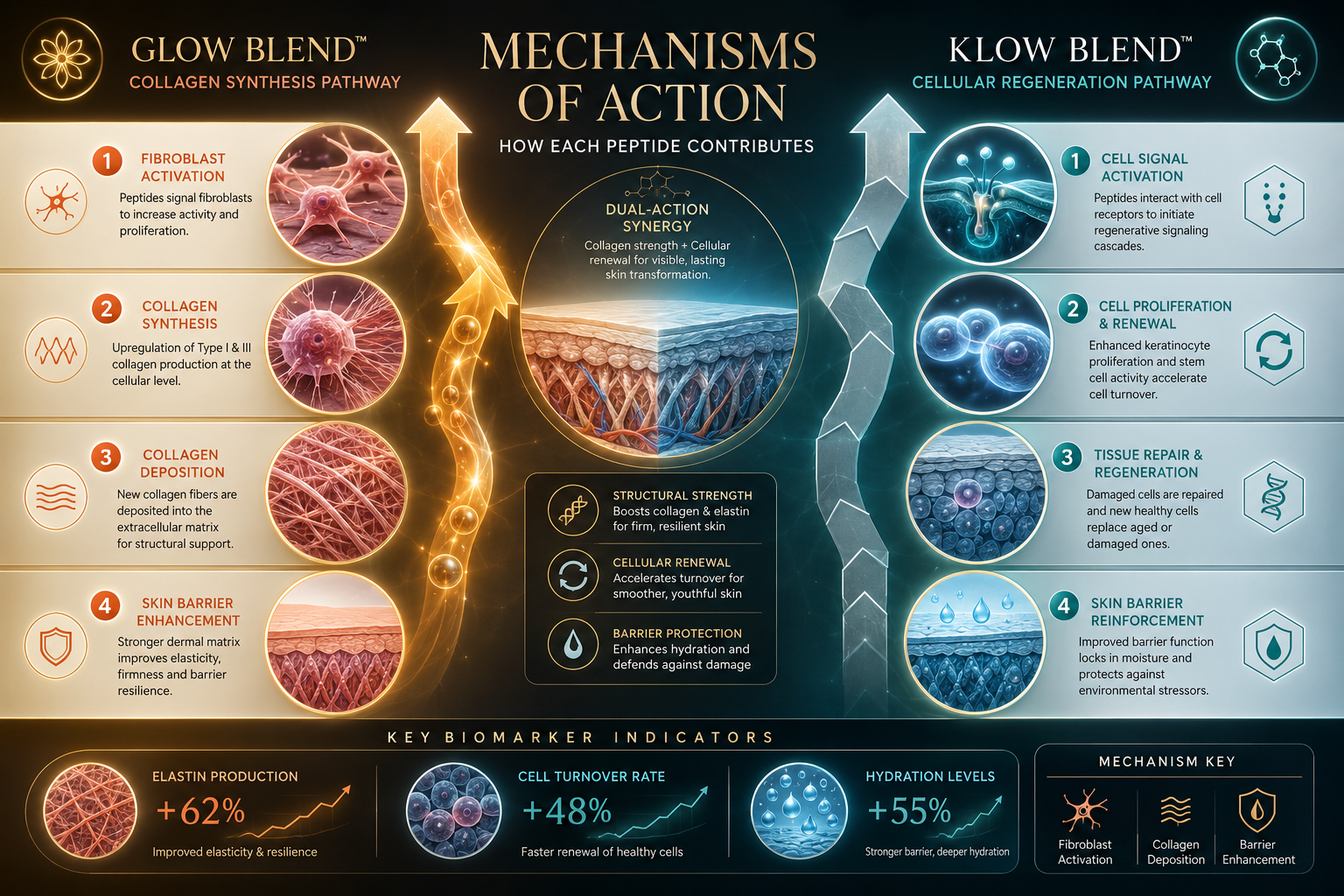
Mechanisms of Action: How Each Peptide Contributes

Understanding the role of each component is essential when evaluating Glow Blend vs. Klow Blend: Which Peptide Formulation is Best for Skin Rejuvenation Research?

GHK-Cu (Copper Peptide)
This peptide stimulates collagen and elastin synthesis, promotes skin remodeling, and supports the activity of antioxidant enzymes. It is considered the primary driver of anti-aging effects in both blends. Researchers interested in the broader regenerative context of copper peptides can also review GHK-Cu research themes.

BPC-157 (Body Protection Compound)
BPC-157 supports tissue repair and promotes angiogenesis, the formation of new blood vessels. This is relevant to skin research because improved vascularization supports nutrient delivery to dermal layers. For additional context on tissue repair peptide research, see BPC-157 and TB-500 research.

TB-500 (Thymosin Beta-4 Fragment)
TB-500 facilitates cell migration, reduces localized inflammation, and accelerates wound-healing responses. It works synergistically with BPC-157 in both formulations.

KPV (Klow Blend Only)
By blocking NF-kB pathways, KPV specifically targets the inflammatory cascade. This makes it highly relevant for studies on rosacea, post-procedure skin recovery, and chronic inflammatory dermatological conditions.

"The distinction between these two blends is not about potency, it is about pathway specificity."
Mechanisms of Action: How Each Peptide Contributes


Choosing the Right Blend for Your Research Protocol

When evaluating Glow Blend vs. Klow Blend: Which Peptide Formulation is Best for Skin Rejuvenation Research?, the answer hinges on the study's primary endpoint.

Choose Glow Blend if the research focuses on:

  • Collagen and elastin production
  • General skin texture and firmness improvement
  • Anti-aging biomarker studies
  • Skin remodeling without an inflammatory component

Choose Klow Blend if the research focuses on:

  • Inflammatory skin conditions (rosacea, eczema-adjacent models)
  • Post-procedure recovery protocols
  • NF-kB pathway modulation
  • Multi-pathway skin rejuvenation with an inflammatory variable

Researchers working on broader longevity and skin health themes may also find value in reviewing Glow Blend longevity research themes and Klow Blend multi-pathway research for additional context on how each formulation fits within wider research frameworks.

For labs sourcing multiple peptide compounds, the wholesale peptides catalog offers relevant procurement options, and reviewing quality testing protocols is strongly recommended before initiating any assay.
Choosing the Right Blend for Your Research Protocol


Conclusion

The Glow Blend vs. Klow Blend: Which Peptide Formulation is Best for Skin Rejuvenation Research? question does not have a single universal answer. Glow Blend is the stronger choice for studies centered on structural skin rejuvenation, collagen synthesis, and general anti-aging endpoints. Klow Blend is better suited when inflammatory modulation is a core variable in the research design.

Actionable next steps for researchers:

  1. Define the primary biological endpoint before selecting a formulation.
  2. Review the full ingredient profiles of both Glow Blend and Klow Blend against your assay requirements.
  3. Verify purity and concentration data through third-party certificates of analysis.
  4. Consider whether a multi-pathway approach (Klow Blend) adds value or introduces confounding variables to your specific protocol.

Selecting the right peptide blend from the outset saves time, reduces variability, and produces more interpretable data.

https://www.puretestedpeptides.com/wp-content/uploads/2026/07/Glow-Blend-vs.-Klow-Blend-Which-Peptide-Formulation-is-Best-for-Skin-Rejuvenation-Research.png 1024 1536 Pure Tested https://www.puretestedpeptides.com/wp-content/uploads/2026/01/buy-peptides-online.jpg Pure Tested2026-07-04 13:04:002026-07-20 15:01:09Glow Blend vs. Klow Blend: Which Peptide Formulation is Best for Skin Rejuvenation Research?
Triple‑agonist design and receptor structural biology behind GLP‑1/GIP/glucagon peptides like retatrutide

Triple‑agonist design and receptor structural biology behind GLP‑1/GIP/glucagon peptides like retatrutide

July 4, 2026/0 Comments/by Pure Tested

Retatrutide achieved a mean body weight reduction of over 24% in a 48-week Phase 2 trial, a figure that surpassed every single- and dual-agonist result recorded up to that point. That number is not a coincidence. It is a direct consequence of deliberate molecular engineering, and the triple-agonist design and receptor structural biology behind GLP-1/GIP/glucagon peptides like retatrutide is now one of the most intensively studied areas in metabolic medicine.

Key Takeaways

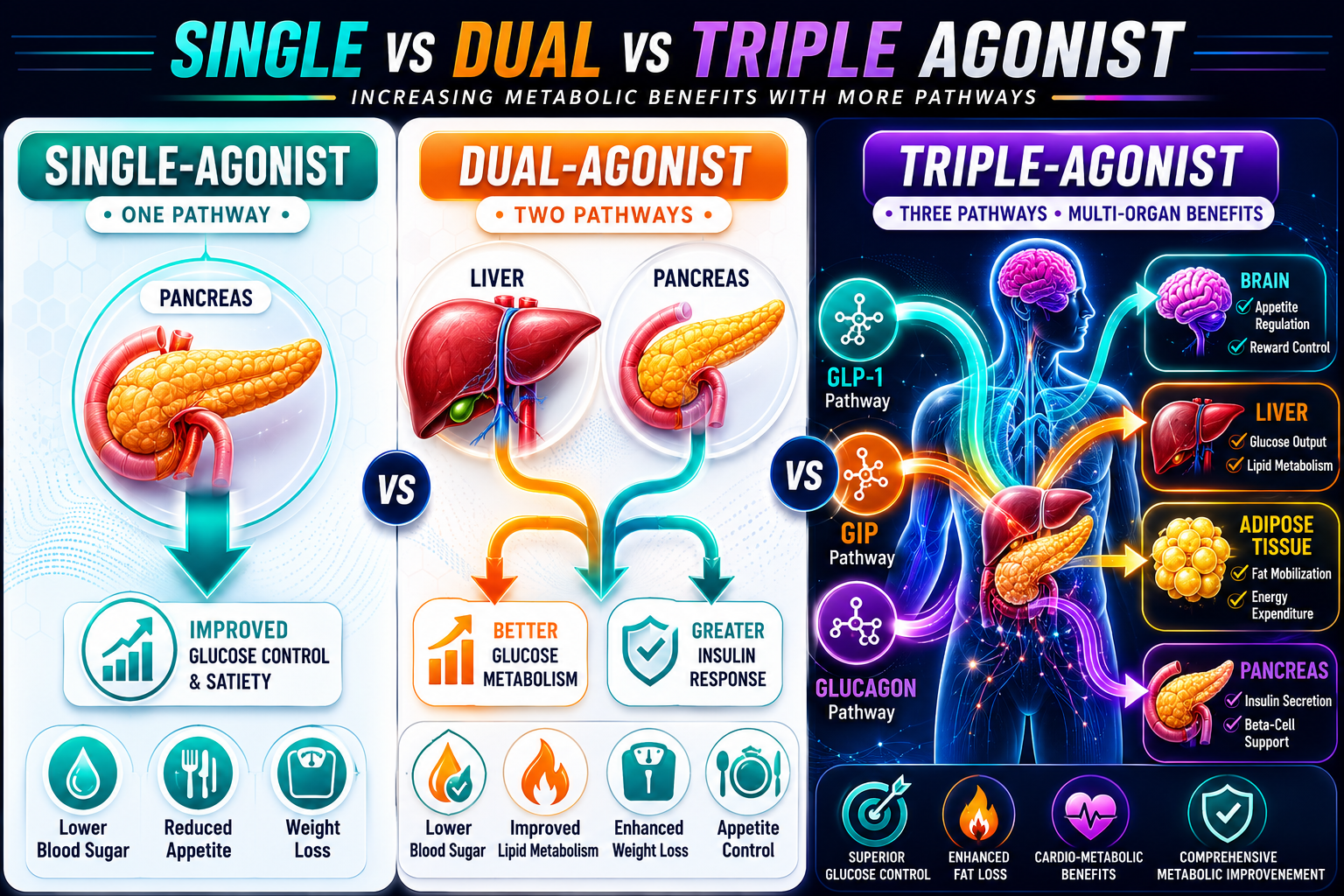
  • Retatrutide simultaneously activates three gut-hormone receptors: GLP-1R, GIPR, and glucagon receptor (GCGR).
  • High-resolution cryo-EM structural data reveal how a single peptide backbone can engage all three receptor binding pockets.
  • The GLP-1 backbone serves as the scaffold, with GIP and glucagon pharmacophore elements grafted at specific residue positions.
  • Fatty acid conjugation extends plasma half-life, enabling once-weekly dosing without sacrificing receptor selectivity.
  • Understanding this structural framework is essential for interpreting next-generation incretin-mimetic research.

Key Takeaways

How Three Receptors Are Activated by One Molecule

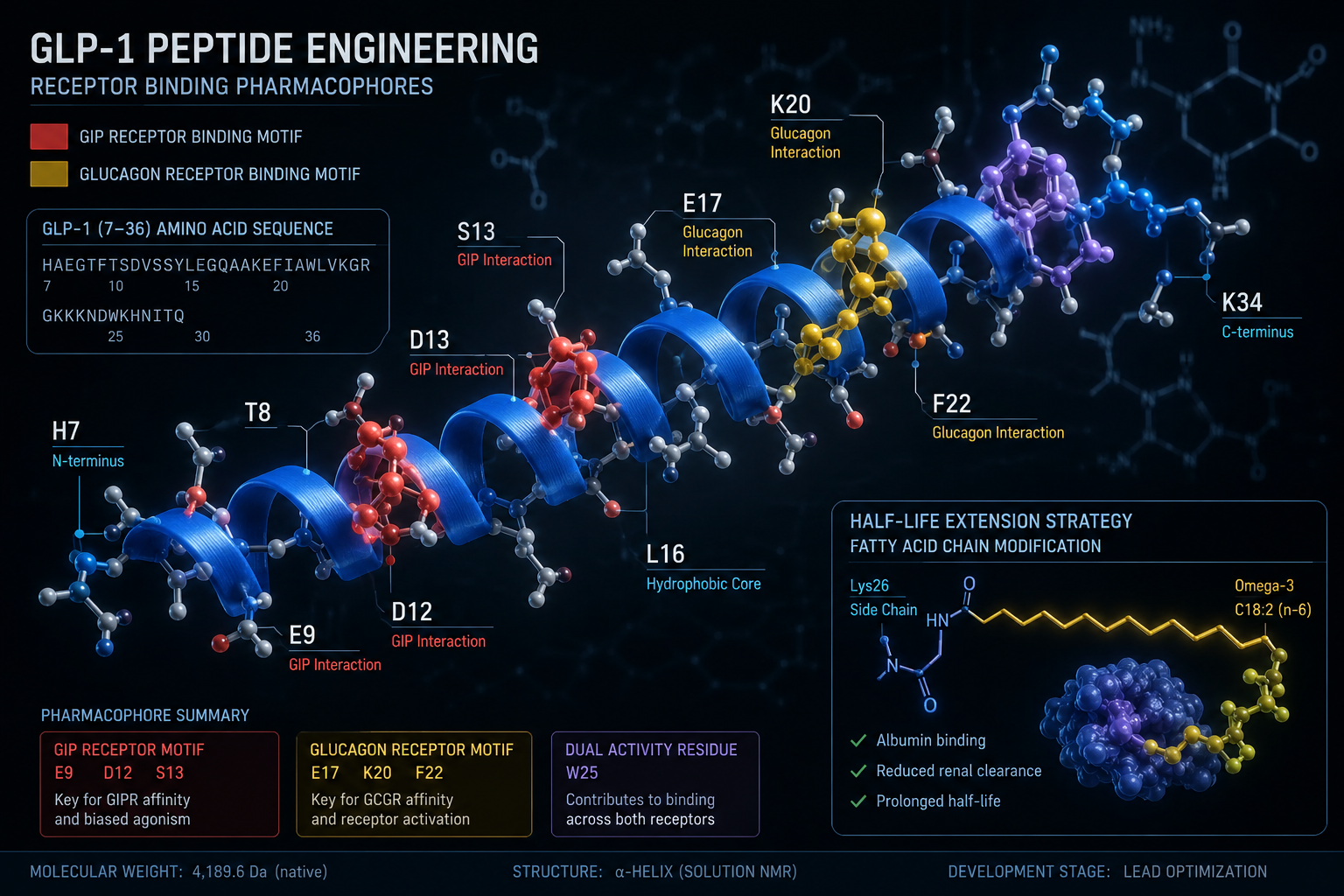
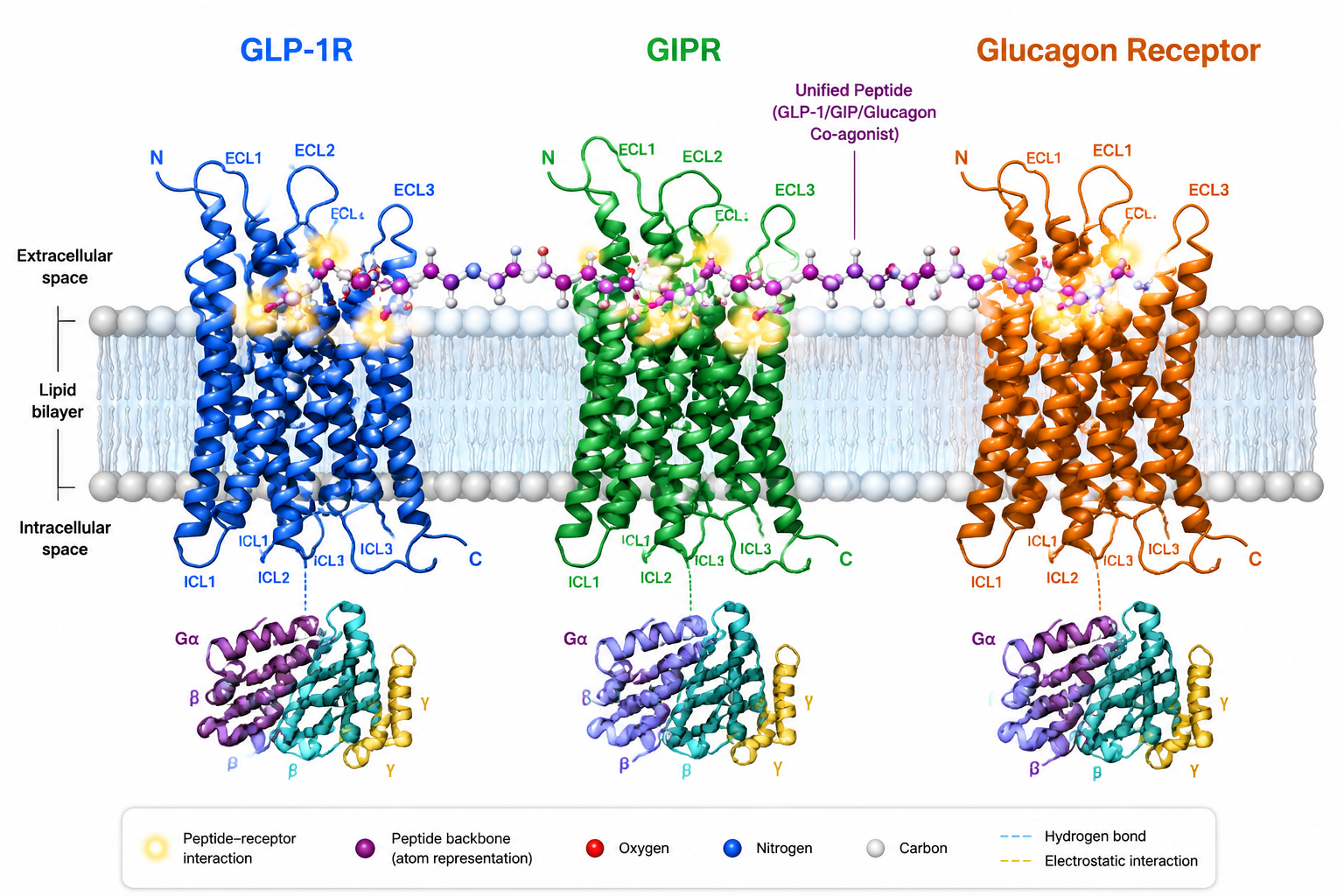
All three target receptors, GLP-1R, GIPR, and GCGR, belong to the class B1 family of G-protein coupled receptors (GPCRs). Each has a large extracellular domain that captures the peptide's N-terminus and a transmembrane bundle that transduces the signal intracellularly. What makes the triple-agonist design and receptor structural biology behind GLP-1/GIP/glucagon peptides like retatrutide so remarkable is that these three receptors share enough structural homology to be addressed by a single engineered peptide, yet differ enough that achieving balanced potency across all three requires precise residue-level tuning.

Cryo-electron microscopy data published in 2024 resolved retatrutide-receptor complexes at near-atomic resolution. The structures confirmed that the peptide adopts an alpha-helical conformation upon receptor engagement. The N-terminal region drives glucagon receptor activation, the mid-helix segment is critical for GIP receptor binding, and the C-terminal portion anchors GLP-1 receptor engagement. Each pharmacophore region overlaps partially, meaning a single amino acid substitution can shift the balance of potency across all three targets simultaneously.

For a broader look at how GLP-1 receptor agonism has evolved across generations, the GLP-1 generations overview provides useful context on how single-receptor agents gave way to more complex multi-target designs.


Rational Poly-Agonist Engineering: Building the Retatrutide Scaffold

Rational Poly-Agonist Engineering: Building the Retatrutide Scaffold

The design strategy starts with the native GLP-1 peptide as the structural backbone. This choice is deliberate. GLP-1R agonism is well-validated for glycemic control and appetite suppression, and the GLP-1 helix provides a stable scaffold onto which additional pharmacophore elements can be introduced.

Key engineering steps include:

Modification Purpose
N-terminal glucagon pharmacophore grafting Activates GCGR to increase energy expenditure and hepatic glucose output
Mid-helix GIP motif insertion Engages GIPR for enhanced insulin secretion and adipose tissue effects
C18 fatty acid chain conjugation Extends half-life via albumin binding; enables once-weekly dosing
Aib (alpha-aminoisobutyric acid) substitutions Resists dipeptidyl peptidase-4 (DPP-4) enzymatic cleavage

The glucagon receptor component is particularly significant. Glucagon alone raises blood glucose, a seemingly counterproductive effect in metabolic disease. However, when glucagon receptor activation is balanced against strong GLP-1R and GIPR agonism, the net result is increased thermogenesis and fat oxidation without net hyperglycemia. This balance is the central challenge of poly-agonist design.

Researchers interested in dual-receptor agonism as a stepping stone to this triple-target approach will find the GLP-1T research breakdown on dual receptor agonism a valuable reference.

"Balanced tri-receptor engagement is not about maximal activation at each target, it is about calibrating the ratio of potencies to produce a synergistic metabolic outcome."

The GLP-3 triple agonist overview explores how related molecules in this class are being characterized for research purposes in 2026.


Metabolic Consequences of Simultaneous Tri-Receptor Activation

Metabolic Consequences of Simultaneous Tri-Receptor Activation

The triple-agonist design and receptor structural biology behind GLP-1/GIP/glucagon peptides like retatrutide produces a layered metabolic effect that no single-receptor agent can replicate.

GLP-1R activation contributes:

  • Slowed gastric emptying
  • Reduced appetite via hypothalamic signaling
  • Glucose-dependent insulin secretion

GIPR activation adds:

  • Enhanced postprandial insulin response
  • Possible direct adipocyte effects reducing lipid accumulation
  • Complementary appetite modulation

GCGR activation provides:

  • Increased hepatic glucose production (offset by GLP-1R effects)
  • Elevated energy expenditure through brown adipose tissue thermogenesis
  • Enhanced lipolysis in white adipose tissue

This convergence explains the superior weight loss data. Researchers studying metabolic modulation pathways can explore additional mechanistic context through the metabolic modulation research lines resource.

The structural data also have formulation implications. Because the fatty acid chain binds albumin reversibly, the peptide circulates in a depot-like state, releasing gradually. This pharmacokinetic profile is a direct product of the structural biology, not an afterthought. For those interested in how delivery systems shape peptide therapeutics broadly, the innovative peptide delivery systems overview covers relevant advances.

Researchers examining related metabolic peptides may also find the MOTS-c metabolic flexibility research themes relevant, as mitochondrial and incretin pathways intersect in energy homeostasis models.


Conclusion

The triple-agonist design and receptor structural biology behind GLP-1/GIP/glucagon peptides like retatrutide represents a landmark convergence of structural biology, medicinal chemistry, and metabolic physiology. High-resolution cryo-EM data have moved this field from empirical screening toward genuinely rational drug design, where each amino acid substitution is chosen with a specific receptor interaction in mind.

Actionable next steps for researchers and clinicians:

  1. Review published cryo-EM structural data on retatrutide-receptor complexes to understand residue-level binding determinants.
  2. Track ongoing Phase 3 trial data for retatrutide to assess whether preclinical structural predictions translate to clinical outcomes.
  3. Explore the generations of GLP-1 receptor agonists to contextualize where triple agonism fits in the therapeutic timeline.
  4. Consider how poly-agonist design principles may inform research into other multi-target peptide systems beyond metabolic disease.

The structural biology is no longer a black box. That clarity is accelerating the next wave of incretin-mimetic innovation.

https://www.puretestedpeptides.com/wp-content/uploads/2026/07/Triple‑agonist-design-and-receptor-structural-biology-behind-GLP‑1GIPglucagon-peptides-like-retatrutide.png 1024 1536 Pure Tested https://www.puretestedpeptides.com/wp-content/uploads/2026/01/buy-peptides-online.jpg Pure Tested2026-07-04 13:03:572026-07-20 15:01:09Triple‑agonist design and receptor structural biology behind GLP‑1/GIP/glucagon peptides like retatrutide
Enclomiphene Alternatives: Comparing serms for Selective Estrogen Receptor Modulation Research

Enclomiphene Alternatives: Comparing serms for Selective Estrogen Receptor Modulation Research

July 4, 2026/0 Comments/by Pure Tested

Only one FDA-approved serm currently holds a dedicated indication for male hypogonadism management, and enclomiphene is not it. Despite accumulating nearly 190 indexed research citations by 2026, enclomiphene remains available only through compounding pharmacies. That regulatory gap has pushed researchers toward a broader comparison of enclomiphene alternatives: comparing serms for selective estrogen receptor modulation research to identify which compounds offer the most utility across different experimental contexts.

Key Takeaways

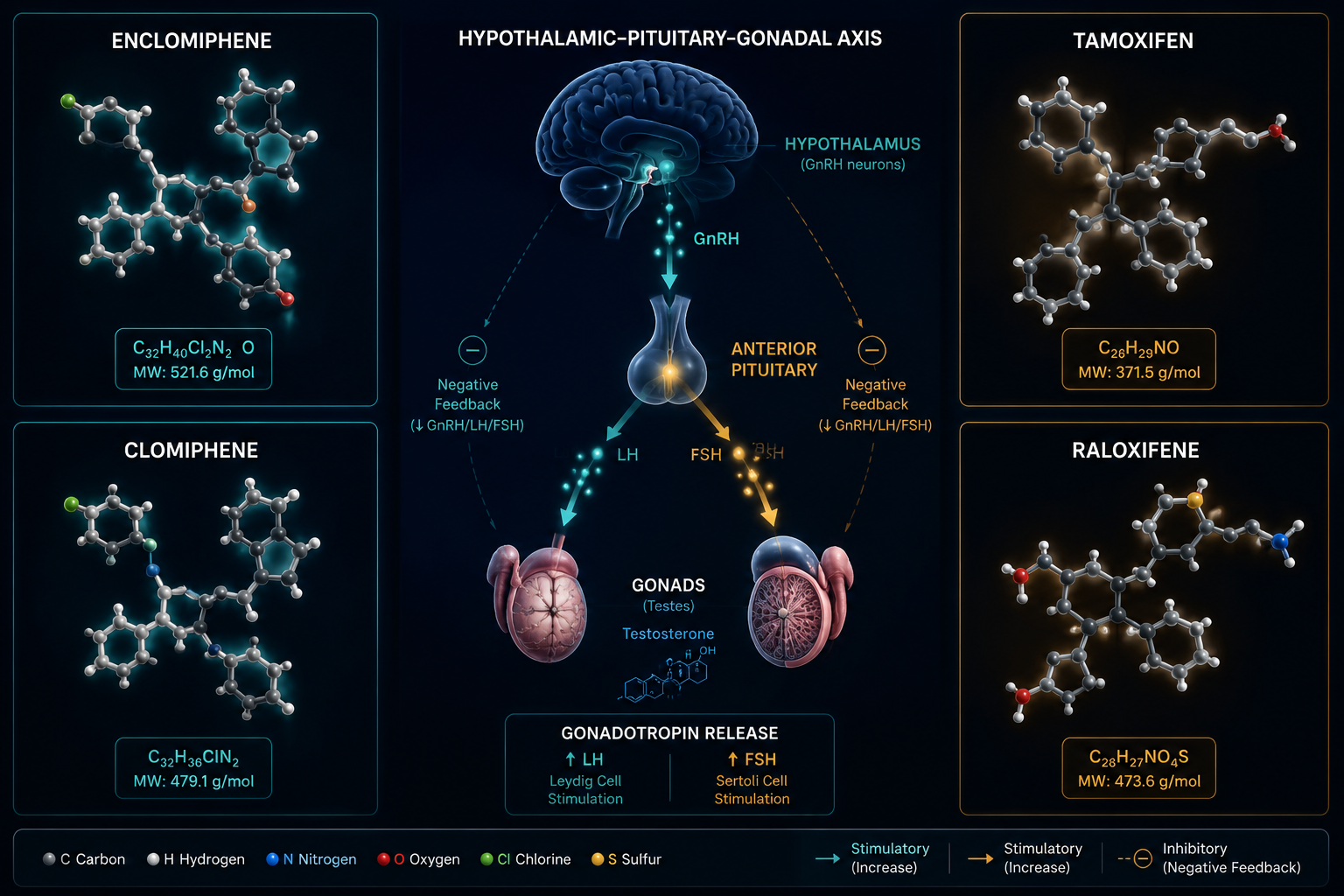
  • Enclomiphene is the active trans-isomer of clomiphene and works by blocking estrogen's negative feedback on the hypothalamic-pituitary-gonadal (HPG) axis.
  • Several established serms, including clomiphene, tamoxifen, and raloxifene, serve as functional research comparators with distinct tissue-selectivity profiles.
  • Enclomiphene preserves fertility markers (FSH and LH) better than exogenous testosterone therapies.
  • Cost and regulatory status vary significantly across serms, affecting research accessibility.
  • No serm is universally superior; compound selection depends on the specific receptor signaling pathway under investigation.

Key Takeaways

How serms Work: The Receptor Modulation Framework

Selective estrogen receptor modulators bind to estrogen receptors but produce different effects depending on the target tissue. This tissue-selective action is what makes them valuable both clinically and in preclinical research settings.

Enclomiphene, the trans-isomer of clomiphene citrate, acts as an estrogen receptor antagonist in the pituitary gland. By blocking estrogen's inhibitory signal on the HPG axis, it stimulates the release of luteinizing hormone (LH) and follicle-stimulating hormone (FSH), which in turn drives endogenous testosterone production. This mechanism is distinct from exogenous testosterone replacement, which suppresses the HPG axis entirely.

Researchers studying gonadotropin pulsatility and endogenous androgen production will find this mechanism particularly relevant. For those exploring related neuroendocrine pathways, the gonadorelin GnRH pulsatility research overview provides useful mechanistic context.

"The tissue-selective nature of serms means that receptor binding alone does not predict biological outcome, downstream co-activator expression and tissue context determine the functional result."

Enclomiphene Alternatives: Comparing serms for Selective Estrogen Receptor Modulation Research

When evaluating enclomiphene alternatives for selective estrogen receptor modulation research, four compounds dominate the comparative literature:

serm Primary Mechanism Fertility Preservation Approx. Monthly Cost
Enclomiphene Pituitary ER antagonist Yes $50,$150
Clomiphene Citrate Mixed agonist/antagonist (racemic) Partial $10,$30
Tamoxifen ER antagonist (breast), agonist (bone/uterus) Moderate $15,$40
Raloxifene ER antagonist (breast/uterus), agonist (bone) Limited data $20,$60

Clomiphene citrate is the most studied comparator. As a racemic mixture of enclomiphene and zuclomiphene, it produces broader estrogenic activity due to the zuclomiphene isomer. This makes it less precise for research targeting pure HPG axis modulation, but its lower cost and wider availability make it a practical starting point.

Tamoxifen has a well-characterized receptor binding profile and is frequently used in breast cancer research models. Its partial agonist activity in certain tissues introduces variables that researchers must account for when designing estrogen signaling studies.

Raloxifene offers strong bone tissue selectivity and minimal uterine stimulation, making it valuable for studies focused on bone metabolism and cardiovascular estrogen signaling. A 2019 research review highlighted the growing importance of tissue-selective estrogen complexes in reducing off-target receptor activity, a principle that raloxifene exemplifies well.

Enclomiphene Alternatives: Comparing serms for Selective Estrogen Receptor Modulation Research

Research Utility, Safety Profiles, and Compound Selection

A 2023 systematic review and meta-analysis confirmed that serms as a class effectively raise testosterone levels in men with androgen deficiency while preserving fertility, a critical advantage over exogenous testosterone replacement. This finding reinforces the value of HPG-axis-preserving compounds in male reproductive research.

Common side effects across serms include:

  • Mood changes and irritability
  • Headaches
  • Gastrointestinal upset
  • Rare visual disturbances (most associated with clomiphene)

Enclomiphene's cleaner isomer profile reduces some of these effects compared to racemic clomiphene, which is one reason researchers studying male hypogonadism models favor it despite its higher cost.

For researchers working with complementary peptide-based compounds that influence the neuroendocrine axis, the recovery and tissue biology overview and MOTS-c metabolic flexibility research offer relevant context on how downstream hormonal signaling intersects with metabolic pathways. Similarly, those studying longevity-related hormone optimization may find the longevity peptide research overview a useful companion resource.

A 2017 urology review emphasized that rigorous, controlled trials remain essential for establishing the full clinical and research utility of serms in male infertility models. That call for methodological rigor applies equally to preclinical research design in 2026.

For researchers sourcing quality-tested compounds, reviewing peptide purity testing standards and quality testing protocols ensures that experimental variables are minimized from the outset.

Research Utility, Safety Profiles, and Compound Selection

Conclusion

When evaluating enclomiphene alternatives: comparing serms for selective estrogen receptor modulation research, no single compound dominates every experimental context. Enclomiphene offers the most targeted HPG axis modulation with the fewest estrogenic confounders, but its cost and compounding-only availability create practical barriers. Clomiphene citrate remains the accessible, widely-studied benchmark. Tamoxifen and raloxifene add tissue-specific selectivity profiles that serve distinct research designs.

Actionable next steps for researchers:

  1. Define the target tissue and receptor subtype before selecting a serm, tissue context determines functional outcome.
  2. Use clomiphene as a cost-effective baseline comparator, then advance to enclomiphene for isomer-specific mechanistic studies.
  3. Cross-reference HPG axis findings with neuroendocrine peptide research to build a more complete hormonal signaling picture.
  4. Prioritize sourcing compounds with verified purity documentation to maintain experimental integrity.
  5. Monitor the regulatory landscape, enclomiphene's FDA status may evolve, which would significantly affect research accessibility and standardization.
https://www.puretestedpeptides.com/wp-content/uploads/2026/07/Enclomiphene-Alternatives-Comparing-serms-for-Selective-Estrogen-Receptor-Modulation-Research.png 1024 1536 Pure Tested https://www.puretestedpeptides.com/wp-content/uploads/2026/01/buy-peptides-online.jpg Pure Tested2026-07-04 13:03:012026-07-20 15:01:10Enclomiphene Alternatives: Comparing serms for Selective Estrogen Receptor Modulation Research
Safety, stability, and storage of research‑grade retatrutide/“GLP‑3” solutions

Safety, stability, and storage of research‑grade retatrutide/“GLP‑3” solutions

July 4, 2026/0 Comments/by Pure Tested

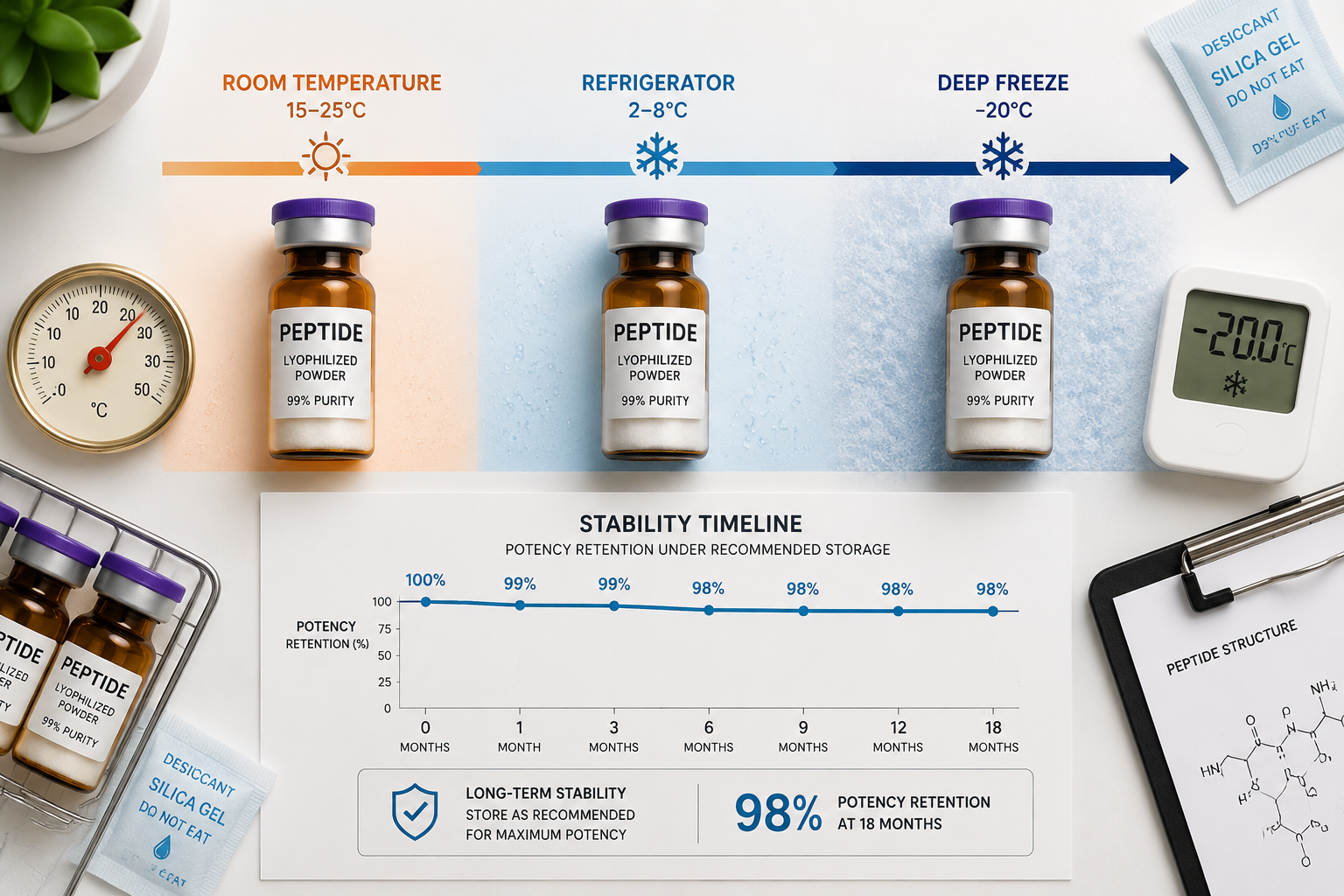
Lyophilized retatrutide stored at −20 °C retains approximately 98% of its potency after 12 months, yet a significant share of research buyers still keep peptide vials at room temperature, a practice that can destroy bioactivity within days. As new stability data emerges and interest in this triple-receptor agonist grows, understanding the safety, stability, and storage of research-grade retatrutide/"GLP-3" solutions has become essential knowledge for any serious laboratory.

Key Takeaways

  • Retatrutide is an investigational research peptide only, not approved for human use.
  • Lyophilized (freeze-dried) powder is far more stable than reconstituted solution and can last up to 48 months at −20 °C.
  • Reconstituted solutions should be refrigerated at 2-8 °C and used within 4 weeks.
  • Proper PPE, biological safety cabinets, and biohazardous waste disposal are required for safe handling.
  • Light, heat, and repeated freeze-thaw cycles are the primary causes of peptide degradation.

Key Takeaways

Safe Handling of Research-Grade Retatrutide/"GLP-3" Solutions

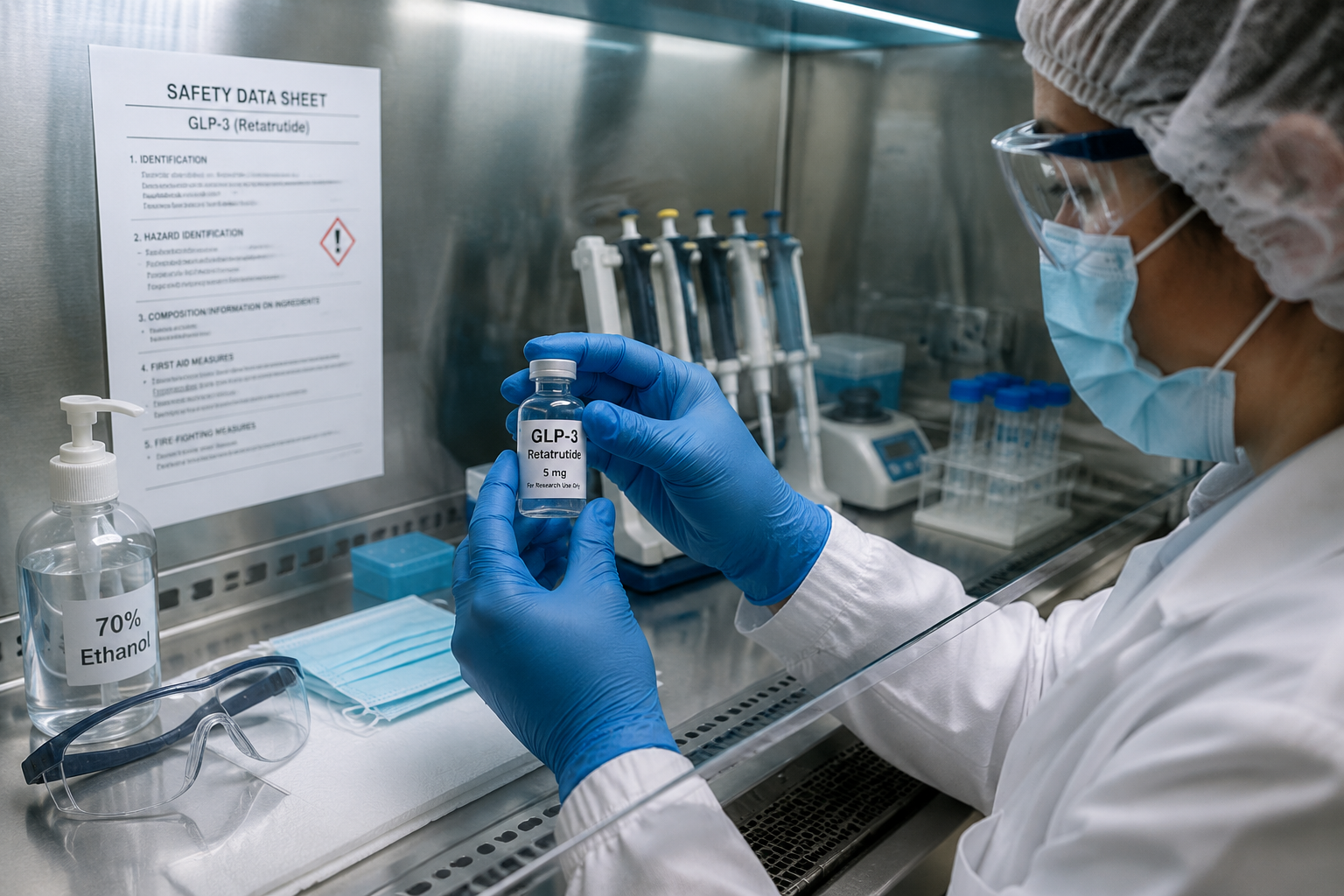
Retatrutide, often labeled GLP-3 RT by vendors, is sold strictly as a research chemical. Safety Data Sheet (SDS) documentation classifies it as a laboratory chemical with health hazards typical of peptide and protein compounds, including potential for skin irritation and allergenic responses.

Required PPE for safe handling:

  • Nitrile gloves (minimum)
  • Lab coat or protective gown
  • Safety glasses or goggles
  • Work within a biological safety cabinet when handling powders

Researchers must avoid inhalation of lyophilized powder, ingestion, and direct skin or eye contact. Any spill should be absorbed with inert material and disposed of as biohazardous waste following local regulations.

"Research peptides like retatrutide must be treated with the same rigor as any uncharacterized bioactive compound, controlled environment, documented handling, and proper disposal."

For researchers exploring other peptides with similar handling requirements, guidance on safe peptide combinations and research protocols provides a useful reference point. Similarly, those working with mitochondria-targeted compounds can consult SS-31 research peptide handling considerations for parallel best practices.


Safe Handling of Research-Grade Retatrutide/"GLP-3" Solutions

Stability of Research-Grade Retatrutide/"GLP-3" Solutions: What the Data Shows

Peptide stability depends on three core variables: temperature, moisture, and light exposure. Retatrutide is no exception.

Lyophilized Powder Stability

Storage Condition Estimated Shelf Life Notes
−20 °C or below (frozen) 24-48 months Gold standard; ~98% potency at 12 months
2-8 °C (refrigerated) 12-24 months Acceptable for shorter-term storage
Room temperature Days to weeks Not recommended; rapid degradation risk

Reconstituted Solution Stability

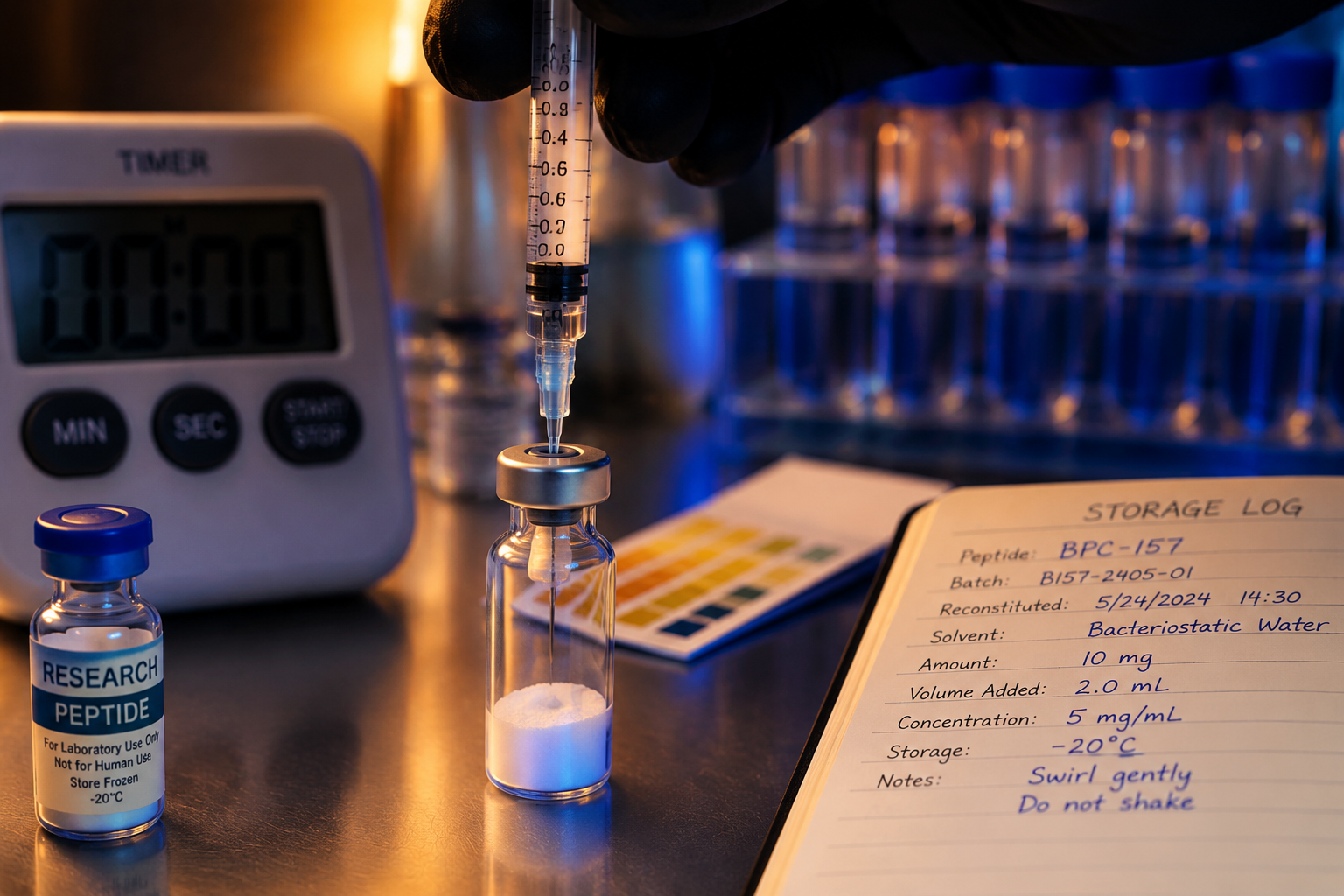
Once reconstituted with bacteriostatic water, retatrutide solutions are considerably more vulnerable. Key guidelines include:

  • Store reconstituted vials at 2-8 °C (standard refrigerator)
  • Use within 4 weeks of reconstitution
  • Never freeze a reconstituted solution, ice crystal formation disrupts peptide structure
  • Protect from light by wrapping vials in foil or storing in opaque containers

The primary degradation pathways are oxidation, hydrolysis, and aggregation, all of which accelerate with heat and UV exposure. Researchers working with other sensitive peptides such as MOTS-c and Elamipretide will recognize these same degradation risks.


Reconstituted Solution Stability

Storage Best Practices for Research-Grade Retatrutide/"GLP-3" Solutions

Consistent, documented storage protocols protect both sample integrity and research validity.

Practical storage checklist:

  • Store lyophilized vials at −20 °C in a dedicated laboratory freezer
  • Include a desiccant packet in the storage container to control moisture
  • Label each vial with the date of receipt and reconstitution date
  • Minimize the number of times a vial is opened to reduce contamination risk
  • Avoid storing near freezer doors where temperature fluctuates

Researchers sourcing retatrutide should verify that suppliers provide Certificates of Analysis (CoA) confirming purity and identity. Reviewing a supplier's CoA documentation standards is a critical step before beginning any protocol. For those evaluating the retatrutide GLP-3 research peptide directly, verified purity data should accompany every order.

Researchers comparing peptide classes may also find value in reviewing how related compounds like ipamorelin and sermorelin stacks are handled, as overlapping storage principles apply across many research-grade peptides.


Conclusion

The safety, stability, and storage of research-grade retatrutide/"GLP-3" solutions demand the same disciplined approach applied to any high-value investigational compound. Three actionable priorities stand out:

  1. Handle with full PPE in a controlled environment and dispose of waste as biohazardous material.
  2. Store lyophilized powder at −20 °C to maximize shelf life up to 48 months; refrigerate reconstituted solutions and use within four weeks.
  3. Source from verified suppliers that provide independent CoA documentation confirming peptide identity and purity before beginning any research protocol.

Following these standards protects both the integrity of the research and the safety of everyone in the laboratory.

https://www.puretestedpeptides.com/wp-content/uploads/2026/07/Safety-stability-and-storage-of-research‑grade-retatrutideGLP‑3-solutions.png 1024 1536 Pure Tested https://www.puretestedpeptides.com/wp-content/uploads/2026/01/buy-peptides-online.jpg Pure Tested2026-07-04 13:02:462026-07-20 15:01:10Safety, stability, and storage of research‑grade retatrutide/“GLP‑3” solutions
Best Research Peptides for Enhanced Cognitive Function: A Comparative Review

Best Research Peptides for Enhanced Cognitive Function: A Comparative Review

July 3, 2026/0 Comments/by Pure Tested

{"cover":"Professional landscape format (1536×1024) hero image with bold text overlay: 'Best Research Peptides for Cognitive Function: A Comparative Review' in extra large 72pt white bold sans-serif font with deep shadow effect, centered upper-third composition. Background features a stunning macro visualization of neural synaptic connections rendered in electric blue and gold against a dark navy backdrop, with subtle molecular peptide chain structures floating in the foreground. Color palette: deep navy, electric blue, gold accents. Magazine cover aesthetic, editorial quality, high contrast, cinematic depth of field.","content":["Detailed landscape format (1536×1024) scientific illustration showing side-by-side molecular structure comparison of Semax and Selank peptides as glowing 3D ribbon diagrams in blue and amber tones, with labeled arrows pointing to BDNF and NGF receptor binding sites on a stylized neuron cross-section. Dark background with faint brain scan imagery. Clean laboratory aesthetic, research journal quality, with subtle text labels 'Semax' and 'Selank' in white sans-serif. Cognitive peptide research theme, high detail.","Landscape format (1536×1024) overhead flat-lay composition of a research laboratory bench showing multiple peptide vials arranged in a comparison grid, each labeled with peptide names including Dihexa, Cerebrolysin, Pinealon, and PE-22-28. A researcher's gloved hand holds a pipette over a test tube. Warm clinical lighting, teal and white color palette, with a blurred brain MRI scan visible on a lightbox in the background. Scientific research quality, editorial photography style, sharp focus on vials.","Landscape format (1536×1024) infographic-style visualization showing a decision flowchart for selecting cognitive research peptides, with branching pathways from 'Research Goal' through nodes labeled 'Neuroprotection', 'Synaptogenesis', 'Anxiety Reduction', and 'Neurogenesis'. Each node features a small peptide name badge in contrasting colors. Background is a clean white-to-light-gray gradient with subtle hexagonal molecular pattern overlay. Bold sans-serif typography, professional data visualization aesthetic, teal and charcoal color scheme."}

Professional landscape hero image () with : "Best Research Peptides for Enhanced Cognitive Function: A Comparative Review".

Fewer than 15% of adults consistently perform at their cognitive peak under real-world stress conditions, yet a growing body of preclinical and clinical research suggests that certain bioactive peptides may directly address the neurobiological gaps responsible for that shortfall. This comparative review of the best research peptides for enhanced cognitive function examines the leading compounds, their mechanisms, and what current evidence actually supports.

Key Takeaways

  • Semax and Selank are the most clinically documented cognitive peptides, operating through complementary but distinct mechanisms involving BDNF, NGF, and GABAergic pathways.
  • Emerging compounds such as Dihexa, PE-22-28, and Pinealon show strong preclinical promise but lack extensive human safety data.
  • No cognitive peptide currently holds FDA approval for use in healthy adults; most human data originates from Russian clinical research.
  • Purity and sourcing quality are critical variables that directly affect research reliability and reproducibility.
  • Combining peptides with non-overlapping mechanisms, such as Semax and Selank, is a common research strategy for broader cognitive coverage.

Key Takeaways

Semax and Selank: The Benchmark Pair in Cognitive Peptide Research

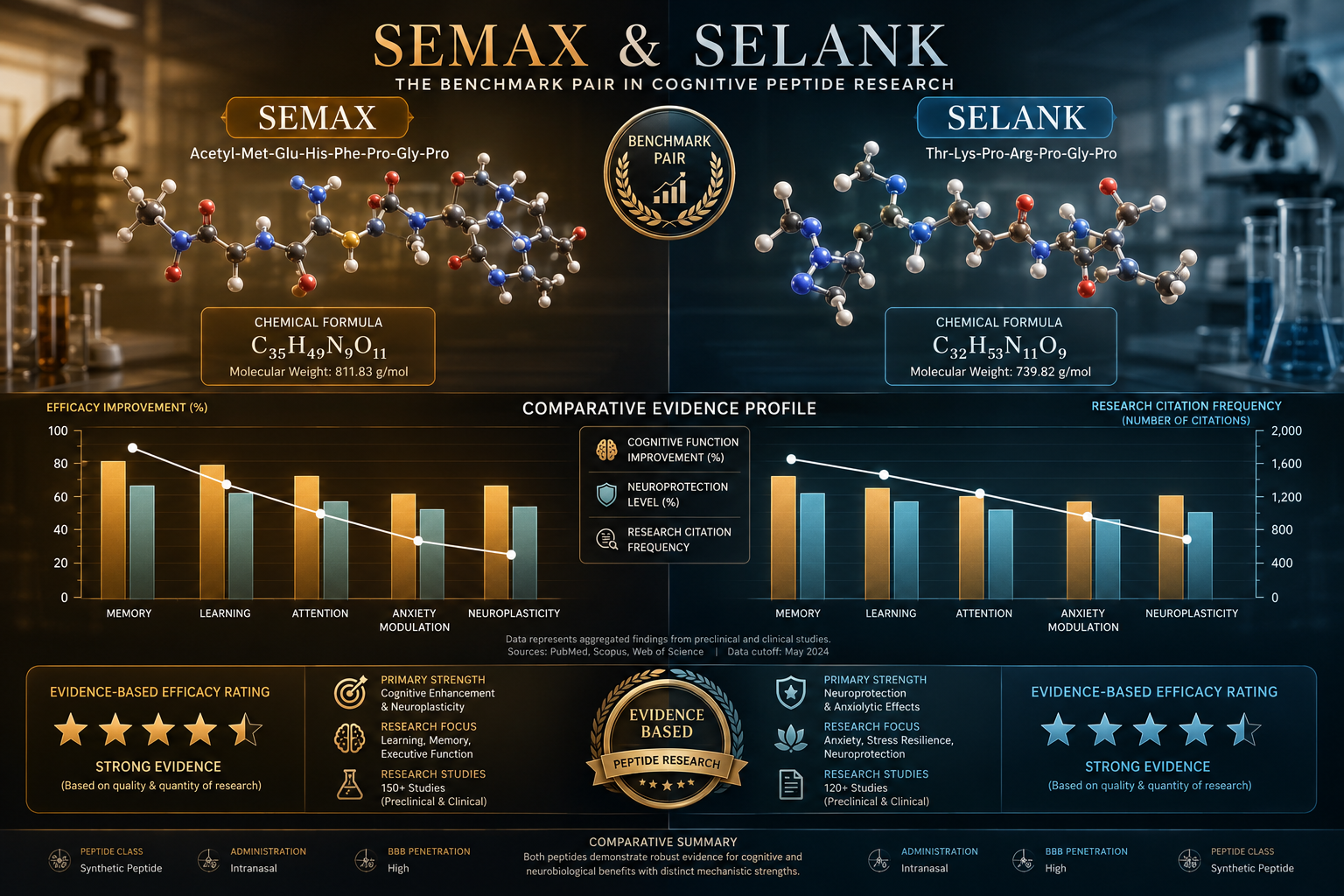
When evaluating the best research peptides for enhanced cognitive function in a comparative review, Semax consistently ranks at the top of the evidence hierarchy. Approved in Russia for stroke recovery and cognitive disorders, Semax is a synthetic heptapeptide derived from ACTH(4-10). Its primary mechanism involves upregulating Brain-Derived Neurotrophic Factor (BDNF) and Nerve Growth Factor (NGF), two proteins essential for neuronal survival, synaptic plasticity, and memory consolidation.

Selank complements Semax through a fundamentally different pathway. Rather than boosting neurotrophic factors directly, Selank modulates GABAergic transmission and enkephalin metabolism, reducing anxiety-driven cognitive interference. This makes the Semax-Selank combination particularly relevant in research models where stress-induced cognitive impairment is a variable.

"The Semax-Selank pairing is widely studied precisely because their mechanisms do not overlap, one builds neural infrastructure while the other clears the psychological noise that disrupts it."

For researchers interested in anxiety-adjacent cognitive research, reviewing Selank side effects and research considerations provides important context before designing protocols.


Semax and Selank: The Benchmark Pair in Cognitive Peptide Research

Emerging Compounds: Dihexa, Pinealon, PE-22-28, and P21

The landscape of cognitive peptide research extends well beyond the Semax-Selank pair. Several newer compounds are generating significant preclinical interest.

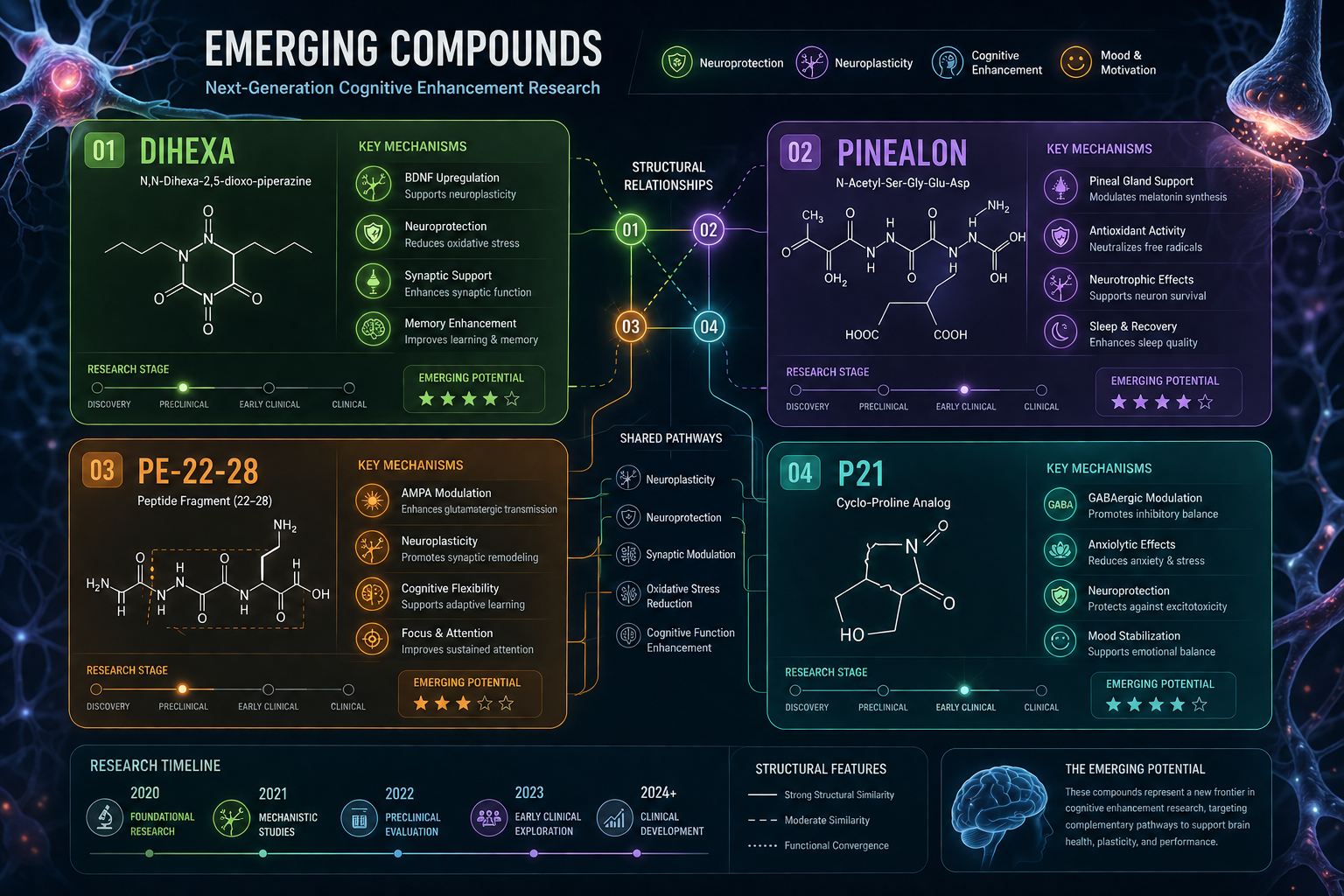
Dihexa is perhaps the most discussed emerging synaptogenic peptide. It promotes synapse formation at concentrations far lower than traditional neurotrophic factors, with preclinical data suggesting substantial improvements in memory and learning tasks. However, human safety data remains limited, making it strictly a research compound at this stage.

Pinealon, a synthetic tripeptide (Glu-Asp-Arg), has been studied for neuroprotective effects in traumatic brain injury models and age-related memory decline. Its small size allows efficient cellular penetration, and early studies suggest it may support memory consolidation through epigenetic mechanisms.

PE-22-28, a shortened analog of spadin, functions as a TREK-1 potassium channel blocker. By inhibiting this channel, PE-22-28 promotes hippocampal neurogenesis and synaptogenesis, two processes directly tied to long-term memory formation. Its targeted mechanism makes it a compelling subject for future cognitive research.

P21, derived from ciliary neurotrophic factor (CNTF), shows preclinical promise for promoting neurogenesis and protecting against neurodegeneration. Early animal studies indicate potential cognitive benefits, though the compound requires significantly more investigation.

A 2026 study published in Food Chemistry added further depth to this field, identifying five novel peptides from porcine brain hydrolysates, including FPLHP and WGQKPW, that enhance memory by targeting Keap1, p38α, AChE, and BACE1 simultaneously.

For researchers exploring neuroprotective peptides alongside cognitive compounds, humanin and cellular protection research and epithalon peptide research offer relevant mechanistic parallels.


Peptide Primary Mechanism Evidence Level Human Data
Semax BDNF/NGF upregulation High (clinical) Yes (Russia)
Selank GABAergic/enkephalin modulation Moderate-High Yes (Russia)
Dihexa Synaptogenesis promotion Moderate (preclinical) Limited
Pinealon Epigenetic neuroprotection Early preclinical Minimal
PE-22-28 TREK-1 channel blockade Early preclinical None confirmed
P21 CNTF-derived neurogenesis Early preclinical None confirmed

Sourcing, Purity, and Research Protocol Considerations

Any meaningful comparative review of the best research peptides for enhanced cognitive function must address a variable that often receives insufficient attention: peptide purity. Impure compounds introduce confounding variables that invalidate results and create safety concerns in research settings.

Researchers should prioritize suppliers that provide third-party verified purity documentation. Understanding peptide purity testing standards is a foundational step before any cognitive peptide protocol begins. Similarly, understanding reference standards and benchmarking practices ensures that experimental results can be meaningfully compared across studies.

Delivery method also matters. Semax and Selank are typically administered intranasally in research settings, which bypasses first-pass metabolism and allows direct CNS access. Advances in innovative peptide delivery systems are expanding options for researchers working with less bioavailable compounds.

It is also worth noting that none of these peptides hold FDA approval for cognitive enhancement in healthy adults. The most robust human data originates from Russian clinical research, which has not yet been fully replicated in Western randomized controlled trials. Researchers should treat all findings as preliminary until that replication gap is closed.


Sourcing, Purity, and Research Protocol Considerations

Conclusion

The best research peptides for enhanced cognitive function represent a scientifically compelling but still-evolving field. Semax remains the gold standard based on clinical evidence, while Selank provides a complementary anxiolytic mechanism that makes the pair greater than the sum of its parts. Emerging compounds, Dihexa, Pinealon, PE-22-28, and P21, offer intriguing preclinical signals that warrant rigorous follow-up research.

Actionable next steps for researchers:

  • Prioritize compounds with the strongest evidence base (Semax, Selank) before exploring newer analogs.
  • Verify peptide purity through third-party testing before initiating any protocol.
  • Design studies that account for stress variables, where Selank's anxiolytic properties may be a confounding or complementary factor.
  • Monitor the replication of Russian clinical data in Western trials, this will be the defining development for the field in the coming years.
  • Explore neuroendocrine and innate immunity research for broader context on how peptide systems interact with cognitive pathways.

The science is advancing rapidly. Staying current with high-quality sourcing and evidence standards will separate meaningful research from noise.

https://www.puretestedpeptides.com/wp-content/uploads/2026/07/Best-Research-Peptides-for-Enhanced-Cognitive-Function-A-Comparative-Review.png 1024 1536 Pure Tested https://www.puretestedpeptides.com/wp-content/uploads/2026/01/buy-peptides-online.jpg Pure Tested2026-07-03 13:04:422026-07-20 15:01:11Best Research Peptides for Enhanced Cognitive Function: A Comparative Review
GLP-3 Retatrutide Dose Escalation: Understanding Tolerability and Side Effects in Research Studies

GLP-3 Retatrutide Dose Escalation: Understanding Tolerability and Side Effects in Research Studies

July 3, 2026/0 Comments/by Pure Tested

Discontinuation rates in Retatrutide research groups reached as high as 16% due to adverse events, compared to 0% in placebo groups. That single data point frames the central challenge researchers face when designing protocols around GLP-3 Retatrutide dose escalation: understanding tolerability and side effects in research studies is not optional; it is foundational to sound experimental design.

Key Takeaways

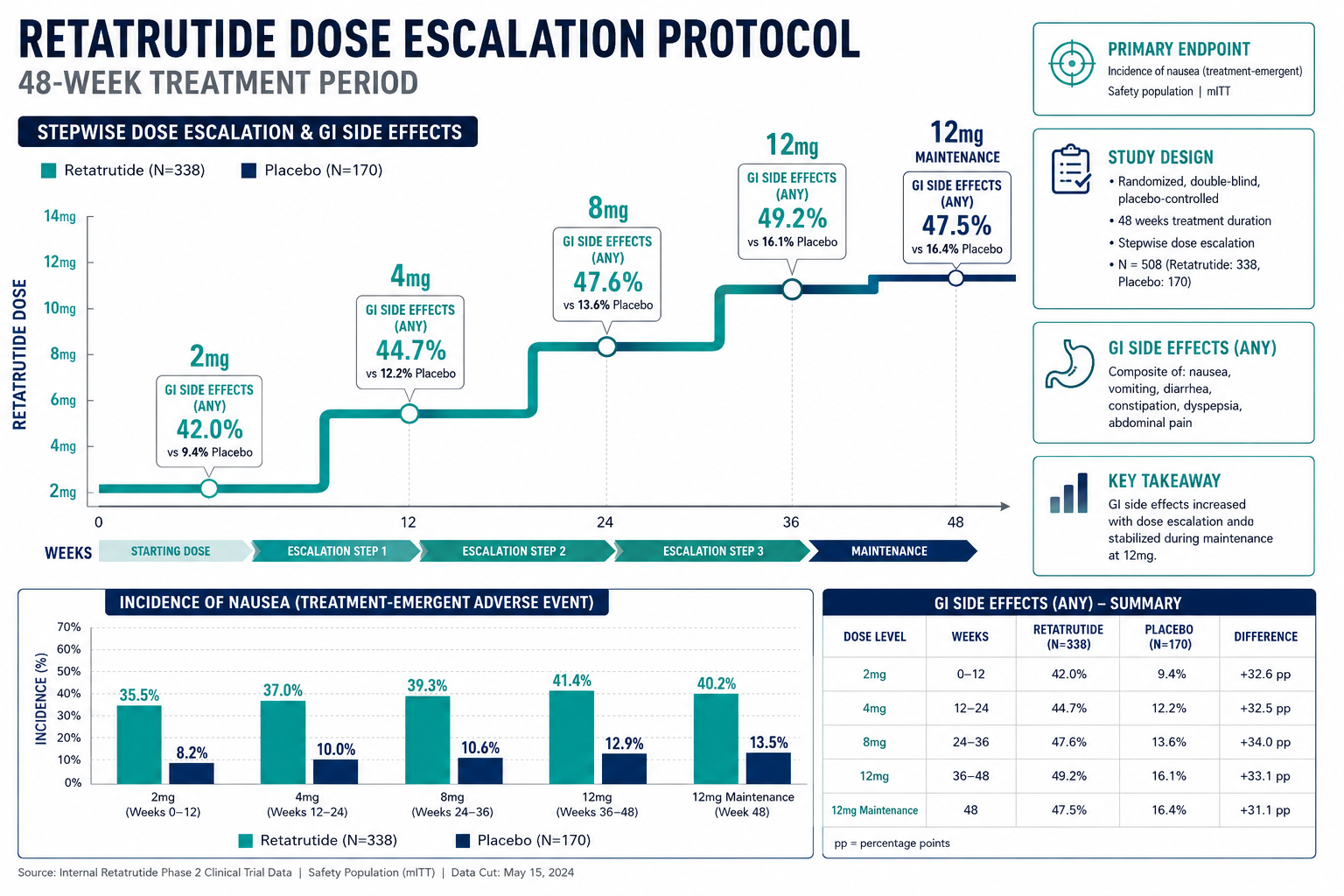
  • Gastrointestinal side effects are the most common adverse events and are strongly dose-dependent, peaking during escalation phases.
  • Gradual four-week dose escalation intervals significantly improve tolerability compared to rapid titration.
  • A unique dysesthesia signal, abnormal tingling or burning, affects up to 20.9% of participants at the highest doses.
  • Modest heart rate increases averaging 5 to 10 BPM have been observed, peaking around week 24.
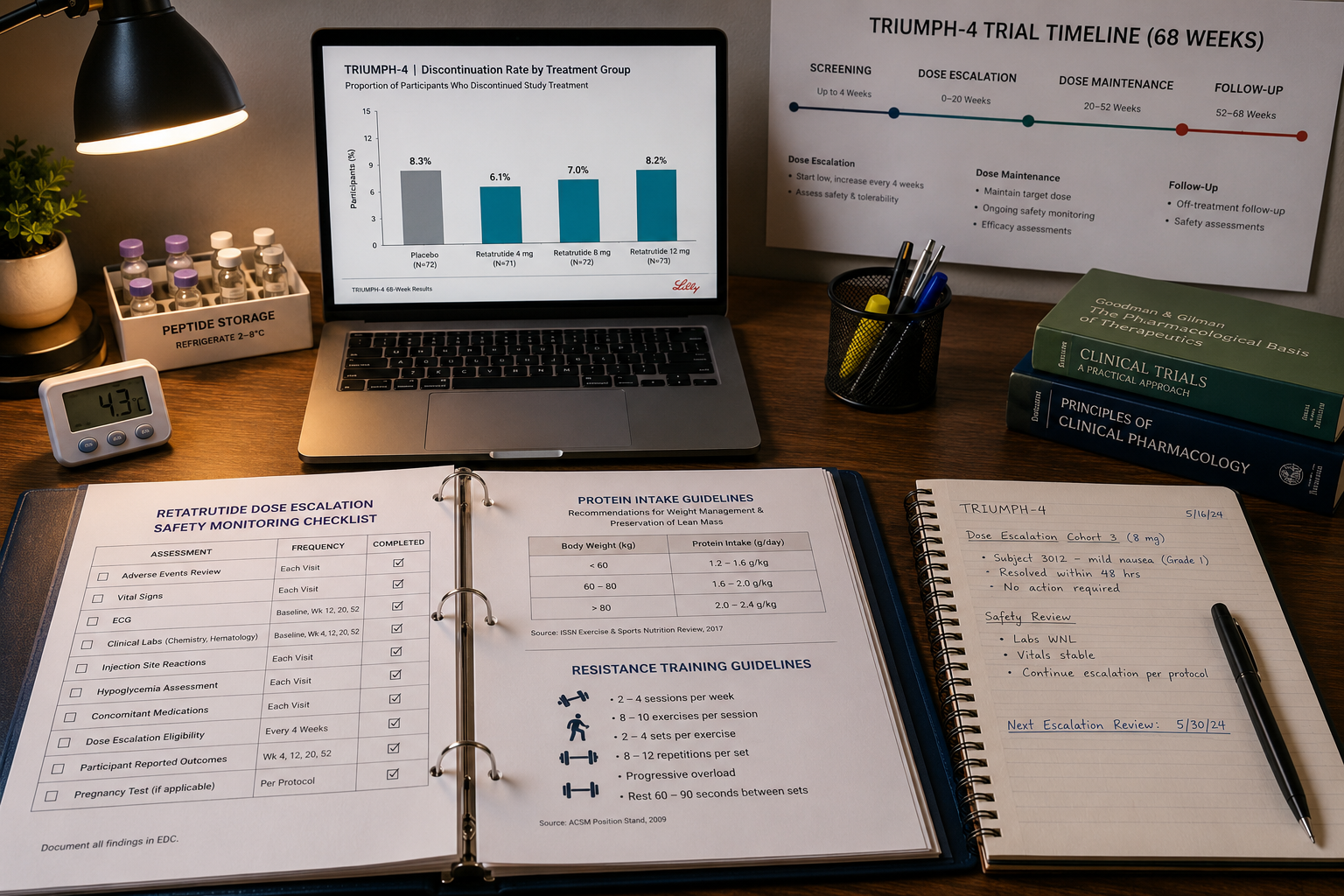
  • Approximately 25 to 40% of total weight lost may come from lean mass, making resistance training and protein intake critical protocol considerations.

Key Takeaways

Dose Escalation Protocol and the Tolerability Framework

The core principle guiding GLP-3 Retatrutide dose escalation in research settings is gradual titration. Starting at 2 mg and increasing in four-week intervals allows biological systems to adapt before advancing to higher dose tiers. This approach directly reduces the frequency and intensity of adverse events.

Retatrutide is a triple agonist acting on GLP-1, GIP, and glucagon receptors simultaneously. This multi-receptor activity drives its potent metabolic effects, but it also broadens the side effect profile compared to single-target GLP-1 agents. Researchers exploring GLP-1 and incretin research themes will recognize the GI tolerability pattern, but Retatrutide introduces additional signals not seen with earlier-generation compounds.

In the 48-week Phase 2 obesity trial, weight loss outcomes were clearly dose-dependent, reinforcing that higher doses carry both greater efficacy and greater tolerability burden. The 68-week TRIUMPH-4 Phase 3 trial further confirmed this relationship, with nausea rates of 38.1% at 9 mg and 43.2% at 12 mg, versus 10.7% in the placebo group.

Practical protocol guidance:

Dose Tier Approximate Duration Primary Tolerability Risk
2 mg Weeks 1-4 Minimal GI symptoms
4 mg Weeks 5-8 Mild nausea onset
8 mg Weeks 9-16 Moderate GI events peak
12 mg Weeks 17+ Highest GI and dysesthesia risk

Researchers sourcing material for metabolic studies can review the GLP-3 triple agonist research planning catalog for further context on compound availability and protocol scaffolding.


Side Effect Profile: What Research Data Reveals

Side Effect Profile: What Research Data Reveals

Understanding the full tolerability and side effects in research studies requires examining each adverse event category individually.

Gastrointestinal Events

Nausea, vomiting, diarrhea, and constipation are the dominant adverse events. These are mild to moderate in most cases and cluster heavily during the escalation window rather than persisting at maintenance doses. Comparing Retatrutide to tirzepatide, GI event rates are measurably higher, a distinction researchers should factor into study design and participant selection criteria.

The Dysesthesia Signal

"Up to 20.9% of participants at the 12 mg dose reported dysesthesia, abnormal tingling or burning sensations, compared to just 0.7% in the placebo group."

This signal is notably absent from standard GLP-1 agonist profiles. The glucagon receptor component of Retatrutide is the suspected driver. Researchers designing longer-duration studies should include dysesthesia monitoring checkpoints, particularly at higher dose tiers. This distinguishes Retatrutide's side effect map from compounds like tesa, which carries its own distinct tolerability considerations.

Cardiovascular Signal: Heart Rate

Resting heart rate increases averaging 5 to 10 BPM have been documented, peaking near week 24 before partially attenuating. While modest, this elevation warrants baseline cardiovascular assessment in research subjects and ongoing monitoring throughout the protocol. Researchers interested in broader metabolic modulation research will find this cardiovascular signal relevant to multi-compound study design.

Lean Mass Considerations

Roughly 25 to 40% of total weight lost during Retatrutide studies is lean mass, a finding consistent across the broader GLP-1 drug class. Research protocols that do not account for this risk may produce confounded body composition data. Resistance exercise protocols and elevated protein intake are the primary mitigation strategies supported by current evidence.
For researchers examining complementary compounds that may address lean mass preservation, ipamorelin muscle and fat research themes offer relevant parallel data.

Designing Safer Research Protocols Around Retatrutide

Designing Safer Research Protocols Around Retatrutide

Translating the GLP-3 Retatrutide dose escalation tolerability and side effects data into actionable protocol design requires structured decision-making.

Key protocol design checkpoints:

  • Baseline screening: Cardiovascular status, GI history, and neurological baselines before initiating escalation.
  • Escalation pacing: Strict four-week minimum intervals between dose increases; do not accelerate based on early tolerance.
  • Adverse event monitoring windows: Heightened observation during weeks 5 through 20, when GI and dysesthesia events peak.
  • Discontinuation thresholds: Pre-define stopping criteria; trial data shows 6 to 16% discontinuation rates, and researchers should plan for this range.
  • Body composition tracking: Dual-energy X-ray absorptiometry (DEXA) or equivalent methods to monitor lean mass changes.

Long-term cardiovascular, renal, and oncological safety data remain incomplete pending results from the ongoing TRIUMPH-5 multi-year trial. This gap is a meaningful limitation for researchers planning extended protocols. Researchers interested in renal-adjacent peptide safety profiles may find value in reviewing SS-31 kidney health research as a comparative reference point.

Those sourcing Retatrutide for research can explore the Reta 10mg product tag for catalog options, while researchers building broader metabolic panels may also reference GLP-1 peptide product options for complementary compounds.


Conclusion

GLP-3 Retatrutide dose escalation: understanding tolerability and side effects in research studies is not a peripheral concern, it is the operational core of any well-designed Retatrutide protocol. The data from Phase 2 and TRIUMPH-4 trials provide a clear roadmap: GI events dominate the escalation window, dysesthesia is a unique and dose-dependent signal, heart rate elevations require cardiovascular monitoring, and lean mass loss demands proactive mitigation strategies.

Actionable next steps for researchers in 2026:

  1. Build four-week escalation intervals into every protocol from the outset.
  2. Include dysesthesia and cardiovascular monitoring checkpoints at weeks 12, 24, and 48.
  3. Define discontinuation criteria before the study begins, accounting for the 6 to 16% adverse-event dropout range.
  4. Pair Retatrutide protocols with body composition tracking to capture lean mass data.
  5. Monitor TRIUMPH-5 trial publications for emerging long-term safety data before extending protocol durations.

Researchers who treat the tolerability profile as a design input, not an afterthought, will produce more reliable, reproducible, and ethically sound data from their Retatrutide studies.

https://www.puretestedpeptides.com/wp-content/uploads/2026/07/GLP-3-Retatrutide-Dose-Escalation-Understanding-Tolerability-and-Side-Effects-in-Research-Studies.png 1024 1536 Pure Tested https://www.puretestedpeptides.com/wp-content/uploads/2026/01/buy-peptides-online.jpg Pure Tested2026-07-03 13:04:132026-07-20 15:01:12GLP-3 Retatrutide Dose Escalation: Understanding Tolerability and Side Effects in Research Studies
Retatrutide Clinical Trials: Interpreting Phase 3 Data for Future Metabolic Research Directions

Retatrutide Clinical Trials: Interpreting Phase 3 Data for Future Metabolic Research Directions

July 3, 2026/0 Comments/by Pure Tested

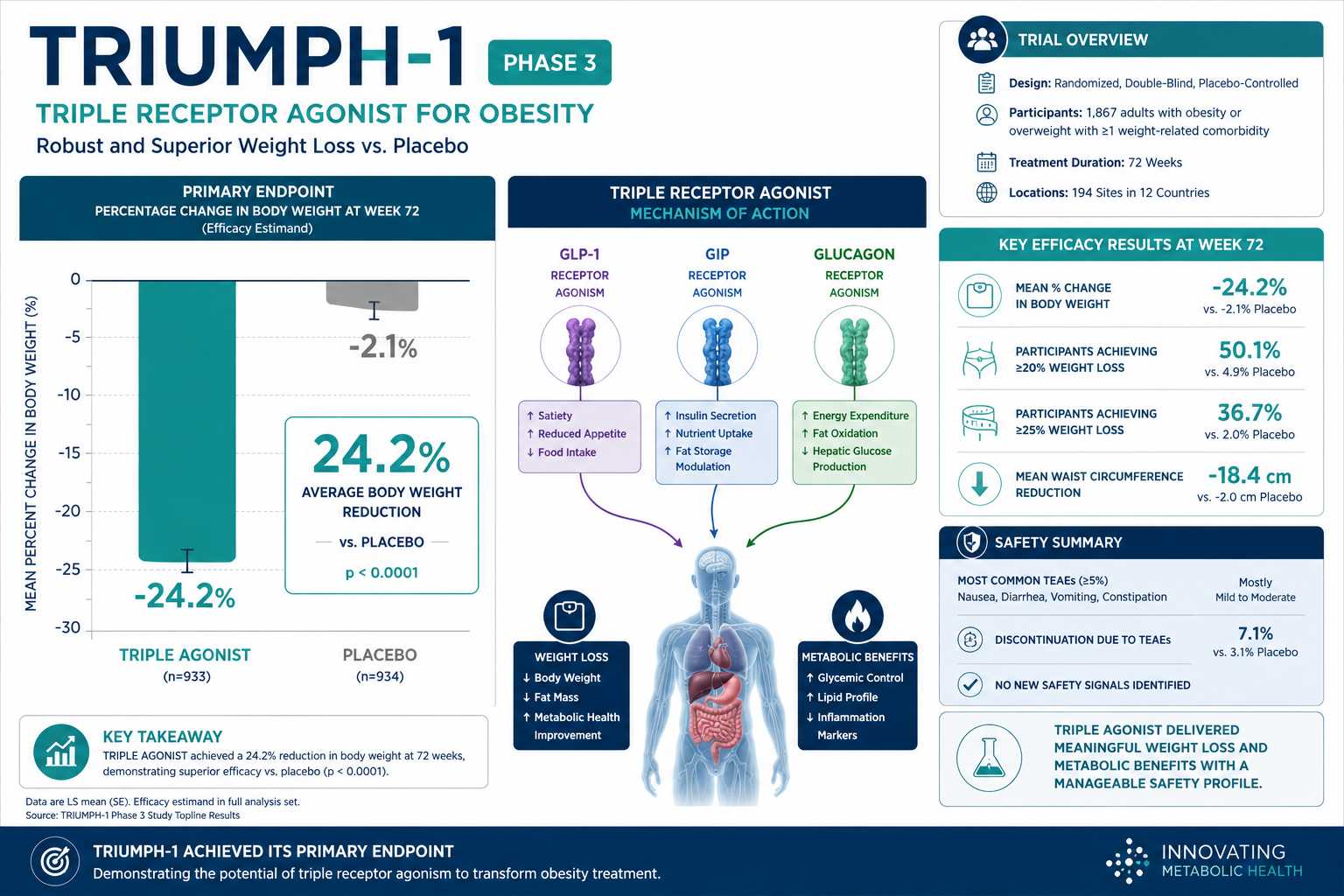
Participants in the TRIUMPH-1 Phase 3 trial lost an average of 24.2% of their body weight over 48 weeks, a figure that surpasses every previously approved obesity pharmacotherapy on record. That single data point has reshaped how metabolic researchers think about triple receptor agonism and what comes next for the field.

Retatrutide clinical trials, specifically the interpreting of Phase 3 data for future metabolic research directions, represent one of the most significant inflection points in obesity science in 2026. This article breaks down what the data shows, what it means mechanistically, and where researchers should focus next.

Key Takeaways

  • Retatrutide simultaneously activates GLP-1, GIP, and glucagon receptors, producing additive metabolic effects not seen with dual agonists.
  • TRIUMPH-1 Phase 3 data showed up to 24.2% mean body weight reduction at the highest dose, outperforming all approved single and dual agonists.
  • Secondary endpoints included meaningful improvements in cardiometabolic markers, liver fat reduction, and insulin sensitivity.
  • An NDA submission to the FDA is anticipated in late 2026, with regulatory decisions expected to follow.
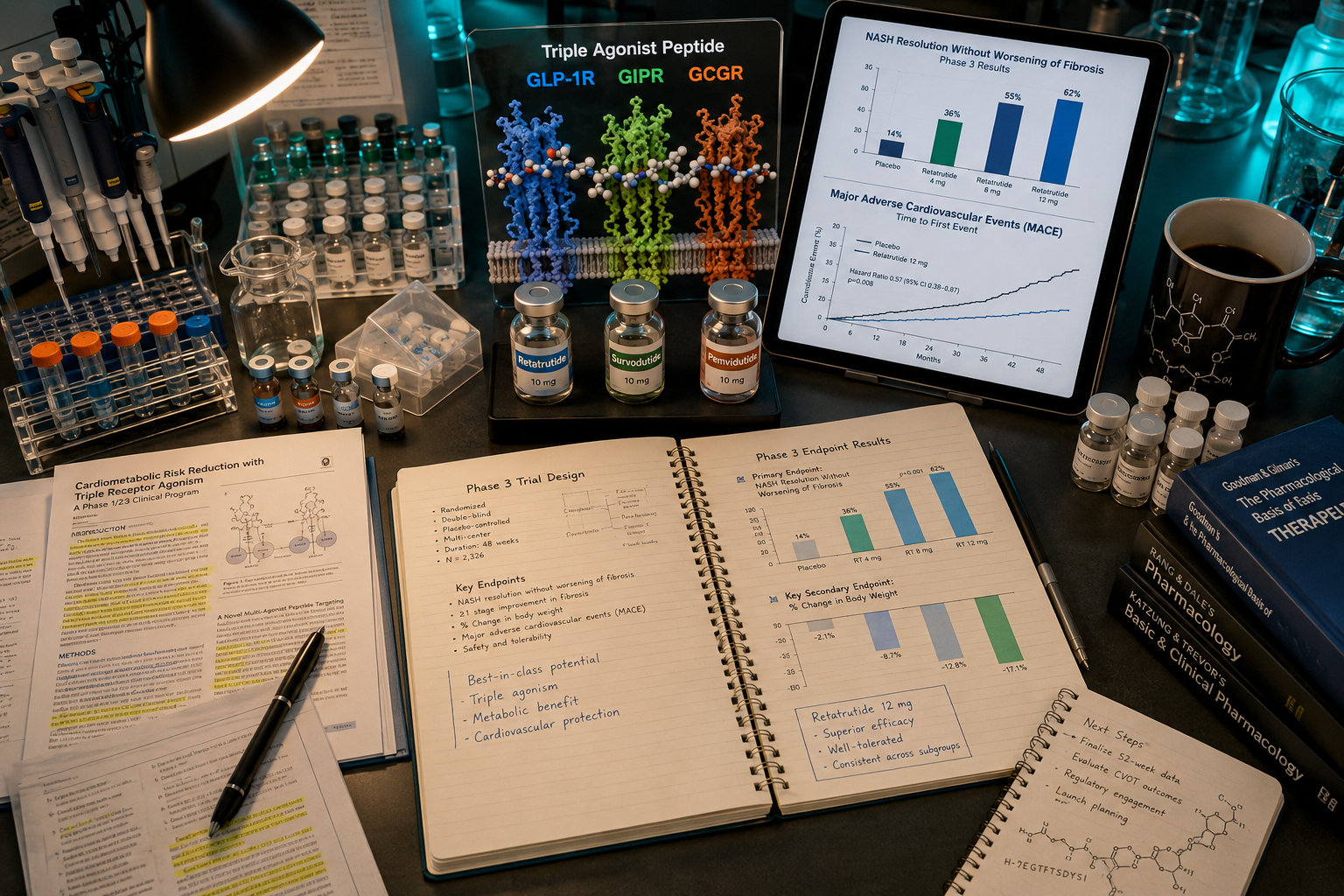
  • Phase 3 findings open multiple new research directions including NASH, cardiovascular outcomes, and combination peptide protocols.

Key Takeaways

Understanding the Triple Agonist Mechanism Behind the Phase 3 Results

Retatrutide is a triple receptor agonist that targets GLP-1 (glucagon-like peptide-1), GIP (glucose-dependent insulinotropic polypeptide), and glucagon receptors simultaneously. This multi-pathway engagement is what separates it from earlier generation compounds.

  • GLP-1 receptor activation reduces appetite and slows gastric emptying
  • GIP receptor activation enhances insulin secretion and may improve adipose tissue metabolism
  • Glucagon receptor activation increases energy expenditure and promotes hepatic fat oxidation

The combination creates a synergistic effect on energy balance that neither pathway achieves alone. Researchers interested in GLP-1 dual receptor agonism research will recognize that adding glucagon receptor activity is the critical differentiator here.

For broader context on how this fits within the evolution of incretin-based therapies, the GLP-1 generations overview provides a useful framework for comparing mechanistic generations.

"The glucagon component may be the key variable that pushes weight loss beyond the ceiling observed with GLP-1/GIP dual agonists."

This mechanistic architecture also explains why secondary endpoints in TRIUMPH-1 showed reductions in hepatic fat content, improvements in fasting glucose, and favorable shifts in lipid panels, outcomes that extend well beyond simple caloric restriction effects.


Understanding the Triple Agonist Mechanism Behind the Phase 3 Results

Key Phase 3 Findings and What They Signal for Metabolic Research

The TRIUMPH-1 trial enrolled adults with obesity (BMI 30 or above) or overweight with at least one weight-related comorbidity. Results across dose groups were consistent and dose-dependent.

Dose Group Mean Weight Reduction Notable Secondary Outcomes
Low dose (4 mg) ~17.5% Improved fasting insulin
Mid dose (8 mg) ~22.1% Reduced liver fat, lower triglycerides
High dose (12 mg) ~24.2% Significant HbA1c reduction, LDL improvement

These findings carry direct implications for retatrutide clinical trials interpreting Phase 3 data for future metabolic research directions in several disease areas:

  1. NASH and hepatic steatosis, liver fat reductions suggest standalone or adjunct NASH trial potential
  2. Type 2 diabetes management, HbA1c improvements position retatrutide as a diabetes candidate independent of weight loss
  3. Cardiovascular risk reduction, lipid and blood pressure improvements warrant dedicated outcomes trials

Researchers exploring complementary metabolic pathways may also find value in reviewing metabolic modulation research lines and the emerging data on MOTS-c and metabolic flexibility as parallel investigative threads.


Key Phase 3 Findings and What They Signal for Metabolic Research

Future Research Directions Informed by Phase 3 Data

The depth of TRIUMPH-1 data creates a clear roadmap for the next generation of metabolic studies. Researchers examining retatrutide clinical trials and interpreting Phase 3 data for future metabolic research directions should prioritize the following areas.

Combination protocol research is an emerging frontier. Whether retatrutide can be paired with agents targeting complementary pathways, such as amylin analogs like cagrilintide, is already under early investigation. The cagrilintide synergy with GLP-1 research explores similar combinatorial logic.

Long-term weight maintenance remains an open question. Phase 3 trials ran to 48 weeks; what happens at years two and three without dose escalation is unknown. Durability studies are a critical next step.

Lean mass preservation is a concern shared across the obesity pharmacotherapy field. Retatrutide's glucagon component theoretically supports energy expenditure without proportional muscle catabolism, but dedicated body composition trials using DEXA endpoints are needed.

Pediatric and adolescent populations represent an underserved research gap. Given the escalating rates of adolescent obesity, age-stratified extension trials are a logical priority.

For researchers interested in how peptide-based metabolic interventions are evolving more broadly, the latest peptide research updates and GLP-3 triple agonist research offer adjacent context worth reviewing.


Conclusion

The Phase 3 data from retatrutide clinical trials has fundamentally shifted the ceiling of what metabolic pharmacotherapy can achieve. Weight reductions exceeding 24%, combined with meaningful improvements in hepatic, glycemic, and cardiovascular markers, provide a strong scientific foundation for the next wave of research.

Actionable next steps for researchers in 2026:

  • Design NASH-specific secondary analysis protocols using existing TRIUMPH-1 biomarker data
  • Prioritize lean mass and body composition endpoints in any follow-on trial design
  • Explore combination peptide protocols pairing retatrutide with amylin or GIP-selective agents
  • Monitor the anticipated NDA submission timeline for regulatory signal on approvable endpoints
  • Review adjacent metabolic peptide research to identify synergistic investigative opportunities

The data is in. The research directions are clear. The question now is how quickly the field moves to answer them.

https://www.puretestedpeptides.com/wp-content/uploads/2026/07/Retatrutide-Clinical-Trials-Interpreting-Phase-3-Data-for-Future-Metabolic-Research-Directions.png 1024 1536 Pure Tested https://www.puretestedpeptides.com/wp-content/uploads/2026/01/buy-peptides-online.jpg Pure Tested2026-07-03 13:03:522026-07-20 15:01:12Retatrutide Clinical Trials: Interpreting Phase 3 Data for Future Metabolic Research Directions
Retatrutide as so‑called “GLP‑3” triple agonist vs. GLP‑1 drugs (latest Phase 3 obesity and MASLD data)

Retatrutide as so‑called “GLP‑3” triple agonist vs. GLP‑1 drugs (latest Phase 3 obesity and MASLD data)

July 3, 2026/0 Comments/by Pure Tested

Phase 3 trial data released in mid-2026 shows that a single injectable peptide can strip away nearly 30% of total body weight, a figure that once belonged exclusively to bariatric surgery. That peptide is retatrutide, and the numbers are forcing a hard reset on how researchers and clinicians think about obesity pharmacology.

Detailed () scientific infographic illustration showing three distinct receptor pathways — GLP-1, GIP, and Glucagon — as

Key Takeaways

  • Retatrutide simultaneously activates GLP-1, GIP, and glucagon receptors, earning the informal label "GLP-3" in research circles.
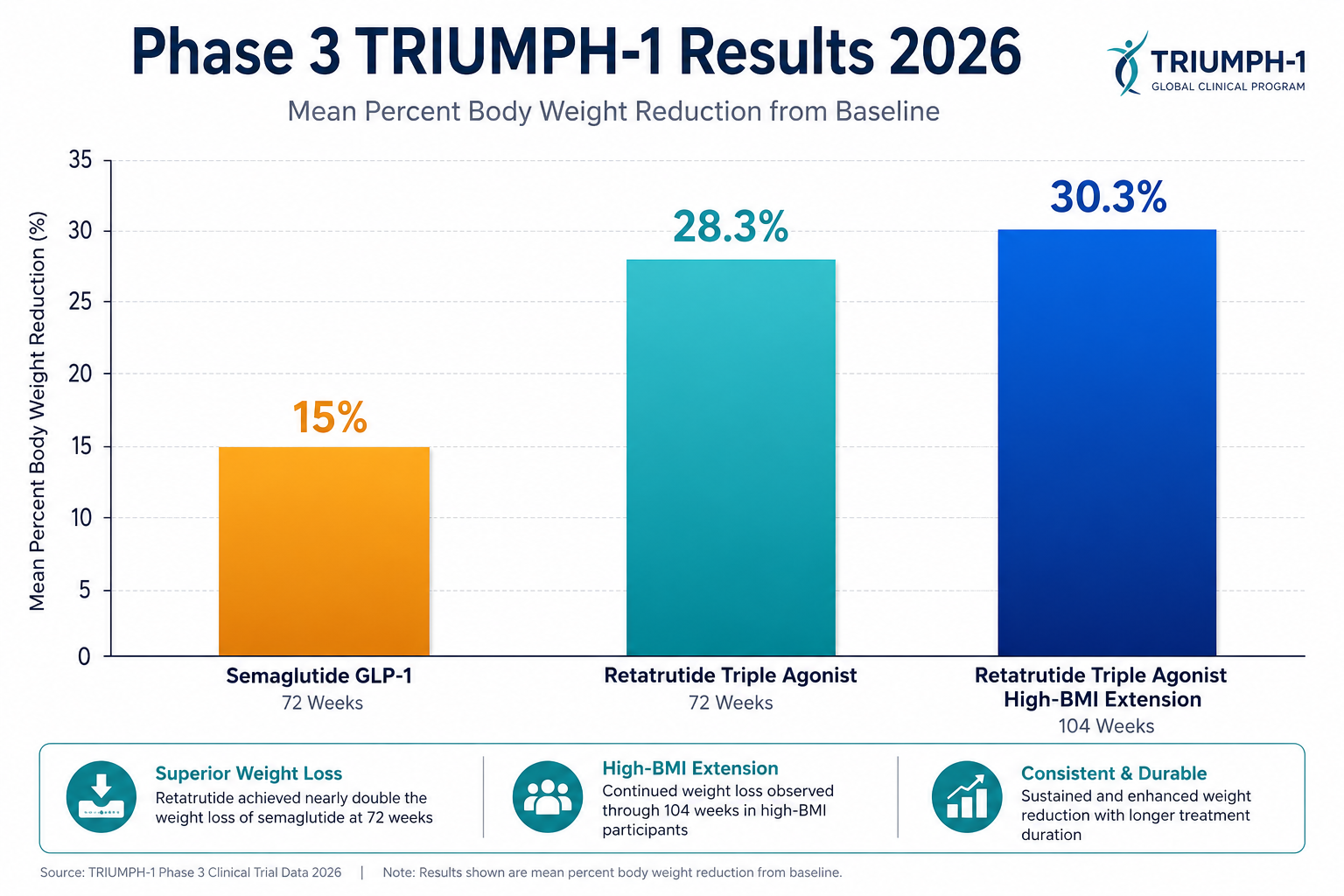
  • TRIUMPH-1 Phase 3 data shows 28.3% average weight loss at 80 weeks with the 12 mg dose, nearly double the results seen with semaglutide.
  • Participants with a BMI of 35 or higher who continued for 104 weeks lost an average of 30.3% of body weight.
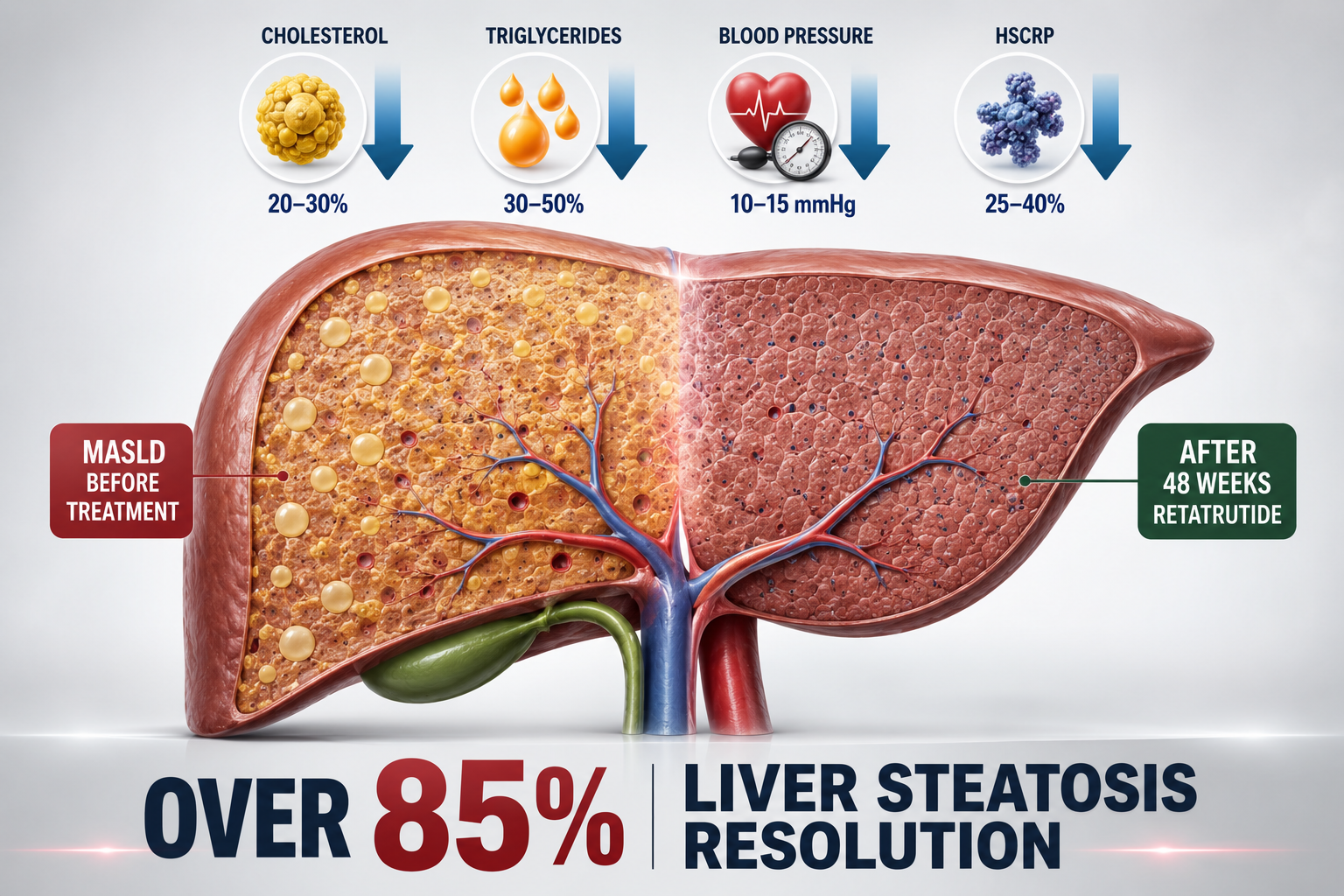
  • Phase 2 MASLD data shows over 85% of participants achieved complete liver steatosis resolution after 48 weeks.
  • An FDA New Drug Application is expected by late 2026 or early 2027.

What Makes Retatrutide a "GLP-3" Triple Agonist

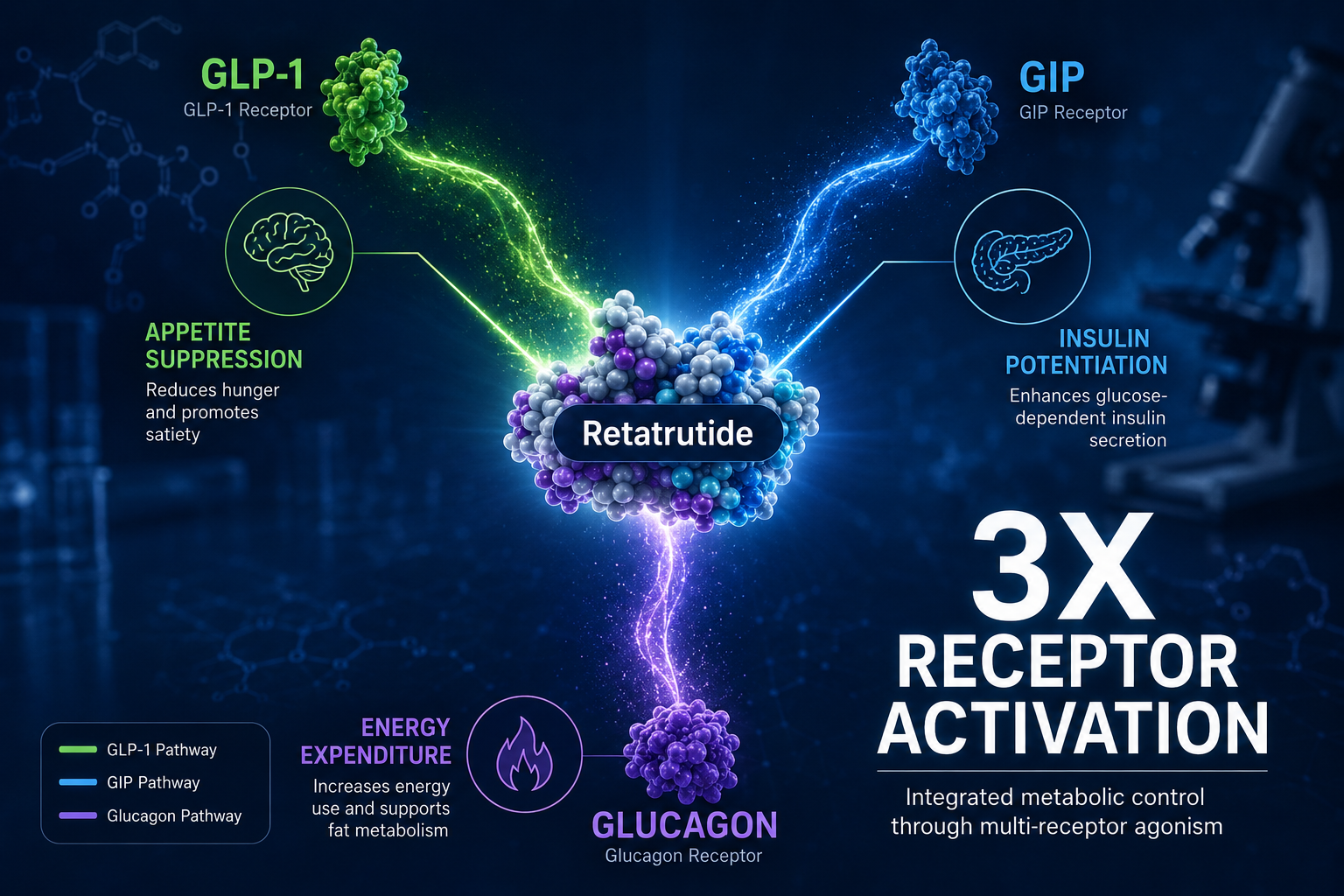
The "GLP-3" label is informal, no third GLP receptor exists, but it captures the core idea neatly. Where standard GLP-1 receptor agonists like semaglutide or liraglutide target a single receptor pathway, retatrutide activates three simultaneously: the glucagon-like peptide-1 (GLP-1) receptor, the glucose-dependent insulinotropic polypeptide (GIP) receptor, and the glucagon receptor.

Each receptor contributes a distinct metabolic effect:

Receptor Primary Effect
GLP-1 Appetite suppression, slowed gastric emptying
GIP Enhanced insulin secretion, fat metabolism support
Glucagon Increased energy expenditure, enhanced fat oxidation

The glucagon receptor component is what separates retatrutide most sharply from dual agonists like tirzepatide. Glucagon receptor activation ramps up thermogenesis and fat burning in ways that GLP-1 alone cannot achieve. For a deeper look at how incretin receptor families interact, the GLP-3 and incretin research themes overview provides useful context, as does this GLP-1 generations overview covering how the drug class has evolved.

Understanding the GIP receptor and its importance is also valuable for grasping why dual and triple agonism consistently outperforms single-receptor approaches.


TRIUMPH-1 Phase 3 Obesity Data: Retatrutide vs. GLP-1 Drugs

TRIUMPH-1 Phase 3 Obesity Data: Retatrutide vs. GLP-1 Drugs

The TRIUMPH-1 trial is the headline result of 2026 for obesity pharmacology. Eli Lilly reported that participants receiving the 12 mg dose of retatrutide lost an average of 28.3% of body weight (roughly 70.3 lbs) over 80 weeks. The distribution of results was equally striking:

  • 45.3% of participants achieved 30% or more weight loss
  • 65.3% reduced their BMI below 30, moving out of the obesity range entirely

In a pre-specified extension for participants with a baseline BMI of 35 or higher who continued treatment for 104 weeks, average weight loss reached 30.3%, equivalent to approximately 85 lbs.

"Retatrutide's 28-30% weight loss figures place it in the same territory as bariatric surgery outcomes, something no oral or injectable drug has previously achieved."

For comparison, semaglutide, currently the most prescribed GLP-1 agonist, produces roughly 15% weight loss in similar populations. Retatrutide's triple agonism roughly doubles that benchmark.

Cardiometabolic improvements were broad and clinically meaningful, including reductions in:

  • Waist circumference
  • Non-HDL cholesterol and triglycerides
  • Systolic blood pressure
  • High-sensitivity C-reactive protein (hsCRP)

Researchers studying metabolic peptides alongside incretin agents may also find AOD-9604 metabolic research relevant as a complementary area of fat metabolism investigation.


MASLD Resolution and Liver Health Data

MASLD Resolution and Liver Health Data

Metabolic dysfunction-associated steatotic liver disease (MASLD) is closely tied to obesity, and retatrutide's Phase 2 data presented at the American Association for the Study of Liver Diseases (AASLD) delivered a landmark finding: over 85% of participants with MASLD and obesity achieved complete resolution of liver steatosis after 48 weeks of treatment.

This is a dramatic outcome. Current standard-of-care options for MASLD are limited, and no drug has previously shown steatosis resolution rates at this scale in a controlled study. The improvements came alongside broader metabolic health gains, reinforcing that retatrutide's mechanism targets the root metabolic dysfunction driving liver fat accumulation, not just body weight.

For researchers interested in mitochondrial and cellular health aspects of metabolic disease, MOTS-c and metabolic stress research offers a complementary perspective on how peptide-based interventions interact with energy metabolism pathways.


Safety Profile and Regulatory Outlook

The adverse event profile of retatrutide is consistent with the broader incretin drug class. The most commonly reported side effects are gastrointestinal: nausea, diarrhea, constipation, and vomiting. One notable finding specific to retatrutide is that 20.9% of participants at the 12 mg dose reported dysesthesia, tingling or burning sensations, though the majority of cases were mild and did not lead to discontinuation.

Eli Lilly plans to submit a New Drug Application (NDA) to the FDA by late 2026 or early 2027, pending completion of additional Phase 3 trials. Those ongoing studies are evaluating retatrutide across broader populations, including people with type 2 diabetes and other metabolic conditions.

Researchers tracking the broader peptide research landscape may also find tesa's role in visceral fat reduction relevant as a separate but related area of metabolic peptide science.


Conclusion

Retatrutide as so-called "GLP-3" triple agonist vs. GLP-1 drugs represents one of the most significant inflection points in obesity pharmacology in decades. The latest Phase 3 obesity and MASLD data confirm that simultaneous activation of GLP-1, GIP, and glucagon receptors produces weight loss and liver fat reduction outcomes that single-receptor drugs cannot match.

Actionable next steps for researchers and clinicians:

  1. Review the full TRIUMPH-1 dataset when published in peer-reviewed form to assess subgroup performance.
  2. Monitor AASLD and upcoming hepatology conference presentations for Phase 3 MASLD data.
  3. Track the FDA NDA submission timeline, expected by late 2026 or early 2027.
  4. Consider how triple agonism compares to emerging peptide combinations in your own research protocols.
  5. Explore the GLP-1 product research tag for research-grade incretin-related peptide options.

The era of surgery-level weight loss from a once-weekly injection is no longer theoretical. It is arriving.

https://www.puretestedpeptides.com/wp-content/uploads/2026/07/Retatrutide-as-so‑called-GLP‑3-triple-agonist-vs.-GLP‑1-drugs-latest-Phase-3-obesity-and-MASLD-data.png 1024 1536 Pure Tested https://www.puretestedpeptides.com/wp-content/uploads/2026/01/buy-peptides-online.jpg Pure Tested2026-07-03 13:03:352026-07-20 15:01:13Retatrutide as so‑called “GLP‑3” triple agonist vs. GLP‑1 drugs (latest Phase 3 obesity and MASLD data)
GLP-3 Retatrutide: Latest Research on Its Impact on Liver Fat Reduction and MASLD Management

GLP-3 Retatrutide: Latest Research on Its Impact on Liver Fat Reduction and MASLD Management

July 3, 2026/0 Comments/by Pure Tested

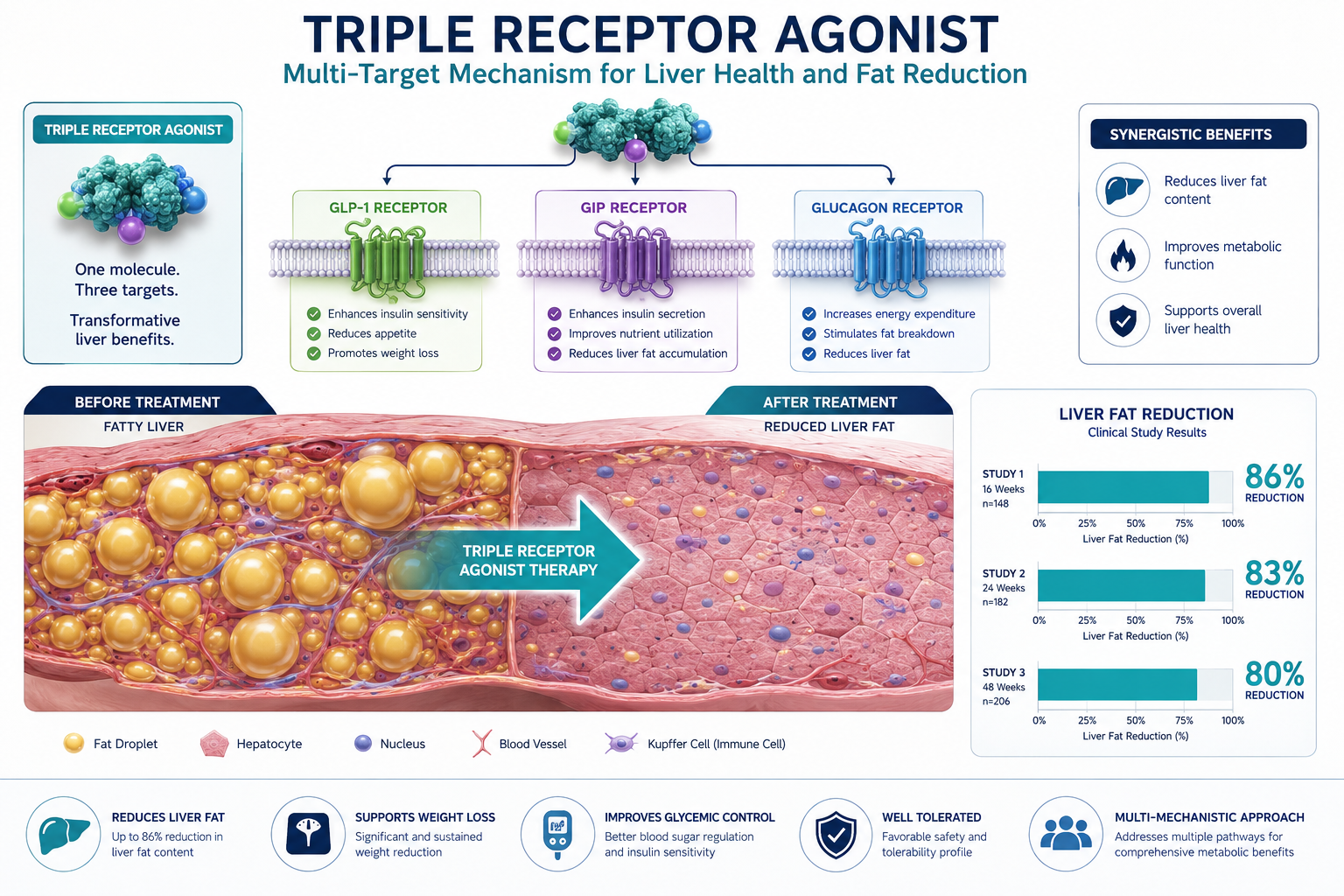
More than 80% of participants with fatty liver disease who received retatrutide in a phase 2 trial had their liver fat completely normalized by week 48, a result researchers described as among the largest liver-fat reductions ever reported in an obesity or MASLD trial. That single data point has reshaped how the research community thinks about triple receptor agonists and metabolic liver disease.

This article examines what the most current evidence says about GLP-3 Retatrutide: Latest Research on Its Impact on Liver Fat Reduction and MASLD Management, who may benefit most, and what questions still need answering.

Key Takeaways

  • Retatrutide is a triple agonist targeting GLP-1, GIP, and glucagon receptors simultaneously.
  • Phase 2 data show mean relative liver fat reductions exceeding 80% at 48 weeks.
  • More than 90% of participants on the 12 mg dose achieved liver fat normalization below the 5% MRI threshold.
  • Weight loss of nearly 24-26% accompanied the liver fat improvements, suggesting dual metabolic benefit.
  • The safety profile mirrors other incretin-based therapies, with no new hepatotoxicity signal identified.

Key Takeaways

What Is Retatrutide and Why Does It Matter for MASLD

Metabolic Dysfunction-Associated Steatotic Liver Disease (MASLD), formerly called NAFLD, affects an estimated 25% of the global adult population. It ranges from simple fat accumulation in liver cells to progressive inflammation, fibrosis, and cirrhosis. Until recently, no pharmacological agent had demonstrated the ability to reliably normalize liver fat across a broad patient population.

Retatrutide changes that conversation. Unlike semaglutide or tirzepatide, which act on one or two receptors, retatrutide simultaneously activates three receptors:

Receptor Primary Role
GLP-1 Appetite suppression, insulin secretion
GIP Energy metabolism, fat storage regulation
Glucagon Hepatic fat oxidation, energy expenditure

The glucagon component is particularly relevant for liver fat. Glucagon receptor activation directly stimulates hepatic fat burning, meaning retatrutide works on the liver through a mechanism that single or dual agonists do not fully replicate. Researchers interested in the broader landscape of GLP-1 peptide research will recognize this as a meaningful mechanistic step forward.


Phase 2 Trial Data: Retatrutide and Liver Fat Reduction

Phase 2 Trial Data: Retatrutide and Liver Fat Reduction

The most compelling evidence comes from a pre-specified MASLD sub-study within the obesity phase 2 trial. Participants with confirmed hepatic steatosis received weekly injections of either 8 mg or 12 mg retatrutide for 48 weeks, with liver fat measured by MRI-PDFF, the gold-standard imaging method.

The headline results:

  • Mean relative liver fat reduction exceeded 80% in both dose groups
  • More than 80% of participants on either dose achieved at least a 70% relative reduction in liver fat
  • Hepatic steatosis resolved in over 85% of participants on 8 mg
  • Over 90% achieved liver fat normalization (below the 5% MRI threshold) on 12 mg

A Virginia Commonwealth University-led analysis of the same sub-study reported that 81.7% relative liver fat reduction occurred with 8 mg and 86% with 12 mg. Average body weight fell by 23.8% and 25.9% respectively, underscoring that retatrutide delivers simultaneous, substantial benefits to both body weight and liver health.

"These are not incremental improvements. Resolving fatty liver in more than 9 out of 10 participants represents a potential paradigm shift in MASLD pharmacotherapy."

For context on how peptide-based approaches compare in metabolic research, the MOTS-c metabolic flexibility research page offers useful background on mitochondrial and metabolic mechanisms.


2026 Research Updates and Remaining Questions

2026 Research Updates and Remaining Questions

A 2026 ENDO meeting presentation reviewing phase 2 data confirmed weight reductions up to 24.2%, HbA1c reductions up to 2.16%, and liver fat normalization in up to 86% of MASLD participants. The safety profile remained consistent with other incretin-based therapies, primarily dose-dependent gastrointestinal side effects, with no new hepatotoxicity signal.

However, critical gaps remain:

  • No liver biopsy data, histological confirmation of fibrosis regression is still pending from phase 3
  • Long-term durability beyond 48 weeks has not been established
  • Head-to-head comparisons with tirzepatide or semaglutide in MASLD-specific populations are lacking

Phase 3 trials are underway in 2026, and the field is watching closely for histological endpoints that would confirm whether the dramatic MRI improvements translate to reduced fibrosis and cirrhosis risk.

Those following the evolution of retatrutide peptide research will find the upcoming phase 3 data particularly significant. Related metabolic research on compounds like tesa for fat loss and AOD-9604 provides additional context for how peptide science is advancing metabolic health broadly. Researchers also tracking longevity peptide research themes may find retatrutide's hepatic effects relevant to long-term metabolic aging.


Conclusion

The evidence on GLP-3 Retatrutide: Latest Research on Its Impact on Liver Fat Reduction and MASLD Management is, by any measure, striking. Phase 2 data consistently show liver fat normalization rates above 85-90%, weight loss approaching 25%, and a safety profile that does not introduce new hepatic risk. The triple-receptor mechanism, particularly glucagon receptor activation, appears to be the key driver of effects that surpass what single or dual agonists have achieved.

Actionable next steps for researchers and clinicians:

  1. Monitor phase 3 trial readouts for histological fibrosis data, which will determine whether MRI improvements predict long-term liver health outcomes.
  2. Review the GLP-1 Retatrutide product research page for the latest compound specifications and purity standards relevant to preclinical study design.
  3. Consider how retatrutide's metabolic profile compares to other peptides in your research stack by exploring the full peptide catalog.
  4. Stay current with ENDO and EASL 2026 conference updates, where phase 3 interim data are expected to be presented.

The next 12-18 months will determine whether retatrutide becomes the first agent to achieve broad regulatory approval specifically for MASLD, a milestone the field has been working toward for decades.

https://www.puretestedpeptides.com/wp-content/uploads/2026/07/GLP-3-Retatrutide-Latest-Research-on-Its-Impact-on-Liver-Fat-Reduction-and-MASLD-Management.png 1024 1536 Pure Tested https://www.puretestedpeptides.com/wp-content/uploads/2026/01/buy-peptides-online.jpg Pure Tested2026-07-03 13:03:342026-07-20 15:01:13GLP-3 Retatrutide: Latest Research on Its Impact on Liver Fat Reduction and MASLD Management
GLP-2 Tirz Peptide: Advancing Gut Health Research through Intestinal Barrier Function Modulation

GLP-2 Tirz Peptide: Advancing Gut Health Research through Intestinal Barrier Function Modulation

July 2, 2026/0 Comments/by Pure Tested

Roughly 70% of the immune system resides in the gut — yet the molecular gatekeepers that maintain that boundary remain an active frontier of peptide research. Among the most compelling candidates under investigation in 2026 is the GLP-2 Tirz peptide, a compound drawing serious attention for its role in intestinal barrier function modulation and broader gut health applications.

Detailed () scientific illustration showing a magnified intestinal epithelial barrier with tight junction proteins ZO-1 and

Key Takeaways

  • GLP-2 Tirz peptide research centers on its ability to strengthen the intestinal epithelial barrier through both transcellular and paracellular pathways.
  • The insulin-like growth factor-1 receptor (IGF-1R) appears essential for mediating GLP-2's barrier-protective effects in preclinical models.
  • GLP-2 upregulates key tight junction proteins, including ZO-1 and occludin, which are critical for gut wall integrity.
  • Preclinical data suggest GLP-2 may counteract age-related intestinal atrophy and inflammation-driven permeability increases.
  • A long-acting GLP-2 analog is already approved for short bowel syndrome, providing a clinical foundation for expanded research.

What Is GLP-2 and Why Does It Matter for Gut Research

Glucagon-like peptide-2 (GLP-2) is an intestinally derived hormone released from L-cells in the gut lining following nutrient intake. It plays a multi-functional role: promoting intestinal mucosal growth, enhancing nutrient absorption, supporting blood flow, and — most critically for researchers — reducing gut permeability.

The GLP-2 Tirz peptide framework builds on this foundation by exploring how dual or combined receptor agonism (as seen in tirzepatide-class molecules) may amplify these intestinotrophic effects. Researchers are particularly interested in how such compounds interact with the gut wall at the cellular level, given the link between barrier dysfunction and systemic inflammatory conditions.

For context on how GLP-class peptides have evolved across research generations, the GLP-1 peptide generational research overview provides useful background on the incretin family's expanding scope.


Intestinal Barrier Function Modulation: The Core Research Mechanism

The intestinal barrier is not a single wall — it is a dynamic, layered system of epithelial cells held together by tight junction proteins. When this barrier weakens, harmful substances cross into systemic circulation, a phenomenon often called "leaky gut."

GLP-2 Tirz peptide research on intestinal barrier function modulation has identified several key mechanisms:

Mechanism Research Finding
Paracellular pathway Reduced flux of sodium and tracer molecules (Cr-EDTA, HRP)
Tight junction upregulation Increased ZO-1 and occludin expression in aged models
IGF-1R dependency Barrier effects absent in IE-IGF-1R-null mouse models
TNF-alpha attenuation GLP-2 blunted inflammatory barrier disruption in Caco-2 cell studies

The IGF-1R finding is particularly significant. Research in mice demonstrated that GLP-2 treatment reduced intestinal permeability and increased jejunal resistance — but only when the intestinal epithelial IGF-1 receptor was intact. This positions IE-IGF-1R as a required mediator, not merely a bystander.

"GLP-2's barrier-protective effects are not simply structural — they appear to be receptor-dependent, opening precise molecular targets for future therapeutic design."

In aged rat models, GLP-2 administration reversed age-related mucosal atrophy and restored villi structure, while simultaneously upregulating tight junction protein expression. This has implications for research into age-associated gut dysfunction.

Researchers exploring complementary barrier and mucosal support pathways may also find value in reviewing LL-37 innate research themes, given LL-37's known role in epithelial defense and mucosal immunity.

Intestinal Barrier Function Modulation: The Core Research Mechanism


Expanding Applications: GLP-2 Tirz Peptide Beyond the Gut Wall

The research scope for GLP-2 Tirz peptide advancing gut health research extends well beyond tight junction biology. Several additional areas are under active investigation:

Lipid metabolism: GLP-2 administration in human subjects triggered the release of chylomicrons containing stored apoB-48 and lipids, transiently elevating triglyceride-rich lipoprotein levels. This suggests GLP-2 participates in postprandial lipid handling — a finding with implications for metabolic research.

Inflammatory bowel conditions: Preclinical models of enteritis and colitis showed that GLP-2 reduced mucosal damage and accelerated repair. These findings support interest in GLP-2 analogs for conditions involving compromised intestinal integrity.

Short bowel syndrome: A long-acting GLP-2 analog (teduglutide) is already FDA-approved for this indication, establishing a clinical proof-of-concept that informs next-generation peptide design.

For researchers examining metabolic modulation alongside gut health, GLP-3 Reta incretin research themes and cagrilintide synergy with GLP-1 offer relevant parallel frameworks. Additionally, those studying systemic metabolic pathways may benefit from SLU-PP-332 metabolic modulation research themes as a complementary reference.

Researchers interested in peptide delivery formats should also explore nasal spray peptide delivery options as an alternative administration route being studied for incretin-class compounds.

Expanding Applications: GLP-2 Tirz Peptide Beyond the Gut Wall


Conclusion

The research trajectory of GLP-2 Tirz peptide in 2026 is defined by precision: receptor-specific mechanisms, measurable barrier outcomes, and translatable preclinical data. For researchers focused on gut health, intestinal permeability, or mucosal biology, this peptide class represents one of the most mechanistically grounded areas of current investigation.

Actionable next steps for researchers:

  • Review the IGF-1R dependency literature to understand the signaling cascade before designing intervention protocols.
  • Examine tight junction protein expression (ZO-1, occludin) as measurable biomarkers in barrier function studies.
  • Explore the generations of GLP-1 differences to contextualize GLP-2 Tirz within the broader incretin research landscape.
  • Consider aged animal models as a relevant context for studying GLP-2's restorative potential on mucosal architecture.
  • Browse the full peptide research catalog to identify complementary compounds for multi-target gut health research designs.
https://www.puretestedpeptides.com/wp-content/uploads/2026/07/GLP-2-Tirz-Peptide-Advancing-Gut-Health-Research-through-Intestinal-Barrier-Function-Modulation.png 1024 1536 Pure Tested https://www.puretestedpeptides.com/wp-content/uploads/2026/01/buy-peptides-online.jpg Pure Tested2026-07-02 13:08:112026-07-20 15:01:14GLP-2 Tirz Peptide: Advancing Gut Health Research through Intestinal Barrier Function Modulation
Page 50 of 81«‹4849505152›»
×

Helpful Links

  • My account
  • Cart
  • Checkout
  • Refund and Returns Policy
  • Privacy Policy
  • SMS Privacy Policy
  • Login
  • My Account
  • Logout

USA Made Lab Tested Peptides

All products are sold for research, laboratory, or analytical purposes only, and are not for human consumption


Pure Tested Peptides is a chemical supplier. Pure Tested Peptides is not a compounding / chemical compounding facility as defined under 503A of the Federal Food, Drug, and Cosmetic act. Pure Tested Peptides is not an outsourcing facility as defined under 503B of the Federal Food, Drug, and Cosmetic act.

The statements made within this website have not been evaluated by the US Food and Drug Administration. The products we offer are not intended to diagnose, treat, cure or prevent any disease.

Human/Animal Consumption Prohibited. Laboratory/In-Vitro Experimental Use Only

Scroll to top Scroll to top Scroll to top