

Retatrutide Research and Blood-Pressure Medications: Designing Controls for Amlodipine, Metoprolol, Losartan, and Lisinopril
More than 70% of adults with obesity also carry a diagnosis of hypertension, making antihypertensive polypharmacy the statistical norm in any retatrutide clinical trial cohort. That single overlap creates a layered confounding problem: four drug classes, calcium channel blockers, beta blockers, angiotensin receptor blockers, and ACE inhibitors, each manipulate the same physiological axes that retatrutide itself perturbs. Researchers who fail to account for concurrent use of amlodipine, metoprolol, losartan, and lisinopril risk misattributing drug-class effects and producing endpoints that cannot replicate. Retatrutide research and blood-pressure medications: designing controls for amlodipine, metoprolol, losartan, and lisinopril is therefore not a secondary concern, it is a foundational methodological requirement.
Key Takeaways
- Retatrutide independently lowers systolic blood pressure, creating overlap with antihypertensive drug effects that must be statistically separated.
- Amlodipine, metoprolol, losartan, and lisinopril each distort a different physiological axis, vascular tone, heart rate, renin-angiotensin signaling, and fluid status, relevant to incretin-peptide endpoints.
- A pre-specified medication-control matrix, stratified by drug class, is essential before randomization in Phase 3 basket designs.
- Operational hypotension monitoring protocols must be embedded into any trial combining retatrutide with multiple antihypertensive agents.
- Analytic covariate adjustment alone is insufficient; background BP therapy must be controlled at the design stage.
Why Retatrutide's Cardiovascular Footprint Complicates Antihypertensive Controls
Retatrutide is a triple agonist at GLP-1, GIP, and glucagon receptors. In the TRIUMPH-1 obesity trial, participants achieved mean body-weight reductions exceeding 24% over 48 weeks, results that exceeded tirzepatide benchmarks and drew immediate cardiovascular attention. Weight loss of that magnitude predictably reduces systolic blood pressure through multiple downstream mechanisms: lower cardiac output demand, improved arterial compliance, reduced sympathetic tone, and natriuresis from fat-mass loss.
The problem is that each of those mechanisms shares a pathway with one or more of the four antihypertensive classes most prevalent in obese, hypertensive patients.
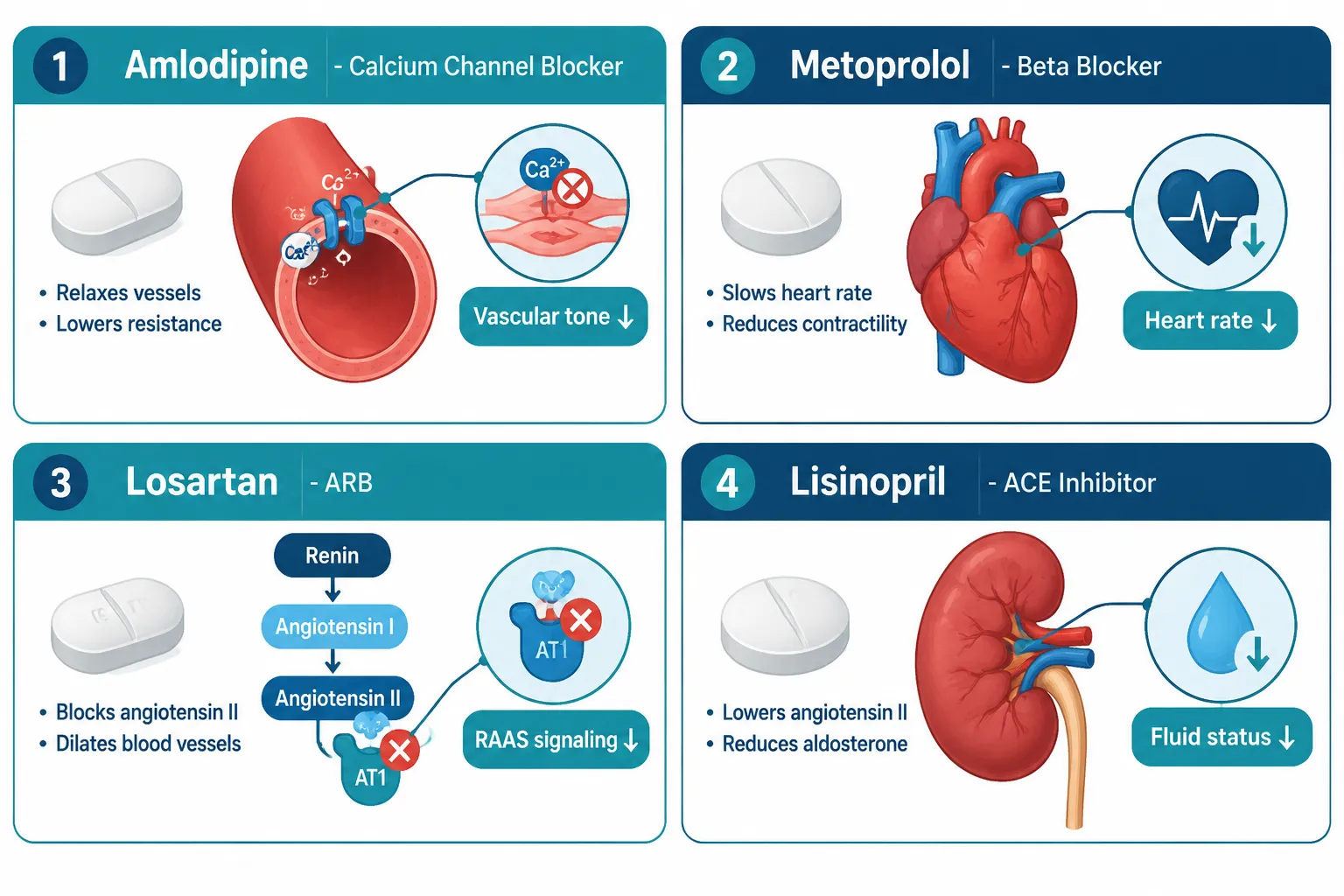
The medication-control matrix below maps the collision points:
| Drug | Class | Primary Axis | Retatrutide Overlap Risk |
|---|---|---|---|
| Amlodipine | CCB | Vascular tone | High, both reduce peripheral resistance |
| Metoprolol | Beta blocker | Heart rate / cardiac output | Moderate, blunts GLP-1-mediated tachycardia signal |
| Losartan | ARB | Renin-angiotensin signaling | High, glucagon agonism interacts with RAAS |
| Lisinopril | ACE inhibitor | Fluid status / bradykinin | Moderate-High, natriuretic effects compound |
GLP-1 receptor activation has well-documented vasodilatory and natriuretic properties. Adding glucagon agonism, retatrutide's distinguishing feature relative to semaglutide or tirzepatide, amplifies renin suppression, which directly collides with the mechanism of both losartan and lisinopril. Researchers sourcing material for these protocols can review GLP-3 triple agonist research planning and catalog navigation for context on how triple-agonist scaffolds are characterized ahead of controlled trials.
Designing the Control Strategy: A Drug-Class-by-Drug-Class Framework
Effective control strategy for retatrutide research and blood-pressure medications, designing controls for amlodipine, metoprolol, losartan, and lisinopril, requires intervention at three levels: study design, randomization stratification, and statistical analysis.
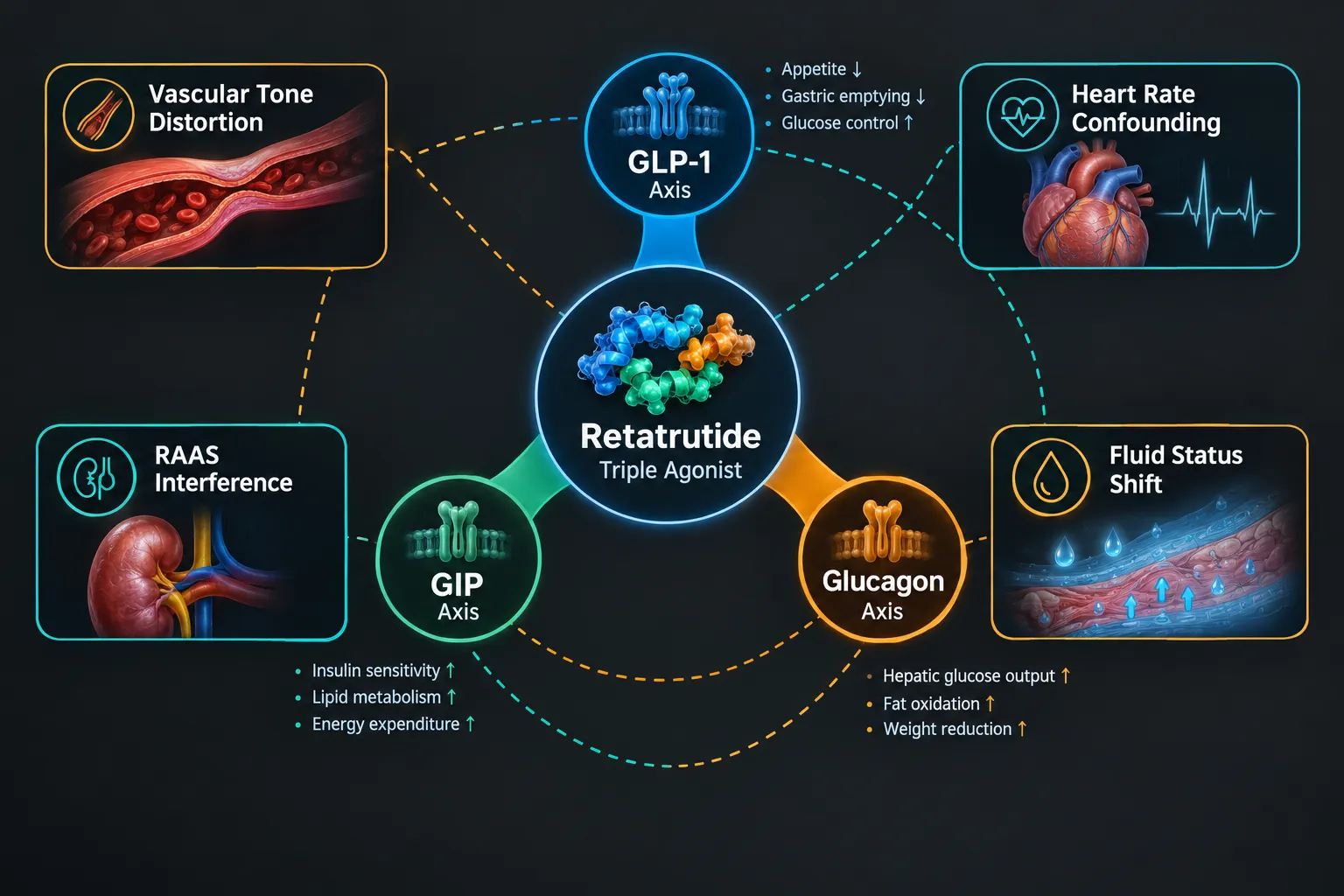
Design-Level Controls
Stratified randomization is the highest-value lever. Before enrollment, participants should be classified by background antihypertensive regimen:
- Stratum A: No BP medication
- Stratum B: Single agent (any class)
- Stratum C: Dual therapy including a RAAS agent (losartan or lisinopril)
- Stratum D: Triple therapy or amlodipine plus RAAS combination
This prevents imbalanced distribution of high-overlap regimens across treatment arms. The Phase 3 TRANSCEND-T2D-1 diabetes trial highlighted cardiometabolic endpoints as primary outcomes, reinforcing the need for prospective BP-medication stratification rather than retrospective covariate adjustment.
"Retrospective covariate adjustment captures association but cannot recover the randomization balance that pre-stratification provides. For blood-pressure endpoints in retatrutide trials, design-stage control is non-negotiable."
Randomization and Analytic Controls
Pre-specified analytic models should include:
- Background BP drug class as a fixed effect
- Baseline systolic blood pressure as a continuous covariate
- Number of antihypertensive agents as an ordinal covariate
- Interaction terms for retatrutide dose × RAAS-agent use
An interaction term between retatrutide dose and concurrent RAAS blockade is especially critical. Glucagon receptor agonism reduces angiotensin II-mediated vasoconstriction independently; when layered over losartan or lisinopril, the combined systolic reduction may exceed 15-20 mmHg in high-risk participants, a magnitude that becomes a safety signal rather than an efficacy finding.
Researchers reviewing SS-31 mechanism and research context will note parallels in how mitochondrially targeted peptides also require careful cardiovascular covariate control, a reminder that this challenge extends across the incretin and peptide research landscape.
For teams sourcing research-grade material, RETA 20mg for sale and GLP-3 RETA 10mg, 99% pure, third-party tested represent catalog options with documented purity specifications relevant to preclinical control design.
Operational Safeguards Against Compounded Hypotension
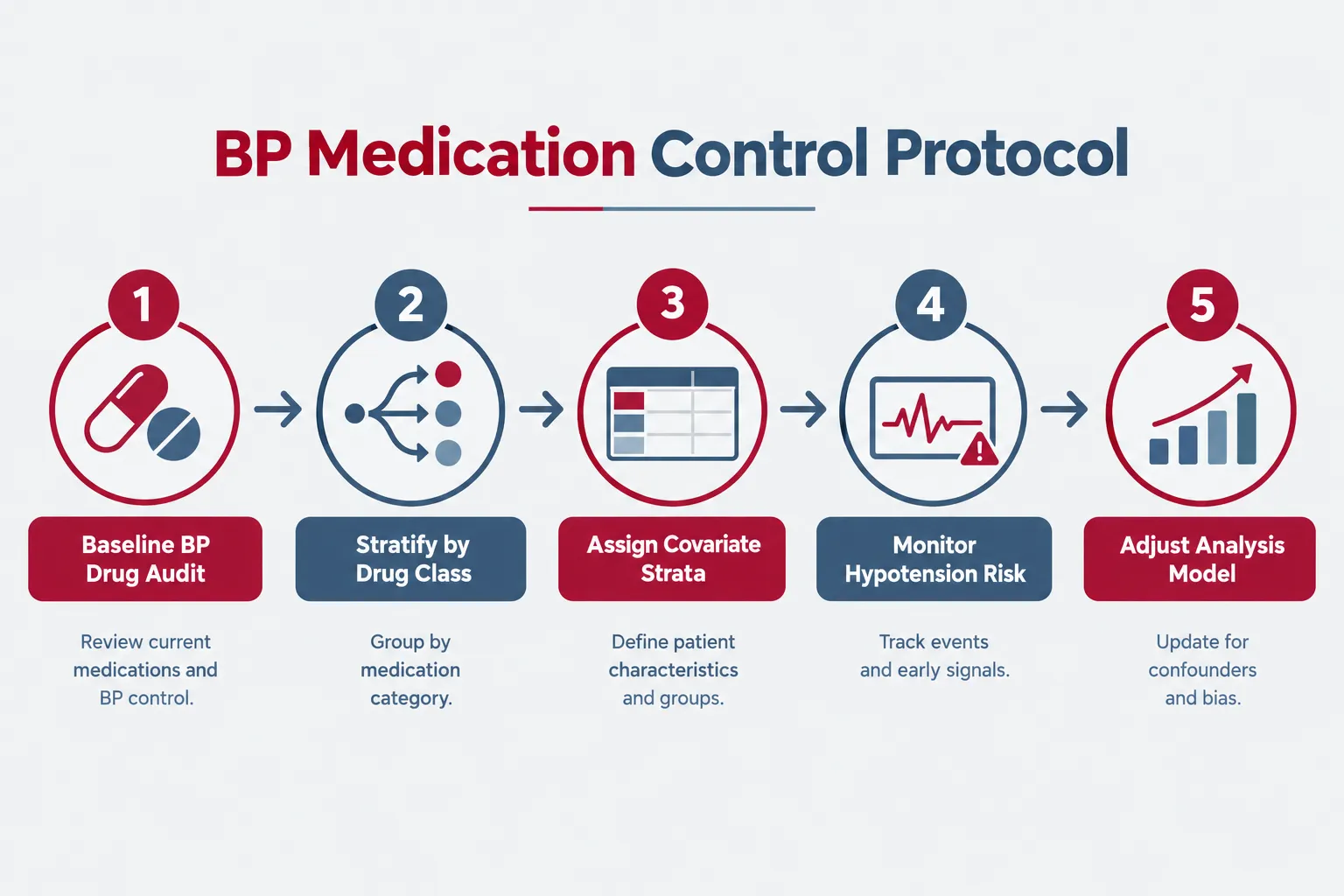
The third pillar of retatrutide research and blood-pressure medications: designing controls for amlodipine, metoprolol, losartan, and lisinopril is operational, the real-time monitoring architecture embedded in trial procedures.
Retatrutide's safety profile through Phase 2 showed no prominent BP-related adverse events at standard doses. However, that data emerged from populations that were not universally on triple antihypertensive therapy. Basket-design Phase 3 programs deliberately enroll high-risk cardiovascular populations, populations where polypharmacy is the rule.
Key operational safeguards include:
- Mandatory seated and standing BP measurement at every visit to detect orthostatic drops, especially when amlodipine (a potent peripheral vasodilator) is co-prescribed.
- Metoprolol-specific heart rate floor monitoring, because beta blockade masks the compensatory tachycardia that would otherwise signal hypotension onset.
- Dose-reduction decision trees for participants on dual RAAS blockade (losartan plus lisinopril combinations, though rare, do appear in real-world cohorts).
- Electrolyte surveillance panels at baseline and weeks 4, 12, and 24 when lisinopril or losartan is present, given retatrutide's natriuretic properties.
Metoprolol deserves specific attention. Beta-1 blockade suppresses the reflex tachycardia that normally warns both patient and clinician of falling perfusion pressure. In retatrutide trials, this means heart rate cannot serve as a hypotension early-warning indicator for participants on metoprolol. Protocols must substitute automated blood pressure trending and symptom-based triggers.
Teams building these frameworks may also find relevant control-design parallels in PT-141 peptide research context, Q&A, and controls, where receptor-specific background medications similarly alter primary endpoints.
Additional catalog resources for trial planning include buy RETA peptide and the GLP-3 RETA 20mg GSF format for researchers working across dosing ranges.
Conclusion
Retatrutide's triple-agonist mechanism produces meaningful, independent blood-pressure reduction, a genuine therapeutic signal that becomes a methodological liability when study participants arrive on amlodipine, metoprolol, losartan, lisinopril, or combinations thereof. The medication-control matrix presented here maps four distinct physiological axes, vascular tone, heart rate, renin-angiotensin signaling, and fluid status, each capable of distorting incretin-peptide endpoints if left uncontrolled.
Actionable next steps for research teams:
- Audit enrollment databases for antihypertensive prevalence before finalizing stratification variables.
- Pre-specify drug-class strata in randomization algorithms, not solely in statistical analysis plans.
- Embed orthostatic BP measurement and heart-rate floor monitoring in all visit procedures.
- Include interaction terms for RAAS-agent use in primary and sensitivity models.
- Plan for dose-reduction decision trees that account for compounded vasodilation from amlodipine plus retatrutide co-exposure.
As Phase 3 data mature and cardiovascular outcomes trials expand, regulatory guidance on antihypertensive co-medication controls for incretin-class agents is expected to become more prescriptive. Research teams that build these controls into their designs now will be best positioned to produce replicable, interpretable blood-pressure endpoints.


Leave a Reply
Want to join the discussion?Feel free to contribute!