Complement-Dependent Cytotoxicity: What Peptide Researchers Need to Know About Immune Assays and Safety
Roughly 30% of peptide drug candidates that fail in early preclinical screening do so because of unanticipated immune activation, not poor receptor binding. For labs working with compounds like BPC-157, GHK-Cu, or GLP-class peptides, understanding complement-dependent cytotoxicity (CDC) is no longer optional background knowledge. It is a core safety competency. This guide on complement-dependent cytotoxicity: what peptide researchers need to know about immune assays and safety covers the assay fundamentals, immunogenicity risk factors, and practical lab protocols that matter most in 2026.
Key Takeaways
- CDC is a serum-mediated immune mechanism that can destroy cells coated with antibodies, and certain peptide structures can trigger or modulate this pathway.
- Peptide length, charge, and aggregation state are the primary structural variables that influence complement activation risk.
- A well-designed CDC assay requires fresh complement source, validated controls, and a consistent readout method.
- Heat-inactivated serum is the standard negative control; omitting it is one of the most common protocol errors in peptide labs.
- Emerging peptide-based complement inhibitors are reshaping how researchers think about CDC modulation as a therapeutic strategy.
How Complement-Dependent Cytotoxicity Works
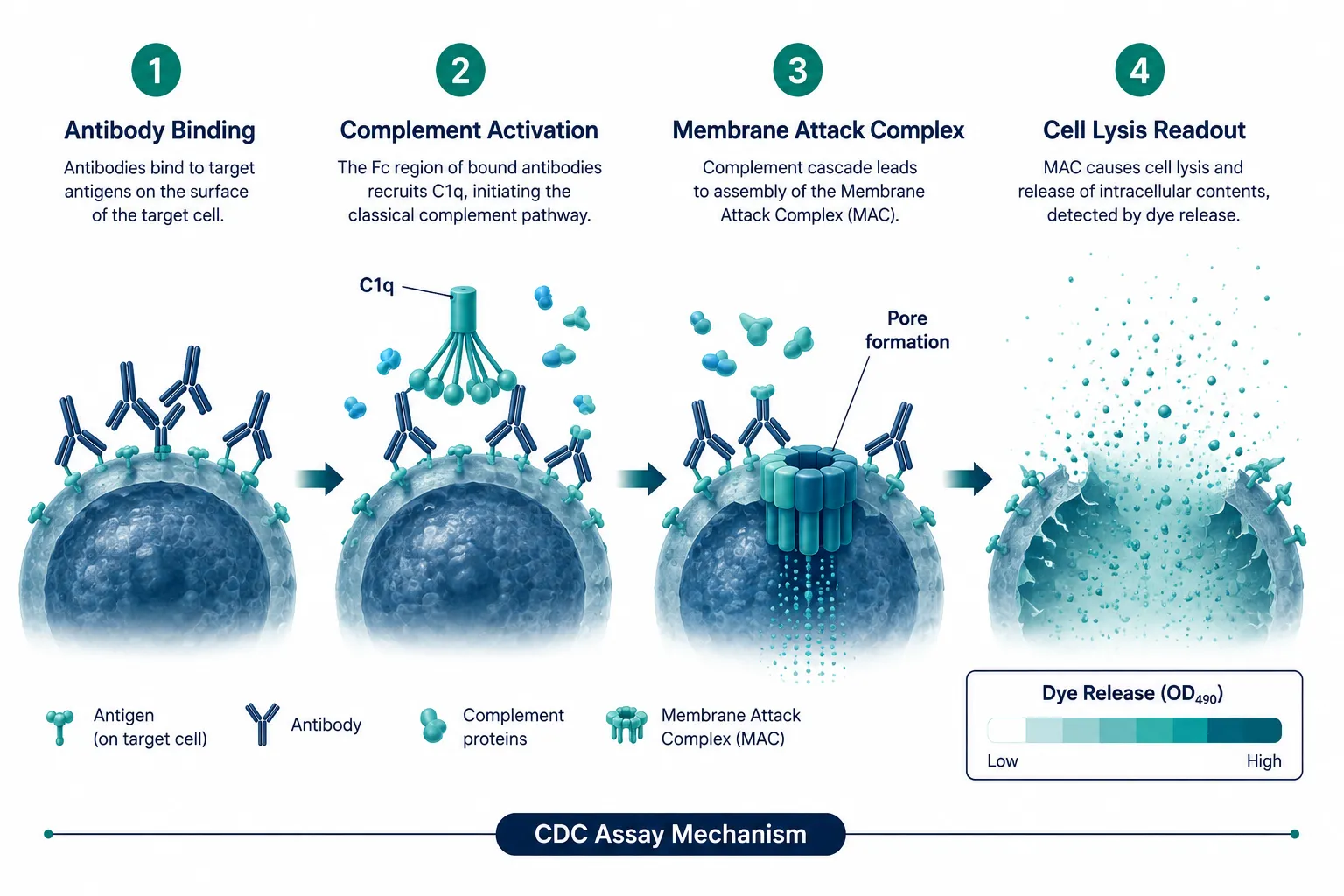
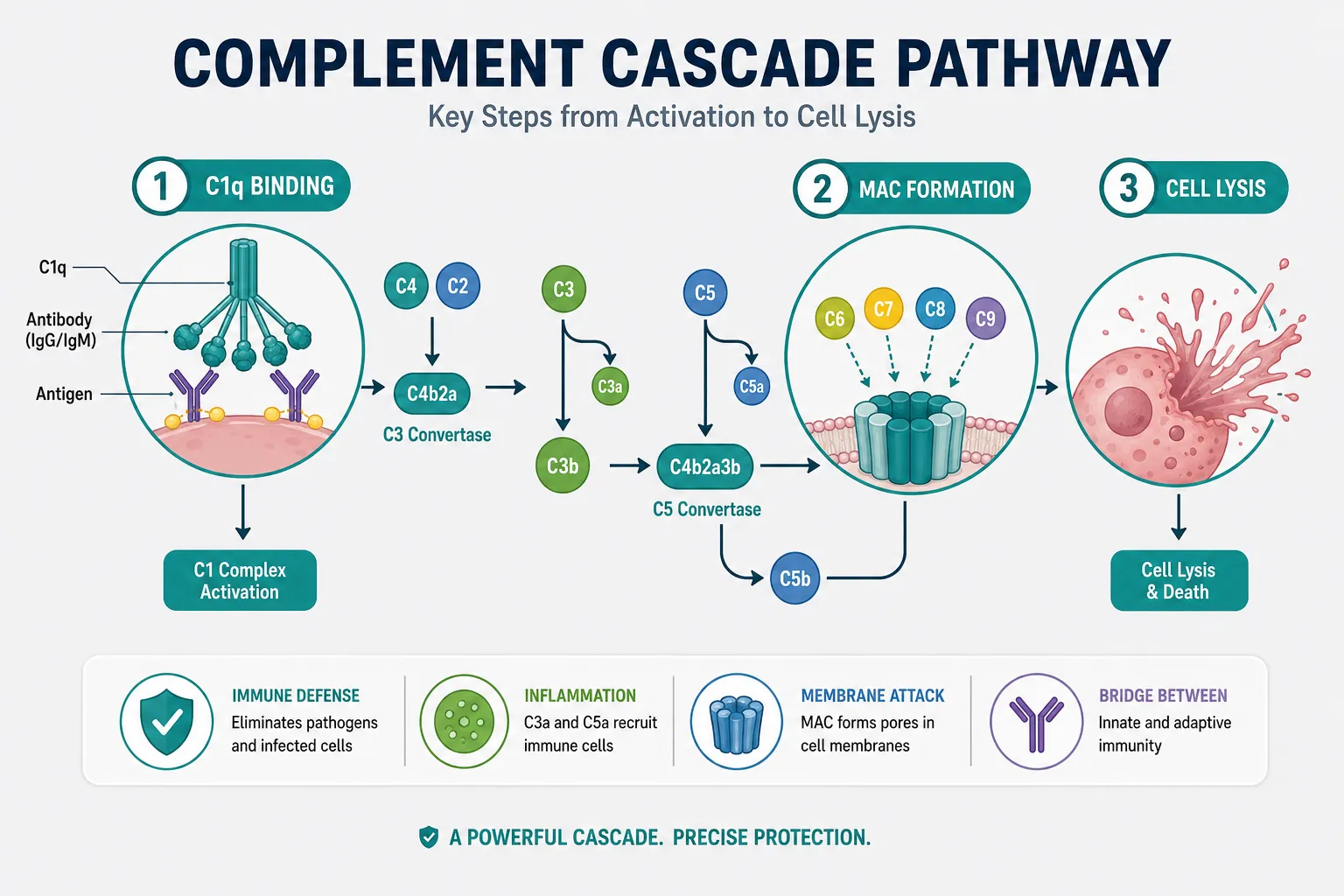
The complement system is a cascade of plasma proteins that amplifies immune responses. In CDC, the sequence begins when antibodies bind to a target cell surface. This antibody coating recruits the C1q protein, which triggers a chain reaction through the classical pathway. The cascade culminates in the formation of the membrane attack complex (MAC), a pore-like structure that punctures the cell membrane and causes lysis.
Three pathways can initiate complement activation:
- Classical pathway, triggered by antigen-antibody complexes (most relevant to CDC assays)
- Lectin pathway, activated by carbohydrate patterns on cell surfaces
- Alternative pathway, spontaneous, low-level activation amplified by foreign surfaces
For peptide researchers, the classical pathway is the primary concern. A peptide that elicits even a modest antibody response in a preclinical model can become a CDC trigger if those antibodies bind with sufficient density.
"The complement system does not distinguish between a pathogen and a therapeutic peptide, it responds to the antibody signal, not the molecule itself."
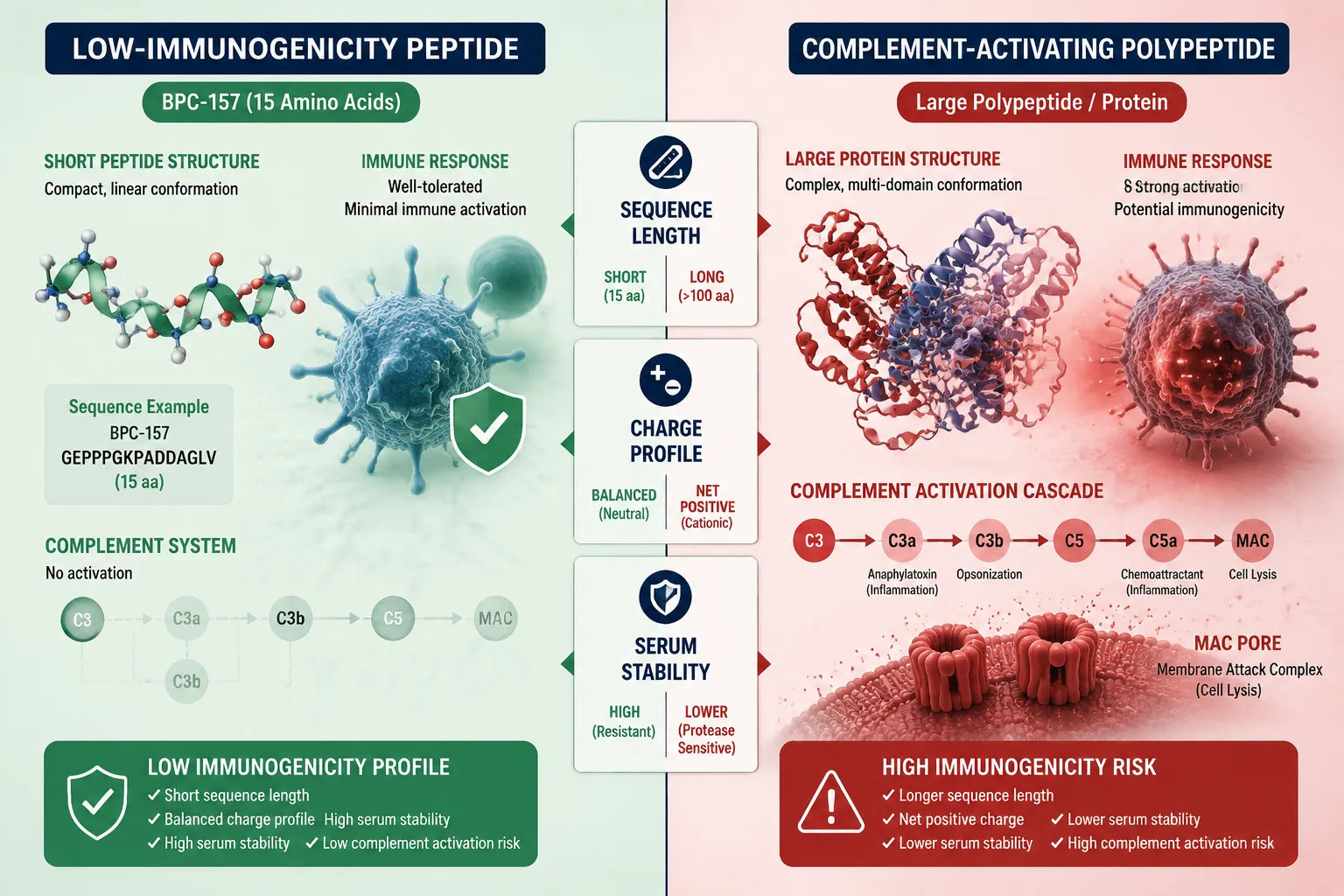
Why peptide structure matters: Short peptides under 10 amino acids rarely activate complement directly. However, longer polypeptides, cyclic structures, and aggregated peptide assemblies can interact with complement proteins non-specifically. Researchers exploring cyclic peptides should treat complement screening as a standard preclinical step, not an afterthought.
Complement-Dependent Cytotoxicity: What Peptide Researchers Need to Know About Immune Assays and Safety, Assay Design
A standard CDC assay measures the percentage of target cells lysed when exposed to antibody-coated cells and a complement source. The core components are:
| Component | Standard Specification |
|---|---|
| Target cells | Relevant cell line expressing the antigen |
| Antibody | Peptide-specific IgG or IgM at defined concentration |
| Complement source | Fresh rabbit or human serum (not heat-inactivated) |
| Serum concentration | Typically 10-25% v/v final |
| Incubation | 37°C, 60-120 minutes |
| Readout | LDH release, propidium iodide uptake, or luminescence |
Complement source selection is critical. Rabbit serum is the most widely used source because it produces robust CDC activity and is commercially reproducible. Human serum introduces donor variability. Regardless of source, serum must be used fresh or stored at -80°C in single-use aliquots. Freeze-thaw cycles degrade complement activity rapidly.
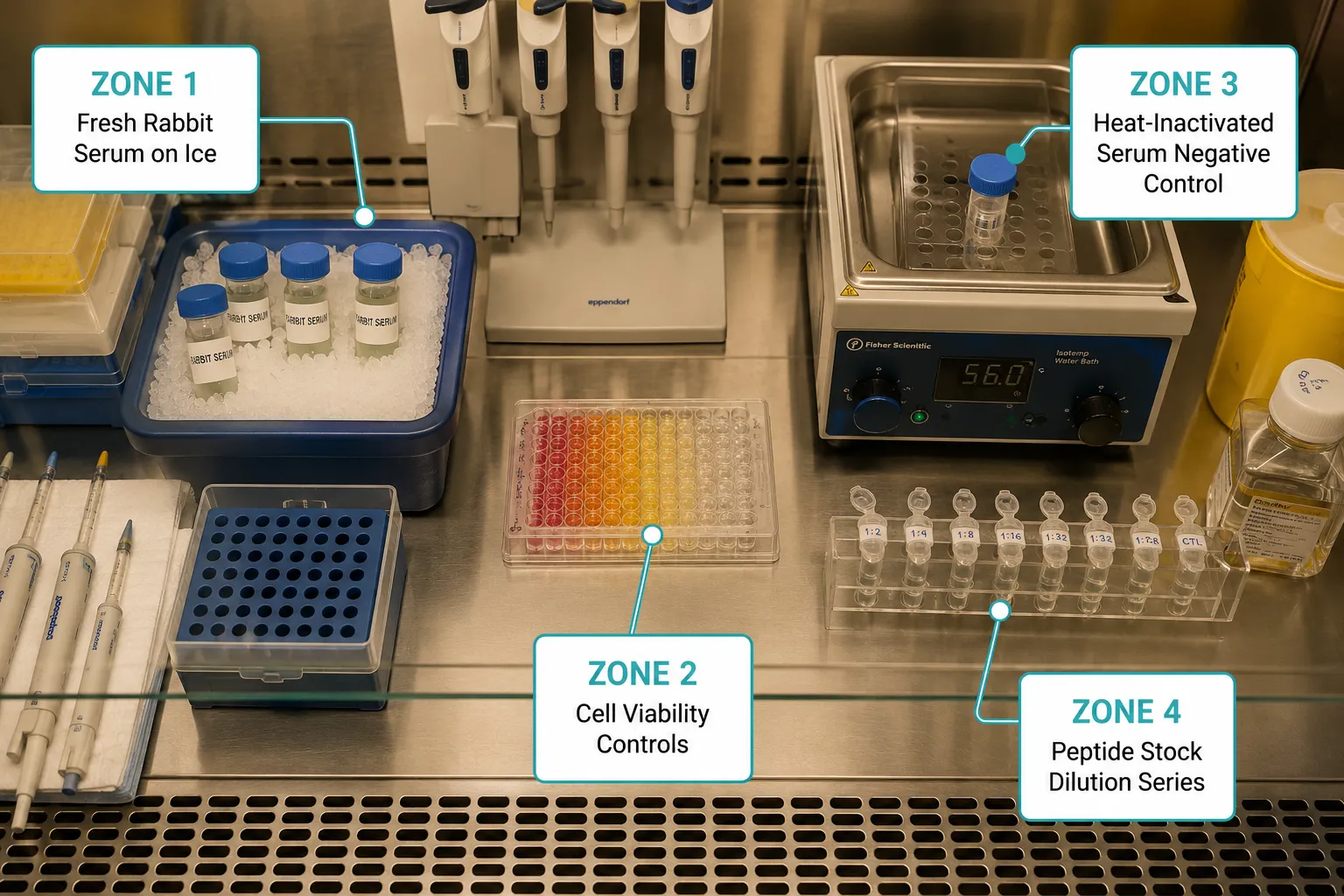
Controls every peptide lab must include:
- Maximum lysis control, detergent-treated cells establish the 100% lysis benchmark
- Spontaneous lysis control, cells in buffer only, no antibody or complement
- Heat-inactivated serum control, serum heated to 56°C for 30 minutes destroys complement activity; this confirms that any observed lysis is complement-dependent
- No-antibody control, complement plus cells without antibody, to detect non-specific activation
The percentage specific lysis is calculated as:
% Specific Lysis = [(Experimental Lysis − Spontaneous Lysis) / (Maximum Lysis − Spontaneous Lysis)] × 100
This formula, aligned with current USP guidance, allows direct comparison across experiments and laboratories.
For researchers working with mitochondria-targeted peptides such as SS-31 research peptide considerations, CDC profiling is especially relevant because cationic peptides can interact non-specifically with negatively charged cell membranes, potentially confounding lysis readouts.
Complement-Dependent Cytotoxicity: What Peptide Researchers Need to Know About Immune Assays and Safety, Peptide-Specific Risks and Protocols
Not all peptides carry equal CDC risk. The following structural and formulation factors elevate concern:
- Aggregation, peptide aggregates mimic particulate antigens and can activate complement non-specifically
- High cationic charge, positively charged peptides (e.g., Arg-rich sequences) bind cell membranes and may generate false-positive lysis signals
- Conjugation, peptides linked to carrier proteins or nanoparticles dramatically increase immunogenicity
- Route of delivery, mucosal and nasal delivery routes expose peptides to secretory IgA environments where complement interactions differ from systemic exposure
Researchers evaluating GLP-class compounds should review the GLP-1 and GLP-2 peptide family research guide for structural context, as incretin peptides present distinct immunogenicity profiles compared to cationic antimicrobial or mitochondria-targeted sequences.
Emerging area: peptide-based complement inhibitors. A growing class of research compounds is designed not to trigger CDC but to suppress it. Compstatin analogs and short cyclic peptides targeting C3 convertase are under active investigation. For labs studying retatrutide phase 3 and metabolic research, understanding whether a compound modulates complement adds an important layer to its safety profile.
Practical safety steps for peptide labs in 2026:
- Run CDC screening alongside standard cytotoxicity panels, not as a separate late-stage test
- Use fresh complement serum from a validated, lot-tracked supplier
- Include a complement inhibitor (e.g., EDTA or compstatin) as an additional mechanistic control
- Document peptide aggregation state before each assay using dynamic light scattering
- For PT-141 and similar receptor-targeted peptides, verify that the cell line used in the assay expresses the relevant receptor to avoid false-negative results
Researchers interested in peptide classification frameworks will find that grouping compounds by charge, length, and cyclization status provides a practical triage tool for prioritizing which candidates need full CDC panels versus abbreviated screening.
Conclusion
Complement-dependent cytotoxicity is a mechanistically well-defined immune process with direct relevance to peptide safety evaluation. For labs working across the spectrum from short linear sequences to larger polypeptide constructs, integrating CDC assays into standard preclinical workflows closes a significant gap in immunogenicity data.
Actionable next steps for peptide researchers:
- Audit current preclinical protocols to confirm CDC assays are included, not assumed to be unnecessary for small peptides.
- Standardize complement source selection and establish lot-to-lot qualification criteria.
- Always include a heat-inactivated serum control, it is the single most informative negative control in the assay.
- Characterize peptide aggregation state before each CDC experiment to prevent confounded data.
- Stay current with USP and regulatory guidance updates, as methodological standards for peptide immunogenicity screening continue to evolve rapidly.
Rigorous CDC profiling protects both research integrity and downstream translational value. Labs that build this competency early will be better positioned as peptide-based therapeutics move through increasingly demanding regulatory review.