Call or Text 727-513-9780
  • Shopping Cart Shopping Cart
    0Shopping Cart
Pure Tested Peptides | America's most trusted Peptides for sale online
  • Peptides for sale
    • Oral Peptides for sale
      • Peptide Capsules for sale
      • BPC 157 Capsules 1000mcg
      • SLU-PP-332 Capsules | 1000 mcg
      • 5-Amino-1MQ 50mg Capsules
      • Tesofensine 500mcg
    • All Peptides for sale
    • Peptide Sprays
      • BPC 157 Nasal Spray Kit
      • BPC-157 TB500 Nasal Spray Kit
      • Semax Nasal Spray 10mg
      • Selank – Nasal Spray Kit – 10mg
      • Epithalon 50MG Nasal Spray Kit
      • Ipamorelin 10mg Nasal Spray
      • Klow Nasal Spray (BPC-157 + TB-500 + GHK-Cu + KPV) | 80mg
      • Hulk Nasal Spray Tesa / Ipa Blend 6/3 MG
      • Klow Nasal Spray
      • NAD + 500 mg Nasal Spray
      • PT-141 Nasal Spray Kit
    • GHRH Peptides
      • Ipa Peptides
      • CJC-1295 Peptides
        • CJC-1295 with DAC 5 mg
        • CJC-1295 without DAC 5 mg
        • CJC-1295 Ipa 10mg
      • Tesa Peptides
        • Tesa Peptide
        • Tesa 20 mg
    • GHK-Cu Peptides
      • All GHK-Cu Peptides
      • GHK-Cu 100mg
      • KLOW Peptide Blend – Buy KLOW blend online
    • BPC Peptides
      • All BPC Peptides
      • BPC-157
      • BPC-157 TB-500
      • BPC 157 capsules 1000mcg
    • SLU-PP-332 Peptides
      • All SLU-PP-332 Peptides
      • SLU-PP-332 5mg
    • GLP3 Peptides
      • GLP3-R
      • GLP3-R CAG 10mg
      • GLP3-R 20mg
    • PT-141 Peptides
      • PT-141 Peptides for sale
      • PT-141 10mg
      • PT-141 Nasal Spray
    • CAG Peptides
      • Lipo-C Peptide Blend
      • CAG 5mg
      • CAG 10mg
    • MOTS-C Peptides
      • MOTS-C Peptides for sale
      • MOTS-c peptide
      • MOTS-c 10mg *6 pack*
    • 5 Amino 1MQ Peptides
      • 5 Amino 1MQ Peptides for sale
      • 5-Amino-1MQ 50mg Capsules
      • 5-Amino-1MQ 5mg
    • Epithalon Peptides
      • Epithalon Peptides for sale
      • Epithalon 10mg
      • Epithalon 50mg
  • Shop
    • GLPs
      • 5-Amino-1MQ 50mg Capsules
      • 5-Amino-1MQ 5mg
      • GLP3-Reta
      • L-Carnitine 500mg/ml
      • Tesofensine 500mcg
      • SLU-PP-332 5mg
      • MOTS-c 10mg *6 pack*
    • Epithalon & BPC Peptides
      • Epithalon 10mg
      • Epithalon 50mg
      • BPC-157
      • BPC 157 capsules 1000mcg
      • BPC-157 TB-500
      • BPC-157 TB500 Nasal Spray Kit
      • BPC 157 Nasal Spray Kit
    • BPC TB-500 & NAD+ Peptides
      • NAD+ 500 mg
      • KLOW Peptide Blend – Buy KLOW blend online
      • GLOW Peptide Blend
      • TB 500 5mg
      • BPC 157 capsules 1000mcg – Supplement
      • BPC 157 Nasal Spray Kit
      • BPC-157
      • BPC-157 TB500 Nasal Spray Kit
      • BPC-157 TB-500
      • BPC 157 capsules 1000mcg
    • LL-37 Peptide
      • LL-37 10 mg
    • MOTS-C & Selank
      • MOTS-c peptide
      • Selank 10mg
    • GHK Peptides
      • GHK-Cu 100mg
      • GLOW Peptide Blend
      • KLOW Peptide Blend – Buy KLOW blend online
  • COAs
  • Wholesale
    • Wholesale Peptides for sale
  • PTP FAQ
  • Affiliates
    • Selank Peptide: Advanced Pharmacological Mechanisms Underlying Its Anxiolytic and Nootropic Effects in Research
      • 5-Amino-1MQ Peptide: Detailed Mechanisms of NNMT Inhibition and Its Impact on Cellular Metabolism Research
        • MOTS-C Peptide: Unraveling Its Role in Mitochondrial Dynamics and Energy Metabolism Research
          • Epithalon Peptide and Telomerase Regulation: Investigating Its Impact on Cellular Senescence and Lifespan Research Models
            • GLP2-T vs GLP2 Tirz Peptide: Understanding the Naming, Mechanistic Nuances, and Research Implications for Gut Health
      • Peptides and Polypeptides in Modern Pharmacology: What Research on Metoprolol, Prednisone, and Amlodipine Reveals
        • Polypeptide Peptides vs NSAIDs: What Naproxen and Diclofenac Teach Tissue-Repair Researchers About BPC‑157 and TB‑500
          • Peptides and Polypeptides in Endocrine Pharmacology: How GLP-1, GLP-2, and GLP-3 Retatrutide Differ From Classic Drugs Like Prednisone and Amlodipine
          • 5‑Amino‑1MQ Peptide and NNMT Inhibition: How It Compares With Statins Like Atorvastatin in Adipose and Lipid Metabolism Research
      • Enclomiphene, Estrogen Receptor Signaling, and Luteinizing Phase Biology: What Hormone Researchers Should Measure
        • Mesenchymal Stem Cells, BPC‑157, and GHK‑Cu: How Tissue Repair Peptides Compare With Classic NSAIDs Like Naproxen in Injury Models
          • Peptide Calculator Use Cases Beyond Growth Hormone: Working Through GLP‑3 Retatrutide, MOTS‑c, and BPC‑157 Research Dosing
        • Polypeptide Peptides in Endocrine and Metabolic Pharmacology: Lessons From Amlodipine, Prednisone, and Metoprolol
        • Peptides Calculator for Advanced Blends: Worked Examples for Tesamorelin, CJC‑1295, and Ipamorelin Stacks
          • Peptides and Polypeptides in Human Physiology: How Molecular Size Shapes Research Applications
            • Selank Peptide: Advanced Pharmacological Mechanisms Underlying Its Anxiolytic and Nootropic Effects in Research
          • 5-Amino-1MQ Peptide: Detailed Mechanisms of NNMT Inhibition and Its Impact on Cellular Metabolism Research
            • MOTS-C Peptide: Unraveling Its Role in Mitochondrial Dynamics and Energy Metabolism Research
              • Epithalon Peptide and Telomerase Regulation: Investigating Its Impact on Cellular Senescence and Lifespan Research Models
                • GLP2-T vs GLP2 Tirz Peptide: Understanding the Naming, Mechanistic Nuances, and Research Implications for Gut Health
                  • Peptides and Polypeptides in Endocrine Pharmacology: How GLP-1, GLP-2, and GLP-3 Retatrutide Differ From Classic Drugs Like Prednisone and Amlodipine
                    • Polypeptide Peptides vs NSAIDs: What Naproxen and Diclofenac Teach Tissue-Repair Researchers About BPC‑157 and TB‑500
                      • Peptides and Polypeptides in Modern Pharmacology: What Research on Metoprolol, Prednisone, and Amlodipine Reveals
                        • 5‑Amino‑1MQ Peptide and NNMT Inhibition: How It Compares With Statins Like Atorvastatin in Adipose and Lipid Metabolism Research
                        • Enclomiphene, Estrogen Receptor Signaling, and Luteinizing Phase Biology: What Hormone Researchers Should Measure
                        • Mesenchymal Stem Cells, BPC‑157, and GHK‑Cu: How Tissue Repair Peptides Compare With Classic NSAIDs Like Naproxen in Injury Models
                        • Peptide Calculator Use Cases Beyond Growth Hormone: Working Through GLP‑3 Retatrutide, MOTS‑c, and BPC‑157 Research Dosing
                        • Polypeptide Peptides in Endocrine and Metabolic Pharmacology: Lessons From Amlodipine, Prednisone, and Metoprolol
                        • Peptides Calculator for Advanced Blends: Worked Examples for Tesamorelin, CJC‑1295, and Ipamorelin Stacks
                        • Peptides and Polypeptides in Human Physiology: How Molecular Size Shapes Research Applications
                        • Selank Peptide: Advanced Pharmacological Mechanisms Underlying Its Anxiolytic and Nootropic Effects in Research
                        • MOTS-C Peptide: Unraveling Its Role in Mitochondrial Dynamics and Energy Metabolism Research
                        • Peptides and Polypeptides in Modern Pharmacology: What Research on Metoprolol, Prednisone, and Amlodipine Reveals
                        • Peptides and Polypeptides in Endocrine Pharmacology: How GLP-1, GLP-2, and GLP-3 Retatrutide Differ From Classic Drugs Like Prednisone and Amlodipine
                        • 5-Amino-1MQ Peptide: Detailed Mechanisms of NNMT Inhibition and Its Impact on Cellular Metabolism Research
                        • Mesenchymal Stem Cells, BPC‑157, and GHK‑Cu: How Tissue Repair Peptides Compare With Classic NSAIDs Like Naproxen in Injury Models
                        • Peptide Calculator Use Cases Beyond Growth Hormone: Working Through GLP‑3 Retatrutide, MOTS‑c, and BPC‑157 Research Dosing
                        • GLP2-T vs GLP2 Tirz Peptide: Understanding the Naming, Mechanistic Nuances, and Research Implications for Gut Health
                        • Polypeptide Peptides in Endocrine and Metabolic Pharmacology: Lessons From Amlodipine, Prednisone, and Metoprolol
                        • Polypeptide Peptides vs NSAIDs: What Naproxen and Diclofenac Teach Tissue-Repair Researchers About BPC‑157 and TB‑500
                        • Peptides and Polypeptides in Human Physiology: How Molecular Size Shapes Research Applications
                        • Peptides Calculator for Advanced Blends: Worked Examples for Tesamorelin, CJC‑1295, and Ipamorelin Stacks
                        • 5‑Amino‑1MQ Peptide and NNMT Inhibition: How It Compares With Statins Like Atorvastatin in Adipose and Lipid Metabolism Research
                        • Enclomiphene, Estrogen Receptor Signaling, and Luteinizing Phase Biology: What Hormone Researchers Should Measure
                        • Epithalon Peptide and Telomerase Regulation: Investigating Its Impact on Cellular Senescence and Lifespan Research Models
                        • Best research protocol Klow blend
                        • best time to take BPC-157
                        • best time to take DSIP (Delta Sleep Inducing Peptide)
                        • best time to take CJC-1295
                        • best time to take AOD-9604
                        • best time to take Follistatin 344
                        • best time to take Ipamorelin
                        • best time to take MK-677 (Ibutamoren)
                        • best time to take Ligandrol (LGD-4033) — research compound
                        • best time to take Ostarine (MK-2866) — research compound
                        • best time to take GHK-CU
                        • best time to take TB-500
                        • best time to take MOTS-c
                        • best time to take Semax
                        • best time to take RAD-140 (Testolone) — research compound
                        • best time to take Thymosin Alpha-1
                        • best time to take PEG-MGF
                        • Biolife Plasma, Octapharma Plasma, and Research Peptides: How Plasma Donation Labs Differ From Peptide Suppliers
                        • best time to take YK-11 — research compound
                        • best time to take PT-141 (Bremelanotide)
                        • Best research protocol Klow blend
                        • 5-Amino-1MQ and MOTS-C Synergy: Metabolic Signaling, Mitochondria, and Research Design
                        • BPC-157 and TB-500: Investigating Their Combined Effects on Angiogenesis and Cellular Migration in Tissue Repair Models
                        • BPC-157 Peptide: Gut Barrier Function, Inflammation, and Tissue-Recovery Research
                        • 5‑Amino‑1MQ and MOTS‑c Synergy in Metabolic Research: Designing NNMT and Mitochondrial Biogenesis Stacks
                        • CJC-1295 with DAC vs. Without DAC: Half-Life, Release Kinetics, and Research Implications
                        • CJC‑1295 with DAC vs. Without DAC: Expanding on Half‑Life Differences Using Tesamorelin and Ipamorelin Blend Case Studies
                        • Collagen Biology and Copper‑Binding Peptides: How GHK‑Cu, Glow Blend, and Klow Blend Interact with Skin and Connective Tissue
                        • Collagen Biology and Regenerative Peptides: How GHK‑Cu, Glow Blend, and Klow Blend Affect Extracellular Matrix Research
                    • DNA, Telomeres, and Longevity Peptides: Positioning Epithalon and MOTS‑c in Genetic Aging Research
                      • Enclomiphene Citrate: serm Mechanism, Testosterone Research, and Stack Compatibility
                        • Enclomiphene vs Enclomiphene Citrate: Formulation, Bioavailability, and Research Distinctions
                        • Epithalon Peptide Research: Telomerase Activation, Aging, and Pineal Gland Function
                        • Estrogen Receptor Signaling and Enclomiphene: How Selective Modulators Compare with Classic Polypeptide Hormones
                        • GHK-Cu Peptide: Advanced Mechanisms in Extracellular Matrix Remodeling and Wound Healing Research
                        • GHK-Cu Peptide: Collagen Synthesis, Wound Repair, and Skin-Barrier Research Models
                        • GLP-1 vs GLP-3 vs GLP-2: Peptide Classification and Research Applications
                        • GLP-2 Peptide Research Guide: Gut Barrier Function, Nutrient Absorption, and Intestinal Recovery Models
                        • GLP-3 Retatrutide vs. GLP-1 Drugs: What Triple-Agonist Biology Changes in Research Models
                        • Ipamorelin and Tesamorelin Combination: Synergistic GH Secretagogue Research and Dosing Protocols
                        • GLP2 Tirz Peptide: What It Is, Why the Name Exists, and How Researchers Should Interpret It
                        • Klow Blend Peptide Nasal Spray: What the Formulation Is Trying to Do in Cognitive Research
                        • Mitochondria, NNMT Inhibition, and Peptide Modulators: Where MOTS‑c and 5‑Amino‑1MQ Fit in Cellular Energy Research
                        • MOTS-c Peptide: Mitochondrial Function, Energy Metabolism, and What Researchers Measure
                        • MOTS-c vs. 5-Amino-1MQ: Which Metabolic Research Questions Each Compound Actually Answers
                        • Nasal Spray Peptides: Bioavailability, Administration, and Semax/Selank Research Applications
                        • PT-141 Peptide Research: Mechanism of Action and Melanocortin Receptor Signaling
                        • Retatrutide for Research: Mechanism, Structure, and GLP-1/GLP-3 Dual Action
                        • Retatrutide for Obesity and Type 2 Diabetes: What the Latest Trial Data Suggest
                        • Tesofensine Peptide Research: Mechanism, Appetite Suppression, and Neuropeptide Y Pathways
  • Contact
    • Contact Customer Service
    • Text Customer Support
  • About US
  • Shop all peptides
  • Affiliate Program
    • Affiliate Signup
  • Login / Register Login / Register Page Link Login / Register Page Link
  • Click to open the search input field Click to open the search input field Search
  • Menu Menu

Tag Archive for: dermal fibroblast

Collagen and GHK-Cu Peptides: How Copper-Dependent Collagen Signaling Differs From Classic Collagen Supplements in Research

Collagen and GHK-Cu Peptides: How Copper-Dependent Collagen Signaling Differs From Classic Collagen Supplements in Research

September 3, 2026/0 Comments/in Uncategorized/by

{"cover":"Professional landscape format (1536×1024) hero image with bold text overlay 'Collagen and GHK-Cu Peptides: How' in crisp white modern sans-serif centered on a deep teal semi-transparent overlay panel, 8% safe margins from every edge, no character touches the border. Background: stunning macro editorial photograph of copper-toned molecular lattice structures blending into luminous skin-tone dermal fiber networks, with a subtle copper peptide vial in soft focus at lower right, rich teal and copper color palette, editorial science magazine aesthetic, bright studio lighting, high contrast, professional depth of field.","content":["Annotated mechanism-of-action diagram landscape format (1536×1024): two-panel split-screen comparison guide. Left panel labeled 'Classic Collagen Supplement' shows a stylized oral capsule releasing glycine-proline-hydroxyproline peptide fragments into a bloodstream illustration, with callout labels: 'Amino acid substrate supply', 'Systemic fibroblast stimulation', 'No copper delivery', 'Hydration and elasticity endpoint'. Right panel labeled 'GHK-Cu Copper Peptide' shows a molecular tripeptide structure with a copper ion chelated at center, callout lines pointing to: 'Cu(II) cofactor delivery', 'Lysyl oxidase activation', 'Collagen cross-linking', 'TGF-beta signaling cascade'. Clean white background, teal-and-copper palette, thin callout lines, editorial medical-science illustration style, sharp typography, 5% safe margins on all labels.","Numbered step-by-step mechanism flow diagram landscape format (1536×1024): five sequential horizontal steps illustrating GHK-Cu signal cascade in human dermal fibroblasts. Step 1 labeled 'GHK-Cu binds fibroblast receptor' with small copper-tripeptide icon. Step 2 labeled 'TGF-beta1 and Smad2/3 phosphorylation' with phosphorylation arrow icon. Step 3 labeled 'COL1A1 and COL3A1 gene transcription' with DNA helix icon. Step 4 labeled 'NRF2-HO-1 antioxidant activation' with shield icon. Step 5 labeled 'MMP-TIMP rebalancing and ECM remodeling' with matrix fiber network icon. Each step in a rounded card with copper-to-teal gradient progression, thin connecting arrows between cards, dark navy background for contrast, bold white short labels, editorial scientific infographic style, fully inside 5% safe margins.","Split-screen editorial documentary photograph landscape format (1536×1024): left half shows a close-up of a laboratory bench with small glass vials of hydrolyzed collagen powder supplement beside a measuring scoop, warm natural studio lighting, soft-focus background of clinical trial documents and skin elasticity measurement printouts, label overlay 'Oral Collagen: Substrate Supply' in clean navy sans-serif. Right half shows a high-magnification microscopy-style rendering of copper peptide molecular structures in a dermal collagen fiber matrix, glowing copper and teal bioluminescent tones, label overlay 'GHK-Cu: Signal Plus Cofactor' in white sans-serif. Central dividing line is a thin copper-colored vertical rule. Magazine editorial quality, high contrast, rich color separation between warm left and cool right panels, all labels inside 5% safe margins, 1536×1024 landscape."]
Professional landscape hero image () with a reading "Collagen and GHK-Cu Peptides: How". CRITICAL TYPOGRAPHY RULES: render

A single copper ion bound to a three-amino-acid peptide can trigger a cascade of collagen synthesis, antioxidant defense, and matrix remodeling that no amount of hydrolyzed collagen powder has been shown to replicate. That distinction sits at the heart of the growing research interest in GHK-Cu, and it is precisely why understanding collagen and GHK-Cu peptides: how copper-dependent collagen signaling differs from classic collagen supplements in research matters for anyone working in skin biology, tissue repair, or peptide science.

Key Takeaways

  • GHK-Cu is a copper-chelating tripeptide that acts as a signaling hub, activating TGF-beta, NRF2, and MMP/TIMP pathways in dermal fibroblasts at nanomolar concentrations.
  • Classic hydrolyzed collagen supplements supply structural amino acids and bioactive fragments that modestly improve skin hydration and elasticity but do not deliver targeted copper or activate the same enzymatic pathways.
  • GHK-Cu provides copper as a cofactor for lysyl oxidase, the enzyme that cross-links collagen and elastin fibers, a function oral collagen supplements do not perform.
  • In vitro studies report collagen synthesis increases of roughly 70-200% with GHK-Cu at optimal concentrations, while clinical trials of oral collagen show small-to-moderate standardized mean differences of approximately 0.4-0.6 for hydration and elasticity.
  • Oral collagen has multiple large randomized controlled trials supporting cosmetic benefits; GHK-Cu's human clinical evidence is still emerging as of 2026.

What Are Classic Collagen Supplements and What Does the Research Show?

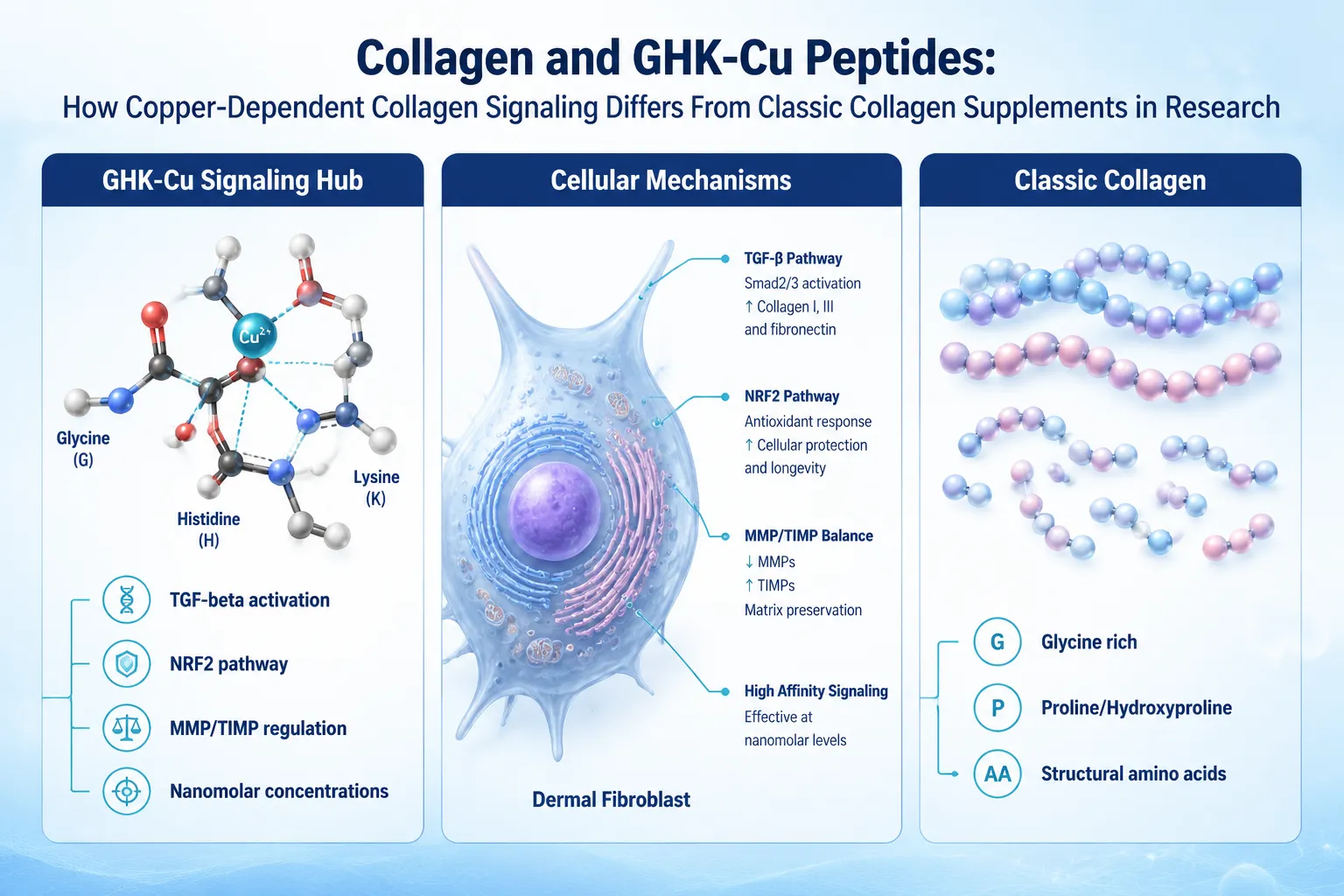
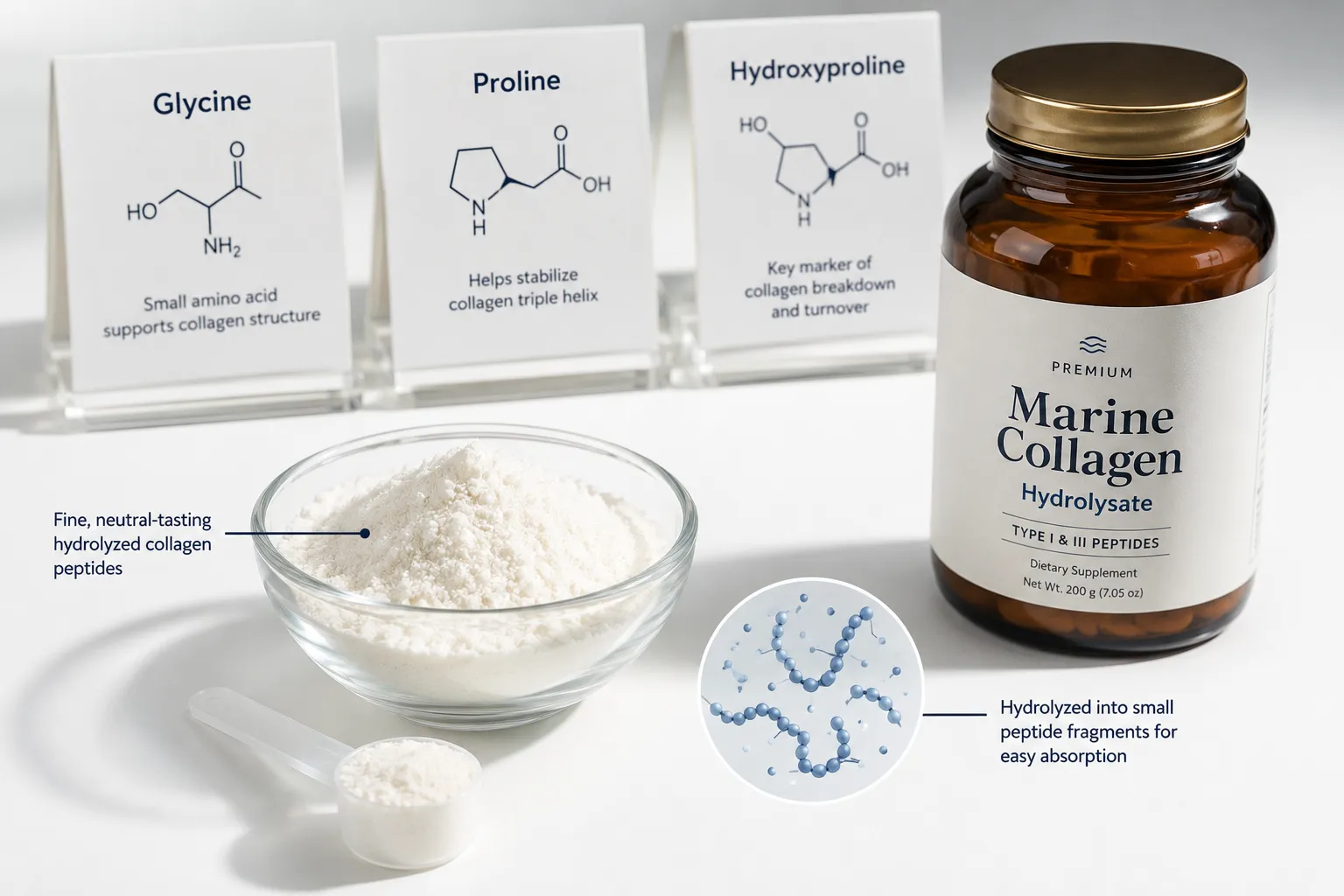
Hydrolyzed collagen supplements, sold as collagen peptides, collagen hydrolysate, or marine collagen, are produced by enzymatically breaking down animal connective tissue into short peptide fragments. These fragments are rich in glycine, proline, and hydroxyproline, the same amino acids that form the triple-helix backbone of structural collagen in human skin, tendons, and cartilage.
What Are Classic Collagen Supplements and What Does the Research Show?

The clinical evidence base for oral collagen is now substantial. A July 2026 meta-analysis of 35 randomized controlled trials involving 2,534 participants found that oral collagen peptides significantly improved instrumental measures of skin hydration (standardized mean difference approximately 0.44), elasticity (SMD approximately 0.62), and reduced transepidermal water loss. A separate August 2026 systematic review examining 11 studies and 805 patients confirmed gains in skin elasticity, hydration, and dermal collagen density, with favorable short-to-medium-term safety. A 2024 double-blind, placebo-controlled trial using confocal laser scanning microscopy even documented measurable improvements in facial skin collagen architecture after 12 weeks of supplementation.

However, current expert consensus describes oral collagen as a "functional systemic moisturizer" with modest anti-aging effects. Effect sizes are real but not dramatic, most studies use daily doses of 1.6-10 grams over 8-12 weeks, and a notable proportion of the research is industry-sponsored. Critically, oral collagen does not deliver copper, does not directly activate enzymatic cross-linking, and shows little evidence of finely tuning matrix metalloproteinase (MMP) or tissue inhibitor of metalloproteinase (TIMP) balance. For deeper context on skin biology research and how dermal structure is studied, that distinction becomes increasingly important.

GHK-Cu as a Copper-Dependent Collagen Signaling Hub

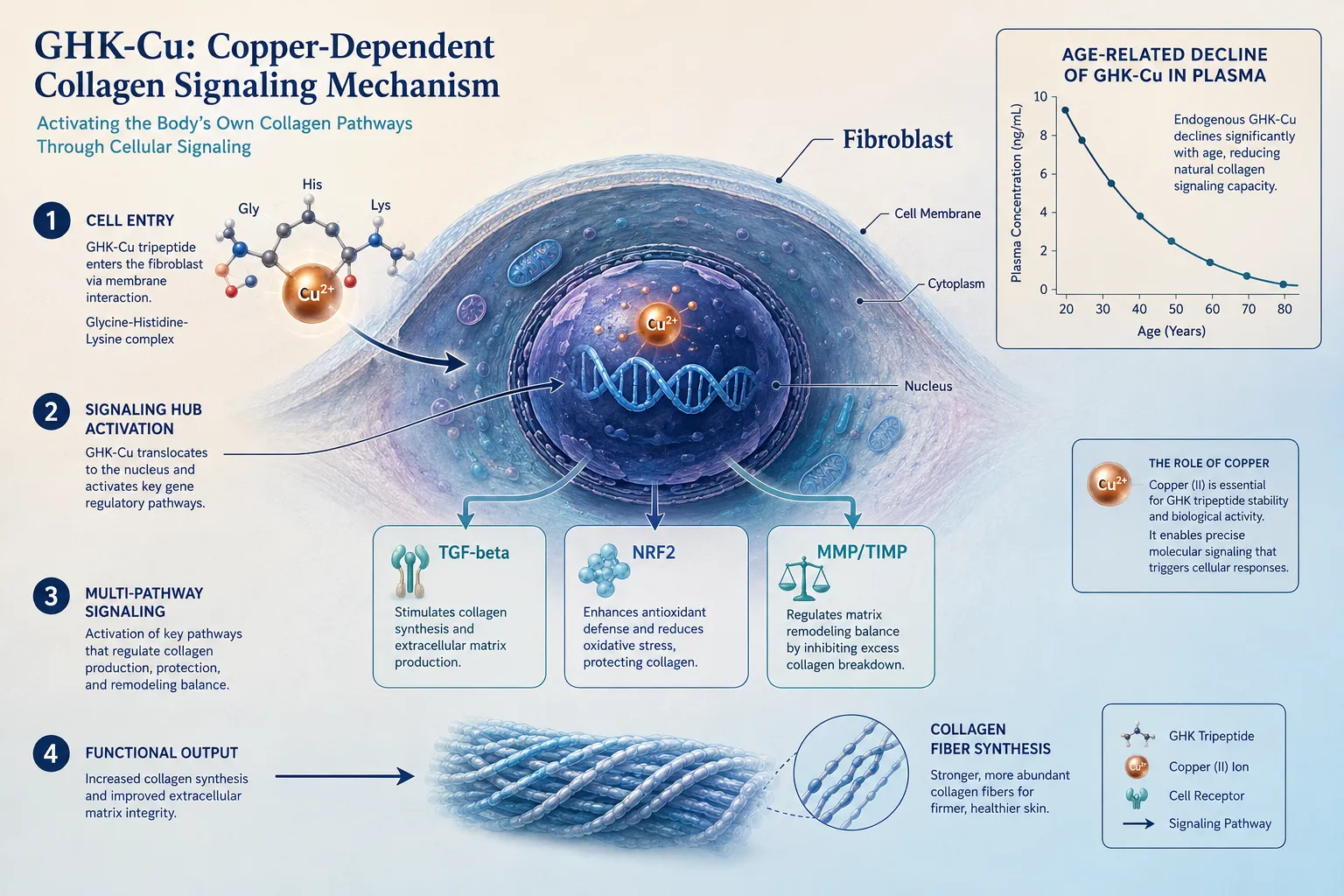
GHK-Cu (glycine-histidine-lysine complexed with copper II) is a naturally occurring tripeptide found in human plasma, saliva, and urine. Its concentration declines significantly with age, which has prompted research interest in its role in skin aging and tissue repair research.

What separates GHK-Cu from a simple collagen precursor is its dual identity as both a signaling molecule and a copper delivery vehicle.

Signal cascades activated by GHK-Cu include:

  • TGF-beta1/beta2 with Smad2/3 phosphorylation, driving transcription of COL1A1 and COL3A1 (the genes for collagen types I and III)
  • PI3K-Akt survival signaling in fibroblasts, supporting cell viability during remodeling
  • NRF2-HO-1 antioxidant pathway, upregulating protective enzymes in the dermal matrix
  • MMP/TIMP rebalancing, suppressing excessive matrix degradation while allowing controlled remodeling

In human dermal fibroblast studies, GHK-Cu upregulates collagen types I and III, elastin, and glycosaminoglycans, with collagen synthesis increases in the range of 70-200% versus controls at optimal nanomolar concentrations. Notably, these effects begin at picomolar-to-nanomolar concentrations (roughly 10^-12 to 10^-9 M) and are independent of cell proliferation, meaning GHK-Cu is stimulating biosynthesis, not simply causing cells to divide.
GHK-Cu as a Copper-Dependent Collagen Signaling Hub

This level of targeted pathway engagement is not observed with oral collagen supplementation, which primarily provides amino acid substrate and may stimulate fibroblasts indirectly through systemic peptide absorption. For researchers exploring therapeutic peptides with multi-pathway activity, GHK-Cu represents a mechanistically distinct category.

How Copper-Dependent Collagen Signaling Differs From Classic Collagen Supplements in Research: The Enzymatic Cofactor Argument

The most structurally important distinction in the collagen and GHK-Cu peptides: how copper-dependent collagen signaling differs from classic collagen supplements in research debate is the role of copper itself.

Collagen fibers require cross-linking to achieve tensile strength. This cross-linking is catalyzed by lysyl oxidase, a copper-dependent enzyme. Without adequate copper delivery to the extracellular matrix, newly synthesized collagen chains cannot be properly cross-linked, resulting in structurally weaker fibers. GHK-Cu delivers Cu(II) directly to this enzymatic machinery. It also contributes superoxide-dismutase-like antioxidant activity, protecting the dermal matrix from oxidative degradation.

Classic collagen supplements provide none of this. They supply the raw amino acid building blocks, the bricks, but not the mortar or the construction crew.

Research Perspective: “GHK-Cu acts as signal plus cofactor; oral collagen acts as substrate plus systemic modulation.”, Emerging framing in 2026 peptide and aesthetic medicine commentaries.

This distinction also extends to matrix turnover. GHK-Cu actively coordinates both synthesis and controlled breakdown of extracellular matrix (ECM) components, modulating MMPs and TIMPs to favor constructive remodeling over scarring. Oral collagen trials report changes in hydration, elasticity, and transepidermal water loss, but provide little direct evidence of finely tuned ECM turnover dynamics.

For researchers interested in tissue recovery research or synergistic peptides that act on overlapping pathways, GHK-Cu's multi-target profile is particularly relevant.
How Copper-Dependent Collagen Signaling Differs From Classic Collagen Supplements in Research: The Enzymatic Cofactor Argumen

Clinical Evidence and Safety: Where Each Approach Stands in 2026

Factor Oral Collagen Supplements GHK-Cu Peptide
Mechanism Amino acid substrate; indirect fibroblast stimulation Multi-pathway signaling; copper cofactor delivery
Effective dose range 1.6-10 g/day oral Picomolar, nanomolar (in vitro)
Human RCT evidence 35+ RCTs; meta-analyses available Early wound-healing trial registered 2026 (NCT07437586)
Effect size (human) SMD ~0.4-0.6 for hydration and elasticity Not yet established in large RCTs
Safety profile Well-established; no serious AEs in 12-week trials Favorable preclinical and cosmetic history; formal data emerging
Copper delivery None Yes, Cu(II) for lysyl oxidase and antioxidant defense

Oral collagen's safety record is strong. Multiple randomized trials report no serious adverse events over 12 weeks, with normal lab parameters and only occasional mild gastrointestinal complaints. GHK-Cu has a long track record in experimental and cosmetic applications, with mechanistic work suggesting low toxicity and broad protective actions. However, formal safety data from large, controlled human trials are still being generated, with the 2026 registered wound-healing study marking a meaningful step toward that evidence base.

Researchers interested in translational research design will note that the gap between GHK-Cu's in vitro effect sizes (70-200% collagen synthesis increases) and its as-yet-undefined human effect sizes is one of the most important open questions in the field. For those sourcing materials for preclinical work, lab tested peptides and third party peptide testing standards are essential considerations.

Conclusion

The research landscape in 2026 draws a clear line between two fundamentally different approaches to collagen biology. Oral hydrolyzed collagen supplements are well-supported by clinical trial data for modest, consistent cosmetic improvements in skin hydration and elasticity, they work as substrate-level interventions that feed the collagen production system. GHK-Cu operates at a different level entirely: it signals fibroblasts through multiple gene-regulatory pathways, delivers copper as an enzymatic cofactor for cross-linking, and coordinates active ECM remodeling in ways that oral collagen cannot replicate.

Actionable next steps for researchers and practitioners:

  • When evaluating collagen-related interventions, distinguish between substrate-supply mechanisms (oral collagen) and signaling-plus-cofactor mechanisms (GHK-Cu) before drawing comparisons.
  • Prioritize mechanistic outcome measures, MMP/TIMP ratios, COL1A1 transcription, lysyl oxidase activity, when designing GHK-Cu studies, as these capture effects that standard hydration and elasticity endpoints miss.
  • Monitor the 2026 wound-healing RCT (NCT07437586) for the first regulated human efficacy and safety data on topical GHK-Cu.
  • For preclinical work, ensure peptide purity through verified third party peptide testing to maintain experimental validity.
  • Consider GHK-Cu within the broader context of skin biology research and tissue repair research rather than as a direct substitute for or upgrade of oral collagen, they address different biological targets.

Understanding collagen and GHK-Cu peptides: how copper-dependent collagen signaling differs from classic collagen supplements in research is not about choosing one over the other. It is about applying the right tool to the right biological question, and that requires knowing exactly what each tool does at the molecular level.

https://www.puretestedpeptides.com/wp-content/uploads/2026/09/collagen-and-ghk-cu-peptides-how-copper-dependent-collagen-signaling-differs-fro.webp 1024 1536 https://www.puretestedpeptides.com/wp-content/uploads/2026/01/buy-peptides-online.jpg 2026-09-03 13:06:022026-09-03 13:06:02Collagen and GHK-Cu Peptides: How Copper-Dependent Collagen Signaling Differs From Classic Collagen Supplements in Research
×

Helpful Links

  • My account
  • Cart
  • Checkout
  • Refund and Returns Policy
  • Privacy Policy
  • SMS Privacy Policy
  • Login
  • My Account
  • Logout

USA Made Lab Tested Peptides

All products are sold for research, laboratory, or analytical purposes only, and are not for human consumption


Pure Tested Peptides is a chemical supplier. Pure Tested Peptides is not a compounding / chemical compounding facility as defined under 503A of the Federal Food, Drug, and Cosmetic act. Pure Tested Peptides is not an outsourcing facility as defined under 503B of the Federal Food, Drug, and Cosmetic act.

The statements made within this website have not been evaluated by the US Food and Drug Administration. The products we offer are not intended to diagnose, treat, cure or prevent any disease.

Human/Animal Consumption Prohibited. Laboratory/In-Vitro Experimental Use Only

Scroll to top Scroll to top Scroll to top