Call or Text 727-513-9780
  • Shopping Cart Shopping Cart
    0Shopping Cart
Pure Tested Peptides | America's most trusted Peptides for sale online
  • Peptides for sale
    • Oral Peptides for sale
      • Peptide Capsules for sale
      • BPC 157 Capsules 1000mcg
      • SLU-PP-332 Capsules | 1000 mcg
      • 5-Amino-1MQ 50mg Capsules
      • Tesofensine 500mcg
    • All Peptides for sale
    • Peptide Sprays
      • BPC 157 Nasal Spray Kit
      • BPC-157 TB500 Nasal Spray Kit
      • Semax Nasal Spray 10mg
      • Selank – Nasal Spray Kit – 10mg
      • Epithalon 50MG Nasal Spray Kit
      • Ipamorelin 10mg Nasal Spray
      • Klow Nasal Spray (BPC-157 + TB-500 + GHK-Cu + KPV) | 80mg
      • Hulk Nasal Spray Tesa / Ipa Blend 6/3 MG
      • Klow Nasal Spray
      • NAD + 500 mg Nasal Spray
      • PT-141 Nasal Spray Kit
    • GHRH Peptides
      • Ipa Peptides
      • CJC-1295 Peptides
        • CJC-1295 with DAC 5 mg
        • CJC-1295 without DAC 5 mg
        • CJC-1295 Ipa 10mg
      • Tesa Peptides
        • Tesa Peptide
        • Tesa 20 mg
    • GHK-Cu Peptides
      • All GHK-Cu Peptides
      • GHK-Cu 100mg
      • KLOW Peptide Blend – Buy KLOW blend online
    • BPC Peptides
      • All BPC Peptides
      • BPC-157
      • BPC-157 TB-500
      • BPC 157 capsules 1000mcg
    • SLU-PP-332 Peptides
      • All SLU-PP-332 Peptides
      • SLU-PP-332 5mg
    • GLP3 Peptides
    • PT-141 Peptides
      • PT-141 Peptides for sale
      • PT-141 10mg
      • PT-141 Nasal Spray
    • CAG Peptides
      • Lipo-C Peptide Blend
      • CAG 5mg
      • CAG 10mg
    • MOTS-C Peptides
      • MOTS-C Peptides for sale
      • MOTS-c peptide
      • MOTS-c 10mg *6 pack*
    • 5 Amino 1MQ Peptides
      • 5 Amino 1MQ Peptides for sale
      • 5-Amino-1MQ 50mg Capsules
      • 5-Amino-1MQ 5mg
    • Epithalon Peptides
      • Epithalon Peptides for sale
      • Epithalon 10mg
      • Epithalon 50mg
  • Shop
    • GLPs
      • 5-Amino-1MQ 50mg Capsules
      • 5-Amino-1MQ 5mg
      • L-Carnitine 500mg/ml
      • Tesofensine 500mcg
      • SLU-PP-332 5mg
      • MOTS-c 10mg *6 pack*
    • Epithalon & BPC Peptides
      • Epithalon 10mg
      • Epithalon 50mg
      • BPC-157
      • BPC 157 capsules 1000mcg
      • BPC-157 TB-500
      • BPC-157 TB500 Nasal Spray Kit
      • BPC 157 Nasal Spray Kit
    • BPC TB-500 & NAD+ Peptides
      • NAD+ 500 mg
      • KLOW Peptide Blend – Buy KLOW blend online
      • GLOW Peptide Blend
      • TB 500 5mg
      • BPC 157 capsules 1000mcg – Supplement
      • BPC 157 Nasal Spray Kit
      • BPC-157
      • BPC-157 TB500 Nasal Spray Kit
      • BPC-157 TB-500
      • BPC 157 capsules 1000mcg
    • LL-37 Peptide
      • LL-37 10 mg
    • MOTS-C & Selank
      • MOTS-c peptide
      • Selank 10mg
    • GHK Peptides
      • GHK-Cu 100mg
      • GLOW Peptide Blend
      • KLOW Peptide Blend – Buy KLOW blend online
  • COAs
  • Wholesale
    • Wholesale Peptides for sale
  • PTP FAQ
  • Affiliates
    • Selank Peptide: Advanced Pharmacological Mechanisms Underlying Its Anxiolytic and Nootropic Effects in Research
      • 5-Amino-1MQ Peptide: Detailed Mechanisms of NNMT Inhibition and Its Impact on Cellular Metabolism Research
        • MOTS-C Peptide: Unraveling Its Role in Mitochondrial Dynamics and Energy Metabolism Research
          • Epithalon Peptide and Telomerase Regulation: Investigating Its Impact on Cellular Senescence and Lifespan Research Models
            • GLP2-T vs GLP2 Tirz Peptide: Understanding the Naming, Mechanistic Nuances, and Research Implications for Gut Health
      • Peptides and Polypeptides in Modern Pharmacology: What Research on Metoprolol, Prednisone, and Amlodipine Reveals
        • Polypeptide Peptides vs NSAIDs: What Naproxen and Diclofenac Teach Tissue-Repair Researchers About BPC‑157 and TB‑500
          • Peptides and Polypeptides in Endocrine Pharmacology: How GLP-1, GLP-2, and GLP-3 Retatrutide Differ From Classic Drugs Like Prednisone and Amlodipine
          • 5‑Amino‑1MQ Peptide and NNMT Inhibition: How It Compares With Statins Like Atorvastatin in Adipose and Lipid Metabolism Research
      • Enclomiphene, Estrogen Receptor Signaling, and Luteinizing Phase Biology: What Hormone Researchers Should Measure
        • Mesenchymal Stem Cells, BPC‑157, and GHK‑Cu: How Tissue Repair Peptides Compare With Classic NSAIDs Like Naproxen in Injury Models
          • Peptide Calculator Use Cases Beyond Growth Hormone: Working Through GLP‑3 Retatrutide, MOTS‑c, and BPC‑157 Research Dosing
        • Polypeptide Peptides in Endocrine and Metabolic Pharmacology: Lessons From Amlodipine, Prednisone, and Metoprolol
        • Peptides Calculator for Advanced Blends: Worked Examples for Tesamorelin, CJC‑1295, and Ipamorelin Stacks
          • Peptides and Polypeptides in Human Physiology: How Molecular Size Shapes Research Applications
            • Selank Peptide: Advanced Pharmacological Mechanisms Underlying Its Anxiolytic and Nootropic Effects in Research
          • 5-Amino-1MQ Peptide: Detailed Mechanisms of NNMT Inhibition and Its Impact on Cellular Metabolism Research
            • MOTS-C Peptide: Unraveling Its Role in Mitochondrial Dynamics and Energy Metabolism Research
              • Epithalon Peptide and Telomerase Regulation: Investigating Its Impact on Cellular Senescence and Lifespan Research Models
                • GLP2-T vs GLP2 Tirz Peptide: Understanding the Naming, Mechanistic Nuances, and Research Implications for Gut Health
                  • Peptides and Polypeptides in Endocrine Pharmacology: How GLP-1, GLP-2, and GLP-3 Retatrutide Differ From Classic Drugs Like Prednisone and Amlodipine
                    • Polypeptide Peptides vs NSAIDs: What Naproxen and Diclofenac Teach Tissue-Repair Researchers About BPC‑157 and TB‑500
                      • Peptides and Polypeptides in Modern Pharmacology: What Research on Metoprolol, Prednisone, and Amlodipine Reveals
                        • 5‑Amino‑1MQ Peptide and NNMT Inhibition: How It Compares With Statins Like Atorvastatin in Adipose and Lipid Metabolism Research
                        • Enclomiphene, Estrogen Receptor Signaling, and Luteinizing Phase Biology: What Hormone Researchers Should Measure
                        • Mesenchymal Stem Cells, BPC‑157, and GHK‑Cu: How Tissue Repair Peptides Compare With Classic NSAIDs Like Naproxen in Injury Models
                        • Peptide Calculator Use Cases Beyond Growth Hormone: Working Through GLP‑3 Retatrutide, MOTS‑c, and BPC‑157 Research Dosing
                        • Polypeptide Peptides in Endocrine and Metabolic Pharmacology: Lessons From Amlodipine, Prednisone, and Metoprolol
                        • Peptides Calculator for Advanced Blends: Worked Examples for Tesamorelin, CJC‑1295, and Ipamorelin Stacks
                        • Peptides and Polypeptides in Human Physiology: How Molecular Size Shapes Research Applications
                        • Selank Peptide: Advanced Pharmacological Mechanisms Underlying Its Anxiolytic and Nootropic Effects in Research
                        • MOTS-C Peptide: Unraveling Its Role in Mitochondrial Dynamics and Energy Metabolism Research
                        • Peptides and Polypeptides in Modern Pharmacology: What Research on Metoprolol, Prednisone, and Amlodipine Reveals
                        • Peptides and Polypeptides in Endocrine Pharmacology: How GLP-1, GLP-2, and GLP-3 Retatrutide Differ From Classic Drugs Like Prednisone and Amlodipine
                        • 5-Amino-1MQ Peptide: Detailed Mechanisms of NNMT Inhibition and Its Impact on Cellular Metabolism Research
                        • Mesenchymal Stem Cells, BPC‑157, and GHK‑Cu: How Tissue Repair Peptides Compare With Classic NSAIDs Like Naproxen in Injury Models
                        • Peptide Calculator Use Cases Beyond Growth Hormone: Working Through GLP‑3 Retatrutide, MOTS‑c, and BPC‑157 Research Dosing
                        • GLP2-T vs GLP2 Tirz Peptide: Understanding the Naming, Mechanistic Nuances, and Research Implications for Gut Health
                        • Polypeptide Peptides in Endocrine and Metabolic Pharmacology: Lessons From Amlodipine, Prednisone, and Metoprolol
                        • Polypeptide Peptides vs NSAIDs: What Naproxen and Diclofenac Teach Tissue-Repair Researchers About BPC‑157 and TB‑500
                        • Peptides and Polypeptides in Human Physiology: How Molecular Size Shapes Research Applications
                        • Peptides Calculator for Advanced Blends: Worked Examples for Tesamorelin, CJC‑1295, and Ipamorelin Stacks
                        • 5‑Amino‑1MQ Peptide and NNMT Inhibition: How It Compares With Statins Like Atorvastatin in Adipose and Lipid Metabolism Research
                        • Enclomiphene, Estrogen Receptor Signaling, and Luteinizing Phase Biology: What Hormone Researchers Should Measure
                        • Epithalon Peptide and Telomerase Regulation: Investigating Its Impact on Cellular Senescence and Lifespan Research Models
                        • Best research protocol Klow blend
                        • best time to take BPC-157
                        • best time to take DSIP (Delta Sleep Inducing Peptide)
                        • best time to take CJC-1295
                        • best time to take AOD-9604
                        • best time to take Follistatin 344
                        • best time to take Ipamorelin
                        • best time to take MK-677 (Ibutamoren)
                        • best time to take Ligandrol (LGD-4033) — research compound
                        • best time to take Ostarine (MK-2866) — research compound
                        • best time to take GHK-CU
                        • best time to take TB-500
                        • best time to take MOTS-c
                        • best time to take Semax
                        • best time to take RAD-140 (Testolone) — research compound
                        • best time to take Thymosin Alpha-1
                        • best time to take PEG-MGF
                        • Biolife Plasma, Octapharma Plasma, and Research Peptides: How Plasma Donation Labs Differ From Peptide Suppliers
                        • best time to take YK-11 — research compound
                        • best time to take PT-141 (Bremelanotide)
                        • Best research protocol Klow blend
                        • 5-Amino-1MQ and MOTS-C Synergy: Metabolic Signaling, Mitochondria, and Research Design
                        • BPC-157 and TB-500: Investigating Their Combined Effects on Angiogenesis and Cellular Migration in Tissue Repair Models
                        • BPC-157 Peptide: Gut Barrier Function, Inflammation, and Tissue-Recovery Research
                        • 5‑Amino‑1MQ and MOTS‑c Synergy in Metabolic Research: Designing NNMT and Mitochondrial Biogenesis Stacks
                        • CJC-1295 with DAC vs. Without DAC: Half-Life, Release Kinetics, and Research Implications
                        • CJC‑1295 with DAC vs. Without DAC: Expanding on Half‑Life Differences Using Tesamorelin and Ipamorelin Blend Case Studies
                        • Collagen Biology and Copper‑Binding Peptides: How GHK‑Cu, Glow Blend, and Klow Blend Interact with Skin and Connective Tissue
                        • Collagen Biology and Regenerative Peptides: How GHK‑Cu, Glow Blend, and Klow Blend Affect Extracellular Matrix Research
                    • DNA, Telomeres, and Longevity Peptides: Positioning Epithalon and MOTS‑c in Genetic Aging Research
                      • Enclomiphene Citrate: serm Mechanism, Testosterone Research, and Stack Compatibility
                        • Enclomiphene vs Enclomiphene Citrate: Formulation, Bioavailability, and Research Distinctions
                        • Epithalon Peptide Research: Telomerase Activation, Aging, and Pineal Gland Function
                        • Estrogen Receptor Signaling and Enclomiphene: How Selective Modulators Compare with Classic Polypeptide Hormones
                        • GHK-Cu Peptide: Advanced Mechanisms in Extracellular Matrix Remodeling and Wound Healing Research
                        • GHK-Cu Peptide: Collagen Synthesis, Wound Repair, and Skin-Barrier Research Models
                        • GLP-1 vs GLP-3 vs GLP-2: Peptide Classification and Research Applications
                        • GLP-2 Peptide Research Guide: Gut Barrier Function, Nutrient Absorption, and Intestinal Recovery Models
                        • GLP-3 Retatrutide vs. GLP-1 Drugs: What Triple-Agonist Biology Changes in Research Models
                        • Ipamorelin and Tesamorelin Combination: Synergistic GH Secretagogue Research and Dosing Protocols
                        • GLP2 Tirz Peptide: What It Is, Why the Name Exists, and How Researchers Should Interpret It
                        • Klow Blend Peptide Nasal Spray: What the Formulation Is Trying to Do in Cognitive Research
                        • Mitochondria, NNMT Inhibition, and Peptide Modulators: Where MOTS‑c and 5‑Amino‑1MQ Fit in Cellular Energy Research
                        • MOTS-c Peptide: Mitochondrial Function, Energy Metabolism, and What Researchers Measure
                        • MOTS-c vs. 5-Amino-1MQ: Which Metabolic Research Questions Each Compound Actually Answers
                        • Nasal Spray Peptides: Bioavailability, Administration, and Semax/Selank Research Applications
                        • PT-141 Peptide Research: Mechanism of Action and Melanocortin Receptor Signaling
                        • Retatrutide for Research: Mechanism, Structure, and GLP-1/GLP-3 Dual Action
                        • Retatrutide for Obesity and Type 2 Diabetes: What the Latest Trial Data Suggest
                        • Tesofensine Peptide Research: Mechanism, Appetite Suppression, and Neuropeptide Y Pathways
  • Contact
    • Contact Customer Service
    • Text Customer Support
  • About US
  • Shop all peptides
  • Affiliate Program
    • Affiliate Signup
  • Login / Register Login / Register Page Link Login / Register Page Link
  • Click to open the search input field Click to open the search input field Search
  • Menu Menu

Tag Archive for: ghrh analogue

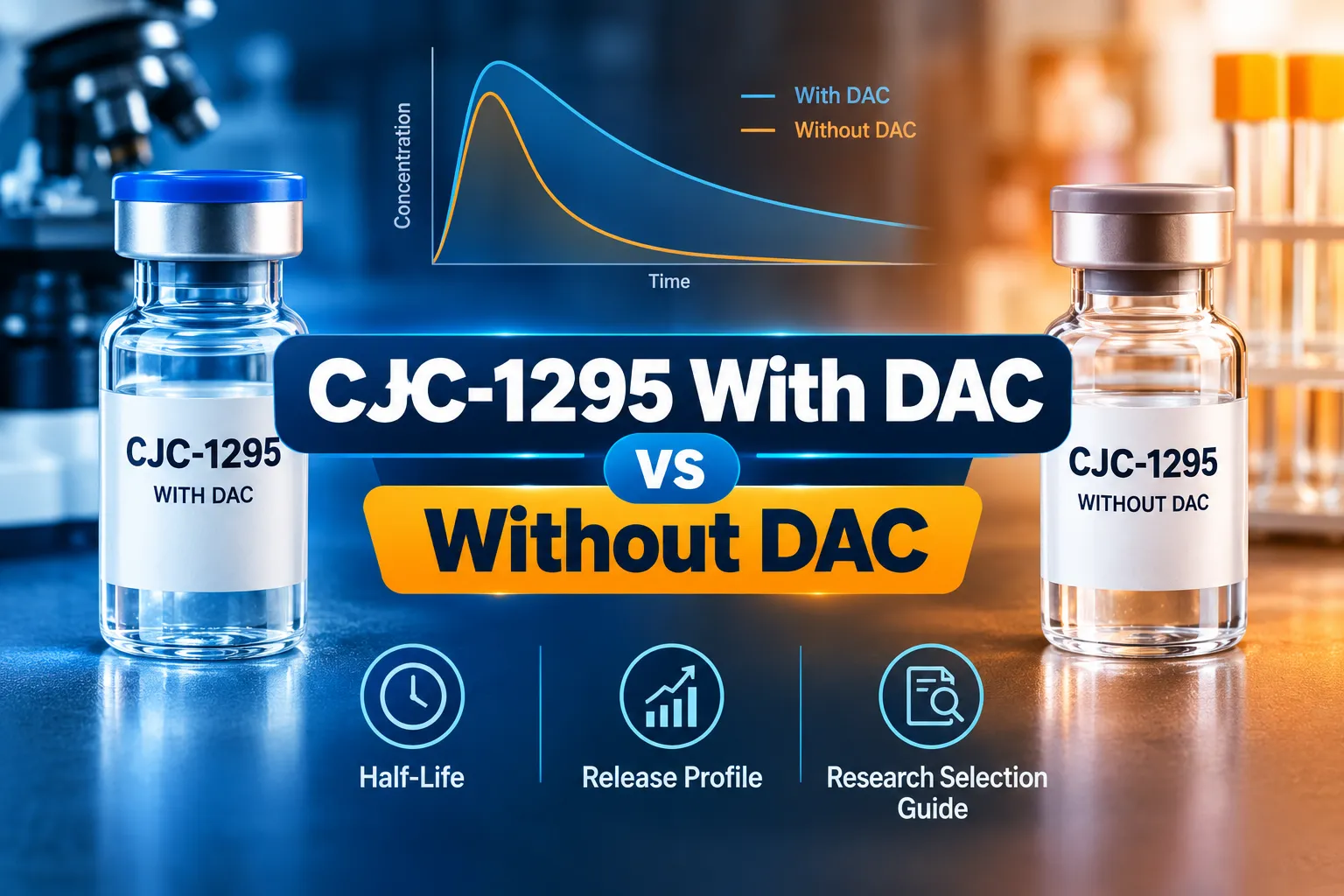
CJC-1295 With DAC vs Without DAC: Half-Life, Release Profile, and Research Selection Guide

CJC-1295 With DAC vs Without DAC: Half-Life, Release Profile, and Research Selection Guide

September 15, 2026/0 Comments/in Uncategorized/by

{"cover":"Professional landscape format (1536×1024) hero image with bold text overlay 'CJC-1295 With DAC vs Without DAC' in crisp white sans-serif on a deep navy semi-transparent overlay panel, centered with 8% safe margins from every edge. Background: high-resolution editorial split composition showing two glass laboratory vials side by side on a clean white lab bench, one labeled DAC and one labeled No DAC, soft studio lighting with cool blue and teal tones, shallow depth of field, molecular structure silhouettes faintly visible in background, pharmaceutical research magazine cover aesthetic, professional 2-color palette of navy and teal.","content":["Annotated mechanism diagram (1536×1024) illustrating half-life extension: left panel titled 'Without DAC, Mod GRF 1-29' shows a short curved arrow labeled '30 min half-life' with callout lines pointing to 'rapid clearance', 'pulsatile GH spike', and 'enzyme degradation sites'; right panel titled 'With DAC' shows a long curved arc labeled '6-8 day half-life' with callout lines pointing to 'albumin binding site', 'sustained GH elevation', and 'DAC moiety attachment point'; clean white background, teal and navy palette, thin callout lines, editorial medical-diagram polish, landscape 1536×1024.","Four-panel labelled comparison guide (1536×1024) for GH release profiles: Panel 1 heading 'Pulsatile Release' with bullet labels 'sharp GH peak', 'mimics natural rhythm', 'short dosing window'; Panel 2 heading 'Sustained Release' with bullet labels 'blunted peak', 'prolonged elevation', 'less frequent dosing'; Panel 3 heading 'Research Use: No DAC' with bullet labels 'stack flexibility', 'timing control', 'GHRP pairing'; Panel 4 heading 'Research Use: With DAC' with bullet labels 'once-weekly dosing', 'steady baseline', 'trough monitoring'; bright clinical white background, coral and navy accent colors, thin panel dividers, editorial infographic polish, landscape format.","Numbered step-by-step research selection flow diagram (1536×1024) titled 'Selecting the Right CJC-1295 Form': Step 1 labeled 'Define Research Goal' with sub-label 'pulsatile vs steady GH'; Step 2 labeled 'Assess Dosing Frequency' with sub-label 'daily vs weekly protocol'; Step 3 labeled 'Consider Stack Partners' with sub-label 'GHRP, ipamorelin, tesa'; Step 4 labeled 'Evaluate Safety Profile' with sub-label 'tachyphylaxis risk, DAC caution'; Step 5 labeled 'Source Verified Peptide' with sub-label 'purity testing required'; connected by bold directional arrows on a clean slate-gray background, teal step nodes, white label boxes, professional research-guide aesthetic, landscape 1536×1024."]
Professional landscape hero image () with a reading "CJC-1295 With DAC vs Without DAC". CRITICAL TYPOGRAPHY RULES: render

Two peptides share nearly identical names, yet their pharmacokinetic behavior is so different that swapping one for the other in a research protocol can produce completely opposite GH release patterns. Understanding the CJC-1295 with DAC vs without DAC distinction, including half-life, release profile, and research selection, is one of the most practically important decisions in growth hormone secretagogue research today.

Key Takeaways

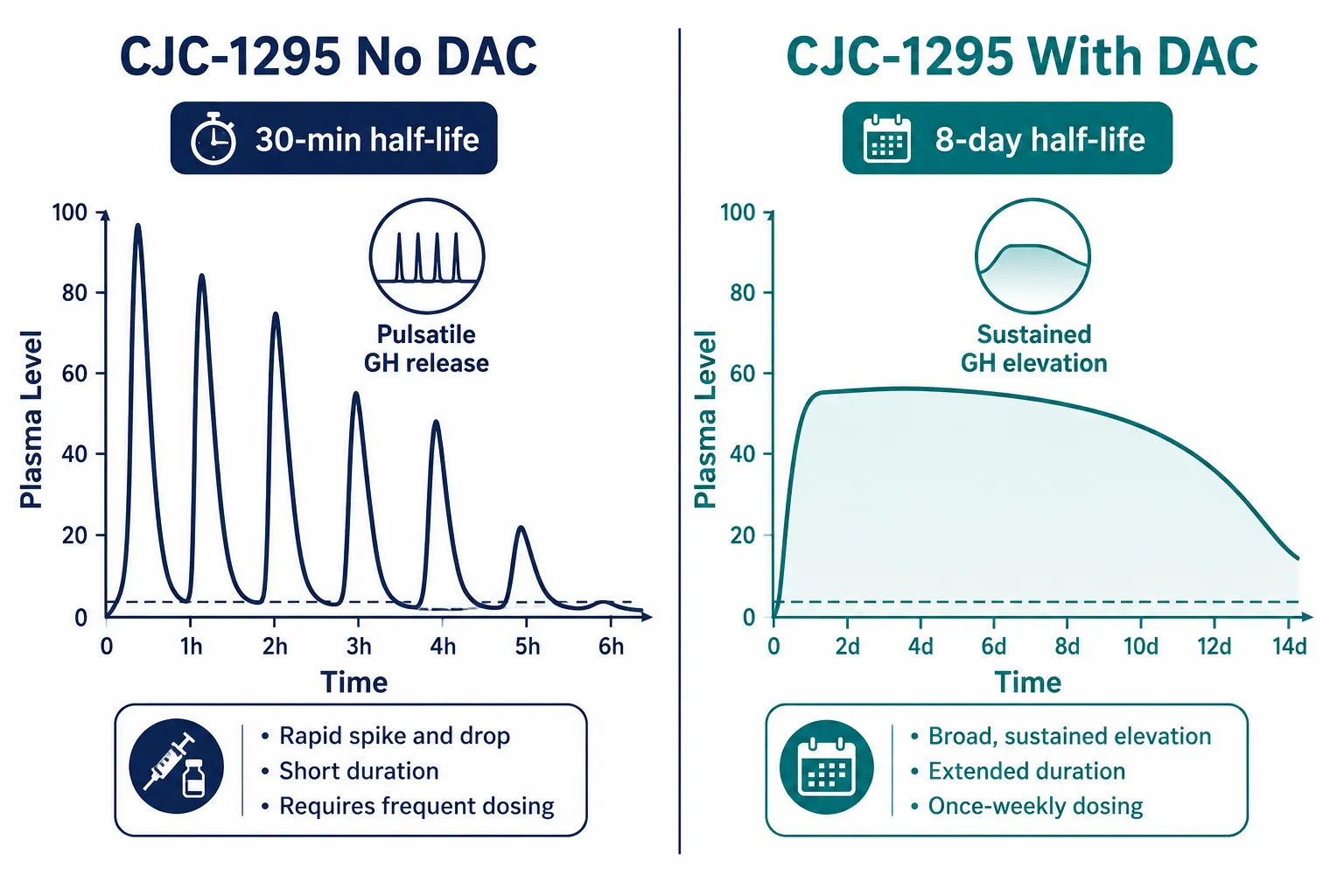
  • CJC-1295 without DAC (also called Mod GRF 1-29) has a half-life of roughly 30 minutes, producing a sharp, pulsatile GH spike.
  • CJC-1295 with DAC binds to albumin in plasma, extending its half-life to approximately 6-8 days and producing a sustained, blunted GH elevation.
  • The two variants are not interchangeable; each suits different research designs and stacking strategies.
  • Nomenclature confusion is common, "CJC-1295 no DAC" and "Mod GRF 1-29" refer to the same peptide.
  • Both remain research-only compounds in 2026, with no approved clinical indications.

What Is CJC-1295 and Why Does DAC Change Everything

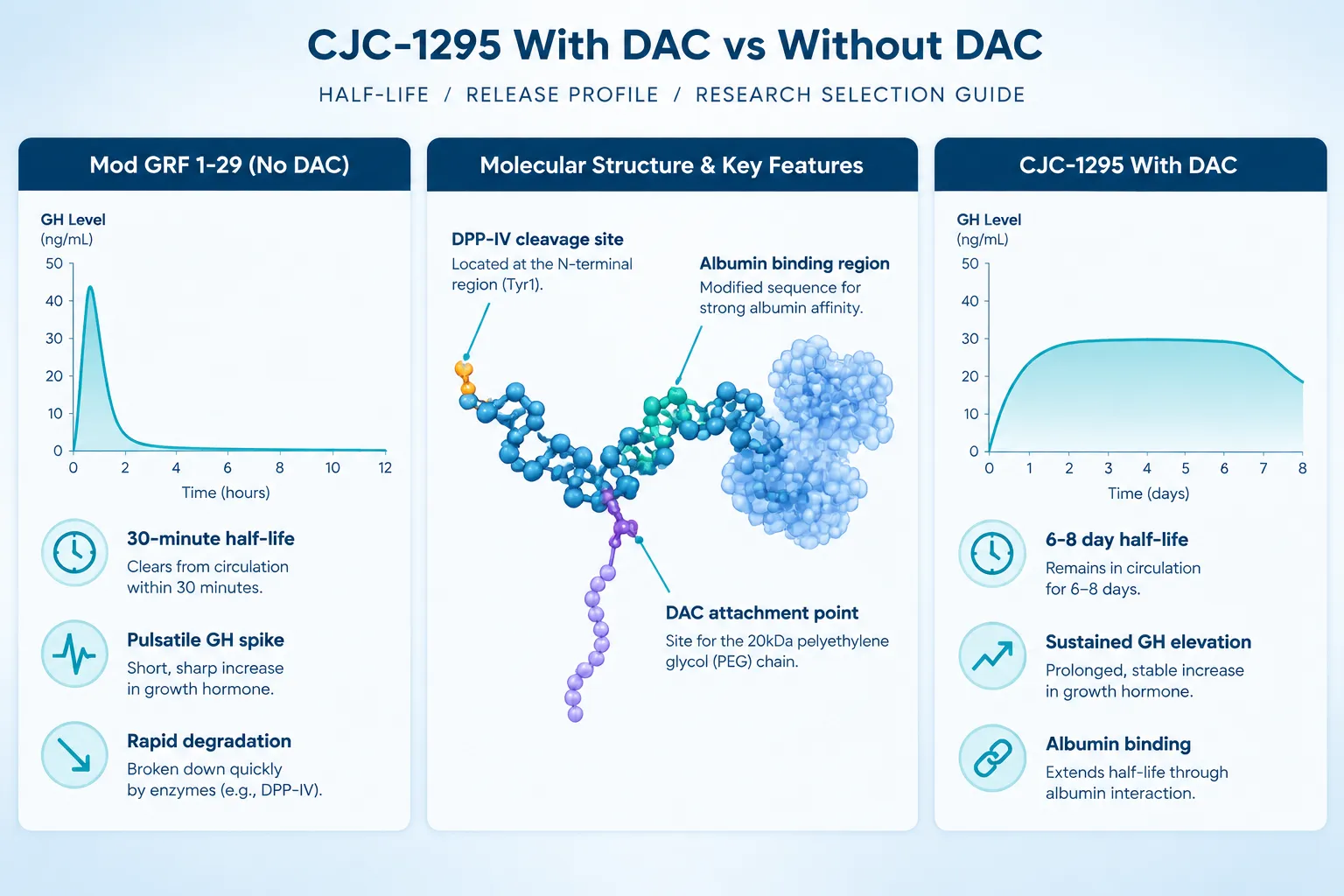
CJC-1295 is a synthetic analogue of growth hormone-releasing hormone (GHRH). Native GHRH is rapidly degraded by dipeptidyl peptidase IV (DPP-IV) enzymes in plasma, giving it a half-life of only a few minutes. Early modifications produced Mod GRF 1-29, a stabilized 29-amino-acid fragment with a half-life extended to roughly 30 minutes. This version is widely sold as "CJC-1295 without DAC" or simply "CJC-1295 no DAC."

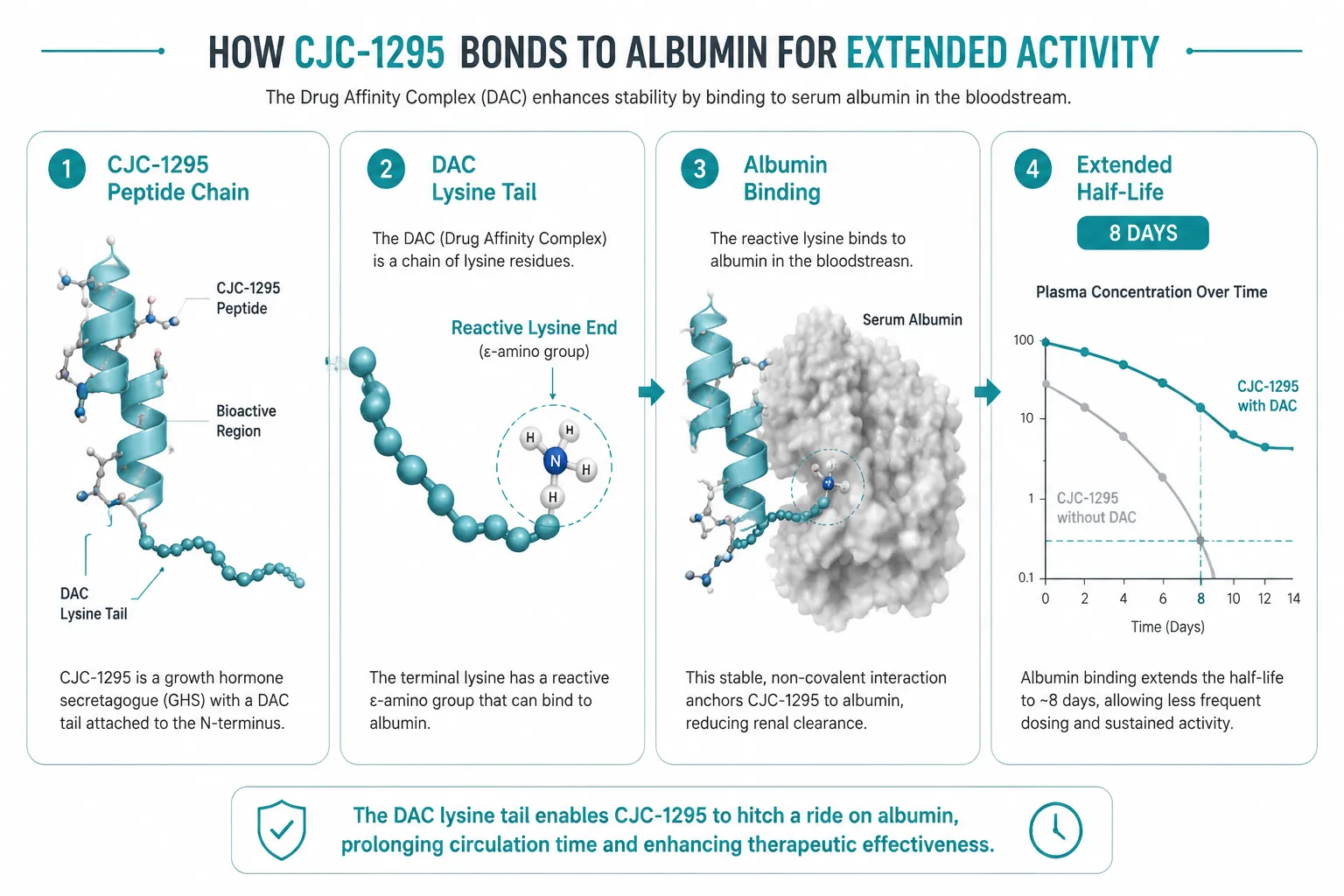
The Drug Affinity Complex (DAC) technology takes stabilization a step further. A lysine residue is modified with a maleimidoproprionic acid group that forms a covalent bond with circulating albumin. Because albumin itself has a half-life of roughly 19 days, the DAC-conjugated peptide is shielded from clearance, extending its effective half-life to approximately 6-8 days in research models.

For a deeper look at the structural and pharmacokinetic differences between these two forms, the CJC-1295 with and without DAC mechanism and pharmacokinetic comparison covers the underlying science in detail.
What Is CJC-1295 and Why Does DAC Change Everything

The core structural difference:

Feature Mod GRF 1-29 (No DAC) CJC-1295 With DAC
Half-life ~30 minutes ~6-8 days
Albumin binding No Yes (covalent)
GH release pattern Pulsatile spike Sustained elevation
Dosing frequency Daily or per-session Once or twice weekly
DPP-IV resistance Partial High

Release Profile: Pulsatile vs Sustained GH Stimulation

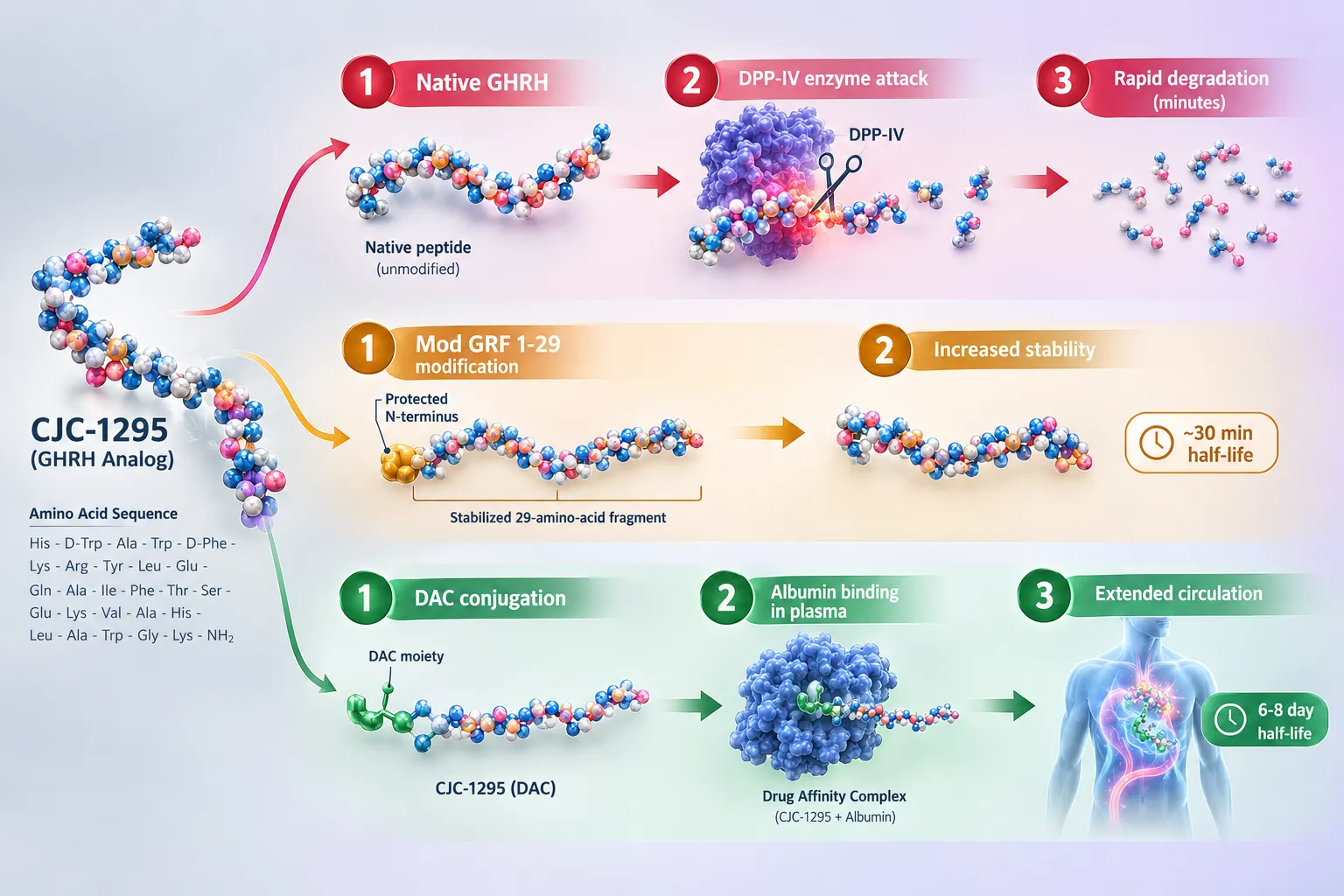
The half-life gap between these two variants directly determines their GH release profiles, and this distinction sits at the heart of the CJC-1295 with DAC vs without DAC research selection guide.

Mod GRF 1-29 (no DAC) produces a sharp, high-amplitude GH pulse that mirrors the body's natural episodic secretion pattern. Peak GH levels appear within 15-30 minutes of administration and return to baseline within a few hours. This pulsatile pattern is considered physiologically favorable by many researchers because it preserves the natural on-off rhythm of the somatotropic axis. It also offers precise timing control, making it easier to pair with ghrelin mimetics like ipamorelin or GHRP-2 for synergistic GH release.

Researchers studying GH secretagogue stacks often combine Mod GRF 1-29 with ipamorelin, as explored in resources on sermorelin, ipamorelin, and CJC-1295 combination protocols.

CJC-1295 with DAC produces a blunted but prolonged GH elevation. The Teichman 2006 Phase 1 study remains the most-cited pharmacokinetic anchor for this variant, demonstrating dose-dependent increases in IGF-1 lasting several days after a single injection. This sustained profile reduces the need for daily dosing but also raises concerns about tachyphylaxis, a desensitization of pituitary receptors caused by continuous GHRH stimulation rather than intermittent pulses.

"A sustained GH elevation is not automatically superior to a pulsatile one. The research question determines which profile is appropriate."
Release Profile: Pulsatile vs Sustained GH Stimulation

Researchers interested in body composition outcomes, including visceral fat reduction, may find relevant context in visceral fat research protocols that examine GH secretagogue effects on adipose tissue.

Research Selection Guide: Choosing Between CJC-1295 With DAC vs Without DAC

Selecting the correct variant depends on three primary research variables: the desired GH release pattern, the dosing schedule, and the peptide stack being used.

Choose Mod GRF 1-29 (no DAC) when:

  • The protocol requires mimicking natural pulsatile GH secretion
  • Daily or per-session administration is feasible
  • The peptide will be stacked with a GHRP or ipamorelin for amplified pulse height
  • Researchers want fine-grained control over timing and amplitude

Choose CJC-1295 with DAC when:

  • The protocol benefits from less frequent dosing (once or twice weekly)
  • A sustained IGF-1 elevation is the primary endpoint
  • The research design does not require precise pulse timing
  • Stacking with other secretagogues is not a primary concern

For multi-peptide research designs, blended formulations such as tesa, CJC-1295, and ipamorelin combination protocols offer an alternative approach worth reviewing.

Researchers should also note that the DAC variant carries a more cautious safety profile in 2026 consensus literature. Continuous GHRH receptor stimulation raises questions about receptor downregulation, and some protocols now include structured off-weeks when using the DAC form. The no-DAC variant's short half-life makes receptor rest automatic between doses.

For context on how other peptide classes interact with endocrine pathways, the overview of peptides and polypeptides in endocrine pharmacology provides useful background on receptor biology.
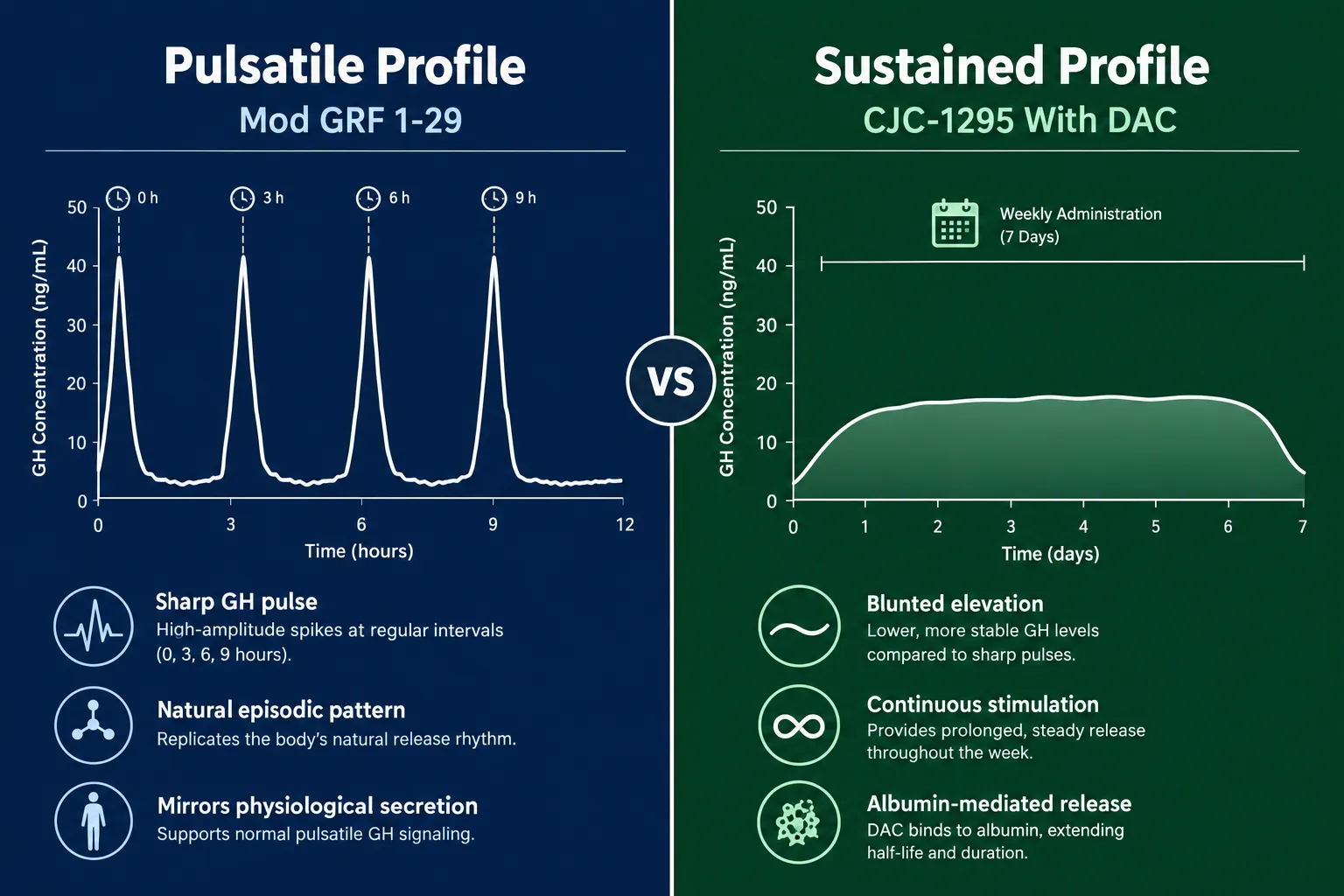
Research Selection Guide: Choosing Between CJC-1295 With DAC vs Without DAC

Nomenclature note: The label "CJC-1295 no DAC" is a vendor convention, not an official chemical name. The correct scientific designation is Modified GRF 1-29 (Mod GRF 1-29). Researchers sourcing peptides should confirm which compound is actually present, as mislabeling remains a documented issue in the research peptide supply chain.

Both compounds remain strictly research-use-only substances in 2026 with no approved human therapeutic applications.

Conclusion

The CJC-1295 with DAC vs without DAC comparison is not a question of which peptide is better, it is a question of which release profile matches the research objective. Mod GRF 1-29 delivers a short, sharp GH pulse ideal for pulsatile protocols and multi-peptide stacks. CJC-1295 with DAC delivers sustained GH elevation suited to low-frequency dosing designs, but demands greater attention to receptor desensitization risk.

Actionable next steps for researchers in 2026:

  1. Confirm the exact compound identity before designing any protocol, verify whether the supplier is providing Mod GRF 1-29 or the DAC-conjugated form.
  2. Match the release profile to the research endpoint: pulsatile for physiological mimicry, sustained for steady IGF-1 elevation studies.
  3. Review stacking compatibility before combining either variant with GHRPs or other secretagogues.
  4. Source only from suppliers with documented third-party purity testing to ensure compound integrity.
  5. Monitor current literature, as mid-2026 consensus continues to favor the no-DAC variant for most stacked research designs due to its more controllable pharmacokinetic profile.
https://www.puretestedpeptides.com/wp-content/uploads/2026/09/cjc-1295-with-dac-vs-without-dac-half-life-release-profile-and-research-selectio.webp 1024 1536 https://www.puretestedpeptides.com/wp-content/uploads/2026/01/buy-peptides-online.jpg 2026-09-15 13:05:092026-09-15 13:05:09CJC-1295 With DAC vs Without DAC: Half-Life, Release Profile, and Research Selection Guide
Tesamorelin vs Ipamorelin in Body Composition Research: How Labs Model GH Pulsatility, Lean Mass, and Recovery With Different Secretagogues

Tesamorelin vs Ipamorelin in Body Composition Research: How Labs Model GH Pulsatility, Lean Mass, and Recovery With Different Secretagogues

September 6, 2026/0 Comments/in Uncategorized/by

Only one growth hormone secretagogue has completed large, randomized, double-blind, placebo-controlled trials enrolling more than 800 subjects and earned FDA approval for a body-composition endpoint. That distinction belongs to tesa. Yet ipamorelin continues to attract significant research interest in 2026 for its clean receptor selectivity and its ability to mimic endogenous GH pulse architecture. Understanding the practical differences between these two peptides requires looking well beyond basic GH secretion, into visceral fat phenotypes, lean mass trajectories, hepatic biomarkers, and recovery kinetics. This article examines Tesamorelin vs Ipamorelin in Body Composition Research: How Labs Model GH Pulsatility, Lean Mass, and Recovery With Different Secretagogues to help researchers select the right tool for the right experimental question.

Key Takeaways

  • Tesamorelin is the only GH secretagogue with robust RCT data showing measurable decreases in visceral fat and increases in lean body mass.
  • Ipamorelin produces sharp, pulsatile GH spikes that closely resemble endogenous nocturnal GH bursts, making it a useful tool for modeling GH pulse architecture.
  • No head-to-head clinical trial comparing tesa and ipamorelin for body-composition endpoints currently exists.
  • Ipamorelin's body-composition evidence is classified as Tier D, zero randomized controlled trials measuring lean mass, fat mass, or strength outcomes.
  • The practical research hierarchy in 2026 positions tesa as the gold standard for visceral fat and recomposition models, while ipamorelin serves primarily as a pulsatility and recovery research tool.

Receptor Mechanisms and GH Pulse Profiles

Receptor Mechanisms and GH Pulse Profiles

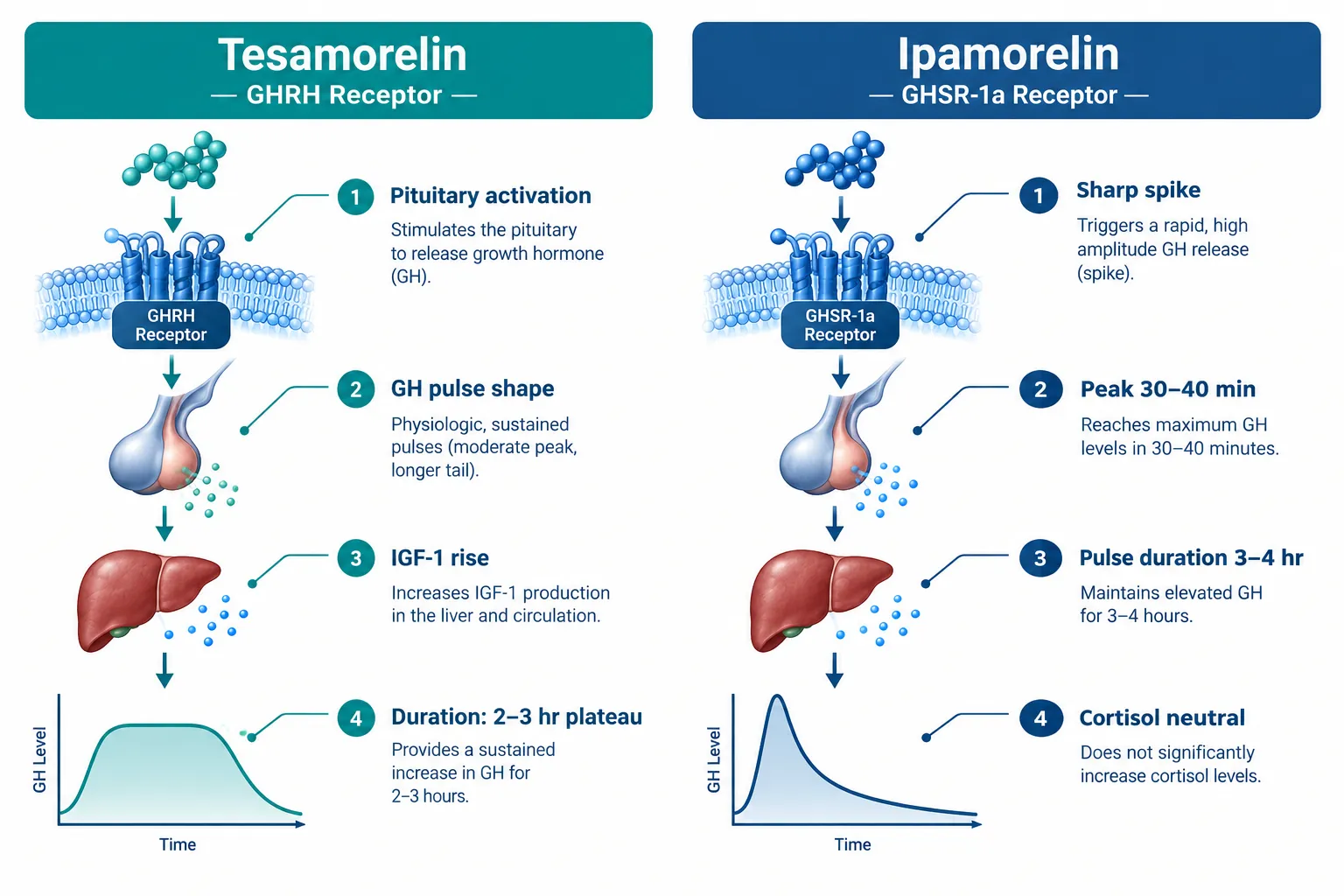
Tesamorelin is a stabilized analogue of endogenous growth hormone-releasing hormone (GHRH). It binds directly to the pituitary GHRH receptor, stimulating a sustained, relatively broad GH release pattern, onset within approximately 30 minutes, followed by a 2-to-3-hour elevated plateau. This profile generates robust IGF-1 elevation and supports the downstream anabolic and lipolytic signaling that underpins its body-composition effects.

Ipamorelin operates through an entirely different receptor. As a selective ghrelin receptor (GHSR-1a) agonist, it produces sharp, spike-like GH pulses with peak concentrations occurring roughly 30 to 40 minutes post-injection and a pulse duration of approximately 3 to 4 hours. These spike-like pulses more closely resemble the nocturnal GH bursts that occur naturally during slow-wave sleep, making ipamorelin particularly attractive for research models focused on physiological GH pulsatility.

The key mechanistic distinction:

Feature Tesamorelin Ipamorelin
Receptor target GHRH receptor GHSR-1a (ghrelin receptor)
GH release pattern Broad plateau, 2-3 hr Sharp spike, 3-4 hr pulse
IGF-1 elevation Robust, well-documented Short-term, less characterized
Cortisol/prolactin impact Minimal Minimal in short-term studies
Regulatory status FDA-approved (Egrifta) Investigational only

For researchers exploring Tesamorelin vs Ipamorelin at the mechanistic level, these receptor differences translate directly into different experimental designs and measurable endpoints.

Tesamorelin vs Ipamorelin in Body Composition Research: Evidence Quality and Endpoint Data

Tesamorelin vs Ipamorelin in Body Composition Research: Evidence Quality and Endpoint Data

The evidence gap between these two peptides is substantial and should anchor every research decision.

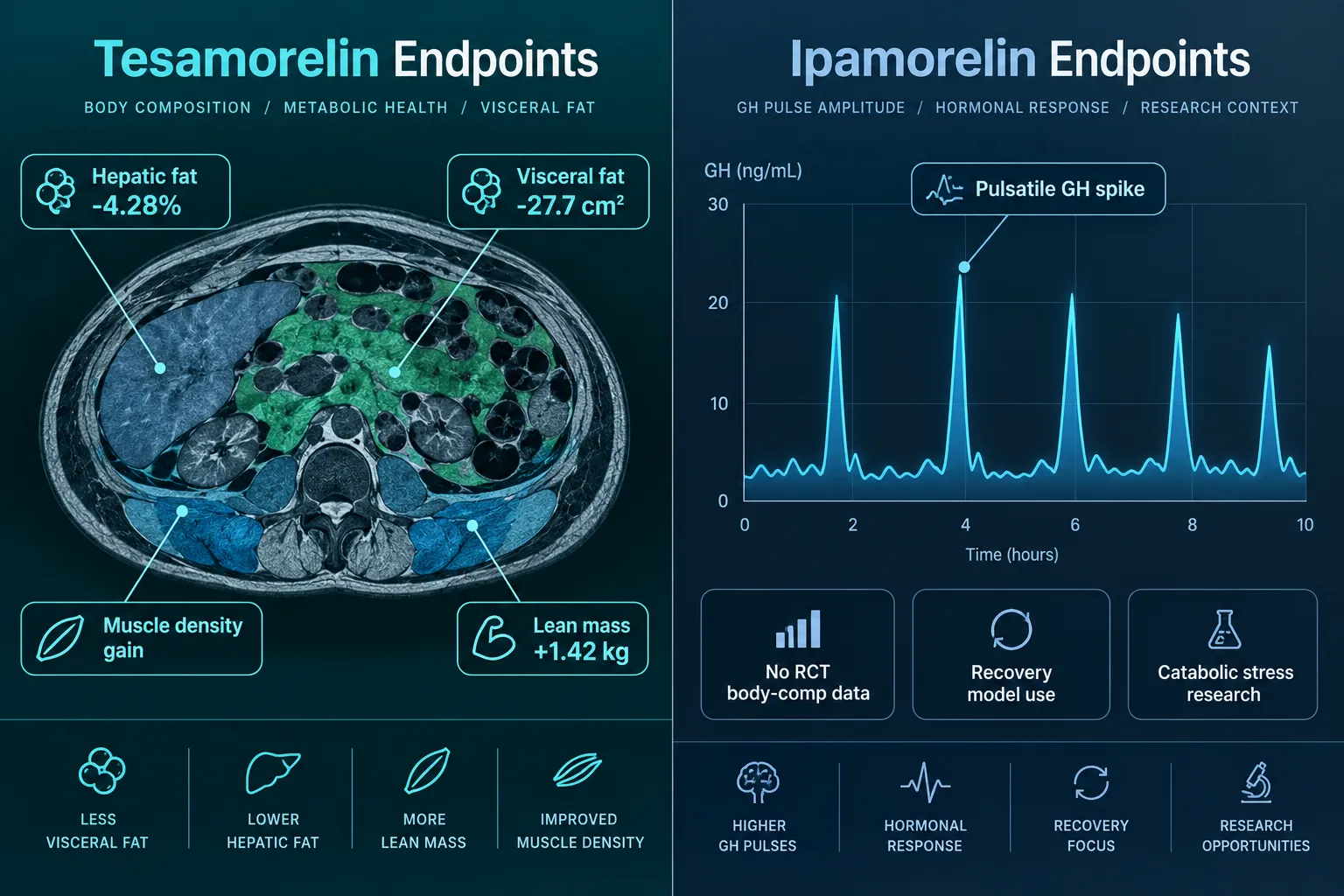
Tesamorelin's body-composition dataset is the strongest among all GH secretagogues. A 2026 meta-analysis of randomized controlled trials in HIV-associated lipodystrophy quantified the following mean effects:

  • Visceral adipose tissue: -27.71 cm²
  • Trunk fat: -1.18 kg
  • Lean body mass: +1.42 kg
  • Hepatic fat percentage: -4.28%
  • Waist circumference: -1.61 cm

Phase III trial data further show 15 to 18% reductions in visceral adipose tissue over 6 to 12 months, alongside increases in muscle density of approximately 1.6 to 4.9 Hounsfield units and muscle cross-sectional area gains of 0.4 to 1.1 cm². These findings establish tesa not as a general weight-loss agent, but as a targeted recomposition tool, reducing deep abdominal and hepatic fat while preserving or building lean mass. Researchers interested in the broader tesa benefits profile will find this dataset particularly relevant to experimental design.

Ipamorelin's body-composition dataset is, by contrast, essentially nonexistent at the human trial level. Current research classifications assign it a Tier D evidence rating for body-composition endpoints, meaning zero randomized controlled trials have measured lean mass, fat mass, or strength outcomes. Human data are limited to pharmacokinetic and pharmacodynamic studies and a discontinued Phase II trial for postoperative ileus.

The most recent in-vivo work highlighted in 2026 comes from a ferret chemotherapy model, where ipamorelin at 1 to 3 mg/kg reduced cisplatin-induced body-weight loss by approximately 24% during the delayed phase (48 to 72 hours). While this suggests a potential role in supporting weight maintenance during catabolic stress, these are preclinical findings that have not yet been translated into human recovery protocols.

"The trade-off is essentially clinical validation versus selectivity: tesa offers trial-based improvements in visceral fat and lean mass; ipamorelin offers the cleanest GH-axis selectivity with minimal downstream hormonal disruption."

For labs working with multi-peptide formulations, resources on Tesamorelin CJC-1295 Ipamorelin 12mg blend protocols provide additional context on how these agents are combined in research settings.

Tesamorelin vs Ipamorelin in Body Composition Research: Lab Modeling Strategies for Pulsatility, Lean Mass, and Recovery

Tesamorelin vs Ipamorelin in Body Composition Research: Lab Modeling Strategies for Pulsatility, Lean Mass, and Recovery

Because no head-to-head clinical trial exists, labs must make deliberate modeling choices based on the endpoint they are investigating.

When to model with tesa:

  • Deep abdominal and visceral fat phenotypes
  • NAFLD-like hepatic steatosis endpoints
  • Recomposition paradigms requiring simultaneous fat loss and lean mass preservation
  • IGF-1 and hepatic fat biomarker panels
  • Studies combining GH secretagogues with GLP-1 analogs to preserve lean body mass during aggressive fat reduction

Researchers can consult the tesa dosage chart for reference ranges used in published protocols, and the tesa side effects profile, predominantly mild injection-site reactions and transient arthralgia, should be incorporated into study safety monitoring plans.

When to model with ipamorelin:

  • GH pulse amplitude and frequency studies
  • Sleep-related GH secretion models
  • Short-window GH-axis activation with minimal cortisol, prolactin, or ACTH interference
  • Post-operative or chemotherapy-induced catabolism models (preclinical)
  • Recovery kinetics after intense training stimuli

For labs exploring combined secretagogue approaches, the IPA Sermorelin stack research page offers relevant protocol context. Additionally, researchers interested in the pharmacokinetic differences between GHRH analogues should review CJC-1295 with and without DAC as a complementary reference for understanding how half-life modifications alter pulse modeling.

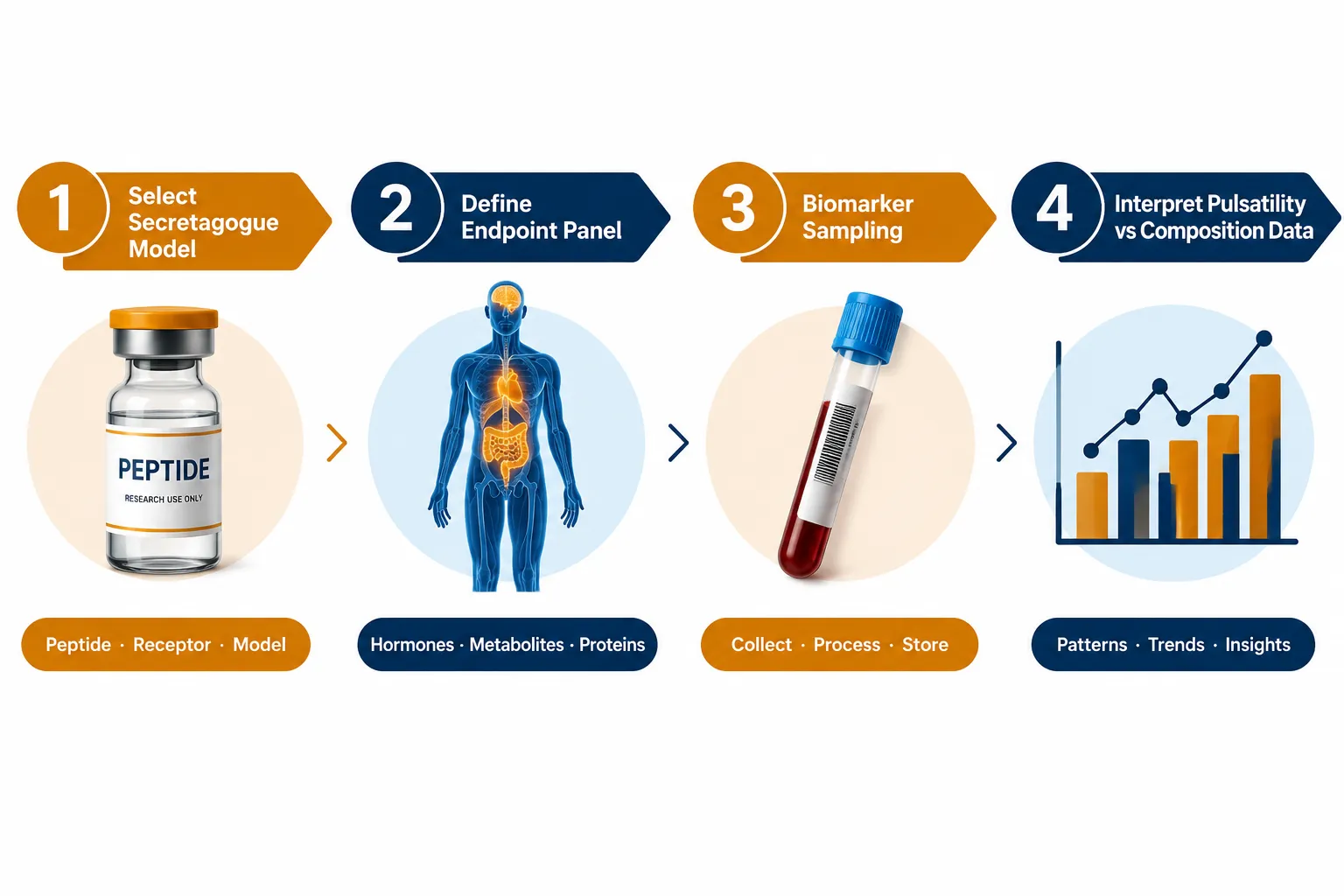
Biomarker panel recommendations by agent:

  • Tesamorelin studies: IGF-1, visceral adipose tissue by CT or MRI, hepatic fat fraction, trunk and limb fat by DEXA, muscle cross-sectional area, fasting glucose, lipid panel
  • Ipamorelin studies: GH pulse amplitude and frequency (serial sampling), IGF-1 (short-term), cortisol, prolactin, ACTH (to confirm selectivity), body weight in catabolic models

Conclusion

The research landscape in 2026 is clear on one point: tesa and ipamorelin are not interchangeable tools. Tesamorelin is the evidence leader for body-composition research, the only GHRH-pathway peptide with meta-analytic RCT data demonstrating measurable reductions in visceral fat, hepatic fat, and trunk fat alongside lean mass gains. Ipamorelin's value lies in its receptor selectivity and its ability to model physiological GH pulsatility without significant hormonal crosstalk, but its body-composition effects remain speculative pending controlled human trials.

Actionable next steps for research teams:

  1. Define your primary endpoint first, visceral fat reduction and lean mass require tesa; GH pulse modeling and recovery kinetics favor ipamorelin.
  2. Build biomarker panels that match the mechanism: IGF-1 and imaging endpoints for tesa; serial GH sampling and selectivity markers for ipamorelin.
  3. Review published tesa RCT data as the baseline reference for any GH secretagogue body-composition study.
  4. Treat ipamorelin findings as hypothesis-generating until human efficacy trials are completed.
  5. Ensure peptide purity and documentation before initiating any protocol, certificate-of-analysis verification is non-negotiable for reproducible results.
https://www.puretestedpeptides.com/wp-content/uploads/2026/09/tesa-vs-ipamorelin-in-body-composition-research-how-labs-model-gh-pulsati.webp 1024 1536 https://www.puretestedpeptides.com/wp-content/uploads/2026/01/buy-peptides-online.jpg 2026-09-06 13:03:542026-09-06 13:03:54Tesamorelin vs Ipamorelin in Body Composition Research: How Labs Model GH Pulsatility, Lean Mass, and Recovery With Different Secretagogues
CJC-1295 With DAC Half-Life and Dosing Frequency: Why Formulation Matters in GH Research

CJC-1295 With DAC Half-Life and Dosing Frequency: Why Formulation Matters in GH Research

August 19, 2026/0 Comments/in Uncategorized/by

A single chemical modification, the addition of a Drug Affinity Complex tail, extends a peptide's active window from roughly 30 minutes to approximately eight days. That gap is not a minor pharmacokinetic footnote; it fundamentally changes how growth hormone research is designed, how dosing schedules are structured, and what biological outcomes investigators can realistically expect. Understanding CJC-1295 With DAC Half-Life and Dosing Frequency: Why Formulation Matters in GH Research is therefore not optional background reading, it is the starting point for any rigorous GH study protocol in 2026.

Key Takeaways

  • CJC-1295 with DAC achieves an estimated half-life of 6-8 days through albumin binding, enabling once- or twice-weekly dosing in research settings.
  • The DAC modification is the sole structural reason for the extended half-life; removing it collapses the active window to roughly 30 minutes.
  • Sustained GH elevation ("GH bleed") differs meaningfully from physiologic pulsatile release, a distinction that shapes research endpoint selection.
  • Formulation choice, with or without DAC, is a primary design variable, not a secondary procurement decision.
  • Nomenclature errors and mislabeling remain a documented problem in the 2026 peptide supply chain, making third-party verification essential.

The DAC Mechanism: How One Modification Changes Everything

The DAC Mechanism: How One Modification Changes Everything

CJC-1295 is a synthetic analogue of growth hormone-releasing hormone (GHRH). In its base form, commonly called CJC-1295 without DAC or Modified GRF 1-29, the peptide stimulates the pituitary to release GH in a sharp, short burst before enzymatic degradation clears it from circulation. For a deeper look at how that shorter-acting version behaves, the article on CJC-1295 without DAC and why half-life matters in growth hormone research provides a useful parallel reference.

The DAC version adds a maleimidoproprionic acid-lysine linker, the Drug Affinity Complex, to the C-terminus of the peptide. This reactive group forms a covalent bond with cysteine-34 on circulating serum albumin. Because albumin has a natural half-life of roughly 19 days and is protected from renal filtration by its molecular weight, any peptide hitching a ride on albumin inherits a dramatically extended residence time.

The result: CJC-1295 with DAC achieves a documented half-life of approximately 6-8 days in preclinical and early human pharmacokinetic studies, compared to the 30-minute window of the no-DAC formulation. This is not a marginal improvement, it represents a roughly 300-fold increase in active exposure per dose.

"The DAC tail converts a transient GHRH mimetic into a sustained-release depot, fundamentally altering the pharmacodynamic profile and the entire research design logic that follows."

Dosing Frequency Implications: Once-Weekly vs. Twice-Weekly Patterns

Dosing Frequency Implications: Once-Weekly vs. Twice-Weekly Patterns

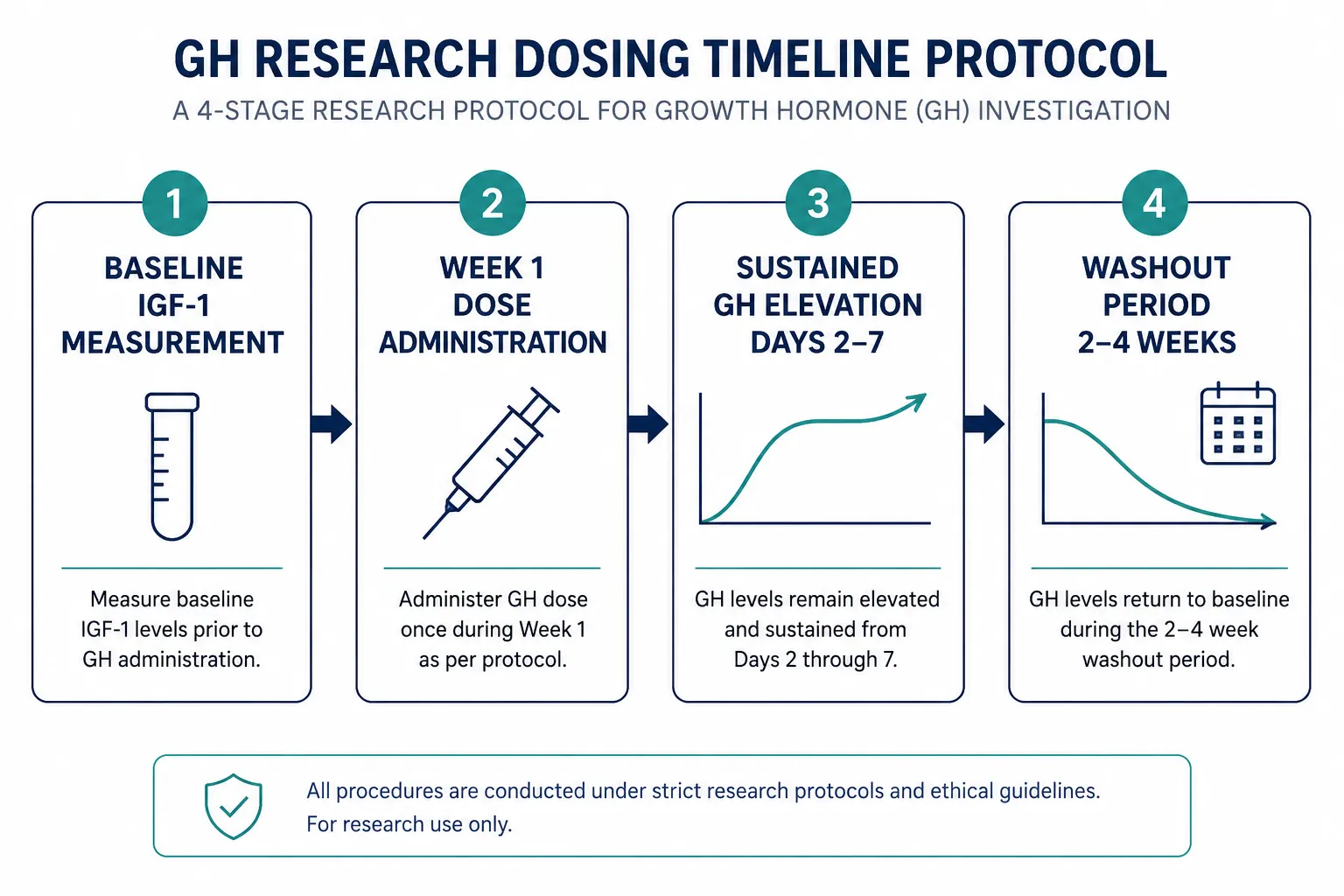
The extended half-life of CJC-1295 with DAC directly determines practical dosing intervals in research settings. Because plasma concentrations remain therapeutically relevant for approximately 7 days after a single administration, once-weekly dosing is the most commonly reported schedule in published research protocols. Some investigators use a twice-weekly schedule during initial loading phases to accelerate steady-state accumulation, then reduce to weekly maintenance.

Typical research dosing patterns observed in the literature:

Schedule Rationale Common Research Context
Once weekly Matches approximate half-life Steady-state GH/IGF-1 elevation studies
Twice weekly Faster steady-state accumulation Short-duration loading protocols
Every 10-14 days Conservative washout buffer Safety or tolerability assessments

This contrasts sharply with the no-DAC formulation, which requires daily or even multiple-daily administrations to maintain meaningful GH stimulation. Researchers exploring hormone research protocols should treat this dosing gap as a core variable when comparing outcomes across studies that used different formulations.

Washout and clearance also follow the extended half-life logic. Near-complete clearance of CJC-1295 with DAC requires approximately 2-4 weeks after the last dose, a window that must be factored into crossover study designs and endpoint timing.

GH Bleed vs. Physiologic Pulses: A Critical Research Design Distinction

GH Bleed vs. Physiologic Pulses: A Critical Research Design Distinction

One of the most actively debated topics in 2026 GH research circles is the difference between the "GH bleed" pattern produced by CJC-1295 with DAC and the pulsatile GH release that characterizes normal physiology.

Natural GH secretion occurs in discrete pulses, primarily during slow-wave sleep, with trough levels near zero between peaks. CJC-1295 with DAC, by contrast, produces a sustained, relatively flat elevation of GH and downstream IGF-1 over days. This pattern has both advantages and limitations depending on research objectives:

Advantages of sustained GH elevation in research:

  • Consistent IGF-1 elevation allows cleaner dose-response measurements
  • Reduced intra-subject variability in GH readings
  • Simpler blood sampling schedules

Limitations and considerations:

  • Does not replicate the physiologic pulsatile pattern
  • Prolonged GH exposure may confound endpoints sensitive to GH pulse amplitude
  • Longer washout periods complicate crossover designs

Researchers studying metabolic outcomes or body composition changes may find the sustained profile advantageous. Those focused on neuroendocrine signaling or sleep architecture may prefer the pulsatile dynamics of the no-DAC version or combination approaches. Blend formulations that combine multiple peptides, such as those explored in Tesamorelin/CJC-1295/Ipamorelin 12mg blend research, add further complexity by layering GHRP activity onto the GHRH backbone.

For broader context on growth hormone research design principles, the sustained vs. pulsatile distinction is increasingly recognized as a primary variable rather than a secondary consideration.

Formulation Integrity and Nomenclature Challenges in 2026

The phrase "CJC-1295 With DAC Half-Life and Dosing Frequency: Why Formulation Matters in GH Research" carries a practical warning embedded in its title: formulation identity must be verified, not assumed. A 2026 market analysis of peptide supply chains identified persistent mislabeling between CJC-1295 with DAC and Modified GRF 1-29 (no DAC). Because the two compounds look identical in lyophilized powder form and share similar molecular weights, visual inspection cannot distinguish them.

Verification best practices for research procurement:

  • Require certificate of analysis (CoA) from an independent third-party laboratory
  • Confirm mass spectrometry data matches the expected molecular weight for the DAC-conjugated form
  • Cross-reference HPLC purity data against published reference standards
  • Source from suppliers with documented quality control processes

This is not a theoretical concern. A researcher who believes they are administering a once-weekly sustained-release compound but is actually using the no-DAC version will see dramatically different GH kinetics, potentially invalidating the study's conclusions. Similar quality-verification principles apply across the broader peptide research space, as discussed in resources like the BPC-157 core peptides documentation first research guide and MOTS-C peptide and mitochondrial biogenesis research.

Researchers working with multi-peptide stacks that include Sermorelin or Ipamorelin alongside CJC-1295 should also consult formulation-specific documentation, such as the Sermorelin/Ipamorelin/CJC-1295 combination reference.

Conclusion

The pharmacokinetic profile of CJC-1295 with DAC is not a background detail, it is the central design parameter around which every other element of a GH research protocol should be built. The 6-8 day half-life, driven by albumin binding through the DAC modification, enables once-weekly dosing, produces sustained IGF-1 elevation, and requires a 2-4 week washout window. Each of these characteristics creates both opportunities and constraints that differ fundamentally from the no-DAC formulation.

Actionable next steps for researchers in 2026:

  1. Clarify the research objective first. If pulsatile GH dynamics are relevant to the endpoint, the no-DAC formulation may be more appropriate. If sustained IGF-1 elevation is the goal, the DAC version offers a cleaner signal.
  2. Verify formulation identity independently. Do not rely on labeling alone; require third-party mass spectrometry and HPLC data before initiating a protocol.
  3. Design washout periods around the actual half-life. A minimum of 2-4 weeks is necessary for near-complete clearance, and crossover designs must account for this window explicitly.
  4. Document the formulation used in all published outputs. Ambiguous nomenclature in the literature contributes to reproducibility failures; specifying "with DAC" or "without DAC" in every reference prevents downstream confusion.

Formulation choice is a research lever. Using it deliberately, with a clear understanding of the pharmacokinetics involved, is what separates rigorous GH research from inconclusive data.

https://www.puretestedpeptides.com/wp-content/uploads/2026/08/cjc-1295-with-dac-half-life-and-dosing-frequency-why-formulation-matters-in-gh-r.webp 1024 1536 https://www.puretestedpeptides.com/wp-content/uploads/2026/01/buy-peptides-online.jpg 2026-08-19 13:03:462026-08-19 13:03:46CJC-1295 With DAC Half-Life and Dosing Frequency: Why Formulation Matters in GH Research

Tag Archive for: ghrh analogue

Tesamorelin and Ipamorelin: Differentiating Their Growth Hormone Releasing Mechanisms for Research

Tesamorelin and Ipamorelin: Differentiating Their Growth Hormone Releasing Mechanisms for Research

July 8, 2026/0 Comments/by Pure Tested

Two peptides can both raise growth hormone levels yet work through completely different biological locks and keys, that distinction is exactly what makes studying Tesamorelin and Ipamorelin: Differentiating Their Growth Hormone Releasing Mechanisms for Research so valuable for investigators designing targeted protocols in 2026.

Key Takeaways

  • Tesamorelin acts on the GHRH receptor (GHRH-R), mimicking the body's natural growth hormone-releasing hormone.
  • Ipamorelin acts on the ghrelin receptor (GHSR-1a), classifying it as a growth hormone secretagogue.
  • These distinct receptor targets produce different pulse patterns, selectivity profiles, and downstream effects.
  • Combining both peptides may amplify GH release through complementary, non-competing pathways.
  • Researchers must account for these mechanistic differences when designing assays, dosing schedules, and outcome measures.

Key Takeaways

Understanding the Two Core Mechanisms

At the heart of Tesamorelin and Ipamorelin: Differentiating Their Growth Hormone Releasing Mechanisms for Research is a straightforward but critical distinction: receptor class.

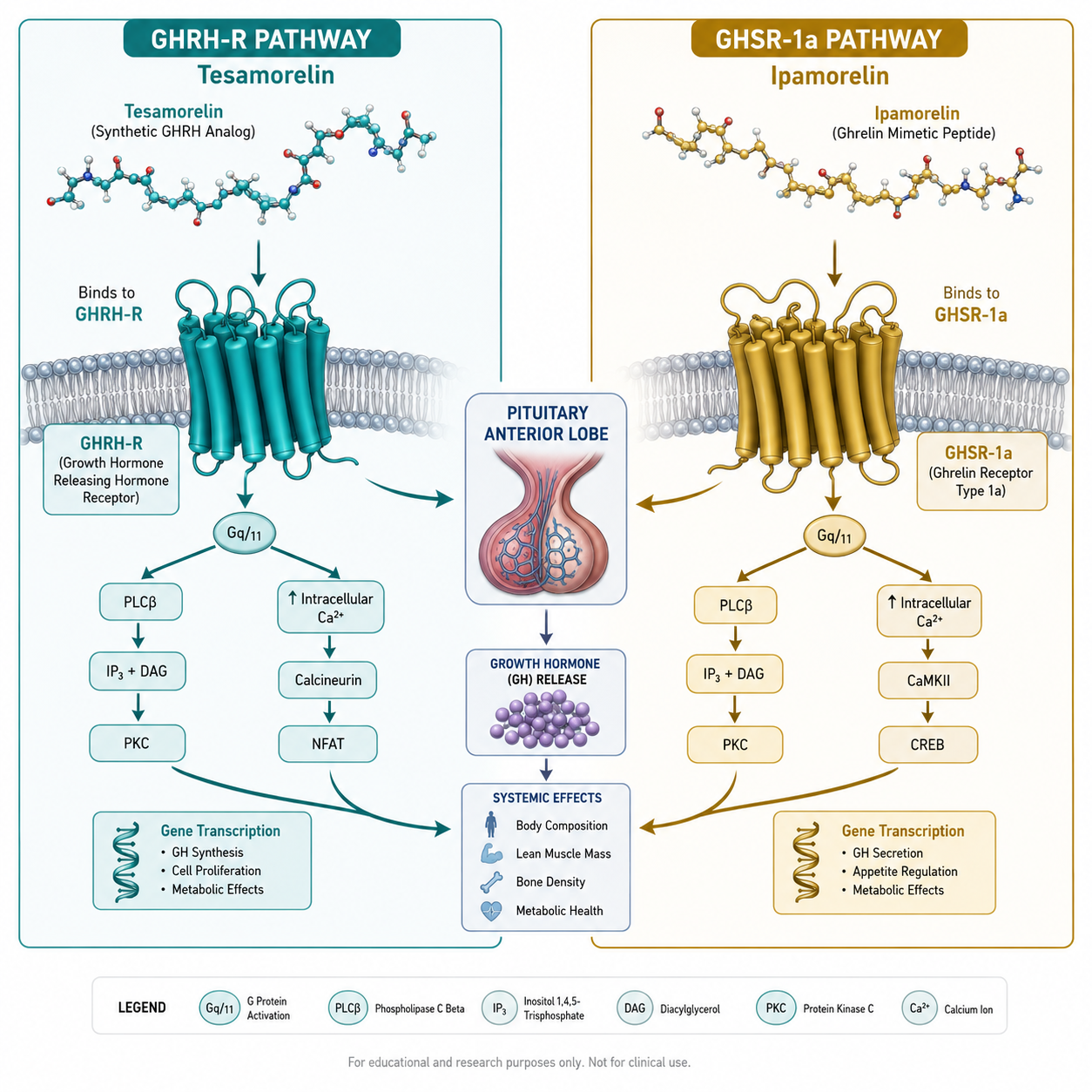
Tesamorelin is a synthetic analogue of endogenous growth hormone-releasing hormone (GHRH). It binds selectively to the GHRH receptor (GHRH-R) on somatotroph cells in the anterior pituitary. This binding triggers a cyclic AMP (cAMP)-dependent signaling cascade that stimulates GH synthesis and secretion. Because it mirrors the body's own GHRH, the resulting GH pulses tend to follow a physiologically familiar pattern. Researchers interested in Tesamorelin's benefits and mechanisms often note its strong clinical validation, including FDA approval for HIV-associated lipodystrophy.

Ipamorelin, by contrast, belongs to the growth hormone secretagogue (GHS) class. It binds to the ghrelin receptor, formally called GHSR-1a. Rather than mimicking GHRH, Ipamorelin mimics ghrelin, a gut-derived hormone that signals energy status to the pituitary. This receptor engagement activates a phospholipase C / inositol trisphosphate (IP3) pathway, which is mechanistically separate from the cAMP route used by Tesamorelin. Ipamorelin is also noted for its high selectivity; unlike older GHS peptides, it produces minimal stimulation of cortisol or prolactin.

Research Insight: Because Tesamorelin and Ipamorelin engage separate receptor classes, they can stimulate GH release through additive or synergistic pathways without directly competing for the same binding site.

Side-by-Side Comparison for Research Planning

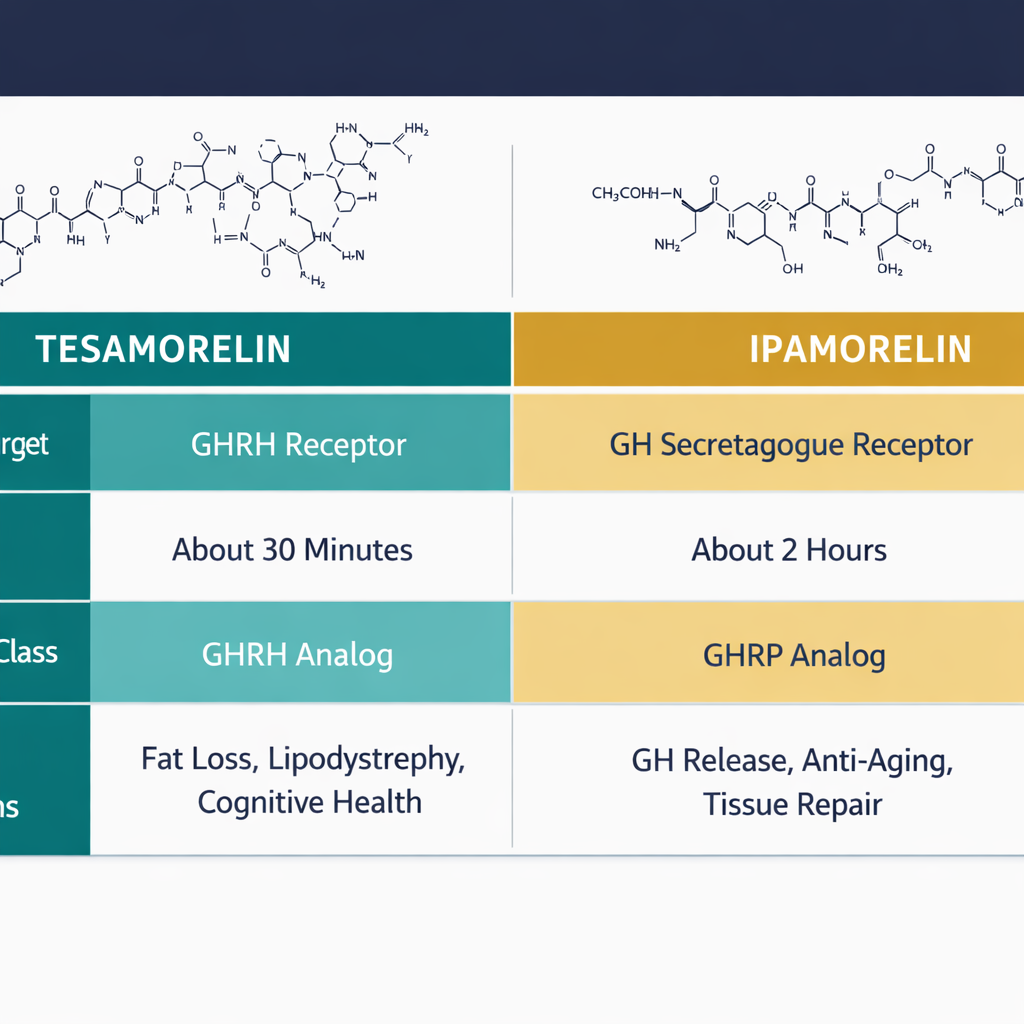
Feature Tesamorelin Ipamorelin
Peptide Class GHRH Analogue GH Secretagogue (GHS)
Primary Receptor GHRH-R GHSR-1a (Ghrelin Receptor)
Signaling Pathway cAMP / PKA PLC / IP3
Selectivity High (GH axis) Very High (minimal cortisol/prolactin)
Combination Potential Complementary with GHS Complementary with GHRH analogues

Side-by-Side Comparison for Research Planning

For researchers evaluating Ipamorelin versus Tesamorelin as standalone or combined agents, this receptor-level separation is the most important design variable to control.


Research Applications and Combination Protocols

Understanding Tesamorelin and Ipamorelin: Differentiating Their Growth Hormone Releasing Mechanisms for Research becomes especially actionable when planning multi-peptide protocols.

Because the two peptides work on different receptors, stacking them does not create direct receptor competition. Studies examining the safety of combining Tesamorelin with CJC/Ipamorelin suggest that dual-pathway stimulation can produce a more robust GH pulse than either agent alone. This is also why blended formulations, such as the Tesamorelin, CJC-1295, and Ipamorelin 12mg blend, have attracted research interest.

Key research considerations when using both peptides:

  • Pulse timing: Tesamorelin pulses follow endogenous GHRH rhythms; Ipamorelin pulses can be timed more flexibly due to ghrelin receptor kinetics.
  • Feedback sensitivity: Both peptides remain subject to somatostatin-mediated negative feedback, so researchers should account for somatostatin tone in study design.
  • Dosing protocols: Reviewing established Tesamorelin dosage frameworks alongside Ipamorelin titration data helps set appropriate research benchmarks.
  • Outcome markers: IGF-1 levels, GH pulse amplitude, and body composition metrics each respond differently depending on which receptor pathway is engaged.

Researchers comparing GHRH-class peptides more broadly may also find value in reviewing Sermorelin, Ipamorelin, and CJC-1295 combination research to contextualize Tesamorelin's relative potency and duration of action.

Research Applications and Combination Protocols


Conclusion

Differentiating Tesamorelin and Ipamorelin at the receptor level, GHRH-R versus GHSR-1a, is not a minor technical detail. It shapes every aspect of a well-designed GH research protocol, from signal pathway selection and pulse timing to combination strategy and outcome measurement.

Actionable next steps for researchers:

  1. Define whether the study goal requires GHRH-pathway activation, ghrelin-pathway activation, or both.
  2. Review published Tesamorelin benefit profiles and Ipamorelin selectivity data before finalizing dosing schedules.
  3. Source peptides from verified, lab-tested suppliers to ensure purity and accurate concentration for reliable data.
  4. Consider CJC-1295 and Ipamorelin assay planning resources when building a multi-peptide experimental framework.

Mechanistic clarity is the foundation of reproducible peptide research. Knowing precisely how each compound triggers GH release allows investigators to isolate variables, interpret results accurately, and build on findings with confidence.

https://www.puretestedpeptides.com/wp-content/uploads/2026/07/Tesamorelin-and-Ipamorelin-Differentiating-Their-Growth-Hormone-Releasing-Mechanisms-for-Research.png 1024 1024 Pure Tested https://www.puretestedpeptides.com/wp-content/uploads/2026/01/buy-peptides-online.jpg Pure Tested2026-07-08 13:05:332026-07-20 15:00:48Tesamorelin and Ipamorelin: Differentiating Their Growth Hormone Releasing Mechanisms for Research
×

Helpful Links

  • My account
  • Cart
  • Checkout
  • Refund and Returns Policy
  • Privacy Policy
  • SMS Privacy Policy
  • Login
  • My Account
  • Logout

USA Made Lab Tested Peptides

All products are sold for research, laboratory, or analytical purposes only, and are not for human consumption


Pure Tested Peptides is a chemical supplier. Pure Tested Peptides is not a compounding / chemical compounding facility as defined under 503A of the Federal Food, Drug, and Cosmetic act. Pure Tested Peptides is not an outsourcing facility as defined under 503B of the Federal Food, Drug, and Cosmetic act.

The statements made within this website have not been evaluated by the US Food and Drug Administration. The products we offer are not intended to diagnose, treat, cure or prevent any disease.

Human/Animal Consumption Prohibited. Laboratory/In-Vitro Experimental Use Only

Scroll to top Scroll to top Scroll to top