Call or Text 727-513-9780
  • Shopping Cart Shopping Cart
    0Shopping Cart
Pure Tested Peptides | America's most trusted Peptides for sale online
  • Peptides for sale
    • Oral Peptides for sale
      • Peptide Capsules for sale
      • BPC 157 Capsules 1000mcg
      • SLU-PP-332 Capsules | 1000 mcg
      • 5-Amino-1MQ 50mg Capsules
      • Tesofensine 500mcg
    • All Peptides for sale
    • Peptide Sprays
      • BPC 157 Nasal Spray Kit
      • BPC-157 TB500 Nasal Spray Kit
      • Semax Nasal Spray 10mg
      • Selank – Nasal Spray Kit – 10mg
      • Epithalon 50MG Nasal Spray Kit
      • Ipamorelin 10mg Nasal Spray
      • Klow Nasal Spray (BPC-157 + TB-500 + GHK-Cu + KPV) | 80mg
      • Hulk Nasal Spray Tesa / Ipa Blend 6/3 MG
      • Klow Nasal Spray
      • NAD + 500 mg Nasal Spray
      • PT-141 Nasal Spray Kit
    • GHRH Peptides
      • Ipa Peptides
      • CJC-1295 Peptides
        • CJC-1295 with DAC 5 mg
        • CJC-1295 without DAC 5 mg
        • CJC-1295 Ipa 10mg
      • Tesa Peptides
        • Tesa Peptide
        • Tesa 20 mg
    • GHK-Cu Peptides
      • All GHK-Cu Peptides
      • GHK-Cu 100mg
      • KLOW Peptide Blend – Buy KLOW blend online
    • BPC Peptides
      • All BPC Peptides
      • BPC-157
      • BPC-157 TB-500
      • BPC 157 capsules 1000mcg
    • SLU-PP-332 Peptides
      • All SLU-PP-332 Peptides
      • SLU-PP-332 5mg
    • GLP3 Peptides
      • GLP3-R
      • GLP3-R CAG 10mg
      • GLP3-R 20mg
    • PT-141 Peptides
      • PT-141 Peptides for sale
      • PT-141 10mg
      • PT-141 Nasal Spray
    • CAG Peptides
      • Lipo-C Peptide Blend
      • CAG 5mg
      • CAG 10mg
    • MOTS-C Peptides
      • MOTS-C Peptides for sale
      • MOTS-c peptide
      • MOTS-c 10mg *6 pack*
    • 5 Amino 1MQ Peptides
      • 5 Amino 1MQ Peptides for sale
      • 5-Amino-1MQ 50mg Capsules
      • 5-Amino-1MQ 5mg
    • Epithalon Peptides
      • Epithalon Peptides for sale
      • Epithalon 10mg
      • Epithalon 50mg
  • Shop
    • GLPs
      • 5-Amino-1MQ 50mg Capsules
      • 5-Amino-1MQ 5mg
      • GLP3-Reta
      • L-Carnitine 500mg/ml
      • Tesofensine 500mcg
      • SLU-PP-332 5mg
      • MOTS-c 10mg *6 pack*
    • Epithalon & BPC Peptides
      • Epithalon 10mg
      • Epithalon 50mg
      • BPC-157
      • BPC 157 capsules 1000mcg
      • BPC-157 TB-500
      • BPC-157 TB500 Nasal Spray Kit
      • BPC 157 Nasal Spray Kit
    • BPC TB-500 & NAD+ Peptides
      • NAD+ 500 mg
      • KLOW Peptide Blend – Buy KLOW blend online
      • GLOW Peptide Blend
      • TB 500 5mg
      • BPC 157 capsules 1000mcg – Supplement
      • BPC 157 Nasal Spray Kit
      • BPC-157
      • BPC-157 TB500 Nasal Spray Kit
      • BPC-157 TB-500
      • BPC 157 capsules 1000mcg
    • LL-37 Peptide
      • LL-37 10 mg
    • MOTS-C & Selank
      • MOTS-c peptide
      • Selank 10mg
    • GHK Peptides
      • GHK-Cu 100mg
      • GLOW Peptide Blend
      • KLOW Peptide Blend – Buy KLOW blend online
  • COAs
  • Wholesale
    • Wholesale Peptides for sale
  • PTP FAQ
  • Affiliates
    • Selank Peptide: Advanced Pharmacological Mechanisms Underlying Its Anxiolytic and Nootropic Effects in Research
      • 5-Amino-1MQ Peptide: Detailed Mechanisms of NNMT Inhibition and Its Impact on Cellular Metabolism Research
        • MOTS-C Peptide: Unraveling Its Role in Mitochondrial Dynamics and Energy Metabolism Research
          • Epithalon Peptide and Telomerase Regulation: Investigating Its Impact on Cellular Senescence and Lifespan Research Models
            • GLP2-T vs GLP2 Tirz Peptide: Understanding the Naming, Mechanistic Nuances, and Research Implications for Gut Health
      • Peptides and Polypeptides in Modern Pharmacology: What Research on Metoprolol, Prednisone, and Amlodipine Reveals
        • Polypeptide Peptides vs NSAIDs: What Naproxen and Diclofenac Teach Tissue-Repair Researchers About BPC‑157 and TB‑500
          • Peptides and Polypeptides in Endocrine Pharmacology: How GLP-1, GLP-2, and GLP-3 Retatrutide Differ From Classic Drugs Like Prednisone and Amlodipine
          • 5‑Amino‑1MQ Peptide and NNMT Inhibition: How It Compares With Statins Like Atorvastatin in Adipose and Lipid Metabolism Research
      • Enclomiphene, Estrogen Receptor Signaling, and Luteinizing Phase Biology: What Hormone Researchers Should Measure
        • Mesenchymal Stem Cells, BPC‑157, and GHK‑Cu: How Tissue Repair Peptides Compare With Classic NSAIDs Like Naproxen in Injury Models
          • Peptide Calculator Use Cases Beyond Growth Hormone: Working Through GLP‑3 Retatrutide, MOTS‑c, and BPC‑157 Research Dosing
        • Polypeptide Peptides in Endocrine and Metabolic Pharmacology: Lessons From Amlodipine, Prednisone, and Metoprolol
        • Peptides Calculator for Advanced Blends: Worked Examples for Tesamorelin, CJC‑1295, and Ipamorelin Stacks
          • Peptides and Polypeptides in Human Physiology: How Molecular Size Shapes Research Applications
            • Selank Peptide: Advanced Pharmacological Mechanisms Underlying Its Anxiolytic and Nootropic Effects in Research
          • 5-Amino-1MQ Peptide: Detailed Mechanisms of NNMT Inhibition and Its Impact on Cellular Metabolism Research
            • MOTS-C Peptide: Unraveling Its Role in Mitochondrial Dynamics and Energy Metabolism Research
              • Epithalon Peptide and Telomerase Regulation: Investigating Its Impact on Cellular Senescence and Lifespan Research Models
                • GLP2-T vs GLP2 Tirz Peptide: Understanding the Naming, Mechanistic Nuances, and Research Implications for Gut Health
                  • Peptides and Polypeptides in Endocrine Pharmacology: How GLP-1, GLP-2, and GLP-3 Retatrutide Differ From Classic Drugs Like Prednisone and Amlodipine
                    • Polypeptide Peptides vs NSAIDs: What Naproxen and Diclofenac Teach Tissue-Repair Researchers About BPC‑157 and TB‑500
                      • Peptides and Polypeptides in Modern Pharmacology: What Research on Metoprolol, Prednisone, and Amlodipine Reveals
                        • 5‑Amino‑1MQ Peptide and NNMT Inhibition: How It Compares With Statins Like Atorvastatin in Adipose and Lipid Metabolism Research
                        • Enclomiphene, Estrogen Receptor Signaling, and Luteinizing Phase Biology: What Hormone Researchers Should Measure
                        • Mesenchymal Stem Cells, BPC‑157, and GHK‑Cu: How Tissue Repair Peptides Compare With Classic NSAIDs Like Naproxen in Injury Models
                        • Peptide Calculator Use Cases Beyond Growth Hormone: Working Through GLP‑3 Retatrutide, MOTS‑c, and BPC‑157 Research Dosing
                        • Polypeptide Peptides in Endocrine and Metabolic Pharmacology: Lessons From Amlodipine, Prednisone, and Metoprolol
                        • Peptides Calculator for Advanced Blends: Worked Examples for Tesamorelin, CJC‑1295, and Ipamorelin Stacks
                        • Peptides and Polypeptides in Human Physiology: How Molecular Size Shapes Research Applications
                        • Selank Peptide: Advanced Pharmacological Mechanisms Underlying Its Anxiolytic and Nootropic Effects in Research
                        • MOTS-C Peptide: Unraveling Its Role in Mitochondrial Dynamics and Energy Metabolism Research
                        • Peptides and Polypeptides in Modern Pharmacology: What Research on Metoprolol, Prednisone, and Amlodipine Reveals
                        • Peptides and Polypeptides in Endocrine Pharmacology: How GLP-1, GLP-2, and GLP-3 Retatrutide Differ From Classic Drugs Like Prednisone and Amlodipine
                        • 5-Amino-1MQ Peptide: Detailed Mechanisms of NNMT Inhibition and Its Impact on Cellular Metabolism Research
                        • Mesenchymal Stem Cells, BPC‑157, and GHK‑Cu: How Tissue Repair Peptides Compare With Classic NSAIDs Like Naproxen in Injury Models
                        • Peptide Calculator Use Cases Beyond Growth Hormone: Working Through GLP‑3 Retatrutide, MOTS‑c, and BPC‑157 Research Dosing
                        • GLP2-T vs GLP2 Tirz Peptide: Understanding the Naming, Mechanistic Nuances, and Research Implications for Gut Health
                        • Polypeptide Peptides in Endocrine and Metabolic Pharmacology: Lessons From Amlodipine, Prednisone, and Metoprolol
                        • Polypeptide Peptides vs NSAIDs: What Naproxen and Diclofenac Teach Tissue-Repair Researchers About BPC‑157 and TB‑500
                        • Peptides and Polypeptides in Human Physiology: How Molecular Size Shapes Research Applications
                        • Peptides Calculator for Advanced Blends: Worked Examples for Tesamorelin, CJC‑1295, and Ipamorelin Stacks
                        • 5‑Amino‑1MQ Peptide and NNMT Inhibition: How It Compares With Statins Like Atorvastatin in Adipose and Lipid Metabolism Research
                        • Enclomiphene, Estrogen Receptor Signaling, and Luteinizing Phase Biology: What Hormone Researchers Should Measure
                        • Epithalon Peptide and Telomerase Regulation: Investigating Its Impact on Cellular Senescence and Lifespan Research Models
                        • Best research protocol Klow blend
                        • best time to take BPC-157
                        • best time to take DSIP (Delta Sleep Inducing Peptide)
                        • best time to take CJC-1295
                        • best time to take AOD-9604
                        • best time to take Follistatin 344
                        • best time to take Ipamorelin
                        • best time to take MK-677 (Ibutamoren)
                        • best time to take Ligandrol (LGD-4033) — research compound
                        • best time to take Ostarine (MK-2866) — research compound
                        • best time to take GHK-CU
                        • best time to take TB-500
                        • best time to take MOTS-c
                        • best time to take Semax
                        • best time to take RAD-140 (Testolone) — research compound
                        • best time to take Thymosin Alpha-1
                        • best time to take PEG-MGF
                        • Biolife Plasma, Octapharma Plasma, and Research Peptides: How Plasma Donation Labs Differ From Peptide Suppliers
                        • best time to take YK-11 — research compound
                        • best time to take PT-141 (Bremelanotide)
                        • Best research protocol Klow blend
                        • 5-Amino-1MQ and MOTS-C Synergy: Metabolic Signaling, Mitochondria, and Research Design
                        • BPC-157 and TB-500: Investigating Their Combined Effects on Angiogenesis and Cellular Migration in Tissue Repair Models
                        • BPC-157 Peptide: Gut Barrier Function, Inflammation, and Tissue-Recovery Research
                        • 5‑Amino‑1MQ and MOTS‑c Synergy in Metabolic Research: Designing NNMT and Mitochondrial Biogenesis Stacks
                        • CJC-1295 with DAC vs. Without DAC: Half-Life, Release Kinetics, and Research Implications
                        • CJC‑1295 with DAC vs. Without DAC: Expanding on Half‑Life Differences Using Tesamorelin and Ipamorelin Blend Case Studies
                        • Collagen Biology and Copper‑Binding Peptides: How GHK‑Cu, Glow Blend, and Klow Blend Interact with Skin and Connective Tissue
                        • Collagen Biology and Regenerative Peptides: How GHK‑Cu, Glow Blend, and Klow Blend Affect Extracellular Matrix Research
                    • DNA, Telomeres, and Longevity Peptides: Positioning Epithalon and MOTS‑c in Genetic Aging Research
                      • Enclomiphene Citrate: serm Mechanism, Testosterone Research, and Stack Compatibility
                        • Enclomiphene vs Enclomiphene Citrate: Formulation, Bioavailability, and Research Distinctions
                        • Epithalon Peptide Research: Telomerase Activation, Aging, and Pineal Gland Function
                        • Estrogen Receptor Signaling and Enclomiphene: How Selective Modulators Compare with Classic Polypeptide Hormones
                        • GHK-Cu Peptide: Advanced Mechanisms in Extracellular Matrix Remodeling and Wound Healing Research
                        • GHK-Cu Peptide: Collagen Synthesis, Wound Repair, and Skin-Barrier Research Models
                        • GLP-1 vs GLP-3 vs GLP-2: Peptide Classification and Research Applications
                        • GLP-2 Peptide Research Guide: Gut Barrier Function, Nutrient Absorption, and Intestinal Recovery Models
                        • GLP-3 Retatrutide vs. GLP-1 Drugs: What Triple-Agonist Biology Changes in Research Models
                        • Ipamorelin and Tesamorelin Combination: Synergistic GH Secretagogue Research and Dosing Protocols
                        • GLP2 Tirz Peptide: What It Is, Why the Name Exists, and How Researchers Should Interpret It
                        • Klow Blend Peptide Nasal Spray: What the Formulation Is Trying to Do in Cognitive Research
                        • Mitochondria, NNMT Inhibition, and Peptide Modulators: Where MOTS‑c and 5‑Amino‑1MQ Fit in Cellular Energy Research
                        • MOTS-c Peptide: Mitochondrial Function, Energy Metabolism, and What Researchers Measure
                        • MOTS-c vs. 5-Amino-1MQ: Which Metabolic Research Questions Each Compound Actually Answers
                        • Nasal Spray Peptides: Bioavailability, Administration, and Semax/Selank Research Applications
                        • PT-141 Peptide Research: Mechanism of Action and Melanocortin Receptor Signaling
                        • Retatrutide for Research: Mechanism, Structure, and GLP-1/GLP-3 Dual Action
                        • Retatrutide for Obesity and Type 2 Diabetes: What the Latest Trial Data Suggest
                        • Tesofensine Peptide Research: Mechanism, Appetite Suppression, and Neuropeptide Y Pathways
  • Contact
    • Contact Customer Service
    • Text Customer Support
  • About US
  • Shop all peptides
  • Affiliate Program
    • Affiliate Signup
  • Login / Register Login / Register Page Link Login / Register Page Link
  • Click to open the search input field Click to open the search input field Search
  • Menu Menu

Tag Archive for: gipr agonist

Retatrutide (GLP-3) Peptide: Triple GLP Receptor Agonist Mechanism and Research Applications

Retatrutide (GLP-3) Peptide: Triple GLP Receptor Agonist Mechanism and Research Applications

August 9, 2026/0 Comments/in Uncategorized/by

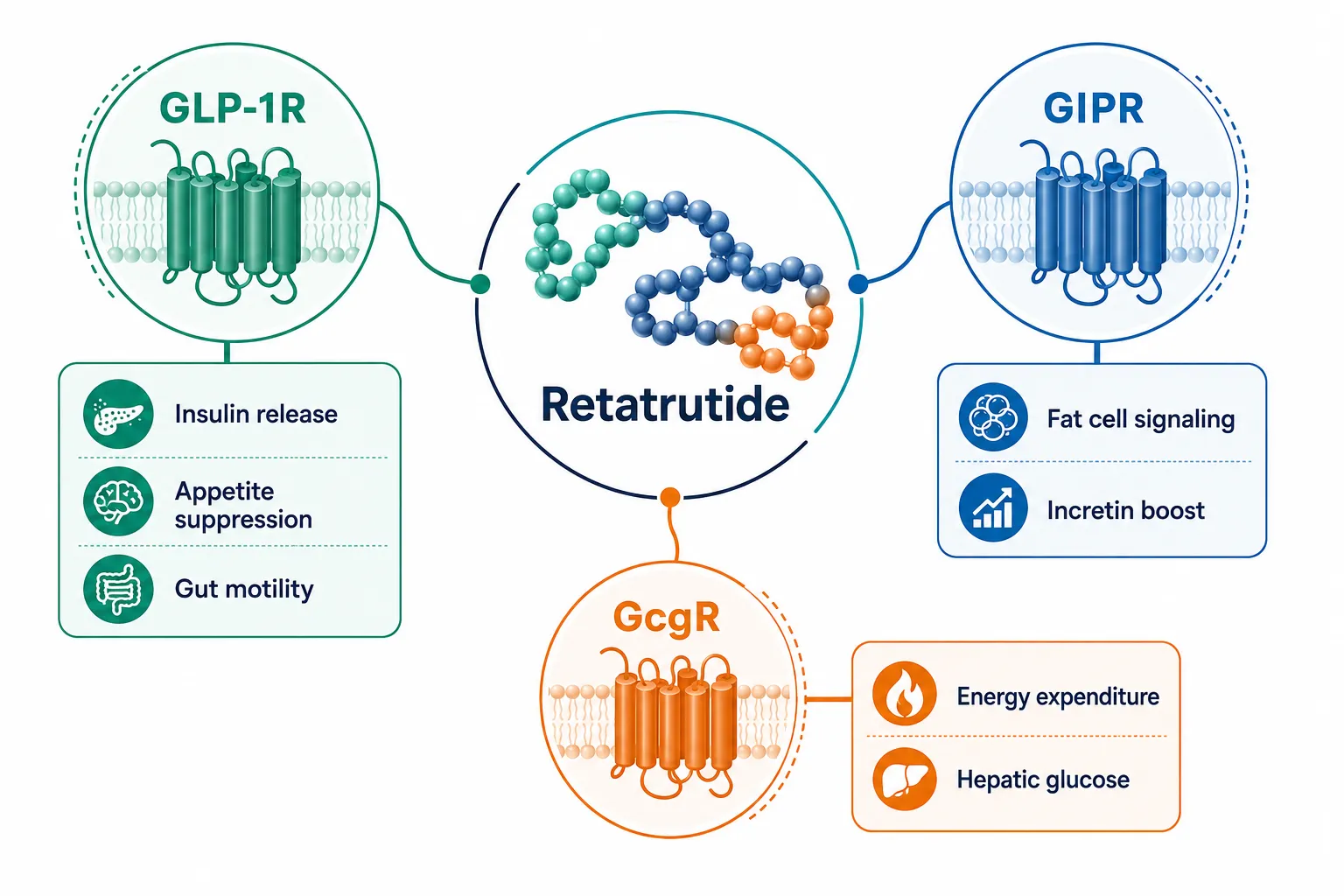
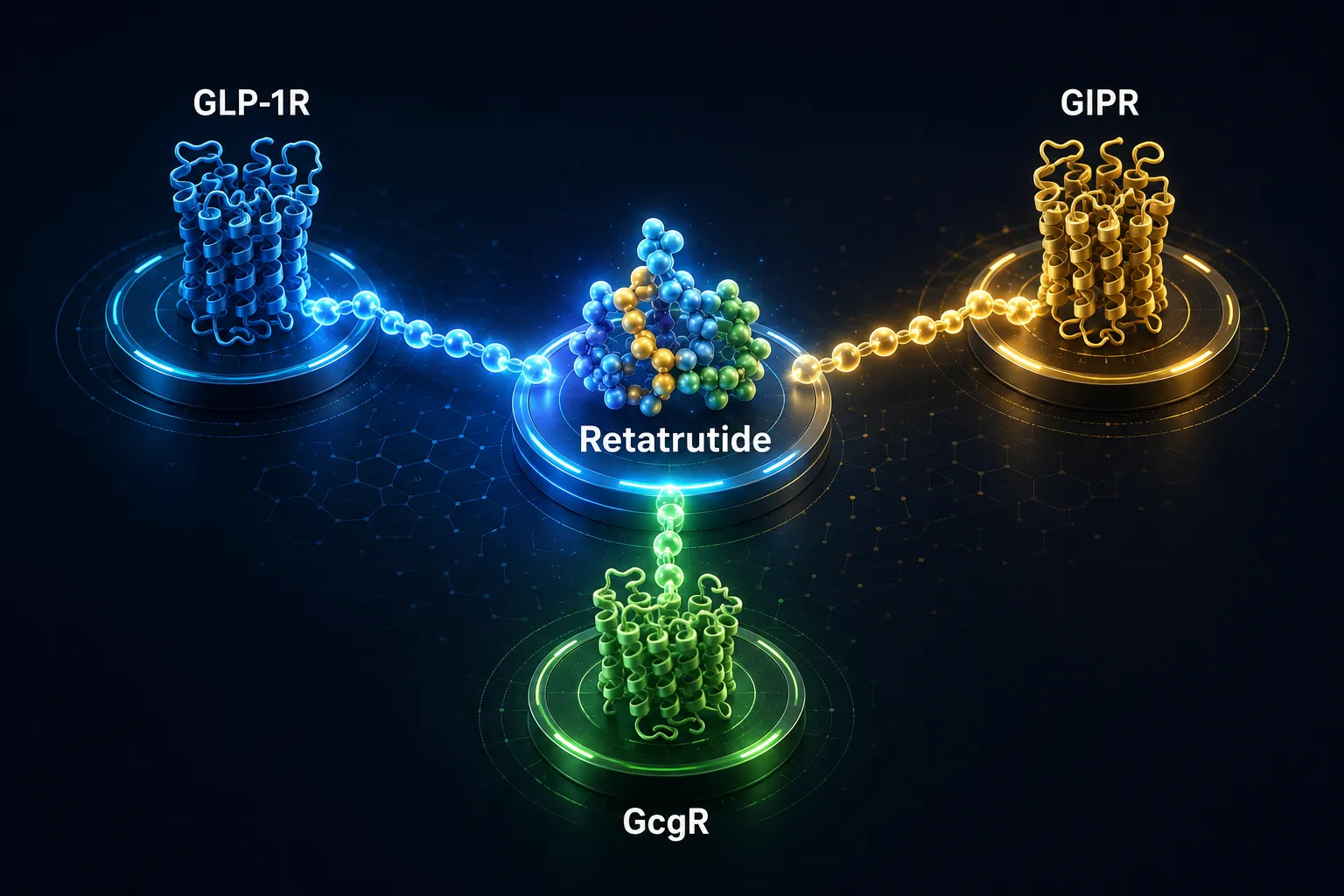
Isometric scientific illustration, (), showing three distinct receptor nodes — GLP-1R, GIPR, and GcgR — connected by glowing

A single peptide that simultaneously activates three distinct metabolic receptors represents one of the most structurally ambitious pharmacological strategies in modern endocrinology research. Retatrutide (GLP-3) Peptide: Triple GLP Receptor Agonist Mechanism and Research Applications has become a focal point for metabolic scientists precisely because its receptor-binding profile is unlike any single-target incretin studied before it. Understanding why that matters requires a close look at receptor biology, not clinical headlines.

"Retatrutide's value as a research tool lies not in its weight-loss numbers, but in what its triple-receptor engagement reveals about how the body regulates energy at a systems level."

Key Takeaways

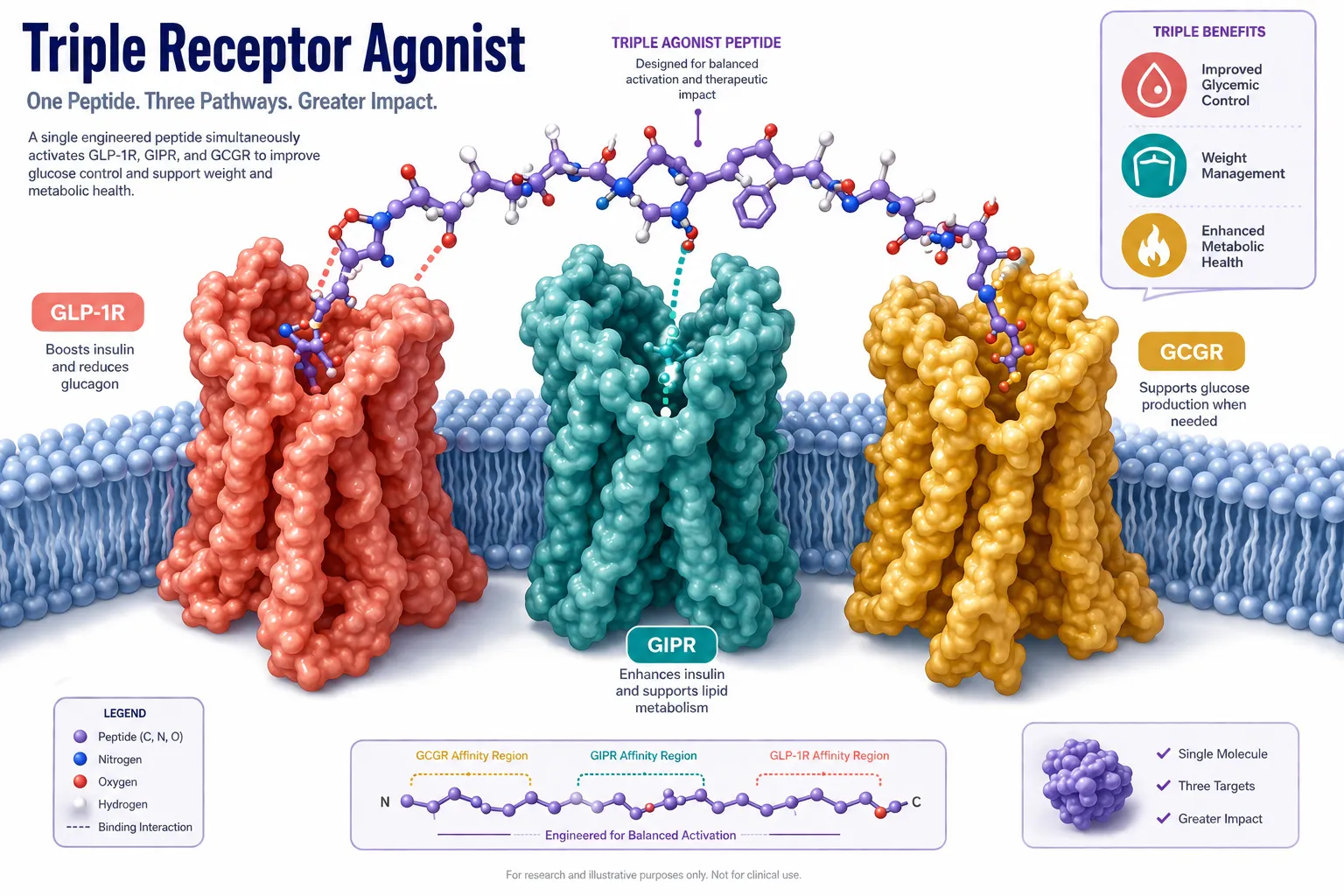
  • Retatrutide is a synthetic peptide that co-agonizes three receptors: GLP-1R, GIPR, and the glucagon receptor (GcgR).
  • Each receptor contributes distinct metabolic signals, insulin secretion, fat mobilization, and energy expenditure, making the combined profile scientifically unique.
  • Preclinical and Phase 2 trial data show pronounced effects on body weight, liver fat, and glycemic markers.
  • The compound is strictly a research-use molecule; it is not approved for human therapeutic use as of 2026.
  • Researchers studying metabolic peptides benefit from understanding how retatrutide's mechanism differs from single or dual agonists.

The Three-Receptor Architecture Behind Retatrutide

To appreciate Retatrutide (GLP-3) Peptide: Triple GLP Receptor Agonist Mechanism and Research Applications, researchers must first understand what each receptor does independently.

GLP-1 Receptor (GLP-1R)

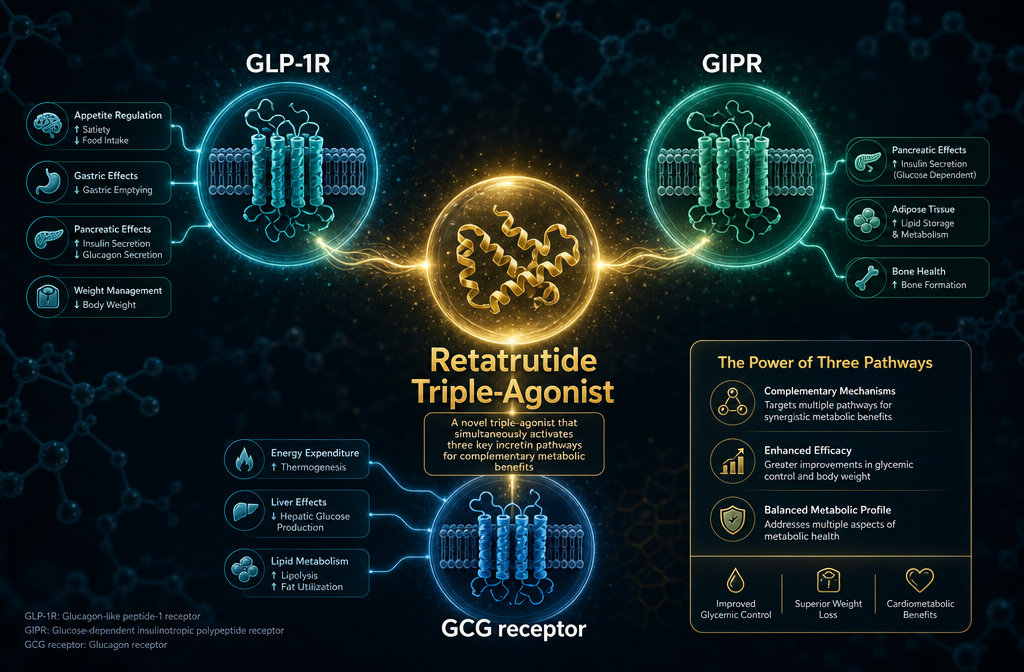
The glucagon-like peptide-1 receptor is the most studied incretin target. When activated, GLP-1R:

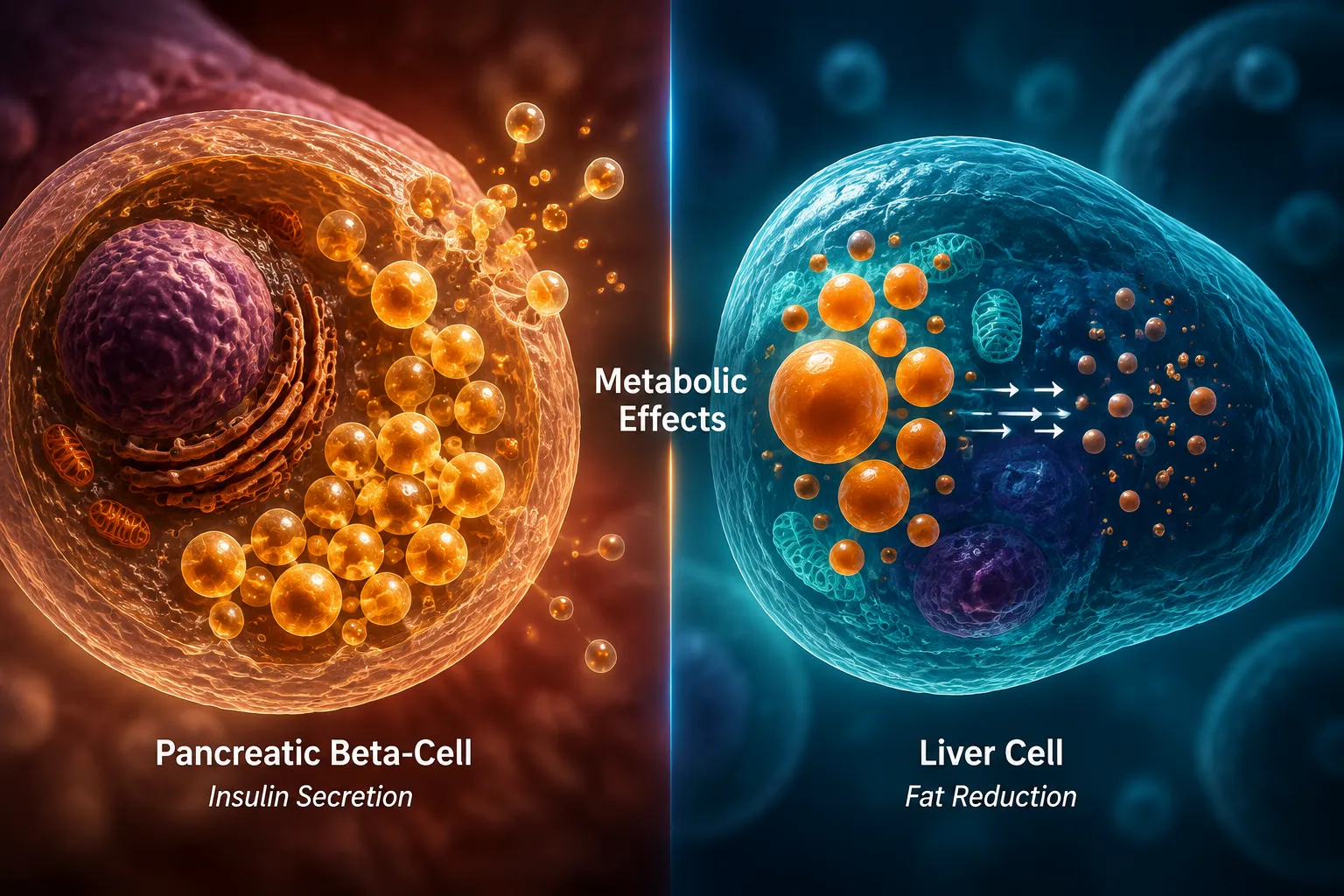
  • Stimulates glucose-dependent insulin secretion from pancreatic beta cells
  • Suppresses glucagon release from alpha cells
  • Slows gastric emptying, reducing postprandial glucose spikes
  • Acts on hypothalamic circuits to reduce appetite signaling

For a broader overview of how GLP-1 compounds are used in research contexts, see GLP-1 peptide research concepts and sourcing notes.

GIP Receptor (GIPR)

Glucose-dependent insulinotropic polypeptide receptor activation amplifies insulin secretion in a glucose-dependent manner and plays a role in adipose tissue lipid storage and bone metabolism. In isolation, GIPR agonism has modest weight effects, but in combination with GLP-1R activation, preclinical data suggest synergistic reductions in food intake and body fat.

Glucagon Receptor (GcgR)

This is the component that separates retatrutide from dual agonists like tirzepatide. Glucagon receptor activation:

  • Increases hepatic glucose output (relevant to fasting glucose regulation)
  • Elevates energy expenditure through thermogenic signaling
  • Promotes fatty acid oxidation in the liver

The glucagon axis is why researchers are particularly interested in retatrutide's effects on metabolic-associated steatotic liver disease (MASLD). For an in-depth look at that research angle, see retatrutide and MASLD liver-fat and microbiome data.

How the Triple Agonist Mechanism Creates Distinct Metabolic Effects

How the Triple Agonist Mechanism Creates Distinct Metabolic Effects

The power of retatrutide's design is not additive, it is integrative. Each receptor pathway modulates the others in ways that produce effects no single agonist can replicate.

Key mechanistic interactions include:

Receptor Pair Combined Effect
GLP-1R + GIPR Enhanced insulin secretion, reduced appetite
GLP-1R + GcgR Balanced glucose output with increased energy burn
GIPR + GcgR Adipose fat mobilization with thermogenic support
All three Coordinated reduction in body weight, liver fat, and fasting glucose

The glucagon component introduces a nuanced tension: glucagon raises blood glucose, while GLP-1 lowers it. Retatrutide's molecular engineering balances these opposing signals so that net glucose effects remain favorable, a design challenge that makes it a compelling subject in receptor pharmacology research.

Researchers exploring how GLP-1, GLP-3, and related peptides work at the molecular level can find a useful framework in the complete guide to peptide mechanisms covering GLP-1, GLP-3, and growth hormone peptides.

There is also a terminology distinction worth noting: some researchers encounter "GLP-3" as a label applied loosely to retatrutide in search contexts, though the two are not identical concepts. The article how researchers distinguish GLP-3 peptide from retatrutide in lab context clarifies that distinction directly.

Research Applications and Preclinical Data Overview

Retatrutide (GLP-3) Peptide: Triple GLP Receptor Agonist Mechanism and Research Applications spans several active research domains in 2026.

Obesity and Body Composition Research

Phase 2 data published by Jastreboff et al. (2023) demonstrated mean body weight reductions of approximately 17.5% at 24 weeks in participants receiving the highest dose. These figures exceeded those seen with GLP-1-only agents in comparable timeframes, suggesting the glucagon receptor component meaningfully amplifies energy expenditure.

Liver Fat and MASLD Models

The GcgR agonism component drives hepatic fatty acid oxidation. In preclinical rodent models, triple agonism reduced liver triglyceride content more substantially than dual agonism alone, a finding that has made retatrutide a priority compound in MASLD research programs.

Glycemic Regulation Studies

Unlike pure glucagon agonists, retatrutide's GLP-1R component counterbalances hyperglycemic risk. Research models examining type 2 diabetes endpoints have shown improved fasting glucose and HbA1c-equivalent markers without the hypoglycemia risk associated with insulin secretagogues.

Comparative Peptide Research

Researchers studying metabolic peptides often compare retatrutide's receptor profile against other compounds. For metabolic peptide comparisons, the top 5 research peptides for metabolic health buyer's guide provides useful context. For those interested in how appetite-modulating mechanisms differ, tesofensine's noradrenergic mechanism versus incretin-based GLP-3 pathways offers a direct mechanistic comparison.

For researchers tracking where retatrutide's clinical program is heading, retatrutide Phase 3 trials and what ongoing obesity research means for researchers covers the evolving trial landscape.

Research Considerations and Limitations

Research Considerations and Limitations

Several factors shape how retatrutide is used in preclinical and translational research settings:

  • Peptide stability: Retatrutide has a fatty acid modification that extends its half-life, making it suitable for once-weekly dosing models in rodent studies.
  • Receptor selectivity ratios: The relative potency at each receptor is engineered, GLP-1R affinity is highest, with GcgR activity calibrated to avoid net hyperglycemia.
  • Species differences: Rodent GcgR biology differs from human, meaning hepatic data from murine models requires careful extrapolation.
  • Research-use status: As of 2026, retatrutide remains an investigational compound. It is not approved for clinical use and is available strictly for laboratory research purposes.

Conclusion

The receptor biology underpinning Retatrutide (GLP-3) Peptide: Triple GLP Receptor Agonist Mechanism and Research Applications makes it one of the most mechanistically rich compounds in current metabolic peptide research. Its simultaneous engagement of GLP-1R, GIPR, and GcgR creates a coordinated metabolic response that single or dual agonists cannot replicate, particularly in the domains of hepatic fat reduction and energy expenditure.

Actionable next steps for researchers:

  1. Review the primary Phase 2 literature (Jastreboff et al., 2023) to understand the human data context before designing preclinical models.
  2. Clarify receptor selectivity ratios in your specific model species before interpreting GcgR-related endpoints.
  3. Compare retatrutide's mechanism against established GLP-1 compounds to isolate the contribution of glucagon receptor agonism.
  4. Source research-grade material only from suppliers with documented purity verification and third-party testing.
  5. Monitor Phase 3 trial publications for updated safety and efficacy data that may reframe preclinical model design.

Receptor-first thinking, not outcome headlines, is what gives retatrutide its genuine research value.

References

  • Jastreboff, A. M., Kaplan, L. M., Frías, J. P., et al. (2023). Triple, hormone-receptor agonist retatrutide for obesity, a phase 2 trial. New England Journal of Medicine, 389(6), 514-526.
  • Finan, B., Yang, B., Ottaway, N., et al. (2015). A rationally designed monomeric peptide triagonist corrects obesity and diabetes in rodents. Nature Medicine, 21(1), 27-36.
  • Nauck, M. A., & Meier, J. J. (2019). Management of endocrine disease: are all GLP-1 agonists equal in the treatment of type 2 diabetes? European Journal of Endocrinology, 181(6), R211, R234.
  • Müller, T. D., Finan, B., Clemmensen, C., DiMarchi, R. D., & Tschöp, M. H. (2017). The new biology and pharmacology of glucagon. Physiological Reviews, 97(2), 721-766.
https://www.puretestedpeptides.com/wp-content/uploads/2026/08/retatrutide-glp-3-peptide-triple-glp-receptor-agonist-mechanism-and-research-app.webp 1024 1536 https://www.puretestedpeptides.com/wp-content/uploads/2026/01/buy-peptides-online.jpg 2026-08-09 13:05:252026-08-09 13:05:25Retatrutide (GLP-3) Peptide: Triple GLP Receptor Agonist Mechanism and Research Applications

Tag Archive for: gipr agonist

Retatrutide for Research: Mechanism, Structure, and GLP-1/GLP-3 Dual Action

Retatrutide for Research: Mechanism, Structure, and GLP-1/GLP-3 Dual Action

July 23, 2026/0 Comments/by Pure Tested

A single investigational peptide producing near-bariatric levels of weight loss in a Phase 2 trial stopped the metabolic research community in its tracks. That peptide was retatrutide, and understanding Retatrutide for Research: Mechanism, Structure, and GLP-1/GLP-3 Dual Action has become one of the most urgent priorities in 2026 for scientists studying multi-receptor metabolic biology.

Key Takeaways

  • Retatrutide is a triple receptor agonist targeting GLP-1R, GIPR, and GCGR simultaneously, not a simple dual GLP-1/GLP-3 agent.
  • Its fatty-acid-modified structure enables a long half-life suitable for once-weekly dosing in research models.
  • Receptor co-activation drives additive and potentially synergistic effects on energy balance, glucose regulation, and lipid metabolism.
  • Phase 2 data showed up to 24% body weight reduction; Phase 3 trials confirmed late-stage success in obesity and osteoarthritis pain endpoints in December 2025.
  • Researchers tracking multi-agonist peptide science should understand both the structural basis and the downstream cAMP/PKA/EPAC signaling logic.

Key Takeaways

Molecular Structure: What Makes Retatrutide Unique

Retatrutide (LY3437943) is a 39-amino-acid synthetic peptide built on a modified glucagon backbone. Its design incorporates several deliberate structural features that set it apart from earlier incretin-based compounds.

Key structural elements include:

  • A C18 fatty diacid chain attached via a linker to lysine at position 17, enabling albumin binding and extending plasma half-life to approximately 6 days.
  • Strategic amino acid substitutions at positions 2 and 16 that confer resistance to dipeptidyl peptidase-4 (DPP-4) degradation.
  • A C-terminal amide that stabilizes the peptide against exopeptidase activity.
  • Balanced potency across all three target receptors rather than overwhelming selectivity for any single one.

This architecture is what allows researchers studying Retatrutide for Research: Mechanism, Structure, and GLP-1/GLP-3 Dual Action (and full triple agonism) to observe effects that neither a pure GLP-1 agonist nor a pure glucagon agonist could produce alone. For context on how earlier GLP-1 receptor agonists were structured, the GLP-1 incretin research overview provides useful background.

Receptor Potency Profile

Receptor Target Primary Research Role
GLP-1R Incretin axis Insulin secretion, appetite suppression
GIPR Glucose-dependent insulinotropic peptide Insulin potentiation, fat cell signaling
GCGR Glucagon receptor Energy expenditure, hepatic lipid mobilization

Cryo-EM structural studies have confirmed that retatrutide can engage all three receptor types, with the peptide adopting slightly different helical conformations depending on which receptor it occupies. This structural flexibility is central to its multi-target profile.

Cellular Signaling: cAMP, PKA, and EPAC Pathways

All three receptors targeted by retatrutide are G-protein-coupled receptors (GPCRs) that primarily signal through Gs proteins. When retatrutide binds, the shared downstream logic follows a defined cascade:

  1. Gs protein activation triggers adenylyl cyclase.
  2. Cyclic AMP (cAMP) accumulates intracellularly.
  3. cAMP activates two major effectors: protein kinase A (PKA) and exchange protein directly activated by cAMP (EPAC).
  4. PKA phosphorylates transcription factors and ion channels that regulate insulin gene expression and beta-cell survival.
  5. EPAC modulates vesicle exocytosis and cell adhesion signaling independently of PKA.

Cellular Signaling: cAMP, PKA, and EPAC Pathways

The simultaneous activation of GLP-1R, GIPR, and GCGR creates overlapping but non-identical cAMP pools in different tissue compartments. In pancreatic beta cells, GLP-1R and GIPR signals amplify insulin secretion. In adipose tissue, GIPR signaling modulates lipid storage. In the liver and brown adipose tissue, GCGR activation increases thermogenesis and fatty acid oxidation.

"The convergence of three receptor signals onto a shared cAMP axis, yet with tissue-specific outcomes, is what makes retatrutide a structurally elegant research tool for dissecting metabolic crosstalk."

This signaling architecture also explains why researchers interested in GLP-3 and retatrutide mechanisms find the compound particularly valuable: the interplay between incretin and glucagon arms of the pathway reveals metabolic biology that single-receptor tools cannot access.

For researchers also studying growth hormone secretagogues alongside metabolic peptides, the CJC-1295 with DAC research findings offer a complementary perspective on peptide half-life engineering.

Clinical Research Outcomes and Translational Significance

Understanding Retatrutide for Research: Mechanism, Structure, and GLP-1/GLP-3 Dual Action is inseparable from interpreting the clinical data that has validated the triple-agonist hypothesis.

Phase 2 obesity trial (2023): Participants receiving the highest dose achieved approximately 24% mean body weight reduction over 48 weeks, a figure that approaches outcomes typically associated with bariatric surgery. This was substantially greater than what GLP-1 monotherapy had produced in comparable populations.

Phase 3 outcomes (December 2025): Late-stage trials confirmed statistically significant success across obesity endpoints and, notably, demonstrated meaningful reductions in osteoarthritis-related pain, an effect likely mediated through both weight-dependent joint offloading and direct anti-inflammatory receptor signaling.

Metabolic dysfunction-associated steatotic liver disease (MASLD): Preliminary data suggest retatrutide reduces hepatic fat fraction, consistent with the GCGR component driving hepatic lipid oxidation. This positions the compound as a research tool for liver biology as well as obesity science.

Clinical Research Outcomes and Translational Significance

Researchers tracking the broader landscape of GLP-1 receptor agonist generations will recognize retatrutide as a structural and pharmacological leap beyond second-generation agents like semaglutide. Similarly, those following longevity peptide research may find the compound's metabolic and potentially cytoprotective signaling relevant to aging biology.

For researchers sourcing materials, the GLP-3 retatrutide 10mg research product is available for qualified laboratory use, and the Reta 10mg product tag provides additional sourcing information.

Conclusion

Retatrutide represents a structural and mechanistic milestone in peptide pharmacology. Its engineered triple-receptor profile, long half-life architecture, and convergent cAMP signaling logic make it one of the most information-rich research tools available for studying metabolic biology in 2026.

Actionable next steps for researchers:

  • Review cryo-EM binding data to understand receptor-specific conformational differences before designing assay protocols.
  • Map tissue-specific cAMP responses (beta cell vs. hepatocyte vs. adipocyte) to isolate receptor-arm contributions.
  • Monitor ongoing Phase 3 data releases for MASLD and cardiovascular endpoints, which will clarify the full translational scope.
  • Consider pairing retatrutide studies with complementary peptide tools, such as those covered in the cagrilintide and GLP-1 synergy research, to build multi-pathway metabolic models.

The structural nuances of retatrutide are not academic footnotes, they are the mechanistic foundation on which the next generation of metabolic therapeutics will be built.

https://www.puretestedpeptides.com/wp-content/uploads/2026/07/retatrutide-for-research-mechanism-structure-and-glp-1-glp-3-dual-action.webp 1024 1536 Pure Tested https://www.puretestedpeptides.com/wp-content/uploads/2026/01/buy-peptides-online.jpg Pure Tested2026-07-23 13:08:222026-07-27 13:32:08Retatrutide for Research: Mechanism, Structure, and GLP-1/GLP-3 Dual Action
What Is GLP-3 Retatrutide? Triple-Agonist Biology, Receptor Targets, and Why It Is Different From GLP-1

What Is GLP-3 Retatrutide? Triple-Agonist Biology, Receptor Targets, and Why It Is Different From GLP-1

June 9, 2026/0 Comments/by Pure Tested

Forty-five percent of participants in a Phase 3 clinical trial lost at least 30% of their body weight — a result once reserved for bariatric surgery. That single data point from the TRIUMPH-1 trial has made retatrutide one of the most closely watched compounds in metabolic medicine today. Understanding what is GLP-3 retatrutide, its triple-agonist biology, receptor targets, and why it is different from GLP-1 drugs already on the market is the essential first step for any researcher or clinician tracking this space.

Key Takeaways

  • Retatrutide simultaneously activates three hormone receptors: GLP-1R, GIPR, and the glucagon receptor (GCG-R).
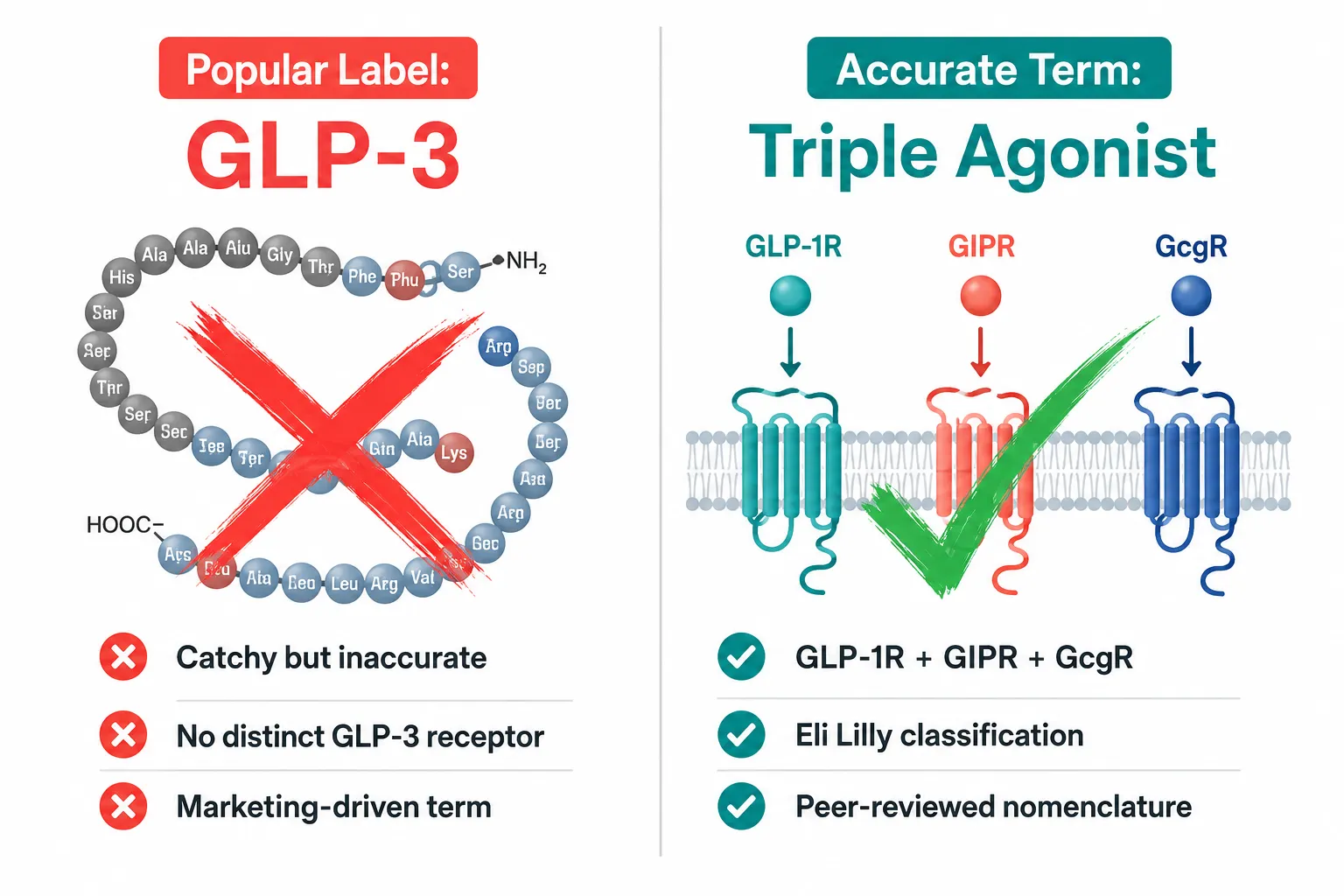
  • The informal label "GLP-3" is not a scientific hormone classification — it is shorthand for the compound's triple-receptor profile.
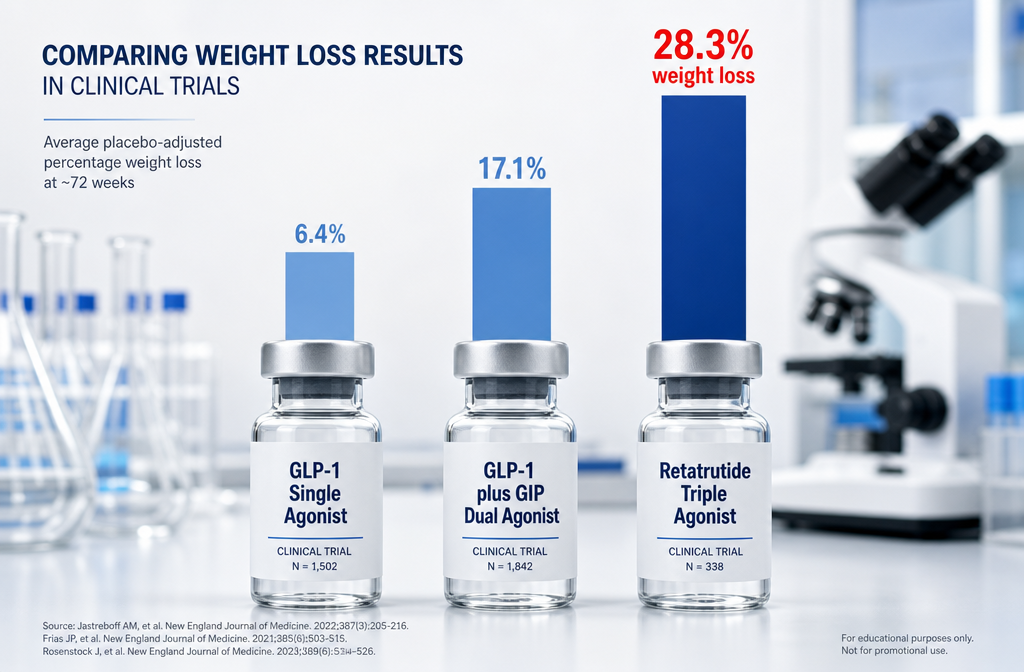
  • In the TRIUMPH-1 Phase 3 trial, participants on 12 mg weekly lost an average of 28.3% of body weight over 80 weeks.
  • Retatrutide outperforms single-agonist (semaglutide) and dual-agonist (tirzepatide) therapies in early head-to-head comparisons.
  • As of 2026, retatrutide has not received FDA approval and remains in Phase 3 development under Eli Lilly.

Key Takeaways

The Triple-Agonist Biology Behind Retatrutide

Retatrutide is a synthetic peptide engineered to bind and activate three distinct incretin and metabolic hormone receptors at the same time. Each receptor plays a separate but complementary role in energy regulation.

Receptor Primary Role Contribution to Retatrutide's Effect
GLP-1R (Glucagon-Like Peptide-1) Insulin secretion, appetite suppression Reduces hunger, slows gastric emptying
GIPR (Glucose-Dependent Insulinotropic Polypeptide) Insulin amplification, fat metabolism Enhances insulin response, supports fat tissue signaling
GCG-R (Glucagon Receptor) Energy expenditure, hepatic glucose output Increases calorie burn, reduces liver fat

This simultaneous three-receptor engagement is what separates retatrutide from every approved obesity drug on the market. The glucagon receptor component is particularly significant: glucagon typically raises blood sugar, but when its receptor is activated alongside GLP-1R and GIPR, the net effect shifts toward increased thermogenesis and fat oxidation rather than hyperglycemia.

Researchers exploring the GLP-1 generations overview will recognize this as a logical progression from first-generation single-agonist molecules toward increasingly complex multi-receptor strategies.

Why the "GLP-3" Label Is Informal — and What It Actually Means

The term "GLP-3" does not refer to a real hormone. No such molecule exists in human physiology. The label emerged informally to describe retatrutide's position as the third generation of GLP-based obesity therapies:

  • Generation 1: GLP-1 single agonists (e.g., semaglutide / Wegovy)
  • Generation 2: GLP-1 + GIP dual agonists (e.g., tirzepatide / Zepbound)
  • Generation 3: GLP-1 + GIP + Glucagon triple agonists (retatrutide)

The correct scientific description is triple hormone receptor agonist. Researchers browsing retatrutide research and catalog resources or the GLP-1 Reta product tag will encounter both terms, but the informal "GLP-3" label should always be understood as generational shorthand rather than pharmacological classification.

Why the "GLP-3" Label Is Informal — and What It Actually Means

How Retatrutide Differs From GLP-1 Drugs: Receptor Targets and Clinical Outcomes

This is the core question for anyone asking what is GLP-3 retatrutide and why it is different from GLP-1. The differences operate on two levels: mechanistic and clinical.

Mechanistically, semaglutide targets only GLP-1R. Tirzepatide adds GIPR. Retatrutide adds the glucagon receptor on top of both. That third receptor drives a meaningful increase in resting energy expenditure — the body burns more calories even at rest — which neither of the earlier drugs can replicate.

Clinically, the TRIUMPH-1 Phase 3 trial reported an average weight loss of 28.3% (approximately 70.3 pounds) over 80 weeks at the 12 mg weekly dose. By comparison, semaglutide typically produces roughly 15% weight loss, and tirzepatide reaches approximately 20-22%. Retatrutide also demonstrated an A1C reduction of up to 2.0% over 40 weeks in participants with type 2 diabetes, suggesting strong glycemic benefit beyond weight loss alone.

"Retatrutide's glucagon receptor component is the differentiating factor — it converts what would otherwise be a pure appetite-suppression strategy into a genuine energy-expenditure intervention."

Side effects remain consistent with the incretin drug class: nausea, diarrhea, constipation, and vomiting, all dose-dependent and generally manageable. Those interested in how metabolic peptides interact with energy systems may also find value in reviewing mitochondrial longevity research and AOD9604 metabolic research for broader context.

For researchers sourcing compounds for study, reviewing lab-tested peptide standards and certificate of analysis documentation ensures quality benchmarks are met before any research protocol begins.

As of 2026, retatrutide is not FDA-approved. Eli Lilly anticipates filing for approval in 2026-2027, with potential market availability by 2027 or 2028. Those planning research timelines can consult the GLP-3 research planning and catalog navigation guide for sourcing and protocol considerations.

How Retatrutide Differs From GLP-1 Drugs: Receptor Targets and Clinical Outcomes

Conclusion

Retatrutide represents a genuine structural advance over existing GLP-1 therapies. Its triple-agonist biology — engaging GLP-1R, GIPR, and the glucagon receptor simultaneously — produces weight loss outcomes that approach bariatric surgery benchmarks and glycemic improvements that matter for type 2 diabetes management. The informal "GLP-3" label is a useful shorthand, but researchers should understand it as a generational marker, not a hormone designation.

Actionable next steps for researchers in 2026:

  • Review the TRIUMPH-1 Phase 3 trial data in detail to understand dose-response relationships.
  • Compare retatrutide's receptor profile against tirzepatide using the GLP-1 peptide generational research overview.
  • Verify compound purity standards before initiating any research protocol by consulting available COA documentation.
  • Monitor FDA filing timelines, currently projected for 2026-2027, to align research planning accordingly.
https://www.puretestedpeptides.com/wp-content/uploads/2026/06/What-Is-GLP-3-Retatrutide-Triple-Agonist-Biology-Receptor-Targets-and-Why-It-Is-Different-From-GLP-1.png 672 1024 Pure Tested https://www.puretestedpeptides.com/wp-content/uploads/2026/01/buy-peptides-online.jpg Pure Tested2026-06-09 13:05:142026-07-20 15:03:37What Is GLP-3 Retatrutide? Triple-Agonist Biology, Receptor Targets, and Why It Is Different From GLP-1
×

Helpful Links

  • My account
  • Cart
  • Checkout
  • Refund and Returns Policy
  • Privacy Policy
  • SMS Privacy Policy
  • Login
  • My Account
  • Logout

USA Made Lab Tested Peptides

All products are sold for research, laboratory, or analytical purposes only, and are not for human consumption


Pure Tested Peptides is a chemical supplier. Pure Tested Peptides is not a compounding / chemical compounding facility as defined under 503A of the Federal Food, Drug, and Cosmetic act. Pure Tested Peptides is not an outsourcing facility as defined under 503B of the Federal Food, Drug, and Cosmetic act.

The statements made within this website have not been evaluated by the US Food and Drug Administration. The products we offer are not intended to diagnose, treat, cure or prevent any disease.

Human/Animal Consumption Prohibited. Laboratory/In-Vitro Experimental Use Only

Scroll to top Scroll to top Scroll to top